Insomnia Blues
39th Anniversary of Marrying the Lady of My Dreams
“Dreams Do Come True”
Cosmic Dreams and Nightmares
American Dreams
Marriage Reflections
https://wp.me/p7NAzO-3Yt
Insomnia Blues
0 dark hundred
04 am
You got the insomnia blues
Nothing works
You can’t sleep
You stare at the ceiling
Your mind plays
an endless doom tape
Of worries and fears
Dancing across your mind’s
internal eye
What if I have COVID
What if have Cancer
What if I have the big Alzheimer’s
What if, what if, what if……
You stare at your watch
4:01 am
You try to sleep
Nothing works
The dark thoughts
Continue to play
Across your mind’s eye
4:05 am
You debate whether
To give up
Get up
4:10 am
You give in
And try to sleep
Checking the time
Every few minutes
Perhaps you might
Get a few fitful hours
Of much-needed sleep
Until day-break
Blasts you awake
As the dawning sun
Fills the room
That is the curse
Of the insomnia blues
Location: Fan Story (public) — see Endnote [5].fanstory
Note: 0 Dark Hundred is military jargon denoting the time of day, in the middle of the night, two hours or so before dawn, when special forces operatives get up to prepare for secret dawn missions. Depending on location and time of year ,it can be between 2 a.m to 6 .am. I often and wide awake at 0 dark hundred encountering nightmares until the sun wakes up.
─
The Night Has No Clock is a chapbook of poems drawn from an ongoing dream‑journal practice, exploring the boundary between sleeping and waking. Moving through sections on falling asleep, dreaming, insomnia, nightmares, and morning reflection, the poems examine consciousness, memory, political anxiety, and the body at night. While some pieces inhabit surreal dream logic, others remain sharply grounded in wakefulness, counting hours, breaths, and fears. Together, the poems suggest that sleep is not an escape from the world but another way of encountering it, and that what disturbs us in dreams often arrives already rehearsed in daylight.
- Dreams Come True – FanStory
Short poem directly centered on dreams and belief. [fanstory.com] - dreams came true – FanStory
A 3‑5‑3 passion poem explicitly framed around dreams becoming reality. [fanstory.com] - Love in One line – FanStory
Mentions “the lady of my dreams,” tying lifelong dreaming to love and fate. [fanstory.com]
- Dream girl – standalone document, clearly dream‑based. [my.microso…ontent.com]
- The Frantic Romantic Challenge – includes a vivid dream‑vision sequence that directly inspired narrative and poetic content. [The Franti…Challenge | Word]
- 2025 Creative Writing Journal October Part Two – explicitly lists nightmares and dream‑derived poems in its index. [2025 Creat…r Part Two | Word]
- Dream Girl / Dream Woman
Source: file titled “dream girl”
Lyrical, archetypal, and already functioning as a complete poem. Strong opening‑poem candidate. - The Classroom / Falling Asleep Dream
Recurrent dream of drifting off, crossing thresholds, losing control of consciousness. Present across multiple dream journals (Nov 2025 through March 2026). - The Foreign‑Language Dream
Dream speech in Korean or another Asian language. Strong identity and liminal‑space poem. Appears repeatedly in dream journals and narrative notes. - The Return Dream
Dreams of Berkeley, youth, early adulthood, or first marriage period, filtered through dream logic.
Insomnia and night‑body poems:
- Counting Without Sheep
Body‑based insomnia strategies (listing, cataloging, repetition) described in multiple journals. - The Clock Without a Clock
Nighttime awareness without time markers; insomnia as suspended time. - Morning After the Dream
Reflective poems written after waking, interpreting or resisting meaning.
Nightmare and anxiety‑driven poems:
- Fascism Nightmares
Explicitly indexed as “nightmares” in your creative writing journal (October 2025). Political anxiety processed through dream imagery. - Apocalypse / Fog / Zombie Dreams
Recurrent nightmare imagery noted in late‑2025 creative journal entries.
–––––––––––––––––––––––– MASTER INDEX OF DREAM‑DERIVED POEMS
• “Dreams Come True”
Venue: FanStory
Theme: dreams, belief, love
URL: https://www.fanstory.com/displaystory.jsp?id=1158871
- “dreams came true”
Venue: FanStory
Theme: dream fulfillment
URL: https://www.fanstory.com/displaystory.jsp?id=1167618 - “Love in One Line”
Venue: FanStory
Theme: lifelong dream woman
URL: https://www.fanstory.com/displaystory.jsp?id=1172513 - Dream Girl
Source: dream girl document
Status: near‑final poem - The First Dream
Source: 2025–2026 dream journals
Status: draftable poem - Foreign Tongue
Source: dream journals
Status: draftable poem - Insomnia Instructions
Source: dream journals (process notes already poetic)
Status: concept poem - Fascism Nightmares
Source: 2025 Creative Writing Journal October Part Two
Status: strong chapbook core poem - Between Sleep and Language
• The Night Has No Clock
• Instructions for Dreaming
• Dream Girl, Waking World
Section I: Falling Asleep
Dream onset, drifting, threshold poems.
Section II: Inside the Dream
Dream Girl, foreign language dreams, travel and return dreams.
Section III: Insomnia
Night body, clocks, restlessness, consciousness.
Section IV: Nightmares
Political anxiety, apocalypse imagery, fear‑driven dreams.
Section V: Waking
Morning reflection, endurance, meaning‑making.
Dream fulfillment motif
→ “Dreams Come True”
Lifelong dream woman motif
→ “Love in One Line”
Belief in dreams as destiny
→ “dreams came true”
This demonstrates continuity of theme rather than repetition — a plus for editors.
–––––––––––––––––––––––––––––– I. INSOMNIA SECTION
––––––– INSOMNIA INSTRUCTIONS –––––––
Do not count sheep.
They wander.
Count the body instead:
ankle, shin, knee,
the long argument of the thigh.
Name each bone
as if roll call matters.
Do not look at the clock.
It will lie to you.
Lie still.
Then lie again.
Breathe until breathing becomes
an object you can set down.
If sleep comes,
do not greet it.
Pretend you were never waiting.
––––––– THE CLOCK WITHOUT A CLOCK –––––––
Night has no numbers
until you give it some.
The dark does not care
what time it is.
Only the body insists,
tugging at hours
that no longer exist.
Somewhere, morning
is being prepared
without you.
Here, everything stays unfinished.
Even thought
paces the room,
barefoot,
forgetting why it stood up.
––––––– COUNTING WITHOUT SHEEP –––––––
I list countries I’ve lived in.
Streets.
Former versions of myself.
I inventory regrets
like spare change
on a nightstand.
Nothing adds up.
The mind refuses sleep
the way a door refuses
a wrong key.
Outside, a car passes,
taking its life elsewhere.
Inside, I remain
awake enough
to notice.
––––––– MORNING AFTER THE DREAM –––––––
Sleep leaves without explanation.
All that remains
is the outline
where it had been.
The dream collapses
into fragments:
a voice, a face,
a sentence that made sense once.
I try to rebuild it
in daylight,
but daylight edits too much.
Some meanings
only survive the night.
––––––– DREAM GIRL –––––––
I met you first
in a dream,
before language knew
what to call you.
You spoke without words,
and I understood.
Your face kept changing,
but the feeling did not.
I woke carrying you
like a secret
I was not yet allowed to keep.
Years passed.
Reality practiced its disguises.
Then one day
you arrived
without ceremony,
as if we had only been interrupted.
Some dreams
do not end.
They wait.
.
––––––– FASCISM NIGHTMARE –––––––
In the dream,
the flags arrive first.
Followed by
huge pictures
of the Dear Leader’s
face staring at you
They cover windows,
mouths,
the names
of streets I once knew.
Everyone insists
this is normal.
The loudest voice
claims protection.
I try to wake,
but the bed
has joined them.
Even silence
wears a uniform.
––––––– FOG DREAM –––––––
The fog does not chase us.
It replaces us.
Buildings dissolve politely.
Faces forget themselves mid‑sentence.
Someone says this will pass.
They are already wrong.
I walk until walking
loses its edges.
There is no monster —
only the absence
where certainty used to live.
––––––– ZOMBIE DREAM (WITHOUT ZOMBIES) –––––––

audio clip Zombies
No one is dead.
That’s the problem.
They move,
they speak,
they repeat what they were given.
I scream,
but my voice updates itself
to match the crowd.
By the time I realize,
I am nodding too.
The horror is not the end.
It is the continuation.
––––––– APOCALYPSE, REHEARSED –––––––
We have practiced this.
That’s what makes it unbearable.
The sirens know their cues.
The sky arrives on time.
Someone checks their phone
for instructions.
I wake before the damage,
heart racing,
relieved to still be afraid.
Fear, at least,
means I noticed.
–––––––––––––––––––– INSOMNIA DREAMS
Notes from the mind at O Dark Hundred
There is a particular hour of the night when time stops behaving properly.
The house is quiet, the ceiling stares back, and the mind—unpoliced—runs wild.
These poems come from that hour. They were written across years and platforms, but they belong together: a single long night, broken into phases.
This is a record of insomnia, what follows from it, and what—sometimes—redeems it.
–––––––––––––––––––– I. INSOMNIA
(The mind refuses sleep)
Insomnia is not dramatic at first.
It is procedural. Mechanical. A loop.
INSOMNIAC NIGHTMARE BLUES
I often get the insomniac
Nightmare blues
At 0 dark hundred hours
The middle of the night
Time often comes to a stop
It is 4 a.m.
And your mind
Goes down rabbit holes
Of anxiety, despair and fear
And dark imaginings,
You try to sleep
Try to let it all go
Until you wake up.
And write down your nightmare
While drinking coffee
And watching the sun rise watching the news.
When your spouse
Wakes up
Everything seems fine
And the nightmares
Fade away,
That is the insomniac nightmare blues.
O DARK HUNDRED
Sam Adams had the insomnia blues
he could not sleep.
He stared at the ceiling.
That stared back at him
With an evil grin
Mocking him it seems.
His mind plays an endless tape of fears
doom, and endless fears
As he goes down the proverbial rabbit hole
Lost in an endless anxiety feedback freak out loop.
The latest dark SF series he saw
the latest scary news
Political dystopian futures
Endless possibilities play out.
4:30 a.m.
What if…
6:30 a.m.
Until day-break blasts him awake
as the dawning sun fills the room.
Ending that night’s insomnia blues.
Until the next night’s episode begins at O Dark Hundred.
INSOMNIA BLUES
04 am
you got the insomnia blues
Nothing works
You can’t sleep
You stare at the ceiling
Your mind plays an endless tape
Of worries and fears
4:05 am
You debate whether
To give up
Get up
That is the curse
Of the insomnia blues
Transition:
Insomnia is only the doorway.
Once the mind gives up on rest, it begins to manufacture content.
That content is rarely gentle.
–––––––––––––––––––– II. NIGHTMARES
(What the mind does with fear)
Nightmares are not always monsters.
Sometimes they are lists.
Sometimes faces.
Sometimes the future,
rehearsed too many times.
DEPRESSED MORBID NIGHTS
One of these depressed, depraved, morbid nights
I shall awake to the God damned game of life
Thus, I will sit, and think and dream
Dreams that no one ever before dreamt
It is so very lonely being a foolish lunatic
Or live without our God damned dreams
Running our thoughts
Into pits of depraved madness
MOCKING FACES STARING AT ME
Mocking faces hunting my dreams
Faces I knew
The dead and the living
They said there’s nowhere to escape
Your fate is sealed
No one escapes their cosmic reckoning
Transition:
Nightmares exhaust themselves.
They burn hot, then collapse.
What comes after is quieter—and sometimes, mercifully, something else.
–––––––––––––––––––– III. DREAMS
(What survives the night)
Not all dreams are enemies.
Some arrive bearing memory.
Some insist on love.
Some explain—retroactively—why the night was worth surviving.
IN MY MIND’S EYE
When I dream
In my mind’s eye
I enter another dimension
And visit other worlds
Until dawn’s light drives them back
DREAMS DO COME TRUE
Fact: dreams do come true.
Mine did.
I dreamt of meeting my wife for eight years
Then she walked into my life.
That’s a fact.
THE DREAM THAT STARTED IT ALL
audio clip Married My Dream Girl
audio clip Follow Your Dreams
audio clip One Day My Dreams Came True
Audio CLip The Love of My life Haunted My Dreams
Dreams
Dreams
Married My Dream Girl
This is a true story
from 1974
or 1982
or yesterday
It is confusing
But know that it did.
SAM ADAMS ALWAYS RECALLED
He had been dreaming
For eight long years
She haunted his weekly dreams
Then one night
She walked off a bus
And into his life
He met
And married
The lady of his dreams
MORNING LIGHT
the terrors of the night
fade away into nothingness
with the morning light
I regain my sight
and begin regaining my smile
until the next nightmares return
Insomnia returns.
Nightmares recur.
But so do dreams.
And sometimes, if you’re lucky,
the dream that saves you
is the one that waits the longest.
-
WEEK 12 INSOMNIAC NIGHTMARE BLUES
Insomniac Nightmare Blues
I often get the insomniac
Nightmare blues
At 0 dark hundred hours
The middle of the night
Time often comes to a stop
It is 4 a.m.
And your mind
Goes down rabbit holes
Of anxiety, despair and fear
And dark imaginings,
You try to sleep
Try to let it all go
Until you wake up.
And write down your nightmare
While drinking coffee
And watching the sun rise
watching the news.
When your spouse
Wakes up
Everything seems fine
And the nightmares
Fade away,
That is the insomniac nightmare blues.writing
Location: Writing.com (public) — see Endnote [1].writing
───────────────────────────────────────
Insomnia Nightmare Cornish Sonnet
Insomnia, nightmares all night
In my dreams, I fear death’s coming
It gives me such a dreadful fright.
Playing the endless “what if” game.
It is all so mind-numbing.
Forever wondering who’s to blame.
At 0 dark hour I cannot sleep, my thoughts won’t keep.
I have no strength, I’ve lost all power.
These constant nightmares twist and turn.
All night long until dawn’s first sweep.
My soul is left to ache and burn
Insomnia, nightmares all night
At 0 dark hundred hours.writing
Location: Writing.com (public) — see Endnote [2].writing
──────────────────────────────────────── 3) MYSTERIES OF THE NIGHT
Mysteries of the Night
Every night
At 0 dark hundred
The bewitching hour.
Sam Adams
Is awaken
By the mysteries of the night.
As the wild things
Of his dark imagination
Take over.
And he enters
“The Twilight Zone”
“The Outer Limits”
A “Black Mirror Universe.”
Overcome
By insomnia blues.
He stared at the ceiling.
That stared back at him
With an evil grin
Mocking him, it seems.
His mind plays an endless
tape of doom, fears, gloomy thoughts
endless worries
As he goes down
the proverbial rabbit hole
Lost in an endless anxiety
Feedback freak out loop.
The latest dark SF series he saw
The latest scary news
Political dystopian futures
Endless possibilities play out.
The latest news of the war
the latest fears of incipient fascism
The latest news about the stock market
climate change, weather disasters
Monster storms and flooding
His town burning up around him.
What if I have the big Alzheimer’s
or dementia?
Or a stroke
What if I have
Cancer, Covid, Lyme disease, or Monkeypox?
Or an accident, or a plane crash,
or terrorist incident
Or my wife dies leaving me all alone
Can I even cope with
that nightmare scenario?
What if
World War Three breaks out?
The North Koreans invade
Nuclear bombs vaporizing
Everything in sight.
4:30 a.m.
What if I am at the mall
When a mad gunman opens fire?
Or a terrorist bomb goes off?
Or I am the victim of a random act of violence?
5:15 a.m.
What if the zombie apocalypse starts?
5:17 a.m.
Time comes to a crawl
Tick tock tick tock
5:30 a.m.
What if, what if, what if……
6:30 a.m.
Until day-break blasts him awake
as the dawning sun fills the room.
Ending that night’s insomnia blues.
lost deep in the night mysteries.
Until the next night’s episode
begins at O Dark Hundred
When you are Wide Awake at 3 a.m.
Middle-of-the-night insomnia is common. These techniques might help.
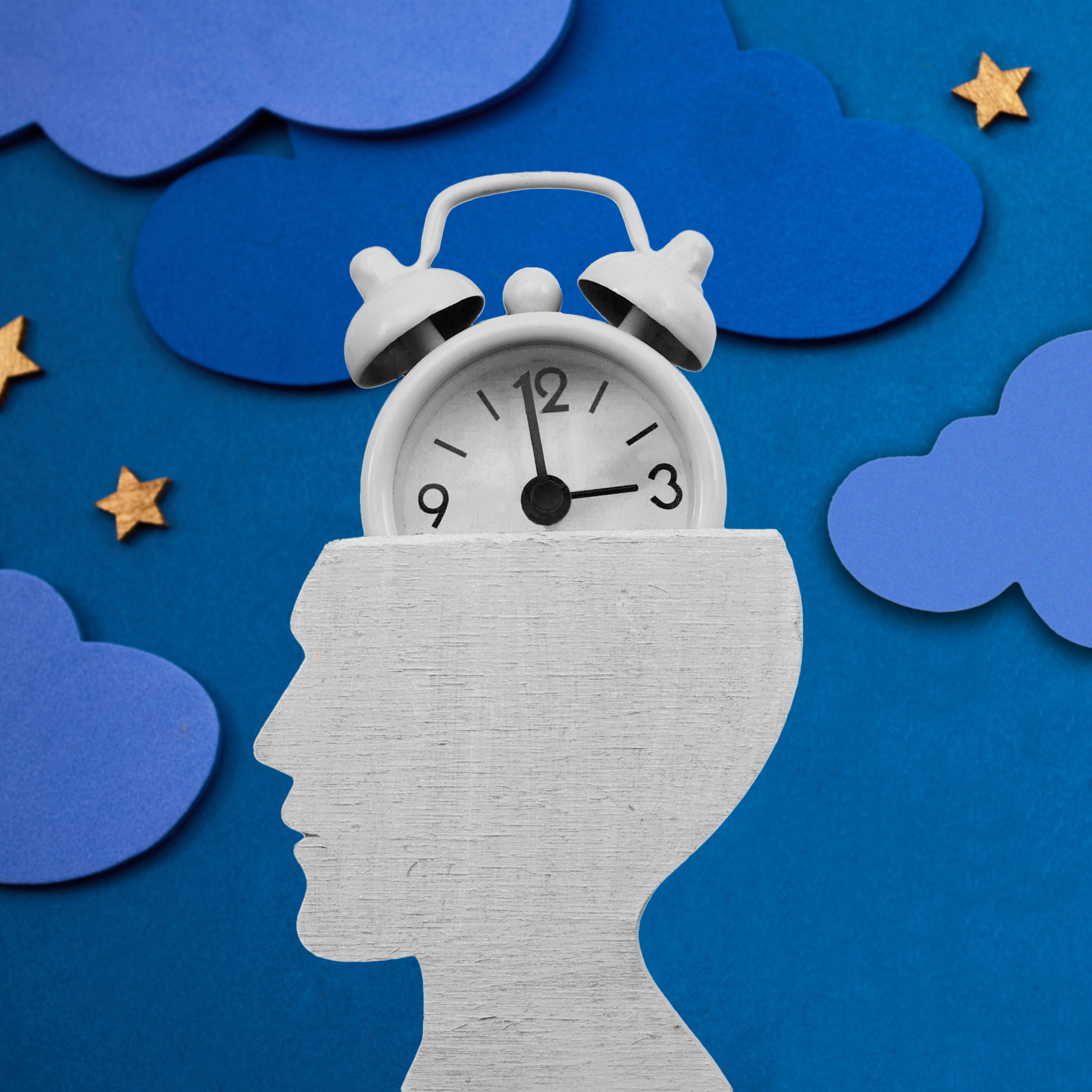
(Illustration by Beth Broadwater/The Washington Post; iStock)


These dreaded awakenings afflict people of all demographics. Studies suggest that middle-of-the-night insomnia is especially prevalent among women, and that it becomes more common as people age, affecting about 1 in 4 people 65 years and older. But it occurs among everyone from teenagers to 90-year-olds, said Michael Breus, a sleep doctor and clinical psychologist who wrote the book “Sleep Drink Breathe.”
“It’s the number one thing I get asked about, and it has been for the last 20 years,” he added.
I know this form of insomnia all too well. Most nights, I have no trouble falling asleep. I yawn, close my eyes, get comfortable and within 15 minutes or so I’m fast asleep. The hours pass by. And then, like clockwork, I open my eyes, look at my watch and see that it’s 3 a.m. I close my eyes. I roll over and patiently wait for my brain to fall asleep again.
But far too often, I have ended up lying awake as my mind jumps from one anxious thought to another. It can take an hour or two to fall back to sleep. There have been nights when I couldn’t get back to sleep at all, and I ended up going about the next day feeling exhausted and sleep deprived.
The 4-7-8 breathing method
I have tried many things to conquer my 3 a.m. awakenings. I’ve counted sheep, distracted my busy mind with psychological tricks and tried reading boring books or listening to soothing meditation podcasts. But nothing worked until I tried a special breathing exercise recommended by Breus, the sleep expert.
The technique, called the 4-7-8 breathing method, is deceptively simple. First, you inhale through your nose for four seconds. Then you hold your breath for seven seconds. Finally, you exhale through your mouth for eight seconds and repeat the steps as many times as needed.
The first time I tried it, I honestly expected it to fail. I was lying in bed wide awake at 3 a.m., and figured why not try it? As I did the breathing exercise, I didn’t feel myself getting sleepy, but I did feel calmer. Eventually, I opened my eyes and saw that it was 6:30 a.m. The sleep-tracking function on my Apple watch indicated that I had been asleep for several hours.
I’ve now been using this breathing exercise on an almost nightly basis for over a month, and it works like a charm. When I do wake up at 3 a.m., I no longer get anxious because I know that I can get myself back to sleep without much difficulty.
Why we all wake up in the middle of the night
It turns out that there’s nothing unusual about waking up at 3 a.m.
“Every person on earth wakes up between 1 and 3 o’clock in the morning,” Breus said. “For most people, it doesn’t bother them. They burp, they fart, they roll over, and they just go back to sleep.”
This is because of our biology. Our body temperatures follow a daily circadian rhythm, rising throughout the day and then falling at night. For most people, body temperature peaks and then begins to decline around 10 p.m. This shift in temperature is a signal to your brain to release the hormone melatonin, which tells your body that it’s time to sleep, Breus said.
Your body temperature continues falling gradually throughout the night and begins to rise again between 1 and 3 a.m. During this time, your body moves into a lighter stage of sleep, causing us to wake up. But while most people fall back to sleep without even realizing it, about 10 or 15 percent of people do not, Breus said.
Instead, they look at the time, their minds begin to wander, and they get anxious. They may even pick up their phones and start scrolling social media or get out of bed and use the bathroom.
All of this can cause your heart rate to rise and activate your sympathetic nervous system, which controls your fight-or-flight response.
To get back to sleep, you need to activate your parasympathetic nervous system — the “rest-and-digest system” — which relaxes your muscles and slows your heart rate, Breus said.
This is where the 4-7-8 breathing exercise helps. Based on an ancient yogic technique called pranayama, it was popularized by Andrew Weil, a doctor and author who founded an integrative medicine center at the University of Arizona.
Studies suggest that the 4-7-8 technique and other breathing exercises facilitate sleep because they slow your heart rate, lower your blood pressure and reduce anxiety. A study published in the journal Frontiers in Sleep last year reviewed six trials and found that breathing exercises improved sleep quality in people with insomnia and other sleep difficulties.
“There’s been generally good evidence from randomized controlled trials showing that breathwork helps with insomnia,” said Melissa Young, a clinical assistant professor at the Cleveland Clinic and a staff physician at the clinic’s Center for Functional Medicine who was not involved in the study. “The 4-7-8 breath technique is both personally and professionally one of my favorites.”
What to do at 3 a.m.
If you find yourself wide awake in the middle of the night, don’t panic. You need to keep your heart rate low to fall asleep again. “Don’t look at the clock, and don’t elevate your heart rate unless you need to,” Breus said. Here’s what to do:
- Don’t look at your smartphone. The blue light it emits can trick your brain into thinking that it’s time to get up and start your day. If you absolutely have to keep your phone in your bedroom, then at the very least don’t keep it near your bed. “I plug my phone in across the room,” Breus said. You should also avoid looking at your smartphone in the hour or so before you first get into bed, according to Young at the Cleveland Clinic. That will help ensure a better night of sleep. “The blue light that your phone emits suppresses your melatonin production,” she said.
- You might be tempted to get out of bed and go to the bathroom. But try not to, as this will raise your heart rate, making it harder to get back to sleep, Breus said. “In most cases, people don’t really need to go to the bathroom,” he added. “About 70 percent of people are side sleepers, and that puts pressure on your bladder, which makes you think you have to pee.” Instead, Breus said, try rolling onto your back and counting to 30. If after 30 seconds you find that you really do need to use the bathroom, then by all means do it. But if you don’t, then it’s best to stay in bed.
- As you’re lying there, start doing the 4-7-8 breathing exercise. Try not to breathe in or out too forcefully. Instead, breathe in and out gently. Breus recommends doing 20 rounds of 4-7-8 breathing. You can keep count by lightly balling your hand into a fist and sticking out a finger after each round.
- Another thing you can do at the same time as the 4-7-8 breathing exercise is progressive muscle relaxation. Tense a part of your body for five seconds — like your calves, feet, arms or shoulders — and then release the tension and move on to another body part. This reduces stress and anxiety, which can help alleviate insomnia, Breus said.
- Something else that helps with insomnia is cognitive shuffling. This mental exercise helps you generate random thought patterns to distract you from anxious thoughts that interfere with sleep. You can learn more about it by reading our recent story on cognitive shuffling.
If you try these things and find that you still aren’t able to fall asleep, don’t worry. One night of bad sleep isn’t going to ruin your life. And Breus points out that you can still benefit from what’s known as non-sleep deep rest — the act of quietly lying in bed at night. It’s not the same as sleep, but it can still rejuvenate you, he added.
Occasional bouts of insomnia are normal. But if you find that you’re consistently having difficulty falling asleep or staying asleep — and that nothing seems to help — consider seeing a doctor or sleep specialist. You could have an underlying problem or medical condition, such as obstructive sleep apnea.
Do you have a question about healthy eating? Email EatingLab@washpost.com and we may answer your question in a future column.
I hope you enjoyed this visit to my nightmares. Please feel free to post your nightmares here.
Substck
Wattpad
Medium
The End

Thanks so much for visiting my site. Your comments are welcome but please play nice…. Reply