Cosmos’s K-Drama Journey



Itaewon Class
K Drama updates audio Clips
Mine
Cosmos’s K-Drama Journey: Favorites, Genres, and a Wish List
K Drama updates: Over the last few years, as some of you know, I finally became a K-drama fan. Part of the reason is that my Korean is now good enough to follow much of the dialogue, although I still mostly rely on subtitles, and I have been spending about half the year in Korea for the past several years. The other reason is simple: Korean dramas are exceptionally good, both in writing and acting. Some of the best television being produced anywhere in the world today is coming out of South Korea.
That was not always the case. K-dramas did not really hit their stride until the early 1990s, when the industry began to take off.
One of the smartest things the Korean entertainment industry did was partner with international streaming services such as Netflix and later Disney+, making Korean content readily accessible to global audiences while giving those companies access to the Korean market. Unfortunately, many of the Korean dramas shown on Netflix Korea still lack subtitles, while the versions shown abroad typically include them. Joint Netflix productions almost always come with subtitles. Given how accurate AI translation has become, providing subtitles for all Korean television and streaming content should be relatively inexpensive. I wish someone would finally do it.
Two Forms: Series and Movies
Korean dramas come in two basic forms: television series and movies.
The series are somewhat reminiscent of Mexican telenovelas. Most run for 16 episodes, occasionally 20, and sometimes fewer. A few have multiple seasons, but most tell a complete story in a single month-long run. Many are available on Netflix, Disney+, Hulu, and other streaming services with English subtitles.
A number have earned significant international acclaim. Parasite (기생충), for example, won the Academy Award for Best Picture in 2020, while Youn Yuh-jung won Best Supporting Actress for Minari.
Overview of K Dramas
Since moving to Korea in 2015, I’ve watched a wide range of Korean dramas and films.
Certain themes appear repeatedly:
Rom-com – among the best in the world! often hate-to-love theme, fate, love at first sight, and slow-burning style a good exaple is My Love from the Star (별에서 온 그대
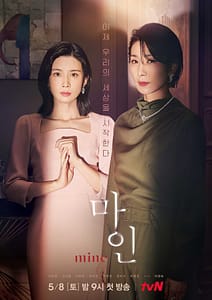
wealthy families behaving badly (Mine 마인),
dark social critique (Parasite 기생충),
revenge dramas (The e Glory 더 글로리),
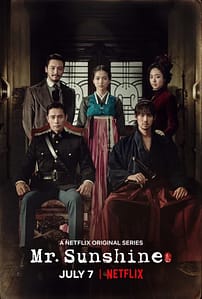
epic historical storytelling (Mr. Sunshine 미스터 션샤인),
coming-of-age stories (A Millionaire’s First Love 백만장자의 첫사랑),
political intrigue (The Man Standing Next 남산의 부장들 and Designated Survivor: 60 Days 60일, 지정생존자),
and increasingly strong science fiction (The Silent Sea 고요의 바다 and Space Sweepers 승리호).
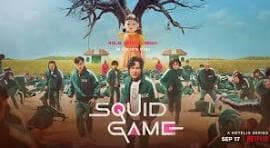
The crime and political dramas can get fairly intense and violent, though they generally avoid the excesses of slasher films. And of course Squid Game (오징어 게임) became a genuine worldwide phenomenon.
Up until the early 1980s, Japanese dramas were generally considered superior. Since then, K-dramas have largely taken over the international market. For whatever reason, they seem to travel better than either Japanese dramas or Chinese dramas.
An interesting factoid: most Korean drama writers are women, and roughly 60 percent of the audience is female. Korean men, in general, tend to gravitate more toward sports and news programming.
K-Rom-Coms: Among the Best in the World
For anyone new to the genre, I would start with a romantic comedy. Koreans are masters of the form.
Most romances are slow-burn stories, often built around a hate-to-love arc. Explicit sex scenes are relatively uncommon. Love-at-first-sight stories are common, as are romances that cross class boundaries, a particularly Korean variation on the genre.
Many stories also involve fate bringing two people together. Time-travel romances have become increasingly popular as well. One of my recent favorites is Bon Appétit, Your Majesty (폭군의 셰프).
One of the most beloved examples remains My Love from the Star (별에서 온 그대), about an alien stranded on Earth during the Joseon Dynasty who falls in love with a modern Korean actress just as he finally has an opportunity to return home.
An interesting recent shift is the growing presence of LGBTQ characters. They rarely occupy the central role, but they are becoming increasingly visible. Itaewon Class (이태원 클라쓰) featured a thoughtfully developed transgender character, while Mine (마인) included both a lesbian relationship and a bisexual male lead.
LGBTQ Content Starting to Appear
Five years ago, LGBTQ characters were virtually nonexistent in Korean television. That has changed rapidly, mirroring broader, albeit gradual, changes in Korean society. Gay clubs now openly operate in Itaewon’s “Homo Hill” district and around Hongdae, and annual pride celebrations are no longer suppressed to the extent they once were.
Same-sex marriage remains illegal in Korea, but social attitudes continue to evolve, particularly among younger generations. Conservative Christian churches, heavily influenced by American evangelical traditions, remain among the most resistant voices.
Sample titles: Crash Landing on You (사랑의 불시착) and My Love from the Star (별에서 온 그대)
Beyond Rom-Com: Other Major Subgenres
Crime Dramas
Tense police and prosecutor procedurals, often intertwined with political influence, corruption, and corporate misconduct.
Sample titles: Stranger (비밀의 숲) and Signal (시그널).
Political Thrillers
Conspiracies, coups, intelligence agencies, and the machinery of government, often inspired by real historical events.
Sample titles: Designated Survivor: 60 Days (60일, 지정생존자) and The Man Standing Next (남산의 부장들).
Spy Dramas
North Korean espionage was once a genre staple and still appears regularly, though less frequently than in past decades.
Sample titles: Crash Landing on You (사랑의 불시착).
Science Fiction
Korean science fiction has become increasingly sophisticated, especially in the fields of time travel, alternate timelines, and space exploration.
Sample titles: Live Up to Your Name (명불허전) and Sisyphus: The Myth (시지프스: The Myth).
Horror
Particularly strong in zombie, monster, and apocalypse stories.
Sample titles: Sweet Home (스위트홈) and Kingdom (킹덤).
Historical Drama: 20th Century
Popular settings include the collapse of the Joseon Dynasty, Japanese colonial rule, the Korean War, military dictatorship, and the democracy movement of the 1980s.
Sample titles: Mr. Sunshine (미스터 션샤인) and 12.12: The Day (서울의 봄), which dramatizes the 1979 military coup.
Historical Drama: Pre-20th Century
Most are set during the Joseon Dynasty and feature court politics, military campaigns, and aristocratic rivalries.
Sample titles: Mr. Sunshine (미스터 션샤인) and Alchemy of Souls (환혼).
Social Critique
Sharp commentary on class, inequality, education, and Korean society.
Sample titles: Parasite (기생충).
Music and Reality Television
Competition, talent, and survival programs that can be surprisingly addictive.
Sample titles: Culinary Class Wars (흑백요리사: 요리 계급 전쟁) and Physical: 100 (피지컬: 100).
Survival Shows: A Genre of Their Own
The enormous success of Squid Game has helped create a distinctive survival-competition category all its own.
Sample titles: Squid Game (오징어 게임).
Korean Badass Female Leads
I’ve always found Korean women among the most compelling leads on screen, and I particularly enjoy dramas featuring genuinely formidable female protagonists.
Mr. Sunshine (미스터 션샤인) and Gyeongseong Creature (경성크리처) both deliver on that front, as do Strong Girl Bong-soon (힘쎈여자 도봉순) and its successor, Strong Girl Nam-soon (힘쎈여자 강남순).
A Few Personal Favorites
Crash Landing on You (사랑의 불시착)
A classic opposites-attract romance in which a South Korean heiress accidentally paraglides into North Korea and falls in love with the army officer who shelters her.
Vincenzo (빈센조)
A Korean-Italian mafia lawyer returns to Korea to recover a hidden cache of gold and ends up leading a group of tenants in a battle against a corrupt conglomerate.
Mine (마인)
Rich-people-behaving-badly at its finest, featuring murder, family intrigue, and some of the strongest LGBTQ themes yet seen in a mainstream Korean drama.
Stranger (비밀의 숲)
A tightly plotted corruption drama involving prosecutors, police, and politicians. I would have preferred more romance and a stronger resolution to some of the political storylines, but the acting and writing remain outstanding.
Mr. Sunshine (미스터 션샤인)
A sweeping historical romance set during the final years of the Joseon Dynasty as Japan tightens its grip on Korea. The history is occasionally simplified, but the scope and emotion are remarkable.
Our Blues (우리들의 블루스)
A warm ensemble drama centered on ordinary people living on Jeju Island. It provides a welcome alternative to the revenge and corruption stories that dominate much of the genre.
A full, deduplicated list of everything I’ve watched, along with my current watch list, will appear in a separate appendix.
Note: this replaces my earlier K-drama postings, which have been retired.
Movies 2025 Including Oscar Reflections

Thanks so much for visiting my site. Your comments are welcome but please play nice…. Reply