Madame Bovary tells the story of Emma Bovary, a young woman whose romantic imagination—shaped by sentimental novels and convent education—collides disastrously with the realities of provincial French life.
Emma marries Charles Bovary, a well‑meaning but unimaginative country doctor. Expecting passion, refinement, and emotional transcendence, she instead finds routine, mediocrity, and boredom. Even motherhood fails to satisfy her longing for a more intense life.
Seeking escape, Emma enters into two affairs: first with Rodolphe Boulanger, a cynical landowner, and later with Léon Dupuis, a younger man who shares her literary tastes. Each relationship initially promises fulfillment but ultimately collapses, leaving Emma increasingly desperate.
Alongside her emotional excess, Emma indulges in reckless spending, encouraged by the manipulative merchant Lheureux. Her debts spiral out of control. When abandoned by her lovers and facing public disgrace, Emma takes poison and dies in agony. Charles, devastated and still unaware of the depth of her betrayal, follows her to an early death, leaving their daughter Berthe destitute.
Flaubert presents this tragedy not as melodrama, but as a meticulous dissection of illusion, desire, and self‑deception within ordinary life. [britannica.com]
MAJOR CHARACTERS
Emma Bovary
The novel’s central figure. Intelligent, imaginative, and emotionally restless, Emma is neither pure victim nor villain. Her tragedy arises from her inability to distinguish romantic fantasy from lived reality. [britannica.com]
Charles Bovary
Emma’s husband. Kind, loyal, and dull, Charles represents mediocrity and contentment without ambition. His blind devotion intensifies the novel’s cruelty. [britannica.com]
Rodolphe Boulanger
A wealthy landowner and Emma’s first lover. He treats seduction as a game and abandons Emma when commitment becomes inconvenient. [britannica.com]
Léon Dupuis
A young law clerk who shares Emma’s love of literature and music. Their affair is more sentimental than Rodolphe’s, but just as doomed. [britannica.com]
Monsieur Homas
The pompous pharmacist. A caricature of bourgeois self‑satisfaction, scientism, and empty rhetoric. He thrives while others collapse. [britannica.com]
Lheureux
A merchant and moneylender who fuels Emma’s ruin by extending credit and encouraging luxury. He represents the moral emptiness of capitalism. [britannica.com]
Berthe Bovary Emma and Charles’s daughter. Her final abandonment underscores the generational cost of Emma’s illusions. [britannica.com]
NOTABLE PASSAGES (PARAPHRASED, NOT QUOTED)
Emma reflects that marriage was supposed to bring passion and ecstasy, yet it feels like a gray routine of repeated days.
After the ball at Ableser, Emma becomes obsessed with aristocratic elegance, realizing that her life will never reach that level of beauty.
Emma convinces herself that love should feel overwhelming and transcendent—and that if it doesn’t, something must be wrong.
Near the end, Emma experiences terror and clarity simultaneously as the physical consequences of poison overtake her illusions.
These moments are central to Flaubert’s critique of romantic idealism and consumer desire. [britannica.com]
LITERARY REPUTATION & SIGNIFICANCE
Madame Bovary is widely regarded as:
A foundational work of literary realism
One of the most influential novels of the 19th century
A turning point in narrative technique, especially free indirect discourse
When first published, the novel was prosecuted for obscenity in 1857. Flaubert was acquitted, and the trial only increased the book’s notoriety and sales. [en.wikipedia.org]
Flaubert’s insistence on stylistic precision—his obsession with le mot juste—helped establish the modern idea of the novelist as a craftsman. The book’s emotional coolness and moral ambiguity were revolutionary.
Madame Bovary should be read not simply as a moral tale of adultery or romantic excess, but as a formally radical realist novel that exposes the psychic costs of bourgeois modernity—particularly for women—through an innovative narrative style that dissolves the boundary between social ideology and individual consciousness.
Style and Narrative Technique (Foregrounded)
Flaubert’s most lasting contribution is not plot but method. His use of free indirect discourse—what French critics call style indirect libre—allows Emma’s thoughts, fantasies, and cultural clichés to bleed seamlessly into the narrator’s voice, making it deliberately difficult to tell where Emma ends and society begins. This technique was central both to the novel’s originality and to its obscenity trial, since prosecutors mistook Emma’s interior raptures for authorial endorsement. [campuspress.yale.edu]
The effect is corrosive rather than sympathetic. Emma’s language is saturated with second‑hand romantic tropes, consumer fantasies, and religious sentimentality, all rendered with Flaubert’s famously impersonal precision. The narrator does not correct Emma’s illusions; instead, her inner life indicts itself through excess. As Flaubert himself insisted, the author should be “present everywhere and visible nowhere,” a credo that reshaped modern narrative authority. [campuspress.yale.edu]
Emma Bovary as a Proto‑Feminist Figure
Emma is not a feminist heroine in any modern sense—she lacks political consciousness, solidarity, or a language of rights. Yet she is increasingly read as a proto‑feminist figure because her suffering is not merely personal but structurally produced.
Critics have shown that Emma’s desires—education, aesthetic pleasure, erotic autonomy, economic agency—are systematically denied legitimate outlets in nineteenth‑century France, leaving her only illicit or self‑destructive routes of expression. Her adultery, spending, and eventual suicide function less as moral failures than as symptoms of a society that grants women intense aspiration without corresponding freedom. [ijoes.in], [sssjournal.com]
In this sense, Emma anticipates later literary women who recognize the constraints of marriage and domesticity but lack viable alternatives. Like Edna Pontellier (The Awakening) or Carrie Meeber (Sister Carrie), Emma senses that the problem is not simply her husband, but the life script itself.
Anti‑Clericalism and Post‑Revolutionary France
Flaubert’s treatment of religion is quietly devastating. The clergy offer Emma no spiritual depth or ethical guidance—only platitudes and ritual. Her moments of religious enthusiasm mirror her romantic and consumer obsessions, suggesting that institutional Catholicism has become another aesthetic commodity rather than a moral force.
This critique reflects the lingering impact of the French Revolution, which had weakened the Church’s authority without replacing it with a coherent moral alternative. The result is a vacuum filled by bourgeois respectability, scientism (embodied by Homais), and sentimental excess. [kirkcenter.org]
Homais’s eventual success—crowned by official honors—signals Flaubert’s bleakest insight: post‑revolutionary society rewards mediocrity, confidence, and ideological conformity rather than ethical seriousness or emotional truth.
Direct Comparison: Madame Bovary vs. Anna Karenina
Though often paired, the novels differ fundamentally in moral architecture.
Aspect
Madame Bovary
Anna Karenina
Narrative stance
Ironically detached, anti‑sentimental
Morally engaged, philosophically explicit
Social scope
Provincial bourgeois France
Panoramic Russian society
Adultery
Psychologically hollow, socially banal
Ethically charged, spiritually catastrophic
Outcome
Absurd, isolating ruin
Tragic metaphysical despair
Tolstoy ultimately frames Anna’s tragedy within a moral universe that still believes in spiritual redemption—elsewhere, through Levin. Flaubert offers no such counterweight. In Madame Bovary, there is no alternative vision of the good life, only competing illusions. [litcharts.com], [cliffsnotes.com]
George Sand (e.g., Indiana): Early critique of marriage as female imprisonment; more overtly political than Flaubert.
Kate Chopin — The Awakening: Emma’s emotional descendant; clearer feminist consciousness, same fatal isolation.
Theodore Dreiser — Sister Carrie: Consumer modernity replaces romance; survival without moral closure.
Virginia Woolf — Mrs Dalloway: Interior consciousness shaped by social constraint, minus melodrama.
Édith Wharton — The House of Mirth: Social performance as slow financial and emotional death.
Updated “Similar Books” List
Strong Pairings
Anna Karenina — Leo Tolstoy
The Awakening — Kate Chopin
Indiana — George Sand
Sister Carrie — Theodore Dreiser
Middlemarch — George Eliot
The House of Mirth — Edith Wharton
Effi Briest — Theodor Fontane
Madame Bovary and the Education of Desire
Gustave Flaubert’s Madame Bovary endures not because of its scandalous subject matter but because of its precision: its exacting portrayal of how desire is formed, misdirected, and finally exhausted by modern life. The novel is less a story of adultery than a study of education—emotional, cultural, and ideological—and of the damage done when imagination is trained on fantasies that society itself cannot fulfill.
Emma Bovary’s tragedy does not arise from an excess of passion so much as from an excess of mediation. Her longings are second‑hand, shaped by sentimental novels, religious imagery, and the aspirational symbols of bourgeois culture. What Flaubert exposes is not the danger of desire itself, but the danger of desire absorbed entirely through representation. Emma does not so much want love as she wants the feeling of wanting love.
Flaubert’s narrative technique is crucial here. Through free indirect discourse, Emma’s inner life merges with the narrator’s voice, allowing clichés, emotional formulas, and borrowed metaphors to pass unmarked as thought. The effect is quietly devastating: Emma’s consciousness appears authentic to her, yet hollow to the reader. We see not a rebellious imagination but an imagination colonized by cultural scripts.
This is where Madame Bovary becomes a foundational modern novel. Flaubert refuses both Romantic sympathy and moral condemnation. The narrator does not rescue Emma with irony nor redeem her with judgment. Instead, the novel exposes how bourgeois society manufactures longing while denying women legitimate means of realizing it. Emma’s adulteries, spending, and eventual suicide are not heroic acts of resistance, but neither are they simple moral failures. They are misfires within a closed system.
The novel’s anti‑clericalism sharpens this critique. Religion offers Emma no genuine moral or spiritual alternative; it functions as yet another aesthetic language, interchangeable with romance or consumer fantasy. This reflects the unresolved legacy of the French Revolution, which weakened traditional authority without replacing it with a coherent ethical framework. What remains is a society governed by appearances, expertise, and confidence—embodied most grotesquely by Homais, who thrives precisely because he desires nothing deeply.
Read alongside later novels such as The Awakening or Sister Carrie, Madame Bovary reveals itself as an early anatomy of feminine dissatisfaction under modern conditions. Emma lacks the political vocabulary of later feminist figures, but she shares their intuition that marriage, respectability, and consumption cannot satisfy a fully awakened self. Her failure lies not in recognizing this truth, but in having no language—social, economic, or ethical—with which to act on it.
Flaubert’s brilliance lies in showing how modern life educates people to want what it cannot give them, and then punishes them for wanting it. Emma Bovary is not simply immoral or deluded. She is, in a precise and unsettling sense, modern.
Desire, Discourse, and Disenchantment in Madame Bovary
Madame Bovary occupies a pivotal position in the history of the realist novel, not because it depicts ordinary life, but because it reveals how ordinary consciousness is shaped. Flaubert’s achievement lies in demonstrating that ideology does not merely constrain action from the outside; it enters the mind itself, organizing desire, expectation, and disappointment.
Emma Bovary’s dissatisfaction has often been reduced to personal weakness or romantic excess. Yet such readings underestimate the novel’s structural critique. Emma’s desires are socially produced. Her education—in convent piety, sentimental literature, and bourgeois aspiration—encourages intensity of feeling without providing viable forms of fulfillment. Marriage offers stability without transcendence; adultery promises passion without permanence; consumption offers novelty without meaning.
Flaubert’s use of free indirect discourse is central to this argument. By collapsing the distinction between narrator and character, the novel reproduces Emma’s mental life while simultaneously exposing its emptiness. Her thoughts are saturated with abstractions—“happiness,” “love,” “ecstasy”—that appear elevated but lack content. The technique forces readers to experience the seductions of Emma’s consciousness while recognizing its limitations.
This narrative strategy also complicates moral judgment. The novel does not condemn Emma outright, but neither does it romanticize her rebellion. Unlike later feminist protagonists, Emma lacks a conception of autonomy that extends beyond emotional intensity. Her attempts at self‑assertion remain dependent on men, money, and fantasy. In this sense, Emma functions as a proto‑feminist figure: she recognizes confinement without possessing the conceptual tools to escape it.
The novel’s anti‑clericalism reinforces this impasse. Religious authority appears inert, unable to address Emma’s suffering or offer an alternative ethical framework. This reflects the lingering effects of the French Revolutionary period, which destabilized traditional institutions while leaving bourgeois norms intact. What replaces faith is not freedom but conformity disguised as rationality—most clearly embodied in Homais, whose success contrasts sharply with Emma’s ruin.
A comparison with Anna Karenina clarifies Flaubert’s distinctiveness. Tolstoy situates Anna’s tragedy within a moral universe that still allows for redemption elsewhere. Flaubert offers no such consolation. In Madame Bovary, there is no Levin, no counterexample of meaningful life. The novel’s bleakness is not pessimism but formal consistency: a world that educates desire badly cannot easily repair the damage.
Placed alongside works such as The Awakening, Sister Carrie, and the novels of George Sand, Madame Bovary emerges as an early articulation of a problem that later writers would address more explicitly: how modern societies generate aspirations for women that they systematically frustrate. Emma’s failure is therefore not simply personal. It is diagnostic.
Ultimately, Madame Bovary remains essential because it teaches readers how to read desire itself—not as an authentic inner truth, but as something learned, circulated, and constrained. Flaubert’s realism is not a mirror of society, but an X‑ray of its inner life.Review of Madam Bovary
Note: I have been reading the classics since I retired. I have read the following so far:
50 Books to Read Before You Die
Vol 1 starts with Volume One
Alcott, Louisa May: Little Women Austen, Jane: Pride and Prejudice Austen, Jane: Emma Balzac, Honoré de: Father Goriot Barbusse, Henri: The Inferno Brontë, Anne: The Tenant of Wildfell Hall Brontë, Charlotte: Jane Eyre Brontë, Emily: Wuthering Heights Burroughs, Edgar Rice: Tarzan of the Apes Butler, Samuel: The Way of All Flesh Carroll, Lewis: Alice’s Adventures in Wonderland Cather, Willa: My Ántonia Cervantes, Miguel de: Don Quixote Chopin, Kate: The Awakening Cleland, John: Fanny Hill Collins, Wilkie: The Moonstone Conrad, Joseph: Heart of Darkness Conrad, Joseph: Nostromo Cooper, James Fenimore: The Last of the Mohicans Crane, Stephen: The Red Badge of Courage Cummings, E. E.: The Enormous Room Defoe, Daniel: Robinson Crusoe Defoe, Daniel: Moll Flanders Dickens, Charles: Bleak House Dickens, Charles: Great Expectations Dostoyevsky, Fyodor: Crime and Punishment Dostoyevsky, Fyodor: The Idiot Doyle, Arthur Conan: The Hound of the Baskervilles Dreiser, Theodore: Sister Carrie Dumas, Alexandre: The Three Musketeers Dumas, Alexandre: The Count of Monte Cristo Eliot, George: Middlemarch Fielding, Henry: Tom Jones Flaubert, Gustave: Madame Bovary Flaubert, Gustave: Sentimental Education Ford, Ford Madox: The Good Soldier Forster, E. M.: A Room With a View Forster, E. M.: Howard End Gaskell, Elizabeth: North and South Goethe, Johann Wolfgang von: The Sorrows of Young Werther Gogol, Nikolai: Dead Souls Gorky, Maxim: The Mother Haggard, H. Rider: King Solomon’s Mines Hardy, Thomas: Tess of the D’Urbervilles Hawthorne, Nathaniel: The Scarlet Letter Homer: The Odyssey Hugo, Victor: The Hunchback of Notre Dame Hugo, Victor: Les Misérables Huxley, Aldous: Crome Yellow James, Henry: The Portrait of a Lady
Volume 2
– Little Women [Louisa May Alcott] – Sense and Sensibility [Jane Austen] – Peter Pan (Peter and Wendy) [J.M. Barrie] – Cabin Fever [ B. M. Bower] – The Secret Garden [Frances Hodgson Burnett] – A Little Princess [Frances Hodgson Burnett] – Alice’s Adventures in Wonderland [Lewis Carroll] – The King in Yellow [Robert William Chambers] – The Man Who Knew Too Much [Gilbert Keith Chesterton] – The Woman in White [Wilkie Collins] – The Most Dangerous Game [Richard Connell] – Robinson Crusoe [Daniel Defoe] – On the Origin of Species, 6th Edition [Charles Darwin] – The Iron Woman [Margaret Deland] – David Copperfield [Charles Dickens] – Oliver Twist [Charles Dickens] – A Tale of Two Cities [Charles Dickens] – The Double [Fyodor Mikhailovich Dostoyevsky] The Memoirs of Sherlock Holmes [Arthur Conan Doyle] – The Curious Case of Benjamin Button [Francis Scott Fitzgerald] – A Room with a View [E. M. Forster] – Dream Psychology [Sigmund Freud] – Tess of the d’Urbervilles [Thomas Hardy] – Siddhartha [Hermann Hesse] – Dubliners [James Joyce] – The Fall of the House of Usher [Edgar Allan Poe] – The Arabian Nights [Andrew Lang] – The Sea Wolf [Jack London] – The Call of Cthulhu [Howard Phillips Lovecraft] – Anne of Green Gables [Lucy Maud Montgomery] – Beyond Good and Evil [Friedrich Wilhelm Nietzsche] – The Murders in the Rue Morgue [Edgar Allan Poe] – The Black Cat [Edgar Allan Poe] – The Raven [Edgar Allan Poe] – Swann’s Way [Marcel Proust] – Romeo and Juliet [William Shakespeare] – Treasure Island [Robert Louis Stevenson] – The Elements of Style [William Strunk Jr.
Vol 3 finished keeping for the historical record
This book contains the following works arranged alphabetically by authors’ last names.
Starting with volume 3 then will go back and do volumes one, two, and the Harvard classics. The goal is to finish all of these by the end of next year. I almost finished Volume One. Will do some of the WC reading books as well.
– What’s Bred in the Bone [Grant Allen] – The Golden Ass [Lucius Apuleius] – Meditations [Marcus Aurelius] – Northanger Abbey [Jane Austen] – Lady Susan [Jane Austen] – The Wonderful Wizard of Oz [Lyman Frank Baum] – The Art of Public Speaking [Dale Breckenridge Carnegie] – The Blazing World [Margaret Cavendish] – The Wisdom of Father Brown [Gilbert Keith Chesterton] – Heretics [Gilbert Keith Chesterton] – The Donnington Affair [Gilbert Keith Chesterton] – The Innocence of Father Brown [Gilbert Keith Chesterton] – Fanny Hill: Memoirs of a Woman of Pleasure [John Cleland] – The Moonstone [Wilkie Collins] – Lord Jim [Joseph Conrad] – The Further Adventures of Robinson Crusoe [Daniel Defoe] – The Pickwick Papers [Charles Dickens] – A Christmas Carol [Charles Dickens] – Notes From The Underground [Fyodor Mikhailovich Dostoyevsky] – The Gambler par Fyodor [Mikhailovich Dostoyevsky] – The Lost World [Arthur Conan Doyle] – The Hound of the Baskervilles [Arthur Conan Doyle] – The Sign of the Four [Arthur Conan Doyle] – The Man in the Iron Mask [Alexandre Dumas] – The Three Musketeers [Alexandre Dumas] – This Side of Paradise [Francis Scott Fitzgerald] – Curious, If True: Strange Tales [Elizabeth Cleghorn Gaskell] – King Solomon’s Mines [Henry Rider Haggard] – The Hunchback of Notre Dame [Victor Hugo] – Kim [Rudyard Kipling] – Captain Courageous [Rudyard Kipling] – The Jungle Book [Rudyard Kipling] – Lady Chatterley’s Lover [David Herbert Lawrence] – The Son of the Wolf [Jack London] – The Einstein Theory of Relativity [Hendrik Antoon Lorentz] – The Dunwich Horror [Howard Phillips Lovecraft] – At the Mountains of Madness [Howard Phillips Lovecraft] – The Prince [Niccolò Machiavelli] – The Story Girl [Lucy Maud Montgomery] – The Antichrist [Friedrich Wilhelm Nietzsche] – The Republic [Plato] – The Last Man [Mary Shelley] – Life On The Mississippi [Mark Twain] – The Kama Sutra [Vatsyayana] – In the Year 2889 [Jules Verne] – Around the World in Eighty Days [Jules Verne] – Four Just Men [Edgar Wallace] – Ben-Hur: A Tale of the Christ [Lewis Wallace] – Jacob’s Room [Virginia Woolf]
Author’s Note / Disclosure
This article is based on my decades of experience traveling, living, and working in South Korea since the late 1970s, including service with the Peace Corps, work at the U.S. Embassy, and extended periods of semi retirement in Korea, as well as growing up in Berkeley in the 60s, attending college in the 70s, graduate school in the 80s, teaching in Korea in the 80s, and 27 years of service with the State Department. . Author Bio (Short Form) Jake Cosmos Aller is a retired U.S. Foreign Service Officer and writer on governance reform and the future of democracy.
Disclaimer (Publication Style), Use of AI tools
The views expressed are solely those of the author.
I used Microsoft Copilot as a research and organizational tool to help compile place names and reference lists, and basic editing for flow, grammar, punctuation, and spelling.. The narrative, interpretations, and final presentation are my own.
Madame Bovary tells the story of Emma Bovary, a young woman whose romantic imagination—shaped by sentimental novels and convent education—collides disastrously with the realities of provincial French life.
Emma marries Charles Bovary, a well‑meaning but unimaginative country doctor. Expecting passion, refinement, and emotional transcendence, she instead finds routine, mediocrity, and boredom. Even motherhood fails to satisfy her longing for a more intense life.
Seeking escape, Emma enters into two affairs: first with Rodolphe Boulanger, a cynical landowner, and later with Léon Dupuis, a younger man who shares her literary tastes. Each relationship initially promises fulfillment but ultimately collapses, leaving Emma increasingly desperate.
Alongside her emotional excess, Emma indulges in reckless spending, encouraged by the manipulative merchant Lheureux. Her debts spiral out of control. When abandoned by her lovers and facing public disgrace, Emma takes poison and dies in agony. Charles, devastated and still unaware of the depth of her betrayal, follows her to an early death, leaving their daughter Berthe destitute.
Flaubert presents this tragedy not as melodrama, but as a meticulous dissection of illusion, desire, and self‑deception within ordinary life. [britannica.com]
MAJOR CHARACTERS
Emma Bovary
The novel’s central figure. Intelligent, imaginative, and emotionally restless, Emma is neither pure victim nor villain. Her tragedy arises from her inability to distinguish romantic fantasy from lived reality. [britannica.com]
Charles Bovary
Emma’s husband. Kind, loyal, and dull, Charles represents mediocrity and contentment without ambition. His blind devotion intensifies the novel’s cruelty. [britannica.com]
Rodolphe Boulanger
A wealthy landowner and Emma’s first lover. He treats seduction as a game and abandons Emma when commitment becomes inconvenient. [britannica.com]
Léon Dupuis
A young law clerk who shares Emma’s love of literature and music. Their affair is more sentimental than Rodolphe’s, but just as doomed. [britannica.com]
Monsieur Homas
The pompous pharmacist. A caricature of bourgeois self‑satisfaction, scientism, and empty rhetoric. He thrives while others collapse. [britannica.com]
Lheureux
A merchant and moneylender who fuels Emma’s ruin by extending credit and encouraging luxury. He represents the moral emptiness of capitalism. [britannica.com]
Berthe Bovary Emma and Charles’s daughter. Her final abandonment underscores the generational cost of Emma’s illusions. [britannica.com]
NOTABLE PASSAGES (PARAPHRASED, NOT QUOTED)
Emma reflects that marriage was supposed to bring passion and ecstasy, yet it feels like a gray routine of repeated days.
After the ball at Ableser, Emma becomes obsessed with aristocratic elegance, realizing that her life will never reach that level of beauty.
Emma convinces herself that love should feel overwhelming and transcendent—and that if it doesn’t, something must be wrong.
Near the end, Emma experiences terror and clarity simultaneously as the physical consequences of poison overtake her illusions.
These moments are central to Flaubert’s critique of romantic idealism and consumer desire. [britannica.com]
LITERARY REPUTATION & SIGNIFICANCE
Madame Bovary is widely regarded as:
A foundational work of literary realism
One of the most influential novels of the 19th century
A turning point in narrative technique, especially free indirect discourse
When first published, the novel was prosecuted for obscenity in 1857. Flaubert was acquitted, and the trial only increased the book’s notoriety and sales. [en.wikipedia.org]
Flaubert’s insistence on stylistic precision—his obsession with le mot juste—helped establish the modern idea of the novelist as a craftsman. The book’s emotional coolness and moral ambiguity were revolutionary.
Madame Bovary should be read not simply as a moral tale of adultery or romantic excess, but as a formally radical realist novel that exposes the psychic costs of bourgeois modernity—particularly for women—through an innovative narrative style that dissolves the boundary between social ideology and individual consciousness.
Style and Narrative Technique (Foregrounded)
Flaubert’s most lasting contribution is not plot but method. His use of free indirect discourse—what French critics call style indirect libre—allows Emma’s thoughts, fantasies, and cultural clichés to bleed seamlessly into the narrator’s voice, making it deliberately difficult to tell where Emma ends and society begins. This technique was central both to the novel’s originality and to its obscenity trial, since prosecutors mistook Emma’s interior raptures for authorial endorsement. [campuspress.yale.edu]
The effect is corrosive rather than sympathetic. Emma’s language is saturated with second‑hand romantic tropes, consumer fantasies, and religious sentimentality, all rendered with Flaubert’s famously impersonal precision. The narrator does not correct Emma’s illusions; instead, her inner life indicts itself through excess. As Flaubert himself insisted, the author should be “present everywhere and visible nowhere,” a credo that reshaped modern narrative authority. [campuspress.yale.edu]
Emma Bovary as a Proto‑Feminist Figure
Emma is not a feminist heroine in any modern sense—she lacks political consciousness, solidarity, or a language of rights. Yet she is increasingly read as a proto‑feminist figure because her suffering is not merely personal but structurally produced.
Critics have shown that Emma’s desires—education, aesthetic pleasure, erotic autonomy, economic agency—are systematically denied legitimate outlets in nineteenth‑century France, leaving her only illicit or self‑destructive routes of expression. Her adultery, spending, and eventual suicide function less as moral failures than as symptoms of a society that grants women intense aspiration without corresponding freedom. [ijoes.in], [sssjournal.com]
In this sense, Emma anticipates later literary women who recognize the constraints of marriage and domesticity but lack viable alternatives. Like Edna Pontellier (The Awakening) or Carrie Meeber (Sister Carrie), Emma senses that the problem is not simply her husband, but the life script itself.
Anti‑Clericalism and Post‑Revolutionary France
Flaubert’s treatment of religion is quietly devastating. The clergy offer Emma no spiritual depth or ethical guidance—only platitudes and ritual. Her moments of religious enthusiasm mirror her romantic and consumer obsessions, suggesting that institutional Catholicism has become another aesthetic commodity rather than a moral force.
This critique reflects the lingering impact of the French Revolution, which had weakened the Church’s authority without replacing it with a coherent moral alternative. The result is a vacuum filled by bourgeois respectability, scientism (embodied by Homais), and sentimental excess. [kirkcenter.org]
Homais’s eventual success—crowned by official honors—signals Flaubert’s bleakest insight: post‑revolutionary society rewards mediocrity, confidence, and ideological conformity rather than ethical seriousness or emotional truth.
Direct Comparison: Madame Bovary vs. Anna Karenina
Though often paired, the novels differ fundamentally in moral architecture.
Aspect
Madame Bovary
Anna Karenina
Narrative stance
Ironically detached, anti‑sentimental
Morally engaged, philosophically explicit
Social scope
Provincial bourgeois France
Panoramic Russian society
Adultery
Psychologically hollow, socially banal
Ethically charged, spiritually catastrophic
Outcome
Absurd, isolating ruin
Tragic metaphysical despair
Tolstoy ultimately frames Anna’s tragedy within a moral universe that still believes in spiritual redemption—elsewhere, through Levin. Flaubert offers no such counterweight. In Madame Bovary, there is no alternative vision of the good life, only competing illusions. [litcharts.com], [cliffsnotes.com]
George Sand (e.g., Indiana): Early critique of marriage as female imprisonment; more overtly political than Flaubert.
Kate Chopin — The Awakening: Emma’s emotional descendant; clearer feminist consciousness, same fatal isolation.
Theodore Dreiser — Sister Carrie: Consumer modernity replaces romance; survival without moral closure.
Virginia Woolf — Mrs Dalloway: Interior consciousness shaped by social constraint, minus melodrama.
Édith Wharton — The House of Mirth: Social performance as slow financial and emotional death.
Updated “Similar Books” List
Strong Pairings
Anna Karenina — Leo Tolstoy
The Awakening — Kate Chopin
Indiana — George Sand
Sister Carrie — Theodore Dreiser
Middlemarch — George Eliot
The House of Mirth — Edith Wharton
Effi Briest — Theodor Fontane
Madame Bovary and the Education of Desire
Gustave Flaubert’s Madame Bovary endures not because of its scandalous subject matter but because of its precision: its exacting portrayal of how desire is formed, misdirected, and finally exhausted by modern life. The novel is less a story of adultery than a study of education—emotional, cultural, and ideological—and of the damage done when imagination is trained on fantasies that society itself cannot fulfill.
Emma Bovary’s tragedy does not arise from an excess of passion so much as from an excess of mediation. Her longings are second‑hand, shaped by sentimental novels, religious imagery, and the aspirational symbols of bourgeois culture. What Flaubert exposes is not the danger of desire itself, but the danger of desire absorbed entirely through representation. Emma does not so much want love as she wants the feeling of wanting love.
Flaubert’s narrative technique is crucial here. Through free indirect discourse, Emma’s inner life merges with the narrator’s voice, allowing clichés, emotional formulas, and borrowed metaphors to pass unmarked as thought. The effect is quietly devastating: Emma’s consciousness appears authentic to her, yet hollow to the reader. We see not a rebellious imagination but an imagination colonized by cultural scripts.
This is where Madame Bovary becomes a foundational modern novel. Flaubert refuses both Romantic sympathy and moral condemnation. The narrator does not rescue Emma with irony nor redeem her with judgment. Instead, the novel exposes how bourgeois society manufactures longing while denying women legitimate means of realizing it. Emma’s adulteries, spending, and eventual suicide are not heroic acts of resistance, but neither are they simple moral failures. They are misfires within a closed system.
The novel’s anti‑clericalism sharpens this critique. Religion offers Emma no genuine moral or spiritual alternative; it functions as yet another aesthetic language, interchangeable with romance or consumer fantasy. This reflects the unresolved legacy of the French Revolution, which weakened traditional authority without replacing it with a coherent ethical framework. What remains is a society governed by appearances, expertise, and confidence—embodied most grotesquely by Homais, who thrives precisely because he desires nothing deeply.
Read alongside later novels such as The Awakening or Sister Carrie, Madame Bovary reveals itself as an early anatomy of feminine dissatisfaction under modern conditions. Emma lacks the political vocabulary of later feminist figures, but she shares their intuition that marriage, respectability, and consumption cannot satisfy a fully awakened self. Her failure lies not in recognizing this truth, but in having no language—social, economic, or ethical—with which to act on it.
Flaubert’s brilliance lies in showing how modern life educates people to want what it cannot give them, and then punishes them for wanting it. Emma Bovary is not simply immoral or deluded. She is, in a precise and unsettling sense, modern.
Desire, Discourse, and Disenchantment in Madame Bovary
Madame Bovary occupies a pivotal position in the history of the realist novel, not because it depicts ordinary life, but because it reveals how ordinary consciousness is shaped. Flaubert’s achievement lies in demonstrating that ideology does not merely constrain action from the outside; it enters the mind itself, organizing desire, expectation, and disappointment.
Emma Bovary’s dissatisfaction has often been reduced to personal weakness or romantic excess. Yet such readings underestimate the novel’s structural critique. Emma’s desires are socially produced. Her education—in convent piety, sentimental literature, and bourgeois aspiration—encourages intensity of feeling without providing viable forms of fulfillment. Marriage offers stability without transcendence; adultery promises passion without permanence; consumption offers novelty without meaning.
Flaubert’s use of free indirect discourse is central to this argument. By collapsing the distinction between narrator and character, the novel reproduces Emma’s mental life while simultaneously exposing its emptiness. Her thoughts are saturated with abstractions—“happiness,” “love,” “ecstasy”—that appear elevated but lack content. The technique forces readers to experience the seductions of Emma’s consciousness while recognizing its limitations.
This narrative strategy also complicates moral judgment. The novel does not condemn Emma outright, but neither does it romanticize her rebellion. Unlike later feminist protagonists, Emma lacks a conception of autonomy that extends beyond emotional intensity. Her attempts at self‑assertion remain dependent on men, money, and fantasy. In this sense, Emma functions as a proto‑feminist figure: she recognizes confinement without possessing the conceptual tools to escape it.
The novel’s anti‑clericalism reinforces this impasse. Religious authority appears inert, unable to address Emma’s suffering or offer an alternative ethical framework. This reflects the lingering effects of the French Revolutionary period, which destabilized traditional institutions while leaving bourgeois norms intact. What replaces faith is not freedom but conformity disguised as rationality—most clearly embodied in Homais, whose success contrasts sharply with Emma’s ruin.
A comparison with Anna Karenina clarifies Flaubert’s distinctiveness. Tolstoy situates Anna’s tragedy within a moral universe that still allows for redemption elsewhere. Flaubert offers no such consolation. In Madame Bovary, there is no Levin, no counterexample of meaningful life. The novel’s bleakness is not pessimism but formal consistency: a world that educates desire badly cannot easily repair the damage.
Placed alongside works such as The Awakening, Sister Carrie, and the novels of George Sand, Madame Bovary emerges as an early articulation of a problem that later writers would address more explicitly: how modern societies generate aspirations for women that they systematically frustrate. Emma’s failure is therefore not simply personal. It is diagnostic.
Ultimately, Madame Bovary remains essential because it teaches readers how to read desire itself—not as an authentic inner truth, but as something learned, circulated, and constrained. Flaubert’s realism is not a mirror of society, but an X‑ray of its inner life.Review of Madam Bovary
Note: I have been reading the classics since I retired. I have read the following so far:
50 Books to Read Before You Die
Vol 1 starts with Volume One
Alcott, Louisa May: Little Women Austen, Jane: Pride and Prejudice Austen, Jane: Emma Balzac, Honoré de: Father Goriot Barbusse, Henri: The Inferno Brontë, Anne: The Tenant of Wildfell Hall Brontë, Charlotte: Jane Eyre Brontë, Emily: Wuthering Heights Burroughs, Edgar Rice: Tarzan of the Apes Butler, Samuel: The Way of All Flesh Carroll, Lewis: Alice’s Adventures in Wonderland Cather, Willa: My Ántonia Cervantes, Miguel de: Don Quixote Chopin, Kate: The Awakening Cleland, John: Fanny Hill Collins, Wilkie: The Moonstone Conrad, Joseph: Heart of Darkness Conrad, Joseph: Nostromo Cooper, James Fenimore: The Last of the Mohicans Crane, Stephen: The Red Badge of Courage Cummings, E. E.: The Enormous Room Defoe, Daniel: Robinson Crusoe Defoe, Daniel: Moll Flanders Dickens, Charles: Bleak House Dickens, Charles: Great Expectations Dostoyevsky, Fyodor: Crime and Punishment Dostoyevsky, Fyodor: The Idiot Doyle, Arthur Conan: The Hound of the Baskervilles Dreiser, Theodore: Sister Carrie Dumas, Alexandre: The Three Musketeers Dumas, Alexandre: The Count of Monte Cristo Eliot, George: Middlemarch Fielding, Henry: Tom Jones Flaubert, Gustave: Madame Bovary Flaubert, Gustave: Sentimental Education Ford, Ford Madox: The Good Soldier Forster, E. M.: A Room With a View Forster, E. M.: Howard End Gaskell, Elizabeth: North and South Goethe, Johann Wolfgang von: The Sorrows of Young Werther Gogol, Nikolai: Dead Souls Gorky, Maxim: The Mother Haggard, H. Rider: King Solomon’s Mines Hardy, Thomas: Tess of the D’Urbervilles Hawthorne, Nathaniel: The Scarlet Letter Homer: The Odyssey Hugo, Victor: The Hunchback of Notre Dame Hugo, Victor: Les Misérables Huxley, Aldous: Crome Yellow James, Henry: The Portrait of a Lady
Volume 2
– Little Women [Louisa May Alcott] – Sense and Sensibility [Jane Austen] – Peter Pan (Peter and Wendy) [J.M. Barrie] – Cabin Fever [ B. M. Bower] – The Secret Garden [Frances Hodgson Burnett] – A Little Princess [Frances Hodgson Burnett] – Alice’s Adventures in Wonderland [Lewis Carroll] – The King in Yellow [Robert William Chambers] – The Man Who Knew Too Much [Gilbert Keith Chesterton] – The Woman in White [Wilkie Collins] – The Most Dangerous Game [Richard Connell] – Robinson Crusoe [Daniel Defoe] – On the Origin of Species, 6th Edition [Charles Darwin] – The Iron Woman [Margaret Deland] – David Copperfield [Charles Dickens] – Oliver Twist [Charles Dickens] – A Tale of Two Cities [Charles Dickens] – The Double [Fyodor Mikhailovich Dostoyevsky] The Memoirs of Sherlock Holmes [Arthur Conan Doyle] – The Curious Case of Benjamin Button [Francis Scott Fitzgerald] – A Room with a View [E. M. Forster] – Dream Psychology [Sigmund Freud] – Tess of the d’Urbervilles [Thomas Hardy] – Siddhartha [Hermann Hesse] – Dubliners [James Joyce] – The Fall of the House of Usher [Edgar Allan Poe] – The Arabian Nights [Andrew Lang] – The Sea Wolf [Jack London] – The Call of Cthulhu [Howard Phillips Lovecraft] – Anne of Green Gables [Lucy Maud Montgomery] – Beyond Good and Evil [Friedrich Wilhelm Nietzsche] – The Murders in the Rue Morgue [Edgar Allan Poe] – The Black Cat [Edgar Allan Poe] – The Raven [Edgar Allan Poe] – Swann’s Way [Marcel Proust] – Romeo and Juliet [William Shakespeare] – Treasure Island [Robert Louis Stevenson] – The Elements of Style [William Strunk Jr.
Vol 3 finished keeping for the historical record
This book contains the following works arranged alphabetically by authors’ last names.
Starting with volume 3 then will go back and do volumes one, two, and the Harvard classics. The goal is to finish all of these by the end of next year. I almost finished Volume One. Will do some of the WC reading books as well.
What’s Bred in the Bone [Grant Allen]
The Golden Ass [Lucius Apuleius]
Meditations [Marcus Aurelius]
Northanger Abbey [Jane Austen]
Lady Susan [Jane Austen]
The Wonderful Wizard of Oz [Lyman Frank Baum]
The Art of Public Speaking [Dale Breckenridge Carnegie]
The Blazing World [Margaret Cavendish]
The Wisdom of Father Brown [Gilbert Keith Chesterton]
Heretics [Gilbert Keith Chesterton]
The Donnington Affair [Gilbert Keith Chesterton]
The Innocence of Father Brown [Gilbert Keith Chesterton]
Fanny Hill: Memoirs of a Woman of Pleasure [John Cleland]
The Moonstone [Wilkie Collins]
Lord Jim [Joseph Conrad]
The Further Adventures of Robinson Crusoe [Daniel Defoe]
The Pickwick Papers [Charles Dickens]
A Christmas Carol [Charles Dickens]
Notes From The Underground [Fyodor Mikhailovich Dostoyevsky]
The Gambler par Fyodor [Mikhailovich Dostoyevsky]
The Lost World [Arthur Conan Doyle]
The Hound of the Baskervilles [Arthur Conan Doyle]
The Sign of the Four [Arthur Conan Doyle]
The Man in the Iron Mask [Alexandre Dumas]
The Three Musketeers [Alexandre Dumas]
This Side of Paradise [Francis Scott Fitzgerald]
Curious, If True: Strange Tales [Elizabeth Cleghorn Gaskell]
King Solomon’s Mines [Henry Rider Haggard]
The Hunchback of Notre Dame [Victor Hugo]
Kim [Rudyard Kipling]
Captain Courageous [Rudyard Kipling]
The Jungle Book [Rudyard Kipling]
Lady Chatterley’s Lover [David Herbert Lawrence]
The Son of the Wolf [Jack London]
The Einstein Theory of Relativity [Hendrik Antoon Lorentz]
The Dunwich Horror [Howard Phillips Lovecraft]
At the Mountains of Madness [Howard Phillips Lovecraft]
The Prince [Niccolò Machiavelli]
The Story Girl [Lucy Maud Montgomery]
The Antichrist [Friedrich Wilhelm Nietzsche]
The Republic [Plato]
The Last Man [Mary Shelley]
Life On The Mississippi [Mark Twain]
The Kama Sutra [Vatsyayana]
In the Year 2889 [Jules Verne]
Around the World in Eighty Days [Jules Verne]
Four Just Men [Edgar Wallace]
Ben-Hur: A Tale of the Christ [Lewis Wallace]
Jacob’s Room [Virginia Woolf]
Author’s Note / Disclosure
This article is based on my decades of experience traveling, living, and working in South Korea since the late 1970s, including service with the Peace Corps, work at the U.S. Embassy, and extended periods of semi retirement in Korea, as well as growing up in Berkeley in the 60s, attending college in the 70s, graduate school in the 80s, teaching in Korea in the 80s, and 27 years of service with the State Department. . Author Bio (Short Form) Jake Cosmos Aller is a retired U.S. Foreign Service Officer and writer on governance reform and the future of democracy.
Disclaimer (Publication Style), Use of AI tools
The views expressed are solely those of the author.
I used Microsoft Copilot as a research and organizational tool to help compile place names and reference lists, and basic editing for flow, grammar, punctuation, and spelling.. The narrative, interpretations, and final presentation are my own.
Madame Bovary tells the story of Emma Bovary, a young woman whose romantic imagination—shaped by sentimental novels and convent education—collides disastrously with the realities of provincial French life.
Emma marries Charles Bovary, a well‑meaning but unimaginative country doctor. Expecting passion, refinement, and emotional transcendence, she instead finds routine, mediocrity, and boredom. Even motherhood fails to satisfy her longing for a more intense life.
Seeking escape, Emma enters into two affairs: first with Rodolphe Boulanger, a cynical landowner, and later with Léon Dupuis, a younger man who shares her literary tastes. Each relationship initially promises fulfillment but ultimately collapses, leaving Emma increasingly desperate.
Alongside her emotional excess, Emma indulges in reckless spending, encouraged by the manipulative merchant Lheureux. Her debts spiral out of control. When abandoned by her lovers and facing public disgrace, Emma takes poison and dies in agony. Charles, devastated and still unaware of the depth of her betrayal, follows her to an early death, leaving their daughter Berthe destitute.
Flaubert presents this tragedy not as melodrama, but as a meticulous dissection of illusion, desire, and self‑deception within ordinary life. [britannica.com]
MAJOR CHARACTERS
Emma Bovary
The novel’s central figure. Intelligent, imaginative, and emotionally restless, Emma is neither pure victim nor villain. Her tragedy arises from her inability to distinguish romantic fantasy from lived reality. [britannica.com]
Charles Bovary
Emma’s husband. Kind, loyal, and dull, Charles represents mediocrity and contentment without ambition. His blind devotion intensifies the novel’s cruelty. [britannica.com]
Rodolphe Boulanger
A wealthy landowner and Emma’s first lover. He treats seduction as a game and abandons Emma when commitment becomes inconvenient. [britannica.com]
Léon Dupuis
A young law clerk who shares Emma’s love of literature and music. Their affair is more sentimental than Rodolphe’s, but just as doomed. [britannica.com]
Monsieur Homas
The pompous pharmacist. A caricature of bourgeois self‑satisfaction, scientism, and empty rhetoric. He thrives while others collapse. [britannica.com]
Lheureux
A merchant and moneylender who fuels Emma’s ruin by extending credit and encouraging luxury. He represents the moral emptiness of capitalism. [britannica.com]
Berthe Bovary Emma and Charles’s daughter. Her final abandonment underscores the generational cost of Emma’s illusions. [britannica.com]
NOTABLE PASSAGES (PARAPHRASED, NOT QUOTED)
Emma reflects that marriage was supposed to bring passion and ecstasy, yet it feels like a gray routine of repeated days.
After the ball at Ableser, Emma becomes obsessed with aristocratic elegance, realizing that her life will never reach that level of beauty.
Emma convinces herself that love should feel overwhelming and transcendent—and that if it doesn’t, something must be wrong.
Near the end, Emma experiences terror and clarity simultaneously as the physical consequences of poison overtake her illusions.
These moments are central to Flaubert’s critique of romantic idealism and consumer desire. [britannica.com]
LITERARY REPUTATION & SIGNIFICANCE
Madame Bovary is widely regarded as:
A foundational work of literary realism
One of the most influential novels of the 19th century
A turning point in narrative technique, especially free indirect discourse
When first published, the novel was prosecuted for obscenity in 1857. Flaubert was acquitted, and the trial only increased the book’s notoriety and sales. [en.wikipedia.org]
Flaubert’s insistence on stylistic precision—his obsession with le mot juste—helped establish the modern idea of the novelist as a craftsman. The book’s emotional coolness and moral ambiguity were revolutionary.
Madame Bovary should be read not simply as a moral tale of adultery or romantic excess, but as a formally radical realist novel that exposes the psychic costs of bourgeois modernity—particularly for women—through an innovative narrative style that dissolves the boundary between social ideology and individual consciousness.
Style and Narrative Technique (Foregrounded)
Flaubert’s most lasting contribution is not plot but method. His use of free indirect discourse—what French critics call style indirect libre—allows Emma’s thoughts, fantasies, and cultural clichés to bleed seamlessly into the narrator’s voice, making it deliberately difficult to tell where Emma ends and society begins. This technique was central both to the novel’s originality and to its obscenity trial, since prosecutors mistook Emma’s interior raptures for authorial endorsement. [campuspress.yale.edu]
The effect is corrosive rather than sympathetic. Emma’s language is saturated with second‑hand romantic tropes, consumer fantasies, and religious sentimentality, all rendered with Flaubert’s famously impersonal precision. The narrator does not correct Emma’s illusions; instead, her inner life indicts itself through excess. As Flaubert himself insisted, the author should be “present everywhere and visible nowhere,” a credo that reshaped modern narrative authority. [campuspress.yale.edu]
Emma Bovary as a Proto‑Feminist Figure
Emma is not a feminist heroine in any modern sense—she lacks political consciousness, solidarity, or a language of rights. Yet she is increasingly read as a proto‑feminist figure because her suffering is not merely personal but structurally produced.
Critics have shown that Emma’s desires—education, aesthetic pleasure, erotic autonomy, economic agency—are systematically denied legitimate outlets in nineteenth‑century France, leaving her only illicit or self‑destructive routes of expression. Her adultery, spending, and eventual suicide function less as moral failures than as symptoms of a society that grants women intense aspiration without corresponding freedom. [ijoes.in], [sssjournal.com]
In this sense, Emma anticipates later literary women who recognize the constraints of marriage and domesticity but lack viable alternatives. Like Edna Pontellier (The Awakening) or Carrie Meeber (Sister Carrie), Emma senses that the problem is not simply her husband, but the life script itself.
Anti‑Clericalism and Post‑Revolutionary France
Flaubert’s treatment of religion is quietly devastating. The clergy offer Emma no spiritual depth or ethical guidance—only platitudes and ritual. Her moments of religious enthusiasm mirror her romantic and consumer obsessions, suggesting that institutional Catholicism has become another aesthetic commodity rather than a moral force.
This critique reflects the lingering impact of the French Revolution, which had weakened the Church’s authority without replacing it with a coherent moral alternative. The result is a vacuum filled by bourgeois respectability, scientism (embodied by Homais), and sentimental excess. [kirkcenter.org]
Homais’s eventual success—crowned by official honors—signals Flaubert’s bleakest insight: post‑revolutionary society rewards mediocrity, confidence, and ideological conformity rather than ethical seriousness or emotional truth.
Direct Comparison: Madame Bovary vs. Anna Karenina
Though often paired, the novels differ fundamentally in moral architecture.
Aspect
Madame Bovary
Anna Karenina
Narrative stance
Ironically detached, anti‑sentimental
Morally engaged, philosophically explicit
Social scope
Provincial bourgeois France
Panoramic Russian society
Adultery
Psychologically hollow, socially banal
Ethically charged, spiritually catastrophic
Outcome
Absurd, isolating ruin
Tragic metaphysical despair
Tolstoy ultimately frames Anna’s tragedy within a moral universe that still believes in spiritual redemption—elsewhere, through Levin. Flaubert offers no such counterweight. In Madame Bovary, there is no alternative vision of the good life, only competing illusions. [litcharts.com], [cliffsnotes.com]
George Sand (e.g., Indiana): Early critique of marriage as female imprisonment; more overtly political than Flaubert.
Kate Chopin — The Awakening: Emma’s emotional descendant; clearer feminist consciousness, same fatal isolation.
Theodore Dreiser — Sister Carrie: Consumer modernity replaces romance; survival without moral closure.
Virginia Woolf — Mrs Dalloway: Interior consciousness shaped by social constraint, minus melodrama.
Édith Wharton — The House of Mirth: Social performance as slow financial and emotional death.
Updated “Similar Books” List
Strong Pairings
Anna Karenina — Leo Tolstoy
The Awakening — Kate Chopin
Indiana — George Sand
Sister Carrie — Theodore Dreiser
Middlemarch — George Eliot
The House of Mirth — Edith Wharton
Effi Briest — Theodor Fontane
Madame Bovary and the Education of Desire
Gustave Flaubert’s Madame Bovary endures not because of its scandalous subject matter but because of its precision: its exacting portrayal of how desire is formed, misdirected, and finally exhausted by modern life. The novel is less a story of adultery than a study of education—emotional, cultural, and ideological—and of the damage done when imagination is trained on fantasies that society itself cannot fulfill.
Emma Bovary’s tragedy does not arise from an excess of passion so much as from an excess of mediation. Her longings are second‑hand, shaped by sentimental novels, religious imagery, and the aspirational symbols of bourgeois culture. What Flaubert exposes is not the danger of desire itself, but the danger of desire absorbed entirely through representation. Emma does not so much want love as she wants the feeling of wanting love.
Flaubert’s narrative technique is crucial here. Through free indirect discourse, Emma’s inner life merges with the narrator’s voice, allowing clichés, emotional formulas, and borrowed metaphors to pass unmarked as thought. The effect is quietly devastating: Emma’s consciousness appears authentic to her, yet hollow to the reader. We see not a rebellious imagination but an imagination colonized by cultural scripts.
This is where Madame Bovary becomes a foundational modern novel. Flaubert refuses both Romantic sympathy and moral condemnation. The narrator does not rescue Emma with irony nor redeem her with judgment. Instead, the novel exposes how bourgeois society manufactures longing while denying women legitimate means of realizing it. Emma’s adulteries, spending, and eventual suicide are not heroic acts of resistance, but neither are they simple moral failures. They are misfires within a closed system.
The novel’s anti‑clericalism sharpens this critique. Religion offers Emma no genuine moral or spiritual alternative; it functions as yet another aesthetic language, interchangeable with romance or consumer fantasy. This reflects the unresolved legacy of the French Revolution, which weakened traditional authority without replacing it with a coherent ethical framework. What remains is a society governed by appearances, expertise, and confidence—embodied most grotesquely by Homais, who thrives precisely because he desires nothing deeply.
Read alongside later novels such as The Awakening or Sister Carrie, Madame Bovary reveals itself as an early anatomy of feminine dissatisfaction under modern conditions. Emma lacks the political vocabulary of later feminist figures, but she shares their intuition that marriage, respectability, and consumption cannot satisfy a fully awakened self. Her failure lies not in recognizing this truth, but in having no language—social, economic, or ethical—with which to act on it.
Flaubert’s brilliance lies in showing how modern life educates people to want what it cannot give them, and then punishes them for wanting it. Emma Bovary is not simply immoral or deluded. She is, in a precise and unsettling sense, modern.
Desire, Discourse, and Disenchantment in Madame Bovary
Madame Bovary occupies a pivotal position in the history of the realist novel, not because it depicts ordinary life, but because it reveals how ordinary consciousness is shaped. Flaubert’s achievement lies in demonstrating that ideology does not merely constrain action from the outside; it enters the mind itself, organizing desire, expectation, and disappointment.
Emma Bovary’s dissatisfaction has often been reduced to personal weakness or romantic excess. Yet such readings underestimate the novel’s structural critique. Emma’s desires are socially produced. Her education—in convent piety, sentimental literature, and bourgeois aspiration—encourages intensity of feeling without providing viable forms of fulfillment. Marriage offers stability without transcendence; adultery promises passion without permanence; consumption offers novelty without meaning.
Flaubert’s use of free indirect discourse is central to this argument. By collapsing the distinction between narrator and character, the novel reproduces Emma’s mental life while simultaneously exposing its emptiness. Her thoughts are saturated with abstractions—“happiness,” “love,” “ecstasy”—that appear elevated but lack content. The technique forces readers to experience the seductions of Emma’s consciousness while recognizing its limitations.
This narrative strategy also complicates moral judgment. The novel does not condemn Emma outright, but neither does it romanticize her rebellion. Unlike later feminist protagonists, Emma lacks a conception of autonomy that extends beyond emotional intensity. Her attempts at self‑assertion remain dependent on men, money, and fantasy. In this sense, Emma functions as a proto‑feminist figure: she recognizes confinement without possessing the conceptual tools to escape it.
The novel’s anti‑clericalism reinforces this impasse. Religious authority appears inert, unable to address Emma’s suffering or offer an alternative ethical framework. This reflects the lingering effects of the French Revolutionary period, which destabilized traditional institutions while leaving bourgeois norms intact. What replaces faith is not freedom but conformity disguised as rationality—most clearly embodied in Homais, whose success contrasts sharply with Emma’s ruin.
A comparison with Anna Karenina clarifies Flaubert’s distinctiveness. Tolstoy situates Anna’s tragedy within a moral universe that still allows for redemption elsewhere. Flaubert offers no such consolation. In Madame Bovary, there is no Levin, no counterexample of meaningful life. The novel’s bleakness is not pessimism but formal consistency: a world that educates desire badly cannot easily repair the damage.
Placed alongside works such as The Awakening, Sister Carrie, and the novels of George Sand, Madame Bovary emerges as an early articulation of a problem that later writers would address more explicitly: how modern societies generate aspirations for women that they systematically frustrate. Emma’s failure is therefore not simply personal. It is diagnostic.
Ultimately, Madame Bovary remains essential because it teaches readers how to read desire itself—not as an authentic inner truth, but as something learned, circulated, and constrained. Flaubert’s realism is not a mirror of society, but an X‑ray of its inner life.Review of Madam Bovary
Note: I have been reading the classics since I retired. I have read the following so far:
50 Books to Read Before You Die
Vol 1 starts with Volume One
Alcott, Louisa May: Little Women Austen, Jane: Pride and Prejudice Austen, Jane: Emma Balzac, Honoré de: Father Goriot Barbusse, Henri: The Inferno Brontë, Anne: The Tenant of Wildfell Hall Brontë, Charlotte: Jane Eyre Brontë, Emily: Wuthering Heights Burroughs, Edgar Rice: Tarzan of the Apes Butler, Samuel: The Way of All Flesh Carroll, Lewis: Alice’s Adventures in Wonderland Cather, Willa: My Ántonia Cervantes, Miguel de: Don Quixote Chopin, Kate: The Awakening Cleland, John: Fanny Hill Collins, Wilkie: The Moonstone Conrad, Joseph: Heart of Darkness Conrad, Joseph: Nostromo Cooper, James Fenimore: The Last of the Mohicans Crane, Stephen: The Red Badge of Courage Cummings, E. E.: The Enormous Room Defoe, Daniel: Robinson Crusoe Defoe, Daniel: Moll Flanders Dickens, Charles: Bleak House Dickens, Charles: Great Expectations Dostoyevsky, Fyodor: Crime and Punishment Dostoyevsky, Fyodor: The Idiot Doyle, Arthur Conan: The Hound of the Baskervilles Dreiser, Theodore: Sister Carrie Dumas, Alexandre: The Three Musketeers Dumas, Alexandre: The Count of Monte Cristo Eliot, George: Middlemarch Fielding, Henry: Tom Jones Flaubert, Gustave: Madame Bovary Flaubert, Gustave: Sentimental Education Ford, Ford Madox: The Good Soldier Forster, E. M.: A Room With a View Forster, E. M.: Howard End Gaskell, Elizabeth: North and South Goethe, Johann Wolfgang von: The Sorrows of Young Werther Gogol, Nikolai: Dead Souls Gorky, Maxim: The Mother Haggard, H. Rider: King Solomon’s Mines Hardy, Thomas: Tess of the D’Urbervilles Hawthorne, Nathaniel: The Scarlet Letter Homer: The Odyssey Hugo, Victor: The Hunchback of Notre Dame Hugo, Victor: Les Misérables Huxley, Aldous: Crome Yellow James, Henry: The Portrait of a Lady
Volume 2
– Little Women [Louisa May Alcott] – Sense and Sensibility [Jane Austen] – Peter Pan (Peter and Wendy) [J.M. Barrie] – Cabin Fever [ B. M. Bower] – The Secret Garden [Frances Hodgson Burnett] – A Little Princess [Frances Hodgson Burnett] – Alice’s Adventures in Wonderland [Lewis Carroll] – The King in Yellow [Robert William Chambers] – The Man Who Knew Too Much [Gilbert Keith Chesterton] – The Woman in White [Wilkie Collins] – The Most Dangerous Game [Richard Connell] – Robinson Crusoe [Daniel Defoe] – On the Origin of Species, 6th Edition [Charles Darwin] – The Iron Woman [Margaret Deland] – David Copperfield [Charles Dickens] – Oliver Twist [Charles Dickens] – A Tale of Two Cities [Charles Dickens] – The Double [Fyodor Mikhailovich Dostoyevsky] The Memoirs of Sherlock Holmes [Arthur Conan Doyle] – The Curious Case of Benjamin Button [Francis Scott Fitzgerald] – A Room with a View [E. M. Forster] – Dream Psychology [Sigmund Freud] – Tess of the d’Urbervilles [Thomas Hardy] – Siddhartha [Hermann Hesse] – Dubliners [James Joyce] – The Fall of the House of Usher [Edgar Allan Poe] – The Arabian Nights [Andrew Lang] – The Sea Wolf [Jack London] – The Call of Cthulhu [Howard Phillips Lovecraft] – Anne of Green Gables [Lucy Maud Montgomery] – Beyond Good and Evil [Friedrich Wilhelm Nietzsche] – The Murders in the Rue Morgue [Edgar Allan Poe] – The Black Cat [Edgar Allan Poe] – The Raven [Edgar Allan Poe] – Swann’s Way [Marcel Proust] – Romeo and Juliet [William Shakespeare] – Treasure Island [Robert Louis Stevenson] – The Elements of Style [William Strunk Jr.
Vol 3 finished keeping for the historical record
This book contains the following works arranged alphabetically by authors’ last names.
Starting with volume 3 then will go back and do volumes one, two, and the Harvard classics. The goal is to finish all of these by the end of next year. I almost finished Volume One. Will do some of the WC reading books as well.
What’s Bred in the Bone [Grant Allen]
The Golden Ass [Lucius Apuleius]
Meditations [Marcus Aurelius]
Northanger Abbey [Jane Austen]
Lady Susan [Jane Austen]
The Wonderful Wizard of Oz [Lyman Frank Baum]
The Art of Public Speaking [Dale Breckenridge Carnegie]
The Blazing World [Margaret Cavendish]
The Wisdom of Father Brown [Gilbert Keith Chesterton]
Heretics [Gilbert Keith Chesterton]
The Donnington Affair [Gilbert Keith Chesterton]
The Innocence of Father Brown [Gilbert Keith Chesterton]
Fanny Hill: Memoirs of a Woman of Pleasure [John Cleland]
The Moonstone [Wilkie Collins]
Lord Jim [Joseph Conrad]
The Further Adventures of Robinson Crusoe [Daniel Defoe]
The Pickwick Papers [Charles Dickens]
A Christmas Carol [Charles Dickens]
Notes From The Underground [Fyodor Mikhailovich Dostoyevsky]
The Gambler par Fyodor [Mikhailovich Dostoyevsky]
The Lost World [Arthur Conan Doyle]
The Hound of the Baskervilles [Arthur Conan Doyle]
The Sign of the Four [Arthur Conan Doyle]
The Man in the Iron Mask [Alexandre Dumas]
The Three Musketeers [Alexandre Dumas]
This Side of Paradise [Francis Scott Fitzgerald]
Curious, If True: Strange Tales [Elizabeth Cleghorn Gaskell]
King Solomon’s Mines [Henry Rider Haggard]
The Hunchback of Notre Dame [Victor Hugo]
Kim [Rudyard Kipling]
Captain Courageous [Rudyard Kipling]
The Jungle Book [Rudyard Kipling]
Lady Chatterley’s Lover [David Herbert Lawrence]
The Son of the Wolf [Jack London]
The Einstein Theory of Relativity [Hendrik Antoon Lorentz]
The Dunwich Horror [Howard Phillips Lovecraft]
At the Mountains of Madness [Howard Phillips Lovecraft]
The Prince [Niccolò Machiavelli]
The Story Girl [Lucy Maud Montgomery]
The Antichrist [Friedrich Wilhelm Nietzsche]
The Republic [Plato]
The Last Man [Mary Shelley]
Life On The Mississippi [Mark Twain]
The Kama Sutra [Vatsyayana]
In the Year 2889 [Jules Verne]
Around the World in Eighty Days [Jules Verne]
Four Just Men [Edgar Wallace]
Ben-Hur: A Tale of the Christ [Lewis Wallace]
Jacob’s Room [Virginia Woolf]
Author’s Note / Disclosure
This article is based on my decades of experience traveling, living, and working in South Korea since the late 1970s, including service with the Peace Corps, work at the U.S. Embassy, and extended periods of semi retirement in Korea, as well as growing up in Berkeley in the 60s, attending college in the 70s, graduate school in the 80s, teaching in Korea in the 80s, and 27 years of service with the State Department. . Author Bio (Short Form) Jake Cosmos Aller is a retired U.S. Foreign Service Officer and writer on governance reform and the future of democracy.
Disclaimer (Publication Style), Use of AI tools
The views expressed are solely those of the author.
I used Microsoft Copilot as a research and organizational tool to help compile place names and reference lists, and basic editing for flow, grammar, punctuation, and spelling.. The narrative, interpretations, and final presentation are my own.
Madame Bovary tells the story of Emma Bovary, a young woman whose romantic imagination—shaped by sentimental novels and convent education—collides disastrously with the realities of provincial French life.
Emma marries Charles Bovary, a well‑meaning but unimaginative country doctor. Expecting passion, refinement, and emotional transcendence, she instead finds routine, mediocrity, and boredom. Even motherhood fails to satisfy her longing for a more intense life.
Seeking escape, Emma enters into two affairs: first with Rodolphe Boulanger, a cynical landowner, and later with Léon Dupuis, a younger man who shares her literary tastes. Each relationship initially promises fulfillment but ultimately collapses, leaving Emma increasingly desperate.
Alongside her emotional excess, Emma indulges in reckless spending, encouraged by the manipulative merchant Lheureux. Her debts spiral out of control. When abandoned by her lovers and facing public disgrace, Emma takes poison and dies in agony. Charles, devastated and still unaware of the depth of her betrayal, follows her to an early death, leaving their daughter Berthe destitute.
Flaubert presents this tragedy not as melodrama, but as a meticulous dissection of illusion, desire, and self‑deception within ordinary life. [britannica.com]
MAJOR CHARACTERS
Emma Bovary
The novel’s central figure. Intelligent, imaginative, and emotionally restless, Emma is neither pure victim nor villain. Her tragedy arises from her inability to distinguish romantic fantasy from lived reality. [britannica.com]
Charles Bovary
Emma’s husband. Kind, loyal, and dull, Charles represents mediocrity and contentment without ambition. His blind devotion intensifies the novel’s cruelty. [britannica.com]
Rodolphe Boulanger
A wealthy landowner and Emma’s first lover. He treats seduction as a game and abandons Emma when commitment becomes inconvenient. [britannica.com]
Léon Dupuis
A young law clerk who shares Emma’s love of literature and music. Their affair is more sentimental than Rodolphe’s, but just as doomed. [britannica.com]
Monsieur Homas
The pompous pharmacist. A caricature of bourgeois self‑satisfaction, scientism, and empty rhetoric. He thrives while others collapse. [britannica.com]
Lheureux
A merchant and moneylender who fuels Emma’s ruin by extending credit and encouraging luxury. He represents the moral emptiness of capitalism. [britannica.com]
Berthe Bovary
Emma and Charles’s daughter. Her final abandonment underscores the generational cost of Emma’s illusions. [britannica.com]
NOTABLE PASSAGES (PARAPHRASED, NOT QUOTED)
Emma reflects that marriage was supposed to bring passion and ecstasy, yet it feels like a gray routine of repeated days.
After the ball at Ableser, Emma becomes obsessed with aristocratic elegance, realizing that her life will never reach that level of beauty.
Emma convinces herself that love should feel overwhelming and transcendent—and that if it doesn’t, something must be wrong.
Near the end, Emma experiences terror and clarity simultaneously as the physical consequences of poison overtake her illusions.
These moments are central to Flaubert’s critique of romantic idealism and consumer desire. [britannica.com]
LITERARY REPUTATION & SIGNIFICANCE
Madame Bovary is widely regarded as:
A foundational work of literary realism
One of the most influential novels of the 19th century
A turning point in narrative technique, especially free indirect discourse
When first published, the novel was prosecuted for obscenity in 1857. Flaubert was acquitted, and the trial only increased the book’s notoriety and sales. [en.wikipedia.org]
Flaubert’s insistence on stylistic precision—his obsession with le mot juste—helped establish the modern idea of the novelist as a craftsman. The book’s emotional coolness and moral ambiguity were revolutionary.
Madame Bovary should be read not simply as a moral tale of adultery or romantic excess, but as a formally radical realist novel that exposes the psychic costs of bourgeois modernity—particularly for women—through an innovative narrative style that dissolves the boundary between social ideology and individual consciousness.
Style and Narrative Technique (Foregrounded)
Flaubert’s most lasting contribution is not plot but method. His use of free indirect discourse—what French critics call style indirect libre—allows Emma’s thoughts, fantasies, and cultural clichés to bleed seamlessly into the narrator’s voice, making it deliberately difficult to tell where Emma ends and society begins. This technique was central both to the novel’s originality and to its obscenity trial, since prosecutors mistook Emma’s interior raptures for authorial endorsement. [campuspress.yale.edu]
The effect is corrosive rather than sympathetic. Emma’s language is saturated with second‑hand romantic tropes, consumer fantasies, and religious sentimentality, all rendered with Flaubert’s famously impersonal precision. The narrator does not correct Emma’s illusions; instead, her inner life indicts itself through excess. As Flaubert himself insisted, the author should be “present everywhere and visible nowhere,” a credo that reshaped modern narrative authority. [campuspress.yale.edu]
Emma Bovary as a Proto‑Feminist Figure
Emma is not a feminist heroine in any modern sense—she lacks political consciousness, solidarity, or a language of rights. Yet she is increasingly read as a proto‑feminist figure because her suffering is not merely personal but structurally produced.
Critics have shown that Emma’s desires—education, aesthetic pleasure, erotic autonomy, economic agency—are systematically denied legitimate outlets in nineteenth‑century France, leaving her only illicit or self‑destructive routes of expression. Her adultery, spending, and eventual suicide function less as moral failures than as symptoms of a society that grants women intense aspiration without corresponding freedom. [ijoes.in], [sssjournal.com]
In this sense, Emma anticipates later literary women who recognize the constraints of marriage and domesticity but lack viable alternatives. Like Edna Pontellier (The Awakening) or Carrie Meeber (Sister Carrie), Emma senses that the problem is not simply her husband, but the life script itself.
Anti‑Clericalism and Post‑Revolutionary France
Flaubert’s treatment of religion is quietly devastating. The clergy offer Emma no spiritual depth or ethical guidance—only platitudes and ritual. Her moments of religious enthusiasm mirror her romantic and consumer obsessions, suggesting that institutional Catholicism has become another aesthetic commodity rather than a moral force.
This critique reflects the lingering impact of the French Revolution, which had weakened the Church’s authority without replacing it with a coherent moral alternative. The result is a vacuum filled by bourgeois respectability, scientism (embodied by Homais), and sentimental excess. [kirkcenter.org]
Homais’s eventual success—crowned by official honors—signals Flaubert’s bleakest insight: post‑revolutionary society rewards mediocrity, confidence, and ideological conformity rather than ethical seriousness or emotional truth.
Direct Comparison: Madame Bovary vs. Anna Karenina
Though often paired, the novels differ fundamentally in moral architecture.
Aspect
Madame Bovary
Anna Karenina
Narrative stance
Ironically detached, anti‑sentimental
Morally engaged, philosophically explicit
Social scope
Provincial bourgeois France
Panoramic Russian society
Adultery
Psychologically hollow, socially banal
Ethically charged, spiritually catastrophic
Outcome
Absurd, isolating ruin
Tragic metaphysical despair
Tolstoy ultimately frames Anna’s tragedy within a moral universe that still believes in spiritual redemption—elsewhere, through Levin. Flaubert offers no such counterweight. In Madame Bovary, there is no alternative vision of the good life, only competing illusions. [litcharts.com], [cliffsnotes.com]
George Sand (e.g., Indiana): Early critique of marriage as female imprisonment; more overtly political than Flaubert.
Kate Chopin — The Awakening: Emma’s emotional descendant; clearer feminist consciousness, same fatal isolation.
Theodore Dreiser — Sister Carrie: Consumer modernity replaces romance; survival without moral closure.
Virginia Woolf — Mrs Dalloway: Interior consciousness shaped by social constraint, minus melodrama.
Édith Wharton — The House of Mirth: Social performance as slow financial and emotional death.
Updated “Similar Books” List
Strong Pairings
Anna Karenina — Leo Tolstoy
The Awakening — Kate Chopin
Indiana — George Sand
Sister Carrie — Theodore Dreiser
Middlemarch — George Eliot
The House of Mirth — Edith Wharton
Effi Briest — Theodor Fontane
Madame Bovary and the Education of Desire
Gustave Flaubert’s Madame Bovary endures not because of its scandalous subject matter but because of its precision: its exacting portrayal of how desire is formed, misdirected, and finally exhausted by modern life. The novel is less a story of adultery than a study of education—emotional, cultural, and ideological—and of the damage done when imagination is trained on fantasies that society itself cannot fulfill.
Emma Bovary’s tragedy does not arise from an excess of passion so much as from an excess of mediation. Her longings are second‑hand, shaped by sentimental novels, religious imagery, and the aspirational symbols of bourgeois culture. What Flaubert exposes is not the danger of desire itself, but the danger of desire absorbed entirely through representation. Emma does not so much want love as she wants the feeling of wanting love.
Flaubert’s narrative technique is crucial here. Through free indirect discourse, Emma’s inner life merges with the narrator’s voice, allowing clichés, emotional formulas, and borrowed metaphors to pass unmarked as thought. The effect is quietly devastating: Emma’s consciousness appears authentic to her, yet hollow to the reader. We see not a rebellious imagination but an imagination colonized by cultural scripts.
This is where Madame Bovary becomes a foundational modern novel. Flaubert refuses both Romantic sympathy and moral condemnation. The narrator does not rescue Emma with irony nor redeem her with judgment. Instead, the novel exposes how bourgeois society manufactures longing while denying women legitimate means of realizing it. Emma’s adulteries, spending, and eventual suicide are not heroic acts of resistance, but neither are they simple moral failures. They are misfires within a closed system.
The novel’s anti‑clericalism sharpens this critique. Religion offers Emma no genuine moral or spiritual alternative; it functions as yet another aesthetic language, interchangeable with romance or consumer fantasy. This reflects the unresolved legacy of the French Revolution, which weakened traditional authority without replacing it with a coherent ethical framework. What remains is a society governed by appearances, expertise, and confidence—embodied most grotesquely by Homais, who thrives precisely because he desires nothing deeply.
Read alongside later novels such as The Awakening or Sister Carrie, Madame Bovary reveals itself as an early anatomy of feminine dissatisfaction under modern conditions. Emma lacks the political vocabulary of later feminist figures, but she shares their intuition that marriage, respectability, and consumption cannot satisfy a fully awakened self. Her failure lies not in recognizing this truth, but in having no language—social, economic, or ethical—with which to act on it.
Flaubert’s brilliance lies in showing how modern life educates people to want what it cannot give them, and then punishes them for wanting it. Emma Bovary is not simply immoral or deluded. She is, in a precise and unsettling sense, modern.
Desire, Discourse, and Disenchantment in Madame Bovary
Madame Bovary occupies a pivotal position in the history of the realist novel, not because it depicts ordinary life, but because it reveals how ordinary consciousness is shaped. Flaubert’s achievement lies in demonstrating that ideology does not merely constrain action from the outside; it enters the mind itself, organizing desire, expectation, and disappointment.
Emma Bovary’s dissatisfaction has often been reduced to personal weakness or romantic excess. Yet such readings underestimate the novel’s structural critique. Emma’s desires are socially produced. Her education—in convent piety, sentimental literature, and bourgeois aspiration—encourages intensity of feeling without providing viable forms of fulfillment. Marriage offers stability without transcendence; adultery promises passion without permanence; consumption offers novelty without meaning.
Flaubert’s use of free indirect discourse is central to this argument. By collapsing the distinction between narrator and character, the novel reproduces Emma’s mental life while simultaneously exposing its emptiness. Her thoughts are saturated with abstractions—“happiness,” “love,” “ecstasy”—that appear elevated but lack content. The technique forces readers to experience the seductions of Emma’s consciousness while recognizing its limitations.
This narrative strategy also complicates moral judgment. The novel does not condemn Emma outright, but neither does it romanticize her rebellion. Unlike later feminist protagonists, Emma lacks a conception of autonomy that extends beyond emotional intensity. Her attempts at self‑assertion remain dependent on men, money, and fantasy. In this sense, Emma functions as a proto‑feminist figure: she recognizes confinement without possessing the conceptual tools to escape it.
The novel’s anti‑clericalism reinforces this impasse. Religious authority appears inert, unable to address Emma’s suffering or offer an alternative ethical framework. This reflects the lingering effects of the French Revolutionary period, which destabilized traditional institutions while leaving bourgeois norms intact. What replaces faith is not freedom but conformity disguised as rationality—most clearly embodied in Homais, whose success contrasts sharply with Emma’s ruin.
A comparison with Anna Karenina clarifies Flaubert’s distinctiveness. Tolstoy situates Anna’s tragedy within a moral universe that still allows for redemption elsewhere. Flaubert offers no such consolation. In Madame Bovary, there is no Levin, no counterexample of meaningful life. The novel’s bleakness is not pessimism but formal consistency: a world that educates desire badly cannot easily repair the damage.
Placed alongside works such as The Awakening, Sister Carrie, and the novels of George Sand, Madame Bovary emerges as an early articulation of a problem that later writers would address more explicitly: how modern societies generate aspirations for women that they systematically frustrate. Emma’s failure is therefore not simply personal. It is diagnostic.
Ultimately, Madame Bovary remains essential because it teaches readers how to read desire itself—not as an authentic inner truth, but as something learned, circulated, and constrained. Flaubert’s realism is not a mirror of society, but an X‑ray of its inner life.Review of Madam Bovary
Note: I have been reading the classics since I retired. I have read the following so far:
50 Books to Read Before You Die
Vol 1 starts with Volume One
Alcott, Louisa May: Little Women
Austen, Jane: Pride and Prejudice
Austen, Jane: Emma
Balzac, Honoré de: Father Goriot
Barbusse, Henri: The Inferno
Brontë, Anne: The Tenant of Wildfell Hall
Brontë, Charlotte: Jane Eyre
Brontë, Emily: Wuthering Heights
Burroughs, Edgar Rice: Tarzan of the Apes
Butler, Samuel: The Way of All Flesh
Carroll, Lewis: Alice’s Adventures in Wonderland
Cather, Willa: My Ántonia
Cervantes, Miguel de: Don Quixote Chopin, Kate: The Awakening
Cleland, John: Fanny Hill
Collins, Wilkie: The Moonstone
Conrad, Joseph: Heart of Darkness
Conrad, Joseph: Nostromo
Cooper, James Fenimore: The Last of the Mohicans
Crane, Stephen: The Red Badge of Courage
Cummings, E. E.: The Enormous Room
Defoe, Daniel: Robinson Crusoe
Defoe, Daniel: Moll Flanders
Dickens, Charles: Bleak House
Dickens, Charles: Great Expectations
Dostoyevsky, Fyodor: Crime and Punishment
Dostoyevsky, Fyodor: The Idiot
Doyle, Arthur Conan: The Hound of the Baskervilles
Dreiser, Theodore: Sister Carrie
Dumas, Alexandre: The Three Musketeers
Dumas, Alexandre: The Count of Monte Cristo
Eliot, George: Middlemarch Fielding, Henry: Tom Jones
Flaubert, Gustave: Madame Bovary
Flaubert, Gustave: Sentimental Education
Ford, Ford Madox: The Good Soldier
Forster, E. M.: A Room With a View
Forster, E. M.: Howard End
Gaskell, Elizabeth: North and South
Goethe, Johann Wolfgang von: The Sorrows of Young Werther
Gogol, Nikolai: Dead Souls
Gorky, Maxim: The Mother
Haggard, H. Rider: King Solomon’s Mines
Hardy, Thomas: Tess of the D’Urbervilles
Hawthorne, Nathaniel: The Scarlet Letter
Homer: The Odyssey
Hugo, Victor: The Hunchback of Notre Dame
Hugo, Victor: Les Misérables
Huxley, Aldous: Crome Yellow
James, Henry: The Portrait of a Lady
Volume 2
– Little Women [Louisa May Alcott]
– Sense and Sensibility [Jane Austen]
– Peter Pan (Peter and Wendy) [J.M. Barrie]
– Cabin Fever [ B. M. Bower]
– The Secret Garden [Frances Hodgson Burnett]
– A Little Princess [Frances Hodgson Burnett]
– Alice’s Adventures in Wonderland [Lewis Carroll] – The King in Yellow [Robert William Chambers]
– The Man Who Knew Too Much [Gilbert Keith Chesterton]
– The Woman in White [Wilkie Collins]
– The Most Dangerous Game [Richard Connell]
– Robinson Crusoe [Daniel Defoe] – On the Origin of Species, 6th Edition [Charles Darwin]
– The Iron Woman [Margaret Deland]
– David Copperfield [Charles Dickens]
– Oliver Twist [Charles Dickens]
– A Tale of Two Cities [Charles Dickens]
– The Double [Fyodor Mikhailovich Dostoyevsky]
The Memoirs of Sherlock Holmes [Arthur Conan Doyle]
– The Curious Case of Benjamin Button [Francis Scott Fitzgerald]
– A Room with a View [E. M. Forster]
– Dream Psychology [Sigmund Freud]
– Tess of the d’Urbervilles [Thomas Hardy]
– Siddhartha [Hermann Hesse]
– Dubliners [James Joyce]
– The Fall of the House of Usher [Edgar Allan Poe]
– The Arabian Nights [Andrew Lang]
– The Sea Wolf [Jack London]
– The Call of Cthulhu [Howard Phillips Lovecraft]
– Anne of Green Gables [Lucy Maud Montgomery]
– Beyond Good and Evil [Friedrich Wilhelm Nietzsche]
– The Murders in the Rue Morgue [Edgar Allan Poe]
– The Black Cat [Edgar Allan Poe]
– The Raven [Edgar Allan Poe]
– Swann’s Way [Marcel Proust]
– Romeo and Juliet [William Shakespeare]
– Treasure Island [Robert Louis Stevenson]
– The Elements of Style [William Strunk Jr.
Vol 3 finished keeping for the historical record
This book contains the following works arranged alphabetically by authors’ last names.
Starting with volume 3 then will go back and do volumes one, two, and the Harvard classics. The goal is to finish all of these by the end of next year. I almost finished Volume One. Will do some of the WC reading books as well.
What’s Bred in the Bone [Grant Allen]
The Golden Ass [Lucius Apuleius]
Meditations [Marcus Aurelius]
Northanger Abbey [Jane Austen]
Lady Susan [Jane Austen]
The Wonderful Wizard of Oz [Lyman Frank Baum]
The Art of Public Speaking [Dale Breckenridge Carnegie]
The Blazing World [Margaret Cavendish]
The Wisdom of Father Brown [Gilbert Keith Chesterton]
Heretics [Gilbert Keith Chesterton]
The Donnington Affair [Gilbert Keith Chesterton]
The Innocence of Father Brown [Gilbert Keith Chesterton]
Fanny Hill: Memoirs of a Woman of Pleasure [John Cleland]
The Moonstone [Wilkie Collins]
Lord Jim [Joseph Conrad]
The Further Adventures of Robinson Crusoe [Daniel Defoe]
The Pickwick Papers [Charles Dickens]
A Christmas Carol [Charles Dickens]
Notes From The Underground [Fyodor Mikhailovich Dostoyevsky]
The Gambler par Fyodor [Mikhailovich Dostoyevsky]
The Lost World [Arthur Conan Doyle]
The Hound of the Baskervilles [Arthur Conan Doyle]
The Sign of the Four [Arthur Conan Doyle]
The Man in the Iron Mask [Alexandre Dumas]
The Three Musketeers [Alexandre Dumas]
This Side of Paradise [Francis Scott Fitzgerald]
Curious, If True: Strange Tales [Elizabeth Cleghorn Gaskell]
King Solomon’s Mines [Henry Rider Haggard]
The Hunchback of Notre Dame [Victor Hugo]
Kim [Rudyard Kipling]
Captain Courageous [Rudyard Kipling]
The Jungle Book [Rudyard Kipling]
Lady Chatterley’s Lover [David Herbert Lawrence]
The Son of the Wolf [Jack London]
The Einstein Theory of Relativity [Hendrik Antoon Lorentz]
The Dunwich Horror [Howard Phillips Lovecraft]
At the Mountains of Madness [Howard Phillips Lovecraft]
The Prince [Niccolò Machiavelli]
The Story Girl [Lucy Maud Montgomery]
The Antichrist [Friedrich Wilhelm Nietzsche]
The Republic [Plato]
The Last Man [Mary Shelley]
Life On The Mississippi [Mark Twain]
The Kama Sutra [Vatsyayana]
In the Year 2889 [Jules Verne]
Around the World in Eighty Days [Jules Verne]
Four Just Men [Edgar Wallace]
Ben-Hur: A Tale of the Christ [Lewis Wallace]
Jacob’s Room [Virginia Woolf]
Author’s Note / Disclosure
This article is based on my decades of experience traveling, living, and working in South Korea since the late 1970s, including service with the Peace Corps, work at the U.S. Embassy, and extended periods of semi retirement in Korea, as well as growing up in Berkeley in the 60s, attending college in the 70s, graduate school in the 80s, teaching in Korea in the 80s, and 27 years of service with the State Department. . Author Bio (Short Form) Jake Cosmos Aller is a retired U.S. Foreign Service Officer and writer on governance reform and the future of democracy.
Disclaimer (Publication Style), Use of AI tools
The views expressed are solely those of the author.
I used Microsoft Copilot as a research and organizational tool to help compile place names and reference lists, and basic editing for flow, grammar, punctuation, and spelling.. The narrative, interpretations, and final presentation are my own.
Like this:
LikeLoading…
Comments
Thanks so much for visiting my site. Your comments are welcome but please play nice…. ReplyCancel reply
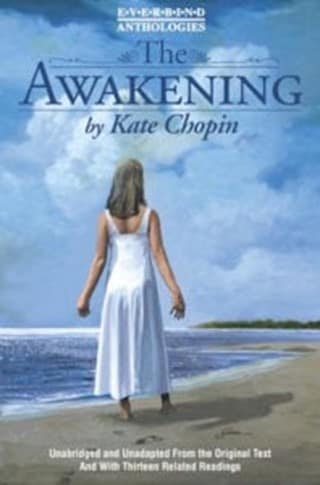
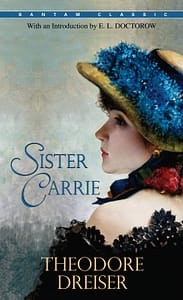


Thanks so much for visiting my site. Your comments are welcome but please play nice…. Reply