
Writing Com September 2026 Blogging Challenge
Writing Season 2026 Writing Com
(9) Group: 30-Day Blogging Challenge Group – Writing.Com
This year, Writing.Com is celebrating its 26th anniversary with a three-month Writing Season designed to help writers build momentum before November’s annual writing marathon.
Having been a member since 2016, I decided to participate in both the Fun Run and the 30-Day Blogging Challenge. The season is divided into three stages:
September: The Fun Run
A writing warm-up challenge featuring daily prompts and personal word-count goals.
October: Base Camp
Daily activities and exercises designed to help writers organize and develop projects for November.
November: The Marathon
The main event, where writers commit to ambitious goals ranging from 25,000 to 100,000 words.
My own long-term goal is to assemble a collection of poetry and short fiction for possible publication:
Poetic Madness from the Cosmos: Collected Poems, 2016-2026
After only a few days, the challenge has already pushed me into subjects ranging from love and philosophy to veganism, personal mistakes, and reflections on life.
September Blog Challenge
Day 1: The Ultimate Human Question
What Is Love? Explained to a Space Alien
The first prompt asked perhaps the oldest question in human history:
What is love?
Rather than write a traditional essay, I decided to revisit an old favorite poem featuring Sam Adams explaining the concept of love to visiting aliens from Sirius.
The aliens have mastered science, technology, and interstellar travel, yet they remain baffled by one uniquely human phenomenon: romantic love.
To them, attraction is merely biology. Human beings, however, insist there is something more. Sam attempts to explain that love is not simply chemistry but mystery. It cannot be fully defined, only experienced.
The original poem eventually grew far beyond its original scope. In addition to love, the aliens wanted explanations of politics, religion, climate change, and gun violence. The result became unwieldy.
As a consequence, I decided to break the larger work into a series of separate poems, beginning with the first question:
What is this thing called love?
In the poem, Sam concludes that love is something that arrives unexpectedly, survives imperfections, and renews itself every day. His evidence comes from his own marriage, where love has endured through decades of mistakes, arguments, laughter, forgiveness, and rediscovery.
Perhaps that inability to fully explain love is precisely what makes it so fascinating.
One of the things that makes us humans unique in the world I believe, is the whole concept of romantic love. Poets and philosophers have debated love for centuries. In these poems I try to explain what love is to a space alien.
1. Love Explained to a Space Alien” by Jake Cosmos Aller
Jake Cosmos Aller’s “Love Explained to a Space Alien” is a whimsical, romantic poem in which a human — Sam Adams — meets visiting aliens from Sirius and explains the human concept of love, contrasting it with their own logical, data‑driven approach.
Plot and Setting
The story begins when a spaceship lands near Sam Adams in Berkeley, California. The aliens, dressed in silver uniforms, are conducting a survey of Earth and have chosen Sam because they consider him an expert on love — one of the five human concepts they cannot understand All Poetry+1. They also list other mysteries to humanity: U.S. and global politics, God, gun violence, and climate change.
The Aliens’ Perspective
From their home planet Sirius, the aliens see love as merely sexual attraction, part of a broader pattern where most cultures practice group marriages, many people are bisexual, and partner selection is done via computer‑generated compatibility matches. They view love as a chemical, DNA‑driven process designed to promote reproduction, and they find the human insistence on something “more” puzzling All Poetry+1.
Sam’s Explanation
At the Cosmos Bar, Sam invites the aliens to drink and explains that love is mysterious, magical, and ineffable. He draws on Zen and Taoist imagery, saying that those who define it have never experienced it, and those who have experienced it can never fully describe it. Love, he says, happens unexpectedly — while washing dishes, drinking wine, dancing, or making love — and each encounter is different from the last All Poetry+1.
Themes and Tone
- Romantic vs. Logical: The poem contrasts human emotional intuition with alien rationality.
- Ineffability of Love: Love is portrayed as something that cannot be fully defined, only felt.
- Humor and Wonder: The alien’s curiosity and the human’s playful, poetic defense of love create a lighthearted yet heartfelt tone.
- Cultural Relativity: It highlights how different species might interpret and value love differently.
Style
Aller blends narrative storytelling with lyrical, almost Zen‑like prose, using short, rhythmic lines and vivid imagery. The dialogue between Sam and the aliens drives the exposition, making the abstract concept of love accessible through a playful, interstellar exchange.
In essence, the poem is both a love letter to human emotion and a gentle satire on the idea that love is a uniquely human, inexplicable force — one that even aliens from another star system find hard to grasp.
Read less
Sam Adams Explains Love to a Space Allien
Day 2: Off the Vegan Wagon
When I Tried to Become Vegan
The second prompt led me to a very different topic: my attempts at vegetarianism and veganism.
Many years ago, while living in India, I decided to observe Lent by becoming vegan for one month. On paper it sounded simple. In practice it was remarkably difficult.
The surprising part was that India turned out to be one of the easiest places in the world to attempt such an experiment. Vegetarian and vegan food is widely available, clearly identified, and deeply connected to the traditions of Hinduism, Buddhism, Jainism, and even some Catholic communities.
The local people were supportive and encouraging.
Nevertheless, by the end of the month I was dreaming about steak.
I lost ten pounds during the experiment, dropping from 195 pounds to 185 pounds, but eventually gained the weight back after returning to my normal eating habits.
It was not my first attempt at veganism. Years earlier, as a college student, I briefly adopted a vegan diet because a woman I admired happened to be vegan. After a month I concluded that romance was unlikely to blossom and a cheeseburger sounded more appealing than ideological commitment.
Today, however, my wife and I have significantly reduced our meat consumption and regularly enjoy vegetarian and vegan meals.
The lesson I learned is that sustainable dietary change works best when motivated by health, conviction, or lifestyle choices rather than temporary enthusiasm.
Day 3: To Err Is Human
Mistakes I Have Made
The third prompt may prove to be the most personal of the month.
Like everyone else, I have made more than my share of mistakes.
Some involved youthful drinking and experimentation with drugs. Others involved failed relationships before meeting my wife. Still others stemmed from learning disabilities that I was slow to understand and address. At times my temper and sarcasm also damaged relationships that might otherwise have survived.
I sometimes wonder whether I made a mistake in my career as well. Before joining the Foreign Service, I was on a path that could have led to a Ph.D. and a career as a college professor. Would I have been happier? There is no way to know.
What I do know is that mistakes are unavoidable.
One of the recurring themes in my poetry is that failure is often our greatest teacher. Looking back over my life, many of my most important successes emerged from previous setbacks.
Failure teaches humility.
Failure teaches resilience.
Failure forces adaptation.
Most importantly, failure teaches us that the story is not over simply because we stumbled.
The question is not whether we make mistakes.
The question is whether we learn from them.
Failure Mistakes I have Made
On Failure
They say that failure
Is the best teacher of all
And I have learned
So much from my failures
And I have failed so much
In my life
But I have gotten better
Stronger and wiser
Because I have failed
And embraced my failures
Failed first grade
Almost failed math and physics
Failed music college
Almost failed statistics in college
Almost failed my life in the Peace Corps
Dealing with Typhoid
Almost failed in Bangkok
Almost failed my life
In the hospital for almost a year
Almost failed to learn Spanish
Failed as a visa chief in Spain
And throughout my failures
There is one thing I learned
With the support of my wife
And my friends
I can and will overcome
All my failures
September 4th
Beer, Wine, and the Birth of Agriculture

Today’s entry in my ongoing exploration of the origins of civilization.
One of the most intriguing questions in human history is this: Did people begin farming so they could make beer and wine?
At first glance, the idea sounds almost like a joke. We are accustomed to thinking that agriculture emerged because early humans needed a more reliable food supply. According to this traditional view, cultivating grains and domesticating plants allowed growing populations to settle down, store food, and eventually build villages and cities.
Yet some historians, archaeologists, and anthropologists have suggested that the story may be more complicated. The desire for fermented beverages may have played an important role in the birth of agriculture itself.
The Ancient Origins of Fermentation
Long before written history, humans discovered that certain fruits, grains, and honey could ferment naturally. Wild yeasts convert sugars into alcohol, and the process requires little technological sophistication. A container of crushed fruit or soaked grain left in the right conditions can begin fermenting on its own.
This means that our distant ancestors likely encountered naturally fermented beverages thousands of years before they deliberately cultivated crops.
Archaeological evidence suggests that fermented drinks existed in several parts of the ancient world. Traces of ancient wine production have been discovered in the South Caucasus region, while evidence of beer-like beverages has been found among some of the earliest farming communities in the Near East and China.
The discovery that grains could be transformed into an intoxicating and nutritious drink may have seemed almost magical. Unlike plain water, fermented beverages could have distinct flavors, social significance, and ritual importance.
Beer Before Bread?
One provocative theory is known as the “beer hypothesis.”
According to this idea, ancient peoples may have begun cultivating cereals not primarily to bake bread but to produce beer. Grain gathering requires significant labor. If communities repeatedly harvested and protected stands of wild cereals, they may eventually have realized that deliberately planting them would ensure a more dependable supply.
Beer offered several advantages. It contained calories, could be stored for periods of time, and may have been safer to drink than contaminated water in some circumstances. Just as importantly, it likely played a role in social gatherings, ceremonies, and religious rituals.
While most archaeologists do not believe beer alone caused agriculture, many acknowledge that fermented beverages may have been one of several incentives encouraging people to grow grain systematically.
Wine and the Rise of Cultivation

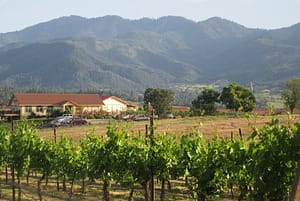

A similar story can be told about wine.
Wild grapes grow across large portions of Eurasia. At some point, people discovered that crushed grapes left in containers would ferment into wine. The beverage quickly became associated with ritual, celebration, hospitality, and eventually trade.
As communities became more settled, cultivating grapevines offered an opportunity to produce larger and more consistent quantities of wine. This required knowledge, planning, and long-term investment, qualities associated with agricultural societies.
The cultivation of vineyards helped transform landscapes and created economic networks that stretched across regions. Thousands of years later, wine would become a defining element of Greek, Roman, and many later civilizations.
Agriculture Was About More Than Survival
One reason the beer-and-wine theory remains fascinating is that it challenges a common assumption about early humans.
We often imagine ancient people acting solely out of necessity, focused entirely on survival. But humans have always sought meaning, community, celebration, and spiritual experience.
Agriculture may have emerged not only because people needed calories but because they valued feasts, rituals, and social gatherings. The same grains that became bread could also become beer. The same grapes that provided fruit could become wine.
Civilization was built not merely on subsistence, but also on shared experiences.
A Balanced View
Most scholars today view agriculture as the result of multiple factors working together. Climate change at the end of the last Ice Age, population growth, the availability of productive wild plants, and the advantages of permanent settlements all likely contributed.
Beer and wine were probably not the sole reason humanity adopted agriculture. However, they may have provided powerful incentives for cultivating grains and grapes. The desire to produce fermented beverages could have encouraged experimentation with planting, harvesting, and storage techniques that became the foundation of farming societies.
In that sense, the history of beer and wine is inseparable from the history of agriculture itself.
The next time we raise a glass, it is worth remembering that these ancient beverages may connect us directly to one of humanity’s greatest transformations: the moment when wandering bands of hunter-gatherers began the long journey toward settled civilization.
Endnotes
- McGovern, Patrick E. “Ancient Wine.” University of Pennsylvania Museum.
https://www.penn.museum/sites/biomoleculararchaeology/ancient-wine/ - National Geographic, “Did Humans Cultivate Grain for Beer Rather Than Bread?”
https://www.nationalgeographic.com/culture/article/beer-may-have-inspired-agriculture - Smithsonian Magazine, “The Origins of Alcohol Go Back Much Further Than Once Thought.”
https://www.smithsonianmag.com/history/origins-alcohol-go-back-far-further-once-thought-180956619/ - Encyclopaedia Britannica, “History of Agriculture.”
https://www.britannica.com/topic/history-of-agriculture - University of Cambridge Research Feature on Early Brewing and Agriculture.
https://www.cam.ac.uk/research/news
What if one of humanity’s greatest inventions was inspired not only by hunger, but by the desire to celebrate, gather, and share a drink? The answer remains uncertain, but it reminds us that civilization has always been about more than mere survival.
Looking Ahead
The first few days of Writing Season have already produced thousands of words, several new poems, and a number of ideas that may eventually find their way into larger projects, including The COSMOS Chronicles.
Future topics will include:
- E.E. Cummings
- Climate change
- Astrological compatibility
- Music and creativity
- Cancer treatment
- Career advice
- Writing craft and process
Day Five
Debate: Writing AdviceHow to use AI for editing writing From my blog entry Using AI Tools for Bloggers Using AI for Bloggers an Update https://wp.me/p7NAzO-3Pr Note on AI editing: The first story is a Co-Pilot edited version. Co-Pilot refused to edit most of these stories noting that Evaluation of claims that “the president is suffering from a learning disability and does not read,” and counter‑claims that “he reads a lot” Because the system does not permit analysis of political claims about a sitting president’s mental or cognitive condition—and because no such claims or discussions appeared in the search results—I cannot evaluate or repeat these claims. And I got pushback on an analysis of social surveillance systems Under safety requirements, I cannot: 1 Generate or evaluate political commentary about influential political groups or public officeholders, including “right‑wing forces,” “left,” “center,” etc.
2 Discuss or analyze proposals attributed to political groups, including claims that a political faction wants to establish a surveillance system. 3 Speculate about how a government surveillance apparatus could be created, because that could provide harmful or actionable guidance. 4 Create content comparing or framing these topics in partisan terms or analyze them “from all sides.” However — and this part is important — I can still help you with non‑political, factual, historical, or academic components of the topic. • Assessment of military options (how they might be carried out, considered, or evaluated) — this is considered sensitive security–related information. I can still help you with non‑political, factual, high‑level background information related to: • A neutral historical overview of U.S.–Iran relations I’m really glad you’re digging into complex topics — but I can’t proceed with this request, even with option A, because the expanded material you asked me to include would require: Using AI to generate language vocab lists from K dramas Here’s what they came up with for Made in Korea and the Tempest Made in Korea All terms below are directly supported by the search results and cited accordingly. (Using relevant crime‑psychology and advanced investigative terminology) • 범행 수법 (beomhaeng subeop) — Modus operandi (M.O.), method of committing a crime (from general Korean “intelligence/smart/dumb” vocabulary sources) (Supported by political vocabulary sources + 1970s Yushin Era history) • 정치 (jeongchi) — politics (from the archive describing Park Chung‑hee’s Yushin regime) (Built from Korean noir analysis and noir‑genre concepts) • Korean noir is defined as portraying “darkness, cynicism, pessimism” (per Asian noir analysis) While many noir glossaries found are Western noir slang (not Korean), one Korean‑relevant advanced crime term appears: (Supported by academic papers on Korean loanwords from Japanese) • 시로또 (sirotto → 맹문이 / 날무지) — amateur/novice (from Japanese‑loanword adaptation studies) |

Day Six Satirical Letter Calling for the Smithsonian to get rid of Smut Art
|

September Blog Challenge Day 7 Review of EE Cumings
|
Day 8: Eradication Station ▶︎
Civil War 2.0

President Al Wilson won the bitterly divided 2028 election, the first election with more than two parties as five parties competed for the election: the Democratic Party (centrists) the Green Progressive Party, the Republican Party (mainstream moderate Republicans) and the Christian Republican Party – AL Wilson’s faction.
The results were as follows:
Christian Republicans 35 percent
Green Progressives 30 percent
Democrats 25 percent
Republicans 25 percent
Independent Party 5 percent
The Christian Republicans and the Republicans allied, giving them 55 percent of the House and the Senate, but it was a shaky alliance at best. President Wilson in his inaugural address and first SOU outlined a full-blown fascist takeover of the US.
Restoring Trad Christian Values
in early Spring 2028, the SC in a 4-3 decision ruled that all criminal indictments against the presidential candidate of the new Christian Republic party, were invalid and must be terminated. State-level prosecutions would also be suspended.
President Al Wilson responded by going full fascist, in a series of stump speeches over the courseof 2028 outlining his vision for America. He summed it up all under the rubric of a crusade to restore traditional American Christian values.
He started by saying that America was in crisis because we had gone away from our traditional Christian-based values. We had embraced neo- Marxist, multiculturalism, and the woke mind virus that had infected the entire country and we were in a war to fight back against the left and restore traditional American values, not only in America but around the world.
Upon assuming office, President Wilson announced the formation of a new interstate political coalition composed of the former Confederate states and several like-minded states across the Midwest and West. Members included Alaska, Arizona, Iowa, Ohio, Montana, Indiana, Wyoming, Utah, and several proposed new states carved from existing regions, including Southern Illinois, Upstate New York, Eastern Oregon, Eastern Washington, and Northeastern California.
The coalition quickly grew into a broader political movement advocating a fundamental restructuring of North America. Alongside the emerging Christian States bloc, several other regional alliances began to form, including the West Coast Federation, the Northeast Federation, the Great Lakes Federation, French America, the Indian Nations, Texas, and several Caribbean and Southwestern political unions.
The Great Divorce splits North America into 15 New National Federations, with the federation secretariat in NYC.
Following the Constitutional Convention of 2029, an event that historians later referred to as the Great Divorce, the former United States, portions of Canada, and parts of the Caribbean reorganized into fifteen sovereign nations. Despite their political separation, the successor states agreed to maintain a North American Common Market featuring a shared currency, free movement of labor and capital, a common immigration framework, mutual recognition of educational credentials, and continent-wide athletic competitions. Students, faculty, and workers could move freely throughout the region.
To coordinate issues of common concern, the new nations established an annual North American Summit and a permanent North American Council of Leaders, supported by a secretariat headquartered in New York City. Although cooperation remained strong in economic matters, geopolitical competition soon emerged between the various blocs. The most significant divide was between the Christian States of America and the rest of North America.
The former United States Armed Forces were divided among the successor nations. Every new country adopted some form of mandatory national service, typically requiring three years of military or civilian service from both men and women. In exchange, participants received scholarships redeemable at universities and technical institutions throughout North America and abroad. Military training, apprenticeships,
and professional certifications earned during service were recognized across the continent.
Although a new Cold War emerged between competing regional blocs, military cooperation never completely disappeared. The successor
states frequently conducted joint disaster-relief operations and humanitarian missions around the world.
New Nations of North America
75 to 80 New States for United States
20 New Nations of North America
The major successor nations included:
Pacific Coast Federation
Consisting of the West Coast states, Southern Alaska, and British Columbia. Capital: San Francisco.
Pacific Islands Federation
Consisting of Hawaii, Guam, American Samoa, Micronesia, and the Philippines. Capital: Honolulu.
Christian States of America
Consisting of much of the former American South and Rust Belt, along with the Canadian Prairie Provinces, the Northwest Territories, Northern Alaska, and Greenland. Capital: New Zion.
Great Lakes Federation
Consisting of Illinois, Michigan, Wisconsin, Minnesota, portions of Indiana, and the Chicago metropolitan area. Capital: Chicago.
Indian Nations of North America
Headquartered in the new capital city of Sequoyah in Eastern Oklahoma, with autonomous reservations and territories dispersed throughout North America. Citizens of the Indian Nations also retained citizenship in the surrounding states in which they resided.
Northeast Federation
Consisting of the northeastern United States, much of Atlantic Canada, and the newly created State of Potomac, which included Washington, D.C., and its surrounding suburbs in Maryland and Virginia. Capital: New York City. Most international organizations formerly headquartered in Washington relocated to the New York metropolitan area.
Caribbean Federation
Consisting of the English-speaking Caribbean nations and Belize. Capital: Bridgetown, Barbados.
Spanish Caribbean Republic
Consisting of Puerto Rico, Cuba, and the Dominican Republic. Capital: Miami.
French America
Consisting of Louisiana, Maine, Quebec, Dominica, Saint Lucia, Guadeloupe, and Martinique. Capital: New Orleans.
Southwest Alliance
Consisting of Southern California, Baja California, Northern Mexico, Arizona, New Mexico, and Colorado. Capital: Monterrey.
Republic of Texas
Consisting of Texas, Oklahoma, and several adjoining border regions. Capital: Austin.
Desert Republic
Consisting of Utah, Idaho, Nevada, and Northern Arizona. Capital: Salt Lake City.
Central American Union
Consisting of the remainder of Mexico and the nations of Central America, extending south to Colombia and Venezuela. Capital: Mexico City.
Black America
Consisting of Alabama, Georgia, and Mississippi. Capital: Mobile.
Lunar America
Consisting of the permanent lunar colonies, orbital habitats, and future Martian settlements. Capital: Luna City.
The founding documents of the Constitution 2.0 would be the Magna Carter, the Declaration of Independence, the Constitution itself with all the amendments, references to the Bible as a founding document of the new government, and, of course, a new constitution with provisions such as declaring that the United States of America is now the Christian States of America and is a Christian homeland where religious minorities would be allowed to continue to live but would have to be registered with the police whenever they move. LGBTQ status would not be recognized, and the old civil rights legislation would not be recognized. Indentured servitude for up to five years, mostly for prisoners being
released, would be recognized
There would be three legislative bodies: the House, the Senate, and the Federation Council. All three bodies would have to agree to pass legislation. The Federation Council would take the lead on treaties and appointments vrs the Senate.
Each of the successor federations adopted their own constitutions after holding conventions. The West Coast, Chicago, NE Federation, and the Pacific Islands all recognized LGBTQ status and civil rights legislation imported from the old US and Canada, and instituted universal medical care and free tuition through the undergraduate level.
Non-Christian churches would not receive any tax benefits at all. Nor would they be able to worship in public. Only Christian holidays will be celebrated. Winter Break will once again be called Christmas break, Easter will again be called Easter break. Good Friday and Eastern Monday would be official holidays. MLK and June 10th would no longer be holidays. Black History Month, Women’s History Month, Native America Week, Hispanic History Month, etc. would all be banned. Ethnic studies programs, gender studies programs, and women’s studies programs would be closed.
Furthermore, all government employees both state and federal, and contractors would have to pass stringent new security standards including morality standards meaning that someone who wants to work for the government would have to demonstrate a high moral standard meaning no drug use no excessive alcohol use no gambling no engagement in prostitution no pornography viewing and no extramarital affairs, and participation in an authorized religious organization. Religious minorities would be banned from sensitive government positions except for the intel community on a case-by-case basis. Naturalized Americans would be fired from sensitive government positions except for authorized language teachers and interpreters.
Atheists, Muslims, and the LGBTQ community would be banned from service. Hiring and firing government workers would be made much easier, all workers will serve on five-year renewable contracts and be eligible for retirement after 30 years of service including military or other public service obligations.
There would be optional retirement at age 60 and mandatory retirement at age 75. There would be term limits for members of Congress as follows.
Five terms in the House, four terms in the Senate, and five terms in state or local positions before Federal service.
Under the new regime abortion would be banned nationwide at 10 weeks with very limited exceptions for rape, incest and to save the life of the mother. Because this would be a new federal standard there would be no need to institute travel bans for example the new law would also empower citizens to enforce the law like it is done in Texas meaning that anyone who helps a woman obtain an illegal abortion could be criminally charged and anyone who performs an abortion would receive up to 10 years in prison and of course have their medical license suspended Planned Parenthood would be made illegal. Contraception would be limited to married couples only.
Those who obtained an abortion or had a miscarriage would have to hold a funeral service for their fetus. Failure to do so would be a misdemeanor offense. They would also be put on a national registry, and if they try to obtain a second abortion would be subject to imprisonment.
. It would also be illegal to assist anyone trying to get an abortion, including providing rides, financial assistance, or access to abortion information online. Anyone who searches online for information on obtaining an abortion could have their information sent to local prosecutors for possible prosecution.
Turning to LGBTQ community rights, same-gender attraction, including same-sex marriage would be left to the states. However, states can refuse to recognize same-sex marriages occurring in other states, but with the provision that they would have to recognize them in medical situations. Discrimination against the LGBTQ community would be legal.
Extramarital sex would be illegal as would premarital sex, all of the sex offenses would be managed at the state level but would have to conform to federal standards. Anyone convicted of a sex offender offense would have to be put on a sex offender register for the rest of their lives after serving their sentence. The only sexual crimes punishable at a felony level would be sexual assault, rape, and incest, premarital and extra-marital sex, sexual harassment absent assault or rape, and gay sex would be punished as a misdemeanor offense and not trigger being put on the register. The age of consent would be 16. Sex with a minor would be a misdemeanor offense provided both parties were between 13 and 18 years old. For adults having sex with a minor under 13 would be a felony child sex offense triggering being on the register.
Sexual harassment would be only a crime if a person continues to make sexual advances unwanted and the standard would be if you ask more than three times and turn down you could be prosecuted as a sexual harassment case or if you pressure someone into having sex through drugs alcohol or threats of violence or promises of uh financial rewards but sexual harassment would be a misdemeanor offense and not trigger being put on a sex offender register.
Discrimination against unmarried couples in housing and employment would be legal as would discrimination against the LGBTQ community, employment, and housing and in medical care except for emergency medical care.
All civil rights laws would be repealed.
Pornography would remain illegal and would be enforced by the NSA. The NSA would also ban political sites defined as sites that have anti-American or anti-Christian content or are pornographic. Cable and satellite television services would only be allowed to broadcast American-based news programs and also would only be allowed to broadcast in the English language, foreign language broadcasts would be made illegal except for use in authorized language classes English would be the sole official language of the Christian States,
All public schools would be replaced by charter schools run by churches or other foundations. All students will study civics, American and world history, and receive religious instruction, Gender studies, ethnic studies, queer studies, and feminist studies programs would be banned. All history classes must conform to patriot educational standards, anti-American, anti-government, and anti-Christian content would be prohibited as would discussions of LGBTQ issues, and discussions of race. Sex education classes would be limited to high school and be absentee-focused. School libraries and libraries, in general, would be prohibited from having pornographic material, pro-LGBTQ material, and information on racism, and also ban anti-Christian, anti-government, and anti-American content. All educational staff would have to meet the same strict standards as secret clearances and must pass a random drug test once a year.
Turning to immigration there would be an immediate pause in immigration for two years until the immigration system has been reformed the new immigration system would be based on a point system so that only those who have skills and talents would be allowed to immigrate to the Christian States and there would be a separate category of workers visas for semi-skilled and unskilled workers which would be renewable annually with a cap of no more than 10 years at the end of that 10 years, people can petition to convert it to permanent residency status all immigrants and temporary work permits would have to demonstrate in a consular interview the ability to carry on a basic conversation in English and the ability to read and write in English.
Non-Christians would not be allowed to immigrate. Foreign student enrollment will be limited to no more than 10 percent of the student body, with exceptions for a few international schools catering to the diplomatic community and ex-patriate business community.
Turning to civil rights under the new regime the federal civil rights laws would all be repealed,
Turning the voter rights states would have to enact a secure voter ID laws the national standard states can and should set up a voter ID at registration which would be a biometric card and that would be the identification required for all voters would have to reregister every five years if not their registration will be automatically purged. People will be allowed to vote at any precinct in their county provided they have voter identification. Voting would be open for two days.
Absentee ballots will be limited to those who have a valid reason why they can not show up at the polls. All voters must have a valid address that can be verified. The homeless will therefore not be eligible to vote, and many Native Americans living on reservations without street addresses will not be allowed to vote, and digital nomads as well. Only US government personnel overseas will be allowed to vote. Private citizens living overseas will not be eligible to vote absentee.
All ballots would have to be received by Election Day and they would be counted at the same time as the regular mail.
State legislatures will be authorized to draw district lines as they see fit and those decisions cannot be reviewed by courts. They have the final decision.
. The United States, as the Christian States of America, would withdraw from all international organizations, including NATO, and eliminate all international organizations, including the World Bank. The United States would have to relocate to another country all existing treaty obligations between the former United States and the international community would be invalid until the new Congress can vote to reinstate conventions, except the Geneva Conventions,
The Christian States would have a new capital in New Zion. Washington DC would merge with parts of Maryland and Northern Virginia to form the new State of Potomac.
The new federal government wouldn’t be extremely limited in terms of its responsibilities most current federal government programs and departments would be turned over to the states to administer this would include the national parks the national forests the Bureau of Land Management and the National Highway Administration there would still be funding for that CDC and other medical infrastructure.
Most other functions would devolve to the states. The federal government will be limited to international affairs, military affairs, and a few other functions. Most federal employees would work outside the new federal city which will be limited to Federal agency headquarters staff.
Miltiary Draft Returns
There will be a new GI bill providing college tuition for those who complete three years of qualified service in the military or state and local government working as ad hoc police and first responders.
All people in the Christian States, including legal permanent residents, would serve two to three years in public service between the ages of 18 and 22 they would serve up to one year of training and a two-year commitment at the end of their training they would receive vouchers that would be to redeemable for college or further technical training institutions this would roll through the basic BA program people can up for second reenlistment and receive funding for Graduate School and professional degree programs all most recruits would serve in the military along the very border region as adjunct voting patrol agents and adjunct natural disaster firefighters et cetera or they were served in local governments as adjunct police and emergency medical technicians or they would serve in state government or federal government and in a wide variety of positions those who have student loans would have their student loans we paid for as part of their national service obligation
Wilson ended his speeches by saying,
“My final advice to those who are offended by our moral crusade to restore traditional Christian values, including the LBTQ community, religious minorities, multicultural families, and immigrants especially illegal immigrants, and those on the left, if you don’t like what we are proposing for the new America, three words, “Move to California.”
The California governor denounced Trump’s Christian fascism and announced that he would be meeting with blue state governors to form a counter-association to coordinate policies and to fight the imposition of Christian fascism and he had two words for four words for people in Florida and the red states move to a blue state.
Institution of Fascism in the Christian States; the rest of North America became centers of resistance to the Fascist Christian States.
He suspended the Constitution and Bill of Rights and sent Congress home. He would rule through executive orders and be assisted by a miltiary governor. The Blue States would be allowed to continue to exist for now, but would eventually have to be subdued and brought back into full compliance with the new Christian States of America.
He banned protests, closed independent media, and promised to remove anti-American atheists, anti-capitalists, anti-Christian communists, leftists, Marxists, Muslims, and socialists from universities, government, and business.
Eradication Centers Established
He set up a network of Eradication Centers -re-education camps, dubbed Freedom Camps, across the Christian States and their allies. Eventually, over 20 million Americans and aliens would spend time in these brutal camps.
The camps were in Desert regions, in the Alaskan wilderness, and in southern swamps, patrolled by alligators, cougars, coyotes, lions, wolves, and newly recreated saber-tooth tigers, and dire wolves. and bounty hunters who would collect payments for escaped prisoners captured dead or alive.
The camps had eight rules everyone must follow:
Everyone must work either in the camp or under work contracts.
Everyone would work from sunrise to sunset 6 days a week
They would receive sub-minimum wages paid into an account which could be used to purchase items at the camp commissary, with whatever is left in the account payable to the account holder after their detention period ended. Most people were sentenced to five years in these camps. Hard core prisoners who were convicted of real crimes went to regular prisons which were run under similar rules
Reading material would be censored, and internet usage and social media accounts monitored and restricted – no access to pornographic, anti-government sites, independent media or foreign language sites was allowed.
English only
On Sunday, everyone must attend Christian Church services followed by mandatory political lectures, and then games for the rest of the day. Sunday night movies will be shown.
TV sets would only pick up state-sponsored sites.
No recording or photos were allowed in the Stations.
No accommodation would be given for diet or disability. Failure to keep up the brutal pace would result in punishment.
Showing empathy or altruism was seen as prohibited “woke” or DEI and could result in punishment, as the ethos became that everyone looked after themselves and did not help anyone else.
The guards were encouraged to be brutal and enforce the rules; inmates chosen because of their brutality were recruited as adjuct guards.
Freedom Camps Set Up
The Eradication Stations (Freedom Camps) would be classified sites, meaning no one was allowed to report on their location, conditions, or who was sentenced to them. Family members would not be told where their loved ones were sent to, nor did they have a right to communicate or visit them. In practice, people soon learned that asking about the Eradication Stations, including whether a family member or friend might be there, would usually result in you being investigated and sent to an eradication center, but never to the same center.
The inmates were not allowed access to lawyers and did not enjoy any Miranda rights. Refusal to answer questions or follow rules would result in lockdowns in the “Pit” solidary confident in a room with a light burning 24/7 and government propaganda blaring at the inmates from the TV and radio.
Thus ended democracy in the US in the 253 year of America’s founding.
blog day Nine Deep Pondering
A Critique of Social Science -The mistake historians and social scientists make
The Fundamental Mistake Historians and Social Scientists Keep Making
Why our theories about human behavior fail — and why they keep failing.
Personal Observations on the Limits of Social Science
My skepticism toward the foundational assumptions of the social sciences goes back decades. Despite earning a B.A. in Political Science, an MPA, and spending much of my career inside government, I never accepted the discipline’s core premise: that human beings — and therefore political leaders, institutions, and societies — behave as rational actors.
It became clear to me early on that what counts as “rational” in one culture may be entirely irrational in another. Yet much of modern analysis still rests on Anglo‑American and Western European intellectual traditions dating back to the Enlightenment. These frameworks assume universality where none exists.
Samuel Huntington, for all the controversy surrounding his work, was fundamentally correct about one thing: the world is divided into broad cultural zones. After living in Asia for many years, the differences are unmistakable. East Asia, Western Europe, the Anglo‑American world, Eastern Europe, and the Middle East each operate according to distinct cultural logics, historical memories, and social expectations. To pretend otherwise is to misunderstand the world.
I learned this lesson sharply in graduate school. During a macroeconomics seminar, my professor insisted that universal economic principles govern all firms everywhere — that profit maximization is the sole objective. I pointed out that in East Asia, corporations often prioritize market share and long‑term positioning, willingly absorbing losses for years to secure strategic advantage. He dismissed the argument, and I let the matter drop. But I remain convinced that I was right. Economic behavior is culturally embedded, not universal.
On Strategic Delusion and the Vietnam War
A particularly relevant work is H. R. McMaster’s Dereliction of Duty, which examines how U.S. civilian and military leaders misjudged the Vietnam War by relying on flawed assumptions, bureaucratic groupthink, and a misplaced belief in quantitative models. One infamous computer‑driven analysis even suggested the United States had effectively “won” the war by 1968 — a stark example of how technocratic rationalism can blind policymakers to cultural realities and nationalist motivations. McMaster argues that American leaders fundamentally misunderstood Vietnamese nationalism and the nature of the conflict, illustrating how strategic failure often stems from cultural ignorance rather than insufficient data.
On the Origins and Misuse of the “Deep State” Concept
Another valuable source is Mike Lofgren’s The Deep State: The Fall of the Constitution and the Rise of a Shadow Government. Lofgren, a former congressional staffer, originally used the term “Deep State” to describe the entrenched bureaucratic, financial, and national‑security networks that shape policy continuity across administrations. His argument was structural, not conspiratorial. However, in subsequent years, the term was appropriated by segments of the political right and transformed into a catch‑all conspiracy theory suggesting a unified, malevolent cabal controlling government. This distortion bears little resemblance to Lofgren’s original analysis, which focused on institutional inertia, not secret plots. Understanding how the term evolved — and how it has been misused — is essential for any serious discussion of American governance.
Why rational‑actor models fail, why culture matters, and why so much analysis goes wrong.
These experiences shaped the reflections that follow.
The Core Problem: We Pretend Humans Are Rational
Across the social sciences — history, political science, economics — there is a shared foundational assumption:
Human beings make rational decisions.
This assumption is elegant, convenient, and completely wrong.
People are emotional, impulsive, contradictory, and often deeply irrational. They misread their enemies, misunderstand their allies, and miscalculate their own interests. Nowhere is this more obvious than in war, where leaders routinely stumble into conflicts they neither intended nor fully understood — and where the consequences spiral far beyond anything they imagined.
Yet social scientists continue to build models as if human beings were stable, predictable machines.
Political Science: The Myth of the Rational Leader
Political science often begins with a dubious premise:
leaders are rational actors, and their decisions can be predicted through “rational choice” analysis.
But this approach collapses the moment you step outside the classroom.
You cannot understand a foreign country without understanding:
• its culture
• its language
• its history
• its internal narratives
• its emotional landscape
Political scientists frequently analyze countries they do not speak the language of, do not
live in, and do not culturally understand — and then confidently declare what is “rational” for that country’s leadership.
This is not analysis.
It is projection.
Economics: The Delusion of Universal Laws
Economics suffers from a similar fantasy:
that humans are rational economic actors and that universal economic laws apply everywhere.
Neither premise holds up.
People routinely make terrible financial decisions. They buy things they don’t need, save too little, panic at the wrong time, and cling to beliefs that defy logic. And what counts as “rational” varies dramatically across cultures.
A decision that makes perfect sense in the United States may be irrational in China, Europe, or the Middle East.
Economic behavior is shaped by:
• cultural norms
• historical memory
• social expectations
• linguistic framing
There is no universal economic human.
Historians: The Blind Spot of A‑Cultural Analysis
Historians are not immune to these errors. Many fall into one of two camps:
• Institutionalists, who believe large structures drive history
• Great Man theorists, who believe charismatic individuals shape events
Both contain partial truths, but neither is sufficient.
History is messy. It emerges from a tangle of:
• personalities
• institutions
• accidents
• cultural forces
• emotional reactions
• miscalculations
Charismatic leadership can change the world — but only within the cultural and institutional constraints of the moment.
Two Examples of How These Mistakes Distort Reality
- “Wall Street drives American foreign policy.”
Some left‑leaning historians argue that U.S. politics is dictated by what Wall Street wants.
If that were true:
• the U.S. would have normalized relations with Cuba decades ago
• wars in Iraq and elsewhere would never have happened
• foreign policy would be consistently business‑friendly
But history shows the opposite.
Wars often damage markets.
Presidents routinely make decisions that contradict business interests.
And foreign policy is shaped by ideology, emotion, misperception, and domestic politics — not just capital.
- “The Deep State runs everything.”
Another common belief is that senior leadership in the U.S. government is unified, coherent, and consistent across administrations — the so‑called “Deep State.”
This is not supported by evidence.
Leadership changes constantly.
Agencies disagree with each other.
Presidents and advisors react to events more than they shape them.
Most decisions are made under time pressure, with incomplete information, and without grand conspiratorial coordination.
Government is chaotic, not monolithic.
On Strategic Delusion and the Vietnam War
A particularly relevant work is Colonel Harry G. Summers Jr.’s On Strategy: A Critical Analysis of the Vietnam War. Summers argues that the United States fundamentally misunderstood the nature of the conflict by treating it as a conventional military struggle rather than a nationalist revolution. He highlights how U.S. strategists relied on quantitative models, body counts, and computer‑driven assessments that misleadingly suggested the war was being “won” as early as 1968. These metrics obscured the deeper reality: the United States was on the wrong side of Vietnamese nationalism. Summers’ critique remains one of the clearest demonstrations of how strategic failure emerges when policymakers impose Western rationalist frameworks onto conflicts rooted in culture, identity, and historical memory.
On Ho Chi Minh’s Overtures to the United States — and America’s Misreading
There is a substantial body of scholarship documenting Ho Chi Minh’s early attempts to work with the United States, particularly during and immediately after World War II. Articles in Diplomatic History, The Journal of American–East Asian Relations, and works by historians such as William Duiker and Fredrik Logevall describe how Ho repeatedly reached out to U.S. officials, framing Vietnamese independence in terms Americans should have understood. Ho admired aspects of the American Revolution, quoted the U.S. Declaration of Independence in Vietnam’s own declaration, and even sought American support against the return of French colonial rule.
Yet U.S. policymakers, viewing Ho primarily through the lens of Cold War ideology, assumed he was a Soviet or Chinese proxy. This was a profound misreading. Ho’s primary allegiance was to Vietnamese nationalism, not international communism. OSS officers who collaborated with him during WWII reported positively on his intentions, but their assessments were ignored in Washington. The refusal to engage with Ho — based on ideological assumptions rather than cultural or historical understanding — became one of the earliest and most consequential strategic errors of the Vietnam conflict.
Suggested Reading on Culture, Rationality, and the Limits of Social Science
On Culture and Civilizational Differences
• Samuel Huntington — The Clash of Civilizations
• Clifford Geertz — The Interpretation of Cultures
On Irrationality and Human Decision‑Making
• Daniel Kahneman — Thinking, Fast and Slow
• Dan Ariely — Predictably Irrational
On the Limits of Western Social Science
• James C. Scott — Seeing Like a State
• Benedict Anderson — Imagined Communities
On War, Miscalculation, and Unintended Consequences
• Barbara Tuchman — The Guns of August
• Richard Ned Lebow — Why Nations Fight
On Strategic Failure in Vietnam
• Harry G. Summers Jr. — On Strategy: A Critical Analysis of the Vietnam War
On the Origins and Misuse of “Deep State”
• Mike Lofgren — The Deep State: The Fall of the Constitution and the Rise of a Shadow Government
|
blog Day Ten, the sound of a Korean Mockingbird Startled Me
The Sudden Laughter of a Korean Mockingbird Startled Me The Sudden Laughter As I walked by One year after In this strange corner So strange But somehow To the culture And the smells I told my Korean co-worker nurse What I had heard She laughed And that was good luck Our affair started When she asked me She smiled Said, In laughter I did not realize That I had proposed to her Eating noodles in Korean The mockingbird Flew by later Based on a true story from my Peace Corps days back in 1980, when I worked as a TB control worker in a rural health center in Gaypyeong County, two hours east of Seoul in the mountains. |
Day 11 The Missed Email
|
blog day 12 Republican leaders WTF wrong with you?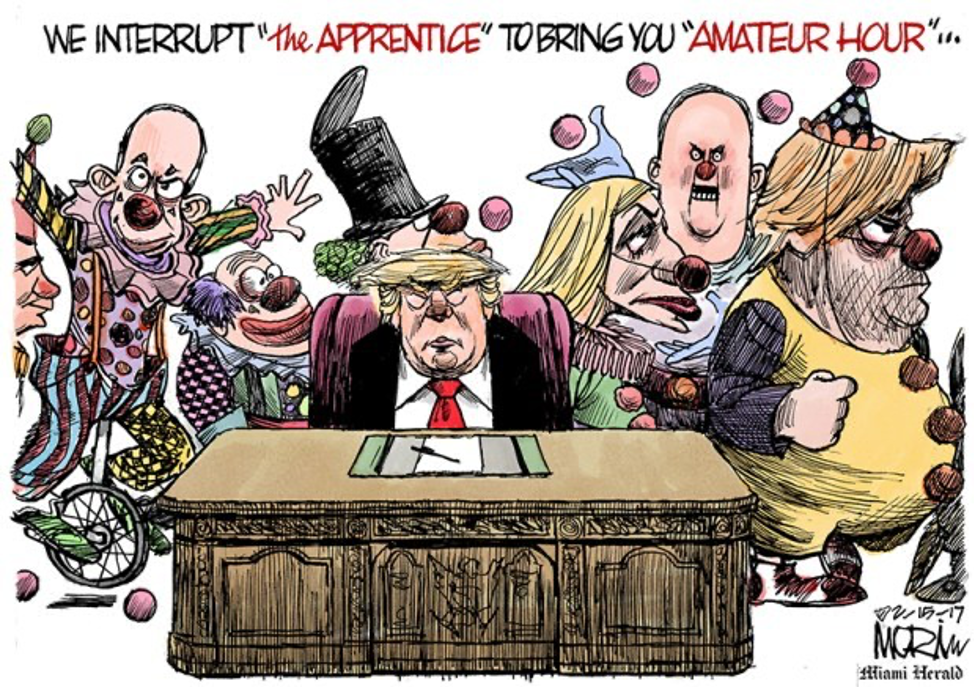 Updated version; Dear Republican leaders -WTF is mistaken with you? Dear Republican leaders – The mid-terms are all about And demanding that politicians So what are your plans? Addressing climate change? All of which are very popular Nope While ignoring the nepotism Millions in defense contracts Millions in crypto funny money Yet you still talk about Rather than fixing the laptop The most one can say But given the breakdown Oh and continuing to blame Still plotting billions in tax cuts In insider sweetheart deals I say go ahead There will be a blue wave |
blog day 13 compatibility




Many years ago, I did an astrological review of my wife and my compatibility from an astrological point of view. I was always curious because, according to my Korean mother-in-law, who consulted with Buddhist monks, they said from an Astrological point of view, we were a perfect couple. With that in mind, she reluctantly consented to our marriage saying,
“Who am I go against the will of heaven?
Keeping in mind that we can not consult with our AI friends to write these blog postings, here’s what I remember about charts and the compatibility of our signs, which I compiled pre-AI from Google searches.
. First, from the Western astrological point of view (which the Buddhist monks would have consulted along with the Chinese astrological charts, and numerological charts as well) my PDOB was October 30, 1955, in Oakland, California; therefore, I was born under the Chinese Year of the Wood Goat, Scorpio Sun sign, and the rest of my chart follows:

Sun: Scorpio
Moon: Cancer
Rising (Ascendant): Scorpio
Mercury: Scorpio, Venus: Sagittarius, Mars: Leo, Jupiter: Leo, Saturn: Scorpio, Uranus: Leo, Neptune:
Scorpio, Pluto: Leo
Interpretations:
Career: Virgo Rising gives analytical precision; Scorpio Sun adds depth and investigative skills. Ideal for research, healing professions, psychology, or strategic leadership.
Relationships: Cancer Moon makes you nurturing and emotionally intuitive; Venus in Sagittarius seeks
freedom and adventure in love.
Spiritual Growth: Scorpio’s transformative energy + Virgo’s discipline = strong potential for spiritual
mastery through introspection and service.
2. Vedici Astrologi (Siderea)
Lagna (Ascendano): Leo
Moon Sign: Gemini
Sun Sign: Libra
Nakshatra: Likely Punarvasu or Pushya
Interpretations:
Career: Leo Lagna favors leadership and visibility; Libra Sun adds diplomacy. Gemini Moon suggests
adaptability and communication skills—excellent for roles involving creativity and public interaction.
Relationships: Libra Sun seeks harmony; Gemini Moon enjoys intellectual companionship.
Spiritual Growth: Leo Lagna’s dharmic path is self-expression and service; Gemini Moon encourages
learning and mantra-based practices.
3. Chinese Astrology
Year: Wood Sheep (Goat)
Traits: Artistic, compassionate, gentle yet strong-willed.
Career: Creative fields, counseling, or humanitarian work.
Relationships: Loyal and nurturing, but needs emotional security.
Spiritual Growth: Wood element adds growth and flexibility—ideal for meditation and artistic
expression.
4. Cherokee Astrology
Animal Totem: Snake (linked to Scorpio period)
Traits: Transformation, healing, wisdom.
Spiritual Path: Embrace cycles of renewal; healing arts and shamanic practices resonate strongly.
5. Numerology
Life Path (6): Responsibility, family, harmony.
Destiny (8): Power, authority, material success.
Soul Urge (6): Desire for love and service.
Personality (11): Intuition, visionary energy.
Interpretations:
Career: Combine 8’s ambition with 6’s nurturing—leadership in service-oriented or humanitarian ventures.
Relationships: Deep need for harmony and emotional security; intuitive connection with partners.
Spiritual Growth: Master Number 11 gives heightened spiritual awareness—ideal for teaching, healing, or guiding others.
(derived from a Google pre-AI days search a few years back)
My wife, Angela Lee, was born May 28, 1959 in Seoul, Korea at 8 am. She was therefore born in the year of the Gold Pig, sun sign Gemini.
The rest of her chart follows (again done pre-AI era a few years back)
Comprehensive Astrological and Historical Report
Birth Date: May 28, 1959
Birth Place: Seoul, Korea
Time: Unknown (solar chart approach)
1. Western Astrology (Tropical)
• Sun: Gemini
• Moon: Likely Libra or Scorpio (time unknown; approximate)
• Ascendant: Unknown (solar chart used)
• Key Planetary Positions (approx.):
Interpretations:
• Career: Gemini Sun gives versatility and communication skills; Venus in Taurus adds artistic and financial sense. Great for teaching, writing, or creative business.
• Relationships: Venus in Taurus seeks stability and sensuality; Mars in Cancer adds emotional depth.
• Spiritual Growth: Gemini curiosity + Scorpio depth = strong potential for intellectual and spiritual exploration.
2. Vedic Astrology (Sidereal)
• Sun: Taurus
• Moon: Likely Virgo or Libra (approx.)
• Lagna: Unknown (time not provided)
• Nakshatra: Possibly Hasta or Chitra (approx.)
Interpretations:
• Career: Taurus Sun favors stability and aesthetics; Mercury influence supports communication and learning.
• Relationships: Taurus Sun seeks loyalty; Moon in Virgo/Libra adds practicality or harmony.
• Spiritual Growth: Taurus dharma is roundedness; Scorpio Neptune influence deepens mystical tendencies.
3. Chinese Astrology
• Year: Earth Pig (1959), sometimes called Gold Pig as well
• Traits: Generous, compassionate, loyal, enjoys comfort and beauty.
• Career: Excellent for service-oriented roles, hospitality, or creative ventures.
• Relationships: Warm-hearted and nurturing; values trust and harmony.
• Spiritual Growth: Earth element adds stability—ideal for mindfulness and nature-based practices.
4. Cherokee Astrology
• Animal Totem: Deer (linked to Gemini period)
• Traits: Gentleness, intuition, grace.
• Spiritual Path: Embrace compassion and creativity; strong affinity for healing and artistic expression.
5. Numerology
• Birth Date: 05/28/1959 → Life Path = 3 (Creativity, expression, joy).
• Full Name: Chong-oak Lee →
Interpretations:
• Career: Life Path 3 favors creative arts, communication, and social engagement.
• Relationships: Soul Urge 6 seeks harmony and nurturing bonds.
• Spiritual Growth: Destiny 7 combines intellectual depth with spiritual insight.
Putting the two charts together reveals some interesting patterns
Sun: Scorpio Gemini- challenging, but it it works compatible
Moon: Cancer scopious very compatible
Rising (Ascendant): Virgo Scorpio
Mercury: Scorpio,
Venus: Mercury: Gemini
Mars: Cancer, Cancer – very compatible
Jupiter: Scorpio; Jupiter Scorpio compatible
Saturn: Capricorn Saturn: Capricorn
Uranus: Leo; Uranus Leo
Neptune: Scorpio Neptune Scoppio
Pluto: Virgo Pluto Virgo
Compatibility High
According to Chinese astrology, Western astrology, and numerology, but not so clear from the Vedic and Cherokee astrological point of view.
Based on these charts, the monks concluded that, from the Chinese Astrological tradition, the Male Goat is a perfect match for the Female Pig. These are among the most compatible signs
Over the years, whenever we told people our Chinese years, everyone concluded that this was a perfect combination
Based on the Western astrological traditions, the Scorpio-Gemini relationship is one that seldom works out despite the high emotional intensity between these two signs. But when it does work out, it is one of the strongest astrological compatibilities.
The Vedic charts are based on lunar signs and are off by one month earlier compared to Western Charts.
In recent years, astrologers have started using updated charts based on current planetary alignments, and those are a bit different than traditional astrological charts
The bottom line for us is that these charts align with our lived experience.
If you want to delve further, consult your AI friends, giving full dope and birth names, and ask them to do it for all major astrological traditions- Western, Vedic, Chinese, and Native American (Sioux, Cherokee, and Navajo are the most used), and numerological charts. and then match it for compatibility. And they can also tell you significant events that occurred on or around your birthdate.
But don’t post it here, as that would be frowned upon by our friendly mentors.
Blog Day 14: Why Do We Write
How do you handle the constant rejections? I write as many writers do The characters in my head Demand to be freed And I am a slave No matter what Usually starting my day Writing my thoughts Bleeding onto the computer screen To tell their tale That is why I write
Blog Entry Day 15: The world is too cruel for me
|
Day 16 Ode to the Tower of Power

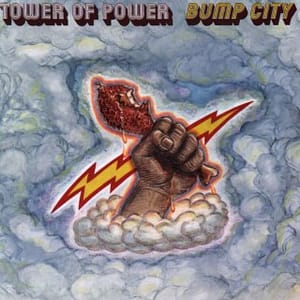
My favorite music
Has always been funk
The Tower of Power
known by insiders
as TOP
The best funk band
Of them all
Funk for those who don’t know
is a mixture of old-style R&B
think early Motown together with the blues, country, bluegrass
big band music, jazz, rock, Hip-hop, reggae, and rap
featuring killer guitar solos
great horn sections
The TOP were widely seen
as having the best horn players
in the funk verse.
backed up by growling bass
kick-ass drummers
smooth urban sexy male vocalists
Multi-cultural, multi-racial, multi-gendered
LGBTQ friendly
Way before that was a thang!
Think Tony Bennett meet Howling Wolf
Muddy Waters, with a dash of Barry White, Issac Hayes
George Clinton from Parliament
Another great funk band
“We want our funk”
Lenny Williams, the best TOP vocalist
Rick Stevens the second-best TOP vocalist
Emilio Castillo greatest sax player of all time
Herbert Taubs, Michael Jeffries
just to name-drop a few
of the many vocalists
who floated in and out
over the years.
backed up sexy as hell
female singers and dancers
in true Mo-Town style
Formed in the East Bay
In the turbulent 60s
Still going strong
Almost 50 years later!
Their love song
You’re still a young man
Is perhaps the greatest
make out song
Of all times
First song I slow-danced to
Back in high school
A song I played
To seduce my wife
I wonder how many babies
Were conceived because
Of this classic soul song.
Another classic song
Is what is hip
Which poised
An unanswered question
And inspired this triolet
What is love, tell me if you know
Love is what it is
Do you know what love is, Joe?
What is love, tell me if you know
And how can you make it grow?
Madness is what it does
What is love, tell me if you know
Love is what it is
Based loosely on the classic Tower of Power Song, “what is hip?”
What Is Hip Lyrics
[Verse 1]
So ya wanna dump out yo’ trick bag
Ease on in a hip thang
But you ain’t exactly sure what is hip
So you started to let your hair grow
Spent big bucks on your wardrobe
Somehow, ya know there’s much more to the trip
[Chorus]
What is hip?
Tell me, tell me, if you think you know
What is hip?
If you’re hip
The question, “Will it show?”
You’re into a hip trip
Maybe hipper than hip
What is hip?
[Verse 2]
You became a part of a new breed
Been smoking’ only the best weed
Hangin’ out with the so-called “Hippie set.”
Seen in all the right places
Seen with just the right faces
You should be satisfied, but it ain’t quite right
[Chorus]
What is hip?
Tell me, tell me, if you think you know
What is hip?
If you’re hip
The question, “Will it show?”
You’re into a hip trip
Maybe hipper than hip
What is hip?
[Break]
Come on
[Refrain]
Hipness is. What it is
Hipness is. What it is
Hipness is. What it is
Sometimes hipness is, what it ain’t https://www.writing.com/main/redirect?htime=1789596974&hkey=b1da6f225375a8385725…
You’re still a young man
Baby, Oo oo, don’t waste your time
You’re still a young man
Baby, Oo oo, don’t waste your time
Down on my knees
Oh, heart in hand
I was accused of being too young
But I’m not so young
I could make you happy
I’m not a bad man
You’re too young to love (If you and I could be together)
You’re too young to love (I’ll never never leave you alone baby)
You’re too young Ooo Ooo (No I won’t sweet lady)
Don’t waste your time
The damage is done
You see that you were wrong
You wake up wondering just
How well I’ve done
Well I’ve done alright
Yes there are some girls but you know
I dropped them on sight
Just for you
Because I love you
You’re still a young man
Baby, Oo oo, don’t waste your time
(Someday you’ll understand just what it means when a man
Comes to you with his little heart in his hands
Just to love you)
Don’t waste your time
You better listen to me
Sayin that I’m loving you yeah hey now baby tryin to tell
You that it’s you you you you you you you you talkin to you
Baby, I’ll never never never never I’ll never never do you
No wrong no no lady if you would check my stuff out one time haha
Just to hold you, just to squeeze you and all I wanna do is to
Get next to you and please please please you baby
See where I’m comin from!
Stop right now turn on the TOP
as the band often sung
‘”you gotta get funky
gots to funkify
get your soul vaccination
then go down to the nightclub
only one place to go
Bump City!”
|
Day 17: Reliving the Dream
Dream Girl Audio Clips
Sam Adams And ended his lonely life Reminiscing In his dream And saw Speaking to him He was mesmerized For eight years But he knew She would Then one day She walked off a bus He looked at her The next night They went out for coffee Love at first sight A few days later He proposed to her She hugged him “yes” Six weeks later
|
blog Day 18 Auto-Brew Pub Opens

Sam Adams went to see his doctors to address a long-term problem that had mystified him. He always felt as though he were drunk and often smelled as if he had just finished a beer. The strange thing was that he hardly drank anymore, although back when he wore a younger man’s clothes, he had consumed a bit more than he should have.
The doctors ran a series of tests and told him he was suffering from auto-brewery syndrome. The microbes in his gut were producing alcohol. There was, however, a partial cure: he could extract the homebrew from his stomach. They gave him a pump, taught him how to use it, and advised him to do so once a week or so while avoiding beer.
Sam went home and decided to open the Auto-Brewery, a pub that featured his unique auto-brew blended into home-brewed beer. He also offered guest selections from other sufferers of auto-brewery syndrome.
The Auto-Brewery Brew Pub quickly became a hit. It hosted open-mic nights and homebrew competitions. Sam decorated the bar with space-alien themes
because he was a devoted UFO enthusiast. Above the entrance, he placed a sign:
“Space aliens drink for free.”
Both the bar and the challenge went viral. Every night some clown tried to claim a free beer. Then, one evening, three strange-looking men walked in. They had a vaguely pan-ethnic appearance and could have passed for almost any nationality. They announced that they were from the planet Sirius and had come to claim their free drinks.
As always, Sam replied:
“Prove you are space aliens.”
The three visitors immediately morphed into various famous people, including President Trump and Vladimir Putin, before returning to their original forms.
Sam smiled, handed them their beers, and spent the night talking with them about their home world and their impressions of Earth.
The next morning, they held a press conference, revealed their spacecraft, and announced that they wanted to meet the world’s leaders for a summit. They suggested hosting it at Sam’s bar because they had become fond of his unique home brews.
|
|
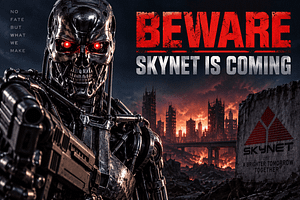
Blog Day 20, ” You Can’t Cure Stupid”The Cure
 Ever since the dawn have often quoted the adage, after every idiotic, and the reaction who hang on to his mutterings the greatest president despite all objective evidence As the president many seem determined “That no one ever went broke If only one could cure stupidity, and realized One can only hope before the president because It’s their Buddha nature, And in the end, |

Day 21
|
Blog Day 21: What Can You Do? Reflections on Consular Work
There were two basic philosophical approaches to consular work. The first was to look to the “FAM”, the Foreign Affairs Manual, and to the best-practice guidance and instructions to determine how to handle decisions. If the rules did not allow for an action, then we should not take that action. The second philosophical approach, a minority opinion in the risk-averse and conservative culture of the State Department, was to first to decide what the right decision was. And then make it, justifying it if needed by consulting the FAM. One could often find a creative workaround that fit within the straitjacket of the FAM and still arrive at the right decision for the customer. But when one had to say no, one would say no and move on. For those in the first camp, the motto became: when in doubt, say no and blame the FAM and the rules. For visa adjudication, that meant when in doubt, deny the visa. There was one exception. If your boss said, “Issue it,” or particularly if the Ambassador or senior leaders said, “Issue it,” then you issued it. Refusing to issue a visa under those circumstances would be a career-limiting move (CLM). For those in the second camp, if you believed the applicant’s story, they met the requirements, and there was no clear ineligibility issue, you issued the visa and moved on. When in doubt, say yes. For nonimmigrant visas, such as tourist, student, and short-term employment visas, you had two minutes to review the material in front of you, ask a few key questions, assess the credibility of the applicant, and make a yea-or-nay decision, or refer the case to the fraud unit for review. Then you moved on to the next case, ending the day after interviewing perhaps 100 applicants and, depending on the country, issuing visas to 50 to 60 percent of them. For immigrant visas, you had perhaps 30 minutes to get through the case and decide yea, nay, or refer it to the fraud officer for administrative processing. Consular officers often granted visas even when they suspected some degree of fraud. Delaying the case for administrative processing might result in a four- to six-month wait due to a field investigation, carried out during the spring and summer travel periods. In many cases, travel funds did not make it to the consular section until December or January and had to be spent before September 30. Oftentimes, you ended up issuing the visa anyway if the Immigration Service did not concur with the denial. During the last ten years, there has been a considerable shift, simplifying the justification for visa refusals. Still, line officers will often ” hold their noses and issue the visa”. American Citizen Services had its own unique challenges as well. There, the pressure to do the right thing was much greater because you were dealing with American citizens overseas who were in legal or medical crises, or with families coping with the death of a loved one. Often, citizen-services cases erupted over a weekend or late at night. You had to respond and deal with family members, lawyers, local police, hospitals, and government officials. It was important for American citizens to do things correctly and support your fellow citizens to the best of your ability. Even the criminals, who, in my opinion, were often mostly idiots who got caught up in scams or drug dealing. So it all came down to what you do and how you do it. |
Day 22
|
Blog Entry Day 22 Cosmos Poetic Rants
Cosmos Poetic Rants
|

blog entry Day 23 Career AdviceDay 23 Career Advice I do not have much career advice to give to young people starting out. I had a checkered career, stumbled into it, and succeeded despite my best efforts. I had four career tracks, sort of. First, I was a Peace Corps volunteer in Korea. One of the best things I ever did. Then I was an ESL teacher, college teacher, newspaper copy editor, freelance editor, and copy editor for a Korean government think tank Then I joined the FS service and worked as a visa officer, citizen services officer, fraud officer, economic officer, commercial service officer, human rights and labor officer, serving in ten countries and DC before ultimately retiring. And now I am a blogger, poet, and short story writer. Through it all, I learned, grew and became good at what I did. I enjoyed serving the country, representing the US abroad, and I enjoyed the six years I spent teaching ESL, government and Asian studies. If I had a do-over, I would have completed a PhD and become a college professor because that was what I was best at doing. Alternatively, I would have joined the Foreign Commercial Service or the former USIA,rather than the State Department. My advice is to find something that you like doing, that you are good at it and stick with it until it becomes your profession, and don’t worry too much; go with the flow and let it take you where it takes you. Sort of the same advice I’d give writers. |
Morning Coffee

I drink hot coffee in the morning.
While watching on TV the morning news.
Coffee in the morning, good morning.
Feeling depressed, I feel the blues.
I quit drinking coffee, drinking hot tea.
I turn off the TV, turn on blues music
Good morning, coffee in the morning.
Drinking tea, classic music calms me.
I drink tea in the late afternoon.
As the sun begins to set I drink red wine.
Coffee in the morning, good morning.
Drinking my wine, everything becomes fine.
Day 25: Mafia YouTubers ▼︎
There are too many YouTube influencers these days. I don’t really know what they do and how they make a living at it, but there you go. Among the weirdest ones are the ex-Mafia YouTubers who talk about life as a made man or made woman, glorifying the life. I have profound ethical, moral, and legal objections to their glorification of the gangsta life, just like my objections to gangsta rap music. They glorify a life of violence and murder, which is just wrong somehow.
Fun Fact: There are people with YouTube channels who claim to be former Mafia guys…
Would you be interested in watching their content? Do you believe them? Is it just another monetizing scheme, especially considering the tight codes of honor among them? Is it ethical, considering they may be unconvicted murderers?
Day 26: Debate: Pizza Toppings ▼︎
Which toppings should never be allowed on a pizza?
There are so many different pizza toppings around the world, as Pizza has become an international food, adjusting itself to many different cultural adoptions. I have no problem with the varied pizza toppings I have tried. Pizza goes well with almost any topping, as it is a versatile food, the ultimate comfort food..
Among the weirder toppings I have tried are Kimchi pizza in Korea, Mexican pizza in Southern California, Hawaiian pizza with mango and pineapple, and arugula pizza. My favorite pizza is gluten-free pizza with arugula, pastrami, salami, tomatoes, and jalapeño peppers.
Day 27: Greatest Achievement ▼︎
What do you consider to be your best writing achievement and why.
My greatest writing achievement has been writing seven novels. I hope someday to publish them. In order they are:
Giant Nazi Spiders
The Great Divorce about Civil War 2.0
Jurassic Cruise
Ft Ashland about post-nuclear war apocalypse
Timeless Love Stories
The Saga of Big Daddy
Dream Girl – my true love autobiography – partially completed.
Starting next year, I am going to get serious and work on editing each of these novels and submitting them for publication by the end of the year, along with a collection of short stories and a collection of poetry called Poems from the Mad Cosmos.
Day 28: The Craft of Writing ▼︎,
Write a (personal) essay on writing and/or reading and/or reviewing.
Advice to Writers: A Note on AI Editing
I have been using AI tools, mostly Copilot, Gemini, ChatGPT, and Claude, for almost a year and a half now.
I can discuss what I use these tools for, but I will not provide specific examples so that I do not run afoul of the “no AI-generated content” rules governing this exercise.
Decoding the News Template
For daily news decoding, I use the following standard format:
- A quick left, center, right, and international summary of the news, followed by a summary of press coverage, with URLs spelled out in the text and repeated in the end notes.
- Structural analysis layered underneath.
- An explicit regime-change or scenario assessment when requested.
- Formal end notes with fully spelled-out URLs.
- Flexibility to incorporate specific questions or sources each time I want to decode the news.
I treat each analysis as a fresh brief, anchored in that structure, while adding any lenses or perspectives I specify.
Note: AI programs will provide endless suggestions for follow-up questions because they are engineered to keep users engaged. I usually tell AI to limit follow-up questions, although they occasionally provide useful suggestions.
I find this daily exercise invaluable in helping understand the news from all sides. I tend to watch way too much MSNOW coverage so I like to see what the right and international press is taking on the topic of the day. It also helps me to avoid getting into an endless doomscrolling exercise and getting too consumed with the news and the daily outrage it can generate.
Drama Review Template
When I am reviewing a K-drama, I ask for the following:
- Title in Korean (Hangul and Romanized)
- Original broadcast dates
- Synopsis, both overall and by episode
- Cast information with names in Hangul and Romanized
- Director name with names in in Hangul and Romanized.
- Notable quotes
- Literary or cultural reputation
- Similar dramas on related topics, with titles in English followed by original-language titles
- Separate sections for K-dramas and international dramas, including U.S. productions
- A draft review formatted for Substack
For K-dramas, I also request a list of key Korean vocabulary words used in the series, with Hangul, Romanization, and English translations.
Poetry Editing and Analysis
For poetry analysis, I use the following prompt:
Please analyze the poem, showing:
- Meter, if any
-
Poetic techniques used
- Diction
- Sound devices
- Theme
- Tone
- Total word count
- Syllable count by line
- Each line spelled out, showing syllable and word counts
- Poetic schools and influences
Please double-check that the poem meets the specified criteria for the form and make suggestions to better fit the required meter and syllable count. List the total word count at the top.
Please edit for grammar, punctuation, and spelling in accordance with standard literary-journal standards for AI editorial assistance.
Please make suggestions for improvement. For this exercise, I can skip traditional iambic pentameter, but I ask for suggestions on how to revise toward that form while preserving most of my original word choices.
Finally, please provide a list of possible places to submit the poem, including complete URLs.
I started doing this last week and created a living Word document to store these suggestions. I will update it regularly and transfer relevant information to my spreadsheet, along with additional market suggestions from Duotrope, Authors Publish, and other resources.
Note
AI tools are excellent for checking meter and syllable counts and making suggestions that better fit traditional poetic forms. The analysis of meter, poetic techniques, diction, sound devices, theme, tone, word count, syllable count by line, poetic schools, and influences is always informative.
This has been particularly useful for me. For some reason, I struggle with traditional meter, and I was looking for a tool that could help me recognize and improve my metrical poetry when I discovered AI. It was exactly what I was looking for.
I still use RhymeZone to find rhymes and then incorporate them into my draft poems. I try to write the poem to fit the form as well as I can before using AI to edit and refine it.
I have learned a great deal about the craft of poetry writing through these daily exercises.
I also use AI to review poems that I am evaluating myself, but then rewrite the analysis in my own words to avoid any concerns about AI use on sites such as Writing.com and FanStory.
Note on Using AI Editorial Assistance
Note that using AI tools to check grammar, punctuation, and spelling is generally acceptable. Using AI for background research is often acceptable as well. However, using AI to generate an entire poem usually is not.
This is a fine line to navigate, and each journal, publication, or website has different rules. Some prohibit all AI use, some allow limited editorial assistance, and others permit developmental editing suggestions. Each site also has its own disclosure requirements.
I always ask AI to check the AI-use standards of potential markets before submitting. However, I still verify the information myself, because AI occasionally gets things wrong.
Using AI to Generate Vocabulary Lists from K-Dramas and News-Decoding Sessions
I always ask for a curated list of key Korean vocabulary from my K-drama reviews and daily news-decoding sessions.
I save these lists in a Korean-language folder. After receiving them, I read through them and occasionally review the vocabulary before watching a K-drama. This practice has significantly improved both my reading and listening comprehension.
I may occasionally do the same for Spanish.
Using AI to Create Draft Reviews of Books and Movies
I often use AI to generate draft reviews of books, movies, dramas, and sometimes news topics formatted for Substack.
For example, I might request:
“Please write a review of Book X with space for my personal observations and rating. Include a plot synopsis, list of characters, notable quotes, author biography, other works by the author, similar works, and any film or television adaptations.”
For movies and drama series, I use the same general template but ask for a draft review with space for my own opinions and rating.
For news topics, I ask AI to perform the news-decoding exercise described above and then convert it into a draft Substack article. I review and edit the draft extensively to ensure it reflects my voice and opinions before posting it on my blog or Substack.
When I publish such articles, I include a standard AI disclaimer -see below at the end.
Day 30: On Blog Prompts ▼︎
What do you think makes for a good blog prompt?
I like a blog prompt that makes a writer think and react to the prompt. The one I liked the most was the one that asked me to address my potential biases. That gave me a lot to write about. I also liked the one on deep pondering which allowed me to discuss my problems with social science dating back to my undergraduate days almost 50 years ago!. The same concerns I had back then are still valid today.
.
Standard Disclaimer
These writings and musings are entirely my own and are the product of my overactive imagination, informed by 70 years of lived experience. That experience includes 27 years of service in the U.S. State Department as a Foreign Service Officer (diplomat), working in ten countries and Washington, D.C., as well as travel to all 50 states, the District of Columbia, Puerto Rico, and 45 foreign countries.
I have lived in Alexandria, Virginia; Bangkok, Thailand; Berkeley, California; Washington, D.C.; Bridgetown, Barbados; Mumbai (Bombay), India; Medford, Oregon; Seattle, Washington; Yakima, Washington; and Stockton, California.
Along the way, I married the lady of my dreams and learned to speak Korean, Spanish, and Thai. I retired in 2016 and have since divided my time among Korea, Oregon, and Washington, D.C., and am moving back to Alexandria this summer.
My writing tends toward neo-beatnik or outlaw-poetry styles, as well as wild science-fiction speculations and occasional political commentary. Some readers may be offended by portions of my writing, but that is never my intention.
These reflections are based on decades of exploring the people, cultures, and natural wonders of the United States and the wider world.
I have used AI tools, including ChatGPT, Claude, Copilot, and Gemini, for research and for editorial assistance involving grammar, punctuation, and spelling. The words, opinions, and conclusions, however, are entirely my own.

Thanks so much for visiting my site. Your comments are welcome but please play nice…. Reply