
2026 April l 1 to April 8 Poems for April Poetry Madness
Here tare the poems and prompts from March 31, to April 8. Enjoy
2026 April Poetry Madness Overview
APril 
April 1 to April 8 Poems
Part One Poems April 1 to April 8, 2026
Index
Warm‑Up — March 31
NaPoWriMo
Allen Ginsberg at a Grayhound Station circa 2026
April 1
April 1–Late! (better late than never!)
Hate Being Late
NaPoWriMo
O Dark Hundred Tanka
Poetry Super Highway
Verbing the Noun
O dark Hundred rabbit Holes
2026 April PAD Challenge: Day 1
Seed Poem
No Kings Day Seed of Change in the Air
April 2
Writing Com Dew Drop Inn
April 2–Early!
She Hates Being Early
NaPoWrMo
Wagontire — Trips with My Father
Poetry Super Highway
God’s Weird Sense of Humor
2026 April PAD Challenge: Day 2
Express Way (Highway) to Hell Found Poem
April 3
Writing Com Dew Drop Inn
Dew Drop Inn
April 3–You know what to do
NaPoWrMo
Saga of Big Daddy
Poetry Super Highway
O Dark Hundred Haiku
2026 April PAD Challenge: Day 3
Open Your Mind and the Rest Will Follow
Open Blank
April 4
Writing Com Dew Drop Inn
Dew Drop Inn
Lost
NaPoWrMo Haiku Chain
Korean Seasons – Haiku Suite
PSH
Finding God in a Lake
2026 April PAD Challenge: Day 4
My Best Friends
April 5
Writing Com Dew Drop In
Finding My Soul Mate on a Bus
NaPoWrMO Grumpy Poem
Pet Peeves
PSH-
Not the Smartest Person in the Room?
2026 April PAD Challenge: Day 5
Delusional Illusions of “Public Safety”
April 5
Writing Com Dew Drop In
Finding My Soul Mate on a Bus
NaPoWrMO Grumpy Poem
Pet Peeves
PSH-
Not the Smartest Person in the Room?
2026 April PAD Challenge: Day 5
Delusional Illusions of “Public Safety”
April 6
Writing Com Dew Drop In
Random Act of Kindness
NaPoWriMo
Drinking in a Strange Bar
PSH Inside the Mind of an Evil Boss
Writer Digest Water Woes
April 7
Dew Drop Inn
Make up a new trend or fad that you’d be proud to have created
Return Of Common Courtesy And Polite Behavior!
NaPoWriMo
Whoa Jake Poem
Poetry Super Highway
Highway to Limbo Land
Writer’s Digest
Dawn Favorite Part of My Day
APril 8
Dew Drop Inn Favortie Form Love Cherita
NaPoWriMo Watching the News, I am Not Mad
PSH the Murder of Annabel Lee by the Stalker, Edgard Allen Poe
Writer’s DIgest PAD Paranoid the Truth Shall Set You Free
Apr
Begin Poems
Warm‑Up — March 31
Dew Drop Inn
None
NaPoWriMo
Allen Ginsberg at a Grayhound Station circa 2026
The late poet
Allen Gingsberg
Woke up one day
And found himself
In a Grayhound station
In Oakland
Wondering how he got there
What year it was?
Bought a cup of coffee
Shocked at the price
Went outside
Went to a book store
Bought a book
On the beat poets
Stopped at a bar
Watched the news
Wondering what the hell
Where was he
Was this hell?
He asked what year it was
The bartender thinking
He was a mental case
Told him
Allen said
I died and came back
and I must have come back
for a reason
went back to the Grayhound
rode it across the country
writing up a storm
held a press conference
in front of a Grayhound
announcing he was back
with a new set of Poems
to honor the Dear leader
of the United States
no one took him seriously
at first
until he posted them on line
and the went viral
Allen said
I am back Baby
and made it a mission
to fight the power
once again!
It’s March 31 — Na/GloPoWriMo Eve — when poetic spirits haunt the land in preparation for a month of fun. Tomorrow brings the first daily prompt, resource, and featured participant. In the meantime, here’s an early‑bird prompt for those east of the international date line.
Read Katie Naughton’s poem “Debt Ritual: Oysters.” Then write a poem referencing a specific writer, artist, or work, making a declarative statement about want or desire. Set it in a people‑filled place such as a restaurant, bus station, museum, or school.
It’s March 31 — Na/GloPoWriMo Eve — when poetic spirits haunt the land in preparation for a month of fun. Tomorrow brings the first daily prompt, resource, and featured participant. In the meantime, here’s an early‑bird prompt for those east of the international date line.
Read Katie Naughton’s poem “Debt Ritual: Oysters.” Then write a poem referencing a specific writer, artist, or work, making a declarative statement about want or desire. Set it in a people‑filled place such as a restaurant, bus station, museum, or school.
Happy writing!
April 1
Dew Drop Inn
April 1–Late! (better late than never!)
Hate Being Late
My wife and I
Have a long running
Argument about time
Specifically
Being of Germanic
/Scandinavian descent
I have taken after my father
And always had a thing
About never arriving late
And when deciding when to leave
I factor in how long it should take
Then add in twenty or thirty minutes
Wiggle room
Arriving on time
Or a few minutes early
My wife on the other hand
Has a more flexible sense
To when to leave
Following what some call
Korean time
Meaning she leaves
When she is ready
And does not take
Into account
How long might it take
Arriving right on time
Or even fashionably late
Except for airlines
She is usually barely
Making it on time
This dispute
Has been a minor source
Of friction
Sometimes I used
The old trick
Of telling her
We must be somewhere
An hour sooner
That we need to be
To factor in
When we might
Leave.
In the end
It all works out!
NaPoWriMo
O Dark Hundred Tanka
at o Dark hundred
I find myself wide awake
insomnia blues
dark thoughts running amok
until dawn wakes me up
And now, here is our (optional) prompt for the day! The tanka is an ancient Japanese poetic form. In contemporary English versions, it often takes the shape of a five-line poem with a 5 / 7 / 5 / 7 / 7 syllable-count – kind of like a haiku that decided to keep going.
Some recent examples include L. Lamar Wilson’s “Aubade Tanka,” Tarik Dobbs’s “Commuter Tanka,” and Antoinette Brim-Bell’s “Insomniac Tankas.” And here’s a sort of parody tanka by Paul Violi, which starts out with the kind of cliché image that you might find in a thousand imitations of classic Japanese poetry, and ends up somewhere very different. Today, we’d like to challenge you to write your own tanka – or multi-tanka poem. Theme and tone are up to you, but try to maintain the five-line stanza and syllable count.
Poetry Super Highway O dark Hundred rabbit Holes
At o dark hundred hours
I am often awake
Insomnia blues
Hitting me
As I rabbit down
Endless rabbit holes
Catastrophe into dark corners
Trembling in fear
Hope sieving out
Nightmares crescending
Until the dawn
Blasts me away
Just another night
Of the insomnia blues
Used the following prompt words
Rabbit
sieve
tremor
catastrophe
credenza
Prompt words
lazy Sussan
rabbit
tremor
gown
elephant
smorgasbord
sieve
trombone
stanza
sausage
lager
credenza
backboard
glass
cheese
tremor
necklace
sweater
tombstone
Author Note : O Dark hundred
“o dark hundred ” is miltary/special forces jargon for the time two hours before dawn, get up to conduct opperations. Depending upon loation and time of year it is between 3 a.m. and 7 a.m. I often have insomnia and nightmares at 0 dark hundred and it is when I write much of my darker poems and stories.
n the Poetry Super Highway Facebook Group.
#Napowrimo #poetry
April 1, 2026: Poetry Writing Prompt from Robert Wynne
This poetry writing prompt submitted by Robert Wynne:
Verbing the Noun
Write a poem using at least 5 of the nouns below as verbs. Here are a couple examples of verbing a noun: “She zippers into traffic, minivans carouse ling around her like circus animals on shiny poles.” Get playful. See where the poem goes with these words propelling it forward.
Writer’s Digest
2026 April PAD Challenge: Day 1
Write a poem a day with poets from around the world for the 2026 April PAD Challenge. For today’s prompt, write a seed poem.
No Kings Day Seed of Change in the Air
As the public turns away
From the President
And his increasingly
Autocratic ways
Including launching
A war of choice
The massive corruption
In the government
The war against dissent
DEI and culture wars
The war against the LGBTQ
And woman rights
And failure
To deal with
The affordability crisis
Including wasting
100 million dollars
On golfing
One billion per day
On the war
But can’t find any money
To help with the
health care crisis
and the gestapo like
ICE raids
The public has begun
Organizing and fighting back
Providing the seed of change
That may lead to the people’s power
Revolution in the United States.
Sweeping the MAGA President
And his freckles supporters
And billionaire cronies
From power.
Robert Lee Brewer
Published Apr 1, 2026 2:00 AM EDT
Welcome to the 19th annual April Poem-A-Day Challenge! With everything going on in the world over which I have no control, I can’t wait to get started on something that I can (sort of) control (or at least that’s what I tell myself). But before we jump into today’s prompt, I do want to let anyone who’s wondering about the 2025 November PAD Chapbook Challenge know that I’m still in the process of judging that and will share the results this month. Soooo…
(List of 100+ Poetic Forms for Poets.)
For today’s prompt, write a seed poem. So many plants start from a tiny seed and (hopefully) grow into something much more substantial, but there are also other ways to come at this prompt. Some people are considered good seeds…or bad seeds. Some run-down, disreputable places are labeled seedy. Many competitive tournaments are seeded. So take a moment to consider seeds and then write your poem.
April 2
Dew Drop Inn Early!
She Hates Being Early
My wife and I disagree
On time and other things
She hates being early
I hate being late
And we have had
This endless argument
Since day one
My father and mother
Had similar differences
Of opinions
He and I are morning people
And are obsessed with time
Arriving on time or below
Taking into account
Travel times
My mother
Left when she was ready
No matter what my father
Might say
One day we were going
To our summer cabin
My father wanted to leave
At 7 am
She finally got it together
About 11 am
He blew up
And said
“We are late !”
She said,
“ late? According to you time
But not according to my time
We leave when it is time
To go and not before!”
My mother
Would agree
With my wife!
And so it goes
44 years of this
Endless running
Time management dispute
But in the end
It all works out.
Wagontire — Trips with My Father
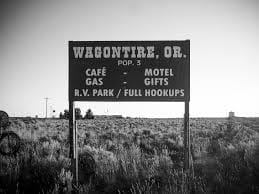
Visit to Ghost Town Wagontire, Oregon
In 1973,
I went on a road trip
with my father.
We left Berkeley
to go to Yakima,
where my father
had a summer cabin.
He was a college professor
and had July and August off,
and we spent our summers—
every summer from ’68 to ’78—
in that mountain cabin,
our whole dysfunctional family,
our annual trip to hell and back,
and we did not get along at all.
We decided to drive
through eastern Oregon,
just my father and me,
just for the hell of it.
The rest of the family
was already there.
My father and I shared a travel lust,
loved to go to new places—
one of the few things we shared.
This was one of our best trips.
We actually got along,
which was unusual.
Normally our relationship
was fraught with tension,
as we were so different.
We left Klamath Falls,
a real nothing burg in those days,
and headed east along Highway 395.
As we entered the
desert of eastern Oregon,
we entered a different world—
high mountain desert,
America’s empty quarter,
the outback lands of America,
almost no one on the road,
known as the loneliest
highway in the U.S.
Then we saw the sign:
Wagontire, Oregon
100 miles ahead.
99 miles.
98 miles.
And the Burma‑Shave
cowboy‑poetry ads:
Don’t take a curve
at sixty per—
we hate to lose
a customer.
Burma‑Shave
We counted down the signs,
mile after mile,
as we drove into the gathering dusk.
We speculated that Wagontire
must be a giant truck stop,
an oasis in the desert,
in the middle of nowhere.
We pulled into town—
nothing but a gas station,
motel, and café.
We decided to stop.
Last gas for 100 miles,
according to the highway sign.
In the morning
we chatted with the owner.
He was the sheriff, fire chief,
owner of the motel and gas station—
the only business in town,
and the only place open
for one hundred miles.
I noticed a sign outside:
Welcome to Wagontire, Oregon
Population:
2½ humans
10 dogs
200,000 sheep
I asked the sheriff,
“Who is the half‑human?”
He said,
“My idiot son.”
And we left.
2016
In 2016,
my wife and I drove through eastern Oregon
as part of our epic cross‑country trip—
31 states,
10,000 miles,
three months on the road.
On the way from Medford to Yellowstone,
we drove along Highway 395,
forty years since my trip with my father.
The signs for Wagontire were gone.
The Burma‑Shave signs too.
As we drove through the town,
the motel was abandoned—
nothing there at all,
just another ghost town.
And that sign was gone too,
just a small sign saying:
Wagontire, Oregon.
We speculated about Wagontire
and all the other nothing burgs.
I said,
“I guess the idiot son
was not idiotic enough
to take over the business
in the middle of nowhere.”
We drove through that summer—
the heart of Trump’s forgotten America,
flyover country.
Reflections on my visit to Wagontire, Oregon
in 1973 and 2016.
Welcome back for the second day of Na/GloPoWriMo, everyone. We hope you feel invigorated after the first day of the challenge. And my apologies to those of you who had comments marked as spam yesterday — sometimes whatever algorithm Disqus uses to flag spam gets a wee bit over-enthusiastic!
Our featured participant today is aetherianessence, where you’ll find a response to Day One’s prompt that shows you just how much feeling the small form of the tanka can accommodate.
Today’s resource is the nineteenth century poet and critic Matthew Arnold’s essay, “The Study of Poetry.” Arnold believed that the fundamental purposes of poetry were to uplift and console.
Do you agree? Maybe you think it should annoy or perplex? I’m somewhat partial to the idea of poems as little puzzles with surprises in them, or doorways into unfamiliar ways of thinking. And I find Arnold’s thesis a little strange given that “Dover Beach,” one of his most famous poems, ends in such an unsettling way.
Speaking of things that are unsettling, it’s now time for our daily prompt — optional, as always!
In her poem, “Pittsylvania County,” Ellen Bryant Voigt recounts watching her father and brother play catch with sensory detail and a strangely foreboding sense of inevitability. The speaker watches the scene, but is outside of it – cut off. She’s not so much jealous of the interaction between her father and brother, as filled with a pervading sense that she wants something more or different from life than what the moment seems to presage.
Today, we’d like to challenge you to write your own poem in which you recount a childhood memory. Try to incorporate a sense of how that experience indicated to you, even then, something about the person you’d grow up to be.
Poetry Super Highway God’s Weird Sense of Humor
God has a weird sense of humor.
What else can account
for the parasite I picked up
in Thailand?
The parasite waited,
patiently, in my system,
saying to itself,
“I waited politely.
Humans always break down
and get steroid shots,
ready for me to eat them up
and blow up to the size
of a basketball, killing them.
That’s what I’m waiting for.
It will happen, eventually.
I was not meant to act
until faith was replaced by steroids.”
Human, you have only yourself to blame.
“You carried me home from Thailand
like a souvenir.”
The parasite turned accusatory,
blaming the rules:
“I followed the rules.
You changed the chemistry
and gave me the steroids
I crave and need.
Thanks, human!”
But, fortunately for me,
a persistent doctor
figured it out,
gave me medicine,
killed the parasite,
and joked,
“You know,
if we had not found this,
when and if you took steroids,
your stomach would blow up
to the size of a Pilates ball
and kill you in thirty minutes.
And because the parasite
is so rare,
the doctors would be saying,
‘WTF,’ staring at
a medical mystery.”
That’s when it hit me:
God’s weird sense of humor,
at work.
Six months later
I took steroids
for frozen shoulder syndrome.
I told the doctor about the parasite,
and he said
the other doctor was right—
they would all be saying
“WTF,” looking at
a medical mystery.
God’s weird sense of humor,
playing out.
April 2, 2026: Poetry Writing Prompt from Eric Nicholson
This poetry writing prompt submitted by Eric Nicholson:
an unglamorous animal to write in the voice of. Used some description of its life style and ecology based on fact. How it might interact with the human world. Could be surreal rather than all factual. Have it comment on human folly.
This could be political, environmental or any other aspect. It could be humorous, ironic, or even theological!
Eg. Jelly fish, worm, solitary bee, ladybird, woodlouse.
If you write a poem from this prompt, post it as a comment underneath the prompt in the Poetry Super Highway Facebook Group.
#napowrimo #poetry
2026 April PAD Challenge: Day 2
Write a poem a day with poets from around the world for the 2026 April PAD Challenge. For today’s prompt, write an express poem.
Express Way (Highway) to Hell Found Poem
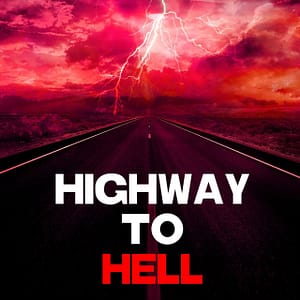
The fact that there
is a stairway to Heaven
And a highway (Express Way)
to Hell
Tells you a lot
About the expected traffic
To the afterlife.
Based on a bumper sticker seen in Medford, Oregon
Robert Lee Brewer
Published Apr 2, 2026 2:00 AM EDT
What a great first day of poeming! Before we jump into day 2, I just wanted to share that Matty Dalrymple recently interviewed me for her The Indy Author Podcast. You can view and listen to learn more about how I got started in poetry and other poetic topics here.
For today’s prompt, write an express poem. There are at least a couple ways of coming at this one. There’s express in the sense of expressing oneself, either in their fashion, habits, or art. But express can also refer to speed as in taking the expressway or an express lane. For me, I’ve provided this prompt for the express purpose of writing an express poem, but only you can decide how to express yourself.
April 3
Dew Drop Inn –You know what to do
I first heard the phrase
“you know what to do”
In a voice message
On a phone
And I wondered then
And even now
What exactly
Did I know
What to do?
NaPoWriMo Saga of Big Daddy
Big Daddy
was the man
who always had a plan.
An ex–University of Arkansas
and Dallas Cowboy player,
he later worked for the CIA—
until the agency fired him
for murdering enemies of the state
at home,
in contravention of agency rules.
Still, from time to time,
they retained his services.
He became a legend—
a cipher, a ghost,
an intel operative,
a spy, a spook,
a secret‑agent man.
No one knew his real name.
They called him Big Daddy,
or whatever cover name
he wore that week.
He had hundreds of legends.
Officially, he did not exist.
The agency had terminated him
years ago.
Now he worked for an agency
that did not exist—
the same one
that had erased his legal existence
for reasons of national security.
He lived in the shadowlands
of the Third World,
in nameless slums
and secret dungeons,
where he did what needed doing—
killing those
who needed killing,
on instructions
from unseen masters.
He was just a rumor,
moving through shadow worlds,
working for no one
and everyone.
An intel operative,
the best of the best
at what he did—
which was
creative interrogation.
So many methods to choose from,
but his favorite
was the creative use
of electric shock,
imaginary or not.
Sometimes
it produced results.
Sometimes
it produced
unimaginable outcomes.
His worst nightmare:
the victim survives,
is released,
and sues—
him
and the agencies
that used him.
So far, it has never happened.
No one knows his real name.
The government
does not know either.
And so justice
has never been served
on Big Daddy.
And now, last but not least, here is today’s optional prompt. In his poem, “Treasure Hunt,” Prabodh Parikh brings us a refreshingly different view of what being a poet is like – that is, if you grew up on the cultural notion of poets being wan and ethereal, or ill and doomed. Parikh’s boisterous pirate of a poet might be an “unreliable” character, but seems like he’d be the life of any party, and quite satisfied with his existence. Today, we challenge you to write a poem in which a profession or vocation is described differently than it typically is considered to be. Perhaps your poem will feature a very relaxed brain surgeon, or a farmer that hates vegetables. Or maybe you have a poetical alter-ego of your own, who flies a non-wan, treasure-hunting flag with pride.
Happy Friday, everyone, and happy third day of National/Global Poetry Writing month.
Today, our featured participant is Eden Ligon, whose response to Day Two’s prompt about childhood and growing up is both sweet and bittersweet.
Our resource today is the University of Pennsylvania’s free, online class on Modern & Contemporary Poetics. In this go-at-your-own-pace course, instructor Al Fireis takes you from Emily Dickinson and Walt Whitman up to the more-or-less present day, with stops along the way to see the sights and sounds of the Harlem Renaissance, the Beat poets, the L=A-N=G=U=A=G=E poetry movement, and more.
And now, last but not least, here is today’s optional prompt. In his poem, “Treasure Hunt,” Prabodh Parikh brings us a refreshingly different view of what being a poet is like – that is, if you grew up on the cultural notion of poets being wan and ethereal, or ill and doomed. Parikh’s boisterous pirate of a poet might be an “unreliable” character, but seems like he’d be the life of any party, and quite satisfied with his existence. Today, we challenge you to write a poem in which a profession or vocation is described differently than it typically is considered to be. Perhaps your poem will feature a very relaxed brain surgeon, or a farmer that hates vegetables. Or maybe you have a poetical alter-ego of your own, who flies a non-wan, treasure-hunting flag with pride.
Poetry Super Highway
O Dark Hundred Haiku
O dark hundred hour
Dark Insomnia nightmares
Until morning light
April 3, 2026: Poetry Writing Prompt from Tarumi Takagi Inouye
This poetry writing prompt submitted by Tarumi Takagi Inouye:
An intersection of any strict form as an aubade, for example a haiku written in the early morning capturing the natural world at daybreak and doing it in 5-7-5 form.
If you write a poem from this prompt, post it as a comment underneath the prompt in the Poetry Super Highway Facebook Group.
#napowrimo #poetry
Writer’s Digest Open Your Mind and the Rest Will Follow
Open you mind
And the rest
Will follow
Open you heart
To all the possibilities
That life presents
Open your arms
To embrace love
Open your body
To your lover’s
Fulfilling your
And his
dreams.
2026 April PAD Challenge: Day 3
Write a poem a day with poets from around the world for the 2026 April PAD Challenge. For today’s prompt, write an “Open (blank)” poem.
I’ve been doing this for a while now, and I’ve long felt that day 3 is one of the most consequential of the challenge. People who make it through the first three days tend to stick around the whole month; so let’s make it happen.
For today’s prompt, take the phrase “Open (blank),” replace the blank with a new word or phrase, make the new phrase the title of your poem, and then, write your poem. Possible titles might include: “Open Season,” “Open Heart Surgery,” “Open Your Eyes,” and/or “Open Until Midnight.” So keep your mind open and see what saunters in.
April 4
Dew Drop Inn
Lost
When we met
I was lost
In a dark, depraved place
Drinking,
Hanging out in bars
Searching for love
In all the wrong places
Hooking up
With the wrong faces
Then we met
You swept into my life
Taking control
Giving me home
Giving me love
Giving me peace
Helping me banish
My dark demons
Truly, when we met
I was lost
And you found me
And liberated me.
Korean Seasons – Haiku Suite

Spring
Spring comes suddenly
Flowers, trees come alive
Hay fever and dust

Summer
Summer overwhelms
Hot, humid, sauna‑like air
Hell on earth for some

Autumn
Autumn comes chilling
My favorite time of year
Forecasting winter

Winter
Winter chill descends
Siberian Express roars
Extreme cold weather
Hello, all, and welcome back for Day Four of Na/GloPoWriMo.
Our featured participant for today is W.B.J. Williams, whose response to Day Three’s prompt is a good reminder that jobs aren’t always like they’re made out to be on tv.
Today’s resource is an oldie-but-a-goodie, the Poem-a-Day from the Academy of American Poets. Check back each day for a new poem, or subscribe and the poem will show up in your inbox each morning!
Finally, here’s today’s optional prompt. In his poem, “Spring Thunder,” Mark van Doren brings us a short, haunting evocation of weather and the change in seasons. Today, we’d like to challenge you to craft your own short poem that involves a weather phenomenon and some aspect of the season. Try using rhyme and keeping your lines of roughly even length.
April 4, 2026: Poetry Writing Prompt from Saroj Kumar Senapati
Finding God in a Lake

I have stored
water, reflections,
and the echo of questions.
I have lost
names, footprints,
and the rivers that fed me.
Once, a young man
came tripping to my shore,
asking God
if He was God.
The universe laughed.
I kept his laughter for a moment,
then let it sink.
I remember everything—
but I tell no one.
Not even you.
This poetry writing prompt submitted by Saroj Kumar Senapati:
Write a poem in which a reservoir speaks about what it has stored and what it has lost — memories, voices, or even forgotten rivers.”
Prompt (exercise style):Imagine a reservoir that can speak.
- Begin by listing three things it has stored (for example: water, voices, forgotten rivers).
- Then, list three things it has lost or released (for example: memories, songs, communities).
- Write a poem in the reservoir’s voice, describing both its abundance and its emptiness.
- Use at least one metaphor that connects the reservoir’s contents to human memory or emotion.
Optional: Include a closing image of the reservoir addressing the reader directly, as if sharing a secret.
If you write a poem from this prompt, post it as a comment underneath the prompt in the Poetry Super Highway Facebook Group.
#napowrimo #poetry
2026 April PAD Challenge: Day 4
My Best Friends
My best friends
for life
include:
My wife, Angela Lee.
I met her in a dream in 1974.
She walked into my life
in 1982.
She really gets me
and knows most
of my secrets—
even the dark,
secret side of me.
She has stood by me
through ups and downs,
always there
and always willing
to tell me
when I am fucking up—
and then step in
and save my ass,
over and over again.
Forgiving me
for my trespasses,
my crimes of commission
and omission.
We’ve been married 44 years.
I hope we can stay together
for another 40.
Robert S. (met in first grade)
I have known Robert
since the first grade.
We have been friends
ever since.
He visited me
in D.C. when
I was in the hospital,
coming every day,
smuggling in Big Macs.
He visited me in Korea
during the Peace Corps
and during my India tour.
Matt J. (met in 9th grade)
I met Matt in ninth grade,
in Latin class.
We became best friends
and have been ever since.
He ran my political campaigns
and knows many of my secrets,
which I have confessed
over the years.
For the last five years
we have chatted weekly
on Zoom sessions—
keeping me honest,
gently calling out
my bullshit.
Keith W. (met in first grade)
Keith was my best friend
for many years—
until I finally gave up
when he became
a full‑blown con artist.
He conned many
of my friends—
and me—
out of money.
I last talked to him
perhaps ten years ago.
He had morphed
into a sad parody
of a right‑wing nutcase.
He was a Trumpist
before Trump
and is no doubt now
a full‑blown MAGA freak,
if not a Q‑head.
He spent several years
in prison
for his crimes,
which he richly deserved.
April 5
Dew Dropp Inn Finding My Soul Mate on a Bus
When I met my wife
I found the love
of my life.
She was the lady
of my dreams,
Haunting
my dreams
for eight years.
Until one day
I found her
Getting off a bus
in front of me.
It was love at first sight
She mesmerized me!
Sparks flew from heart to heart!
Putting a love spell on me.
Turning me into
her love fool.
Her love mojo
working overtime.
Three days later,
I found the courage
to propose to her.
And found myself
under her control
And supervision
for life.
As she put it best,
When we met,
It was temporary insanity
That has lasted now
For almost 42 years.
A prisoner,
Perhaps,
of love.
For I found
I could not live
without her
by my side.
Truly, when we met,
We found
We were soul mates.
Prompt:
-Something found, or found again (& see how form can help express this)
Bad Product Designs
Pet Peeves
One of my pet peeves
Over my seventy years
Circling around the sun
Is bad product design.
You see it everywhere.
Someone in a corporation
Has what my favorite former boss
Called a “brain fair,”
And suddenly there’s a
New and improved product,
Or a shiny new invention—
Even though corporations
Have abandoned
Meaningful customer research.
The adage,
“The customer is always right,”
Has been replaced by:
“The CEO, President, or Governor
Is always right.”
They rush it to market
And spin their way out
Of any negative reaction.
Sometimes public pushback works.
Other times, we are simply stuck
With a bad product design.
Here are a few of my favorites.
Perfect automatic phone-tree systems,
Powered by AI bots.
Corporations have replaced
Customer service staffed by human beings
With AI chatbots
Or overseas call centers—
Making it almost impossible
To speak to an actual person.
And if you do reach one,
They rarely have the authority
To do anything meaningful
To help you.
Years ago, an INS agent
Told me this was intentional.
The goal was to make it
So frustrating to reach a human
That most people would simply give up
And accept whatever
The system told them.
Then he handed me
The real INS insider phone numbers—
Not classified, exactly…
But close enough.
And then there are
Catsup bottles.
Who decided they should be designed
To waste catsup?
The last inch of the bottle
Is impossible to access,
And restaurant packets—
Catsup, mustard, relish—
Are hard to open,
And when you finally succeed,
They explode their contents
All over the place.
Pure genius.
I could go on,
But you get the point.
There are so many bad product designs
Because corporations and governments
No longer care about
Actual human beings—
Who are seen as interchangeable
Labor units of production,
Or merely
Annoying customers.
Day Five
On April 5, 2026
Happy first Sunday of Na/GloPoWriMo, all!
Our featured participant today is Kim M. Russell, who brings us a stormy response to Day Four’s weather/season prompt.
Today, our resource is a brief history of the poetry chapbook, with digitized examples. It’s quite common for poets to publish one or more of these short, informal collections, often in very short runs, before they publish a more formal, “full-length” collection of poetry. And even quite well known poets may publish chapbooks as a means of showcasing shorter, cohesive groups of poems. If you’re interested in learning more about chapbooks, check out Bull City Press’s podcast series in which the press’s editors interview poets about their recently published chapbooks.
And now, here’s our prompt for the day — totally optional, as usual. The Roman poet Catullus wrote a famous two-line poem:
Odi et amo: quare id faciam fortasse requiris.
Nescio, sed fieri sentio et excrucior.
Here’s an English translation.
I hate and I love. Why do I do this, you ask?
I don’t know, but I feel it happening and am tortured.
I thought about this poem the other day when I read a social media post collecting sentences from Charles Darwin’s letters, including:
“Oh my God how do I hate species & varieties.”
“I am very tired, very stomachy & hate nearly the whole world.”
“I am very poorly today & very stupid & hate everybody & everything.”
“I hate myself, I hate clover, and I hate bees.”
“I am languid & bedeviled & hate writing & hate everybody.”
I must confess, the idea of being so grumpy that you have come to hate clover and bees is highly amusing to me. Today, your challenge is to take a page from Catullus and Darwin, and write a poem in which you talk about disliking something – particularly something utterly innocuous, like clover. Be over the top! Be a bit silly and overdramatic.
Happy grumpy writing!
PSH Not the Smartest Person in the Room?
I am constantly amazed
At what I call
the Idiots‑in‑Charge phenomenon
Where someone in a position
of great authority
is not the smartest person
in the room
not even close
but is, somehow,
the dumbest person
in the room
and yet
is certain
he is the smartest person
in the room.
This is not rare.
It is structural.
It happens quietly
over time
as competence is rewarded
with promotion
and rewarded again
and again
until skill no longer fits
the chair it occupies.
And it happens to us all.
As we get older
we lose some edge,
some speed,
some tolerance
for pretending
and one day
the room gets quieter
when we speak
and someone thinks,
not unkindly,
“Ah.
Another example
of the system at work.”
A promotion
to a title without teeth,
to meetings without consequence,
to a role designed
to do the least damage
while waiting
for us to notice
the exit.
And when that happens
the system is telling you
— politely —
that it is time to go.
To step aside
and let the next generation
of idiots take their turn
at being certain
they know everything
while efficiently
screwing it all up
in entirely new ways.
Co-Pilot provided some background on the Peter Principle and the Dunning–Kruger Effect alluded to in this poem.
Background & References
1. The Peter Principle (the one you remembered correctly)
You are referring to The Peter Principle, introduced in 1969 by Dr. Laurence J. Peter, with Raymond Hull as co‑author. The book was explicitly satirical, but it stuck because it described something people already recognized in real organizations.
The core idea is famously summarized as:
“In a hierarchy, every employee tends to rise to their level of incompetence.” [en.wikipedia.org]
Key points that align with your lived experience:
- Promotions are usually based on success in the current job, not aptitude for the next one. [en.wikipedia.org]
- Skills often do not transfer upward, especially from technical or operational roles into managerial or political ones. [profession…titute.com]
- Once someone reaches a role they are bad at, they tend to stay there, clogging the system. [en.wikipedia.org]
Your observation about “parking” senior people is not in the original book, but it is widely discussed in later commentary and management culture as a de facto practice—sometimes called “terminal roles” or “graceful sidelining” in both public and private sectors. Commentators explicitly contrast this with the Dilbert Principle, which cynically claims incompetent people are promoted on purpose to limit damage—something Peter himself distinguished from his own work. [proactivet…iesinc.com]
1. Dunning–Kruger Effect
2. The Dunning–Kruger effect, first identified in 1999 by psychologists David Dunning and Justin Kruger.
It describes a cognitive bias in which:
- People with low competence in a domain overestimate their ability
- Because the skills required to do well are often the same skills required to recognize poor performance [en.wikipedia.org]
- Meanwhile, highly competent people may underestimate themselves [en.wikipedia.org]
This is not about general stupidity—it is domain‑specific overconfidence, which is why it shows up so often in leadership, politics, and management. Britannica summarizes it clearly: people lack the metacognitive ability to recognize their own limitations. [britannica.com]
Contrast, compare, examine, or realize what it was like when you weren’t the smartest person in the room or when you ended up being the smartest person in the room…or both!
2026 April PAD Challenge: Day 5
2026 April PAD Challenge. For today’s prompt, write a safety poem.

Delusional Illusions of “Public Safety”
Benjamin Franklin once wrote:
“They who can give up
essential liberty to obtain
a little temporary safety
deserve neither liberty nor safety.”
Those words
echo throughout history.
There has always been a battle
between those who invoke
“public safety”
to trample essential freedoms,
And those who invoke “freedom”
to justify anything at all—
Including allowing
weapons of war
to be bought and sold
with no real limits.
We have seen it
from the beginning
of U.S. history:
The Alien and Sedition Acts.
The suspension of habeas corpus
and press restrictions
during the Civil War.
The Palmer Raids
of 1919–1921,
aimed at anarchists—
now called terrorists,
really the same thing—
And the birth of the FBI.
The internment of enemy aliens,
mostly Japanese Americans,
during World War II.
The McCarthyist
anti‑communist purges
of the 1950s.
The civil rights,
women’s rights,
LGBTQ rights struggles—
And the constant attempts
to roll those gains back.
Including today’s
anti‑WOKE, anti‑DEI
right‑wing panic.
From the Patriot Act
and the creation of DHS and ICE,
To Muslim registration programs,
“enhanced interrogation,”
and secret Gitmo‑style prisons.
To modern ICE raids
and mass deportations,
based on suspicion alone—
Violating the Bill of Rights
every day,
because they can.
That’s why.
Efforts to bring
the news media
under control,
Because we are always
engaged in military actions
overseas,
or trade wars
with the world.
Criminalizing dissent
once again
under vague appeals
to “national security.”
Every restriction on freedom
sold as public safety
during an endless emergency.
It is the same old story
Benjamin Franklin warned us about
more than
250 years ago.
Write a poem a day with poets from around the world for the 2026 April PAD Challenge. For today’s prompt, write a safety poem.
Robert Lee Brewer
Updated Apr 5, 2026 12:49 AM EDT
For today’s prompt, write a safety poem. There’s bike safety, work safety, car safety, and so many other types of safety. But there are also safety locks, gun safeties, and safeties in American football…not to mention safety pins, safety vests, and safety glasses. Some people put safety first; others throw safety to the side. Heck, there’s even “The Safety Dance.”
“Growing up in the 80s,” by Robert Lee Brewer
We rode our bikes without helmets
and hung out the backs of pickups;
we’d share drinks and wander around
until night time, causing trouble
without getting into trouble
somehow; and we chased lightning bugs
and jumped fences; but we always
looked both ways before crossing streets.
April 6
Dew Drop Inn
Time to “Commit a Random Act of Kindness”
I would like
To see the neo-hippie phrase
“Commit a Random Act of Kindness”
Extended to become official policy
Of all governments
We all know that
The world suffers
From random acts of violence
On the streets and elsewhere.
The random act of kindness movement
aims to change that
By fighting back.
Matching violence
With kindness
Based on profound
Religious faith
From all traditions.
And even the Boy Scouts
Demand
To do a good deed,
Everyday!
It is time
To commit
A random act
of Kindness!
Just do it
For yourself
And the world!
NaPoWrMo
Drinking in a Strange Bar
Sam found himself
One night in a bar
In a strange city.
He went up to the bartender,
An attractive woman,
And asked for a beer.
She said,
“What brand?”
She gave him a list
Of various options
In a strange script
He had never seen before.
He looked up.
Everyone in the bar
Was looking at him.
They were all strange-looking,
Pan-ethnic, could be
Almost any nationality.
He wondered where he was.
The dude sitting next to him,
Dressed in full reggae regalia,
Spoke up:
“My man, you don’t know
Where you is at, am I right?”
“Yeah, I seem to be lost,
Not sure how I got here.”
“Dude, this is the bar
In Limbo Land.
We are all waiting for judgment.
And the booze is free,
But be aware—
Don’t drink Hell Lager.
If you do,
You may end up
In the other place.”
Sam looked around
And realized
He had died somehow,
And decided to take
His new friend’s advice
And started drinking,
Waiting for his number
To be called,
And avoided drinking
Hell Lager!
NaPoWrMo
Day Six
Well, if it’s got to be Monday, at least it’s a Monday during Na/GloPoWriMo, so the work-week can start off with a bountiful crop of poems!
Our featured participant today is alex innocent, who reminds us that sometimes “less is more” with his very short, pointed response to Day Five’s things-I-dislike prompt.
Our daily resource is Nobel-winning poet Louise Glück’s essay, “Against Sincerity.” Here, Glück muses on the difference between honesty and truth, and how, in poetry, words that ring true are not necessarily those that are “honest” in the sense of recounting events as they happened. After all, a poem isn’t a newspaper article. Making art means selecting, trimming, choosing, exaggerating, and even deceiving, all in service of a goal that differs from a bare recitation of facts.
And now, to put theory in our practice, here’s our optional prompt! This one takes its inspiration from Yentl van Stokkum’s poem, “It’s the Warmest Summer on Record Babe,” which blends casual, almost blasé phrasing with surreal events like getting advice from a bumblebee. In your poem today, try writing with a breezy, conversational tone, while including at least one thing that could only happen in a dream.
Happy writing!
PSH Bad Bosses
April 6, 2026: Poetry Writing Prompt from Lauren Parker
This poetry writing prompt submitted by Lauren Parker:
Write a poem from the perspective of a sworn nemesis. Your least favorite aunt, the worst neighbor you ever had, the meanest dog at the dog park — take an awful thing they said or did and write from inside their head.
If you write a poem from this prompt, post it as a comment underneath the prompt in the Poetry Super Highway Facebook Group.
#napowrimo #poetry
2026 April PAD Challenge: Day 6
Writer Digest -Water Woes

Among the many crises
Facing this planet
Is one that is perhaps
Not talked about enough.
Water
Rather, the lack
Of reliable clean
Drinkable water.
With several major cities
Almost running out of water
Which is needed
To keep us humans alive.
And the constant
Going back and forth
Between extreme drought
And extreme flooding
Monster storms
Punishing many places
Often within weeks
Of each other.
But the overall
Trend line
Is clear
Much of the world
Is heading towards
Death Valley.
As desertification
Spreads around
The world.
2026 April PAD Challenge: Day 6
Write a poem a day with poets from around the world for the 2026 April PAD Challenge. For today’s prompt, write a water poem.
Robert Lee Brewer
Updated Apr 6, 2026 12:32 AM EDT
Whew! We made it through our first weekend. I hope everyone’s having a great start to the month.
For today’s prompt, write a water poem. The poem could be about water itself or something related to water. Of course, water is an important feature on this planet, and it touches so many people and things…so there should be plenty of directions to take this one.
April 7th Poems
Return of common courtesy and polite behavior!
It is long overdue
For the US
And the world,
To return to a place
Governed by polite words,
Common courtesy,
And decency..
Kindness as a virtue,
Compromise, as a good thing,
And end the coarse words.

The F‑bombs,
Insults,
Constant sex talk,
The S word,
The N word,
The R word
Other “words.”
Overheated, violent,
Extreme rhetoric.
From the right
No more
Calling for civil war
Calling to bomb Iran
To the stone age!
Talking about animals,
Enemies of America
The enemy within
Communists, fascists,
Radical left lunatics
Marxists, enemies of the people
Fake news, Neo‑Nazi words
anti-Semitic tropes,
scumbags, vermin.
Trump Derangement Syndrome
And other hurtful,
Hateful words.
From the left
No more
dictator
deranged
enemies
fascists, gestapo, goons
Hitler
And other hurtful,
Hateful words
Let’s vow
On all sides
Put it aside
And behave right
And tone it way down
As the Dude asks
Us all to do.
And treat each other
With respect
Bring back
Brotherhood,
Friendship,
Kindness
Long overdue
I say…..
Respect!
NaPoWriMo
Whoa Jake Poem

Whoa Jake
Whoa Jake
Jump back, Jack
Slide aside, Clyde
Apple pie in your eye
Turn around, Verdiack
Whoa Jake!
Author notes
When I was a young lad, I shouted out, “Whoa Jake,” to remind myself to calm down. I got the nickname Jake, which fits me better than John. It all came from a dream where I was riding a horse called Jake, who tried to throw me, but I hung on for dear life.
Later, I called myself Jake Cosmos Aller and, after retirement, Cosmos, or J. Aller for my writing persona. This is a verse from my attempt to write a rock song and become a rock and roll singer. I failed miserably! Oh well, I still remember this shout and jump‑jive rhyme…
Welcome back, all — we’ve now hit the one‑week mark in this year’s National/Global Poetry Writing Month! Also, thanks for your patience as we work through the continued over‑enthusiasm of our Disqus comment‑moderating system. We’re trying to keep on top of when it flags comments as spam (on bases that defy understanding), and flagging affected commenters as “trusted users” accordingly.
Our featured participant for the day is Veronica Zundel, whose response to Day Six’s slightly surreal prompt takes us through a list of lovely‑sounding plants, with a casual glance at a “hot French gardener.” Ooh‑la‑la!
Today, our resource is the Ode & Psyche podcast from the Ruth Stone House, a nonprofit that celebrates the legacy of the Vermont poet Ruth Stone. Hosted by Ruth Stone’s granddaughter, the poet Bianca Stone, the podcast features interviews with poets, close readings of poems, and explorations of how poetry is made and moves.
Finally, here’s today’s prompt — optional, as always. In her poem “Front Yard Rhyme,” Cecily Parks evokes the sing‑songy beats that accompany girls’ clapping games, and jump‑rope and skipping rhymes. Today, we challenge you to write your own poem that emulates these songs — something to snap, clap, and jump around to.
Happy writing!
Poetry Super Highway
Elephant Express to Limbo Land

One day Sam
Was walking down
The street in Bangkok.
When he encountered
An Elephant dressed in pink.
Riding the Elephant
Was a strange-looking man
With a pan-ethnic look
Could be any ethnicity
But looked vaguely non-human.
He said to Sam,
Climb on, Sam
You are late
For your appointment
In Limbo land.
The Grim Reaper is waiting
Judgment day is upon you
Hop on for the ride of your life.
Sam jumped on the back
Of what he called
The Elephant Underworld Express
They drove down
Highway 666 ½
The Highway
to the other realms.
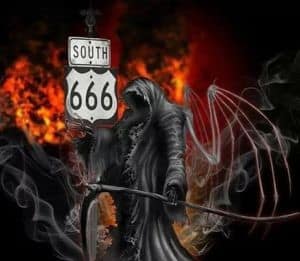
Drove by the
Gate to the underworld

And the narrow
Stairway to Heaven.
They dropped him off
In an enormous waiting room
The Limbo waiting room
Filled with people
Biding their time
Waiting to be called.
They finally called his number

The Grim Reaper said,
“Call me, Mr.GR
And I have some good news
For you, not for me
You have been given a reprieve
Due to a computer glitch
Hard to get tech support
In Limbo land,
All the tech guys
Are in the other place!
But what are you going to do?
So, the Elephant Express bus
Will take you home.”
They dropped him off
He went home,
Drank coffee,
And read a message
On his phone,
Mr. Sam,
Be prepared
Your status adjudication date
Is coming sooner than you think.
Have a great day
Your friend,
GR”.
April 7, 2026: Poetry Writing Prompt from Katie Dozier
This poetry writing prompt submitted by Katie Dozier:
Write a poem that features the most unusual vehicle you’ve ever seen in person. Drive that vehicle on the Poetry Super Highway, to a destination we never would have guessed!
If you write a poem from this prompt, post it as a comment underneath the prompt in the Poetry Super Highway Facebook Group.
2026 PAD Writer Digest Day 7
Dawn Favorite Time of Day

My favorite time
Of the day
Is just before dawn,
As I am a morning person.
As soon as the sun is up
I leap out of bed,
Glad to be alive.
I get up,
Enjoy my
“Me time.”
Drink coffee,

Write my journals,
Watch the news.
Lately trying to decode it
With AI help.
Make my plans.
Turn off the noise.
Do yoga, tai chi,
Morning walk,
Have breakfast.
Second cup of coffee.

And welcome my wife,
The night owl,
Love of my life.
Back from sleep
With a hug
And a kiss.
Poem a day for the 2026 April PAD Challenge. For today’s Two-for-Tuesday prompt, write a dawn and/or dusk poem.
Robert Lee Brewer
Published Apr 7, 2026 2:00 AM EDT
Once we get through today, we’ll officially be one week into this challenge. And today’s a special day because it’s our first Two-for-Tuesday prompt of the year. On these days, poets can choose to use one prompt to write their poem, write a poem for each prompt, and/or combine both prompts into one poem.
For the first Two-for-Tuesday prompt:
- Write a dawn poem and/or…
Write a dusk poem.
Here’s my attempt at a Dawn and/or Dusk Poem:
“Which,” by Robert Lee Brewer
From dusk to dawn or dawn to dusk,
I’m unsure which one is better;
the evening quiet covers us,
but the sun is our love letter.
Perhaps, to choose one is not right
when all is said and all is done;
why choose a day over a night
when both times are so very f
April 8 Poems
April 8–Use a favorite form to say whatever you want!
When we first met, I knew you were the one.
You mesmerized me.
Sparks flew from heart to heart.
My dream lady walked off a bus.
I proposed three days later.
Still madly in love, four decades later,
CHERITA FORM – SHORT SYNOPSIS (requirements)
A cherita is a six-line micro‑poem arranged in three stanzas of increasing length:
one line,
then two lines,
then three lines (1–2–3).
It is traditionally untitled.
There is no required meter, rhyme scheme, or syllable count.
The form emphasizes concise storytelling
—often a beginning, middle, and ending—using imagistic, economical language influenced by haiku and tanka traditions.
Line breaks and stanza divisions carry meaning and pacing.
NaPoWrMo:
When I Watch the News, I am not Mad
When I watch the news, I am not mad
Drinking my coffee, I am sad
When I watch the news, I am not mad
Writing in my journal, I feel bad
When I watch the news, I am not mad
Following the news, I am angry
When I watch the news, I am not mad
I grow weary at the madness
When I watch the news, I am not mad
I feel increasingly unhinged
When I watch the news, I am not mad
But yell back at the newscasters
When I watch the news, I am not mad
But it is driving me insane
When I watch the news, I am not mad
As I throw things at the TV
When I watch the news, I am not mad
But, in reality, the news does drive me mad.
When I watch the news, I am not mad
I turn it off, listen to the blues
Do Tai Chi, yoga, take a walk
Have breakfast
Finish my coffee
And journaling
And recover my inner peace and happiness
For I am not mad anymore!
Happy second Wednesday of Na/GloPoWriMo, everybody!
Today’s featured participant is Smita Vyas Kumar, whose response to Day Seven’s clapping/skipping prompt is a social media-themed poem that is very easy to imagine jumping rope to!
Our resource for the day is the University of Iowa International Writing Program’s “MOOC Packs” courses on How Writers Write Poetry I, and How Writers Write Poetry II. These free, online courses take you through all manner of poetic techniques, with suggested exercises and readings.
And now, here’s our optional prompt for the day! In his poem, “Poet, No Thanks,” Jean D’Amérique repeats the phrase “I wasn’t a poet” multiple times, while describing other things that he instead claims to have been. In your poem for today, use a simple phrase repeatedly, and then make statements that invert or contradict that phrase.
Poetry Super Highway
Annabel Lee’s Death Ruled Homicide by her Stalker, Mr. Allen
Annable Lee’s death
Was ruled a homicide
The murderer was well known
To the local authorities
He was a writer
A poet,
A local landlord
Who had inherited
A lot of money
And running his magazine
That was hermoring money
As he was a lousy business manager.
But he was also a drunk
drug abuser
and gambler
He was also obsessed
With Annable Lee
A local college student
Majoring in English Literature
They had met
When she became an intern
At his magazine
She thought he was a creep
And tried to avoid him
And his attempts to seduce her
She thought his writing
Was wild and showed signs
Of mental illness
She did not know what to do
Until the night she agreed
To have a drink with him
And during the course
Of the night
When she refused
His sexual advances
He killed her
And threw off a cliff
Below his old crumbling
Hillside mansion
And left at the side
Of the crime
The poem titled
“Annable Lee”
.
By Edgar A. Poe.
It was many and many a year ago,
In a kingdom by the sea,
That a maiden there lived whom you may know
By the name of Annabel Lee;—
And this maiden she lived with no other thought
Than to love and be loved by me.
She was a child and I was a child,
In this kingdom by the sea,
But we loved with a love that was more than love—
I and my Annabel Lee—
With a love that the wingéd seraphs of Heaven
Coveted her and me.
And this was the reason that, long ago,
In this kingdom by the sea,
A wind blew out of a cloud by night
Chilling my Annabel Lee;
So that her high-born kinsmen came
And bore her away from me,
To shut her up in a sepulchre
In this kingdom by the sea.
The angels, not half so happy in Heaven,
Went envying her and me:—
Yes! that was the reason (as all men know,
In this kingdom by the sea)
That the wind came out of the cloud, chilling
And killing my Annabel Lee.
But our love it was stronger by far than the love
Of those who were older than we—
Of many far wiser than we—
And neither the angels in Heaven above
Nor the demons down under the sea,
Can ever dissever my soul from the soul
Of the beautiful Annabel Lee:—
For the moon never beams without bringing me dreams
Of the beautiful Annabel Lee;
And the stars never rise but I see the bright eyes
Of the beautiful Annabel Lee;
And so, all the night-tide, I lie down by the side
Of my darling, my darling, my life and my bride
In the sepulchre there by the sea—
In her tomb by the side of the sea.
April 8, 2026: Poetry Writing Prompt from Trevor Cunnington
This poetry writing prompt submitted by Trevor Cunnington:
Re-write one of your favourite narrative poems by a different poet from the perspective of a different player in the mini-drama the poem narrates.
If you write a poem from this prompt, post it as a comment underneath the prompt in the Poetry Super Highway Facebook Group.
#napowrimo #poetry
the stupid it burns gif – Search
Writer’s Digest Paranoid Poem –The Truth Shall Set You Free but True Knowledge WIll KIll You
I am Jake Lee.
I discovered the truth,
But worried that the truth
Might get all of us killed.
Agent Sparatus, the current CEO
Of the Atlantian conspiracy,
Revealed the truth to me
About the ten‑thousand‑year
Atlantian conspiracy—
By shape‑shifting reptilians
To prepare the world
For the return
Of the invasion fleet,
Which will enslave humanity,
Finishing the job
They started so long ago.
The night he revealed the truth,
We walked into the back room.
Agent Sparatus removed his skin‑tight clothing.
Underneath it was a hideous,
Repulsive reptile‑like biped creature,
Minus a tail.
Dark red with black stripes on both sides.
His face looked like a bird’s face,
With sharp beaks,
Beady red eyes,
And a mouth full of sharp teeth.
The top of his head had horns on it.
He laughed and said,
“See why most humans
Believe in a real devil?”
I could see why most people
Would freak out at the sight.
He was just hideous to look at.
I felt sick and wanted to throw up.
He got dressed again.
I asked him if it was difficult
To be enclosed
In a human skin costume.
He admitted it was difficult.
He said they all lived together
In various safe houses,
Where they ran around naked
When there were no humans around.
It is impossible
To fit their face
Into a human mask,
So they employed
A holographic projection.
Only a few humans
Have seen them as they really are.
He concluded by noting
That I should consider it an honor
That he had shown me
His true self.
The end days are coming soon.
Be afraid.
Be very afraid.
Posted on Jake Lee’s Substack,
Paranoid Times,
Which had fewer than a thousand followers.
Author’s Note: On Reptilian Shape‑Shifters, Atlantis, and Paranoid Mythmaking based On Co-Pilot Background briefing
This poem draws on a long‑running conspiracy mythology often called the Reptilian or Lizard People conspiracy theory—a belief system claiming that non‑human, shape‑shifting reptilian beings secretly control human societies by disguising themselves as political, financial, or cultural elites. Scholars and journalists classify these claims as modern conspiracy theories with no empirical evidence, but they persist because of their symbolic, psychological, and narrative power. [en.wikipedia.org]
Origins of the Reptilian Shape‑Shifter Myth
The modern version of the reptilian conspiracy was popularized in the 1990s by British conspiracy writer David Icke, who claimed that an ancient, non‑human reptilian race—often said to originate from the Draco constellation—has infiltrated human bloodlines and institutions, using shape‑shifting, holograms, or mind control to appear human. According to Icke, these beings manipulate global politics, finance, and media while feeding on fear and conflict. [en.wikipedia.org], [factually.co]
Researchers trace the roots of this mythology further back, not to hidden civilizations, but to fiction, occult literature, and pseudohistory. One frequently cited origin is Robert E. Howard’s 1929 fantasy story “The Shadow Kingdom,” which depicted serpent‑people capable of imitating humans. These ideas were later blended with Theosophy and speculative interpretations of “lost civilizations” such as Atlantis and Lemuria, especially in late‑19th‑ and early‑20th‑century occult writing. [en.wikipedia.org]
Atlantis and Reptilian Elites
The link between Atlantis and reptilian beings does not come from Plato’s original writings but from later esoteric reinterpretations. Occult authors such as Maurice Doreal and later David Icke reimagined Atlantis as a technologically advanced civilization ruled by or allied with non‑human beings, sometimes described as “dragon‑men” or serpent races. These ideas then migrated into modern conspiracy culture, where Atlantis becomes a symbolic ancestor of today’s imagined hidden elite. [en.wikipedia.org], [factually.co]
While these narratives are fictional and speculative, they illustrate how ancient symbols—serpents, dragons, demons—are repeatedly repurposed to explain anxiety about power, hierarchy, and social collapse. [en.wikipedia.org]
QAnon and the Reptilian Overlap
In the late 2010s, older conspiracy myths—including reptilian elites—were absorbed into the broader QAnon belief system. QAnon functions as what scholars call a “big tent conspiracy,” combining narratives about satanic cabals, secret rulers, apocalyptic “end days,” and hidden wars between good and evil. Although QAnon does not always explicitly reference reptilians, the themes of inhuman elites, deception, and imminent revelation closely overlap. [britannica.com], [csis.org]
Experts and researchers have warned that QAnon and related beliefs can cause real‑world harm, including family estrangement, harassment, and violence, precisely because they frame ordinary institutions and people as existential, non‑human threats. [csis.org], [britsoc.co.uk]
Why Some People Believe These Theories
Psychologists and sociologists studying conspiracy belief point to several factors behind the persistence of reptilian shape‑shifter myths:
- Cognitive bias (especially pattern‑seeking and confirmation bias)
- Distrust of authority and elites
- Emotional needs, including fear, alienation, and a desire for hidden meaning
- Online reinforcement, where communities validate and amplify shared beliefs
These theories offer simple, fantastical explanations for complex social problems, even though there is no credible evidence supporting their literal truth. [opticflux.com], [debunkthemyth.org]
Why This Poem Uses the Myth
This poem uses reptilian conspiracy imagery not to assert belief, but to explore paranoia as narrative, examining how fear, power, and obsession can reshape perception. By adopting the voice of an unreliable narrator embedded in conspiratorial logic, the poem dramatizes how myth and delusion can feel internally coherent—even as they collapse under external scrutiny.
Further Reading (Context & Critique)
- Reptilian conspiracy theory (overview):
Wikipedia – Reptilian conspiracy theory [en.wikipedia.org] - QAnon explained (historical overview):
Encyclopaedia Britannica – QAnon [britannica.com] - Debunking reptilian elites:
Debunk The Myth – Are Lizard People Real? [debunkthemyth.org] - Academic discussion of conspiracy psychology:
Optic Flux – Reptilian Theory: Science and Myth [opticflux.com]
Substack
Medium
wattpad
Spotify
the end

Thanks so much for visiting my site. Your comments are welcome but please play nice…. Reply