Category: fiction

  • Partying with the Grim Reaper

    Partying with the Grim Reaper

     Partying with the Grim Reaper


    https://wp.me/p7NAzO-38F


    charles bukowski
    charles bukowski

    Spillwords Publishes Charles Bukowski’s Road Not Chosen

    Spillwords Published One Nighat in Bombay

    More Spillwords poems published

    More Spillwords

    SpillWords Interview

    Dear Jake,

    Thank you for submitting your work to our “13 Days of Halloween” series. We were thrilled by the overwhelming number of high-quality submissions this year.

    While your piece wasn’t selected for inclusion in that particular series, we are delighted to inform you that it will be featured as part of our “Spillwords Halloween” collection.

    ‘Partying with the Grim Reaper’ is scheduled for publication on 10/27/24, at 12am Eastern Time (ET).

    Once it’s live, you can access it through this link:

    https://spillwords.com/partying-with-the-grim-reaper/

    We appreciate your contribution and are excited to share your work with our readers.

    Thank you once again for being a valuable part of the Spillwords community.

    Warm regards,

    Dagmara K.
    Chief Editor | Editing Department
    Editor@spillwords.com

    Thank you from the team at Spillwords Press!

    Title: Partying with the Grim Reaper

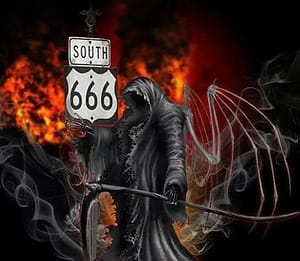
    Joe Lewis was a retired, divorced, US Gov bot on a last fling trip in his life, and died one day after drinking too much at the Cosmos Bar in Soi Cowboy, Bangkok, Thailand on Halloween night. He sat down with his buddies, Jim Beam, Jack Daniels, Johnny Walker, Old Grand-Dad, and Evans Williams. And began drinking his way to hell. Twenty drinks too sober, he gets up to go home, walks out the door, and a drunken bus driver runs over him, instantly killing him.

    The light of the blood-red full moon woke him up at 0 dark hundred hours. He found himself in a dark, forbidding, hot, humid jungle with a foul smell of death and decaying vegetation everywhere. He sensed that creatures in the jungles were looking at him with evil, hungry, malicious intent, then he saw them as the dark fog lifted, and a bright red moonlight lit the jungle forest. The nightmare creatures were staring at him with evil hatred flowing from their red eyes.

    He saw a terrifying nightmare vision, – seeing giant apes, space aliens, banshees, bats, Bigfoot, centaurs, Cerberus, cheetahs, crows, coyotes, Cthulhu with tentacles, dragons, demons, dinosaurs (raptors and T. rex), devils, dwarfs, gangbangers, gangsters, gangster rappers. Gators, goblins, ghouls, ghosts, giants, giant ants, giant wasps, giant spiders, giant lobsters, gunmen, hellhounds, big game hunters, government bureaucrats, holocausts, imps, Imperial Stormtroopers from Star Wars, naked incubus, leprechauns, jihadis, Lucifer, lions, politicians, mafia made men, ravens, monsters, orcs, reporters, bewitching beautiful yet deadly sirens, Satan, satyrs, snakes, winged monkeys, serpents, special forces soldiers, tigers, werewolves, wolves, witches, warlocks, wraiths, wild things, yeti, and zombies all staring at him. A half-centaur, half-pig monster with two heads–Putin and Trump led the mob.

    The Putin-Trump pigman yelled out, “After him. All humans must die. Kill Joe.”

    They began chasing him through the dark forest. Even the trees came alive, trying to trip him up, as the nightmare creatures ran after him, the hunters, and soldiers firing flaming arrows and semi-automatic weapons lighting up the night sky, and the birds dive-bombing him trying to get his eyes and face, and the other creatures getting closer and closer screaming.

    “Death to all humans. Death to Joe Lewis.”

    He looked back. They were gaining on him when he came to a dark, foul-smelling river. A ferryboat filled with hundreds of evil, depraved people on board was floating down the river.

    Just as the creatures were about to pounce, he swam into the water, the boat stopped, and two strange-looking men pulled him out of the water. The human monsters on the ship looked at Joe and dismissed him as a loser, a refugee fleeing the monstrous welcoming committee, and not worthy of their time.

    The two gentlemen who had pulled him out of the water were strange-looking people, rough-edged, but better than the party people who continued to ignore him or made mocking references to the refugee. Charon, the conductor, an elderly Italian man dressed in a black suit, stood in front of the boat. The Grim Reaper, dressed in a dark suit wearing ray-ban sunglasses, looking oh so cool, stood next to him. The Grim Reaper had a pan-ethnic look, could be almost any ethnicity in the world, but was vaguely non-quite human looking.

    When he came aboard the ferryboat, he asked the two strange gentlemen who had rescued him,

    “Thanks for saving me. Where am I?”

    Handing Joe, a cup of Hell whiskey, the older of the two introduced himself saying,

    “I am the Grim Reaper, and this is Charon, and you are on the ferry to Hell. You are floating down the river Styx, heading to Hell and beyond. We saved you from the welcoming committee. Normally they kill our visitors and take their dead bodies to Hell where they receive a bounty, and then you are reborn as a zombie slave, possessed by demons, becoming a ghost, or a ghoul, or are sent to Hell for punishment. But sometimes, virtuous people manage to escape and per our SOP we are obligated to take in the refugees and take them to Limbo for processing. Stay here my friend, because if you go to the party, you may never return to earth.” They are all going to the other place. You do not want to go there I assume”.

    He pointed out the partygoers, who ignored Joe. Many of them were infamous figures, including anti-vaxxer crusaders, bar owners, celebrities, corrupt politicians of both American parties, including Governors, Representatives, Senators, drug dealers, members of the British parliament and parliaments around the world, criminals, crooked cops, fake news reporters, gangsters, gangbangers, gangsta rappers, internet bloggers, idiots in both high and low places, “Criminal Lawyers ” media darlings, pharma bros, scumbags, scoundrels, wall street executives, thugs, Italian, Korean, Japanese Yakuza, and Vietnamese Mafia figures.

    They were all standing around as if they were at a cocktail party of the newly damned, drinking, smoking dope, snorting coke, and meth, dropping acid, and flirting up a storm, enjoying the free food, drinks, and drugs provided by the” Hell Catering “company using robots and demonic slave labor. They were partying as if it were their last day on earth, and they knew where they were going. Many of them felt that they would somehow manage to thrive in Hell and were looking forward to it.

    None of them felt remorse or regret for the actions they had taken in their life. They were mostly entitled “rich people,” the self-proclaimed “masters of the universe. A punk rock band played non-stop punk anthems and obscene parodies of rock and disco songs.

    The Grim Reaper went on,

    “We are taking you and Mr. Alvarez to Limbo for further processing. He may be going upstairs but being an attorney, I have my doubts. You know what they say about lawyers in heaven, there are almost none and Hell is filled with lawyers, crooked police officers, and mafia figures. Limbo is filled with bureaucrats and the red tape takes forever, and the computer system is always crashing. What can you expect? Well, it is hard to get tech support in Heaven or Limbo, all the tech folks tend to go to Hell. “

    Mr. Alvarez was an elderly Italian attorney, a lifelong fighter against corruption, the mafia, and organized criminals, and a famous human rights attorney based in Rome.

    They chatted about his life and Joe’s life. Mr. Alvarez said,

    “Our new friend, GR said I might be the only lawyer getting into heaven in a long time. Most lawyers end up in the other place.”

    The river was black as it was after midnight. There was a stench of decay and death, fire and brimstone, and fires burning in giant pits in the distance. The welcoming committee of nightmare creatures followed the boat shouting obscenities and jumping in the water to retrieve partiers who fell off the boat, taking them to shore where they tortured them, murdered them, and ate them.

    The boat stopped at the gate to hell. The other people walked off to the basement of 666 6th Avenue, NYC,  where there was one of many secret back doorways to the world above Hell. Demon functionaries dressed in Matrix Mr. Smith-style black suits met them at the ferry terminal. They disappeared into the depths of hell.

    The Grim Reaper took Joe and Antonio to the next step, Limbo. A giant black building reached the sky, filled with demonic bureaucrats dressed in Matrix-like Mr. Smith black suits. The Grim Reaper said, “Wait here. It should not be too long; I like you so we will put you in front of the line.”

    He saw hundreds of lost souls wandering around. There were signs in multiple languages saying.

    “Welcome to Limbo. Your judgment day awaits you.  Be Afraid, Be Very Afraid. No one can escape your fate. Wait your turn. You will be processed in the order received. No drinking, drugs, food, phone use, or sexual activity allowed. And no sleeping either. It should not be too long.”

    Sometime later a demon comes over and gives him some breakfast – coffee hot as hell, fried eggs, and a burger.
    The demon hisses,

    “Finish your breakfast. Then follow me to your appointment with Mr. GR”

    He follows the demon through the crowd,  and found himself in an office, where the Grim Reaper was waiting.

    “Joe, Antonio, glad to see you. Please tip the demon.”

    Joe paid him 100 dollars and Antonio 100 euros. The demon demanded more. The Grim Reaper swore at him in Demon speak and the demon disappeared into the crowd.

    The Grim Reaper consulted his handheld computer, saying,

    “Hmm just as I suspected. You are wanted upstairs, and a guardian angel is watching you. But you almost did not make it in time. The computer program has a glitch, and you are being sent back to Earth. Your time for final status determination will be sooner than you think. I hope you and I can be friends. I can hire people as my assistants. We had a lot of fun. It is a career-changing once in a life-time opportunity.   Think about it when you come back.”

    Joseph Lewis woke up in bed next to his wife, he got up turned on his computer, and read the following message,

    “Mr. Joe, I hope you enjoyed your tour last night. But unfortunately, there was a computer glitch in the matrix system that controls limbo, heaven, and hell. It is hard to get tech support in Limbo or Heaven, most of the engineers end up in hell. But in any event, we determined it was not yet your time.

    Your friend made it fine and sends his regards. The drinks are on him when you and your wife finally make it. Oh, contrary to the old song, “In Heaven, there is no beer” we have the finest beer, wine, and spirits you can find in Heaven, and Hell as well.

    As for the others, you saw, they too will visit the ferry for the last journey within a few years for most of them. But you know where they will end up.”

    Your friend.

    Mr. GR the Grim Reaper.

    The End

    Medium

    Sub stack

    https://open.substack.com/pub/jakecosmosaller/p/partying-with-the-grim-reaper?r=3i9lm&utm_campaign=post&utm_medium=web&showWelcomeOnShare=true

    Spotify

    WattPad 


  • Flashman Novels

    Flashman Novels

    Flashman Novels

    Review of the Flashman  Novels George MacDonald Fraser

    https://wp.me/p7NAzO-32r

    Cosmos Reading List 2023

    Reading the Classics Updated Lists
    The Flashman novels are a series of historical fiction books written by George MacDonald Fraser, following the adventures of Harry Paget Flashman, a fictional British army officer. The series spans from the mid-19th century to the early 20th century, covering various historical events and figures.  The Flashman novels are written in a satirical, mocking style, reflecting the times of the alleged author of the novels, Harry Flashman who was based on a character in Tom Brown’s satire of the British public schools of the 19th century.

    The original Harry Flashman was a notorious bully who was kicked out of his elite boarding school.  The Flashman novels re-imagine him becoming despite his many character flaws, a heroic army officer who served in many of the epic wars of the 19th century, including fighting in the War of 1812, the US Civil War, the Indian Wars, the Chinese Wars, and the Crimean campaigns.  Along the way, he has numerous affairs, meets and becomes friends with people in both low places and high places, and is a scoundrel to boot

    I have read about half of the books.  Among my favorites are “Flashman and the Redskins” which takes place in the 1840s and the 1870s Indian wars in the U,S, including his involvement in the events of Custer’s last stand, “. Flashman and the “Angel of the Lord” which imagines him encountering and helping John Brown in his aborted raid on Harper’s Ferry that helps set off the civil war, and ” Flashman and the Dragon” which recalls his involvement in the March to Beijing which ended the opium wars, as well as encounters with the Taiping rebels.

    Among the more controversial parts of his character, is his many affairs along the way with over 400 women.  He is indeed a scoundrel for the ages. The writing is crisp, very descriptive of the times, and of course sexist, racist, and colonist.  Just part of the time. In many ways, his character resembles the James Bond character of Ian Fleming flame

    On the plus side, the novels are historically accurate for the most part, minus the fact that Flashman did not actually exist. But he is the kind of figure that we imagined could have existed.

    To sum up, the Flashman novels are a real treat to read.

    Novels in the Series:

    Publication sequence[edit]

    Books by publication sequence
    Title and time Publisher Date Length (first edition) Plot Ref.
    Flashman
    (1839–1842)
    Herbert Jenkins 1969 256 pp Flashman’s expulsion from Rugby School for drunkenness leads him to join the British Army. He joins the 11th Regiment of Light Dragoons commanded by Lord Cardigan. After an affair with a fellow-officer’s lover, he fights a duel, but cheats. He is posted to Scotland because of the affair and is billeted with the Morrison family; he takes advantage of one of the daughters, Elspeth. After a forced marriage, Flashman is required to resign his position in the Hussars and instead is gazette into a position with the East India Company.

    After revealing his language and riding skills, Flashman is assigned to Afghanistan, where he is present at the retreat from Kabul, the last stand at Gaydamak and the Siege of Jalalabad.

    [29]
    Royal Flash
    (1842–1843 and
    1847–1848)
    Barrie & Jenkins 1970 256 pp Fleeing from a police raid on a brothel he was visiting, Flashman meets Lola Montez and Otto von Bismarck. Some years later Flashman is tempted to Munich, where Bismarck has him abducted; he is blackmailed into imitating Prince Carl Gustaf, a fictional member of the Danish royal family. Gustaf is to be married to Duchess Irma, the ruler of the fictional Duchy of Stricken; according to Bismarck the prince has contracted a sexually transmitted disease, which would be embarrassing if uncovered by his future wife. This turns out to be a lie and the prince has been imprisoned in Jotunberg Castle. Flashman is a doppelgänger of the Prince and is trained to take his place until the Prince is cured. Flashman is accompanied to Strackenz by Bismarck’s accomplices, Rudi von Starnberg, Detchard and de Gautet, and is married to the Duchess. Shortly afterwards, while out hunting, Flashman finds out that Bismarck meant to double-cross him and kill him, but he turns the tables on his attacker and tortures the information out of him and kills him instead. He is then captured by Strackenzian nationalists and forced to help them storm Jotunberg Castle. They are successful, but Flashman and von Starnberg fight in the dungeon, with Flashman narrowly escaping death before escaping back to England, with the help of Montez, who robs him along the way. [30]
    Flash for Freedom!
    (1848–1849)
    Barrie & Jenkins 1971 272 pp Flashman is falsely accused of cheating at cards, and runs away from disgrace by accepting an offer of a berth on the slaving ship part owned by his father-in-law; the ship is captained by John Charity Spring, an ex-fellow of Oriel College, Oxford who quotes Latin and Greek at length. After sailing to Dahomey, Spring buys slaves from King Ghezo; the deal goes wrong and the crew are attacked by Gezo’s Amazons, resulting in the mortal wounding of the third mate, Mr Comber. Comber dies but admits to Flashman that he is a spy for the navy, giving Flashman his papers to prove his identity. The ship makes its way to America but is captured by the United States Navy. Flashman assumes the identity of Comber and escapes, hiding in the brothel of Susie Willinck. He is abducted by the Underground Railroad and forced to assist in transporting a slave to freedom in Canada. He is accused of being an abolitionist and escapes, ending up employed as a slave driver on a plantation. Caught having sex with the owner’s wife, he is himself sold into slavery, but escapes with a slave, before being assisted to freedom by junior congressman Abraham Lincoln. He returns to New Orleans and demands passage to Britain from Spring. [31]
    Flashman at the Charge
    (1854–1855)
    Barrie & Jenkins 1973 286 pp Flashman is ordered to protect and mentor William of Celle—a (fictional) cousin of Queen Victoria—during the Crimean War; William is killed. Flashman is subsequently involved in The Thin Red Line, the charge of the Heavy Brigade and the charge of the Light Brigade, where he surrenders. He is taken into Russia and placed in the custody of Count Pencherjevsky; he also meets his old schoolfellow Scud East and Count Nicholas Pavlovich Ignatiev, a vicious Russian army captain. After overhearing plans for the Russian invasion of British India, Flashman and East escape, but Flashman is recaptured. He is taken by Ignatiev across central Asia as part of his plans to conquer India but is subsequently rescued from prison by cohorts of Yaqub BegTajik and Uzbek warriors attack and destroy the Russian fleet with the aid of Flashman, who had been drugged with hashish. [32]
    Flashman in the Great Game
    (1856–1858)
    Barrie & Jenkins 1975 336 pp Flashman is at Balmoral Castle as a guest of Queen Victoria; he meets Lord Palmerston, who recruits him to go to Jhansi in India and investigate rumours of a rebellion among the Sepoys. Flashman again encounters Nicholas Pavlovich Ignatiev, and the Russian tries to kill him while hunting. Once in Jhansi he meets the queen, Rani Lakshmibai. He listens to her grievances against the British Raj and attempts to seduce her. Shortly afterwards he is nearly garroted by Thuggees and assumes the disguise of Makarram Khan, a Hasanzai of the Black Mountain, and takes refuge in the native cavalry at Meerut. While there, the Sepoy Mutiny begins. Flashman survives the Siege of Cawnpore and the Siege of Lucknow but ends up imprisoned in Gwalior after an attempt to deliver Lakshmi into British hands. He is released just in time to witness her death in battle. In the aftermath Flashman is awarded the Victoria Cross and is knighted; he is also given a copy of the recently published Tom Brown’s School Days, which describes him being a bully and a coward while at school. [33]
    Flashman’s Lady
    (1842–1845)
    Barrie & Jenkins 1977 328 pp Flashman meets Tom Brown, a former acquaintance from Rugby School, and agrees to play cricket at Lord’s Cricket Ground for a team made up of Old Rugbeians. Following separate threats from a bookmaker and a Duke, Flashman accompanies Don Solomon Haslam—a businessman from the East Indies—Elspeth and his father-in-law on a trip to Singapore. Once there, Haslam reveals himself to be the pirate Sulieman Usman, and he kidnaps Elspeth. Flashman reluctantly gives chase in the company of James Brooke to rescue her but is himself captured by Usman. He escapes from Usman’s ship at Madagascar, but is captured and enslaved by the Malagasy, eventually becoming military advisor and lover to Queen Ranavalona I. He and his wife finally escape from the island during an Anglo-French naval attack. [34]
    Flashman and the Redskins
    (1849–1850 and
    1875–1876)
    William Collins, Sons 1982 512 pp The story immediately follows the end of Flash for Freedom!

    Part one In his haste to leave New Orleans and avoid arrest, Flashman agrees to accompany Susie Willinck and her company of prostitutes westwards on the California Gold Rush; Willinck forces him into marriage before the journey. Despite being attacked by a band of Comanche on the journey, they reach Santa Fe, New Mexico, where Flashman absconds with $2,000 made from selling one of the prostitutes, Cleonie, to Navajos. Flashman falls in with a group of travellers but he discovers them to be scalp-hunters, when they attack a band of Apaches. Flashman joins in but refuses to take any scalps or rape captive women, and when the scalp-hunters are attacked by the remainder of the tribe, he is saved and marries Sonsee-Array, the daughter of chief, Mangas Coloradas. He eventually escapes and is saved by Kit Carson on the Jornada del Muerto.
    Part two In 1875 Flashman returns to America with his wife, Elspeth. Later, in Washington DC, he meets George Armstrong Custer and Mrs. Arthur B. Candy, and travels to Bismarck, North Dakota, with Mrs. Candy to pursue a carnal relationship. She reveals herself to be the former slave Cleonie, and he is kidnapped by Sioux and kept captive at Greasy Grass. He escapes just in time to take part in the Battle of the Little Bighorn, where he sees the defeat and death of Custer—possibly being the one who kills him. Flashman is captured, partly scalped and hidden by Frank Grouard, who reveals himself to be his illegitimate son from Cleonie. Grouard breaks a promise to his mother and decides not to kill Flashman, but instead takes him back to DeadwoodDakota Territory.

    [35]
    Flashman and the Dragon
    (1860)
    William Collins, Sons 1985 352 pp While in Hong Kong, Flashman is reluctantly persuaded by an English vicar’s wife to escort a shipment of opium into Canton; en route he discovers that instead of opium he is carrying guns to the Taiping rebels. He is subsequently put onto the British embassy intelligence staff in Shanghai. He then travels to the mouth of the Peiho to join Lord Elgin‘s staff for his march to Peking. During the course of the march he is captured by Qing imperial troops and becomes the prisoner and lover of Yehonala, the imperial concubine. He is finally freed when the British army arrives at Peking; he then witnesses the destruction of the imperial Summer Palace. [36]
    Flashman and the Mountain of Light
    (1845–1846)
    William Collins, Sons 1990 332 pp Flashman is in India, and is dispatched by Major George Broadfoot to the Punjab, masquerading as a solicitor attempting to settle the Soochet legacy with Maharani Jind Kaur. After becoming entangled in the intrigues of the Punjabi court, Flashman is forced to flee at the outbreak of the First Sikh War, but becomes involved in plans by the Punjabi nobility to curb the power of the Khalsa. Returning to the relative safety of the British forces, Flashman arrives just in time to become an unwilling participant in the attack on Ferozepore. Injured, he attempts to avoid the rest of the war in a sick bed, but is called on by Jind Kaur to smuggle her son Duleep Singh and the Koh-I-Noor diamond out of the country. [37]
    Flashman and the Angel of the Lord
    (1858–1859)
    HarperCollins 1994 400 pp While in South Africa Flashman has a chance meeting with John Charity Spring. Spring drugs Flashman and ships him to the US, where charges are still outstanding against him. Flashman avoids the authorities, but is found by Crixus, a leader of the Underground Railroad, who blackmails him into joining John Brown and taking part in his raid on Harpers Ferry. He is accompanied by one of Crixus’ followers, a black man named Joe Simmons, who actually works for the Kuklos, a forerunner of the Ku Klux Klan. The Kuklos also want Flashman to help Brown, but in order to start a civil war. The wife of the leader of the Kuklos works for Allan Pinkerton, who also wants Flashman to join with Brown, but to slow him down and prevent the raid into the South from ever happening. Despite Flashman’s attempts, the raid goes ahead and he is caught in the arsenal when the US Marines attack. [38]
    Flashman and the Tiger
    (1878–1894)
    HarperCollins 1999 352 pp The Road to Charing Cross“— Flashman goes to Berlin with Henri Blowitz to help get a copy of the Treaty of Berlin and publish it in The Times. Five years later, he is trying to avoid being sent to Sudan with Charles George Gordon when a letter from Blowitz arrives inviting him to Paris. He rides the maiden journey of the Orient Express and is blackmailed by Bismarck into joining Rupert Willem von Starnberg (the son of the villain from Royal Flash). Flashman and Starnberg are instructed by Bismarck to save Emperor Franz Josef from assassination by Magyar nationalists, but Flashman is in turn tricked by Starnberg, who is one of the assassins.
    The Subtleties of Baccarat“—Flashman is an observer of the Tranby Croft affair, which he discovers was caused by his wife.
    Flashman and the Tiger“—Flashman meets “Tiger Jack” Moran in the aftermath of the Battle of Isandlwana; the pair escape to Rorke’s Drift. Years later Moran reveals he was the cabin boy on Captain John Charity Spring’s ship, the Balliol College (see Flash for Freedom!); he has been seeking revenge against the ship’s crew and was blackmailing Flashman’s granddaughter in order to sleep with her. While trying to kill him, Flashman is mistaken for a tramp by Sherlock Holmes, while the police arrest Moran for trying to kill Holmes (see “The Adventure of the Empty House“).
    [39]
    Flashman on the March
    (1867–1868)
    HarperCollins 2005 320 pp While in Trieste, Flashman meets an old school friend, Jack Speedicut, who enlists him to escort a shipment of Maria Theresa thalers to General Robert Napier. Napier is based in Abyssinia, on a military expedition against King Tewodros II. On Flashman’s arrival in Abyssinia, Napier enlists him and despatches him on a secret undercover mission to recruit Queen Masteeat and her Galla people, who are opposed to Tewodros. Flashman succeeds in enlisting the assistance of Queen Masteeat but is then captured by Tewodros’ forces. Flashman is held captive while Napier’s forces advance and then storm the capital Magdala, and is present when the king commits suicide. [40]

    Fictional chronology[edit]

    Title page of Thomas Hughes‘s 1857 novel Tom Brown’s School Days, the origin of the Flashman character

    Flashman’s fictional chronology
    Title Years covered Publication order Locations Ref.
    Flashman 1839–1842 1 Britain, India and Afghanistan [41]
    Royal Flash 1842–1843 2 Britain, Germany and Denmark [42]
    Flashman’s Lady 1842–1845 6 Britain, Borneo and Madagascar [43]
    Flashman and the Mountain of Light 1845–1846 9 Indian Punjab [44]
    Royal Flash 1847–1848 2 Germany and Denmark [42]
    Flash for Freedom! 1848–1849 3 Britain, West Africa and the USA [45]
    Flashman and the Redskins 1849–1850 7 USA [46]
    Flashman at the Charge 1854–1855 4 Britain, Crimea and Central Asia [47]
    Flashman in the Great Game 1856–1858 5 Britain and India [48]
    Flashman and the Angel of the Lord 1858–1859 10 India, South Africa and the USA [49]
    Flashman and the Dragon 1860 8 China [50]
    Flashman on the March 1867–1868 12 Abyssinia [51]
    Flashman and the Redskins 1875–1876 7 USA [46]
    “The Road to Charing Cross” 1878 11 Berlin [52]
    “Flashman and the Tiger” 1879 11 Africa [53]
    “The Road to Charing Cross” 1883–1884 11 Europe [52]
    “The Subtleties of Baccarat” 1890 & 1891 11 Britain [54]
    “Flashman and the Tiger” 1894 11 Britain [53]


    META AI and Co-Pilot provided me with the following additional information


    From Wikipedia, the free encyclopedia

    George MacDonald Fraser‘s Flashman novels

    The Flashman Papers is a series of novels and short stories written by George MacDonald Fraser, the first of which was published in 1969. The books centre on the exploits of the fictional protagonist Harry Flashman. He is a cowardly British soldier, rake and cad who is placed in a series of real historical incidents between 1839 and 1894. While the incidents and much of the detail in the novels have a factual background, Flashman’s actions in the stories are either fictional, or Fraser uses the actions of unidentified individuals and assigns them to Flashman. Flashman is a character in the 1857 novel by Thomas HughesTom Brown’s School Days; Hughes’ version of the character is a bully at Rugby School who is expelled for drunkenness. The character was then developed by Fraser and appeared in the 1969 novel Flashman. Fraser went on to write a total of eleven novels and one collection of short stories featuring the character.

    During the course of Fraser’s novels, Flashman goes from his expulsion from school into the army. Although he is a coward who tries to run away from any danger, he is involved in many famous military episodes from the 19th century, often taking actions that cause or affect subsequent events, such as his flatulence affecting the Charge of the Light Brigade,[a] or being the person who probably shot George Armstrong Custer. When circumstances run against him and he is forced to fight, he often does so relatively capably. Despite his cowardice and his attempts to flee, he becomes a decorated war hero and rises to the rank of brigadier-general. He also meets people who either were notable at the time—such as Benjamin Disraeli and the Duke of Wellington—or who became well known after Flashman met them—such as Abraham Lincoln. Flashman either has, or tries to have, sex with most of the female characters: by the tenth book he estimates that he has had sex with 480 women.

    The publication sequence of the books differs from the fictional chronology, with the time frame of some books overlapping. One of the novels, Flashman and the Redskins, is in two parts: part one takes place in 1849–50, while the second covers 1875–76. Although the main series of stories finishes in 1894, Flashman lives on until 1915 and appears in his late 80s in another Fraser novel, Mr American.

    Context[edit]

    The great mass of manuscript known as the Flashman papers was discovered during a sale of household furniture … The papers, which had apparently lain untouched for fifty years, in a tea chest … were carefully wrapped in oilskin covers.

    Explanatory note, Flashman[2]

    The series consists of twelve historical fiction books written by the journalist, author and screenwriter George MacDonald Fraser, that were published between 1969 and 2005. The series consists of eleven novels and one collection of short stories, spanning from 1839 to 1894; they are the memoirs of the fictional character General Sir Harry Paget FlashmanVCKCBKCIE. Although Flashman is fictional, the settings and history of the events, and the people with whom he interacts are all largely based around historical events and individuals, although three contain elements of other novels.[3][b] Flashman first appeared in the 1857 semi-autobiographical novel Tom Brown’s School Days by Thomas Hughes as a bully at Rugby School, who persecutes Tom Brown, and who is expelled for drunkenness: Fraser’s series of novels starts with Flashman’s expulsion from school. Based on a literary conceit, an explanatory note—itself also fictional—at the start of Flashman sets the context and explains that the memoirs had been found in an auction house in Ashby, Leicestershire, and had subsequently come into the possession of Fraser, who has acted in the role of editor.[6] Fraser also included pages of notes and appendices at the end of each volume, providing the factual background for Flashman’s endeavours.[3]

    Fraser was working as a journalist on The Glasgow Herald when he wrote the first novel, Flashman; writing in the evenings, after work, he took 90 hours in total to write the story.[7][8] After the book was published, he left journalism and took up writing novels.[7] When a break from writing was forced upon him by a broken arm, he abandoned the book until his wife read the manuscript and urged him to finish.[8] He did not find a publisher for the novel for two years, until Barrie & Jenkins published it in 1969.[8] When the novel was published in the US the same year, of the 34 reviews read by Alden Whitman of The New York Times, ten of them considered the book to be a genuine autobiography.[9] Fraser researched each novel at Trinity College Dublin.[10] From their first publication, the books were a commercial success,[11] and new editions appeared on the best-sellers’ lists.[12]

    Flashman[edit]

    Main article: Harry Paget Flashman

    FLASHMAN, Harry Paget, brigadier-general, V.C., K.C.B., K.C.I.E.: Chevalier, Legion of Honour; Order of Maria Theresa, Austria; Order of the Elephant, Denmark (temporary); US Medal of Honor; San Serafino Order of Purity and Truth, 4th class

    Biographical note, Flashman on the March[13]

    Flashman is from a semi-aristocratic background; he recounted that his great-grandfather “made a fortune in America out of slaves and rum, and piracy, too, I shouldn’t wonder”.[14] His father was “a dissolute former MP, living beyond the bounds of respectable society, and … his mother [was] born of the self-promoting Paget family“.[15] Despite joining the army after expulsion from school, Flashman is a self-confessed coward with a false reputation for bravery, earned at the expense of others, and despite him trying to avoid danger at all costs.[16] He is also “a scoundrel, a drunk, a liar, a cheat [and] a braggart”,[7] who was described by Fraser as “an unrepentant old cad” whose only positive features are “humour and shameless honesty as a memorialist”.[17]

    Flashman is 6 feet 2 inches (1.88 m) tall, weighs 13 stone (180 lb; 83 kg) (12½ stone in the first book, fourteen stone in the last), has broad shoulders and is attractive to women.[15][c] He was forced into marriage in the first book, after he “caddishly deflowered” Elspeth Morrison,[3] the daughter of a wealthy Scottish textile manufacturer with whom he had been billeted.[15] Despite being married—and the fact he deeply loves his wife—Flashman is “a compulsive womaniser”[10] who has bedded 480 women by the tenth book in the series, which was set in 1859.[20] Elspeth is also probably unfaithful to him on several occasions.[15] Flashman notes that he has three “prime talents, for horses, languages, and fornication”;[21] he was also described by the master-at-arms of the 11th Hussars as a strong swordsman[22] and was skilled with a lance, particularly at tent pegging.[23] When it is necessary for him to control his fear, he will perform bravely, although is more adept at saving his own skin at the expense of others.[10]

    In the course of the series, Flashman is promoted to the rank of brigadier-general and decorated numerous times by different countries. While the books cover some of the awards—such as being given the Victoria Cross for his actions during the sieges of Cawnpore and Lucknow[24]—some stories are not known, such as how and why he served on both sides of the American Civil War and how he won the Medal of Honor.[25][d]

    During his travels Flashman meets people who took part in 19th-century events, including Queen VictoriaAbraham LincolnOtto von BismarckOscar Wilde and Florence Nightingale, and he is involved as a participant in some of the century’s most notable events, including the Indian Rebellion, the Taiping Rebellion, the charge of the Light Brigade, the Siege of KhartoumJohn Brown’s raid on Harpers Ferry and the Battle of the Little Bighorn.[27]

    Flashman died in 1915, although the details are unknown.[28]

    Substack

    https://open.substack.com/pub/jakecosmosaller/p/flashman-novels?r=3i9lm&utm_campaign=post&utm_medium=web&showWelcomeOnShare=true


    Medium

    View at Medium.com


    Wattpad


    You just published Flashman Novels !

    Your story can be found here

    Spotify Podcast


    https://podcasters.spotify.com/pod/show/j-cosmos/episodes/Flashman-Novels-e2mgdoi

    The End

  • Roy Dufrain Updates

    Roy Dufrain Updates

    https://wp.me/p7NAzO-2MW

    Roy Dufrain Updates

    guest post by Roy Dufrain

    Roy Dufrain is my college roommate from UOP.  We lived at the Euclid House next to campus which became an alternative frat house of sorts. We had wild parties every Friday night for two and a half years – the best parties on campus. Boy, we had fun   He taught me so much, became a “deadhead” because of him, and tried various things with him, and we occasionally performed demented music together at campus events.  He was a Raymon College student, but unfortunately, because of money problems did not finish his senior year.  He was also the editor at the university’s paper and published a number of my poems and essays while we were there.

    University of the Pacific Raymond college history

    Raymond College, an undergraduate honors college at the University of the Pacific, existed from 1962 to 1979. Located in Stockton, California, it was a unique institution with an interdisciplinary curriculum that emphasized learning across the natural sciences, social sciences, and humanities. Let’s delve into its fascinating history:

        1. Founding and Vision:
          • Raymond College was the brainchild of University of the Pacific President Robert Burns. Faced with a new generation of qualified applicants, he sought to create a personalized educational experience for students.
          • Inspired by the success of Oxford, Cambridge, and the Claremont colleges, President Burns envisioned residential cluster colleges as a way to maintain high academic standards while expanding the university.
          • Raymond College was the first of three cluster colleges developed under this vision.
        2. Curriculum and Structure:
          • The college offered an innovative interdisciplinary liberal arts curriculum.
          • Initially, it provided an accelerated three-year program, but later expanded to offer a four-year program as well.
          • Key components of the curriculum included:
            • Introduction to the Modern World: A shared cohort experience for incoming first-year students.
            • Language study: A year of language learning.
            • Math, physics, chemistry, and biology: Sequential courses.
            • Humanities and social science classes: Literature, philosophy, art, religion, economics, history, psychology, and sociology.
          • Students received written evaluations (term letters) instead of traditional letter grades.
        3. Provost and Philosophy:
          • Provost Warren Bryan Martin played a pivotal role in shaping Raymond College.
          • He emphasized the importance of the liberal arts and the holistic preparation of students for a fulfilling life.
          • The first class of students arrived in the fall of 1962.
        4. Legacy and Impact:
          • Raymond College influenced the entire University of the Pacific.
          • Its emphasis on student-centered learning, liberal arts, and interdisciplinary studies raised academic expectations across campus.
          • The college operated in the tradition of the liberal arts, fostering intellectual curiosity and engagement.

    Raymond College, though short-lived, left a lasting mark on education, demonstrating that sometimes “growing larger by growing smaller” can lead to transformative experiences for students1234.

    He is a talented writer and musician living in Clear Lake California.

    you can check his work out here at Medium and on Substack as well as on his web page

    Roy Dufrain.Com

    THE YEAR OF TWELVE SONGS is my latest music project. Some of you got a preview recently, with an all-acoustic version of a song called Finish Strong. Now I’m sharing a new version with added instruments and my efforts at sound production. Plus some backstory and something sort like old-fashioned liner notes (remember those?). I plan to do this with a different song every month and hopefully learn a lot in the process. Check it out with the link below and let me know what you think.

    Roy Dufrain Jr.

    Hey Jake, everything is at roydufrain.com. hope all’s well with you.

    ROYDUFRAIN.COM

    ROY DUFRAIN JR | Substack

    ROY DUFRAIN JR

    Roy’s Best Books 2023

    Some words I liked a lot this year.

    ROY DUFRAIN JR

    Far Sickness, by Joshua and Ava Mohr

    This is my 8th annual December ramble about the books of my year. Not necessarily books that came out this year, but books I read (or heard) that moved me, taught me, made me cry, or cracked me up. It kind of feels like I’m late with this year’s edition but hey—two-day shipping at your preferred online bookseller, right?

    FICTION

    Nowadays I often avoid reading the latest best-selling, prize-winning, must-read fiction that everyone’s talking about. Because over the years I’ve learned not to trust hype. I like to wait a few years to see if anyone’s still talking about the book. See if the title comes up in a discussion and someone says, God, I loved that book, years after they read it, and they start talking about the character or scene that stuck with them. To me, that’s how you know. Not by critics’ reviews book trailers or Reese Witherspoon. (However, if Ms Witherspoon is out there somewhere, this does not mean I wouldn’t want MY book on your list someday! Just sayin’).

    ROY DUFRAIN JR is a reader-supported publication. To receive new posts and support my work, consider becoming a free or paid subscriber.

    Upgrade to paid

    But this year I read two of the latest novels from two big names in fiction—because I had loved previous work by both authors and because multiple writer-friends flat-out raved about these new books. And now I will rave about them myself.


    Demon Copperhead, by Barbara Kingsolver, is the best novel I’ve read in years. The best overall reading experience that delivers in all facets. The sense of total immersion in a world, the intense rooting interest in a main character, the epic scope of historical context, the deep underlying interrogation of the real world, and the sheer delight in artful language. I can’t think of what more to ask from a novel. And, frankly, I can say pretty much the same things about The Vaster Wilds, by Lauren Groff, although Groff’s tale delivers in its particular way. Read them both, and see what you think.

    NON-FICTION

    The Gutenberg Revolution: How Printing Changed the Course of History, by John Man. Okay, I admit there are maybe three people reading this who could be marginally interested in this book. One of them is my father, a fellow ink-stained wretch as we used to say in the biz. And the others have similar or adjacent backgrounds. But, even if you don’t have ink and perhaps newsprint in your blood, or an old pica pole in a desk drawer at home, this is a fascinating blow-by-blow account of the twists and turns of fate, greed and genius that resulted in one of humankind’s most impactful technologies, on a par with gunpowder, the electric light or the personal computer.

    BONUS NON-FICTION

    Beatles 66: The Revolutionary Year, by Steve Turner. An amazingly detailed, month-by-month tour through a year in which the world changed the Beatles and the Beatles changed the world. I went to Audible on this one and listened to most of it in the car on a long drive to and from a writer’s retreat. It made for a great company.

    Consider This: Moments in My Life After Which Everything was Different, by Chuck Palahniuk, author of the novel, Fight Club. This is a very different kind of craft book: personal, direct, funny, truth-telling, even illuminating at times. The subtitle hints at one of the biggest takeaways because Palahniuk is referencing what he sees as the key piece of wisdom he has to pass on—in the end, writes about the moment after which everything was different. If that gets your writer’s brain running like a hamster, this book’s for you.

    And in the GREAT BOOKS BY NICE FOLKS I KNOW category… Far Sickness, by writer/teacher/editor Joshua Mohr, who is a huge favorite among scribblers here on the Upper Left Coast. This slightly demented short novel—a collaboration with Josh’s ten-year-old daughter Ava—seems to live somewhere between the old Fractured Fairy Tales cartoons from the Rocky and Bullwinkle Show, and a Guillermo del Toro film, and this juxtaposition of innocence beside horror is only enhanced by Ava’s charmingly bloody illustrations. But underneath all of that is a heart-wrenching journey through the deepest kind of trauma and regret to somewhere resembling hope. Which is exactly what readers usually get from Josh’s work.

    That’s all for this year, folks. Remember, as Stephen King said…

    “Books are a uniquely portable magic.”

    ROY DUFRAIN JR is a reader-supported publication. To receive new posts and support my work, consider becoming a free or paid subscriber.

    The Last Great Acid Trip

    Or how I won a footrace against a dog named Pig Pen

    ROY DUFRAIN JR

    Remember the Red River Valley

    A story, a drink, and a song

    ROY DUFRAIN JR

    Ready for more?

    Subscribe

    © 2024 Roy Dufrain

    Remember the Red River Valley

    A story, a drink and a song

    I was watching the movie based on Cheryl Strayed’s memoir Wild, and there’s this scene where a little boy with the sweetest voice sings Red River Valley to Reese Witherspoon. I hadn’t heard that song in I don’t know how long, and in an instant I was transported—in that way that a song can flip a switch and turn your mind (and your heart) into a four-chord time machine. Know what I mean?

    I was no longer a late-middle-aged man reclined on my couch watching Reese Witherspoon’s hit movie. I was eight or nine years old, and it was 1966 or 67. My older sister Debi and I were staying with our grandparents somewhere in Sacramento. I don’t remember why or for how long, yet I’m sure I could draw an accurate floorplan of the tiny one-bedroom bungalow they had. Memory is such a rickety contraption

    https://www.roydufrain.com/p/remember-the-red-river-valley?r=kcikc&utm_campaign=post&utm_medium=web

    r=kcikc&utm_campaign=post&utm_medium=web

    https://www.roydufrain.com/p/the-last-great-acid-trip?r=kcikc&utm_campaign=post&utm_medium=web

    The Red Shoebox Guitar

    Sting-Rays, Stratocasters, Beatle Boots and Destiny

    1
    Share

    Previously published by the Coachella Review. (thecoachellareview.com)

    Photo by Dima Dimax from Pexels

    On hot Saturdays the neighborhood men took refuge in their garages.

    They opened their garage doors and ran portable fans, and they turned up the Giants game on the transistor radios that sat on their workbenches. The men fixed things and made things and drank bottled beer out of old round-shouldered refrigerators. Wives and children were generally not invited.

    That summer of 1966, Bobby Highfill and I were both eight years old. Our mothers were forever shooing us out from under their feet and into the great outdoors, which in our corner of suburbia consisted of a few square blocks of housing tract and one dead-end street of undeveloped lots known to local kids as the Trashlands, where Bobby and I both served honorably in the Great Dirt Clod Wars of Concord, California.

    Another garage to which we were generally not invited belonged to Mrs. Chambers, a widow who seemed to always have her hair in curlers and parked her pale green Hudson Hornet by the curb and turned the garage over to her only child’s rock and roll band. Her son, Larry Chambers, was the lead guitarist, and my own uncle sang and played rhythm guitar.

    Uncle Art, my mother’s baby brother, lived with us on Cranbrook Way because he’d been kicked out by my grandparents for reasons my mother insisted I was too young to understand. He was seventeen years old, and he went to high school and drove a red Corvair and had a blonde girlfriend who wore pink lipstick and pointy sweaters. And he played guitar in a real working band that played dances all over the Bay Area and once opened up for Martha and the Vandellas.

    The band was called the Royal King’s Four. They played Top Forty fluff like Sherry by the Four Seasons and Sugar Shack by… whoever the hell did Sugar Shack. But, like every other cover band in the world in 1966, they were now learning Beatles songs as fast as they could.

    They rehearsed in Mrs. Chambers’ garage, usually in privacy, but when it was hot they would open the garage just like the neighborhood men. A small crowd would gradually form in the driveway, mostly teen girls in tight shorts with pastel blouses tied up in front to flash their soft, smooth bellies. Yes, even at eight I noticed how the girls were drawn to the music. But Bobby Highfill and I would wriggle our way through the girls to get a clear view of the band. Well, not the band so much as their instruments—more precisely, the guitars.

    The guitars were called Stratocasters, and they were magical. Mysterious chrome knobs and complicated hand movements controlled the sounds that traveled across the wires and erupted from the amplifiers as sparks of music. The guitar my uncle played was painted like a flame, and Larry’s guitar was black as his bad-boy pompadour. When the band took a break, the Stratocasters were laid down in cases lined with gold velvet, where they waited for their masters like swords locked in stone.

    It’s possible to want something so much that you don’t dare ask for it or even speak of it, for fear of the hole that a no would leave in your heart.

    And yet, someone noticed.

    It was one of those hot Saturdays, and Bobby and I were pedaling our Sting-Rays homeward after another glorious battle in the Trashlands, when we heard his father’s whistle on the wind. I’ve never been able to whistle like Mr. Highfill. My sister learned to do it, but I never could. He had one of those two-finger whistles that you heard from blocks away and recognized as a command. We pedaled harder.

    When we arrived at Bobby’s house, Mr. Highfill stood in the driveway, arms crossed. The garage door was open. He was a balding man in khaki slacks and a short sleeve button-down shirt. I’m not sure I ever knew what he did for a living—sales I think, but of what I have no idea.

    We skidded to a stop and dropped our bikes on the front lawn. Without a word, Mr. Highfill turned and, with a wave of his arm, invited us into the garage. We followed numbly beyond the raised door, into the inner sanctum, where the fan whirred and the refrigerator hummed and the fluorescent light sputtered. The live smell of fresh sawdust and the sweetness of paint hung in the warm air.

    Mr. Highfill took something off the workbench and bent down to lay it in my arms. It was my first guitar—handmade from the finest materials available in the closets and garages of suburbia: a Keds shoebox for the body; a plywood neck, nails for string pegs and four industrial-strength rubber bands for strings. The plywood was marked with thin stripes of brown paint to represent frets. The shoebox body of the guitar was spray-painted cherry red and decorated with golden musical notes rendered in glitter and Elmer’s glue.

    It was the most beautiful, most inspiring thing I had ever touched.

    My own father often said that I was old before my time. I was an oddly serious kid, frequently reading deep meanings in the tea leaves of my young life, and in my restless mind the red shoebox guitar foretold something momentous and inexorable. Of course, Bobby received a matching guitar, and I decided right then that we were manifestly destined to embark on a career as a performing duo.

    But first, we needed a repertoire.

    A year before, when I was seven, my favorite Beatle was Paul—you know, the cute Beatle. I liked John too, but he was merely the clever and cheeky Beatle. Some would say he was actually a smart-aleck punk overflowing with attitude. Then, at a certain point, it became clear that John was something more—he was the troubled Beatle.

    It became clear with the song, Help! It was one of the first Beatles records with lyrics that were noticeably more complex and interesting than “I want to hold your hand” or “She loves you, yeah yeah yeah.” I didn’t understand my reaction consciously at all, but I was drawn to it immediately. (Like I said, an oddly serious kid.) Forever after, my favorite Beatle was John—the Beatle with inner demons.

    Bobby and I spent most of that Sunday in my bedroom with a portable phonograph, a notepad, and the 45rpm record of Help! By day’s end, we had the vocals down cold… okay, we had the vocals down lukewarm.

    Next, we needed outfits.

    All the big bands wore matching outfits. The Beatles had shiny blue-gray suits with collarless jackets and black leather boots. The Beach Boys had striped shirts. Every band on TV matched—except for those hoodlums, the Rolling Stones. Even the Royal King’s Four had matching suits and skinny ties and boots like the Beatles.

    Bobby and I had seen pictures of the Beatles wearing turtleneck sweaters, and we each had red turtleneck shirts. We’d seen the Royal King’s Four wearing their jeans “pegged” at the bottom, and we bothered our mothers into doing the same to ours. But we still needed that final touch.

    We needed the boots.

    I don’t know how Bobby got his Beatle boots, but I had my aunt to thank. It happened when I was dragged along on a shopping trip with Aunt Irene and my mother. My two older sisters could be left on their own for the entire day, but I could not be trusted to the same degree.

    The shopping itinerary included Kinney Shoes. The ladies inspected pumps and flats and sandals and kept the salesman busy measuring their feet and helping them with try-ons. I posted myself at the display of kid-size Beatle boots, and I didn’t move. I didn’t say anything. I just stayed and stared in a trance of longing. Like all mothers, mine was adept at tuning out her children when convenient. And my Aunt Irene was not a sucker for a child’s dreamy yearning. She was a woman with both the posture and character of a straight-backed chair. But, to my surprise and relief, she became my benefactor. “Will you buy the damn shoes already,” she said to my mother. “I can’t stand to look at him anymore.”

    Now, all we needed was an audience.

    Our first (and only) paying gig was something of a guerrilla performance. We were not, per se, invited to perform in Mrs. Chambers’ driveway. However, it was conveniently located within our limited touring radius, being just down the street from my house on Cranbrook Way.

    We showed up on a Tuesday afternoon unannounced, looking sharp in our matching turtlenecks, pegged jeans and Beatle boots. The garage was open and the Royal King’s Four were practicing. A crowd of four or five girls loitered on the concrete, popping their gum, looking out cooly from under long bangs. We waited for the band to take a break, then we stepped out front with our matching shoebox guitars.

    Our setlist for this engagement consisted of Help!… followed, of course, by an encore performance of Help! In the showbiz vernacular of today, we killed. We were paid a whole quarter each by the fawning Mrs. Chambers and every member of the band. The teen girls squealed and said “Aww, so cute.” One of them tousled my hair.

    Being an oddly serious kid, I quickly invested most of my fortune in literature. Batman, Superman, Richie Rich, Little Archie. Comic books were twelve cents apiece then, three for a quarter. I’ve since performed for less satisfying payment on more than a few occasions.

    I didn’t yet know that the summer of ‘66 would be my last on Cranbrook Way.

    My father was fed up with the Bay Area rat race, especially some of the rats in charge. He found a new job in a small town by a big lake in the distant hills of Northern California. The Royal King’s Four broke up when Uncle Art joined the army. On our last day in Concord, Bobby came over to say goodbye and we took one last spin around the Trashlands on our Sting-Rays. Then my father added my bike to the pickup load while Bobby and I stood on the bright sidewalk and shook hands like men as tears slipped onto our cheeks.


    I found my second guitar under the Christmas tree in 1968—a three-quarter size Harmony acoustic from the Sears catalog. Classic sunburst finish, with a white plastic pick guard and a golden braided cord to use as a strap. I begged my parents for lessons at the local music store known as Bandbox Music. I was sure that Skip, the owners’ son, would turn me into a full-fledged guitar god in no time at all.

    After three weeks of one-finger chords and plinking out Twinkle Twinkle, I was hopelessly, irredeemably bored. Now I begged my parents to let me quit. But, thanks to those excruciating lessons, I wrote my first song in 1970, an instrumental I called Psychedelic Butterfly. By then I was twelve years old, the Beatles had broken up, and I was newly under the musical spell of Jerry Garcia and the Grateful Dead.

    I guess you’d have to say that Harmony acoustic was my first “real” guitar—certainly more real to the hands and eyes and ears. But perhaps not to the heart.

    My newest guitar is a beautiful all-mahogany Martin acoustic that cost more than many automobiles I’ve owned. But, every time I pick it up, some part of me is back at that garage on Cranbrook Way, keeping time with my Beatle boots and strumming that glittering red shoebox guitar.

    https://www.roydufrain.com/p/the-red-shoebox-guitar?r=kcikc&utm_campaign=post&utm_medium=web

    https://www.roydufrain.com/p/for-the-great-john-prine?r=kcikc&utm_campaign=post&utm_medium=web


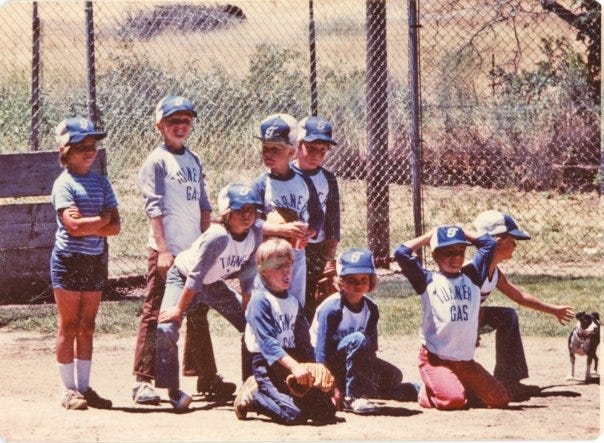
    Roy introduced me to Baseball, and American Football. We saw a lot of basebal games on TV at the Euclid House as well as SNL in its prime time seasons.  as well as 70’s classic TV shows.

    THE YEAR OF TWELVE SONGS is my latest music project. Some of you got a preview recently, with an all-acoustic version of a song called Finish Strong. Now I’m sharing a new version with added instruments and my efforts at sound production. Plus some backstory and something sort like old-fashioned liner notes (remember those?). I plan to do this with a different song every month and hopefully learn a lot in the process. Check it out with the link below and let me know what you think.

    Roy Dufrain Jr.


  • guest post by Roy Dufraine

    guest post by Roy Dufraine

    Guest Blog Roy Dufrain

    Roy was my college roommate at UOP in Stockton, California from 1976 to 1978 when we lived at the Euclid House with Sara, Sharon, Kevin (now Karen) Jeff C, and others.  We had a wild two-year ride with weekly parties every Friday night.   Roy introduced me to the Grateful Dead, the beatnik writers, and so much more.   We lost touch over the years but became Face Book friends and zoom friends about seven years ago.  I miss our time together.  Here are some of his recent Facebook musings re-posted with his permission.

    THE 7TH ANNUAL EDITION OF ROY’S BEST BOOKS,

    wherein I muse, perhaps entirely for my own entertainment, on some books I read or heard this year that landed somewhere in the vicinity of my heart and stayed there for whatever reason.

    This year, I get to start with a special category I’ve never officially included before: GREAT BOOKS BY NICE PEOPLE I ACTUALLY KNOW.

    LIVE CAUGHT

    R Cathey Daniels is swampy and dank, with a magnetic, lyrical voice and a lead character who is properly mystified by life and desperate to rescue one little girl, if not himself, from its worst inclinations. You’ll want to save everyone in the book. Well, almost everyone.

    ATTRIBUTION

    Linda Moore, is an engaging mystery set in the world of art history scholars, with a smart, idealistic heroine to root on toward empowerment and recognition and self-acceptance. And romance!

    BESTSELLING FICTION

    THE LINCOLN HIGHWAY

    Amor Towles, who came to critical acclaim with ‘A Gentleman in Moscow’ several years ago. This newer one feels like a charming thought-provoking coming of age period piece, encased in wonderful and evocative prose, until it all slides sideways into darkness and finally ends with a couple slackmouth twists, the kind that seem shocking yet inevitable at the same time.

    NON-FICTION

    MUSIC: A SUBVERSIVE HISTORY

    Ted Gioia, who is considered by some as one of America’s (if not the world’s) leading writers on music history. This is Gioia’s most far-reaching work yet. The overarching thesis of the book is that innovation in music has always come from outsiders, usually those kept outside the mainstream by self-appointed and self-interested gatekeepers. Nonetheless, over and over, the greatest talents and their ideas somehow find a way to slip past the gates and change everything. It’s a huge book, covering a lot of information; I listened to it on audio, and in spurts, over a few months. Well worth the stretched-out journey! (Also: Ted Gioia writes on many other topics as well, and is one of my favorites on substack.) And BTW, it’s pronounced Joy-uh.

    WORDCRAFT

    I read lots of books on writing craft. I don’t always get a wealth of useful info from them, but I read for the odd bit that resonates and, more than that, for the constant nudge to think deeply about my own reading and writing. Because of that, my favorite craft book is often the one I’m reading right now, and that happens to be THE NUTSHELL TECHNIQUE by Jill Chamberlain. This is actually a screenwriting book, but also offers fiction writers an interesting no-frills framework to analyze the basic ingredients of all stories and their interrelationships.

    ALRIGHT, THAT’S IT FOR THIS YEAR. Make room in your life for a book. Each one is a world on paper.

    (Disclaimer: no books were harmed in the making of this post.)

    ////////////Random observation about baseball

    HARD TO EXPLAIN how MLB teams are signing guys for 20-30-40 million a year right now, but just a couple months ago, they were saying the game’s popularity is slipping so far they have to change the rules to make it faster and more exciting. WTF?!

    The Giants sure are killin’ it on the free agent market so far, right?

    Long before TJ Holmes and Amy Robach there was Kelfy Couric and Gumby Damnit. Big time front page tabloid stuff back in the day.

    Well Christmas

    I’m dreaming of a well Christmas

    Just like the ones I used to know

    Where there is no sneezing

    And lungs aren’t wheezing

    And masks aren’t needed when you go

    I’m dreaming of a well Christmas

    Without a fever or the chills

    May your tests have nothing to tell

    And may all your Christmases be we


    Look, Santa: yes I’ve been a naughty boy, but only in the best possible way

    You can find his work at

    Roy Dufrain Jr.

    roydufrain.substack.com


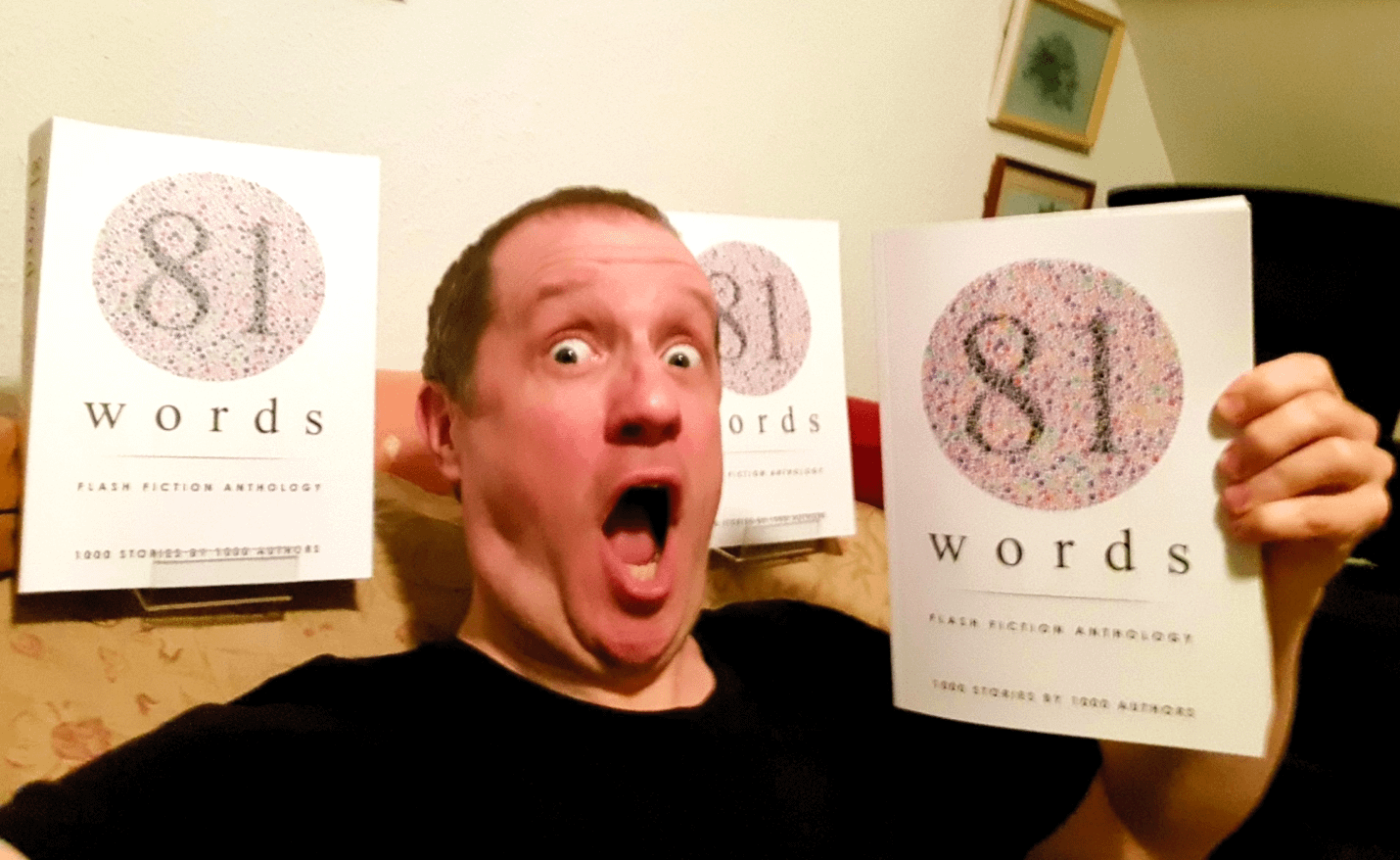
  • 81 Words Breaks World Record

    81 Words Breaks World Record

    81 Words Breaks World Record

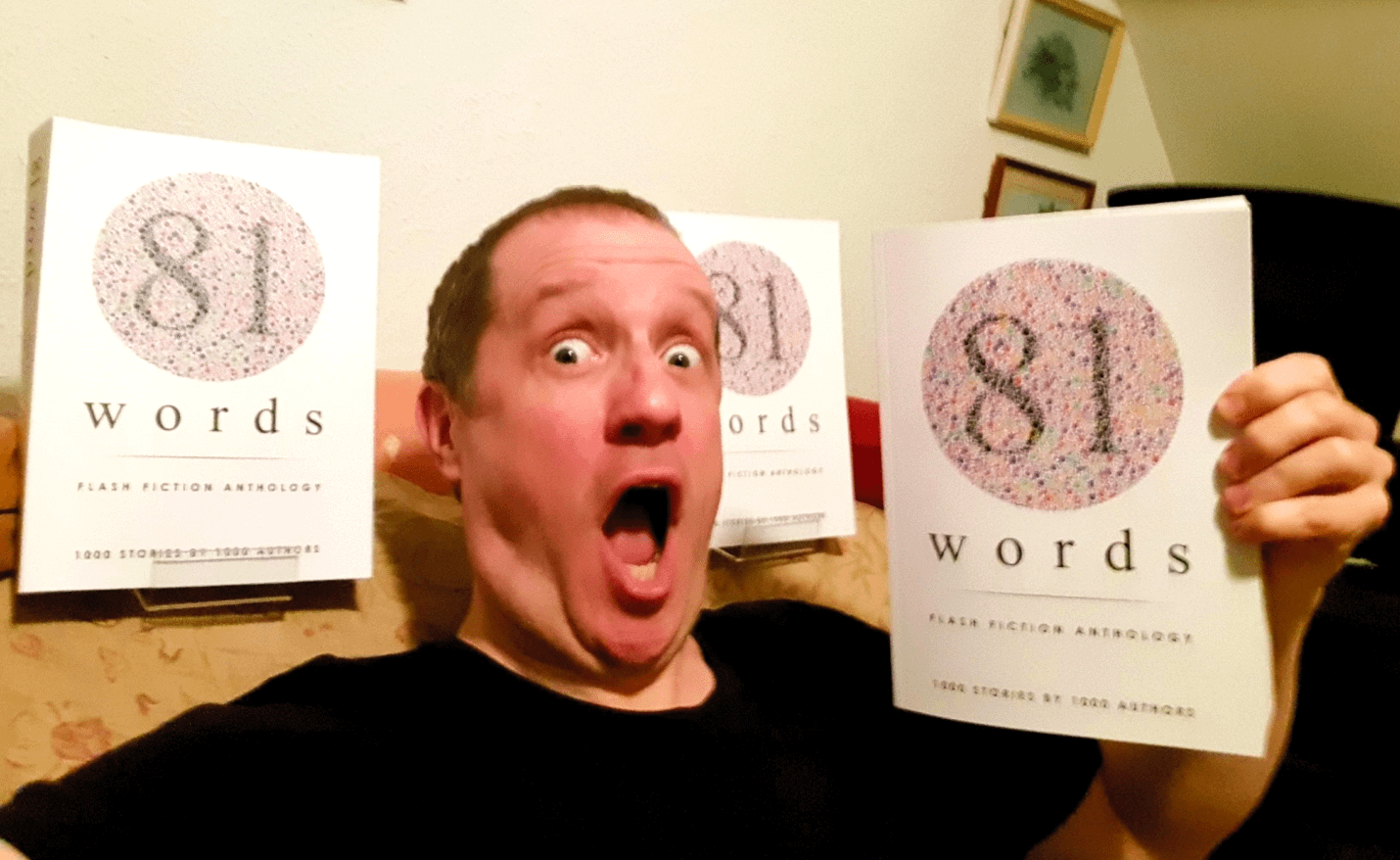
    Most contributing authors published in a Flash Fiction Anthology: world record set by 1000 Authors

    Jun 15, 2022

    I am pleased to have been part of this project.  They published my story, “Dreams Do Come True as item 942 on page 478.

    “ In 1974, Sam had a dream that changed his life forever.

    He fell asleep in a class and saw the most beautiful woman in the universe talking to him. She haunted his life for years. He went to the ends of the earth to find her.

    Then she walked off a bus, out of his dreams, and his life to become his wife three months later. That is the beginning of the rest of the story.”

    As most of you know, this is based on a true story. You can read more here:

    NEW YORK CITY, New York, United States–The ’81 Words Flash Fiction Anthology’, a book containing 1,000 stories written by 1,000 authors, contains 1,000 stories that are exactly 81 words in length, the result of almost seven years of hard work and the generosity of writers living all over, sets the world record for The Most Contributing Authors Published in a Flash Fiction Anthology, according to the WORLD RECORD ACADEMY,

    The world record book was published by Victorina Press, an independent UK publisher that follows the principles of biodiversity (the cultural diversity applied to the writing and publishing world, developed by a group of Chilean independent publishers). Because there are authors from many different countries featured in the book, this felt like the perfect project for them to be involved with.

    “I’d like to thank VP’s Managing Director, Consuelo Rivera-Fuentes, and the rest of the Victorina Press team (Sophie, Jorge, Page, and Amanda) for supporting this project and publishing the anthology, says Christopher Fielden, the book’s Editor.


    “Their involvement adds credibility to the unofficial world record attempt and will help the book (and every author featured in it) gain more exposure.”


    “The challenge was conceived by Adam Rubinstein, a self-professed educational basket-case from the ’70s who says he finds his sense of meaning and well-being through creativity.


    “The 81 Words writing challenge was originally launched on 81words.net. It became part of my website and I soon developed the challenge into a world record attempt for the most contributing authors published in an anthology. The 81 Words Flash Fiction Anthology was published.”

    The 81 Words Flash Fiction Anthology contains 1,000 stories submitted to the 81 Words writing challenge.


    The 81 Words Flash Fiction Anthology contains 1,000 stories written by 1,000 authors who submitted their work to the 81 Words Writing Challenge run on Chris Fielden’s website. Each story is exactly 81 words in length.


    In April 2022, the 81 Words Anthology was shortlisted in the ‘Best Anthology’ category of the Saboteur Awards, run by Sabotage Reviews. And on 14th May 2022, the book was announced as the winner.


    Victorina Press also won the ‘Most Innovative Publisher’ category.

    TESTIMONIALS from Amazon:


    “I loved Lee Kull’s devilish story. I wonder what that sly herbalist will concoct in future readings for her next heavy-handed victim!”


    “I’ve been pleased by the variety of stories all told with just 81 words. Not only are the stories diverse, but the authors are too. Ranging in age from 4 years to many more lived years, the authors come from all over the world. It’s a terrific book to leave out in a waiting area or by your throne for an enjoyable few minutes of very short and entertaining distraction. I highly recommend this book.”


    “The quality and variety of stories in this book are magnificent and I love the mini-biography for each author after their short story.
    I am author No. 533 but hadn’t read any of the other work until I purchased it on launch day and although I knew the quality of writing would be good I had no idea how high the standard would be.
    Well done to all involved and thank you to those who have purchased.”


    “A lot of work has gone into creating this anthology of tiny stories so well done Chris Fielden. Well done to all the authors too – 81 words isn’t a lot to work with to create a rounded story. A great book to dip into and would make a good Christmas present……and it supports the Arkbound charity too.”

    The 81 Words Flash Fiction Anthology is available in print and eBook formats.


    Proceeds from book sales will be donated to the Arkbound Foundation, a charity that aims to widen access to literature and improve diversity within publishing by running projects that empower people from disadvantaged backgrounds and deprived communities to get their voices heard.


    The book can be bought from all of Amazon’s websites. You can find it by searching for the book by name or the Amazon Standard Identification Number (ASIN):  B09JZXVYL8


    You can buy paperback copies of the book from Victorina Press here:

    https://www.victorinapress.com/product/81-words-flash-fiction-anthology/


    You can also buy paperbacks from Amazon here.

    The 1,000 Writers In The Anthology

    Here is a (rather epic) list of the 1,000 contributing authors featured in the anthology. There are more than 1,000 writers in the book because some of the stories were written by two-person author teams. As mentioned further up this page, all the details are in the introduction of the book. Here is the list, presented alphabetically based on first name/initial:

    1. A. Rubin
      A. Gustafson
      A.H. Creed
      Aaron McDermott
      Abby Shue
      Abhi Shan
      Abigail Rowe
      Abigail Williamson
      Adam Bevan
      Adam Down
      Adam Rubinstein
      Adam Waters
      Adam Wright-Johnson
      Adele Evershed
      Adrian Hall church
      Adrian Nichol
      Aerin Bernstein
      Ahmad Abu Sharkh
      Aigbonoga Omoh
      Aishwarya Harikumar
      Akindu Perera
      Alan Barker
      Alan Barker [Note: same name but a different human being to the previous Alan]
      Alan D. Przybylski
      Alan Dale
      Alan Greaves
      Alan Pattison
      Alan Ridley
      Alcuin Edwards
      Aleah Bingham
      Alex Blair
      Alex Fullerton
      Alexandra Klyueva
      Alexio Gomes
      Ali Bounds
      Ali Clarke
      Alice Hale
      Alice Payne
      Alice Penfold
      Alicia McGrath
      Alicia Sledge
      Alicia Yau
      Alison Clary
      Alison Reese
      Alison Wren
      Alistair Forsyth
      Allen Ashley
      Ally Cook
      Alyson Faye
      Amanda Garzia
      Amanda Huggins
      Amanita Peridot Festoon
      Amberlie Robinson
      Amelia Brown
      Amisha Bansal
      Ana D.
      Anastasia Bromberg
      Anastasia Mosher
      Andre Othenin-Girard
      Andrew Ball
      Andrew Carter
      Andrew Dawkins
      Andrew James Spence
      Andrew Jones
      Andrew McGill
      Andrew Perry
      Andrzej Christopher Marczewski
      Andy Langdale
      Angela P Googh
      Angelique Dusengimana
      Ani Martin
      Ania Kovas
      Anita Goveas
      Ankush Vijay Chawla
      Anna Capstick
      Anna Ferrar
      Anna Sanderson
      Anne Copeland
      Annie Francis
      Annika Franke
      Anu Roy
      Arlene Everingham
      Arthur KC Chan
      Arya Amlani
      Ash Gray
      Ashleigh Whittle
      Ashley Kim
      Ashley Scott
      Ashley Vohrer
      Ashutosh Pant
      Austrian Spencer
      Ava Groth
      Avery Pryce
      Ayesha Hassan
      B. K. Bolen
      B. P. Garcia
      B.C. Ong
      Barbara Eustace
      Barnaby Page
      Barry Rhodes
      Barry Smith
      Bart Elbey
      Bec Lewis
      Becky Benishek
      Bekk Escott
      Benjamin Noel
      Bernard Hicks
      Bernard Muslin
      Bert Velthuis
      Beth Greenwood
      Beth Kander
      Betty Hattersley
      Betty J Burton
      Blake Holcomb
      Blerina Kapllani
      Boaksey
      Brett Elliott-Palmer
      Brian Johnstone
      Brian Mackinney
      Brianna Damplo
      Bridget Blankley
      Bridget Scrannage
      Bridget Yates
      Brinkinfield
      Brittany Holmes
      Bruce Millar
      Bruce Wyness
      Bryan Keefe
      Byron Coulson
      C. H. Connor
      C.R. Berry
      Caiden Lang
      Caleb Jansen
      Cameron Crebs
      Campbell Hinshelwood
      Carl Palmer
      Carla Vlad
      Caroline Cowan
      Caroline Wright
      Carolyn Roden
      Carolyn Ward
      Carrie Hewlett
      Cath Allwood
      Catherine Broxton
      Catherine Cade
      Catherine Harkness
      Cathi Radner
      Catrin Rutland
      CB McCall
      Ceris Brewis
      Charles Bonkowsky
      Charles K Manila
      Charles Lee
      Charles Murphy
      Charles Osborne
      Charlie Taylor
      Charlie Turner
      Charlotte Ella Read
      Charlotte Farrell-Banks
      Charlotte Ward
      Charlotte West
      Cheah Yin Mee
      Cheryl Buck
      Chip Jett
      Chloe Frost
      Chloe Nkomo
      Chloe Testa
      Chris Black
      Chris Cantor
      Chris Espenshade
      Chris Green
      Chris McLoughlin
      Chris Pritchard
      Chris Tattersall
      Christian Andrei Nuez Laplap
      Christian Obaitan
      Christianna Sahadeo
      Christina Burton
      Christina M. Y. Chow
      Christine Bukania
      Christine Hursell
      Christine Kingshott
      Christine O’Donnell
      Christine Reeves
      Christine Tapper
      Christopher Fielden
      Christopher Searle
      CJ Nicol
      CJ Wigg
      CL Wearne
      Claire Allinson
      Claire Apps
      Claire Gagnon
      Claire Gee
      Claire Lee
      Claire Schön
      Claire Taylor
      Claire Temple
      Clara Baird
      Clare Owen
      Clare Tivey
      Clarrie Rose
      Cleiton Pinho
      Colette KrielColleen Hue
      CompletelyBoofyBlitzed
      Constance Bourg
      Crilly O’Neil
      Cristina Bresser
      Cynthia Akagi
      Dan McConnell
      Daniel L. Link
      Daniel McClaskey
      Danielle Linsey
      Danny Macks
      Darci-Leigh Robinson-Askew
      Darren Hackett
      Dave Firth
      David Batteiger
      David Brewis
      David Conway
      David Don
      David Guilfoyle
      David Heaton
      David John Griffin
      David Lowis
      David McTigue
      David Rhymes
      David S Mitchell
      David Silver
      David Turton
      David Vargas Alfonso
      David Viner
      David Wright
      Dean Hollands
      Debaprasad Mukherjee
      Debbie Rolls
      Debbie Singh
      Deborah Wroe
      Dee La Vardera
      Dee Tilsley
      Denis Joseph
      Denise Senecal
      Derek McMillan
      Devin Greene
      Devon Goodchild
      Dez T.
      Diana Senechal
      Diane de Anda
      Diane Harding
      Dianne D. Pingalo
      Dimiana Wassef
      Dinesh Shihantha De Silva
      Dionne Burton
      Diontae Jaegli
      Don Bartlome
      Don Marler
      Dorothy Francis
      Doug Forrest
      Doug Hawley
      Douglas J. Shearer
      Dr. Sriharsha Sripathi
      DT Langdale
      Duane L. Herrmann
      E. F. S. Byrne
      Edmund Piper
      Edward Mortenson
      Edward Rouse
      Edwin Stern
      Eileen Baldwin
      Elaine Carlyle
      Eleanor Dickenson
      Elena Zhuang
      Elizabeth Lamb
      Elizabeth Stanley
      Ella Cass
      Ella Wilson
      Elliot Cambrey
      Em Daurio
      Emily K Martin
      Emily Knight
      Emma Burnett
      Emma Nokes
      Emma Robertson
      Emma Stammeyer
      Emma Wilson
      Erin Hardman
      Esosa Kolawole
      Evelyn Hawke
      Everest Pen
      Evie Nicol
      Ezeh Michael Ogonna
      Fabio Crispim
      Farzaneh Hajirasouliha
      Fay Franklin
      Fee Johnstone
      Felix Castrillon
      Femi S. Craigwell
      Finlay Thomas Tweedie
      Fiona Aitken
      Fiona Campbell
      Fiona Flower
      Fliss Zakaszewska
      Franca Basta
      Frances Tate
      Francesca Pappadogiannis
      Francisca Staines
      Frank Daurio
      Frank Havemann
      Frank Hubeny
      Frank Radcliffe
      G. Gaurav
      Gail Everett
      Gary Couzens
      Gary McGrath
      Gavin Biddlecombe
      Gemma Bevan
      Gemma Martiskainen
      Geoff Freedman
      Geoff Holme
      George Cornilă
      Gillian M Seed
      Gillian Macleod
      Ginger Marcinkowski
      Gitanjali Escobar Travieso
      Glen Donaldson
      Glo Curl
      Gloria Ames
      Glynis Ann Downey
      Gordon Williams
      Gowravy Ravanan
      Grace Turner-Higgins
      Grannd Kane
      Grant McKain
      Grant O’Townson
      Gwyneth Williams
      Gwynne Weir
      Hajra Saeed
      Haley M. Hwang
      Hannah Brown
      Hannah Cole
      Harley Logan Thompson
      Harriet Payne
      Hazel Turner
      Heather Haigh
      Heather Stuart Primbs
      Heidi Lobecker
      Heidi Vanlandingham
      Helen Aitchison
      Helen Combe
      Helen Matthews
      Helen Merrick
      Hervé Suys
      Hilary Taylor
      Holly Garcia
      Holly Webster
      Huguette Van Akkeren
      Hullabaloo22
      Ian Andrew
      Ian Buzard
      Ian James Stewart
      Ian Tucker
      Ibukun Keyamo
      Imogen Argent
      IR Belletti
      Irene Banfield
      Iris & Phil Hatchard
      Irving Benjamin
      Isabel Flynn
      Isabella Rae Wharton-McLellan
      Iuliana Khadyxa Filisanu
      Ivan Richardson
      Ixai Salvo
      J. L. Harland
      J. Rosina Harlow
      J.S Taols
      Jace Henderson
      Jacek Wilkos
      Jack Dabell
      Jack Dudley
      Jack Hanlon
      Jack Purkis
      Jackie Batteiger
      Jackie Hindmarsh
      Jacky Ellis
      Jade Swann
      Jaimen Shires
      Jaine Irish
      Jake Cosmos Aller
      James Braun
      James Byrne
      James Colfox
      James Crerar
      James Hornby
      James Louis Peel
      James Northern
      James Pemberton
      James Sanders
      James Smart
      Jamie Graham
      Jamie Welch
      Jan Brown
      Jan Courtney
      Jane Fell
      Jane Imrie
      Jane Sleight
      Janet L Davies
      Janet Lister
      Jasmine Hunt
      Jasmine Lee
      Jasmine Tan Chin Chwee
      Jason B
      Jason Barbo
      Jay Bee
      Jayanta Bhaumik
      Jaycee Durand
      Jayne Morgan
      Jaz Leigh
      Jeff Kemp
      Jeffrey H. Toney
      Jeni Lawes
      Jennifer Hankin
      Jennifer P. L. Leong
      Jennifer Riddalls
      Jenny Butler
      Jenny Drury
      Jenny Simmons
      Jerome Parsons
      Jerry Wilson
      Jessica Bowden
      Jessica Everitt
      Jessica Joy
      Jessica Kirby
      Jessica Richard
      Jessica Turnbull
      Jill Lang
      Jimmy Doom
      Jo Howarth
      Joan C. Hobart
      Joanna Ball
      Jocelyn Wong
      Jodi Nicholls
      Jodi Novak
      Joe Bailey
      Joe Brothers
      Joe McMullen
      Johanna McDonald
      Johannah Lipscher Simon
      John Bevan
      John Cooper
      John D Lary
      John Hannan
      John Holland
      John Holmes
      John James Morris
      John L Bell
      John Lane
      John Mark Miller
      John Notley
      John Rivers
      John Robertson
      John S Alty
      John Vandore
      Jon Drake
      Jon Spencer
      Jonathan Fryer
      Jonathan Hastings
      Jonathan Hunter
      Jonathan Inglesfield
      Jonathan Martindale
      Jonathan Pacheco
      Jordan B. Jolley
      Jordan Bahnub
      Jordis Fasheh
      Jose Luis Torres
      Joseph Lancaster
      Joseph Mould
      Josephine Queen
      Josh Joseph Dixon
      Josh Leeson
      Josie Gowler
      Joy Thomas
      Joyce Bingham
      Joyce Walker
      JS Cline
      Judi Edwards
      Judy Reeves
      Julia Graves
      Julia O’Dowd
      Julia T. Spano
      Julia Wood
      Julie Goodswen
      Julie Howard
      Julie Mayger
      Julie Stone
      Justine Quammie
      Justyce Solomon
      K. J. Watson
      Kaelin Lee
      Kailin Guo
      Kaitlin Ellis
      Karen Bevan
      Karen McClure
      Karen McDermott
      Karen Rust
      Karen Waldron
      Karen Walker
      Karen Western
      Kate Hamilton
      Kate Leimer
      Kate Miller
      Katerina Hellam
      Katherine Kogoy
      Kathleen E Williams
      Kathleen Hearnshaw
      Kathleen Keenan
      Kathryn Dixon
      Kathryn Evans
      Kathryn J Barrow
      Kathryn Joyce
      Kathryn Smith
      Katie Chapman
      Katie Labbe
      Katie Pepper
      Katie Singer
      Katy Clayton
      Kavitha Yarlagadda
      Kay Sandry
      Keian Murray
      Keith Pearson-Sandelands
      Kelly Van Nelson
      Kelsey Gallo
      Kelsey Juean Irving
      Kennedy Meechan
      Kenneth Cahall
      Kent Raddatz
      Kerry Robinson
      Khamis Kabeu
      Kim Hart
      Kim Montgomery
      Kim Steindel
      Kim Witbeck
      Kimana McCallum
      Kimberly Owen
      Kira Inglis
      Kirk I. Holden
      Kitty Litteur
      Klaus Gehling
      KM Arhel
      Kolade Ajila
      Kudakwashe Chirapa
      Kwame M.A. McPherson
      Kylan Fedje
      L J King
      L J McQueen
      L. A. Cunningham
      L.E. Daurio
      Laila Miller
      Laura Besley
      Laura Day
      Laura Foakes
      Lauren J. Phillips
      Lauren M Foster
      Lauren Raybould
      Laurie Hicks
      Layla Ahmed
      Layla Calarco
      Layla Rogers
      Lee Foley
      Lee Holland
      Lee Kull
      Leigh Hastings
      Len Saculla
      Lena MacDonald
      Lesley Anne Truchet
      Levi Earl
      Lewis Ayers
      Lexikon
      Liam Hogan
      Liam Lawer
      Liam Rayner
      Libby Batteiger
      Lidia Giusa
      Lim Swee Kim
      Linda Foy
      Linda Hibbin
      Linda Jones
      Linda Lewis
      Linda Scogings
      Linda Smith
      Linda Taylor
      Lindsey Esplin
      Lindy Gibbon
      Linn Kier
      Lisa Miller
      Lisa Reynolds
      Lisa Stone
      Livia Furia
      Liz Berg
      Liz Howard
      Liz Krogman
      Lorna Dougan
      Lorna Stewart
      Lorraine Smith
      Louise Burgess
      Louise Furre
      Louise Goulding
      Louise Snape
      Lucinda Thelwell
      Lucy Camilla
      Lucy Lucy
      Lucy Morrice
      Lumen Ros
      Lydia Collins
      Lyndsay Lomax
      Lynn Gale
      Lynn Morcombe
      Lynn White
      Lynn Zeleski
      Lynne Arnot
      Lynne Chitty
      Lynsey Calvert
      M Anthony David
      Madamraj Mrinalini
      Maddy Hamley
      Madeleine McCabe
      Madeleine McDonald
      Madeline Green
      Madiana Dethan
      Madison Pickering
      Maggie Elliott
      Mahek Khwaja
      Mairead Robinson
      Majella Pinto
      Malcolm Richardson
      Manda Riehl
      Mandy Raywood
      Mandy Whyman
      Marci Girton
      Marco Cardoni
      Margaret Bell
      Margaret Davis
      Margee Unger
      Maria Carvalho
      Maria DePaul
      Maria Noble
      Mariam Bibi
      Mariam Mansuryan
      Marie Arbon
      Marie McGinn
      Marieta Maglas
      Marilyn Rucker
      Mark Burke
      Mark J Towers
      Mark Johnson
      Mark Pritchard
      Mark Stocker
      Marsha K. Hanson
      Martin Strike
      Mary Daurio
      Mary Dharsi
      Mary Papageorgiou
      Mary Prior
      Mason Bell
      Matilda Pinto
      Matthew Bines
      Matthew Dawson
      Matthew Galic
      Matthew Gooch
      Matthew J Morine
      Matthew Kerns
      Matthew Willis
      Max Dobb
      Maxine Smith
      Maxx Dominic
      Maya Barnett
      Mckenzie Tompson
      Medeia Sharif
      Meg Gain
      Meghan O’Brien
      Mehak Vijay Chawla
      Melanie Goodell
      Melissa Odom
      Melody Bowers
      Meredith Argent
      MF Mika
      Mhairi Bakertzi
      Michael E James
      Michael Farmer
      Michael Hardy
      Michael J. Labbe
      Michael J. Lowis
      Michael Lane
      Michael Mclaughlin
      Michael Rumsey
      Michael Swift
      Michael Ward
      Michaela Mechura
      Michele Kelly
      Michele Witthaus
      Michelle Compton
      Michelle Cook
      Michelle Konov
      Michelle Weaver
      Micky Rowe
      Mike Blakemore
      Mike Scott Thomson
      Miriam Hurdle
      Misa Hennin
      Mohamed Atta Amer
      Mohit Dass
      Muriel Garvis
      Murodova Marjona
      Myron Dunavan
      N. J. Spencer
      N.B. Craven
      Nam Raj Khatri
      Natalia Wojcik-Smith
      Natalie Marshall
      Natalie Wu
      Natasha Ali
      Natasha Nagle
      Nathaniel David Knox
      Neil Brooks
      Neil D Cross
      Neil Davie
      Neil Goodwin
      Neil Phillips
      Neil Renton
      Niamh Burke
      Nick Fairclough
      Nicole Loh
      Niina Olenbluu
      Nikki Butcher
      Nili Roberts
      Noel Alcoba
      Norm Veasman
      NT Franklin
      Nurholis
      Oghogho Odiase
      Olatz Irigarai
      Oliver Lynton
      Olivia Ackers
      Olivia Magnuson
      Olivia-Ann Saxton
      Olusanya Anjorin
      Oort Kuiper
      Oriel Dobb
      Oscar Kenway
      Özge Göztürk
      Paige Murray
      Pam Jackson
      Pam Knapp
      Pamela Hibbert
      Pamela Pope
      Pappo Nindo
      Parzival Sattva
      Pat Hough
      Patricia Mudge
      Patricia Tarrant Brown
      Patrick Antonio
      Patrick Christian
      Patrick Moorhouse
      Patrick ten Brink
      Paul Mastaglio
      Paul Phillips
      Paul Rhodes
      Paul Shaw
      Paula Lacey
      Paulette Pierre
      Peggy Gerber
      Penelope Henry
      Pete Armstrong
      Peter Gregory & David Gough
      Peter J. Corbally
      Peter Loftus
      Peter Stanton
      Phil Maud
      Phil Thomas
      Philip Charter
      Phoebe Tatham
      PJ Stephenson
      Prajith Menon
      Prisha Gupta
      R. J. Kinnarney
      R.A. Krueger
      R.J. Saxon
      Rachael Hinshaw
      Rachel Smith
      Rachel Wood
      Rafe Bellers
      Rajagopal Kaimal
      Ray Sarlin
      Raymond E. Strawn III
      Raymond Sloan
      Rebecca Capel
      Rebecca Hubbard
      Rebecca Krohman
      Rebeccah Yeadon
      Reed Markham
      Reha Tanör
      Renate Schiansky
      Rene Astle
      Rex Charger
      Richard Anthony Morris
      Richard Freeman
      Richard H. Argent
      Richard Stanley
      Richard Swaine
      Ripunjoy Borgohain
      RJS Cantwell
      RK
      RL Comstock
      Rob Bray
      Rob Vogt
      Robbie Brown
      Robbie Porter
      Robert Adams
      Robert Alan Ryder
      Robert Brewis
      Robert Kombol
      Robert Tucker
      Robert Wood
      Roberta Scafidi
      Roger Newton
      Roger West
      Rohana Chomick
      Ron Smith
      Ronald Hall
      Ros Byrne
      Ros Masterson
      Rosalind Adam
      Rosalind Newton
      Rose Farris
      Roshna Rusiniya
      Rosie Arcane
      Rosie Cullen
      Ross Lowe
      Rowan Lewis
      Roz Levens
      Rudy S. Uribe Jr.
      Rui Soares
      Rupert Payne
      Ruth Pedley
      Ryan Fell
      Ryu Ando
      S Thomson-Hillis
      S. M. Chiles
      S. Rupsha Mitra
      S. W. Hardy
      S.B. Borgersen
      S.E. Taylor
      Sachin Prakash
      Sagar Jadhav
      Sai Muthukumar
      Sally Skeptic
      Sam Freer
      Sam May
      Samantha Gentzel
      Samantha Gunton
      Sandee Lee
      Sandra ‘Chas’ Hines
      Sandra Orellana
      Sandra Purdy
      Sarah Ann Hall
      Sarah Brown
      Sarah Burrett
      Sarah Charmley
      Sarah Engeham
      Sarah Everett
      Sarah Fletcher
      Sarah Hoad
      Sarah Jae Walsh
      Sarah Littleton
      Sarah Mosedale
      Sarah Stansfield
      Sarah Stephenson
      Saras Ojha
      Sarthak Das
      Saskia Ashby
      Scott Parent
      Sean Bain
      Sean Tobias May
      Sebastian Cowen
      Seth Turner-Higgins
      Shahnaz Ali
      Shannon J Alger
      Sharon Pinner
      Shaun Clarke
      Shauna Elizabeth Murray
      Sheannah Guillemette
      Sheila Rosart
      Shelly Teems
      Shirley Muir
      Shobha Wilson
      Sidonie Baylis
      Siegfried E Finser
      Sihaam Osman
      Silver Morris
      Simone Wallace
      Sivan Pillai
      Skylar Kim
      Smritirekha Talukdar
      Sophia Manubay
      Sophie Henson
      Sophie Scriven
      Sreedevi Ganti Mahapatra
      Stefan Dimitrov
      Stephanie Ngoei
      Stephanie Potts
      Stephen P. Thompson
      Stephie Simpson
      Steve Lodge
      Steven Barrett
      Stuart Atkinson
      Sue Johnson
      Sue Moos
      Sue Partridge
      Sue Vincent
      Sunshine Tibod
      Susan Howarth
      Susan Wickham
      Susanne Berger
      Susi J Smith
      Susie Frame
      Swi Neo Mary Yap
      Sydney Clarence
      Sylvia Ketchum
      Syreeta Muir
      T. Luxton
      T. W. Garland
      T.L. Shenkin
      T.N.M. Sheppard
      Tamires Cunha
      Tamsin Partington
      Tanya Butler
      Tanya Hill
      Tanya Johnson
      Tarquin Calver
      Taye Carrol
      Taylor Elliott
      Taylor Moore
      Ted Bragg
      Tess M Shepherd
      Tessa Elliott
      Thatchayani Ravanan
      Thomas Belmar
      Thomas James Busby
      Thomas O’Mara
      Tiarnán Murphy
      Tiffany Williams
      Tim Gomersall
      Tim Warren
      Tom Bullimore
      Tom Gaunt
      Toni G.
      Toni Peers
      Tonia Nem
      Tony Lawrence
      Tony Mooney
      Tony Thatcher
      Tony Tremblett
      Tracey Maitland
      TS Lanchbery
      Ty Hall
      Umme Ammarah
      Val Chapman
      Valerie Fish
      Valerie Griffin
      Valerie J Shay
      Veena Rah
      Veronica Crerar
      Vesper Wunderlin
      Vichar Lochan
      Vicki Murray
      Vicki Sinclair
      Vicky Garlick
      Victoria Gaylor
      Violet James
      Vishnu Nandan
      Vivian Oldaker
      Vivienne O’Boyle
      W. E. Jones
      W. G. Miller
      Waltraud Pospischil
      Wanda Wright
      Wayne B. Chorney
      Wayne Hewitt
      Wendy Christopher
      Wendy Fletcher
      Wendy Roe
      William Telford
      Wright Stone
      Wyatt Payne
      Yabo Anderson
      Yelena Kart
      Yvonne Clarke
      Yvonne Mastaglio
      Zoe J Walker
      Zoey Rowan

    The End


  • Stuart Woods RIP

    Stuart Woods RIP

    Stuart Woods RIP

    Guilty Pleasures – the Novels of Stuart Woods

    https://www.stuartwoods.com/

    https://en.wikipedia.org/wiki/Stuart_Woods

    One of my favorite writers is Stuart Woods. Boy, can the dude pump them out!  In the last count, he has written over 80 books almost all of the best sellers and he has been pumping out one to two a year since he first got published in the late ’70s.

    He died this week at age 83.  He wrote over 90 books in his life and I have read most of them.

    He started out writing “Chiefs” which became a movie as well.  The main character is a police chief in a small town in Georgia.  The character reappears in many later novels, eventually becoming a two-term president, and in town, Delgado also appears as a place in many of his later novels.  Most of his novels are set in NYC, Maine, Key West, Los Angeles, and Santa Fe, New Mexico.

    Most of his books feature the exploits of Stone Barrington, an NYC high-society type who is a James Bond-like character.  He is a retired NYC cop, a lawyer, a real estate investor, a part-time CIA agent, and a player with many love interests.  He is also best friends with three presidents and the not-so-secret lover of the current President. He introduced me to Knob Creek bourbon which is now one of my favorite bourbons, and he is also partial to Martinis-made James Bond style.

    In this alternative universe, the President serves two terms, his wife serves two terms, and her secretary of State is elected President. Stone is friends with them all.

    Stone’s best friend is Dino Bachetti, his old NYC homicide partner who became NYC Police Commissioner and helps Stone out officially and unofficially over the years.  He has had a lot of love interests including Holly Barker who was a former secretary of state and president.

    Another recurring character is Ed Lee who is a friend of Stone who lives and works out of Santa Fe New Mexico.  Ed Lee is a 6’8 former college basketball player who becomes an attorney.

    My only criticism is that his books are very formalistic.  At some point, someone is going to be able to program a computer to write novels and his novels would be a great place to start because I am sure that a computer could generate believable Stone Barrington novels.  Having said that, his novels are still enjoyable.

    He has written a few non-Stone Barrington novels stand-alone novels. One I enjoyed recently was Palindrome which is a psychological thriller set on an island off the South Carolina coast. Written in the mid 90’s I believe.

    I often start a novel of his while waiting around in the PX for my wife to finish up, and throughout several visits, often finish the novel.

    The following is a list of his novels, I bolded the ones I have read. One of my bucket list reading goals is to finish reading all of his novels, including the last two coming out this fall..

    The list

    Stuart Woods   BOLD read

    Stuart Woods Books in Order

     Publication Order of Stone Barrington Books

    New York Dead (1991) Hardcover  Paperback  Kindle
    Dirt (1996) Hardcover  Paperback  Kindle
    Dead in the Water (1997) Hardcover  Paperback  Kindle
    Swimming to Catalina (1998) Hardcover  Paperback  Kindle
    Worst Fears Realized (1999) Hardcover  Paperback  Kindle
    L.A. Dead (2000) Hardcover  Paperback  Kindle
    Cold Paradise (2001) Hardcover  Paperback  Kindle
    The Short Forever (2002) Hardcover  Paperback  Kindle
    Dirty Work (2003) Hardcover  Paperback  Kindle
    Reckless Abandon (2004) Hardcover  Paperback  Kindle
    Two Dollar Bill (2004) Hardcover  Paperback  Kindle
    Dark Harbor (2006) Hardcover  Paperback  Kindle
    Fresh Disasters (2007) Hardcover  Paperback  Kindle
    Shoot Him If He Runs (2007) Hardcover  Paperback  Kindle
    Hot Mahogany (2008) Hardcover  Paperback  Kindle
    Loitering with Intent (2009) Hardcover  Paperback  Kindle
    Kisser (2009) Hardcover  Paperback  Kindle
    Lucid Intervals (2010) Hardcover  Paperback  Kindle
    Strategic Moves (2010) Hardcover  Paperback  Kindle
    Bel-Air Dead (2011) Hardcover  Paperback  Kindle
    Son of Stone (2011) Hardcover  Paperback  Kindle
    D.C. Dead (2011) Hardcover  Paperback  Kindle
    Unnatural Acts (2012) Hardcover  Paperback  Kindle
    Severe Clear (2012) Hardcover  Paperback  Kindle
    Collateral Damage (2012) Hardcover  Paperback  Kindle
    Unintended Consequences (2013) Hardcover  Paperback  Kindle
    Doing a Hard Time (2013) Hardcover  Paperback  Kindle
    Standup Guy (2014) Hardcover  Paperback  Kindle
    Carnal Curiosity (2014) Hardcover  Paperback  Kindle
    Cut and thrust (2014) Hardcover  Paperback  Kindle
    Paris Match (2014) Hardcover  Paperback  Kindle
    Insatiable Appetites (2015) Hardcover  Paperback  Kindle
    Hot Pursuit (2015) Hardcover  Paperback  Kindle
    Naked Greed (2015) Hardcover  Paperback  Kindle
    Foreign Affairs (2015) Hardcover  Paperback  Kindle
    Scandalous Behavior (2016) Hardcover  Paperback  Kindle
    Family Jewels (2016) Hardcover  Paperback  Kindle
    Dishonorable Intentions (2016) Hardcover  Paperback  Kindle
    Sex, Lies & Serious Money (2016) Hardcover  Paperback  Kindle
    Below the Belt (2017) Hardcover  Paperback  Kindle
    Fast and Loose (2017) Hardcover  Paperback  Kindle
    Indecent Exposure (2017) Hardcover  Paperback  Kindle
    Quick & Dirty (2017) Hardcover  Paperback  Kindle
    Unbound (2018) Hardcover  Paperback  Kindle
    Shoot First (2018) Hardcover  Paperback  Kindle
    Turbulence (2018) Hardcover  Paperback  Kindle
    Desperate Measures (2018) Hardcover  Paperback  Kindle
    A Delicate Touch (2018) Hardcover  Paperback  Kindle
    Wild Card (2019) Hardcover  Paperback  Kindle
    Contraband (2019) Hardcover  Paperback  Kindle
    Stealth (2019) Hardcover  Paperback  Kindle
    Treason (2020) Hardcover  Paperback  Kindle
    Hit List (2020) Hardcover  Paperback  Kindle
    Choppy Water (2020) Hardcover  Paperback  Kindle
    Shakeup (2020) Hardcover  Paperback  Kindle
    Hush-Hush (2020) Hardcover  Paperback  Kindle
    Double Jeopardy (2021) Hardcover  Paperback  Kindle
    Class Act (2021) Hardcover  Paperback  Kindle
    Foul Play (2021) Hardcover  Paperback  Kindle
    Criminal Mischief (2021) Hardcover  Paperback  Kindle

    Publication Order of Holly Barker Books

    Orchid Beach (1998) Hardcover  Paperback  Kindle
    Orchid Blues (2001) Hardcover  Paperback  Kindle
    Blood Orchid (2002) Hardcover  Paperback  Kindle
    Reckless Abandon (2004) Hardcover  Paperback  Kindle
    Iron Orchid (2005) Hardcover  Paperback  Kindle
    Hothouse Orchid (2009) Hardcover  Paperback  Kindle

    Publication Order of Ed Eagle Books

    Santa Fe Rules (1992) Hardcover  Paperback  Kindle
    Short Straw (2006) Hardcover  Paperback  Kindle
    Santa Fe Dead (2008) Hardcover  Paperback  Kindle
    Santa Fe Edge (2010) Hardcover  Paperback  Kindle

    Publication Order of Herbie Fisher Books

    Barely Legal(With Parnell Hall) (2017) Hardcover  Paperback  Kindle

    Publication Order of Rick Barron Books

    The Prince of Beverly Hills (2004) Hardcover  Paperback  Kindle
    Beverly Hills Dead (2008) Hardcover  Paperback  Kindle

    Publication Order of Teddy Fay Books

    Smooth Operator(With Parnell Hall) (2016) Hardcover  Paperback  Kindle
    The Money Shot(With Parnell Hall) (2018) Hardcover  Paperback  Kindle
    Skin Game(With Parnell Hall) (2019) Hardcover  Paperback  Kindle
    Bombshell(With Parnell Hall) (2020) Hardcover  Paperback  Kindle
    Jackpot(With Bryon Quarterboys) (2021) Hardcover  Paperback  Kindle

    Publication Order of Will Lee Books

    Chiefs (1981) Hardcover  Paperback  Kindle
    Run Before the Wind (1983) Hardcover  Paperback  Kindle
    Deep Lie (1986) Hardcover  Paperback  Kindle
    Grass Roots (1989) Hardcover  Paperback  Kindle
    The Run (1995) Hardcover  Paperback  Kindle
    Capital Crimes (2003) Hardcover  Paperback  Kindle
    Mounting Fears (2008) Hardcover  Paperback  Kindle

    Publication Order of Standalone Novels

    Under the Lake (1986) Hardcover  Paperback  Kindle
    White Cargo (1988) Hardcover  Paperback  Kindle
    Palindrome (1990) Hardcover  Paperback  Kindle
    L.A. Times (1993) Hardcover  Paperback  Kindle
    Heat (1994) Hardcover  Paperback  Kindle
    Dead Eyes (1994) Hardcover  Paperback  Kindle
    Imperfect Strangers (1995) Hardcover  Paperback  Kindle
    Choke (1995) Hardcover  Paperback  Kindle

    Publication Order of Non-Fiction Books

    Blue Water, Green Skipper (1977) Hardcover  Paperback  Kindle
    A romantic’s guide to the country inns of Britain and Ireland (1979) Hardcover  Paperback  Kindle

    AI Program Writes Stone Barrington Book

    I have often thought that someday an AI program will be able to write an effective thriller.  I write to Stuart Woods and IBM proposing a challenge.

    Big Blue and Stuart Woods would both write a Stone Barrington novel.  A jury of readers and critics would read the result and determine which one was the computer version and which was the human version.

    Stuart Woods took the challenge and IBM big blue went to work.  IBM won the contest as the jurry thought the computer version was better.

    About Stuart Woods:

    Stuarts Woods is an American novelist. He was born in Georgia in 1938, and died in August, 2022. He graduated from the University of Georgia in 1959. He then enrolled in the National Guard before moving to New York to start a career.


    He then moved to London and spent a further 3 years working in advertising before deciding that he wanted a change and he began writing his first novel. It is at this time that he decided to move to Ireland where he lived a solitary lifestyle, only leaving his home to make money writing adverts for local television.

    SailingWoods moved to Ireland in the 70s and this was where he fell in love with sailing. He spent many years competing in sailing competitions and learning how to be a better sailor. He finally bought his boat when his grandfather died and left him some money, so he could afford it. It was then that he took sailing more seriously and spent most of 1974 learning more about sailing.WritingWoods began writing about his experiences in his yacht races and he published 1977, the book Blue Water, Green Skipper. It seemed like he had found an ideal career based on the thing he loved most, sailing.Changing PlansHis second book was supposed to be about another boat race that he was due to take part in, but the race was canceled due to inclement weather, so he decided to drive around the UK and write a book about his adventures in the county inns.ChiefsWoods then went on to write his first novel called Chiefs. He made the mistake of selling the book to publishers unfinished because he thought he would have gotten a lot more for it had he waited until the book was finished.Norton was the company to publish the hardback, but he felt like the company let him down because they didn’t do much to promote the book. He then contacted Bentham Books, who published the paperback and it was much more successful.Charlton HestonIn 1983, the book was made into a tv series starring Charlton Heston and Danny Glover. It was aired by CBS over three nights and it ended up being nominated for three Emmy Awards.The popularity of the tv show meant that more people wanted to read the books and there was renewed interest in the paperback version of the books Woods won the Edgar Award for the Best First Novel.Series Over StandalonesWoods is one of those authors who are more focused on the series of novels over the standalone. His most popular series is the Stone Barrington Novels. He has just released his 27th novel in the series and he has written 3 more novels, which are set to be released in 2014.Who is Stone Barrington?Stone Barrington is a counsel for a law firm. After he finished college, he joined the police and served 14 years on the force. He left after disagreeing with his superiors and then got a job with the law firm. The novels tell the story of his exploits so far.In the Stone Barrington novels, Woods is often congratulated for getting the law procedures correct when he has no background in law himself. It is noticed a lot and one fan asked how he gets it all right. He indicates that he is a massive fan of law procedurals such as LA Law and Law & Order, so gets all of his knowledge from there. He has made a few friends who are Lawyers, so if he gets anything wrong, they tell him.Holly BarkerHolly Barker is a character in another series of books that he writes. She is an ex-army officer and navy brat. She left the army because of a sex scandal and she has to learn how to live a civilian life. She begins her new life as the Chief of Police and she learns just how dangerous her new life is.Even though Woods has written several series, which focus on the life of a single character, the characters from each of the novels do crossover into other series. For example, Stone Barrington appears in the second Holly Barker novel and he also appears in the second novel of the Rick Barron novels.Rick BarronThe Rick Barron novels are only two books deep at the moment. Rick Barron was a police detective and he was demoted after a run-in with a higher officer. He gets the job as security for Centurion Pictures but finds himself in the middle of a double murder case in the period that is said to be the golden age of Hollywood cinema.The first Rick Barron novel, The Prince of Beverly Hills, was meant to be a standalone novel but Woods ended up writing a sequel after he was bombarded with emails from fans asking him to write another. He has no plans to write another at this moment in time.After Chiefs was made into a TV series, one of his other books was adapted for TV as well. Grass Roots was made into a TV series in 1993. Since then, no other books have been made for TV.Woods indicates that he would love it for his other books to be made into movies and if a director has read one of the books and wants to buy the rights, then he encourages the writer to get in touch with his agent.

  • Reading G Keith Chesterton

    Reading G Keith Chesterton

    Reading G Keith Chesterton

    GK CHesteron

    GK Chesterton

    Reading the Classics

    George Elliot Novels

    Cosmos’s Reading List 2021

    1001 Books to Read Before You Die List

    As some of you might know, I am reading the classics these days.  I picked a three-volume series called  “50 Books You Must Read Before You Die” (free Kindle classic collection item) and started with volume three, and the Harvard classic collection (also a free Kindle classic item).  I recently finished reading the Gilbert Keith Chesterton selections.  Specifically, I read the following four items.

    The Wisdom of Father Brown [Gilbert Keith Chesterton]
    – Heretics [Gilbert Keith Chesterton]
    – The Donnington Affair [Gilbert Keith Chesterton] another Father Brown story
    – The Innocence of Father Brown [Gilbert Keith Chesterton]

    He was a towering figure in British intellectual life – a social conservative who became a Catholic.  He was friends with George Bernard Shaw and HG Wells and engaged in spirited debates with both during his life.  He wrote over 80 books on a wide range of topics. He was described as a big man who was very absent-minded, leaving his wife to take care of most mundane things.  I can relate to that.

    Reading these selections, particularly the three Father Brown selections from the viewpoint of the early 21st century, presents some challenges.  Like most writers of his era -late 19th century -mid 20th century, his writing sounds very ablest, anti-Semitic, colonist, elitist, racist, and sexist.  Of course, a writer in that era would simply not recognize the ablest, anti-Semitic, colonist, elitist, racist, and sexist aspects of his work, nor would he or she particularly care.  So, I noted that and moved on.

    comments greatly appreciated.

    He is perhaps most famous for his Father Brown stories.  (i had heard of these stories a long time ago). There is a BBC mini-series based on these stories that I would love to track down and watch someday.  Father Brown is an interesting fictional detective.  He reminds me a bit of Hercules Perot of Agatha Christie fame, or perhaps a bit of Sherlock Holmes as well.  Father Brown is a Catholic priest in England who develops a reputation as an amateur detective as he solves cases through his superior analytical ability, as well as his thinking outside the box to use a more modern idiom.  He travels around England, and France often with his friend, Flambeau who is a French detective, whom Father Brown convinces to turn away from a life of crime and go straight.

    Each of the stories is both a stand-alone story and fits a larger narrative as the characters evolve through time.

    I suppose my favorites were

    “The Wrong Shape”, The Saturday Evening Post, 10 December 1910.

    “The Sins of Prince Sardine”, The Saturday Evening Post, 22 April 1911.

    The Hammer of God (as “The Bolt from the Blue”, The Saturday Evening Post, 5 November 1910.

    “The Eye of Apollo”, The Saturday Evening Post, 25 February 1911.

    “The Sign of the Broken Sword”, The Saturday Evening Post, 7 January 1911.

    “The Fairy Tale of Father Brown”

    My least favorite was

    “The God of the Gongs” – because the racism in this story is just too much to deal with. The main murderer is a half-African from somewhere in the US who is a fighter but is accused of being a member of a Voodoo cult.  They used the N-word throughout to describe him and his cult members.

    The complete list follows:

    . The Innocence of Father Brown, 1911

    “The Blue Cross”, The Story-Teller, September 1910; first published as “Valentin Follows a Curious Trail”, The Saturday Evening Post, 23 July 1910

    “The Secret Garden”, The Story-Teller, October 1910. (The Saturday Evening Post, Sep 3, 1910)

    “The Queer Feet”, The Story-Teller, November 1910. (The Saturday Evening Post, Oct 1, 1910)

    “The Flying Stars”, The Saturday Evening Post, 20 May 1911.

    “The Invisible Man”, The Saturday Evening Post, 28 January 1911. (Cassell’s Magazine, Feb 1911)

    The Honour of Israel Gow (as “The Strange Justice”, The Saturday Evening Post, 25 March 1911.

    “The Wrong Shape”, The Saturday Evening Post, 10 December 1910.

    “The Sins of Prince Saradine”, The Saturday Evening Post, 22 April 1911.

    The Hammer of God (as “The Bolt from the Blue”, The Saturday Evening Post, 5 November 1910.

    “The Eye of Apollo”, The Saturday Evening Post, 25 February 1911.

    “The Sign of the Broken Sword”, The Saturday Evening Post, 7 January 1911.

    “The Three Tools of Death”, The Saturday Evening Post, 24 June 1911.

    1. The Wisdom of Father Brown (1914)

    “The Absence of Mr. Glass”, McClure’s Magazine, November 1912.

    “The Paradise of Thieves”, McClure’s Magazine, March 1913.

    “The Duel of Dr. Hirsch”

    “The Man in the Passage”, McClure’s Magazine, April 1913.

    “The Mistake of the Machine”

    “The Head of Caesar”, The Pall Mall Magazine, June 1913.

    “The Purple Wig”, The Pall Mall Magazine, May 1913.

    “The Perishing of the Pendragons”, The Pall Mall Magazine, June 1914.

    “The God of the Gongs”

    “The Salad of Colonel Cray”

    “The Strange Crime of John Boulnois”, McClure’s Magazine, February 1913.

    “The Fairy Tale of Father Brown”

    The Incredulity of Father Brown (1926)

    (I have not read these stories, but might track it down someday, mainly to see how these stories differ from his earlier stories, as they were written after World War 1 and the previous stories were written pre-war).

    “The Resurrection of Father Brown”

    “The Arrow of Heaven” (Nash’s Pall Mall Magazine, Jul 1925)

    “The Oracle of the Dog” (Nash’s [PMM], Dec 1923)

    “The Miracle of Moon Crescent” (Nash’s [PMM], May 1924)

    “The Curse of the Golden Cross” (Nash’s [PMM], May 1925)

    “The Dagger with Wings” (Nash’s [PMM], Feb 1924)

    “The Doom of the Darnaways” (Nash’s [PMM], Jun 1925)

    “The Ghost of Gideon Wise” (Cassell’s Magazine, Apr 1926)

    1. The Secret of Father Brown (1927)

    (Also not read)

    “The Secret of Father Brown” (framing story)

    “The Mirror of the Magistrate”

    “The Man with Two Beards”

    “The Song of the Flying Fish”

    “The Actor and the Alibi”

    “The Vanishing of Vaudrey” (Harper’s Magazine, Oct 1925)

    “The Worst Crime in the World”

    “The Red Moon of Meru”

    “The Chief Mourner of Marne” (Harper’s Magazine, May 1925)

    “The Secret of Flambeau” (framing story)

    1. The Scandal of Father Brown (1935)

    “The Scandal of Father Brown”, The Story-Teller, November 1933

    “The Quick One”, The Saturday Evening Post, 25 November 1933

    “The Blast of the Book/The Five Fugitives” (Liberty Aug 26, 1933)

    “The Green Man” (Ladies Home Journal, November 1930)

    “The Pursuit of Mr. Blue”

    “The Crime of the Communist” (Collier’s Weekly, Jul 14, 1934)

    “The Point of a Pin” (The Saturday Evening Post, Sep 17, 1932)

    “The Insoluble Problem” (The Story-Teller, Mar 1935)

    “The Vampire of the Village” (Strand Magazine, August 1936); included in later editions of The Scandal of Father Brown

    1. Uncollected Stories (1914, 1936)

    “The Donnington Affair” (The Premier, November 1914; written with Max Pemberton)

    (read)

    “The Mask of Midas” (1936)

    Wiki Summation

    Gilbert Keith Chesterton KC*SG (29 May 1874 – 14 June 1936) was an English writer,[2] philosopherlay theologian, and literary and art critic. He has been referred to as the “prince of paradox“.[3] Time magazine observed his writing style: “Whenever possible Chesterton made his points with popular sayings, proverbs, allegories—first carefully turning them inside out.”[4]

    Chesterton created the fictional priest-detective Father Brown,[5] and wrote on apologetics. Even some of those who disagree with him have recognized the wide appeal of such works as Orthodoxy and The Everlasting Man.[4][6] Chesterton routinely referred to himself as an “orthodox” Christian and came to identify this position more and more with Catholicism, eventually converting to Roman Catholicism from high church Anglicanism. Biographers have identified him as a successor to such Victorian authors as Matthew ArnoldThomas CarlyleJohn Henry Newman, and John Ruskin.[7]

    For more information see the following sites

    en.wikipedia.org › wiki › GG. K. Chesterton – Wikipedia

    1. K. Chesterton (2nd cousin) Signature. Gilbert Keith Chesterton KC*SG (29 May 1874 – 14 June 1936) was an English writer, [2] philosopher, lay theologian, and literary and art critic. He has been referred to as the “prince of paradox “. [3]

    Alma mater: Slade School of ArtUniversity College London

    Genre: Essays, fantasyChristian apologeticsCatholic apologeticsmysterypoetry

    Education: St Paul’s School

    Spouse: Frances Blogg ​(m. 1901)​

    www.britannica.com › biography › G-K-ChestertonG.K. Chesterton | British author | Britannica

    Jun 10, 2022, · G.K. Chesterton, in full Gilbert Keith Chesterton, (born May 29, 1874, London, England—died June 14, 1936, Beaconsfield, Buckinghamshire), English critic and author of verse, essays, novels, and short stories, known also for his exuberant personality and rotund figure.

    www.thefamouspeople.com › profiles › gilbert-kGilbert K. Chesterton Biography – Facts, Childhood, Family …

    Gilbert Keith Chesterton, better known as G. K. Chesterton, was a prominent literary figure in 20th-century London. He was a highly versatile individual who was as respected as a writer as he was for being an orator and Christian apologist.

    www.online-literature.com › chestertonGilbert Keith Chesterton – Biography and Works. Search Texts …

    Gilbert Keith Chesterton (1874-1936) was a prolific English critic and author of verse, essays, novels, and short stories. He is probably best known for his series about the priest-detective Father Brown who appeared in 50 stories. Between 1900 and 1936 Chesterton published some one hundred books.

    allpoetry.com › Gilbert-Keith-ChestertonGilbert Keith Chesterton – Poems by the Famous Poet – All Poetry

    Gilbert Keith Chesterton was born in London, England on the 29th of May, 1874. Though he considered himself a mere ‘rollicking journalist,’ he was a prolific and gifted writer in virtually every area of literature.

    Videos

    1:02

    youtube.com

    On Modern Philosophies

    Jan 22, 2020

    8K Views

    1:10

    youtube.com

    On Confession

    Jan 22, 2020

    2.3K Views

    1:18

    youtube.com

    Prayer for the Intercession of G.K. Chesterton

    Apr 5, 2022

    517 Views

    Gilbert Keith Chesterton – Book Series In Order

    Gilbert Keith Chesterton was one of the critically acclaimed English novelists, orator, poet, journalist, biographer, philosopher, art and literary critic, and dramatist. He was better known by the name G.K. Chesterton and was often regarded as the ‘paradox prince’.

    www.azquotes.com › author › 2799-Gilbert_K_ChestertonTOP 25 QUOTES BY GILBERT K. CHESTERTON (of 1328) | A-Z Quotes

    Jun 14, 2017, · Gilbert K. Chesterton Life, Hate, Passion 126 Copy quote But the truth is that it is only by believing in God that we can ever criticize the Government. Once abolish God is, the Government becomes God. Gilbert K. Chesterton Believe, Russia, Government “Christendom in Dublin”.

    The complete list of the classics I am reading follows – bolded means I have read them.

    “50 Masterpieces You Have to Read Before You Die”

    Started reading the first one of volume 3

    Bolded indicated I have read it.

    Vol 3

    This book contains the following works arranged alphabetically by authors’ last names

    – What’s Bred in the Bone [Grant Allen]
    – The Golden Ass [Lucius Apuleius]
    – Meditations [Marcus Aurelius]
    – Northanger Abbey [Jane Austen]
    – Lady Susan [Jane Austen]
    – The Wonderful Wizard of Oz [Lyman Frank Baum]
    – The Art of Public Speaking [Dale Breckenridge Carnegie]
    – The Blazing World [Margaret Cavendish]
    – The Wisdom of Father Brown [Gilbert Keith Chesterton]
    – Heretics [Gilbert Keith Chesterton]
    – The Donnington Affair [Gilbert Keith Chesterton]
    – The Innocence of Father Brown [Gilbert Keith Chesterton]
    – Fanny Hill: Memoirs of a Woman of Pleasure [John Cleland]
    – The Moonstone [Wilkie Collins]
    – Lord Jim [Joseph Conrad]
    – The Further Adventures of Robinson Crusoe [Daniel Defoe]
    The Pickwick Papers [Charles Dickens]
    – A Christmas Carol [Charles Dickens]
    – Notes From The Underground [Fyodor Mikhailovich Dostoyevsky]
    – The Gambler par Fyodor [Mikhailovich Dostoyevsky]
    – The Lost World [Arthur Conan Doyle]
    – The Hound of the Baskervilles [Arthur Conan Doyle]
    – The Sign of the Four [Arthur Conan Doyle]
    – The Man in the Iron Mask [Alexandre Dumas]
    – The Three Musketeers [Alexandre Dumas]
    – This Side of Paradise [Francis Scott Fitzgerald]
    Curious, If True: Strange Tales [Elizabeth Cleghorn Gaskell]
    King Solomon’s Mines [Henry Rider Haggard]
    – The Hunchback of Notre Dame [Victor Hugo]
    Kim [Rudyard Kipling]
    – Captains Courageous [Rudyard Kipling]
    – The Jungle Book [Rudyard Kipling]
    Lady Chatterley’s Lover [David Herbert Lawrence]
    – The Son of the Wolf [Jack London]
    The Einstein Theory of Relativity [Hendrik Antoon Lorentz]
    The Dunwich Horror [Howard Phillips Lovecraft]
    – At the Mountains of Madness [Howard Phillips Lovecraft]
    The Prince [Niccolò Machiavelli]
    – The Story Girl [Lucy Maud Montgomery]
    The Antichrist [Friedrich Wilhelm Nietzsche]
    – The Republic [Plato]
    – The Last Man [Mary Shelley]
    Life On The Mississippi [Mark Twain]
    – The Kama Sutra [Vatsyayana]
    – In the Year 2889 [Jules Verne]
    Around the World in Eighty Days [Jules Verne]
    Four Just Men [Edgar Wallace]
    – Ben-Hur: A Tale of the Christ [Lewis Wallace]
    Tales of Space and Time [H. G. Wells]
    Jacob’s Room [Virginia Woolf]

    Vol 1

    Alcott, Louisa May: Little Women
    Austen, Jane: Pride and Prejudice
    Austen, Jane: Emma
    Balzac, Honoré de: Father Goriot
    Barbusse, Henri: The Inferno
    Brontë, Anne: The Tenant of Wildfell Hall
    Brontë, Charlotte: Jane Eyre
    Brontë, Emily: Wuthering Heights
    Burroughs, Edgar Rice: Tarzan of the Apes
    Butler, Samuel: The Way of All Flesh
    Carroll, Lewis: Alice’s Adventures in Wonderland
    Cather, Willa: My Ántonia
    Cervantes, Miguel de: Don Quixote
    Chopin, Kate: The Awakening
    Conrad, Joseph: Heart of Darkness
    Conrad, Joseph: Nostromo
    Cooper, James Fenimore: The Last of the Mohicans
    Crane, Stephen: The Red Badge of Courage
    Cummings, E. E.: The Enormous Room
    Defoe, Daniel: Robinson Crusoe
    Defoe, Daniel: Moll Flanders
    Dickens, Charles: Bleak House
    Dickens, Charles: Great Expectations
    Dostoyevsky, Fyodor: Crime and Punishment
    Dostoyevsky, Fyodor: The Idiot
    Doyle, Arthur Conan: The Hound of the Baskervilles
    Dreiser, Theodore: Sister Carrie
    Dumas, Alexandre: The Three Musketeers
    Dumas, Alexandre: The Count of Monte Cristo
    Eliot, George: Middlemarch
    Fielding, Henry: Tom Jones
    Flaubert, Gustave: Madame Bovary
    Flaubert, Gustave: Sentimental Education
    Ford, Ford Madox: The Good Soldier
    Forster, E. M.: A Room With a View
    Forster, E. M.: Howards End
    Gaskell, Elizabeth: North and South
    Goethe, Johann Wolfgang von: The Sorrows of Young Werther
    Gogol, Nikolai: Dead Souls
    Gorky, Maxim: The Mother
    Haggard, H. Rider: King Solomon’s Mines
    Hardy, Thomas: Tess of the D’Urbervilles
    Hawthorne, Nathaniel: The Scarlet Letter
    Homer: The Odyssey
    Hugo, Victor: The Hunchback of Notre Dame
    Hugo, Victor: Les Misérables
    Huxley, Aldous: Crome Yellow
    James, Henry: The Portrait of a Lady

    Volume 2

    – Little Women [Louisa May Alcott]
    – Sense and Sensibility [Jane Austen]
    – Peter Pan (Peter and Wendy) [J.M. Barrie]
    – Cabin Fever [ B. M. Bower]
    – The Secret Garden [Frances Hodgson Burnett]
    – A Little Princess [Frances Hodgson Burnett]
    – Alice’s Adventures in Wonderland [Lewis Carroll]
    – The King in Yellow [Robert William Chambers]
    – The Man Who Knew Too Much [Gilbert Keith Chesterton]
    – The Woman in White [Wilkie Collins]
    – The Most Dangerous Game [Richard Connell]
    – On the Origin of Species, 6th Edition [Charles Darwin]
    – Robinson Crusoe [Daniel Defoe]
    – The Iron Woman [Margaret Deland]
    – David Copperfield [Charles Dickens]
    – Oliver Twist [Charles Dickens]
    – A Tale of Two Cities [Charles Dickens]
    – The Double [Fyodor Mikhailovich Dostoyevsky]
    The Memoirs of Sherlock Holmes [Arthur Conan Doyle]
    – The Three Musketeers [Alexandre Dumas]
    – The Curious Case of Benjamin Button [Francis Scott Fitzgerald]
    – Dream Psychology [Sigmund Freud]
    – Tess of the d’Urbervilles [Thomas Hardy]
    – Siddhartha [Hermann Hesse]
    – The Fall of the House of Usher [Edgar Allan Poe]
    – The Arabian Nights [Andrew Lang]
    – The Sea Wolf [Jack London]
    – The Call of Cthulhu [Howard Phillips Lovecraft]
    – Anne of Green Gables [Lucy Maud Montgomery]
    – Beyond Good and Evil [Friedrich Wilhelm Nietzsche]
    – The Murders in the Rue Morgue [Edgar Allan Poe]
    – The Black Cat [Edgar Allan Poe]
    – The Raven [Edgar Allan Poe]
    – Swann’s Way [Marcel Proust]
    – Romeo and Juliet [William Shakespeare]
    – Treasure Island [Robert Louis Stevenson]
    – The Elements of Style [William Strunk Jr.

    Harvard Classics

     (1) Franklin, Woolman, Penn

     (2) Plato, Epictetus,

     Marcus, Aurelius Meditations

     (3) Bacon, Milton’s Prose, Thomas Browne

    (4) Complete Poems in English: Milton

    (5) Essays and English Traits: Emerson (

    6) Poems and Songs: Burns (7)

    Confessions of St. Augustine. Imitation of Christ

    (8) Nine Greek Dramas (9) Letters and Treatises of Cicero and Pliny

    (10) Wealth of Nations: Adam Smith

    (11) Origin of Species: Darwin

    (12) Plutarch’s Lives (13)

     Aeneid Virgil (14)

    Don Quixote Part 1: Cervantes

    (15)Pilgrim’s Progress. Donne

    Herbert. Bunyan, Walton

    (16) The Thousand and One Nights

    (17) Folk-Lore and Fable. Aesop, Grimm, Andersen

    (18) Modern English Drama

    (19) Faust, Egmont Etc. Doctor Faustus, Goethe, Marlowe

    (20) The Divine Comedy: Dante

    (21) I Promessi Sposi, Manzoni

    (22) The Odyssey: Homer

    (23) Two Years Before the Mast. Dana

    (24) On the Sublime French Revolution Etc. Burke

    (25) Autobiography Etc. Essays and Addresses: J.S. Mill, T. Carlyle

    (26) Continental Drama

    (27) English Essays: Sidney to Macaulay

    (28) Essays. English and American

    (29) Voyage of the Beagle: Darwin (

    30) Faraday, Helmholtz, Kelvin, Newcomb, Geikie

    (31) Autobiography: Benvenuto, Cellini

    (32) Literary and Philosophical Essays: Montaigne, Sainte Beuve, Renan, Lessing, Schiller, Kant, Mazzini

    (33) Voyages and Travels

    (34) Descartes, Voltaire, Rousseau, Hobbes

    (35) Chronicle and Romance: Froissart, Malory, Holinshed (36)

    Machiavelli, More, Luther

    (37) Locke, Berkeley, Hume

    (38) Harvey, Jenner, Lister, Pasteur

    (39) Famous Prefaces

    (40) English Poetry 1: Chaucer to Gray

    (41) English Poetry 2: Collins to Fitzgerald

    (42) English Poetry 3: Tennyson to Whitman

    (43) American Historical Documents

    (44) Sacred Writings 1

    (45) Sacred Writings 2

    (46) Elizabethan Drama 1

    (47) Elizabethan Drama 2

    (48) Thoughts and Minor Works: Pascal

    (49) Epic and Saga (

    Federalist Papers

    the End 


  • Cosmos’s List of Where to Submit

    Cosmos’s List of Where to Submit

    Cosmos Guide to Where to Submit

    For my writer friends who are just getting started submitting works to literary journals, here are my suggestions and advice based on my four years of submitting to literary magazines and being published in over 150 places so far.

    My advice for anyone starting on the submission game is to get the fundamentals down first.

    books read

    books read

    Blog Page and Author Email are Essential

    Before you submit anything, you need to set up a blog, make a preliminary spreadsheet for tracking, set up an author email., (including an email tracking system) a cover letter template, a folder to store your writing and an offsite backup – I use one drive and an external hard drive and back up every Sunday or before taking a trip.

    Blogging 101

    I use WordPress.   There is a free version and a professional version, which I opted for.  I pay 300 per year and it is sufficient, lots of help to get started, and when I had technical issues, they were quite helpful.  Others use BlogSpot or Google blog, both have a free version as well. WordPress has good templates = I use maxwell.  You will need a plugin for SEO (Search Engine Optimization) and for social utilities twitter.  My posts are immediately posted to twitter, LinkedIn, and tumbler.  Plugs in are only available for paid subscribers.

    Podcast

    Anchor is a great free program that takes your blog postings and turns it into podcasts and then publishes it on multiple sites.

    For further details see

    Podcast update

    Podcast Addict Now On-Line

    starting Podcasts

    Where to Find Cosmos’s Work on the Web updates

    Tracking System is a must

    You need to set up a tracking system. Duotrope can handle it all for you but I double-track it with my spreadsheet. See attached for suggested headers. I use Google docs. There are several others out there but that’s enough for now.  Please feel free to let me know if you find out other useful sites.

    Then put together whatever you want to submit, then look at the various market research sites I have included. and sign up for Duo trope – they will track your submission and send out a weekly market list. And finally, after submitting the update Duo trope and your spreadsheet.

    Regarding the spreadsheet, I give each submission a topic so I can track my work. I have found that Microsoft word and One drive search engines are not very good so it is important to be able to track your work by topic.

    The headers (columns) I use are

    Status (rejected, accepted, withdrawn, re-write, the second submission? Sim okay? Deadline due)

    Vendor

    Additional vendors

    Topic

    Title

    What submitted

    Format copied from web page submission guidelines

    Date of entry

    Date of submission

    Follow up due – default to three months

    Response date

    Response time

    Duotrope entry  date (update the date as needed, best to update duotrope as you submit)

    SIM (note if  simultaneous submission is okay or not, Yes/No )

    Prior publication (note if prior publication is okay or not and what constitutes “unpublished, Yes/No, default to No if unclear Note: most sites don’t accept re-prints but usually spell out what they consider prior publication, personal blogs are usually okay as are Facebook postings for example, but ALWAYS FOLLOW THEIR GUIDELINES

    Prior submission date

    Title result

    (Copy from duo trope)

    E-mail

    URL

    Address

    POS

    Type of submission

    (E-mail, online, submittable, duo trope, other)

    Paid

    Cost US$, CAD $, EURO, LB, Other)

    Source of info

    Location

    Geographical and other restrictions

    University affiliation

    Comments received

    Notes

    Additional comments received

    I use google docs, Excel has too many bugs in it, but any spreadsheet works fine, or access if you know how to use that. Duotrope will track things for you, but I prefer to double-track my submissions.  And I also post reminders on my daily to-do list as things come in.  It is also important to track your submissions and writings in your email and your folders.

    I try to save all items by category as I write them as I have found that Microsoft search feature to be not useful nor is One Drive any better.

    The bottom line is don’t submit until you have completed these preliminary steps.

    Author web page and email essential;

    If you don’t have an author web page and an author Facebook page no one will take you seriously. Same thing if you don’t have an author email.  Once you start submitting you will soon be overwhelmed with emails. All the emails allow you to create more than one account.  I use authorjakecosmosaller@gmail.com for my writing and jakecaller@gmail for everything else. The most common email is a simple author or writer followed by the rest of your email handle.  The good thing is that if you have more than one account you will get additional storage space.  I use one drive for my back-ups but have a G drive account where I store my spreadsheets, and writing com has generous storage as well as a professional looking email address.

    Social Media as well

    You also need a Twitter account, a LinkedIn account, and an Instagram account, but not a Pinterest,  Tumbler, TikTok, or YouTube account,  but if you have them, include them.

    Duotrope A must

    Duotrope is a great resource.  I subscribed for 50 dollars a year.
    You get the weekly market lists and they also keep track of your submissions,
    The grinder is good as well and tracks as well.  Most literary journals use submitable to track submissions which is free to use.

    The most recent Duotrope email list follows

     Duotrope Newsletter
    You have received this email because you subscribed to our email newsletter. We will never sell or share our subscriber list. You can unsubscribe at any time.
    If you need to contact us for any reason, please use our contact form. This newsletter is not to be shared, posted, or published without our express permission.
    Hi, Jake!

    Here’s your weekly newsletter…

    There’s more on the site: This newsletter is only a small part of what Duotrope has to offer. Log on to duotrope.com to take advantage of all our great features!

    To get the most out of what Duotrope offers, remember to report and track your submissions.
    You currently have 419 pending submissions. Now’s a good time to take a minute to see if any of those reports need to be updated.

    New Listings

    [Legend: F=Fiction P=Poetry N=Nonfiction]

    Paying publication listings added:
    The International Amy MacRae Award for Memoir fee-based (N) TEMP CLOSED
    The Maul Magazine (F) TEMP CLOSED
    Museum Piece Anthology [Metaphorosis Publishing] (F)
    New Rivers Press Chapbook Contest [New Rivers Press] fee-based (NPF)
    Noema Magazine (NF)
    Palette Chapbook Prize [Palette Poetry] fee-based (P)
    Sublingua Prize for Poetry [Inverted Syntax] fee-based (P)
    Superlative Flash Fiction Competition [Superlative: The Short Story Literary Journal] fee-based (F)
    Superlative Mini Saga Competition [Superlative: The Short Story Literary Journal] (F)
    Superlative Short Story Competition [Superlative: The Short Story Literary Journal] fee-based (F)
    Superlative: The Short Story Literary Journal (NF)
    Writing Battle fee-based (F) TEMP CLOSED

    Non-paying publication listings added:
    Daytona Sex (NPF)
    Imposter: A Poetry Journal (P) TEMP CLOSED
    Pocket Fiction (PF)

    Literary agent listings added:
    Hannah Schofield [LBA] (NF)

    Market News

    Paying publications that have recently opened to submissions:
    Black Sunflowers Poetry Press (P – fee-based)
    Digging Through the Fat: A Journal for Cultural Omnivores (F – fee-based)
    Eye to the Telescope (P)
    Eyelands Book Awards (FNP – fee-based)
    Intrepidus Ink (FN)
    Liquid Imagination Ezine (FP)
    Poetry Birmingham Literary Journal (P)
    Prize Americana for Poetry (P – fee-based)
    Riddled with Arrows Ars Poetica Prize (P – fee-based)
    Riddled With Arrows Literary Journal (FNP)
    Socrates on the Beach (FN)
    Solarpunk Magazine (FNP)
    Solarpunk Magazine Monthly Micro-Fiction Contest (F)
    Tolsun Books (FNP – fee-based)
    Wizards in Space Literary Magazine (FNP)

    Non-paying publications that have recently opened to submissions:
    Broken Glass (FN)
    Coin-Operated Press Zines (FNP)
    Hayden’s Ferry Review (HFR) (FNP – fee-based)
    Ice Lolly Review (FNP)
    Mason Street: The Literary Magazine of Newark Public Library (FNP)
    Pigeon Review (F)
    Revue {R}évolution (FNP)
    Sad Girl Review (NP)
    Untenured Magazine (FNP)

    Literary agents who have recently opened to submissions:
    Broo Doherty (FN)
    Marcy Posner (FN)
    Anne Tibbets (F)
    Katherine Wessbecher (FN)

    Publications that have temporarily closed to submissions:
    42 Miles Press Poetry Award (P – fee-based)
    50-Word Stories (F)
    53-Word Story Contest (F)
    Akron Poetry Prize (P – fee-based)
    Archive of the Odd (FN)
    Art + Type Magazine (FNP)
    Bell Press Poetry Day Planner (P)
    Beyond Queer Words: A Queer Anthology (FP – fee-based)
    The Bitter Oleander Press Library of Poetry Award (P – fee-based)
    Black Poppy Review (FP)
    The BSFS Amateur Writing Contest (F)
    Bull City Press (FNP)
    The Bureau Dispatch (F)
    Button Poetry Short Form Contest (P)
    Channel Magazine (FNP)
    Chicago Review (FP – fee-based)
    Christopher Hewitt Literary Awards (FNP)
    The Closed Eye Open (NP – fee-based)
    Creatopia Magazine (FNP)
    The Dewdrop (NP – fee-based)
    Divot Chapbook Contest (P – fee-based)
    The Festival Review (FNP – fee-based)
    Final Girl Bulletin Board (F)
    Flash Fiction Magazine Contest (F – fee-based)
    Flash Fiction Online (F)
    The Four Faced Liar Literary Magazine (FNP)
    Fourteen Hills (FNP – fee-based)
    Gap Riot Press (P)
    Grain Magazine (FPN)
    Halcyon Days (FNP)
    The Howard Frank Mosher Prize for Short Fiction (F – fee-based)
    The Hummingbird Flash Fiction Prize (F – fee-based)
    Hunger Mountain Creative Nonfiction Prize (N – fee-based)
    The International Amy MacRae Award for Memoir (N – fee-based)
    Inverted Syntax (FNP – fee-based)
    Kelsay Books Young Poets’ Prize (P – fee-based)
    Landing Zone Flash Fiction Contest (F – fee-based)
    Leicester Writes Short Story Prize (F – fee-based)
    The MacGuffin Poet Hunt Contest (P – fee-based)
    Marguerite McGlinn Prize for Fiction (F – fee-based)
    May Day Chapbook Series (FNP – fee-based)
    Medusa Tales (F)
    Midnight Echo (FNP)
    Moon City Poetry Award (P – fee-based)
    New American Fiction Prize (F – fee-based)
    Nightingale & Sparrow Literary Magazine (P)
    Nixes Mate Review (FNP)
    Northern Appalachia Review (FNP)
    Once Upon A Crocodile (FP)
    Outcast Press Poetry (P)
    Plainsongs (P)
    Planisphere Q (FP)
    Poetry Magazine (P)
    Poets Meet Politics International Open Poetry Competition (P – fee-based)
    Pomona Valley Review (FNP)
    Posit: a journal of literature and art (FP)
    Propagule Magazine (F)
    Rattlesnake: Greenville Art Magazine (FNP)
    Right Hand Pointing (FP)
    The Road Not Taken: A Journal of Formal Poetry (P)
    The Ruth Stone Poetry Prize (P – fee-based)
    Salamander Ink Mag Blog (FNP)
    Sapiens Plurum Short Fiction Contest (F)
    The Sappho Prize (P – fee-based)
    Shift: A Publication of MTSU Write (FNP)
    Slag Glass City (N)
    The Slapering Hol Press Chapbook Competition (P – fee-based)
    Smoky Blue Literary and Arts Magazine (FNP)
    Spooky House Press (F)
    Stories Through The Ages Contests (F – fee-based)
    Strands International Flash Fiction Competition (F – fee-based)
    Swan Scythe Press Chapbook Contest (P – fee-based)
    Thuya Poetry Review (P)
    Transit Books (FN)
    Turtle Island Quarterly (NP)
    Tusculum Review Poetry Chapbook Prize (P – fee-based)
    Unbroken: Prose Poems (P)
    The Unmooring Journal (NP – fee-based)
    Variety Pack (FNP)
    Visual Verse: An Anthology of Art and Words (FNP)
    White Enso Journal (FNP)
    Wilda Morris’s Poetry Challenge (P)
    The Writer Contests (F – fee-based)
    Writer’s Digest Annual Writing Competition (FNP – fee-based)

    Literary agents who have temporarily closed to submissions:
    Rachel Altemose (FN)
    Cynthia Cannell (FN)
    Michael Curry (F)
    Carolyn Forde (FN)
    Joanna MacKenzie (F)
    Carrie Pestritto (FN)
    Sera Rivers (F)
    Alice Speilburg (N)
    Kelly Van Sant (F)
    Carol Woien (FN)

    Publisher Listings with major status changes:
    Note that we always attempt to contact the editor before declaring a listing “believed defunct.” (Learn more about this process.)
    A3 Press has permanently closed to submissions. (PF)
    Bell Press Rituals Anthology has permanently closed to submissions. (NP)
    Black Poppy Review is on indefinite hiatus to submissions. (FP)
    The framework of the Human Body Anthology has been permanently closed to submissions. (NPF)
    Once Upon A Crocodile is on indefinite hiatus to submissions. (FP)
    The Operating System (OS) Press has been permanently closed to submissions. (NPF)
    The Operating System [Web] has permanently closed to submissions. (N)
    Palaver Journal is on indefinite hiatus to submissions. (PNF)
    Pink Litter has permanently closed to submissions. (FP)
    Sporklet is believed to be defunct. (N)
    Standing Up: A Nonfiction Charity Anthology for Ukraine has permanently closed to submissions. (NP)

    Agent Listings with major status changes:
    Note that we always attempt to contact the agent before changing the listing’s status. (Learn more about this process.)
    Sophia Seidner has permanently closed to submissions. (NF)

    New Editor Interviews Posted:
    Nightmare Magazine (NPF)
    Washington Writers’ Publishing House Fiction Prize (F)
    Juke Joint Magazine (P)
    The Gutsy Great Novelist Page One Prize (F)
    RockPaperPoem (P)
    Arteidolia Press (NPF)

    Upcoming Themed Deadlines

    (6/24/2022) Hindsight: Black Lives Matter (N)
    (6/24/2022) NEW! Sine Theta Magazine: Ember (NPF)
    (6/24/2022) Hindsight: Presidential Election 2020 (N)
    (6/24/2022) NEW! Coin-Operated Press Zines: Pride is a protest! (NPF)
    (6/26/2022) Retreat West Themed Flash Fiction Competition: Margins (F – fee-based)
    (6/27/2022) Focus on the Family: Tricky Kids (N)
    (6/28/2022) Scottish Book Trust 50-Word Fiction Competition: Write a story featuring sunglasses (F)
    (6/30/2022) Kit Sora Flash Fiction Photography Contest: “Burn” photo (F)
    (6/30/2022) Hedgehog Poetry Press Pamphlet Competitions: A Slim Volume of One’s Own (P – fee-based)
    (6/30/2022) Tangled Locks Journal: Abortion (N – fee-based)
    (6/30/2022) Azathoth: Ordo ab Chao Anthology: Azathoth (F)
    (6/30/2022) redrosethorns Magazine: Connection/Community (NPF)
    (6/30/2022) Dangerous Waters: Deadly Women of the Sea Anthology: Dangerous Waters: Deadly Women of the Sea (PF)
    (6/30/2022) Flora Fiction Literary Magazine: Desire (PF)
    (6/30/2022) Fiery Scribe Review Magazine: Dust (NPF)
    (6/30/2022) Capsule Stories: Falling Leaves (NPF)
    (6/30/2022) THE POET Anthology Series: Family (P)
    (6/30/2022) 3cents Magazine: Growth (NPF)
    (6/30/2022) Parhelion Literary Magazine: Halloween (F – fee-based)
    (6/30/2022) Strange Aeon Anthology Series: Hopeful Monsters (NPF)
    (6/30/2022) Didcot Writers Writing Competition: Just one word (NPF)
    (6/30/2022) Lifespan Series: Marriage (NPF)
    (6/30/2022) The Quarter(ly): Myths, Fables, and Folklore (NPF)
    (6/30/2022) Dark Matter Presents: Monsters Series: NEar Future Monsters (F)
    (6/30/2022) Dark Moments: Night of the Killer Flamingos (F)
    (6/30/2022) The Vincent Brothers Review: Old Teachers (NF – fee-based)
    (6/30/2022) The Gentian Journal: Postcards (P)
    (6/30/2022) Isele Magazine: Queer Joy (NPF)
    (6/30/2022) Negative Space Anthology Series: Return to Survival Horror (F)
    (6/30/2022) Boston Review Annual Poetry Contest: Speculation (P – fee-based)
    (6/30/2022) Aura Estrada Short Story Contest: Speculation (F)
    (6/30/2022) Best Asian Speculative Fiction Anthology Series: Speculative stories set in an Asian country with Asian main characters (F)
    (6/30/2022) Kids Are Hell Anthology: Stories of innocent youngsters turned malevolent (F)
    (6/30/2022) The Librarian Anthology: The Librarian (F)
    (6/30/2022) Fairy Tale Review: The Rainbow Issue: queer fairy tales written by queer writers (NPF)
    (6/30/2022) Funny Pearls: Humour by Women: The World of Statistics (NF)
    (6/30/2022) Coffin Bell: The Zodiac (NPF)
    (6/30/2022) inScribe: Journal of Creative Writing: Time (NPF)
    (6/30/2022) The Spoon Knife Anthology Series: Transitions (NPF)
    (6/30/2022) Cast of Wonders: Young Authors (19 or younger) (F)
    (7/1/2022) The Twin Bill: All-Star Game (NPF)
    (7/1/2022) Through Lines Magazine: Belonging (NPF)
    (7/1/2022) Eerie River Publishing Folk Horror Series: Folk Horror (F)
    (7/1/2022) Updated! Kaleidoscoped Magazine: Ghosts & Gossip (NPF)
    (7/1/2022) Still Point Arts Quarterly: Immersed in Books (NPF)
    (7/1/2022) Up the Staircase Quarterly: Odes (NP)
    (7/1/2022) English Journal: Our Américas (N)
    (7/1/2022) Quagmire Fiction Contest: Quagmire (F)
    (7/1/2022) Big Bend Literary Magazine: Rain Dance (NPF)
    (7/1/2022) Substantially Unlimited: Stigma (NPF)
    (7/1/2022) Still of Winter: An Unsettling Reads Anthology: Still of Winter (PF)
    (7/1/2022) THEMA: The Crumpled Yellow Paper (NPF)
    (7/1/2022) It Came from the Trailer Park Anthology Series: Trailer Park (F)
    (7/1/2022) The ALAN Review: Using YAL as a Disruptor (N)
    (7/3/2022) Moss Piglet Zine: Funny Pages (NPF)
    (7/3/2022) Luna Press Publishing: Haunted Novel (F)
    (7/3/2022) Havok: Pride/Humility (F)
    (7/3/2022) Liars’ League: Women & Girls (F)
    (7/4/2022) Pulp Modern: Horror and Weird Fiction only (F)
    (7/4/2022) ACU Prize for Poetry: Hope (P – fee-based)
    (7/4/2022) HauntedMTL Anthology Series: Horror with a feminine twist (F)
    (7/4/2022) Solarpunk Magazine: Solarpunk at Work subs only (NPF)
    (7/5/2022) Focus on the Family: Mother’s Day (N)
    (7/6/2022) Imitation Fruit Literary Journal: Connection (NPF)
    (7/6/2022) Moss Piglet Zine: Mishaps and Misadventures (NPF)
    (7/9/2022) Southern Cultures: Black Geographies (N)
    (7/10/2022) Whiptail: Journal of the Single-line Poem: Personal Transitions (P)
    (7/10/2022) swim meet lit mag: Submerge (NPF)
    (7/12/2022) Focus on the Family: Resurrection Day (N)
    (7/14/2022) Apparition Lit Flash Fiction Challenge: Coreen Simpson (F)
    (7/15/2022) Border Arts Beyond Barriers Anthology: Border Arts Beyond Barriers (NPF)
    (7/15/2022) Riptide: Breath (F)
    (7/15/2022) NEW! Sad Girl Review: Cat Lady (NP)
    (7/15/2022) Waco Cultural Arts Wordfest Anthology: Earth (P)
    (7/15/2022) The Amphibian Literary Journal: Family/Ancestors (PF)
    (7/15/2022) the winnow magazine: Home and/or Liminal Spaces (NPF)
    (7/15/2022) Plum Tree Tavern: Homelessness (P)
    (7/15/2022) Youth Speaks: Human Rights in Verse Anthology: Human Rights and Social Justice (NPF)
    (7/15/2022) Snapdragon: A Journal of Art & Healing: Innovation (NP)
    (7/15/2022) Never Cheat a Witch Anthology: Never Cheat a Witch (F)
    (7/15/2022) CHEAP POP: Nostalgia (NF)
    (7/15/2022) Writing Magazine Competitions: Shelley Poetry Competition (PF – fee-based)
    (7/15/2022) Blink-Ink: Storm (F)
    (7/15/2022) Updated! Kosmos Journal Quarterly: The Families We Make (NP)
    (7/15/2022) Atticus Review: The Internet (NPF – fee-based)
    (7/15/2022) Harbor Anthologies: The intersection of queerness and disability (NP)
    (7/15/2022) Sasee Magazine: There is no “I” in “Team (N)
    (7/15/2022) Ask Magazine: Unmentionables (N)

    ( (7/20/2022) NEW! Shima Journal: Coastal waterways, cultural heritage and environmental planning (NN)
    (7/20/2022) Burrow e-journal: What does mental health (good or otherwise) look like through the prism of place? (P)
    (7/24/2022) Green Ink Poetry: Furrows (P): Speculative Fiction/(F)
    (7/31/2022) Hedgehog Poetry Press Pamphlet Competitions: A Baker’s Dozen (P – fee-based)
    (7/31/2022) Defunkt Magazine: Anatomy (NPF)
    (7/31/2022) Amsterdam Quarterly: City and/or Country (NPF)
    (7/31/2022) The Cellar Door: A Themed Anthology Series: Dark Highways (F)
    (7/31/2022) Eastern Iowa Review: Elven Fiction (F)
    (7/31/2022) Fiends in the Furrows Folk Horror Anthology Series: Final Harvest (F)
    (7/31/2022) Allegro Poetry Magazine: Freedom (P)
    (7/31/2022) NEW! Superlative: The Short Story Literary Journal: Futures (N)
    (7/31/2022) NEW! Superlative Short Story Competition: Futures (F – fee-based)
    (7/31/2022) NEW! Superlative Flash Fiction Competition: Futures (F – fee-based)
    (7/31/2022) NEW! Superlative Mini Saga Competition: Futures (F)
    (7/31/2022) NEW! Superlative: The Short Story Literary Journal: Futures (F)
    (7/31/2022) ShufPoetry: Graphic Poetry (P)
    (7/31/2022) Last Leaves Magazine: Growth (P)
    (7/31/2022) FIYAH: Magazine of Black Speculative Fiction: Hauntings and Horrors (NPF)
    (7/31/2022) NonBinary Review: In Motion (NPF)
    (7/31/2022) Jellyfish Review: Little Sayings (NF)
    (7/31/2022) Funny Pearls: Humour by Women: Love at Second Sight (NF)
    (7/31/2022) Of Rust and Glass Anthology Series: Midwest LGBTQIA Fiction (PF)
    (7/31/2022) NEW! Museum Piece Anthology: Museum (F)
    (7/31/2022) The A-Z of Horror Anthology Series: P is for Poltergeist (F)
    (7/31/2022) Our Pandemic Anthology: Pandemic (N)
    (7/31/2022) Brink Literary Journal: Reverence (NPF)
    (7/31/2022) Ring of Fire Anthology: Ring of Fire (F)
    (7/31/2022) Lucky Jefferson: Sonder (NPF)
    (7/31/2022) Datableed: Sonnets (P)
    (7/31/2022) Bloodless: An Anthology of Blood-Free Horror: Stories or poems where no blood is mentioned, nor any associated gore, grue & guts (F)
    (7/31/2022) Trembling With Fear: Summer Holiday Special (F)
    (7/31/2022) The Walter Swan Poetry Prize: The Audience (P – fee-based)
    (7/31/2022) NewMyths.com: The Growers (NPF)
    (7/31/2022) Fragmented Voices Big Book Anthology: The Ones Who Make the World Better (P)
    (7/31/2022) Bound in Flesh: An Anthology of Trans Body Horror: Trans Body Horror (F)
    (7/31/2022) The Ilanot Review: Want (NPF)
    (7/31/2022) The MockingOwl Roost: Yugen (NPF)
    (8/1/2022) The Avenue: A Mid-Atlantic Literary Journal: Anticipation (NPF)
    (8/1/2022) The Place Where Everyone’s Name is Fear Anthology: Charity anthology to support women’s reproductive health (NPF)
    (8/1/2022) Halfway Down the Stairs: Cities (NPF)
    (8/1/2022) Last Girls Club: Dark Shadows: The Gay 90s (NPF)
    (8/1/2022) Saddlebag Dispatches: Dusty Richards (NP)
    (8/1/2022) Embers of Corsari Anthology: Embers of Corsari (F)
    (8/1/2022) little somethings press: Ephemera (NPF)
    (8/1/2022) The First Line: First line: Lily unlocked the back door of the thrift store using a key that didn’t belong to her (PF)
    (8/1/2022) Grimoire: Goth Narcissus (NPF)
    (8/1/2022) Central Texas Writers Society Anthology: Light and Darkness (NPF)
    (8/1/2022) Sydney Hammond Memorial Short Story Writing Competition: Water Under the Bridge (F – fee-based)
    (8/2/2022) Focus on the Family: Gifts for Dad (N)
    (8/5/2022) Updated! Brute: Raunch, Scares, and Rough Trade Anthology: Gay sexuality, desire, masculinity, and the aesthetics of “rough trade” (F)

    Open Submissions on Duosuma

    There are 63 projects with 104 open calls for submissions on Duosuma, Duotrope’s submission manager.

    Sponsored Contests

    Duotrope is currently sponsoring the following contests:
    Tom Howard/Margaret Reid Poetry Contest
    Stories That Need To Be Told: The Contest
    The Orison Chapbook Prize

    Recent Acceptances

    Congratulations to the following people, who have reported acceptances since the last newsletter:

    Open Submissions on Duosuma

    There are 63 projects with 104 open calls for submissions on Duosuma, Duotrope’s submission manager.

    The Alchemy Spoon
    The Alchemy Spoon Issue 7

    Apple in the Dark
    Fall 2022

    Best Spiritual Literature Awards (Orison Books)
    Best Spiritual Literature Award – Fiction (Charges fees.) / Best Spiritual Literature Award – Nonfiction (Charges fees.) / Best Spiritual Literature Award – Poetry (Charges fees.)

    Bright Flash Literary Review
    Flash and Short Fiction, Memoir, Rolling Submissions, No Theme

    Bristol Noir
    Flash Fiction (Charges fees.) / Poetry (Charges fees.)

    CafeLit
    Ongoing submissions

    Children’s Books for ages 7-10 (CafeLit)
    Children#s 7-10

    Children’s Picture Books for writer / illustrator teams (CafeLit)
    Children’s Picture Books

    Children’s Picture Books for writers (CafeLit)
    Children’s Picture Books – writers

    The Decadent Review
    Aesthetics and Abstraction / Criticism and Reviews / Meta on Meta

    Degenerate Art
    Poetry / Prose – Fiction / Prose – Non-Fiction

    Diet Milk Magazine
    FALL/WINTER

    The Dirty Spoon Radio Hour & Journal
    Season 5 – Full Manuscripts / Season 5 – Pitches

    Dismantle Magazine
    Fall Issue

    Dream of Shadows
    Website and Anthology

    Dream Pop Journal (Dream Pop Press)
    Poetry / Reviews / Speculative Diary / Visual Art (Non-Poetry) / Visual Poetry & Erasure

    The Echo
    Intersections

    Ember Chasm Review
    Fiction & Nonfiction – Print and Online Issues (Charges fees.) / Poetry – Print and Online Issues (Charges fees.) / Visual Art (Charges fees.)

    Embryo Concepts Zine and Collective
    Issue #6: Splendor

    Emergent Reader Books for Children (CafeLit)
    Emergent reader texs and texts upt to 20,000 words for children

    Featured Poets (osamasetorbest.com)
    Poetry Submission

    Feisty Women – Fiction (CafeLit)
    Feisty Women Fiction

    Feisty Women Non- Fiction (CafeLit)
    Feisty Women Non-Ficition

    Flash Fiction Collections (CafeLit)
    Flash Fiction Collections Open Call

    FlowerSong Press
    Manuscript Submissions Now Open

    Free Radicals Quarterly (Free Radicals Magazine (Quarterly))
    Rolling Submissions for Free Radicals Quarterly

    Grand Little Things
    Poetry

    HauntedMTL – Anthology
    Women’s Charity Anthology

    The Headlight Review
    Book Reviews

    Hidden Villains Anthology Series (Inkd Publishing)
    Hidden Villains: Arise

    Horror Reviewers Needed! (HauntedMTL)
    Horror Reviewers Needed!

    KAIROS Literary Magazine
    2022 Chapbook Contest (Charges fees.) / 2022 KAIROS Editors’ Prizes in Fiction and Poetry (Charges fees.) / CREATIVE NON-FICTION (Charges fees.) / FLASH FICTION (<1000 words) (Charges fees.) / OPINION/EDITORIAL & CRITICAL ESSAYS (Charges fees.) / POETRY (Charges fees.) / SHORT FICTION (>1000 words) (Charges fees.)

    Limit Experience Journal (Limit Experience Media)
    Sexual Transitions (Charges fees.) / Travel & Sexuality (Charges fees.)

    Litbop: Art and Literature in the Groove
    Issue 2 Art/Photography/Cartoons / Issue 2 Poetry / Issue 2 Short Story

    MacroMicroCosm (Vraeyda Literary)
    Hockey Stick Galaxy Volume 8 Issue III / The Siege Perilous: A Philosopher’s Throne / Virgo Volume 8 Issue II

    Maximus Magazine (Maximus Books)
    Issue 2

    The Metaworker Literary Magazine
    General Call for The Metaworker / Micro Call for The Metaworker

    The New York Quarterly
    General Poetry Submission (Charges fees.)

    The Orison Chapbook Prize (Orison Books)
    Chapbook (Charges fees.)

    Our Pandemic (The Writer’s Workout)
    CNF: experiences and tributes

    Pen & Publish
    Editorial internship / Marketing internship

    Please Welcome to the Stage…: A Drag Literary Anthology (House of Lobsters Literary)
    Please Welcome to the Stage…

    The Plentitudes
    The Plentitudes – Call for Poems: Fall 2022 (Charges fees.) / The Plentitudes – Call for Short Stories & Essays (Charges fees.)

    Radix Magazine
    Radix Magazine Summer 2022 (Charges fees.)

    Red Ogre Review
    August 2022 – Poetry & Art / Short Genre Fiction Contest (Charges fees.)

    The Red Telephone YA books (CafeLit)
    YA Novels / YA Novels 45,000 to 105,000 words

    River River Books
    2022 Manuscript Open Reading Period

    A Sad Girls Club Lit
    Sad Girls Club $500 Summer Poetry Contest (Charges fees.)

    A Sad Girls Club Literary Blog
    $300 Short Story, Fiction, & Non-Fiction Contest (Charges fees.)

    San Antonio Review
    Art

    Single author short story collections (CafeLit)
    Single author collections

    Slant Books
    Manuscript Submission (Charges fees.)

    Still of Winter: An Unsettling Reads Anthology (Unsettling Reads, LLC)
    Still of Winter: An Unsettling Reads Anthology

    Still Point Arts Quarterly (Shanti Arts LLC)
    1. Immersed in Books—Writing Submission / 2. Immersed in Books—Art Submission / 3. Cities—Writing Submission / 4. Cities—Art Submission / 5. Minimalist Wisdom—Writing Submission / 6. Minimalist Wisdom—Art Submission / 7. Fires and Floods—Writing Submission / 8. Fires and Floods—Art Submission

    Sunspot Lit Rigel Contest: $250 for Fiction, NF, Poetry, Art, Graphic Novel (Sunspot Literary Journal)
    Rigel 2022 (Charges fees.)

    Tales (The Writer’s Workout)
    Theme: The Deep

    Twelve Winters Journal (Twelve Winters Press)
    Twelve Winters Journal (Charges fees.)

    Volney Road Review
    Issue 5 (Charges fees.)

    Vraeyda Literary
    Poetry Collection / Sci-Fi/Magic Realism/Fantasy Novels

    Willows Wept Review
    Poetry / Prose / Visual Art

    Word Poppy Press
    Issue Four / Word Poppy Blog

    The Writers Circle Anthology Series (Prime Press)
    Campfire Stories / Theme: Purgatory


    Author publisher latest list of markets


    25 Magazines Accepting Creative Nonfiction

    Creative nonfiction can encompass many kinds of writing including memoir, personal and literary essays, and narrative writing. It deals with a vast array of topics – memory, culture, travel, literature, food, race, illness, the environment, and much more, and can incorporate a range of forms and styles.

    The magazines/outlets in this list all accept creative nonfiction. Almost all of them also publish other genres, like fiction and poetry.

    Most, but not all, are open for submissions now.

    Blue Earth Review

    This literary journal is published by Minnesota State University, Mankato. They accept nonfiction of up to 3,000 words, fiction, and poetry. “We are interested in creative nonfiction (memoir and personal essay) with contemporary themes. No literary criticism. …. We love nonfiction that works on more than just a narrative level. Surprise us with metaphor and layers of meaning.” Details here.

    Mangoprism

    They accept both pitches and submissions – for personal essays, cultural criticism, long-form interviews with interesting people, short fiction; album, book, movie and product reviews; original reporting; radical political screeds; and unexpected recipes. Only, “your piece must be at least as enjoyable as eating a morsel of mango, the most succulent of fruits.” Pay is at least $0.10 for work of 1,000-3,000 words. Details here.

    Channel Magazine

    They publish writing from an environmental perspective – “work that engages with the natural world. We have a particular interest in work which encourages reflection on human interaction with plant and animal life, landscape and the self.” Essays (up to 6,000 words) and essay pitches are accepted year-round – including creative nonfiction, reportage, commentary, and criticism. They also publish translations. There are submission periods for fiction and poetry, which are closed now. Pay is €50 per page for prose, up to €150.  Details here.

    (Also see The Willowherb Review, which publishes nature writing, very broadly interpreted, by writers of color; pay is £250 for prose; deadline 30 June 2022. There’s also the UEA/Willowherb Speculative Nature Writing Call for Essay Proposals, a mentorship/publishing opportunity, in collaboration with the University of East Anglia, for three new/emerging writers of colour on nature writing; deadline 15 July 2022.)

    Reckoning

    They want creative writing, including translations, and art about environmental justice. “the nonfiction is more creative than journalistic … the heart of what we want is your searingly personal, visceral, idiosyncratic understanding of the world and the people in it as it has been, as it is, as it will be, as it could be, as a consequence of humanity’s relationship with the earth.” See the editors’ preferences for Issue 7. Send 3-5 poems, and up to 20,000 words of prose. Pay is $0.08/word for prose and $30/page for poetry. The annual deadline is usually Earth Day (22 September 2022). Details here.

    New York Times: Modern Love and Tiny Love Stories

    These are nonfiction columns. For both, they especially welcome work from historically underrepresented writers, and from those outside the US.

    — Modern Love: They want “honest personal essays about contemporary relationships.
    We seek true stories on finding love, losing love and trying to keep love alive. We welcome essays that explore subjects such as adoption, polyamory, technology, race and friendship — anything that could reasonably fit under the heading “Modern Love.” Ideally, essays should spring from some central dilemma you have faced. It is helpful, but not essential, for the situation to reflect what is happening in the world now.” Also, “Love may be universal, but individual experiences can differ immensely and be informed by factors including race, socio-economic status, gender, disability status, nationality, sexuality, age, religion and culture.” Send essays of 1,500-1,700 words. Modern Love has two submission periods, March through June, and September through December. Writers are paid. Details here.

    — Tiny Love Stories: These are also personal essays similar in theme to Modern Love, but much shorter. “What kind of love story can you share in two tweets, an Instagram caption or a Facebook post? Tell us a love story from your own life — happy or sad, capturing a moment or a lifetime — in no more than 100 words. Include a picture taken by you that complements your narrative, whether a selfie, screenshot or snapshot. We seek to publish the funniest and heart-wrenching entries we receive. We call them Tiny Love Stories. They are about as long as this paragraph. They must be true and unpublished.” Details here.

    The Account

    They publish creative nonfiction of up to 6,000 words, as well as fiction and poetry. All work has to be accompanied by an account. “An account of a specific work traces its arc—through texts and world—while giving voice to the artist’s approach. … We are most interested in how you are tracking the thought, influences, and choices that make up your aesthetic as it pertains to a specific work.” At the time of writing, they were reading for their Fall 2022 issue. Details here and here.

    So Textual

    Their website says, “So Textual is a community and online platform for bookish individuals who seek a smart conversation about literature, creative practice, and a considered lifestyle. We celebrate books alongside the contemporary reader.” Among the topics they’re always looking for, are personal essays about a single book or author that changed your life. Also see a recent Twitter thread on the kind of pitches they want – “We’re always looking for evergreen essays, lists related to reading culture, city guides, and bookstore pilgrimages. We love overlooked writers, art making, meaning-making, in media res, epistolary, riposte, plot twists, besotted characters, offline considerations, literary props, mythmaking, associate thinking, fragments, synthesis as mastery, the classics, films for the literary”. Rates start at $200 for essays and $75 for lists. Details here (Twitter thread) and here (pitching guidelines).

    Brick

    This Canadian magazine only accepts literary nonfiction submissions, though they also publish some fiction and poetry. “Love has led Brick to publish essays of every description: on reading, the writing life, literature, art, ideas, travel, science, photography, the perfect ending, dance, sport, music, city-building, food, bathrooms, history . . . and we are always looking for new terrain. We are interested in the singular obsessions that compel you to write. We welcome humour, we welcome depth, we welcome the unclassifiable, and we welcome playfulness with the non-fiction form.” Their essays are usually 1,000-5,000 words. Their annual reading periods are September 1 to October 31, and from March 1 to April 30. Pay is CAD55-660. Details here.

    …ongoing…

    They publish writing and music based on prompts; each month, they will publish a prompt (or two); for music, writers have to respond with a prose piece of 50-1,000 words in any genre, and for written prompts, musicians have to respond with a piece of music. They have two musical prompts now, and invite writers to respond to these. The deadline for this month’s prompts is 26 June 2022, and pay is CAD30. Details here and here.

    Empty House Press

    Their website says, “We are looking for writing that addresses the way narrative and presence adhere to place and the way they vanish. We encourage broad interpretations of what the idea or image of an empty house might evoke. This includes but is not limited to writing about home, landscape, place, memory, and of course, the atmosphere of previously inhabited spaces.” Apart from nonfiction (up to 2,000 words), they also publish fiction, poetry, and photo series. Details here.

    The Iowa Review

    This well-regarded literary magazine, associated with the University of Iowa and published for 50-plus years, publishes nonfiction, fiction, poetry, and translations. There’s a fee for online submissions for non-subscribers, but postal submissions are free. For prose, length guidelines are up to 25 pages, and pay is $0.08/word. Their annual reading period is 1 September-1 November. Details here.

    Good River Review

    This journal is associated with Spalding University in Louisville, Kentucky. They publish two issues a year and feature book reviews, craft essays, and other literary news on their website. The magazine “is a home for writing that launches quickly, speaks to the universal through the particular, and is layered with meaning. We also love work that doesn’t fit neatly into genre categories. Our editors are attracted to writing that blurs boundaries, and so contributors will find their work published as prose, lyrics, or drama. In addition, we want to publish the most compelling writing for children and young adults that we can find.” Prose writers should submit one story, one longer-form essay, memoir, or immersive journalism (up to 5,000 words), or two shorter pieces. Details here.

    Riddle Fence
    This is a Canadian magazine of arts and culture. They publish contemporary writing, four times a year. They accept creative nonfiction (up to 3,000 words), features and reviews, poetry, fiction, and contemporary art. “For nonfiction, we’re looking for essays on the arts or on particular artists, or on aspects of culture and art as an idea or as a specific practice. We are also seeking creative non-fiction with a strong narrative drive.” Details here.

    Scrawl Place

    Their website says, “Scrawl Place is part visitor’s guide, part travelogue, part literary journal. It’s meant for readers who prefer Bashō to Lonely Planet.” Also, “I’m looking for submissions about “places in the places” where you live or where you’ve visited.
    My only fixed criteria is that your submission be about or connected to or associated with a specific, physical place that someone could visit. … The place you write about could be a Wonder of the World, a random street corner that means something to you, or anything in between.” They accept creative nonfiction, fiction, poetry, and hybrid works of up to 900 words. Writers can send up to 3 pieces. Pay is $35. Details here.

    Empty Mirror

    They publish nonfiction – essays, reviews, articles, features, interviews, personal essays, of up to 20,000 words (see guidelines). They also publish poetry and visual art. They publish work every Friday. Details here.

    The Sun Magazine

    They publish personal essays, fiction, poetry, and photography. “Personal stories that touch on political and cultural issues are welcome.” Pay is $300-2,000 for prose, for print. There’s also a themed Readers Write section, which publishes only nonfiction – “Feel free to submit your writing under “Name Withheld” if it allows you to be more honest.” They have a few upcoming themes for this section, including Anniversaries, due 1 July; and The Phone, due 1 August 2022. Payment for Readers Write is magazine subscription. Details here and here.

    Molecule – A Tiny Lit Mag

    They publish prose – fiction and creative nonfiction, poetry, plays, interviews, reviews, and visual art twice annually. All work should be 50 words or fewer (including titles and interview questions). They also want visual art of tiny things like tea bags and toothpicks, or tiny paintings. Details here.

    Toxic Workplaces Anthology

    They plan to publish anthologies by women writers, starting 2023. The theme of the first creative nonfiction anthology is Toxic Workplaces. Send submissions of 1,000-5,000 words. Pay is $0.02/word for original essays; there is no cash payment for reprints. The deadline is 1 December 2022. Details here.

    Dream Pop Journal

    They publish work every Tuesday. They welcome submissions in experimental, non-narrative forms. Apart from poetry, reviews, visual art, and visual poetry & erasure, they publish a Speculative Diary, of up to 2,500 words – “Speculative diary is a subgenre of creative non-fiction that incorporates science fiction, fantasy, and horror elements into diary writing. Diary is anything from “Dear Diary” style writing to journaling, to sketches, vignettes, fragments, scintillae, or notes. What makes diary diary for this call is work that is concerned with chronology and kairology. For this specific call, speculative can include any sort of SF/F/Horror mythos, tropes, or archetypes. Speculative will also encompass the paranormal, supernatural, mythic, dystopian, alternate histories, retrofutures, Afrofuturism, dreampunk, Ethno/Southern Gothic, and hi-tech mystery/thriller. The point is to bring genre fiction ideas and aesthetics into one’s processing of the real world and memories.” Details here.

    hey want creative, thematic, and entertaining literary humor. They accept many formats, including essays and lists. Pay is $10-35 for submissions up to 1,000 words. Details here.

    Pithead Chapel

    They want personal, memoir, lyric, flash (short-shorts), hybrid, and experimental essays, of up to 4,000 words. They also accept fiction and prose poetry. Details here.

    Autofocus

    Autofocus is a literary publisher of artful autobiographical writing. They have a literary journal, a podcast, and now, a press. For the journal, they want “personal essay, memoir, confessional poetry, curated journal/diary, curated letters/e-mail, hybrid explorations of the self, and any writing that makes art from your life.” Prose can be a single piece up to 2,000 words, or two shorter flash pieces. Details here.

    (The Submittable page also has details of their craft anthology, ‘How to Write a Novel.’ “I’m looking for essays about brainstorming and drafting and experimenting and workshopping and revising and all the other different stages and elements of writing a novel… even though they probably won’t use those words.” Pay for the craft anthology essays is $50, and the deadline is 30 June 2022.)

    Creative Nonfiction: True stories by (or about) nurses; and more

    Creative Nonfiction regularly issues themed submission calls, and normally, these have a submission fee for non-subscribers. However, for their call on true stories by (or about) nurses, they’re not charging a fee, nor for pitches on creative nonfiction as a genre. See all the magazine’s calls here. For the nurses call, “We’re looking especially for pandemic-era stories, which examine the complex and essential role nurses of all kinds have played in providing care and guidance for patients and families, as well as the ways in which the pandemic has affected both individuals and the healthcare system.

    We are looking for writers who can write dramatically and vividly about their work. Essays can be from 1,000 to 4,000 words and should be previously unpublished and written in a narrative form, with scenes, description, vivid characters, and a distinctive voice. … All submissions will be considered for the book and might also be considered for other CNF projects.” The deadline for this call is 27 June 2022. Details here.

    (They’re also always open for pitches on writing about creative nonfiction. “We’re looking for writing about writing—smart and insightful ideas related to the art, craft, history, or philosophy of creative nonfiction.” They’re open to these kinds of stories, see guidelines for examples: then & now stories or timelines; explorations of specific subgenres, considering the work of more than one writer; arguments or research or ideas about why/how true stories matter; craft pieces, particularly related to structure, voice, or finding inspiration; pieces that explore connections between creative nonfiction and other fields/forms; in-depth interviews with prominent voices in the field; or, generally, work that engages deeply in some way with creative nonfiction as a form or practice. For upcoming issues, they are specially interested in pitches on voice in creative nonfiction, and flash nonfiction. These pieces are generally 1,000-3,000 words. Details here.)

    Night Shift Radio: The Storyteller Series

    Night Shift Radio podcast has The Storyteller Series and they choose two stories to publish each month. One story will be chosen for the Full Cast Audiobook treatment; that author will receive $50 for audio rights and non-exclusive print rights. A second piece will be chosen for their mid-month print only piece. The author of that piece will be offered $25. They publish fiction, nonfiction, memoir – anything that reads with tension and excitement. They have short, week-long submission windows during certain months: for 2022, they’ll read submissions during 21st to 28th of August, and of November. Please send submissions only during the reading period. Length guidelines are 7,000-10,000 words. Details here (episodes) and here (guidelines).

    Pleiades

    They are open for regular submissions until 30 June of nonfiction, reviews, fiction, and poetry. “…we are particularly interested in creative nonfiction that gazes out at the world rather than into the self. This is to say nothing against memoir, only that our publishing aesthetic leans towards the exterior in order to balance what we often see as a focus on memoir and interiority in many literary journals. Essays that perform a weave of the personal with an outward gaze are very welcome. We do not only consider externally-focused creative nonfiction, but this is our taste preference. Limit creative nonfiction submissions to 6,000 words.”

    And during 1-31 July 2022, they will open submissions for a special folio, ‘Silences of War: Erasure within Conflict’. They want nonfiction, poetry, fiction, and hybrid work “that engages with the untold or silenced side of “war” in all its variations—from global to national to domestic conflict. What and who is erased by violence?  What sounds do these silences make, and how can they be honored and represented?  How can destruction take the form of creation and utterance?  Send us your writing about historical and recent conflicts, forms of resistance and persistence, and the silences upheld by oppressive systems, structures, and individuals. We especially welcome creative work from historically marginalized perspectives.” Details here.

    (There’s also Consequence Forum, which accepts work, including narrative nonfiction, on the consequences of war and geopolitical violence. Pay is $20-200, and the submission period is 15 July-15 October 2022.)

    5 Paying Literary Magazines to Submit to in June 2022
    These magazines accept fiction, nonfiction, and poetry. They’re a mix of literary and genre markets, and not all of them are open through the month.
    Extra Teeth
    This is a Scottish magazine with an international outlook; they publish fiction and nonfiction. “We look for short stories that stick with you, lingering in the memory long after reading, and essays that explore specific interests or issues from a new perspective. We offer a space for writers to be strange, bold and experimental, and to express their unique style however they see fit.” They also commission one guest illustrator per issue, whom they pay £500.
    Deadline: 14 June 2022
    Length: 800-4,000 words
    Pay: £100
    Details here.
    (And Mud Season Review is open for fiction, nonfiction, and poetry. Pay is $50, and the deadline is 30 June 2022, or until filled, for fee-free submissions.)
    The Puritan
    This Canadian literary magazine publishes fiction, nonfiction, interviews, reviews, and poetry. They accept a limited number of fee-free submissions every month.
    Deadline: 25 June 2022 for Summer issue; reads year-round
    Length: Up to 10,000 words for fiction, up to 4 poems; various for nonfiction (see guidelines)
    Pay: CAD200 per essay; CAD150 for fiction; CAD100 per interview or review; CAD25 per poem (or page, capped at CAD80)
    Details here.
    Mythic
    This is a quarterly speculative fiction magazine seeking diverse sci-fi and fantasy fiction. They also accept reprints. They read during March, June, September, and December.
    Deadline: 30 June 2022
    Length: 2,000-5,000 words
    Pay: $0.01/word
    Details here.
    (And Fusion Fragment will open a very short submission window in June. They want “Science fiction or SF-tinged literary fiction stories and novelettes ranging anywhere from 2,000 to 15,000 words. Although any science fiction subgenre is fair game, our tastes lean towards slipstream, cyberpunk, post-apocalypse, and anything with a little taste of the bizarre.” Pay is CAD3.5c/word, up to CAD300. Reading period is 10th to 12th June 2022. Details here.)
    The Willowherb Review
    This UK-based magazine only publishes nature writing by writers of color anywhere in the world (often termed BAME or BIPOC). They want nonfiction especially, but they consider fiction and poetry as well — on nature, place, and environment. “If you’re unsure if your piece fits the bill, let’s just say we believe nature writing can tackle all sorts of issues: from stories of farming to long treks, tales of migration, racism, community, and beauty. You might be writing about remote places, cities, lost landscapes, or old homes. We’re looking forward to seeing what matters most to emerging nature writers. Above all, your submission should have a great sense of place and attention to the natural world.” They do not want literary criticism.
    Deadline: 30 June 2022
    Length: Up to 3,000 words for prose, up to 3 poems
    Pay: £100 for poetry and £250 for prose
    Details here.
    Palette Poetry
    They publish poems from writers at all stages of their careers, and especially encourage emerging poets to submit. Send up to 5 poems. (They’re also running a fee-based contest for women poets.)
    Deadline: Ongoing
    Length: Up to 5 poems
    Pay: $50/poem, up to $150
    Details here. (scroll down)

    Grub Street: Now Accepting Manuscript Queries


    An award winning niche publisher. No agent required.

    Keep Reading…

    More…

    The Dread Machine: Now Seeking Submissions


    Now seeking short stories. They pay all their authors.

    Keep Reading…

    The Writing Project That Took a Quarter of a Century to Complete


    Just after giving up — this author got an email that changed her life. Here’s what happened.

    Keep Reading…

    Announcing The 2022 Poetry Marathon! Write 24 poems in 24 hours with hundreds of writers from around the world. Learn more here.


    Cathy’s Comp also provides a great list of markets


    Here they are:

    Comps and calls for June 2022

    Cathy x


    Erica Dreifus also publishes a good market summary on the Practicing Writer website.


    https://email.mg-d1.substack.com/c/eJxVkd1uhCAQhZ9G7tbwo4gXXDRp9jUIwujSVTD8tPHti26btAkhcDJz5jsZozMsIR5yDymj81L52EF6-Eor5AwRlQRROSt7MRI8CmQlGycsDEcuqTkCbNqtMscCaC_T6ozOLvizQ1A-oocUhAlM6Gws4xaLgVAi8DhgMnM7DZ19jdXFOvAGJHxCPIIHZMK2gc-nE1rlI-c9Neytofd6UplS1ubZ1qL61ft-W51_1udp1rD7f5SGvZ8wDeXXrEvomahkI69iyZtKoUQDVb_yICcpphT3jBCGMe5b1g7CEGxh5pPgtiOm6fC23Cxp_8KgKHXJjxA_9BNMSFtIel0h1uLlNL5qKpw60xXv8qHA62mFGjK_tnABqAU8xLodq3SWhPcdxhQT3g0C_WSQvwlQBbChdnkJ0T21jeDmkr4BLhKf1Q

    The Practicing Writer 2.0: June 2022

    55+ carefully curated calls and competitions for poets, fictionists, & writers of cnf. No fees. Paying opportunities only. Nothing that’s limited to residents of a single city/state/province.

    Erika Dreifus

    May 31

    Welcome, new readers, and welcome back to the regulars!

    For updates and additional opportunities between newsletters, please check the “Practicing Writing” blog and follow Erika Dreifus on Twitter (@ErikaDreifus) and/or Facebook.

    If you are accessing this newsletter via email, you may find a “Message Clipped” warning as you continue reading. That’s due to the length of this info-packed missive. Please be sure to click as appropriate to view the complete text.

    Please share this newsletter with your networks! If you’d like to share individual listings with others, PLEASE CREDIT THE PRACTICING WRITER (ideally with a link—a working one, I somehow find it necessary to add) back to this newsletter.

    Thanks for respecting your editor’s volunteer efforts.

    IN THIS ISSUE:

    Editor’s Note

    Success Stories

    Featured Resource

    Current Contests, Competitions, and Other Opportunities (NO ENTRY OR APPLICATION FEES; PAYING OPPORTUNITIES ONLY; NOTHING THAT’S LIMITED TO WRITERS IN A SINGLE CITY/STATE/PROVINCE)

    Submission Alerts (NO SUBMISSION/READING FEES; PAYING CALLS ONLY; NOTHING THAT’S LIMITED TO WRITERS IN A SINGLE CITY/STATE/PROVINCE)

    Blog Notes

    Newsletter Matters

    1. EDITOR’S NOTE

    Welcome, practicing writers:

    I wish that May had been a better month.

    I wish that we lived in a better, less-wounded world.

    I wish that I had healing words to offer here. I don’t.

    But we are writers. And we work with words.

    And if and when you have words to share that relate to recent events, perhaps some of the information in this newsletter will help you share and amplify them.

    With hopes for better times,
    ERIKA

    2. SUCCESS STORIES

    From Marsheila (Marcy) Rockwell:

    #Writers, you should check out @erikadreifus’s The Practicing Writer. I’ve sold at least 3 pieces to markets that probably wouldn’t have been on my radar if not for her newsletter. [ED note: Click through for links!]

    From Anca Szilágyi:

    Thanks to your posting The Fiddlehead’s calls for submissions in your newsletter, last year I sent them my essay “Boiled Boot,” about my grandmother’s childhood starvation during the Shoah and intergenerational trauma, and it is now in their spring issue. Since it’s in print only, I put a bit about the essay on my blog too. I so appreciate all that you do for the literary community!

    From Allison Floyd:

    I just had a (paid!) blog post accepted for “The Growlery,” Run Amok Books’ new blog about writers and writing. I became aware of this opportunity via the May edition of The Practicing Writer. It probably wouldn’t have ended up on my radar without your fantastic newsletter. Thank you!

    Please share news from your writing practice that may be connected with this newsletter or our other resources. I love to celebrate such successes in this space!

    3. FEATURED RESOURCE

    In preparation for a couple of recent presentations, I’ve updated a list titled “Where to Read (And Publish) Writing on Jewish Themes”: bit.ly/JewishWriting

    As noted in the introductory text, this resource is not limited to no-fee/paying publications, so bear that fact in mind.

    4. CURRENT CONTESTS, COMPETITIONS, AND OTHER OPPORTUNITIES

    RUTH LILLY AND DOROTHY SARGENT ROSENBERG FELLOWSHIPS
    Deadline June 2 (11:59 pm Chicago time). Awards $25,800 each “to five young poets through a national competition sponsored by the Poetry Foundation. Established in 1989 by the Indianapolis philanthropist Ruth Lilly and increased in 2013 with a gift from the Dorothy Sargent Rosenberg Memorial Fund, the fellowships are intended to encourage the further study and writing of poetry.” Note that applicants “must reside in the U.S. or be U.S. citizens” and “must be at least 21 years of age and no older than 31 years of age as of April 30, 2022.”

    LETRAS BORICUAS FELLOWSHIP
    Deadline: June 13 (4 pm Eastern). Sponsored by The Mellon Foundation and The Flamboyan Foundation’s Arts Fund, this program provides 40 writers (20 selected in 2021 and 20 to be selected in 2022) with $25,000 each. “Recipients will also participate in a gathering of all forty Fellows to be hosted in Puerto Rico, tentatively scheduled for April 2023. While fellowship award funds are unrestricted, the hope is to help writers in Puerto Rico and across the diaspora, pursue their writing, amplify their work to a broader audience, and create work that celebrates Puerto Rican life and culture. It is also the aim that each Fellowship cohort will include writers of different genres [poetry, fiction, creative nonfiction, and children’s literature] and writers who live in Puerto Rico, as well as Puerto Ricans who may live in the United States. Applications will be accepted in Spanish and/or English.”

    ANONYMOUS WAS A WOMAN ENVIRONMENTAL ART GRANTS
    Deadline: June 14 (5 pm Eastern). “This program provides up to $20,000 for projects led by women-identifying artists in the United States and U.S. Territories,” supporting “environmental art projects that inspire thought, action, and ethical engagement. Projects should not only point at problems but aim to engage an environmental issue at some scale.” Note that “selected projects must benefit the public in some way, and are required to have a public engagement component by June 30, 2023.”

    BARD FICTION PRIZE
    Deadline: June 15 (received). For “a promising emerging writer who is an American citizen aged 39 years or younger at the time of application. In addition to a $30,000 cash award, the winner receives an appointment as a writer in residence at Bard College for one semester, without the expectation that he or she teach traditional courses. The recipient gives at least one public lecture and meets informally with students.” Application must include “three copies of the published book they feel best represents their work.”

    JANE BRINKLEY SUMMER FELLOWSHIP
    Deadline: June 15. “The Poetry Society of New York is seeking a generous, creative, thoughtful, open-minded, and hardworking young artist for our 2022 Jane Brinkley Fellowship. This fellowship is named after and was founded in memory of our former intern who we tragically lost at the beginning of this year….With this fellowship, we want to grant the opportunity for a college student like Jane to move to New York City for the summer and help produce the New York City Poetry Festival from September 10th-11th….This fellowship will last from July 1st to September 15th. The awardee will receive $5000 for these three months, as well as support from the Poetry Society of New York re: finding housing and acclimating to the New York area.”

    CHRISTOPHER HEWITT AWARD
    Deadline: June 15. Honoring A&U Magazine’s first literary editor, “the award showcases outstanding responses to the AIDS pandemic and the realities of individuals living with or affected by HIV/AIDS in the genres of fiction, poetry, drama, and creative nonfiction.” Awards $75 (per category) and publication. Judges: Philip F. Clark (poetry), Raymond Luczak (fiction), Jay Vithalani (creative nonfiction), Bruce Ward (drama).

    #HIPPOCAMP22 CONFERENCE SCHOLARSHIPS
    Deadline: June 15. “Hippocampus Magazine is pleased to announce that it’s offering an increased number of scholarships to HippoCamp: A Conference for Creative Nonfiction Writers this year, including three donor-supported (two of which are new this year). HippoCamp 2022 is an in-person conference, scheduled for Aug. 12-14 in Lancaster, PA. All conference scholarships cover full registration and entrance into a pre-conference workshop; the Friends and WOC scholarships also include a $200 travel stipend.” Funding opportunities include scholarships open to all writers; scholarships open to all unpublished writers of color; a scholarship open to all neurodiverse writers; and a scholarship open to all writers of flash creative nonfiction.

    NORTON WRITER’S PRIZE
    Deadline: June 15. “Recognizes outstanding original nonfiction by undergraduates. The contest is open to students aged 17 and above who are enrolled in an accredited 2- or 4-year college or university during the 2021–2022 academic year. Three cash prizes of $1,000 apiece will be awarded in 2022 for coursework submitted during the academic year,” one in each category (first-year student in a 2- or 4-year college or university; student in a 2-year college/university; student in a 4-year college/university). Instructor nomination required.

    EUGENE C. PULLIAM FELLOWSHIP FOR EDITORIAL WRITING
    Deadline: June 20. “Awards $75,000 to an outstanding editorial writer or columnist to help broaden his or her journalistic horizons and knowledge of the world. The annual award can be used to cover the cost of study, research and/or travel in any field. The fellowship results in editorials and other writings, including books.”

    MOLLY KEANE CREATIVE WRITING AWARD

    Deadline: June 22 (noon, Irish time). Competition “for people resident on the island of Ireland” for an unpublished short story. Prize: “€250 cash plus a course of the winner’s choice in the Molly Keane Writers Retreat, Ardmore in 2023 to the value of €250.” NB: “Entries shouldn’t be currently submitted elsewhere for consideration.”

    DAVE GREBER FREELANCE WRITER AWARDS
    Deadline: June 24. Two awards for social justice writing: “The book award is set at $5,000 and the magazine award is set at $2,000. Since the awards can be given before publication and book and magazine publishing timelines can differ, so do the requirements for each award.” Limited to writers who are “a continuing resident of Canada and at the date of application lived in Canada for the last twelve months” and “working a minimum of seventy percent of their work time as a self-employed freelance writer.”

    GREAT LAKES COLLEGE ASSOCIATION NEW WRITERS AWARD
    Deadline: June 25. “For the 53rd year, this group of thirteen independent Midwestern colleges will confer recognition on a volume of writing in each of three literary genres: poetry, fiction, and creative non-fiction. Publishers submit works on behalf of their authors; a defining criterion for this award is that a work must be an author’s first–published volume in the genre.” The winning writers “receive invitations to visit several GLCA member colleges, where they will read from their works and engage with students and faculty members in a variety of contexts.” Authors “receive an honorarium of $500 from each of the colleges they visit. In addition, writers are reimbursed for all travel, lodging, and food costs they might incur in visits to GLCA member colleges.” Limited to writers resident in the U.S. and Canada; publishers may submit only one entry per category. This year’s competition will consider works “that bear a publishing imprint of 2021 or 2022.”

    BLUE MOUNTAIN ARTS POETRY CONTEST
    Deadline: June 30. The biannual contest awards cash prizes ($350/$200/$100). “In addition, the winning poems will be displayed on our website.” Tips: “Poems can be rhyming or non-rhyming, although we find that non-rhyming poetry reads better. We suggest that you write about real emotions and feelings and that you have some special person or occasion in mind as you write.”

    ZACHARY DOSS FRIENDS IN LETTERS MEMORIAL FELLOWSHIP
    Deadline: June 30. Posted by Ryan Bollenbach/Heavy Feather Review: “In thinking about my relationship with my late friend and fellow writer Zach Doss, I often feel nostalgic about my lunches with him (and our subsequent conversations on the walk home); we would talk about writing, publishing, submissions (when we worked together at Black Warrior Review), campy TV series we were watching at the time, gossip about our MFA, or life in general. It was a significant aspect of our friendship. Though we rarely critiqued each other’s work in class, these meals and conversations were important to our relationship as friends and writers. It is with this kind of friendship in mind that I (along with the generous donation of an anonymous donor) am offering a small sum of $50 to four pairs of friend-artists who submit portfolios of work (with a short introduction) intended to be used for the winners to get a meal together, see a movie, get a few drinks together at a conference, etc. The key is being together. In this way, the offering is low stakes—with no expectation of production—yet I also hope to encourage writers to look beyond ideas of individual work and success that most competitions encourage and toward a deliberate investment in their relationship with their creative partner.”

    DRUE HEINZ LITERATURE PRIZE
    Deadline: June 30. “Eligible submissions include an unpublished manuscript of short stories; two or more novellas (a novella may comprise a maximum of 130 double-spaced typed pages); or a combination of one or more novellas and short stories. Novellas are only accepted as part of a larger collection. Manuscripts may be at least 150 and no more than 300 pages.” Open to those writing in English “who have published a book-length collection of fiction or at least three short stories or novellas in magazines or journals of national distribution. Digital-only publication and self-publication do not count toward this requirement.” Confers $15,000, publication by the University of Pittsburgh Press, and promotional support.

    BROOKLYN CARIBBEAN LITERARY FESTIVAL (BCLF) SHORT FICTION STORY CONTEST
    Deadline: July 1. The 2022 contest “will award US$1750 in cash for each of the two prizes [the BCLF Elizabeth Nunez Caribbean-American Writer’s Prize and the BCLF Elizabeth Nunez Award for Writers in the Caribbean] for the best piece of unpublished short fiction.” Judges: Katia D. Ulysse and Ifeona Fulani for the Caribbean-American Writer’s Prize and Ayesha Gibson-Gill and Tanya Savage-Batson for the Award for Writers in the Caribbean.

    RICHARD MARGOLIS AWARD
    Deadline: “Applications are accepted year-round but must be received by July 1 for consideration for the current-year award.” For “a promising new journalist or essayist whose nonfiction work combines warmth, humor, and wisdom and sheds light on issues of social justice. The award honors the life of Richard J. Margolis (1929-1991), a renowned journalist, essayist, and poet who gave eloquent voice to the rural poor, migrant farmworkers, Native Americans, aging adults, and others whose voices are seldom heard. He also wrote several books for children.” The award combines a one-month residency at Blue Mountain Center and a $10,000 prize.

    MARLBOROUGH LIT FEST LOVE BOOKS COMPETITION
    Deadline: July 1. “We want you to tell us why you love your favorite book, poem, or play. Your response can be in the form of a piece of text of up to 750 words, or through a video of no more than four minutes. Entrants should explain what they love about their chosen read, highlighting key areas of interest, and why they think others should try it. We are looking for creative, passionate, and engaging responses which celebrate your love of reading.” Prizes (£300 for a winner and £100 for a runner-up) will be awarded in each of three age-group categories: “13-16 years, 17-19 years, 20+ years.” Open to entrants outside the UK, “but you need a UK bank account to receive your prize money if you win.” (Hat tip: Sian Meades-Williams’s Freelance Writing Jobs newsletter.)

    KINGSLEY AND KATE TUFTS POETRY AWARDS
    Deadline: July 1. Based at Claremont Graduate University and given for poetry volumes published in the preceding year, these prizes confer $100,000 (Kingsley Tufts Poetry Award) and $10,000 (Kate Tufts Discovery Award). The current cycle will recognize works published between July 1, 2021, and June 30, 2022; the Kingsley Tufts award is for a mid-career poet while the Kate Tufts Discovery Award is for “a first book”; the Kingsley Tufts award also requires the winner to spend, within six months of the award presentation, “one week in residence at Claremont Graduate University for lectures, workshops, and poetry readings in Claremont and Greater Los Angeles.” NB: Self-published books are eligible. Note also: “Work must be original poetry written originally in English by a poet who is a citizen or legal resident alien of the United States.”

    POETRY COALITION FELLOWSHIPS
    Deadline: July 3. “The Poetry Coalition, a network of 25+ poetry organizations coordinated by the Academy of American Poets, is pleased to announce the 2022–2023 Poetry Coalition Fellowships, which are paid fellowship positions for five individuals who will each assist a different Poetry Coalition organization for twenty hours per week throughout forty weeks. The fellows will also receive professional development opportunities. The five organizations hosting Poetry Coalition Fellows this year are Letras Latinas, Mass Poetry, Urban Word, Woodland Pattern, and Youth Speaks….The positions will begin on September 5, 2022, and end on June 30, 2023. Interested individuals that are 21 or older are encouraged to apply, including those who are enrolled in or have recently graduated from an MFA program in creative writing.”

    REMINDER: Some opportunities listed in last month’s newsletter remain open.

    5. SUBMISSION ALERTS

    From quarterly zine STANCHION: “Three separate submission windows for Issue 8 will open in early June.” No theme. Pays: “$10, one complimentary copy of that issue of Stanchion, and a discount code to order extra copies.” Windows: June 1-3 for poetry; June 5-7 for “non-poetry”: June 9-11 for visual art.

    Opening June 1 (and remain open for the rest of the month): BATH MAGG, “a magazine of new poetry,” for its summer issue. No simultaneous submissions. Payment: £20.

    CUTLEAF will be opening to fiction submissions on June 1. We’re limiting the call to 100 submissions for this reading period, so if you have a piece you’d like to submit, get it ready!” From the guidelines: “Cutleaf is interested in fiction of all shapes and sizes, although we are generally interested in work less than 6,000 words. Longer work must be exceptionally compelling, and we may publish longer works in installments. Short excerpts from longer works are more likely to be accepted when they stand alone as a discrete work. We will read one long piece or up to three short pieces at a time per author. We are also interested in flash fiction with a limit of 1,000 words. Cutleaf will pay from $100 to $400 for published fiction.”

    THE MCNEESE REVIEW will open June 1 (and will remain so until August 31) “for submissions of poetry, fiction, and nonfiction for our 2023 print issue.” Payment: “All print contributors receive one contributor copy. We are pleased to also offer a $50 honorarium to print contributors within the U.S. Contributors outside of the U.S. will receive two additional author copies instead of the honorarium.”

    Vermont-based international journal MUD SEASON REVIEW will be open during June, though “we may close the reading period early by genre if volume demands.” They’re seeking “deeply human work that will teach us something about life, but also about the craft of writing or visual art, and works that are original in its approach and that in some way moves us.” Payment: “$50 for work that appears in our issues. For artists whose images are paired with writing, and for poets whose work appears in The Take: Mud Season Review, we offer payment of $15.” (Hat tip here goes to the markets newsletter from WOW! Women on Writing.)

    TACO BELL QUARTERLY has announced: “TBQ6 will be open June 1st to September 5th for a winter issue. Will pay $100.”

    Also opening June 1, Ontario-based THE /TEMZ/ REVIEW. They pay $20 (presumably CAD) for poetry and prose.

    I’ve been alerted that in honor of Juneteenth, THE MAINE REVIEW will run a fee-free submissions window from June 13 to June 19. (Another no-fee window, honoring Pride Month, will run from June 27 to July 3.) They publish “contemporary fiction, nonfiction, and poetry, including works in translation and hybrid forms.” Pay rates: “Fiction and Nonfiction writers receive a $25 honorarium per published flash (1,000 words or fewer) and a $50 honorarium for work 1,001 words or more. Poets receive a $25 honorarium per published poem.”

    Until June 15, BELL PRESS welcomes submissions for several projects, including two anthologies (one on “Rituals” and the other on “Framework of the Human Body”), paying royalties and “an advance of $15 Canadian before publication.” They’re also receiving submissions for a 2023 Poetry Day Planner, for which payment is “a flat amount of $15 Canadian.”

    CHANNEL, an Ireland-based litmag “born out of the climate crisis, publishing poetry and prose with an environmentalist perspective,” will close for submissions of fiction and poetry on June 15. (According to their guidelines, “essay submissions, which will be considered for online publication as well as for our next print issue, are open year-round.”) Payment: “€50 per poem and €50 per page of prose up to a total maximum fee of €150. Contributors will also receive a copy of whichever issue their work appears within.”

    Another one closing on June 15: GRAIN, “an internationally acclaimed literary journal that publishes engaging, surprising, eclectic, and challenging writing and art by Canadian and international writers and artists.” Send poetry, fiction, or literary nonfiction (query for other genres). Pays: “All contributors, regardless of genre, are paid $50 per page to a maximum of $250, plus two copies of the issue in which their work appears” (the payment is presumably in Canadian dollars). NB: They do have a Submittable cap.

    Also closing June 15: KALEIDOSCOPED, “a new literary magazine formed by MFA students at UC San Diego,” which is currently seeking submissions on the theme of “Ghosts and Gossip.” Pays: $20. (Hat tip: @Duotrope.)

    FOYER, a UK-based “independent magazine celebrating and exploring untold stories from people of mixed, third culture and second-generation cultural heritage,” welcomes pitches and submissions for its first issue, on the theme of “Connect,” until June 17. Pays: £75.

    THE PURITAN seeks submissions “all year round, from anywhere in the world,” but work received by June 25 will be considered for the summer issue. NB: “Please note that we can only issue payments using PayPal or a cheque in the mail. We also pay in CAD.” Pay rates range from $25-$200. “Please note that we can only issue payments using PayPal, Canadian bank e-transfer, or a cheque in the mail. We also pay in CAD. We can pay using Western Union [except to Nigeria] if no other option is available.”

    Until June 27, CREATIVE NONFICTION/IN FACT BOOKS seeks “essays by and about nurses for an expanded anniversary edition of I Wasn’t Strong Like This When I Started Out: True Stories of Becoming a Nurse. “We’re looking especially for pandemic-era stories, which examine the complex and essential role nurses of all kinds have played in providing care and guidance for patients and families, as well as the ways in which the pandemic has affected both individuals and the healthcare system.” Payment is unspecified, but “this is a paying market. All submissions will be considered for the book and might also be considered for other CNF projects.”

    Attention, Canadians! CLOUD LAKE LITERARY seeks submissions. “We currently publish fiction, creative nonfiction, poetry, and children’s literature (ages up to and including YA).” Receives submissions year-round, but work received by June 30 will be considered for the fall issue. Payment: $50 CAD per page to a maximum of CAD 150.

    The Rainbow Issue of FAIRY TALE REVIEW “will be dedicated to queer fairy tales written by queer writers” and will remain open for submissions until June 30. “While The Rainbow Issue will be dedicated to queer fairy-tale poetry and prose written by writers who self-identify as members of the LGBTQIA+ community, we are especially interested in submissions by writers working at the intersection of queerness, including women and nonbinary writers, BIPOC, writers with disabilities, and writers from other marginalized and underrepresented groups in mainstream publishing.” Pays: “Contributors will receive two (2) issues of The Rainbow Issue and a $50 honorarium upon publication.”

    FREEZE FRAME FICTION also remains open for submissions until June 30. Submissions should be “1000 words or less, any genre, no content restrictions. We want your science fiction, fantasy, horror, mystery, drama, literary works, satire, bizarre fiction, or anything else you can come up with or mix. The more original, the better. The weirder, the better.” Pays: “$10 per accepted piece.”

    June 30 is the deadline for pamphlet submissions at NEON BOOKS: “Neon Books publishes a selection of paper broadsides and pamphlets, which are sent out for free with print orders….We’re looking for short works, such as individual poems, small sets of very short poems, or short pieces of fiction. Hybrid works, comics, and illustrated pieces are also very welcome….We enjoy pieces that can be presented interestingly or unusually. If you can think of an interesting way of presenting your work, please do include a note describing this in your cover letter. There’s no need to format your work ready for printing.” Will consider reprints. Payment: “a one-off fee of £25 on acceptance.”

    June 30 is also the deadline for submissions for NEW GOTHIC REVIEW, which seeks “previously unpublished short stories that reimagine Gothic fiction for the 21st century.” Pays: “a flat $65 for stories (paid within 30 days of acceptance).”

    THREAD COUNT, too, remains open until June 30. This publication “accepts original and previously unpublished works of prose, poetry, fiction, nonfiction, and hybrid text, but we prefer writing that resists such classifications. Primarily we focus on hybrid works between prose poetry and flash fiction.” Pays: $25. (Thanks to FlashFictionFlash for introducing me to this one.)

    THE WILLOWHERB REVIEW, which “aims to provide a digital platform to celebrate and bolster nature writing by emerging and established writers of color,” is open for submissions until June 30 (“23.59[BST]”). “We’re looking for previously unpublished prose—non-fiction especially, but we will consider fiction and poetry—on nature, place, and environment.” Pays: “£250 for prose, £100 for poetry.”

    Closing to poetry submissions July 1: Canada-based MINOLTA REVIEW, which welcomes work “from all those who identify as women and non-binary writers.” Pays: $25 per published poem presumably in Canadian dollars). Note also that they’re open to book review pitches and, beginning with their September issue, will pay $20 per published 250-500 word review. (Thanks to WOW! Women on Writing’s Markets Newsletter for the reminder about this one.)

    SUBSTANTIALLY UNLIMITED, which “welcomes submissions from anyone who considers themselves disabled, or substantially limited, socially, emotionally, cognitively, or mentally,” remains open for submissions on the theme of “stigma” until July 1. Pays: “$15 per published piece via Venmo or Paypal.” (Hat tip: @Duotrope.)

    Australia-based podcast PILLOW TALKING “is always looking for first-person, narrative/creative nonfiction stories of real-life bedroom conversations. This podcast wouldn’t exist without people choosing to share their intimate conversations. Whether they are thought-provoking, funny, heart-breaking, or silly this takes trust, vulnerability, and some guts, and I consider receiving each story a huge privilege and responsibility. You can submit from wherever in the world you happen to be.” Upcoming themes include “Blue” (with a June 4 deadline); “Suddenly Strangers” (June 18); and “Sanctuary” (July 2). Payment: “$25AUD, paid via PayPal or Stripe, within 1 week of the episode going to air.”

    From the new journal BROKEN GLASS: “Do you write poetry? Tell stories? Conduct interesting interviews? If so, send us your work. We are starting a new digital magazine and want to hear from you! We focus on moments that embody the change that help readers experience perspective-altering inspiration, with an emphasis on the show over tell. Art, video, fiction, non-fiction, interviews, investigative reporting, fashion, design, book reviews, and more – if it fits our focus, we’d love to see your work. Submissions are free, and we offer honoraria of $50-200 for each piece selected to be published.” No deadline explicitly stated, but “submissions will be reviewed starting July 1.”

    It may seem that lots of journals close for subs during the northern hemisphere’s summer, and yes—many do! But some remain open year-round. CRAFT is one. Pays: “$100 for original flash and $200 for original short fiction and creative nonfiction.” They also publish “essays on writing craft, critical literary analyses, book annotations/reviews, and interviews….All work in this section is concerned with fiction or creative nonfiction. Please do not send critical work about poetry, film, or any other genres….We pay $50 for craft and critical essays, and we pay $50 for most standard interviews and $100 for hybrid interviews (a critical essay paired with a Q&A).”

    Similarly, FRACTURED LIT “is open year-round and is available to all writers. We currently feature two separate submission categories, based on the length of the work submitted: Micro Fiction, for work under 400 words; and Flash Fiction, for work 401-1,000 words.” Pays: “$50 for original micro fiction and $75 for original flash fiction.”

    Reminder from THE MASTER’s REVIEW: “Our New Voices category is open year-round to any new or emerging author who has not published a work of fiction or narrative nonfiction of novel-length with a wide distribution. Authors with short story collections are free to submit, as are writers with books published by indie presses.” Pays: “We pay New Voices authors $200 for short fiction and narrative non-fiction, and $100 for flash-length narratives (up to 1,000 words).”

    Likewise, at FRONTIER POETRY “submissions for our New Voices, poetry category is open year-round to any new and emerging poet who has not published more than one full-length collection of poetry. New Voices are published online only and will feature several poems from new authors each month.” Payment: “$50 per poem, up to $150.”

    THE SUN welcomes submissions of personal essays, fiction, and poetry. “Personal stories that touch on political and cultural issues are welcome.” Pay rates: $300-$2,000 for essays and fiction; $100-$250 for poetry.

    Another one that’s open year-round: THE WEST REVIEW, “a literary journal founded on the West Coast that seeks to promote and publish quality literature ​from our local, national, and international communities​, which pays $10/poem and prose piece (via Paypal). NB: “We are primarily a poetry journal & only very rarely publish fiction. Before submitting, please read the prose included in prior issues to see if your work would be a good match.”

    ORCA, which “publishes short stories and flash fiction, and a limited amount of nonfiction,” offers space for 100 free submissions each month. “If the fee-free submission forms do not appear, it means the 100 free submissions have been used for that month, and the free portals will reopen at the start of the next month.” They publish three issues each year: “two literary issues and one literary-speculative.” Payment: “$50 for published short stories and $25 for flash fiction.” (Thanks to Nancy Ludmerer for alerting me to the fee-free submissions policy.)

    From CREATIVE NONFICTION: “We’re looking for writing about writing—smart and insightful ideas related to the art, craft, history, or philosophy of creative nonfiction.” Check the guidelines for details on what they’re looking for (and what they’re not looking for), and note that they seem especially interested right now in pitches addressing “voice in creative nonfiction” and flash nonfiction. “This is a paying market,” but pay rates aren’t specified; no deadline is specified, either.

    Reminder: SHORT STORY, which aims to “revive the art of the short story, support artists, and produce something wonderful,” selects one story for publication each month and considers reprints. Pays: “base pay of $100 for the chosen story + 50% of subscription revenue to be sent by Paypal, Zelle, or check.”

    And another reminder: Make it a habit to check the CHICKEN SOUP FOR THE SOUL website, where titles in development are posted. “If this is your first time, please visit our Story Guidelines page.” Pays: $200 plus 10 free copies.

    REMEMBER: Some venues listed in last month’s newsletter remain open for submissions.

    6. BLOG NOTES

    The newsletter is published just once each month, but there’s always something new on the Practicing Writing blog:

    (Monday) Markets and Jobs for Writers (including opportunities that don’t make it into the monthly newsletter)

    Midweek Notes from a Practicing Writer

    (Friday) Finds for Writers

    Sunday Sentence

    Please visit, comment, and subscribe!

    Interested in matters of specifically Jewish literary and cultural interest? Please also visit the My Machberet blog (“each beret” is the Hebrew word for “notebook”).

    7. NEWSLETTER MATTERS

    Information contained in The Practicing Writer is researched carefully but readers should always verify the information. The Practicing Writer and its editor refuse any liability for the use of the information contained within. Thank you for following/reading.

    We value our subscribers, and we protect their privacy. We keep our subscriber list confidential.

    About the editor: Erika Dreifus is a writer, teacher, and literary consultant whose books include Birthright: Poems and Quiet Americans: Stories. A Fellow in the Sami Rohr Jewish Literary Institute and an adjunct associate professor at Baruch College/CUNY, she lives in New York. Please visit ErikaDreifus.com to learn more about her work and follow her on Facebook and/or Twitter, where she tweets “on matters bookish and/or Jewish.”

    If you liked this post from The Practicing Writer 2.0: A Newsletter from Erika Dreifus, why not share it?

    Funds for Writers  has a  good market listing  as does winning writers which also publishes a list of places to avoid submitting.

    Final plug  -Pensively  101 sends out daily prompts which are quite good.

    https://pensitivity101.wordpress.com/

    Three Things Challenge #M10

    Hello and welcome to my daily Three Things Challenge!
    Having passed the milestone of 1000 3TCs, we start again from #1 but numbers will now begin with a prefix of M, which is the Roman numeral for 1000.
    I also thought I’d introduce a theme each week, though the words can be used in a variety of contexts, so use your imagination, read the prompt and see where your creativity takes you. Your post doesn’t have to be connected to the theme though and you can use all three words, two or just one. There are no restrictions regarding length, style, or genre, but please remember to keep it family friendly.
    Tag your responses with 3TC, #threethingschallenge or TTC and you can also add my logo if you wish.
    Invite us along by creating a pingback to this post, then leave your link in the comments so that other people can read your writings and I’ll see it to respond to you directly. Maybe you’d like to check out some by other bloggers while you’re there.

    Although I schedule the challenge to go out around 6.00 am UK time, pingbacks have to be approved manually so don’t worry if they don’t show immediately. This could be because I’m late accessing my blog or due to time differences, but I will get there, I promise!
    Thank you all for your continued support and as always I look forward to reading your contributions.

    I’ve chosen the theme of motorways, roads and traffic this week.
    Your three words today are:
    BEND
    LIGHTS
    BYPASS

    That’s it for the free advice.  Hit me up if you have any concerns or wish to add to the list of useful sites.
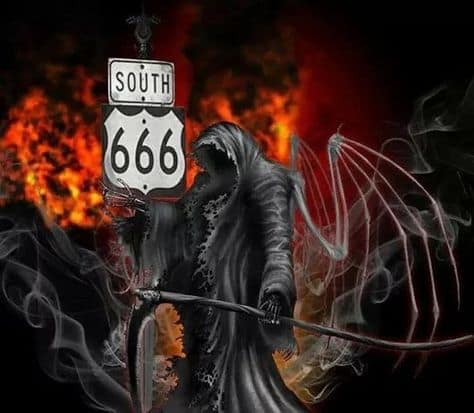
     

  • 81 words Anthology World Record

    81 words Anthology World Record

    81 words author
    81 words author81 words Anthology World Record

    81 words Anthology World Record

    Most contributing authors published in a Flash Fiction Anthology: world record set by 1000 Authors

    Jun 15, 2022

    81 World Stories Published

      Note: I am so pleased to have been included in this project. They published my story,  “Dreams Do Come True ” as author 942 on page 478

    ” In 1974,Sam had a dream that changed his life forever.

        He fell asleep in a class and saw the most beautiful woman in the universe talking to him.  She haunted his life for years.  He went to the ends of the world to find her. 

    Then one day, in 1982, she walked off a bus, out of his dreams and into his life, to become his wife three months later.  That is the beginning of the rest of the story.”‘

    As you may know this is based on my true love story.  For more details see the following:

    Dreamgirl re-published

    Joy Links Forever Just Published Dream Girl and Cheating Death Twenty Times

    Where to Find Cosmos’s Work on the Web updates

    dreams

    City Limits Publishes Love Poems

    “Dreams Do Come True”

    81 Words Flash Fiction Anthology

    New York CIty  New York, United States–The ’81 Words Flash Fiction Anthology’, a book containing 1,000 stories written by 1,000 authors, contains 1,000 stories that are exactly 81 words in length, the result of almost seven years of hard work and the generosity of writers living all over, sets the world record for The Most Contributing Authors Published in a Flash Fiction Anthology, according to the WORLD RECORD ACADEMY,

    The world record book was published by Victorina Press, an independent UK publisher that follows the principles of biodiversity (the cultural diversity applied to the writing and publishing world, developed by a group of Chilean independent publishers). Because there are authors from many different countries featured in the book, this felt like the perfect project for them to be involved with.

    “I’d like to thank VP’s Managing Director, Consuelo Rivera-Fuentes, and the rest of the Victorina Press team (Sophie, Jorge, Page, and Amanda) for supporting this project and publishing the anthology, says Christopher Fielden, the book’s Editor.

    “Their involvement adds credibility to the unofficial world record attempt and will help the book (and every author featured in it) gain more exposure.”

    “The challenge was conceived by Adam Rubinstein, a self-professed educational basket-case from the ’70s who says he finds his sense of meaning and well-being through creativity.

    “The 81 Words writing challenge was originally launched on 81words.net. It became part of my website and I soon developed the challenge into a world record attempt for the most contributing authors published in an anthology. The 81 Words Flash Fiction Anthology was published.”

    The 81 Words Flash Fiction Anthology contains 1,000 stories submitted to the 81 Words writing challenge.

    The 81 Words Flash Fiction Anthology contains 1,000 stories written by 1,000 authors who submitted their work to the 81 Words Writing Challenge run on Chris Fielden’s website. Each story is exactly 81 words in length.Chris Fielden web site

    April 2022, the 81 Words Anthology was shortlisted in the ‘Best Anthology’ category of the Saboteur Awards, run by Sabotage Reviews. And on 14th May 2022, the book was announced as the winner.

    Victorina Press also won the ‘Most Innovative Publisher’ category.

    Testimonials from Amazon:

    “I loved Lee Kull’s devilish story. I wonder what that sly herbalist will concoct in future readings for her next heavy-handed victim!”

    I have been pleased the variety of stories all told with just 81 words. Not only are the stories diverse, but the authors are too. Ranging in age from 4 years to many more lived years, the authors come from all over the world. It’s a terrific book to leave out in a waiting area or by your throne for an enjoyable few minutes of very short and entertaining distraction. I highly recommend this book.”

    “The quality and variety of stories in this book are magnificent and I love the mini-biography for each author after their short story. I am author No. 533 but hadn’t read any of the other work until I purchased it on launch day and although I knew the quality of writing would be good I had no idea how high the standard would be.

    Well done to all involved and thank you to those who have purchased.”

    A  lot of work has gone into creating this anthology of tiny stories so well done Chris Fielden. Well done to all the authors too – 81 words isn’t a lot to work with to create a rounded story. A great book to dip into and would make a good Christmas present……and it supports the Arkbound charity too.”

    Porcceds from book sales will be donated to the Arkbound Foundation, a charity that aims to widen access to literature and improve diversity within publishing by running projects that empower people from disadvantaged backgrounds and deprived communities to get their voices heard.

    Where to Buy

    The book can be bought from all of Amazon’s websites. You can find it by searching for the book by name or the Amazon Standard Identification Number (ASIN):  B09JZXVYL8

    You can buy paperback copies of the book from Victorina Press here:

    https://www.victorinapress.com/product/81-words-flash-fiction-anthology/

    You can also buy paperbacks from Amazon here.

    The 1,000 Writers In The Anthology

    note: I am number 942.

    Here is a (rather epic) list of the 1,000 contributing authors featured in the anthology. There are more than 1,000 writers in the book because some of the stories were written by two-person author teams. As mentioned further up this page, all the details are in the introduction of the book. Here is the list, presented alphabetically based on first name/initial:

    1. A. Rubin
      A. Gustafson
      A.H. Creed
      Aaron McDermott
      Abby Shue
      Abhi Shan
      Abigail Rowe
      Abigail Williamson
      Adam Bevan
      Adam Down
      Adam Rubinstein
      Adam Waters
      Adam Wright-Johnson
      Adele Evershed
      Adrian Hall church
      Adrian Nichol
      Aerin Bernstein
      Ahmad Abu Sharkh
      Aigbonoga Omoh
      Aishwarya Harikumar
      Akindu Perera
      Alan Barker
      Alan Barker [Note: same name but a different human being to the previous Alan]
      Alan D. Przybylski
      Alan Dale
      Alan Greaves
      Alan Pattison
      Alan Ridley
      Alcuin Edwards
      Aleah Bingham
      Alex Blair
      Alex Fullerton
      Alexandra Klyueva
      Alexio Gomes
      Ali Bounds
      Ali Clarke
      Alice Hale
      Alice Payne
      Alice Penfold
      Alicia McGrath
      Alicia Sledge
      Alicia Yau
      Alison Clary
      Alison Reese
      Alison Wren
      Alistair Forsyth
      Allen Ashley
      Ally Cook
      Alyson Faye
      Amanda Garzia
      Amanda Huggins
      Amanita Peridot Festoon
      Amberlie Robinson
      Amelia Brown
      Amisha Bansal
      Ana D.
      Anastasia Bromberg
      Anastasia Mosher
      Andre Othenin-Girard
      Andrew Ball
      Andrew Carter
      Andrew Dawkins
      Andrew James Spence
      Andrew Jones
      Andrew McGill
      Andrew Perry
      Andrzej Christopher Marczewski
      Andy Langdale
      Angela P Googh
      Angelique Dusengimana
      Ani Martin
      Ania Kovas
      Anita Goveas
      Ankush Vijay Chawla
      Anna Capstick
      Anna Ferrar
      Anna Sanderson
      Anne Copeland
      Annie Francis
      Annika Franke
      Anu Roy
      Arlene Everingham
      Arthur KC Chan
      Arya Amlani
      Ash Gray
      Ashleigh Whittle
      Ashley Kim
      Ashley Scott
      Ashley Vohrer
      Ashutosh Pant
      Austrian Spencer
      Ava Groth
      Avery Pryce
      Ayesha Hassan
      B. K. Bolen
      B. P. Garcia
      B.C. Ong
      Barbara Eustace
      Barnaby Page
      Barry Rhodes
      Barry Smith
      Bart Elbey
      Bec Lewis
      Becky Benishek
      Bekk Escott
      Benjamin Noel
      Bernard Hicks
      Bernard Muslin
      Bert Velthuis
      Beth Greenwood
      Beth Kander
      Betty Hattersley
      Betty J Burton
      Blake Holcomb
      Blerina Kapllani
      Boaksey
      Brett Elliott-Palmer
      Brian Johnstone
      Brian Mackinney
      Brianna Damplo
      Bridget Blankley
      Bridget Scrannage
      Bridget Yates
      Brinkinfield
      Brittany Holmes
      Bruce Millar
      Bruce Wyness
      Bryan Keefe
      Byron Coulson
      C. H. Connor
      C.R. Berry
      Caiden Lang
      Caleb Jansen
      Cameron Crebs
      Campbell Hinshelwood
      Carl Palmer
      Carla Vlad
      Caroline Cowan
      Caroline Wright
      Carolyn Roden
      Carolyn Ward
      Carrie Hewlett
      Cath Allwood
      Catherine Broxton
      Catherine Cade
      Catherine Harkness
      Cathi Radner
      Catrin Rutland
      CB McCall
      Ceris Brewis
      Charles Bonkowsky
      Charles K Manila
      Charles Lee
      Charles Murphy
      Charles Osborne
      Charlie Taylor
      Charlie Turner
      Charlotte Ella Read
      Charlotte Farrell-Banks
      Charlotte Ward
      Charlotte West
      Cheah Yin Mee
      Cheryl Buck
      Chip Jett
      Chloe Frost
      Chloe Nkomo
      Chloe Testa
      Chris Black
      Chris Cantor
      Chris Espenshade
      Chris Green
      Chris McLoughlin
      Chris Pritchard
      Chris Tattersall
      Christian Andrei Nuez Laplap
      Christian Obaitan
      Christianna Sahadeo
      Christina Burton
      Christina M. Y. Chow
      Christine Bukania
      Christine Hursell
      Christine Kingshott
      Christine O’Donnell
      Christine Reeves
      Christine Tapper
      Christopher Fielden
      Christopher Searle
      CJ Nicol
      CJ Wigg
      CL Wearne
      Claire Allinson
      Claire Apps
      Claire Gagnon
      Claire Gee
      Claire Lee
      Claire Schön
      Claire Taylor
      Claire Temple
      Clara Baird
      Clare Owen
      Clare Tivey
      Clarrie Rose
      Cleiton Pinho
      Colette KrielColleen Hue
      CompletelyBoofyBlitzed
      Constance Bourg
      Crilly O’Neil
      Cristina Bresser
      Cynthia Akagi
      Dan McConnell
      Daniel L. Link
      Daniel McClaskey
      Danielle Linsey
      Danny Macks
      Darci-Leigh Robinson-Askew
      Darren Hackett
      Dave Firth
      David Batteiger
      David Brewis
      David Conway
      David Don
      David Guilfoyle
      David Heaton
      David John Griffin
      David Lowis
      David McTigue
      David Rhymes
      David S Mitchell
      David Silver
      David Turton
      David Vargas Alfonso
      David Viner
      David Wright
      Dean Hollands
      Debaprasad Mukherjee
      Debbie Rolls
      Debbie Singh
      Deborah Wroe
      Dee La Vardera
      Dee Tilsley
      Denis Joseph
      Denise Senecal
      Derek McMillan
      Devin Greene
      Devon Goodchild
      Dez T.
      Diana Senechal
      Diane de Anda
      Diane Harding
      Dianne D. Pingalo
      Dimiana Wassef
      Dinesh Shihantha De Silva
      Dionne Burton
      Diontae Jaegli
      Don Bartlome
      Don Marler
      Dorothy Francis
      Doug Forrest
      Doug Hawley
      Douglas J. Shearer
      Dr. Sriharsha Sripathi
      DT Langdale
      Duane L. Herrmann
      E. F. S. Byrne
      Edmund Piper
      Edward Mortenson
      Edward Rouse
      Edwin Stern
      Eileen Baldwin
      Elaine Carlyle
      Eleanor Dickenson
      Elena Zhuang
      Elizabeth Lamb
      Elizabeth Stanley
      Ella Cass
      Ella Wilson
      Elliot Cambrey
      Em Daurio
      Emily K Martin
      Emily Knight
      Emma Burnett
      Emma Nokes
      Emma Robertson
      Emma Stammeyer
      Emma Wilson
      Erin Hardman
      Esosa Kolawole
      Evelyn Hawke
      Everest Pen
      Evie Nicol
      Ezeh Michael Ogonna
      Fabio Crispim
      Farzaneh Hajirasouliha
      Fay Franklin
      Fee Johnstone
      Felix Castrillon
      Femi S. Craigwell
      Finlay Thomas Tweedie
      Fiona Aitken
      Fiona Campbell
      Fiona Flower
      Fliss Zakaszewska
      Franca Basta
      Frances Tate
      Francesca Pappadogiannis
      Francisca Staines
      Frank Daurio
      Frank Havemann
      Frank Hubeny
      Frank Radcliffe
      G. Gaurav
      Gail Everett
      Gary Couzens
      Gary McGrath
      Gavin Biddlecombe
      Gemma Bevan
      Gemma Martiskainen
      Geoff Freedman
      Geoff Holme
      George Cornilă
      Gillian M Seed
      Gillian Macleod
      Ginger Marcinkowski
      Gitanjali Escobar Travieso
      Glen Donaldson
      Glo Curl
      Gloria Ames
      Glynis Ann Downey
      Gordon Williams
      Gowravy Ravanan
      Grace Turner-Higgins
      Grannd Kane
      Grant McKain
      Grant O’Townson
      Gwyneth Williams
      Gwynne Weir
      Hajra Saeed
      Haley M. Hwang
      Hannah Brown
      Hannah Cole
      Harley Logan Thompson
      Harriet Payne
      Hazel Turner
      Heather Haigh
      Heather Stuart Primbs
      Heidi Lobecker
      Heidi Vanlandingham
      Helen Aitchison
      Helen Combe
      Helen Matthews
      Helen Merrick
      Hervé Suys
      Hilary Taylor
      Holly Garcia
      Holly Webster
      Huguette Van Akkeren
      Hullabaloo22
      Ian Andrew
      Ian Buzard
      Ian James Stewart
      Ian Tucker
      Ibukun Keyamo
      Imogen Argent
      IR Belletti
      Irene Banfield
      Iris & Phil Hatchard
      Irving Benjamin
      Isabel Flynn
      Isabella Rae Wharton-McLellan
      Iuliana Khadyxa Filisanu
      Ivan Richardson
      Ixai Salvo
      J. L. Harland
      J. Rosina Harlow
      J.S Taols
      Jace Henderson
      Jacek Wilkos
      Jack Dabell
      Jack Dudley
      Jack Hanlon
      Jack Purkis
      Jackie Batteiger
      Jackie Hindmarsh
      Jacky Ellis
      Jade Swann
      Jaimen Shires
      Jaine Irish
      Jake Cosmos Aller
      James Braun
      James Byrne
      James Colfox
      James Crerar
      James Hornby
      James Louis Peel
      James Northern
      James Pemberton
      James Sanders
      James Smart
      Jamie Graham
      Jamie Welch
      Jan Brown
      Jan Courtney
      Jane Fell
      Jane Imrie
      Jane Sleight
      Janet L Davies
      Janet Lister
      Jasmine Hunt
      Jasmine Lee
      Jasmine Tan Chin Chwee
      Jason B
      Jason Barbo
      Jay Bee
      Jayanta Bhaumik
      Jaycee Durand
      Jayne Morgan
      Jaz Leigh
      Jeff Kemp
      Jeffrey H. Toney
      Jeni Lawes
      Jennifer Hankin
      Jennifer P. L. Leong
      Jennifer Riddalls
      Jenny Butler
      Jenny Drury
      Jenny Simmons
      Jerome Parsons
      Jerry Wilson
      Jessica Bowden
      Jessica Everitt
      Jessica Joy
      Jessica Kirby
      Jessica Richard
      Jessica Turnbull
      Jill Lang
      Jimmy Doom
      Jo Howarth
      Joan C. Hobart
      Joanna Ball
      Jocelyn Wong
      Jodi Nicholls
      Jodi Novak
      Joe Bailey
      Joe Brothers
      Joe McMullen
      Johanna McDonald
      Johannah Lipscher Simon
      John Bevan
      John Cooper
      John D Lary
      John Hannan
      John Holland
      John Holmes
      John James Morris
      John L Bell
      John Lane
      John Mark Miller
      John Notley
      John Rivers
      John Robertson
      John S Alty
      John Vandore
      Jon Drake
      Jon Spencer
      Jonathan Fryer
      Jonathan Hastings
      Jonathan Hunter
      Jonathan Inglesfield
      Jonathan Martindale
      Jonathan Pacheco
      Jordan B. Jolley
      Jordan Bahnub
      Jordis Fasheh
      Jose Luis Torres
      Joseph Lancaster
      Joseph Mould
      Josephine Queen
      Josh Joseph Dixon
      Josh Leeson
      Josie Gowler
      Joy Thomas
      Joyce Bingham
      Joyce Walker
      JS Cline
      Judi Edwards
      Judy Reeves
      Julia Graves
      Julia O’Dowd
      Julia T. Spano
      Julia Wood
      Julie Goodswen
      Julie Howard
      Julie Mayger
      Julie Stone
      Justine Quammie
      Justyce Solomon
      K. J. Watson
      Kaelin Lee
      Kailin Guo
      Kaitlin Ellis
      Karen Bevan
      Karen McClure
      Karen McDermott
      Karen Rust
      Karen Waldron
      Karen Walker
      Karen Western
      Kate Hamilton
      Kate Leimer
      Kate Miller
      Katerina Hellam
      Katherine Kogoy
      Kathleen E Williams
      Kathleen Hearnshaw
      Kathleen Keenan
      Kathryn Dixon
      Kathryn Evans
      Kathryn J Barrow
      Kathryn Joyce
      Kathryn Smith
      Katie Chapman
      Katie Labbe
      Katie Pepper
      Katie Singer
      Katy Clayton
      Kavitha Yarlagadda
      Kay Sandry
      Keian Murray
      Keith Pearson-Sandelands
      Kelly Van Nelson
      Kelsey Gallo
      Kelsey Juean Irving
      Kennedy Meechan
      Kenneth Cahall
      Kent Raddatz
      Kerry Robinson
      Khamis Kabeu
      Kim Hart
      Kim Montgomery
      Kim Steindel
      Kim Witbeck
      Kimana McCallum
      Kimberly Owen
      Kira Inglis
      Kirk I. Holden
      Kitty Litteur
      Klaus Gehling
      KM Arhel
      Kolade Ajila
      Kudakwashe Chirapa
      Kwame M.A. McPherson
      Kylan Fedje
      L J King
      L J McQueen
      L. A. Cunningham
      L.E. Daurio
      Laila Miller
      Laura Besley
      Laura Day
      Laura Foakes
      Lauren J. Phillips
      Lauren M Foster
      Lauren Raybould
      Laurie Hicks
      Layla Ahmed
      Layla Calarco
      Layla Rogers
      Lee Foley
      Lee Holland
      Lee Kull
      Leigh Hastings
      Len Saculla
      Lena MacDonald
      Lesley Anne Truchet
      Levi Earl
      Lewis Ayers
      Lexikon
      Liam Hogan
      Liam Lawer
      Liam Rayner
      Libby Batteiger
      Lidia Giusa
      Lim Swee Kim
      Linda Foy
      Linda Hibbin
      Linda Jones
      Linda Lewis
      Linda Scogings
      Linda Smith
      Linda Taylor
      Lindsey Esplin
      Lindy Gibbon
      Linn Kier
      Lisa Miller
      Lisa Reynolds
      Lisa Stone
      Livia Furia
      Liz Berg
      Liz Howard
      Liz Krogman
      Lorna Dougan
      Lorna Stewart
      Lorraine Smith
      Louise Burgess
      Louise Furre
      Louise Goulding
      Louise Snape
      Lucinda Thelwell
      Lucy Camilla
      Lucy Lucy
      Lucy Morrice
      Lumen Ros
      Lydia Collins
      Lyndsay Lomax
      Lynn Gale
      Lynn Morcombe
      Lynn White
      Lynn Zeleski
      Lynne Arnot
      Lynne Chitty
      Lynsey Calvert
      M Anthony David
      Madamraj Mrinalini
      Maddy Hamley
      Madeleine McCabe
      Madeleine McDonald
      Madeline Green
      Madiana Dethan
      Madison Pickering
      Maggie Elliott
      Mahek Khwaja
      Mairead Robinson
      Majella Pinto
      Malcolm Richardson
      Manda Riehl
      Mandy Raywood
      Mandy Whyman
      Marci Girton
      Marco Cardoni
      Margaret Bell
      Margaret Davis
      Margee Unger
      Maria Carvalho
      Maria DePaul
      Maria Noble
      Mariam Bibi
      Mariam Mansuryan
      Marie Arbon
      Marie McGinn
      Marieta Maglas
      Marilyn Rucker
      Mark Burke
      Mark J Towers
      Mark Johnson
      Mark Pritchard
      Mark Stocker
      Marsha K. Hanson
      Martin Strike
      Mary Daurio
      Mary Dharsi
      Mary Papageorgiou
      Mary Prior
      Mason Bell
      Matilda Pinto
      Matthew Bines
      Matthew Dawson
      Matthew Galic
      Matthew Gooch
      Matthew J Morine
      Matthew Kerns
      Matthew Willis
      Max Dobb
      Maxine Smith
      Maxx Dominic
      Maya Barnett
      Mckenzie Tompson
      Medeia Sharif
      Meg Gain
      Meghan O’Brien
      Mehak Vijay Chawla
      Melanie Goodell
      Melissa Odom
      Melody Bowers
      Meredith Argent
      MF Mika
      Mhairi Bakertzi
      Michael E James
      Michael Farmer
      Michael Hardy
      Michael J. Labbe
      Michael J. Lowis
      Michael Lane
      Michael Mclaughlin
      Michael Rumsey
      Michael Swift
      Michael Ward
      Michaela Mechura
      Michele Kelly
      Michele Witthaus
      Michelle Compton
      Michelle Cook
      Michelle Konov
      Michelle Weaver
      Micky Rowe
      Mike Blakemore
      Mike Scott Thomson
      Miriam Hurdle
      Misa Hennin
      Mohamed Atta Amer
      Mohit Dass
      Muriel Garvis
      Murodova Marjona
      Myron Dunavan
      N. J. Spencer
      N.B. Craven
      Nam Raj Khatri
      Natalia Wojcik-Smith
      Natalie Marshall
      Natalie Wu
      Natasha Ali
      Natasha Nagle
      Nathaniel David Knox
      Neil Brooks
      Neil D Cross
      Neil Davie
      Neil Goodwin
      Neil Phillips
      Neil Renton
      Niamh Burke
      Nick Fairclough
      Nicole Loh
      Niina Olenbluu
      Nikki Butcher
      Nili Roberts
      Noel Alcoba
      Norm Veasman
      NT Franklin
      Nurholis
      Oghogho Odiase
      Olatz Irigarai
      Oliver Lynton
      Olivia Ackers
      Olivia Magnuson
      Olivia-Ann Saxton
      Olusanya Anjorin
      Oort Kuiper
      Oriel Dobb
      Oscar Kenway
      Özge Göztürk
      Paige Murray
      Pam Jackson
      Pam Knapp
      Pamela Hibbert
      Pamela Pope
      Pappo Nindo
      Parzival Sattva
      Pat Hough
      Patricia Mudge
      Patricia Tarrant Brown
      Patrick Antonio
      Patrick Christian
      Patrick Moorhouse
      Patrick ten Brink
      Paul Mastaglio
      Paul Phillips
      Paul Rhodes
      Paul Shaw
      Paula Lacey
      Paulette Pierre
      Peggy Gerber
      Penelope Henry
      Pete Armstrong
      Peter Gregory & David Gough
      Peter J. Corbally
      Peter Loftus
      Peter Stanton
      Phil Maud
      Phil Thomas
      Philip Charter
      Phoebe Tatham
      PJ Stephenson
      Prajith Menon
      Prisha Gupta
      R. J. Kinnarney
      R.A. Krueger
      R.J. Saxon
      Rachael Hinshaw
      Rachel Smith
      Rachel Wood
      Rafe Bellers
      Rajagopal Kaimal
      Ray Sarlin
      Raymond E. Strawn III
      Raymond Sloan
      Rebecca Capel
      Rebecca Hubbard
      Rebecca Krohman
      Rebeccah Yeadon
      Reed Markham
      Reha Tanör
      Renate Schiansky
      Rene Astle
      Rex Charger
      Richard Anthony Morris
      Richard Freeman
      Richard H. Argent
      Richard Stanley
      Richard Swaine
      Ripunjoy Borgohain
      RJS Cantwell
      RK
      RL Comstock
      Rob Bray
      Rob Vogt
      Robbie Brown
      Robbie Porter
      Robert Adams
      Robert Alan Ryder
      Robert Brewis
      Robert Kombol
      Robert Tucker
      Robert Wood
      Roberta Scafidi
      Roger Newton
      Roger West
      Rohana Chomick
      Ron Smith
      Ronald Hall
      Ros Byrne
      Ros Masterson
      Rosalind Adam
      Rosalind Newton
      Rose Farris
      Roshna Rusiniya
      Rosie Arcane
      Rosie Cullen
      Ross Lowe
      Rowan Lewis
      Roz Levens
      Rudy S. Uribe Jr.
      Rui Soares
      Rupert Payne
      Ruth Pedley
      Ryan Fell
      Ryu Ando
      S Thomson-Hillis
      S. M. Chiles
      S. Rupsha Mitra
      S. W. Hardy
      S.B. Borgersen
      S.E. Taylor
      Sachin Prakash
      Sagar Jadhav
      Sai Muthukumar
      Sally Skeptic
      Sam Freer
      Sam May
      Samantha Gentzel
      Samantha Gunton
      Sandee Lee
      Sandra ‘Chas’ Hines
      Sandra Orellana
      Sandra Purdy
      Sarah Ann Hall
      Sarah Brown
      Sarah Burrett
      Sarah Charmley
      Sarah Engeham
      Sarah Everett
      Sarah Fletcher
      Sarah Hoad
      Sarah Jae Walsh
      Sarah Littleton
      Sarah Mosedale
      Sarah Stansfield
      Sarah Stephenson
      Saras Ojha
      Sarthak Das
      Saskia Ashby
      Scott Parent
      Sean Bain
      Sean Tobias May
      Sebastian Cowen
      Seth Turner-Higgins
      Shahnaz Ali
      Shannon J Alger
      Sharon Pinner
      Shaun Clarke
      Shauna Elizabeth Murray
      Sheannah Guillemette
      Sheila Rosart
      Shelly Teems
      Shirley Muir
      Shobha Wilson
      Sidonie Baylis
      Siegfried E Finser
      Sihaam Osman
      Silver Morris
      Simone Wallace
      Sivan Pillai
      Skylar Kim
      Smritirekha Talukdar
      Sophia Manubay
      Sophie Henson
      Sophie Scriven
      Sreedevi Ganti Mahapatra
      Stefan Dimitrov
      Stephanie Ngoei
      Stephanie Potts
      Stephen P. Thompson
      Stephie Simpson
      Steve Lodge
      Steven Barrett
      Stuart Atkinson
      Sue Johnson
      Sue Moos
      Sue Partridge
      Sue Vincent
      Sunshine Tibod
      Susan Howarth
      Susan Wickham
      Susanne Berger
      Susi J Smith
      Susie Frame
      Swi Neo Mary Yap
      Sydney Clarence
      Sylvia Ketchum
      Syreeta Muir
      T. Luxton
      T. W. Garland
      T.L. Shenkin
      T.N.M. Sheppard
      Tamires Cunha
      Tamsin Partington
      Tanya Butler
      Tanya Hill
      Tanya Johnson
      Tarquin Calver
      Taye Carrol
      Taylor Elliott
      Taylor Moore
      Ted Bragg
      Tess M Shepherd
      Tessa Elliott
      Thatchayani Ravanan
      Thomas Belmar
      Thomas James Busby
      Thomas O’Mara
      Tiarnán Murphy
      Tiffany Williams
      Tim Gomersall
      Tim Warren
      Tom Bullimore
      Tom Gaunt
      Toni G.
      Toni Peers
      Tonia Nem
      Tony Lawrence
      Tony Mooney
      Tony Thatcher
      Tony Tremblett
      Tracey Maitland
      TS Lanchbery
      Ty Hall
      Umme Ammarah
      Val Chapman
      Valerie Fish
      Valerie Griffin
      Valerie J Shay
      Veena Rah
      Veronica Crerar
      Vesper Wunderlin
      Vichar Lochan
      Vicki Murray
      Vicki Sinclair
      Vicky Garlick
      Victoria Gaylor
      Violet James
      Vishnu Nandan
      Vivian Oldaker
      Vivienne O’Boyle
      W. E. Jones
      W. G. Miller
      Waltraud Pospischil
      Wanda Wright
      Wayne B. Chorney
      Wayne Hewitt
      Wendy Christopher
      Wendy Fletcher
      Wendy Roe
      William Telford
      Wright Stone
      Wyatt Payne
      Yabo Anderson
      Yelena Kart
      Yvonne Clarke
      Yvonne Mastaglio
      Zoe J Walker
      Zoey Rowan


  • Final February Challenge Results

    Final February Challenge Results

    Final February Challenge Results

    I have completed 40 flash fiction pieces so far for this February challenge, 30 for the Writers Digest challenge, 8 for two Writers Digest challenges, and two bonus flash pieces based on dreams.  Also completed 15 haiku for the Poetry Mangum Opus but did not post them.

    More February Flash Fiction

    February Flash Fiction Updates

    February Flash Fiction Challenge

    flash fiction challenge updates

    Writers Digest

    The Prompts

    Day 1 Keys
    Day Two Prompt Circular
    Day three Prompt limitations
    Day four mystery
    Day Five: A Dream that Came true
    Day Six: a character who tries to be
    Heartful”
    Day Seven: Workplace conflict
    Day Eight: re-gifting
    Day Nine Grim reaper
    Day ten romance story
    Day 11 Hoarding  TBC
    Day 12 magic
    Day 13 grim reaper
    Day 14 animal
    Day 16 hobby
    Day 17 Book
    Day18 Time  the first Terran Emperor
    Day 19 Horror
    Day 20 Lost
    Day 21 Confronting one’s Fears
    Day 22 Open the Door
    Day 23 Ten minute Story
    Day 24 Very Short Story
    Day 25 Promises
    Day 25 Rise and Fall of the Fake Indian Casino bonus
    Day 26 Structure Story as a List
    Day 27 Idea Take Shape
    Day 28 Endless Beginnings

    The List

    Hidden Keys to The Universe.
    End of The Beginning, Beginning of The End.
    A Man Has to Know His Limitations.
    Where Did All the Blacks Go?
    Dream That Came True.
    Sam Adams Crisis of Conscious
    Sam Adams Workplace Conflict Leads to a Bad Day.
    Sam Adams reignites the War on Christmas
    Timeless Love story
    Sam Adams the Hoarder (TBC)
    World domination but at a terrible price
    Conversation with the grim reaper
    Sam Adams first Contact
    The Demon Car Attack
    Cosmic Cat from Berkeley
    Sam Adams Discovers the Cosmic Conspiracy
    Sam Adams Meets Gloria Magnolia Shah  (Bonus from dream)
    Time Police TBC
    Sam Adams Battles the Zombie Hoard
    Earthquake refugees (bonus)
    Lost in the Mountains (TBC)
    The First Terran Emperor
    Jason the Dog that Saved Sam’s Soul
    Open the Door
    Ten Minutes to Doomsday
    World 111 Goes Nuclear
    Maria Keeps Her Promise of Revenge
    Rise and Fall of the Fake Indian Casino bonus
    69 Days of 69 Sex X rated Flash
    Put a Ring on It
    The Beginning of the End/End of the Beginning

    four flash fiction for writing com micro-fiction contest -100 words drabble

    My Bag is Packed and Ready to Go.
    Bullsye.
    Open the Key to Other Worlds.
    The Shadow Knows.

    The Temple of Doom Opens a Portal to Other Worlds

    Sam Adams worked at the Cosmos Research center in Berkeley, California. They considered themselves the real “X files” and consulted with governments, corporations, and private citizens around the world. They sent a team to the field to investigate each claim submitted for verification and charged fees for their investigation.  90 percent of the time they uncovered an elaborate hoax.  They published their findings on their website,” The Cosmos Institute Investigates – The Truth Is Out There,  Out There.”


    Most times they published a detailed analysis of the claim and their finding which usually stated this is a hoax.   Among the claims that they left “ pending” were Bigfoot, Yeti, Loch Ness Monster, the existence of aliens.


    One of the pending cases that intrigued the world was what exactly happened to Sam Adams, James Jones, and Maria Shah?  Where did they disappear and was there foul play involved?


    Maria Lee the founder of the institute finally had to hold a press conference to announce their preliminary findings.


    She was a plain-spoken woman who carried a lot of respect as she used to be with both the CIA and FBI working in their “X Files” shops – which did exist but were secret agencies.  She knew a lot of things that she could not talk about.


    She had a team of experienced researchers.  But no one knew her true mission.


    One of her key researchers was Sam Adams.  He had been there since the beginning and she knew that he had some suspicions about their work but so far he seemed loyal and trustworthy.


    Sam Adams had received a mysterious message claiming that they had found the


    location of the legendary Temple of Doom located in the mountains of madness


    near the Himalayas.   Inside the temple were gateways to other worlds, portals left


    over by the ancient Lemurians who had come to earth from Sirius.


    Sam Adams organized an expedition to locate the Temple of Doom.  They started


    in the jungles of the golden triangle engaging some dodgy characters.


    It was a hot day and they had to constantly wipe the bugs off their hair, and hats and wipe the sweet off their sleeves.

    The bugs gave way as they climbed into cooler mountain climes.  The way got rougher as they climbed. They spent the night.

    When they got up they found that their local guides had all run off with their supplies, and there were tiger tracks all around the camp and they found the body of James Jones badly mauled but with his head missing.

    The next morning they saw the temple at the top of the mountain.

    In front of the temple were hung the heads of all their missing party and the head of the tiger who had killed them.

    When they got there about noon, giant talking apes stopped them and said

    “Wait here.”

    an old monk welcomed them.  He gave them a tour of the compound and they came to the gateways.  Each was a glass door with a title next to it.

    He said

    Sam

    You have come to the gateway to other worlds.  Be careful when you go through the gate.  Some are one-way gates.  You had best go through one at a time and wait for a half-hour, if they don’t return you know it is a one-way gate.  I don’t know where half of these gates go.  I’ve only been through a few.  Narnia is my favorite.

    Sam and his party went through the Narnia gate. A few hours later, Maria returned alone and said that Sam and the others had opted to stay.  She left with the five remaining staffers and reported back to Maria Lee.

    She said,

    “Well, we found the portals and confirmed the long rumored story that both Oz and Narnia were based on true stories – someone had been there probably CS Lewis and Frank Baum.

    We went to Narnia five people three women and two women and found ourselves in a battle for control – the white witch had returned.  In the end there can only be two kings and Queens of Narnia and I opted to return to report the success of the mission.  Sam left me his official resignation with instructions that his final pay check be sent to his ex-wife.

    Maria responded

    “That tracks with what our operatives told us , especially that Narnia and Oz existed, but we had to be sure ourselves.”

    She and the old monk went out to announce to the world the opening of the ancient gateway to other worlds. He merely said

    I have been waiting for this moment for 5,000 thousand years. I am the last of the Lemurians, and was born 5,000 years ago. I am from the planet Sirius and will be returning home through the gateway.

    The end or is it?

    The End


  • flash fiction challenge updates

    flash fiction challenge updates

    flash fiction challenge updates

    Ten Minutes To Doomsday

    More February Flash Fiction

    February Flash Fiction Updates

    February Flash Fiction Challenge

    Inspired by Writers Digest Flash fiction February Challenger 2022 prompt to write a story that takes place in ten minutes.  Not posted or published.

    February 22, 2025, 2025 7:00 pm WDC 10 minutes before doomsday

    General Sam Adams was on duty on February 22, 2025nd at 7:00 PM in NORAD Command Center in Colorado when he received the flash notification that incoming nuclear missiles were being detected coming from North Korea. China and Russia using hypersonic missile technology. The best estimate was they had 10 minutes before Washington DC, New York, Las Vegas, Los Angeles, and NORAD would be obliterated by ICBM bombs.
    The flash notification went out to hundreds of top-secret users throughout the world including of course the White House situation room, When Sam got the notification, he immediately put in a high-priority call to the White House, and was connected to President Al Wilson.

    “Mr. President, Sam Adams, General in charge of NORAD here. We have received notification that incoming nuclear missiles are using hypersonic technology en route to Washington DC, New York, Las Vegas, Los Angeles, and NORAD. We are trying to verify that this is indeed correct not a computer glitch but given the recent international situation, we feel that it is probably the real deal. We should have a confirmation within 30 seconds we recommend an immediate evacuation of the White House to the alternate command center in Pennsylvania. we also recommend that President announce this to the American public and the world. We recommend going to Defcon Five and that we go prepare for immediate counter-reaction. We will know in two minutes where the missiles are coming from and we can get our missiles in the air in three minutes.”

     February 22, 2025 7:01  9 minutes to Doomsday

    Sam Adams turns to his staff and demands verification status.

    “Damn it what’s the status is it’s real is it’s a glitch?”

    Col. Joshua Smith responds.

    “ Sir, as far as we can tell it’s real, and we also know exactly from where they’re coming from. The missiles are coming from China, North Korea, and Russia.  There are 10 missiles in total. all ICBMs use hypersonic technology and we have 9 minutes before detonation.

    We believe that this facility will not be destroyed because we are so deep underground, but DC, Las Vegas, Los Angeles, and New York will be destroyed with an estimated causality of ten to 20 million people. We will have the countermeasures ready for your approval and Washington’s approval in two minutes.

    Oh CNN is announcing that the US is under nuclear attack.  somehow they found out about it.

    “Get Me CNN right now.”

    “Sir, go ahead you are life.”

    “This is general Sam Adams.  I don’t know how you found out because that is top secret need to know but since you found out, I can acknowledge that the US is under the US is undercounted under military attack with incoming hypersonic ICBMs coming from China, North Korea, and Russia targeting DC,  Las Vegas, Los Angeles, and New York City,

    The president will be addressing the nation in two minutes. I can assure you and the American people that vigorous countermeasures will launch within 5 minutes targeting North Korea Beijing and Russia best guess estimate is about 20 million people who die and we have 8 minutes before detonation.”

    February 22, 2025  7:02 pm WDC  8 minutes Before Doomsday

    The newly elected president Wilson assembled his national security team in the situation room in person and virtually he started the meeting by looping in genome Adams who gave an updated brief and then he turned to his staff and said we have 8 minutes before detonation in two minutes I will make his speech to the United States to the American people in the world and seven minutes we will launch countermeasures and in six minutes we will evacuate to our alternative headquarters we may not make it there in time recommendations?

    General Tony Smith, Joint Chiefs speaks up,

    “Have we deployed missile defenses?”

    Sam Adams responds,

    “Underway but we may only knock out one or two missiles. They’re just going too fast.  Our missile defenses are not capable of tracking and taking down hypersonic missiles. “

    The president speaks up,

    “Ladies and gentlemen we have just a few minutes before we have to leave.  Here’s what I want to do call the Presidents of China, North Korea, then and Russia and tell them we are launching 200 missiles at them unless they have the means to either destroy the missiles en route or recall them. Then speak to the American public and move to the underground bunkers under the WH and hope that they hold up.  Bring me the football.”

    February 22, 2025 7:03 pm WDC 7 minutes Before Doomsday

    President Wilson calls the Presidents of China, North Korea, and Russia on a video conference call.

    Gentlemen, you have launched an unprovoked attack on the U.S. Don’t deny it.  I am authorizing 200 ICBM’s to be launched at your key military sites and your capital cities. They will launch in two minutes and reach their destination in 30 minutes.  Once launched they can not be stopped or recalled.  If you can destroy your missiles or recall them I suggest you do so now.”

    President Stanislaus of Russia responded,

    “This was an unfortunate accident, a computer glitch.  Unfortunately, once launched they can not be recalled. But if you launch missiles at us we will have to respond in kind.”

    “Okay, you give me no choice. I am authorizing release right now” He opens up the football and enters that day’s code, authorizing 200 missiles to be sent to China,  North Korea, and Russia and turns to Sam Adams,  Is that it?”

    “Yes, I will send a flash notification confirming that this is not a drill and is authorized. Done. The missiles should be in the air in five minutes.

    February 22, 2025 7:04 pm WDC  6 minutes to Doomsday

    The president addresses the nation.  My fellow Americans, the United States is under attack by hypersonic missiles coming from China, North Korea, and Russia targeting WDC, Las Vegas, Los Angeles, and New York.  The ten missiles will detonate in ten minutes.  Power is likely to be shut off for most of the United States for several weeks at least.  If you are in the affected areas, we pray you will somehow survive.  I am going to an emergency bunker and if I survive will direct the reconstruction efforts.  I have authorized sending 200 ICBMs to China, North Korea, and Russia targeting their military and control centers. We hope that will end this exchange of missiles. Good night and God bless America.

    February 22, 2025 February  7:05 pm WDC  5 minutes to doomsday

    The president and the senior command staff are rushed to helicopters and take off.  With any luck, they will escape the blast radius and reach the alternative command center in 15 minutes.

    There is total panic as everyone tries to flee the city at once.  Most will die in traffic.

    February 22, 2025 7:06 pm WDC  4 minutes to Doomsday

    Sam Adams briefs the president by phone on preparations.

    ‘Mr. President, the ICBM’s are en route to their destinations. There is no indication that any more missiles are headlining out the way. I do have good news, our missile defense worked and two of the eight have been destroyed over the Pacific ocean but the rest are closing into their targets.  Los Angeles and Las Vegas will be hit first, DC and NYC about ten minutes later.  We will keep trying to knock them out.

    February 22, 2025 7:07 pm WDC 3 minutes to Doomsday

    The senior staff are out of the dangerous area and will arrive at the alternate command site before the missiles arrive.  They are watching the chaotic traffic and monitoring the news.  The president has been calling allies around the world and evoked Article Five of NATO.  All the allies agree to help with the reconstruction. France and the UK agree to launch additional ICBMs targeting military targets in China, North Korea, and Russia after the US ICBMs reach their targets.  The president also persuades Wall Street to suspend trading for two weeks.


    February 22, 2025 7:08 pm WDC  2 minutes to doomsday

    With two minutes left, The president authorizes private calls to families affected.  His wife and children had made it to the Choppers on time but most of the white house staff, congress and Senators, and federal government employees were in the blast zone.  The president discusses with his staff what they will do immediately after detonation and how they will start the reconstruction process.  He declares a state of national emergency and martial law with dusk to dawn curfew across the country and calls upon the military to deploy to non-affected cities to keep order after the detonation.

    February 22, 2025 7:09 pm WDC 1 minute to doomsday

    Everyone is watching the approach of the missiles via television news crews who are in the air over DC, Los Angeles, Las Vegas, and NYC.  They see five missiles hit Las Vegas and Los Angeles and see the mushroom clouds before the transmission dies.

    February 22, 2025 7:10 pm WDC  Doomsday Zero Hour Los Angeles and Las Vegas

    15 million people died in the U.S. ten minutes after the bombs arrived.  Massive out of control wildfires killed millions more.  Power was out everywhere. Telecommunications were out everywhere as well. The president and his senior staff arrived safely.  DC and NYC were destroyed five minutes after arrival.  30 million people died in China, 10 million in North Kore, 5 million in South Korea, ten million in Japan (the North Koreans nuked both), and 30 million in Russia. There were no more nuclear exchanges as the leaders of the three countries perished in the US counter-launch.

    The End


    • Hypersonic weapons incorporate the speed of a ballistic missile with the maneuvering capabilities of a cruise missile. Hypersonic weapons refer to weapons that travel faster than Mach 5 (~3,800mph) and have the capability to maneuver during the entire flight.

    hypersonic weapons who has them?

  • More February Flash Fiction

    More February Flash Fiction

    February Flash Fiction Challenge

    More  February Flash Fiction

    I have completed 17 flash fiction pieces as part of the Writers Digest Flash fiction challenge. I posted “Cosmic Cat from Berkeley”  below.  I also completed three micro flash stories for the Writing Com micro flash contest, and daily haiku for the Poetry Magnum Opus challenge.  Enjoy.

    writers digest

    Prompts

    Day 1 Keys
    Day Two Prompt Circular
    Day three Prompt limitations
    Day four mystery
    Day Five: A Dream that Came true
    Day Six: a character who tries to be
    Heartful”
    Day Seven: Workplace conflict
    Day Eight: re-gifting
    Day Nine Grim reaper
    Day ten romance story
    Day 12 magic
    Day 13 grim reaper
    Day 14 animal
    Day 16 hobby
    Day 17 Book
    Dream 18 Time

    the Stories

    I have completed 17 more flash fiction stories this month, listed below.

    Hidden Keys to The Universe.
    End of The Beginning, Beginning of The End.
    A Man Has to Know His Limitations.
    Where Did All the Blacks Go?
    Dream That Came True.
    Sam Adams Crisis of Conscious
    Sam Adams Workplace Conflict Leads to a Bad Day.
    Sam Adams reignites the War on Christmas
    Timeless Love story
    Sam Adams the Hoarder (TBC)
    World domination but at a terrible price
    Conversation with the grim reaper
    Sam Adams first Contact
    The Demon Car Attack
    Cosmic Cat from Berkeley
    Sam Adams Discovers the Cosmic Conspiracy
    Sam Adams Meets Gloria Magnolia Shah (from a dream)
    Time Police TBC

    The Cosmic Cat from Berkeley

    (audio is for poem version)

    The prompt was to include an animal character. This is based on a true story and is a prose version of a poem that has been published.

    Sam Adams had grown up in the city of Berkeley CA, but after college, he had joined the Peace Corps in Korea, and later joined the State Department and traveled over the world, got married, lived in Seattle, and later DC, and had it not spent much time in his hometown.

    One day he was on leave and he went back to his hometown in between assignments, and his wife was to join him later, then they would be moving back to DC for their onward assignments. She was in the military serving as an officer.

    During this trip he realized that his mother was entering into dementia, he had seen her about two or three years before and she was OK then, but now it was obvious that something had to be done, He didn’t know really what to do. he had talked to his two brothers and sisters who he didn’t particularly along with and with his wife. Nobody quite knew how to approach her; nobody quite knew what they needed to do, but they all knew something had to be done soon.

    With this gloomy frame of mind, every day he would walk out of the house. go down the street to a restaurant, have breakfast, go out into town go to a movie check out a museum, have lunch or dinner with friends and get back in touch with his old neighborhood and his old feelings.

    the very first day he was there when he went out for his morning walk there was a black cat that looked at him. Sam had this feeling the black cat knew everything he was thinking. He quickly dubbed the black cat. The cosmic cat followed him everywhere and Sam quickly shared his thoughts with the black cat who seemed to have been reading his mind, sometimes he would talk out loud at other times he was just thinking and the cat would be smiling and he would hear somehow in the back of his mind the cat’s thoughts about the matter.

    The cat was following what he was saying and the cat knew when he needed to do. The cat helped him clarify the decisions that had to be made. The cat well he was a cosmic cat. He seemed to know everything about Sam, his family, his wife and even knew what the future would hold for Sam and his wife. Sam was very fascinated by this black cat. He had no idea whether this was a Wildcat or lived in the neighborhood but he left milk, and canned tuna fish out for him every morning and the cat seemed to like that.

    He had no idea how and why this cat seemed to be able to read his mind. Finally, concluding he was a cosmic cat perhaps this was just a cat that was temporarily possessed by the spirit of the universe and was talking to Sam giving Sam advice that he needed to hear.

    With his gloomy thoughts in his mind he opened up to the cat and the cat continue to read his mind and give him advice as he walked through his old neighborhood. The cat waiting for him in the evening when he got off the bus and walked with him home and the next morning the cat would be to be there again for their morning rambles.

    Sam felt comforted by the cosmic cat, who was always there. For two weeks, Sam and the cat engaged in this deep conversation. Sam finally knew that it was time to make a decision about what to do with his mother. He had called his brothers up and his wife was coming the next day.

    They spent a few days together sorting things out trying to figure out what needed to be done, and eventually, the decision was made they would have to move his mother into a nursing home and then in a few years, they would have to be faced with what to do when she passed on because it was obvious that she was declining quite rapidly. She had lived a long time, she was 85 years old.

    But the cat seemed to know what needed to be done and somehow Sam thought the cat was giving him advice that he should follow. One day he asked the cat

    “Cosmic cat please let me know who and what you are

    “ Are you God>”

    the cat smiled at him.

    “Are you Buddha?
    the cat smiled at him

    “Are you the great spirit of the universe?”
    the cat smiled at him.

    “Are you Allah?”

    The cat smiled at him.

    “Are you really just a cat?

    The cat smiled at him.

    “Are you satanic?

    The cat hissed at him, and he knew he had gone too far. The next day, he told the cat that it was time for him to part ways. The cat smiled at him, and he knew the cat knew that it was time to move on. The cat merely walked away, and Sam never saw that cosmic cat again

    He told his mother in one of her periods of relative lucidity about the cosmic cat, His mother merely said that that cat was indeed a cosmic cat that came to them in their hour of need.

    Sam never told his siblings about the cosmic cat, He thought they just think that he was mad. He told his wife, and she also thought that this was just a mad story, and then he should not really think about it anymore. The cosmic Cat faded away in his memories.

    The End

  • February Flash Fiction Updates

    February Flash Fiction Updates

    February Flash Fiction Challenge

    The February Challenges Updates

    I have completed ten flash fiction pieces as part of the Writers Digest Flash fiction challenge. I have posted two of them below, “Deam Girl” and “Timeless Love Stories.”  I also completed two micro flash stories for the Writing Com micro flash contest, and daily haiku for the Poetry Magum Oopus challenge.  Enjoy.

    Day 1 Keys
    Day Two Prompt Circular
    Day three Prompt limitations
    Day four mystery
    Day Five: A Dream that Came true
    Day Six: a character who tries to be
    Heartful”
    Day Seven: Workplace conflict
    Day Eight: re-gifting
    Day Nine Grim reaper
    Day ten romance story

    I have finished ten flash fiction pieces so far this month.

    Hidden Keys to The Universe.
    End of The Beginning, Beginning of The End.
    A Man Has to Know His Limitations.
    Where Did All the Blacks Go?
    Dream That Came True.
    Sam Adams Crisis of Conscious
    Sam Adams Workplace Conflict Leads to a Bad Day.
    Sam Adams reignites the War on Christmas
    Timeless Love story

    My posted entry for week one:

    “Dream Girl”

    Published in ‘Dreams and the Unexplainable” by the Chicken Soup for the Soul publishers. Also on my blog, the world according to cosmos.

    Line count 816

    You know you’re in love when you can’t fall asleep because reality is finally better than your dreams.

    The dreams started when I was a senior at Berkeley High School in 1974. About a month before I graduated, I fell asleep in a physics class after lunch and had the first dream:

    A beautiful Asian woman was standing next to me, talking in a strange language. She was stunning—the most beautiful girl I had ever seen. She was in her early twenties, with long black hair, and piercing black eyes. She had the look of royalty. She looked at me and then disappeared, beamed out of my dream-like in Star Trek. I fell out of my chair screaming, “Who are you?” She did not answer.

    About a month went by, and then I started having the dream repeatedly. Always the same pattern. Early morning, she would stand next to me talking. I would ask who she was, and she would disappear. She was the most beautiful, alluring woman I had ever seen. I was struck speechless every time I had the dream.

    I had the dream every month during the eight years during which I went to college and served in the Peace Corps. When I joined the Peace Corps, I had to decide whether to go to Korea or Thailand. The night before I had to submit my decision, I had the dream again and she made me sure that I knew she was in Korea waiting for me.

    ll she said was when I asked again as always who are you? Where are you?”

    “I am in Korea”

    After the Peace Corps, I still hadn’t met my dream woman. I got a job working for the U.S. Army as an instructor and stayed in Korea. I kept having the dream until I had the very last one: She was standing next to me, speaking to me in Korean, but I finally understood her. She said, “Don’t worry, we will be together soon.”

    Why was that the last time I had the dream?

    Because the very next night, the girl in my dream got off the bus in front of me. She went on to the base with an acquaintance of mine, a fellow teacher, and they went to see a movie. I saw her and found the courage to speak with her.

    We exchanged phone numbers and agreed to meet that weekend.

    The next night, she was waiting for me as I entered the Army base to teach a class. She told me she was a college senior, and she had something to tell me. I signed her on to the base and left her at the library to study while I taught, and then we went out for coffee after class.

    She told me she was madly in love with me, and that I was the man for her. I told her not to worry as I felt the same.

    That weekend, we met Saturday and Sunday and hung out all day. On Sunday night, I proposed to her. It was only three days after we had met, but for me, it felt like we had met eight years ago. I had been waiting all my life for her to walk out of my dreams and into my life, and here she was.

    Her mother did not want her to marry a foreigner. One day, about a month after we met, she invited me to meet her parents. I brought a bottle of Jack Daniels for her father, and drank the entire bottle with him. He approved of me, but her mother still had reservations.

    After a Buddhist priest told her my future wife and I were a perfect astrological combination, she agreed, and we planned our wedding.

    The wedding was a media sensation in South Korea. My wife explained it to me years later. At the time, I was overwhelmed just by the fact that we were getting married and I didn’t fully understand how unusual this was.

    My wife was of the old royal clan, distant relatives to the former kings of Korea. In the clan’s history, only two people had ever married foreigners: my
    wife, and Rhee Syngman, who was the first President of South Korea. My father, who was a former Undersecretary of Labor, came out for the wedding, which fueled even more media interest.

    Our marriage defied the stereotypical Korean-foreign marriage where the women
    married some hapless GI just to escape poverty and immigrate to the U.S. We were the first foreign/Korean couple to get married at a Korean Army base. Over 1,000 people came to the wedding, and my father was interviewed on the morning news programs.

    This all happened thirty-nine years ago, and I am still married to the girl in my dreams. Now in my dreams, she watches over me when we are apart.

    Another  submission  (February 10) prompt to write a Romance story

    from my unpublished Novel, ‘Timeless Love stories”

    General Zoran (Sam Adams) and Lady Zarina ( Maria Lee’s timeless love story began 5,000 years ago when General Zoran, the red Sirian reptilian governor of the Atlantis colony,  met Zarina the leader of the Green Sirian opposition party.  Zoran was related to the royal family back home, the seventh son of the emperor, and was the royal governor of the Atlantis colony.  The colony had 1.5 million Sirians, (red Sirians, green Sirians, canines, felines, primates, and insectoids) and two million human slaves.   The red Sirians considered humans to be savages and treated the local slaves badly.  The other races were more sympatric as were the Green Sirians, all faced discrimination from the dominant Red Sirians who were the traditional elite in the homeworlds.

    Twenty Five years after the colonization, Zoran faced a dilemma.  The human slaves were turning out to be a problem. They were intelligent, cunny, devious creatures, and deeply religious worshiping a multiple of Gods. Some thought that Sirians were Gods, most thought that they were evil devils from a mythical place called Hades.

    The central question for General Zoran and the central command had what to do with the humans.  The Policy line that the Central headquarters had laid down, was for Atlantis to establish itself as a Bridgehead and then after 10 years or so millions of colonists would arrive.  This was the policy line, and he was supposed to carry it and not question it. Questioning orders and doctrine in his opinion usually did not turn out well.  He hoped someday to become Emperor as he was in the imperial line of succession, but he would have to kill his seven siblings.  His siblings were all also governors and various planets and senior positions.   Once their father died, they would probably be as usual a short Civil War, and one of the siblings would emerge as the emperor and he was determined to be the emperor, the losers would have to be executed and their family members as well. Just the way things happened in the Sirians Empire.

    When these profound troubling thoughts filled his head as he drank his morning coffee, preparing for his first meeting with Lady Zarina the new head of the green political party.

    When Zarina and Zoran met, it was love and hate at first sight. Zarina was a stunningly beautiful woman, very competent highly intelligent, and very sexually aggressive.  In short, she was a kind woman that was his fatal attraction, and he knew it.

    Zarina was an activist, working to improve conditions for the local human subjects. As such her work concerned Zoran.  Zoran was agnostic overall about the human subject thing, thought that they needed the labor but that perhaps humans could and should be treated better.  And Zoran sometimes regretted the “final solution” thinking that perhaps a policy of assimilation might have worked given time.

    Zoran and Zarina had a long passionate talk about humanity and the Sirian treatment of humans.  Zoran was instantly attracted to her but also felt that she was too idealistic and naïve about the humans, although she had changed his mind and his heart a bit.

    For the reptiles of his social class, arranged marriages were the norm, it was overdue time to get married.  General Zoran had not yet married but had several potential mates selected for him from his ambitious mother, the second wife of the Empire.  All he had to do was say yes to the proposed match and they would join him after getting married back home.  He was due to return for a visit in a few weeks anyway.

    Zarina was the leader of the Green Sirians and they were openly talking about revolting against the established leadership and establishing a free Republic of humans and Sirians on earth – outside of the Empire.  Zoran was determined to crush the rebellion but that would mean he would never be able to be with her as she was now his mortal enemy.  And he did not want to lose but allying with her would complicate his plans to become Emperor.  Perhaps he could go along with her, revolt against the Empire then persuade her to join him in rebuilding a more just Empire?  She was extremely ambitious too and came from one of the most prominent opposition political factions.

    They met and soon had a torrid love affair.    Both found the other to be quite different, exciting, ruthless, ambitious, and very sexy. They were very different and yet shared Zoran’s Imperial ambitions.  She convinced him to stand with her and declare the birth of the Free Earth Republic as they called it.

    Unbeknownst to Zoran, his siblings had heard of his and Zarina’s plans and were determined to destroy him and his Imperial ambitions.  The leader of the Red Sirians, his deputy, and a man he had considered to be his best friend betrayed him and led the coup against General Zoran and the hated Zarina who was widely seen as having corrupted General Zoran with her dangerous thoughts and actions.

    Zoran and Zarina’s love story ended when Zarina and Zoran were assassinated by his elder brother who declared himself the emperor. The word was in – the earth was forbidden to all Sirians immigration and would be monitored for the next five thousand years.   And just before they died, their last words were

    “See you in the next life my timeless love” and they vowed to defy the laws of nature and man and find each other in the next life as they both had begun to believe in reincarnation which was a minority opinion among the largely atheistic Sirians.   That line and the knowledge that they were true soul mates destined to meet again and again sustained them throughout the next 5,000 years of history and they came back over and over again until finally in 1982 they overcame their cursed fate.

    Writing Com Flash Fiction contest  – Sign-up now CLOSED!!!

    What is micro fiction?

    A micro-fiction piece is a story told in 300 or fewer words. For our purposes, we limit the word count to 100.

    It’s a subset of flash fiction, which limits stories to 1000 words.

    Ernest Hemingway wrote the most famous micro-story. He used only six words: “For sale: baby shoes, never worn.”

    The challenge of writing a micro-story is to make every word count. You must pick meaningful words and build strong sentences.

    The structure of a micro-story:

    Like any other fiction piece, a micro-story has a sequence: a beginning, a middle, and an end.

    It includes a twist or a conflict: either it’s a change in the character (character arc) or a twist in the plot.

    The micro-story also has a scenario, which doesn’t need much detail – you don’t have enough length to incorporate descriptions.

    Start with the conflict

    In a micro-story, there is no space for descriptions, backstory, or character-building; you start writing in the middle: straight to the conflict.

    Focus on the character arc

    Flat characters offer nothing to readers. Something must happen to your character: a drastic event, a deep emotion, a discovery. He/she must end the story differently from when it started.

    In the end, the character should feel or do something different than he/she was doing before.

    Write your story as long as you wish

    Like any other first draft, yours will be a micro-story told with many unnecessary words.

    To elaborate your micro-story, write everything that comes up in your mind: describe the emotions, the scenarios, the characters. The goal is to form the story inside of you, to feel it.

    By writing everything down, you’ll be able to choose what’s relevant and what’s not.

    Chose only one POV

    Micro-fiction uses a single point of view [POV]; there’s not enough word-counting to swap POV without losing the coherence of the story.

    Choose either the 1st limited or 3rd person limited POV as they perform better in connecting the reader to the characters.

    Cut the fluff

    Now that you wrote the first draft, it’s time to cut!
    The remaining wording in your story will be the ones that matter, that add value and significance to your story.

    Polish each sentence

    The last step in writing a micro-fiction story is to polish the sentences.

    Each word must contain meaning: an emotion, an action, a detail. The sentences should also have a meaning, but also as part of a whole, it actively builds up the story.

    Ensure your first and last sentences are the strongest. They are the entrance and the exit of the story. The first sentence will hook readers to continue reading; the last one will make them chew on your story. And even re-read it, to savor it one more time.

    Create an appealing title

    The title is the presentation, the promise of what’s coming: the title is the first impression of your story.

    Name your story, revealing the theme, but not giving away any event. Note: The title does not count toward your total word count.

    Enjoy the process and keep practicing.

    Writing micro-fiction is a challenge, but — in my modest opinion — one of the best challenges in the writing set.

    Once you try it, you will come for more. With practice, your first drafts will become shorter; they will be the closest version of your final draft.

    Writing micro-fiction it’s an effective way to hone your writing skills: it demands focus and the use of strong verbs and emotional words. Your writing will develop into a sharper and more concise version.

    My first  entry

    “Sam Adams Swears It Was Self Defense”

    “Well, Sam Adams, you are in a lot of trouble. Better tell us what happened. How did you end up killing Bill Lee?”

    “Well, I should speak to a lawyer and the Embassy first, but what the H.

    Bill Lee and I had a relationship so to speak, we were frenemies. I known him for a long time since we were children and I knew that he was a real bad dude at heart.
    We had gone to the Cosmos Bar that night to have a drink. When he attacked me, I responded of course., It was self-defense. and that’s how the fight started.

    my second week entry

    Bullseye

    Sam Adams one strange day woke up and found that he had been transported to another time and place. He did not know where he was, and why he was there.  He was now a member of a military scouting team behind enemy lines engaged in a battle.  Somehow he knew the language, and everyone seemed to know him. He was wearing a bow and arrow.  They encountered the enemy, giant orcs. He watched the other archers, then got into combat mode.  He instantly reacted scoring a bullseye killing his first enemy. They pushed on finally conquering the enemy lines.

    Poetry Magnum Opus February Haiku Challenge

    February is Haiku Month

    Tinker posted a topic in Playground

    …Reading that February is Haiku Month was the spark that I needed to ease in. So here I am on February 1, 2022, Chinese New Year – The Year of the Tiger. Maybe a haiku a day for 28 days will

    get me going. You are welcome to join me if you feel so inclined. I missed this community. ~~Tin…

    free but requires registration  Tinker’s list of poetry forms is quite comprehensive!

    My haiku for February 1

    What is Groundhog Day?
    Why does seeing his shadow
    Mean early Spring?

    My haiku for February 10


    The whole universe
    Is divine if we can see it
    Like the cosmic cat

    Author note:

    I am not conventionally religious, but I am somewhat spiritual. I believe the whole universe is alive and filled with the divine spirit. Cats are spiritual creatures who know.  Most humans are blind to the divine all around us. The prompt was to write a spiritual Haiku.

    This week’s event is to write a SPIRITUAL HAIKU

    . You can write about your personal religion or philosophy WHATEVER IT MAY BE. Please use a picture that you like and that is relevant to the poem. ============================================================================== MODERN HAIKU is the English adaptation of Classic Haiku. It’s written in one to four lines with no strict syllable count, but brief and often with a long/short or short/long asymmetry. These poems use a pause usually marked by a dash before the satori (an insightful twist to ponder). Images don’t need to be taken from nature, though they often are. Seasonality is optional, though often featured. Alliteration and metaphor are okay. Never rhymes. the em-dash ( — ) is used to emphasize an interruption in speech before the satori. Haiku usually doesn’t have a title but in fanstory we have to have one. ============================================================================== CLICK HERE to read MODERN HAIKU RULES– The Haiku Foundation of America ============================================================================== EXAMPLE: ============================================================================== … inhale division ============================================================================== … exhale loving unity – ============================================================================== … one breathe for one world ==========================================================

    The End

  • February Flash Fiction Challenge

    February Flash Fiction Challenge

    Where to Find Cosmos’s Work

    Where to Find Me on the Web

    All Poetry Poems

    writers digest flash fiction

    Three February Challenges!

    I have been taking a bit of a hiatus from this site. Then it crashed and took a while to restore.  In any event, I will try to update it at least once a week,

    This month I am trying three new things.  First, the February Flash Fiction Challenge that Writers Digest is mounting, second the Writing Com micro flash contest that goes on for another nine weeks, and the Poetry Magnum Opus Daily Haiku contest.

    I will update this weekly with a few of my entries but not all of them as I need to reserve most as “unpublished” as most publishers are quite anal about not publishing previously published items.

    So, if you are like me, if you write a lot, you need to save a lot for later use. At the end of the month, I will update my progress and list everything I wrote.

    The details follow if any of you want to join in. The Poetry Magnum Opus and Writers Digest are both free to enter; the writing com is for members only but is closed now.  I have been taking part In Writing Com for a few years and find it is a welcoming and open community and I have learned so much about the craft of poetry writing by trying their constant challenges. Writer’s Digest and Poetry Magnum Opus both have an impressive list of poetry forms and prompts that I use all the time. All Poetry, Facebook and Poetry Soup are also among my weekly or bi-weekly places I submit to. I submit to a few other places including Cosmos Funnel, Instagram not that often, medium, (poetry nook, poetry circle, LinkedIn (auto-linked to my blog) ) Tumblr (auto-linked to my blog) and Wattpad, but not as frequently just running out of steam.

    I have written a lot, so later this year, over 400 short pieces, mostly poetry.  I  plan to slow up. Getting a little hard to keep up at age 66! And after that, who knows? I’ll keep it all going for a while in any event.

    Enjoy

    2022 February Flash Fiction Challenge

    Write a piece of flash fiction each day of February with the February Flash Fiction Challenge, led by editor Moriah Richard. Each day, receive a prompt, an example story, and write your own.  Time to get writing! If you’re on Twitter, Facebook, or Instagram (or anywhere else), be sure to use the #FlashFictionFeb hashtag. Now, let’s get cracking!

    Day I prompt:

    For today’s prompt, write about a key. It could be a physical key, a metaphorical one, or even something completely abstract—it’s up to you!

    Day Two Prompt Circular

    Day three Prompt limitations

    Day four A Dream that Came true

    Day Five  Write about a character who tries to be “Heartful”

    I have finished five flash fiction pieces so far this month.  On day five.

    Hidden Keys to The Universe

    End of The Beginning, Beginning of The End

    A Man Has to Know His Limitations

    Dream That Came to True Dream Girl

    Character Who Has to Learn How to Be Heartful Sam Adams Crisis of Conscious

    My posted entry for week one:

    “Dream Girl”

    Published in ‘Dreams and the Unexplainable” by the Chicken Soup for the Soul publishers. Also on my blog, the World According to Cosmos.

    Line count 816

    You know you’re in love when you can’t fall asleep because reality is finally better than your dreams.

    The dreams started when I was a senior at Berkeley High School in 1974. About a month before I graduated, I fell asleep in a physics class after lunch and had the first dream:

    A beautiful Asian woman was standing next to me, talking in a strange language. She was stunning—the most beautiful girl I had ever seen. She was in her early twenties, with long black hair, and piercing black eyes. She had the look of royalty. She looked at me and then disappeared, beamed out of my dream-like in Star Trek. I fell out of my chair screaming, “Who are you?” She did not answer.

    About a month went by, and then I started having the dream repeatedly. Always the same pattern. Early morning, she would stand next to me talking. I would ask who she was, and she would disappear. She was the most beautiful, alluring woman I had ever seen. I was struck speechless every time I had the dream.

    I had the dream every month during the eight years during which I went to college and served in the Peace Corps. When I joined the Peace Corps, I had to decide whether to go to Korea or Thailand. The night before I had to submit my decision, I had the dream again and she made me sure that I knew she was in Korea waiting for me.

    All she said was when I asked again as always who are you? Where are you?”

    “I am in Korea”

    After the Peace Corps, I still hadn’t met my dream woman. I got a job working for the U.S. Army as an instructor and stayed in Korea. I kept having the dream until I had the very last one: She was standing next to me, speaking to me in Korean, but I finally understood her. She said, “Don’t worry, we will be together soon.”

    Why was that the last time I had the dream?

    Because the very next night, the girl in my dream got off the bus in front of me. She went on to the base with an acquaintance of mine, a fellow teacher, and they went to see a movie. I saw her and found the courage to speak with her.

    We exchanged phone numbers and agreed to meet that weekend.

    The next night, she was waiting for me as I entered the Army base to teach a class. She told me she was a college senior and she had something to tell me. I signed her on to the base and left her at the library to study while I taught, and then we went out for coffee after class.

    She told me she was madly in love with me, and that I was the man for her. I told her not to worry as I felt the same.

    That weekend, we met Saturday and Sunday and hung out all day. On Sunday night, I proposed to her. It was only three days after we had met, but for me, it felt like we had met eight years ago. I had been waiting all my life for her to walk out of my dreams and into my life, and here she was.

    Her mother did not want her to marry a foreigner. One day, about a month after we met, she invited me to meet her parents. I brought a bottle of Jack Daniels for her father and drank the entire bottle with him. He approved of me, but her mother still had reservations.

    After a Buddhist priest told her my future wife and I were a perfect astrological combination, she agreed, and we planned our wedding.

    The wedding was a media sensation in South Korea. My wife explained it to me years later. At the time, I was overwhelmed just by the fact that we were getting married and I didn’t fully understand how unusual this was.

    My wife was of the old royal clan, distant relatives to the former kings of Korea. In the clan’s history, only two people had ever married foreigners: my
    wife, and Rhee Syngman, who was the first President of South Korea. My father, who was a former Undersecretary of Labor, came out for the wedding, which fueled even more media interest.

    Our marriage defied the stereotypical Korean-foreign marriage where the women
    married some hapless GI just to escape poverty and immigrate to the U.S. We were the first foreign/Korean couple to get married at a Korean Army base. Over 1,000 people came to the wedding, and my father was interviewed on the morning news programs.

    This all happened thirty-nine years ago, and I am still married to the girl in my dreams. Now in my dreams, she watches over me when we are apart.

    Writing Com Flash Fiction contest  – Sign-up now CLOSED!!!

    The activity begins on Monday, January 31st
    and ends on Sunday, April 10th
    10 weeks of fun and adventure!

    What is micro fiction?

    A micro-fiction piece is a story told in 300 or fewer words. For our purposes, we limit the word count to 100. It’s a subset of flash fiction, which limits stories to 1000 words.
    Ernest Hemingway wrote the most famous micro-story. He used only six words: “For sale: baby shoes, never worn.”

    The challenge of writing a micro-story is to make every word count. You must pick meaningful words and build strong sentences.

    The structure of a micro-story:

    Like any other fiction piece, a micro-story has a sequence: a beginning, a middle, and an end. It includes a twist or a conflict: either it’s a change in the character (character arc) or a twist in the plot. The micro-story also has a scenario, which doesn’t need much detail – you don’t have enough length to incorporate descriptions.

    Start with the conflict

    In a micro-story, there is no space for descriptions, backstory, or character-building; you start writing in the middle: straight to the conflict.

    Focus on the character arc

    Flat characters offer nothing to readers. Something must happen to your character: a drastic event, a deep emotion, a discovery. He/she must end the story differently from when it started.

    In the end, the character should feel or do something different than he/she was doing before.

    Write your story as long as you wish

    Like any other first draft, yours will be a micro-story told with many unnecessary words.

    To elaborate your micro-story, write everything that comes up in your mind: describe the emotions, the scenarios, the characters. The goal is to form the story inside of you, to feel it.

    By writing everything down, you’ll be able to choose what’s relevant and what’s not.

    Chose only one POV

    Micro-fiction uses a single point of view [POV]; there’s not enough word-counting to swap POV without losing the coherence of the story.  Choose either the 1st limited or 3rd person limited POV as they perform better in connecting the reader to the characters.

    Cut the fluff

    Now that you wrote the first draft, it’s time to cut!
    The remaining wording in your story will be the ones that matter, that add value and significance to your story.

    Polish each sentence

    The last step in writing a micro-fiction story is to polish the sentences.

    Each word must contain meaning: an emotion, an action, a detail. The sentences should also have a meaning, but also as part of a whole, it actively builds up the story.

    Ensure your first and last sentences are the strongest. They are the entrance and the exit of the story. The first sentence will hook readers to continue reading; the last one will make them chew on your story. And even re-read it, to savor it one more time.

    Create an appealing title

    The title is the presentation, the promise of what’s coming: the title is the first impression of your story. Name your story, revealing the theme, but not giving away any event. Note: The title does not count toward your total word count.

    Enjoy the process and keep practicing.  Writing micro-fiction is a challenge, but — in my modest opinion — one of the best challenges in the writing set.

    Once you try it, you will come for more. With practice, your first drafts will become shorter; they will be the closest version of your final draft.

    Writing micro-fiction it’s an effective way to hone your writing skills: it demands focus and the use of strong verbs and emotional words. Your writing will develop into a sharper and more concise version.

    My entry

    “Sam Adams Swears It Was Self Defense”

    “Well, Sam Adams, you are in a lot of trouble. Better tell us what happened. How did you end up killing Bill Lee?”

    “Well, I should speak to a lawyer and the Embassy first, but what the H.

    Bill Lee and I had a relationship so to speak, we were frenemies. I knew him for a long time since we were children and I knew that he was a real bad dude at heart.
    We had gone to the Cosmos Bar that night to have a drink. When he attacked me, I responded of course., It was self-defense. and that’s how the fight started.

    note:  I like micro fiction.  I have had a number published. They are fun and challenging to write.  Sort of a prose version of a Haiku.

    Poetry Magnum Opus February Haiku Challenge

    February is Haiku Month

    Tinker posted a topic in Playground

    …Reading that February is Haiku Month was the spark that I needed to ease in. So here I am on February 1, 2022, Chinese New Year – The Year of the Tiger. Maybe a haiku a day for 28 days will

    get me going. You are welcome to join me if you feel so inclined. I missed this community. ~~Tin…

    free but requires registration  Tinker’s list of poetry forms is quite comprehensive!

    My haiku for February 1

    What is Groundhog Day?
    Why does seeing his shadow
    Mean early Spring?

    The End