Review of the Apartment Job

Korean Aaermwenr

·

Review of the Apartment Job

Korean Apartments wiki

gimpo apartment
gimpo apartment

2026 K-Drama (Part 2A)

K-Drama Journey

Review of the Apartment Job

Review of the Apartment Job

Korean Apartments wiki

gimpo apartment
gimpo apartment

2026 K-Drama (Part 2A)

K-Drama Journey

Intro:  this is the third part of my K drama series.Part one is an overview of the genre, part two covers K Drams from A to M, part Two B covers K Dramas from N to Z. Part three will consists of K-Dramas that I like and recommend.  I hope to post reviews every week or so, so stay tuned. Comments always appreciated.  Next up is the Apartment Job.

The Apartment Job (아파트, Apateu)

Substack Review

Personal Note

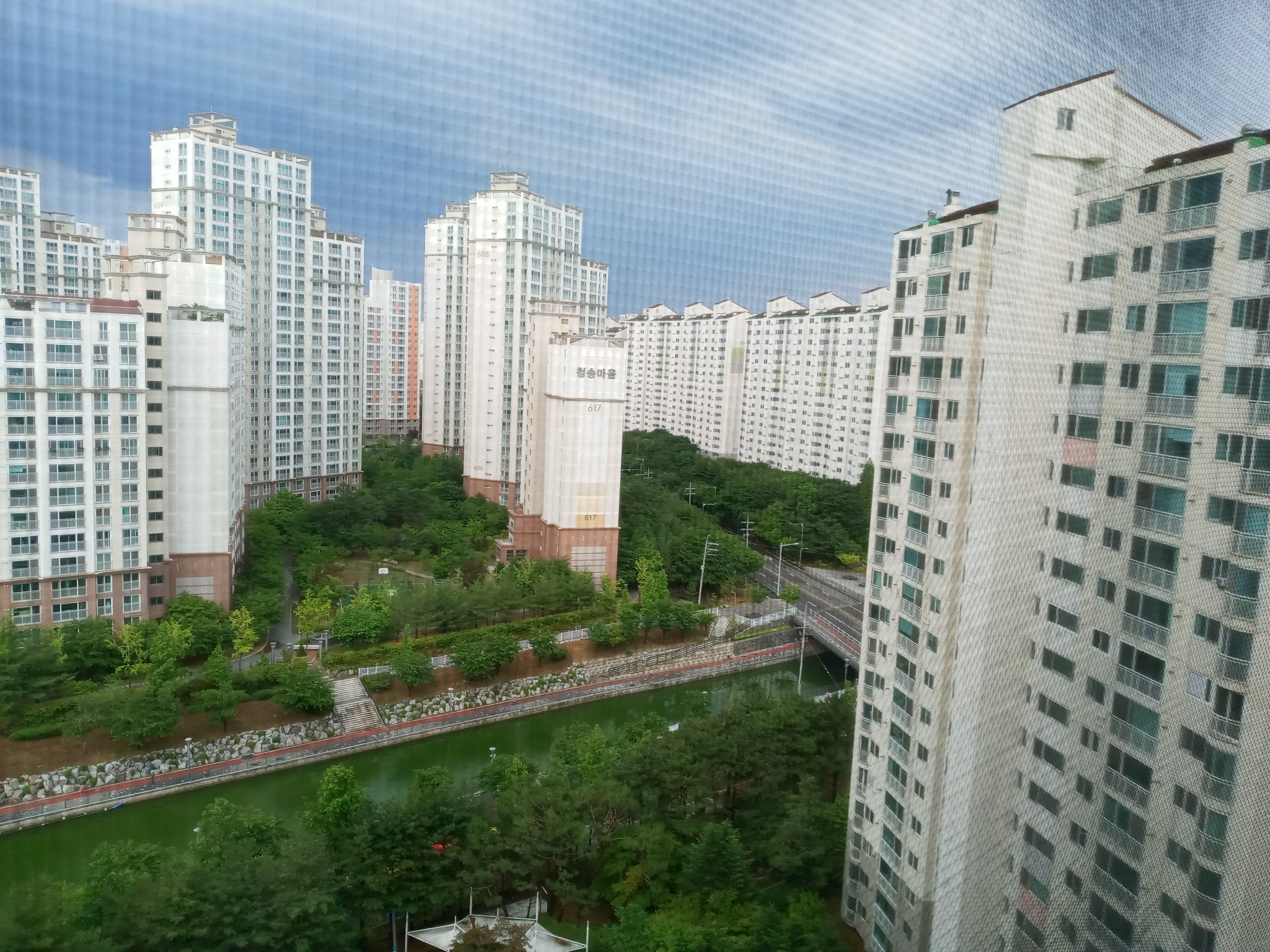
This drama struck a particular chord with me because my own apartment complex in Gimpo could almost serve as the setting for the series.

It is a large and somewhat aging development of roughly 6,000 residents. Recently the elevators were replaced, and for nearly two months many residents had to walk up and down as many as twenty flights of stairs. Watching similar scenes in the drama brought back vivid memories. Great exercise, perhaps, but not much fun carrying groceries.

Like the fictional complex, my neighborhood includes a nearby commercial district, hundreds of restaurants within walking distance, convenient public transportation, and a strong sense of local community.

When I first moved there, I worried that it might feel isolated since relatively few expatriates live in the area. Instead, I discovered friendly neighbors and a genuine community atmosphere. My limited Korean made communication difficult at times, but people were welcoming and patient.

For that reason, many of the community meetings, neighborhood disputes, and local politics portrayed in the drama felt surprisingly authentic.


Grade: A (Great)

Korean dramas have spent years exposing conspiracies inside the Blue House, prosecutor’s offices, chaebol boardrooms, and intelligence agencies. The Apartment Job takes a different approach. It asks a deceptively simple question: what if the biggest source of corruption in Korea is not hidden in government offices, but in the apartment building next door?

Ji Sung delivers another charismatic performance as Park Hae-gang, a former gangster who decides that the fastest path to money is becoming president of an apartment residents’ association. As a crime scheme starts, it evolves into a broader probe into maintenance fees and real estate corruption.

The genius of the drama lies in its recognition that a large Korean apartment complex functions almost like a miniature government. Residents elect representatives, pay obligatory fees, debate budgets, approve major projects, and argue over larger questions of property values and redevelopment. The result is a social satire that often feels more believable than many political thrillers.

The drama arrives at a moment when many Korean residents remain deeply suspicious about how apartment management offices, contractors, and developers spend maintenance and repair funds. Although the series exaggerates these concerns for dramatic effect, they are rooted in real debates taking place throughout South Korea.

Like many Korean dramas, the series mixes corruption, revenge, romance, and social commentary. Underneath the crime-comedy surface lies a thoughtful exploration of class tensions, home ownership, redevelopment, and the central role that apartments play in modern Korean life.

What makes The Apartment Job memorable is that it turns one of the most ordinary aspects of everyday life into compelling television. Elevator repairs, maintenance budgets, homeowner meetings, and reserve funds become the basis for a surprisingly effective political thriller.

In the end, the apartment complex becomes a miniature version of Korea itself: elections, factions, corruption scandals, development schemes, power struggles, and ordinary people trying to protect their community.

Main Cast

Actor Korean Character
Ji Sung 지성 Park Hae-gang (박해강)
Ha Yoon-kyung 하윤경 Kang Ha-ri (강하리)
Park Byung-eun 박병은 Lee Chung-won (이충원)
Moon So-ri 문소리 Jang Suk-jin (장숙진)
Kim Won-hae 김원해 Hwang In-sik (황인식)
Jung Seung-gil 정승길 Choi Young-jae (최영재)

Memorable Quotes

Rather than direct quotations, which may vary by translation, the drama’s recurring themes include:

  • “Follow the money.”
  • “Everyone has a price.”
  • “Apartments are small kingdoms.”
  • “The people collecting the fees are rarely the people paying them.”

Literary Reputation

The drama has been praised for using the apartment complex as a metaphor for modern Korean society.

Major themes include:

  • Housing as identity
  • Property and wealth inequality
  • Corruption in everyday life
  • Development vs. community
  • Tension between owners and renters
  • Distrust of institutions
  • The hidden politics of local government

Like Vincenzo and Stranger, the series uses entertainment and humor to explore serious social issues.

Similar Korean Dramas

bold I have seen
English Title Korean Title
Vincenzo 빈센조
Stranger 비밀의 숲
Big Mouth 빅마우스
Insider 인사이더
Chief of Staff 보좌관
The Devil Judge 악마판사
Law School 로스쿨
The Whirlwind 돌풍

Similar International Dramas

English Title Original Title
The Wire The Wire
Succession Succession
Ozark Ozark
House of Cards House of Cards
Borgen Borgen
Damages Damages

Other Dramas Featuring the Leads

Ji Sung

Korean

  • Kill Me, Heal Me (킬미 힐미)
  • Defendant (피고인)
  • The Devil Judge (악마판사)
  • Familiar Wife (아는 와이프)

International Similar Viewing

  • Better Call Saul
  • Barry
  • Ozark

Moon So-ri

Korean

  • Queenmaker (퀸메이커)
  • Race (레이스)

Ha Yoon-kyung

Korean

  • Extraordinary Attorney Woo (이상한 변호사 우영우)
  • See You in My 19th Life (이번 생도 잘 부탁해)

Korean Vocabulary

Hangul Romanization English
아파트 apateu apartment
입주민 ipjumin resident
관리비 gwanribi maintenance fee
장기수선충당금 janggi suseon chungdanggeum long-term repair reserve fund
주민대표 jumin daepyo resident representative
입주자대표회의 ipjuja daepyo hoeui residents’ association
횡령 hoengnyeong embezzlement
부패 bupae corruption
비리 Biri misconduct
선거 seongeo election
세입자 seipja tenant
집주인 jipjuin owner
감사 gamsa audit
회계 hoegye accounting
개발업자 gaebal-eopja property developer

Additional Background Information

Apartment Corruption and Reserve Funds

The drama revolves around the 장기수선충당금 (janggi suseon chungdanggeum), or long-term repair reserve fund, which is a real feature of Korean apartment management.

Residents contribute to these funds for major repairs such as:

  • Elevator replacement
  • Roof repairs
  • Exterior renovation
  • Parking structures
  • Heating and utility infrastructure

Because some large complexes contain thousands of households, reserve funds can become extremely large, making them a frequent source of controversy and suspicion.


Many US HOA and Condos also collect funds for a long-term reserve fund, but it is usually folded into the HOA fees, and in experience, it is not that transparent either.

Construction Companies, Politics, and Organized Crime

One of the strongest aspects of the drama is its portrayal of the historic relationship between redevelopment, political influence, and organized crime.

Throughout East Asia’s era of rapid urban development, major redevelopment projects sometimes produced conflicts between residents, developers, local officials, security contractors, and criminal groups.

Examples frequently discussed by historians and journalists include:

  • Yakuza involvement in portions of Japan’s construction and labor sectors.
  • Redevelopment conflicts during South Korea’s rapid urbanization from the 1960s through the 1990s.
  • Controversies surrounding compensation and forced relocation during major Chinese redevelopment projects.

The drama’s fictional One Club draws upon a familiar Korean thriller theme: powerful informal networks connecting politicians, police officials, prosecutors, developers, media executives, and business leaders.

While presented in exaggerated dramatic form, these storylines reflect long-standing public concerns about elite influence and corruption that frequently appear in Korean cinema and television.


the End

Korean Aaermwenr

August 23, 2026, 6:17 pm 0 boosts 0 favorites

Intro:  this is the third part of my K drama series.Part one is an overview of the genre, part two covers K-dramas from A to M, and part Two B covers K-dramas from N to Z. Part three will consist of K-dramas that I like and recommend.  I hope to post reviews every week or so, so stay tuned. Comments always appreciated.  Next up is the Apartment Job.

The Apartment Job (아파트, Apateu) Substack Review

Personal Note

This drama struck a particular chord with me because my own apartment complex in Gimpo could almost serve as the setting for the series.

It is a large and somewhat aging development of roughly 6,000 residents. Recently the elevators were replaced, and for nearly two months many residents had to walk up and down as many as twenty flights of stairs. Watching similar scenes in the drama brought back vivid memories. Great exercise, perhaps, but not much fun carrying groceries.

Like the fictional complex, my neighborhood includes a nearby commercial district, hundreds of restaurants within walking distance, convenient public transportation, and a strong sense of local community.

When I first moved there, I worried that it might feel isolated since relatively few expatriates live in the area. Instead, I discovered friendly neighbors and a genuine community atmosphere. My limited Korean made communication difficult at times, but people were welcoming and patient.

For that reason, many of the community meetings, neighborhood disputes, and local politics portrayed in the drama felt surprisingly authentic.

Grade: A (Great)

Korean dramas have spent years exposing conspiracies inside the Blue House, prosecutor’s offices, chaebol boardrooms, and intelligence agencies. The Apartment Job takes a different approach. It asks a deceptively simple question: what if the biggest source of corruption in Korea is not hidden in government offices, but in the apartment building next door?

Ji Sung delivers another charismatic performance as Park Hae-gang, a former gangster who decides that the fastest path to money is becoming president of an apartment residents’ association. As a crime scheme starts, it evolves into a broader probe into maintenance fees and real estate corruption.

The genius of the drama lies in its recognition that a large Korean apartment complex functions almost like a miniature government. Residents elect representatives, pay obligatory fees, debate budgets, approve major projects, and argue over larger questions of property values and redevelopment. The result is a social satire that often feels more believable than many political thrillers.

The drama arrives at a moment when many Korean residents remain deeply suspicious about how apartment management offices, contractors, and developers spend maintenance and repair funds. Although the series exaggerates these concerns for dramatic effect, they are rooted in real debates taking place throughout South Korea.

Like many Korean dramas, the series mixes corruption, revenge, romance, and social commentary. Underneath the crime-comedy surface lies a thoughtful exploration of class tensions, home ownership, redevelopment, and the central role that apartments play in modern Korean life.

What makes The Apartment Job memorable is that it turns one of the most ordinary aspects of everyday life into compelling television. Elevator repairs, maintenance budgets, homeowner meetings, and reserve funds become the basis for a surprisingly effective political thriller.

In the end, the apartment complex becomes a miniature version of Korea itself: elections, factions, corruption scandals, development schemes, power struggles, and ordinary people trying to protect their community.

Main Cast

Actor Korean Character
Ji Sung 지성 Park Hae-gang (박해강)
Ha Yoon-kyung 하윤경 Kang Ha-ri (강하리)
Park Byung-eun 박병은 Lee Chung-won (이충원)
Moon So-ri 문소리 Jang Suk-jin (장숙진)
Kim Won-hae 김원해 Hwang In-sik (황인식)
Jung Seung-gil 정승길 Choi Young-jae (최영재)

Memorable Quotes

Rather than direct quotations, which may vary by translation, the drama’s recurring themes include:

  • “Follow the money.”
  • “Everyone has a price.”
  • “Apartments are small kingdoms.”
  • “The people collecting the fees are rarely the people paying them.”

Literary Reputation

The drama has been praised for using the apartment complex as a metaphor for modern Korean society.

Major themes include:

  • Housing as identity
  • Property and wealth inequality
  • Corruption in everyday life
  • Development vs. community
  • Tension between owners and renters
  • Distrust of institutions
  • The hidden politics of local government

Like Vincenzo and Stranger, the series uses entertainment and humor to explore serious social issues.

Similar Korean Dramas

bold I have seen
English Title Korean Title
Vincenzo 빈센조
Stranger 비밀의 숲
Big Mouth 빅마우스
Insider 인사이더
Chief of Staff 보좌관
The Devil Judge 악마판사
Law School 로스쿨
The Whirlwind 돌풍

Similar International Dramas

English Title Original Title
The Wire The Wire
Succession Succession
Ozark Ozark
House of Cards House of Cards
Borgen Borgen
Damages Damages

Other Dramas Featuring the Leads

Ji Sung

Korean

  • Kill Me, Heal Me (킬미 힐미)
  • Defendant (피고인)
  • The Devil Judge (악마판사)
  • Familiar Wife (아는 와이프)

International Similar Viewing

  • Better Call Saul
  • Barry
  • Ozark

Moon So-ri

Korean

  • Queenmaker (퀸메이커)
  • Race (레이스)

Ha Yoon-kyung

Korean

  • Extraordinary Attorney Woo (이상한 변호사 우영우)
  • See You in My 19th Life (이번 생도 잘 부탁해)

Korean Vocabulary

Hangul Romanization English
아파트 apateu apartment
입주민 ipjumin resident
관리비 gwanribi maintenance fee
장기수선충당금 janggi suseon chungdanggeum long-term repair reserve fund
주민대표 jumin daepyo resident representative
입주자대표회의 ipjuja daepyo hoeui residents’ association
횡령 hoengnyeong embezzlement
부패 bupae corruption
비리 Biri misconduct
선거 seongeo election
세입자 seipja tenant
집주인 jipjuin owner
감사 gamsa audit
회계 hoegye accounting
개발업자 gaebal-eopja property developer

Additional Background Information

Apartment Corruption and Reserve Funds

The drama revolves around the 장기수선충당금 (janggi suseon chungdanggeum), or long-term repair reserve fund, which is a real feature of Korean apartment management.

Residents contribute to these funds for major repairs such as:

  • Elevator replacement
  • Roof repairs
  • Exterior renovation
  • Parking structures
  • Heating and utility infrastructure

Because some large complexes contain thousands of households, reserve funds can become extremely large, making them a frequent source of controversy and suspicion.


Many US HOA and Condos also collect funds for a long-term reserve fund, but it is usually folded into the HOA fees, and in experience, it is not that transparent either.

Construction Companies, Politics, and Organized Crime

One of the strongest aspects of the drama is its portrayal of the historic relationship between redevelopment, political influence, and organized crime.

Throughout East Asia’s era of rapid urban development, major redevelopment projects sometimes produced conflicts between residents, developers, local officials, security contractors, and criminal groups.

Examples frequently discussed by historians and journalists include:

  • Yakuza involvement in portions of Japan’s construction and labor sectors.
  • Redevelopment conflicts during South Korea’s rapid urbanization from the 1960s through the 1990s.
  • Controversies surrounding compensation and forced relocation during major Chinese redevelopment projects.

The drama’s fictional One Club draws upon a familiar Korean thriller theme: powerful informal networks connecting politicians, police officials, prosecutors, developers, media executives, and business leaders.

While presented in exaggerated dramatic form, these storylines reflect long-standing public concerns about elite influence and corruption that frequently appear in Korean cinema and television.


the End

Comments

Thanks so much for visiting my site. Your comments are welcome but please play nice…. Reply

This site uses Akismet to reduce spam. Learn how your comment data is processed.

Discover more from The World According to Cosmos

Subscribe now to keep reading and get access to the full archive.

Continue reading

Discover more from The World According to Cosmos

Subscribe now to keep reading and get access to the full archive.

Continue reading

Verified by MonsterInsights