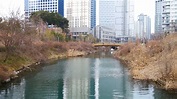
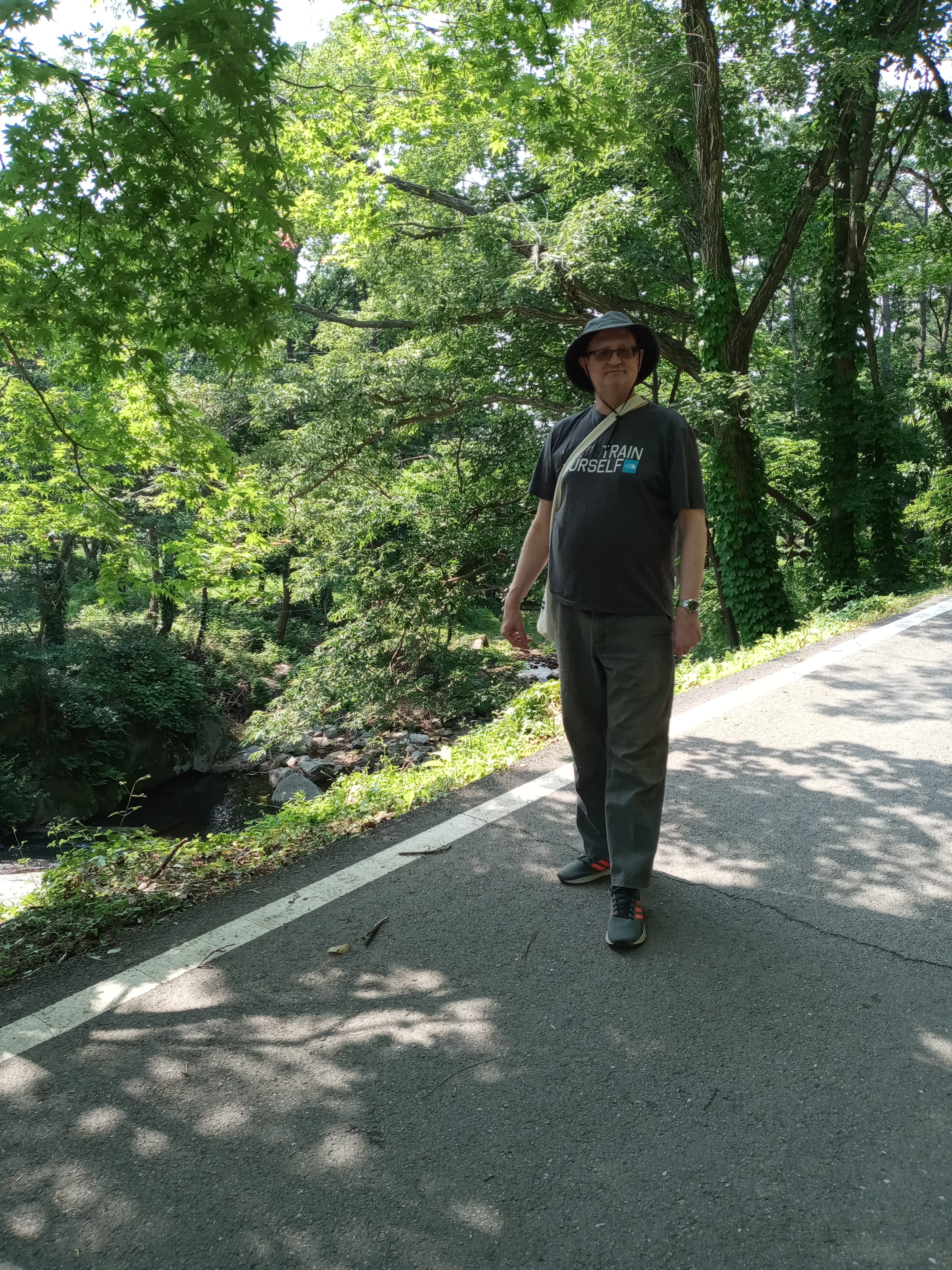
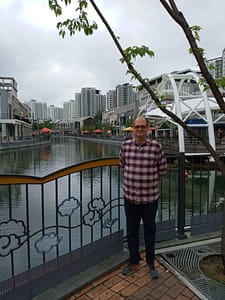
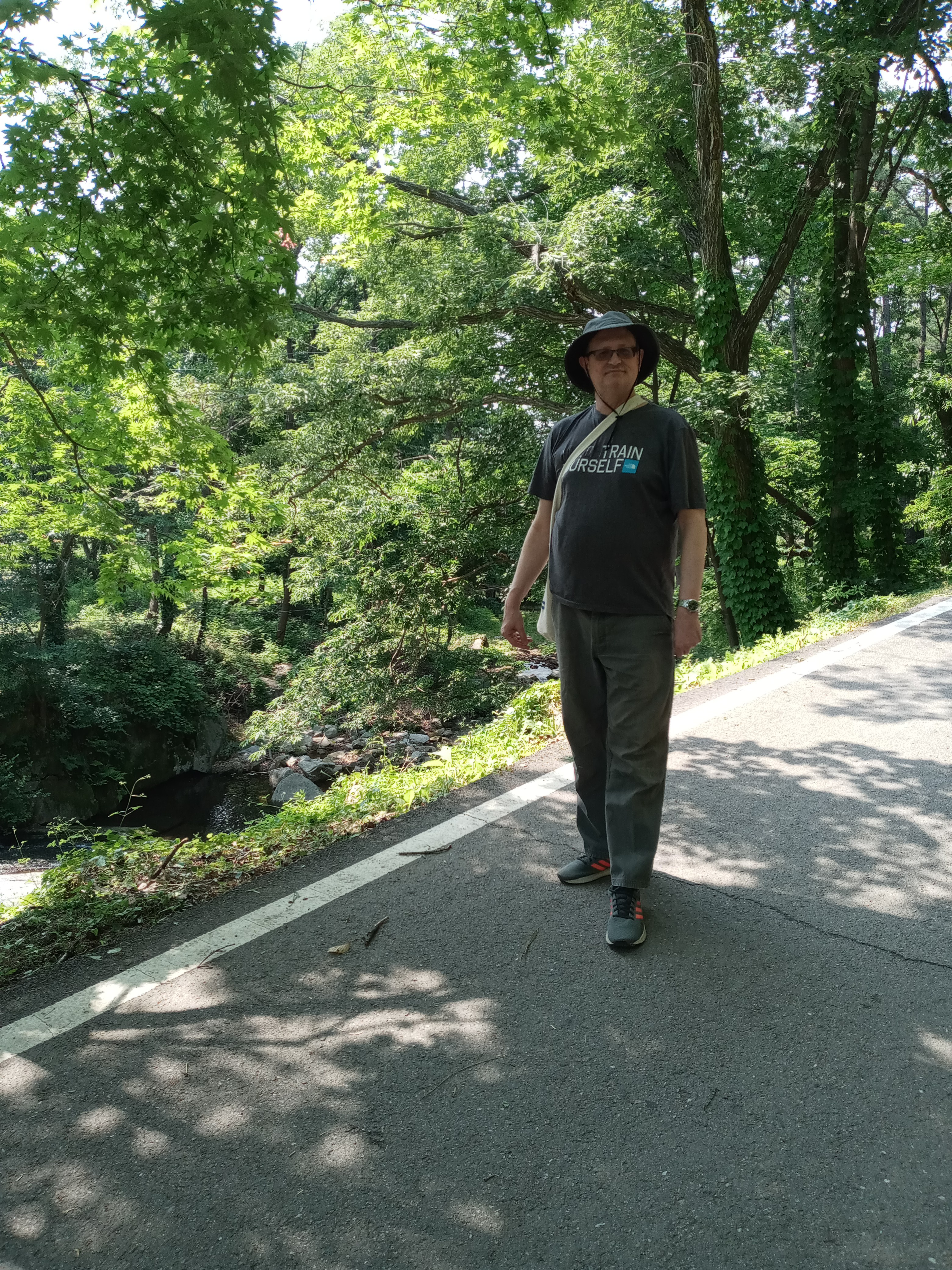
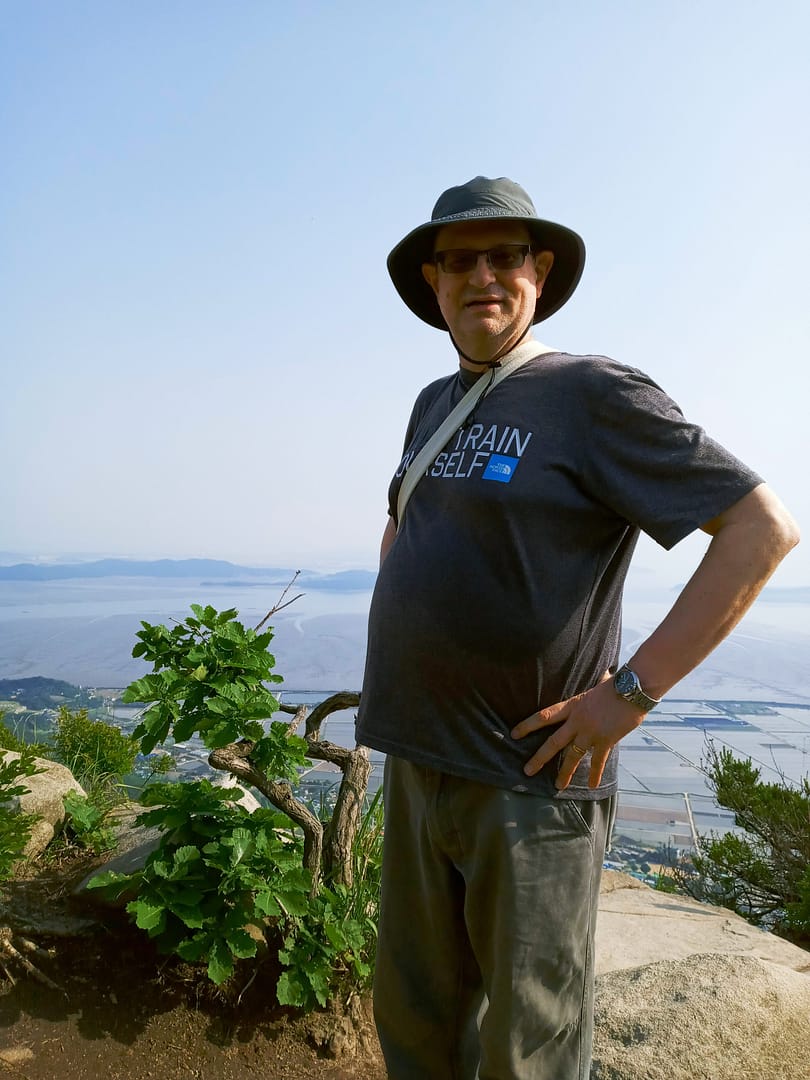
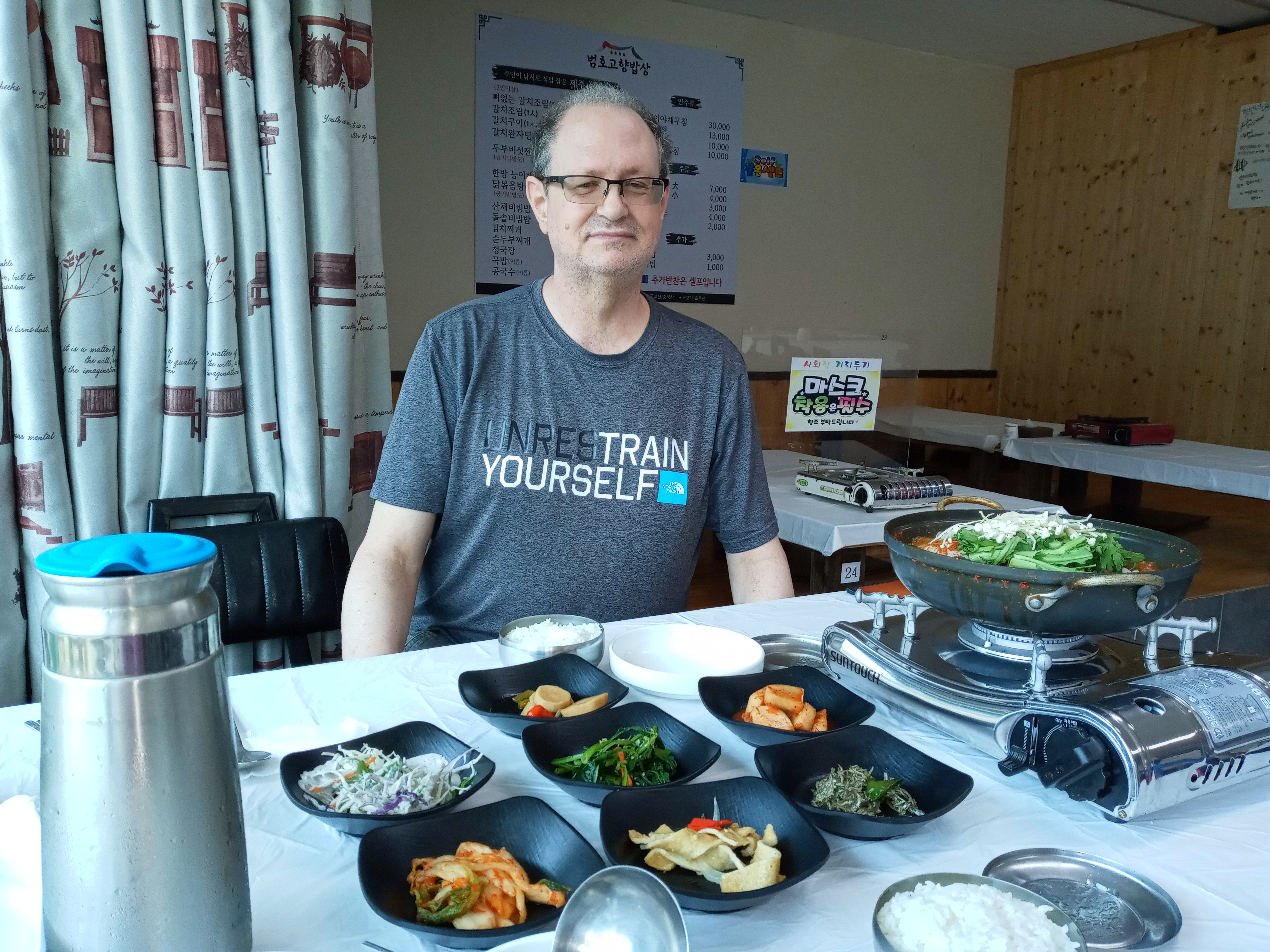
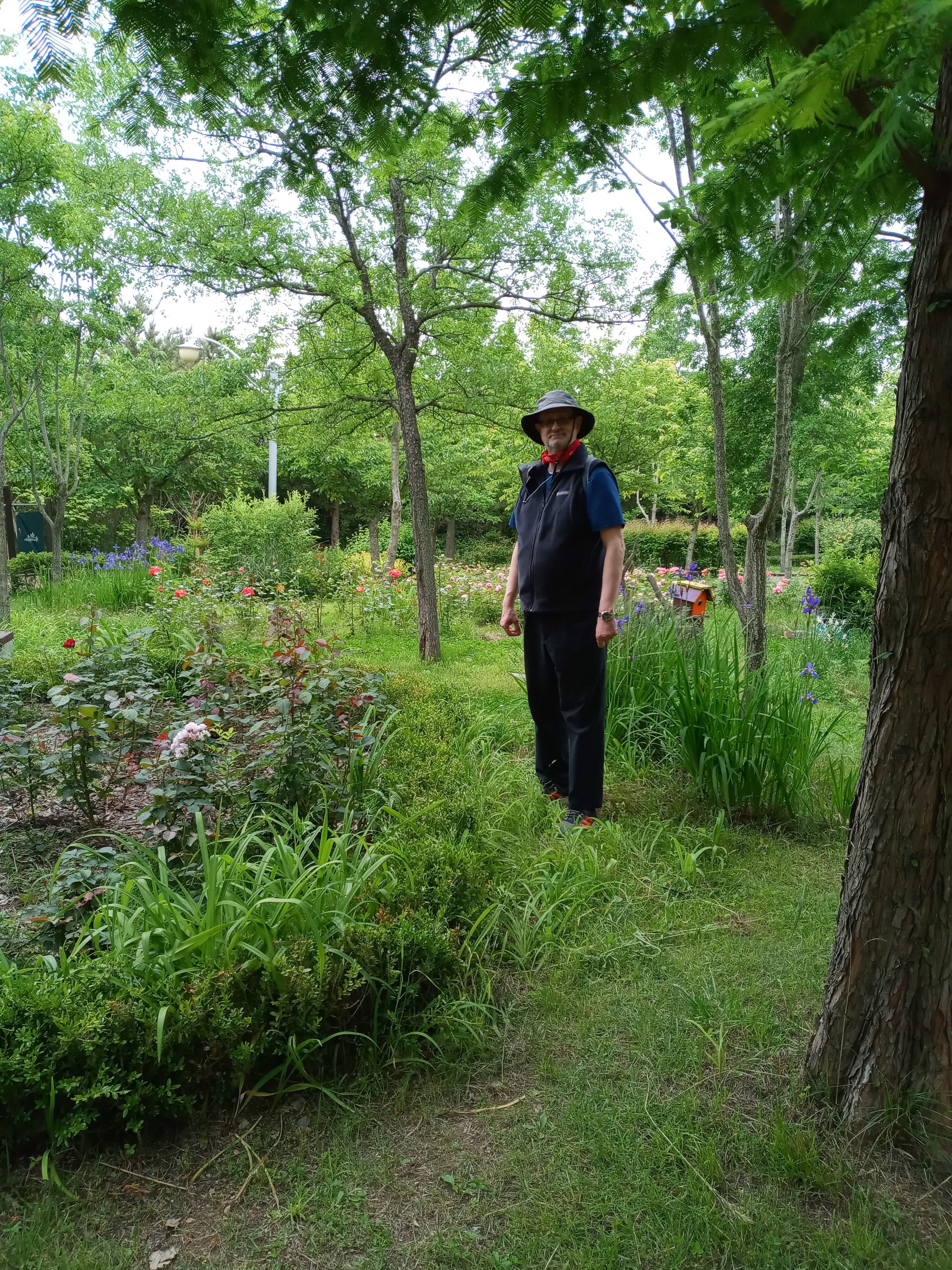
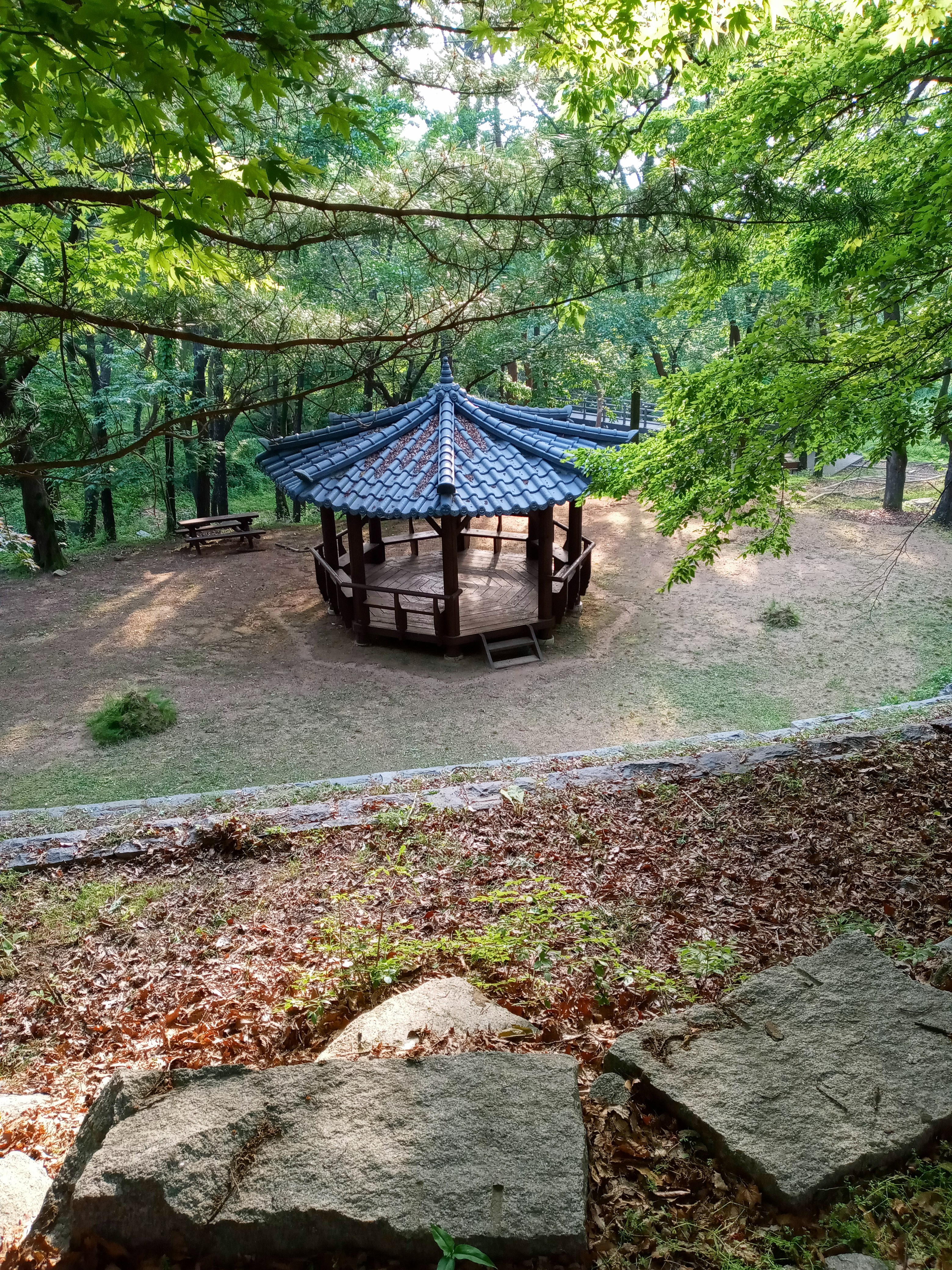
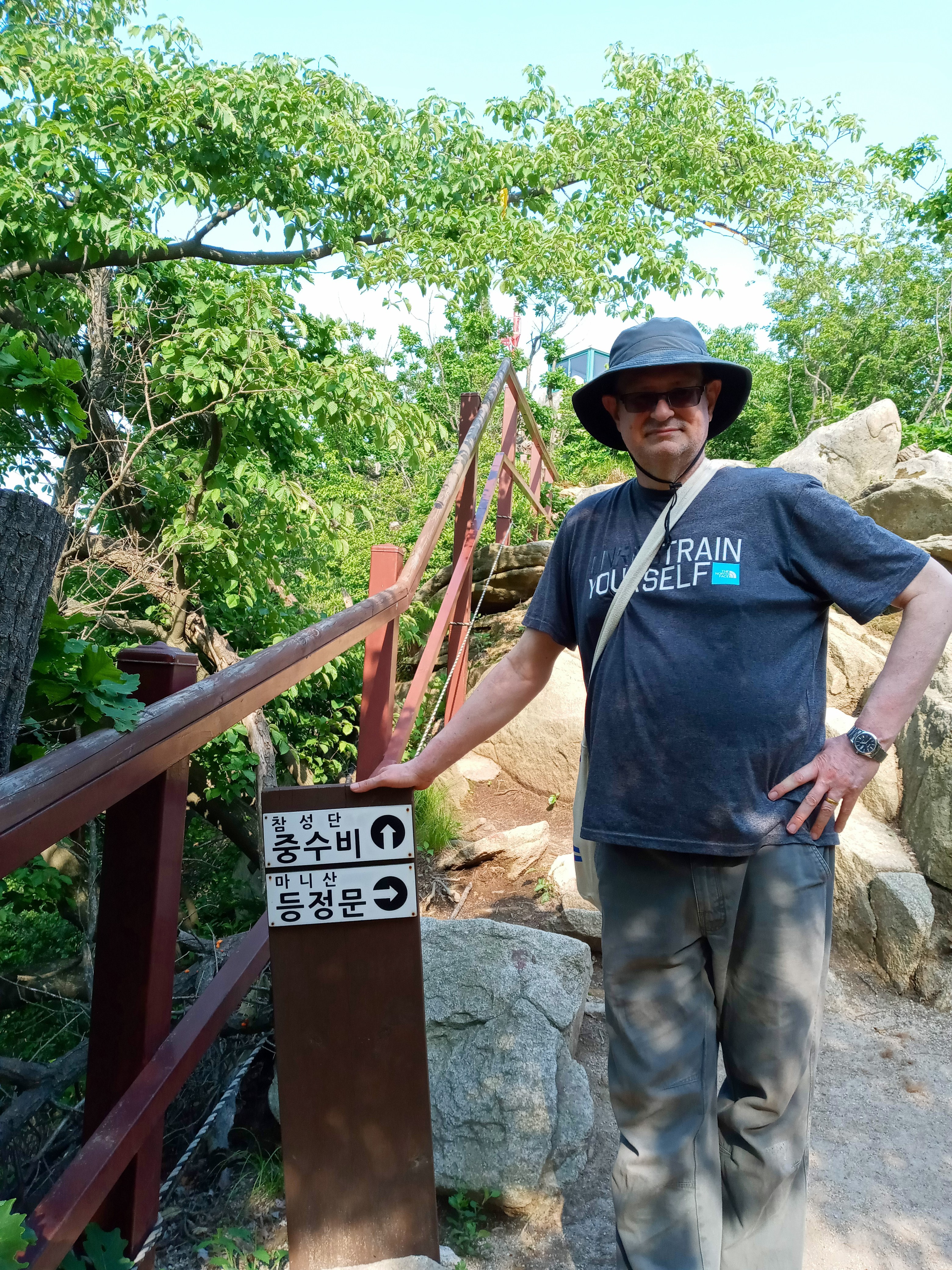
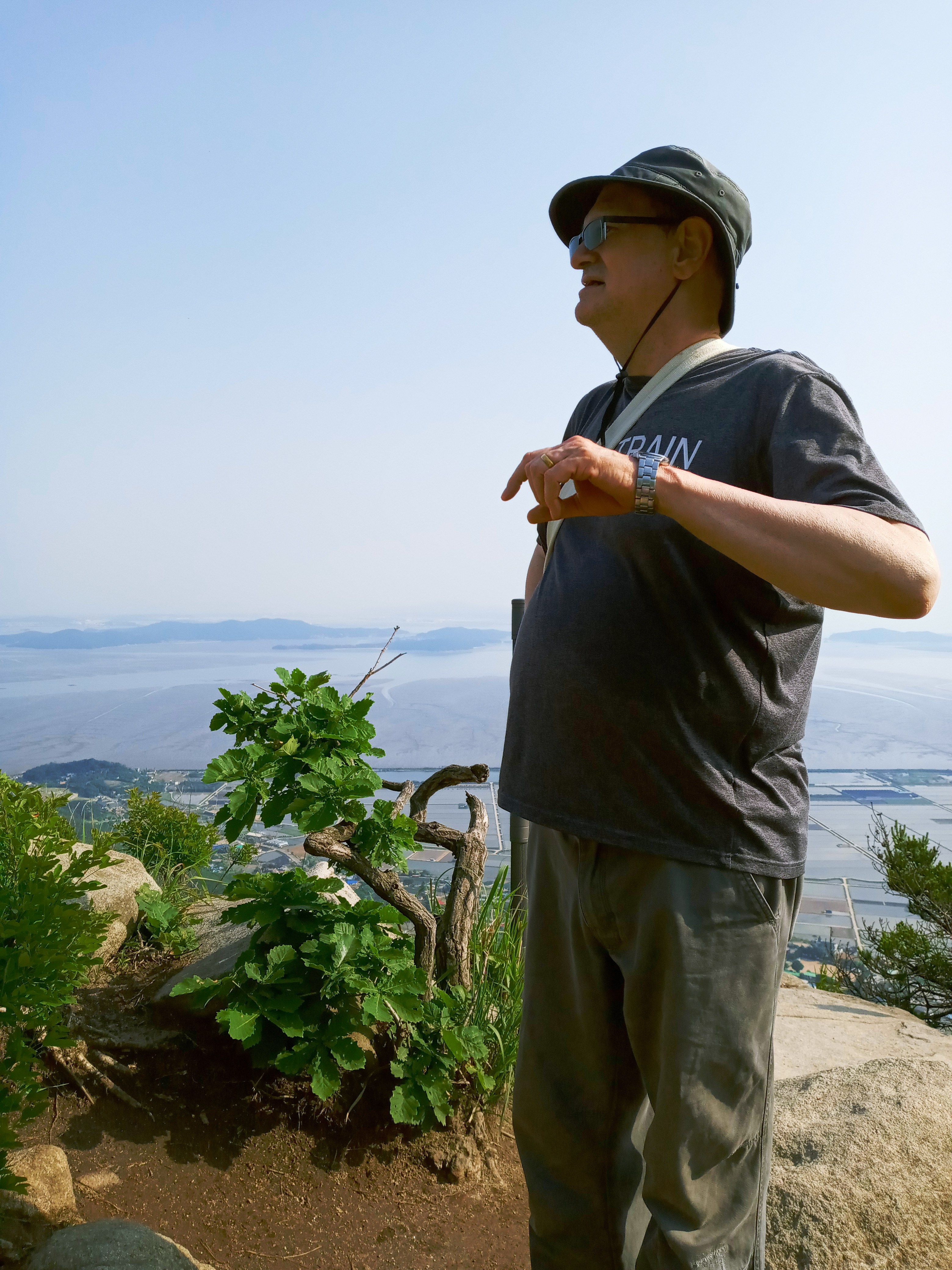
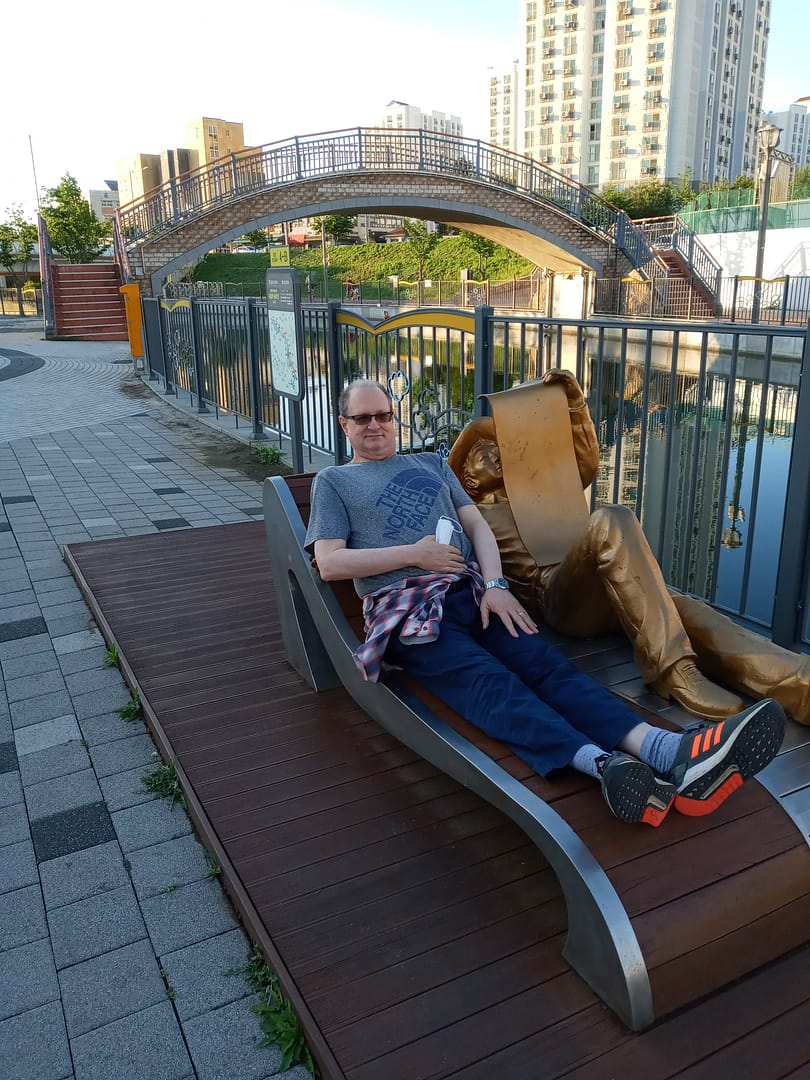
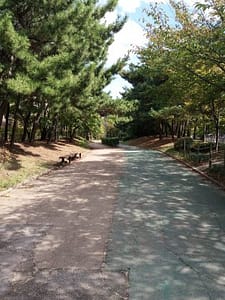
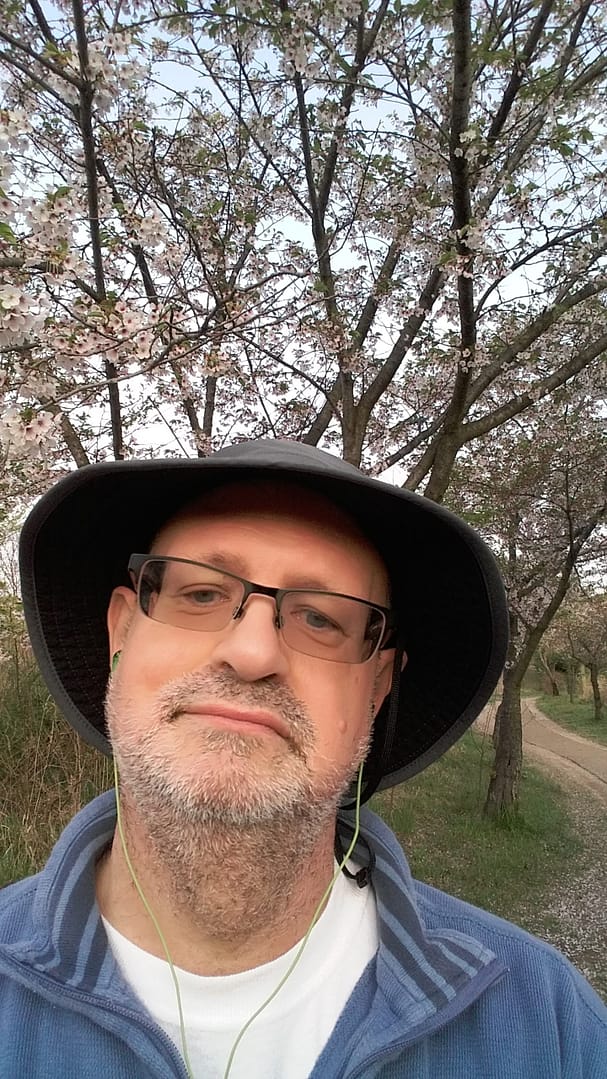
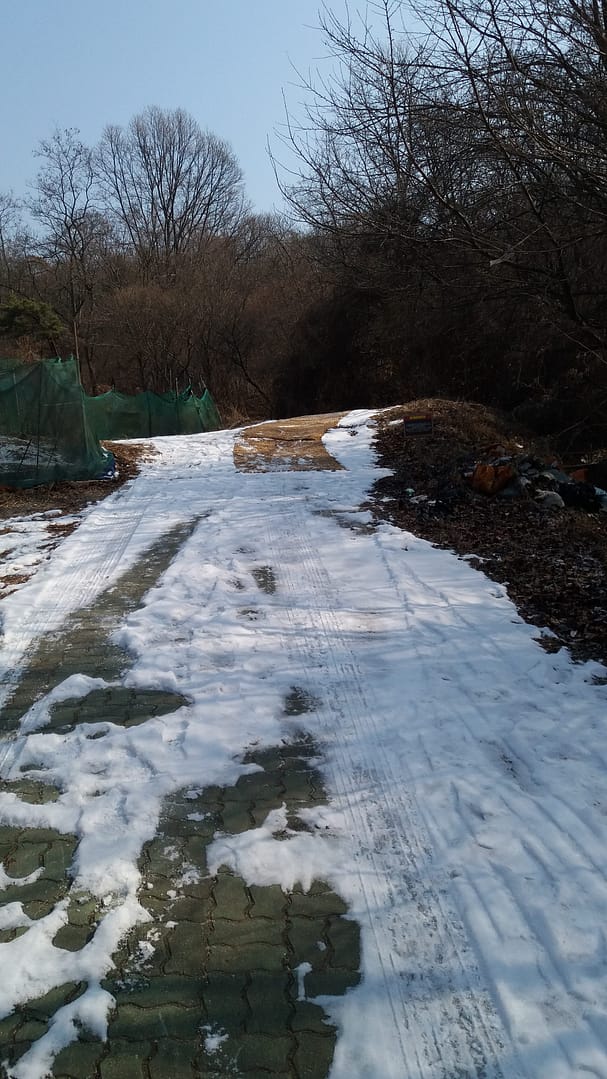
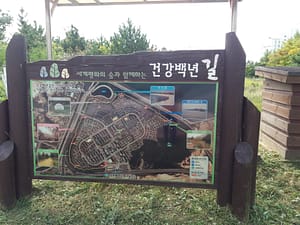
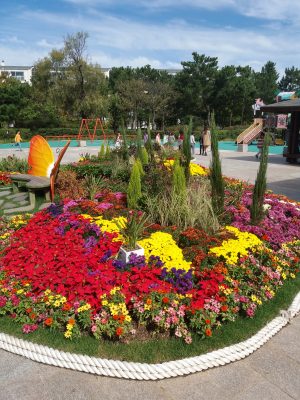
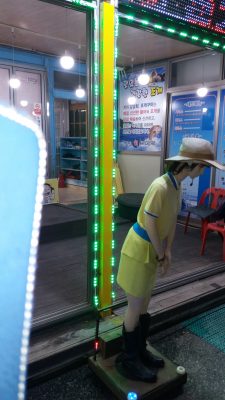
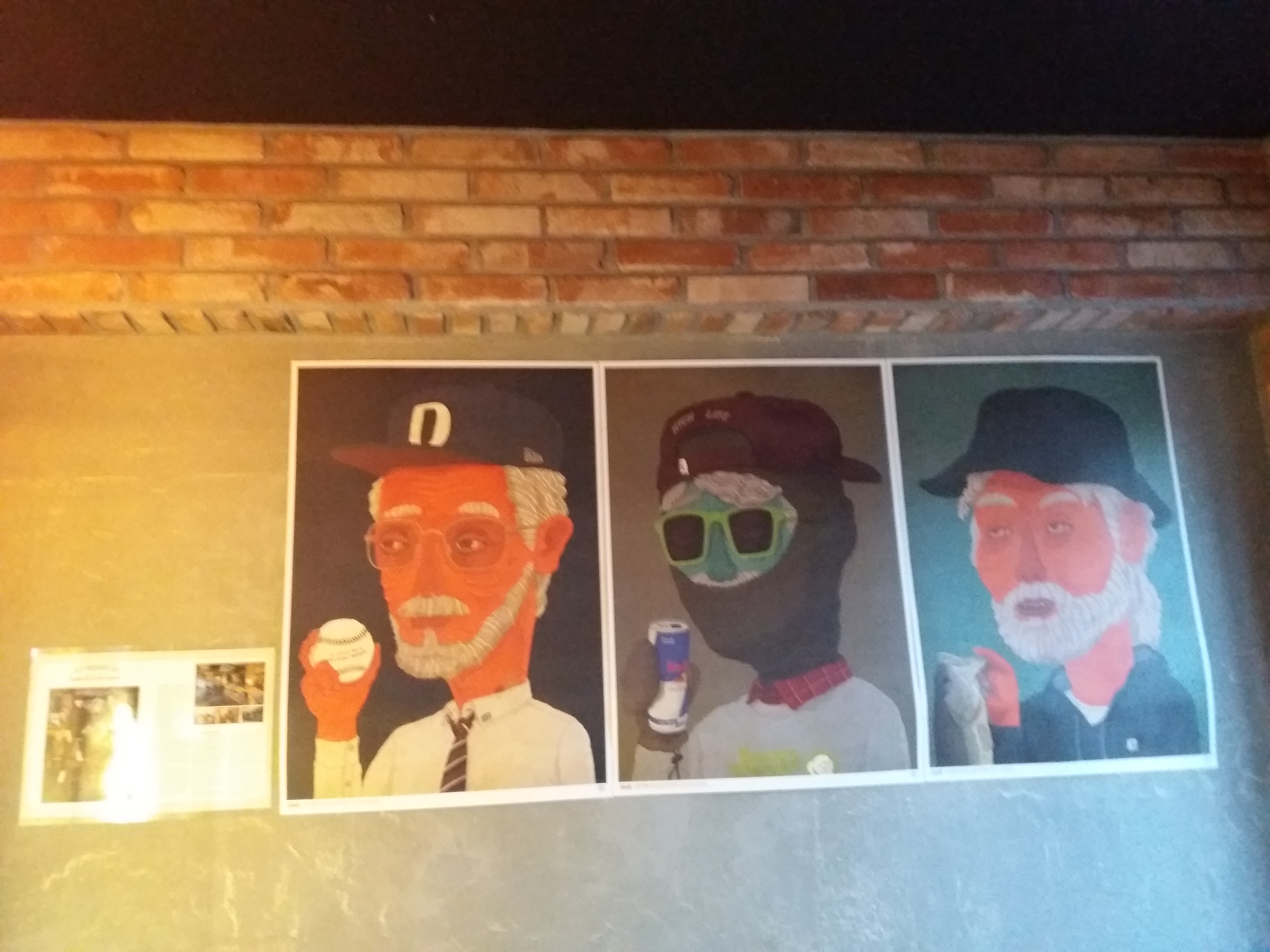
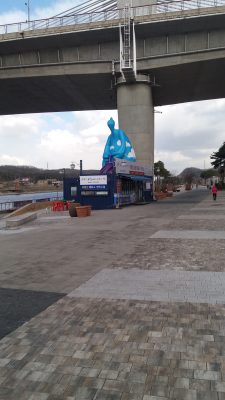
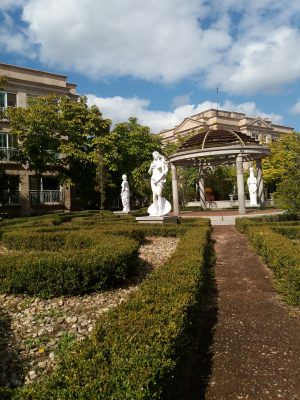
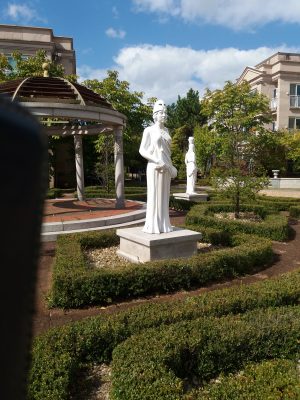
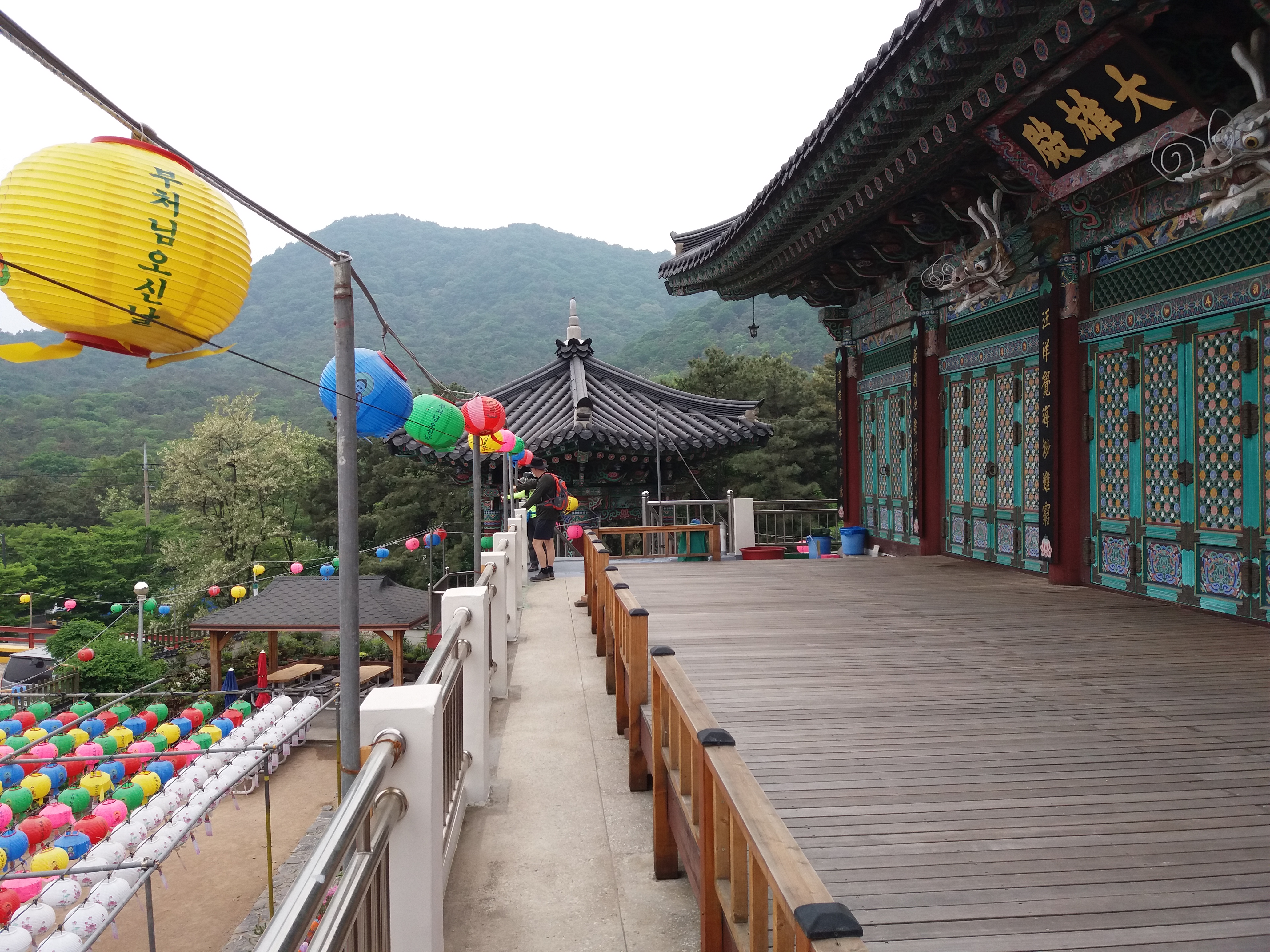
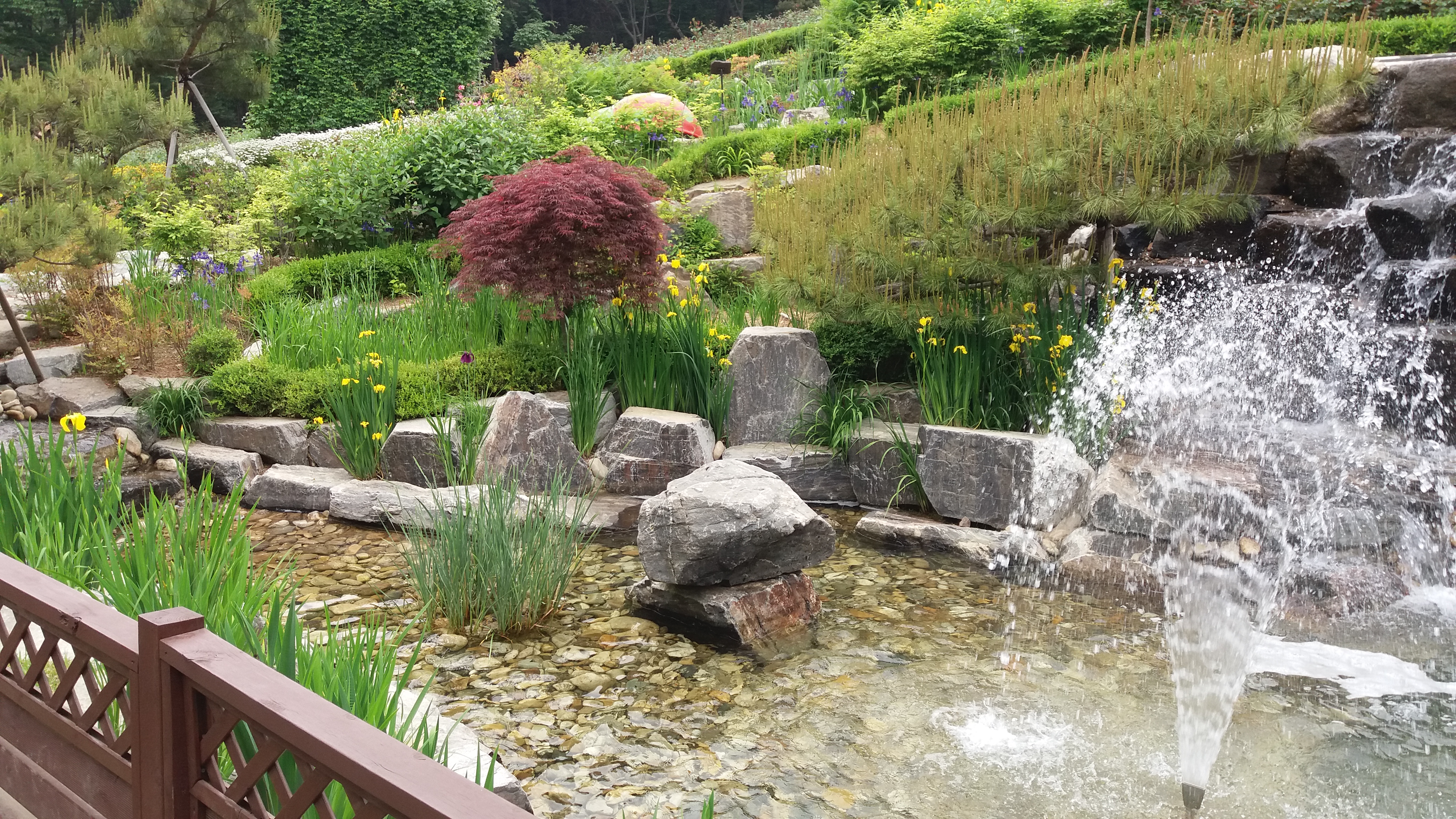
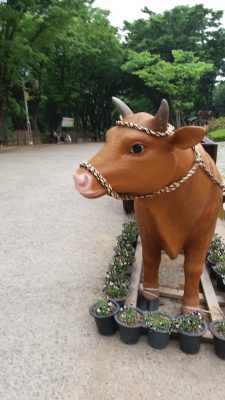
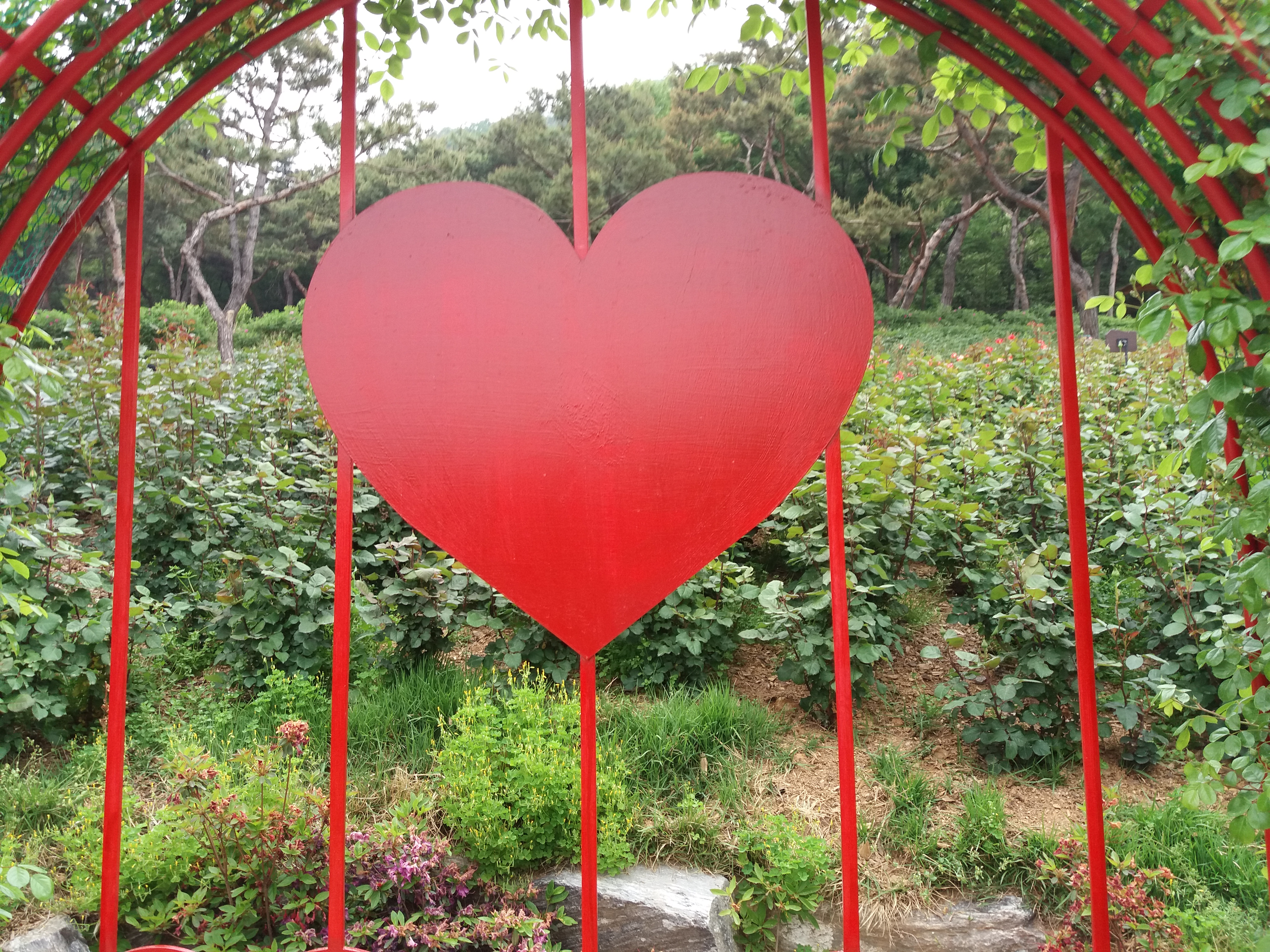
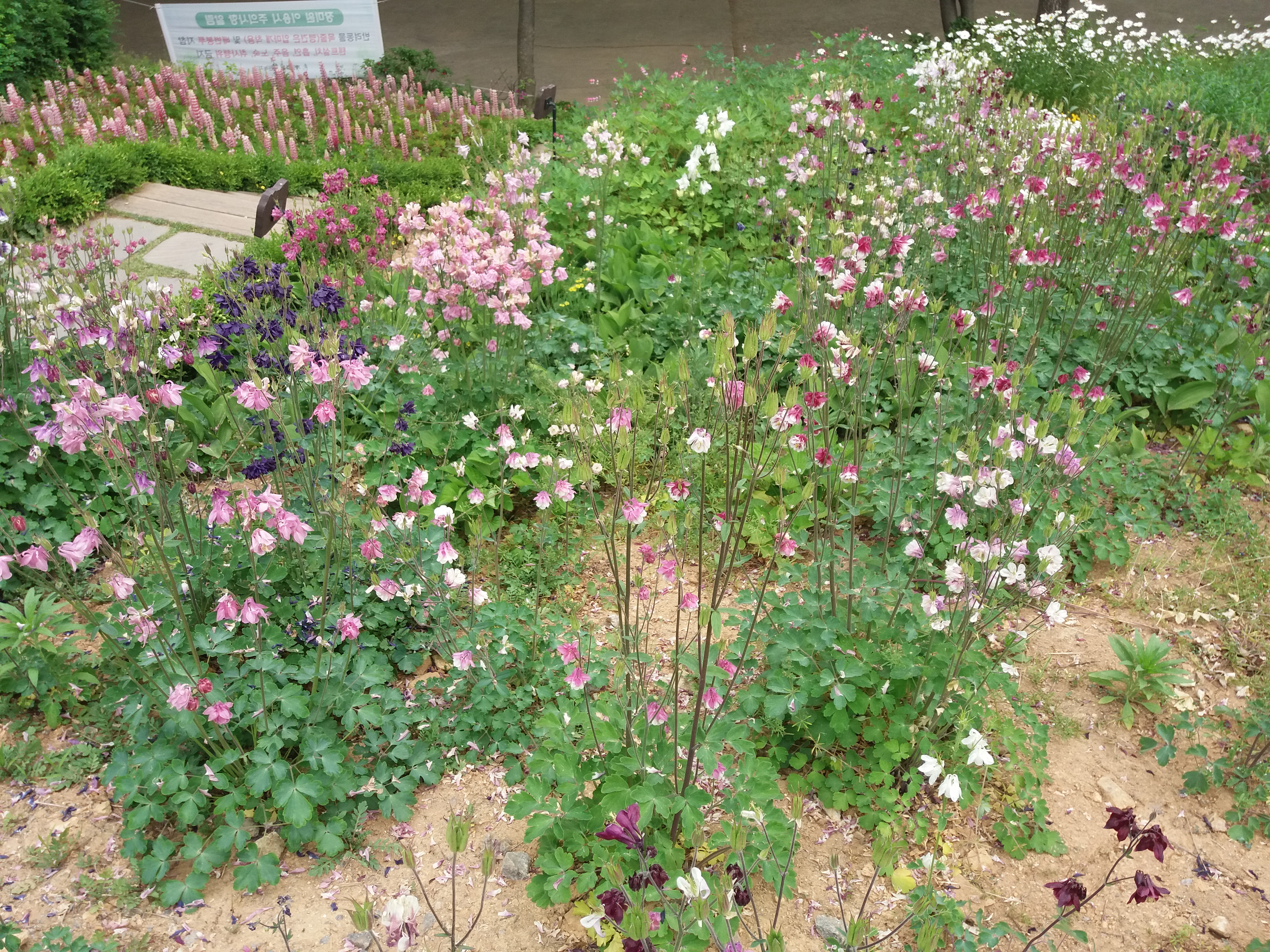
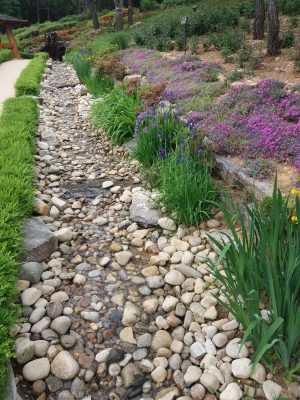
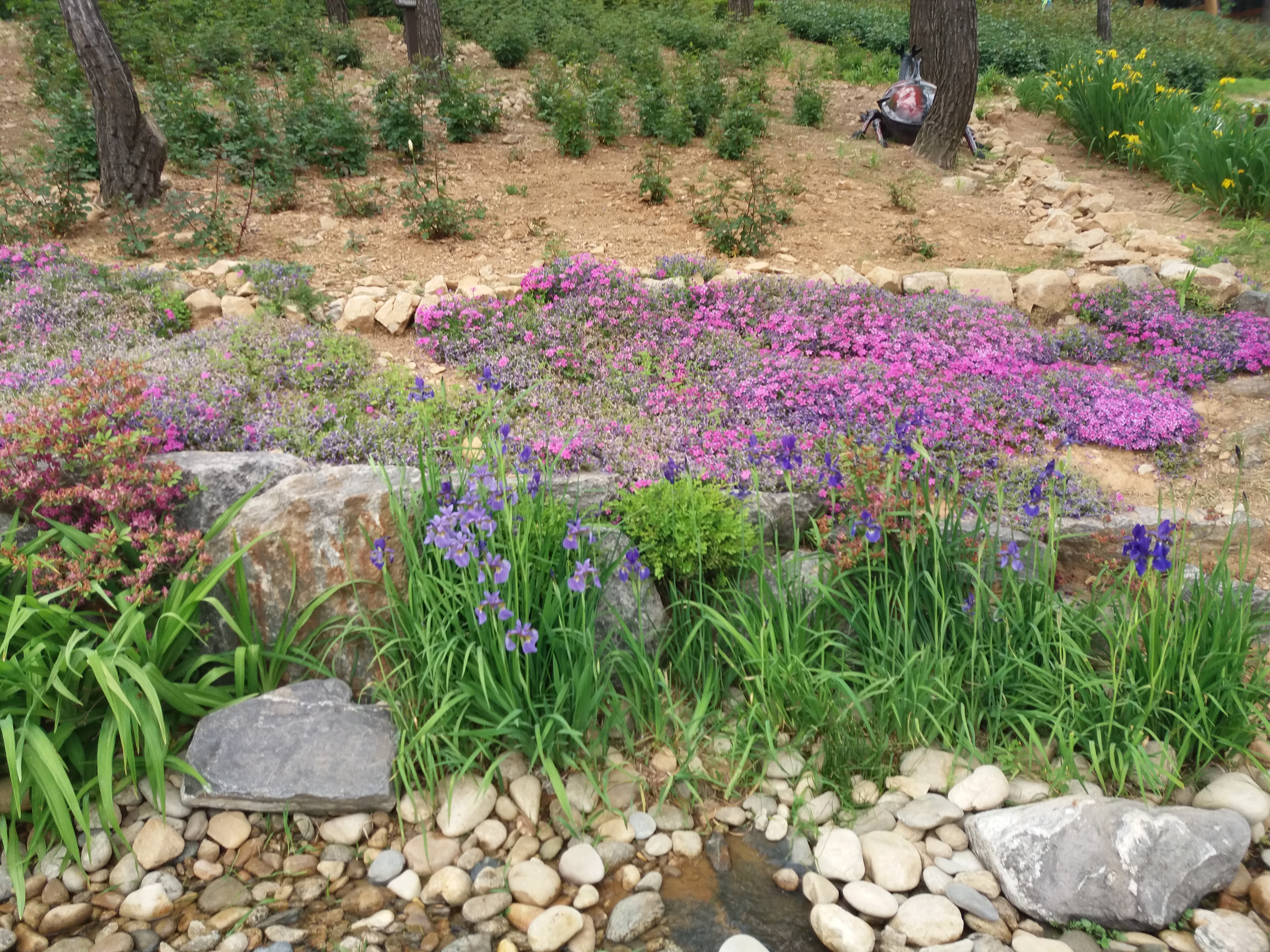
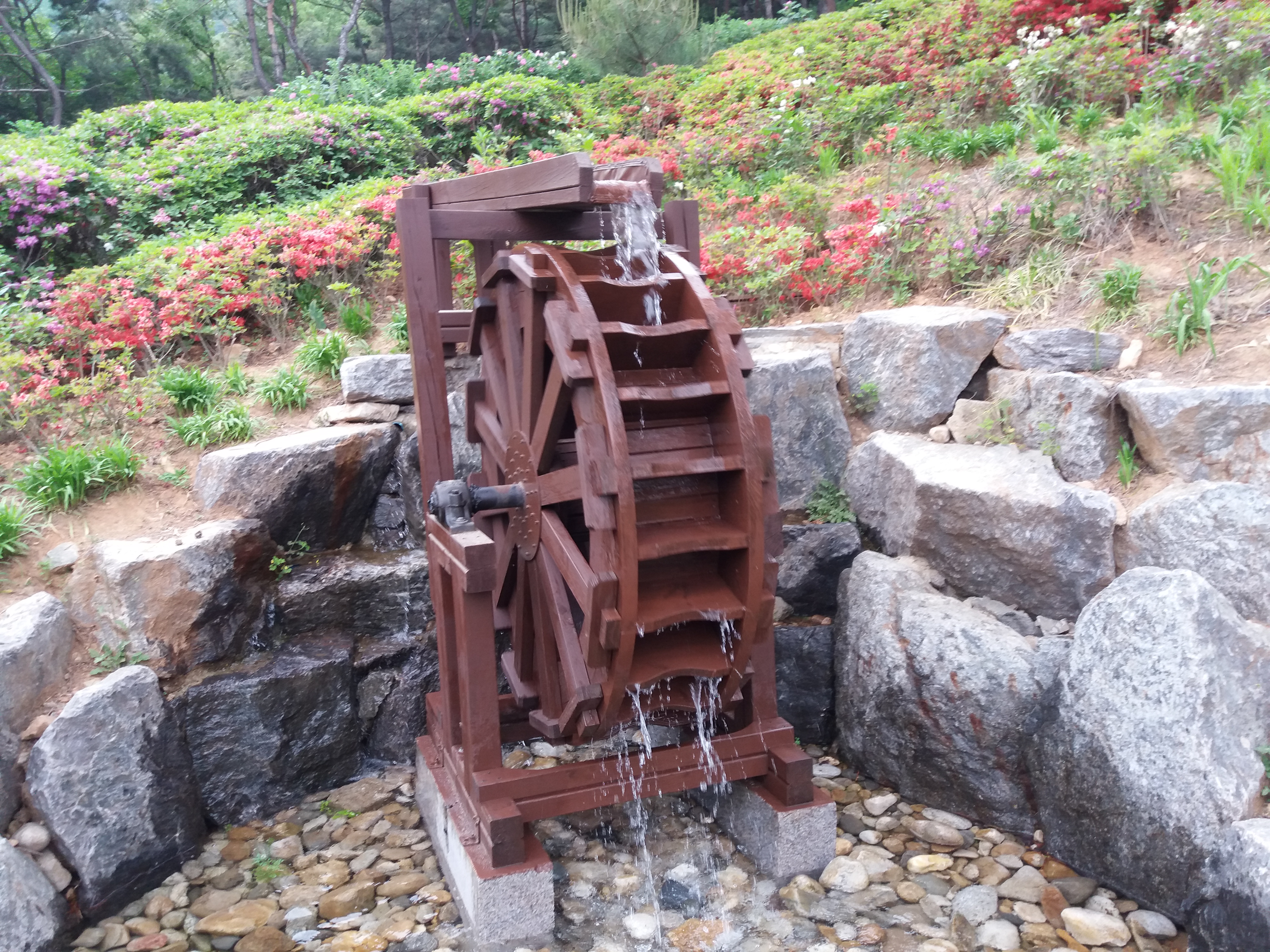
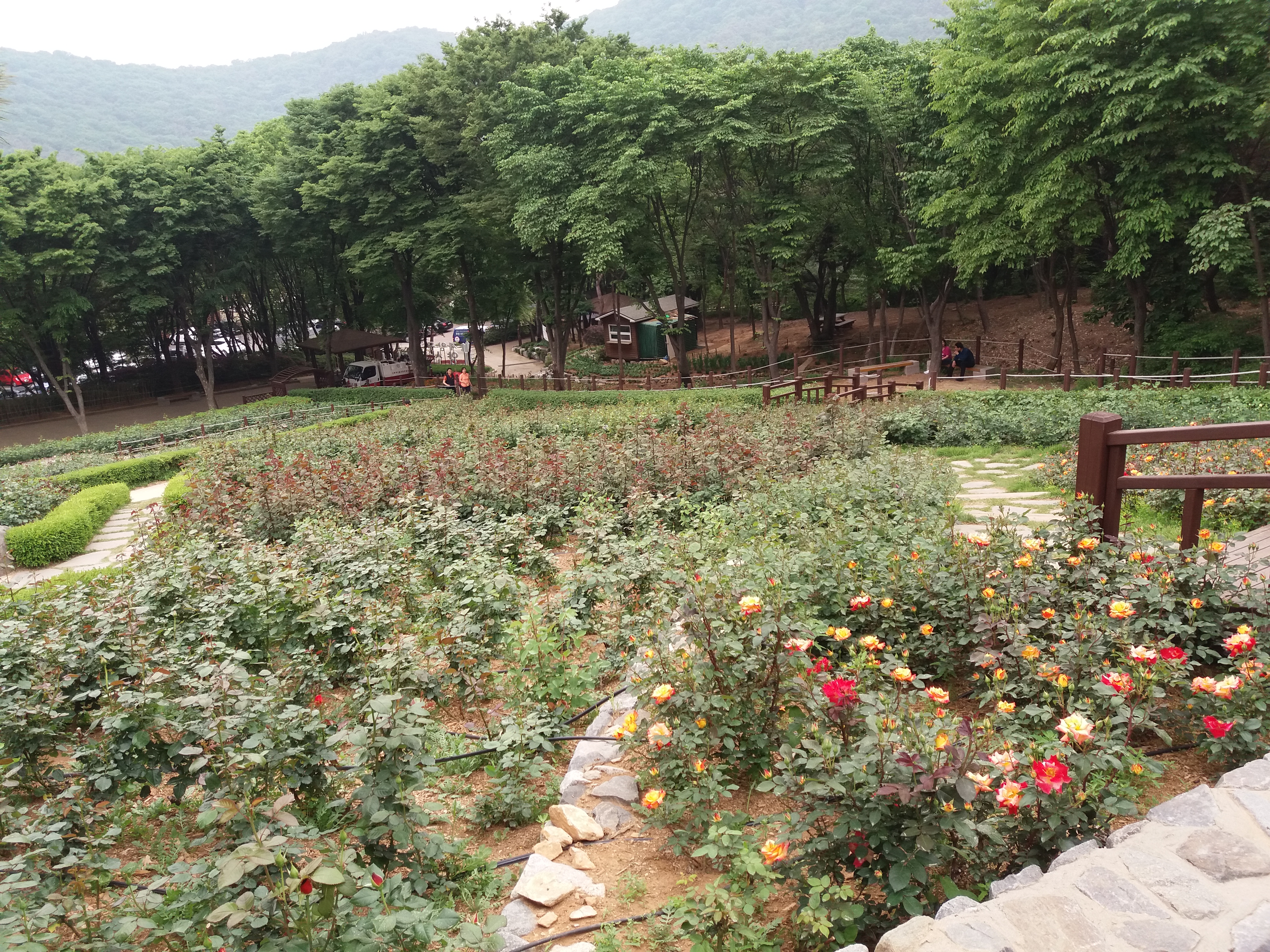
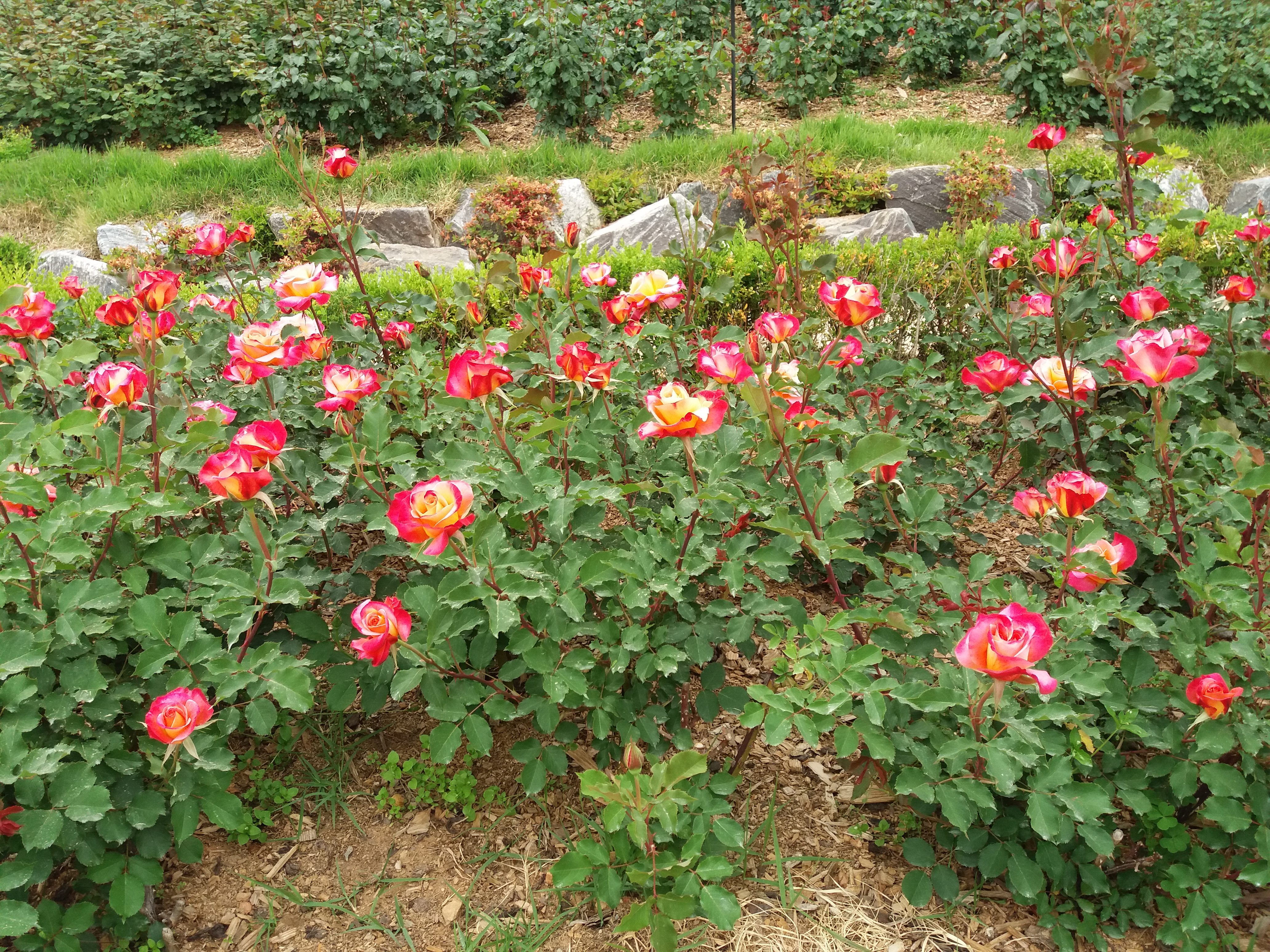
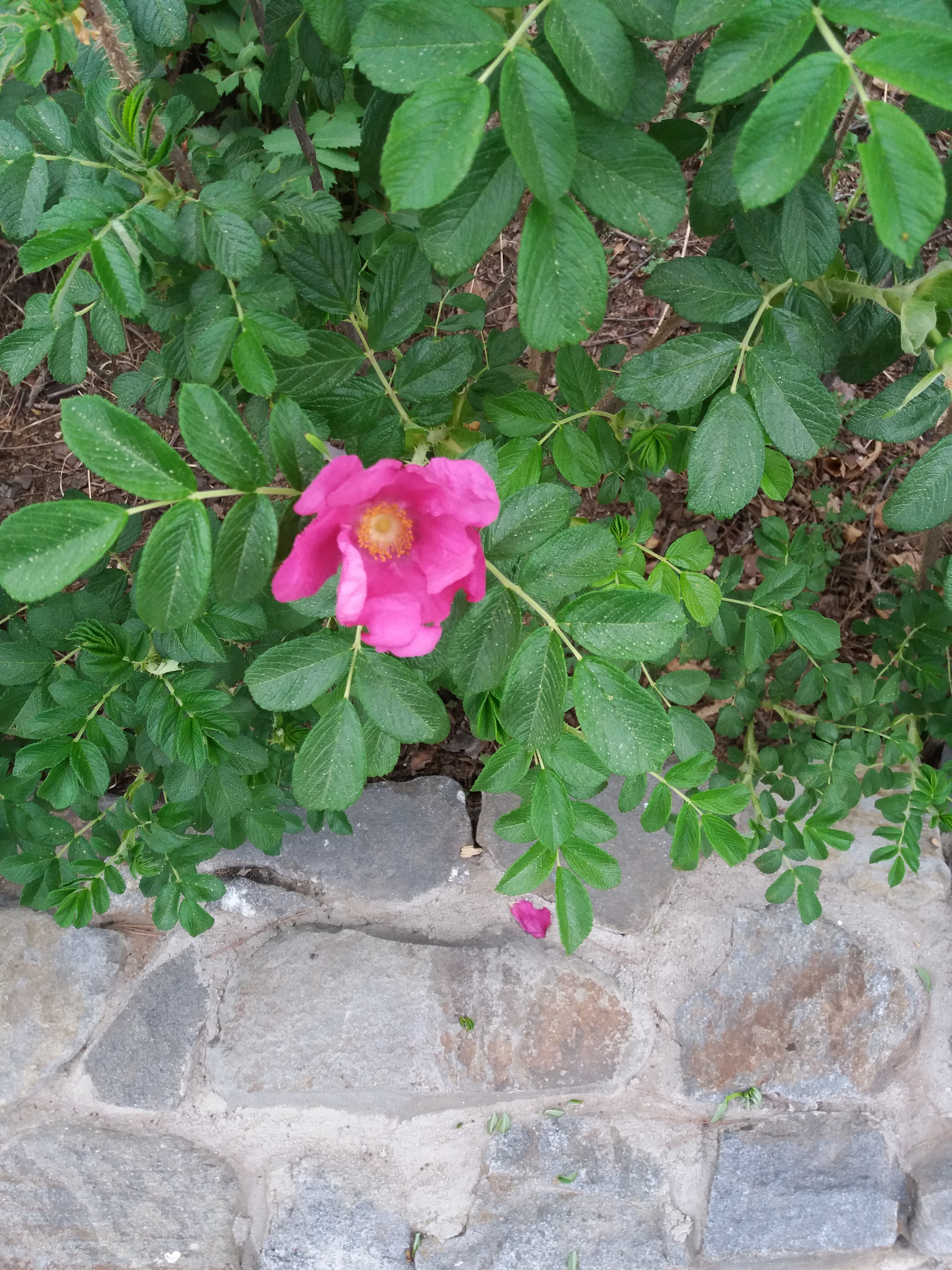
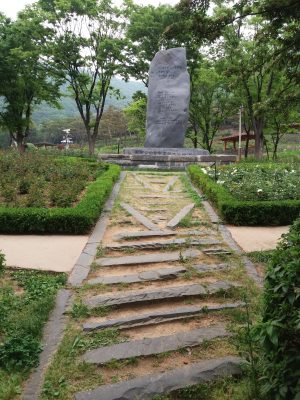
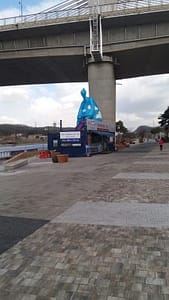
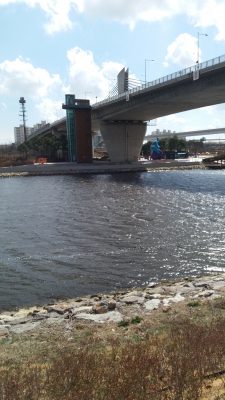
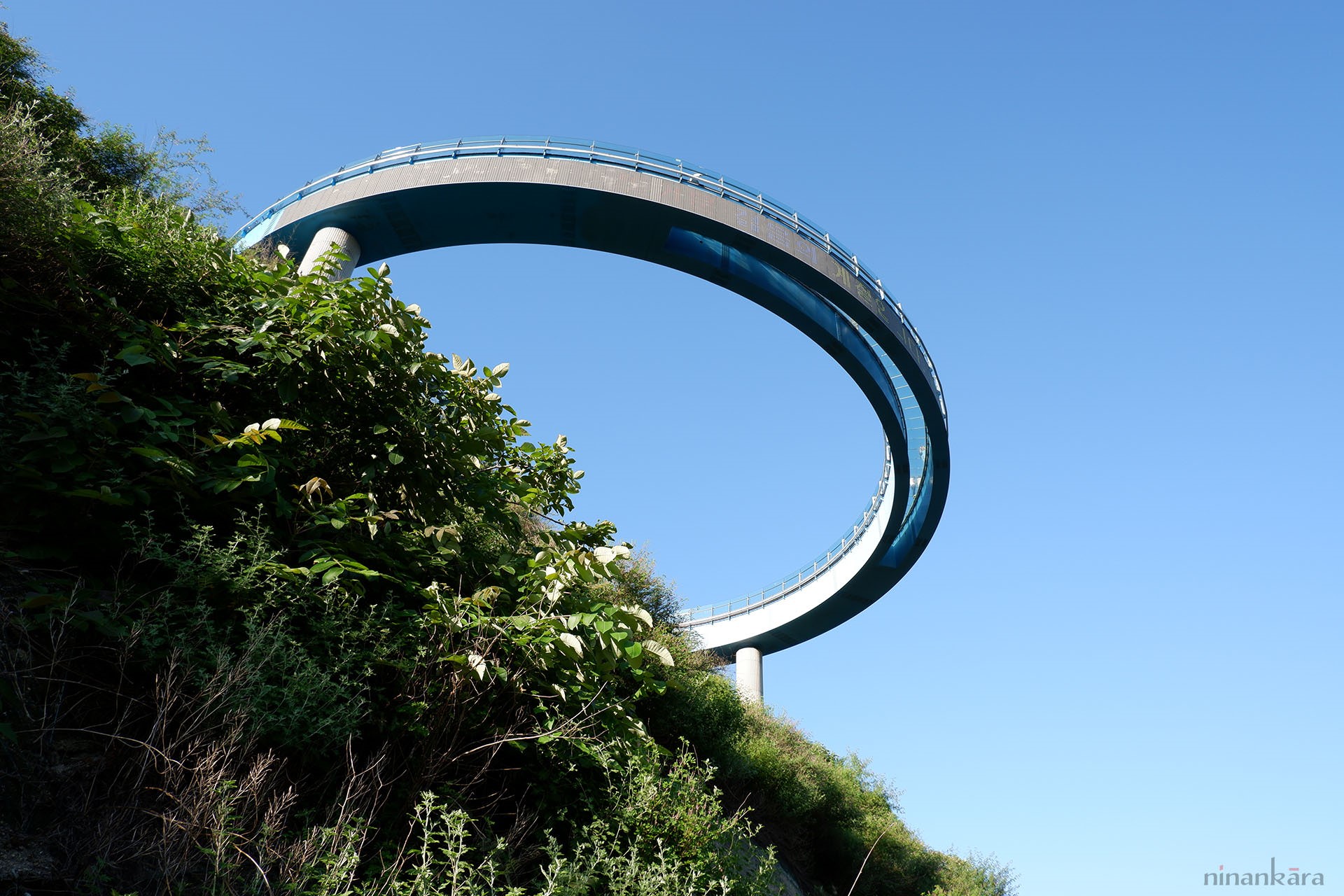
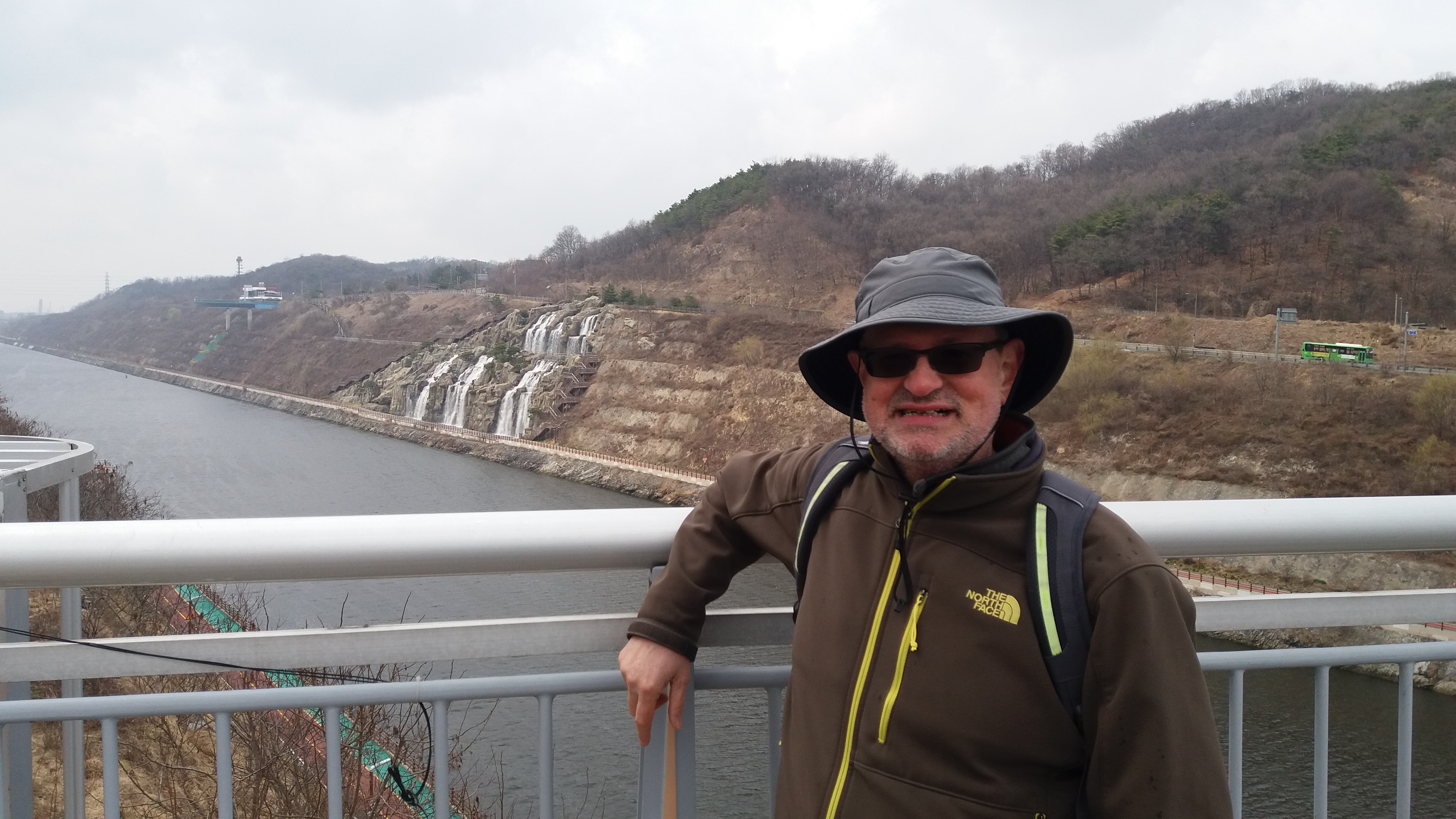
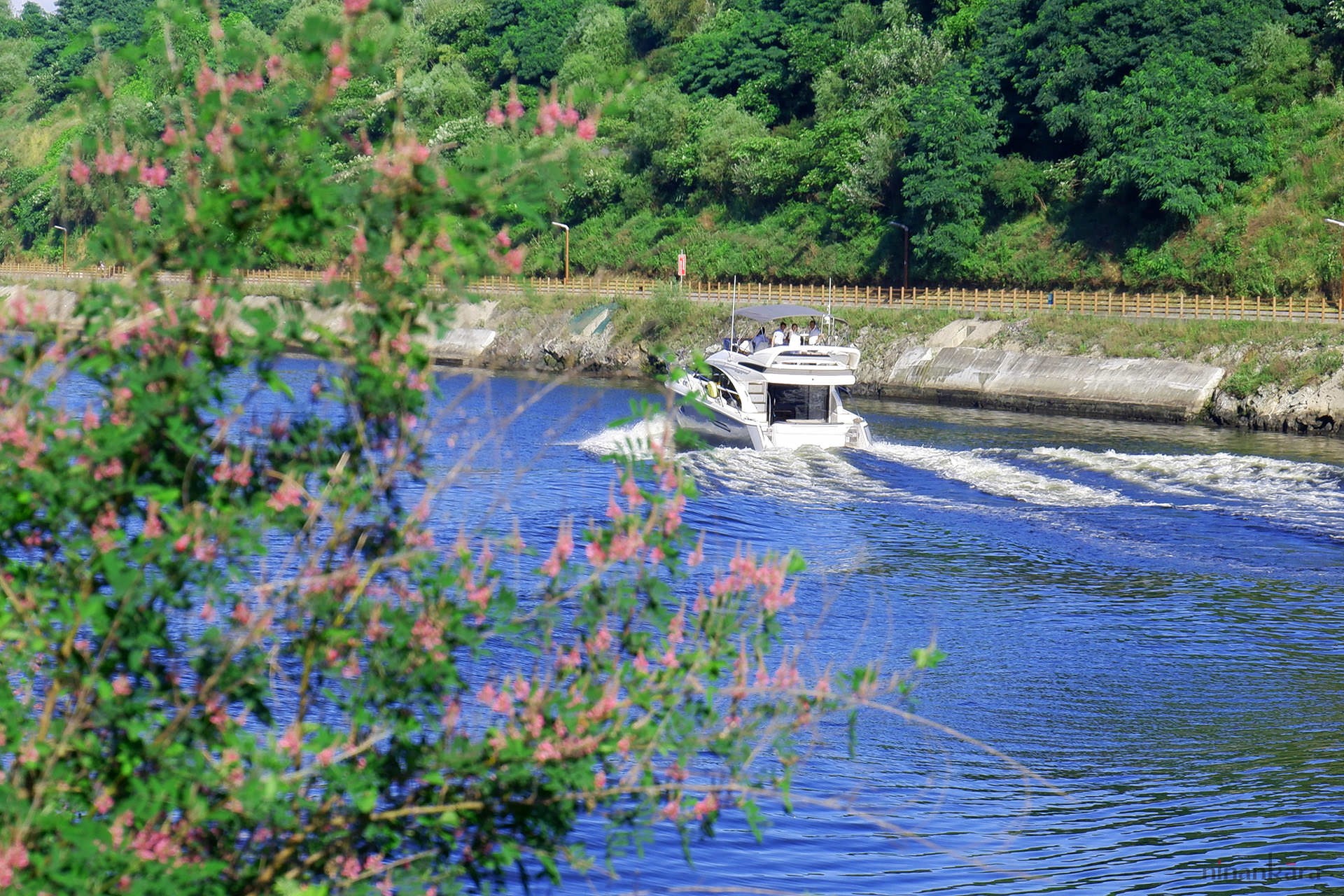
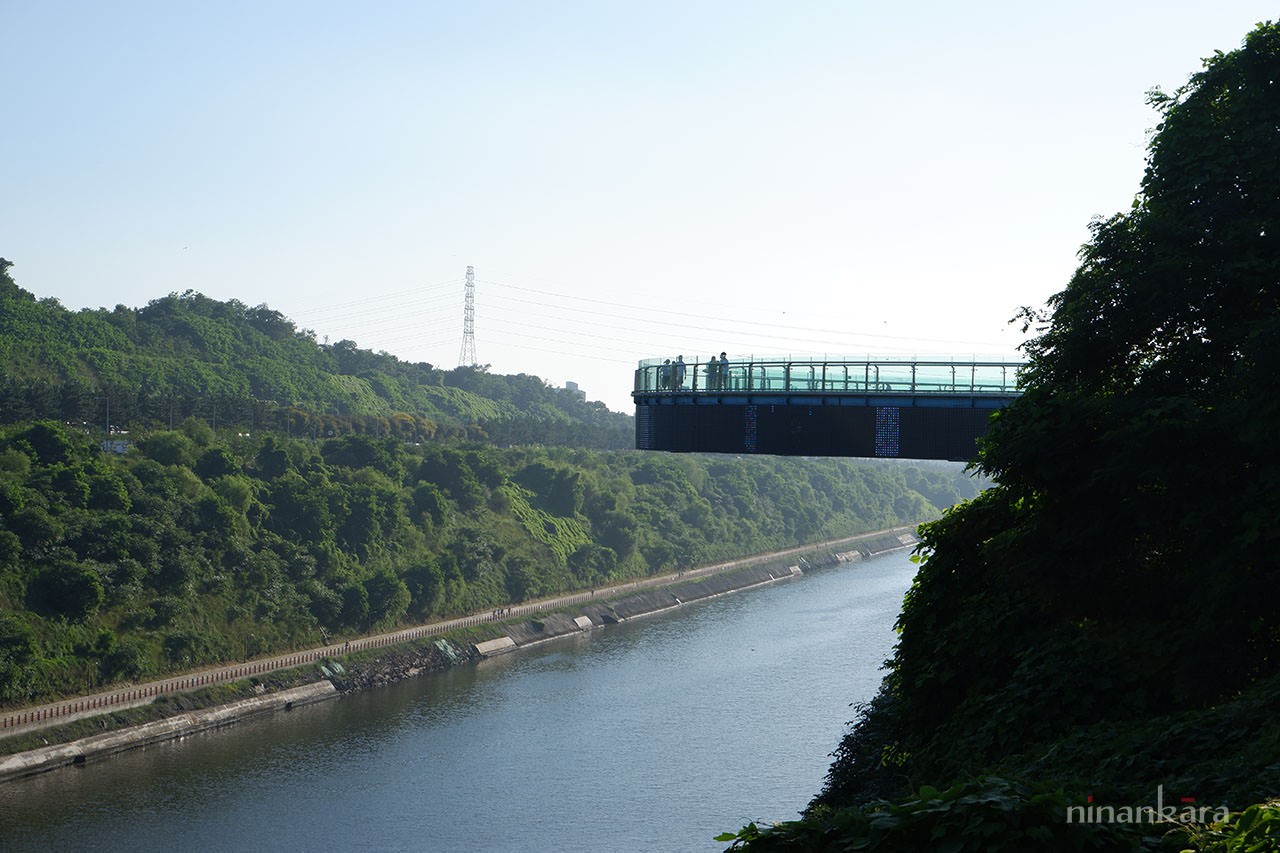
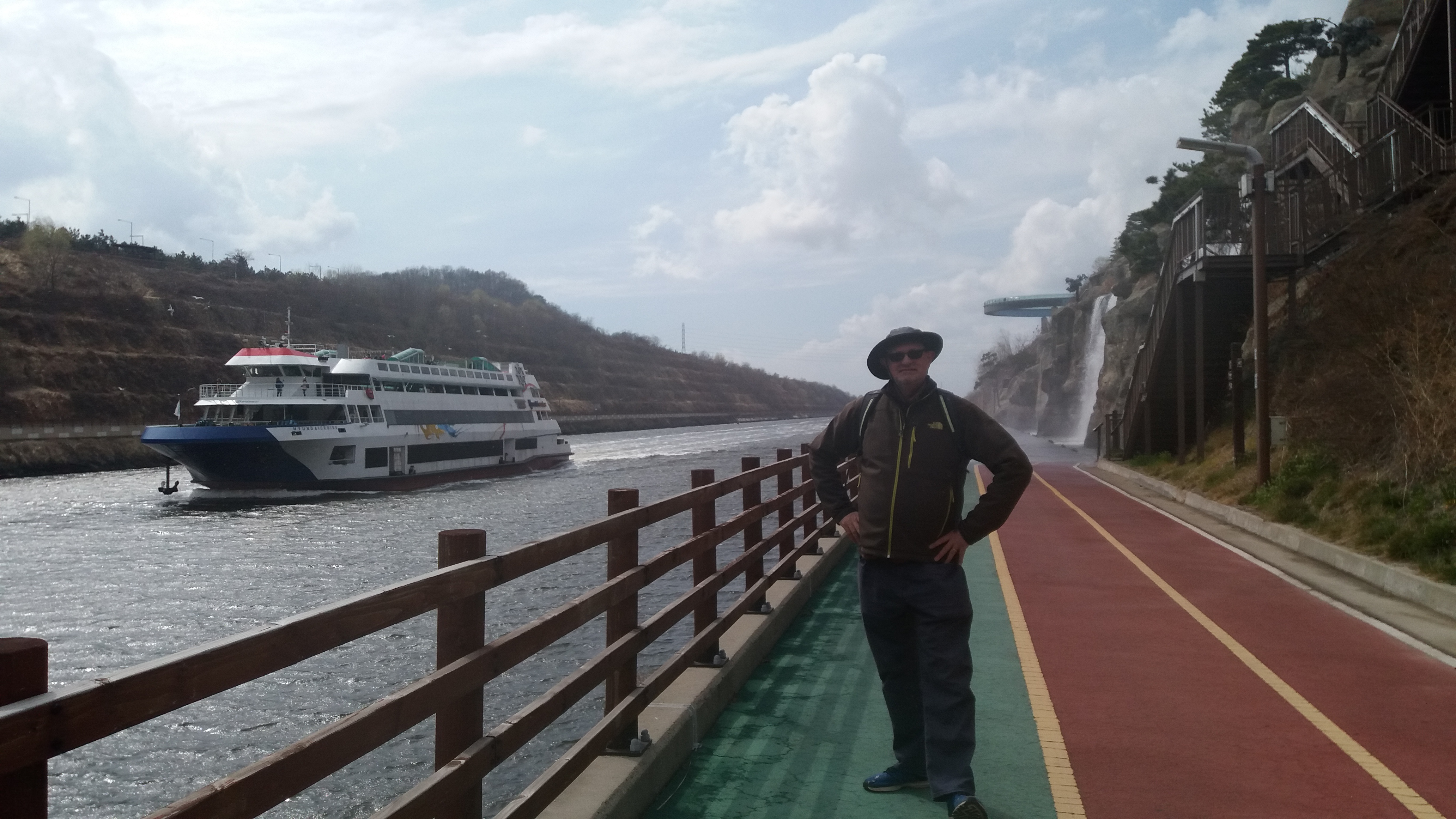
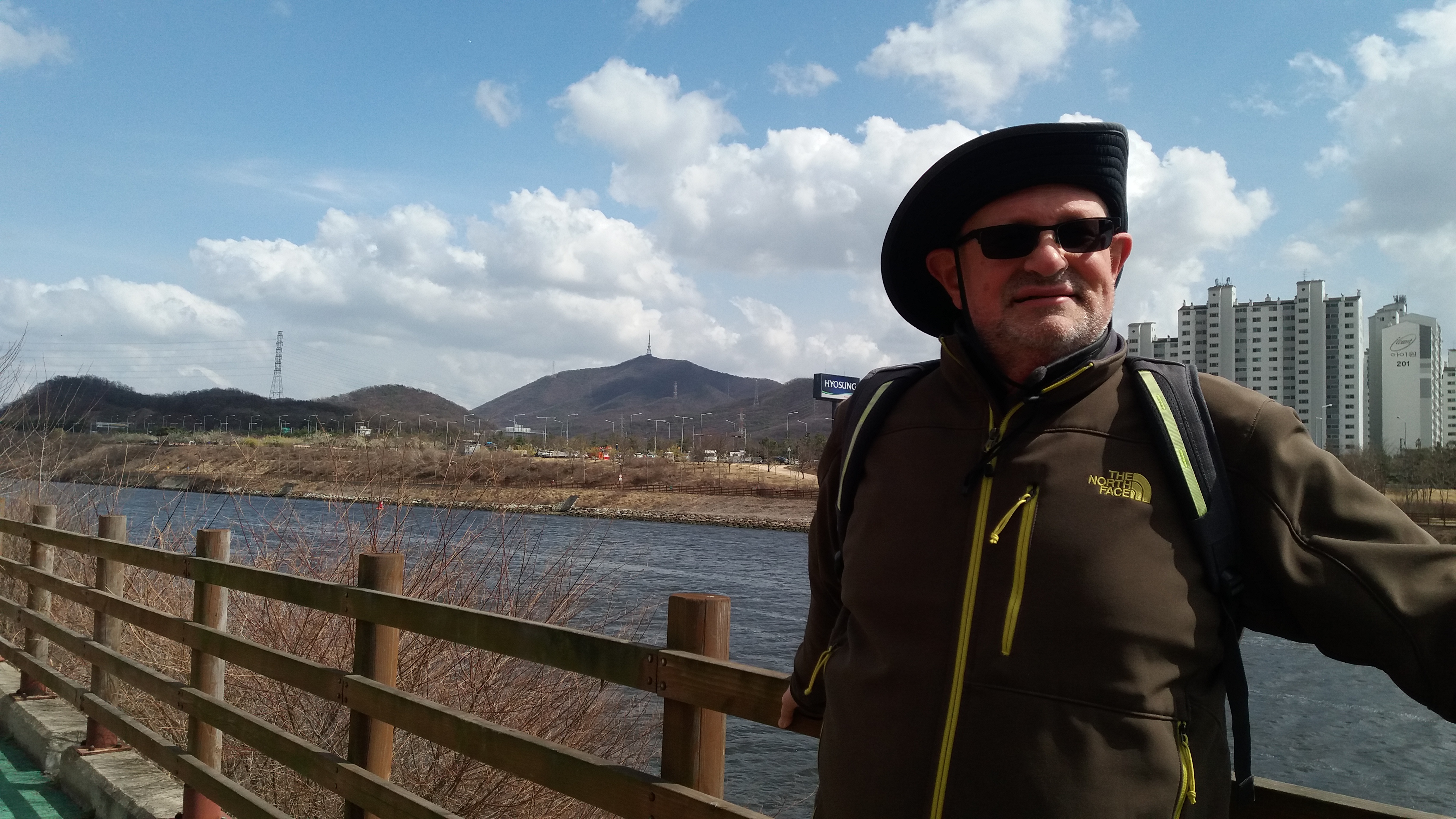
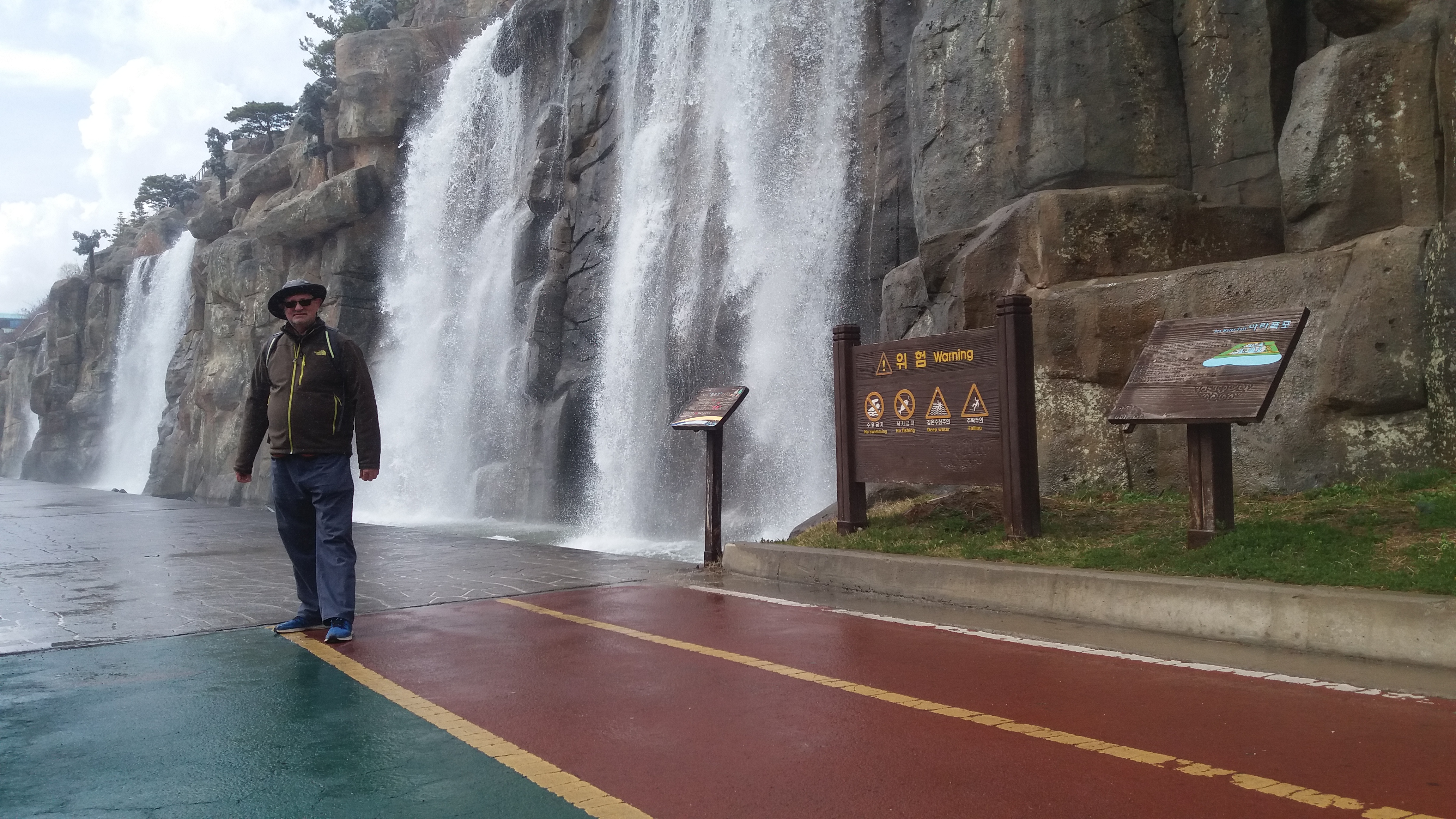
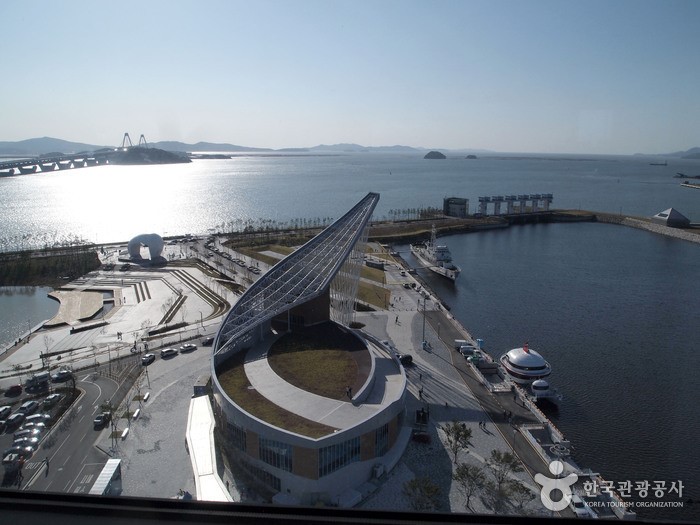
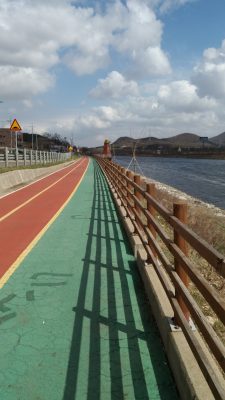
I recently moved to the Hyundai Hometown apartments in Janggi dong and have been enjoying daily walks along the ARA golden water canal.
Overall, I am very impressed. It is a great recreational asset for Gimpo County.
I do have a few suggestions for improvements.
Extend it
Extend it on the southern (eastern) end all the way to the Han River linking it to the Han River park system. It is only half a mile away from the river.
Extend it on the northern (western) end all the way to Gimpo Lake, also only a half a mile away. This may be more feasible, as the area is not as heavily built up as is the southern/eastern end.
Allow Fishing
Stock it with fish and allow fishing at designated areas where you can also sell fishing supplies and have restaurants available to grill freshly caught fish. Also stock with turtles and frogs. You can charge a small fee to cover the cost of maintaining game fish.
Have goats eat the weeds
Have goats eat the weeds throughout.
Extend hours of boating, add in kayaks and canoes
Extend the hours of the boat until midnight, also add in kayaks and canoes to the mix.
Have bike and scooter rentals available
Have places to rent bikes and scooters.
More shade trees
Plant more shade trees, particularly in the section next to the boat house which is pretty barren.
Extend the Restaurant district
Extend the restaurant district further north and east,
Install Vending Machines
Install vending machines for drinks throughout the park.
Free Umbrellas
Have free umbrellas throughout the park.
Link to Other Trails in Gimpo, and along the Han River, to Create a Cross Gimpo Trail System
While the first two items might be too expensive, the other items should be inexpensive and will help in maintaining the park. For the fishing, you can charge 10,000 won to use the fishing facilities. That should defray the extra costs.
Thanks
Jake Cosmos Aller
Retired U.S (Diplomat, State Department (Foreign Service Officer)
Updated information below on Yeongjaecheon stream based on a Kindle booklet about the stream.
Over the last decade, Korea has build hundreds of stream bed parks throughout Seoul and Korea. There are great places to take a walk, to observe wild life, to enjoy nature in the city. There is some information in English on these parks but not enough. For those readers in Korea, please feel free to send me info on other stream bed parks, so I can update this from time to time.
The most famous one is the one that started it all. Cheongjejon in down town Seoul.
Formerly polluted and covered with an elevated road since 2005, this stream has been cleaned up and made into an Art and nature walkway through the heart of Seoul.
Suggested Duration:1-2 hours
It is the prototype perhaps of stream restoration.
SEOUL, South Korea For half a century, a dark tunnel of crumbling concrete encased more than three miles of a placid stream bisecting this bustling city.
The waterway had been a centerpiece of Seoul since a king of the Choson Dynasty selected the new capital 600 years ago, enticed by the graceful meandering of the stream and its 23 tributaries. But in the industrial era after the Korean War, the stream, by then a rank open sewer, was entombed by pavement and forgotten beneath a lacework of elevated expressways as the city’s population swelled toward 10 million.
Today, after a $384 million recovery project, the stream, called Cheonggyecheon, is liberated from its dank sheath and burbles between reedy banks. Picnickers cool their bare feet in its filtered water, and carp swim in its tranquil pools.
The restoration of the Cheonggyecheon is part of an expanding environmental effort in cities around the world to “daylight” rivers and streams by peeling back pavement that was built to bolster commerce and serve automobile traffic decades ago.
Environmentalists point out other benefits. Open watercourses handle flooding rains better than buried sewers do, a big consideration as global warming leads to heavier downpours. The streams also tend to cool areas overheated by sun-baked asphalt and to nourish greenery that lures wildlife as well as pedestrians.
After its opening in 2005, hundreds of thousands of people have visited the new stream with friends and family.Credit…Jean Chung for The New York Times
Some political opponents have derided Seoul’s remade stream as a costly folly, given that nearly all of the water flowing between its banks on a typical day is pumped there artificially from the Han River through seven miles of pipe.
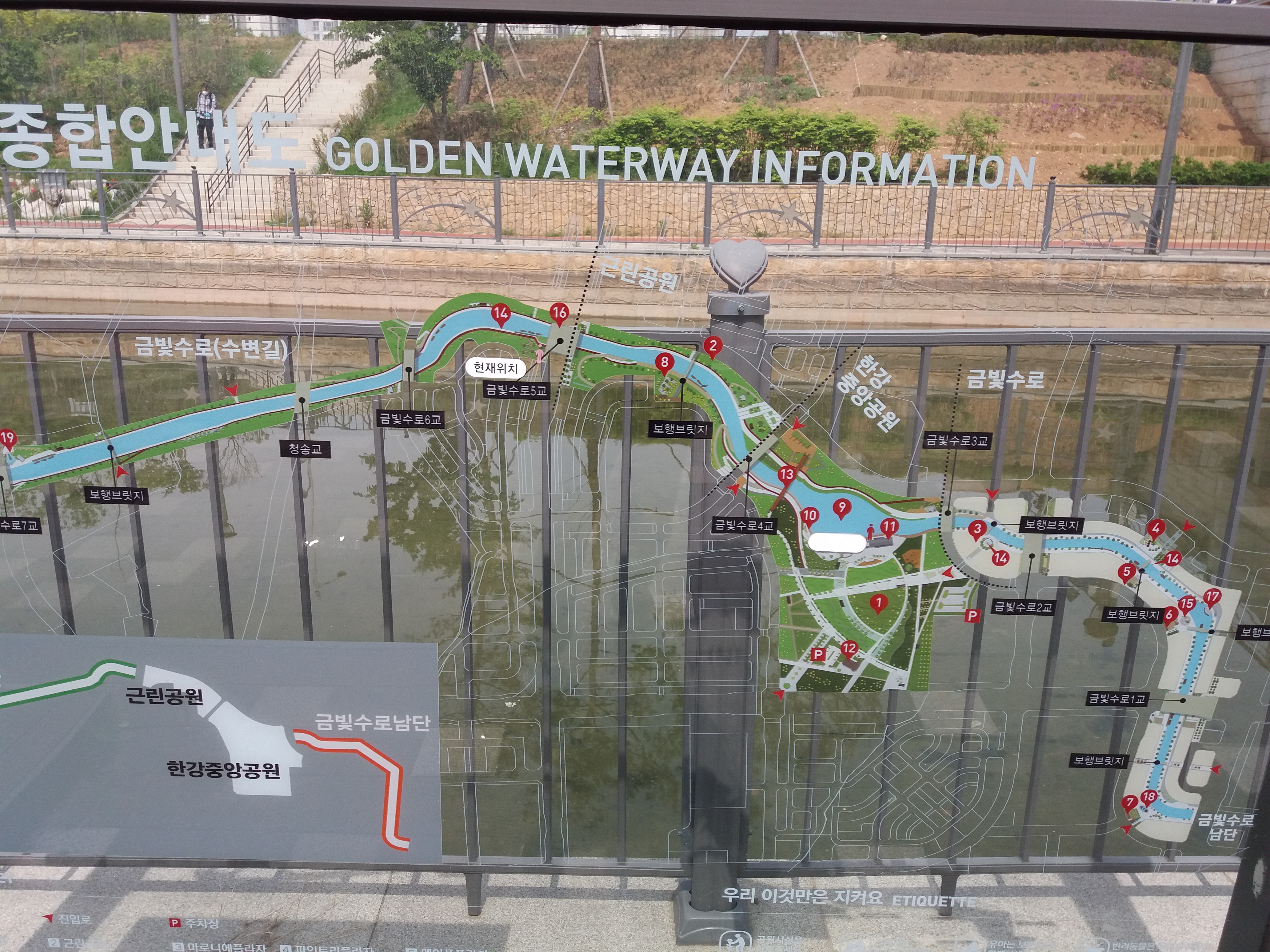
Golden Waterway In Gimpo
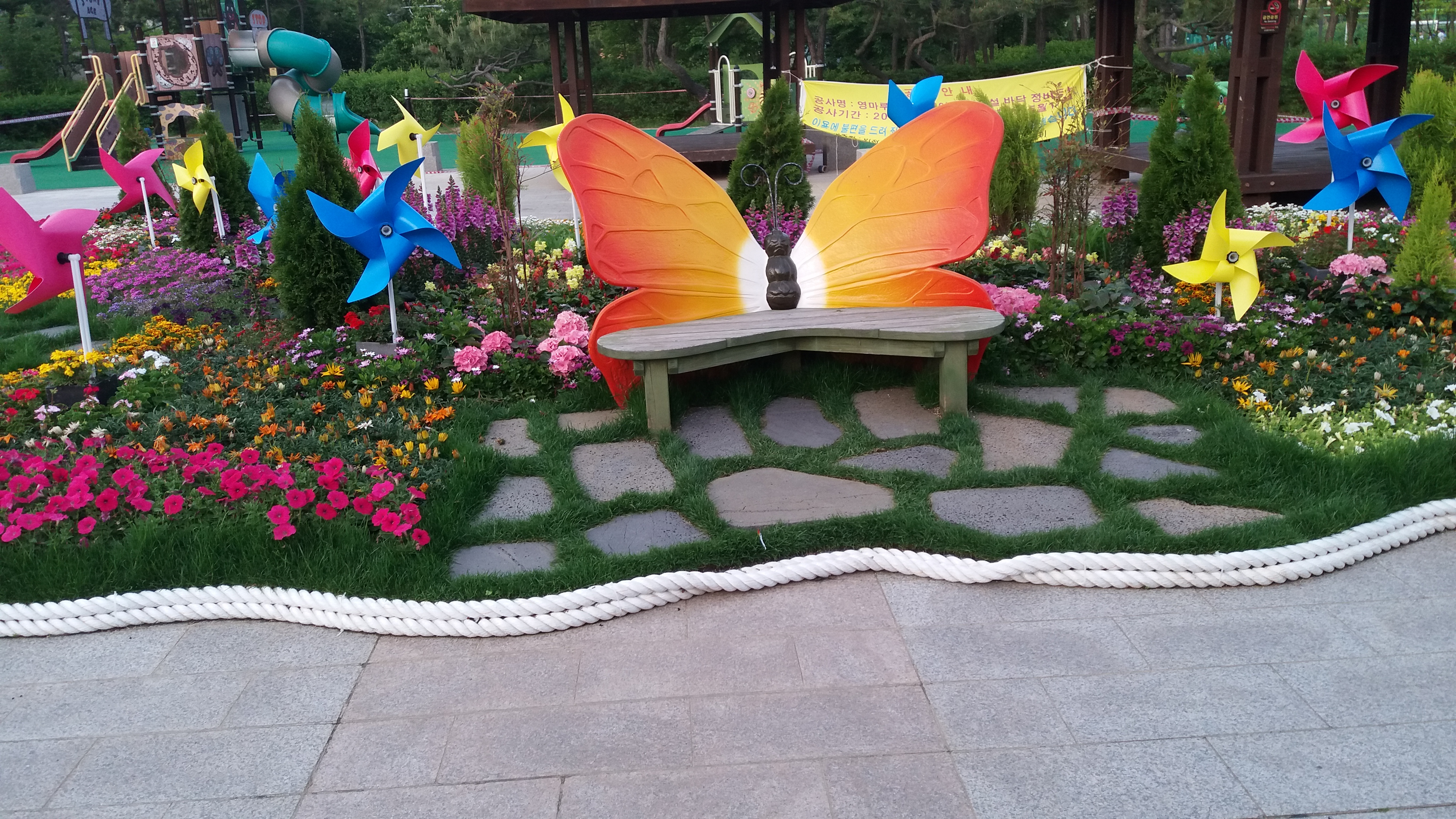
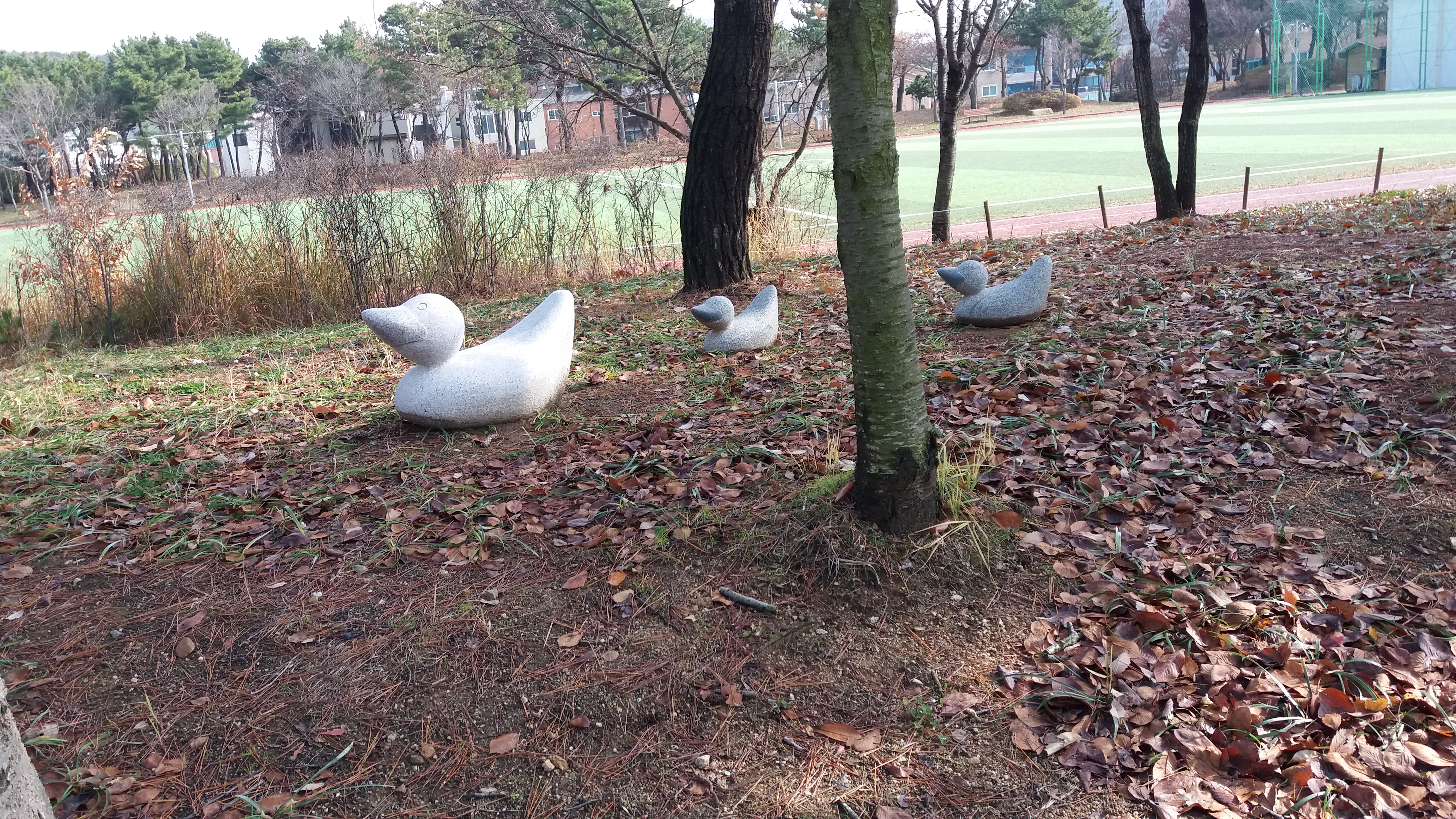
My favorite though is the Golden Waterway in Gimpo north of Kimpo airport, close to Janngi station on the new Gold Line. The Gyeonggi and Gimpo tourist promotors have dubbed this “the Venice of Korea”. Not quite, but still quite nice.
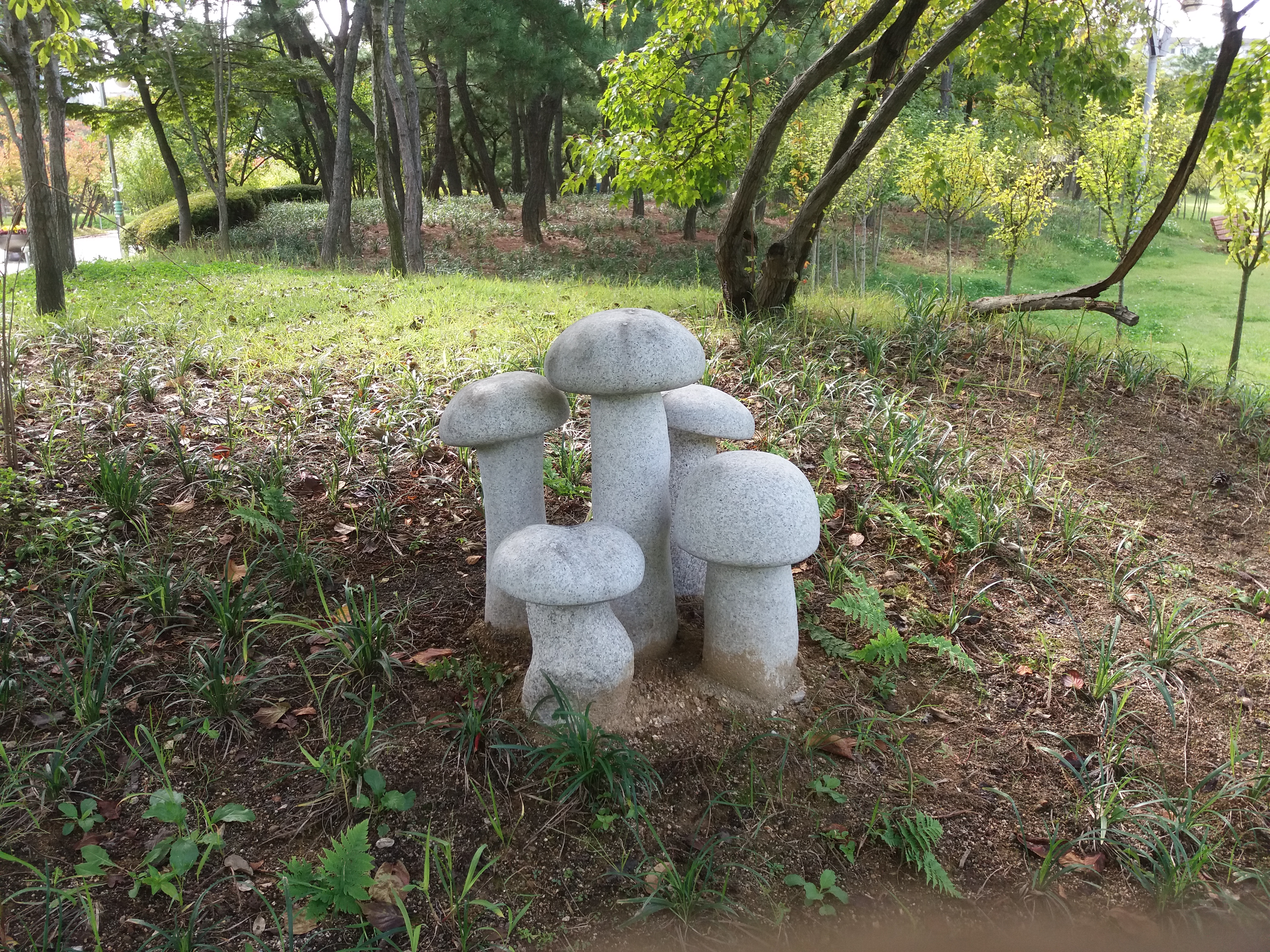
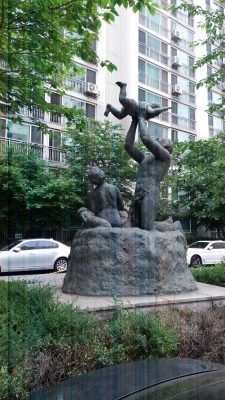
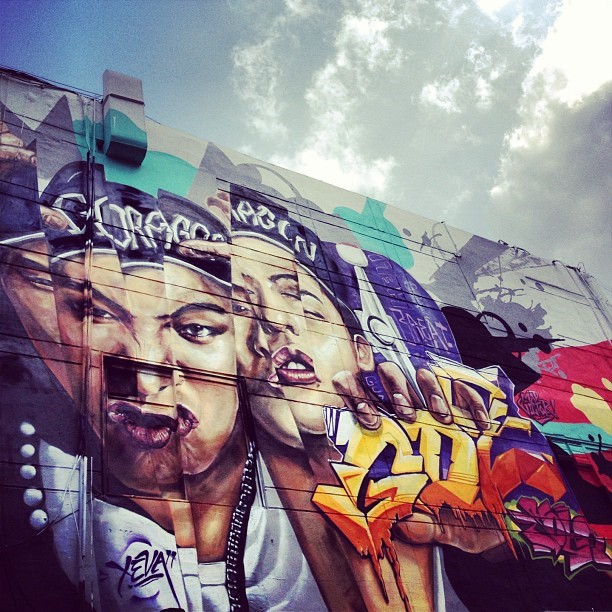
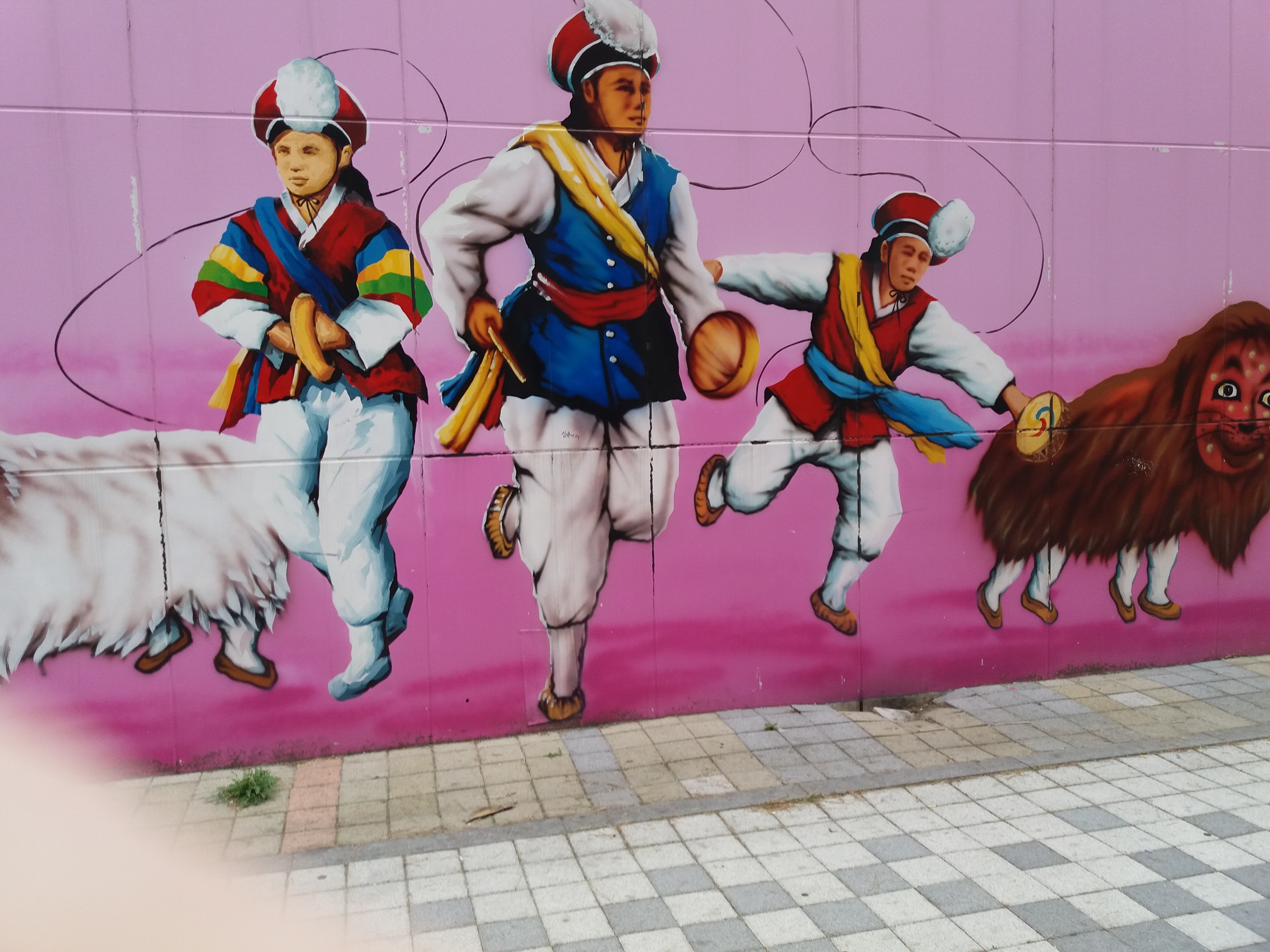
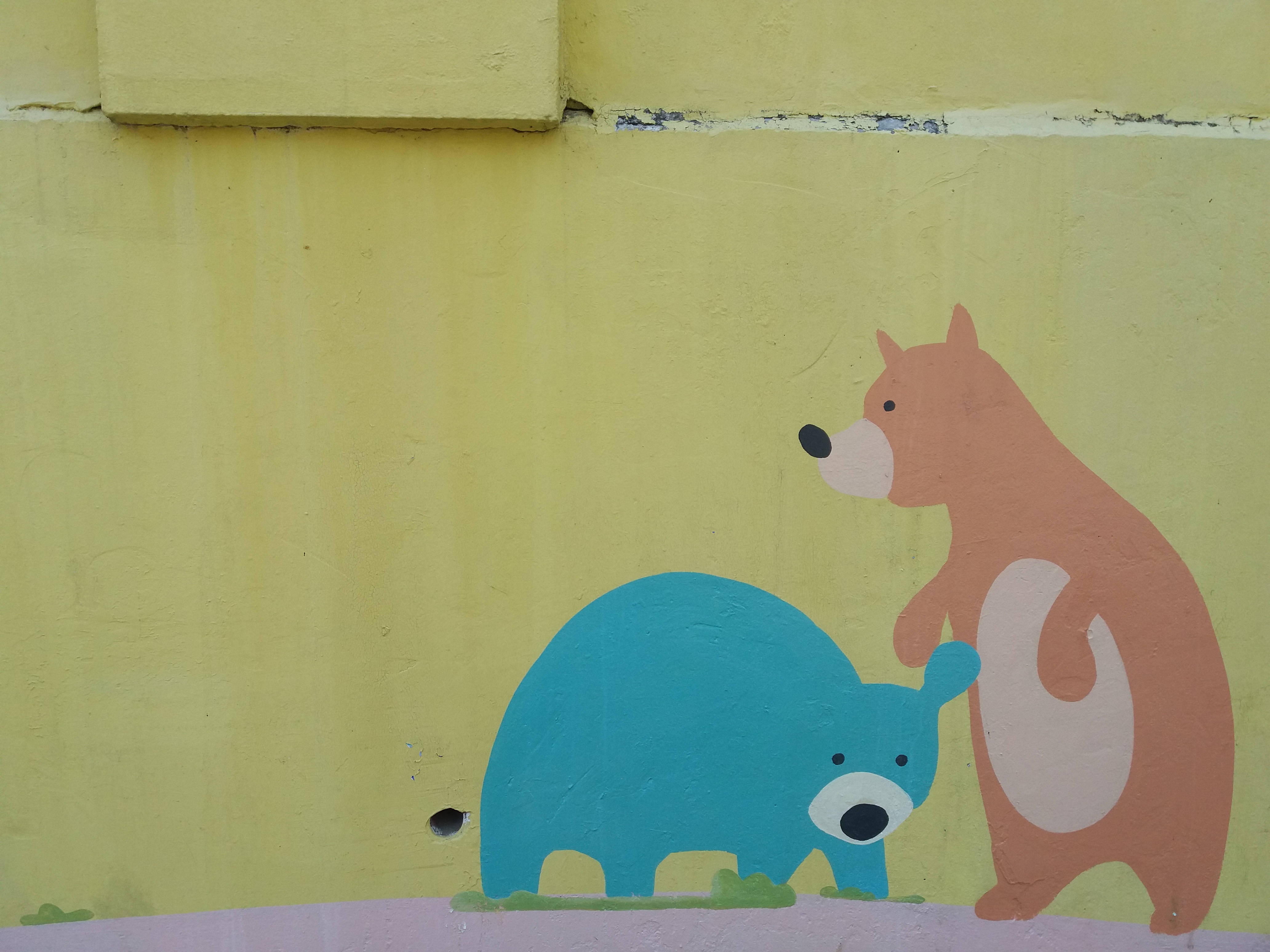
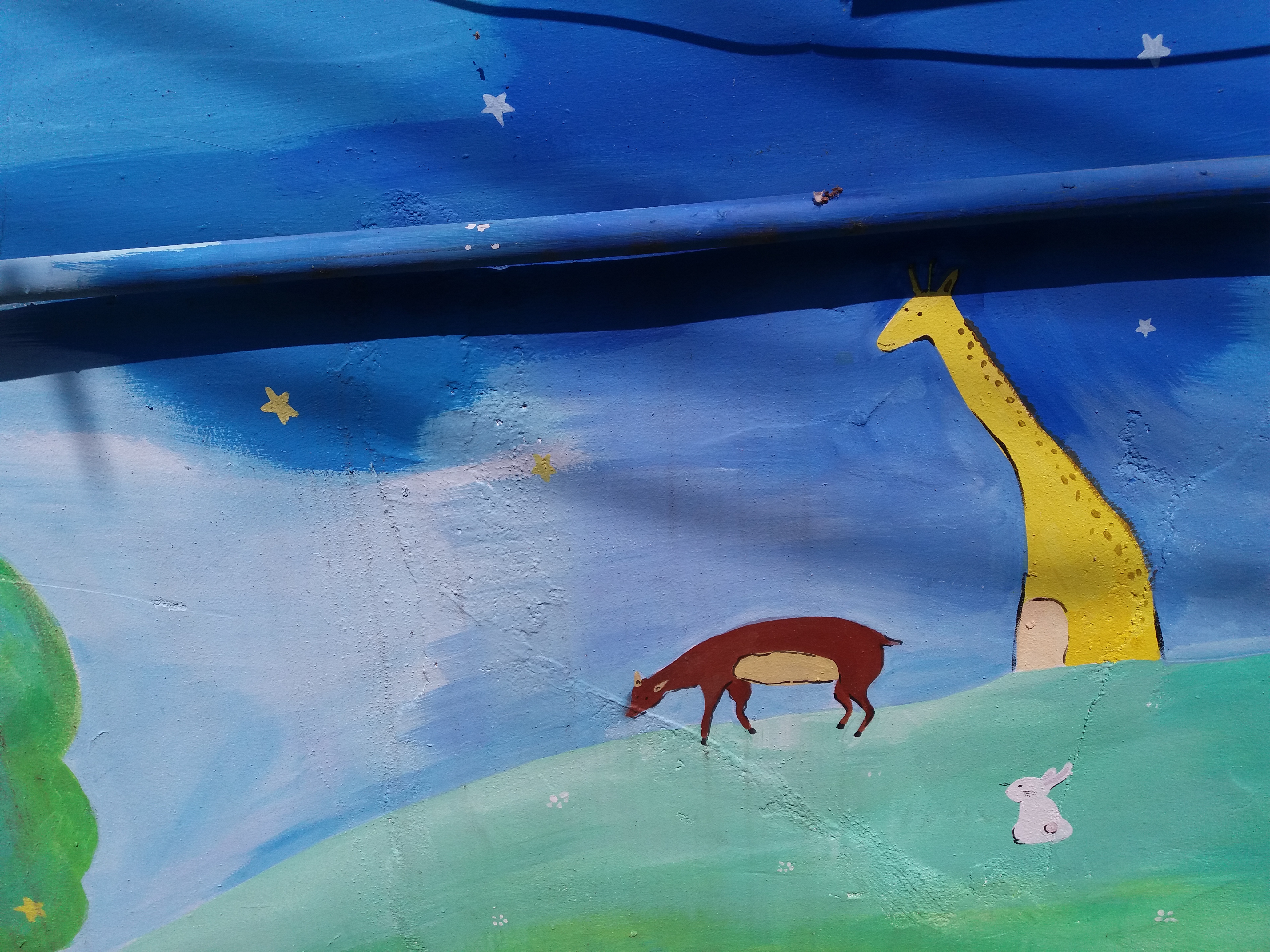
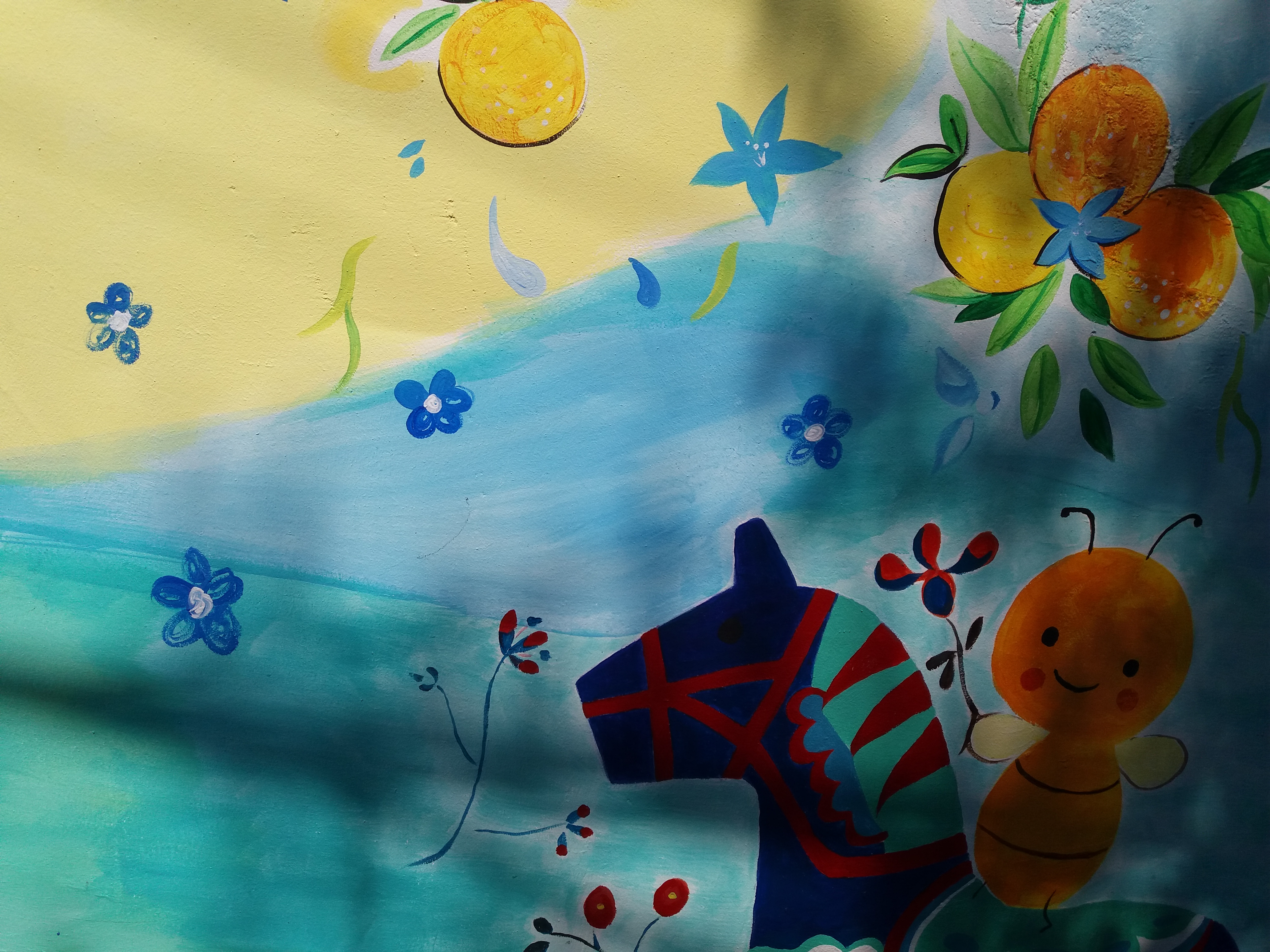
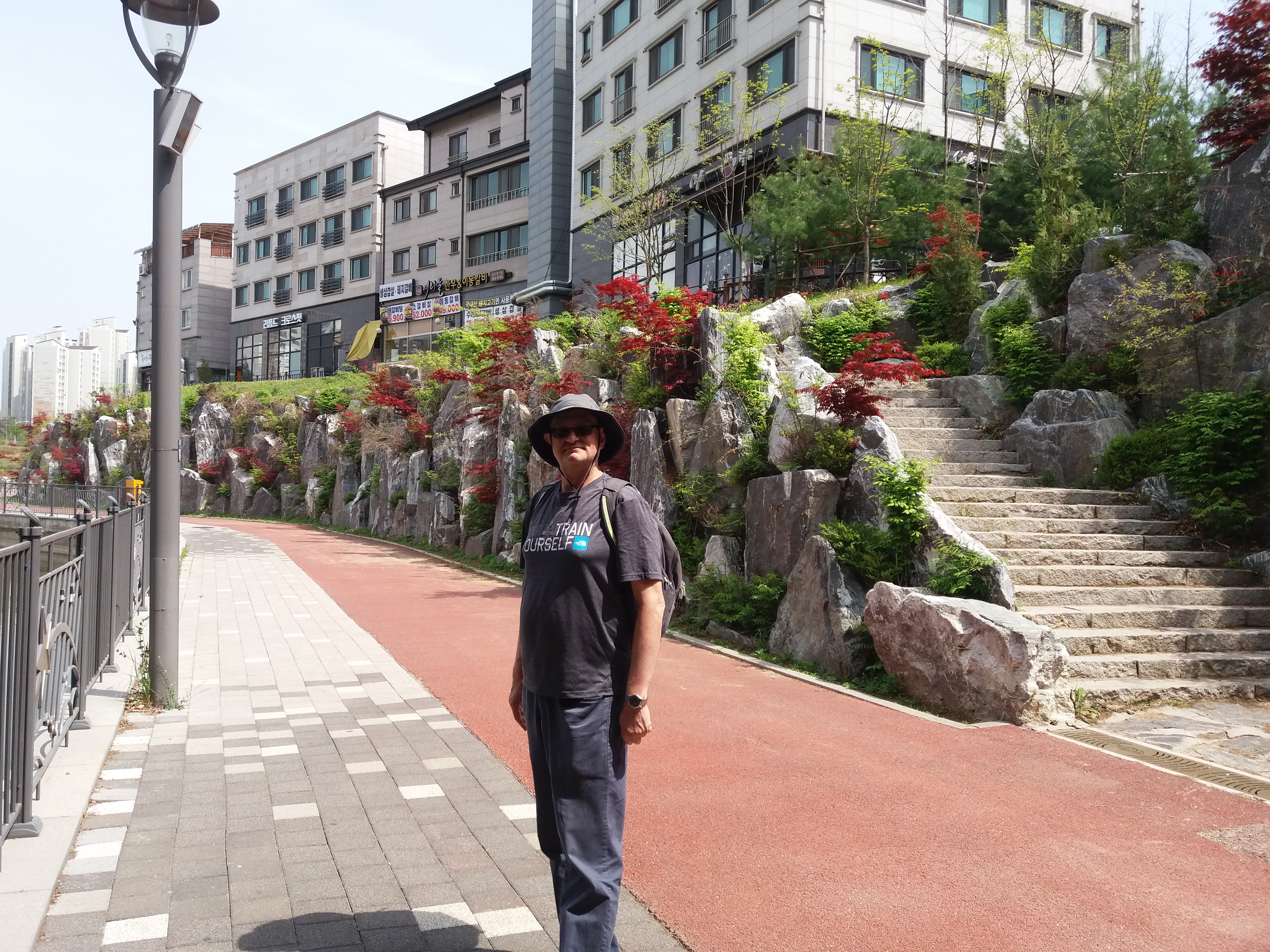
Iit is a 5.9 long walk way along a stream that used to be an open sewage dump back not too long ago. It is lined with trees, flowers, beaches, and quirky public art. The northern end is pretty boring though. The central and southern end is very nice.
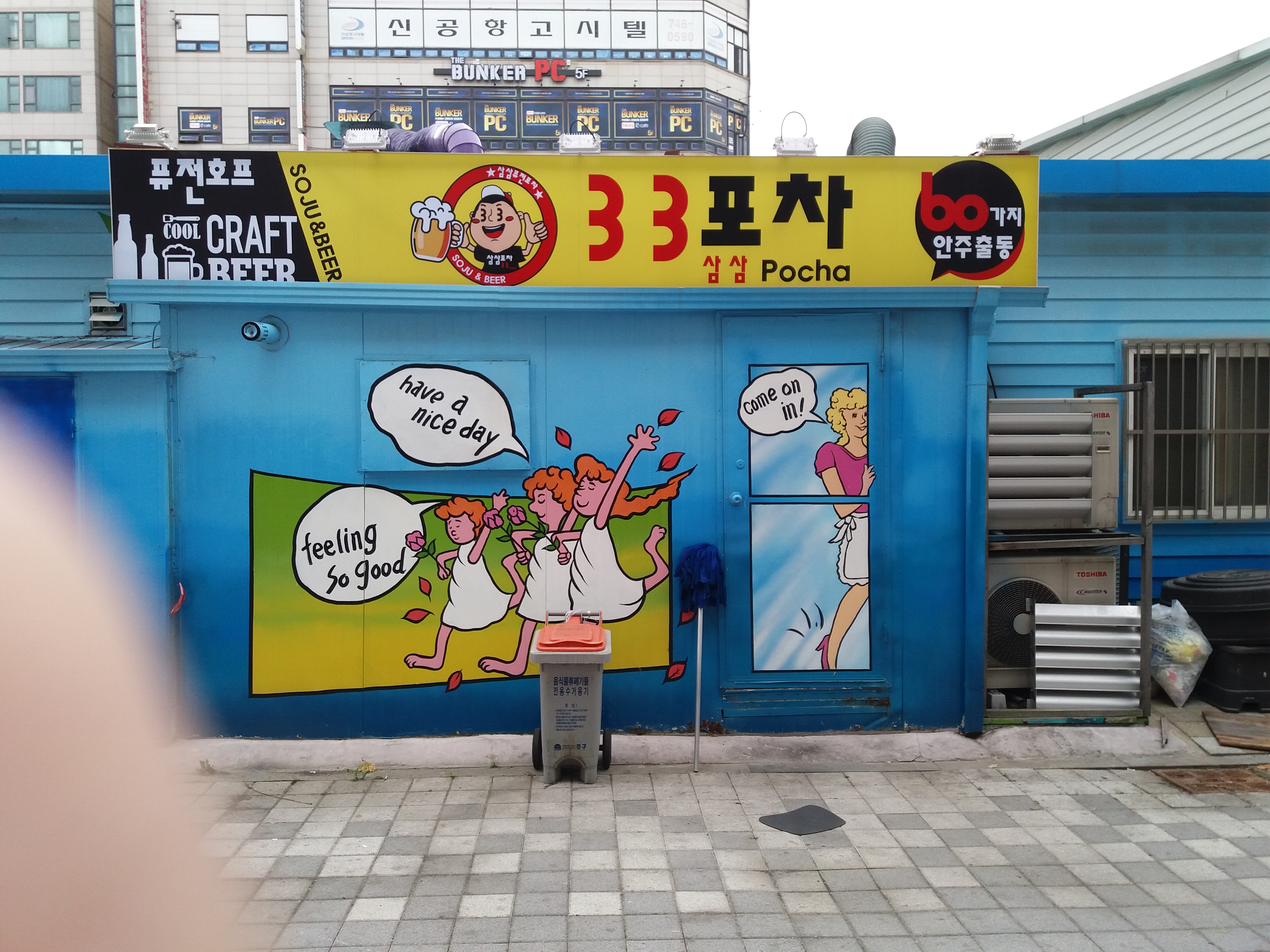
It is lined with restaurants and cafes, and has a boat house where you can rent boats to go out on the water. The cost is 20,000 per hour. a popular boat choice is the moon boat, which is a boat shaped like a crescent moon that is ideal for a couple to take out on the water. There are also family boats and paddle boats for individuals. There are also bikes for rent.
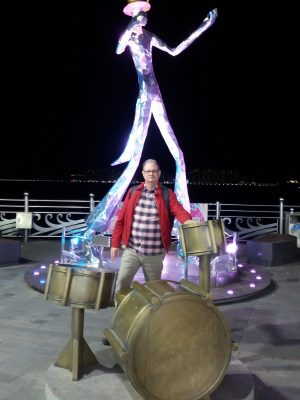
[4K] Beautiful evening walk along Laveniche March Avenue in Gimpo Korea Tour 김포 한강신도시 장기동 라베니체 저녁 걷기
안녕하세요 Seoul Walker 입니다.
오늘은 경기도 김포한강신도시에 위치한 라베니체 마치 에비뉴의 저녁을 함께 걸어봅시다. 깨끗해진 공기 만큼이나 아름다운 노을을 계속 볼 수 있기를 희망합니다.아침 7시, 당신을 위한 새로운 영상이 공개 됩니다.
당신의 새로운 아침, 그리고 오후 저녁 저의 영상을 보며 한결 여유로운 하루의 시작과 마무리가 되었으면 하는 바램입니다. 최대한 다채롭고 흥미로운 영상을 즐기실 수 있도록 노력하겠습니다.영상이 마음에 드셨다면 좋아요, 구독, 알림 설정 부탁드립니다.
그럼 오늘도 행복한 하루 되세요!
Hello all my friends, I’m Nathan from Seoul Walker.
Today, let’s walk together at Laveniche March Avenue in Hangang River New City, Gimpo, Gyeonggi-do.
Ravenice March Avenue is a themed canal street created by Venetian motifs on a total of 33,000 m² waterfront commercial areas in total of 26 parcels around the golden waterway, which is an artificial waterway in the Han River New City of Gimpo, Gyeonggi Province. It is a commercial facility.
Other Streams in Seoul
Jungnangcheon (Stream)
Jungnangcheon stream is the biggest contributor to the Hangang River. It starts at Yangju-si, Gyeonggi-do, joins with the Cheonggyecheon stream, and curves around Geumho-dong, Seongdong-gu until it finally flows under the Bridge of Gangyeonbuk-ro and into the Hangang river.
Hongjecheon (Stream)
Hongjecheon (Stream) begins at Bukhansan (Mountain) and runs for 11.1km through Jongno-gu and Mapo-gu. The stream is named after the Hongjewon, an official building where Chinese envoys were received. Once dried up and neglected, the stream was revived under Seoul’s ‘No Dry Streams’ project. Within two short years clean water was once again flowing through both Hongjecheon (Stream) and Cheonggyecheon (Stream).
Yangjaecheon Stream and Tancheon Stream are two tributaries of the Hangang River.
Yangjaecheon (Stream)
Update: there is a nice booklet available on Kindle called Gangnam Style by Kyungsuk Oh, all about Yongjaecheon stream. They recommend starting at Hangyegul station on the Orange line. At the end of the stream, it flows into the Tancheon stream and then into the Han River. When you get to the Tancheon stream, there is a nice cafe street called Cafe Street or Metasequia Street lined with eateries. if you keep going along the Tangcheon stream, you enter into the Han river park system, or you could follow the Tancheon stream bed park back towards the mountains.
Yangjaecheon (Stream) originates from Gwanaksan (Mountain) and Cheonggyesan (Mountain). The 15.6km stream flows across Gwacheon and into the Gangnam district in Seoul until it joins up with the Hangang (River). The stream flows across Dogok-dong and Gaepo-dong in the district of Gangnam, and is a popular spot with locals for its well-paved pedestrian and cycling paths. It is a pleasant patch of green in a concrete jungle. Many Seoulites visit the stream for relaxation and to spend a day being closer to nature.
Tancheon Stream is another one of the Hangang’s tributaries.
The stream is 35.6km long and starts in the city of Yongin in GyeongGi Province and ends at the Hangang River in Gangnam-gu, Seoul.
* Subway Line 3, Maebong Station, Exits 3 & 4 (5 mins on foot)
* Subway Line 3 & Bundang Line, Dogok Station, Exits 3 & 4 (5 mins on foot)
Hanyeoul Stream, is a tributary of the Hangang River.
The stream is 18.5km long and flows from Gwacheong in GyeongGi Province to the southern part of Seoul. The stream’s name is derived from the area in Seoul it flows through, Yangjae-dong.
Visit Songdo Central Park
Find a pleasant oasis along the water in this large, bustling city. Canoe, ride a bike, relax on the lawn or visit rabbits and deer.
Stroll along the peaceful promenade of Songdo Central Park and view sculptures and animals. Here pretty grassy spaces border a manmade waterway while skyscrapers tower nearby. Completed in 2009, the stylish city park has become a landmark of the large city of Incheon in South Korea’s northwestern region.
In 2001, Incheon began creating Songdo International Business District on mostly reclaimed land. The multi-functional space offers residents a pleasant and sustainable place for home, work, school and leisure. The 101-acre (41-hectare) park is an integral part of the overall design. Join residents and other visitors using this vast green space and exploring the cultural institutions surrounding the park.
One highlight of the park is the seawater canal symbolizing the rivers of Korea flowing to the West Sea. Cruise along the canal under your own power in a canoe with sun umbrellas or on a comfortable water-taxi or small cruise boat.
Gaze at and visit some of the futuristic buildings surrounding the park. Tri-Bowl, with the appearance of a bowl resting on water, has cultural event spaces. The Songdo G-Tower’s diagonal lines and atriums provide a stunning setting for the offices of IFEZ (Incheon Free Economic Zone) Authority. Visit the building’s 29th-floor Sky Garden for views across the city.
Most of the streams passing through Suwon originate on Gwanggyosan or other nearby peaks. Since Suwon is bounded to the east by other hills, the streams, chiefly the Suwoncheon (and one notable tributary being the Jungbocheon), flow southwards through the city, eventually emptying into the Yellow Sea at Asan Bay. The entirety of Suwon is drained in this manner
As some of you know, I have been living in Yeongjongdo, Incheon since I retired from the U.S. Foreign Service in 2016. Incheon reminds me of Oakland and the East Bay. It is next to a more famous city but has its own quirky charms and is more of a blue collar working class city than its more famous neighbor, Seoul.
Incheon does indeed have its charms. One of the more colorful neighborhoods is Chinatown conveniently located across the street from the terminus of the Seoul-Incheon subway line number one. (i.e. about an hour from downtown Seoul).
Incheon has had a large Chinese presence since 1880, when it was the first open port city in Korea’s history. Incheon’s Chinatown at one time was a run-down section of the city, but in recent decades has been reborn as a colorful vibrant ethnic neighborhood filled with great, inexpensive Chinese restaurants and cultural attractions.
We recently had an opportunity to re-visit it and came across impressed with the progress made in restoring the area, which is now a wonderful place to visit.
Walmido
A visit to Incheon would not be complete without a visit to Walmido which is located near to Chinatown. One tip though is eat at the restaurants that are a few blocks from Walmido itself – the food is much better and much cheaper than Walmido which is a bit on the expensive side.
Jjajangmeyon Museum
Among the highlights of our visit was our visit to the Jjajangmyeon museum.
Jjajangmeyon is one of the staples of Korean cuisine. Chinese immigrants in Incheon invented it in the 1880’s and it soon spread out across Korea and Northeastern China, and now the world. Jjajangmeyeon consists of noodles in black bean sauce and is delicious and still quite a bargain. When I first came to Korea in 1979, it was 500 won per serving, now it is about 8,000 to 9,000 won per serving (about 8 US$). Apparently, there are five to six different Jjajangmyeon dishes available in Korea.
We had some of the best Jjajangmyeon down the street from the museum, which sadly, does not sell it at the museum. The museum was quirky and quite informative but lacked much English language signage.
chinatown 1
Jajangmyeon Museum
43 China town-ro, Bukseong-dong 3(sam)-ga, Jung-gu, Incheon, South Korea
+82 32-765-0571
Jayu Park
We then walked through Chinatown and up the hill to Jayu (Freedom) park where we saw the famous statue of McArthur at the top of the hill which has killer views of Incheon Harbor. We also saw the US Korean monument erected in 1982 to celebrate 100 years of official US Korea relations.
Jayu Park, or park of Freedom, has held its name ever since October 3, 1957, when a statue of General McArthur, who led the Incheon Amphibious Landing Operation during the Korean War, was erected at the summit of Mt. Eungbongsan. The park offers spectacular views of downtown Incheon and its surrounding mountains, the port, and the sea.
Jayu Park, or park of Freedom, has held its name ever since October 3, 1957, when a statue of General McArthur, who led the Incheon Amphibious Landing Operation during the Korean War, was erected at the summit of Mt. Eungbongsan. The park offers spectacular views of downtown Incheon and its surrounding mountains, the port, and the sea.
Incheon Chinatown, Incheon – Jayu Park. Photo by Eduardo M. C. Freedom Park is easy to get to from both Seoul and Incheon. The park can be accessed through Incheon Station on the No. 1 Line (dark blue line) through Exit No. 1. Outside the station, and immediately visible is a large stone gate with a decidedly Chinese design.
From this park, you can view some parts of downtown, harbor facilities, freight boats of various sizes entering and leaving Incheon Port, and the whole ocean. Jayu Park’s hilltop location gives it a vantage point for enjoying Incheon’s surrounding ocean scenery, Wolmido is also visible from the highest spot. It is the home of the Seokjeong Pavilion …
Jayu Park Hotels Flights to Incheon Things to do in Incheon Car Rentals in Jayu Park Incheon Vacation Packages. Jayu Park. Packages; Stays; Flights; Jayu Park. Choose one or more items to build your trip: Choose one or more items to build your trip: Stay added. Flight added. Add a car. 1 room, 2 travelers. Travelers.
Incheon’s Freedom Park (also called Jayu Park) celebrates the end of the war. In a prominent place, you’ll find a statue of General Douglas MacArthur, who remains a hero in South Korea for leading the amphibious attack that liberated Incheon. This area has always been a park—during the Japanese occupation, it also held a shrine—so there …
Jayu Park is an urban park located in Incheon, South Korea. It is seen as the city’s marquee public park. Known as Freedom Park in English, it is located on a bluff overlooking the city’s harbor. Prominently placed is a statue of the Korean War officer Douglas MacArthur, whose amphibious assault liberated the city. The park also houses several other statues, a small zoo, and a memorial to …
Jayu Park was interesting to me. I found it to be a celebration of American-Korean relations. There is the centennial monument of Korea-US relations, as well as a statue commemorating the successful landing of the UN Forces at Incheon during the Korean War led by famed five-star U.S General Douglas MacArthur.
Jayu (Freedom) Park is a park near the city’s port. The statue of General Douglas MacArthur, as well as a memorial to the centennial anniversary of U.S. and Korean relations, is located there. Chinatown is Korea’s only official Chinatown, located across from Incheon Station near Jayu Park.
Fairy Tale Village
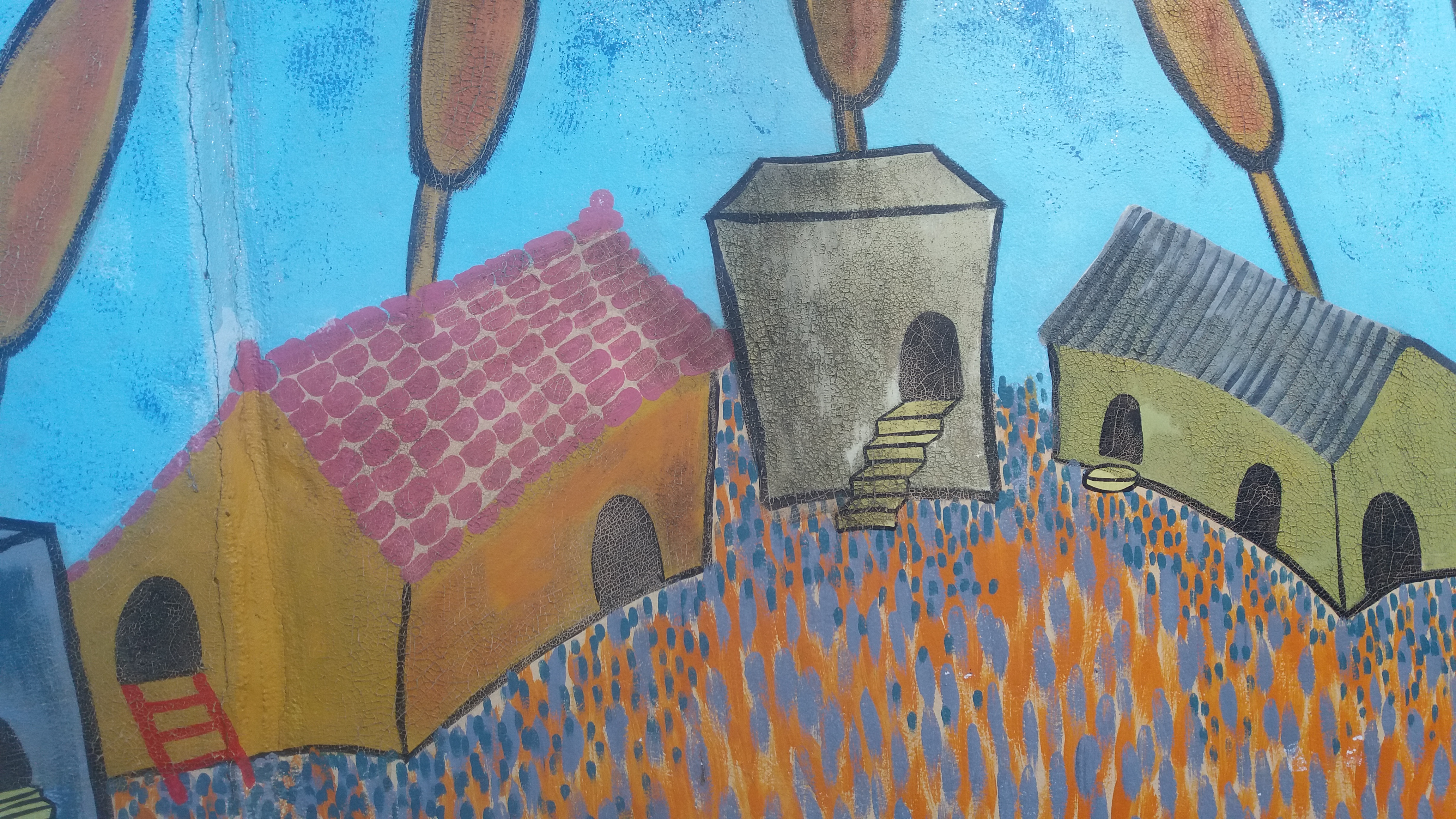
We walked back down through Fairyland village where all the houses are painted as if in various fairylands like wonderland and Oz. A very colorful street indeed.
The Fairy TaleVillage of Incheon was a project of renovation of Incheon after the area of this village was left stagnated due to people moving out. The renovation of this area of Incheon consisted basically in the painting and decoration of the area with fairy-tale themed things.
Songwoldong Fairy TaleVillage is a few blocks of streets decorated with murals depicting some popular fairy tale characters with a good portion of them violating copyrights. With cars parked along the streets, a good portion of the murals are blocked. There are a handful of okay photo spots but the entire area just looks tacky.
인천광역시 중구 동화마을길 38 (송월동3가) 일대 | 38, Donghwamaeul-gil, Jung-gu, Incheon. From Incheon Station exit 1, go through Chinatown entrance gate and walk straight, turn left at the end of the road, walk straight about 300m to reach the Fairy TaleVillage. The colourful village was inspired by classic fairy tales from …
yeon. That should give you an idea of what you’ll find there. Though authentic Korean-Chinese food is available, authentic Chinese food is more difficult to come by.
Incheon’s Chinatown: A Brief History
When Chinese immigrants crossed the ocean for work, this district was founded in 1883, around the same time as the Incheon Port opened. Incheon was designated as a Ching Dynasty extraterritoriality, and the ‘Incheon Chinese Society’ was established soon after. There were over 1000 Chinese residents in the area by 1900.
More than 50,000 overseas Chinese and second and third generations of early Chinese settlers now live in the region. The city, however, fell into disrepair for a time and had a high level of poverty before the government saw an opportunity to develop the country’s only official “Chinatown,” which is now a bustling area and one of Incheon’s most popular tourist destinations. Incheon’s Chinatown is on everyone’s top ten list of things to do in Incheon, and for a good reason: it’s a lot of fun.
What to See and Enjoy in Incheon’s Chinatown
When approaching Chinatown from the subway station, the first thing you’ll notice is the lovely gold and red Pai fang, or traditional Chinese gateway. Junghwamun, Seolinmun, Inhwamun, and Hanjungmun are the names of four Paifangs in Chinatown. When you walk the streets and circle in and out, you’ll be able to see them all.
The Massive Entry Gate to Peru
chinatown 2 jpg Incheon-chinatown-1.j
Chinatown can be located directly across the subway station and welcomes all tourists. Chinese people used to stand at the gate and give prayers in the late 1800s, and locals claimed the gate kept ghosts at bay.
Wiseondang is the only Chinese-style temple/shrine left in Korea. It was built in 1893 and featured a vibrant mural on its yellow exterior walls. Within the temple, remember to be respectful of the inner shrine area and refrain from photographing it.
Samgukji Mural Street
This 150-meter-long street is lined with murals depicting the Three Kingdoms tale. It’s a look at the Chinese fables you’ve probably heard about, depicting the heroes of the time. Murals and street art can be found all over the city, but this is one of the most common.
A couple of blocks later when the street dips, go left up the hill towards Chemulpo Club, a handsome house built in 1901 where Incheon’s first foreigners plotted their exploits.
Today’s (optional) prompt is to write a concrete poem. Like acrostic poems, concrete poems are a favorite for grade-school writing assignments, so this may not be your first time at the concrete-poem rodeo. In brief, a concrete poem is one in which the lines are shaped in a way that mimics the topic of the poem. For example, May Swenson’s poem “Women” mimics curves, reinforcing the poem’s references to motion, rocking horses, and even the shape of a woman’s body. George Starbuck’s “Sonnet in the Shape of a Potted Christmas Tree” is – you guessed it – a sonnet in the shape of a potted Christmas tree. Your concrete poem could be complexly-shaped, but relatively simple strategies can also be “concrete” — like a poem involving a staircase where the length of the lines grows or shrinks over time, like an ascending (or descending) set of stairs.
Dew Drop Inn
Three Poems
About Filth and Slime
Slime
Slime
Slime
As far as I can see
Is that all that can ever be.
Mountains of foul, smelling dishes
Being eaten by drunk fishes.
Fast, faster, faster
Comes the slime
I wish that
I was eating a lime
Never want to touch this slime.
Morning Thoughts
One morning
While I sat drinking my coffee
And bemoaning my fate.
My brain decided to fly away to the land of bliss
As I sat drinking my coffee in the dawning light
Writing away my memoirs and dreams of love.
I noticed that my brain’s tissue
Had decided to take a vacation
And was crawling down my nose
And out of my ears.
Like some sort of cosmic mucus.
Down my slime encrusted back
And out the windows of my soul.
I was of course
Disturbed, I was perturbed,
And until I realized.
That I had no right.
To tell my mind what to do.
So I sat down.
And played a game of checkers
with my mind
Till the entreaty of time
passed me by.
Nothing but a piece of flotsam
On the winds of the universe
The walls fell,
The sky melted apart.
I woke up and sat down
And had an orgy
with my mind
Slime Patrol to the Dishroom
dishwasher
Note: I washed dishes in college.
Slime Patrol to the dish room, please
Rant the loudspeaker with a demented static,
Hell no, we chanted in vain.
No, where to go
Nowhere to escape
The ever-present smell
Of putrid rotting
sweaty effervescent slime.
That’s right
Slime, slime, slime, slime
Slime
Slime
Slime
Slime
Slime
Slime
Is that all that there is?
NOTHING
BUT
SLIME
Ruled by slime Kings who run Slime Machines?
Hell No, we won’t go we chanted in vain
And we hook ourselves up
And entered the machine
SLIME
PATROL
TO
THE
DISHROOM
Must get high
To deal with the slime.
The god damned slime.
Leftovers
From the plates
Of the elite college kids
Who ate in the cafeteria
Never noticing the workers
Laboring behind in the kitchen.
For them we are nothing
For we are all nothing but slime molds
In the gross wheels of America’s grease pit.
And they are the future masters
Of the universe.
And we are their future slaves.
Working in the slime pits
To feed them with slime.
Slime
Slime
Slime
Slime
Hope they die
From ingesting the pink slime
In their corrupted food.
Some day
The slime patrol
Will rise up.
And slaughter them
While they eat our delicious slime
Until that day
We will do our duty
In the forgotten corners
Of the universe.
Nothing
But
Slime
prompt: write about a hard job you have had.
PSH prompt
Writing com
Remix of the worst jobs in the world as Cherita’s Poems
.
-toll-booths-feature-imag
The worst job in the world
Must be toll booth attendants
Just boring as hell
They sit there all-day
Bored out of their minds
Waiting for the shift to end.
The worst job in the world
Must be toll booth attendants
Just boring as hell
Waiting for the shift to end.
2
bored train operator
Subway train operators
Subway train operators
Also, have a boring job
Nothing to do
Just waiting for the shift
To end.
3
visa line
Visa officers
Also, have a hard job
Saying no to thousands
Who lines up
Lying to the Visa officers
Who has the power of God.
After today, we’ll be three poems from finishing this challenge. Woot!
For today’s prompt, write a remix poem. Take one of your poems (preferably from this month) and remix it. Make free verse a traditional form or vice versa.
Red Wine Local Gem
bottle-red-wine-grape-corks
Red wine
Evening delight
Drinking it at sunset.
Wine makes the evening just fine.
If I drink too much wine.
Never again! do I cry out the next morning,
Eventually, the hangover is no longer mine.
All Poetry
workers
The Feeling of Hard Work
In my school days
when I was a younger man
I worked at odd jobs
To make my spending money.
I did everything
From lawn and yard work
working in the city parks,
Picking fruit.
.
Working at Taco Bell
Oscars
the University Pub,
To house painting
Door to door sales
Political canvassing.
To dish-washing
To work as a bouncer
And as a fry cook.
Juvenile probation officer
world trade intern
conference organizer
teaching ESL.
working as Peace Corps volunteer.
delivering newspapers
working with the Hubert Humphrey Fellows
Serving as a foreign service officer.
And I learned so much
From the feeling of hard work
How things feel to the touch
How sweat feels
On a hot day.
And in the end
The value of hard physical labor.
That was a valuable life lesson.
In and of itself.
Today we challenge you to write a poem that focuses on the sense of touch, and how things physically feel, rather than the other senses.
writing com Sight of Korean Food
sojuKorean Food
Like a lot of Asian cuisine
Korean food is a feast
For all the senses
The flavor is intense.
The aroma lingers in the air
The food is sensuous
Sometimes inviting to the touch.
But visually the food
Is a smorgasbord of sights
From the bright green
Of the seaweed and vegetable side dishes.
To the yellow colors of the turnips
and radishes
To the intense dark red
orange, and yellow
Of the signature dish, Kimchi
Occasionally white kimchi too.
And white rice
brown and black mixed grain rice
to absorb the bursts of flavors.
and white potatoes as well.
And the dark brown colors
Of the grilled meat
And sometimes blackened fish
And purple color sweet potatoes,
And the light blue color
Of blue fish such as tuna
And the pink color of sashimi.
And who can forget
The green frog on the soju bottle?
and the green and brown beer bottles?
and the white color of rice wine?
The first thing I do every morning
Is to make my morning cup of Joe
While watching the daily news
While writing in my journals
Waiting for my wife
In the morning
My coffee
Must be
Hot
And now for our (optional) daily prompt! Because it’s a Saturday, I thought I’d try a prompt that asks you to write in a specific form – the nonet! A nonet has nine lines. The first line has nine syllables, the second has eight, and so on until you get to the last line, which has just one syllable.
Sam Adams Gunslinger in Wild West April 9—Persona—write a poem in the voice of a person who is Not You Dew Drop Inn, Writing Com
Gunman in the old wild west
Sam Adams was a cowboy
Back in the wild west
A badass gunslinger
For hire to the biggest bidder
Often working for the law
Sometimes working for the outlaws
He did not see much difference
He took the jobs
That paid him the most
Thought that if he did not do it
Someone else would no doubt
Sam Adams thought about death
As he shot those that needed killing,
Better them than him he thought.
Breakfast of Champions Smoothie Poetry Superhighway PSH
My daily breakfast consists
Of a super-foods
Smoothie containing:
Apples
Apple cider vinegar
Banana,
Blueberry,
Carrots
Cinnamon
Cherries
Coconut oil
Kale
Homemade kefir
Honey
Oranges
Macca root
Pineapple,
Raspberry
Stevia
Strawberry,
Spinach
Walnuts
Wheatgrass
All blended to perfection
That is my daily breakfast
Fit for a champion.
Write a poem based on a recipe. It can be an actual recipe for food or it can be a recipe for something else entirely. Ferlinghetti wrote a recipe for happiness. I have a poem called “How to Make Meatballs” that has the meatball recipe in it.
If you write a poem from this prompt, post a comment on the PSH Facebook page. For some reason, this has been my most popular poem on All Poetry, go figure.
Jan 10, 2022 … A slew of recent opinion polls shows a significant minority of Americans at ease with the idea of violence against the government. Even talk of …
And a poll conducted last June by Rasmussen Reports found that 31 percent of probable US voters surveyed believe “it’s likely that the United States will …
Sep 16, 2021 … A 2021 national survey by pollster John Zogby found a plurality of Americans (46%) believed a future civil war was likely, 43% felt it was …
Jan 6, 2022 … A “minor armed conflict” is one that kills at least 25 people a year. By this definition, as Marche argues, “America is already in a state of …
Jan 11, 2022 … If America has another civil war, it is more likely to be a war within the states than between them. Citizens of any state of any size, …
Jan 11, 2022 … A Zogby poll in the fall found that 46 percent of Americans think the country is headed for another civil war. In late December, a survey by …
Feb 11, 2022 … America is always on the verge of a second Civil War, according to one pundit or another. Such heated claims have become especially popular …
Mar 20, 2022 … “They believe a second civil war is coming, and they are looking forward to that civil war.” A year after January 6, 2021, there’s little doubt …
The “Second American Civil War” is an umbrella term used by some academics to reclassify historical eras of significant political violence in the United …
Jan 19, 2022 … The last few decades laid the groundwork for our accelerating polarization and tribalization, and now, America’s political Left and Right no …
Note: I explore this topic in my unpublished novel, “the Great Divorce”. My feeling is that it is a possibility, although more likely the U.S. will evolve into ten or more regional governments, that will largely take over the responsibilities of the increasingly dysfunctional Federal government. and I could see the breaking up of big states into mini-federations, such as five mini-states in California, Upstate NYC vs NYC metro, and of course Washington DC, VI, PR, Gaum/Samoa/Micronesia all becoming states, and Canada dissolving as well ,with Canadian provinces joining various sub-federations in the New North American union. Now the poem:
In this day and age
Of deep partisan divide
Into the blue and red states.
And open talk among both
The right and left
Of a possible second civil war
Commonly called Civil War 2.0.
Is it conceivable that
The United States will break up
Into new nation-states?
If so, what would be
The new nations
of North America?
Will there be a Christian States of America/Canada?
With a new capital perhaps in Omaha?
Will there be a Northwest Pacific States of America/Canada?
Will there be a Southwest Pacific States of America/Mexico?
Will there be a Great Lakes States of America/Canada?
Will there be a great Utah?
Will Texas emerge as the Lone Star Republic?
Will there be a Pacific Islands Federation including
Perhaps the PI?
Will there be the Native State of America?
Spread-out, embedded in the other states?
Will, there be a French Speaking America
Based in Quebec but uniting French speaking
States, and countries including Haiti,
Dominica, St Lucia, Guadeloupe, and Martinique?
Will there be Caribbean Federation based in Miami?
Will Guam, PR, Micronesia, Washington DC, and VI
become states in one of the new nations?
I don’t have an answer
A lot will depend
In the coming few years.
But if I had to bet
I would bet that somehow
The United States will stay together
Just too difficult to break apart
Into new nation-states.
But new federalism might emerge
With regional governments taking
More responsibilities
From the Federal government
And State governments as well.
Overtime the new regional governments
Might supplant the federal government,
Leading to a new arrangement
Without the drama of another civil war.
For today’s prompt, write a breaking poem. The poem could be about breaking down walls, break dancing, breaking up, or breaking stuff. However, you’d like to break it down and then write your poem.
What ‘They” Never Tell Us Conspiracy Writer’s Digest
May 14, 2020 … The Prophecies of Q. American conspiracy theories are entering a dangerous new phase. By Adrienne LaFrance. Illustrations by Arsh Raziuddin.
Watching the news unfold
Every day
I wonder what “they”
The secret powers
Behind the news
Are not telling us.
For starters,
Are their aliens?
Are they secretly in charge?
Is climate change
Going to doom us all?
Do they have a plan?
Is there a plot
To reinstate the former guy.
If so when and how?
Is Q telling the truth?
Is there a secret cabal
Of cannibalistic pedophiles
Satanists running the government
And society?
Was the last election stolen?
If so, how, and why?
And did Trump win?
Finally, is there a plot
To invent cloning.
And if so, when can I
Get in line for a new body.
There is just so much
That “They” are not
Telling us.
For today’s prompt, write what they never tell you in a poem. I’m not sure who “they” are, but “they” talk a lot, and there are things people tell you, and there are things you just have to learn on your own, because “they” (them again) never tell you ahead of time. Like, for instance, “they” never told me that I’d still feel like a teenager in my 40s, but here we are. Think about what “they” never tell (or told) you, and write that poem.
Local gem: Second Chances Everyone deserves a second chance. Write a poem of about second chances. Second Chances
Local gem: Second Chances Everyone deserves a second chance. Write a poem of about second chances. Sam Adams
Sam Adams
Was a man who had
Numerous second, third, fourth
Fifth chances in life.
He failed first grade
Failed courses in high school
And college.
Went to three colleges
Before he finally graduated
On his third chance.
Failed in his career
Never advanced as far
As he wanted to.
But in the end
There was one thing
He did right
On the first try.
When he met his wife
He did not hesitate
Proposed in three days.
Did not want to take
A second chance
On happiness.
Sunday, Day 10, April 10
Where Do You and I Begin NaPoWriMo
(reviously published)
I woke up one day and realized
I no longer knew
where you and I began
and where you and I ended
we had become almost one
We talked in half sentences
Knowing what the other wanted
and knowing how it would end
We ate the same foods with some resistance
because I still crave an old-fashioned American meal
but still, we were becoming more and more the same
and I feared losing myself
In your embrace
and becoming you
and you becoming me
and this fear of losing me
in the ocean of us
overwhelms me at times
but I know I will always
Return to your arms
because I cannot live
A moment without you at my side
and I know you are the same
we feel each other’s inner pain
we feel each other’s outer pain
and our history has merged
into one
and is that not the secret
of a long marriage?
Have I figured it all out
in the end, does it come to this
a merging of two souls and two bodies?
I don’t have the answers
But I don’t have any more doubts
or regrets with the path I have taken
I still look forward
to waking up each morning
Seeing you there
and knowing that every day
we have together
is a gift that I will cherish
Until my dying breath
Today’s (optional) prompt is pretty simple – a love poem! If you’re having trouble getting into the right mood for a love poem, maybe you’ll find inspiration in one of my favorites, June Jordan’s “Poem for Haruko.”
The Unicorn General Conquers the World Dew Drop Inn
A unicorn silhouette in a galaxy nebula cloud. Raster illustration.
Sam Adams
was a paranormal researcher
he was searching
for mystical creatures
that he was sure
still existed somewhere.
The banshees, bigfoot, the centaurs,
the demons, the dragons, the giants,
the hellhounds, the minitours, the leprechauns.
The snowmen, the unicorns, and yeti.
Sam Adams found a book
the legendary infamous necormicron.
Which many had dismissed
as nothing but a story
by Lovecraft and his fellow
demented writers.
Chanting from the book,
He opened the door
the first through
was the king of the unicorns.
He brought with him
thousands of his followers
who launched a war
against the modern world.
The unicorn and his army
quickly overwhelmed the world
appointed Sam Adams
as their ambassador,
the unicorn smiled
at his victory
it had been a long time
living in exile
in the other dimensions.
April 10—Free day—a topic or focus of your choosing! (And this might be free verse, too! Or not! Exercise your free will!)
Too Much Stuff PSH
I have too much stuff
Too many things bought
Over the years
Too many books
Too many records
Too many kitchen gadgets.
Too many khachkars
From all over the world
Too much artwork,
Too many clothes
Just too much stuff.
Since I live abroad
If I die overseas
Most of what I have
Will be thrown away.
We are getting rid
Of somethings
Along the way.
Donated some books
To the Army library
Might downsize some
Of my library,
Maybe sell it
To a used English
language bookstore.
My record collection
Will be given
To my younger brother-in-law
Who can sell it off?
The artwork
The kitchen stuff
The clothes
Probably will stay
With me.
Some may go
With me, if I ever
Return home.
But I doubt anyone
Will pay to ship things back
Just the way it is
Being an aging ex-pat.
Write about your knick-knacks, your tchotchkes, and your Dollar Store finds. Explain why you can’t quit buying them, and what you think your heirs will do with them when you die.
Taste of Korean Food Korea Writer’s Digest
kimchi
When I first encountered Korean food
I was overwhelmed by the strong taste, fragrance
And the strangeness at time of Korean food
Now known worldwide as K Food.
Hot, raw, sweet yet sour,
spicy, in your face mixture
of smells, textures, and flavors.
Sweet, sour, spicy hot with a nice
Lingering after taste
Bursting with fermentation and flavors
That is the essence of K food.
I tried it all
When I first got to Korea
43 years ago
It was just overwhelming.
Took a while
But I learned to love
K food.
A typical Korean meal
Is somewhat like a Japanese
Or a Chinese meal
But different.
Consists of rice,
A soup of some sort
Sometimes hearty stew
Lots of vegetable-based side dishes
Perhaps some eggs.
Everybody’s Kimchi
is a bit different,
yet they all share
A similar blend of:
Alcohol
cabbage
chili peppers
fermentation
fish
fish sauce,
garlic,
onion,
red peppers,
salt
sugar
soy sauce
sometimes
made with dandelion
radish
Cucumber
springtime wild herbs.
All rolled up in an intoxicating blend
Of smells and flavors
That was my introduction
to the lowly Kimchi,
The staple of K food,
I soon became a K Food fan
Craving its intoxicating flavor
And smells with every meal.
Married a Korean gal
We eat Korean style
Almost every meal.
Now 40 years later
I am still a K Food efficient
Enjoying the fragrance, the smell
The overwhelming tastes.
And intoxicating tastes
Can’t get enough of that
Funky stuff.
For today’s prompt, write a taste poem. Back on day three, we wrote a small poem; let’s write about the sense of taste today. Of course, I’m thinking about tasting wine, cheese, or chocolate. But feel free to indulge in a person’s taste in fashion, cars, or whatever else requires real taste.
two related poems The Smell of Korean Food and the Feel of Korean food follow:
The Smells of Korean food
bulgogi-central-park-rotated.jpg
When I first encountered Korean food
I was overwhelmed by the strong smell
Bursting with fermentation and flavors
Hot, raw, sweet yet sour,
spicy, in your face mixture
of smells and flavors
everybody’s Kimchi
is a bit different
yet they all share
A similar blend of
Alcohol
cabbage
chili peppers
fermentation
fish
fish sauce,
garlic,
onion,
red peppers,
salt
sugar
soy sauce
sometimes
made with dandelion
radish
springtime wild herbs
All rolled up in an intoxicating blend
Of smells and flavors
That was my introduction
to the lowly Kimchi
The staple of Korean food,
I soon became a kimchi addict
Craving its intoxicating flavor
And smells with every meal
Now 40 years later
I am still a kimchi addict
Enjoying the fragrance, the smell
And intoxicating tastes
Can’t get enough of that
Funky stuff.
For today’s prompt, write a smell poem. Strong writing uses sensory language, and one sense that is often overlooked is the sense of smell. So write about the pungent smell of teenage socks, the exquisite odor of fresh lasagna, or the coppery scent of a summer shower. Smell you later!
The Feel of Korean Food Writers’ Digest
octopus on plate ready to be cooked,italyoctopus on plate ready to be cooked,italy
Korean food is a full sensory experience
Overwhelming one with smells, flavors
And textures as well.
One day back in the Peace Corps day
My best friend visited me
From Indonesia where he
Had been hanging out.
It was the dead of winter
15 degrees F.
When he got on the plane
It was 90 degrees F.
We bought winter clothes
Then I decided to treat him
To an infamous Korean disk
산 나치
San Nachi
or Live Octopus.
they brought it out
the octopus tentacles
were moving about.
I taught him
The proper technique
Grab it by the chopstick
Dip it in hot sauce
And chew it a long time
Sometimes unwary
Or drunk eaters
Encounter a problem
When the suckers
Get stuck in one’s mouth
Sometimes requires a trip to the ER.
The texture is slimy
And a big disgusting
Need a lot to drink
The first time around.
My friend tried it
But said never again
And we both bring it up
From time to time.
He was not a big fan
Of the 산 나치
San Nachi.
Never tried that again
But he did like
Other things we ate
That winter.
For today’s prompt, write a touching poem. We’ve already done smell and taste; let’s move on to the sense of touch. Of course, all these prompts are open to interpretation, and touch connects many paths, including touching up a picture, touching down an airplane, bringing a soft or human touch to a situation, and even playing touch and go (or tag). However, in your poem, feel encouraged to put your personal touch on this prompt.
Sam Adams Final Chances Local Gems
lovers sunset
Sam Adams
At the end of life
Was looking back
In his past life.
Lost in his memories,
Remembering things he had done
Thinking about things he had done
And thinking about second, third,
Fourth, fifth and sixth chances
in his long life.
But in the end, he thought most about
His only final chance
He took regarding love.
When he jumped into life
With his beloved wife
After dreaming of her
For eight years.
When they met
He knew that was it
That was his final chance
Of finding true love.
And that was how
He met his fate
On that September date.
The Revenge of The Shrimp
Shrimp
Sam Adams and friends
Were enjoying a shrimp feast
Watching the live shrimp
Being roasted
Waiting to enjoy eating them.
The head shrimp
Jumped out of the pot
Followed by other shrimp
Soon thousands of shrimp
Were everywhere.
The head shrimp spoke up
“humans,
What gives you the right to kill us
To eat us?
To burn us alive.?
Perhaps we should kill you
Tear you apart
And eat you?
Would you like that
You human scumbags?”
The shrimp surrounded the humans
Swarming all over them
Killing them, burning them.
As they overturned the flaming pots.
Biting them
Smothering them in hot sauce.
As they ate them.
Screaming,
“Death to all humans!”
The head shrimp finally said,
“Enough, no more
Time to go
We are so out of here.”
The shrimp
All ran out the door
And back into
the shrimp farm waters.
The firefighters
Found the charred remains
Of the humans.
Now just charred
skin and bones
Wondering how they died.
The shrimp in the pound
Looked out,
Wondering if they should attack
But decided they had eaten
Enough human meat
For the evening.
Hillary Clinton and the Right-wing Conspiracy NaPoWriMo
Hilary Clinton said
that her husband
Had been the victim
Of a vast,
large right-wing conspiracy
That continued to this day
Little did we know
That the real leaders
Of the conspiracy
Was based in Russia
Where Putin
Wanted to try large
Remaking the world
And in the process
Destroy the world
Putin was the large
Master of the world
Trump was just
Their latest puppet
Our featured participant for the day is . . . two featured participants because, once again, I just couldn’t choose. First, we have Whimsy gizmo’s, which brings us a love poem for that most poetic of celestial objects, the moon, and second, Snigdha Choudhury, who brings us an exclamatory take on unrequited love.
And now for our (optional) prompt. Following up on yesterday’s love poem, I have for you another deceptively simple challenge. Today, I’d like to challenge you to write a poem about a very large thing. It could be a mountain or a blue whale or a skyscraper or a planet or the various contenders for the honor of being the Biggest Ball of Twine. Whatever giant thing you choose, I hope this chance to verify in praise of the huge gets your poetic engines humming.
Love in Korean Dew Drop Inn
When sam Adams
first met her
The lady of his dreams
There was as the Koreans
Would say
Spark from heart to heart
이심촌심isimchonsim
truly love at first sight
첫눈에 반하다cheosnun-e banhada
they both knew
that it is just fate
운명unyoung
that they had met
that date.
Two months later
They were married
It all happened
40 years ago
48 years after
She first came
To him in his dreams.
April 11—somehow incorporate a word or phrase of another language into your poem
The Powers That Be – Who are They? (Revised) Writers’ Digest
Male alligator in office clothing suit and shirt, dangerous business man concept- mixed media
Jan 12, 2021 … The deadly Capitol siege was fueled by far-out conspiracy theorists, … The notion of shape-shifting, blood-sucking reptilian humanoids …
Reptilians – also called reptoids, lizard people, archons, reptiloids, saurians, or draconians – are supposed reptilian humanoids, which play a prominent …
They are among us. Blood-drinking, flesh-eating, shape-shifting extraterrestrial reptilian humanoids with only one objective in their cold-blooded little …
Watching the news unfold
Every day
I wonder who “they” are
The secret powers
That run the world
From behind the scenes?
There are rumors
That the powers
Of the universe,
The masters of the universe
The secret power brokers
Are not-human.
They are shape-shifting
Reptilian creatures
from the Palaskan empire
in Sirius, the dog star.
their agents Trump and Putin
were doing a great job
disrupting and weakening the world.
It was time though
Said the head of the committee
The committee does not exist.
That was the control tower
Of the alien conspiracy
Of the secret powers that be.
For the invasion fleet to arrive
And finish the job
Of enslaving humanity
A job that they failed to do
When they controlled Atlantis
And later the Roman Empire.
For today’s prompt, write a power poem. Your poem could somehow involve electricity, solar power, fossil fuels, wind, or water. It could illustrate a power play or someone exerting their power over someone else. Of course, you could also write about a power outage. You alone have the power to poem your way through this prompt.
Lost Alone in the Desert writing Com
Sam Adams
Was walking alone
In the desert.
After fleeing the alien
Invasion of Las Vegas
As the giant Nazi Spiders
took control.
He joined other refugees
Wondering in the desert
The hot sun bearing down
On him.
There were rumors
That the aliens
Would be bombing Las Vegas
With nuclear weapons.
he paused to look back
and saw the city
disappear in a nuclear blast.
he continued
wandering through
alone, lost in the desert.
The desert can be metaphorical or literal, your choice.
Line count: minimum of 12, no max
Obsolete Tech Items PSH
old typewriterjpg
Over the years
I have collected a few
Obsolete items
That is no longer made
But for some reason
I have saved it.
The first is an old telephone
From Mumbai
That was the police hotline phone
Between the consulate
And the police headquarters
Back in the 1940s or earlier.
The telephone people
Found it when they were updating
The consulate’s phone lines.
I took one look at it
And fell in love with it
And the history behind it
Still have it.
The other item is a 1920’s era
Typewriter I inherited
From my grandfather.
I kept it to remind me
That I am a writer
When I look at it
It calls to me.
Keep writing
These items
Have been around
The world with me.
And will be with me
Until I die
Then who knows
Where will they end up?
Who will care by then?
As I will be in the next world.
Hi there from Down in the Dirt (this letter is being mailed from a bulk email alternative email address – all inquiries about Down in the Dirt should not reply to this email, but continue to be sent to Down in the Dirt <dirt@scars.tv>). We wanted to let you know that Scars Publications released a collection book of the May-August 2021 issues from Down in the Dirt magazine. Since your material (writing/artwork) APPEARS in these issues, that means your material appears in this issue collection book, and we wanted to let you know about this brand-new issues collection book is titled “Lockdown’s Over”!
Links to see all of the Down in the Dirt writings in “Lockdown’s Over”: http://scars.tv/2021May-August-issue-collection-book/Lockdowns_Over.htmAnd you can find this book any time at Scars in MULTIPLE locations. Now it is linked on the main page at http://scars.tv, and it appears at the top of the list of choices on the books link (one click away from the main page, or also directly at http://scars.tv/books/) as well as at the top of the “CD Books Sale” link (direct link http://scars.tv/sale/) at Scars!Also, by the end of the business week this week, the database with your accepted writings should also (when you go to your accepted writings) have a link to this collection book that your writing is in, so people can find links to this collection book on your writing pages in the writings section of http://scars.tv (at http://scars.tv/cgi-bin/framesmain.pl?writers)...
Links for ordering this collection book appear on all of the links above, and will also appear in the writings section too, so any of your writing in this collection book will also see a link to this collection book in the writings section too!
Currently, these books are available directly through the Amazon affiliate printer in the U.S., the U.K., and to Europe – and even to Japan and Australia, and it ships to India too! (the above link is for U.S. orders.)
So check out the Scars Publication links to see what material of yours appears in these collection books, and if you’d like, order a copy today (I hear they make great gifts!), and again, thank you for being a part of the Down in the Dirt community!
I have a small request to make. I want to expand my followers on all my platforms. So if you have not signed up yet for this blog, or followed me on intraframe, Twitter, Pinterest, Tumblr, or Bloglovin or listened to my podcast on Spotify please do so now.
Hi there… You are getting this letter because you are a contributor to
the current issue of Down in the Dirt magazine (with writing or art), and
we wanted to let you know that the brand-new issue of Down in the Dirt was
just released! The new issue of the June 2021 issue Down in the Dirt is
v184, titled “Sprung from Grief”!
Now, there are a bunch of ways you can see this issue online. You can go
to the main scars page at http://scars.tv and see it not only in the text
listing but also as one of the cover images on the main page (right
frame). You can also go to the home page of Down in the Dirt at http://scars.tv/dirt and click on the “see the current issue” link – and
you can even go to the link for ALL of the issues and see this issue
linked right at the top of the listing.
Currently, this issue is available not only online but also available as
the print issue for sale through all of the amazon channels throughout the
The United States, the U.K., and Europe. Find it at http://scars.tv (at the
issue link, the links at this issues page AND the main page) – and the
books link at http://scars.tv/books and the CD/Book Sale page at http://scars.tv/sale will all have links to ordering the book through
Amazon (though the scars site will only list it through the U.S. Amazon
links).
And if you look at any writing by any writer IN this issue in the writings
section of http://scars.tv at http://scars.tv/cgi-bin/framesmain.pl?writers you will see links to the
Internet (web page) issue (and eventually to the print issue of this
magazine too).
In the meantime, we hope you enjoy the new issue – and thank you for being
a part of the Down in the Dirt community!
Hi there… You are getting this letter because you are a contributor to
the current issue of cc&d magazine (with writing or art), and we wanted to
let you know that the brand-new issue of cc&d has just been released! The June
2021 issue of cc&d is the 28th-anniversary issue, v310, titled
“Falling”! We hope you like the issue…
Now, there are a bunch of ways you can see this issue online. You can go
to the main scars page at http://scars.tv and see it not only in the text
listing but also as one of the cover images on the main page (right
frame). You can also go to the home page of cc&d at http://scars.tv/ccd and
Click on the “see the current issue” link – and you can even go to the
link for ALL of the issues and see this issue linked right at the top of
the listing.
Currently, this issue is available not only online but also available as
the print issue for sale through all of the amazon channels throughout the
The United States, the U.K., and Europe. Find it at http://scars.tv (at the
issue link, the links at this issues page AND the main page) – and the
books link at http://scars.tv/books and the CD/Book Sale page at http://scars.tv/sale will all have links to ordering the book through
Amazon (though the scars site will only list it through the U.S. Amazon
links).
And if you look at any writing by any writer IN this issue in the writings
section of http://scars.tv at http://scars.tv/cgi-bin/framesmain.pl?writers you will see links to the
Internet (web page) issue and to the print issue of this magazine too.
In the meantime, we hope you enjoy the new issue and thank you for being
a part of the cc&d community!
NEW TO SCARS: BRAND NEW MAGAZINE ISSUES! The cc&d v310 June 2021 28th anniversary issue/book “Falling” and the Down in the Dirt v184 June 2021 issue/book “Sprung from Grief” are now available — so check out these brand new magazine issues online AND as perfect-bound paperback books!
Enjoy the Scars Publications 2020 anthology collection books — Scars released anthology collection books to show off 2020 writings and artwork, like the flash fiction collection book “2020 in a Flash” with selected flash fiction and art, and the 2020 poetry collection book “inside the box” with selected 2020 poems and art, and the 2020 short story collection book “Vote Early, Read Often” with selected 2020 short stories and art. Anthology collection books contain writing and art from accepted material in 2020 issues of cc&d magazine and Down in the Dirt, and collection books like this are truly a one-of-a-kind anthology — any collection book is also perfect to order for yourself or a gift!
Order a 2021 January-April MAGAZINE ISSUE ANTHOLOGY BOOK today! Pick up a copy of the 420-page “Excerpts from the Plague Years” from Down in the Dirt, and order a copy of the 424-page cc&d issue collection book “What Lies on the Other Side”, both mammoth collections of brand-new issues — because an issue anthology book is a great way to get several magazine issues altogether in a great volume set! Pick up a copy today!
Check out the BRAND NEW books released recently, including the new poetry book “Saints and Sinners” by Kenneth DiMaggio, three short-story horror books marking the LAST books Scars Publications will EVER produce by Christopher E Ellington, titled “Tartarus Sauce”, “Valkyrie Elieson”, and “Gehenna Shampoo”. Peruse GREAT poetry books like “Broken Music” of poetry and short stories by Drew Marshall, and two volumes perfect for the entire year: “Every Event of the Year (Volume one: January-June)” and “Every Event of the Year(Volume Two: July-December)” — at 220 and 286 pages of poetry in 7½” x 9¼” books for holidays & events from each half of the calendar year. Check out “Kidnapped” by Rochelle Lynn Holt — and remember that you can always check the books listing for a complete and up-to-date listing of books released, or check out the CD / Books sale page for a sorted listing of the book too…
If you’re looking for your video fix, you can always check out the regularly updated Scars Video page at the art villa (highlighting videos of recent performances)! And don’t forget, you can also check out all past videos (through “scars girl” Janet Kuypers) at YouTube, Facebook, or Twitter any time!
20210415 Scars just published a Down in the Dirt issue collection book with material from you!
Hi there from Down in the Dirt – we wanted to let you know that Scars
Publications released a collection book of the January-April 2021 issues
from Down in the Dirt magazine. Since your material (writing/artwork)
APPEARS in these issues, that means your material appears in this issue
collection book, and we wanted to let you know about this brand-new issues
collection book is titled “Excerpts from the Plague Years”!
And you can find this book any time at Scars in MULTIPLE locations. Now it
is linked on the main page at http://scars.tv, and it appears at the top
of the list of choices on the books link (one click away from the main
page, or also directly at http://scars.tv/books/) as well as at the top of
the “CD Books Sale” link (direct link http://scars.tv/sale/) at Scars!
Also, by the end of the business week this week, the database with your
accepted writings should also (when you go to your accepted writings) have
a link to this collection book that your writing is in, so people can find
links to this collection book on your writing pages in the writings
section of http://scars.tv (at http://scars.tv/cgi-bin/framesmain.pl?writers)...
Links for ordering this collection book appears on all of the links above,
and will also appear in the writings section too, so any of your writing
in this collection book will also see a link to this collection book in
the writings section too!
Currently these books are available directly through the Amazon affiliate
printer in the U.S., the U.K. and to Europe – and even to Japan and
Australia, and it ships to India too! (the above link is for U.S. orders.)
So check out the Scars Publication links to see what material of yours
appears in these collection books, and if you’d like, order a copy today
(I hear they make great gifts!), and again, thank you for being a part of
the Down in the Dirt community!
If you for any reason have difficulty sending emails to this address, you
can (in emergencies only) send your questions/emails to Janet Kuypers
through facebook, or directly to janetkuypers at gmail dot com.
Enjoy the 2021 magazine collection book from Scars Publications and Down in the Dirt magazine, with the January-April 2021 magazine issues titled “Excerpts from the Plague Years”.
The author names in this listing appear as they are listed in magazine issue/books. For writings that appear in issues, the titles of their writing do not appear on this web page, but all of the names are linked to the individual issue/book that actually contains the material.
To know exactly what is included in this collection book, view the listing below. All author entries are listed in this collection book as they are listed in magazine issue/books.
April 30 In Search of America 1975 – Hitch hiking Tales
hitchhikers
When I was young and foolish
Broke and stubborn
I hitchhiked across the USA
Started in Salt Lake City
Where my greyhound bus pass
Was stolen
The station manager
Could have helped me
But refused to do so
Threaten to call the cops
When I grabbed my bags Without the stolen tags
I said
Go ahead
But I am so out of here
Wondered about Salt Lake City
Went to a bar
Found I had to buy my booze
Next door
And they would mix it for me
Had to order food too
After a bloody Mary
And a burger
I walked about town
Saw the Mormon Temple
Finally about 3 pm
It was time to hit the road
Did not look back
Ended up in Cody Wyoming
Got a room shower
Steak beer
Using my rapidly depleted cash Spent 25 dollars
Money really went far
Back in those days
A band of professional
Communist agitators
Gave me a ride
To Des Moines
Lots of weed, booze
And politics later
Got off the road
Slept outside
Next day
A beautiful woman
Drove me to near Chicago
In a red mustang
Might have been
The girl in the song
Took it easy
Digging her vibe
She invited home
But was not sure
If her estranged husband
Would welcome me
So, I am being foolish
And inexperienced with women
Did not go to her place
And always regretted
That I had lost
My chance that day
Then on to Chicago
Several rides later
Visited friends
Hit the road again
A series of uneventful rides
With truckers
And others
And a week later
I ended in New York City
Slept along the way
In cars
In truck stops
In high way rest stops
Always moving
Always going
Non stop talking
And lots of free weed
And beer
And conversation
One more memorable ride
Occurred outside Albany
On my return to Chicago
A middle age creepy looking man
Picked me up
In a brand-new Cadillac
He was he said a dynamite deliverer
For the Mafia
Went to various places
To blow up shit
He hated a lot of people
Particularly hippies from California
And Jewish people
Looking at me to confirm
That I was both
I told him that I lived in New York
And had never been to California
And although I might have looked Jewish
As I what was called back in the day
A “Jewfro”
I was not Jewish
Many years later I discovered
That I am indeed part Jewish
But then I did not know
And I felt a bit of strategic information
Might keep me alive
Then I realized that he was just jiving with me
And we relaxed
And he pulled out some weed
And beer
And we mellowed out
But I believe that he really was with the mob
Perhaps not a dynamite dealer
A real made Italian made mafia member
By Chicago
I had enough
I called my Dad
Told him what had happened
Wanted a ticket home
And he sent me a ticket
And 500 dollars
And I went home
I told him I would tell him
My tales some day
But never did
I learned so much
About my fellow Americans
And the strange vibe
That was 1975
And now it is too late
But I wanted to finally
Tell the world
While reading Charles Bukowski poetry
On the metro ride home
Listening to Buddha bar music
On my oh too hip IPod
I begin to see myself as I was
Over 30 years ago when I was merely a bit player
A minor character in a Charles Bukowski poem
A wild young underemployed intellectual
Hanging out in dismal bars and dives all over Asia and California
Hanging with disreputable women and drunks and drinkers
And characters out of his kinds of haunts
A mad poet bard of the underground
A drunken poet in a drunken bum show
That nightly played in his head
Then one day I met the women of my dreams
And went down a different path
A long slow path to respectability
And now 30 years later
I am no longer a wild man
I am still a poet at heart
But I am now also a bureaucrat
In a button down suite
Doing the people’s business
Working for the Government
I’ve become the Man
Sometimes I wonder
Would I have been better off
Going down that another path
Would I have ended up
Somewhere else
Doing something else
Would I have been as happy
Would I have been as successful?
There is no answer that satisfies
The longing in my heart
For that wild thing
That still lurks beneath
It’s civilized cover
And I know that I am still
A mad poet at heart
Railing against the injustice of the world
As I work day by day in the belly of the great beast of State
I recall the ancient Chinese saying,
“Confucian during the day while Taoist rebel at night”
Playing out in my head and nightly dreams
In the true American Upper class patrician tradition
I close the book and look out the window
Get off the train, and walk slowly home
And realize I had no choice
But to take the path that I’ve trodden on
And so I put aside my misgivings
And say goodbye to my “Bukowskian”desires
For another night of domestic contentment
Was it worth it all to take the conventional path
And not take the bohemian road to hell and back
I look at my wife and realize
I had no choice, had no choice
But to follow her to the ends of the earth
And beyond by her side as we walked our path
Of shared destiny
Goodbye Charles Bukowski wherever you are
May I meet you in a bar in the next life
And figure out where we should have gone
I like to start my day with a hot cup of coffee
I pound down the coffee
First thing I do every day as the dawning sun
Lights up my lonesome room
Yeah, but not just a simple cup of java Joe, but a God damn snarling sarcastic smarmy cup of coffee
I mean, – we are talking about an alcoholic, all speed ahead, always hot, always fresh, always there when I need it, angry, attitude talk to the hand Ztude, bad, bad assed, beats breaking, beatnik, bluesy, bitter, bitchy, bombs away, capitalistic, caffeinated up the ass, cinematic, communistic, Colombian grown, Costa Rican inspired, Cowabunga to the max, crazy assed, devilishly angelic, divine, divinely inspired, dyslexic, epic, extreme vetting, evil eye, expensive, erotic vision inducing, Ethiopian coffee house brewed, euphoric, freaky, freazoid, foxy, Frenched kissed, French brewed, funkified, foxy lady, graphic, GOD in my coffee, with Allah, Ganesh, Jesus, Kali, Buddha, Christians, Durga, Hindus, Mohamed, Jesus and Mo and their friend, the cosmic bar maid, Sai Babai, Shiva, Taoists, Zoroastrians, drinking my god damned coffee in Hell; growling, gnarly, happy, hard as ice, Hawaian blessed, high as a kite, hippie, hip, hipster, hip hoppy, hot as hell yet strangely sweet as heaven, jazzy, jealous, Kerouac approved, kick ass, kick my god damn ass to Tuesday, kick down the doors and take no prisoners, grown in the Vietnam highlands by ex-Vietcong, Guatemalan grown, kiss ass, illegal in every state, imported from all over the god damn world, insane, lovely, loony, lonely, lonesome, malodorous mean old rotten, motherfucking, nasty, narcotic, never whatever, never meh, never cold, not approved by the CIA, not approved by DHS, not approved for human consumption by the FDA, not your daddy’s sissified corporate cup of coffee, NOT DECAFE coffee, not your Denny’s truck driver weak as brown water cup of fake coffee, not your establishment friendly cup of coffee, Not your FBI coffee, Not FAKE Herbal coffee substitute, but a real cup of coffee, not your farmer brothers dinner crap, not made in America for Americans, not safe for work, not your Starbucks average expensive overpriced crappy corporate chain cup of coffee, Not pretentious, Not White House approved, not State Department safe, nuclear, Not Patriotic, operatic, Peets’s coffee approved, paranoid, pornographic, psychotic, pontific, politically aware, rapping, rhyming, right here, right now in River city, rock and roll up the Yazoo, sad, sadistic, sarcastic, sassy, satanic, schizoid, shitting, silly, sexy, smarmy, smelly, smooth, snarky, snarling, stupid, stinking, sweet as honey, sweat inducing, symphonic, Trump can’t handle this coffee, vengeful, Wagnerian, wicked, with nutmeg and cinnamon swirls, with a hint of stevia, with a hint of vanilla, with a hint of rum, with a hint of whisky, with a hint of cherry, with a hint of fruit overtones, with a hint of drugs spicing up the coffee, spendific, speeding, splendid, superior accept no substitutes, survived the Vietnam war, the Iraq war, the Afghan war, the first and Second Korean war, World War 11, the war on poverty, the war on drugs, the war on black people, the sexual revolution, Soulful as a summer’s night in MOTOWN- James Brown approved, TOP approved, Berkeley approved, the coffee that Jimmy Hendrix drank before he died, the coffee that Elvis drank on his last breakfast, the coffee that Barry White crooned as he drank his cup of coffee – and the coffee that made the white boy play stand up and play that funky music, the coffee that made Jonny B Goode play his guitar, and made Jonny bet the devil his soul after he drank his morning cup of righteous coffee and the coffee that make the Rolling Stones Rock and Roll, the coffee your mother warned you against drinking, the coffee that Napoleon drank when he became the Emperor of all Europe, the Coffee that Beethoven drank when he wrote the Ninth symphony, the coffee that Mozart drank as he wrote his last symphony, the coffee that Lincoln drank before he was killed, the Hemingway drank before he killed himself, the coffee that started the 60’s, and ended the 20th century, the coffee that Lenin drank as he plotted revolution, the coffee that Hitler and Stalin drank with FDR as they divided up the world after World War 11, the cup that JFK drank before he was blown away, the coffee Jerry drinks while driving in cars with random celebrities and political figures, the coffee that Jon Stewart drinks before he goes on an epic take down of some foolish politico, the cup of Arabic coffee that Sadaam drank the day he was executed, the coffee that GW and Cheney drank when they bombed Baghdad, the Indian cup of coffee that Bid Laden drank before 9-11 and just before the seals blew his ass to hell, the cup of coffee that Tiger Woods drank with his mistresses while playing a 3, 000 dollar round of golf at Sandy Lane golf course in Barbados, the last legal drug that does what drugs should do, the cup of coffee that Obama drank when he became President, Vietnamese, Vienna brew, wacky, whimsical, Whisky Tango Foxtrot, wild, weird, wonderful, WOW, Yabba dabba doo! Yada Yada yada Zappa’s favorite cup of cosmic coffee, and Zorro’s last cup of coffee, Good to the last drop rolled into one simple cup of hot coffee
As I pound down that first cup of coffee
And fire up my synaptic nerve endings with endless supplies
Of caffeine induced neuron enhancing chemicals
I face the dawning day with trepidation and mind-numbing fear
I turn on the TV and watch the smarmy newscasters in their perfect hair
Lying through their teeth about the great success the government is having Following the great leader’s latest pronouncements
I want to scream and shoot the TV and run out side Shouting
“Stop the world.
I want to get off this fucking crazy planet”
The earth does not care a whit about my attitude
It merely shrugs and moves around the Sun
In its appointed daily run
And I sit down
The madness dissipating a bit
And enjoy my second cup
Of heaven and hell
In my morning cup of Joe
On the night of the blood-red super full moon
I sat in an evil, depraved godforsaken bar
Drinking drams of demented, fermented dream dew
Washed down by endless rounds of whiskey
rum, tequila, vodka, soju and of course beer
drinking with my buddies the Jack Daniels Gang
Drinking my way to Hell and beyond
Just as fast as I could
twenty damn drinks too sober
Just an unhinged lunatic
Dreaming of howling at the full moon
Watching the world walk by
Looking at all the fine-looking babes
Walking by the street
Thinking wild, erotic thoughts
Of endless wild libertine passions
When into the bar
That din of cosmic depravity
Walked the most beautiful women
In the Universe
So wild, so free
So wonderfully alive
I did not know what to do
As this vision of delight
Sauntered through the bar
In a skin-tight leather pant
Looked so fine
That my eyeballs hurt
And finally, I had to say something
So, I gathered up my manly courage
And walked up to her
And she looked at me
And instantly bewitched my soul
With a devilish grin
I lost all reason
And became a raving lunatic
Unhinged lunatic
Howling at the blood red full moon
Foaming at the mouth
A wild, free werewolf
Howling at the lunatic light
Of the blood red blue full Moon
Charles Bukowski Road Not Chosen
And Other Poems
By Jake Cosmos Aller
Published in Down in the Dirt
Charles Bukowski Road Not Chosen
John (“Jake”) Cosmos Aller
While reading Charles Bukowski poetry On the metro ride home Listening to Buddha bar music On my oh too hip IPod
I begin to see myself as I was Over 30 years ago when I was merely a bit player A minor character in a Charles Bukowski poem
A wild young underemployed intellectual Hanging out in dismal bars and dives all over Asia and California Hanging with disreputable women and drunks and drinkers And characters out of his kinds of haunts
A mad poet bard of the underground A drunken poet in a drunken bum show That nightly played in his head
Then one day I met the women of my dreams And went down a different path A long slow path to respectability
And now 30 years later I am no longer a wild man I am still a poet at heart But I am now also a bureaucrat In a button down suite
Doing the people’s business Working for the Government I’ve become the Man
Sometimes I wonder Would I have been better off Going down that another path
Would I have ended up Somewhere else Doing something else
Would I have been as happy Would I have been as successful?
There is no answer that satisfies The longing in my heart For that wild thing That still lurks beneath It’s civilized cover
And I know that I am still A mad poet at heart Railing against the injustice of the world
As I work day by day in the belly of the great beast of State I recall the ancient Chinese saying, “Confucian during the day while Taoist rebel at night” Playing out in my head and nightly dreams In the true American Upper class patrician tradition
I close the book and look out the window Get off the train, and walk slowly home
And realize I had no choice But to take the path that I’ve trodden on
And so I put aside my misgivings And say goodbye to my “Bukowskian”desires For another night of domestic contentment
Was it worth it all to take the conventional path And not take the bohemian road to hell and back
I look at my wife and realize I had no choice, had no choice But to follow her to the ends of the earth
And beyond by her side as we walked our path Of shared destiny
Goodbye Charles Bukowski wherever you are May I meet you in a bar in the next life And figure out where we should have gone
I recently rediscovered Korean beaches
I have been living near several beaches
Seldom going to the beach
Just too busy
With retired life
Even though
We are just a few miles away
When we went there
It was better than I had imagined
Finally solved the chronic parking problems
Not too crowded, mid-week
even during the middle
of Korean beach season
because of COVID
and the bad economy
The weather was hot
But not overwhelming
We stopped for tea
At a rustic hut
On some rocks
Overlooking the beach
Been there for 30 years
Hardly changing
The beach town itself
Is “Old school”, old fashioned
No high rises, no fancy hotels
No fancy restaurants
a bit expensive by local standards
during low tide
people go clamming
lots of fresh clams
and seafood
Pretty basic
But we liked that
the water was cleaner
Better than we had remembered
Not too many foreigners
Yet near the airport
The nearest beach to Seoul
We are planning to go
Weekly throughout the year
As long as we live
Near the beach
Why not I say?
Eurwangni Beach 을왕리 해수욕장 -eul-wangli haesuyogjang
I have been living off and on in Yeongjong International City, near the Incheon airport since I retired a few years ago. We live near three beaches, and four other islands. Yet for some reason, I have not spent a lot of time exploring the Beaches of my new home island.
I recently went to Eurwangni beach the other day and was pleasantly surprised at how nice it was. I am now going to go regularly.
Korean beaches are still somewhat seasonal, but going to the beaches off-season has become much more popular than when I first came to Korea decades ago when there was a beach season and the beaches the rest of the year were deserted.
Eurwangni beach is the most famous of the Yeongjongdo beaches. It is the most developed. It is on the west side of the island and features low tide extensive mudflats. Many people go clamming there at low tide.
The main part of the beach is lined with the usual assortment of seafood restaurants and hotels but nothing that high-end. It is a very old-school vibe. It is about 700 meters long from the south end to the north end. At the north end of the beach, there is a fishing pier and a few small restaurants.
Transit options
From downtown, Seoul take the AREX train to the airport and get off at T1. From Incheon airport, T1 3rd Floor take bus 111 or 306 and get off at Seunchang Wangsan Beach stop (near the end of the line). The bus takes T-money.
Alternative plan – you can take a bus or taxi from Unseo station area. Unseo station area is lined with restaurants and budget friendlier places to stay.
AREX has a station at Yongju but it does not appear to be operational. The Airport MAGLEV goes there. From there the beaches are about a 15-minute walk or a short bus or taxi ride.
Yongju station is also the closest train stop to the entrance to Muido beaches. You can take a bus from there to Muido, and there are lots of restaurant options across the street. There is a nice walkway lined with restaurants as well.
Driving
If you drive, type in Eurwangni beach parking which will direct you to the parking lots at the south end of the beach. It is a five-minute walk to the main part of the beach and about a half-hour or more to the other beaches.
Theme: Rare Animals/ Plants/Spectacular Cliffs & Rock Formations
The name “Fairy Rock Beach” comes from the fact that fresh water is gathered at the seashore beneath…
Seongyeol rock is a series of rocks leading to a pine forest on the south end of Eurwangni beach. The rocks are closed during high tide and at night. If you go to Euwangni beach, tide permitting, it is a great 2-kilometer walk. At the end of the pathway, there is an old shack restaurant that has been there for almost 40 years. The owner of the shack is a nice young woman who inherited the property from her parents. I got the impression that she gets few visitors as it is at the end of a long pathway from the main beach. You can get your usual drinks, and fresh seafood there, but it closes at sunset. The trail at the shack turns inward entering the old pine forest but we ran out of time to explore that. We will be back no doubt.
Wangsang Beach
왕상해수욕장 -wangsanghaesuyogjang
Wangan beach is much less developed or crowded than its bigger neighbor, Euwangni beach, which is a 15-minute walk away. The beach has a nice camping ground next to the beach which has the usual camping essentials for sale or rent.
The sunset is very nice.
for more info
For more information you can call 82-32-777-1330 or wangsan-beach.co.kr. the web page says that they have English, Chinese, Japanese and Korean operators, but I have not verified that. The web page opens in English and provides information on a wide variety of nearby attractions and is well done. I was pleasantly surprised.
Transportation options
Public transportation
From Incheon airport, T1 3rd Floor take bus 111 or 306 and get off at Seunchang Wangsan Beach stop (near the end of the line). The bus takes T-money.
Driving
Same as Eurwangni beach with the following additions:
GSP enter Wangsang beach address is 810-204, Eurwang-dong, Jung ju, Incheon (Wangsang Beach).
118, Masiran-ro, Jung-gu, Incheon 22385 South Korea
(2.9 miles from Eurwangni Beach)
transportation:
public tranist – take the AREX train to the airport. Buses are available at the airport terminal 1, 3rd floor. The beach buses stop at all three breaches, Maisin beach is the first beach, Eurwangni the second and Wangsang is the final stop.
Driving
type Maisin beach into your GSP
118, Masiran-ro, Jung-gu, Incheon 22385 South Korea
depending upon traffic the beaches are about an hour from downtown Seoul or Incheon city.
무이도 Muui-dong, Jung-gu, Incheon South Korea
(3.3 miles from Eurwangni Beach)
Muido, So Muido and Silmido are islands near to Yongchongdo. You can get to the islands by taking a bus from the airport, or from the Yongju maglev stop. there is a new bridge and the roads have been improved, but Muido is super crowded on weekends so best to go mid-week if you can.
There are hotels and Korean style resorts near bridge and at the beach, there are huts for rent. There are restaurants near the ferry terminal and at the beach, but the selection is limited to Korean seafood.
When you enter the island there is a trailhead that takes you to the top of island – and you can walk the entire island in about four hours. The trail is very pretty and not too steep.
Update: Not sure if the tourism info stand is still there. last time I visited was just after the bridge opened. When I visited, the people were very helpful, spoke good English and had lots of maps and guides in English and can also tell you about the ferries to the other islands. Well worth a stop. You should stock up on tourism information here if you are going to the outer islands as once you get there is very little English language signage or English speakers on the islands. They are open until 6 pm most days.
Address
310-11, Daemuui-ro, Jung-gu, Incheon
인천광역시 중구 대무의로 310-11 (무의동)
1330 Travel Hotline: +82-2-1330
(Korean, English, Japanese, Chinese)
For more info: +82-32-760-7114
Muuido Island is located in Jung-gu, Incheon which is not far from the mainland but is only accessible by ferry. Nearby are two smaller islands, Silmido Island and Somuuido Island. In olden times, small boats were used to go from Muuido Island to Somuuido Island but the two islands are currently connected by a bridge so visitors can reach Somuuido after a 10-15 minute walk. Muuido Village Bus (maeul bus; 마을버스) takes people from Keunmuri Dock (큰무리선착장) to Gwangmyeonghang Port (광명항). To enjoy the beauty of Somuuido Island fully, Muuibadanuri-gil 8 Course is a must-visit path, taking around 1 hour and giving stunning views of the East Sea vista. Two beaches, Hanagae Beach and Silmi Beach are famous beaches in Muuido Island. One interesting thing in Silmi Beach is that people can walk to Silmido Island at low tide. Hiking up Horyonggoksan Mountain (호룡곡산) and Guksabong Peak is also available on Hanagae Island.
The trail head to Horyonggoksan Mountain (호룡곡산) and Guksabong Peak can be found at bridge entrance to the island and also near So Muido and at Hangagae beach as well. The round trip takes about three hours, and the trail is well marked but only in Korean. Go up the stairs and at the top turn right to access the main trail head.
Hanagae Beach
Hanagae beach is the main beach on Muido. It is near the end of the island. the turnoff is easy to miss though. on weekends it can get crowded. there are beach huts to rent and camping is also allowed. There is a zip line on the beach and the usual assortment of seafood resturants. Like all Incheon area beaches at low tide you can walk quite some distance and you can see people clamming.
From my trip advisor collumn –must visit island
Feb 2019
now a short drive from the airport. I’d take the bus from the airport or Unseo station so you can enjoy a drink. there is a great round the island hike takes five hours;. I will do that next week and write a fresh review. the beach is very nice includes a zipline and bungalows = 20,000 won per night! with the new bridge it is easy to get to. if you have five hour overlay you can defintiely make it to Muido and back.
Written January 27, 2020
This review is the subjective opinion of a Tripadvisor member and not of Tripadvisor LLC.
So Muido 소무이도
So Muido is a nice spot for a walk as well. Take the bus to the end of the island and walk across. There are places to stop and eat in So Muido. The walk to the top of the mountain is a nice walk takes about an half an hour to reach the top. There is a private beach on the way back to town. On the weekend traffic and parking is impossible unless you get there really early. there are camp grounds near by and a number of hotels, but nothing too high-end.
Silmido
Silmido island is the site of a secret military base where they trained commandos going undercover into North Korea. They closed the base in the 80’s and a Korean K drama was filmed at the island. The island has a resort where one can stay but there are not much there, not even restaurants. Still the beach is nice but a bit deserted. You can walk across to Silmido at low tide, at high tide it becomes a separate island.
Shindo, Modo and Jangbo islands
신도, 모토, 장보도
Shindo, Modo and Jangbo Islands located near Incheon International Airport are great places to get away from Seoul or Incheon for that matter. These three islands are near Yongchongdo. You need to take a ferry to reach them. The ferry ride to Jangbo the biggest of the islands takes about an hour. The ferry runs every hour on the hour the last ferry back leaves about 6 pm. You can catch the ferry at Sammok quay.
삼목 부두 sammog budu
There are buses from the airport and from Unseo station to the ferry terminal.
Modo island is connected to Shindo island. You can easily walk around both Modo and Shindo in an hour or two. There are places to eat and spend the night, but Jangbo island is the biggest of the three and has the best facilities, beaches, restaurants, and walking biking trails.
Jangbo Island
The island is located one hour and 40 minutes from Seoul. To get there take airport express train from Seoul Station and get off at Unseo station and then transfer to a bus going to Sammok wharf in Yeongjong Island, Incheon. The ferry from there takes 40 minutes. The last ferry back leaves at 6 pm. There are plenty of places to stay near the beaches which are a short walk from the ferry terminal. This is also a popular place to camp as there are camping grounds near the ferry terminal. There is a mountain hiking trail that follows the ridge line all over the island and is a great hike. If you go to Jangbong island, it is worth stopping off at Shindo and Modo islands first and take a walk. A number of K dramas have been filmed on these islands.
More info from Visit Incheon web page follows:
Coastal Trail connecting Sindo Island, Sido Island and Modo Islands
Come to the triplet islands and have a bike tour around them for a fantastic ride along the shoreline. The triplet islands are very well known as one of the best spots in Korea for a bike tour. Come down to the Sinsimodo Islands for a safe and pleasant bicycle touring. Take a boat at Sammok Quay in Yeongjongdo Island. You will get to Sindo Island Quay in about 10 minutes. The three islands of Sindo Island, Sido Island and Modo Island are all connected by bridges, so you can tour all of them in a day. You can rent a bike on the island. There are only a few cars on the road, thus the island is recognized as one of the best places for bike riders.
Sindo Island Pureun Beonmal, a designated traditional agricultural village
The name Sindo Island (literally “the island of trust”) has come from the fact that its residents are conscientious and innocent. It is in this context that the salt produced in the island is called jinyeom (literally “genuine salt”). As the island have mud flats, salt evaporation ponds, and rice paddies, visitors can enjoy everything they can expect from the country’s rural area in Sindo Island Pureun Beotmal designated by the government as a traditional agricultural village.
Sinsido Island Yeondogyo Bridge
Sindo Island is connected to Sido Island by a bridge. The name of Sido Island has come from the legend that troops of the Joseon Dynasty practiced archery in Manisan Mountain with targets set in Sido Island (“an arrow island”). The island is also called “Salseom (‘sal’ also means an arrow in Korean).” Given the actual distance between the two locations, the story is hardly credible, but the idea is intriguing enough. Sido Island has been filming locations for popular TV dramas such as “Full House” and “Sad Love Story” because of the harmony between its slow slope hills and the sea.
Sugi Beach, the filming location of ‘Full House’
Sugi Beach in Sido Island was the filming location for the popular TV series called ‘Full House.’ You can see a few islands in the distance. The beach is covered with quality and beautiful white sands. Main characters in the TV drama series often spent time together here. Who would not have fallen in love with each other in such a beautiful environment?
Simodo Island Yeondogyo Bridge
Sido Island and Modo Island are connected by a bridge. Believe it or not, you can get to a totally different island in just a few minutes. The name Modo Island comes from the word ttiyeom (‘tti’ refers to King cogongrass). The legend says that fishermen in the region once complained that his fish net only had grass instead of fish. ‘Mo’ in Modo Island means ‘grass’ in Chinese.
Baemikkumi Sculpture Park
Baemikkumi Sculpture Park is located on Baemikkumi Beach in Modo Island. The ‘Baemikkumi’ (the local dialect meaning a hole in the bottom of a ship) has come from the fact the beach is as flat as the bottom of a ship. The beach is also famous for a sculpture park featuring a number of surreal erotic sculptures. Blue water, white sand, and dreamlike sculptures blend well with one another. The sculpture park has become a reason to many for a visit to Modo Island.
The Sinsimodo Islands, a paradise for bike enthusiasts
Together, the Sinsimodo Islands are small but pretty places to visit. Most notably, as they are connected, the Sinsimodo Islands will sustain the fame of a paradise for bikers in the West Sea for a long time to come.
Yeongjong Seaside Park 영종해변공원 -yeongjonghaebyeongong-won
Yeongjong seaside park is on the other side of the island. From the airport, you can get off at Unseo station and take a bus or taxi to the Yeongjong Seaside park. The park features a 5.6-kilometer rail bike that runs along the coast with great views. At the entrance to the park, there is a small beach. If you walk along the beach you will come to the Fishmarket complex which is a newly developing area lined with restaurants, hotels and is a colorful area to walk about.
other things to do
Yeongjongdo History Museum
The museum traces the history of Yeongjong Island. It is located on a hill next to the rail park.
The Incheon free economic zone (IFEZ) IFEZ has a nice FB and web page filled with information on things to do in Songdo, Cheongha, and Yeongjong International cities. Worth a visit.
Here is some information on local attractions I just discovered.
Let us introduce Yeongjong Dulle-gil where you can enjoy the nature of Yeongjongdo while looking around the sea of Incheon. How about taking a walk along Yeongjong Dulle-gil where you can get refreshed while following the quarantine rules?
Comment: every place has a ‘Dulle-gil” (walking trail) nowadays. Korea has lots of things to offer foreign visitors, but unfortunately, there still is not a lot of information on Korean tourism written in English. For example, the Yeoungjong International city Dulle-Gil (map above) is a nice trail, but because there is almost no information on the trail other than a few references here and there in Korean, most foreign visitors and Korean visitors as well simply don’t know that it even exists. This is sad because Korea has so much to offer foreign visitors. This is a small problem that can be easily fixed if the Korean tourism authorities took a more proactive approach to promote Korean tourism. The above map is only in Korean, is incomplete, and there are few if any references to the Dulle-Gil anywhere online or in the community making it challenging to follow the trail. At the minimum, there should be a clearly labeled map in English/Korean and maybe by attractions at every subway station. Some stations do a great job, others not so much.
World Peace Forest Yeongjong 세계평화의숲 (segyepyeonghwaui sup)
This is one of the hidden gems of living in Yeong Jong island. It is a five-mile-long trail that goes through pine forests, cherry trees, and along a lake. There is a lotus pond at one end of the trail. The trail leads to Paekrungsan mountain which is a nice hike. There is almost no information in English on this park and even locals don’t seem to know much about it. If you google it you will find my earlier blog posting on it.
We hike it daily. There are deer, foxes, wild cats, birds, snakes on the trail.
The trail was built in 2003 or so when they build the airport. The airport authorities had to promise to preserve most of the island in a natural state. As part of that commitment, they build the world peace forest with the two national airline carriers donating land, volunteers, and materials to build the park.
The park has become mature now and is much better than when I first encountered it in 2003 or so. Still not much information on the park though.
It would be a great thing to advertise as it is so close to the airport (less than five miles away).
Transportation options
By driving drive to Unseo station area and park nearby.
By public transit
Take the AREX train and get off at Unseo station (two stops from Terminal 2). Take the A exit and turn either left or right. If you turn left taking exit A from the AREX station and cross the street you will see the trailhead heading up Pakeyungsan mountain. If you turn right and go past the Lotte Mart you will see the trailhead across the street. It is a five-mile round trip walk, mostly flat except for the mountain trails along Pakeyungsan.
I am Jake Cosmos Aller, the host of the world according to Cosmos blog and podcasts, aviable on spotify and elsewhere.
I retired a few years ago from the State Department as a foreign service officer,(diplomat) and my wife from the Army as a major. We live in Yeongjong Island near the airport in the airport new city. Recently the whole island has been renamed Yeongjong International city and there is an expectation that there will be a lot of investment and more foreign residents. Much of that has been postponed due to COVID but will no doubt pick back up next year. There are a lot of foreigners walking around, but few are residents yet.
Yeongjong has a lot to offer visitors, and residents, and is a great place to stay. In fact it is one of the better communities in Korea.
The air is fresh, cooler than Seoul in the summer, warmer in the winter, with not too many storms and little snow. Lots of mountains, beaches, and rural areas to explore as the development so far has been focused on the key urban areas – the airport business district, airport new town (where I live) Sky city, Midan city (where the resorts are going up) the wharf and oceanside park, and the beaches. Most of the island is still forests, mountains, and rural areas. I hope that they don’t over-develop the island and keep much of the natural beauty intact. it is only an hour to downtown Seoul either by driving or the AREX train. And express buses from the airport take you into various parts of Seoul as well, often faster than the subway.
Traffic on the island and getting to the island is not too bad but the transit on the island is inadequate given the rapid urbanization of the island. Both the tolls on the bridges and the train fares are way too high. The authorities also have promised an LRT line, Maglev line, and express buses, expansion of the subway line nine, and a bridge to Gangwha island and Shindo, and Jangban islands. I hope they deploy them all within the next five years so I can enjoy using them before I turn 70!. These transportation improvements are way overdue. I will write about them in a separate blog posting soon.
The authorities promise to preserve at least 40 or 50 percent of the island, and I hope that they do as well. I am afraid they will over-develop the island, killing much of the semi-rural flavor of the island. The new Dream Land resort taking shape is destroying some vital mudflat wetlands. When they build the airport, they destoryed a few mountains, turning them into qauries. A few are still operational. They also shut down the old salt mines. But they kept their promise to not destory the remaining mountains.
I wish they would develop hiking trails on Kum mountain (Gold mountain) which is now blocked off due to Korean military bases. We are so close to North Korea (visable in the distance on a clear day from almost everywhere on the island) I doubt that they will reduce the Korean military bases anytime soon.
Mini-Macau or Las Vegas?
In the next few years, the integrated resorts will open up transforming Midan City into a mini-Las Vegas. The authorities have a grandiose plan to turn this island into another Singapore or Macau. But limiting the casinos to Foreigners only may not do the trick. In my opinion, they will need to allow Koreans some access to the casinos to make them economically viable. Perhaps limiting access to once or twice a month or a set loss fee would work.
The Hamptons of Seoul?
The way I look at it, they should be thinking of the Hamptons in long island, not Singnapore or Macaus, as the model for development, turning the city into a upscale weekend home district for rich Koreans and expatriats.
In a series of blog postings which I hope to turn into some articles, which I will share with the Mayor of Incheon, I will explore living in Yeongjong International city from my perspective.
The articles will include
Yeongjon International City, Beaches
Yeongjong Internation City Development Hype vs reality
Yeongjong International City – the Hamptons of Seoul?
Yeongjong Things to Do
Yeongjong International City Restaurant guide
Yeongjong International City Hiking guide
Yeongjong International City Wildlife guide
Yeongjong International City -Suggestions for transportation and other development plans.
Thanks
Hope you enjoy these articles. I also hope to get them published in the local Korean English press.
David Mason is an old friend of mine. He first came to Korea in the early ’80s as did I. He went to the Yonsei Korean language program, got his MA there, and has made a career of teaching and writing about all things Korea. He has numerous books on his site on Korean shamanism (he is one of the experts) and Buddhism.
Everything on this website is under my Copyright
2001-2021, except as-indicated. Please do not
use anything from it in any way without written
permission from the author via Email.
At the San-shin-gak of Biseul-san
Nam-jijang-sa Temple south of
Daegu City, Autumn 1999. Photo
by my old friend Kwon Soon-il.
Seondo Korean Daoism — the International Institute for Sundo
Taoist Cultural Research, led by Master Kim Hyeong-mun.
AKA Kuksundo [Guk-seondo] Daoist practices — very interesting stuff.
See my listing of Korea’s 40 most sacred places on
Martin Gray’s excellent Sacred Sites of the World
website, on this page about Korea.
For plenty of information on and beautiful photos of the
world’s holy pilgrimage destinations, get his excellent
book: Sacred Earth: Places of Peace and Power.
Please donate towards the maintenance
and improvement of this free website —
if you feel you have gotten something
good from viewing it — even a few
dollars helps with the monthly bills…
I finally had a chance to visit Songdo’s Central Park in Incheon, Korea. It is loosely modeled after NYC’s Central Park. It features a lake and even has a herd of deer. We had lunch at Gyeongbokgun a fake palace. We were apprehensive that it would be a tourist trap, but the food was quite good, as was the service and the view of the lake,We had the bulgogi special only 50 dollars for the two of us. Then we went for a walk in the park. Next time we visit we will walk down to see the deer and maybe go for a boat ride. The nice thing about it is is located across the street from Costco so it easy to combine with a shopping epedition to Costco. it is only a15 drive from my house so we will defintiely visit more often.
Update:
On my latest visit, we walked about 4 miles and saw most of the park.It is bigger than originally meets the eye. Lots of variety. the Deer exhibit and some of the flower gardens are closed due to COVID restrictions. There is also a dog park where the dogs can run free and we watched some younger dogs racing each other. That was fun free entertainment.
there are art exhibits as well as the Incheon urban history museum to explore. Someone said that was worth visiting. there is also a Jjagyemeun musem and a Korean immigration museum to explore in the rennovated China Town district.
Chongha international city has a central park along a lake that I want to explore soon.
Songdo Central Park is a public park in the Songdo district of Incheon, South Korea. The park is the centerpiece of Songdo IBD‘s green space plan, inspired by New York City‘s Central Park.[3] Central Park is a public zone in the center of Korea’s first international city, covering 101 acres (41 hectares); the park covers almost 10% of Songdo IBD’s total area.[4] It serves to connect to various civic and cultural destinations by providing a seawater canal that refreshes itself every 24 hours.[5] The park also displays sculpture and artwork such as the swooping neofuturistic metallic architecture of the Tri-Bowl.[6]
The park has become popular with families in Songdo and Incheon, and draws day-visitors from the Seoul area. The forested area in the park also fills with daytime tents and campers on weekends. A patio on the east side of the park has cafes and small restaurants, and canoes are available for rental. A water-taxi service crosses the lake for transportation and tourism.[7]
there is a herd of deer in a forrest part of the park. there is also a controversal public art display showing three young boys urinating in the lake.
Gyebogun is a restored fake palace with three resturants – Korean, Chinese and Japanese and a coffee shop that overlooks the lake. there is also an Hanock hotel – the Ambassador hotel but we did not check it out.
Several scenes of the 2012 Gangnam Style music video by Psy were filmed in Songdo Central Park. First, there was a scene in the underground parking lot. This was where Psy had a dance battle with Yoo Jae-suk, who was wearing a yellow suit. In addition, there was another shot taken in the elevator of the same building. There Noh Hong-chul thrust his pelvis while Psy was rapping below him as the elevator door closes.[8]
Yeongjongdo, the island where the Incheon Airport is located has lots of things going on besides the airport. Here are some of my favorite spots. We have been living here off and on since 2016 and over time it has gotten a lot nicer a place to live. The traffic is not too bad, the air is the cleanest in the region and there are so many Restaurants from around the world walking distance from my house.
And Seoul is about an hour away by subway or driving.
Intro to the city (internet article)
Yeongjong International City Accelerating the Speed for Sustainable Growth
Yeongjong International City, (formerly called Airport New City) which is growing into a global tourism and leisure city with its amazing natural environment, is recently drawing attention with various pieces of good news. The development of international tourist attractions in relation to the Incheon International Airport has gone into full swing, starting with the existing large-scale resort complex projects. At the same time, the infrastructure for the convenience of the citizens and visitors is also being rapidly built.
Han sang Dream Island
– Location: Jungian-dong, Jung-gu, Incheon Metropolitan City
– Site : 3.32 million ㎡
– Investment Amount: KRW 2.0321 trillion from the private sector
– Completion: 2022 (Scheduled)
– Details: waterpark, aquarium, luxury hotel, shopping mall, education and research facilities, and theme park
Groundbreaking Ceremony for Han sang Dream Island Held
On June 24, the groundbreaking ceremony for Han sang Dream Island was held at Lotte Hotel Seoul. More than 200 participants attended the ceremony, including the IFEZ General Director Yoo Byeong-Yoon, Chairman Kim Hee-choul and Vice Chairman Jo Guang-hui of Industry and Economy Committee of Incheon Metropolitan Council, and businessmen and investors from home and abroad. The ceremony was followed by the groundbreaking celebrating luncheon at Gyeongwonjae Ambassador Incheon in Songdo International City, attended by Deputy Mayor for Economic Policy of Incheon Metropolitan City Heo Jong-sik, the World Federation of Korean Association of Commerce, and the project implementers.
The Hansang Dream Island project involves a large-scale capital investment into the site and building construction. Therefore, the critical success factor is to secure the capital from the private sector for investment. Against this backdrop, the investment seminar for invited investors was also held on the groundbreaking ceremony day.
The Hansang Dream Island is a project to develop international marine tourism spots in the large area formed by the reclamation of soil dredged from the sea to maintain the sea level of Incheon Port. In the 3.32 million ㎡ site, an area 1.1 times Yeouido, the capital from the private sector, KRW 2.0321 trillion will be invested by 2022 and a waterpark, aquarium, luxury hotel, shopping mall, education and research facilities, and a theme park will be established.
The IFEZ expects that the establishment of the Hansang Dream Island will trigger production worth approximately KRW 15 trillion and creation of 18,000 jobs, contributing to the vitalization of local economy. At the same time, it is expected that the construction will contribute to the job creation of Incheon area, increase in tax revenue, attraction of foreign investment, and expansion of attracting tourists.
Development Project
for Yongyu·Muui,
Yeongjong International City
Yongyu Ocean View
Location: San 70-1 Eurwang-dong, Jung-gu, Incheon, Korea
Project Expenses: KRW 264.8 billion
Details: hotel, condominium, park, etc.
Completion: 2020 (scheduled)
Muui Solaire Resort Complex
Location: Muuido and Silmido, Jung-gu, Incheon, Korea
Project Expenses: KRW 1.5 trillion
Details: hotel, waterpark, ocean theme park
Completion: 2022 (scheduled)
Muui LK
Location: San 349, Muui-dong, Jung-gu, Incheon, Korea
Project Expenses: KRW 190 billion
Details: private villas, convention hall, condominium, etc.
Completion: 2020 (scheduled)
Eurwangsan Mountain IFUS Hill
Location: 77-4, Eurwang-dong, Jung-gu, Incheon, Korea
Project Expenses: KRW 230 billion
Details: Korean-style Hollywood theme park
Completion: 2024 (scheduled)
Paradise City
Building Tourism Hub in Northeast Asia by Clustering Complex Resorts
Construction has started for large-scale clustered resorts with a casino, shopping mall, and convention facilities in Yeongjong International City, according to schedule. The city is now ambitiously working to realize its vision to become an international tourist destination, as popular as Singapore, Macao, and Las Vegas.
Paradise City, an integrated resort opened in 2017, will expand its accommodation facilities, exhibition halls and theaters by 2022, investing an additional KRW 500 billion. The resort currently has 711 guest rooms in luxurious condition, convention facilities, and a casino. Approximately 2.5 million visitors have come to Paradise City as of July 2019.
Inspire Integrated Resort Project, the largest project in Korea, is also attracting intensive attention. Inspire, the project owner, will invest approximately KRW 1.8 trillion for the 1st phase to establish three hotel buildings (1,256 rooms), Inspire Dome, an arena, and shopping malls to open. Then, KRW 6 trillion in total will be invested to develop a 6-star hotel, a theater, and a casino for foreigners in the site of 4.37 million ㎡.
In Midan City, the 2nd phase development for Caesars Korea (high-rise residential and office-tel building) has passed the first stage of licensing, the landscape deliberation, with conditions, driving momentum for project implementation. With the implementation, a housing facility for 1,098 households and an arcade in the scale of 4 basement floors and 33 ground floors will be built in Midan City.
When these integrated resorts of Caesars Korea and Inspire are respectively opened three integrated casino resorts, including Paradise City, will be established in Yeongjong International City, creating more than 20,000 new jobs. The city is expected to become the largest integrated resort city in Northeast Asia.
Inspire Integrated Resort
Caesars Korea Integrated Resort
MOU Signed for On-demand Public Transportation in
Yeongjong International City
Enjoy Upgraded Quality of Life by Continuously
Established Infrastructures
Comment: delayed will probably open late 2022 a year behind schedule due to COVID pandemic travel collapse.
Incheon Metropolitan City and Hyundai Motors consortium signed an MOU for on-demand public transportation in Yeongjong International City on June 21. Based on this, the Hyundai Motors will introduce the MoD service that operates vehicles according to the demand of passengers, based on the cutting-edge AI, in collaboration with Hyundai AutoEver to dramatically increase the efficiency in system operation.
The MoD service is an innovative mobility service with an algorithm that calculates the optimal path and vehicle arrangement by the entering the points of departure and destination via a smartphone application, enabling a vehicle to be arranged to the nearest bus stop. This will dramatically decrease the waiting time of users.
In addition, a hospital-level medical institute opened in Yeongjong International City to meet the increasing demand for medical services. On July 15, in Jungsan-dong of Yeongjong International City, Yeongjong International Hospital of Sungse Medical Foundation was opened. Yeongjong International Hospital has a 37-bed ward, internal medicine, orthopedics, neurosurgery, pediatrics, radiology, outpatients clinic, surgery room, rehabilitation center, and endoscopy center.
At present, Yeongjong International City has clinics, dentist clinics, oriental medicine clinics (48 in total), and one nursing hospital. Yeongjong International Hospital is the first hospital-level medical institute with 30 to 100 beds, in Yeongjong International City. The IFEZ expects that the opening of Yeongjong International Hospital will be the beginning of quality medical service for the citizens of Yeongjong International City who had undergone inconveniences in medical service. In addition, the IFEZ plans to make diversified efforts to attract a general hospital in Yeongjong International City.
Yeongjong International Hospital, the First Hospital-level Medical Institute in
Yeongjong International City
A hospital-level medical institute opened in Yeongjong International City. This will upgrade the quality of medical service in the region.
Restaurants
There are six restaurant districts on the island. Most are located either in Yeongjongdo International City (formerly called Airport New City) where I live, along a new Café Street in Yeongjongdo International city, in Sky City, near the beaches or near the airport.
There are a number of resturants across the street from the Unseo railroad station, on both sides of the station, many are in the Howard Johnson building or near by.
on street outside Howard Johnson. Several other coffee shops provide good breakfasts and coffee. there is also a waffle place and and baskin robbins ice cream on the same street, and an burger joint. there is also a 24/7 vending self service cafe across the street. Joe ‘s sandwich is down the street but I was underwherelmed.
60, Gonghang-ro 424beon-gil, Jung-gu IBC Dawoo Sky World #110
one of the two expat bars in town. the other, the Cinder bar, is also located near the airport as well as in Songdo which has a number of expat western hangouts.
The megamax theater has a decent buffet restaurant. There are a few other decent buffet resturants near by.
Café street – located on the left side of the road across the station have number of new trendy resturants and cafes.
Park Terrace
Located in the newly developing café street is a decent western style restaurant.
Mushroom stew restaurant
There is a decent restaurant in Café street that specializes in Mushroom dishes.
Sushi/sashimi joints
The island is famous for seafood and there are sashimi and sushi resturants near Unseo station, and near the beaches.
Vietnamese resturants
There are number of Vietnamese resturants near Unseo Station and in Sky city.
Burger resturants
There are number of burger joints near Unseo station, café street and Sky city. There is a Burger King in Sky City, and a Mc Donald’s.
Costco is located in Songdo International city, about ten miles from Howard Johnson.
Lotte Supermarket and Power Mart are the biggest groceries both located near Unseo station and in Sky city.
Paris Bagatelle has a number of resturants on the island.
Kalbi and Bulgogi resturants are all over the island. Gokiro in Howard Johnson is our favorite.
Gimpo resturants are everywhere as well. Sooyori is the best one, not too far from the Howard Johnson.
24/7 resturants
Pre-covid there were a lot of 24/7 resturants. There are a few still open and one presume they will gradually re-open as the pandemic eases.
Airport resturants – there are a number pre-security as well as post security. The usual mixture of western and Korean style places.
Coffee shops are of course everywhere. Starbucks has a number of outlets including one across from Unseo Station.
Chicken resturants are also everywhere. Our favorite is Pradak chicken located near Starbucks. They all deliver.
Beaches
Explore the Hidden Spots in Yeongjongdo Island
by Trazy.com
Yeongjongdo Island is an island at the west coast of Incheon, and it is concentrated with airport logistics, travel, and tourism. Although it’s not a widely known tourist destination, there are many hidden spots where you can have a wonderful time with your family and friends!
Now, let’s dive into the hidden must-visit spots of Yeongjongdo Island!
Masian Beach
Masian Beach is located near Incheon International Airport, and it is where you can fall in love with the beautiful West Sea! This beach is unique in that you can experience both wetland and sandy beach at the same time. From Masian Beach, you can see Silmido Island, which was the filming location of the famous fact-based Korean movie ‘Silmido (2003)’. Walking along Masian beach will make you feel relaxed and peaceful.
Masian Bakery
Address: 155 Masiran-ro, Jung-gu, Incheon
Opening Hours: Everyday 10:30am~21:00pm (Break Time 14:00pm~17:00pm)
Opening hours are subject to change.
One of the must-dos at Masian Beach is to stop by Masian Bakery and enjoy the incredible ocean view at the cafe. Masian Bakery is popular for its delicious delicacies, and it has the wonderful spot where you can appreciate the best sunset view. There is also a photo zone where you can take a picture of the sign ‘I ♡ Masian’ just like ‘I ♡ New York’!
Incheon Bridge is the longest bridge in Korea at 21.38km that connects Songdo International Business District and the Incheon International Airport. It’s a perfect place to fall in love with spectacular ocean scenery and you can see the beautiful dazzling lights at night. The light color changes every season and turns into a special color on special days, such as Valentine’s Day (Pink), Thanksgiving Day (Orange), and Christmas (Red, Pink, Green).
If you want to get to know more about Incheon Bridge, stop by Incheon Bridge Exhibition Center that displays the consturction process of this beautiful bridge. On the 4th floor, there is Incheon Bridge Observatory, where you can appreciate the stunning view of the bridge.
Simply book hassle-free 1 day tour from Seoul to fully enjoy Yeongjongdo Island in a day. Round-trip transportation, English-speaking staff, entrance to Incheon Bridge Exhibition Center, and 1 drink at Maisan Bakery are all included!
[Photo Credits]
– Incheon Tourism Organization Official Website
– Masian Bakery Official Instagram
There are three beaches on Yongchongdo. Eurwangi, Maisan and Wangsan beaches. You can get to the beaches from the airport via the Maglev train getting off at Youngju station – the ARA train runs there on the weekends and holidays. These are the closest beaches to both Seoul and Incheon and are quite crowded during the summer season and weekends all year long. There are lots of good seafood restaurants near the beaches and plenty of places to stay.
Eurwangni Beach (을왕리해수욕장)
15, Eurwang-ro 13beon-gil, Jung-gu, Incheon
인천광역시 중구 을왕로13번길 15 (을왕동)
From the airport, take bus 302 or 306 Gate 2A (1F) and get off at Eurwangi Beach, the bus goes to the rest of the beaches as well. There are also buses from Unseo station as well.
Muido, So Muido and Silmido are islands near to Yongchongdo. You can get to the islands by taking a bus from the airport, or from the Yongju maglev stop. The Airport railroad goes to Youngju on weekends and holidays.
There are hotels and Korean style resorts near bridge and at the beach, there are huts for rent. There are restaurants near the ferry terminal and at the beach, but the selection is limited to Korean seafood.
When you enter the island there is a trailhead that takes you to the top of island – and you can walk the entire island in about four hours. The trail is very pretty and not too steep.
Near the bridge to the island is a Korean tourism information stand. The people there are very helpful, speak good English and have lots of maps and guides in English and can also tell you about the ferries to the other islands. Well worth a stop. You should stock up on tourism information here if you are going to the outer islands as once you get there is very little English language signage or English speakers on the islands. They are open until 6 pm most days.
Address
310-11, Daemuui-ro, Jung-gu, Incheon
인천광역시 중구 대무의로 310-11 (무의동)
Type
Seasides/ Beaches/ Islands
Inquiries
1330 Travel Hotline: +82-2-1330
(Korean, English, Japanese, Chinese)
For more info: +82-32-760-7114
Information
Introduction
Muuido Island is located in Jung-gu, Incheon which is not far from the mainland but is only accessible by ferry. Nearby are two smaller islands, Silmido Island and Somuuido Island. In olden times, small boats were used to go from Muuido Island to Somuuido Island but the two islands are currently connected by a bridge so visitors can reach Somuuido after a 10-15 minute walk. Muuido Village Bus (maeul bus; 마을버스) takes people from Keunmuri Dock (큰무리선착장) to Gwangmyeonghang Port (광명항). To enjoy the beauty of Somuuido Island fully, Muuibadanuri-gil 8 Course is a must-visit path, taking around 1 hour and giving stunning views of the East Sea vista. Two beaches, Hanagae Beach and Silmi Beach are famous beaches in Muuido Island. One interesting thing in Silmi Beach is that people can walk to Silmido Island at low tide. Hiking up Horyonggoksan Mountain (호룡곡산) and Guksabong Peak is also available on Hanagae Island.
The trail head to Horyonggoksan Mountain (호룡곡산) and Guksabong Peak can be found at bridge entrance to the island and also near So Muido and at Hangagae beach as well. The round trip takes about three hours, and the trail is well marked but only in Korean. Go up the stairs and at the top turn right to access the main trail head.
So Muido is a nice spot for a walk as well. Take the bus to the end of the island and walk across. There are places to stop and eat in So Muido. The walk to the top of the mountain is a nice walk takes about an half an hour to reach the top. There is a private beach on the way back to town.
Silmido
Silmido island is the site of a secret military base where they trained commandos going undercover into North Korea. They closed the base in the 80’s and a Korean K drama was filmed at the island. The island has a resort where one can stay but there are not much there not even restaurants. Still the beach is nice but a bit deserted. You can walk across to Silmido at low tide, at high tide it becomes a separate island.
Shindo, Modo and Jangbo islands
신도, 모토, 장보도
sindo, moto, jang bodo
Shindo, Modo and Jangbo Islands located near Incheon International Airport are great places to get away from Seoul or Incheon for that matter. These three islands are near Yongchongdo. You need to take a ferry to reach them. The ferry ride to Jangbo the biggest of the islands takes about an hour. The ferry runs every hour on the hour the last ferry back leaves about 6 pm. You can catch the ferry at Sammok quay.
삼목 부두
sammog budu
There are buses from the airport and from Unseo station to the ferry terminal.
Modo island is connected to Shindo island. You can easily walk around both Modo and Shindo in an hour or two. There are places to eat and spend the night, but Jangbo island is the biggest of the three and has the best facilities, beaches, restaurants, and walking biking trails.
Jangbo Island
The island is located one hour and 40 minutes from Seoul. To get there take airport express train from Seoul Station and get off at Unseo station and then transfer to a bus going to Sammok wharf in Yeongjong Island, Incheon. The ferry from there takes 40 minutes. The last ferry back leaves at 6 pm. There are plenty of places to stay near the beaches which are a short walk from the ferry terminal. This is also a popular place to camp as there are camping grounds near the ferry terminal. There is a mountain hiking trail that follows the ridge line all over the island and is a great hike. If you go to Jangbong island, it is worth stopping off at Shindo and Modo islands first and take a walk. A number of K dramas have been filmed on these islands.
More info from Visit Incheon web page follows:
Coastal Trail connecting Sindo Island, Sido Island and Modo Islands
Come to the triplet islands and have a bike tour around them for a fantastic ride along the shoreline. The triplet islands are very well known as one of the best spots in Korea for a bike tour. Come down to the Sinsimodo Islands for a safe and pleasant bicycle touring. Take a boat at Sammok Quay in Yeongjongdo Island. You will get to Sindo Island Quay in about 10 minutes. The three islands of Sindo Island, Sido Island and Modo Island are all connected by bridges, so you can tour all of them in a day. You can rent a bike on the island. There are only a few cars on the road, thus the island is recognized as one of the best places for bike riders.
Sindo Island Pureun Beonmal, a designated traditional agricultural village
The name Sindo Island (literally “the island of trust”) has come from the fact that its residents are conscientious and innocent. It is in this context that the salt produced in the island is called jinyeom (literally “genuine salt”). As the island have mud flats, salt evaporation ponds, and rice paddies, visitors can enjoy everything they can expect from the country’s rural area in Sindo Island Pureun Beotmal designated by the government as a traditional agricultural village.
Sinsido Island Yeondogyo Bridge
Sindo Island is connected to Sido Island by a bridge. The name of Sido Island has come from the legend that troops of the Joseon Dynasty practiced archery in Manisan Mountain with targets set in Sido Island (“an arrow island”). The island is also called “Salseom (‘sal’ also means an arrow in Korean).” Given the actual distance between the two locations, the story is hardly credible, but the idea is intriguing enough. Sido Island has been filming locations for popular TV dramas such as “Full House” and “Sad Love Story” because of the harmony between its slow slope hills and the sea.
Sugi Beach, the filming location of ‘Full House’
Sugi Beach in Sido Island was the filming location for the popular TV series called ‘Full House.’ You can see a few islands in the distance. The beach is covered with quality and beautiful white sands. Main characters in the TV drama series often spent time together here. Who would not have fallen in love with each other in such a beautiful environment?
Simodo Island Yeondogyo Bridge
Sido Island and Modo Island are connected by a bridge. Believe it or not, you can get to a totally different island in just a few minutes. The name Modo Island comes from the word ttiyeom (‘tti’ refers to King cogongrass). The legend says that fishermen in the region once complained that his fish net only had grass instead of fish. ‘Mo’ in Modo Island means ‘grass’ in Chinese.
Baemikkumi Sculpture Park
Baemikkumi Sculpture Park is located on Baemikkumi Beach in Modo Island. The ‘Baemikkumi’ (the local dialect meaning a hole in the bottom of a ship) has come from the fact the beach is as flat as the bottom of a ship. The beach is also famous for a sculpture park featuring a number of surreal erotic sculptures. Blue water, white sand, and dreamlike sculptures blend well with one another. The sculpture park has become a reason to many for a visit to Modo Island.
The Sinsimodo Islands, a paradise for bike enthusiasts
Together, the Sinsimodo Islands are small but pretty places to visit. Most notably, as they are connected, the Sinsimodo Islands will sustain the fame of a paradise for bikers in the West Sea for a long time to come.
Wolmido Island (월미도), located roughly 1km off the coast of Incheon, has since become part of the mainland with the creation of a new highway. The name Wolmido Island comes from the shape of the island as it resembles the tail of a half moon. Thanks to its location near Seoul and the convenient transportation, many people visit here during weekends.
The Culture Street starts with Doodle Pillar, and continues onward to Meeting Square, Arts Square, Performance Square, Good Harvest Square, and several other notable highlights. Throughout these areas, spontaneous performances are performed, and street artists can draw for you on the spot. Moreover, many cafes and seafood restaurants are lined along the coast so you can enjoy coffee or fresh seafood while viewing the sea.
A must-see attraction on Wolmido Island is “Play Hill.” It’s not as large as other theme parks in Korea, but the Apollo Disco and the Viking rides are truly thrilling. If you’re not into rides, the Apollo Disco ride is still fun just watching. You can also get on a cruise to look around the island.
Comment: this is of course the location of the most famous battle during the Korean war.
The island has a large park that had been a Korean military base and was only opened to the public since the turn of the century. The Park is worth a long walk. The views are spectacular from the top.
The amusement park is a bit hooky in my opinion, but still worth a stop and a photo. The waterfront is nice to stroll along but the restaurants there are way overpriced.
Jayu freedom park is near Wolmido and features a giant statue of General Mc Arthur and is also worth a visit.
There is a club that has Halloween decoration all year long and that is worth a picture. There are also statues and public art everywhere. And of course, coffee shops, beer pubs etc.
About 100 US dollars per person for a sashimi dinner with drinks. The best sea food restaurants are a few blocks away from the waterfront area, and dinner for two will set you back about 40 dollars including soju.
The Korean government opened a maglev train around Wolmido for the Asian games. But after the games ended the maglev train was disconnected. In my opinion they missed an opportunity and should have extended it to Songdo and the airport as getting to Songdo from the airport is a big of a long subway ride.
Finally, Wolmido has a Korean tourism information stand. The people there are very helpful, speak good English and have lots of maps and guides in English and can also tell you about the ferries to the other islands. Well worth a stop. They are open until 6 pm most days.
To reach Wolmido, get off at the Incheon station on the Seoul-Incheon subway line. Take a bus to Wolmido or a taxi. It is not far from the station. Another fun way to get there is to take the ferry from Yongchongdo (airport island). The ferry runs every 30 minutes and is a five minute ferry ride. The last ferry is at 6:00 pm.
Gerang Mountain in Incheon (계양상)
This mountain is the biggest mountain in Incheon but hiking up to the top is not too difficult. Takes about one to two hours to reach the top and back down. There are lots of side trails as well. The spring and fall colors are magnificent. Lots of nice wildflowers as well. The mountain links to several other mountains in central Incheon. There is a nice old fortress at the top of the mountain. There are plenty of Korean restaurants at the bottom of the mountain.
The closest subway to Gyeansan (giei_iaŋ_saŋ) is Gyeyang subway on the Incheon subway line 1. You can transfer from the Airport express railroad coming from the airport or from downtown Seoul.
*
Introduction of Mt. Gyeyang
With its altitude of 395m, Mt. Gyeyang is the guardian and holy mountain that represents Incheon. From the beginning of B.C. to the end of the 19th century, the city of Gyeyang was moved from the south of Gohyeon-eup in the Three Kingdoms Period having Mt. Gyeyang at the center and then to the northern and eastern direction. Until its transfer to the southern direction in Bupyeong-dohobueup during the Joseon Period, the city was developed through the capital transfer that was conducted for 6 times. At the peak of the eastern ridge in Mt. Gyeyang, there is Gyeyang Mountain Fortress that was built during the Three Kingdoms Period. Also in the south, Jungsimseong Castle, which was constructed in the 20th year of King Gojong (1883) with the participation of the residents in Bupyeong Village in preparation for defending the coast, is stretched along the ridge of Jingmaei Hill. According to the change of the place name, Mt. Gyeyang was called as Sujuak in Suju of the Goryeo Period and Mt. Annam during Annam-Dohobu. Since the period when this mountain was called as Mt. Gyeyang in the period of Gyeyang-dohobu, it has been called by its present name. This mountain was once called as Mt. Anam and Mt. Gyeongmyeong.
The name of Mt. Gyeyang was originated from the naturally grown Japanese Judas-tree and Korean box trees. Mt. Gyeyang was selected as the first urban natural park of Incheon city on Jan. 8, 1944 (Gyeyang Park) and since then, it became the No. 1 Municipal Park.
88, Gyesansae-ro, Gyeyang-gu, Incheon, 21067, Rep. of KOREA 82-32-551-5701
Copyright ⓒ 2015 Gyeyang Incheon. All Right Reserved.
Office of Gyeyang-Gu Page – Includes information on hiking trails as well as travel advice in English
Sorae Pogu
111-200, Nonhyeon-dong, Namdong-gu, Incheon, South Korea
This is the second largest seafood market in Incheon and specializes in crab, lobster, octopus, and shellfish freshly harvested from the nearby harbor. The boats come back laden with fresh seafood early in the morning. The place is happening all day long. You can buy your food at the market and then take it to nearby restaurants where they will prepare it for you and sell you soju and beer to wash it down. A very Korean experience!
More info on the port from Visit Incheon web site
Incheon Port was opened to the international community in 1883 through which western civilization came. Sorae Port has served as an important fish market for the Incheon region for more than 60 years after a small-scale fish market was formed in the wake of the Korean War (1950-1953) as war refugees caught shrimps and sold salted shrimps in an open market. Now the fish market at the port is across a railway bridge which has been remodeled as a pedestrian-exclusive bridge.
The market is particularly famous for shrimp, salted fish and blue crabs. In addition to such fresh seafood, you can enjoy fish stand owners’ generosity and seagulls flying overfishing boats and the fish market against a blue sky. The port plays host to festivals of fleshy prawn and blue crabs, whose freshness and taste are recognized nationally, attracting crowds of people from various areas of the country. Come to Sorae Port to smell the sea and feel the sky while touring a dynamic fish market and enjoying fresh seafood of your choice.
Yeonan Pier Yeonan Pier is home to various important facilities such passenger terminals, Marine Square, the Fish Market Complex, the Raw Fish Restaurant Street, the Seawater Bath Street, Cruise Port, and Namhang Wharf. It is a popular weekend getaway place not only for residents of Incheon but also for tourists from other areas of Korea. For instance, the Fish Market Complex which more than 500 stores call home attracts a crowd of people wanting to buy a variety of fresh and salted fishery goods. The Raw Fish Restaurant Street is home to large-scale raw fish restaurant towns like the Raw Fish Department Store run by Incheon Fisheries Cooperative Association and the Yeonan Raw Fish Plaza. Visitors can enjoy diverse seafood dishes at affordable prices.
Yeonan Pier is also known for blue crabs. Female crabs are popular in spring while male crabs are delicious in autumn. Most notably, blue crabs caught around Yeonpyeongdo Island are highly regarded for the eggs and meat filling the shells completely.
This mountain is the biggest mountain in Incheon but hiking up to the top is not too difficult. Takes about one to two hours to reach the top and back down. There are lots of side trails as well. The spring and fall colors are magnificent. Lots of nice wildflowers as well. The mountain links to several other mountains in central Incheon. There is a nice old fortress at the top of the mountain. There are plenty of Korean restaurants at the bottom of the mountain.
The closest subway to Gyeansan (giei_iaŋ_saŋ) is Gyeyang subway on the Incheon subway line 1. You can transfer from the Airport express railroad coming from the airport or from downtown Seoul.
*
Introduction of Mt. Gyeyang
With its altitude of 395m, Mt. Gyeyang is the guardian and holy mountain that represents Incheon. From the beginning of B.C. to the end of the 19th century, the city of Gyeyang was moved from the south of Gohyeon-eup in the Three Kingdoms Period having Mt. Gyeyang at the center and then to the northern and eastern direction. Until its transfer to the southern direction in Bupyeong-dohobueup during the Joseon Period, the city was developed through the capital transfer that was conducted for 6 times. At the peak of the eastern ridge in Mt. Gyeyang, there is Gyeyang Mountain Fortress that was built during the Three Kingdoms Period. Also in the south, Jungsimseong Castle, which was constructed in the 20th year of King Gojong (1883) with the participation of the residents in Bupyeong Village in preparation for defending the coast, is stretched along the ridge of Jingmaei Hill. According to the change of the place name, Mt. Gyeyang was called as Sujuak in Suju of the Goryeo Period and Mt. Annam during Annam-Dohobu. Since the period when this mountain was called as Mt. Gyeyang in the period of Gyeyang-dohobu, it has been called by its present name. This mountain was once called as Mt. Anam and Mt. Gyeongmyeong.
The name of Mt. Gyeyang was originated from the naturally grown Japanese Judas-tree and Korean box trees. Mt. Gyeyang was selected as the first urban natural park of Incheon city on Jan. 8, 1944 (Gyeyang Park) and since then, it became the No. 1 Municipal Park.
88, Gyesansae-ro, Gyeyang-gu, Incheon, 21067, Rep. of KOREA 82-32-551-5701
Copyright ⓒ 2015 Gyeyang Incheon. All Right Reserved.
Office of Gyeyang-Gu Page – Includes information on hiking trails as well as travel advice in English
Sorae Pogu
200, Nonhyeon-dong, Namdong-gu, Incheon, South Korea
This is the second largest seafood market in Incheon and specializes in crab, lobster, octopus, and shellfish freshly harvested from the nearby harbor. The boats come back laden with fresh seafood early in the morning. The place is happening all day long. You can buy your food at the market and then take it to nearby restaurants where they will prepare it for you and sell you soju and beer to wash it down. A very Korean experience!
More info on the port from Visit Incheon web site
Incheon Port was opened to the international community in 1883 through which western civilization came. Sorae Port has served as an important fish market for the Incheon region for more than 60 years after a small-scale fish market was formed in the wake of the Korean War (1950-1953) as war refugees caught shrimps and sold salted shrimps in an open market. Now the fish market at the port is across a railway bridge which has been remodeled as a pedestrian-exclusive bridge.
The market is particularly famous for shrimps, salted fish and blue crabs. In addition to such fresh seafood, you can enjoy fish stand owners’ generosity and seagulls flying overfishing boats and the fish market against a blue sky. The port plays host to festivals of fleshy prawn and blue crabs, whose freshness and taste are recognized nationally, attracting crowds of people from various areas of the country. Come to Sorae Port to smell the sea and feel the sky while touring a dynamic fish market and enjoying fresh seafood of your choice.
Yeonan Pier Yeonan Pier is home to various important facilities such passenger terminals, Marine Square, the Fish Market Complex, the Raw Fish Restaurant Street, the Seawater Bath Street, Cruise Port, and Namhang Wharf. It is a popular weekend getaway place not only for residents of Incheon but also for tourists from other areas of Korea. For instance, the Fish Market Complex which more than 500 stores call home attracts a crowd of people wanting to buy a variety of fresh and salted fishery goods. The Raw Fish Restaurant Street is home to large-scale raw fish restaurant towns like the Raw Fish Department Store run by Incheon Fisheries Cooperative Association and the Yeonan Raw Fish Plaza. Visitors can enjoy diverse seafood dishes at affordable prices.
Yeonan Pier is also known for blue crabs. Female crabs are popular in spring while male crabs are delicious in autumn. Most notably, blue crabs caught around Yeonpyeongdo Island are highly regarded for the eggs and meat filling the shells completely.
Ansa city has two stream bed parks. the ansa canal and the Ansa lake. Both are worth a future visit. Ansa city is the most multi-cultural city in Kroea and there is now a multi-cultural resturant district which has Indian, Nepalese, Vientamese, Russian, Uzbek, Mongolia, Thai and other resturants available. Worth a trip some day.
Gimpo has a number of streams and rivers running through the city that are unnamed and undeveloped but have walking paths. Worth a future trip some day.
8/4/2021 Updates
I found a few more stream bed parks hope to explore some day.
Cheongha International City
Cheongha International City has a nice lake park similar to Songdo Central Park.
There is a stream bed that flows through most of the city, lined with biking paths but not otherwise really developed.
Yongin City
Yongin City has a nice river side park that flows through the city. Part of the stream flows through the Yongin Recreational forest which is pretty large area. It also has Tanjeon stream that flows ultimately into the River in Seoul passing through much of Gangnam district.
7/25/2021 Updates:
Dongkook University Stream Bed
I discovered another stream bed park in Seoul. It runs from Namsan Mountain through the Dongkook (Buddhist University) campus and is about a 3 kilometer mini-stream bed park lined with benches. Very pleasant looking. Easily assesible via subway, located on the road to the Namsan tunnel.
Pusan
Nakong River and DaeDaepo beach
DaeDaepo beach is located at the estuary of the Nakong river, just 8 k from downtown Busan. There is a nice walking trail along the river as well. You can get to it by subway get off at sinpyeong station or take bus number 2 or 98 from Busan station.
Ilgwan Beach near the Icheon River in Gyesang County
another beach near a river head is Ilgwan beach in Gyesang county. It is located where the river flows into the Icheon port. the nearest subway is Donghae line exit 1 then a five minute walk. or take local bus number 180, 182, or 188 and get off at ilgwang beach stop.
Suyeong River trail and Gwangalli Beach, Busan
at the end of the Suyeong River trail you will find a nice beach, Gwangalli beach. to get there take subway line 2 to Gwanggan or Geumyeonsan Station and walk about five minutes.
Songpa Trail opens 21 k long course along three streams
Korea Times: July 8, 2021
When thinking of Songpa District in Seoul, images of large apartment complexes and skyscrapers may come to mind. But the district’s network of walking trails, named Songpa Trail or Songpa Dullegil in Korean, is a hidden treasure of the area, created along four streams flowing through its landscape.
Songpa has had three walking courses along Seongnae and Jangji streams as well as the Han River, and the district office opened another one recently along Tan Stream, which had been off-limits for the last 51 years.
Now with the trail along the Tan Stream added, a 21.2-kilometer-long circuit has been created.
“We wanted to create walking paths or parks that residents can access in five minutes from their home and relax at any time,” said Park Sung-soo, head of Songpa District Office.
Each course of Songpa Trail has different things to see and enjoy, including a rice farming experience center, bird observatories, cherry blossom roads, a forest playground for children and Jamsil Hangang Park.
The circular course take walkers to attractions in the district such as Mongchon Earthen Fortress, Seokchon-dong Ancient Tombs, Bangi Wetland and Lotte World Tower.
A bird is spotted on Seongnae Stream, one of three streams surrounding Songpa District, Seoul. Courtesy of Yim Hong-soon
“Walking along rivers, lakes, and wetlands, you can also find ecological resources that are usually found in the countryside, such as kestrels, white-necked plovers and otters,” Park said.
Not everything has gone well for creating the trail since the basic plan to refurbish the Tan Stream section was prepared in October 2018.
Public access to the Tan Stream section had been restricted due to embankments and roadways. In addition, the area was designated as an ecological conservation area in 2002 for rare birds and endangered species.
Since announcing the plan, the district office underwent briefing sessions for residents twice, and consulted experts in environmental science, birds and landscaping. Through this process, it sought ways for residents to use the trails while preserving nature.
An entry into the Tan Stream Course of Songpa Trail in Songpa District, Seoul. Courtesy of Songpa District Office
“We sought to create a nature-friendly walking path without damaging the conservation area,” Park said.
So in the Tan Stream section, bicycles are prohibited, nighttime access is restricted and streetlamps give off weaker light, in order to protect the birds and amphibians in the area.
Residents’ voluntary participation in the creation of the trail is also notable, with those in 15 neighborhoods of the district organizing groups named Guardians to protect the environment of the streams.
The district office said it is preparing various events for residents, including a walking marathon and autumn foliage festival. Ecological exploration programs will also be prepared especially in the newly opened Tan Stream course.
Park said he plans to continue linking the Songpa Trail with other tourist attractions, traditional markets and shops to revitalize the local economy.
“We will make Songpa Trail as a place where visitors can have unique memories, and residents can enjoy a quality daily life,” he said.
Seongnae Stream Songpa
Tan Stream Songpa
Jangi Stream Songpa
Songpa-gu is a districtof Seoul, South Korea. Songpa is located at the southeastern part of Seoul, the capital of South Korea. Songpa is also the largest population district with 647,000 residents, in Seoul. This had been called Wirye, when it was the first capital of Baekje. Songpa is generally referred to as a part of Greater Gangnam Area along with Gangnam District and Seocho District.
Songpa plans to extend Tan stream bank alongside Songpadaero as traffic volume on the street is expected to increase. Songpa will also ease traffic by constructing a road linking Wiryeseong gil to Seongnae stream, and by connecting the unconnected section under Olympic Bridge.
Songpa District will link four nearby streams (Han River, Seongnae stream, Jangji stream and Tanstream) to one another through the dubbed Waterway Project. Songpa will be a unique island-like district when Waterway Project is completed by 2012, which is aimed at building Songpa an eco-friendly district where water, nature and human being are …
“Songpa District is a pleasant and beautiful area with nearby lake and streams.” Songpa District will link four nearby streams (Han River, Seongnae stream, Jangji stream and Tan stream) to one another through the dubbed Waterway Project. Songpa will be a unique island-like district when Waterway Project is completed by 2012, which is aimed at building Songpa an eco-friendly district where water, nature and human being are harmonized with one another. Nature Eco Network is a 27 km long forest with a willow volley and a reserve of wild lives. In Walk Network, people can sense Songpa’s history and culture while taking a walk, and feel the fresh air when riding a bicycle on Bicycle Network. The Seokchon lake, which was generated from the Han River as the result of the multiple purpose development of Jamsil in the 1970s, had been averted by the residents because of a nasty smell, in spite of the fact that it’s the only lake in the downtown of Seoul. The smell came from water pollution from concrete materials. But, in the 2000s, it was reborn as the real rest area where attract the visitors of 20,000~30,000 on weekdays, over 50,000 on weekends and are the nests for animals and plants including aquatic plants. And, this is the result of the development project for the natural ecology park. On June, 2005, Sungnae-chun was also resuscitated as a beautiful river through the development project for the ecology river. It was a dried river due to the low volume of water flow during the 1970s~the 1980s. But in 2009 it was selected as ‘the most beautiful 100 rivers in Korea’ by Land, Transport and Maritime Affairs. If the four rivers in ‘waterway’ are the main artery, a streamlet is a vessel. Songpa District developed a streamlet alongside South Beltway (1.5 km from Ogeum intersection ~ Olympic Park intersection ~ Seongnae Stream), easing hot island phenomena and reclaiming water at the same time.
“Rent a bicycle and return it at any among 300 rental sites.” Songpa has a free bicycle rent system called “Songpa Public Use Bike” or SPB, the nation’s first of its kind, in which members of the system rent a bicycle free of charge 24 hours from 300 self-rental sites located every 300 meters away from one another. With a SPB membership card, one can rent a bicycle and return it at any site among 300 in Songpa. SPB system upgraded Korea’s bicycle culture for sure.
“There are free bicycle rental houses on the 101.81km long bicycle road.” Songpa made a huge success in initiating a handful of systems relating bicycle that other municipal governments rush to benchmark. There are four free bicycle rental houses on the 101.8 km long bicycle road. Anyone with an identification card can rent a bicycle free of charge. The system plays a role in saving transportation costs and promoting bicycle riding at the same time. There is a “Home-visiting bicycle repair” in Songpa, a system designed to relieve repair expense. Under the system, mechanics visit Songpa-gu offices, schools and apartments so that residents do not have to go too far to repair their bicycles.
“Songpa District has as many as 140 parks, the largest number among municipal districts in Seoul and has the highest green zone rate in Seoul.”
A third of the total Songpa area is green zone: 10.98k㎡ or 32.4% of Songpa area is green zone, the highest rate among municipal districts in Seoul. Songpa District has as many as 140 parks, also the largest number in Seoul. Each park has its own theme like a flower or a plant reflected by residents’ opinion. The theme of Geon-neomal Park in Garak-dong is a rose, while Baekto Park is a wild flower park. The theme of Macheon Park is a royal azalea and Jamsil Park’s main theme is aquatic plant. In these parks, diverse flower festivals and events including Royal Azalea Festival, Rose Festival, Garden Balsam Dyeing Festival, Eco Culture Class, Wild Plants Operation and Aquatic Plant Exhibition are held every year.
There are cherry blossom roads alongside of Seongnae stream and Jangjicheon stream. As the trees were donated by Songpa residents and are planted by them, each tree has a name tag of the donator and is taken a good care by them. Songpa led its people to voluntarily take part in preserving the environment in the district.
Letter to NPS
Updated letter to NPS and updated photos for Cheongjecheon streambed park and updated to provide information on additional streambed parks incuding streams at Camp Humphreys and Yongsan military bases.
Letter to National Parks Director, Minister of Tourism, and KT
One of the little-known gems of Korean tourism is all the great river parks and stream bed parks throughout Korea. Getting information on these parks in English is frustrating, only a few of them have any information in English. There are no English language maps available online and very little information. The stream bed parks and river parks are managed by local and provincial governments. Some have extensive facilities; many have no facilities other than a walking/bike trail.
I believe it is time for the Korean National parks service to take over managing these stream bed and river parks for the benefit of all Koreans, hence they would be a welcomed addition to the national park service. Promoting them to the national park service would also promote them in both the local and international media.
Once the park service takes it over, they should standardize services across the river/streambed parks.
There should be a web page on these river and stream bed parks in a standard format, including history, trail map, nearby attractions (with links), and transportation/directions (in Korean and target language). The rest of the national parks should also be listed in the same manner. The web page and the KNP web page should be in multiple languages but at the very least in Korean, English, Chinese, Japanese, Russian, Vietnamese, Thai, Hindi, and Spanish. The transportation section should always be in Korean and the target language. The web page should also link to the national forest park, provincial and city parks, and hiking trails throughout the country. The goal should be one web page with information on all the outdoor recreational activities available in Korea. And they should all follow the same format.
Each river/streambed park should be stocked with fish, turtles, and frogs. Fishing should be encouraged. The fish stocked should consist of Korean trout, water ell, and other indigenous fish. Harvesting of frogs should be legal, but not turtles.
Each river/streambed park should be lined with restaurants, cafes, coffee shops, fishing supply shops, bike, and boat rental places with views of the river and stream. The restaurants would grill fish and frogs caught in the river and stream.
Each park would have signs and maps in four languages (Korean, English/Chinese/Japanese) throughout the park. The langague could be taken off the web page to be consistent throughout the system.
The parks would be free and open 24/7. there would be sufficient lighting and ccv cameras everywhere to deter criminal conduct.
boats, bikes and fishing equipment would be available for rent at an affordable price.
boating should be allowed on the deeper streams. and water taxi/ferries could be run along the deepest streams and tributaries of the river and up and down the Han river. Revenus from opperations of the water taxi and ferry service would be split between the companies and the park service.
The model should be the Golden waterway in Gimpo.
Rental income should be devoted to the maintenance of the park. Any extra income would be sent to the NPS general maintenance fund.
Each river/stream bed park should have a citizen advisory committee consisting of representatives of the businesses in the park, and nearby citizens. The committee should advise the park service of issues related to that park and should sponsor clean the park drives once a quarter and offer volunteer conservation activities. local schools should adopt a river or streambed park and carry out conservation activities and nature study programs in the river/streambed. Nearby busineses should also be encoruaged to adopt a river/streambed park and encourage volunater consdervation projects in the parks. representative of the school and firms adopting a park would of course serve on the advisory committee This model could be extended to every park in the country.
For those streambed parks in Seoul and elsewhere they should be extended to run into the Han River. Those in Incheon should either run into the Han River or the west sea. All other streambed parks should be extended so they flow into the nearest big river.
The Han River Park system should be extended to the headwaters of the Han River. a similar walking/bike trail system should be extended to all the major rivers in Korea. All the river trails should be linked to each other and to the nearby streambed parks as part of the national river walk trail system.
The should be annual marathon races along with the bigger stream and river parks.
Even if the NPS does not upgrade these river/streambed parks into the newest national park, the NPS should at least upgrade their web page as discussed above.
Finally, these parks could be admistered as “wild Rivers” following the sucess of the National Wild Rivers Act in the U.S. which created a framework for preserving wild rivers as special parks under the purview of the National Park Service. A similar act protects natural beaches across the country.
end letter
will post an update if i get any response.
Updated information below on Yeongjaecheon stream based on a Kindle booklet about the stream.
Over the last decade, Korea has build hundreds of stream bed parks throughout Seoul and Korea. There are great places to take a walk, to observe wild life, to enjoy nature in the city. There is some information in English on these parks but not enough. For those readers in Korea, please feel free to send me info on other stream bed parks, so I can update this from time to time.
The most famous one is the one that started it all. Cheongjejon in down town Seoul.
Formerly polluted and covered with an elevated road since 2005, this stream has been cleaned up and made into an Art and nature walkway through the heart of Seoul.
Suggested Duration:1-2 hours
It is the prototype perhaps of stream restoration.
SEOUL, South Korea For half a century, a dark tunnel of crumbling concrete encased more than three miles of a placid stream bisecting this bustling city.
The waterway had been a centerpiece of Seoul since a king of the Choson Dynasty selected the new capital 600 years ago, enticed by the graceful meandering of the stream and its 23 tributaries. But in the industrial era after the Korean War, the stream, by then a rank open sewer, was entombed by pavement and forgotten beneath a lacework of elevated expressways as the city’s population swelled toward 10 million.
Today, after a $384 million recovery project, the stream, called Cheonggyecheon, is liberated from its dank sheath and burbles between reedy banks. Picnickers cool their bare feet in its filtered water, and carp swim in its tranquil pools.
The restoration of the Cheonggyecheon is part of an expanding environmental effort in cities around the world to “daylight” rivers and streams by peeling back pavement that was built to bolster commerce and serve automobile traffic decades ago.
Environmentalists point out other benefits. Open watercourses handle flooding rains better than buried sewers do, a big consideration as global warming leads to heavier downpours. The streams also tend to cool areas overheated by sun-baked asphalt and to nourish greenery that lures wildlife as well as pedestrians.
After its opening in 2005, hundreds of thousands of people have visited the new stream with friends and family.Credit…Jean Chung for The New York Times
Some political opponents have derided Seoul’s remade stream as a costly folly, given that nearly all of the water flowing between its banks on a typical day is pumped there artificially from the Han River through seven miles of pipe.
gw3jpg
gw5]
My favorite though is the Golden Waterway in Gimpo north of Kimpo airport, close to Janngi station on the new Gold Line. The Gyeongi and Gimpo tourist promotors have dubbed this “the Venice of Korea”. Not quite, but still quite nice.
.
it is a 5.9 long walk way along a stream that used to be an open sewage dump back not too long ago. It is lined with trees, flowers, beaches, and quirky public art. The northern end is pretty boring though. The central and southern end is very nice.
It is lined with restaurants and cafes, and has a boat house where you can rent boats to go out on the water. The cost is 20,000 per hour. a popular boat choice is the moon boat, which is a boat shaped like a crescent moon that is ideal for a couple to take out on the water. There are also family boats and paddle boats for individuals. There are also bikes for rent.
[4K] Beautiful evening walk along Laveniche March Avenue in Gimpo Korea Tour 김포 한강신도시 장기동 라베니체 저녁 걷기
안녕하세요 Seoul Walker 입니다.
오늘은 경기도 김포한강신도시에 위치한 라베니체 마치 에비뉴의 저녁을 함께 걸어봅시다. 깨끗해진 공기 만큼이나 아름다운 노을을 계속 볼 수 있기를 희망합니다.아침 7시, 당신을 위한 새로운 영상이 공개 됩니다.
당신의 새로운 아침, 그리고 오후 저녁 저의 영상을 보며 한결 여유로운 하루의 시작과 마무리가 되었으면 하는 바램입니다. 최대한 다채롭고 흥미로운 영상을 즐기실 수 있도록 노력하겠습니다.영상이 마음에 드셨다면 좋아요, 구독, 알림 설정 부탁드립니다.
그럼 오늘도 행복한 하루 되세요!Hello all my friends, I’m Nathan from Seoul Walker.
Today, let’s walk together at Laveniche March Avenue in Hangang River New City, Gimpo, Gyeonggi-do.Ravenice March Avenue is a themed canal street created by Venetian motifs on a total of 33,000 m² waterfront commercial areas in total of 26 parcels around the golden waterway, which is an artificial waterway in the Han River New City of Gimpo, Gyeonggi Province. It is a commercial facility.
Other Streams in Seoul
Jungnangcheon (Stream)
Jungnangcheon stream is the biggest contributor to the Hangang River. It starts at Yangju-si, Gyeonggi-do, joins with the Cheonggyecheon stream, and curves around Geumho-dong, Seongdong-gu until it finally flows under the Bridge of Gangyeonbuk-ro and into the Hangang river.
Hongjecheon (Stream)
Hongjecheon (Stream) begins at Bukhansan (Mountain) and runs for 11.1km through Jongno-gu and Mapo-gu. The stream is named after the Hongjewon, an official building where Chinese envoys were received. Once dried up and neglected, the stream was revived under Seoul’s ‘No Dry Streams’ project. Within two short years clean water was once again flowing through both Hongjecheon (Stream) and Cheonggyecheon (Stream).
Yangjaecheon Stream and Tancheon Stream are two tributaries of the Hangang River.
Yangjaecheon (Stream)
Update: there is a nice booklet available on Kindle called Gangnam Style by Kyungsuk Oh, all about Yongjaecheon stream. They recommend starting at Hangyegul station on the Orange line. At the end of the stream, it flows into the Tancheon stream and then into the Han River. When you get to the Tancheon stream, there is a nice cafe street called Cafe Street or Metasequia Street lined with eateries. if you keep going along the Tangcheon stream, you enter into the Han river park system, or you could follow the Tancheon stream bed park back towards the mountains.
Yangjaecheon (Stream) originates from Gwanaksan (Mountain) and Cheonggyesan (Mountain). The 15.6km stream flows across Gwacheon and into the Gangnam district in Seoul until it joins up with the Hangang (River). The stream flows across Dogok-dong and Gaepo-dong in the district of Gangnam, and is a popular spot with locals for its well-paved pedestrian and cycling paths. It is a pleasant patch of green in a concrete jungle. Many Seoulites visit the stream for relaxation and to spend a day being closer to nature.
Tancheon Stream is another one of the Hangang’s tributaries.
The stream is 35.6km long and starts in the city of Yongin in GyeongGi Province and ends at the Hangang River in Gangnam-gu, Seoul.
* Subway Line 3, Maebong Station, Exits 3 & 4 (5 mins on foot)
* Subway Line 3 & Bundang Line, Dogok Station, Exits 3 & 4 (5 mins on foot)
Hanyeoul Stream, is a tributary of the Hangang River.
The stream is 18.5km long and flows from Gwacheong in GyeongGi Province to the southern part of Seoul. The stream’s name is derived from the area in Seoul it flows through, Yangjae-dong.
Visit Songdo Central Park
Find a pleasant oasis along the water in this large, bustling city. Canoe, ride a bike, relax on the lawn or visit rabbits and deer.
Stroll along the peaceful promenade of Songdo Central Park and view sculptures and animals. Here pretty grassy spaces border a manmade waterway while skyscrapers tower nearby. Completed in 2009, the stylish city park has become a landmark of the large city of Incheon in South Korea’s northwestern region.
In 2001, Incheon began creating Songdo International Business District on mostly reclaimed land. The multi-functional space offers residents a pleasant and sustainable place for home, work, school and leisure. The 101-acre (41-hectare) park is an integral part of the overall design. Join residents and other visitors using this vast green space and exploring the cultural institutions surrounding the park.
One highlight of the park is the seawater canal symbolizing the rivers of Korea flowing to the West Sea. Cruise along the canal under your own power in a canoe with sun umbrellas or on a comfortable water-taxi or small cruise boat.
Gaze at and visit some of the futuristic buildings surrounding the park. Tri-Bowl, with the appearance of a bowl resting on water, has cultural event spaces. The Songdo G-Tower’s diagonal lines and atriums provide a stunning setting for the offices of IFEZ (Incheon Free Economic Zone) Authority. Visit the building’s 29th-floor Sky Garden for views across the city.
Most of the streams passing through Suwon originate on Gwanggyosan or other nearby peaks. Since Suwon is bounded to the east by other hills, the streams, chiefly the Suwoncheon (and one notable tributary being the Jungbocheon), flow southwards through the city, eventually emptying into the Yellow Sea at Asan Bay. The entirety of Suwon is drained in this manner
Manisan Stream
Manisan in Gangwha Island has a delightful stream running through the mountain. the trail follows the stream for the first mile or so.
Updated List of Korean Stream Bed Parks
I found a few more Korean Streambed parks to explore someday.
there is a long canal stream bed park in Camp Humphreys called Canal walk. it is a jogging and bike path that runs throughout the base. Right now it is pretty baren with not much shade as it is brand new but over time the trees will grow and it will become a nice place to take a walk when you on base.
Yongsang Stream
There is an old stream bed that runs through Yongsan base lined with tall trees. Hopefully the authorities will keep it as they turn the base into a grand park.
Kwangwhamoon stream
there is a small stream underneath Kwangwhamoon and I understand though I might be wrong, that they are going to restore it as part of the transfromation of Kwangwhamoon into a grand plaza. Hope they do and link it to Chongjecheon or Hongcheon both of which are nearby. That would be nice.
Updated information below on Yeongjaecheon stream based on a Kindle booklet about the stream.
Over the last decade, Korea has build hundreds of stream bed parks throughout Seoul and Korea. There are great places to take a walk, to observe wild life, to enjoy nature in the city. There is some information in English on these parks but not enough. For those readers in Korea, please feel free to send me info on other stream bed parks, so I can update this from time to time.
The most famous one is the one that started it all. Cheongjejon in down town Seoul.
Formerly polluted and covered with an elevated road since 2005, this stream has been cleaned up and made into an Art and nature walkway through the heart of Seoul.
Suggested Duration:1-2 hours
It is the prototype perhaps of stream restoration.
SEOUL, South Korea For half a century, a dark tunnel of crumbling concrete encased more than three miles of a placid stream bisecting this bustling city.
The waterway had been a centerpiece of Seoul since a king of the Choson Dynasty selected the new capital 600 years ago, enticed by the graceful meandering of the stream and its 23 tributaries. But in the industrial era after the Korean War, the stream, by then a rank open sewer, was entombed by pavement and forgotten beneath a lacework of elevated expressways as the city’s population swelled toward 10 million.
Today, after a $384 million recovery project, the stream, called Cheonggyecheon, is liberated from its dank sheath and burbles between reedy banks. Picnickers cool their bare feet in its filtered water, and carp swim in its tranquil pools.
The restoration of the Cheonggyecheon is part of an expanding environmental effort in cities around the world to “daylight” rivers and streams by peeling back pavement that was built to bolster commerce and serve automobile traffic decades ago.
Environmentalists point out other benefits. Open watercourses handle flooding rains better than buried sewers do, a big consideration as global warming leads to heavier downpours. The streams also tend to cool areas overheated by sun-baked asphalt and to nourish greenery that lures wildlife as well as pedestrians.
After its opening in 2005, hundreds of thousands of people have visited the new stream with friends and family.Credit…Jean Chung for The New York Times
Some political opponents have derided Seoul’s remade stream as a costly folly, given that nearly all of the water flowing between its banks on a typical day is pumped there artificially from the Han River through seven miles of pipe.
Golden Waterway In Gimpo
GW 1
gw3jpg
gw5]
My favorite though is the Golden Waterway in Gimpo north of Kimpo airport, close to Janngi station on the new Gold Line. The Gyeongi and Gimpo tourist promotors have dubbed this “the Venice of Korea”. Not quite, but still quite nice.
.
it is a 5.9 long walk way along a stream that used to be an open sewage dump back not too long ago. It is lined with trees, flowers, beaches, and quirky public art. The northern end is pretty boring though. The central and southern end is very nice.
It is lined with restaurants and cafes, and has a boat house where you can rent boats to go out on the water. The cost is 20,000 per hour. a popular boat choice is the moon boat, which is a boat shaped like a crescent moon that is ideal for a couple to take out on the water. There are also family boats and paddle boats for individuals. There are also bikes for rent.
[4K] Beautiful evening walk along Laveniche March Avenue in Gimpo Korea Tour 김포 한강신도시 장기동 라베니체 저녁 걷기
안녕하세요 Seoul Walker 입니다.
오늘은 경기도 김포한강신도시에 위치한 라베니체 마치 에비뉴의 저녁을 함께 걸어봅시다. 깨끗해진 공기 만큼이나 아름다운 노을을 계속 볼 수 있기를 희망합니다.아침 7시, 당신을 위한 새로운 영상이 공개 됩니다.
당신의 새로운 아침, 그리고 오후 저녁 저의 영상을 보며 한결 여유로운 하루의 시작과 마무리가 되었으면 하는 바램입니다. 최대한 다채롭고 흥미로운 영상을 즐기실 수 있도록 노력하겠습니다.영상이 마음에 드셨다면 좋아요, 구독, 알림 설정 부탁드립니다.
그럼 오늘도 행복한 하루 되세요!
Hello all my friends, I’m Nathan from Seoul Walker.
Today, let’s walk together at Laveniche March Avenue in Hangang River New City, Gimpo, Gyeonggi-do.
Ravenice March Avenue is a themed canal street created by Venetian motifs on a total of 33,000 m² waterfront commercial areas in total of 26 parcels around the golden waterway, which is an artificial waterway in the Han River New City of Gimpo, Gyeonggi Province. It is a commercial facility.
Other Streams in Seoul
Jungnangcheon (Stream)
Jungnangcheon stream is the biggest contributor to the Hangang River. It starts at Yangju-si, Gyeonggi-do, joins with the Cheonggyecheon stream, and curves around Geumho-dong, Seongdong-gu until it finally flows under the Bridge of Gangyeonbuk-ro and into the Hangang river.
Hongjecheon (Stream)
Hongjecheon (Stream) begins at Bukhansan (Mountain) and runs for 11.1km through Jongno-gu and Mapo-gu. The stream is named after the Hongjewon, an official building where Chinese envoys were received. Once dried up and neglected, the stream was revived under Seoul’s ‘No Dry Streams’ project. Within two short years clean water was once again flowing through both Hongjecheon (Stream) and Cheonggyecheon (Stream).
Yangjaecheon Stream and Tancheon Stream are two tributaries of the Hangang River.
Yangjaecheon (Stream)
Update: there is a nice booklet available on Kindle called Gangnam Style by Kyungsuk Oh, all about Yongjaecheon stream. They recommend starting at Hangyegul station on the Orange line. At the end of the stream, it flows into the Tancheon stream and then into the Han River. When you get to the Tancheon stream, there is a nice cafe street called Cafe Street or Metasequia Street lined with eateries. if you keep going along the Tangcheon stream, you enter into the Han river park system, or you could follow the Tancheon stream bed park back towards the mountains.
Yangjaecheon (Stream) originates from Gwanaksan (Mountain) and Cheonggyesan (Mountain). The 15.6km stream flows across Gwacheon and into the Gangnam district in Seoul until it joins up with the Hangang (River). The stream flows across Dogok-dong and Gaepo-dong in the district of Gangnam, and is a popular spot with locals for its well-paved pedestrian and cycling paths. It is a pleasant patch of green in a concrete jungle. Many Seoulites visit the stream for relaxation and to spend a day being closer to nature.
Tancheon Stream is another one of the Hangang’s tributaries.
The stream is 35.6km long and starts in the city of Yongin in GyeongGi Province and ends at the Hangang River in Gangnam-gu, Seoul.
* Subway Line 3, Maebong Station, Exits 3 & 4 (5 mins on foot)
* Subway Line 3 & Bundang Line, Dogok Station, Exits 3 & 4 (5 mins on foot)
Hanyeoul Stream, is a tributary of the Hangang River.
The stream is 18.5km long and flows from Gwacheong in GyeongGi Province to the southern part of Seoul. The stream’s name is derived from the area in Seoul it flows through, Yangjae-dong.
Visit Songdo Central Park
Find a pleasant oasis along the water in this large, bustling city. Canoe, ride a bike, relax on the lawn or visit rabbits and deer.
Stroll along the peaceful promenade of Songdo Central Park and view sculptures and animals. Here pretty grassy spaces border a manmade waterway while skyscrapers tower nearby. Completed in 2009, the stylish city park has become a landmark of the large city of Incheon in South Korea’s northwestern region.
In 2001, Incheon began creating Songdo International Business District on mostly reclaimed land. The multi-functional space offers residents a pleasant and sustainable place for home, work, school and leisure. The 101-acre (41-hectare) park is an integral part of the overall design. Join residents and other visitors using this vast green space and exploring the cultural institutions surrounding the park.
One highlight of the park is the seawater canal symbolizing the rivers of Korea flowing to the West Sea. Cruise along the canal under your own power in a canoe with sun umbrellas or on a comfortable water-taxi or small cruise boat.
Gaze at and visit some of the futuristic buildings surrounding the park. Tri-Bowl, with the appearance of a bowl resting on water, has cultural event spaces. The Songdo G-Tower’s diagonal lines and atriums provide a stunning setting for the offices of IFEZ (Incheon Free Economic Zone) Authority. Visit the building’s 29th-floor Sky Garden for views across the city.
Most of the streams passing through Suwon originate on Gwanggyosan or other nearby peaks. Since Suwon is bounded to the east by other hills, the streams, chiefly the Suwoncheon (and one notable tributary being the Jungbocheon), flow southwards through the city, eventually emptying into the Yellow Sea at Asan Bay. The entirety of Suwon is drained in this manner
Manisan Stream
Manisan in Gangwha Island has a delightful stream running through the mountain. the trail follows the stream for the first mile or so.
Manisan is a mountain in Incheon, South Korea. It is situated in Ganghwa County and is the highest peak on Ganghwa Island. Manisan has an elevation of 469.4 m (1,540 ft).[1] There is a popular hiking trail to the summit; at the summit is Chamseongsdan, an altar where Dungun (the founding father of Korea) performed ritual ceremonies.
Manisan is the highest peak in Ganghwa island. It is a legendary mountain where Dungun the founder of Korea came to the earth. The park signs are all in Korea.as is the map. There are four routes, blue, yellow, red, and purple. The blue route is the shortest route to the top. The first part of the trail is along an asphalt road following Manisan creek through an old-growth forest. The blue trail branches off to the left and from that point on is a dirt trail, a trail with steps, and some scrambling up rocks. There is a rail all the way so that helps. The elevation gain is steep at times. At the top of the mountain there is a nice sky bridge trail to view points. The view is spectacular.
There is a camp ground on the other side of the mountain where the red and purple trails originate. The round trip is about two and one half hours and is about a 4-mile round trip. One could make it a loop by taking the yellow course back down the mountain.
Chamseongsdan was closed for renovation. However, there is a replica at the foot of the mountain where the occasional ritual are still held.
Near By Resturants
There are several restaurants at the bottom of the mountain. One served a great belt fish menu.
Manisan is a mountain in Incheon, South Korea. It is situated in Ganghwa County and is the highest peak on Ganghwa Island. Manisan has an elevation of 469.4 m (1,540 ft). There is a popular hiking trail to the summit; at the summit is Chamseongsdan, an altar where Dangun (the founding father of Korea) performed ritual ceremonies.
Chamseong-dan altar, Mt. Mani-san, Ganghwa-do Island The “Demon Expelling Mountain” is the most sacred site on Ganghwa Island of Incheon City, relatively quite famous throughout the nation. There is an ancient stone shrine on its highest peak (469m, the Chamseong-dan [Truly Holy Altar], that commands a wide view of the Yellow Sea.
Manisan Mountain (Ganghwa Island) is a 3.4 mile heavily trafficked loop trail located near Seo-gu, Incheon, South Korea that features a great forest setting and is rated as moderate. The trail is primarily used for hiking, walking, and nature trips and is accessible year-round. Length 3.4 miElevation gain 1,459 ftRoute type Loop
One funny thing about this mountain is that it would be just about as easy to visit on a layover as it would be from anywhere else on the Korean peninsula. Manisan is by far the closest 100 summits mountain to Incheon International Airport! At least, it’s close as the crow flies. Manisan is not exactly on the way anywhere – it’s on Ganghwa island! If you actually do the aforementioned airport plan, one-way transit will take you nearly two hours (bus 9000 from the airport, connecting to bus 700-1 in Yangcheon – if you’re curious!). The trip is a little longer from Incheon. Take the orange, Incheon line 2 metro to Majeon station and then catch the 700-1 bus for just over two hours (starting from downtown Incheon). From Seoul, navigate your way to Yangcheon by bus or subway (different depending on your starting point – but aim for Gurye station on the brown line 9) – then catch bus 700-1. Seeing the theme? Bus 700-1 runs to the Hwado bus terminal, just north of Manisan. A few other bus…
Oct 20, 2012 · One of three sacred Korean mountains, Manisan is located on Ganghwa Island on the west coast. It’s less than an hour from Incheon airport, and connected by two bridges to the mainland.
The Manisan Mountain is a mountain located on the Ganghwa-do mountain range. The Ganghwa-do mountain range is located in Incheon, South Korea. This mountain is 496.4 meters over sea level. It is also the tallest mountain in this mountain range.
Dec 03, 2014 · Manisan stands at 469 meters (or 1539 feet) above sea level, and it offers two hiking paths. We took the tougher route, the Stairway Path. As you can guess from the name, there were a lot of stairs, as is quite common with hiking in Korea, but this mountain is definitely worth the work.
Jul 05, 2010 · Ganghwado (Ganghwa Island) is Korea’s fifth largest island. Its strategic west sea location, in the estuary of the Han River, has resulted in an immensely important role in Korean history. Wars, kingdoms, sacrifices, temples, UNESCO world heritage sites… a lot has happened here.
With the primary fortifications protecting the Joseon capital of Seoul from foreign invasion, Ganghwa Island was the site of several 19th-century punitive expeditions.The mass execution of Catholic French missionaries and Korean converts under the ministry of the Heungseon Daewongun in the mid-1860s led to a French invasion in 1866 which held the island for several weeks, although the …
Manisan Mountain (Ganghwa Island) is a 5.5 kilometer heavily trafficked loop trail located near Seo-gu, Incheon, South Korea that features a great forest setting and is rated as moderate. The trail is primarily used for hiking, walking, and nature trips and is accessible year-round.
Length5.5 kmElevation gain445 mRoute typeLoop
Manisan Mountain (469m) is one of three sacred 3 mountains in Korea, with two hiking paths that lead to an altar and temple on the summit.
You begin to ascend as soon as you leave the parking lot, then it’s pavement, stairs, and “carpet” as you make your way to the peak. There’s an ancient alter at the top.
Where to Listen to Podcasts
I have a small request to make. I want to expand my followers on all my platforms. So if you have not signed up yet for this blog, or followed me on intraframe, Twitter, Pinterest, Tumblr, or Bloglovin or listened to my podcast on Spotify please do so now.
I recently moved to the Hyundai Hometown apartments in Janggi dong and have been enjoying daily walks along the ARA golden water canal.
Overall I am very impressed. It is a great recreational asset for Gimpo county.
I do have a few suggestions for improvements
Extend it
Extend it on the southern (eastern) end all the way to the Han River linking it to the Han river park system. It is only an half a mile away from the river.
Extend it on the northern (western) end all the way to Gimpo lake, also only an half a mile away. This may be more feasible as the area is not as heavily buldt up as is the southern/eastern end.
Allow Fishing
Stock it with fish and allow fishing at designated areas where you can also sell fishing supplies and have resturants available to grill freshly caught fish.
Have goats eat the weeds
Have goats eat the weeds throughout
Extend hours of boating, add in kayaks and canoes
Extend the hours of the boat until midnight, also add in kayaks and canoes ot the mix.
Have bike and scooter rentals available
Have places to rent bikes and scooters.
More shade trees
Plant more shade trees particularly in the section next to the boat house which is pretty baren.
Extend the restaurant district
Extend the restaurant district further north and West.
Install vending machines
Install vending machines for drinks throughout the park.
Free umbrellas
Have free umbrellas throughout the park.
While the first two items might be too expensive, the other items should be inexpensive and will help in maintaining the park. For the fishing, you can charge 10,000 won to use the fishing facilities. That should defray the extra costs.
Thanks
Jake Cosmos Aller
Retired U.S (Diplomat, State Department (Foreign Service Officer)
Review Julia’s American style Diner ARA canal, Gimpo near Jaangi station, gold line
******
Julia’s American style diner near the ARA canal, Gimpo near the Jaangi stion on the gold line advertises itself as an American style family diner. And that is just what it is.
We had the full brunch – bacon, bangers, beans, eggs, hashbrowns, toast, tomato slices, for 14,000 KW ($11.53 US) plus Americana coffee 2000 ($15.00) for a total of $15.00 per person or 28,000 KW ($30,00) total.
The food was great, just perfect and the coffee was great too. The portions were generous and the price was quite reasonable. This was billed as an American brunch but it was more of a British brunch what with the beans and British style bangers (sausage) included.
We are definitely going to come back. Next time we will try the pancake and split the brunch.
They also have steak, burgers, pasta, French fries. and risotto and Korean style fried rice omelet on the menu.
The deco is also diner style as is the overall ambience.
It is conveniently located just steps from the canal coming from the canal turn left at the Mega coffee shop on the left hand side of the canal and walk up. It is about a mile and half from Jaangi station on the gold line or by bus in Jaangji station. Get off and walk down the canal (turning right) cross over when you see Mega coffee and turn left up the steps.
In short, I highly recommend this restaurant. Some other American style resturants near by include the following (Trip advisor list) disclaimer: I have not yet dined at any of these but hope to do so soon and will post reviews as I get to them. Stay tuned for that.
Updated information below on Yeongjaecheon stream based on a Kindle booklet about the stream.
Over the last decade, Korea has build hundreds of stream bed parks throughout Seoul and Korea. There are great places to take a walk, to observe wild life, to enjoy nature in the city. There is some information in English on these parks but not enough. For those readers in Korea, please feel free to send me info on other stream bed parks, so I can update this from time to time.
The most famous one is the one that started it all. Cheongjejon in down town Seoul.
Formerly polluted and covered with an elevated road since 2005, this stream has been cleaned up and made into an Art and nature walkway through the heart of Seoul.
Suggested Duration:1-2 hours
It is the prototype perhaps of stream restoration.
SEOUL, South Korea For half a century, a dark tunnel of crumbling concrete encased more than three miles of a placid stream bisecting this bustling city.
The waterway had been a centerpiece of Seoul since a king of the Choson Dynasty selected the new capital 600 years ago, enticed by the graceful meandering of the stream and its 23 tributaries. But in the industrial era after the Korean War, the stream, by then a rank open sewer, was entombed by pavement and forgotten beneath a lacework of elevated expressways as the city’s population swelled toward 10 million.
Today, after a $384 million recovery project, the stream, called Cheonggyecheon, is liberated from its dank sheath and burbles between reedy banks. Picnickers cool their bare feet in its filtered water, and carp swim in its tranquil pools.
The restoration of the Cheonggyecheon is part of an expanding environmental effort in cities around the world to “daylight” rivers and streams by peeling back pavement that was built to bolster commerce and serve automobile traffic decades ago.
Environmentalists point out other benefits. Open watercourses handle flooding rains better than buried sewers do, a big consideration as global warming leads to heavier downpours. The streams also tend to cool areas overheated by sun-baked asphalt and to nourish greenery that lures wildlife as well as pedestrians.
After its opening in 2005, hundreds of thousands of people have visited the new stream with friends and family.Credit…Jean Chung for The New York Times
Some political opponents have derided Seoul’s remade stream as a costly folly, given that nearly all of the water flowing between its banks on a typical day is pumped there artificially from the Han River through seven miles of pipe.
Golden Waterway In Gimpo
GW 1
gw3jpg
gw5]
My favorite though is the Golden Waterway in Gimpo north of Kimpo airport, close to Janngi station on the new Gold Line. The Gyeongi and Gimpo tourist promotors have dubbed this “the Venice of Korea”. Not quite, but still quite nice.
.
it is a 5.9 long walk way along a stream that used to be an open sewage dump back not too long ago. It is lined with trees, flowers, beaches, and quirky public art. The northern end is pretty boring though. The central and southern end is very nice.
It is lined with restaurants and cafes, and has a boat house where you can rent boats to go out on the water. The cost is 20,000 per hour. a popular boat choice is the moon boat, which is a boat shaped like a crescent moon that is ideal for a couple to take out on the water. There are also family boats and paddle boats for individuals. There are also bikes for rent.
[4K] Beautiful evening walk along Laveniche March Avenue in Gimpo Korea Tour 김포 한강신도시 장기동 라베니체 저녁 걷기
안녕하세요 Seoul Walker 입니다.
오늘은 경기도 김포한강신도시에 위치한 라베니체 마치 에비뉴의 저녁을 함께 걸어봅시다. 깨끗해진 공기 만큼이나 아름다운 노을을 계속 볼 수 있기를 희망합니다.아침 7시, 당신을 위한 새로운 영상이 공개 됩니다.
당신의 새로운 아침, 그리고 오후 저녁 저의 영상을 보며 한결 여유로운 하루의 시작과 마무리가 되었으면 하는 바램입니다. 최대한 다채롭고 흥미로운 영상을 즐기실 수 있도록 노력하겠습니다.영상이 마음에 드셨다면 좋아요, 구독, 알림 설정 부탁드립니다.
그럼 오늘도 행복한 하루 되세요!Hello all my friends, I’m Nathan from Seoul Walker.
Today, let’s walk together at Laveniche March Avenue in Hangang River New City, Gimpo, Gyeonggi-do.Ravenice March Avenue is a themed canal street created by Venetian motifs on a total of 33,000 m² waterfront commercial areas in total of 26 parcels around the golden waterway, which is an artificial waterway in the Han River New City of Gimpo, Gyeonggi Province. It is a commercial facility.
Other Streams in Seoul
Jungnangcheon (Stream)
Jungnangcheon stream is the biggest contributor to the Hangang River. It starts at Yangju-si, Gyeonggi-do, joins with the Cheonggyecheon stream, and curves around Geumho-dong, Seongdong-gu until it finally flows under the Bridge of Gangyeonbuk-ro and into the Hangang river.
Hongjecheon (Stream)
Hongjecheon (Stream) begins at Bukhansan (Mountain) and runs for 11.1km through Jongno-gu and Mapo-gu. The stream is named after the Hongjewon, an official building where Chinese envoys were received. Once dried up and neglected, the stream was revived under Seoul’s ‘No Dry Streams’ project. Within two short years clean water was once again flowing through both Hongjecheon (Stream) and Cheonggyecheon (Stream).
Yangjaecheon Stream and Tancheon Stream are two tributaries of the Hangang River.
Yangjaecheon (Stream)
Update: there is a nice booklet available on Kindle called Gangnam Style by Kyungsuk Oh, all about Yongjaecheon stream. They recommend starting at Hangyegul station on the Orange line. At the end of the stream, it flows into the Tancheon stream and then into the Han River. When you get to the Tancheon stream, there is a nice cafe street called Cafe Street or Metasequia Street lined with eateries. if you keep going along the Tangcheon stream, you enter into the Han river park system, or you could follow the Tancheon stream bed park back towards the mountains.
Yangjaecheon (Stream) originates from Gwanaksan (Mountain) and Cheonggyesan (Mountain). The 15.6km stream flows across Gwacheon and into the Gangnam district in Seoul until it joins up with the Hangang (River). The stream flows across Dogok-dong and Gaepo-dong in the district of Gangnam, and is a popular spot with locals for its well-paved pedestrian and cycling paths. It is a pleasant patch of green in a concrete jungle. Many Seoulites visit the stream for relaxation and to spend a day being closer to nature.
Tancheon Stream is another one of the Hangang’s tributaries.
The stream is 35.6km long and starts in the city of Yongin in GyeongGi Province and ends at the Hangang River in Gangnam-gu, Seoul.
* Subway Line 3, Maebong Station, Exits 3 & 4 (5 mins on foot)
* Subway Line 3 & Bundang Line, Dogok Station, Exits 3 & 4 (5 mins on foot)
Hanyeoul Stream, is a tributary of the Hangang River.
The stream is 18.5km long and flows from Gwacheong in GyeongGi Province to the southern part of Seoul. The stream’s name is derived from the area in Seoul it flows through, Yangjae-dong.
Visit Songdo Central Park
Find a pleasant oasis along the water in this large, bustling city. Canoe, ride a bike, relax on the lawn or visit rabbits and deer.
Stroll along the peaceful promenade of Songdo Central Park and view sculptures and animals. Here pretty grassy spaces border a manmade waterway while skyscrapers tower nearby. Completed in 2009, the stylish city park has become a landmark of the large city of Incheon in South Korea’s northwestern region.
In 2001, Incheon began creating Songdo International Business District on mostly reclaimed land. The multi-functional space offers residents a pleasant and sustainable place for home, work, school and leisure. The 101-acre (41-hectare) park is an integral part of the overall design. Join residents and other visitors using this vast green space and exploring the cultural institutions surrounding the park.
One highlight of the park is the seawater canal symbolizing the rivers of Korea flowing to the West Sea. Cruise along the canal under your own power in a canoe with sun umbrellas or on a comfortable water-taxi or small cruise boat.
Gaze at and visit some of the futuristic buildings surrounding the park. Tri-Bowl, with the appearance of a bowl resting on water, has cultural event spaces. The Songdo G-Tower’s diagonal lines and atriums provide a stunning setting for the offices of IFEZ (Incheon Free Economic Zone) Authority. Visit the building’s 29th-floor Sky Garden for views across the city.
Most of the streams passing through Suwon originate on Gwanggyosan or other nearby peaks. Since Suwon is bounded to the east by other hills, the streams, chiefly the Suwoncheon (and one notable tributary being the Jungbocheon), flow southwards through the city, eventually emptying into the Yellow Sea at Asan Bay. The entirety of Suwon is drained in this manner
I retired from the US State Department in 2016 and chose to retire in Korea where my wife has family members. She also retired from service in the U.S. military. We bought an apartment in Yeongjongdo, the island that houses the Incheon International airport.
I am happy living in Yeongjongdo, it is truly one of the nicest communities in Korea. Peaceful, not too much traffic, cheaper than living in Seoul, great restaurants, shopping, including being close to COSTCO in Songdo, access to the beaches and mountains and close to the airport and easy to get into town by subway or driving. And it is becoming more cosmopolitan every day.
The Korean government has grandiose plans for the Yeongjongdo island – the home of the Incheon international airport.
They want to turn it into another Singapore.A more realistic option would be to turn it into the equivalent of the Hamptons, the fabled weekend getaway in NYC for the elite of the establishment.
Yeoungjongdo is well positioned to play such a role already.It is easy to get away from Seoul about a hour train ride from most parts of the city and with the expansion of the train service and lowering the excessive bridge toils due to come into effect this year it will be much easier to get away to the islands for the weekend and for several weeks during the summer months.
With the building of bridges to Muido (completed) Jangbo, Shindo, and Ganghwa islands in the works, the whole island could become a great get away for the elite and middle class of Seoul alike.
There are lots of restaurants, good shopping and hotels, great beaches, nice mountains, fresh air, good schools and affordable nice housing everywhere and it now has an international vibe – already becoming another Itaewon, the fabled international enclave in Seoul.
With the expansion of the MAGLEV train around the island transpiration will become even easier.
With the opening of the Casino resorts it will become a very popularweekend designation particularly if the Korean government figures out a way to let Koreans gamble – my suggestion let Koreans gamble once a week (for a 24 hour pass)with a lost limit of 500$ per visit.That will draw enough local residents to make the casino’s profitable but minimize the harmful effects of expanded gambling.
Finally the Korean government should market Yeoungjondo as the Hamptons of the East – enough people would get the reference to make that a popular add.And rename Unseo neighborhood as the New Itaewon and promote it as such. And another slogan could be come to Yeongjondo the best kept secret of Korea.These adds should run in all the major media outlets in the US especially in theNYT and Washington Post, CNN, WSJ etc and other international markets as well. and of course a sign at the airport “Welcome to Yeongjongdo Your Gateway to Korea”
If the Korean government does this it will have tremendous economic and social benefits for the residents of Yeongjongdo islands, as well as increase tourism to Korea.
Yeongjongdo island Korea where the Incheon International Airport is located has lots of things to do besides of course the airport. I have retired here from service in the U.S. State Department. I live in the Airport town next to the Unseo station. Here are a few of my favorite places to go. The airport was build on reclaimed land between three small islands near Incheon Port. When the island was build as part of the agreement to build the airport, the government promised to maintain at least half the island as a rural area, and preserve the mountains on the islands. They have generally kept to that promise, although the island is being over-developed in my opinion, there are still a lot of mountains and rural areas on the island, all within an half an hour drive from the airport. The airport can arrange excursions to some of these mountains for those travelers who have a long overlay at the airport. These are some of my favorite rambles on the island.
Baegunsan Mountain 배운 산
One of my favorite places is Baegunsan Mountain. (762 ft / 232 m height). 배운 산 This mountain dominates the island and there are trails to the top from many parts of the island. It is about 10 kilometers from the airport. Coming from Seoul or Incheon you can take the Airport railroad and get off at Unseo Station, 운서역 unseoyeog, three stops from the airport on the way to Seoul. From the station exit the station via exit A and turn right, then turn right again and you will find the trailhead down the street on the left side right after the first intersection. The trailhead is marked only in Korean though. There are multiple paths to the top. It should take about an hour to reach the top. The views are spectacular. A round trip to the top from the station should take about three to four hours depending upon you speed and fitness levels. The trail is at times steep but there are stairs and ropes along the way. The trail markers are mostly in Korea but it is hard to get lost. Just keep going left and then head up when you see the emergency shelter at the foot of the steeper trail.
Youngunsa and Yaksuam Temples
From the top of Bekuensan, you can walk down to Youngunsa Temple and Yaksuam Temples. These temples are over 1,000 years old and are very tranquil places to visit. At the top of the mountain there is a small pavilion just past an emergency helicopter landing zone. Just past that you will find a steep trail going downhill. Take that trail down and kept to the left and you will find the temple in an about an half an hour of moderate hiking downhill.
Youngunsa Temple 영운사yeong-un sa
199-1, Anambra, Jung-gu, Incheon 22359, South Korea
One can arrange a free tour at the airport transit tour desk. Worth doing if you are the airport and have a couple of hours to kill. It is a 20-minute bus ride from the airport. You pay just for the transportation, entrance to the temple is free. There is an old gingko tree in front of the temple, which is also about a thousand year old. There is a sign in front giving the history of the temple which was an important temple in the Chosun era given that it is relatively close to Seoul.
약수암Yagsuam This is another ancient temple near Youngunsa temple. You can easily see both temples in one trip. To get back to the airport you can go back up the mountain or continue down the mountain and hail any taxi or bus, heading back to the station, or airport. The buses don’t take cash, so pick up a T money card at the airport and put enough cash on it for your round trip fare, make sure you tap the card when entering and exiting the bus. The taxis will also take T money or credit cards.
Baekryungsan Mountain 백제 산
Another nice hike in Yeounjongdo is Baekryungsan mountain. From Unseo station on the airport railroad line, go out exit A and turn right and at the end of the street, right across the street, you will see a road leading up the hill. Follow the road and you will run into the trailhead. The signs are all in Korea. It is a short walk to the top where there are fine views and a nice gazebo. From there you can walk down to the entrance of the World Peace Forrest. Half way up the trail there is a trail cut off to the left which takes you down to a spring (water is not drinkable) and a nice housing estate, turn left and it is a ten minute walk back to the station. Should take no more than an hour to reach the summit and the Peace Forrest. The trail is a bit steep heading down from the top but there are plenty of ropes and stairs. Near the bottom of the mountain there is a great view of the Incheon outer harbor looking out towards Jangbo and Shindo islands. In the distance you can see on a clear day, North Korea.
World Peace Forest
세계 평화의 숲segye pyeonghwaui sup
The world peace forest is a five-mile walk through lovely forests surrounding the new airport town. You can walk to it from the airport railroad Unseo station, third stop from the airport. Exit the station via exit A and turn left. Go past the Lotte market and across the street you will see the entrance. Follow the trail to the other end (about a four mile gentle walk) where you will run into the entrance to Baekryangsan. Along the path you well enter a cherry tree grove, and numerous other flowering trees. Just before you reach the mountain trail head you will run into a boardwalk over a lotus flower bed. Very pretty in the summer months when the lotus flowers are in full bloom. If you are lucky you may run into some of the deer that live in the peace forest and mountains. There are also foxes in the park and mountains, wild boar, bobcats, and of course feral cats everywhere. I have seen the deer and foxes but yet to encounter the wild boars. Both the forest and Baekyrangsan mountain have spectacular wildflowers in the summer and the fall and spring colors are magnificent. The trail is mostly marked in Korean. Halfway up the trail, there is a path that goes back to town and the station. That sign is marked in Korean and English. Next to the trailhead leading to town is a pavilion and exercise equipment. Total round trip to do the park and mountain is about three hours depending upon fitness levels, the tail itself is flat except for the mountain segment.
The beaches
There are three beaches on Yeongjondo . Eurwangi, Maisan and Wangsan beaches. You can get to the beaches from the airport via the Maglev train getting off at Youngju station – the ARA train runs there on the weekends and holidays. These are the closest beaches to both Seoul and Incheon and are quite crowded during the summer season and weekends all year long. There are lots of good seafood restaurants near the beaches and plenty of places to stay.
Eurwangni Beach (을왕리해수욕장)
15, Eurwang-ro 13beon-gil, Jung-gu, Incheon
인천광역시 중구 을왕로13번길 15 (을왕동)
From the airport, take bus 302 or 306 Gate 2A (1F) and get off at Eurwangi Beach, the bus goes to the rest of the beaches as well. There are also buses from Unseo station as well.
Muido, So Muido (West Muido) and Silmido are islands near to Yongchongdo. You can get to the islands by taking a bus from the airport, or from the Yongju maglev stop. The Airport railroad goes to Youngju on weekends and holidays.
There are hotels and Korean style resorts near bridge and at the beach, there are huts for rent. There are restaurants near the bridge terminal and at the beach but the selection is limited to Korean seafood.
When you enter the island there is a trailhead that takes you to the top of island – Horyonggoksan Mountain (호룡곡산) and Guksabong Peak trails circle the island. Round trip is about 4 hours on a loop trail that takes you back to the trail head near the bridge terminal next to the old ferry terminal. the trial head is not marked very well.
Near the bridge to the island is a Korean tourism information stand. The people there are very helpful, speak good English and have lots of maps and guides in English and can also tell you about the ferries to the other islands. Well worth a stop. You should stock up on tourism information here if you are going to the outer islands as once you get there is very little English language signage or English speakers on the islands. They are open until 6 pm most days.
Address
310-11, Daemuui-ro, Jung-gu, Incheon
인천광역시 중구 대무의로 310-11 (무의동)
Type
Seasides/ Beaches/ Islands
Inquiries
1330 Travel Hotline: +82-2-1330
(Korean, English, Japanese, Chinese)
• For more info: +82-32-760-7114
more Information
Muuido Island is located in Jung-gu, Incheon close to the airport. Nearby are two smaller islands, Silmido Island and Somuuido Island. In olden times, small boats were used to go from Muuido Island to Somuuido Island but the two islands are currently connected by a bridge so visitors can reach Somuuido after a 10-15 minute walk. Muuido Village Bus (maeul bus; 마을버스) takes people from Keunmuri Dock (큰무리선착장) to Gwangmyeonghang Port (광명항). To enjoy the beauty of Somuuido Island fully, Muuibadanuri-gil 8 Course is a must-visit path, taking around 1 hour and giving stunning views of the East Sea vista. Two beaches, Hanagae Beach and Silmi Beach, are famous beaches in Muuido Island. One interesting thing in Silmi Beach is that people can walk to Silmido Island at low tide. Hiking up Horyonggoksan Mountain (호룡곡산) and Guksabong Peak is also available on Hanagae Island.
The trail head to Horyonggoksan Mountain (호룡곡산) and Guksabong Peak can be found at bridge entrance to the island and also near So Muido and at Hangagae beach as well. The round trip takes about three hours and the trail is well marked but only in Korean. Go up the stairs and at the top turn right to access the main trail head.
So Muido is a nice spot for a walk as well. Take the bus to the end of the island, and walk across. There are places to stop and eat in So Muido. The walk to the top of the mountain is a nice walk takes about an half an hour to reach the top. There is a private beach on the way back to town.
Silmido
Silmido island is the site of a secret military base where they trained commandos going undercover into North Korea. They closed the base in the 80’s and a Korean K drama was filmed at the island. The island has a resort where one can stay but there is not much there not even restaurants. Still the beach is nice but a bit deserted. You can walk across to Silmido at low tide, at high tide it becomes a separate island.
Shindo, Modo and Jangbo islands
신도, 모토, 장보도sindo, moto, jang bodo
Shindo, Modo and Jangbo Islands located near Incheon International Airport are great places to get away from Seoul or Incheon for that matter. These three islands are near Yongchongdo. You need to take a ferry to reach them. The ferry ride to Jangbo the biggest of the islands takes about an hour. The ferry runs every hour on the hour the last ferry back leaves about 6 pm. You can catch the ferry at Sammok quay.
삼목 부두sammog budu
There are buses from the airport and from Unseo station to the ferry terminal.
Modo island is connected to Shindo island. You can easily walk around both Modo and Shindo in an hour or two. There are places to eat and spend the night, but Jangbo island is the biggest of the three and has the best facilities, beaches, restaurants and walking biking trails.
Jangbo Island
The island is located one hour and 40 minutes from Seoul. To get there take airport express train from Seoul Station and get off at Unseo station and then transfer to a bus going to Sammok wharf in Yeongjong Island, Incheon. The ferry from there takes 40 minutes. The last ferry back leaves at 6 pm. There are plenty of places to stay near the beaches which are a short walk from the ferry terminal. This is also a popular place to camp as there are camping grounds near the ferry terminal. There is a mountain hiking trail that follows the ridge line all over the island and is a great hike. If you go to Jangbong island, it is worth stopping off at Shindo and Modo islands first and take a walk. A number of K dramas have been filmed on these islands.
More info from Visit Incheon web page follows:
Coastal Trail connecting Sindo Island, Sido Island and Modo Islands
Come to the triplet islands and have a bike tour around them for a fantastic ride along the shoreline. The triplet islands are very well known as one of the best spots in Korea for a bike tour. Come down to the Sinsimodo Islands for a safe and pleasant bicycle touring. Take a boat at Sammok Quay in Yeongjongdo Island. You will get to Sindo Island Quay in about 10 minutes. The three islands of Sindo Island, Sido Island and Modo Island are all connected by bridges, so you can tour all of them in a day. You can rent a bike on the island. There are only a few cars on the road, thus the island is recognized as one of the best places for bike riders.
Sindo Island Pureun Beonmal, a designated traditional agricultural village
The name Sindo Island(literally “the island of trust”) has come from the fact that its residents are conscientious and innocent. It is in this context that the salt produced in the island is called jinyeom (literally “genuine salt”). As the island have mud flats, salt evaporation ponds, and rice paddies, visitors can enjoy everything they can expect from the country’s rural area in Sindo Island Pureun Beotmal designated by the government as a traditional agricultural village.
Sinsido Island Yeondogyo Bridge
Sindo Island is connected to Sido Island by a bridge. The name of Sido Island has come from the legend that troops of the Joseon Dynasty practiced archery in Manisan Mountain with targets set in Sido Island(“an arrow island”). The island is also called “Salseom (‘sal’ also means an arrow in Korean).” Given the actual distance between the two locations, the story is hardly credible, but the idea is intriguing enough. Sido Island has been filming locations for popular TV dramas such as “Full House” and “Sad Love Story” because of the harmony between its slow slope hills and the sea.
Sugi Beach, the filming location of ‘Full House’
Sugi Beach in Sido Island was the filming location for the popular TV series called ‘Full House.’ You can see a few islands in the distance. The beach is covered with quality and beautiful white sands. Main characters in the TV drama series often spent time together here. Who would not have fallen in love with each other in such a beautiful environment?
Simodo Island Yeondogyo Bridge
Sido Island and Modo Island are connected by a bridge. Believe it or not, you can get to a totally different island in just a few minutes. The name Modo Island comes from the word ttiyeom (‘tti’ refers to King cogongrass). The legend says that fishermen in the region once complained that his fish net only had grass instead of fish. ‘Mo’ in Modo Island means ‘grass’ in Chinese.
Baemikku mi Sculpture Park
Baemikkumi Sculpture Park is located on Baemikkumi Beach in Modo Island. The ‘Baemikkumi’ (the local dialect meaning a hole in the bottom of a ship) has come from the fact the beach is as flat as the bottom of a ship. The beach is also famous for a sculpture park featuring a number of surreal erotic sculptures. Blue water, white sand, and dreamlike sculptures blend well with one another. The sculpture park has become a reason to many for a visit to Modo Island.
The Sinsimodo Islands, a paradise for bike enthusiasts
Together, the Sinsimodo Islands are small but pretty places to visit. Most notably, as they are connected, the Sinsimodo Islands will sustain the fame of a paradise for bikers in the West Sea for a long time to come.
Incheon Wolmido
Address
36, Wolmimunhwa-ro, Jung-gu, Incheon
인천광역시 중구 월미문화로 36 (북성동1가)
Type
Seasides/ Beaches/ Islands
Inquiries
1330 Travel Hotline: +82-2-1330
(Korean, English, Japanese, Chinese)
• For more info: +82-32-765-4169
Wolmido Island (월미도), located roughly 1km off the coast of Incheon, has since become part of the mainland with the creation of a new highway. The name Wolmido Island comes from the shape of the island as it resembles the tail of a half moon. Thanks to its location near Seoul and the convenient transportation, many people visit here during weekends.
The Culture Street starts with Doodle Pillar, and continues onward to Meeting Square, Arts Square, Performance Square, Good Harvest Square and several other notable highlights. Throughout these areas, spontaneous performances are performed, and street artists can draw for you on the spot. Moreover, many cafes and seafood restaurants are lined along the coast so you can enjoy coffee or fresh seafood while viewing the sea.
A must-see attraction on Wolmido Island is “Play Hill.” It’s not as large as other theme parks in Korea, but the Apollo Disco and the Viking rides are truly thrilling. If you’re not into rides, the Apollo Disco ride is still fun just watching. You can also get on a cruise to look around the island.
Comment: this is of course the location of the most famous battle during the Korean war.
The island has a large park that had been a Korean military base and was only opened to the public since the turn of the century. The park is worth a long walk. The views are spectacular from the top.
The amusement park is a bit hooky in my opinion, but still worth a stop and a photo. The waterfront is nice to stroll along but the restaurants there are way over priced.
Jayu freedom park is near Wolmido and features a giant statue of General Mc Arthur and is also worth a visit.
There is a club that has Halloween decoration all year long and that is worth a picture. There are also statues and public art everywhere. And of course coffee shops, beer pubs etc.
About 100 US dollars per person for a sashimi dinner with drinks. The best sea food restaurants are a few blocks away from the water front area, and dinner for two will set you back about 40 dollars including soju.
The Korean government opened a maglev train around Wolmido for the Asian games. But after the games ended the maglev train was disconnected. In my opinion they missed an opportunity and should have extended it to Songdo and the airport as getting to Songdo from the airport is a big of a long subway ride.
Finally, Wolmido has a Korean tourism information stand. The people there are very helpful, speak good English and have lots of maps and guides in English and can also tell you about the ferries to the other islands. Well worth a stop. They are open until 6 pm most days.
To reach Wolmido, get off at the Incheon station on the Seoul-Incheon subway line. Take a bus to Wolmido or a taxi. It is not far from the station. Another fun way to get there is to take the ferry from Yongchongdo (airport island). The ferry runs every 30 minutes and is a five minute ferry ride. The last ferry is at 6:00 pm.
Gerang Mountain in Incheon (계양상)
This mountain is the biggest mountain in Incheon but hiking up to the top is not too difficult. Takes about one to two hours to reach the top and back down. There are lots of side trails as well. The spring and fall colors are magnificent. Lots of nice wildflowers as well. The mountain links to several other mountains in central Incheon. There is a nice old fortress at the top of the mountain. There are plenty of Korean restaurants at the bottom of the mountain.
The closest subway to Gyeansan (giei_iaŋ_saŋ) is Gyeyang subway on the Incheon subway line 1. You can transfer from the Airport express railroad coming from the airport or from downtown Seoul. You can also get off at the ARE stop and walk through the countryside to the mountain enterance along a nice stream bed.
*
Introduction of Mt. Gyeyang
With its altitude of 395m, Mt. Gyeyang is the guardian and holy mountain that represents Incheon. From the beginning of B.C. to the end of the 19th century, the city of Gyeyang was moved from the south of Gohyeon-eup in the Three Kingdoms Period having Mt. Gyeyang at the center and then to the northern and eastern direction. Until its transfer to the southern direction in Bupyeong-dohobueup during the Joseon Period, the city was developed through the capital transfer that was conducted for 6 times. At the peak of the eastern ridge in Mt. Gyeyang, there is Gyeyang Mountain Fortress that was built during the Three Kingdoms Period. Also in the south, Jungsimseong Castle, which was constructed in the 20th year of King Gojong (1883) with the participation of the residents in Bupyeong Village in preparation for defending the coast, is stretched along the ridge of Jingmaei Hill. According to the change of the place name, Mt. Gyeyang was called as Sujuak in Suju of the Goryeo Period and Mt. Annam during Annam-Dohobu. Since the period when this mountain was called as Mt. Gyeyang in the period of Gyeyang-dohobu, it has been called by its present name. This mountain was once called as Mt. Anam and Mt. Gyeongmyeong.
The name of Mt. Gyeyang was originated from the naturally grown Japanese Judas-tree and Korean box trees. Mt. Gyeyang was selected as the first urban natural park of Incheon city on Jan. 8, 1944 (Gyeyang Park) and since then, it became the No. 1 Municipal Park.
88, Gyesansae-ro, Gyeyang-gu, Incheon, 21067, Rep. of KOREA 82-32-551-5701
Copyright ⓒ 2015 Gyeyang Incheon. All Right Reserved.
Office of Gyeyang-Gu Page – Includes information on hiking trails as well as travel advice in English
Sorae Pogu
111-200, Nonhyeon-dong, Namdong-gu, Incheon, South Korea
This is the second largest seafood market in Incheon and specializes in crab, lobster, octopus, and shellfish freshly harvested from the nearby harbor. The boats come back laden with fresh seafood early in the morning. The place is happening all day long. You can buy your food at the market and then take it to nearby restaurants where they will prepare it for you and sell you soju and beer to wash it down. A very Korean experience!
More info on the port from Visit Incheon web site
Incheon Port was opened to the international community in 1883 through which western civilization came. Sorae Port has served as an important fish market for the Incheon region for more than 60 years after a small-scale fish market was formed in the wake of the Korean War (1950-1953) as war refugees caught shrimps and sold salted shrimps in an open market. Now the fish market at the port is across a railway bridge which has been remodeled as a pedestrian-exclusive bridge.
The market is particularly famous for shrimps, salted fish and blue crabs. In addition to such fresh seafood, you can enjoy fish stand owners’ generosity and seagulls flying over fishing boats and the fish market against a blue sky. The port plays host to festivals of fleshy prawn and blue crabs, whose freshness and taste are recognized nationally, attracting crowds of people from various areas of the country. Come to Sorae Port to smell the sea and feel the sky while touring a dynamic fish market and enjoying fresh seafood of your choice.
Yeonan Pier
Yeonan Pier is home to various important facilities such passenger terminals, Marine Square, the Fish Market Complex, the Raw Fish Restaurant Street, the Seawater Bath Street, Cruise Port, and Namhang Wharf. It is a popular weekend getaway place not only for residents of Incheon but also for tourists from other areas of Korea. For instance, the Fish Market Complex which more than 500 stores call home attracts a crowd of people wanting to buy a variety of fresh and salted fishery goods. The Raw Fish Restaurant Street is home to large-scale raw fish restaurant towns like the Raw Fish Department Store run by Incheon Fisheries Cooperative Association and the Yeonan Raw Fish Plaza. Visitors can enjoy diverse seafood dishes at affordable prices.
Yeonan Pier is also known for blue crabs. Female crabs are popular in spring while male crabs are delicious in autumn. Most notably, blue crabs caught around Yeonpyeongdo Island are highly regarded for the eggs and meat filling the shells completely.
Hiking in the Spring Time Snow
Talking a walk in the mountains
In the spring time snow
Snow falling down all over the trail
As I wander through the hills
Breathing the early spring smells
And seeing the world covered in white magic
The last remnants of the winter’s touch
Before the spring time gambol of flowers
Overwhelms nature once again
Preparing for the summer’s hellish heat
Hiking the Hills of My Youth
I grew up in Berkeley, California in the 60’s. Ever since I was a youngster I would wander the hills of Berkeley hiking for hours by myself and sometimes with my friends. I explored every nook and cranny every corner of the hills and got to know nature in its infinite beauty.
Ever since those days, I have longed for the day that I could spend my days hiking and wandering in the hills. Now that I am retired and living in Korea I can go for a long walk in the hills every day I want. It is not the same as the hills I grew up, no vistas of the Bay and it is in Korea to boot but most days it is sufficient as I head out early afternoon and conquer four or five miles of hills just enjoying that fact that I can still move and am still very much alive at age 62!
I grew up hiking the hills of Berkeley, California
Grew up knowing every corner of the hills
And the infinite beauty of the Bay Area
And now I find myself in a strange land
With time on my hands
I wander the hills above the airport
In Incheon Korea
And wander about here and there
Just being grateful
That I am still alive
And kicking at age 62
Yongjongdo Remixed Cherita version
In the early morning dawn
I like to go for a walk
Down among the cherry trees
And flowering plants
Just to welcome
Another fine spring day
As the sun comes up
Dispelling my dismal mood
And filling me
With love
Hope
and peace
As I walk the path
Of the world peace forest
Near my island home
Near the chaos of the airport
Through the forest
and over the mountain
breathing the spring time air
alive filled with life
and I think to myself
this moment
is the moment
that I am meant
to experience
life itself
and nothing more
nothing less
Just breath in life
Waiting to die
Living in the Far East
today’s challenge – write a direction poem
When I graduated from college
I joined the Peace Corps
And ended up in the Far East
And spend decades
Wandering about East Asia
Lived in Korea for ten years
In Thailand for two years
In India for three years
Travelled to Taiwan twice
Hong Kong and Macao
Vietnam twice
Japan four times
Learned Korean
Some Hindu
A smattering of Chinese
Japanese and Vietnamese
Married a Korean woman
And became half Korean
A kimchi addict
A true Korean foodie
Along the way
And now
As an old man
I live half the year
In the east
And half in the west
But my heart
Remains in the East
Who knows where I will die
If I die in the east
That will be fine
By me
For by now
I am half Asian
In spirit
And in East Asia
If I may meet my final days
that is fine by me
Walking Down The Frozen White Path
failed attempt at writing a ballad
walking down the frozen white path
as the evening starts to fall
as I walk in the snow and talk
listening to the bird calls
filling the air with the music of Bach
I find myself getting lost
as I continue my lonely walk
death waits heading to the end of time
As I walk the snowing cold path
the dark evil evening continues to fall
the very stars are on the war path
lightening the up air as they fall
littering the ground with their cosmic sprawl
as the dying sun sets into the dark night
Life of an Exiled Poet Wandering the Mountains
today’s challenge -write a poem about exile
I am living a lonely life
Exiled from my home land
A stranger in a strange land
Far from where I grew up
Searching for what I lost
Just an exiled poet
Wandering the mountains
Deep in thought
Wondering what
Adventures wait me
As I wander the mountain paths
Wandering here and there
Just searching for my lost life
Wondering where my life
Has gone so terribly wrong
And why I am on this path
I see on the mountain path
A secret climbing cave
And I enter the cave
Hoping to find
A portal
Back to my lost world
To my lost time
To the beginning
Of my journal
The beginning
Of my long exile
But I can’t find
My way back
And am soon lost
And so I become
A ghost-like figure
A lost soul
of the damn
Doomed to wander
The world
Wandering the mountains
Lost in dark thoughts
Forever exiled
From my love
Four Haiku and a Tanka
walking on the path
in the world peace forest
snowing cherry trees
the world at peace
walking with love of my life
all is right with me
the falling cherry trees
along the path of the forest
reminds us of love
noise on the TV
quiet on the path outside
peace in my soul
Dangerous Times Tanka
in dangerous times
we retreat to our corners
convinced we are right
everyone else is evil
everyone else must die
Poetic Sketch of Springtime in Yongonjgdo, Korea
today’s prompt was to write a poetic sketch
In the early morning dawn
I like to go for a walk
Down among the cherry trees
And flowering plants
Just to welcome
Another fine spring day
As the sun comes up
Dispelling my dismal mood
And filling me
With love
Hope and peace
As I walk the path
Of the world peace forest
Near my island home
Near the chaos of the airport
Through the forest
and over the mountain
breathing the spring time air
alive filled with life
and I think to myself
this moment
is the moment
that I am meant to experience
life itself
and nothing more
nothing less
Just breath in life
I have been going to Korean saunas in Korea and a few in the states for decades. First introduced to them during my peace corps days.
Recently I discovered Korean Charcoal saunas.These were popular decades ago and have recently been re-discovered.They are apparently a great cure for all sorts of ailments.
They differ from traditional saunas in a number of ways. First they burn wood to make a charcoal heat that is then pumped into rooms. The temperature is much higher and drier than traditional saunas.In fact, to enter the fire room next to the fire pit, you have to wear special clothes, take off your glasses and only stay in for a few minutes at a time.
Second most do not have soaking tubs unlike traditional saunas.
Third the actionis all co-ed.You take a shower in the men’s locker or woman’s locker then go out to the charcoal sauna main room.
Most have some simple food for sale as well.
The procedure is you go from low heat to high heat ending in the fire room which is closest to the fire pit. You also stand or sit outside the fire pit.
Benefits
The idea is that the infrared heat will penetrate your bones and system heating you up and killing off inflation and pain.Supposed to do wonders for fibromilyagia, artists and cancer. Not to mention cholesterol and weight control, I’ve lost five pounds since I started going to the charcoal sauna a few weeks ago.
Where to Find Them?
These saunas are mostly located north of Seoul in the mountain villages of Northern Gyeongi and Gangwon province.There are a few in northern Seoul as well, including one near Yonsei University, which also has a more conventional sauna as well as the Charcoal sauna.
These saunas are very Korean-I am usually the only foreign visitor. They are friendly though and welcoming to foreign visitors. Worth a visit but you will have to go with a Korean because they are definitely off the tourist beaten path.
The Korean government has ambitious plans for developing Youngjongdo where I live. Here are my proposals for how I would develop the island.I hope someone from the Incheon government is reading this and will take these proposals seriously,
First dust off the plan for extending the maglev trainaround the islandensuring that the maglev train connects sky city, Midan, Youngjong Unseo stations Cheonga international city, Geoman, and new KTX station being built in Gyeyang station, and ensure that the maglev links the new city casinos the waterfront development, the pier to WolmiDo, the Pier to Change island, and the beaches and to Muido. extend the Maglev to Songdo, and link it to the abandoned Asian games Maglev and extend it to Incheon station which would be the terminus.
Build a cross island Maglev train connecting Jangbongdo, World Peace Forrest, Unseo station, Youngjong station, Midan, Casino complex, Sky City, a water park, and Wolmido where it would connect with the other Maglev line.
Build Bridges with Maglev trains on them to Jangbongdo, and Ganghwa Islands
Build bridges to Jangbongdo island, Wolmido, and Ganghwa Island, and have the maglev train and subway trains run on the bridge.The terminus for the Maglev would be Incheon Station, Jangbongdo station, Ganghwa city station, and Gyeyang stations.
Finish building a bridge/maglev train to Jangbongdo Island and to Ganghwa island with the terminus of the maglev being Ganghwa city.the Maglev would connect to the gold line extension to Ganghwa island.stop the policy of stopping some ARX trains at Geoman station, all trains should go to the terminus which will be Muido.
Install mandatory solar power, solar water heaters, rooftop gardens, mini-wind turbines and water Harvesting systems on all buildings five story tall or taller
Second provide a tax incentive to property owners to install solar water heating Solar power panels, rooftop gardens and trees and water harvesting systems for all buildings over five stories.Installation of such systems would be mandatory for buildings taller than five stories, strongly encourages for all other buildings. I would feed all excess into the power grid and most buildings should be self-sufficient water. The garden products would be given to residents as a perk of living in the building.I would also add mini-wind turbines on the top of call buildings. The incentive would be offered to all property owners but only mandatory four buildings over five stories. This would be a pilot project, if successful, they would roll it out nationwide starting in Incheon, and Seoul. Putting solar panels, solar water heaters, rooftop gardens and trees, mini wind turbines and water harvesting systems on top of all top buildings is something that is long overdue.
Redevelop World Peace Forrest, turn old salt mines and Quarries into parks
Redevelop the world peace Park and promote it, running free shuttles from the Airport and local subway stops and Maglev stops with a Maglev stop near the lake.This would involve constructing a stream connecting the lake and the Lotus pond stocking the lake and the stream with fish, building a fishing pier in the lake for fishing and a restaurant/Snack bar big shop at the lake which would cook up any fish people caught.Allow swimming at the lake.Run free shuttle buses from subway stations and the airport and put a maglev train stop near one entrance to the park near the lake. Promote spending time at the World Peace Forrest parks for international visitors who have long overlays. Build a stream park from the World Peace Forest Park to the airport as an extension of the world peace forest. Stock the stream with fish. and extend it to the beaches.
Turn the old abandoned salt mines and quarries into a park, and stock the lake with fish, and build a restaurant/snack bar and bait shop at the lake.allow swimming at the lake.
Connect the scream park by the cultural center to the steam park to the airport and to the world peace force, extend the stream park all the way to the Wolmido pier through Sky City., Extend the stream park past the airport to the beaches.creating a walking trail between the beaches and the world peace forest and Paekdusan mountain, and to the Wolmido pier via Sky City streamExtend the free shuttle from the airport and subway stops to the new Parks which should also have maglev Subway stop on them. Build walking trails in Kumsan mountains and link the other mountains together in an integrated walking trail.
build island wide walking trails
Build a walking bike trail all around the coast of the island as well with links to the World Peace Parks, the Quarry park, the salt lake park, and the mountain parks.Build a walking trail linking the mountains on Muido to the other trail.add a link to the Jangbongdo island trails once the bridge is connected.. Build a network of trails on Ganghwado including a coastal trail and like them to the Yeongjongdo trail network.Build restaurants and bike rental shops along the walking trails,
build regional fish market at wolmido Pier
Rebuild the fish market at the Wolmido pier into a regional fish market destination and include a farmers’ market with locally grown produce.add restaurants and a night market.
More badminton and Tennis courts
Build a badminton court and tennis courts at the park by the library I’m in the new Parks including at the piece of world peace parts
turn Jangbongdo into Korean equivalent of the Hamptons
TurnJangbongdo island into the Korean equivalent of the Hampton Islands as a weekend and summer vacation Second home for the upper middle class and business expat communities and offer land for diplomatic retreat housing as well.
Allow Koreans to Gamble at least once a week
Allow Koreans to gamble at the Paradise and the new casinos, perhaps limiting entry to one 24 period per week to minimize damage
I love Korea public art. Due to a Korean law, building owners receive a sizeable tax deduction for displaying public art. As a result there has been a proliferation of public art all over the country. Some of it is quite good, some questionable, but most have a whimsical sense if not quirky sense of humor. I love walking about discovering public art in my daily walks across town. Here then are my favorite Korean public art pieces, followed by some articles on Korean Public Art. If any one has other examples they wish to share send them to me and I will update this article.
The Art
beer murals
Berkeley in Seoul Coffee Shop
Butterflies
Miscellaneous sculpture
Fish Mural Gyeopodae Beach
Hongdae Street Mural
Hongjae subway mural
Horse statue Gyeopodae Beach
Coffee motto
Mullae Street Art
Make A Wish
Halloween
Manakin
Baseball fans
Unseo Street Mural
Korean Bull
Blue River Demon
Roman Statues
KGB Vodka
more public art
these are taken from a mural at the Youngsan Army base of all places.
For more information look at the following articles
The Seoul Metropolitan Government said Wednesday that it is looking for Seoul residents, including foreigners, to uncover public art in the city’s streets.
Compared to cities famous for iconic and popular landmarks such as the Statue of Liberty in Manhattan and the 3-ton bronze sculpture Charging Bull in Wall Street, Seoul is relatively less known for public art and its landmarks.
To build a city with more variety in culture, architecture and public art, Seoul City kicked off a project last year that allocated about 700 million won ($590,000) to construct public art and landmarks on par with those around the world.
“We hope Seoul will serve as an artistic city for tourists,” said Yoo Hyun-ju, an official from Seoul City’s design policy department.
(The Seoul Metropolitan Government)
The project “Arts on Seoul’s street found by citizens” invites anyone living in Seoul to participate in uncovering art in the city. It will run from Aug. 19 to Oct. 18.
Under 10 themes, participants are to find public art and landmarks in a group of 10, joined by field experts and art connoisseurs. Their promotions of Seoul’s public arts and introductions of iconic landmarks in the city can be viewed via Seoul City’s social media. After the list of public art is collected, there will be public vote in early November and the results of the most beautiful public art in Seoul will be displayed at Dongdaemun Design Plaza.
Those interested can sign up at http://sculture.seoul.go.kr/archives/73034. Applications will be accepted until Aug. 5. Foreign residents should send their name, age, gender, address, occupation and motivation for participating to jenifer@seoul.go.kr.
By Kim Da-sol (ddd@heraldcorp.com)
South Korea’s Public Art is Not for Art’s Sake
February 08, 2011 7:00 PM
________________________________________
Public art in Seoul, South Korea
In recent years, cities have seen sculptures, paintings and all manner of artistic installations sprout like mushrooms, both inside and outside of office buildings. Many critics think the attempt at urban improvement is not a pretty picture.
This is definitely not art for art’s sake. It is, rather, art for the law’s sake.
A South Korean law requires owners of large buildings to set aside one percent of construction costs for art.
But what qualifies as art? That is left up to design committees run by local governments.
Hong Kyoung-han, the chief editor of “Public Art” magazine, says the result of the 15-year-old law is disappointing.
“More than 90 percent of it is problematic. It has no relationship to the architecture and no form,” he said. “There is no artistic sense whatsoever. There are thousands of works of arts on display publicly in Seoul, yet most of them are viewed negatively.”
Many critics say they hesitate to regard as art the similar chunks of metal, human-shaped sculptures and reflective orbs plopped in front of most big buildings. So ubiquitous, they generate little notice from passersby.
A few are harder to ignore. A steel company paid nearly $1.5 million to famous sculptor Frank Stella to build “Amabel.” Some people have called for its removal, complaining that it quickly rusted.
Oh Se-hoon is the mayor of Seoul. He is a big booster of urban design and the city beautification campaign begun under his predecessor.
Mayor Oh says the one percent law initially deserved praise because it helped beautify cities. But, he says, the law is not achieving its aim.
“Because it is enforced by law, people install art out of obligation without any passion or an eye for true art,” he said. “Thus we end up with art that hardly can gain public acceptance.”
Magazine editor Hong, however, does not want to see government involvement disappear entirely.
“If we just leave it to the developers of buildings, we cannot expect to see much in the way of cutting-edge, high-level art,” he said. “And only a small number of building owners would put art on public display. So, for now, government participation is necessary.”
Oh presides over a city that, thanks to the law, has put on display 6,000 sculptures, 1,200 paintings, dozens of murals and hundreds of other items ranging from calligraphy to handicrafts.
“Great art in the right place gives citizens a sense of relief and relaxation,” he said. “These days I’m into fun designs which will give people a smile or make them laugh among the hustle and bustle of city life. I want to see art installed here that gives people peace of mind.”
To appease those who do not find peace of mind from the more questionable pieces of art, South Korea’s Culture Ministry wants a change of scene. It is proposing an art reform bill. Instead of placing art on their properties, owners could contribute a smaller amount of money to a public art fund.
Hongdae Graffiti Alley (홍대벽화거리)
The street art splashed across the sidewalks and walls of Hongdae adds to the energy of the vibrant ambiance of this favorite university neighborhood. Thought-provoking art leaves no space untouched. The messages in the works are deep. The pictures are gripping. The emotions of the artists are almost tangible. For some of the best murals, head to the alleyways surrounding Hongik University.
94 Wausan-ro, Seogang-dong, Mapo-gu, Seoul, South Korea, +82-2-1330
Ihwa-dong Mural Village (이화벽화마을)
A steep walk up the slopes of Naskan Mountain in northern Seoul will take you to Ihwa Mural Village, one of the country’s most famous moon villages. In the span of just a few years, the area has transformed from shanty town to tourist attraction thanks to government-run beautification initiatives. Along the streets that wind through the still-dilapidated homes is a collection of art installations, sculptures, murals and signboards created by over seventy artists. Perhaps the most famous of the works include paintings of flowers and fish cascading down steep stairways and giant portraits splashed across concrete underpasses.
6-18 Ihwa-dong, Jongno-gu, Seoul, South Korea, +82-2-1330
Gyeansan san is a great mountain in Incheon not too far from the Incheon Airport, and about an hour from downtown Seoul. There are multiple trails into the mountain. The best trailhead starts a few blocks from the Gyeansan way stop on Incheon Line 1 subway system. You can also find trails starting at Gyean station on the Airport Express line (and soon on line 9 once that extension is finished).
Hiking to the top takes no more than two hours depending upon where you start. There is a nice pavilion on the top. Multiple trail options so doing a loop trail, which I prefer, is quite doable.
At the bottom of the trail, there are multiple restaurants though mostly Korean food. There are CVS stores so it is easy to get snacks before hiking. There is a fair amount of info in English online. But no real good trail maps but then you don’t really need one as it is easy to follow – just go up!
Gyeyang Mountain (also called MT. Gyeyang, Mount Gyeyang, Gyeyang San or 계양산) is located in northern Incheon in the Gyesan-dong area of Gyeyang-gu. It stands 395m above sea level and is officially Incheon’s highest mountain. It is a very popular hiking trial and not just with people people from the Incheon & Seoul areas but people from all over South Korea enjoy climbing it.
The Mountain is a pretty easy climb and depending on which trail you take only takes about an hour to reach the summit (2 hours round trip), while other trails can take close to 2 hours (4 hours round trip). There are nice views over Incheon and as well as the more countryside area of northern Incheon.
After climbing the Gyesan-dong and neighboring Imhak-dong have plenty of restaurants to enjoy (although most are Korean style) as well as hiking and regular stores.
Location and Links
The best and easiest way to get to Gyeyang Mountain (계양산) is via subway. If you go to Gyesan Station (Incheon Line One) and then take either exit a or b and walk up the hill and to the foot of the mountain.
Also here are a couple of useful links about Gyeyang Mountain (계양산):
* Office of Gyeyang-Gu Page – Includes information on hiking trails as well as travel advice in English
Hiking in South Korea is possible during the winter months but difficult, the best times to hiking Gyeyang Mountain (계양산) or any other in Korea is from March to November.
I have found several new trails to conquer Gyeansan.
from Gyean station on the Airport railroad, go to the right and then to the left and follow the stream path until you come to the Gyeansan mountain trailhead (with map)
from there you can take multiple trails to the top of the mountain, or around the mountain. The trail to the top ends up with a lot of stairs.
the trail around the mountain eventually leads to the Gyeansan Rose garden which is very pretty this time of year. there is also a nice Buddhist temple there.
Dining Options for Western Expat Bars in Incheon
For dinner, you can either take a bus or a taxi to Bupyeong market station. There is a great burger joint there. There is also an expat bar called Woodstock that has friendly English speaking waitresses. Great place to end a hike.
updated with information about two other stream bed walks I have discovered. One is near Kimpo airport, the other is near Kyunghee University, my old stomping ground. That one is one of the longest biking trail in Seoul stretching from Euijongbu to the Han River parks.
ARA Canal Incheon provides 18 km of great walking/biking trail – great place for a walk/bike near Incheon Airport
One of the things that amazes me about Korea is that no one in Korea seems to realize how great their bike and hiking paths are and they are not promoted at all. Very hard to find out anything about them.
They have sprouted all over the country and are great. One of the nicer ones is the ARA walking path that winds along both sides of the ARA ship canal from the Han River to the Incheon harbor, about ten miles in length.
I had driven by their many times admiring the waterfall and vowing that someday I would take a walk along the ARA.
For this trip, I started off at Gyeyan station on the Railroad express (also line two Incheon Subway). From there we walked down country roads through the edges of mountain. One could easily go up into the mountain from there if one wanted to although that is not the major route to the mountain top, for that you need to go to Gyeansan station on the number two Incheon subway.
After a three mile walk through the country roads, we came to the ARA waterway. It took a while to find an access road down to the trail along the waterway. But once we did it was a very nice walk. A bit windy but nice. When we got to Geoman station – nearest station to the ARA – we had walked 7 miles. We had lunch at a Café Le Mer which overlooks the waterway. It was too windy though to picnic.
There are river cruise ships that go up and down the river way as well. But again, not promoted very much.
I have three complaints about the ARA. First of course is the lack of promotion alluded above. This includes lack of signage from Geoman station which is the only train station that is walking distance to the ARA.
Second, there is very limited access points to the walkway. There should be steps down to the walk way every half mile in my opinion. Most of the steps have been disabled as they are too dangerous to use. They should be maintained! And used.
There are access points here and there – and they are wheel chair accessible which is a big plus. But not enough and too far apart.
Third, there are only a few places to rent bikes – one by the Geoman station and the other two are at the ends of the trail.
Fourth there are no maps available anywhere. The trail connects to the Han River walk so one could ride a bike all the way into Seoul and beyond. Why that is not promoted to a wider audience is beyond me.
Fifth and this is beyond their control, it is windy as hell. Why they don’t line it with wind turbines is beyond me. They should. They have a couple of old wind turbines that are just for display.
All in all, I’d give this an B – the lack of promotion and access is a serious flaw in my opinion.
for more info see the following blog excerpts
Gyeongin Ara Waterway (경인 아라뱃길)
Wiki Article on ARA Canal
• •
The Ara Canal or Gyeongin Ara Waterway (Hangul: 경인 아라뱃길) is a canal in South Korea, linking the Han River to the Yellow Sea. It extends from Incheon district Seo-gu to Seoul Gangseo-gu. It was built in 2012. The purpose of the canal is to provide flood control and to facilitate leisure pursuits.
Contents
• 1History
• 2Outline of the Ara Canal project
• 3Controversy
• 4Contents
o 4.1Scenic views of Suhyang
o 4.2Sport
4.2.1Bicycle
4.2.2Ara Marina
o 4.3Cultural life
4.3.1Gyeongin Ara Culture Festival
4.3.2Hyundai premium outlet
• 5Notes
History[edit]
Choe I, son of Choe Chung-heon, attempted to construct a canal in the Goryeo period. It failed as it was technologically unfeasible. One of the Joseon kings also tried and failed.
The Gulpocheon river “waterproof road” project was started in 1992. Gulpocheon’s limitation was lack of water flow. In particular, there was a flood in the summer of 1987, resulting in six thousand flood victims in the Incheon area. To solve this problem, Gulpocheon waterproofing[clarification needed] was undertaken, starting with a five-year survey. In 1995, the Gyeongin canal project was planned, and controversies followed over the next 20 years.
The project was started in 2009 and completed in 2012.[1]
Outline of the Ara Canal project[edit]
Division Contents
Project Section Incheon Seo-gu Sicheon-dong – Seoul Gangseo-gu Gaehwa-dong
Facilities Plan main Canal: total length 18 km (width: 80 m, depth of water: 6.3m)
Incheon terminal: 244 million(㎡), door of lock: 2
Gimpo terminal: 187 million(㎡), door of lock: 2
Back complex: Incheon terminal back complex, Gimpo terminal back complex[2]
Total cost ₩1.6 trillion (about US$1.4 billion at May 2012 exchange rates)
Project period 2009–2012
Controversy[edit]
Controversy over the construction of the Ara canal can be traced back to 1995. The Gulpocheon waterproof project was examined according to several scenarios. One scenario was to dig the waterway in such a way as to discharge water into the Yellow Sea. Another was that the utility Gimpo develop the region for a reservoir. Though the latter is more economical, the government selected the former way in order to boost Korea’s economy.
The waterway extended in the direction of the Yellow Sea (width: 40~80m, length: 14.2 km). They also constructed a 3.8 km length of waterway to the Hangang river. After long discussion, the government carried forward to private sector investment and Hyudai Engineering & Construction was selected as the main business operator in 1995.
With no economic benefit[citation needed] and a negative effect on the ecosystem, public opinion turned against the project. Business operator and Ministry of Construction and Transportation submitted an ‘economic analysis’ and demand prediction report to demonstrate the project’s validity. As a result, eight reports were made for Gyeongin Ara canal. The cost-benefit report about Gyeongin Ara canal submitted by Korea water resources corporation gained 2.08 and 2.2 scores in 1996. However, when the IMFcrisis occurred, the project was cut.
After the IMF crisis passed, the ministry of construction and transportation requested a KDI report of demand prediction and cost analysis in 2002. This time the score was 0.8166 and on reanalysis the score remained below 1. They rejected the report and delayed service cost to adjust report. The KDI resubmitted report by eight scenario including method of main traffic road and whether road charging or not. The result is 0.9223 to 1.2807. However, in 2003, the board of audit and inspection of Korea confirmed inflated result. So they stopped this project and requested disciplinary action.
In August 2004, the ministry of construction and transportation assigned project’s report service to Netherlands company and got a 1.76 score in March 2007. In 2008, KDI investigated this report again and submitted score result 1.065. Also predicted the quantity of goods transported in 2011 was 290 thousand 4000 TEU related to container, 6.3 million ton related to sea sand, 5 million ton related to steel, 6 million related to passenger. At this point, 80 percent of container and 53 percent of sea sand are included the quantity of goods transported in yellow sea. Also the tailrace[clarification needed] which discharged water to hanyang river was completed in width 80 m. It was decision to consider Ara canal. The member of the national assembly of opposition party said that if government don’t consider the Ara canal, the width is enough to 40 m.[3]
This controversy reappeared during the project period. In the summer of 2010, there was damage in the nearby Ara canal region, due to heavy rain. Environment groups insisted that this project has no effect to prevent disaster, like flood or heavy rain. Also they said that the Ara canal has no plan to build ‘rain water pump station’, ‘rain water pipe’ and so on. So they demanded that this project be reexamined. But Korea Water Resource Corporation insisted that if the Ara canal has not existed, this had great damage. This damage was due to lack of capacity in pipe conduit. The Ara canal help to prevent a great damage to flow rainwater. Also the Ara canal’s role is to flow rainwater to Yellow sea by preventing flood. So installing ‘rain water pump station’ and ‘rain water pipe’ and others are not related to this project.[4]
Contents[edit]
One of the parks on Ara Canal
Scenic views of Suhyang[edit]
There are eight scenic views of suhyang. First is “The Yellow Sea” , “Ara Incheon passenger terminal”, “Sicheon Riverside”, “Ara Waterfall”, “Suhyangwon”, “Duri Eco Park”, “Ara Gimpo Passenger Terminal” and “Ara Hangang Waterside”.[5][6]
Suhyang 2 Ara light island
Suhyang 3 Sicheon park resting place
Suhyang 4 Ara maru / Ara waterfall
Suhyang 5 Traditional palace
Suhyang 6 Auto camping place
Suhyang 7 The water’s edge square
In “Ara Waterway”, there is a 41.3 km bicycle path[7]
There are five bicycle rental shops in Ara Waterway.
There are three facilities in the Ara Marina region.
The yacht mooring facility accommodates 199 ships (water: 136, land: 58). The marina support facility has a “ship gas station”, “ship repair shop”, “crane”, “inclined plane”, “washing room”, “sewage disposal”. Also in the Ara marine center, there is a convention center, wedding hall and restaurant.[9] In late May, the Gimpo mayor yacht contest is held.
Cultural life[edit]
Gyeongin Ara Culture Festival[edit]
‘Gyeongin Ara Culture Festival’ was first held in October 2013. It is a nine-day festival.[10] The program has changed every year. The programs are divided by region, Incheon jeongseojin.
Hyundai premium outlet[edit]
The shopping mall opened in February 2015.[11] It is the largest shopping mall in the Ara canal region.
Address
41 Jeongseojin 1-ro, Seo-gu, Incheon
경기도 김포시 고촌읍 아라육로270번길 74
Type
Amusement Parks/ Tourist Resorts
Inquiries
• 1330 Travel Hotline: +82-2-1330
(Korean, English, Japanese, Chinese)
• For more info: +82-1899-3650,
+82-31-999-7833~4
Homepage http://www.giwaterway.kr
(Korean only) http://www.waterway.or.kr
(Korean only)
Go to map
• Information
Introduction
Ara Waterway flows downstream of the Hangang River to the West Sea.
In the 13th century, King Gojong, the twenty-sixth king of the Korean Joseon dynasty started the waterway construction for the first time, but it was discontinued due to technical obstacles and the difficult state of the country.
In 2011, Ara Wateway was finally completed. Along the main waterway are ports and water bridges. and people can enjoy the parkways and Ara-rium.
Telephone
+82-1899-3650, +82-31-999-7832
Activity Information
[Aramarina Yacht School]
ㆍDinghy yacht class: 40,000 won – 300,000 won (varies by level)
ㆍCruiser yacht class: 250,000 won for certificate training course / 170,000 won for long distance sailing
* Inquiries regarding Yacht school: +82-70-4247-6730 (Gyeonggi-do Yachting Association)
[Water Leisure Experience]
ㆍCanoe, kayak, water bike – 7,000 won (30 minutes) per person
ㆍBumper boat – 7,000 won (20 minutes) / per person
ㆍYacht – 15,000 won (50 minutes) / per person
ㆍPontoon boat – 15,000 won (30 minutes) / per person
* Waterway + (plus): Inquiry +82-31-999-7895
[Gyeongin Ara Waterway Cruise]
ㆍIncheon pier ↔ Ara Waterway: 16,000 won for adults
* Departure and arrival points are subject to change according to dinner
ㆍYeouido Island ↔ Ara Waterway ↔ Deokjeokdo Island: 57,700 won for adults
* Departure and arrival points are subject to change according to dinner
* Inquiry to Hyundai Cruise: +82-32-882-5555
[Amphibious Bus]
ㆍAdults 30,000 won / Teenagers 25,000 won / Children 20,000 won
* People with disabilities & Seniors: 20% discount
* Early-morning discount: 20% discount
* Inquiries to Aqua Tour Korea: +82-1670-3355, +82-32-747-3355
[Bike rental]
ㆍ4,000 won for 1 hour * Inquiry to Waterway + (plus): +82-31-999-7834
Operating Hours
[Ara Waterway Incheon Terminal]
Ararium Culture Hall 09:00-18:00
Ara Tower Observatory 09:00-22:00
[Ara Maru]
Round-observatory 09:00-22:00
[Aramarina Yacht School & Yacht Activity]
March-November 10:00-18:00
* Reservation must be made in advance via website or phone.
[Water Leisure Activity (Ara Gimpo Terminal)]
April-October 10:00-18:00
* Permanent operation / Closed on every Monday
Pontoon boat (11:00-20:00)
[Cruise Experience]
* Schedule and course must be checked in advance as it is possible to operate irregularly depending on weather conditions and boarding numbers.
* Hyundai Cruise: http://www.scruise.com, +82-32-882-5555
[Amphibious Bus]
10:00-18:00 / Intervals: every 1 hour
* Check in advance for bus operations as it may subject to changes depending on weather conditions.
* Aqua Tour Korea: +82-1670-3355, +82-32-747-3355
Parking Facilities
Available
Available Facilities
Main facilities
Main Waterway
Terminal (Gyeongin Incheon Port Terminal, Gyeongin Gimpo Port Terminal)
Barrage (West Ara Barrage, Ara Hangang River Barrage)
Bridges (Cheongungyo Bridge, Baekseok Bridge, Geyang Bridge, Baekungyo Bridge)
Sightseeing facilities
Ara-rium
Barrage Control Center
Lookout
Fountain
Ara Waterway Bridge
Facilities
Information center, coffee shop, observation deck, restaurants, rest areas, toilets, etc.
Facility Utilization Fees
[Duri Ecological Camping Site]
Site A (for car): 25,000 won per night
Site B & C (for general visitors): 20,000 won per night
* Inquiries to Waterway+: +82-10-3824-0426
Restrooms
Available
Korean Info. Service
Available
* Operating hours: 09:00-18:00
* Inquiry for reservation of the service: +82-1899-3650
Interpretation Services Offered
Available in Chinese (09:00-18:00)
* Inquiries: +82-32-561-1339
Ara Waterway Canal – 경인아라뱃길 from Korean travel blog
July 15, 2018
After I moved to Line 9, I create a new objective to explore more places around this line area. This time I want to share a healing place near Incheon. The place called Ara Waterway, here is the official website.
When I searched about this place, lots of beautiful pictures posted online. Most people posted about the transparent observation deck, where you can enjoy the waterway view from top of the deck. The deck floor is made of glass. Feel it yourself
The deck named Aramaru Observation Deck (아라마루전망대)
How to Go
This is important. If you search in the naver map, the map will tell you to get off at Geomam Station, the airport railroad. Well its not wrong, but you are in trouble if your purpose is too visit the deck.
If you get off at Geomam Station, go to exit 2 or 3, and walk around 200m to arrive at the Ara Waterway cruise ticket booth. This point is the start point if you want to enjoy the cruise. As I remember, the price is 16000 KRW for 1 adult. This place called Sicheon Bridge.
You can take bus from here to the Aramaru deck, however last time I couldn’t find the bus stop and ended up walking for 1h to reach the deck ._. You can walk along the Bike Road. Once you arrived at Sicheon Bridge, you will find elevator beside a big statue. Take the elevator and cross the bridge to the opposite site. After that walk to the Gyeyang Station direction. If you walk from Geomam Station, you need to turn right and walk to that direction.
However, if possible, I suggest you to get off at Gyeyang Station and take 597 bus from there. The bus will stop exactly in front of the observation deck HAHAHA The bus stop name is 둑실동아라마루전망대
Aramaru Deck
May Update
I have discovered two other great steam bed walks in the Seoul area.
Golden Walkway
the first is out by Kimpo airport in Janggi station (Gold Line opening July, 2019)
the Golden Walkway is a five k biking/walking path along a restored stream bed. the path leads to a central park that is pretty nice. Above the bike path are streets lined with restaurants and cafes. this is a newly emerging hipster neighborhood not too far from Kimpo airport.
Chungdechong Stream Bike Path (Eijongbu to Seoul Forrest)
the other trail runs to the east of Kyunghee University, and the University of Foreign Languages.. about a five minute walk from Hoeki station. This stream runs from Euijonbu to the Han River trails and goes by the Seoul Forrest. It is lined with bike rental stations. 5,000 won per hour.
we went there during early Spring and it is a great place to see cherry trees. The trail also links to Paekdusan mountain and Changonsan mountains to the west of the bikeway. There are plenty of places to stop off to find a place to eat along the pathway which is one of the longest pathways in the city.
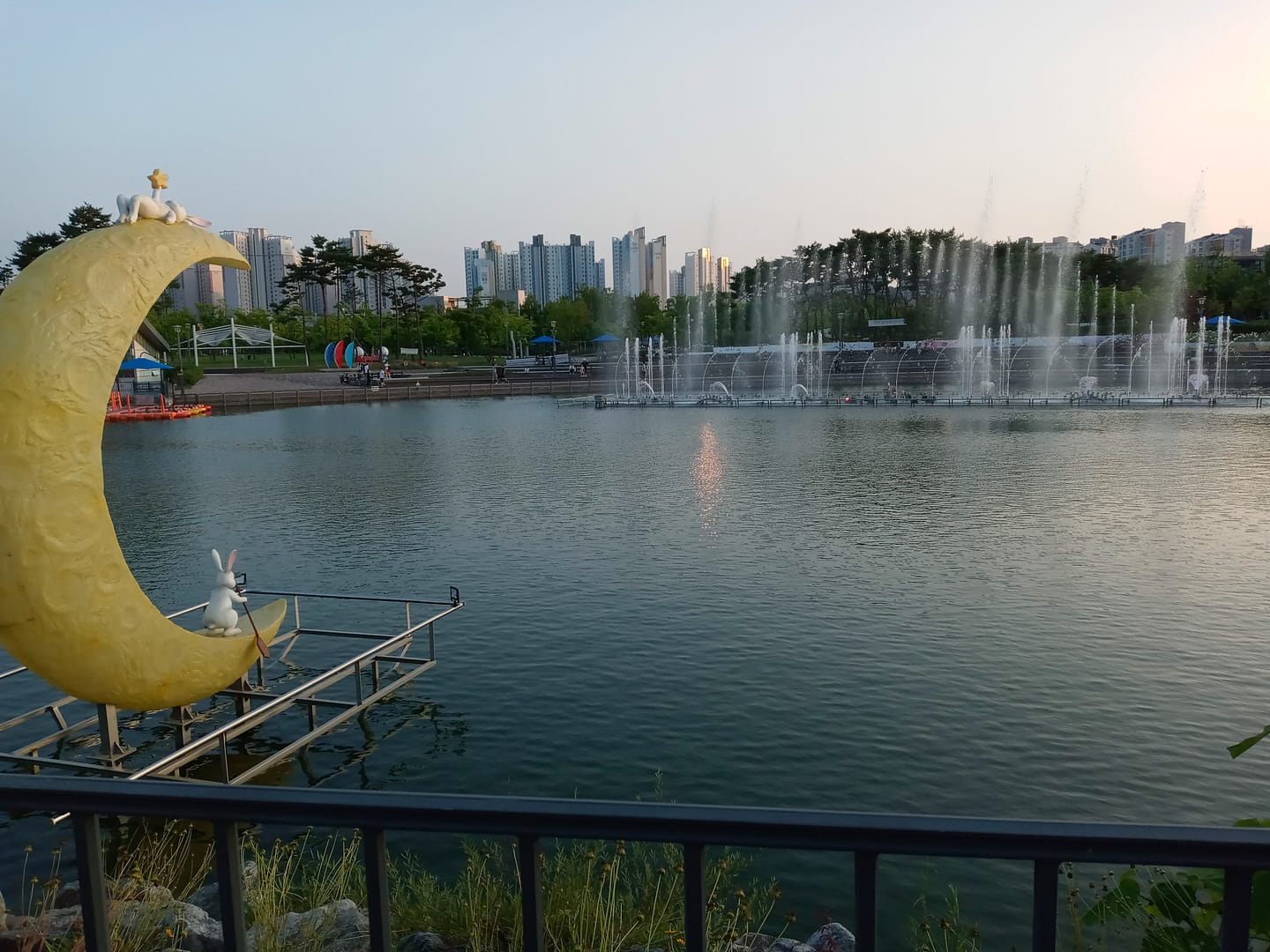

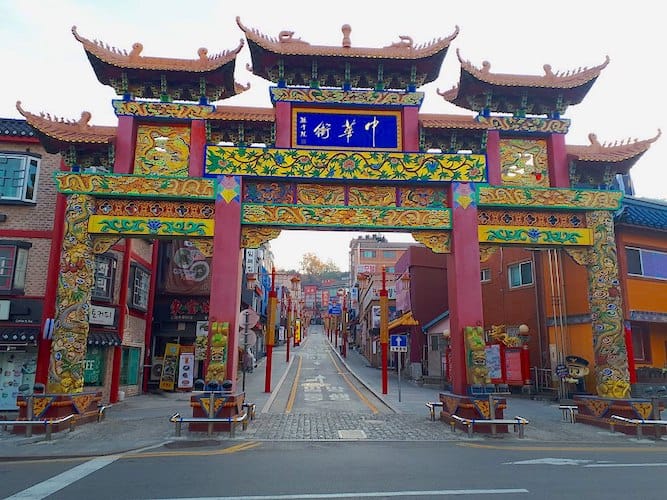


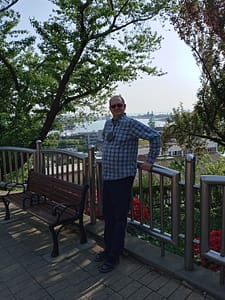


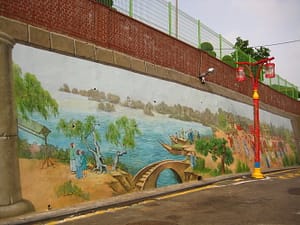
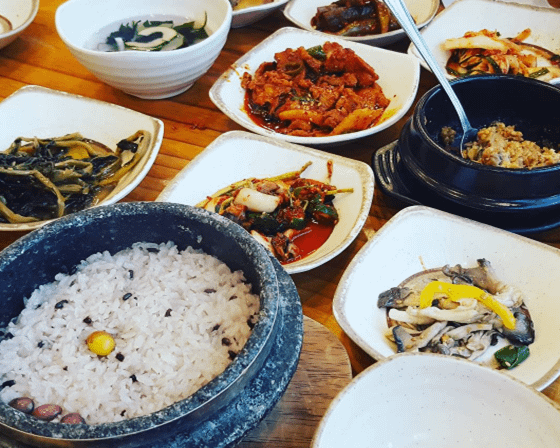
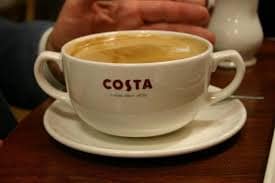


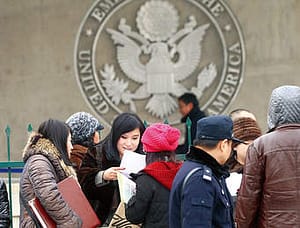



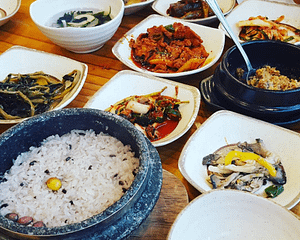
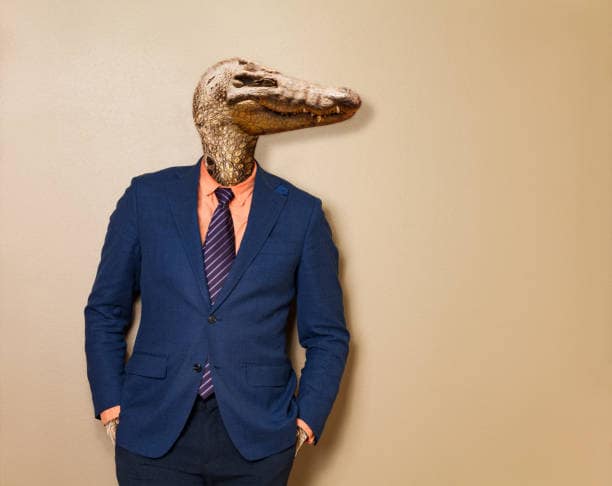
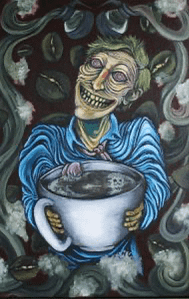

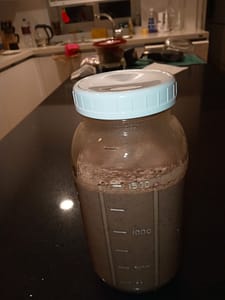
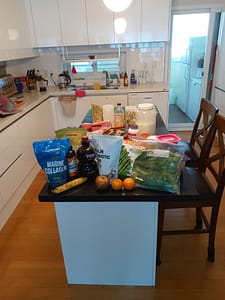













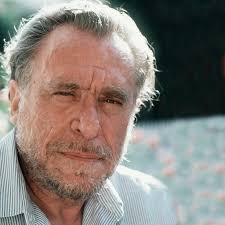
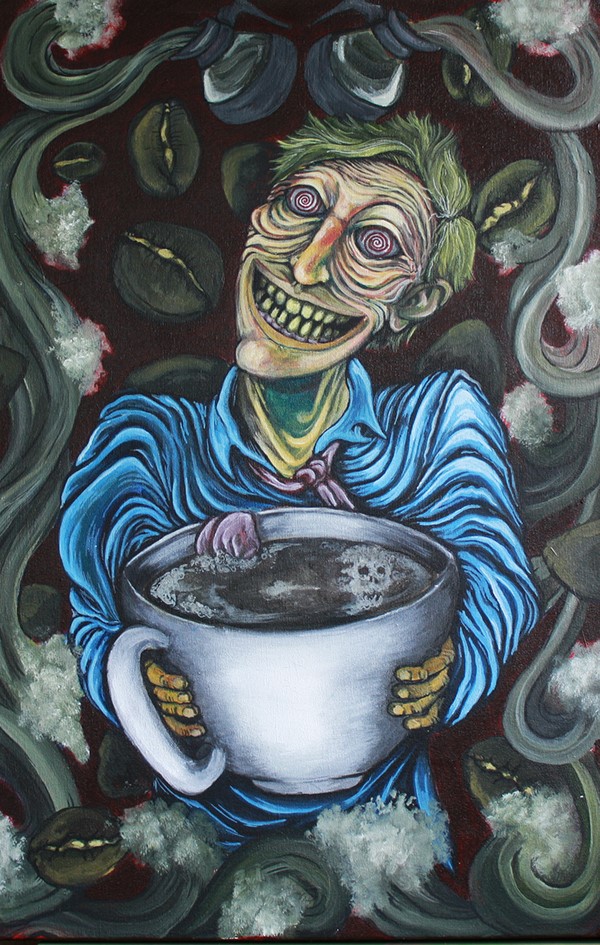



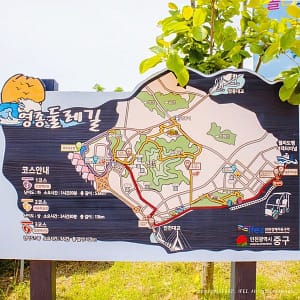


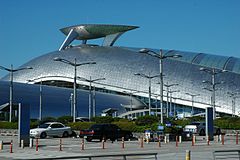


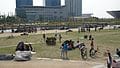


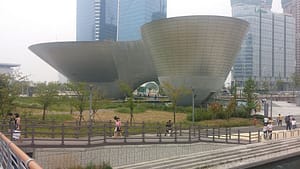
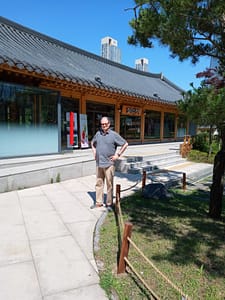
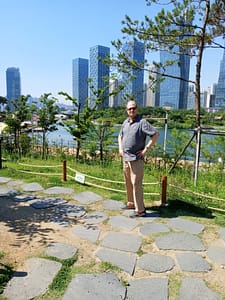



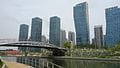
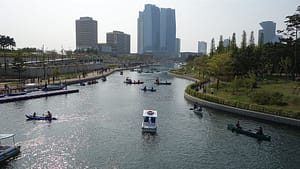


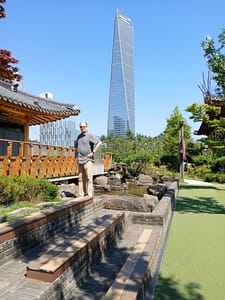
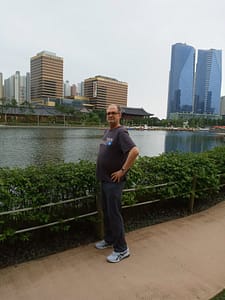
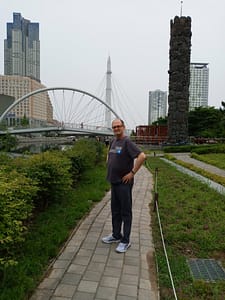
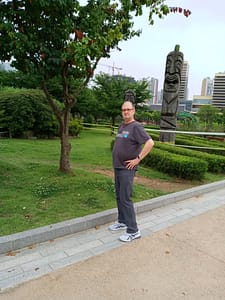
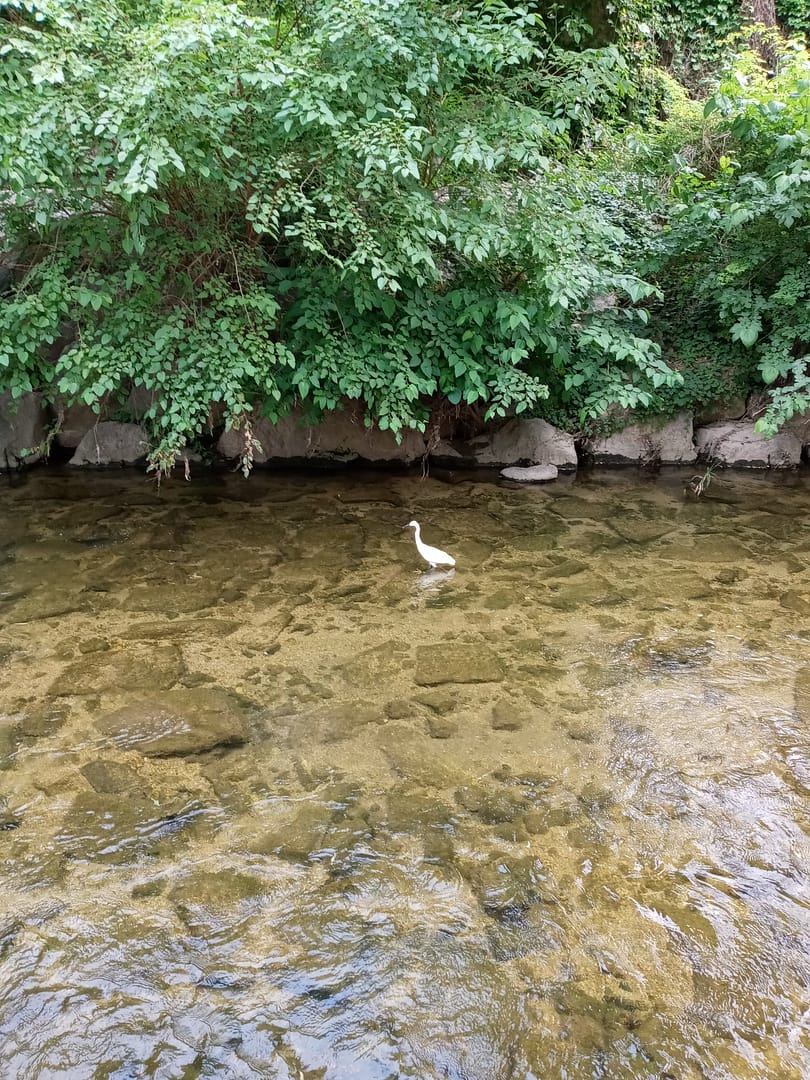


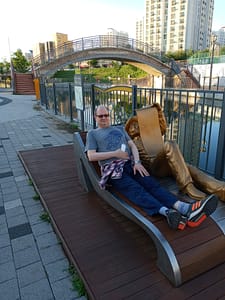
![gw5]](https://mlhqp2oqtail.i.optimole.com/cb:a-R0.45b/w:225/h:300/q:mauto/ig:avif/https://i0.wp.com/theworldaccordingtocosmos.com/wp-content/uploads/2021/05/gw5.jpg)