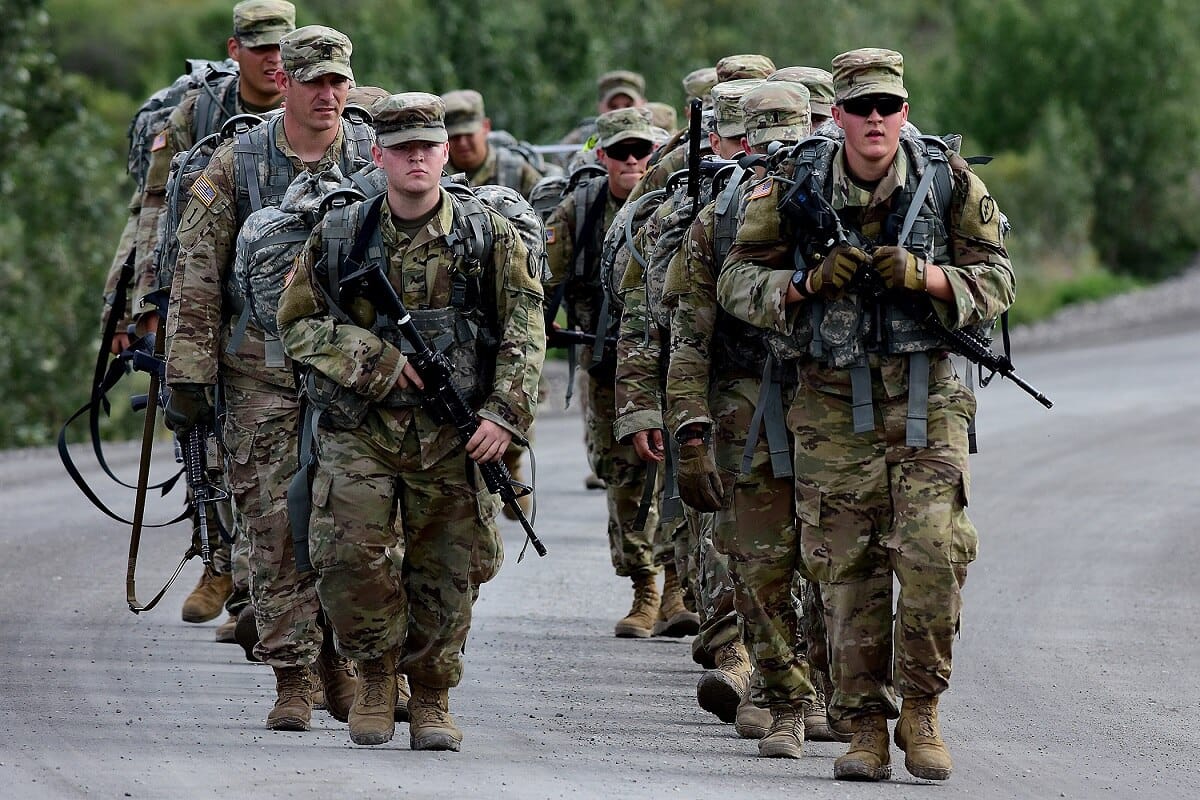
The Pentagon’s New Testosterone Policy and America’s Debate Over Masculinity
Is the U.S. military confronting a genuine health issue—”low T levels among the military, or has testosterone become a political symbol in a much larger cultural battle over masculinity, identity, and national decline?
Is America Center-Left, Center-Right or Neither?
Low T in the Military – a solution for a non-existent crisis?
There is a crisis
In the military
And in society at large
According to the SecWar
And the right-wing media
The US military has lost
Its edge
Too many troops
Are suffering from
“low testosterone levels”
And need testosterone tests
And treatment
To regain their warrior strength
This seems to be a crisis
In confidence
And in traditional views
Of masculinity
Which is being used
By the right-wing
In their endless
Culture wars
Againt
The radical left wing
War on traditional values.
SecWar’s Declaration Regarding “Low T” Amng the Troops
Low T in the military
On July 15, Defense Secretary Pete Hegseth announced a new Pentagon policy requiring annual testosterone-deficiency screening for service members age 30 and older, while allowing younger troops to request testing voluntarily. Any resulting testosterone replacement therapy (TRT) would remain voluntary. [apnews.com], [reuters.com]
Hegseth framed the initiative as a readiness issue. Modern warfare, he argued, demands maximum physical, psychological, and cognitive performance. The goal, in his words, is not artificial enhancement but ensuring troops have the “biological foundation” to perform at their best. [apnews.com], [military.com]
The policy immediately generated headlines—not simply because it concerns military medicine, but because it lands squarely in the middle of a growing debate about masculinity, men’s health, and the future of American society.
What the New Policy Does
Under the new directive:
- Troops aged 30 and older will receive annual testosterone screening as part of existing health assessments.
- Service members under 30 may request testing.
- Testosterone replacement therapy remains voluntary.
- The Pentagon describes the effort as part of broader human-performance optimization initiatives. [reuters.com], [military.com], [viconsortium.com]
Supporters view the policy as a commonsense medical screening program. Critics see it as a politically charged intervention driven by cultural messaging rather than clear medical evidence.
The Case for Testing
Supporters make three primary arguments.
1. Testosterone Matters
Medical science is clear that testosterone influences:
- Muscle mass
- Bone density
- Energy levels
- Recovery from physical exertion
- Mood and motivation
Men with clinically low testosterone can experience fatigue, depression, reduced physical performance, and diminished recovery capacity. In a physically demanding profession such as military service, those symptoms can affect readiness. [apnews.com], [reuters.com]
2. Military Service Is Hard on the Body
The Pentagon has increasingly focused on what some military physicians call “Operator Syndrome”—a collection of health issues associated with years of chronic stress, sleep deprivation, repeated deployments, and intense physical demands. The new policy cites lessons learned from special operations communities. [viconsortium.com]
3. Men’s Health Issues Are Often Ignored
Many advocates argue that society routinely screens for blood pressure, cholesterol, and diabetes but is reluctant to discuss male hormonal health. From this perspective, testosterone testing simply fills a gap in preventive medicine.
The Criticism
The policy has also drawn substantial criticism.
1. Lack of Evidence for Universal Screening
The Associated Press reported that the Pentagon did not identify specific research justifying annual testosterone screening for all troops over 30. [apnews.com]
Reuters later reported that several men’s-health experts questioned whether widespread screening would meaningfully improve combat readiness, noting that current medical guidelines generally recommend treatment when low testosterone is accompanied by symptoms. [reuters.com], [militarytimes.com]
2. The Performance-Enhancement Question
The military has already struggled with testosterone and related substances.
Navy SEAL programs came under scrutiny following investigations into performance-enhancing drug use. Following the 2022 death of a SEAL recruit, investigations revealed broader use of testosterone-related substances than many observers had realized. [apnews.com]
Critics worry that expanding testosterone screening could blur the distinction between legitimate medical treatment and performance enhancement.
3. Political Contradictions
Opponents have also highlighted what they see as an inconsistency.
Several Democratic lawmakers argued that a Pentagon willing to support hormone treatment for low testosterone while restricting transgender service members’ access to hormone therapy is embracing one form of hormone-based medical intervention while rejecting another. [reuters.com]
Why Testosterone Has Become a Cultural Symbol
At first glance, this appears to be a medical story.
In reality, it is also a cultural one.
Over the past decade, an increasing number of conservative writers, podcasters, intellectuals, and politicians have argued that America faces a “crisis of masculinity.”
Their concern extends far beyond testosterone levels.
They point to:
- Declining male college enrollment
- Rising loneliness
- Delayed marriage
- Higher suicide rates among men
- Economic insecurity
- Reduced participation in civic institutions
For many conservatives, testosterone has become shorthand for something larger: the perceived erosion of traditional male roles.
The issue is no longer simply hormonal.
It has become symbolic.
To many on the right, declining testosterone reflects fears that men are becoming less confident, less independent, less physically capable, and less socially anchored than previous generations.
The Masculinity Crisis Argument
Conservative commentators often argue that traditional masculine virtues—discipline, courage, resilience, competitiveness, duty, and self-sacrifice—have been unfairly stigmatized.
They contend that modern institutions increasingly portray traditionally masculine traits as problems rather than strengths.
Within this framework, concerns about declining testosterone become part of a broader narrative:
- Men are struggling.
- Society is overlooking those struggles.
- Traditional pathways to male identity have weakened.
- Men’s health deserves greater attention.
For many advocates, the testosterone debate is therefore not merely about hormone levels. It is about restoring confidence and acknowledging male-specific challenges.
The Toxic Masculinity Critique
Others see the issue very differently.
Psychologists and sociologists typically use the phrase toxic masculinity not to condemn masculinity itself but to describe harmful norms associated with traditional male identity, including:
- Emotional suppression
- Excessive aggression
- Status through dominance
- Reluctance to seek help
- Risk-taking as proof of manhood
Critics argue these norms contribute to:
- Higher rates of violence
- Untreated mental-health issues
- Isolation and loneliness
- Relationship difficulties
From this perspective, the answer to men’s struggles is not necessarily more testosterone but healthier, more flexible models of masculinity.
The goal is not eliminating masculinity, but broadening it.
What Korea and Japan Can Teach America
Interestingly, South Korea and Japan face many of the same underlying trends:
- Low birth rates
- Delayed marriage
- Male loneliness
- Economic pressures
- Changing gender expectations
Yet public debates there rarely focus on testosterone.
In South Korea, discussions center on military service, housing costs, employment pressures, and gender conflict.
In Japan, concerns focus on social withdrawal, isolation, and declining participation in traditional family life.
The problems are strikingly similar.
The language used to describe them is different.
America often interprets male struggles through a biological lens—testosterone, fitness, and physical performance.
Korea tends to interpret them through fairness and social obligation.
Japan tends to interpret them through social participation and disengagement.
My Take
Both sides of this debate identify real problems.
The “masculinity crisis” camp is probably correct that many men feel increasingly disconnected from traditional sources of purpose, status, and belonging.
The “toxic masculinity” camp is probably correct that some rigid masculine norms can discourage emotional openness, help-seeking, and psychological well-being.
Where the conversation often goes astray is in treating testosterone as either the cause of modern male problems or the solution to them.
Low testosterone is a genuine medical condition.
But loneliness is not a hormone deficiency.
Neither are economic insecurity, educational challenges, declining social trust, or changing family structures.
The Pentagon’s new testing policy may ultimately help some service members identify legitimate health concerns. Whether it improves military readiness remains a question that researchers—and perhaps the military itself—will have to answer.
The deeper argument, however, is not about blood tests.
It is about what kind of men modern societies need—and what kind of masculinity can flourish in a world where the old definitions no longer seem sufficient.
Endnotes
- AP News, Hegseth announces new policy to test troops for low testosterone (July 2026). [apnews.com]
- Reuters, Hegseth announces testosterone screening for US troops (July 2026). [reuters.com]
- Reuters, Doctors question evidence behind Pentagon plan for testosterone screening (July 2026). [reuters.com]
- Military.com, Hegseth Orders Mandatory Testosterone Screening, Optional TRT for Troops 30 & Older (July 2026). [military.com]
- Fox News, The Real Reason Behind Hegseth’s Viral Military Testosterone Screening Order (July 2026). [foxnews.com]

Thanks so much for visiting my site. Your comments are welcome but please play nice…. Reply