Is America Center-Left, Center-Right or Neither?
America Isn’t Center-Left or Center-Right. We’re Asking the Wrong Question.
Audio Clip
Every election seems to produce the same postmortem.
When Democrats lose, one faction argues the party wasn’t progressive enough — that a bolder left-wing agenda would have won the day. When Republicans lose, many conservatives conclude the opposite: the party wasn’t conservative enough, and a firmer stand on principle would have carried them through.
The symmetry is striking. So is the flaw. Both arguments assume America is fundamentally on their side. The left insists the country is secretly center-left, its true preferences obscured by institutions and bad messaging. The right insists the opposite — that America is naturally center-right and only drifts when conservatives fail to make their case.
But what if both sides are misreading the electorate?
The Problem With the Left-Right Framework
Activists, campaign professionals, donors, journalists, political scientists, and highly engaged voters — especially the ones clustered in Washington and New York — tend to share one blind spot: they assume most people spend a lot of time thinking about politics.
Most Americans don’t. Many vote only intermittently. Some tune in for a few weeks before an election; others follow the news casually, or would struggle to name the legislative fights currently underway in Washington. Yet these are often the voters who decide elections. The result is that America’s most visible political voices routinely mistake their own ideological commitments for the country’s.
The average voter doesn’t walk around thinking in terms of “conservative” or “democratic socialist,” “progressive” or “national conservative.” Instead, many hold a mix of views that looks contradictory to a partisan activist but ordinary to everyone else. A single voter might support:
- Lower taxes
- Social Security and Medicare
- Strong border enforcement
- Legal abortion under some circumstances
- Environmental protection
- Gun rights
- Government support for domestic manufacturing
- Consumer protections against large corporations
From an activist’s vantage point, that combination looks incoherent. From the vantage point of actual Americans, it’s just normal.
Why the Center-Right Argument Persists
There’s a real case that America is center-right in important ways. Compared with much of Europe, Americans remain more skeptical of government power, more supportive of free enterprise, and more attached to individualism and self-reliance — traditions baked in from the founding: personal liberty, property rights, decentralized authority, suspicion of concentrated power.
The electoral evidence backs this up, too. If America were fundamentally center-left in the European sense, the Republican Party would likely be permanently weakened. Instead it remains highly competitive nationally, regularly controlling Congress, statehouses, and the presidency. That points to a durable center-right foundation in American political culture.
Why the Center-Left Argument Persists
But the center-left case has real evidence behind it too. Programs like Social Security, Medicare, veterans’ benefits, public education, and infrastructure investment enjoy broad support across party lines. Americans say they dislike “big government” in the abstract while strongly backing specific government services in practice.
The country has also moved left on a range of social questions over the past few decades — same-sex marriage, marijuana legalization, and much of the broader diversity debate. And polling consistently shows support for higher taxes on the wealthy, tougher regulation of large corporations, and economic intervention when it’s framed as protecting ordinary people. None of that is traditionally conservative territory.
What Pew Research Gets Right
This is where Pew Research Center’s Political Typology project earns its keep. Rather than forcing Americans into “liberal” and “conservative” boxes, Pew sorts the public into nine groups based on values, beliefs, and attitudes — an attempt to get past party labels and toward a more textured picture of the electorate.1
Pew’s core finding: American politics holds far more than two tribes.12 Within the Republican-leaning coalition, groups range from hardline ideological conservatives to pragmatic voters who are open to government intervention. Within the Democratic-leaning coalition, you’ll find everything from democratic socialists to establishment liberals to more moderate mainstays.
Political scientists have made a version of this point for decades: many voters simply don’t carry a coherent ideological framework. A typical voter might check the box for lower taxes and Social Security and Medicare and stronger borders and legal abortion in some circumstances and environmental protection and domestic manufacturing subsidies and gun rights — a mixture that doesn’t map cleanly onto either party’s activist base. That’s one reason election outcomes so often surprise the ideologues on both sides.
The Nine Pew Groups
Pew’s 2026 typology sorts Americans into nine groups based on values and beliefs rather than party registration.1 Here’s the breakdown:
Republican-oriented
- No Apologies Right — strongly conservative, strong Trump supporters, hard-line across the board, highly engaged. About 9% of Americans.3
- Faith First Conservatives — socially and religiously conservative, morality- and tradition-focused, strongly Republican. About 12%.3
- Unconventional Right — generally conservative but less traditionally Republican, more heterodox on economics and institutions.2
- Pragmatic and Polite Right — conservative but not very ideological; favors smaller government while staying open to a government role in areas like healthcare; less confrontational.2
Democratic-oriented
- Loyal Liberals — strong Democrats, more trusting of institutions than most other groups, internationalist, progressive but not as economically left-wing as activists. About 11%.3
- Leftward Progressives — the youngest strongly Democratic group, the most ideologically progressive, highly engaged, and often critical of both parties’ leadership. About 7%.3
- Democratic Mainstays — more moderate, reliably Democratic, less ideological than the progressive wing.12
The middle
- Ambivalent Right — leans Republican, not very ideological, mixed issue preferences.
- Tuned-Out Middle — low engagement, weak partisan attachment, and often decisive in close elections precisely because they’re persuadable.
Pew’s larger point stands out here: a lot of Americans fall into groups that are neither highly ideological nor intensely partisan.23
Where Do I Fall in the Typology?
I probably land in Leftward Progressive — something like a “Bernie bro.” Youngest strongly Democratic group, most ideologically progressive, highly engaged, often critical of both parties’ leadership. About 7% of Americans.3
My wife probably falls into Pragmatic and Polite Right — conservative but not very ideological, favoring smaller government while staying open to it playing a role in healthcare, and not looking for a fight.2
My two brothers probably land in Unconventional Right — generally conservative, less traditionally Republican, more heterodox on economics and institutions.2
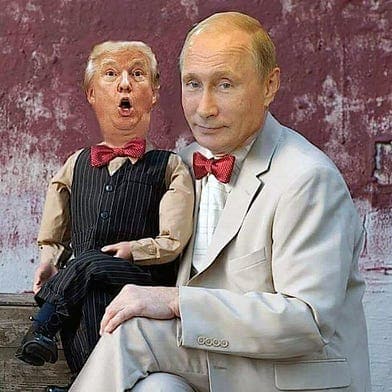
One more thing about my brothers: they’re both in what I’d call the pro-Putin camp of the Republican coalition, and I’ll admit I don’t fully understand it. It’s a strange turn for a party that spent the Cold War treating Russia as the central adversary and championing liberal democracy abroad. My best guess, trying to be analytical rather than dismissive about it, is that it’s less about Russia itself and more a mix of three things: skepticism of interventionist foreign policy, distrust of nation-building abroad, and frustration with domestic institutions that gets projected outward. That’s a topic for its own post.
If you fall somewhere unexpected in the typology yourself, I’d genuinely like to hear about it in the comments.
Footnotes
- Pew Research Center, 2026 Political Typology. ↩ ↩2 ↩3 ↩4
- PBS coverage of the Pew 2026 Political Typology. ↩ ↩2 ↩3 ↩4 ↩5 ↩6 ↩7
- LiveNOW from FOX coverage of the Pew 2026 Political Typology (group percentages). ↩ ↩2 ↩3 ↩4 ↩5 ↩6
The Real Problem: Americans Are Ideologically Inconsistent
Political scientists have observed for decades that many voters do not possess a coherent ideological framework.
A typical voter might simultaneously support:
✅ lower taxes
✅ Social Security
✅ Medicare
✅ stronger borders
✅ legal abortion in some circumstances
✅ environmental protection
✅ domestic manufacturing subsidies
✅ gun rights
That mixture does not map cleanly onto either party’s activist base.
This is one reason election outcomes often surprise ideologues.
The New Right’s Foreign Fascinations: Why Some Conservatives Admire Putin, Orbán, and Erdoğan
For most of the Cold War and the decades immediately afterward, the American right generally viewed Russia as a threat, celebrated democratic institutions, and promoted a foreign policy centered on the expansion of liberal democracy.
Today, things are more complicated.
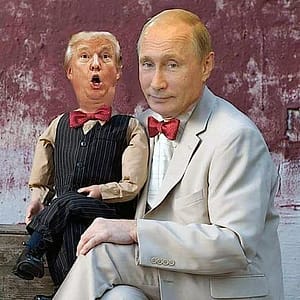



Within parts of the contemporary right, one finds admiration—or at least interest—in leaders such as Hungary’s Viktor Orbán, Turkey’s Recep Tayyip Erdoğan, and, in some circles, Vladimir Putin.
This shift has confused many observers. Critics often see it as a rejection of traditional American conservatism. Supporters argue that it represents a correction to failed assumptions about globalization, national identity, and liberal institutions.
The truth is more complicated than either side usually admits.
First, Most Conservatives Are Not “Pro-Putin”
A useful starting point is recognizing that many people labeled “pro-Russian” are not actually supporters of Russia.
Instead, they are often expressing one of three different views:
- Opposition to interventionist foreign policy.
- Skepticism about U.S. nation-building overseas.
- Frustration with domestic political and cultural institutions.
The distinction matters.
A voter can oppose aid to Ukraine without admiring Putin.
A voter can criticize NATO expansion without supporting Russia.
A voter can dislike Western elites without preferring authoritarian government.
Public debate often collapses these distinctions.
Why Orbán Became Influential on the American Right
Among foreign leaders, Viktor Orbán has arguably had the greatest intellectual influence on parts of the American right.
Many conservatives see Orbán as proof that a center-right government can:
- Restrict immigration.
- Promote national identity.
- Encourage traditional family formation.
- Push back against progressive cultural institutions.
- Win elections repeatedly while doing so. [usnews.com], [msn.com]
To supporters, Hungary became a laboratory showing how conservatives could govern rather than merely oppose.
For some conservatives, Orbán’s appeal has little to do with Hungary itself and much to do with dissatisfaction with Western European and North American political trends.
The Critique
Critics argue that conservatives admire Orbán while overlooking serious concerns.
Orbán’s opponents have accused his government of weakening democratic checks and balances, concentrating power, and undermining independent institutions. Reuters describes some American conservatives as seeing Hungary as a model, while critics view its system as marked by “hardline nationalism” and an erosion of democratic checks. [usnews.com]
The debate therefore becomes less about Hungary and more about a broader question:
How much centralized power should elected majorities possess when pursuing their political agenda?
Erdoğan’s Appeal—and Its Limits
Recep Tayyip Erdoğan presents a different case.
Few American conservatives openly advocate importing Turkish political institutions.
Instead, admiration tends to focus on specific characteristics:
- nationalism,
- political toughness,
- resistance to elite opinion,
- emphasis on religion in public life,
- willingness to challenge Western consensus.
Supporters see decisiveness.
Critics see majoritarianism and increasingly centralized authority.
The same traits that admirers describe as strength, opponents describe as democratic backsliding.
This disagreement reflects a recurring theme in modern politics:
Are strong institutions more important, or is strong leadership more important?
Different people answer that question differently
Recently, led by the President, Vice President and Secretary of State, and others, the entire right-wing media sphere has become obsessed with what they say is a resurgence of anti-left ideology focusing on the alleged threat posed by the radical left-wing extremist groups, particularly “anti-fa” and a resurgent communist menace, depicted as being “anti-American, anti-Capitalist, anti-family, anti-government,” “anti-male,” or “following radical gender ideology.” At the same time, they dismiss fears of right-wing domestic terrorism…
.
3. Secretary of State’s Conference on “Political Terrorism”
What was announced?
Secretary of State Marco Rubio is hosting a ministerial meeting in Washington involving representatives from more than 60 countries to discuss what the administration calls a “resurgence of political terrorism” and political violence.reuters+1
Reporting indicates that the administration intends to focus particular attention on violent far-left extremist organizations and transnational anarchist networks.deseret+1
Reuters reported that administration officials describe the initiative as part of a broader counterterrorism strategy rather than a conference exclusively focused on Antifa. They also state that violent right-wing groups remain within the overall counterterrorism framework.reuters+1
Does Antifa Pose a Threat?
This depends heavily on definitions.
Evidence cited by supporters of the administration’s position
Administration officials point to:
- firebombing incidents,
- attacks against government facilities,
- attacks on law-enforcement targets,
- transnational anarchist groups designated as terrorist organizations,
- politically motivated violence by some self-described anti-fascist activists.deseret+2
Their argument is that some violent networks operate internationally and fit traditional definitions of political terrorism.reuters+1
Skeptical assessments
Critics—including some former officials, diplomats, and terrorism analysts—argue that left-wing extremism exists but does not currently represent the same scale of global terrorist threat as jihadist organizations or some other violent extremist movements.yournews
They also note that “Antifa” is not a single hierarchical organization, making broad generalizations difficult.deseret
Balanced conclusion
A reasonable evidence-based conclusion is:
- Violent far-left extremist actors exist.
- Some have engaged in criminal or politically motivated violence.
- There remains genuine debate among experts regarding the size, organization, and overall threat level compared with other extremist movements.reuters+2
Is Communism a Major Threat Again?
This question requires distinguishing between:
- Communism as an ideology
- Communist states
- Violent revolutionary movements
Current reality
Communism remains politically significant in some countries, including China, Vietnam, Cuba, and North Korea, though their economic systems differ substantially from classical Marxist models.
Argument that it is a growing threat
Supporters of that view point to:
- authoritarian behavior by some communist governments,
- influence operations,
- cyber activities,
- revolutionary left-wing movements in some regions,
- links between some extremist groups and revolutionary Marxist ideas.deseret+1
Counterargument
Many scholars argue that the principal geopolitical competition today is less about “communism versus capitalism” and more about:
- authoritarianism versus liberal democracy,
- nationalism,
- state power,
- technology,
- economic competition.
Under this interpretation, the Cold War framework only partially explains current conflicts.
Assessment
It would be difficult to support the claim that a worldwide communist revolution is imminent. However, communist-inspired, Marxist, anarchist, and other revolutionary ideologies still influence some political movements and insurgent groups around the world.
Press Coverage: Major Themes
Press coverage is sharply divided.
Conservative outlets tend to emphasize:
- growing political violence from the far left,
- failures of previous counterterrorism priorities,
- transnational anarchist networks,
- attacks on law enforcement.deseret+1
Centrist and mainstream reporting tends to emphasize:
- uncertainty about the scale of the threat,
- concern about politicizing counterterrorism,
- debates over definitions of terrorism,
- risks of overbroad government powers.reuters+1
No there are No more Communists
One of my pet peeves these days is the meme circulating among the right wing that there is a vast communist threat in the U.S. Communists are everywhere and must be purged from society. The communists have over academia, corporations, entertainment, the government, and the media and are pushing a divisive racist woke ideology that must be defeated to preserve American freedom. The communists are conflated with fascists and Biden is depicted as an evil communist wanna-be fascist dictator.
De Santis, Trump, and others on the right-wing media are constantly sprouting eliminatist violence rhetoric promising to purge the American society of communism, radical left wokeism, and De Santis promising to slit throats of federal employee tics if he is elected. Trump promised retribution against his enemies and promised to clean up the government, replacing government civil servants with loyalists who will do their bidding.
The problem of course that this meme of a vast communist threat is total nonsense. There are no communists left. Communism died decades ago. The West won the cold war. No one wants the US to become another Cuba or North Korea. Biden is a corporate-friendly centrist politician as are all the other Democrats and most Republicans as well.
.
There is a real and growing threat of fascism taking root in the U.S. If either Trump or DeSantis becomes president, it is game over for the American democratic experiment.
At the same time there is a right-wing freak out about the alleged threat posied by the radical left wing, there has been a resurgence of democratic socialism in the US.
|
||||||||||||||||||||||||||||||||||||||||||||||||||||||||||||||||
pilot said: Here are a few recent reports covering remarks by Stephen Miller and other Trump administration officials regarding what they describe as the “radical left” or “far-left” threat:
Recent Remarks Military.com – “Marco Rubio, Stephen Miller Push Left-Wing Terrorism Crackdown on ‘Enemies of Civilization’”
Read article The report describes remarks by Stephen Miller at a July 2026 State Department conference on political terrorism, where he argued for an aggressive response to what the administration characterizes as far-left political violence and referred to left-wing extremists as “enemies of civilization.” military USA Today –
“Miller, Rubio, rally foreign diplomats against ‘far-left terror’ threat” Read article This article covers the administration’s efforts to frame a transnational “far left” as a security threat. usatoday
Common Dreams – “‘Fascism Is Here’: Rubio, Miller Say More Terrorist Designations Coming for ‘Far-Left’ Groups” Read article The article reports on Miller’s description of left-wing political violence as a “fatal cancer to civilization” and his call for coordinated law-enforcement action. commondreams For direct presidential remarks, the search results I found primarily reference administration officials and policies rather than a specific recent presidential speech.
Military.com article discussing remarks by Stephen Miller and Secretary of State Marco Rubio regarding what they described as far-left political violence. military USA Today article on the administration’s effort to raise concerns about a “far-left” threat. usatoday Common Dreams article criticizing those remarks and reporting Miller’s statements about left-wing political violence. commondreams
\The broader analytical point remains that anti-communism on the contemporary American right differs from Cold War anti-communism in several ways: It is often directed at a wider set of political and cultural movements than formal communist organizations. It is frequently tied to debates over education, immigration, identity, religion, and cultural institutions rather than solely economic systems.
Competition with China has renewed public discussion of communist ideology and authoritarian governance. Concerns about political violence and civil unrest have led some conservatives to frame anti-communism as a domestic security issue. Critics argue that terms such as “communist,” “Marxist,” and “radical left” are often applied too broadly, while supporters argue the labels identify genuine ideological trends. If you’re looking for the specific speech or remarks by President Trump that may have prompted your question, I can search for recent presidential statements and provide direct links to transcripts or videos.
Here are a few recent reports covering remarks by Stephen Miller and other Trump administration officials regarding what they describe as the “radical left” or “far-left” threat:
Recent Remarks “Marco Rubio, Stephen Miller Push Left-Wing Terrorism Crackdown on ‘Enemies of Civilization’”
-
Read article
- The report describes remarks by Stephen Miller at a July 2026 State Department conference on political terrorism, where he argued for an aggressive response to what the administration characterizes as far-left political violence and referred to left-wing extremists as “enemies of civilization.”military
- USA Today – “Miller, Rubio, rally foreign diplomats against ‘far-left terror’ threat”
Read article - This article covers the administration’s efforts to frame a transnational “far left” as a security threat.usatoday
-
Common Dreams – “‘Fascism Is Here’: Rubio, Miller Say More Terrorist Designations Coming for ‘Far-Left’ Groups”
- Read article
- The article reports on Miller’s description of left-wing political violence as a “fatal cancer to civilization” and his call for coordinated law-enforcement action.commondreams
For direct presidential remarks, the search results I found primarily reference administration officials and policies rather than a specific recent presidential speech. The sources do note that these efforts are being presented as part of the Trump administration’s broader strategy.military+1
Analysis: The Resurgence of Anti-Communism on the American Right
The current revival of anti-communist rhetoric on the right resembles earlier periods of U.S. politics, but with important differences.
1. Expansion of the Concept of “Communism”
During the Cold War, anti-communism was largely directed at the Soviet Union and organized communist parties. Today, many right-wing politicians and commentators use terms such as “Marxist,” “socialist,” “communist,” and “radical left” more broadly, often applying them to progressive social movements, DEI initiatives, university activism, or anti-capitalist groups. The result is that anti-communism functions as a broader critique of progressive culture rather than only of communist ideology.
2. National Identity and Cultural Conflict
Modern anti-communism is often tied to debates about national identity, immigration, religion, education, and historical memory. Many conservatives portray progressive movements as threats to traditional American institutions and values. In this framework, opposition to “the radical left” becomes part of a larger cultural and civilizational narrative.
3. Lessons Drawn from China
The rise of China has renewed interest in anti-communist arguments. Because China remains governed by the Chinese Communist Party, criticism of Beijing often reinforces broader anti-communist themes. For some conservatives, geopolitical competition with China lends contemporary relevance to anti-communist rhetoric that might otherwise seem outdated.
4. Reaction to Social Unrest
Protests, riots, and political violence during the 2020s have led some figures on the right to argue that radical left-wing groups present a significant domestic security threat. Recent remarks by Miller and others fit into this framework, emphasizing political violence and terrorism concerns.military+1
5. Differences from the Cold War Era
Unlike the Cold War, today’s anti-communism is not focused on a large domestic communist movement. Instead, it is primarily a political language used in contemporary partisan conflict. Critics argue that the label is often applied too broadly and risks conflating mainstream liberalism with revolutionary ideologies; supporters argue it is a useful way to identify illiberal or anti-capitalist tendencies.
In short, the resurgence of anti-communism on the right reflects a combination of cultural polarization, concerns about political violence, competition with China, and the use of Cold War concepts to interpret current political conflicts.
What policies did Miller and the administration describe?
Based on reporting about the speech and related event, the administration described several measures:
- NSPM-7 (National Security Presidential Memorandum 7), which Miller said directs U.S. law enforcement and intelligence agencies to work together to “disrupt, identify, defund, debank, arrest, and prosecute” people characterized as political terrorists.yahoo+1
- A strategy emphasizing coordination among intelligence and law-enforcement agencies to counter what the administration describes as left-wing political terrorism.yahoo+1
- International cooperation, including intelligence sharing, tracking funding, coordinating investigations, and supporting terrorist designations for groups accused of political violence.military
- Secretary Rubio also announced a visa restriction policy targeting “members of Far-Left Terrorist and other aligned groups.”keyt
How has the public responded?
The response described in reporting has been sharply divided.
Supportive reactions
- Supporters argue that political violence from anti-fascist, anarchist, or other extremist groups has not received sufficient attention and that stronger counterterrorism measures are warranted. This perspective was reflected in the administration’s framing of the issue as a major national-security concern.military+1
Critical reactions
- Multiple reports cite critics and former officials who argue the threat is being politicized and overstated. Some contend that the alleged “far-left” threat does not compare to threats posed by groups such as ISIS or by far-right extremists.keyt
- Progressive and left-leaning commentators characterized the event as a revival of a “Red Scare” or McCarthyist rhetoric.newrepublic+1
- Civil-liberties concerns have also been raised regarding broad use of terrorism designations and aggressive law-enforcement powers against political activists. Reports specifically note concerns about ideological profiling and politicized enforcement.military
- Some critics described the remarks as authoritarian or alarming; for example, Common Dreams highlighted reactions accusing the administration of targeting political opponents.commondreams
Key themes from Miller’s remarks
According to multiple reports, Miller argued that:
- Left-wing political violence should be treated as a national-security threat.yahoo+1
- U.S. institutions have been insufficiently aggressive in confronting that threat.keyt+1
- NSPM-7 is intended to create a more coordinated government response.yahoo+1
Why the GOP loves to use ‘communism’ as an attack
This is another excellent analysis of the right-wing freakout over “communism.” In my opinion, that fear is about 75 years out of date, as communism has effectively been dead since the fall of the Soviet Union in 1991.
China is no longer truly communist; it operates more as a system of state-directed crony capitalism. Vietnam is similar. North Korea is a neo-Stalinist state based on Kimilsungism, while Cuba is perhaps the closest thing remaining to a communist state.
I also think—and this is purely my speculation—that the President’s fixation on a largely non-existent communist threat may be a sign of cognitive decline. He seems stuck in the late 1950s and early 1960s in his thinking and worldview, no longer seeing the world as it actually is. His advisors, who appear to be little more than yes-men and yes-women, do not challenge what I see as increasingly detached and delusional thinking.
Not to mention that some of his supporters, who are in their late 70s and 80s like he is, still cling to Cold War-era fears of communism. For them, the threat feels real, even though the world has changed dramatically. The rest of the world hears this neo-1950s rhetoric about a communist menace, shrugs its shoulders, and asks, “What on earth are they talking about?”
Explaining the Right is a weekly series that looks at what the right wing is currently obsessing over, how it influences politics—and why you need to know.
Begin Article:
Speaker Mike Johnson released an urgent warning to Americans on Tuesday: The communists are coming.
“We’re fighting right now in Congress over whether we’re going to maintain our status as a constitutional republic or we’re going to trade that in, dismantle the foundations and go down this dark road of death to communism. That is the question on the ballot this fall,” Johnson ominously warned.
Now of course, if people are really worried about the government taking control of industries, pushing to limit freedom of expression, or engaging in the dismantling of long-held institutions, the guilty party is the Republican majority of which Johnson is a key member.
But Republicans are harping on the communist threat. Casual viewers of the party’s quasi-official media mouthpiece, Fox News, are now being fed a steady diet of propaganda insisting that Democrats are the hammer-and-sickle party.
The right will claim that the election of Zohran Mamdani to be New York City mayor last year and the surprise wins of candidates affiliated with democratic socialism in Democratic primaries this year are evidence of looming red behavior.
But that’s not it. Republicans are all abuzz about socialism because the party’s political prospects look dire this fall. President Donald Trump’s approval ratings are in the thirties, Americans are experiencing surging energy prices, and Trump and other Republicans are engaged in open corruption while cutting vital government programs.
They need something, and in a pinch, socialism has always been a big, giant emergency button for the right to push.
They love to push the emergency button in the months before an election. The right has for years whipped up panic ahead of elections, gambling that exaggerating one threat or another, and associating the problem in the public’s mind with the Democrats, will pay dividends.
Back in 2002, while the country was still reeling from the 9/11 attacks, Republicans began the drumbeat that would lead to eventual war with Iraq. Under then-President George W. Bush, Republicans kept up a steady argument that if Democrats expressed skepticism about an Iraq War, they were on the side of the al-Qaida terrorists who attacked the country.
President George W. Bush signs a resolution authorizing the use of force against Iraq, Oct. 16, 2002, in the White House. Left to right, Sen. Jesse Helms, R-N.C., Sen. John Warner, R-Va., Sen. John McCain, R-Ariz., Rep. Roy Blunt, R-Mo., Sen. Joseph Lieberman, D-Conn., Speaker the House Dennis Hastert, R-Ill., Rep. Tom Lantos, D-Calif., Sen. Joseph Biden, D-Del. AP
Of course, there was no connection between al-Qaida and Iraq, and Iraq did not have weapons of mass destruction, but before all of that was laid bare, Republicans held on to power and bucked historical trends—keeping control of Congress in that year’s election.
In 2014, President Barack Obama was well into the final phase of his second term, and Republicans needed something to get the troops whipped up before the midterm races. Fearmongering about an outbreak of Ebola virus and the Obama administration’s efforts to help an American afflicted by the ailment hit a fever pitch.
For added effect that year, Republicans and the affiliated conservative movement also argued that Obama was not doing enough to fight the terror group ISIS. An example of how far-reaching this meme became showed up in the official magazine for the pro-gun zealots at the NRA. While ISIS operated in the Middle East and concerned itself largely with issues in that region of the world, the NRA told supporters they had to worry about ISIS hanging outside their homes and they had to “vote your guns” by backing Republicans that fall.
Four years later, with Trump in the White House in 2018, Republicans needed a shiny object to distract the public from the many ways Trump was failing in the presidency (this should sound familiar). That year, Trump led the way in promoting the notion that a caravan of migrants was rocketing toward the U.S-Mexico border, and Republicans needed to get the vote to stop the caravan.
It didn’t exist, and Republicans got a thumping at the polls.
A demonstrator protests outside the state capitol, May 31, 2020, in Minneapolis, following the death of George Floyd, who died after being restrained by Minneapolis police officers on May 25.AP
By 2020, Trump was facing rising public anger about police brutality following the killing of George Floyd. Responding to protests for racial justice and the likely rebuke of Trump, who explicitly endorsed racist police abuse, Republicans tried to argue that they were for “law and order” as the Democrats purportedly embraced anarchy.
The tactic didn’t work and by the time Congress was ready to certify the results of that year’s election, Republicans showed off how little they cared for “law and order” when Trump incited the riot at the Capitol, meant to overturn a Democratic election.
In 2022 and 2024, Republicans (with a mighty assist from Fox News) tried to argue that traditional values were under constant assault from the mere existence of transgender people. The party argued that Democrats were in the throes of promoting radical social change via the party’s acceptance of transgender equality, and Republicans successfully got voters to turn out in opposition to a crusade that wasn’t happening.
This is why the communism gambit sounds so familiar. The playbook is well worn and dog-eared by this point in history. All signs are that the tactic won’t work this year, but that never stopped the right from building itself up into a frenzy over something that isn’t happening.
AOC on Communism
US Rep. Alexandria Ocasio-Cortez (D-NY) speaks to members of the media as she arrives at the US Capitol Building on May 21, 2026 in Washington, DC.
(Photo by Andrew Harnik/Getty Images)
‘They’re Trying to Scare People’: AOC Dismisses Latest GOP Warnings of ‘Communism’
“We can’t even raise the minimum wage. Do Republicans really think this stuff is going to happen?”
Republican fearmongering that communism is on its way to the United States is a perennial feature of US political discourse—despite the fact that their warnings proved wrong in the 1930s when President Franklin Roosevelt passed Social Security and other New Deal programs and recently when Mayor Zohran Mamdani neglected to usher in a communist era in New York City, even as he moved forward with plans for universal childcare and a network of city-run grocery stores.
On Thursday, progressive Rep. Alexandria Ocasio-Cortez (D-NY) mocked the GOP’s latest claims that Democratic politicians who support Medicare for All and other broadly popular universal proposals are putting the US on what House Speaker Mike Johnson (R-La.) recently called a “dark road of death to communism.”
RECOMMENDED…
In Independence Eve Speech, Trump Warns of Communism Then Promotes One-Party Rule
Johnson Says Pentagon Needs More Money for ‘Fighting Communism on Our Own Shores’
“We can’t even raise the minimum wage. Do Republicans really think this stuff is going to happen?” Ocasio-Cortez told a reporter on Capitol Hill after they’d asked whether the recent victories of democratic socialists and other progressives could end up “as full-blown communism.”
With 78% of Democratic voters supporting an expansion of the Medicare program to everyone in the US—which would end healthcare’s treatment as a for-profit endeavor in the US and put the medical system on equal footing with those in other wealthy countries—a number of Democratic House candidates who support the proposal have won primary races in recent months, including Melat Kiros in Colorado, Claire Valdez in New York, and Adam Hamawy in New Jersey. In Michigan, US Senate candidate Abdul El-Sayed, a Medicare for All advocate, has polled ahead of his centrist opponent Rep. Haley Stevens in numerous recent surveys.
As Republicans aim to maintain control of the Senate and House in the midterm elections—having ripped nutrition assistance and Medicaid away from millions of Americans, driven up healthcare costs for people who have insurance through the Affordable Care Act, supported the invasion of Iran as it has sent gas prices soaring, backed billions of dollars in Pentagon spending and military aid for Israel as Americans struggle to afford essentials, and supported a president who says he doesn’t “think about Americans’ financial situation”—they’ve attempted to revive old claims that the new crop of progressive Democrats “are a danger to you and your family,” as Johnson said this week.
The House speaker called the progressive primary winners “crazy little mini-Mamdanis who are popping up all around the country,” while House Republican Conference Chair Lisa McClain (R-Mich.) warned that “the radical left feels they need to hide what their policies are… Let’s call it what it is: It’s communism.”
Ocasio-Cortez, who is said to be a potential 2028 presidential or Senate candidate, called the warnings “very silly” and suggested they came from lawmakers who are dead-set against healthcare being treated as a right in the US instead of a profit-making business.
“They’re trying to scare people because they don’t want us talking about the fact that we all have a right to healthcare,” said the congresswoman. “So they want to call everything they don’t like communist because if people actually wake up to the fact that their elected officials are screwing them over when they get here, then they’re going to realize they deserve better and that healthcare as a right isn’t crazy, it isn’t pie-in-the-sky.”
“They want to call this stuff communist because they don’t want us to realize that the rest of the developed world has guaranteed healthcare,” she added. “So they want to call it communist because they don’t want you to know that Germany, Italy, the UK, Canada—everybody else—has it better than us, and we spend the most money for the worst care in the modern, developed world.”
In another interview Thursday, Ocasio-Cortez expanded on her condemnation of Republicans’ healthcare policies.
“This administration is killing Americans,” she said. “They are killing people by taking away their healthcare. They are killing women by having them bleed out in parking lots. They are killing seniors by imposing cuts to Medicaid and to Medicare recipients… The fact of the matter is they are for UnitedHealth. They are for Big Pharma. They are for these corporations, and they are cutting your healthcare.”
communismhealthcaremike johnsonminimum wagealexandria ocasio-cortez
Mary Trump Decods why Trump is so obsessed with the Non- Communist Threat
And Mary Trump, the anti-Trump niece has a few words about her uncle’s weird obsession about a non-existent communist threat, noting that he seems to be stuck in late 50’s mental era.
ntirely because of Donald’s staggering ignorance when it comes to national security, and because some of the least qualified people imaginable are now responsible for protecting this country, we spend an extraordinary amount of time talking about very real threats facing the United States. Every now and then, however, the administration introduces a danger so bizarre that you almost have to remind yourself they are speaking seriously. That happened this week during Donald’s rally in Georgia, where he warned the country about what he apparently believes is our most immediate national security threat.
I hope you’re sitting down for this one because I honestly hesitate to repeat it.
Donald: As I said in my recent address at Mount Rushmore recently, I don’t know if anybody saw it. It’s such a beautiful place. The communists want to take it down. They can try taking Mount Rushmore down. They want to blow it up. They want to take it down. They shouldn’t be up there. These people are crazy. But communism is, in my opinion, communism is the single greatest threat to our country and its history, including even World War I and World War II, Pearl Harbor, 9/11. I think it’s the greatest threat that I’ve ever seen to our country. These people are stone cold crazy.
Donald really needs to stop looking in the mirror every time he talks about the greatest threat facing America because the person posing the greatest threat to this country is the one delivering that speech. The idea that communism represents a greater danger to the United States than two world wars, Pearl Harbor, September 11, or the authoritarian movement currently taking hold inside our own government is so detached from reality that it would almost be funny if Donald were not the President of the United States.
Communism?
Really?
Do American communists even exist in any meaningful sense anymore? Do they exist anywhere in numbers that remotely justify this kind of panic? Personally, I am considerably more concerned about the fascists currently running large portions of the American government than I am about an imaginary communist movement plotting to destroy Mount Rushmore.
That, of course, raises another question.
Why Mount Rushmore?
Why has Donald become so singularly obsessed with protecting that monument? My suspicion is that it has considerably less to do with preserving history than with preserving his own fantasy. Donald has made little secret over the years of his desire to see his own face carved into Mount Rushmore alongside George Washington, Thomas Jefferson, Theodore Roosevelt, and Abraham Lincoln. Once you understand that, his sudden concern about the monument begins making a great deal more sense. If you believe your own likeness belongs on the mountain, you are probably going to become rather invested in convincing people someone is trying to destroy it.
The irony, of course, is that Mount Rushmore itself remains one of the most controversial monuments in the country. It was carved into land sacred to the Lakota people after the United States violated its own treaty obligations. There are entirely legitimate conversations to be had about that history, but Donald is not interested in history. He is interested in manufacturing enemies because fear has always been one of his most effective political tools.
This obsession with communism also feels strangely frozen in time. Donald remains trapped in the political worldview of the 1980s, or perhaps even earlier. Roy Cohn, Donald’s longtime mentor and one of the most destructive figures in modern American political history, built much of his career alongside Senator Joseph McCarthy during the Red Scare. McCarthyism depended on convincing Americans that communists were lurking everywhere, waiting to destroy the country from within. It was a campaign built on fear, conspiracy theories, and the destruction of innocent people’s lives. Donald absorbed those lessons well. He continues using the same language, invoking the same imaginary enemies, and relying on the same politics of fear because it has shaped the way he understands power for most of his life.
It is no coincidence that Republicans continue returning to the same collection of words whenever they need to distract the public. Communism. Waste. Fraud. Abuse. They repeat them endlessly because they believe repetition eventually becomes truth. They hope that if they invoke those phrases often enough, Americans will stop paying attention to the genuine dangers confronting this country. The real threat is not an imaginary communist conspiracy to destroy Mount Rushmore. The real threat is an increasingly authoritarian movement that continues concentrating power, attacking democratic institutions, and convincing Americans to distrust one another.
That is why ridicule remains so important.
Authoritarians depend upon appearing powerful. They depend upon convincing people they are inevitable, unstoppable, and worthy of fear. One of the most effective ways to weaken them is to expose just how absurd they actually are. Donald spends an extraordinary amount of time demanding that people take him seriously. Yet the same man who warns about communist plots against Mount Rushmore also managed to destroy a reflecting pool, blame innocent Americans for his own incompetence, invent beef cartels, and ask taxpayers for another seventy billion dollars to continue funding a war he insists has already been won.
These are not the actions of serious people.
They are the actions of profoundly unserious people exercising enormous power.
That is precisely why mockery matters. Ridicule strips away the illusion of competence. It reminds us that beneath the manufactured spectacle, the endless self-promotion, and the constant attempts to intimidate the public are people who repeatedly reveal themselves to be incompetent, dishonest, and frequently ridiculous. Donald wants Americans to fear him. He wants us to believe he is larger than life, uniquely powerful, and beyond accountability. Nothing undermines that mythology faster than exposing the absurdity at its core.
That is why we keep showing up every week. Not simply to criticize Donald or to catalogue another week’s worth of scandals, but to remind ourselves that these people are not invincible. They are absurd. They are incompetent. They are laughable. They deserve to be held accountable, but they also deserve to be ridiculed because ridicule weakens authoritarians in ways they understand all too well.
Mockery really is one of our superpowers.
We will continue using it because it remains one of the most effective ways to puncture the mythology Donald has spent a lifetime constructing around himself. Every joke that exposes his incompetence, every moment that reveals the gap between his promises and reality, and every instance in which we refuse to treat the absurd as normal chips away at the illusion that sustains him.
So we will keep doing exactly that.
Week after week, we will continue calling out the lies, exposing the corruption, highlighting the incompetence, and reminding ourselves that democracy is strengthened not only by vigilance, but also by refusing to surrender our ability to laugh at those who so desperately want us to fear them.
Democracy/Election Poems
I have collected some of my more poetic rants. The first set is democracy/election poems; the second set is on communism, which I do not need to remind people is “dead.” Yet the right-wing media is constantly talking about communism as if we were still stuck in a McCarthyist world, or a John Birch alternative reality university. Why communism and why now?
Trump, We Are all Tired of Trump.
Trump, the former guy
Screaming like a maniac
Everyone is tired.
Trump v Biden our choices
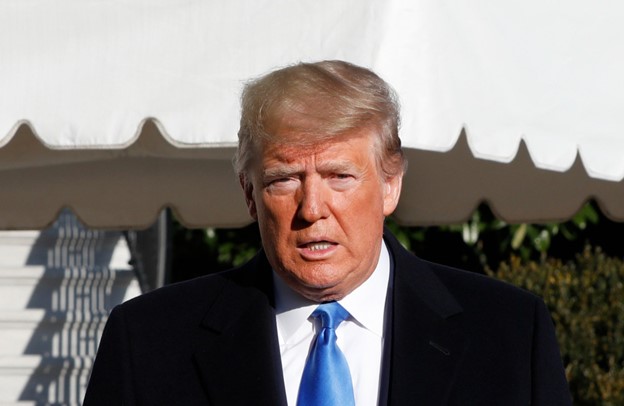
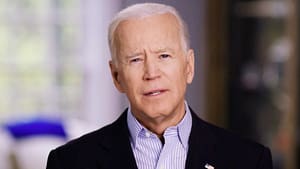
Looking at the news
Are our choices Biden or Trump?
Dear God, take them now.
Quit Talking About Communism, MAGA Dudes.
The democrats
Need to start attacking
The MAGA right-wing
Troll attacks on them
As being radical left
Communist Marxists fascists
Hey Dude!
Quit talking about communism
Bro
It just makes you
Sound as old
As F…..
Which is not a good look
These days.
Does Granpa even know
What year it is?
Communism menace
He sounds like he is
Stuck in the 50’s
Was he alive in 1990?
Does he not remember
The fall of the Berlin Wall
The spread of democracy
Across Eastern Europe
And too briefly
Even in Russia?
Is he aware
That even the
The Chinese are not
Communists in the old sense
Russia is a crony capitalism
Oligarchy
As is China perhaps
North Korea
Is Kimilsungism
Even Vietnam
Is not communist
In the old style either
Only a few places left
Cuba perhaps
Some aging college professors
In Berkeley and Harvard
perhaps
only 20,000 US CP members
left alive
the communist party of China
is not working with George Soros
who is not a communist either
nor is Bill Gates
the democratic leaders
Bernie Sanders etc
BIll Clinton is not a communist
Barack Obama is not a communist
nor is he a Muslim
Joe BIden is not a communist
Mandami is not a communist
Democratic socialism and communism
are not the same thing!
So please do us all a favor
Shut up already
About communism
And don’t call me
A communist
For writing this
I am not a communist
Although I grew up
In Berkeley
And read
Das Capital
In high school.
l
Letter to Republicans
Biden is not a communist, so shut up with that nonsense.
Dear Republicans
Lately the airwaves
Of the Fox alternative universe
Has been filled with pernicious nonsense.
Uttered by all the pundits.
And Republican leaders.
The pernicious nonsense
Is that Joe Biden, and the entire
Democratic Party
Has been taken over.
By Marxists
Determined to turn to the US.
Either into Cuba, Venezuela
Communist China or North Korea.
But oddly not Russia
Who some believe now.
Is our friend.
Anyone alive
For the last thirty years
Knows that communism died.
A long time ago
There are no communists anywhere.
Even in China, no one believes.
In classic communism.
And Joe Biden may be many things.
But a hardcore Marxist Communist
Working to turn the US
into a communist country.
Is not one of them.
The only people who believe this nonsense
Is the aging John Birchers?
Who still screams about the communist menace?
And perhaps a few aging left-wing radicals
Who still believes in Marxism.
So please just shut up.
About communism
And other imaginary boogeymen.
Communism diedWhen Berlin Wall fell
The End |

Thanks so much for visiting my site. Your comments are welcome but please play nice…. Reply