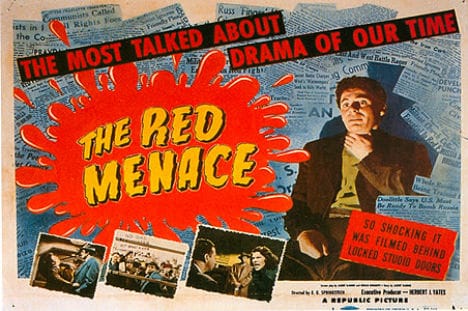
. More Communist BS” —
Decoding the Story
Is America Center-Left, Center-Right or Neither?
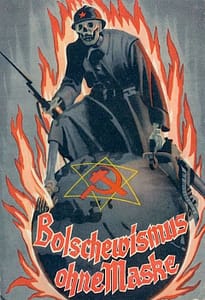
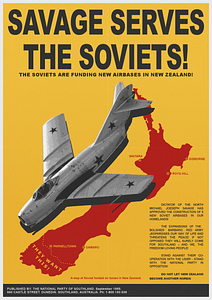
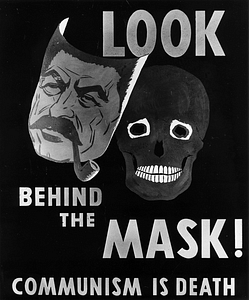
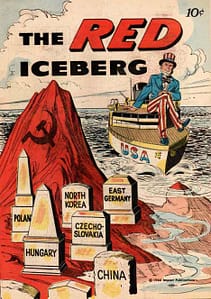
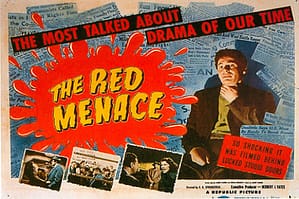
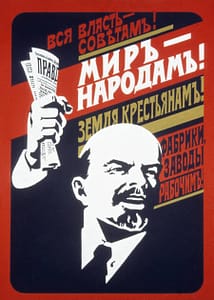
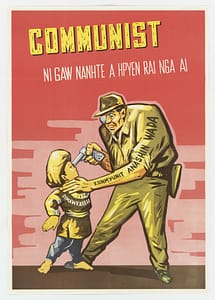
Records of the U.S. Information Agency, 1900-2003
Still Pictures Identifier: 306-ppb-129
https://wp.me/p7NAzO-4g2
More Communist BS? -Decoding America’s Latest Red Scare
With a few family stories from Berkeley
more Communist BS!
Recently, President Donald Trump has made anti-communism a central theme of his political messaging, repeatedly describing some progressive Democrats as communists and portraying the 2026 midterm elections as a battle between patriotism and communism.Whether one agrees with that characterization or not, the rhetoric has revived memories of earlier periods in American history when fears of communism shaped public life, influenced elections, and affected the careers of thousands of Americans.To understand today’s arguments, it helps to understand yesterday’s history.
What the President Has Been Saying
Trump has sharply increased his use of anti-communist language since late June 2026. According to a Reuters analysis, he invoked communism 81 times in roughly two weeks and described some progressive Democratic candidates as “hardcore, godless communists.” [reuters.com], [usnews.com]
In speeches at Mount Rushmore and elsewhere, Trump argued that:
- Communism is a major threat to the United States. [aljazeera.com], [reuters.com]
- Americans must choose between being “a communist” and “a patriot.” [time.com], [motherjones.com]
- Some recent Democratic primary winners represent a dangerous ideological shift. [usnews.com], [washingtonpost.com]
The White House previously proclaimed an official “Anti-Communism Week” in 2025, describing communism as a destructive ideology responsible for mass repression and loss of life. [whitehouse.gov]
What Others in the Administration and Congress Are Saying
Republican allies have generally echoed the theme.
For example, Senator Ted Cruz recently contrasted what he described as capitalist policies with socialism and communism, arguing for policies that encourage private ownership and investment. [theguardian.com]
Reuters reports that Republican strategists view anti-communist messaging as a way to highlight ideological differences with progressive Democrats following several victories by democratic-socialist-backed candidates. [reuters.com], [usnews.com]
What Critics Are Saying
Critics from the center-left and left argue that:
- Trump is conflating democratic socialism with communism. [reuters.com], [theguardian.com]
- The rhetoric resembles earlier American “Red Scare” politics. [washingtonpost.com], [theguardian.com]
- The term “communist” is being used primarily as a political label rather than as a precise description of an economic system. [theguardian.com], [theguardian.com]
Some commentators have compared the language to McCarthy-era anti-communism of the 1950s. [theguardian.com], [washingtonpost.com]
The President’s Niece
Mary Trump, the President’s niece and a frequent critic, continues to provide political commentary criticizing Trump and MAGA politics. I found evidence of her ongoing public criticism through her podcast and media appearances. However, I did not find a source specifically addressing these latest anti-communist remarks, so I cannot reliably attribute a direct response from her to this particular controversy. [youtube.com]
Press Coverage: Major Themes
Coverage generally divides into three camps:
Supportive
Conservative commentators often view the rhetoric as a warning against authoritarian socialism and a defense of traditional American capitalism.
Mainstream Analytical
Reuters, TIME, and other mainstream outlets have focused on the strategy itself, examining whether anti-communist messaging will help Republicans in the 2026 midterm elections. [reuters.com], [time.com]
Critical
Progressive outlets and opinion writers argue the rhetoric revives Cold War fears and exaggerates the influence of actual communism in modern American politics. [motherjones.com], [theguardian.com]
A Short History of Anti-Communism in America
The First Red Scare (1919-1920)
American anti-communism emerged as a mass political movement in the years following the 1917 Russian Revolution.After World War I, labor unrest, anarchist bombings, and growing fears of Bolshevism led many Americans to believe that revolutionary movements threatened the United States. The resulting panic produced the Palmer Raids, during which Attorney General A. Mitchell Palmer authorized mass arrests and deportations of suspected radicals.
Many historians now regard these actions as serious violations of civil liberties.
The Cold War and McCarthyism
Anti-communism reached its peak after World War II.
The Soviet Union’s expansion into Eastern Europe, the Chinese Communist Revolution in 1949, and the Soviet acquisition of nuclear weapons intensified fears that communism was spreading around the globe.
During this period, Senator Joseph McCarthy became the public face of anti-communist investigations. Although some Soviet espionage networks did exist, McCarthy’s methods remain controversial because many accusations relied on weak evidence, rumor, or guilt by association.
Thousands of Americans lost jobs, security clearances, and professional opportunities because of alleged communist affiliations.
The House Un-American Activities Committee (HUAC)
The House Un-American Activities Committee, commonly known as HUAC, was established in 1938 and became a permanent congressional committee in 1946.
HUAC investigated alleged communist influence in government, labor unions, universities, and the entertainment industry. Witnesses were frequently pressured to identify friends, coworkers, and associates suspected of left-wing political views.
Many critics later described the hearings as political witch hunts.
The committee became particularly famous for its investigations of Hollywood writers, actors, and directors. The resulting blacklist damaged countless careers.
Among the best-known figures affected were:
- Dalton Trumbo
- Arthur Miller
- Lillian Hellman
- Ring Lardner Jr.
- Paul Robeson
- Pete Seeger
- Charlie Chaplin
HUAC was renamed the House Internal Security Committee in 1969 and was abolished in 1975.
Historians estimate that roughly 10,000 Americans suffered career losses or blacklisting during the broader McCarthy-era anti-communist campaigns.
The John Birch Society
Founded in 1958 by Robert Welch, the John Birch Society became one of the most influential anti-communist organizations in America.
The Society argued that communists had infiltrated major American institutions, including government, education, media, and international organizations.
Supporters viewed the group as an early warning system against totalitarianism. Critics argued that it frequently exaggerated communist influence and promoted conspiracy theories.
Although the organization never became mainstream, many of its themes continued to influence later conservative political movements.
My Family’s Encounter With Anti-Communism
My father was an economist and political activist from the 1940s until his death.
While he was a student at the University of Washington, he helped lead efforts to integrate the university. At one point, the FBI interviewed his roommate because authorities apparently suspected my father of communist sympathies.
My mother had a similar experience.
As president of the Pacific Telephone employees’ union, she was approached by FBI agents who wanted to know whether she was a communist.
She replied:
“What a stupid question. If I were a communist, would I tell you? Of course not. Now go away and quit bugging me.”
The agents departed.
Years later she joked that if President Harry Truman wanted to talk to her, he would have to arrange the meeting himself.
In one of those strange twists of history, she eventually met Truman at a union function in San Francisco.
The newspaper headline read:
“Harry Meets Mary.”
Communist Real Estate Agents and Communist Cats in Berkeley
Just Another Berkeley Family to Me

My best friend Robert’s father was a communist real estate agent. His mother was a Buddhist nun.
Robert grew up in a left-wing household, what we would now call a “red-diaper baby.”
His parents had several cats, all with communist names.
Lennon, Mao, Stalin, and Trotsky were the secret rulers of the household.
Mao was especially cute.




One day I asked Robert’s father, whom I called Bob:
“Bob, are you a communist?”
“Yeah.”
“So how can a communist who doesn’t believe in private ownership of real estate become a real estate agent?”
Bob smiled.
“Even communists have to make a living.”
Incidentally, Bob had been drafted by the U.S. Army during the 1950s. After honestly identifying himself as a communist on his intake paperwork, the Army later gave him a dishonorable discharge.
He and several others sued.
The U.S. Supreme Court ultimately ruled in their favor, holding that the government could not punish them for honestly disclosing political beliefs that were already known when they were drafted.
To me, this was just another Berkeley family.
3. Secretary of State’s Conference on “Political Terrorism”
What was announced?
Secretary of State Marco Rubio is hosting a ministerial meeting in Washington involving representatives from more than 60 countries to discuss what the administration calls a “resurgence of political terrorism” and political violence.reuters+1
Reporting indicates that the administration intends to focus particular attention on violent far-left extremist organizations and transnational anarchist networks.deseret+1
Reuters reported that administration officials describe the initiative as part of a broader counterterrorism strategy rather than a conference exclusively focused on Antifa. They also state that violent right-wing groups remain within the overall counterterrorism framework.reuters+1
Does Antifa Pose a Threat?
This depends heavily on definitions.
Evidence cited by supporters of the administration’s position
Administration officials point to:
- firebombing incidents,
- attacks against government facilities,
- attacks on law-enforcement targets,
- transnational anarchist groups designated as terrorist organizations,
- politically motivated violence by some self-described anti-fascist activists.deseret+2
Their argument is that some violent networks operate internationally and fit traditional definitions of political terrorism.reuters+1
Skeptical assessments
Critics—including some former officials, diplomats, and terrorism analysts—argue that left-wing extremism exists but does not currently represent the same scale of global terrorist threat as jihadist organizations or some other violent extremist movements.yournews
They also note that “Antifa” is not a single hierarchical organization, making broad generalizations difficult.deseret
Balanced conclusion
A reasonable evidence-based conclusion is:
- Violent far-left extremist actors exist.
- Some have engaged in criminal or politically motivated violence.
- There remains genuine debate among experts regarding the size, organization, and overall threat level compared with other extremist movements.reuters+2
Is Communism a Major Threat Again?
This question requires distinguishing between:
- Communism as an ideology
- Communist states
- Violent revolutionary movements
Current reality
Communism remains politically significant in some countries, including China, Vietnam, Cuba, and North Korea, though their economic systems differ substantially from classical Marxist models.
Argument that it is a growing threat
Supporters of that view point to:
- authoritarian behavior by some communist governments,
- influence operations,
- cyber activities,
- revolutionary left-wing movements in some regions,
- links between some extremist groups and revolutionary Marxist ideas.deseret+1
Counterargument
Many scholars argue that the principal geopolitical competition today is less about “communism versus capitalism” and more about:
- authoritarianism versus liberal democracy,
- nationalism,
- state power,
- technology,
- economic competition.
Under this interpretation, the Cold War framework only partially explains current conflicts.
Assessment
It would be difficult to support the claim that a worldwide communist revolution is imminent. However, communist-inspired, Marxist, anarchist, and other revolutionary ideologies still influence some political movements and insurgent groups around the world.
Press Coverage: Major Themes
Press coverage is sharply divided.
Conservative outlets tend to emphasize:
- growing political violence from the far left,
- failures of previous counterterrorism priorities,
- transnational anarchist networks,
- attacks on law enforcement.deseret+1
Centrist and mainstream reporting tends to emphasize:
- uncertainty about the scale of the threat,
- concern about politicizing counterterrorism,
- debates over definitions of terrorism,
- risks of overbroad government powers.reuters+1
So Is America Facing Another Red Scare?
That depends on whom you ask.
Supporters of the current anti-communist rhetoric argue that authoritarian communist governments still exist and that revolutionary Marxist ideas continue to influence some political movements around the world.
Critics argue that the term “communist” is increasingly being used as a political label rather than a precise description of an ideology, much as it was during earlier Red Scares.
Whatever one’s political views, history offers a useful lesson: fear can be a powerful political force, but it can also lead to exaggeration, overreaction, and threats to civil liberties.
America has been debating communism, socialism, radicalism, and political dissent for more than a century.
Apparently, we’re not done yet.
Endnote
Across all three topics—Iran, Ukraine, and political extremism—the key pattern is polarization and uncertainty.
- Iran: diplomacy survives, but military escalation remains a real risk.
- Ukraine: neither side appears close to a decisive victory or negotiated settlement.
- Political terrorism debates: evidence supports concern about some violent far-left actors, but experts continue to debate the scale of the threat and whether it warrants the level of emphasis currently being given by the administration.reuters+2

Thanks so much for visiting my site. Your comments are welcome but please play nice…. Reply