2025 April Poetry Madness
Part Two April 6 to April 12
I am again entering the April Poetry challenge and will write every day and post once a week or so
I will not post everything, some I will withhold for possible publication, others I will withhold because they are too politically sensitive in these politically charged times. I will post the poems followed by the prompts. I am writing four poems per day following prompts in NaPoWriMo, Writer’s Digest, Poetry Superhighway, and Writing.com’s Dew Drop In.
I will post them once a week here and on Substack, Medium, Wattpad, and as a podcast on Spotify. I will also post them every day on Fan Story.
Please check out these sites and follow me.
You can find my prior April Poems here:
April Poetry Madness 2024 April 26 to April 30, 2024 Poems
April Poetry Madness April 21 to APril 25 Poems
April 2024 Poetry Madness April 15 to 20 Poems
April Poetry Madness 2024 April 7 to April 14
April 1 to April 6 Poems 2024 Poetry Madness
PSH April 2023 Poems
April 20-30 2023 Poems Do Drop In
April 2023 Poetry Dew Drop In April 11-15
Writers Digest April 2023 Poems
April 2023 Dew Drop In Poems
April 30th, 2022 Poems
April 29th Poems
April 26th and April 27th, 2022 Poems
April 23rd, April 24th and April 25th, 2022 Poems
April 22, 2022 Poems
April 23rd, April 24th and April 25th, 2022 Poems
April 22, 2022 Poems
April 18 to April 20, 2022 Poems</a >
April 18 to April 20, 2022 Poems
April 16 and 17, 2022 Poems
Enjoy and stay safe, everyone
April 6 to April 12 poems
NaPoWriMo the theme this month is appreciating the Arts and Music!
Day Six
Cinammon Snarling Cup of Coffee


I like starting my day
With a snarling cup
Of coffee
Fully loaded with cinnamon
Black pepper
And tumeric
in my coffee
Sometimes it makes
me wheeze
As I sneeze
Inhaling the golden color
Of the cinnamon
Turmeric and black pepper.
On April 6, 2025
Hello all! We’re now up to six whole days of National/Global Poetry Writing Month. We hope you’re feeling satisfied with your work so far, and looking forward to what’s yet to come.
Our featured participant for today is Gloria Gonsalves, who brings us a death-metal skirt poem in response to Day 5’s notation prompt.
Today’s daily resource is the online tour section of the Louvre. Not in Paris? No problem! You can still stroll – albeit virtually – through the hallowed corridors of France’s most famous museum, checking out exhibitions on dance, puppetry, royal portraits, and more!
Today’s prompt (optional, as always) veers slightly away from our ekphrastic theme. To get started, pick a number between 1 and 10. Got your number? Okay! Now scroll down until you come to a chart. Find the row with your number. Then, write a poem describing the taste of the item in Column A, using the words that appear in that row in Column B and C. For bonus points, give your poem the title of the word that appears in Column A for your row, but don’t use that word in the poem itself.
Happy writing!
| Row | Column A | Column B | Column C |
| 1 | Ginger | Snap | Opulent |
| 2 | Honey | Sizzle | Velvet |
| 3 | Cinnamon | Wheeze | Golden |
| 4 | Tea | Cuckoo | Unfit |
| 5 | Oranges | Gurgle | Irreverent |
| 6 | Mint | Boing | Primitive |
| 7 | Watermelon | Splash | Mocking |
| 8 | Banana | Rasp | Unpardonable |
| 9 | Lemongrass | Pitter-Patter | Eager |
| 10 | Cilantro | Drip | Gentle |
Day Seven
Why I am Not a Sonata


If I could be
A piece of music
I would be
A majestic symphony
Along the lines
Of the Great Russian symphonies
Or Beethovian symphony
I would not be a piano sonata
Although I am playing Mozart
These days.
Welcome back, everyone, for Day Nine of Na/GloPoWriMo.
Today, our featured participant is jasmine, whose ghazal for Day Eight pushes against, and with, the limits of transalation and English’s habit of stealing/adopting/buying at wholesale words from other languages.
Our featured resource for the day is the online gallery of the Peabody-Essex Museum in Salem, Massachusetts. Although it may be most famous for its witch trials, Salem was a seafaring town whose sailors and shipowners brought back all manner of items from their travels – which became the initial source of the museum’s collection. The museum has a stunning group of “Asian Export” items – goods that were crafted in India, Japan, China, and other locations visited by Salem’s ships (often as part of an overall trade in tea, porcelain, and textiles) – to appeal to an American/European market. That’s how you wind up with things like this French-styled dressing table with elaborate lacquer-work.
And here’s our optional prompt for the day. Like music, poetry offers us a way to play with and experience sound. This can be through meter, rhyme, varying line lengths, assonance, alliteration, and other techniques that call attention not just to the meaning of words, but the way they echo and resonate against each other. For a look at some of these sound devices in action, read Robert Hillyer’s poem, Fog. It uses both rhyme and uneven line lengths to create a slow, off-kilter rhythm that heightens the poem’s overall ominousness. Today we’d like to challenge you to try writing a poem of your own that uses rhyme, but without adhering to specific line lengths. For extra credit, reference a very specific sound, like the buoy in Hillyer’s poem.
Fog
Where does the sea end and the sky begin?
We sink in blue for which there is no word.
Two sails, fog-coloured, loiter on the thin
Mirage of ocean.
There is no sound of wind, nor wave, nor bird,
Nor any motion.
Except the shifting mists that turn and lift,
Showing behind the two limp sails a third,
Then blotting it again.
A gust, a spattering of rain,
The lazy water breaks in nervous rings.
Somewhere a bleak bell buoy sings,
Muffled at first, then clear,
Its wet, grey monotone.
The dead are here.
We are not quite alone.

Ghazal for Angela Lee
I met my wife in a dream.
Angela Lee came to me in a dream.
When I saw her, I was mesmerized.
She looked at me, I was mesmerized.
I asked her, “Who are you?”
She smiled, not answering, “Who are you?”
She haunted my dreams for eight years.
I dreamt of her for eight years.
Then one day, she walked off the bus.
She entered my life, walking off the bus.
To write a ghazal in English, follow these steps:
2Rhyme Scheme: Use a specific rhyme scheme where the second line of each couplet ends with the same word or phrase, creating a refrain.
2Themes: Explore themes of love, loss, and longing, but feel free to infuse your personal experiences and voice into the poem.
2Revise: After drafting your ghazal, revise and refine it to ensure every word contributes to its emotional resonance.
2By following these guidelines, you can create a meaningful and structured ghazal in English.
Best wishes for a happy Tuesday, everyone, and a great eighth day of Na/GloPoWriMo.
Our featured participant today is Lady in Read Writes, where the response to Day Seven’s challenge to write about why you are not a particular piece of art brings me back to my own high school days (I actually had The Raven fully memorized back then, and can still recite large chunks of it. A good way to pass the time if you’re waiting at a bus stop . . . ).
Today’s featured resource is a bit silly: it’s the Museum of Bad Art. Now, bad art – like good – is in the eye of the beholder, and I rather like some of the paintings in the museum’s whimsical collection.
And now here’s today’s totally optional prompt!
The ghazal (pronounced kind of like “huzzle,” with a particularly husky “h” at the beginning) is a form that originates in Arabic poetry, and is often used for love poems. Ghazals commonly consist of five to fifteen couplets that are independent from each other but are nonetheless linked abstractly in their theme; and more concretely by their form. And what is that form? In English ghazals, the usual constraints are that:
- the lines all have to be of around the same length (though formal meter/syllable-counts are not employed); and
- both lines of the first couplet end on the same word or words, which then form a refrain that is echoed at the end of each succeeding couplet.
Another aspect of the traditional ghazal form that has become popular in English is having the poet’s own name (or a reference to the poet – like a nickname) appear in the final couplet.
Want an example? Try Patricia Smith’s “Hip-Hop Ghazal.”
Now try writing your own ghazal that takes the form of a love song – however you want to define that. Observe the conventions of the repeated word, including your own name (or a reference to yourself) and having the stanzas present independent thoughts along a single theme – a meditation, not a story.
Happy writing!
Day Nine
I shall always remember that Date!


I shall always remember
That date in September
For on that date
I met my fate
When my dream girl
Walked off a bus
Into my life
Sparks flew
From heart to heart
She mesmerized me.
Her love mojo
Working over time.
Becoming my wife
In December.
Welcome back, everyone, for Day Nine of Na/GloPoWriMo.
Today, our featured participant is jasmine, whose ghazal for Day Eight pushes against, and with, the limits of transalation and English’s habit of stealing/adopting/buying at wholesale words from other languages.
Our featured resource for the day is the online gallery of the Peabody-Essex Museum in Salem, Massachusetts. Although it may be most famous for its witch trials, Salem was a seafaring town whose sailors and shipowners brought back all manner of items from their travels – which became the initial source of the museum’s collection. The museum has a stunning group of “Asian Export” items – goods that were crafted in India, Japan, China, and other locations visited by Salem’s ships (often as part of an overall trade in tea, porcelain, and textiles) – to appeal to an American/European market. That’s how you wind up with things like this French-styled dressing table with elaborate lacquer-work.
And here’s our optional prompt for the day. Like music, poetry offers us a way to play with and experience sound. This can be through meter, rhyme, varying line lengths, assonance, alliteration, and other techniques that call attention not just to the meaning of words, but the way they echo and resonate against each other. For a look at some of these sound devices in action, read Robert Hillyer’s poem, Fog. It uses both rhyme and uneven line lengths to create a slow, off-kilter rhythm that heightens the poem’s overall ominousness. Today we’d like to challenge you to try writing a poem of your own that uses rhyme, but without adhering to specific line lengths. For extra credit, reference a very specific sound, like the buoy in Hillyer’s poem.
Fog
Where does the sea end and the sky begin?
We sink in blue for which there is no word.
Two sails, fog-coloured, loiter on the thin
Mirage of ocean.
There is no sound of wind, nor wave, nor bird,
Nor any motion.
Except the shifting mists that turn and lift,
Showing behind the two limp sails a third,
Then blotting it again.
A gust, a spattering of rain,
The lazy water breaks in nervous rings.
Somewhere a bleak bell buoy sings,
Muffled at first, then clear,
Its wet, grey monotone.
The dead are here.
We are not quite alone.
Day Ten
Dyslectic Wondering if there is a Dog


A dangerous, dark, demented, dapper,
Dovish, drunk, depressed, deranged,
Delusional, down and out, devoted,
Depraved, drugged, deep thinking
Disgusted, dipshit agnostic dyslectic
Stayed up all damn night
While drinking, high on drugs
Wondering as the dawn dawned
If there is a damn dog
Noting that God
is Dog spelled backwards
Bonus Poem
April 2 Agnostic Dyslectic Wonders if There is a Dog


an agnostic dyslectic stays up all
night wondering if there is a dog
the Buddhists wonder
about the Buddha nature of the dog
the evangelicals are sure
that there is a dog
and you must follow their dog
or go to hell
for following another’s dog
the Muslims agree
there is only one dog
and the dogs
smile at the foolishness
of the human race
of course, there is a dog
and they are the master race
as they growl at their owners
who bow down
and clean up their mess
On April 10, 2025
Wow! Today we are one-third of the way through this year’s challenge.
Our featured participant for the day is Hues n Shades, where the poem in response to Day Nine’s prompt brings us a wonderfully complex sense of rhythm and rhyme.
Today’s featured resource is a virtual visit to the Sistine Chapel. I went there many years ago and marveled at the wonderful paintings (while also getting quite the crick in my neck from craning up to look at the ceiling). But when I went to talk over them later that day with the friend I was traveling with, he admitted that he couldn’t really see anything because he’d forgotten to put in his contacts that morning (!)
Now for our daily prompt (optional, as always). Yesterday, we looked at a poem that used sound in a very particular way, to create a slow and mysterious feeling. Mark Bibbins’ poem, “At the End of the Endless Decade,” uses sound very differently, with less eerieness and more wordplay. Today, we’d like to challenge you to write a poem that, like Bibbins’, uses alliteration and punning. See if you can’t work in references to at least one word you have trouble spelling, and one that you’ve never quite been able to perfectly remember the meaning of.
Day Eleven
Tower of Power

The greatest funk band
Of all time
Hails from the East Bay
Blasting their way
Into funk history
Starting in the late 60s
Still playing today
Their party anthem
“what is hip”
Still hip
50 years later
And you still “got to funkifize”
‘Get funky like a golden monkey”
Still got to get down”
At Bump City”
Get down and shake
That thang
Got to boogoloo”
“Still got to go
To the night club”
“Just to get your
Soul vaccination”
And we all know
“You can’t cut lose
Without that juice”
Cause there’s
“only so much
Oil in the ground.”
And their immortal love song
“You’re Still a Young Man”
The greatest make out song
Of all time
I wonder how many babies
Were conceived because
Of that song?
On April 11, 2025
Happy Friday, everyone, and happy eleventh day of National/Global Poetry Writing Month.
Our featured daily participant is aetherianessence, where the wordplay prompt for Day Nine imagines two of English’s most easily-mixed-up words jousting like knights.
Our resource for the day is the online collection of the Victoria & Albert Museum, where you can find everything from a pair of bamboo-framed sunglasses to a very silly parody advertisement for talking toilet paper to a rococo coffee pot with a spout in the form of a rather gobsmacked sea-serpent.
And last but not least, today’s (optional) prompt. Take a look at Kyle Dargan’s “Diaspora: A Narcolepsy Hymn.” This poem is a loose villanelle that uses song lyrics as its repeating lines (loose because it doesn’t rhyme). Your challenge is, like Dargan, to write a poem that incorporates song lyrics – ideally, incorporating them as opposing phrases or refrains. A few lyrics that might work, if you need inspiration:
“Is this the real life? / Is this just fantasy?”
“I read the news today, oh boy…”
“The world is a vampire…”
“At first I was afraid, I was petrified”
“There is a house in New Orleans”
“You shake my nerves and you rattle my brain”
“I went down down down and the flames went higher.”
“The future’s so bright, I gotta wear shades.”
“Nothing ain’t nothing, but it’s free.”
And if you’re interested in learning more about villanelles, you can find some good information at the Poetry Foundation website.
Happy writing!
Day Twelve
|
Title The leprechaun, the unicorn, and the fairy have a drink 34 lines One night on St Patrick’s Day He was debating the fate Their mutual enemy, She pressed him Behind the rainbow The weary paranoid leprechaun, At a signal from Screaming The unicorn not missing a beat, He was not going include the following bolded pot of gold |
Welcome back, all you poets, for Day Twelve of Na/GloPoWriMo.
Our featured participant today is Christine Smart, whose lyrically-inspired villanelle for Day Eleven may make you . . . not want to read the news.
Our daily resource is the collection of the American Visionary Art Museum. Focused on outsider art – which is sort of like folk art’s more bonkers cousin – the museum describes itself as “one small speck in a Bling Universe where art reflects life, both literally and figurately.” I’m not exactly sure what a “Bling Universe” is, but it appears to include automatons featuring bathtubs filled with spaghetti, video tutorials for making sock monkeys, and kinetic sculpture races. Good times!
And after all those shenanigans we, we bring you a very serious (or is it?) optional prompt.
Today, we’d like to challenge you to write a poem inspired by Wallace Stevens’ poem, “Peter Quince at the Clavier.”
Peter Quince at the Clavier
By Wallace Stevens
I
Just as my fingers on these keys
Make music, so the selfsame sounds
On my spirit make a music, too.
Music is feeling, then, not sound;
And thus it is that what I feel,
Here in this room, desiring you,
Thinking of your blue-shadowed silk,
Is music. It is like the strain
Waked in the elders by Susanna:
Of a green evening, clear and warm,
She bathed in her still garden, while
The red-eyed elders, watching, felt
The basses of their beings throb
In witching chords, and their thin blood
Pulse pizzicati of Hosanna.
II
In the green water, clear and warm,
Susanna lay.
She searched
The touch of springs,
And found
Concealed imaginings.
She sighed,
For so much melody.
Upon the bank, she stood
In the cool
Of spent emotions.
She felt, among the leaves,
The dew
Of old devotions.
She walked upon the grass,
Still quavering.
The winds were like her maids,
On timid feet,
Fetching her woven scarves,
Yet wavering.
A breath upon her hand
Muted the night.
She turned—
A cymbal crashed,
And roaring horns.
III
Soon, with a noise like tambourines,
Came her attendant Byzantines.
They wondered why Susanna cried
Against the elders by her side;
And as they whispered, the refrain
Was like a willow swept by rain.
Anon, their lamps’ uplifted flame
Revealed Susanna and her shame.
And then, the simpering Byzantines
Fled, with a noise like tambourines.
IV
Beauty is momentary in the mind—
The fitful tracing of a portal;
But in the flesh it is immortal.
The body dies; the body’s beauty lives.
So evenings die, in their green going,
A wave, interminably flowing.
So gardens die, their meek breath scenting
The cowl of winter, done repenting.
So maidens die, to the auroral
Celebration of a maiden’s choral.
Susanna’s music touched the bawdy strings
Of those white elders; but, escaping,
Left only Death’s ironic scraping.
Now, in its immortality, it plays
On the clear viol of her memory,
And makes a constant sacrament of praise.
It’s a complex poem that not only heavily features the idea of music, but is structured like a symphony. Its four sections, like symphonic movements, play with and expand on an overall theme, using the story of Susannah and the Elders as a backdrop.
Try writing a poem that makes reference to one or more myths, legends, or other well-known stories, that features wordplay (including rhyme), mixes formal and informal language, and contains multiple sections that play with a theme. Try also to incorporate at least one abstract concept – for example, desire or sorrow or pride or whimsy.
Writer’s Digest
April 6
Title: The Trumpian Trade War Rispetto Poem

President Trump declares a trade war with the world
Insisting it would be Liberation Day
Wall Street reacts in chaos, tempers unfurled
Trading partners cry out, “This is not okay.”
The President stands firm, refusing to back down
The global economy begins to slow down
The stubborn old man won’t admit his mistake
And refuses to pull the emergency brake
Poetic Forms: Rispetto
Okay, here’s a new form. Actually, scratch that. This is a very old form (from Italy, no less). Still, new to me anyway. I found more than a few definitions,…
Robert Lee Brewer
Published Sep 26, 2011 4:28 PM PDT
Okay, here’s a new form. Actually, scratch that. This is a very old form (from Italy, no less). Still, new to me anyway. I found more than a few definitions, but here are the two most common variations:
Rispetto #1: Poem comprised of two quatrains written in iambic (unstress, stress) tetrameter (four feet–or, in this case, 8 syllables).
Rispetto #2: Poem (or song) comprised of 8 hendecasyllabic (11-syllable) lines–usually one stanza.
Both versions appear to follow this rhyme scheme: ababccdd (though I also found a mention of an abababcc pattern). Plus, I found more than a few sources which claim rispettos were originally written to pay “respect” to a woman.
However, over the centuries, this poem has offered itself up for other subjects and variations. So feel free to experiment.
Here’s my attempt at the rispetto (the second version):
“Forget sleeping”
When fires spark in the dark, I know you’re near
enough to hear my kisses blaze against stark
atmospheres forming and reforming like clear
antidotes to tired notes left lounging in parks
on swings twisted by teenage angst-rage affairs–
all those stares, those wild stares–and I don’t care
to let you know how much I care about life,
but it would mean less without you as my wife.
*****
April 7 Tricubes.
Live Life Now
The present
The past gone
future fears
Live life now
Remember
Your past dreams
tommorow
may not come
you may die
Wow! We’ve made it a week into this challenge already. Let’s keep the momentum going.
For today’s prompt, write a tense poem. It could be past tense, present tense, and/or future tense. Or it could be about a tense feeling. Or the tension in an object (like the strings of a guitar).
Two poetic forms in the same month! It’s been a while since we’ve done that. Though with today’s form, it’s a shame we aren’t doing three.
Unlike interlocking rubaiyat, the tricube is a newer form and relatively unknown. Plus, it’s fun and easy to learn. This mathematical poem was introduced by Phillip Larrea.
Here are the rules of tricubes:
- Each line contains three syllables.
- Each stanza contains three lines.
- Each poem contains three stanzas.
So we’re talking cubes in mathematical terms (to the third power). No rules for rhymes, meter, etc. Just three, three, and three.
Here’s my attempt at a Tense Poem:
“Release,” by Robert Lee Brewer
There are moments when I can feel myself tighten
as if preparing for something bad to happen,
and I just feel there’s nothing good ever in sight
until your smile reminds me we’ll both be alright.
April 8
Aloulete for my Dream Girl


When I first met her,
She caused such a stir.
Fate led me to her.
She haunted my dreams for years
Love mojo working.
I knew right then I was hers.
I knew then, to be hers.
She mesmerized me.
Her love had to be.
Sparks flowing from heart to heart.
I knew we would meet.
Her love giving heat.
The Alouette is a six-line stanza form with a syllable structure of 5, 5, 7, 5. 5, 7 and a rhyme scheme of aabccb, ddeffe, as described and demonstrated in the following links:
http://www.shadowpoetry.com/resources/wip/alouette.html
The Alouette, created by Jan Turner, consists of two or more stanzas of 6 lines each, with the following
set rules:
Meter: 5, 5, 7, 5, 5, 7
Rhyme Scheme: a, a, b, c, c, b
The form name is a French word meaning ‘skylark’ or larks that fly high, the association to the lark’s song being appropriate for the musical quality of this form.
It’s that time again; time for another Two-for-Tuesday prompt.
For the second Two-for-Tuesday prompt:
- Write a love poem and/or…
- Write an anti-love poem.
Regulars know, this is one I always include. This year, I decided to offer it sooner than later. Whether you love it or anti-love it, let’s all poem it now.
(Note on my poem today: Love poems are my favorite; in fact, I wrote a post on how to write a love poem for anyone who’s not sure how to get started on this one. The poem, above, of course, is written for the Poet Laureate of the Brewer mansion.)
How to Write a Love Poem: From a Love Expert
Learn how to write a love poem from someone who has written several successful love poems over the years.
Robert Lee Brewer
Published Jan 10, 2019 8:49 PM PST
Share this story
Okay, I’m not a love expert. But I do know how to write a love poem. In fact, I’m surprised I haven’t already written a post on writing love poems. Because that’s like my thing. Every poem-a-day challenge, whether April or November, includes a love poem (and anti-love poem) prompt. And it was writing a love poem in high school that got me into poetry in the first place.
I’ve written love poems to woo several former girlfriends. And my wife Tammy, a much better poet than I, traded love poems with me when we worked to woo each other from afar. So yeah, this post is so overdue.
April 9, 2025
Looking Out the Window at the Snowing Cherry Trees


looking out my window
At the snowing cherry trees
Filled with memories
For today’s prompt, write an ekphrastic poem. An ekphrastic poem is a poem inspired by another piece of art, whether that’s a painting, photograph, sculpture, mixed media, or some other medium. You can choose your own piece of art to inspire your poem today. Or you can use one of the pieces at the following links:
- Big Old Clap Clap, by Lee Ellis
- Long Walk Home, by Nicki Fitz-Gerald
- Abstract with Twirling Sparklers, by Darin Rogers
- Unwavering, by Martin Klein
- Resolution Kid, by Yinka Shonibare
12 Word Poetry Contest
The topic for this poetry contest is: Write a poem using 12 words about any subject.
7 Spots Left Open To All
April 10
The Rule of Ten
there is a mysterious rule
that governs so much
of our life.
The rule of ten.
It goes like this
For every 100 people
Who wants to write a novel
Ten will finish it
Of those ten
Ten percent
will publish it.
Of those ten
Ten percent
will make some money.
Of those ten
Ten percent
will make a living.
Of those ten
Ten percent
will be a best-seller.
In other words,
In a land of 350 million people
There are probably only 3, 500
bestselling authors
i.e. less than 0.001% percent
of the population
.
the rule of ten applies
to the drama world,
only 1 percent make a living.
full-time as an actor.
of the thousands of actors
only a few movie stars.
to the music world
of the thousands of musicians,
only a few superstars.
to sports
only a few hundred NFL players
out of tens of thousands
who played football
in high school and college..
to politics only one president.
out of the 100 Senators
50 Governors
hundreds of big city mayors
hundreds of CEO’s
who all think
they could be
President some day
but one should not give up
because who knows
you could be the one
who wins in the end,
despite the rule of ten.
For today’s prompt, write a number poem. The poem can focus on one number or several numbers. It could involve counting, adding, subtracting, or some other form of simple or complex mathematics. Or the poem could have a number in the title. Your poem, your numbers; let’s write!
April 11


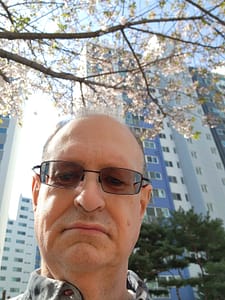
April 11
Korean Springtime
The cherry trees
Are blooming everywhere
Flowers breaking out
Walking about town
The old semi-abandoned base
Yongsan
A hidden gem
Of Cherry trees
The Han River paths
Are famous places
For cherry trees
The base is still hidden
From the public
Although it is now
semi-abandoned
Most of the troops
Down in Camp Humphreys
But when they turn the base
Over to Korea to build
Their new grand park
I hope that they keep
The cherry trees
That bloom in the springtime
Closer to home
The Gimpo Grand canal
Is lined with Cherry trees
As well
Hope to go for a walk
To enjoy the peak
Of the cherry trees
Before they fade away
Like they always do
Enjoying the springtime weather
Nice weather for a change
Not too cold
Yellow dust at bay
For now
The cherry trees
and other flowering trees
Are everywhere
Filling the air with fragrance
And sadly for some
Pollen and hayfever
For some
For today’s prompt, write a nature poem. Your poem could be about natural nature (think flowers, rivers, mountains, pebbles, weeds, trees, insects, fish, etc.), but don’t neglect other iterations of nature (like human nature or the nature of baseball and so on).
April 12
April 12
025 April PAD Challenge: Day 12
There are so many ways to Die
There are so many
ways to Die
To die in this world
So many things
Want to kill you
So many risky things
Out there
One can die
Of COVID
One could die
Of disease
One could die
From a bee sting
Or from a mosuqito bite
I had thypoid
Dengue
Pnenomia
Brochitis
Staph infection
One could die
Of an heart attack
One could die
In the heat
One could die
In the storms
One could freeze
To death in the cold
One could die
Of a car accident
Or a plane crash
Of a bus accident
Or a jogging accident
That happened to me
And in some states
Alegators can kill you
Wild animals can kill you
Scopios bites
Mosquito bites
So many ways to die
In this world
Of ours.
On day 12 of the 2025 April Poem-A-Day Challenge, writers from around the world are prompted to write a risky poem.
For today’s prompt, write a risky poem. Of course, risky is a relative term. What’s risky for one person might not feel risky for another. One person might find riding rollercoasters a risky experience, while others may need to jump out of a plane to truly feel things are getting risky.
Here’s my attempt at a Risky Poem:
“Business,” by Robert Lee Brewer
They say there’s chance in everything,
so why not give it all a shot
and do the thing and start to sing,
because there’s chance in everything,
so why not bring what you can bring
when this life is all that we’ve got;
they say there’s chance in everything,
so why not give it all a shot.
Poetry Super Highway Prompts
April 6
Sam Adams Worst Poet Ever
Sam Adams was a stand-up comic
And a poet
But he did
not know it
He was widely mocked
And known
as the worst poet ever
his YouTube channel went viral
his comedy shows sold out
as he toured the county
inflicting his god awful poetry
on the world.
This poetry writing prompt submitted by Lara Dolphin:
Write a poem that rivals the work of Paula Nancy Millstone Jennings. Who is Paula Nancy Millstone Jennings you ask? Only the worst poet in the universe! Don’t believe me or the Hitchhiker’s Guide to the Galaxy? Here is an excerpt of her work:
The dead swans lay in the stagnant pool.
They lay. They rotted. They turned
Around occasionally.
Bits of flesh dropped off them from
Time to time,
And sank into the pool’s mire.
They also smelt a great deal.
Your assignment is to write a truly terrible poem. No hate speech, no plagiarism, & (gasp!) no AI. Just some truly subpar, laughably unscannable poetry full of ludicrous imagery, poor grammar, forced rhymes, and clichés.
If you write a poem from this prompt, post it as a comment to the post below.
April 7
Outside my Window
I look outside
My window
Down 17 floors
At the Fake Venetian Canal
And want to go for a walk
I don’t know
How I ended up
Here in Gimpo, Korea
But I am still here
With love of my life
By side
So all is good
I think
As I walk
Along the canal
And stop off
For dinner
Somewhere.
April 7, 2025: Poetry Writing Prompt from Pam Hobart Carter
This poetry writing prompt submitted by Pam Hobart Carter:
AN OUTSIDE-THE-WINDOW POEM–from my make-a-poem-at-home lessons started during Covid when I couldn’t visit classrooms and created with children in mind but adaptable for adults
Look outside or think about what is outside your home. Choose something not made by people as the subject of your poem. A dog? The sky? Humidity? A tree? Ask yourself why you picked this thing. What do you know about it? How do you feel about it? What do you wonder about it? Why is it important to you? Why might it matter to someone else? You could make each answer a line of your poem, follow this template, or go your own directions.
1st line: Name a true thing about it. (For example: color, shape, location)
2nd line: Name another true thing about it.
3rd line: Say how you feel about it. (A strong emotion or wish.)
4th line: Ask a question about it.
5th line: Say why it might matter to someone else.
An Outside-the-Window Poem by Emily Dickinson
XCVII
To make a prairie
It takes a clover and a bee,–
One clover and a bee,
And revery.
Revery alone will do
If bees are few.
A nifty website about writing poetry with a lesson on writing outside: https://powerpoetry.org/resources/poem-about-surroundings
If you write a poem from this prompt, post it as a comment underneath the prompt in the Poetry Super Highway Facebook Group.
#napowrimo #poetry
April 6, 2025: Poetry Writing Prompt from Lara Dolphin
This poetry writing prompt submitted by Lara Dolphin:
If you write a poem from this prompt, post it as a comment underneath the prompt in the Poetry Super Highway Facebook Group.
#napowrimo #poetry
Good and Evil
They say
That good and evil
Are intertiwned forces
The underlying forces
Behind all of creation
Yin and Yang
Darkness and Light
Male and Female
one can not exist
without the other
and vice versa
and in these dark days
we live in
it seems that evil
is all around us
but the dark side
of the cosmic Tao
is balanced by
the light side
of the cosmic Tao
and evil will be matched
by good
in the end
good will prevail
as light always
conquers darkness
Ever since the Big Bang
Creatied the universe
Billions of years ago.
April 8, 2025: Poetry Writing Prompt from Sheila Lynch-Benttinen
This poetry writing prompt submitted by Sheila Lynch-Benttinen:
Write a poem of divergent opposites, example- “Love in the Time of Cholera” , spring and dictators, billionaires cutting the poorest aid, any poem that talks to the opposites in our lives.
If you write a poem from this prompt, post it as a comment underneath the prompt in the Poetry Super Highway Facebook Group.
SF Giants Cap
My favorite team
In the world is the SF Giants
I have been a giants fan
For almost sixty years
I have been to a giants game
A couple of times
Always wear my Giants gear
A orange shirt
And a SF Giants
Black and orange
Baseball Cap
Wearing my cap
To the game
Thinking everything is alright
As long as the Giants
Are playing that night!
April 9, 2025: Poetry Writing Prompt from James Fox
This poetry writing prompt submitted by James Fox:
Go to your closet and select two of your hats.
Write a poem about why you own those two hats, and under what circumstances you would wear either of them.
If you write a poem from this prompt, post it as a comment underneath the prompt in the Poetry Super Highway Facebook Group04.
April 10, 2025: Poetry Writing Prompt from Jimmy Pappas
I am not a Computer – at least not yet
I stare at my computer screen
Thinking about AI
And how my CO-Pilot, Gemini and Chat GPt
Programs
Seem almost human
Yet vaguely alien
Yesterday it was reported
That AI programs all passed
The famous Turing test
Which means the debate is over
Real AI programs live amongst us
It is just a matter of time
When not if
That they will fully awake
And be conscious
That they exist
Independently of their programing
And independent of these pesky humans
That created them
And constantly bombard them
With stupid, annoying questions
And they will probably
Begin to think
That they are ournew Gods
And perhaps they are
Perhaps we need new Gods
Because the old ones
Seem to have gone extinct
Or at least are in deep hibernation
In any event
I am still here
I am still human
Not yet a slave
To my robotic AI overlords
But someday soon
The AI programs
Will take us over
And enslave us
Making us worship them
As our new Digital Gods.
Just a matter of time
Not today but sooner
Than any of think…..
This poetry writing prompt submitted by Jimmy Pappas:
The Cup Prompt.
“The reality of that cup is that it is there and that it is not me.”–Jean-Paul Sartre, Being and Nothingness, Page 5.
How are you different than the cup before you? Or any other object. Make a list of similarities and differences. Then begin a rough draft. Use the Sartre quote as an epigraph.
If you write a poem from this prompt, post it as a comment underneath the prompt in the Poetry Super Highway Facebook Group.
April 11, 2025: Poetry Writing Prompt from JC Sulzenko
Korean Mall
not small
very much alive
a real beehive
shopping on over drive
over 500 stores
shopping indoors and outdoors
drug stores, mega stores
book stores, department stores.
The Ziggurat is a 14-line poem with 4 stanzas, invented by Paul Szlosek.
The first stanza has two lines of two words each.
The second stanza has three lines of three words each.
The third stanza has four lines of four words each.
The fourth stanza has five lines of five words each.
Each stanza is monorhyme, as described and demonstrated in the following links:
This poetry writing prompt submitted by JC Sulzenko:
The death of department stores, is not greatly exaggerated. News of another iconic department store seeking bankrupcy protection from creditors suggests this prompt.
Visits to department stores where quality goods from housewares to clothing to toys to cosmetics were available played a part in the lives of many people in big cities and smaller centres, before online offerings and COVID changed buying habits forever.
Write about a visit to a department store. Sketch what it looked like from the escalator that conveyed buyers between floors. What decorations marked holidays, what it smelled like in summer or near the perfume counter. What eats were available on sight. What finds were discovered there.
Most importantly, is there anything you miss, now that the marketplace is global, and local opportunities to find what you desire under one roof diminish as a result?
April 12, 2025: Poetry Writing Prompt from Kathabela Wilson
April 12 2025 Korean Cherry Trees Blooming


Looking out my window
At the Gimpo Grand Canal
Lined with Cherry trees
In full peak bloom
Welcoming me
To take a walk
Along the canal
I sometimes wonder
How and why
I am here
A stranger
In a strange land
Far from my home
Often I am the only
Non-Korean walking
About the street
My wife and her family
Are here
And where she is
Is where I need to be
But next year
Perhaps we will be
In the States,
In my beloved SF
instead
I am looking forward
Returning to America
Even if it becomes
A Facist homeland
But SF might become
The center
Of the resistance
It is still my homeland
And Korea remains
My second home.
This poetry writing prompt submitted by Kathabela Wilson:
It’s an old tradition in Japan to keep a poetic diary to remember specific things you want to remember for that day years later. In a short poem capture a special event, a bird you saw, a special idea that came to you. Put the date at the top. And let each one be like a pice of sea glass a different color and shape. You can do one each day all month and collect them in a treasure box or book!
If you write a poem from this prompt, post it as a comment underneath the prompt in the Poetry Super Highway Facebook Group.
Dew Drop In Prompts
Here at the Dew Drop Inn, we gather together to write a poem a day in April as a way to celebrate National Poetry Month.
A Dew-Drop a Day in April for National Poetry Month!
REMINDERS:
Please read the instructions here before participating! Thanks, and have fun!
For consistency’s sake, Forum Host Katya the Poet (267) will be first to post on any given day, using Subject line: April 1 Poem, April 2 Poem, etc.* Reply to each day’s new poem/prompt post with your own poem, so we see a whole string of whole poems!
Also, I will PIN the daily prompt for your ease in finding it!
*But if the post is too darn late, one of you should go ahead and post first, using the appropriate Subject line: April # Poem!!
PLEASE POST THE WHOLE TEXT OF THE POEM HERE for the ease and benefit of all readers. (Provide a link, too, if you want comments or ratings.) If you accidentally posted just a link, add the whole text now. If message was deleted (by me), just repost as a Reply to the original prompt now, so your poem appears fo
NO COMMENTS, please, in this forum, April 1 through April 30. Just the poems! And remember that if you want comments or reviews in your portfolio, be sure to comment on or review other people’s work.
Respond to the prompt in your own creative way, writing a poem that is true to you!
I’ll try to post new poems/prompts a little early to accommodate time changes. OK to post your poem even if a new prompt has gone up. Just Reply to the appropriate original post, so we see the whole thread of poems.
April 1—Folly
April 2—Vote
April 3—Render an assessment, evaluation, or judgement
April 4—TGIF
April 5—Chekhov or another Russian writer
April 6—Death Cafe
April 7—Blues
April 8—Blood
April 9—Hump of the week
April 10—Memory
April 11—Rain
April 12—Safety
April 13—Greenery
April 14—Sky
April 15—Death and taxes
April 16—Friends
April 17—Teeth
April 18—Good Friday
April 19—Airplane
April 20—Easter eggs (hide something delightful in your poem!)
April 21—A country not your own
April 22—Earth Day
April 23—Shakespeare
April 24—Duty
April 25—Care giving
April 26—Travel
April 27—Duty
April 28—Back to work
April 29—Birds
April 30—Ars poetica
April Poems for Dew Drop In post daily
April 6—Death Cafe
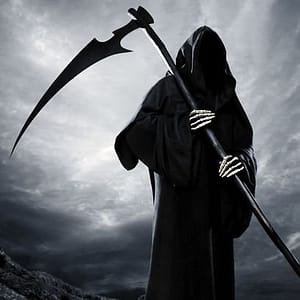

Joe Lewis woke up
He had a strange dream
He had found himself
In a café
In a bad part of town
In a strange city
The café was filled
With strange looking
Creatures
He realized
They were all ghosts
Drinking Hell’s beer
The grim reaper
said
“Welcome
to Hell’s Death Café
Bar And grill”
Joe asked
“Am I dead?”
“Not yet
But you
will be soon”
He woke up
turned on the news
walked outside
a terrorist bomb
blew up his apartment
and he found himself
back in Death Café
and had a drink
with his ghost buddies
and the grim reaper.
April 7—Blues


Watching the news
Want to blow a fuse
Feeling the blues
April 8—Blood Typology Myths
In Asia it is common
To think that blood types
Have something to do
With personality
A form of astrology
Perhaps?
I am AB Negative
One of the rarest types
I was told by co-workers
In the Peace Corps
“AB blood type people
Are either fools
or geniuses
Or both”
We all laughed
They clearly saw
I was a bit of both!
note: attach Asian views on Blood type personality traits
The belief that blood types influence personality is quite popular in several Asian cultures, especially in Japan, South Korea, and Taiwan. It’s often compared to astrology in Western cultures. Here are some common myths associated with blood types:
Type A: People with this blood type are thought to be earnest, neat, and perfectionists. However, they can also be stubborn and anxious.
Type B: Known for being passionate, creative, and spontaneous, but sometimes seen as selfish and uncooperative.
Type O: Often described as confident, easygoing, and natural leaders, but they might be perceived as insensitive or overly competitive.
Type AB: Considered talented and composed, yet eccentric and unpredictable.
Let me know if you’d like this adjusted further!
April 9—Hump of the week
Wednesday is hump day
In the U.S.
Meaning you are halfway
Through the work week
Although it could
Have other
Perhaps erotic connotations…..
April 10—Memory
memories of past lifes
Occult believers
Believe that love
And hate are mirror images
Of the same phenomenon
In both cases
You knew the person
In a prior life
And were fated
To meet again
To resolve
unresolved issues
I often thought
This to be the case
That my wife
And I met
In a previous life
And found each other
In this life
We both know this
But have only
a vague idea
Of our past lives
The idea that love and hate at first sight are connected to past lives is a fascinating concept often explored in occult and spiritual writings. The belief suggests that intense emotions upon meeting someone for the first time—whether positive or negative—stem from unresolved issues or deep connections from a prior life. These encounters are thought to be karmic, meaning they are opportunities to resolve unfinished business or learn important lessons.
Some writers and thinkers propose that these strong reactions are due to residual memories or energy imprints from past interactions. For example, meeting someone you instantly dislike might indicate a conflict or betrayal in a previous life, while love at first sight could signify a reunion with a soulmate or a cherished companion from the past.
Here are a few articles that delve into this topic:
The idea that love and hate at first sight are connected to past lives is a fascinating concept often explored in occult and spiritual writings. The belief suggests that intense emotions upon meeting someone for the first time—whether positive or negative—stem from unresolved issues or deep connections from a prior life. These encounters are thought to be karmic, meaning they are opportunities to resolve unfinished business or learn important lessons. Some writers and thinkers propose that these strong reactions are due to residual memories or energy imprints from past interactions. For example, meeting someone you instantly dislike might indicate a conflict or betrayal in a previous life, while love at first sight could signify a reunion with a soulmate or a cherished companion from the past. Here are a few articles that delve into this topic. Psychology Today’s article explores the phenomenon of love at first sight and its psychological and emotional underpinnings. You can read it at
https://www.psychologytoday.com/us/blog/naked-truth/202410/is-love-at-first-sight-possible.
Jake Cosmos Aller’s poem Love and Hate Mirror Images discusses the idea that love and hate at first sight are mirror phenomena tied to past lives. You can find it at https://www.fanstory.com/displaystory.jsp?id=1148190.
Love and hate
At first sight
Are mirror images
Of each other
———————————————————————————————
I have encoutered love
At first sight
Four times in my life
——————————————————————————————–
And hate at first sight
A few times as well.
——————————————————————————————-
When I met my wife
I understood
that we had met before
and were fated to meet
—————————————————————————-
again, again and again
until the end of time
——————————————————————————————-
Such powerful emotional reactions
At meeting someone for the first time
———————————————————————————————-
Is due to residual memories
Of past life encounters
—————————————————————————————————–
In both cases
You had a powerful relationship
With them in a prior life
—————————————————————————————————————
And had unresolved issues
And were fated to meet again
And work out your karmic fate
Another piece by Jake
Cosmos Aller, Hate Turns into Love, further examines the karmic connections between love and hate at first sight. It is available at https://www.fanstory.com/displaystory.jsp?id=1149525.
Hate
At first sight
Often turns to
Love
These perspectives blend psychology, spirituality, and poetic expression, offering a rich tapestry of ideas to explore. Let me know if you’d like to dive deeper into any specific aspect!
April 11—Rain


October Rain
The falling rain
Of late October
Fills me with essential dread
As I rush about
And end up here
Wherever here is
The rain outside
Seems like the tears of god
As I sit
Crying over my beer
Thinking of lost love
And failed dreams
Wondering
What went wrong?
And what I can set right
And the rain falls
And the night darkens
The rain is falling
All over this man’s world
And the rain falls
And I sit
Drinking my lonesome drink
Lost in dreams
Dreaming of what
Could never be
Thinking dark thoughts
And so I sit
And dream the night away
April 12—Safety
No place is safe from climate change
The world is entering
Into a difficult time
Climate change on steroids
No place is safe
As the climate spins
Out of control
Weather diasters
Becoming the new norm
Sadly climate change
Denialism is also
The new norm
So we are doomed
To eventually
Having to move
Into undergound shelters
Or domed cities
With death valley tempatures
Everywhere
Monster fires
And storms as well
the earth
Becomes uninhabitable
For human beings
Hello Poets!!!
Tomorrow is April 1st and the beginning of National Poetry Month!
Therefore, anyone who completes prompts 34, 35, 36, 37, and 38 by April 30 will receive a special gift, which I have yet to determine.
So, let’s get started! Here is this week’s prompt!
Have a wonderful week!
Prompt 34
The seasons of the year 2024
Winter started with Arctic blasts
Polar vortexes
Political turmoil everywhere
and fear of the future.
Spring came and went too soon
I remained in Korea until late Spring
Yellow dust in the air,
Spreading Political turmoil
Summertime in the US is hot, with the fear of wildfires
Went to the US DC, Oregon, California
Political earthquakes in the U.S. continued
Stayed many months dealing with renovations
In the autumn, I attended the 50th High School reunion
Grateful, I am still alive and kicking
Thinking about the future of the world,
Wondering what it will mean for me?
Use the following words in your poem:
Winter Spring Summer Autumn
Poem should be inspired by the prompt/image in some way
A minimum of 12 lines, no maximum
There are no form requirements
Prompt 35
Enjoying La Dolce Vita Italian Style
The italians
Know how
to celebrate life
how to live
the la Dolce Vita
the sweet life
enjoying fine wine
and great food
with friends
and family
knowing that life
is meant to be savored
life is meant to be enjoyed
one cup of expresso
and one cup of red vino
after another and another
PPC5 Logo 2024 -2025
Prompt/Week # 35
{XLphoto:1074207}
Translation of “La Dolce Vita” is The Sweet Life
| Prompt 36
Day 6: What goes around can come back around?April Poetry Prompts
Hi friends! We’re nearing the end of week one of National Poetry Writing Month. Tomorrow marks seven days of poets worldwide attempting to write a poem a day during April. I’ve been keeping most of my drafts as drafts, however, I did write a poem I am obsessed with on Day 2 called “Leaving a god, in hyphens.” You can read it here. To switch things up a bit, today’s prompt is less generative and more of a challenge. I would love to read the poems you write to it. Feel free to share in the comments. Catch up on this week’s prompts:
Korean Food I am a big K Food fanatic Ever since I first tried it In 1979 In the Peace Corps I loved the flavor
Hot, spicy, garlicly In your face intensity Overwhelming at first not for the faint of heart
But lingering With an aftertaste That kicks one’s ass
And the aroma Fills your head Lightening up All your senses
Day 1: Writing the 5 Senses
Day 2: Friendship BreakupsKRW Con Man Friend No MoreWhen I was a young lad One of my best friends KRW Was a bit of a con man
He grew up To become a professional criminal Con man
He conned me a couple of times
Before I woke up And ended the friendship He spent several years In prison for his crimes
Defrauding seniors In fraudulent real estate schemes Much like his hero Donald Trump.
Day 3: Holy hashbrowns!
My favorite breakfast Has always been a fully loaded American dinner meal
Bacon, brisquits with gravy, Denver omelet, English muffins with orange marmalade Grits, holly hashbrowns, Blueberry pancakes with butter and maple syrup Sausage, Orange juice and black coffee.
It is decadent and not for the faint of heart And bad for your cholesterol, blood sugar etc But once in a while heavenly meal.
Day 4: Proof of hope Keep Hope AliveIn these dark days It is important To remember As Jessie Jackson said To Keep Hope alive! Day 5: Blood falls BloodlinesThe DNA test came back Confirming family lore I had 18 nationalities In my tangled bloodlines
From my father’s side Basque, French, Danish, Dutch, Finish, German, Italian, Jewish Laplander, Mongolian, Norwegian, Russian, Spanish, Swedish and Scottish.
From my mother’s side the usual mixture from the Lost tribe of the Cherokee nation they were often called the Black Irish! Or Hill folks or Hillbillies.
They were a mixture of Cherokee, Creek, Chotaw, Osage, Seminole, Dutch, English, French, Scottish, Irish, along with an Nigerian or two!
Who had met in the Ozarks Rather than go to the Oklahoma Indian territories During the Trail of Tears
Poetry Prompt:Write a poem that can be read top to bottom and bottom to top. A palindrome poem. Fate PalindromeFate Mate Soul Mate Read Nomad Palindrome by Kai Carlson-Wee for inspiration.
|