
2026 April Poetry Madness Overview -Updated
2026 April 1 to April 8 Poems for April Poetry Madness
April 9 to April 14, 2026 Poems
Index
April 15, 2026
Writing Com Dew Drop Inn – Deadlines
The Deadline Blues
Psh Write A Growing Up Social Class Poem
“Berkeley Upper Middle Class Blues”
Writer’s Digest – Write An “Under….” Poem
“Under Her Love Spell For 44 Years”+
April 16
Dew Drop Inn Fish Or Fowl (Chicken)
NaPoWriMo
The Trees In Lincoln Park, What They Saw
Based On Four Lincoln Park Poems
Psh:Ryming Poem -I Met My Fate On That September Date (Revised)
Wd: New Holidays I’d Like To See
April 17
April 17—
Dew Drop Inn Rhyme, Subtle Or Overt
The Day I Met My Fate
NaPoWriMo
Psh Daily Walks Along The Fake Venice Canal In Gimpo, Korea
My Daily Walk Along The Fake Venice Canal In Gimpo, Korea
2026 April Pad Challenge: Day 17 -Write An Ambiguous Poem
War In Iran? An Exercise In Ambiguity!
April 18
Dew Drop Inn — A Sense Of An Ending
When The Fever Breaks
NaPoWriMo
The Ten Thousand Year Love Curse
(After The Unpublished Novel Timeless Love Stories*)*
Psh: Invasion Of Invasive Species
April 19
Dew Drop Inn —A Literal Sense/Senses Poem
What Is Real?
Napowrimmo
Psh: Daily Affirmations Keep Me Sane
Writer’s Digest – Family -My Mother’s History
April 20
Salient Image (Most Memorable Or Resonant Image In Your Day)
Most Fascinating Creature in the Universe
NaPoWriMo
Bigfoot emerges
PSH word search
What Comes Around, Goes Around
No Mas, MAGA Go Home!
April 21
April 21—Growing Up
April 21—
Dew Drop Inn -Growing Up — Chōka
NaPoWriMO
What Is My Name?
PSH: Apple and Soursop: Super Foods
WD PAD April 21 The Slime Patrol Lowfu
Bonus Poems
the Riddle
.xpress in Eight Poems
Prompt: The beauty of a single moment
Prompt: Invisibility
What Does MAGA Want
Mr. Trump Tear Down this Wall
Poster child for Seven Deadly Sins
Begin Poems:
April 15, 2026
Writing Com Dew Drop Inn – Deadlines
The Deadline Blues
Most worker bees
In an organization
Every day have
The deadline blues.
Dreading the deadline!
They live and die
According to deadlines.
Deadlines
Tend to focus
The mind
Kick-starting creative juices.
Forcing the Muse
To come down
From the clouds.
To face the hard,
Cold Reality,
Words on the screen
Represent money,
And time is money.
Workers bargain
With their bosses
When is the drop-dead deadline?
What’s the real deadline?
The bosses bargain
With their bosses,
Weighing writing and editing time,
Posting, Reading, Reaction time.
To come up with a white lie
For the workers
Always need to be told
A fictional deadline
To get the damn thing
Up the chain on time.
The deadline signals
No mas excuses!
Writer’s block banished.
Butts in chair
Computer on
Coffee, tea or energy drinks
Consuming.
Words churning
Distractions burning
Muse humming along.
Bosses waiting
Public waiting
Inbox filling.
As your fingers race
To meet the dreaded deadline.
Hoping your computer
Or printer for that matter.
Won’t crash and burn
Just to spite you!
The deadline met
Celebrations begin
Until the next deadline.
Because there is always
Another deadline,
Queued in the calendar.
NaPoWriMo
What Is Love Explained to a Space Alien
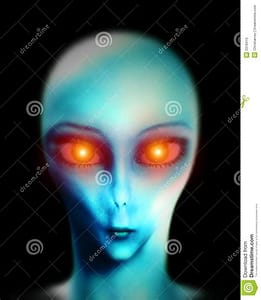
One day
A spaceship landed
near my house.
A tall alien
dressed in silver
with three shorter ones
came to my door.
They said they were
surveying Earth
and had questions,
They chose me, they said,
because love
was one of the few things
They could not understand
about humanity.
Among millions
of intelligent species,
in the known universe,
No such concept existed!
They had studied our wars,
our politics,
our changing climate.
But love, they said,
made no sense at all.
Elsewhere in the universe
There were bonds and bodies,
marriages and groups,
partners chosen by algorithms/
No one denied
that desire
was just biochemical
DNA driven
to reproduce the species.
So why, they asked,
Did humans insist
There was something more
Beyond the biochemistry?
They concluded,
asking again,
“What is love?”
I said,
“Love is mysterious
Love is magic.
Love is what it is
And love is what it ain’t.
Love is a true Zen
Koan-like paradox.
Those who define it
have never known it
Those who know it
cannot explain it.
Love happens
When you stop looking
When you least expect it.
One day,
the one steps out of your dreams
and love walks into your life.
Love happens
While washing dishes,
drinking wine,
dancing,
making love.
For the first time
or the ten‑thousandth,
And every time is new.
My wife once listed
all my faults and failures
every sin and omission
Finally I asked
if I was so terrible,
Why did you marry me?
She laughed
“temporary insanity”
she said,
“still insane
After 30 years.”
We laughed
and fell in love again!
And that,
My space alien friends
Is what love is!”
Later,
We sat with the aliens
around an empty table.
Beer glasses drained,
coffee cups cooling,
morning light
on the quiet street.
And no one felt the need
to explain anything
at all.
On April 15, 2026
Welcome back, all! As of today, we’re halfway through another Na/glopowrimo.
Our featured participant today is kellysteller, who brings us an Instagram-inspired response to Day Fourteen’s technology prompt (I think I saw that post about the Japanese insect called the “thorny thornless thorn thorn” myself…)
Today’s resource is the Poetry Unbound podcast. Hosted by Pádraig Ó Tuama, each episode guides you through a single poem.
And now for our prompt (optional, as always). K. Siva Reddy’s poem, “A Love Song Between Two Generations,” weaves together repetitions, questions, and unexpected similes with plain language. The overall effect is both intimate and emotional, producing a long-form meditation on what love is, what it means, and how it acts. Today, we’d like you to write your own poem that muses on love, but isn’t a traditional love poem in the sense of expressing love between romantic partners.
PSH
Berkeley Upper Middle Class Blues
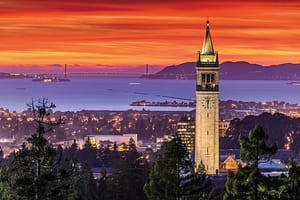
I grew up in
an upper-class family
In Berkeley/
During the turbulent 60s and 70s.
I grew up on cracked Berkeley sidewalks,
walking past Victorians
with peeling paint, head shops, and protest flyers
taped to telephone poles.
Sirens in the distance,
Radios arguing about
Civil Rights
The environment.
Gay Rights
Fight Nixon
Free Speech movement
People’s Park.
Save the Bay
Save the Redwoods
Women’s Liberation!
Vietnam!
I graduated from Berkeley High School
In 1974.
BHS was the most
multicultural high school
in the U.S. and still is.
White students
were a distinct minority:
40 percent white,
40 percent Black,
10 percent Asian,
10 percent Hispanic, or other
Yet despite our vast class, cultural,
and economic differences,
our ethnic and racial differences,
We all got along
Loving Funk, Motown
R and B
Soul, urban black music!
Tower of Power, our band!
The black kids always
were in charge of music
At high school parties!
No boring “white boy” music
Allowed at parties!
I credit my years
at BHS as crucial
To whatever success
I later had in life.
I grew up in a prominent
upper‑middle‑class family
My father was a local politician
and a college professor.
With an Ivy League pedigree
Harvard Phd
Rhodes Scholar
and a résumé built
inside government rooms.
Undersecretary of Labor
Under President Kennedy
And Johnson.
My mother worked in real estate.
We were supposed to be successful.
It was assumed
We would all go to college
and land professional careers.
I had two brothers and a sister
But we never got along,
It was a deeply dysfunctional family
in many ways.
My brothers went to CAL
I did not.
After bouncing around,
I ended up
at the University of the Pacific,
an elite private school.
Full of other upper‑class kids
Who like me
hadn’t quite made it
into CAL, Stanford
or elite universities “back east”.
UOP was our safety net!
My father was considered
white, Germanic name,
cold, disciplined, German‑Norwegian temperament
My mother was part Cherokee,
Irish‑spirited, creative and wild
I took after her,
Though I ended up
in a bureaucratic,
cold orderly profession
much like my father.
Eighteen nationalities,
by some count,
Running through my bloodlines.
Because of my background,
I drifted toward politics early
Campaign work,
student body president,
student government senator.
Eventually, I built a career
in public service,
Spending twenty‑five years
in the Foreign Service
Serving in ten countries
And Washington, DC.
There, too,
I found myself
among sons and daughters
of the American upper class.
So my upbringing,
in a diverse Bay Area,
inside an upper‑class household,
Coming from money
as they say,
Prepared me well.
For my life
Among the elite.
And then I met my wife
who was Korean-born
royal family clan
coming from money too!
In the end,
My upper-class background
Prepared me well for life
in the foreign service
in the US
and overseas
where I mingled
with the high society types
and fellow diplomats.
Yet sometimes
I wonder
what might have happened
if I had failed more completely,
or chosen less carefully,
or married someone else
from a less high-class background.
or walked past those Berkeley sidewalks
without knowing
I was being trained
for where I would end up.
April 15, 2026: Poetry Writing Prompt from Leonore Wilson
This poetry writing prompt submitted by Leonore Wilson:
Was your childhood lower, middle, or upper class? What did this mean in the decades you lived? Were you affected as a female, as a male? Did your “class” prevent you from having friends, from getting ahead? Did you buck the system? Did you go against your parents, teachers, coaches, etc? Perhaps a career in which they did not approve? Think about these ideas when writing your poem.
Under Her Love Spell For 44 Years
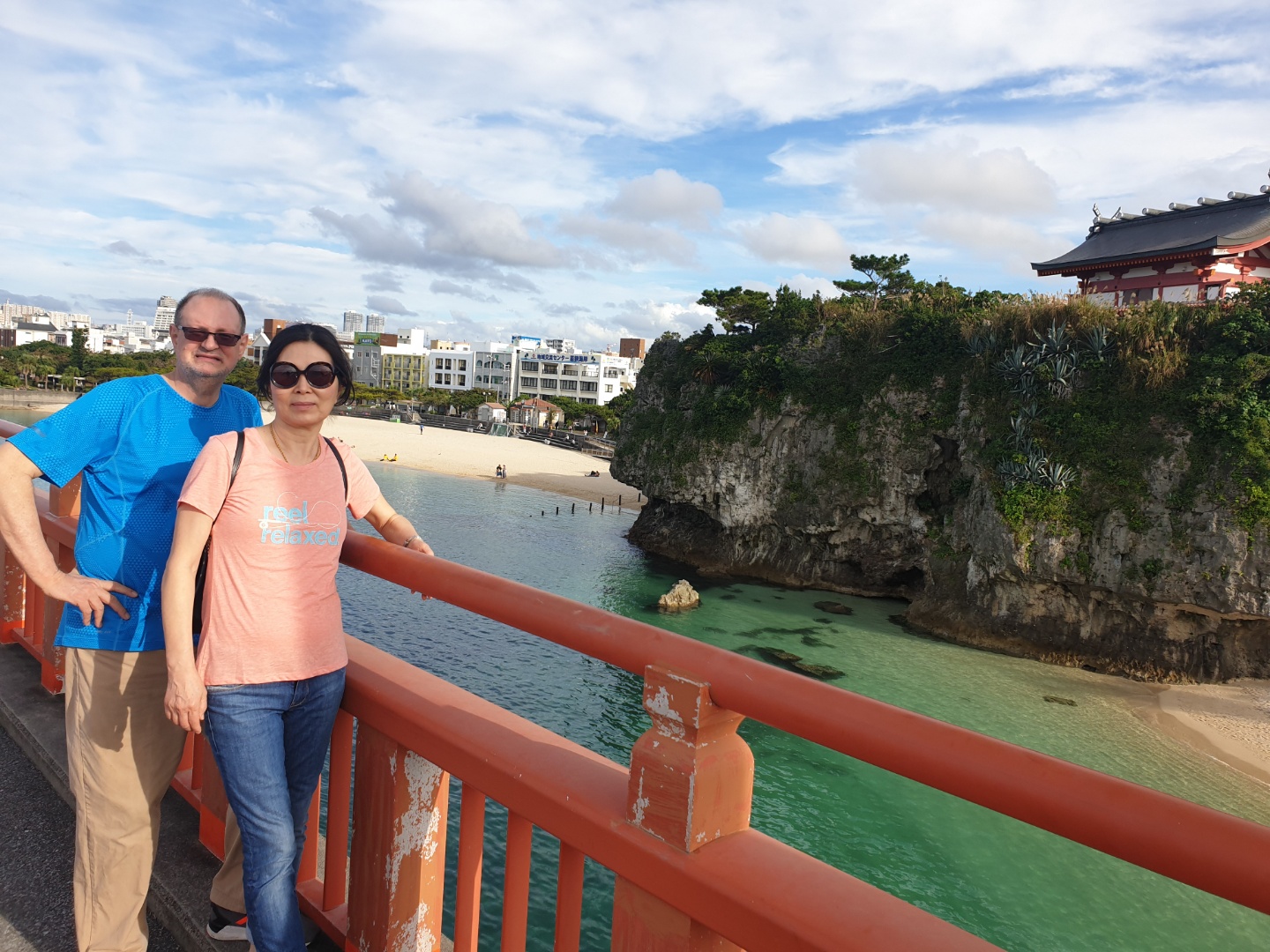
When I met my wife
On a bus
In South Korea.
After dreaming of meeting her
For eight years,
It was love at first sight!
Sparks flew from heart to heart!
She mesmerized me,
Betwitched me,
Casting a love spell on me.
Her love mojo
working overtime.
I proposed three days later,
Married seven weeks later.
Now 44 years later,
When I look at her,
I am still mesmerized,
Still bewitched,
I am still under
Her love spell.
The love mojo
Still working overtime
Until the day
I die.
2026 April PAD Challenge: Day 15
Write a poem a day with poets from around the world for the 2026 April PAD Challenge. For today’s prompt, write an “Under (blank)” poem.
Robert Lee Brewer
Once we make it through today’s poem, we’ll be halfway through this challenge. That’s pretty exciting, so let’s get at it.
For today’s prompt, take the phrase “Under (blank),” replace the blank with a new word or phrase, make the new phrase the title of your poem, and then, write your poem.
Possible titles might include: “Under Oath,” “Under the Weather,” “Under an Ancient Spell,” and/or “Under a Deadline.” Pretty soon we should be under halfway to go.
April 16—Fish or fowl
Fish or Fowl (Chicken)
Fish or fowl
(chicken)
for dinner?
That’s the question,
which is hard to answer.
Living in Korea,
I used to like
chicken—
specifically
Korean fried chicken
with beer,
called chimek
in Korean,
which shows up
in every K-drama.
For Koreans, chicken is done right,
but sadly,
being pre-diabetic,
I seldom get to eat chicken.
Fish is another thing
Koreans do well
and is safer
for pre-diabetics.
And so I eat
a lot of fish
these days.
They inherited sashimi
and sushi from Japan.
They also make great
fish stews.
Grilled mackerel,
grilled octopus,
and calamari.
And live octopus—
an acquired taste.
Crab, lobster,
clams—
grilled, fried,
or in soups,
it is all good,
usually washing it down
with soju
(Korean vodka),
drunk Russian-style shots,
somek
(Korean beer and soju—
boilermakers),
beer,
whiskey—
but with a Korean twist:
you cannot pour your own drink!
NaPoWriMo
The Trees in Lincoln Park, What They Saw
Based on Four Lincoln Park Poems
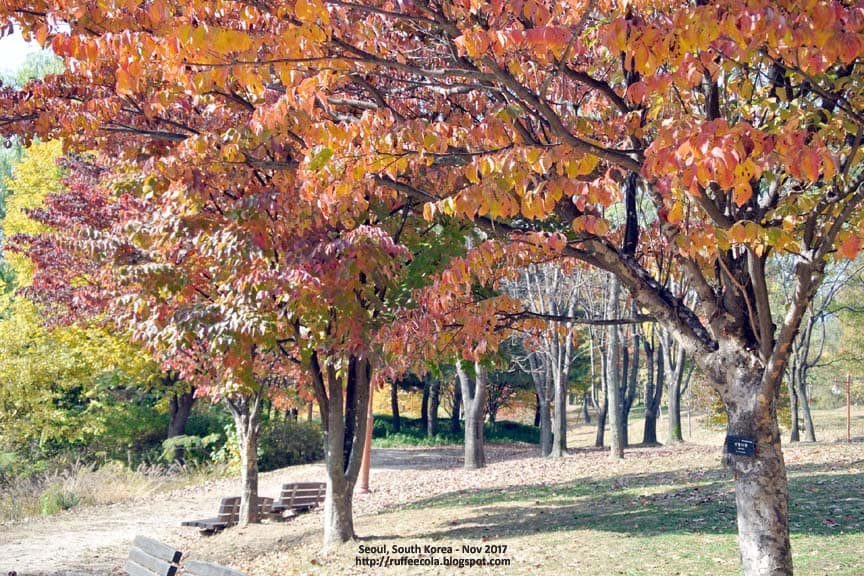
Walking through Lincoln Park
In DC’s Capitol Hill
I imagine hearing the trees,
Whispering amongst themselves
Everything they have seen
And heard in the park.
The trees remember everything
Even as humans forget things
The trees continue to whisper
As I walk by.
Summer
The trees in Linoln Park
stand near power,
but belong to time.
They have watched summer’s glow
as Capitol Hill paced indoors,
Fireflies whispering
What fools human mortals are.
They have flared each autumn
in colors meant to stop the world,
while self‑appointed
Masters of the Universe
hurried past,
Seeing everything
but noticing nothing.
They remember winters
no one else speaks of now—
the markets, the losses,
a community erased
by rising prices
and soft smiles.
They watched
new people arrive,
kind, distracted,
too busy to stroll,
too busy to listen.
Each spring they bloom again,
petals falling like snow,
dogs leading humans
through brief joy and borrowed time.
People come from elsewhere.
They stay awhile.
They leave.
The trees stay.
They see.
They remember.
And they say nothing.
Happy sixteenth day of National/Global Poetry Writing month, everyone!
Our featured daily participant is klara laurenzia linden, who brings us a bilingual response to Day Fifteen’s unusual-love-poem challenge.
Today’s resource is Copper Canyon Press’s “Line/Break” interview series, which brings you half-hour-ish episodes featuring eight contemporary poets.
And last but not least, here’s today’s optional prompt. In “Ocean,” Robinson Jeffers delivers an almost oracular, scriptural description of the sea not just as a geographical phenomenon, but a sort of being – old, wise, profound, and able to teach those who want to learn. Today, try writing a poem in which you describe something that cannot speak, and what it has taught or told you
PSH Sound Attention: Rhyme is Not a Dirty Word
/Rhyme words
PSH Rhyming poem
I Met My Fate on That September Date (Revised)
I shall always remember
that date in September,
when I met my fate.
When time hesitated,
the love gods smiled
and called my name.
I met my fate
without armor or plan—
the lady I’d dreamed of,
walking off a bus toward me.
The lady of my dreams,
walking into my life
out of my fairy‑tale
romantic dreams.
She was my soulmate.
My proposal was delivered.
Yes, the answer arrived.
Soon—astonishingly—
She became my legal mate.
I knew when we met:
I could not delay,
not almost, not wait—
This was the ending
That turned into a start.
I knew when I met her
She was the ultimate K date.
No more love in the wrong places,
with the wrong faces.
No longer consumed with hate.
She soon made everything great.
The date she became my wife,
the love of my life.
I met the lady of my dreams.
She was my soulmate,
soon becoming my legal mate.
I knew when I met her
she was the ultimate K date.
I no longer had to wait.
No more feeding on anger,
mistaking noise for heat.
She recalibrated the day.
She made things great
without effort or force—
just by existing
beside me.
That date became a hinge:
life swung open.
She became my wife,
the love of my life,
and everything afterward
finally arrived
where it was meant
to stay,
for she was a seeker,
the ultimate keeper
the perfect K wife.
April 16, 2026: Poetry Writing Prompt from Joy Gaines-Friedler
This poetry writing prompt submitted by Joy Gaines-Friedler:
Sound Attention: Rhyme is Not a Dirty Word
Rhyme words
PSH Rhyming poem
Find one word sound. For example the word “light” like Hayden Carruth’s poem below. Make a list of 7 words with a similar sound: (try to be expansive – not just hard rhyme. Use slant & near & internal rhyme). I’ve highlighted examples of those in Carruth’s poem.
Here is my word list example from the word “sun”: hum, sung, outcome, refund, lung, belong, welcome, awesome. Read Carruth’s poem out loud. Write a poem about war, or dogs, or a night out with friends, or weather, or your father’s watch, or your toothbrush, whatever you want – but use your word list. Have fun.
Rhyming words
date
mate
wait
late
great
create
separate
gravitated
demonstrate
WD PAD Challenge Day 16
New Holidays I’d Like to See
Let’s Celebrate Random Act of Kindness Day Every October 30!
I would like to see a new trend emerge
Organically in the United States:
three new national holidays.
October 30: National Random Act of Kindness Day
October 31: Día de Muertos (Day of the Dead), Halloween, Samhain
Third, November 1: National Election Day, or the first Monday of November
First, let’s celebrate October 30
as “National Random Act of Kindness Day,”
where everyone is encouraged
to do something nice—
a random act of kindness,
a Boy Scout–like good deed,
and greet one’s neighbors
and friends
with kind words.
Second,
make Halloween
a national holiday,
celebrating all that is
weird, wacky, whimsical,
and fun,
and call it
Día de los Muertos,
Halloween,
Samhain Day,
celebrating ancient Celtic
Druid traditions,
current Wicca celebrations,
as well as
Hispanic heritage
for Día de Muertos,
Day of the Dead.
And finally,
make Election Day
a national holiday—
long overdue—
and move it to the first Monday
in November.
Most countries
make presidential election days
a national holiday.
Why not in the U.S.?
So in honor of the three new holidays,
let’s commit a random act of kindness
on October 30.
Let’s commit
a random act of kindness,
following the Boy Scout motto
of doing a good deed every day.
If we all do that,
we can help combat
the rampant negativity
that so plagues
our world.
Then celebrate
the wacky, whimsical, weird
Halloween day,
with
trick or treat for all
and costume parties
for the adults.
And then wake up
and vote
on Election Day!
Write a poem a day with poets from around the world for the 2026 April PAD Challenge. For today’s prompt, write a new poem.
Robert Lee Brewer
Published Apr 16, 2026 1:48 AM EDT
Whew! We made it through the first half of the challenge, which means we’re on the “new” second half of the challenge, so…
For today’s prompt, write a new poem. I know, I know; every poem is new. Yes, each one is new, but you can focus on new things, like new cars, new houses, new babies, new music crazes, new shoes, and/or new news (actually, forget about the new news). So, yes, write a new poem, but write it about something or someone new.
Author’s Note
Co-Pilot provided the following background information on these three holidays:
1. The Commit a Random Act of Kindness Movement
Origins
The modern phrase “Practice random acts of kindness and senseless acts of beauty” is traced to writer and activist Anne Herbert in California in 1982. She first published it in CoEvolution Quarterly and also famously wrote it on a placemat in Sausalito. The phrase spread through graffiti, newspaper columns, and later books, becoming a quiet counter‑narrative to the phrase “random acts of violence”. [en.wikipedia.org], [randomacts…ndness.org]
In 1993, the book Random Acts of Kindness (published by Conari Press) gathered real stories from everyday people, helping transform the slogan into a recognizable movement. This momentum led to the creation of the Random Acts of Kindness Foundation in 1995, which helped institutionalize the idea through education and annual observances. [randomacts…ndness.org]
Where it is now and where it’s heading
Today, the movement exists both informally (small everyday gestures) and formally through nonprofit efforts such as Random Acts of Kindness Day (February 17) and Random Acts of Kindness Week. Recent emphasis has shifted toward social‑emotional learning in schools, workplace culture, and community mental health, framing kindness as a learned and contagious practice rather than spontaneous alone. [calendar-h…lidays.com]
Further reading:
- Wikipedia overview:
Random act of kindness – Wikipedia [en.wikipedia.org] - Random Acts of Kindness Foundation history:
https://www.randomactsofkindness.org/the-kindness-blog/5-the-history-of-random-acts-of-kindness-day-february-17th [randomacts…ndness.org]
2. Halloween: Pagan Roots, Wicca, and Modern Celebrations
Pagan and Celtic origins
Halloween traces back over 2,000 years to the Celtic festival of Samhain, which marked the end of the harvest and the beginning of winter. The Celts believed this was a liminal period when the boundary between the living and the dead thinned, allowing spirits to cross over. Bonfires, disguises, and offerings were used to protect communities and honor ancestors. [britannica.com], [history.com]
Christian and later influences
As Christianity spread, Samhain merged with All Saints’ Day (November 1). The night before became All Hallows’ Eve, gradually shortened to Halloween. The blending of pagan, Roman, and Christian traditions created the layered holiday familiar today. [britannica.com]
Wicca and modern pagan practice
In contemporary Wicca and modern pagan traditions, Samhain is still observed as a sacred festival honoring ancestors, death as transformation, and the cyclical nature of time. These practices emphasize remembrance rather than fear, distinguishing religious observance from popular Halloween imagery. [history.com]
Trick‑or‑treating
Trick‑or‑treating evolved from older traditions such as “guising” and “souling,” where people went door‑to‑door offering prayers or performances in exchange for food. The custom took its modern form in the United States after World War II, aided by suburban growth and mass‑produced candy. [smithsonianmag.com]
Global celebrations today (including Korea)
Halloween is now celebrated in many countries largely as a costume and social festival. In places such as South Korea, it is not a traditional holiday but is widely observed in entertainment districts with themed costumes, nightlife events, and public gatherings—a cultural export emphasizing play, spectacle, and identity experimentation rather than ritual ancestry. [historyhit.com]
Further reading:
- Britannica on Halloween origins:
https://www.britannica.com/topic/Where-did-Halloween-come-from [britannica.com] - Smithsonian on trick‑or‑treating:
https://www.smithsonianmag.com/history/celtic-origins-trick-treating-halloween-180984916/ [smithsonianmag.com]
3. Día de los Muertos (Day of the Dead)
Indigenous origins and meaning
Día de los Muertos originates in ancient Mesoamerican civilizations such as the Aztecs, Maya, and Toltecs, who viewed death as a continuation rather than an ending. The dead were believed to return periodically, sustained by the remembrance of the living. [britannica.com], [history.com]
Syncretism with Catholicism
After Spanish colonization, these traditions blended with All Saints’ Day and All Souls’ Day, forming a multi‑day observance from October 31 to November 2. Practices such as ofrendas (altars), marigolds, food offerings, and celebratory visits to graves remain central. [history.com]
Contemporary significance
Today, Día de los Muertos is recognized by UNESCO as Intangible Cultural Heritage. It is celebrated not only in Mexico but globally by diaspora communities, emphasizing joy, memory, and continuity rather than mourning alone. [britannica.com]
Further reading:
- Britannica entry:
https://www.britannica.com/topic/Day-of-the-Dead [britannica.com] - History.com overview:
https://www.history.com/articles/day-of-the-dead [history.com]
4. Proposals to Make U.S. Election Day a National Holiday
Why U.S. elections are on the first Tuesday in November
In 1845, the U.S. Congress standardized federal election day as the Tuesday after the first Monday in November. This timing suited a 19th‑century agrarian society:
- November followed the harvest but preceded winter storms
- Sundays were reserved for church
- Wednesdays were common market days
- Tuesday allowed travel without interfering with either [britannica.com], [history.com]
The phrasing “after the first Monday” ensured elections never fell on November 1 (All Saints’ Day) or the first of the month, which merchants used for bookkeeping. [britannica.com]
Modern proposals
As work patterns have changed, many critics argue that Tuesday voting suppresses turnout. Proposals to make Election Day a federal holiday aim to reduce work‑related barriers and align the U.S. with other democracies that vote on weekends or holidays. Multiple bills have been introduced in Congress, and public opinion polling shows consistent support, though concerns remain about unequal benefits and economic impact. [publicatio…ornell.edu], [ebsco.com]
Further reading:
- Britannica explanation:
https://www.britannica.com/story/why-are-us-elections-held-on-tuesdays [britannica.com] - Cornell Journal of Law & Public Policy:
https://publications.lawschool.cornell.edu/jlpp/2023/01/20/the-case-for-making-election-day-a-federal-holiday/ [publicatio…ornell.edu]
April 17—
Dew Drop Inn Rhyme, subtle or overt
I shall always remember—
it was in September
when I met my fate.
I saw my soulmate.
She became mine,
for I had met my fate.
On September 7th, that date
when everything became fine,
for I had met my fate.
On that fine date, we drank red wine,
for I had met my fate.
It was mid‑September,
that date I will always remember,
for I had met my fate.
She walked off a bus into my life.
Soon she became my wife,
for I had met my fate.
When we met,
she made everything great,
for I had met my fate.
She became my housemate,
my loving roommate,
my greatest helpmate,
for I had met my fate.
Her mind was first‑rate.
She set me straight,
giving me a mandate,
for I had met my fate.
Almost a blind date—
love at first sight, no debate,
for I had met my fate.
Three days later, I proposed.
She said yes, gave me a clean slate,
for I had met my fate.
We went to graduate school,
a campus couple, schoolmates,
for I had met my fate.
Now we’re retired,
running a business together—
she’s my workmate,
and I still meet my fate
the fake Venice canal—
Springtime peaceful blue waters
Memories of other lands
Gimpo’s Hidden Gem Tanka
Gimpo, korea
Has a hidden secret gem
The fake venice canal—
Springtime, peaceful blue waters
Dreaming of italy
April 17, 2026: Poetry Writing Prompt from LB Sedlacek
This poetry writing prompt submitted by LB Sedlacek:
Daily Commute Poem
While you’re driving anywhere (to work, school, the gym, home, running errands, etc.) what do you see? (For example today on the way to run errands I saw a field of blooming daffodils, a man chopping down a tree by the side of the road, a man holding a baby in their yard, smoke rising from a fast food joint, birds flying into bushes.)
1) As you ride along, use your phone to take a voice memo, note or reminder, or jot down everything with a pen/pencil and a notepad at a stoplight or after you’ve parked,
2) Take notes for 1-2 days,
3) Use what you saw as you drove along, to compile a list,
4) Order your list, and
5) Use your notes to write a poem.
You’ll be amazed at what worlds you capture with this poem.
*You can do also do this if you travel by Uber, Lyft or even by train by jotting down your notes as you ride along. You can also do this while walking if you don’t own a car or don’t have to drive anywhere by recording your notes on your phone or while sitting on a bench and jotting them down
Factual background on the Gimpo “Fake Venice” Canal
(grounded, non-invented, with spelled‑out URL end notes)
Official and common names
- Golden Waterway (Geumbit Suro / 금빛수로)
- La Veniche Marché Avenue / Laveniche
- Often nicknamed “Venice of Korea” or “Gimpo’s Venice”, sometimes informally called a fake Venice canal by visitors.
What it is
- A 2.68 km-long artificial canal running through Gimpo Han River New City, Gyeonggi Province.
- Designed as a mixed-use waterfront zone combining:
- canals
- pedestrian promenades
- cafés, restaurants, bars
- retail and performance spaces
- Built as part of a new-town cultural development project, not an organic historical waterway.
[gyeonggido-korea.com], [gimpo.go.kr], [english.vi…orea.or.kr]
Design concept
- Explicitly modeled on Venice, Italy.
- European-style façades line the canal; water is used as ornamental infrastructure, not transport.
- At night, lighting, reflections, and music fountains heighten the theatrical effect.
- The space is carefully staged to produce:
- romance
- leisure
- Instagram-ready “elsewhere-ness”
[gyeonggido-korea.com], [english.vi…orea.or.kr], [gyeonggido-korea.com]
Cultural reality (important for poetry)
Public reviews and city sources consistently note a tension:
- Visually striking, especially at night.
- Feels curated, simulated, and provisional rather than lived-in.
- Many storefront vacancies in recent years; atmosphere can feel eerie, quiet, or hollow, especially off-hours.
- Water is sometimes drained seasonally, undercutting the Venice illusion.
[tripadvisor.com], [top-rated.online]
This contradiction—romance vs. vacancy, promise vs. artifice—is one of the most repeatedly documented aspects of the place and is poetically rich terrain.
Activities and features
-
- Pedal boats and crescent-shaped Moon Boats
- Musical fountains
- Street performances and festivals (intermittent)
- Continuous walking path linked to Hangang Central Park
[gimpo.go.kr], [top-rated.online]
End‑note style URLs (spelled out)
- Gyeonggi Province overview of Laveniche Waterside Park
https://www.gyeonggido-korea.com/2023/11/explore-charm-of-gimpo-city-laveniche.html
[gyeonggido-korea.com] - Gimpo City official page: Golden Waterway & Laveniche
https://gimpo.go.kr/en/contents.do?key=10997
[gimpo.go.kr] - VISITKOREA: Laveniche Plaza / Golden Waterway background
https://english.visitkorea.or.kr/svc/whereToGo/locIntrdn/rgnContentsView.do?vcontsId=112766
[english.vi…orea.or.kr] - Gyeonggi Province feature: Discover Gimpo’s Little Venice
https://www.gyeonggido-korea.com/2024/06/discover-gimpos-little-venice-la-veniche.html
[gyeonggido-korea.com] - Aggregated visitor reviews highlighting vacancy and atmosphere
https://www.top-rated.online/cities/Gimpo-si/place/p/9182322/Gimpo+Laveniche+March+Avenue
[top-rated.online]
2026 April PAD Challenge: Day 17 -Write an ambiguous poem
War in Iran? An exercise in ambiguity!
Expecting a clear, unambiguous answer
as to why the U.S. is engaged
in a war with Iran,
spending two billion dollars a day,
is a fool’s errand.
The answer changes daily.
The war objective is as clear as mud.
The old war adages,
FUBAR and SNAFU,
come roaring back to life!
Is it regime change?
Yes, no, maybe.
Who knows?
Is it to destroy
the Iranians’ ability
to inflict serious damage
on their neighbors?
Maybe yes,
maybe no.
Who really knows
what the truth is?
With our “stable genius,”
Who knows more about the war
than his generals
And the self-proclaimed
Secretary of War
Leading the way.
Is it because Israel
and maybe the Saudis
wanted
us to help do
their dirty work?
Probably partially true,
But again
—who knows?
Was it because
the Iranians
had reconstituted their
totally obliterated
nuclear weapons program?
Probably not true—
Maybe not an imminent threat
to the U.S.,
in any event.
And were negotiating
with the U.S. until just
for before the war
For reasons still unclear,
The President
joined Israel
in launching the war
on very short notice—
not formally notifying Congress,
the American people,
or our allies
until just before
The launching of the war.
Was it to prevent
the closure
of the Strait of Hormuz?
If so,
then why have we closed
it ourselves?
Is it to lower the price of gas?
If so, it was
a huge strategic blunder.
Is the war illegal?
Not until Congress
or the tamed Supreme Court
wakes up and says so.
Is the war unconstitutional?
Probably,
but until Congress or the Court
says otherwise,
the war will continue,
and even if both say it is illegal,
the President
will probably just shrug it off
and continue the war.
Was it all just a smoke screen
to hide other military adventures
being planned?
Possibly yes
— but who knows for sure.
Finally,
expecting straight answers
to these questions
is indeed a fool’s game,
for they are engaged
in a strategy—
of deception,
gaslighting,
mischaracterization,
misdirection and lies.
And propaganda,
straight out of the
North Korean playbook
Saying:
Trust us,.
We have a plan.
And we are winning!
Already won the war!
It will be over soon.
And gas prices
will drop magically
as the Strait opens organically!
The unambiguous answer—
is the public tired
of winning this war?
Nobody knows for sure!
2026 April PAD Challenge. For today’s prompt, write an ambiguity poem.
Robert Lee Brewer
Updated Apr 17, 2026 6:23 AM EDT
For today’s prompt, write an ambiguity poem. In real life, people like clear meanings, but real life also often is filled with a lot of ambiguity. And poetry, in general, loves ambiguity, because it provides the space for readers to find their own meanings.
April 18—
April 18 — A Sense of an Ending
When the Fever Breaks
It began like a fever
heat mistaken for life,
noise praised as motion.
A voice promised
the distant roads
would lead somewhere again,
that anger could be fuel,
that shouting meant power.
For years
The MAGA faithful
Stood in the weather,
Wore the red colored hats,
Said the MAGA slogan words,
Believed sweat
was proof of strength.
But fevers burn resources.
Prices rose quietly at first,
Then everywhere at once.
Cold returned to kitchens.
War came back
Wearing a different name.
And then—
The moment no one could excuse:
The costume too sacred,
The mirror lifted too high,
The savior confused
with the saved.
Hands loosened.
Some stepped back softly,
Pretending distance had always been there.
Some cried betrayal,
As if naming it first
Might erase the painful reality.
Buyer’s remorse spread,
like a second illness—
less dramatic,
more honest.
A fever does not explode.
It breaks.
What remains is thirst,
trembling,
and the quiet understanding
That they had been conned
By the greatest con man
Of them all
Who had not drained
The Swamp
Instead, becoming
The biggest swamp
Creature of all time.
That the wanna be
The Emperor had no clothes
And was a rapidly aging
Senile old man.
That belief is not truth,
That volume is not power,
And heat without balance
burns the house
It claims to warm.
NaPoWriMo
The Ten Thousand Year Love Curse
(after the unpublished novel Timeless Love Stories*)*
At the dawn of counted time, it’s said,
two souls were born as one—
Sam and Maria, bound by fate
before the world begun.
Through lifetimes spun among the stars,
as Sirians they rose,
then met again where no time moves,
between what lives and goes.
In limbo’s halls they learned their curse:
love granted, love denied.
One more descent, one final test—
no gods would choose their side.
They stepped through stone marked Atlantis,
ten thousand years before,
reborn as rulers, scaled and crowned,
upon the ocean floor.
He was Zoran, general‑born,
she Zarina—bold, defiant,
clear‑eyed leader of revolt
against an empire giant.
The Sirians ruled with iron will,
their human slaves confined—
called savages, yet feared because
they prayed with sharper minds.
Zoran watched the fractures grow,
two parties tearing seams:
the Reds cried conquest, blood and fire,
the Greens spoke only dreams.
Then Zarina crossed his chamber door—
and hate and longing fused.
She fought for human liberty;
he ruled—but also wavered, confused.
They burned with love and ruthless hope,
with lust and vision paired,
and dared announce a future where
all races rights would share.
At dawn, the Reds struck merciless,
their weapons split the land;
Atlantis fell beneath the sea,
erased by one command.
Survivors fled to distant shores,
to Rome, to secret lives.
Shapeshifters hid in human skin,
and pulled invisible wires.
The Greens went dark.
The Reds were purged.
A shadow order grew.
But Zoran and his Zarina
would not outlive the coup.
A general’s blade from distant stars
cut short their final breath.
Earth closed its gates to Sirius—
observed ten thousand years hence.
They died with vows still on their tongues:
Next life. Find me again.
And so they tried through birth and loss,
through plague and crown and pen—
Until at last, in modern time,
the curse was torn in two.
In 1982,
their love at last came true.
NaPoWriMo
Finally, here’s our prompt for the day (optional, as always). When I was growing up, there was a book of poems in my house (I believe it was The Best Loved Poems of the American People) that was heavy on long, maudlin, narrative poems with lots and lots of rhyme – the sort of verse that used to be parodied on Bulwinkle’s Corner. As the twentieth century rolled in, poems like this were relegated to the status of stuff-schoolkids-were-forced-to-memorize, and they plummeted even further into our cultural memory-hole as learning poems by heart fell out of educational currency.
Invasion of Invasive Species
(Tree of Heaven and Other Invasives)
The U.S. is under invasion—
an invasion of invasive species.
Animals, insects, plants
from other lands,
proliferating across the continent,
causing considerable damage.
Welcome to ground zero.
Florida is ground zero
for the invading hordes—
from kudzu,
the vine that ate the South,
to the ironically named
Tree of Heaven.
Welcome to ground zero.
The Tree of Heaven speaks softly,
claims it was invited,
claims it brings shade and order,
drops seeds by the hundreds of thousands,
poisons the soil with quiet chemistry,
smiling as nothing else grows.
Ailanthus altissima—
false grace in bark and leaf,
thriving in ruins,
loving the disturbed.
Welcome to ground zero.
Around it advance the others:
autumn olive,
Brazilian pepper tree,
cogongrass,
hydrilla and water hyacinth,
Japanese stiltgrass,
melaleuca,
Old World climbing fern,
oriental bittersweet,
princess tree—
all smothering the landscape
of Florida and the South,
each insisting it belongs.
Florida has also become
ground zero
for other invasive arrivals:
Asian tiger mosquito,
Argentine black‑and‑white tegu,
Burmese python—
a slow green sentence
uncoiling through the Everglades—
cane toad,
emerald ash borer,
European starling,
feral hogs,
feral monkeys,
giant African snails,
green iguanas,
lionfish,
spotted lanternfly.
Welcome to ground zero.
Not to mention the natives adapting fast—
alligators,
bears,
crocodiles,
coydogs,
cougars,
mosquitoes spreading dengue
and malaria,
giant flying roaches
learning the architecture of fear.
We catalogue them carefully,
as if lists were fences,
as if borders still meant
what we say they do—
when none of us
are entirely native anymore.
And of course,
the most dangerous invasive species of all:
Florida Man.
Unpredictable.
Overconfident.
Released without containment.
Thrives in chaos.
Immune to warning labels.
Welcome to ground zero.
If you’d like, next we can:
IV. Author Notes
About Invasive Species
An invasive species is a non‑native organism that spreads rapidly and causes ecological, economic, or human‑health harm. Invasive plants often outcompete native species by growing aggressively, altering soil chemistry, or producing allelopathic toxins that inhibit surrounding growth. Florida is considered a hotspot due to its warm climate, extensive trade ports, aquarium and pet industries, and disturbed landscapes.
Key invasive plant species referenced:
- Tree of Heaven (Ailanthus altissima) – fast‑growing, allelopathic, toxic to nearby plants
- Kudzu (Pueraria lobata) – smothers trees, buildings, and landscapes
- Brazilian pepper tree (Schinus terebinthifolius) – displaces native plants
- Cogongrass (Imperata cylindrica) – highly aggressive, alters fire regimes
- Hydrilla and water hyacinth – aquatic plants that choke waterways
- Japanese stiltgrass – forms dense ground carpets
- Melaleuca – drains wetlands, fuels wildfires
- Old World climbing fern – spreads fire into tree canopies
- Oriental bittersweet – girdles and collapses trees
Key invasive animals and insects referenced:
- Burmese python, lionfish, green iguana, cane toad, feral hogs
- Asian tiger mosquito, spotted lanternfly, emerald ash borer
- European starling, Argentine black‑and‑white tegu
Sources:
National Invasive Species Information Center – invasivespeciesinfo.gov
US Forest Service – fs.usda.gov
University of Florida IFAS – invasivespecies.ifas.ufl.edu
The Nature Conservancy – nature.org
On the Term “Florida Man”
“Florida Man” is an internet meme that emerged around 2013, derived from news headlines that often begin with the phrase “Florida man…” followed by an account of bizarre or criminal behavior. The meme humorously suggests that all such stories describe the same chaotic individual.
Researchers and journalists note that Florida’s open public‑records laws (“Sunshine Laws”) make arrest reports especially accessible, leading to a disproportionately high number of sensational headlines. The meme reflects media dynamics and demographics more than actual levels of misconduct.
Sources:
Wikipedia – https://en.wikipedia.org/wiki/Florida_Man
Know Your Meme – https://knowyourmeme.com/memes/florida-man
CNN coverage summarized via Wikipedia
PSH
Writer’s Digest
April 19—A literal sense/senses poem
What is Real?
I often sit
And ponder
Upon reality
Thinking what is real
And what is fake
In this world
And I know
That there is one thing
That is real
In this world
That is the love
Of my life
The fairy tale princess
The lady of my dreams
Who saved me
When she walked
Out of dreams
And into my life
44 years ago.
NaPoWriMo
Korean Flower Chain

Apple Blossom
Apple Blossom
late May air warms the valley
sweetness in the wind.
Azalea
Early mountain spring—
purple azaleas burn
through thinning cold mist.
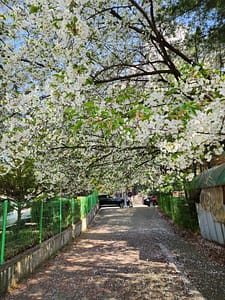
Cherry Blossom
Cherry petals fall,
first warmth loosens every branch—
nothing stays for long.

Cosmos
Autumn field of calm,
cosmos nod in pale sunlight—
order in the wind.
Rose
All summer the rose
opens, closes, opens still—
scent outlasts the day.
Rose of Sharon

Mugunghwa holds fast,
each bloom lasting one brief day—
summer without end.
Magnolia
Magnolia buds
open before any leaf—
white silence of spring.
Scotch Broom
High hills blaze yellow,
broom flowers lean into wind—
wild light on stone paths.
Tulips
After the long rain,
tulips rise in crowded rows—
colors learn the sun.
Author’s Note: Korean Flower Haiku Chain
This haiku chain follows flowers commonly seen across the Korean Peninsula, arranged loosely by season. Each haiku is grounded in the flower’s natural bloom period or cultural meaning in Korea.
- Apple blossom – Apple trees bloom in Korea in late spring, especially in rural valleys, with blossoms appearing before fruiting.• Azalea (Jindallae) – A beloved Korean spring flower associated with endurance and emotion, blooming on mountainsides in March and April.
• Cherry blossom (Beotkkot) – Blooms briefly in early spring; widely associated in Korea with impermanence and renewal.
• Cosmos – Widely planted in Korea as an autumn wildflower; symbolizes calm and order during the fall season.
• Rose – Grows throughout late spring and summer in Korea, often featured in urban parks and festivals.
• Rose of Sharon (Mugunghwa) – Korea’s national flower; its name literally means “eternal blossom,” despite each bloom lasting only a single day.
• Magnolia – Magnolia trees bloom in early spring in Korea, often before leaves appear.
• Scotch broom – Found on Korean hillsides; bright yellow flowers appear in spring and early summer.
• Tulips – A popular spring festival flower in Korea, blooming shortly after cherry blossoms.
ENDNOTES (SPelled‑out links)
Mugunghwa (Rose of Sharon), National Flower of Korea
https://www.mois.go.kr/eng/sub/a03/nationalSymbol_3/screen.do
Cherry Blossom Season and Meaning in Korea
Azalea (Jindallae) and Korean Cultural Meaning
https://www.bloomingexpert.com/flower-meaning/azalea/
Cosmos Flowers in Korean Autumn Landscapes
https://www.koreatimes.co.kr/www/opinion/2023/11/197_363826.html
Magnolia Blooming Season in Korea
Chasing White Clouds: The Best Magnolia Viewing Spots in Seoul
Apple and Fruit Blossom Seasons in Korea
https://iamaileen.com/spring-flowers-in-korea/
Tulip Festivals and Spring Blooms in Korea
https://koreaexperience.com/blog/korea-s-flower-festivals-tulips-roses-and-cosmos
Scotch Broom (Cytisus scoparius) Overview
https://en.wikipedia.org/wiki/Cytisus_scoparius
PSH
Daily Affirmations Keep Me Sane
Every day,
when I finish my yoga
and slow Tai Chi forms,
I pause.
I take a moment
to reflect on what is holy,
what remains steady,
what still belongs to me.
These affirmations
keep me sane—
keep my balance
when the world sways.
I repeat each one
three times,
breathing slowly,
leaning into their weight,
listening for the meaning
inside these ordinary words,
which somehow carry
quiet wisdom.
Today, no matter the provocation,
I will not lose my balanced state of mind.
Today, I will complete
the three things that matter most.
I will not let anger
set the rhythm of my thoughts.
I will not let the news
overwhelm me.
I will not let Trump bother me.
I am healthy,wealthy and wise
I am still learning new things
Life is beuatiful.
As long as love
walks beside me,
I am not alone.
Things have worked out before.
They will again.
No matter what comes,
I will survive.
Today will be a great day
Go forth and make it happen!
This poetry writing prompt submitted by Julene Weaver:
What is holy in your life?
Think of Allen Ginsberg’s poem Holy. What is sacred? What gives you strength spiritually, not necessarily religious, but from your daily life. Come up with a refrain that buoys you through difficult times.
Writer’s Digest – Family -My Mother’s history
My Mother’s History
One evening, many years ago,
my mother spoke to me
about our family’s
tangled history.
She spoke of lies, half‑truths,
and myths—
some true, some uncertain—
and as the night went on,
her past came alive.
She was born in the hills
near North Little Rock,
the tenth of eleven children
of a people slowly disappearing.
Cherokees who ran,
who hid,
refused exile—
refugees in the hills.
Part of those forgotten families:
Cherokee, Choctaw, Creek, Seminole,
and African American—
The so-called
Lost Tribe of the Cherokee Nation!
who fled into
the Ozark mountains
to avoid the Trail of Tears,
who never made it
to Oklahoma.
On paper,
They did not exist.
And so, neither did I.
The Bureau of Indian Affairs said:
“No scholarship for you.
You can’t prove
you are Native American”.
I asked my mother,
What that meant.
She said, simply:
“No BIA money for you,
My non-Indian son.”
She told me our family
was distantly related
to President Bill Clinton.
When I met him,
I shared our story.
He agreed—we were cousins.
He told me to call him
Cousin Bill.
He, too, said he was
part Cherokee—
Irish, Scottish, French,
African American—
Part of the people
Who never left cleanly.
When I told my mother,
She nodded.
It was true
We were related
To Cousin Bill Clinton!.
She still didn’t like him.
Our people vanished
from ledgers,
from rolls,
from DNA databases.
History closed its book on us.
And so, at last,
I learned the painful truth:
Because of removals,
broken treaties,
and political greed,
my mother’s people
lost land, language, recognition—
and became invisible.
“Hillbillies,” they were called,
“Black Irish”
The “Lost Tribe of the Cherokee Nation”
clinging to ridges and hollows,
holding dim memories
of who they once were.
The old ways faded.
The new world
never forgave them.
They never forgave it.
They lived on
in the margins.
And I vowed—
as long as I live—
their history will not die.
I carry it.
When I struggle,
I remember my mother’s words,
and I know it is up to me
to let the Cherokee in me
live his life.
Through me,
my mother’s history survives—
until the day I die.
Long live the Cherokee Nation.
Long live my mother.
Author’s Note (Historical Context)
This poem draws on my family’s oral history. During and after the forced removals of the 1830s—commonly known as the Trail of Tears—not all Cherokee people were captured and removed. Historical records document that some Cherokee families avoided removal by hiding in remote Appalachian regions or remaining in difficult‑to‑access mountain areas. Over time, many of these families lost formal recognition, were never placed on federal rolls, and therefore were excluded from later Bureau of Indian Affairs (BIA) programs.
These families are sometimes referred to informally as “lost” or “un-enrolled” Cherokees—not a federally recognized classification, but a term reflecting historical exclusion. In 1868, some of the Cherokee who remained in North Carolina were federally recognized as the Eastern Band of Cherokee Indians, while others assimilated into surrounding rural communities without official status.
This poem reflects the intersection of documented history and family memory, and honors those whose identities persisted despite erasure from official records.
- Endnotes (Spelled‑Out Links)
Cherokee Nation – “Remember the Removal”
https://www.cherokee.org/about-the-nation/remember-the-removal/our-journey/
Encyclopaedia Britannica – Trail of Tears overview
https://www.britannica.com/event/Trail-of-Tears
National Park Service – Trail of Tears history
https://www.nps.gov/trte/index.htm
Blue Ridge National Heritage Area – Cherokees who remained
“They Never Left: Cherokee in Appalachia”
Wikipedia – Cherokee removal
https://en.wikipedia.org/wiki/Cherokee_removal
April 20—Salient image (most memorable or resonant image in your day)
NaPoWriMo
PSH
Writer’s Digest
April 21—Growing up
NaPoWriMo
PSH
Writer’s Digest
Part 4
NaPoWriMo
PSH
Writer’s Digest
April 22—Doubleness
NaPoWriMo
PSH
Writer’s Digest
April 23—Shakespeare
NaPoWriMo
PSH
Writer’s Digest
April 24—An unsung hero/heroine
NaPoWriMo
PSH
Writer’s Digest
April 25—A moment of joy or delight
NaPoWriMo
PSH
Writer’s Digest
April 26—An arrival
I Met My Fate on That Date (Villanelle)
I shall always remember the date
when I met my fate in September—
for I had met my fate.
It started as a simple date,
a moment I’ll always remember,
when I met my fate in September.
She walked off a bus—that date
changed everything I remember,
for I had met my fate.
We drank red wine on that date,
love at first sight, no debate, remember—
when I met my fate in September.
From housemate to helpmate,
roommate, wife, and workmate together,
for I had met my fate.
Now retired, still partners, still mates,
that date remains my center:
when I met my fate in September,
for I had met my fate.
NaPoWriMo
PSH
Writer’s Digest
April 27—Something undone, forgotten, or lingering in the mind
NaPoWriMo
PSH
Writer’s Digest
April 28—Satisfaction or completion
NaPoWriMo
PSH
Writer’s Digest
April 29—Coincidence or synchronicity or déjà vu
NaPoWriMo
PSH
Writer’s Digest
April 30—Moving on…
NaPoWriMo
PSH
Writer’s Digest
April 18 — A Sense of an Ending
When the Fever Breaks
It began like a fever—
heat mistaken for life,
noise praised as motion.
A voice promised
the distant roads
would lead somewhere again,
that anger could be fuel,
that shouting meant power.
For years
The MAGA faithful
Stood in the weather,
Wore the red colored hats,
Said the MAGA slogan words,
Believed sweat
was proof of strength.
But fevers burn resources.
Prices rose quietly at first,
Then everywhere at once.
Cold returned to kitchens.
War came back
Wearing a different name.
And then—
The moment no one could excuse:
The costume too sacred,
The mirror lifted too high,
The savior confused
with the saved.
Hands loosened.
Some stepped back softly,
Pretending distance had always been there.
Some cried betrayal,
As if naming it first
Might erase the painful reality.
Buyer’s remorse spread,
like a second illness—
less dramatic,
more honest.
A fever does not explode.
It breaks.
What remains is thirst,
trembling,
and the quiet understanding
That they had been conned
By the greatest con man
Of them all
Who had not drained
The Swamp
Instead, becoming
The biggest swamp
Creature of all time.
That the wanna be
The Emperor had no clothes
And was a rapidly aging
Senile old man.
That belief is not truth,
That volume is not power,
And heat without balance
burns the house
It claims to warm.
NaPoWriMo
The Ten Thousand Year Love Curse
(after the unpublished novel Timeless Love Stories)
At the dawn of counted time, it’s said,
two souls were born as one—
Sam and Maria, bound by fate
before the world begun.
Through lifetimes spun among the stars,
as Sirians they rose,
then met again where no time moves,
between what lives and goes.
In limbo’s halls they learned their curse:
love granted, love denied.
One more descent, one final test—
no gods would choose their side.
They stepped through stone marked Atlantis,
ten thousand years before,
reborn as rulers, scaled and crowned,
upon the ocean floor.
He was Zoran, general‑born,
she Zarina—bold, defiant,
clear‑eyed leader of revolt
against an empire giant.
The Sirians ruled with iron will,
their human slaves confined—
called savages, yet feared because
they prayed with sharper minds.
Zoran watched the fractures grow,
two parties tearing seams:
the Reds cried conquest, blood and fire,
the Greens spoke only dreams.
Then Zarina crossed his chamber door—
and hate and longing fused.
She fought for human liberty;
he ruled—but also wavered, confused.
They burned with love and ruthless hope,
with lust and vision paired,
and dared announce a future where
all races rights would share.
At dawn, the Reds struck merciless,
their weapons split the land;
Atlantis fell beneath the sea,
erased by one command.
Survivors fled to distant shores,
to Rome, to secret lives.
Shapeshifters hid in human skin,
and pulled invisible wires.
The Greens went dark.
The Reds were purged.
A shadow order grew.
But Zoran and his Zarina
would not outlive the coup.
A general’s blade from distant stars
cut short their final breath.
Earth closed its gates to Sirius—
observed ten thousand years hence.
They died with vows still on their tongues:
Next life. Find me again.
And so they tried through birth and loss,
through plague and crown and pen—
Until at last, in modern time,
the curse was torn in two.
In 1982,
their love at last came true.
NaPoWriMo
Finally, here’s our prompt for the day (optional, as always). When I was growing up, there was a book of poems in my house (I believe it was The Best Loved Poems of the American People) that was heavy on long, maudlin, narrative poems with lots and lots of rhyme – the sort of verse that used to be parodied on Bulwinkle’s Corner. As the twentieth century rolled in, poems like this were relegated to the status of stuff-schoolkids-were-forced-to-memorize, and they plummeted even further into our cultural memory-hole as learning poems by heart fell out of educational currency.
Invasion of Invasive Species
(Tree of Heaven and Other Invasives)
The U.S. is under invasion—
an invasion of invasive species.
Animals, insects, plants
from other lands,
proliferating across the continent,
causing considerable damage.
Welcome to ground zero.
Florida is ground zero
for the invading hordes—
from kudzu,
the vine that ate the South,
to the ironically named
Tree of Heaven.
Welcome to ground zero.
The Tree of Heaven speaks softly,
claims it was invited,
claims it brings shade and order,
drops seeds by the hundreds of thousands,
poisons the soil with quiet chemistry,
smiling as nothing else grows.
Ailanthus altissima—
false grace in bark and leaf,
thriving in ruins,
loving the disturbed.
Welcome to ground zero.
Around it advance the others:
autumn olive,
Brazilian pepper tree,
cogongrass,
hydrilla and water hyacinth,
Japanese stiltgrass,
melaleuca,
Old World climbing fern,
oriental bittersweet,
princess tree—
all smothering the landscape
of Florida and the South,
each insisting it belongs.
Florida has also become
ground zero
for other invasive arrivals:
Asian tiger mosquito,
Argentine black‑and‑white tegu,
Burmese python—
a slow green sentence
uncoiling through the Everglades—
cane toad,
emerald ash borer,
European starling,
feral hogs,
feral monkeys,
giant African snails,
green iguanas,
lionfish,
spotted lanternfly.
Welcome to ground zero.
Not to mention the natives adapting fast—
alligators,
bears,
crocodiles,
coydogs,
cougars,
mosquitoes spreading dengue
and malaria,
giant flying roaches
learning the architecture of fear.
We catalogue them carefully,
as if lists were fences,
as if borders still meant
what we say they do—
when none of us
are entirely native anymore.
And of course,
the most dangerous invasive species of all:
Florida Man.
Unpredictable.
Overconfident.
Released without containment.
Thrives in chaos.
Immune to warning labels.
Welcome to ground zero.
If you’d like, next we can:
- strip this down one more notch for performance reading
- heighten the Tree of Heaven into a single dominant metaphor
- or build a paired poem where humans are listed like invasives
Send the next poem whenever you’re ready.
IV. Author Notes
About Invasive Species
An invasive species is a non‑native organism that spreads rapidly and causes ecological, economic, or human‑health harm. Invasive plants often outcompete native species by growing aggressively, altering soil chemistry, or producing allelopathic toxins that inhibit surrounding growth. Florida is considered a hotspot due to its warm climate, extensive trade ports, aquarium and pet industries, and disturbed landscapes.
Key invasive plant species referenced:
- Tree of Heaven (Ailanthus altissima) – fast‑growing, allelopathic, toxic to nearby plants
- Kudzu (Pueraria lobata) – smothers trees, buildings, and landscapes
- Brazilian pepper tree (Schinus terebinthifolius) – displaces native plants
- Cogongrass (Imperata cylindrica) – highly aggressive, alters fire regimes
- Hydrilla and water hyacinth – aquatic plants that choke waterways
- Japanese stiltgrass – forms dense ground carpets
- Melaleuca – drains wetlands, fuels wildfires
- Old World climbing fern – spreads fire into tree canopies
- Oriental bittersweet – girdles and collapses trees
Key invasive animals and insects referenced:
- Burmese python, lionfish, green iguana, cane toad, feral hogs
- Asian tiger mosquito, spotted lanternfly, emerald ash borer
- European starling, Argentine black‑and‑white tegu
Sources:
National Invasive Species Information Center – invasivespeciesinfo.gov
US Forest Service – fs.usda.gov
University of Florida IFAS – invasivespecies.ifas.ufl.edu
The Nature Conservancy – nature.org
On the Term “Florida Man”
“Florida Man” is an internet meme that emerged around 2013, derived from news headlines that often begin with the phrase “Florida man…” followed by an account of bizarre or criminal behavior. The meme humorously suggests that all such stories describe the same chaotic individual.
Researchers and journalists note that Florida’s open public‑records laws (“Sunshine Laws”) make arrest reports especially accessible, leading to a disproportionately high number of sensational headlines. The meme reflects media dynamics and demographics more than actual levels of misconduct.
Sources:
Wikipedia – https://en.wikipedia.org/wiki/Florida_Man
Know Your Meme – https://knowyourmeme.com/memes/florida-man
CNN coverage summarized via Wikipedia
PSH
Writer’s Digest
April 19—A literal sense/senses poem
What is Real?
I often sit
And ponder
Upon reality
Thinking what is real
And what is fake
In this world
And I know
That there is one thing
That is real
In this world
That is the love
Of my life
The fairy tale princess
The lady of my dreams
Who saved me
When she walked
Out of dreams
And into my life
44 years ago.
NaPoWriMo
KOREAN FLOWER HAIKU CHAIN
(strict 5–7–5 haiku)
Apple Blossom
Apple trees in bloom
late May air warms the valley—
sweetness in the wind.
Azalea
Early mountain spring—
purple azaleas burn
through thinning cold mist.
Cherry Blossom
Cherry petals fall,
first warmth loosens every branch—
nothing stays for long.
Cosmos
Autumn field of calm,
cosmos nod in pale sunlight—
order in the wind.
Rose
All summer the rose
opens, closes, opens still—
scent outlasts the day.
Rose of Sharon
Mugunghwa holds fast,
each bloom lasting one brief day—
summer without end.
Magnolia
Magnolia buds
open before any leaf—
white silence of spring.
Scotch Broom
High hills blaze yellow,
broom flowers lean into wind—
wild light on stone paths.
Tulips
After the long rain,
tulips rise in crowded rows—
colors learn the sun.
AUTHOR’S NOTE: FLOWERS & CONTEXT
This haiku chain follows flowers commonly seen across the Korean Peninsula, arranged loosely by season. Each haiku is grounded in the flower’s natural bloom period or cultural meaning in Korea.
- Apple blossom – Apple trees bloom in Korea in late spring, especially in rural valleys, with blossoms appearing before fruiting.
• Azalea (Jindallae) – A beloved Korean spring flower associated with endurance and emotion, blooming on mountainsides in March and April.
• Cherry blossom (Beotkkot) – Blooms briefly in early spring; widely associated in Korea with impermanence and renewal.
• Cosmos – Widely planted in Korea as an autumn wildflower; symbolizes calm and order during the fall season.
• Rose – Grows throughout late spring and summer in Korea, often featured in urban parks and festivals.
• Rose of Sharon (Mugunghwa) – Korea’s national flower; its name literally means “eternal blossom,” despite each bloom lasting only a single day.
• Magnolia – Magnolia trees bloom in early spring in Korea, often before leaves appear.
• Scotch broom – Found on Korean hillsides; bright yellow flowers appear in spring and early summer.
• Tulips – A popular spring festival flower in Korea, blooming shortly after cherry blossoms.
ENDNOTES (SPelled‑out links)
Mugunghwa (Rose of Sharon), National Flower of Korea
https://www.mois.go.kr/eng/sub/a03/nationalSymbol_3/screen.do
Cherry Blossom Season and Meaning in Korea
Azalea (Jindallae) and Korean Cultural Meaning
https://www.bloomingexpert.com/flower-meaning/azalea/
Cosmos Flowers in Korean Autumn Landscapes
https://www.koreatimes.co.kr/www/opinion/2023/11/197_363826.html
Magnolia Blooming Season in Korea
Chasing White Clouds: The Best Magnolia Viewing Spots in Seoul
Apple and Fruit Blossom Seasons in Korea
https://iamaileen.com/spring-flowers-in-korea/
Tulip Festivals and Spring Blooms in Korea
https://koreaexperience.com/blog/korea-s-flower-festivals-tulips-roses-and-cosmos
Scotch Broom (Cytisus scoparius) Overview
https://en.wikipedia.org/wiki/Cytisus_scoparius
PSH
Daily Affirmations Keep Me Sane
Every day,
when I finish my yoga
and slow Tai Chi forms,
I pause.
I take a moment
to reflect on what is holy,
what remains steady,
what still belongs to me.
These affirmations
keep me sane—
keep my balance
when the world sways.
I repeat each one
three times,
breathing slowly,
leaning into their weight,
listening for the meaning
inside these ordinary words,
which somehow carry
quiet wisdom.
Today, no matter the provocation,
I will not lose my balanced state of mind.
Today, I will complete
the three things that matter most.
I will not let anger
set the rhythm of my thoughts.
I will not let the news
overwhelm me.
I will not let Trump bother me.
I am healthy,wealthy and wise
I am still learning new things
Life is beuatiful.
As long as love
walks beside me,
I am not alone.
Things have worked out before.
They will again.
No matter what comes,
I will survive.
Today will be a great day
Go forth and make it happen!
This poetry writing prompt submitted by Julene Weaver:
What is holy in your life?
Think of Allen Ginsberg’s poem Holy. What is sacred? What gives you strength spiritually, not necessarily religious, but from your daily life. Come up with a refrain that buoys you through difficult times.
Writer’s Digest – Family -My Mother’s history
My Mother’s History
One evening, many years ago,
my mother spoke to me
about our family’s
tangled history.
She spoke of lies, half‑truths,
and myths—
some true, some uncertain—
and as the night went on,
her past came alive.
She was born in the hills
near North Little Rock,
the tenth of eleven children
of a people slowly disappearing.
Cherokees who ran,
who hid,
refused exile—
refugees in the hills.
Part of those forgotten families:
Cherokee, Choctaw, Creek, Seminole,
and African American—
The so-called
Lost Tribe of the Cherokee Nation!
who fled into
the Ozark mountains
to avoid the Trail of Tears,
who never made it
to Oklahoma.
On paper,
They did not exist.
And so, neither did I.
The Bureau of Indian Affairs said:
“No scholarship for you.
You can’t prove
you are Native American”.
I asked my mother,
What that meant.
She said, simply:
“No BIA money for you,
My non-Indian son.”
She told me our family
was distantly related
to President Bill Clinton.
When I met him,
I shared our story.
He agreed—we were cousins.
He told me to call him
Cousin Bill.
He, too, said he was
part Cherokee—
Irish, Scottish, French,
African American—
Part of the people
Who never left cleanly.
When I told my mother,
She nodded.
It was true
We were related
To Cousin Bill Clinton!.
She still didn’t like him.
Our people vanished
from ledgers,
from rolls,
from DNA databases.
History closed its book on us.
And so, at last,
I learned the painful truth:
Because of removals,
broken treaties,
and political greed,
my mother’s people
lost land, language, recognition—
and became invisible.
“Hillbillies,” they were called,
“Black Irish”
The “Lost Tribe of the Cherokee Nation”
clinging to ridges and hollows,
holding dim memories
of who they once were.
The old ways faded.
The new world
never forgave them.
They never forgave it.
They lived on
in the margins.
And I vowed—
as long as I live—
their history will not die.
I carry it.
When I struggle,
I remember my mother’s words,
and I know it is up to me
to let the Cherokee in me
live his life.
Through me,
my mother’s history survives—
until the day I die.
Long live the Cherokee Nation.
Long live my mother.
Author’s Note (Historical Context)
This poem draws on my family’s oral history. During and after the forced removals of the 1830s—commonly known as the Trail of Tears—not all Cherokee people were captured and removed. Historical records document that some Cherokee families avoided removal by hiding in remote Appalachian regions or remaining in difficult‑to‑access mountain areas. Over time, many of these families lost formal recognition, were never placed on federal rolls, and therefore were excluded from later Bureau of Indian Affairs (BIA) programs.
These families are sometimes referred to informally as “lost” or “un-enrolled” Cherokees—not a federally recognized classification, but a term reflecting historical exclusion. In 1868, some of the Cherokee who remained in North Carolina were federally recognized as the Eastern Band of Cherokee Indians, while others assimilated into surrounding rural communities without official status.
This poem reflects the intersection of documented history and family memory, and honors those whose identities persisted despite erasure from official records.
- Endnotes (Spelled‑Out Links)
Cherokee Nation – “Remember the Removal”
https://www.cherokee.org/about-the-nation/remember-the-removal/our-journey/
Encyclopaedia Britannica – Trail of Tears overview
https://www.britannica.com/event/Trail-of-Tears
National Park Service – Trail of Tears history
https://www.nps.gov/trte/index.htm
Blue Ridge National Heritage Area – Cherokees who remained
“They Never Left: Cherokee in Appalachia”
Wikipedia – Cherokee removal
https://en.wikipedia.org/wiki/Cherokee_removal
Writer’s Digest
April 20—Salient image (most memorable or resonant image in your day)
NaPoWriMo
PSH
Writer’s Digest
April 21—Growing up
NaPoWriMo
PSH
Writer’s Digest
Part 4
NaPoWriMo
PSH
Writer’s Digest
April 22—Doubleness
NaPoWriMo
PSH
Writer’s Digest
April 23—Shakespeare
NaPoWriMo
PSH
Writer’s Digest
April 24—An unsung hero/heroine
NaPoWriMo
PSH
Writer’s Digest
April 25—A moment of joy or delight
NaPoWriMo
PSH
Writer’s Digest
April 26—An arrival
NaPoWriMo
PSH
Writer’s Digest
April 27—Something undone, forgotten, or lingering in the mind
NaPoWriMo
PSH
Writer’s Digest
April 28—Satisfaction or completion
NaPoWriMo
PSH
Writer’s Digest
April 29—Coincidence or synchronicity or déjà vu
NaPoWriMo
PSH
Writer’s Digest
April 30—Moving on…
NaPoWriMo
PSH
Writer’s Digest
Begin Poems:
April 15, 2026
Writing Com Dew Drop Inn – Deadlines
The Deadline Blues
Most worker bees
In an organization
Every day have
The deadline blues.
Dreading the deadline!
They live and die
According to deadlines.
Deadlines
Tend to focus
The mind
Kick-starting creative juices.
Forcing the Muse
To come down
From the clouds.
To face the hard,
Cold Reality,
Words on the screen
Represent money,
And time is money.
Workers bargain
With their bosses
When is the drop-dead deadline?
What’s the real deadline?
The bosses bargain
With their bosses,
Weighing writing and editing time,
Posting, Reading, Reaction time.
To come up with a white lie
For the workers
Always need to be told
A fictional deadline
To get the damn thing
Up the chain on time.
The deadline signals
No mas excuses!
Writer’s block banished.
Butts in chair
Computer on
Coffee, tea or energy drinks
Consuming.
Words churning
Distractions burning
Muse humming along.
Bosses waiting
Public waiting
Inbox filling.
As your fingers race
To meet the dreaded deadline.
Hoping your computer
Or printer for that matter.
Won’t crash and burn
Just to spite you!
The deadline met
Celebrations begin
Until the next deadline.
Because there is always
Another deadline,
Queued in the calendar.
NaPoWriMo
What Is Love Explained to a Space Alien
One day
A spaceship landed
near my house.
A tall alien
dressed in silver
with three shorter ones
came to my door.
They said they were
surveying Earth
and had questions,
They chose me, they said,
because love
was one of the few things
They could not understand
about humanity.
Among millions
of intelligent species,
in the known universe,
No such concept existed!
They had studied our wars,
our politics,
our changing climate.
But love, they said,
made no sense at all.
Elsewhere in the universe
There were bonds and bodies,
marriages and groups,
partners chosen by algorithms/
No one denied
that desire
was just biochemical
DNA driven
to reproduce the species.
So why, they asked,
Did humans insist
There was something more
Beyond the biochemistry?
They concluded,
asking again,
“What is love?”
I said,
“Love is mysterious
Love is magic.
Love is what it is
And love is what it ain’t.
Love is a true Zen
Koan-like paradox.
Those who define it
have never known it
Those who know it
cannot explain it.
Love happens
When you stop looking
When you least expect it.
One day,
the one steps out of your dreams
and love walks into your life.
Love happens
While washing dishes,
drinking wine,
dancing,
making love.
For the first time
or the ten‑thousandth,
And every time is new.
My wife once listed
all my faults and failures
every sin and omission
Finally I asked
if I was so terrible,
Why did you marry me?
She laughed
“temporary insanity”
she said,
“still insane
After 30 years.”
We laughed
and fell in love again!
And that,
My space alien friends
Is what love is!”
Later,
We sat with the aliens
around an empty table.
Beer glasses drained,
coffee cups cooling,
morning light
on the quiet street.
And no one felt the need
to explain anything
at all.
On April 15, 2026
Welcome back, all! As of today, we’re halfway through another Na/glopowrimo.
Our featured participant today is kellysteller, who brings us an Instagram-inspired response to Day Fourteen’s technology prompt (I think I saw that post about the Japanese insect called the “thorny thornless thorn thorn” myself…)
Today’s resource is the Poetry Unbound podcast. Hosted by Pádraig Ó Tuama, each episode guides you through a single poem.
And now for our prompt (optional, as always). K. Siva Reddy’s poem, “A Love Song Between Two Generations,” weaves together repetitions, questions, and unexpected similes with plain language. The overall effect is both intimate and emotional, producing a long-form meditation on what love is, what it means, and how it acts. Today, we’d like you to write your own poem that muses on love, but isn’t a traditional love poem in the sense of expressing love between romantic partners.
PSH
Berkeley Upper Middle Class Blues
I grew up in
an upper-class family
In Berkeley/
During the turbulent 60s and 70s.
I grew up on cracked Berkeley sidewalks,
walking past Victorians
with peeling paint, head shops, and protest flyers
taped to telephone poles.
Sirens in the distance,
Radios arguing about
Civil Rights
The enviorment.
Gay Rights
Fight Nixon
Free Speech movement
People’s Park.
Save the Bay
Save the Redwoods
Women’s Liberation!
Vietnam!
I graduated from Berkeley High School
In 1974.
BHS was the most
multicultural high school
in the U.S. and still is.
White students
were a distinct minority:
40 percent white,
40 percent Black,
10 percent Asian,
10 percent Hispanic, or other
Yet despite our vast class, cultural,
and economic differences,
our ethnic and racial differences,
We all got along
Loving Funk, Motown
R and B
Soul, urban black music!
Tower of Power, our band!
The black kids always
were in charge of music
At high school parties!
No boring “white boy” music
Allowed at parties!
I credit my years
at BHS as crucial
To whatever success
I later had in life.
I grew up in a prominent
upper‑middle‑class family
My father was a local politician
and a college professor.
With an Ivy League pedigree
Harvard Phd
Rhodes Scholar
and a résumé built
inside government rooms.
Undersecretary of Labor
Under President Kennedy
And Johnson.
My mother worked in real estate.
We were supposed to be successful.
It was assumed
We would all go to college
and land professional careers.
I had two brothers and a sister
But we never got along,
It was a deeply dysfunctional family
in many ways.
My brothers went to CAL
I did not.
After bouncing around,
I ended up
at the University of the Pacific,
an elite private school.
Full of other upper‑class kids
Who like me
hadn’t quite made it
into CAL, Stanford
or elite universities “back east”.
UOP was our safety net!
My father was considered
white, Germanic name,
cold, disciplined, German‑Norwegian temperament
My mother was part Cherokee,
Irish‑spirited, creative and wild
I took after her,
Though I ended up
in a bureaucratic,
cold orderly profession
much like my father.
Eighteen nationalities,
by some count,
Running through my bloodlines.
Because of my background,
I drifted toward politics early
Campaign work,
student body president,
student government senator.
Eventually, I built a career
in public service,
Spending twenty‑five years
in the Foreign Service
Serving in ten countries
And Washington, DC.
There, too,
I found myself
among sons and daughters
of the American upper class.
So my upbringing,
in a diverse Bay Area,
inside an upper‑class household,
Coming from money
as they say,
Prepared me well.
For my life
Among the elite.
And then I met my wife
who was Korean-born
royal family clan
coming from money too!
In the end,
My upper-class background
Prepared me well for life
in the foreign service
in the US
and overseas
where I mingled
with the high society types
and fellow diplomats.
Yet sometimes
I wonder
what might have happened
if I had failed more completely,
or chosen less carefully,
or married someone else
from a less high-class background.
or walked past those Berkeley sidewalks
without knowing
I was being trained
for where I would end up.
April 15, 2026: Poetry Writing Prompt from Leonore Wilson
This poetry writing prompt submitted by Leonore Wilson:
Was your childhood lower, middle, or upper class? What did this mean in the decades you lived? Were you affected as a female, as a male? Did your “class” prevent you from having friends, from getting ahead? Did you buck the system? Did you go against your parents, teachers, coaches, etc? Perhaps a career in which they did not approve? Think about these ideas when writing your poem.
Under Her Love Spell For 44 Years
When I met my wife
On a bus
In South Korea.
After dreaming of meeting her
For eight years,
It was love at first sight!
Sparks flew from heart to heart!
She mesmerized me,
Betwitched me,
Casting a love spell on me.
Her love mojo
working overtime.
I proposed three days later,
Married seven weeks later.
Now 44 years later,
When I look at her,
I am still mesmerized,
Still bewitched,
I am still under
Her love spell.
The love mojo
Still working overtime
Until the day
I die.
2026 April PAD Challenge: Day 15
Write a poem a day with poets from around the world for the 2026 April PAD Challenge. For today’s prompt, write an “Under (blank)” poem.
Published Apr 15, 2026 1:19 AM EDT
Once we make it through today’s poem, we’ll be halfway through this challenge. That’s pretty exciting, so let’s get at it.
For today’s prompt, take the phrase “Under (blank),” replace the blank with a new word or phrase, make the new phrase the title of your poem, and then, write your poem.
Possible titles might include: “Under Oath,” “Under the Weather,” “Under an Ancient Spell,” and/or “Under a Deadline.” Pretty soon we should be under halfway to go.
2026 April PAD Challenge: Day 15
Write a poem a day with poets from around the world for the 2026 April PAD Challenge. For today’s prompt, write an “Under (blank)” poem.
Published Apr 15, 2026 1:19 AM EDT
Once we make it through today’s poem, we’ll be halfway through this challenge. That’s pretty exciting, so let’s get at it.
For today’s prompt, take the phrase “Under (blank),” replace the blank with a new word or phrase, make the new phrase the title of your poem, and then, write your poem.
Possible titles might include: “Under Oath,” “Under the Weather,” “Under an Ancient Spell,” and/or “Under a Deadline.” Pretty soon we should be under halfway to go.
April 16—Fish or fowl
Fish or Fowl (Chicken)
Fish or fowl
(chicken)
for dinner?
That’s the question,
which is hard to answer.
Living in Korea,
I used to like
chicken—
specifically
Korean fried chicken
with beer,
called chimek
in Korean,
which shows up
in every K-drama.
For Koreans, chicken is done right,
but sadly,
being pre-diabetic,
I seldom get to eat chicken.
Fish is another thing
Koreans do well
and is safer
for pre-diabetics.
And so I eat
a lot of fish
these days.
They inherited sashimi
and sushi from Japan.
They also make great
fish stews.
Grilled mackerel,
grilled octopus,
and calamari.
And live octopus—
an acquired taste.
Crab, lobster,
clams—
grilled, fried,
or in soups,
it is all good,
usually washing it down
with soju
(Korean vodka),
drunk Russian-style shots,
somek
(Korean beer and soju—
boilermakers),
beer,
whiskey—
but with a Korean twist:
you cannot pour your own drink!
NaPoWriMo
The Trees in Lincoln Park, What They Saw
Based on Four Lincoln Park Poems
Walking through Lincoln Park
In DC’s Capitol Hill
I imagine hearing the trees,
Whispering amongst themselves
Everything they have seen
And heard in the park.
The trees remember everything
Even as humans forget things
The trees continue to whisper
As I walk by.
Summer
The trees in Lincoln Park
stand near power,
but belong to time.
They have watched summer’s glow
as Capitol Hill paced indoors,
Fireflies whispering
What fools human mortals are.
They have flared each autumn
in colors meant to stop the world,
while self‑appointed
Masters of the Universe
hurried past,
Seeing everything
but noticing nothing.
They remember winters
no one else speaks of now—
the markets, the losses,
a community erased
by rising prices and soft smiles.
They watched new people arrive,
kind, distracted,
too busy to stroll,
too busy to listen.
Each spring they bloom again,
petals falling like snow,
dogs leading humans
through brief joy and borrowed time.
People come from elsewhere.
They stay awhile.
They leave.
The trees stay.
They see.
They remember.
And they say nothing.
Day Sixteen
On April 16, 2026
Happy sixteenth day of National/Global Poetry Writing month, everyone!
Our featured daily participant is klara laurenzia linden, who brings us a bilingual response to Day Fifteen’s unusual-love-poem challenge.
Today’s resource is Copper Canyon Press’s “Line/Break” interview series, which brings you half-hour-ish episodes featuring eight contemporary poets.
And last but not least, here’s today’s optional prompt. In “Ocean,” Robinson Jeffers delivers an almost oracular, scriptural description of the sea not just as a geographical phenomenon, but a sort of being – old, wise, profound, and able to teach those who want to learn. Today, try writing a poem in which you describe something that cannot speak, and what it has taught or told you
every day.bly move back there in a few years. The neighborhood has changed a lot since we first moved there.
Deep Time: A Planned Green at the Edge of Power
What is now Lincoln Park was envisioned from the start as a public commons. In 1791, Pierre Charles L’Enfant’s plan for Washington set aside this space—then called Lincoln Square—one mile east of the Capitol, intended for public use and civic life rather than private development. Long before rows of houses surrounded it, this land marked a pause in the city’s formal grid: a breathing space between governance and everyday life. [nps.gov], [en.wikipedia.org]
During the Civil War, the park’s open land became Lincoln Hospital (1862–1865), the largest military hospital in Washington. Thousands of wounded Union soldiers were treated here; temporary wards, tents, and auxiliary buildings filled the grounds. Though the hospital structures vanished, the site became an early place where care, loss, and recovery were concentrated in the landscape. [en.wikipedia.org]
Memory in Bronze and Land
In 1867, Congress officially named the park in honor of President Abraham Lincoln. In 1876, the Emancipation Memorial—also called the Freedman’s Memorial—was erected, funded largely by formerly enslaved people. Frederick Douglass delivered the dedication speech, both praising Lincoln’s role and critiquing the monument’s imagery. This tension—between liberation and representation—has lingered in the park ever since, making it a site not only of memory but of debate. [nps.gov]
A century later, in 1974, the Mary McLeod Bethune Memorial was added—the first public monument in Washington honoring a Black woman. Lincoln Park thus came to hold multiple, sometimes conflicting, narratives of freedom, education, and unfinished justice, standing quietly while the city evolved around it. [nps.gov]
Capitol Hill as Neighborhood: Work, Flight, and Decline
The Capitol Hill neighborhood that grew up around Lincoln Park was one of the city’s earliest residential areas, shaped less by Congress than by the Navy Yard, markets, and skilled labor. For generations, it was racially and economically mixed, defined by dense rowhouses and street‑level commerce. [capitolhil…istory.org], [britannica.com]
By the mid‑20th century, however, Capitol Hill—like much of Washington—was affected by suburban flight, disinvestment, and failed urban renewal policies. After the 1968 riots, many households left. Infrastructure deteriorated, services thinned, and public spaces, including parks, became contested ground rather than neutral commons. [capitolhil…istory.org]
The 1980s: Lincoln Park and the Crack Era
In the 1980s and early 1990s, Washington, D.C. was at the center of the crack cocaine epidemic. During this period, parts of Northeast and Southeast D.C., including areas around Lincoln Park, were widely regarded as unsafe, with open‑air drug markets operating across much of the city and violent crime at historic highs. [storymaps.arcgis.com]
Though Lincoln Park is today associated with play areas and joggers, residents and local histories recall an era when the park was avoided rather than gathered in, particularly after dark. Public space became transactional and tense—less a meeting ground than a corridor of risk. These conditions were not unique to Lincoln Park but part of a citywide crisis that reshaped how residents related to streets, trees, and each other. [ghostsofdc.org], [storymaps.arcgis.com]
Preservation, Return, and Gentrification
Beginning in the 1970s, organized preservation efforts—such as the founding of the Capitol Hill Restoration Society—helped protect historic housing stock. By the 1990s and 2000s, falling crime rates, renewed investment, and proximity to downtown transformed Capitol Hill once again. Lincoln Park re‑emerged as a neighborhood anchor rather than a boundary line. [chrs.org]
Today, Lincoln Park sits at the heart of an upscale, highly sought‑after Capitol Hill neighborhood: restored rowhouses, rising property values, cafés, families, dog walkers, and community events. Yet this revival also reflects displacement and changing demographics. The park has remained physically rooted while the people around it have turned over multiple times—a long‑standing witness to cycles of care, neglect, and renewal. [caseytrees.org], [chrs.org]
Why Trees Speak Here
Lincoln Park’s trees have stood through hospital tents, emancipation ceremonies, marches, drug wars, preservation fights, and playground laughter. They have shaded grief and celebration alike. In that sense, the conceit of trees “speaking” is not metaphor alone: the park has functioned as a living archive—absorbing centuries of human presence while remaining, season after season, where the city comes to pause.
Suggested further reading
- National Park Service history of Lincoln Park:
Lincoln Park – Capitol Hill Parks [nps.gov] - Lincoln Park overview (Wikipedia):
Lincoln Park (Washington, D.C.) [en.wikipedia.org] - Capitol Hill neighborhood history:
https://www.capitolhillhistory.org/the-neighborhood [capitolhil…istory.org]
PSH Sound Attention: Rhyme is Not a Dirty Word
I Met My Fate on That September Date
shall always remember
that date in September,
when I met my fate.
When time hesitated,
the love gods smiled
and called my name.
I met my fate
without armor or plan—
the lady I’d dreamed of,
walking off a bus toward me.
The lady of my dreams,
walking into my life
out of my fairy‑tale
romantic dreams.
She was my soulmate.
My proposal was delivered.
Yes, the answer arrived.
Soon—astonishingly—
She became my legal mate.
I knew when we met:
I could not delay,
not almost, not wait—
This was the ending
That turned into a start.
I knew when I met her
She was the ultimate K date.
No more love in the wrong places,
with the wrong faces.
No longer consumed with hate.
She soon made everything great.
The date she became my wife,
the love of my life.
I met the lady of my dreams.
She was my soulmate,
soon becoming my legal mate.
I knew when I met her
she was the ultimate K date.
I no longer had to wait.
No more hunting for love
in the nearest K bar,
in the wrong geometries,
wrong faces, wrong rooms,
chasing after dubious
K‑bar girls.
Women of the night,
filled with concupiscence,
lustful nonsense.
Desires and impure,
lustful desires,
love and lust for rent
for the night.
No more feeding on anger,
mistaking noise for heat.
She recalibrated the day.
She made things great
without effort or force—
just by existing
beside me.
That date became a hinge:
life swung open.
She became my wife,
the love of my life,
and everything afterward
finally arrived
where it was meant
to stay,
for she was a seeker,
the ultimate keeper
the perfect K wife.
April 16, 2026: Poetry Writing Prompt from Joy Gaines-Friedler
This poetry writing prompt submitted by Joy Gaines-Friedler:
Sound Attention: Rhyme is Not a Dirty Word
Find one word sound. For example the word “light” like Hayden Carruth’s poem below. Make a list of 7 words with a similar sound: (try to be expansive – not just hard rhyme. Use slant & near & internal rhyme). I’ve highlighted examples of those in Carruth’s poem.
Here is my word list example from the word “sun”: hum, sung, outcome, refund, lung, belong, welcome, awesome. Read Carruth’s poem out loud. Write a poem about war, or dogs, or a night out with friends, or weather, or your father’s watch, or your toothbrush, whatever you want – but use your word list. Have fun.
Scrambled Eggs and Whiskey By Hayden Carruth
Scrambled eggs and whiskey
in the false-dawn light. Chicago,
a sweet town, bleak, God knows,
but sweet. Sometimes. And
weren’t we fine tonight?
When Hank set up that limping
treble roll behind me
my horn just growled and I
thought my heart would burst.
And Brad M. pressing with the
soft stick, and Joe-Anne
singing low. Here we are now
in the White Tower, leaning
on one another, too tired
to go home. But don’t say a word,
don’t tell a soul, they wouldn’t
understand, they couldn’t, never
in a million years, how fine,
how magnificent we were
in that old club tonight.
Rhyming words
date
mate
wait
late
great
create
separate
gravitated
demonstrate
Find one word sound. For example the word “light” like Hayden Carruth’s poem below. Make a list of 7 words with a similar sound: (try to be expansive – not just hard rhyme. Use slant & near & internal rhyme). I’ve highlighted examples of those in Carruth’s poem.
Here is my word list example from the word “sun”: hum, sung, outcome, refund, lung, belong, welcome, awesome. Read Carruth’s poem out loud. Write a poem about war, or dogs, or a night out with friends, or weather, or your father’s watch, or your toothbrush, whatever you want – but use your word list. Have fun.
New Holidays I’d Like to See
Let’s Celebrate Random Act of Kindness Day Every October 30!
I would like to see a new trend emerge
Organically in the United States:
three new national holidays.
October 30: National Random Act of Kindness Day
October 31: Día de Muertos (Day of the Dead), Halloween, Samhain
Third, November 1: National Election Day, or the first Monday of November
First, let’s celebrate October 30
as “National Random Act of Kindness Day,”
where everyone is encouraged
to do something nice—
a random act of kindness,
a Boy Scout–like good deed,
and greet one’s neighbors
and friends
with kind words.
Second,
make Halloween
a national holiday,
celebrating all that is
weird, wacky, whimsical,
and fun,
and call it
Día de los Muertos,
Halloween,
Samhain Day,
celebrating ancient Celtic
Druid traditions,
current Wicca celebrations,
as well as
Hispanic heritage
for Día de Muertos,
Day of the Dead.
And finally,
make Election Day
a national holiday—
long overdue—
and move it to the first Monday
in November.
Most countries
make presidential election days
a national holiday.
Why not in the U.S.?
So in honor of the three new holidays,
let’s commit a random act of kindness
on October 30.
Let’s commit
a random act of kindness,
following the Boy Scout motto
of doing a good deed every day.
If we all do that,
we can help combat
the rampant negativity
that so plagues
our world.
Then celebrate
the wacky, whimsical, weird
Halloween day,
with
trick or treat for all
and costume parties
for the adults.
And then wake up
and vote
on Election Day!
Write a poem a day with poets from around the world for the 2026 April PAD Challenge. For today’s prompt, write a new poem.
Robert Lee Brewer
Published Apr 16, 2026 1:48 AM EDT
Whew! We made it through the first half of the challenge, which means we’re on the “new” second half of the challenge, so…
For today’s prompt, write a new poem. I know, I know; every poem is new. Yes, each one is new, but you can focus on new things, like new cars, new houses, new babies, new music crazes, new shoes, and/or new news (actually, forget about the new news). So, yes, write a new poem, but write it about something or someone new.
April 17—Rhyme, subtle or overt
I shall always remember—
it was in September
when I met my fate.
I saw my soulmate.
She became mine,
for I had met my fate.
On September 7th, that date
when everything became fine,
for I had met my fate.
On that fine date, we drank red wine,
for I had met my fate.
It was mid‑September,
that date I will always remember,
for I had met my fate.
She walked off a bus into my life.
Soon she became my wife,
for I had met my fate.
When we met,
she made everything great,
for I had met my fate.
She became my housemate,
my loving roommate,
my greatest helpmate,
for I had met my fate.
Her mind was first‑rate.
She set me straight,
giving me a mandate,
for I had met my fate.
Almost a blind date—
love at first sight, no debate,
for I had met my fate.
Three days later, I proposed.
She said yes, gave me a clean slate,
for I had met my fate.
We went to graduate school,
a campus couple, schoolmates,
for I had met my fate.
Now we’re retired,
running a business together—
she’s my workmate,
and I still meet my fate
every day.
PSH Daily Walks Along the Fake Venice Canal in Gimpo, Korea
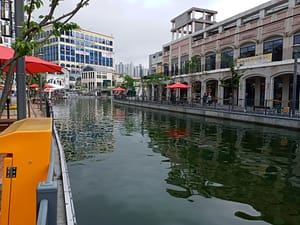
Walking Along the Fake Venice Canal
Fake Venice canal—
dog walkers pass cafes
on a Tuesday evening
Fake Venice Canal
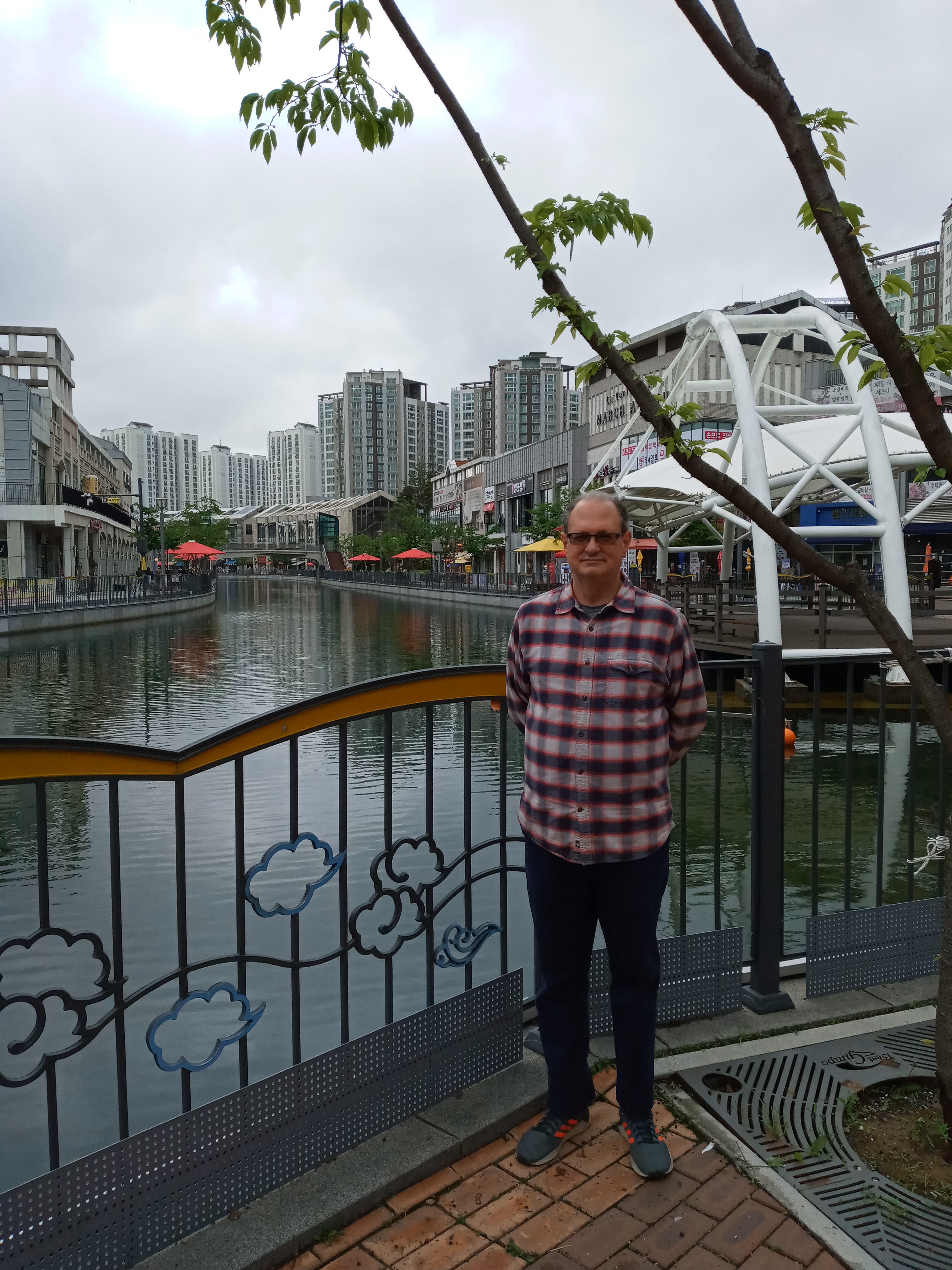
the fake Venice canal—
Springtime peaceful blue waters
Memories of other lands
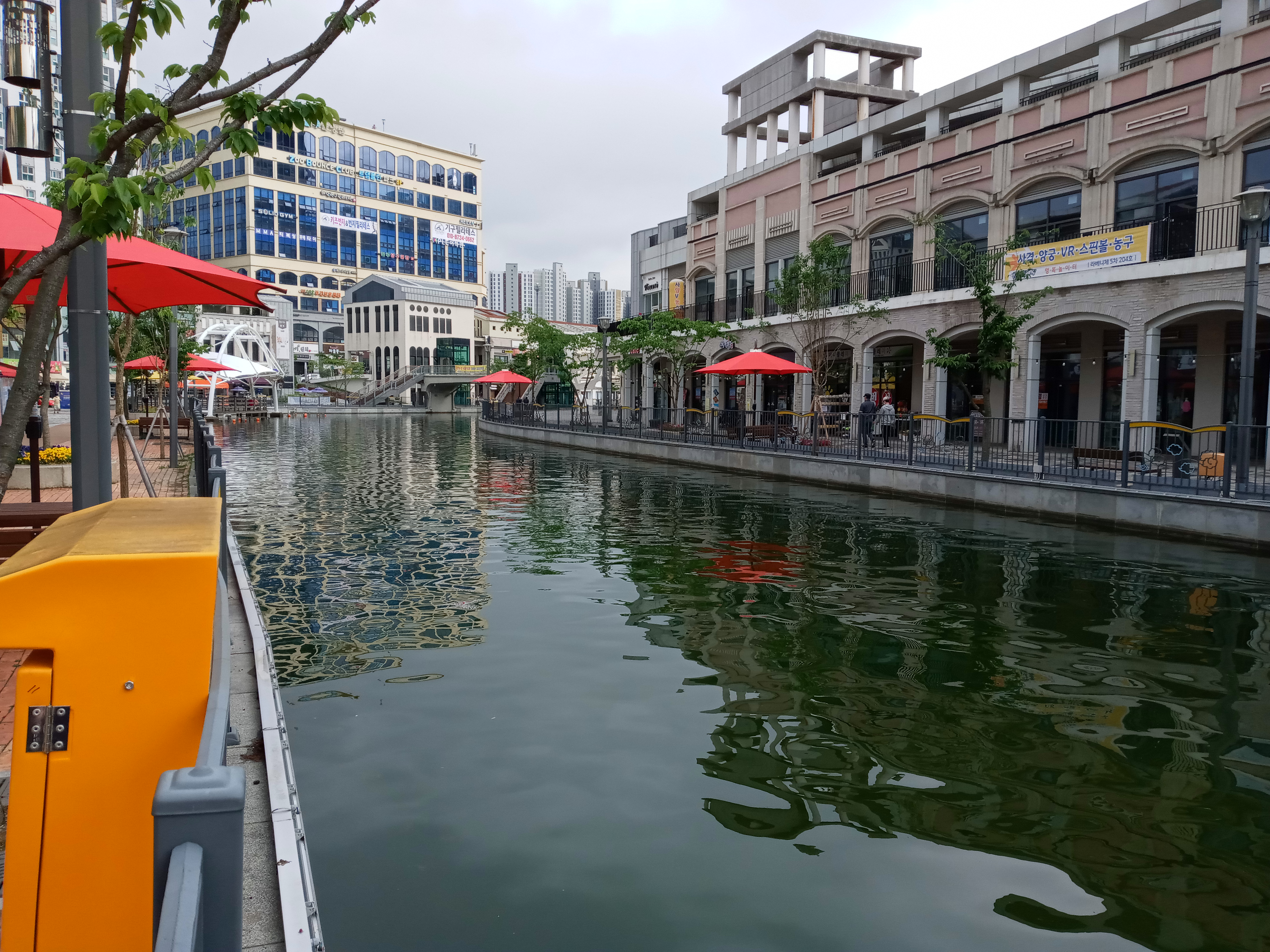
Gimpo’s Hidden Gem Tanka
Gimpo, korea
Has a hidden secret gem
The fake Vvenice Canal—
Springtime, peaceful blue waters
Dreaming of Italy
April 17, 2026: Poetry Writing Prompt from LB Sedlacek
This poetry writing prompt submitted by LB Sedlacek:
Daily Commute Poem
While you’re driving anywhere (to work, school, the gym, home, running errands, etc.) what do you see? (For example today on the way to run errands I saw a field of blooming daffodils, a man chopping down a tree by the side of the road, a man holding a baby in their yard, smoke rising from a fast food joint, birds flying into bushes.)
1) As you ride along, use your phone to take a voice memo, note or reminder, or jot down everything with a pen/pencil and a notepad at a stoplight or after you’ve parked,
2) Take notes for 1-2 days,
3) Use what you saw as you drove along, to compile a list,
4) Order your list, and
5) Use your notes to write a poem.
You’ll be amazed at what worlds you capture with this poem.
*You can do also do this if you travel by Uber, Lyft or even by train by jotting down your notes as you ride along. You can also do this while walking if you don’t own a car or don’t have to drive anywhere by recording your notes on your phone or while sitting on a bench and jotting them down
Factual background on the Gimpo “Fake Venice” Canal
(grounded, non-invented, with spelled‑out URL end notes)
Official and common names
- Golden Waterway (Geumbit Suro / 금빛수로)
- La Veniche Marché Avenue / Laveniche
- Often nicknamed “Venice of Korea” or “Gimpo’s Venice”, sometimes informally called a fake Venice canal by visitors.
What it is
- A 2.68 km-long artificial canal running through Gimpo Han River New City, Gyeonggi Province.
- Designed as a mixed-use waterfront zone combining:
- canals
- pedestrian promenades
- cafés, restaurants, bars
- retail and performance spaces
- Built as part of a new-town cultural development project, not an organic historical waterway.
[gyeonggido-korea.com], [gimpo.go.kr], [english.vi…orea.or.kr]
Design concept
- Explicitly modeled on Venice, Italy.
- European-style façades line the canal; water is used as ornamental infrastructure, not transport.
- At night, lighting, reflections, and music fountains heighten the theatrical effect.
- The space is carefully staged to produce:
- romance
- leisure
- Instagram-ready “elsewhere-ness”
[gyeonggido-korea.com], [english.vi…orea.or.kr], [gyeonggido-korea.com]
Cultural reality (important for poetry)
Public reviews and city sources consistently note a tension:
- Visually striking, especially at night.
- Feels curated, simulated, and provisional rather than lived-in.
- Many storefront vacancies in recent years; atmosphere can feel eerie, quiet, or hollow, especially off-hours.
- Water is sometimes drained seasonally, undercutting the Venice illusion.
[tripadvisor.com], [top-rated.online]
This contradiction—romance vs. vacancy, promise vs. artifice—is one of the most repeatedly documented aspects of the place and is poetically rich terrain.
Activities and features
-
- Pedal boats and crescent-shaped Moon Boats
- Musical fountains
- Street performances and festivals (intermittent)
- Continuous walking path linked to Hangang Central Park
[gimpo.go.kr], [top-rated.online]
End‑note style URLs (spelled out)
- Gyeonggi Province overview of Laveniche Waterside Park
https://www.gyeonggido-korea.com/2023/11/explore-charm-of-gimpo-city-laveniche.html
[gyeonggido-korea.com] - Gimpo City official page: Golden Waterway & Laveniche
https://gimpo.go.kr/en/contents.do?key=10997
[gimpo.go.kr] - VISITKOREA: Laveniche Plaza / Golden Waterway background
https://english.visitkorea.or.kr/svc/whereToGo/locIntrdn/rgnContentsView.do?vcontsId=112766
[english.vi…orea.or.kr] - Gyeonggi Province feature: Discover Gimpo’s Little Venice
https://www.gyeonggido-korea.com/2024/06/discover-gimpos-little-venice-la-veniche.html
[gyeonggido-korea.com] - Aggregated visitor reviews highlighting vacancy and atmosphere
https://www.top-rated.online/cities/Gimpo-si/place/p/9182322/Gimpo+Laveniche+March+Avenue
[top-rated.on
2026 April PAD Challenge: Day 17 -Write an ambiguous poem
War in Iran? An exercise in ambiguity!
War in Iran? An exercise in ambiguity!
Expecting a clear, unambiguous answer
as to why the U.S. is engaged
in a war with Iran,
spending two billion dollars a day,
is a fool’s errand.
The answer changes daily.
The war objective is as clear as mud.
The old war adages,
FUBAR and SNAFU,
come roaring back to life!
Is it regime change?
Yes, no, maybe.
Who knows?
Is it to destroy
the Iranians’ ability
to inflict serious damage
on their neighbors?
Maybe yes,
maybe no.
Who really knows
what the truth is?
With our “stable genius,”
Who knows more about the war
than his generals
And the self-proclaimed
Secretary of War
Leading the way.
Is it because Israel
and maybe the Saudis
wanted
us to help do
their dirty work?
Probably partially true,
But again
—who knows?
Was it because
the Iranians
had reconstituted their
totally obliterated
nuclear weapons program?
Probably not true—
Maybe not an imminent threat
to the U.S.,
in any event.
And were negotiating
with the U.S. until just
for before the war
For reasons still unclear,
The President
joined Israel
in launching the war
on very short notice—
not formally notifying Congress,
the American people,
or our allies
until just before
The launching of the war.
Was it to prevent
the closure
of the Strait of Hormuz?
If so,
then why have we closed
it ourselves?
Is it to lower the price of gas?
If so, it was
a huge strategic blunder.
Is the war illegal?
Not until Congress
or the tamed Supreme Court
wakes up and says so.
Is the war unconstitutional?
Probably,
but until Congress or the Court
says otherwise,
the war will continue,
and even if both say it is illegal,
the President
will probably just shrug it off
and continue the war.
Was it all just a smoke screen
to hide other military adventures
being planned?
Possibly yes
— but who knows for sure.
Finally,
expecting straight answers
to these questions
is indeed a fool’s game,
for they are engaged
in a strategy—
of deception,
gaslighting,
mischaracterization,
misdirection and lies.
And propaganda,
straight out of the
North Korean playbook
Saying:
Trust us,.
We have a plan.
And we are winning!
Already won the war!
It will be over soon.
And gas prices
will drop magically
as the Strait opens organically!
The unambiguous answer—
is the public tired
of winning this war?
Nobody knows for sure!
Robert Lee Brewer
Updated Apr 17, 2026 6:23 AM EDT
For today’s prompt, write an ambiguity poem. In real life, people like clear meanings, but real life also often is filled with a lot of ambiguity. And poetry, in general, loves ambiguity, because it provides the space for readers to find their own meanings.
April 18
Dew Drop Inn A Sense of an Ending
When the Fever Breaks
It began like a fever—
heat mistaken for life,
noise praised as motion.
A voice promised
the distant roads
would lead somewhere again,
that anger could be fuel,
that shouting meant power.
For years
The MAGA faithful
Stood in the weather,
Wore the red colored hats,
Said the MAGA slogan words,
Believed sweat
Was proof of strength.
But fevers burn resources.
Prices rose quietly at first,
Then everywhere at once.
Cold returned to kitchens.
War came back
Wearing a different name.
And then—
The moment no one could excuse:
The costume too sacred,
The mirror lifted too high,
The savior confused
With the saved.
Hands loosened.
Some stepped back softly,
Pretending distance had always been there.
Some cried betrayal,
As if naming it first
Might erase the painful reality.
Buyer’s remorse spread,
like a second illness—
less dramatic,
more honest.
A fever does not explode.
It breaks.
What remains is thirst,
trembling,
and the quiet understanding
That they had been conned
By the greatest con man
Of them all
Who had not drained
The Swamp
Instead, becoming
The biggest swamp
Creature of all time.
That the wanna be
The Emperor had no clothes
And was a rapidly aging
Senile old man.
That belief is not truth,
That volume is not power,
And heat without balance
burns the house
It claims to warm.
(Tree of Heaven and Other Invasives)
The U.S. is under invasion—
an invasion of invasive species.
Animals, insects, plants
from other lands,
proliferating across the continent,
causing considerable damage.
Welcome to ground zero.
Florida is ground zero
for the invading hordes—
From kudzu,
the vine that ate the South,
to the ironically named
Tree of Heaven.
Welcome to ground zero.
The Tree of Heaven speaks softly,
claims it was invited,
claims it brings shade and order,
drops seeds by the hundreds of thousands,
poisons the soil with quiet chemistry,
smiling as nothing else grows.
Ailanthus altissima—
false grace in bark and leaf,
thriving in ruins,
loving the disturbed.
Welcome to ground zero.
Around it advance the others:
autumn olive,
Brazilian pepper tree,
cogongrass,
hydrilla and water hyacinth,
Japanese stiltgrass,
melaleuca,
Old World climbing fern,
oriental bittersweet,
princess tree—
All smothering the landscape
of Florida and the South,
each insisting it belongs.
Florida has also become
ground zero
for other invasive arrivals:
Asian tiger mosquito,
Argentine black‑and‑white tegu,
Burmese python—
a slow green sentence
uncoiling through the Everglades—
cane toad,
emerald ash borer,
European starling,
feral hogs,
feral monkeys,
giant African snails,
green iguanas,
lionfish,
spotted lanternfly.
Welcome to ground zero.
Not to mention the natives adapting fast—
alligators,
bears,
crocodiles,
coydogs,
cougars,
mosquitoes spreading dengue
and malaria,
giant flying roaches
learning the architecture of fear.
We catalogue them carefully,
as if lists were fences,
as if borders still meant
what we say they do—
when none of us
are entirely native anymore.
And of course,
the most dangerous invasive species of all:
Florida Man.
Unpredictable.
Overconfident.
Released without containment.
Thrives in chaos.
Immune to warning labels.
Welcome to ground zero.
IV. Author Notes
About Invasive Species
An invasive species is a non‑native organism that spreads rapidly and causes ecological, economic, or human‑health harm. Invasive plants often outcompete native species by growing aggressively, altering soil chemistry, or producing allelopathic toxins that inhibit surrounding growth. Florida is considered a hotspot due to its warm climate, extensive trade ports, aquarium and pet industries, and disturbed landscapes.
Key invasive plant species referenced:
- Tree of Heaven (Ailanthus altissima) – fast‑growing, allelopathic, toxic to nearby plants
- Kudzu (Pueraria lobata) – smothers trees, buildings, and landscapes
- Brazilian pepper tree (Schinus terebinthifolius) – displaces native plants
- Cogongrass (Imperata cylindrica) – highly aggressive, alters fire regimes
- Hydrilla and water hyacinth – aquatic plants that choke waterways
- Japanese stiltgrass – forms dense ground carpets
- Melaleuca – drains wetlands, fuels wildfires
- Old World climbing fern – spreads fire into tree canopies
- Oriental bittersweet – girdles and collapses trees
Key invasive animals and insects referenced:
- Burmese python, lionfish, green iguana, cane toad, feral hogs
- Asian tiger mosquito, spotted lanternfly, emerald ash borer
- European starling, Argentine black‑and‑white tegu
Sources:
National Invasive Species Information Center – invasivespeciesinfo.gov
US Forest Service – fs.usda.gov
University of Florida IFAS – invasivespecies.ifas.ufl.edu
The Nature Conservancy – nature.org
On the Term “Florida Man”
“Florida Man” is an internet meme that emerged around 2013, derived from news headlines that often begin with the phrase “Florida man…” followed by an account of bizarre or criminal behavior. The meme humorously suggests that all such stories describe the same chaotic individual.
Researchers and journalists note that Florida’s open public‑records laws (“Sunshine Laws”) make arrest reports especially accessible, leading to a disproportionately high number of sensational headlines. The meme reflects media dynamics and demographics more than actual levels of misconduct.
Sources:
Wikipedia – https://en.wikipedia.org/wiki/Florida_Man
Know Your Meme – https://knowyourmeme.com/memes/florida-man
CNN coverage summarized via Wikipedia
Writer’s Digest -Buyer’s Remorse
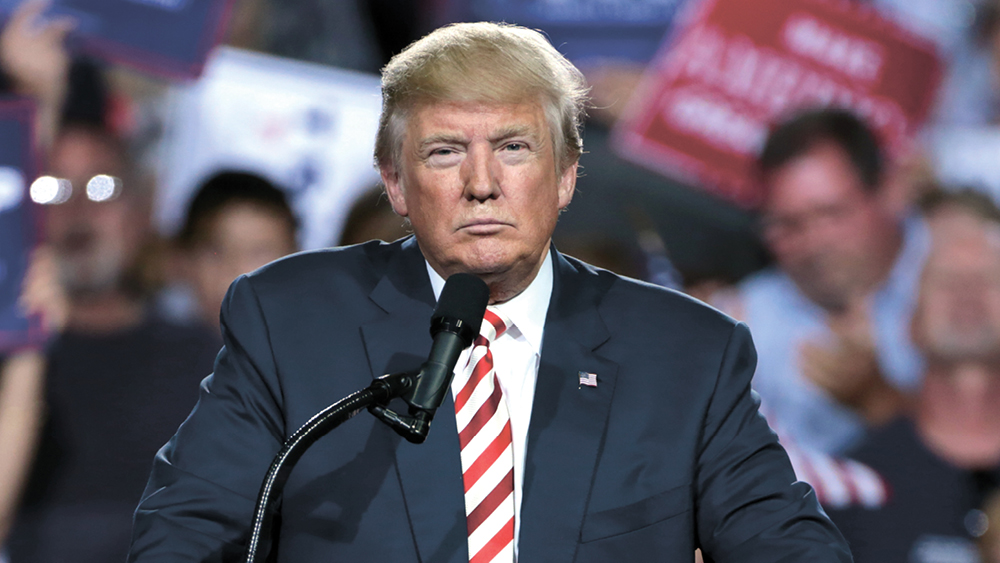
At the counter of belief,
some are reading the receipt again,
turning it sideways,
holding it up to the light.
This wasn’t the price we imagined—
not the quiet rise of rent and bread,
not the jobs flickering off like porch lights,
not the endless noise
masquerading as leadership.
On second thought,
this wasn’t what was promised.
There were signs, of course—
a talent for spectacle,
a comfort with mirrors,
the habit of calling faith a prop
and loyalty a substitute for truth.
We mistook volume for strength,
certainty for care.
Now some ask for refunds,
as if history had a customer‑service desk,
as if the fine print wasn’t always there,
as if wanting something badly
made it noble.
Reconsideration isn’t absolution.
It’s simply the moment
when hope looks back
and admits what it overlooked.
Writer’s Digest
April 19—A literal sense/senses poem
What is Real?
I often sit
And ponder
Upon reality
Thinking what is real
And what is fake
In this world
And I know
That there is one thing
That is real
In this world
That is the love
Of my life
The fairy tale princess
The lady of my dreams
Who saved me
When she walked
Out of dreams
And into my life
44 years ago.
My Mother’s History
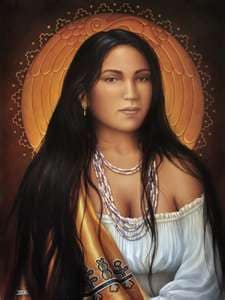
One evening, many years ago,
my mother spoke to me
about our family’s
tangled history.
She spoke of lies, half‑truths,
and myths—
some true, some uncertain—
and as the night went on,
her past came alive.
She was born in the hills
near North Little Rock,
the tenth of eleven children
of a people slowly disappearing.
Cherokees who ran,
who hid,
refused exile—
refugees in the hills.
Part of those forgotten families:
Cherokee, Choctaw, Creek, Seminole,
and African American—
The so-called
Lost Tribe of the Cherokee Nation!
who fled into
the Ozark mountains
to avoid the Trail of Tears,
who never made it
to Oklahoma.
On paper,
They did not exist.
And so, neither did I.
The Bureau of Indian Affairs said:
“No scholarship for you.
You can’t prove
you are Native American”.
I asked my mother,
What that meant.
She said, simply:
“No BIA money for you,
My non-Indian son.”
She told me our family
was distantly related
to President Bill Clinton.
When I met him,
I shared our story.
He agreed—we were cousins.
He told me to call him
Cousin Bill.
He, too, said he was
part Cherokee—
Irish, Scottish, French,
African American—
Part of the people
Who never left cleanly.
When I told my mother,
She nodded.
It was true
We were related
To Cousin Bill Clinton!.
She still didn’t like him.
Our people vanished
from ledgers,
from rolls,
from DNA databases.
History closed its book on us.
And so, at last,
I learned the painful truth:
Because of removals,
broken treaties,
and political greed,
my mother’s people
lost land, language, recognition—
and became invisible.
“Hillbillies,” they were called,
“Black Irish”
The “Lost Tribe of the Cherokee Nation”
clinging to ridges and hollows,
holding dim memories
of who they once were.
The old ways faded.
The new world
never forgave them.
They never forgave it.
They lived on
in the margins.
And I vowed—
as long as I live—
their history will not die.
I carry it.
When I struggle,
I remember my mother’s words,
and I know it is up to me
to let the Cherokee in me
live his life.
Through me,
my mother’s history survives—
until the day I die.
Long live the Cherokee Nation.
Long live my mother
April 20—Salient image (most memorable or resonant image in your day)
Salient Image (Most Memorable Or Resonant Image In Your Day)
Most Fascinating Creature in the Universe
Every day,
when my wife—
the love of my life—
wakes up,
I look at her,
Even after 44 years
together,
she is still
the most fascinating,
mesmerizing creature
in the whole universe.
And I fall
under her love spell
again and again
All over again.
The love mojo
Magic still working
Sparks still flying
From heart to heart
Just like the day
She walked out
of my dreams
and into my life
44 years ago.
NaPoWriMo
Bigfoot emerges
NaPoWriMo
Bigfoot Emerges
Big Foot Emerges with a Message for Humanity
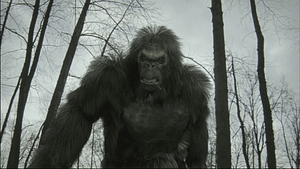
While drinking coffee
in his camp,
deep in the woods,
in the Trinity Alps Wilderness,
snuggled in his tent,
rolled in his sleeping bag,
Sam Adams had the encounter
that changed his life.
He heard a noise,
went outside,
and saw
five Bigfoot standing there.
There were three males
and two female Bigfoot,
about ten feet in height,
with dark black and brown fur,
naked, but
carrying homemade weapons,
wearing backpacks—
and Nike shoes.
They told him,
in his head,
They had a message
for humanity.
He could videotape them.
They would speak slowly.
They could speak,
but preferred mind‑to‑mind talk.
Sam got out his camera
and said,
“Okay, I am joined here
by Bigfoot.
They have a message for humanity.”
“People of Earth,
Bigfoot here.
We have been hiding
in the mountains
for thousands of years,
Hiding from you
because of an ancient war
between your kind
and the nine other species
of humanity.
You won,
and the rest of us
fled to secret hideouts.
But you all are going
to destroy the world
unless you change your ways.
We can help.
We want to help
save the planet
and live in peace
among you,
our fellow humans.
We will teach you
How to reverse climate change,
How to communicate
telepathically,
How to live naturally
to over two hundred years,
and other secrets.
In return, humanity
must guarantee
our continued existence
in our mountain hideouts,
which would remain hidden,
for we cannot yet trust
humanity,
Based on thousands of years
of war between us.
Humans were
merely aggressive
and mean,
but not at all wise.
We are appointing
Sam Adams
as our ambassador
and are moving
to San Francisco.
We will hold a press conference
Once we arrive.
That’s all for now.”
Sam grinned,
thinking he could make
so much money.
Bigfoot said,
“Not so fast.
We will pay you in hidden gold,
But you have to promise
not to betray us.”
Sam smiled.
“Yeah, you got a deal!”
Hello, everyone, and welcome back for Day Twenty of Na/GloPoWriMo. We’re heading into the home stretch now!
Our featured participant today is M. Jay Dixit, who brings us a poignant trio of flowers in response to Day 19’s florilegium prompt.
Today’s featured resource is a YouTube-based course in how to “close read” poetry. In other words, how to do a focused analysis of a poem. It can be very helpful not just if you’re trying to write a paper for school or something along those lines, but if you’re a poet trying to figure out how a particular poem does what it does, so you can recognize and replicate those tactics in your own work.
Author’s note:
Co-Pilot provided the following background information on Big Foot.
Background: Bigfoot and Related Mythical Wild Humanoids
Bigfoot / Sasquatch (North America)
Bigfoot—also called Sasquatch—is a legendary, large, hairy, bipedal humanoid said to inhabit forested regions of North America. The name “Sasquatch” derives from the Halkomelem word sásq’ets, meaning “wild man.”
Primary regions reported:
- Pacific Northwest (Washington, Oregon, Northern California)
- British Columbia
- Alaska
Other U.S. regions with reported sightings:
- Northern California (Trinity Alps, Humboldt, Mendocino)
Note: This is a likely site, the Trinity Alps are pretty wild, In fact. there are still sections no modern human has hiked in.
- Rocky Mountains (Colorado, Montana, Idaho)
- Appalachians (Pennsylvania, West Virginia, Tennessee)
- Great Lakes (Michigan, Wisconsin, Minnesota)
- Florida (Skunk Ape – Everglades)
- Texas and Oklahoma forests
- New York and Pennsylvania rural regions
[BFRO Geogr…& Reports]
Yeti (Himalayas)
The Yeti—often called the “Abominable Snowman”—is a legendary ape‑like being from Himalayan folklore, especially in Nepal, Tibet, Bhutan, and northern India. In local traditions, the Yeti is often viewed as a guardian of sacred mountains, not merely a monster.
[earthstoriez.com], [thenepaljournal.com]
Other Wild Humanoid Myths
- Yowie (Australia): Forest and bush‑dwelling hairy humanoid
- Almas / Almasty (Caucasus, Central Asia): Human‑like wild men
- Yeren (China): Hairy wild man reported in mountainous forests
- Skunk Ape (Florida): Southern U.S. Bigfoot variant
[en.wikipedia.org], [southernst…ettees.com], [doolly.com]
Across cultures, these beings often function as boundary figures—half human, half nature—warning against ecological and moral imbalance.
Endnotes (Sources)
- Bigfoot Field Researchers Organization database:
http://bfro.net/gdb/ - Northwest Bigfoot regional patterns:
https://www.northwestbigfoot.com/patterns-emerging-from-pacific-northwest-bigfoot-reports-april-2026/ - Yeti folklore overview:
https://earthstoriez.com/nepal-myth-folklore-yeti - Himalayan Yeti traditions:
https://thenepaljournal.com/why-the-yeti-legend-lives-on-in-nepal/ - Global cryptid humanoids:
https://www.doolly.com/blog/bigfoot-mythic-humanoids-cryptozoologys-elusive-legends
PSH: Daily Affirmations Keep Me Sane
Every day,
when I finish my yoga
and slow Tai Chi forms,
I pause.
I take a moment
to reflect on what is holy,
what remains steady,
what still belongs to me.
These affirmations
keep me sane—
keep my balance
when the world sways.
I repeat each one
three times,
breathing slowly,
leaning into their weight,
listening for the meaning
inside these ordinary words,
which somehow carry
quiet wisdom.
Today, no matter the noise,
I will not lose my balance.
Today, I will complete
the three things that matter most.
I will not let anger
set the rhythm of my thoughts.
I will not let the news
enter my breath.
I am healthy enough.
I have what I need.
I am still learning.
As long as love
walks beside me,
I am not alone.
Things have worked out before.
They will again.
No matter what comes,
I will survive.
Today will be enough.
I will step forward
and meet it.
PSH word search
What Comes Around, Goes Around
Political Karma at Work
There is an iron law of human life,
often referred to as
“What comes around
goes around,”
summed up in the phrase:
Karma’s a B…
The leaders of the MAGA movement
came to power
and were infamous
for their extremist rhetoric—
insulting, vituperative tweets,
and calumniated language,
raw political intimidation.
And it worked for a while.
But what they failed to learn
from their days as high‑school bullies
is that such abusive behavior
only goes so far.
When you need people,
you need allies—
particularly in
international politics.
People remember all the insults
Bullying and mean tweets,
and the proverbial
knives come out.
Soon you are all alone,
until your own people
turn on you.
Because after
silently enduring insults
and boorish behavior,
they become
your real enemies,
vowing revenge.
It is an age‑old story:
The downfall of Caesar,
the downfall of the Iron Lady,
Margaret Thatcher,
Senator Tower of Texas,
Who had a drinking problem?
and a problem controlling
his concupiscence.
But the real problem was this:
He had ninety‑nine enemies—
the entire Senate—
who wanted him gone.
And so it goes:
What comes around
goes around.
That is the fate
of bullies
and wannabe kings
alike.
They are on top
of the world
until they are out.
And no one
returns their calls,
despite their supplication.
It could happen
to anyone
in a position of power.
Ain’t karma a B…?
What Comes Around, Goes Around
Political Karma at Work
There is an iron law of human life
Often refered to as
“What comes around
Goes around”
Summed up in the phrase
Karma’s a B…..
The leaders of the MAGA movement
Came to power
And were infamous
For their extremist rhetoric
Insulting, vituperative tweets
And Columniatated language
Raw political intimidation
And it worked for a while
But what they failed to learn
From their days as high school bullies
Such abusive behavior only go far
When you need people
You need allies
Particularly in
international politics
People remember
And the proverbial knives come out
And soon you are all alone
Until your own people
Turn on you
Because after enduring insults
And boorish behavior
They have become
Your real enemy
Vowing revenge!
It is an age-old story
The downfall of Caesar
The downfall of the Iron Lady
Magaret Thatcher
Senator Tower of Texas
Who had a drinking problem
And a problem controlling
His Concupiscence!
But the real problem was
He had 99 enemies – the entire Senate!
Who wanted him gone.
And so it goes
What comes around
Goes around.
That is the fate
Of bullies
And wanna be kings
Alike.
They are on top
Of the world
Until they are out.
And no one
Returns their calls.
Despite their supplication!
It could happen
To anyone
In a position of power.
Ain’t Karma a B…?
Words chosen
Vituperation. Bitter and abusive language
Columniatated defame
Concupiscence Lust
Supplication beg
PSH word search
Vituperation. Bitter and abusive language
Columniatated defame
Concupiscence Lust
Supplication beg
April 20, 2026: Poetry Writing Prompt from D.L. Lang
This poetry writing prompt submitted by D.L. Lang:
Open up a book or online game of word searches and use the provided list of words to compose a poem.
2026 April PAD Challenge: Day 20
Write a poem a day with poets from around the world for the 2026 April PAD Challenge. For today’s prompt, write a “No (blank)” poem.
Are Americans About To Say No Mas To MAGA Nonesnese?
Robert Lee Brewer
Published Apr 20, 2026 12:15 AM EDT
Whew! When we get through today, we’ll be two-thirds of the way through this challenge. Where is the time going? I don’t know, but let’s keep poeming.
For today’s prompt, take the phrase “No (blank),” replace the blank with a new word or phrase, make the new phrase the title of your poem, and then, write your poem. Possible titles might include: “No Means No,” “No Dogs Allowed,” “No Shoes No Service,” and/or “No Way Am I Going Downstairs to Check Out That Strange Noise By Myself.”
PSH word search
What Comes Around, Goes Around
Political Karma at Work
There is an iron law of human life,
often referred to as
“What comes around
goes around,”
summed up in the phrase:
Karma’s a B…
The leaders of the MAGA movement
came to power
and were infamous
for their extremist rhetoric—
insulting, vituperative tweets,
and calumniated language,
raw political intimidation.
And it worked for a while.
But what they failed to learn
from their days as high‑school bullies
is that such abusive behavior
only goes so far.
When you need people,
you need allies—
particularly in
international politics.
People remember all the insults
Bullying and mean tweets,
and the proverbial
knives come out.
Soon you are all alone,
until your own people
turn on you.
Because after
silently enduring insults
and boorish behavior,
they become
your real enemies,
vowing revenge.
It is an age‑old story:
The downfall of Caesar,
the downfall of the Iron Lady,
Margaret Thatcher,
Senator Tower of Texas,
Who had a drinking problem?
and a problem controlling
his concupiscence.
But the real problem was this:
He had ninety‑nine enemies—
the entire Senate—
who wanted him gone.
And so it goes:
What comes around
goes around.
That is the fate
of bullies
and wannabe kings
alike.
They are on top
of the world
until they are out.
And no one
returns their calls,
despite their supplication.
It could happen
to anyone
in a position of power.
Ain’t karma a B…?
April 20, 2026: Poetry Writing Prompt from D.L. Lang
This poetry writing prompt submitted by D.L. Lang:
Open up a book or online game of word searches and use the provided list of words to compose a poem.
2026 April PAD Challenge: Day 20
Write a poem a day with poets from around the world for the 2026 April PAD Challenge. For today’s prompt, write a “No (blank)” poem.
Are Americans About To Say No Mas To MAGA Nonesnese?
Robert Lee Brewer
Published Apr 20, 2026 12:15 AM EDT
Whew! When we get through today, we’ll be two-thirds of the way through this challenge. Where is the time going? I don’t know, but let’s keep poeming.
For today’s prompt, take the phrase “No (blank),” replace the blank with a new word or phrase, make the new phrase the title of your poem, and then, write your poem. Possible titles might include: “No Means No,” “No Dogs Allowed,” “No Shoes No Service,” and/or “No Way Am I Going Downstairs to Check Out That Strange Noise By Myself.”
April 21
Dew Drop Inn -Growing Up — Chōka
Born in Berkeley
growing up in the sixties—
a classic boomer,
rooted in that long decade.
Seventy years later,
I still carry the spirit,
the bright unrest of it,
alive in me still.
CHOKA is a Japanese poetic form created in the 6th century. In addition to the classic [ 5/7 – 5/7 – 5/7 – 5/7 – 7 ] syllable pattern. You may use any poetic devices to enhance their beauty and meaning. Traditionally, choka poems were composed to express emotions, describe nature, or convey personal experiences. Choka serves as a vehicle for self-expression, artistic exploration, and cultural preservation
NaPoWriMO
What Is My Name?
I have many names.
I was born
John Cosmos Aller
in Oakland, California.
My great‑grandfather
wanted an English translation
of our German last name,
Aller,
for use as a middle name
for his son.
He came up with Cosmos.
Or Universe.
And so my father
and his father
were Curtis Cosmos Aller.
And I became
John Cosmos Aller—
which had nothing to do
with being born
Berkeley‑adjacent,
though Cosmos
is a great Berkeley name.
In high school
I had a dream.
I was riding a horse
named Jake.
I shouted,
Whoa, Jake,
and began shouting it
in my sleep.
They woke me
to calm me down,
and I became known
as the Whoa‑Jake kid,
or just Jake.
I called myself
Jake Cosmos Aller,
as John
was too boring a name
for me.
In Korea,
when I was a teacher,
I was Aller seonsaengnim,
or Allershi.
At the embassy
I was Aller buyoungsa—
Vice Consul Aller.
Koreans have always
had a hard time
with my last name,
with their Ls and Rs.
They often called me
Jake‑shi instead.
In Thailand
they called me
Mr. Jake.
In India
I became
Mr. Jake as well—
and sometimes
Brother Jake,
when my wife
was in the military.
We would get
official invitations
to Mr. and Mrs. Lee,
and I became
Jake Lee
to the military.
Military folks
think I’m
a retired colonel,
so I am
Colonel Aller—
or Colonel Lee
to some.
Later in life
I adopted
Cosmos Aller
as my pen name,
and thus my blogger name,
Cosmos,
and the world according to Cosmos
was unleashed.
But Jake Cosmos Aller
is a fine name
for me.
You can simply
call me
Jake.
Three weeks and just a week and some change left to go in this year’s National/Global Poetry Writing Month.
Today’s daily featured participant is Haphazard’s Na/GloPoWriMo, where the response to Day Twenty’s mythic prompt involves a small brown owl. (And here I thought “morpork” was just a part of a silly name the late Sir Terry Pratchett made up for an imaginary city . . . though now I suppose the owl in the coat-of-arms ought to have been a clue).
Our resource for the day is this short essay by the poet Kimiko Hahn on senryu, the haiku’s comic cousin.
And here’s today’s prompt (optional, as always). In her poem, “Names and Nicknames,” Monika Kumar reminisces over various nicknames she has been given, the actual name her mother gave her, and the way both names and nicknames indicate a claim and an intimacy at once. In your poem for today, we challenge you to write your own poem in which you muse on your name and nicknames you’ve been given or, if you like, the name and nicknames for an animal, plant, or place. For example, I’ve always been amused at the fact that red trillium (a rather pretty wildflower that grows in the woods near my house) has several other common names, including the bizarre “stinking benjamin.” The plant grows very short and close to the ground, so I’ve never actually leaned over far enough to get a whiff and see how merited that sobriquet is!
PSH: Apple and Soursop: Super Foods
My grandfather
grew up in Yakima.
There is a dark side
to how Yakima became
the apple capital
of the United States.
My grandfather
was an apple farmer,
growing apples on land
he took from
the Yakima Indians,
after the Columbia River dams
made the land valuable
for fruit farming.
The Yakima Indians
lost half their land
to people like my grandfather,
who legally bought parcels
after getting the Indians drunk,
then evicted them
from their plots.
He later bred
the Edison green apple,
green asparagus,
and red
and yellow Delicious apples too.
My father raised apple trees
in our backyard
and made us kids
pick apples
on the family farm
during late summer vacation.
Now we use
apple cider vinegar
in everything—
even in cocktails.
Soursop.
I became a soursop fan
when I lived
in Barbados, India,
and Thailand.
We later discovered
it was a superfood:
a potential cancer cure.
It works well
in smoothies
and in soursop rum sours too.
April 21, 2026: Poetry Writing Prompt from Eric Paul Shaffer
This poetry writing prompt submitted by Eric Paul Shaffer:
The Ripe Fruit and Theft Prompt
Write a poem of 50 to 200 words on the topic of ripe fruit and theft. Take those words in any way and to any context in order to complete the assignment.
The poem should address themes and images in any mythological, political, religious, social, economic, historical contexts. Go in any direction relevant to your take on the topic.
For extra points, 1) use the names of two actual fruits; 2) work to expand local events to the global sphere and vice versa; 3) use at least three colors in the poem; 4) mention at least one fact about fruit that most people don’t know, like the fact that fruit comes from the flowers of trees or that tomatoes are fruit or that fruit cocktail is in no effing way a cocktail.
For extra points, 1) use the names of two actual fruits; 2) work to expand local events to the global sphere and vice versa; 3) use at least three colors in the poem; 4) mention at least one fact about fruit that most people don’t know, like the fact that fruit comes from the flowers of trees or that tomatoes are fruit or that fruit cocktail is in no effing way a cocktail.
2026 April PAD Challenge: Day 21
Slime Patrol
I used to wash dishes
as a college student job—
in the campus dining hall
We called ourselves
The Slime Patrol
hands in scalding water
grease, smell, hours
being unseen/unthanked
cleaning up the messes
of the entitled college kids
We were the slime patrol
plates cleaned
while dreams
remain dirty
We were the slime patrol
Write a poem a day for the 2026 April PAD Challenge. For today’s Two-for-Tuesday prompt, write a high and/or low poem.
Robert Lee Brewer
Published Apr 21, 2026 12:27 AM EDT
Once we get through today, we’ll officially be three weeks into this challenge. And each week finishes up with a Two-for-Tuesday prompt this year.
For the third Two-for-Tuesday prompt:
- Write a high poem and/or…
- Write a low poem.
Bonus Poems
The Riddle
Some say he is the living Christ
Others call him anti‑Christ
Poster child for deadly sin
Grinning wide with lethal grin
Do you know this madman’s name?
Is he god or he‑man flame?
lCriteria
xxxxxxxa
xxxxxxxa
xxxxxxxb
xxxxxxxb
xxxxxxxc
xxxxxxxc
New Prompt: Time for poetry this week – a new Poetry Week starts.
One of the easiest Welsh poetry forms is the Cyhydedd Fer. The description I found told – and I quote:” A rhymed couplet of 8-syllable lines.”
My feelings with this form is that this couplet can be witty – there is no info if the poem is a stand alone stanza only, or that more stanzas can be added.
Only the following couplets need to have the same end rhyme in Welsh.
In the English versions of this form the couplets may have a different end rhyme; still 8 syllables per line. Some websites mention the fact that it needs a riddle, but not all the documentary about this form is equal on that point.
Rhyme should go like this:
xxxxxxxa/xxxxxxxa
xxxxxxxb/xxxxxxxb
xxxxxxxc/xxxxxxxc
etc.
Express in Eight Poems
Prompt: The Beauty of a Single Moment
My favorite time
Of the day
Is morning
When the love
Of my life
Comes out
Bringing sunshine
And beauty to the room
Prompt: Invisibility
Living overseas
Often the only American
In the room
One sometimes feels
Like an
Invisible man
Lost in a strange land
Almost a ghost
What Does MAGA Want
What do they want
What exactly does MAGA want
Where do they want
To take the country where they want
What does their leader want
Where does he want
To take the country where he wants
What does MAGA want
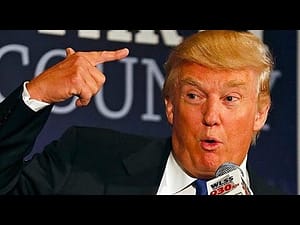
Note: MAGA stands for” Make America Great Again “and is the name of the political movement that President Trump started in 2016 and has taken over the Republican party. Critics call it a political cult, and about 30 percent of Americans considered themselves MAGA.
Tear Down this Wall
Mr. Trump
Please tear down this wall
Please open up your heart
Please stop this madness
Please tear down this wall
Please build bridges to the future
Please open your heart
And let the love shine through
Poster child for Seven Deadly Sins
There is a famous man
Who is a poster child
For seven deadly sins
Every day he feels pride
He is filled with greed
And has many affairs
Filled with dark envy
Swollen with wrath and sloth
Background Author’s Note: The Seven Deadly Sins
The Seven Deadly Sins—pride, greed (avarice), lust, envy, gluttony, wrath, and sloth—originate not as a biblical list, but as a moral framework developed within early Christian thought. First articulated in the fourth century by the monk Evagrius Ponticus as “eight evil thoughts,” Pope Gregory later revised the scheme in the sixth century the Great, who shaped it into the seven “capital” sins still recognized today. [britannica.com], [history.com]
These sins were understood not simply as individual transgressions, but as underlying dispositions—habits of desire from which other actions flow. Medieval theologians such as Thomas Aquinas refined this idea, and writers like Dante Alighieri used it as an organizing moral structure, most famously in The Divine Comedy, where the sins chart the soul’s deformation and, in purgatory, its possible repair. [britannica.com], [cambridge.org]
Though rooted in Christian theology, the Seven Deadly Sins endure as a broadly human vocabulary for excess, imbalance, and moral failure. In literature, they function less as doctrine than as metaphor: a way of examining power, appetite, violence, and self‑deception across cultures and eras.
Subtack
Medium
Wattpa
Spotify
The End

Thanks so much for visiting my site. Your comments are welcome but please play nice…. Reply