Some landscapes impress you. Crater Lake humbles you.
The first time I stood on the rim of Crater Lake, I found myself doing what nearly every visitor does: stopping mid-sentence and simply staring. Photos do not prepare you for it. The water is a shade of blue so intense that it seems almost artificial, and the sheer scale of the collapsed volcano that contains it is difficult to comprehend.
Located in Oregon’s Cascade Range, Crater Lake is the deepest lake in the United States, plunging 1,949 feet below the rim. Yet the lake itself is relatively young. Roughly 7,700 years ago, Mount Mazama, a massive volcano that once towered over Southern Oregon, erupted catastrophically. The mountain collapsed inward, creating a giant caldera that slowly filled with rain and snowmelt.
Today, no rivers flow into or out of the lake. Over centuries, the water has remained extraordinarily pure, creating some of the clearest and bluest water found anywhere on Earth.
For many visitors, Crater Lake is the crown jewel of Oregon. For the people who lived here long before the creation of the National Park, however, it holds a far deeper significance.
🏛️ Before the National Park: The Klamath People
Long before explorers, tourists, or park rangers arrived, the region around Crater Lake was home to Native peoples whose ancestors had lived in the area for thousands of years.
The Klamath, Modoc, and Yahooskin peoples, today represented by the Klamath Tribes, consider Crater Lake sacred. They know the lake as Giiwas.
According to Klamath oral tradition, the formation of the lake was not merely a geological event but a spiritual one. Stories passed down through generations describe a great battle between powerful spirit beings whose struggle reshaped the mountain and created the lake.
Modern geologists believe Mount Mazama erupted approximately 7,700 years ago. What makes the Klamath traditions remarkable is that they may preserve a cultural memory of an event that occurred thousands of years before written history reached North America.
Like much of the American West, the arrival of settlers brought profound changes. Throughout the nineteenth century, Native communities experienced disease, displacement, warfare, and the loss of traditional lands.
The Klamath Tribes signed treaties with the United States in 1864 and were confined to what became the Klamath Reservation. Although portions of their ancestral territory remained under federal control, tribal connections to Crater Lake never disappeared. Today the Klamath Tribes continue to play an important role in preserving and interpreting the cultural history of the region.
Visitors who come only for the scenery often miss an important truth: Crater Lake was a sacred place long before it became a national park.
A Cross-Cultural Perspective: Crater Lake and Korea’s Paektu Mountain
One of the most interesting comparisons for international visitors is the resemblance between Crater Lake and Paektu Mountain (Baekdu-san in Korean, Changbai Shan in Chinese), the great volcanic peak located on the border of North Korea and China.
Like Crater Lake, Paektu Mountain is a volcano crowned by a spectacular crater lake. Known as Heaven Lake (Cheonji in Korean, Tianchi in Chinese), the lake occupies a volcanic caldera formed by a massive eruption in the distant past. Surrounded by steep mountain walls and often shrouded in clouds and mist, it is considered one of the most beautiful and sacred landscapes in East Asia.
The similarities between the two places are striking:
Both are volcanic calderas created by catastrophic eruptions.
Both contain deep, crystal-clear crater lakes.
Both are surrounded by dramatic mountain scenery.
Both hold profound cultural and spiritual significance for Indigenous or traditional peoples.
Both are viewed as national treasures and symbols of natural beauty
Both erupted about the same time.
For Koreans, Paektu Mountain occupies a special place in national identity. Traditional Korean history and mythology describe it as the birthplace of the Korean people and a sacred mountain central to the nation’s cultural heritage.
For both Chinese and Korean communities, the mountain remains an important spiritual and historical landmark.
Similarly, Crater Lake was not simply a beautiful place to the Klamath people. The lake, known traditionally as Giiwas, has long been regarded as a sacred landscape connected to tribal history, spirituality, and oral traditions.
Visitors from Korea and China are often struck by these parallels. Many describe an immediate sense of familiarity when standing on the rim of Crater Lake for the first time. Despite being separated by the Pacific Ocean, both places inspire the same feeling of awe: a vast volcanic basin filled with impossibly blue water, surrounded by stories that connect geology, history, and cultural identity.
Of course, there are also important differences. Paektu Mountain remains an active volcanic system and sits at an elevation of nearly 9,000 feet, while Crater Lake rests within the remains of long-collapsed Mount Mazama. Yet the visual similarities are remarkable enough that many East Asian visitors immediately make the connection.
For travelers fortunate enough to have visited both locations, the comparison offers a reminder that some of the world’s most extraordinary landscapes transcend national boundaries. Whether in Southern Oregon or on the border of Korea and China, sacred crater lakes have a way of inspiring the same sense of wonder.
🌲 How Crater Lake Became a National Park
The first known non-Native American sighting by settlers occurred in 1853.
For decades afterward, the lake remained relatively inaccessible. Roads were poor, accommodations were limited, and many Americans had never even heard of the place.
One man changed that.
William Gladstone Steel first learned of Crater Lake in 1870 and became obsessed with protecting it. For more than thirty years he lobbied Congress, promoted the lake nationally, organized expeditions, and pushed for conservation of the area.
His efforts eventually succeeded.
On May 22, 1902, President Theodore Roosevelt signed legislation creating Crater Lake National Park, making it the fifth national park in the United States.
Early visitors faced a difficult journey involving rail travel, horse-drawn transportation, and rough mountain roads. Over time, the National Park Service developed Rim Drive, visitor facilities, campgrounds, trails, and the historic Crater Lake Lodge.
Today the park attracts between 650,000 and 750,000 visitors annually and remains one of the premier destinations in the Pacific Northwest.
🚗 The Rim Drive Experience
If you’re short on time, Rim Drive may be the best scenic drive in Oregon.
The 33-mile road circles the entire caldera and provides constantly changing perspectives of:
Wizard Island
Phantom Ship
Mount Scott
The caldera walls
Wildflower meadows
Ancient lava flows
Mount Thielsen
Mount McLoughlin
Almost every overlook feels like it should be on a postcard.
The challenge is resisting the urge to stop at every turnout.
🥾 Best Trails in Crater Lake National Park
Crater Lake offers more than 100 miles of hiking trails ranging from easy walks to challenging summit climbs.
Garfield Peak Trail
Starting Point: Crater Lake Lodge Nearest Town: Chiloquin
Length: 3.6 miles round trip
Difficulty: Moderate
Elevation Gain: Approximately 1,000 feet
Highlights
Perhaps the most iconic hike in the park
Panoramic views of Crater Lake
Outstanding sunrise and sunset photography
Views of Wizard Island and Mount Scott
This trail provides some of the best elevated lake views without requiring an all-day commitment.
Cleetwood Cove Trail
Starting Point: Rim Drive
Nearest Town: Chiloquin
Length: 2.2 miles round trip
Difficulty: Strenuous
Elevation Loss/Gain: About 700 feet
Only legal access to the lakeshore
starts at the lodge. Easy access point. Also where The Trolly stops.
Highlights
Reach the water’s edge
Swimming opportunities
Historic boat tour departure area
Unique perspectives from lake level
The hike down is easy.
The hike back up reminds you that you are climbing out of a volcanic crater.
Watchman Peak Trail
Starting Point: Watchman Overlook
Nearest Town: Chiloquin
Length: 1.6 miles round trip
Difficulty: Easy to Moderate
Highlights
Historic fire lookout
Exceptional sunset views
Excellent stargazing
Family friendly
The Watchman may offer the best effort-to-reward ratio in the park.
Discovery Point Trail
Starting Point: Rim Village
Nearest Town: Chiloquin
Length: 2 miles round trip
Difficulty: Easy
Highlights
Gentle terrain
Spectacular rim views
Historic significance
Great option for families
This trail follows the route taken by some of the earliest explorers who documented the lake.
Mount Scott Trail
Starting Point: Mount Scott Trailhead
Nearest Town: Chiloquin
Length: 5 miles round trip
Difficulty: Difficult
Elevation Gain: Approximately 1,280 feet
Highlights
Highest point in the park
360-degree views
Visibility extending into California and across Oregon
If you’re looking for the ultimate Crater Lake panorama, this is the hike.
Plaikni Falls Trail
Starting Point: Pinnacles Road
Nearest Town: Chiloquin
Length: 2 miles round trip
Difficulty: Easy
Highlights
Waterfall destination
Wildflower displays
Shaded hiking
Excellent family hike
Sun Notch Trail
Starting Point: Sun Notch Trailhead
Nearest Town: Chiloquin
Length: 0.5 miles round trip
Difficulty: Easy
Highlights
Best views of Phantom Ship
Quick access
Great photography location
Castle Crest Wildflower Trail
Starting Point: East Rim Drive
Nearest Town: Chiloquin
Length: 0.4-mile loop
Difficulty: Easy
Highlights
Wildflower meadows
Creek crossings
Great spring and summer colors
🥾 The Pacific Crest Trail and Crater Lake
One of America’s most famous long-distance trails passes directly through Southern Oregon.
Southern Oregon Access Points
Mount Ashland
Pilot Rock
Hobart Bluff
Hyatt Lake
Crater Lake National Park
Length Through Oregon
Approximately 455 miles
Highlights
Views of Mount McLoughlin
Sky Lakes Wilderness
Crater Lake rim country
Volcanic landscapes
Wildflower meadows
Old-growth forests
For thru-hikers, the Crater Lake section is one of the most anticipated portions of the Oregon route.
🌲 Wildlife
Common wildlife sightings include:
Mule deer
Black bears
Chipmunks
Coyotees
Clark’s nutcrackers
Gray jays
Bald eagles
Ospreys
Marmots
Ravens
The most common large animal seen by visitors is deer.
The most photographed resident is probably the raven.
⚠️ Changes and Challenges Facing the Park
Like many national parks, Crater Lake faces increasing maintenance demands.
One major upcoming project involves the Cleetwood Cove Trail, the only legal access route to the shoreline. Major repairs are planned to address erosion, infrastructure concerns, and visitor safety.
As a result, lake access and boat operations are expected to be significantly affected during future construction periods.
Visitors should always check current park conditions before traveling.
🚙 Beyond the Lake
Crater Lake sits in the middle of a larger Southern Oregon adventure region.
Nearby attractions include:
Mount McLoughlin
Diamond Lake
Umpqua National Forest
Rogue River-Siskiyou National Forest
Oregon Caves National Monument
Cascade-Siskiyou National Monument
The Pacific Crest Trail
Within a few hours, travelers can go from alpine volcanic terrain to wineries, Shakespeare, rafting, redwood forests, and the Pacific Ocean.
Few places in the United States offer that variety.
🌋 Beyond Crater Lake: Two Remarkable Side Trips
One of the great advantages of visiting Crater Lake is that it sits at the center of a much larger volcanic landscape. Within an hour or two of the rim, visitors can explore deep river gorges, lava flows, volcanic caves, and battlefields that tell the story of both geology and human history.
The Volcanic Legacy Scenic Byway: The Ultimate Drive Between Crater Lake and Bend
Many visitors rush from Bend to Crater Lake in a few hours and miss one of Oregon’s greatest scenic drives.
The route between Central Oregon and Crater Lake follows portions of the Volcanic Legacy Scenic Byway, a nationally recognized route that showcases the volcanic forces that shaped the Pacific Northwest. The broader byway extends roughly 500 miles from Northern California to Southern Oregon and links together Crater Lake National Park, Lava Beds National Monument, wildlife refuges, forests, and mountain communities. [nps.gov], [nsbfoundation.com]
For travelers heading between Bend and Crater Lake, the route offers a remarkable tour through volcanic landscapes, alpine lakes, lava flows, forests, and historic communities.
Suggested Route
Bend → Sunriver → La Pine → Crescent → Diamond Lake → Crater Lake National Park
Driving Time:
Approximately 2.5 to 3 hours without stops.
A full day with sightseeing is highly recommended.
🏔️ Bend
Bend serves as the northern gateway to the route.
Originally a lumber town surrounded by vast ponderosa pine forests, Bend has evolved into one of America’s premier outdoor recreation destinations. The city offers excellent restaurants, breweries, hiking, mountain biking, and easy access to the Cascade Mountains. snd Bend is the mecca for craft beer and Kombuca.
🌋 Newberry National Volcanic Monument
Near Bend and Sunriver
Before even reaching Crater Lake, travelers can experience another major volcanic landscape.
Highlights include:
Lava Butte
Lava River Cave
Paulina Lake
East Lake
Obsidian Flow
Paulina Peak
Together these features help visitors understand the volcanic processes that eventually created Mount Mazama and Crater Lake.
🌲 Crescent and Crescent Lake
The small community of Crescent sits amid forests, lakes, and outdoor recreation opportunities.
Nearby attractions include:
Crescent Lake
Odell Lake
Willamette Pass
Pacific Crest Trail access points
This area marks the transition between Central Oregon’s high desert and the deep forests of the Cascades.
🌊 Diamond Lake
One of Oregon’s most beautiful mountain lakes.
Located at the foot of Mount Bailey and Mount Thielsen, Diamond Lake serves as the northern gateway to Crater Lake National Park.
Activities include:
Fishing
Kayaking
Hiking
Snowmobiling
Wildlife viewing
Many experienced travelers recommend spending a night here before entering the park.
🏔️ Mount Thielsen
Often called Oregon’s “Lightning Rod” because of its sharp volcanic summit, Mount Thielsen dominates the skyline north of Crater Lake.
At 9,182 feet, it is one of Oregon’s most distinctive volcanic peaks and can be seen from numerous viewpoints along the byway.
🌲 Pacific Crest Trail Crossings
The Pacific Crest Trail intersects this corridor in several locations.
The area around:
Mount Thielsen
Diamond Lake
Mount Bailey
Crater Lake National Park
offers some of the finest day hikes along Oregon’s section of the PCT.
🌋 Entering Crater Lake National Park
Approaching the park from the north creates a dramatic experience.
For miles the road winds through dense forest, revealing little of what lies ahead.
Then suddenly the forest opens and visitors find themselves standing on the edge of an immense volcanic caldera filled with intensely blue water.
It is one of the most unforgettable arrivals anywhere in the National Park System.
🥾 Best Hikes Along the Crater Lake-Bend Corridor
Mount Bailey Trail
Near Diamond Lake
Strenuous
Outstanding views of Crater Lake
Mount Thielsen Trail
Near Diamond Lake
Difficult
One of Oregon’s most dramatic volcanic climbs
Pacific Crest Trail Sections
Various access points
Moderate to strenuous
Forests, lakes, and mountain scenery
Paulina Peak Trail
Newberry National Volcanic Monument
Moderate
Views of Paulina and East Lakes
Obsidian Flow Trail
Easy
Walk across ancient volcanic glass deposits
📜 Historical Perspective
This entire corridor sits within lands traditionally used by Native peoples including the Klamath, Molalla, Northern Paiute, and Warm Springs peoples. Long before highways and national parks, these mountain passes served as travel corridors linking communities across Central and Southern Oregon.
Later the route became important for:
Fur traders
Military expeditions
Settlers on the Applegate Trail
Ranchers
Loggers
Early tourists traveling to Crater Lake
Today the byway allows visitors to travel through landscapes that tell the story of Oregon’s volcanic origins while connecting Native history, early settlement, conservation, and outdoor recreation. [volcanicle…ybyway.org], [oregon.com]
Writer’s Note
For many visitors, the journey from Bend to Crater Lake is merely transportation. In reality, it may be one of the finest scenic drives in Oregon. The route threads together volcanic monuments, alpine lakes, old-growth forests, Pacific Crest Trail crossings, and some of the most spectacular mountain scenery in the Cascade Range. If Crater Lake is the headline attraction, the Volcanic Legacy Scenic Byway is the story that connects all the chapters.
🌊 Rogue River Gorge
Location: Approximately 35 miles southwest of Crater Lake National Park
Nearest Community: Union Creek
Best Access: Highway 62
Many visitors are surprised to learn that the famous Rogue River begins just a short distance from Crater Lake on the slopes of the Cascade Range.
One of the most impressive places to experience the river is the Rogue River Gorge, where thousands of years ago lava flows constricted the river into a narrow volcanic channel. The water now rushes through the gorge with tremendous force, carving smooth basalt walls and creating one of Southern Oregon’s most dramatic river landscapes.
Highlights
Easy paved interpretive trail
Spectacular river views
Volcanic geology exhibits
Family-friendly access
Beautiful photography opportunities
The short walking trail follows the rim of the gorge and includes overlooks where visitors can watch the Rogue River squeeze through rock passages only a few feet wide.
Nearby attractions include:
Natural Bridge
Union Creek Resort
Rogue River National Recreation Trail
Becky Creek
Thousand Springs area
Historical Perspective
Long before tourists arrived, the upper Rogue River was an important resource for Native peoples. Salmon runs once moved through these waters, supporting communities throughout the region. The river remains one of Oregon’s most iconic natural resources and is now one of the nation’s original Wild and Scenic Rivers.
🕳️ Lava Beds National Monument
Location: Northern California, approximately 70 miles southeast of Crater Lake
While Crater Lake tells the story of a volcano that exploded, Lava Beds National Monument tells the story of what happened when lava flowed across the landscape.
The monument contains more than 800 lava tube caves, making it one of the largest concentrations of volcanic caves in North America.
Visitors can explore dozens of caves ranging from easy walk-through tubes to challenging crawls requiring helmets and flashlights.
Highlights
Lava tube caves
Volcanic cinder cones
Petroglyphs
High desert scenery
Exceptional night skies
Wildlife viewing
Popular caves include:
Mushpot Cave
Easiest cave in the park
Interpretive exhibits
Ideal for families
Skull Cave
Massive underground chamber
Year-round ice deposits
One of the monument’s most famous features
Sentinel Cave
Large walk-through tube
Excellent introduction to lava cave exploration
Golden Dome Cave
Known for unusual mineral deposits
More adventurous route
Valentine Cave
One of the monument’s most accessible large caves
⚔️ The Modoc War and Native History
Lava Beds is not only a geological wonder but also one of the most significant Native American historical sites in the West.
The area was home to the Modoc people, whose ancestral territory extended across portions of present-day Northern California and Southern Oregon.
Following increasing pressure from settlers and federal policies, many Modoc people were forced onto the Klamath Reservation despite longstanding tensions between the two groups. In 1872, a faction led by Captain Jack left the reservation and returned to their homeland near today’s Lava Beds.
The resulting conflict became known as the Modoc War (1872-1873).
A small group of Modoc warriors used the rugged volcanic terrain of the Lava Beds as a natural fortress, successfully resisting a much larger U.S. Army force for months. The conflict ended with the capture of Modoc leaders, the execution of Captain Jack and several others, and the forced removal of surviving Modoc people to present-day Oklahoma.
Today the battlefield remains remarkably intact and offers visitors a chance to learn about a complex and often tragic chapter in American history.
🏔️ A Volcanic Grand Tour
For adventurous travelers, Crater Lake, the Rogue River Gorge, and Lava Beds National Monument form an unforgettable three-day itinerary.
Together they tell a connected story:
Crater Lake shows the aftermath of one of North America’s greatest volcanic eruptions.
Rogue River Gorge reveals how lava flows shaped rivers and landscapes.
Lava Beds National Monument allows visitors to walk directly inside the volcanic plumbing system itself.
Add nearby Mount McLoughlin, Diamond Lake, and the Pacific Crest Trail, and you’ll find yourself in one of the most geologically fascinating regions anywhere in the United States.
As spectacular as Crater Lake is, it may be only the beginning of the story. The surrounding landscapes reveal how volcanoes created much of Southern Oregon and Northern California, leaving behind a remarkable combination of beauty, history, and adventure.
⚔️ Lava Beds National Monument and the Modoc War: A Forgotten Chapter of the American West
If Crater Lake tells the story of geological catastrophe, nearby Lava Beds National Monument tells the story of human conflict played out in one of the strangest volcanic landscapes in North America.
Located about 90 miles southeast of Crater Lake near Tulelake, California, Lava Beds sits atop a vast volcanic field filled with lava tubes, cinder cones, fissures, and jagged basalt formations. More than 800 lava tube caves have been identified here, making it one of the largest concentrations of volcanic caves in the United States.
But the monument’s history extends far beyond geology.
The Homeland of the Modoc People
For thousands of years, the Klamath Basin and Lava Beds region were home to the Modoc people. Their traditional territory stretched across what is now southern Oregon and northern California.
The Modoc were closely related to, but politically independent from, the Klamath people. They lived by fishing, hunting waterfowl, gathering plants, and managing the landscape through fire and other traditional practices.
The arrival of settlers, ranchers, and miners in the nineteenth century brought increasing pressure on Native lands and resources.
In 1864, the federal government negotiated a treaty that placed both the Klamath and Modoc peoples on the Klamath Reservation in Oregon. Unfortunately, relations between the tribes were often strained, and many Modoc felt marginalized on the reservation and sought to return to their ancestral homeland around Tule Lake.
The Road to War
In 1870 a band of Modoc led by Captain Jack (Kintpuash) left the reservation and returned to the Lava Beds region.
Federal authorities demanded their return.
As tensions escalated, military forces were dispatched to enforce removal. Fighting broke out in late 1872, beginning what became known as the Modoc War.
What followed shocked much of the nation.
Using the rugged volcanic terrain as a natural fortress, fewer than sixty Modoc warriors held off hundreds of U.S. Army soldiers for months.
The lava formations created a maze of caves, ridges, trenches, and hidden passages that made conventional military tactics ineffective.
Journalists covering the conflict nicknamed the area “Captain Jack’s Stronghold.”
Captain Jack’s Stronghold
Today visitors can walk through the same volcanic formations where the Modoc defenders resisted the Army.
The Stronghold Trail is one of the most remarkable historical hikes in the American West.
The landscape itself explains much of the story.
Massive fissures, hidden tunnels, sharp lava ridges, and excellent observation points allowed a small group of defenders to withstand overwhelming odds.
For many visitors, walking through the Stronghold makes the conflict far easier to understand than reading about it in a textbook.
The End of the Conflict
The war ultimately ended in 1873.
Several Modoc leaders were captured, including Captain Jack. Following military trials, Captain Jack and several other leaders were executed.
Most surviving Modoc families were forcibly removed from California and Oregon and transported to Indian Territory in present-day Oklahoma.
Some descendants eventually returned to Oregon, while others remain part of the federally recognized Modoc Nation in Oklahoma.
Today the story is increasingly interpreted from multiple perspectives, recognizing both the military history and the experiences of the Native communities whose homeland became the battlefield.
🥾 Best Hiking Trails at Lava Beds National Monument
Captain Jack’s Stronghold Trail
Starting Point: Stronghold Parking Area
Length: Approximately 1.5 miles loop
Difficulty: Easy to Moderate
Highlights
Historic Modoc War battlefield
Military fortifications
Lava formations
Outstanding interpretive exhibits
This is the single most important trail in the monument.
Gillem Bluff Trail
Starting Point: Gillem Bluff Trailhead
Length: Approximately 2 miles round trip
Difficulty: Moderate
Highlights
Sweeping views over Tule Lake
Historic military positions
Wildflower displays in spring
Excellent birdwatching
Schonchin Butte Trail
Starting Point: Schonchin Butte Trailhead
Length: 1.8 miles round trip
Difficulty: Moderate
Highlights
Historic fire lookout
Panoramic views
Volcanic landscape interpretation
This trail offers the best overview of the monument.
Petroglyph Point Trail
Starting Point: Petroglyph Point
Length: Approximately 1 mile
Difficulty: Easy
Highlights
Native rock art
Ancient lake shoreline
Archaeological significance
This site provides direct evidence of human occupation dating back thousands of years.
Mammoth Crater Trail
Starting Point: Mammoth Crater Trailhead
Length: About 3 miles round trip
Difficulty: Moderate
Highlights
Volcanic fissures
Lava fields
Geological features
Ideal for visitors interested in how lava shaped the region.
🕳️ Best Lava Tube Caves
Most visitors spend far too little time underground.
Recommended caves include:
Mushpot Cave
Best for beginners and families.
Sentinel Cave
Large walk-through lava tube.
Skull Cave
Features year-round ice deposits.
Valentine Cave
Excellent intermediate cave experience.
Golden Dome Cave
Notable for unusual mineral formations and more adventurous exploration.
Bring:
Three light sources per person
Sturdy footwear
Warm layers
Even in summer, cave temperatures remain surprisingly cool.
🚙 Suggested Three-Day Crater Lake and Lava Beds Itinerary
Day One: Crater Lake National Park
Morning
Rim Village
Discovery Point Trail
Crater Lake Lodge
Afternoon
Garfield Peak Trail
Watchman Peak Trail
Evening
Sunset at Watchman Overlook
Overnight near Crater Lake or Diamond Lake
Day Two: Rogue River Gorge and Upper Rogue Country
Morning
Rogue River Gorge
Natural Bridge
Union Creek
Lunch
Beckie’s Café at Union Creek Resort
Afternoon
Drive the north and east portions of Rim Drive
Mount Scott Trail or Plaikni Falls
Evening
Overnight in Chiloquin or Klamath Falls
Day Three: Lava Beds National Monument
Morning
Captain Jack’s Stronghold Trail
Gillem Bluff
Afternoon
Sentinel Cave
Skull Cave
Mushpot Cave
Late Afternoon
Schonchin Butte Fire Lookout
Evening
Sunset over Tule Lake
Why Combine Crater Lake and Lava Beds?
Together, these parks tell a much larger story.
Crater Lake reveals the explosive destruction of Mount Mazama.
Rogue River Gorge shows how lava reshaped rivers and forests.
Lava Beds National Monument lets visitors walk inside volcanic caves while exploring one of the most significant Native American battlefields in U.S. history.
Few road trips in the American West combine spectacular scenery, Native history, volcanic geology, hiking, wildlife, and cultural significance as effectively as the Crater Lake-Lava Beds corridor. For travelers willing to spend three days rather than one, the experience becomes far richer and offers a deeper understanding of both the natural and human history of Southern Oregon and Northern California.
Gateway Communities: Klamath Falls and Bend
Although Crater Lake National Park often takes center stage, two of Oregon’s most interesting communities serve as gateways to the region: Klamath Falls to the southeast and Bend to the north.
Both make excellent bases for exploring Crater Lake, yet each has a distinct history and personality.
🌾 Klamath Falls: Water, Railroads, Timber, and the Klamath People
Located about 60 miles southeast of Crater Lake, Klamath Falls sits at the edge of the vast Klamath Basin, one of the most important wildlife habitats in North America.
Long before European settlement, the region was home to the Klamath, Modoc, and Yahooskin peoples, whose cultures were deeply connected to the basin’s lakes, rivers, marshes, and seasonal resources. The area was rich in fish, waterfowl, and edible plants, supporting Native communities for thousands of years.
Following the Treaty of 1864, much of the region’s Native population was confined to the Klamath Reservation. The later Modoc War and federal land policies further transformed the area and reduced Native control over ancestral lands.
The modern city grew during the late nineteenth century as settlers developed ranching, agriculture, and timber industries. The arrival of the railroad helped transform Klamath Falls into one of Oregon’s leading lumber centers. For much of the twentieth century, enormous sawmills processed timber harvested from surrounding forests.
Today the economy is more diversified, supported by healthcare, education, agriculture, tourism, government services, and outdoor recreation. The city remains closely connected to the Klamath Tribes, whose cultural influence continues to shape the region.
Highlights Near Klamath Falls
Klamath Tribes cultural sites
Upper Klamath Lake
Moore Park
Link River Trail
Favell Museum
Klamath Basin Wildlife Refuges
Lava Beds National Monument
Crater Lake National Park
The Klamath Basin is internationally known for birdwatching. During migration seasons, millions of birds pass through the region, making it one of the premier wildlife destinations in North America.
🌲 Bend: From Lumber Town to Outdoor Capital
About two hours north of Crater Lake, Bend has become one of the fastest-growing and most popular cities in the Pacific Northwest.
Like Klamath Falls, Bend’s history begins long before the arrival of settlers. The region was home to the Warm Springs, Paiute, and other Native peoples who utilized the Deschutes River and surrounding high-desert environment for trade, hunting, fishing, and gathering.
Bend was founded in the late nineteenth century and grew rapidly because of timber. Vast ponderosa pine forests surrounded the town, and for decades lumber mills dominated the local economy. During the mid-twentieth century, Bend was one of the largest lumber-producing centers in the West.
As timber declined, Bend reinvented itself.
Today it is known as one of America’s premier outdoor recreation destinations. The city’s economy increasingly revolves around tourism, recreation, technology, healthcare, breweries, and remote workers attracted by the region’s quality of life.
Highlights Near Bend
Deschutes River Trail
Smith Rock State Park
Mount Bachelor
Three Sisters Wilderness
Newberry National Volcanic Monument
Tumalo Falls
Cascade Lakes Scenic Byway
Bend and Crater Lake make a natural pairing for visitors who enjoy hiking, mountain biking, skiing, paddling, and craft beer.
🌋 A Landscape Shaped by Fire
One reason Klamath Falls, Bend, Crater Lake, Mount McLoughlin, Newberry Volcano, and Lava Beds National Monument feel connected is that they are all products of the same geologic forces.
This region sits atop one of the most volcanically active portions of North America. Over millions of years, eruptions created:
Mount Mazama and Crater Lake
Mount McLoughlin
Newberry Volcano
Lava Beds lava fields
Numerous cinder cones
Hundreds of lava tubes
The dramatic volcanic landscapes of Central and Southern Oregon
For geology enthusiasts, few places in North America offer such an accessible laboratory of volcanic features.
🚗 Extending Your Trip: Bend, Klamath Falls, and Crater Lake
If time allows, consider turning a Crater Lake visit into a broader Southern Oregon and Central Oregon journey.
A five-day itinerary might include:
Day 1
Crater Lake Rim Drive
Garfield Peak
Crater Lake Lodge
Day 2
Mount Scott
Rogue River Gorge
Overnight in Klamath Falls
Day 3
Lava Beds National Monument
Captain Jack’s Stronghold
Tule Lake Wildlife Refuge
Distance from Crater Lake: Approximately 30 miles
Prospect emerged as a logging and transportation center during the late nineteenth century and provides access to many waterfalls and volcanic features.
Nearby attractions include:
Mill Creek Falls
Barr Creek Falls
Pearsony Falls
Lost Creek Lake
Many visitors consider Prospect one of Southern Oregon’s hidden gems.
🦅 Chiloquin
Distance from Crater Lake: Approximately 30 miles
Located southeast of Crater Lake, Chiloquin serves as one of the principal gateways to the park.
The community sits within the ancestral homeland of the Klamath people and remains closely tied to tribal history and culture.
Nearby attractions include:
Williamson River
Upper Klamath Lake
Collier Memorial State Park
Train Mountain Railroad Museum
🌾 Klamath Falls
Distance from Crater Lake: Approximately 60 miles
Klamath Falls is the largest city closest to the park’s south entrance.
Historically, the city was built on:
Timber
Agriculture
Railroads
Water resources
Today it serves as an excellent base for exploring:
Crater Lake
Lava Beds National Monument
Tule Lake National Wildlife Refuge
Upper Klamath Lake
Modoc War historic sites
The city also offers visitors one of the best opportunities to learn about the history and culture of the Klamath Tribes.
🚗 The Crater Lake Corridor: One of Oregon’s Great Drives
The journey from Medford to Crater Lake follows Highway 62 through a series of increasingly wild landscapes.
A typical route includes:
Medford → Eagle Point → Shady Cove → Trail → Prospect → Union Creek → Crater Lake National Park
Each community marks a transition:
The orchards and vineyards of the Rogue Valley
The forests of the Cascades
The rushing waters of the Rogue River
The volcanic landscapes near Crater Lake
By the time travelers reach the rim, they have already experienced much of what makes Southern Oregon unique.
Suggested Side Stops Between Medford and Crater Lake
Rogue River Gorge
Short interpretive trail showcasing lava-carved river canyons.
Natural Bridge
The Rogue River disappears beneath a lava flow and reemerges downstream.
Mill Creek Falls
One of Southern Oregon’s tallest waterfalls.
Lost Creek Lake
Excellent for boating, fishing, and camping.
Joseph H. Stewart State Recreation Area
Popular lakeside recreation area.
Union Creek Historic District
Classic mountain resort atmosphere. best place to stop and eat.
Crater Lake may be the destination that appears on the map, but the real journey includes the Klamath homeland, the forests of the Upper Rogue, the battlefields of the Modoc War, the volcanic caves of Lava Beds, the small towns of the Cascades, and the enduring stories people attach to sacred mountains around the world. Like Korea’s Baekdu Mountain, Crater Lake reminds us that some landscapes are more than scenery, they become part of a people’s identity.
Many people assume National Parks and National Monuments are the same thing.
They are not.
National Parks are generally:
Created by Congress
Larger landscapes
Subject to stronger protections
Intended to preserve major natural resources
National Monuments can be created by Congress or by Presidential proclamation under the Antiquities Act and often protect:
Archaeological sites
Cultural landscapes
Historic locations
Unique geological features
Interestingly, several famous National Parks started as National Monuments:
Grand Canyon
Zion
Joshua Tree
Death Valley
National Monuments often function as a kind of “minor league” for future National Parks.
The Complete List of America’s National Parks
The United States currently has 63 National Parks.wikipedia+1 I bowled parks I have visited and an* for those on my list.
One big problem in visiting US NP is that most of them, with rare exceptions, can not be accessed by public transit; that is just how it is in the car-dependent USA. The exceptions are the Grand Canyon and Yosemite NP, Yellowstone and Grand Teton, and a few others that allow private bus tour
East
Shenandoah
*New River Gorge
*Cuyahoga Valley near Cleveland
Great Falls National Park DMV
Southeast
*Great Smoky Mountains
*Congaree
*Mammoth Cave
Everglades
Biscayne
*Dry Tortugas
Hot Springs
Great Lakes
*Indiana Dunes
*Isle Royale
*Voyageurs
Rocky Mountains
Rocky Mountain
*Great Sand Dunes
*Black Canyon of the Gunnison
*Mesa Verde
Yellowstone
Grand Teton
*Wind Cave
*Theodore Roosevelt
Badlands
Southwest
Grand Canyon
Petrified Forest
Saguaro
*Arches
*Bryce Canyon
*Canyonlands
*Capitol Reef
*Zion
*Great Basin
*Carlsbad Caverns
*Guadalupe Mountains
Big Bend
White Sands
Pacific Coast
Yosemite
Sequoia
Kings Canyon
Redwood
Lassen Volcanic
Pinnacles
Crater Lake
Olympic
Mount Rainier
North Cascades
*Joshua Tree
*Channel Islands
Death Valley
Mohave
Alaska
Denali
Glacier Bay
Wrangell-St. Elias
Katmai
Lake Clark
Gates of the Arctic
Kobuk Valley
Kenai Fjords
Hawaii & Territories
Haleakalā
Hawaiʻi Volcanoes
*Virgin Islands
*National Park of American Samoa
America’s Most Important National Monuments
There are roughly 138 National Monuments today.wikipedia
Among the most notable:
Geological Wonders
Devils Tower
*Bears Ears
*Grand Staircase-Escalante
*Vermilion Cliffs
*Craters of the Moon
*Colorado National Monument
Organ Mountains-Desert Peaks
*Mount St. Helens National Volcanic Monument
Lava Beds NM, Oregon
Oregon Caves, Oregon
Cultural Treasures
Chaco Culture
Canyon de Chelly
Hovenweep
Navajo National Monument
Historic Sites
Statue of Liberty
Castillo de San Marcos
Fort Sumter
Stonewall
Mount Rushmore
Future National Parks?
Several places are frequently mentioned as possible future National Parks.
*Adirondack Park (unlikely but worthy)
Because of its mixed public-private ownership structure, National Park status is improbable, but scenery and ecological significance certainly qualify.
*Ocmulgee Mounds (Georgia)
Currently one of the leading candidates for National Park designation due to its immense Native American cultural significance.
Delaware Water Gap
Already managed by the National Park Service and frequently mentioned as a potential future National Park candidate.
Chiricahua National Monument (Arizona)
One of the most spectacular landscapes in the Southwest and frequently discussed as a potential park upgrade.
White Mountains (New Hampshire)
Scenically worthy, though already well protected within the National Forest system.
America’s “Unofficial National Parks”
Places that are arguably worthy of National Park status but are protected under other designations.
Approximately 120 miles long and up to 20 miles wide.
The second-largest canyon system in the United States.
Located in the Texas Panhandle near Amarillo.
Famous for colorful rock formations, mesas, and desert scenery.
Best hikes
Lighthouse Trail
Givens, Spicer & Lowry Trail Loop
Rock Garden Trail
Why it’s special: Combines Grand Canyon-scale scenery with much easier access and lighter crowds.
Canyon Bucket List Ranking:
Canyon
State/Country
Why Visit
Grand Canyon
Arizona
World’s most famous canyon
Hells Canyon
Idaho/Oregon
Deepest river gorge in North America
Palo Duro Canyon
Texas
“Grand Canyon of Texas”
Black Canyon of the Gunnison
Colorado
Steepest canyon walls in the U.S.
Snake River Canyon
Idaho
Famous for Evel Knievel’s jump site and dramatic river scenery
Tiger Leaping Gorge
China
One of the deepest river gorges in the world
Fish River Canyon
Namibia
Africa’s largest canyon
A fun fact for your readers: Hells Canyon is deeper than the Grand Canyon, but the Grand Canyon is much wider and larger in overall volume, which is why it remains the more visually overwhelming landscape.
The World’s Great Waterfalls
North America’s Bucket-List Waterfalls
Waterfall
Location
Height
Why It’s Famous
Niagara Falls
New York, USA / Ontario, Canada
167 ft (51 m)
The world’s most famous waterfall by visitor numbers
Great Falls
Montana, USA
Series of five waterfalls
Lewis & Clark expedition landmark
Shoshone Falls
Idaho, USA
212 ft (65 m)
Known as the “Niagara of the West”
Multnomah Falls
Oregon, USA
620 ft (189 m)
Most visited waterfall in the Pacific Northwest
Yosemite Falls
California, USA
2,425 ft (739 m)
One of the tallest waterfalls in North America
Bridalveil Fall
California, USA
620 ft (189 m)
Yosemite’s iconic year-round waterfall
Lower Yellowstone Falls
Wyoming, USA
308 ft (94 m)
Centerpiece of Yellowstone’s Grand Canyon
Tahquamenon Falls
Michigan, USA
200 ft wide
Largest waterfall east of the Mississippi by volume
Located along the Potomac River near Washington, D.C., Great Falls Park showcases a dramatic series of cascades where the Potomac drops nearly 80 feet through a narrow gorge.
Near Great Falls, Montana, a series of five major waterfalls on the Missouri River forced the Lewis & Clark Expedition into one of the most difficult portages of their journey.
The falls include:
Black Eagle Falls
Colter Falls
Crooked Falls
Rainbow Falls
Great Falls
For history buffs, they’re every bit as important as many national parks.
Often considered the crown jewel of American river rafting.
100+ miles without a road crossing
Deep wilderness in the Frank Church River of No Return Wilderness
World-class whitewater and camping
Rogue River (Oregon)
One of the original eight rivers protected under the 1968 Act. [en.wikipedia.org]
Multi-day rafting trips
Wild salmon habitat
Remote canyons and forests
Flathead River (Montana)
Glacier National Park scenery
Crystal-clear water
Grizzly bear country
Chattooga River (Georgia/South Carolina)
One of the Southeast’s most rugged rivers
Excellent whitewater
Famous filming location for Deliverance
I have canoed the American River and the Sacramento River when I was a Boy Scout and floated down the Natchez and Yakima rivers in Washington when I was 17!a
Fun River Facts for Your Article
Fact
River
Most famous waterfall river
Niagara River
Deepest river gorge in North America
Snake River through Hells Canyon
Most famous rafting river
Colorado River
Most famous Wild & Scenic River
Rogue River
Most remote Wild & Scenic River
Middle Fork Salmon River
Oldest major river in North America
New River (commonly cited)
Major National Historical Parks
Colonial National Historical Park (VA)
Independence National Historical Park (PA)
Appomattox Court House National Historical Park (VA)
Harpers Ferry National Historical Park (WV)
Lowell National Historical Park (MA)
San Antonio Missions National Historical Park (TX)
Historical Park of Kaloko-Honokohau (HI)
Klondike Gold Rush National Historical Park (AK/WA)
DC attractions
Major National Battlefield Parks
The most important historically:
Gettysburg National Military Park – must walk the famous Picket’s walk
Antietam National Battlefield
Vicksburg National Military Park
Shiloh National Military Park
Chickamauga & Chattanooga National Military Park
Fredericksburg & Spotsylvania National Military Park
Manassas National Battlefield Park
Little Bighorn Battlefield National Monument
National Seashores
Every serious road tripper should consider:
Atlantic Coast:
Cape Cod
Fire Island
Assateague Island
Cape Hatteras
Cape Lookout
Canaveral
Gulf Coast:
Gulf Islands National Seashore
Padre Island National Seashore
Pacific:
Point Reyes National Seashore
Olympic Coast (within Olympic NP)
National Lakeshores
Sleeping Bear Dunes
Pictured Rocks
Apostle Islands (National Lakeshore)
These are among the most overlooked destinations in the National Park System.
Major National Recreation Areas
Some are as impressive as National Parks:
Delaware Water Gap
Glen Canyon
Lake Mead
Lake Powell
Gateway NRA (NYC)
Golden Gate NRA (San Francisco)
Sawtooth NRA (Idaho)
Lake Shasta NRA
Major State Parks and Preserves Worthy of National Attention
Northeast
*Adirondack Park
*Catskill Park
Baxter State Park (Maine)
Southeast
Red River Gorge (Kentucky)
Tallulah Gorge (Georgia)
Midwest
Custer State Park (South Dakota)
West
Valley of Fire (Nevada)
Dead Horse Point (Utah)
Smith Rock (Oregon)
Anza-Borrego (California)
Top 25 State Parks in California, Oregon & Washington Ranked by Popularity
A popular coastal destination tied to the historic Lewis and Clark expedition.
8. Crystal Cove State Park (California)
One of Southern California’s premier coastal parks, featuring beaches, tide pools, and preserved cottages.
9. Huntington State Beach (California)
One of California’s busiest beach park units and a world-famous surfing destination.
10. Doheny State Beach (California)
Among the state’s most popular beach parks, known for beginner surfing and camping.
11. Pfeiffer Big Sur State Park (California)
A gateway to the Big Sur coast filled with redwoods, river access, and mountain scenery.
12. Point Lobos State Natural Reserve (California)
Frequently called the “crown jewel” of California’s state park system due to its marine wildlife and stunning coastal trails.
13. Folsom Lake State Recreation Area (California)
A major recreation destination near Sacramento offering boating, fishing, and cycling.
14. Mount Tamalpais State Park (California)
One of the most accessible mountain parks in the Bay Area with incredible views of San Francisco.
15. Big Basin Redwoods State Park (California)
California’s oldest state park and home to magnificent ancient redwoods.
16. Cape Disappointment State Park (Washington)
A spectacular coastal park with lighthouses, beaches, and dramatic Pacific Northwest scenery.
17. Fort Worden Historical State Park (Washington)
Combines military history, beaches, and Victorian architecture near Port Townsend.
18. Silver Falls State Park (Oregon)
Often called the “crown jewel” of Oregon’s state park system due to its famous Trail of Ten Falls.
19. Smith Rock State Park (Oregon)
Internationally recognized as one of the birthplace destinations of modern sport climbing.
20. Sunset Bay State Park (Oregon)
A family favorite with protected beaches and nearby coastal trails.
21. Anza-Borrego Desert State Park (California)
California’s largest state park, renowned for spring wildflower blooms and desert landscapes.
22. Calaveras Big Trees State Park (California)
Home to massive giant sequoias and some of the state’s most impressive forest hikes.
23. Moran State Park (Washington)
Located on Orcas Island and featuring Mount Constitution, the highest point in the San Juan Islands.
24. Cape Lookout State Park (Oregon)
Popular for camping, whale watching, and long sandy beaches.
25. Half Moon Bay State Beach (California)
One of Northern California’s most visited beach parks, famous for coastal scenery and easy access from the Bay Area.
Note – there are a lot more State and local parks to list, but to prevent this from becoming unwieldy,. we can stop here, and we can also skip a discussion of the wilderness areas in the US, mostly located in National Parks and National Forests, as well as discussing the National Forest, Bureau of Land Management lands, Indian reservation lands, and state/local park systems which are found across the US.
Many of these would be major national attractions if they happened to be federally managed.
Potential Future National Parks
Several sites are frequently discussed as future additions.
Ocmulgee Mounds (Georgia)
Possibly the leading candidate, protecting one of the most significant Native American cultural landscapes in the East.
Chiricahua National Monument (Arizona)
Already often described as a “National Park in waiting.”
Delaware Water Gap
One of the most visited NPS units in the country.
Apostle Islands
Unique Great Lakes scenery and maritime history.
Adirondack Park
Unlikely politically, but unquestionably worthy scenically.
I bolded the trails I have hiked parts of the trails.
Global Hiking Destinations: The World’s Great Trail Networks, Pilgrimage Routes & Wilderness Walks
Destination
Country
Signature Trail
Distance
Typical Completion Time
Camino de Santiago
Spain
French Way
780 km (485 mi)
30-40 days
Via Francigena
England to Italy
Canterbury to Rome
2,000 km (1,243 mi)
3-4 months
Tour du Mont Blanc
France-Italy-Switzerland
Circular Route
170 km (105 mi)
7-12 days
GR10
France
Atlantic to Mediterranean
866 km (538 mi)
45-60 days
West Highland Way
Scotland
Milngavie to Fort William
154 km (96 mi)
5-8 days
Coast to Coast Walk
England
Irish Sea to North Sea
309 km (192 mi)
12-16 days
Pacific Crest Trail
USA
Mexico to Canada
4,265 km (2,650 mi)
4-6 months
Appalachian Trail
USA
Georgia to Maine
3,536 km (2,197 mi)
5-7 months
Continental Divide Trail
USA
New Mexico to Canada
5,000+ km (3,100+ mi)
5-7 months
C and O Trail
USA
Links DC to Western Pennsylvania
NP trail networks
USA
Various places
EBRD
Bay Area network
Bay Ridge Trail
Bay Area network
Bay trail
Bay Area Network
NVRP
Northern Virginia
Local trail networks
Nation-wide
Highway One
Bike/hiking trail
Links West Coast cities
Route 66
Bike/Hiking
Follows old route 66
Te Araroa
New Zealand
Cape Reinga to Bluff
3,000 km (1,864 mi)
4-6 months
Kungsleden
Sweden
Abisko to Hemavan
467 km (290 mi)
3-5 weeks
Olle Trail
South Korea
Circumnavigates Jeju Island
437 km (272 mi)
3-4 weeks
Seoul Trail
South Korea
Seoul Busan Bike Trail
South Korea
Links major cities
Han River trail network
South Korea
Incheon trail
South Korea
Incheon
Venice Korea canal
South Korea
Incheon
ARA canal
South Korea
Incheon
East Coast Trail
South Korea
Links East Coast cities
Gangwah Island Trail
South Korea
Circles Island
Yeongjondo Island Trail
South Korea
Circles Island
National park mountain trails
South Korea
Links NP sites
Michinoku Coastal Trail
Japan
Hachinohe to Soma
1,000+ km (621+ mi)
6-8 weeks
Shikoku Pilgrimage
Japan
Circular Route
1,200 km (745 mi)
6-8 weeks
Tiger Leaping Gorge & Tea Horse Road Routes
China
Yunnan Province network
Variable
Days to months
The World’s Great Pilgrimage Walks
Route
Country
Distance
Via Francigena
England-France-Switzerland-Italy
2,000 km
Shikoku Pilgrimage
Japan
1,200 km
Camino de Santiago
Spain
780 km
Kumano Kodo
Japan
Network
St. Cuthbert’s Way
England-Scotland
100 km
While North America dominates wilderness thru-hiking, Europe excels at cultural and pilgrimage routes, and East Asia blends ancient spiritual traditions with world-class trail infrastructure. Together, these trails offer a lifetime of adventures, stretching from the cathedrals of Spain and temple paths of Japan to the mountain passes of the Rockies and the wild coasts of New Zealand.
The Camino may be the most influential walking route on Earth. Pilgrims have crossed northern Spain for over a thousand years toward Santiago de Compostela. Today it attracts everyone from religious pilgrims to retirees, ultrarunners, and backpackers.
Created by Alfred Wainwright, this famous crossing links the Irish Sea with the North Sea and traverses the Lake District, Yorkshire Dales, and North York Moors.
Often called the “Alps of China” due to its spectacular mountain scenery.
Editor’s Choice: The World’s 10 Bucket-List Hikes
Appalachian Trail (USA)
Camino de Santiago (Spain)
Continental Divide Trail (USA)
GR20 (France)
Kumano Kodo (Japan)
Pacific Crest Trail (USA)
Shikoku Pilgrimage (Japan)
Tour du Mont Blanc (France/Italy/Switzerland)
West Highland Way (Scotland)
Jeju Olle Trail (South Korea)
While North America dominates wilderness thru-hiking, Europe excels at cultural and pilgrimage routes, and East Asia blends ancient spiritual traditions with world-class trail infrastructure. Together, these trails offer a lifetime of adventures, stretching from the cathedrals of Spain and temple paths of Japan to the mountain passes of the Rockies and the wild coasts of New Zealand.
The Ultimate One-Year American Parks Odyssey
If I were retired tomorrow and had one year to explore America’s greatest landscapes, I would not simply try to collect National Parks like baseball cards.
Instead, I would try to understand the entire American conservation experiment.
That means visiting:
National Parks
National Monuments
National Historical Parks
National Battlefields
National Seashores
National Recreation Areas
Wilderness Areas
National Forests
And several of America’s great “unofficial National Parks”
The result would be a journey of roughly 20,000 to 25,000 miles depending on side trips.
A full year allows something most travelers never accomplish:
Following good weather year-round.
January: South Florida and the Caribbean
Winter is the perfect time for subtropical parks.
National Parks
Everglades
Biscayne
Dry Tortugas
Other Major Sites
Castillo de San Marcos
Big Cypress Preserve
Florida Keys
Major Cities
Miami
Key West
St. Augustine
Most northern Americans think of Florida as beaches.
The National Park version of Florida is far more interesting:
Alligators
Manatees
Mangrove forests
Tropical coral reefs
February: Gulf Coast and Deep South
National Parks
Congaree
Hot Springs
National Seashores
Gulf Islands National Seashore
Historical Parks
Vicksburg Military Park
New Orleans Historical Sites
Cities
New Orleans
Mobile
Birmingham
Atlanta
This month becomes a study of:
Civil Rights history
Civil War history
Southern ecology
March: Texas and Borderlands
National Parks
Big Bend
Guadalupe Mountains
Other Major Sites
White Sands
Carlsbad Caverns
Organ Mountains-Desert Peaks NM
Cities
San Antonio
Austin
El Paso
Much of America’s most underrated scenery lies in West Texas and southern New Mexico.
April: Arizona
Spring is ideal desert season.
National Parks
Grand Canyon
Petrified Forest
Saguaro
National Monuments
Canyon de Chelly
Navajo National Monument
Vermilion Cliffs
Potential Future Park
Chiricahua National Monument
If I were betting on future National Park designations, Chiricahua would be near the top of my list.
The towering volcanic rock formations rival Bryce Canyon.
May: Utah
The greatest concentration of National Park scenery on Earth.
National Parks
Zion
Bryce Canyon
Arches
Canyonlands
Capitol Reef
National Monuments
Bears Ears
Grand Staircase-Escalante
Natural Bridges
One could easily spend an entire month here.
Many photographers do.
June: California
National Parks
Death Valley
Joshua Tree
Channel Islands
Pinnacles
Sequoia
Kings Canyon
Yosemite
Potential Future Consideration
Some conservationists argue portions of the Sierra Nevada deserve additional National Park expansion.
Cities
San Diego
Los Angeles
San Francisco
July: Pacific Northwest
National Parks
Redwood
Crater Lake
Olympic
Mount Rainier
North Cascades
Other Sites
Mount St. Helens National Volcanic Monument
Cities
Portland
Seattle
This may be the most beautiful summer month of the trip.
August: Rockies
National Parks
Glacier
Yellowstone
Grand Teton
Rocky Mountain
National Monuments
Devils Tower
Craters of the Moon
Cities
Bozeman
Jackson
Denver
This is America’s classic western landscape.
September: Northern Plains and Great Lakes
National Parks
Theodore Roosevelt
Wind Cave
Badlands
Voyageurs
Isle Royale
Indiana Dunes
Sites
Mount Rushmore
Custer State Park
Custer State Park could easily be mistaken for a National Park.
Some visitors prefer it.
October: New England
Peak foliage season.
National Parks
Acadia
Unofficial National Parks
White Mountains
Green Mountains
Cities
Boston
Portland
Burlington
November: New York and Pennsylvania
The month of the Adirondacks.
Unofficial National Parks
Adirondack Park
Catskill Park
Poconos
National Recreation Areas
Delaware Water Gap
Cities
New York City
Albany
The Adirondacks become the centerpiece of the argument that National Park status is not the only successful conservation model.
December: Mid-Atlantic and Appalachia
National Parks
Shenandoah
New River Gorge
Great Smoky Mountains
Mammoth Cave
Cuyahoga Valley
Historical Parks
Gettysburg
Antietam
Harpers Ferry
Appomattox
Cities
Philadelphia
Washington
Pittsburgh
An ideal finale combining history and landscapes.
The Future National Parks
The most fascinating part of such a trip might actually be visiting places that are not National Parks yet.
Several areas are frequently mentioned as future additions.
Ocmulgee Mounds (Georgia)
This is currently one of the strongest candidates.
The site preserves thousands of years of Native American history and would represent an important addition to the eastern park system.
Chiricahua National Monument (Arizona)
Probably the landscape most people describe as “already a National Park.”
Many visitors assume it is one.
Delaware Water Gap
Already managed by the National Park Service.
Its scenery, visitation levels, and proximity to major population centers make it a logical candidate.
Apostle Islands
The Great Lakes remain underrepresented in the National Park System.
Apostle Islands would add maritime history, sea caves, lighthouses, and unique freshwater ecosystems.
Driftless Area
Stretching across Wisconsin, Minnesota, Iowa, and Illinois, this geological region was untouched by the last glaciers and contains unique terrain unlike anything else in the Midwest.
Final Thoughts
Final Thoughts
The National Park System may be America’s greatest idea, but some of our most remarkable landscapes exist outside the official National Park designation.
The Adirondacks, White Mountains, Poconos, Catskills, and Black Hills all demonstrate that conservation can take many forms.
If anything, the Adirondacks remind us that wilderness preservation is not solely a federal project. Sometimes a state, through foresight and political will, can create something every bit as remarkable as a National Park.
And if I ever take that six-month road trip, the Adirondacks will be near the top of my list, even if the sign at the entrance doesn’t say, “National Park.”
What if we’ve been thinking about America’s park system backwards?
Instead of asking why the Adirondacks aren’t a National Park, perhaps we should ask whether the National Park model is merely one of many successful ways to conserve great landscapes.
The Adirondacks, Catskills, White Mountains, Black Hills, Boundary Waters, and countless state parks demonstrate that conservation can succeed under state, federal, local, tribal, and mixed ownership models. The sign at the entrance matters far less than whether the landscape remains intact for future generations.
Standard Disclaimer
These writings and musings are entirely my own and the product of my overactive imagination and is based on my 70 years of lived experience, including 27 years of service in the US State Department as a Foreign Service Officer (diplomat) working in ten countries and DC, as well as travel to all 50 States, DC, and PR, and travel to 45 countries, and living in Alexandria, VA. Bangkok, Berkeley, DC, Bridgetown, Barbados, Mumbai (Bombay), Medford, Oregon, Seattle, Yakima, Washington and Stockton. California. Along the way, I married the lady of my dreams, learned to speak Korean, Spanish, and Thai. I retired in 2016 and have been splitting my time between Korea, Oregon, and DC, and am moving back to Alexandria this summer.
My writing tends to be neo-beatnik or outlaw poetry style, or wild SciFi speculations or political rants. Some people will be offended by some of my writing, but rest assured that is never my intention.
These reflections are based on decades of exploring the national wonders of the US.
I have been using AI tools (Chat GP3, Claude, Copilot, Gemini, ChatGPT , pfr research,and editing for grammar, punctuation, and spelling, the words are all mine.
Many people assume National Parks and National Monuments are the same thing.
They are not.
National Parks are generally:
Created by Congress
Larger landscapes
Subject to stronger protections
Intended to preserve major natural resources
National Monuments can be created by Congress or by Presidential proclamation under the Antiquities Act and often protect:
Archaeological sites
Cultural landscapes
Historic locations
Unique geological features
Interestingly, several famous National Parks started as National Monuments:
Grand Canyon
Zion
Joshua Tree
Death Valley
National Monuments often function as a kind of “minor league” for future National Parks.
The Complete List of America’s National Parks
The United States currently has 63 National Parks.wikipedia+1 I bowled parks I have visited and an* for those on my list.
One big problem in visiting US NP is that most of them, with rare exceptions, can not be accessed by public transit; that is just how it is in the car-dependent USA. The exceptions are the Grand Canyon and Yosemite NP, Yellowstone and Grand Teton, and a few others that allow private bus tour
East
Shenandoah
*New River Gorge
*Cuyahoga Valley near Cleveland
Great Falls National Park DMV
Southeast
*Great Smoky Mountains
*Congaree
*Mammoth Cave
Everglades
Biscayne
*Dry Tortugas
Hot Springs
Great Lakes
*Indiana Dunes
*Isle Royale
*Voyageurs
Rocky Mountains
Rocky Mountain
*Great Sand Dunes
*Black Canyon of the Gunnison
*Mesa Verde
Yellowstone
Grand Teton
*Wind Cave
*Theodore Roosevelt
Badlands
Southwest
Grand Canyon
Petrified Forest
Saguaro
*Arches
*Bryce Canyon
*Canyonlands
*Capitol Reef
*Zion
*Great Basin
*Carlsbad Caverns
*Guadalupe Mountains
Big Bend
White Sands
Pacific Coast
Yosemite
Sequoia
Kings Canyon
Redwood
Lassen Volcanic
Pinnacles
Crater Lake
Olympic
Mount Rainier
North Cascades
*Joshua Tree
*Channel Islands
Death Valley
Mohave
Alaska
Denali
Glacier Bay
Wrangell-St. Elias
Katmai
Lake Clark
Gates of the Arctic
Kobuk Valley
Kenai Fjords
Hawaii & Territories
Haleakalā
Hawaiʻi Volcanoes
*Virgin Islands
*National Park of American Samoa
America’s Most Important National Monuments
There are roughly 138 National Monuments today.wikipedia
Among the most notable:
Geological Wonders
Devils Tower
*Bears Ears
*Grand Staircase-Escalante
*Vermilion Cliffs
*Craters of the Moon
*Colorado National Monument
Organ Mountains-Desert Peaks
*Mount St. Helens National Volcanic Monument
Lava Beds NM, Oregon
Oregon Caves, Oregon
Cultural Treasures
Chaco Culture
Canyon de Chelly
Hovenweep
Navajo National Monument
Historic Sites
Statue of Liberty
Castillo de San Marcos
Fort Sumter
Stonewall
Mount Rushmore
Future National Parks?
Several places are frequently mentioned as possible future National Parks.
*Adirondack Park (unlikely but worthy)
Because of its mixed public-private ownership structure, National Park status is improbable, but scenery and ecological significance certainly qualify.
*Ocmulgee Mounds (Georgia)
Currently one of the leading candidates for National Park designation due to its immense Native American cultural significance.
Delaware Water Gap
Already managed by the National Park Service and frequently mentioned as a potential future National Park candidate.
Chiricahua National Monument (Arizona)
One of the most spectacular landscapes in the Southwest and frequently discussed as a potential park upgrade.
White Mountains (New Hampshire)
Scenically worthy, though already well protected within the National Forest system.
America’s “Unofficial National Parks”
Places that are arguably worthy of National Park status but are protected under other designations.
Approximately 120 miles long and up to 20 miles wide.
The second-largest canyon system in the United States.
Located in the Texas Panhandle near Amarillo.
Famous for colorful rock formations, mesas, and desert scenery.
Best hikes
Lighthouse Trail
Givens, Spicer & Lowry Trail Loop
Rock Garden Trail
Why it’s special: Combines Grand Canyon-scale scenery with much easier access and lighter crowds.
Canyon Bucket List Ranking:
Canyon
State/Country
Why Visit
Grand Canyon
Arizona
World’s most famous canyon
Hells Canyon
Idaho/Oregon
Deepest river gorge in North America
Palo Duro Canyon
Texas
“Grand Canyon of Texas”
Black Canyon of the Gunnison
Colorado
Steepest canyon walls in the U.S.
Snake River Canyon
Idaho
Famous for Evel Knievel’s jump site and dramatic river scenery
Tiger Leaping Gorge
China
One of the deepest river gorges in the world
Fish River Canyon
Namibia
Africa’s largest canyon
A fun fact for your readers: Hells Canyon is deeper than the Grand Canyon, but the Grand Canyon is much wider and larger in overall volume, which is why it remains the more visually overwhelming landscape.
The World’s Great Waterfalls
North America’s Bucket-List Waterfalls
Waterfall
Location
Height
Why It’s Famous
Niagara Falls
New York, USA / Ontario, Canada
167 ft (51 m)
The world’s most famous waterfall by visitor numbers
Great Falls
Montana, USA
Series of five waterfalls
Lewis & Clark expedition landmark
Shoshone Falls
Idaho, USA
212 ft (65 m)
Known as the “Niagara of the West”
Multnomah Falls
Oregon, USA
620 ft (189 m)
Most visited waterfall in the Pacific Northwest
Yosemite Falls
California, USA
2,425 ft (739 m)
One of the tallest waterfalls in North America
Bridalveil Fall
California, USA
620 ft (189 m)
Yosemite’s iconic year-round waterfall
Lower Yellowstone Falls
Wyoming, USA
308 ft (94 m)
Centerpiece of Yellowstone’s Grand Canyon
Tahquamenon Falls
Michigan, USA
200 ft wide
Largest waterfall east of the Mississippi by volume
Located along the Potomac River near Washington, D.C., Great Falls Park showcases a dramatic series of cascades where the Potomac drops nearly 80 feet through a narrow gorge.
Near Great Falls, Montana, a series of five major waterfalls on the Missouri River forced the Lewis & Clark Expedition into one of the most difficult portages of their journey.
The falls include:
Black Eagle Falls
Colter Falls
Crooked Falls
Rainbow Falls
Great Falls
For history buffs, they’re every bit as important as many national parks.
Often considered the crown jewel of American river rafting.
100+ miles without a road crossing
Deep wilderness in the Frank Church River of No Return Wilderness
World-class whitewater and camping
Rogue River (Oregon)
One of the original eight rivers protected under the 1968 Act. [en.wikipedia.org]
Multi-day rafting trips
Wild salmon habitat
Remote canyons and forests
Flathead River (Montana)
Glacier National Park scenery
Crystal-clear water
Grizzly bear country
Chattooga River (Georgia/South Carolina)
One of the Southeast’s most rugged rivers
Excellent whitewater
Famous filming location for Deliverance
I have canoed the American River and the Sacramento River when I was a Boy Scout and floated down the Natchez and Yakima rivers in Washington when I was 17!a
Fun River Facts for Your Article
Fact
River
Most famous waterfall river
Niagara River
Deepest river gorge in North America
Snake River through Hells Canyon
Most famous rafting river
Colorado River
Most famous Wild & Scenic River
Rogue River
Most remote Wild & Scenic River
Middle Fork Salmon River
Oldest major river in North America
New River (commonly cited)
Major National Historical Parks
Colonial National Historical Park (VA)
Independence National Historical Park (PA)
Appomattox Court House National Historical Park (VA)
Harpers Ferry National Historical Park (WV)
Lowell National Historical Park (MA)
San Antonio Missions National Historical Park (TX)
Historical Park of Kaloko-Honokohau (HI)
Klondike Gold Rush National Historical Park (AK/WA)
DC attractions
Major National Battlefield Parks
The most important historically:
Gettysburg National Military Park – must walk the famous Picket’s walk
Antietam National Battlefield
Vicksburg National Military Park
Shiloh National Military Park
Chickamauga & Chattanooga National Military Park
Fredericksburg & Spotsylvania National Military Park
Manassas National Battlefield Park
Little Bighorn Battlefield National Monument
National Seashores
Every serious road tripper should consider:
Atlantic Coast:
Cape Cod
Fire Island
Assateague Island
Cape Hatteras
Cape Lookout
Canaveral
Gulf Coast:
Gulf Islands National Seashore
Padre Island National Seashore
Pacific:
Point Reyes National Seashore
Olympic Coast (within Olympic NP)
National Lakeshores
Sleeping Bear Dunes
Pictured Rocks
Apostle Islands (National Lakeshore)
These are among the most overlooked destinations in the National Park System.
Major National Recreation Areas
Some are as impressive as National Parks:
Delaware Water Gap
Glen Canyon
Lake Mead
Lake Powell
Gateway NRA (NYC)
Golden Gate NRA (San Francisco)
Sawtooth NRA (Idaho)
Lake Shasta NRA
Major State Parks and Preserves Worthy of National Attention
Northeast
*Adirondack Park
*Catskill Park
Baxter State Park (Maine)
Southeast
Red River Gorge (Kentucky)
Tallulah Gorge (Georgia)
Midwest
Custer State Park (South Dakota)
West
Valley of Fire (Nevada)
Dead Horse Point (Utah)
Smith Rock (Oregon)
Anza-Borrego (California)
Top 25 State Parks in California, Oregon & Washington Ranked by Popularity
A popular coastal destination tied to the historic Lewis and Clark expedition.
8. Crystal Cove State Park (California)
One of Southern California’s premier coastal parks, featuring beaches, tide pools, and preserved cottages.
9. Huntington State Beach (California)
One of California’s busiest beach park units and a world-famous surfing destination.
10. Doheny State Beach (California)
Among the state’s most popular beach parks, known for beginner surfing and camping.
11. Pfeiffer Big Sur State Park (California)
A gateway to the Big Sur coast filled with redwoods, river access, and mountain scenery.
12. Point Lobos State Natural Reserve (California)
Frequently called the “crown jewel” of California’s state park system due to its marine wildlife and stunning coastal trails.
13. Folsom Lake State Recreation Area (California)
A major recreation destination near Sacramento offering boating, fishing, and cycling.
14. Mount Tamalpais State Park (California)
One of the most accessible mountain parks in the Bay Area with incredible views of San Francisco.
15. Big Basin Redwoods State Park (California)
California’s oldest state park and home to magnificent ancient redwoods.
16. Cape Disappointment State Park (Washington)
A spectacular coastal park with lighthouses, beaches, and dramatic Pacific Northwest scenery.
17. Fort Worden Historical State Park (Washington)
Combines military history, beaches, and Victorian architecture near Port Townsend.
18. Silver Falls State Park (Oregon)
Often called the “crown jewel” of Oregon’s state park system due to its famous Trail of Ten Falls.
19. Smith Rock State Park (Oregon)
Internationally recognized as one of the birthplace destinations of modern sport climbing.
20. Sunset Bay State Park (Oregon)
A family favorite with protected beaches and nearby coastal trails.
21. Anza-Borrego Desert State Park (California)
California’s largest state park, renowned for spring wildflower blooms and desert landscapes.
22. Calaveras Big Trees State Park (California)
Home to massive giant sequoias and some of the state’s most impressive forest hikes.
23. Moran State Park (Washington)
Located on Orcas Island and featuring Mount Constitution, the highest point in the San Juan Islands.
24. Cape Lookout State Park (Oregon)
Popular for camping, whale watching, and long sandy beaches.
25. Half Moon Bay State Beach (California)
One of Northern California’s most visited beach parks, famous for coastal scenery and easy access from the Bay Area.
Note – there are a lot more State and local parks to list, but to prevent this from becoming unwieldy,. we can stop here, and we can also skip a discussion of the wilderness areas in the US, mostly located in National Parks and National Forests, as well as discussing the National Forest, Bureau of Land Management lands, Indian reservation lands, and state/local park systems which are found across the US.
Many of these would be major national attractions if they happened to be federally managed.
Potential Future National Parks
Several sites are frequently discussed as future additions.
Ocmulgee Mounds (Georgia)
Possibly the leading candidate, protecting one of the most significant Native American cultural landscapes in the East.
Chiricahua National Monument (Arizona)
Already often described as a “National Park in waiting.”
Delaware Water Gap
One of the most visited NPS units in the country.
Apostle Islands
Unique Great Lakes scenery and maritime history.
Adirondack Park
Unlikely politically, but unquestionably worthy scenically.
I bolded the trails I have hiked parts of the trails.
Global Hiking Destinations: The World’s Great Trail Networks, Pilgrimage Routes & Wilderness Walks
Destination
Country
Signature Trail
Distance
Typical Completion Time
Camino de Santiago
Spain
French Way
780 km (485 mi)
30-40 days
Via Francigena
England to Italy
Canterbury to Rome
2,000 km (1,243 mi)
3-4 months
Tour du Mont Blanc
France-Italy-Switzerland
Circular Route
170 km (105 mi)
7-12 days
GR10
France
Atlantic to Mediterranean
866 km (538 mi)
45-60 days
West Highland Way
Scotland
Milngavie to Fort William
154 km (96 mi)
5-8 days
Coast to Coast Walk
England
Irish Sea to North Sea
309 km (192 mi)
12-16 days
Pacific Crest Trail
USA
Mexico to Canada
4,265 km (2,650 mi)
4-6 months
Appalachian Trail
USA
Georgia to Maine
3,536 km (2,197 mi)
5-7 months
Continental Divide Trail
USA
New Mexico to Canada
5,000+ km (3,100+ mi)
5-7 months
C and O Trail
USA
Links DC to Western Pennsylvania
NP trail networks
USA
Various places
EBRD
Bay Area network
Bay Ridge Trail
Bay Area network
Bay trail
Bay Area Network
NVRP
Northern Virginia
Local trail networks
Nation-wide
Highway One
Bike/hiking trail
Links West Coast cities
Route 66
Bike/Hiking
Follows old route 66
Te Araroa
New Zealand
Cape Reinga to Bluff
3,000 km (1,864 mi)
4-6 months
Kungsleden
Sweden
Abisko to Hemavan
467 km (290 mi)
3-5 weeks
Olle Trail
South Korea
Circumnavigates Jeju Island
437 km (272 mi)
3-4 weeks
Seoul Trail
South Korea
Seoul Busan Bike Trail
South Korea
Links major cities
Han River trail network
South Korea
Incheon trail
South Korea
Incheon
Venice Korea canal
South Korea
Incheon
ARA canal
South Korea
Incheon
East Coast Trail
South Korea
Links East Coast cities
Gangwah Island Trail
South Korea
Circles Island
Yeongjondo Island Trail
South Korea
Circles Island
National park mountain trails
South Korea
Links NP sites
Michinoku Coastal Trail
Japan
Hachinohe to Soma
1,000+ km (621+ mi)
6-8 weeks
Shikoku Pilgrimage
Japan
Circular Route
1,200 km (745 mi)
6-8 weeks
Tiger Leaping Gorge & Tea Horse Road Routes
China
Yunnan Province network
Variable
Days to months
The World’s Great Pilgrimage Walks
Route
Country
Distance
Via Francigena
England-France-Switzerland-Italy
2,000 km
Shikoku Pilgrimage
Japan
1,200 km
Camino de Santiago
Spain
780 km
Kumano Kodo
Japan
Network
St. Cuthbert’s Way
England-Scotland
100 km
While North America dominates wilderness thru-hiking, Europe excels at cultural and pilgrimage routes, and East Asia blends ancient spiritual traditions with world-class trail infrastructure. Together, these trails offer a lifetime of adventures, stretching from the cathedrals of Spain and temple paths of Japan to the mountain passes of the Rockies and the wild coasts of New Zealand.
The Camino may be the most influential walking route on Earth. Pilgrims have crossed northern Spain for over a thousand years toward Santiago de Compostela. Today it attracts everyone from religious pilgrims to retirees, ultrarunners, and backpackers.
Created by Alfred Wainwright, this famous crossing links the Irish Sea with the North Sea and traverses the Lake District, Yorkshire Dales, and North York Moors.
Often called the “Alps of China” due to its spectacular mountain scenery.
Editor’s Choice: The World’s 10 Bucket-List Hikes
Appalachian Trail (USA)
Camino de Santiago (Spain)
Continental Divide Trail (USA)
GR20 (France)
Kumano Kodo (Japan)
Pacific Crest Trail (USA)
Shikoku Pilgrimage (Japan)
Tour du Mont Blanc (France/Italy/Switzerland)
West Highland Way (Scotland)
Jeju Olle Trail (South Korea)
While North America dominates wilderness thru-hiking, Europe excels at cultural and pilgrimage routes, and East Asia blends ancient spiritual traditions with world-class trail infrastructure. Together, these trails offer a lifetime of adventures, stretching from the cathedrals of Spain and temple paths of Japan to the mountain passes of the Rockies and the wild coasts of New Zealand.
The Ultimate One-Year American Parks Odyssey
If I were retired tomorrow and had one year to explore America’s greatest landscapes, I would not simply try to collect National Parks like baseball cards.
Instead, I would try to understand the entire American conservation experiment.
That means visiting:
National Parks
National Monuments
National Historical Parks
National Battlefields
National Seashores
National Recreation Areas
Wilderness Areas
National Forests
And several of America’s great “unofficial National Parks”
The result would be a journey of roughly 20,000 to 25,000 miles depending on side trips.
A full year allows something most travelers never accomplish:
Following good weather year-round.
January: South Florida and the Caribbean
Winter is the perfect time for subtropical parks.
National Parks
Everglades
Biscayne
Dry Tortugas
Other Major Sites
Castillo de San Marcos
Big Cypress Preserve
Florida Keys
Major Cities
Miami
Key West
St. Augustine
Most northern Americans think of Florida as beaches.
The National Park version of Florida is far more interesting:
Alligators
Manatees
Mangrove forests
Tropical coral reefs
February: Gulf Coast and Deep South
National Parks
Congaree
Hot Springs
National Seashores
Gulf Islands National Seashore
Historical Parks
Vicksburg Military Park
New Orleans Historical Sites
Cities
New Orleans
Mobile
Birmingham
Atlanta
This month becomes a study of:
Civil Rights history
Civil War history
Southern ecology
March: Texas and Borderlands
National Parks
Big Bend
Guadalupe Mountains
Other Major Sites
White Sands
Carlsbad Caverns
Organ Mountains-Desert Peaks NM
Cities
San Antonio
Austin
El Paso
Much of America’s most underrated scenery lies in West Texas and southern New Mexico.
April: Arizona
Spring is ideal desert season.
National Parks
Grand Canyon
Petrified Forest
Saguaro
National Monuments
Canyon de Chelly
Navajo National Monument
Vermilion Cliffs
Potential Future Park
Chiricahua National Monument
If I were betting on future National Park designations, Chiricahua would be near the top of my list.
The towering volcanic rock formations rival Bryce Canyon.
May: Utah
The greatest concentration of National Park scenery on Earth.
National Parks
Zion
Bryce Canyon
Arches
Canyonlands
Capitol Reef
National Monuments
Bears Ears
Grand Staircase-Escalante
Natural Bridges
One could easily spend an entire month here.
Many photographers do.
June: California
National Parks
Death Valley
Joshua Tree
Channel Islands
Pinnacles
Sequoia
Kings Canyon
Yosemite
Potential Future Consideration
Some conservationists argue portions of the Sierra Nevada deserve additional National Park expansion.
Cities
San Diego
Los Angeles
San Francisco
July: Pacific Northwest
National Parks
Redwood
Crater Lake
Olympic
Mount Rainier
North Cascades
Other Sites
Mount St. Helens National Volcanic Monument
Cities
Portland
Seattle
This may be the most beautiful summer month of the trip.
August: Rockies
National Parks
Glacier
Yellowstone
Grand Teton
Rocky Mountain
National Monuments
Devils Tower
Craters of the Moon
Cities
Bozeman
Jackson
Denver
This is America’s classic western landscape.
September: Northern Plains and Great Lakes
National Parks
Theodore Roosevelt
Wind Cave
Badlands
Voyageurs
Isle Royale
Indiana Dunes
Sites
Mount Rushmore
Custer State Park
Custer State Park could easily be mistaken for a National Park.
Some visitors prefer it.
October: New England
Peak foliage season.
National Parks
Acadia
Unofficial National Parks
White Mountains
Green Mountains
Cities
Boston
Portland
Burlington
November: New York and Pennsylvania
The month of the Adirondacks.
Unofficial National Parks
Adirondack Park
Catskill Park
Poconos
National Recreation Areas
Delaware Water Gap
Cities
New York City
Albany
The Adirondacks become the centerpiece of the argument that National Park status is not the only successful conservation model.
December: Mid-Atlantic and Appalachia
National Parks
Shenandoah
New River Gorge
Great Smoky Mountains
Mammoth Cave
Cuyahoga Valley
Historical Parks
Gettysburg
Antietam
Harpers Ferry
Appomattox
Cities
Philadelphia
Washington
Pittsburgh
An ideal finale combining history and landscapes.
The Future National Parks
The most fascinating part of such a trip might actually be visiting places that are not National Parks yet.
Several areas are frequently mentioned as future additions.
Ocmulgee Mounds (Georgia)
This is currently one of the strongest candidates.
The site preserves thousands of years of Native American history and would represent an important addition to the eastern park system.
Chiricahua National Monument (Arizona)
Probably the landscape most people describe as “already a National Park.”
Many visitors assume it is one.
Delaware Water Gap
Already managed by the National Park Service.
Its scenery, visitation levels, and proximity to major population centers make it a logical candidate.
Apostle Islands
The Great Lakes remain underrepresented in the National Park System.
Apostle Islands would add maritime history, sea caves, lighthouses, and unique freshwater ecosystems.
Driftless Area
Stretching across Wisconsin, Minnesota, Iowa, and Illinois, this geological region was untouched by the last glaciers and contains unique terrain unlike anything else in the Midwest.
Final Thoughts
Final Thoughts
The National Park System may be America’s greatest idea, but some of our most remarkable landscapes exist outside the official National Park designation.
The Adirondacks, White Mountains, Poconos, Catskills, and Black Hills all demonstrate that conservation can take many forms.
If anything, the Adirondacks remind us that wilderness preservation is not solely a federal project. Sometimes a state, through foresight and political will, can create something every bit as remarkable as a National Park.
And if I ever take that six-month road trip, the Adirondacks will be near the top of my list, even if the sign at the entrance doesn’t say, “National Park.”
What if we’ve been thinking about America’s park system backwards?
Instead of asking why the Adirondacks aren’t a National Park, perhaps we should ask whether the National Park model is merely one of many successful ways to conserve great landscapes.
The Adirondacks, Catskills, White Mountains, Black Hills, Boundary Waters, and countless state parks demonstrate that conservation can succeed under state, federal, local, tribal, and mixed ownership models. The sign at the entrance matters far less than whether the landscape remains intact for future generations.
Standard Disclaimer
These writings and musings are entirely my own and the product of my overactive imagination and is based on my 70 years of lived experience, including 27 years of service in the US State Department as a Foreign Service Officer (diplomat) working in ten countries and DC, as well as travel to all 50 States, DC, and PR, and travel to 45 countries, and living in Alexandria, VA. Bangkok, Berkeley, DC, Bridgetown, Barbados, Mumbai (Bombay), Medford, Oregon, Seattle, Yakima, Washington and Stockton. California. Along the way, I married the lady of my dreams, learned to speak Korean, Spanish, and Thai. I retired in 2016 and have been splitting my time between Korea, Oregon, and DC, and am moving back to Alexandria this summer.
My writing tends to be neo-beatnik or outlaw poetry style, or wild SciFi speculations or political rants. Some people will be offended by some of my writing, but rest assured that is never my intention.
These reflections are based on decades of exploring the national wonders of the US.
I have been using AI tools (Chat GP3, Claude, Copilot, Gemini, ChatGPT , pfr research,and editing for grammar, punctuation, and spelling, the words are all mine.
Welcome back, all! As of today, we’re halfway through another Na/glopowrimo.
Our featured participant today is kellysteller, who brings us an Instagram-inspired response to Day Fourteen’s technology prompt (I think I saw that post about the Japanese insect called the “thorny thornless thorn thorn” myself…)
Today’s resource is the Poetry Unbound podcast. Hosted by Pádraig Ó Tuama, each episode guides you through a single poem.
And now for our prompt (optional, as always). K. Siva Reddy’s poem, “A Love Song Between Two Generations,” weaves together repetitions, questions, and unexpected similes with plain language. The overall effect is both intimate and emotional, producing a long-form meditation on what love is, what it means, and how it acts. Today, we’d like you to write your own poem that muses on love, but isn’t a traditional love poem in the sense of expressing love between romantic partners.
PSH
Berkeley Upper Middle Class Blues
I grew up in
an upper-class family
In Berkeley/
During the turbulent 60s and 70s.
I grew up on cracked Berkeley sidewalks,
walking past Victorians
with peeling paint, head shops, and protest flyers
April 15, 2026: Poetry Writing Prompt from Leonore Wilson
This poetry writing prompt submitted by Leonore Wilson:
Was your childhood lower, middle, or upper class? What did this mean in the decades you lived? Were you affected as a female, as a male? Did your “class” prevent you from having friends, from getting ahead? Did you buck the system? Did you go against your parents, teachers, coaches, etc? Perhaps a career in which they did not approve? Think about these ideas when writing your poem.
Under Her Love Spell For 44 Years
When I met my wife
On a bus
In South Korea.
After dreaming of meeting her
For eight years,
It was love at first sight!
Sparks flew from heart to heart!
She mesmerized me,
Betwitched me,
Casting a love spell on me.
Her love mojo
working overtime.
I proposed three days later,
Married seven weeks later.
Now 44 years later,
When I look at her,
I am still mesmerized,
Still bewitched,
I am still under
Her love spell.
The love mojo
Still working overtime
Until the day
I die.
2026 April PAD Challenge: Day 15
Write a poem a day with poets from around the world for the 2026 April PAD Challenge. For today’s prompt, write an “Under (blank)” poem.
Once we make it through today’s poem, we’ll be halfway through this challenge. That’s pretty exciting, so let’s get at it.
For today’s prompt, take the phrase “Under (blank),” replace the blank with a new word or phrase, make the new phrase the title of your poem, and then, write your poem.
Possible titles might include: “Under Oath,” “Under the Weather,” “Under an Ancient Spell,” and/or “Under a Deadline.” Pretty soon we should be under halfway to go.
April 16—Fish or fowl
Fish or Fowl (Chicken)
fish market
Fish or fowl
(chicken)
for dinner?
That’s the question,
which is hard to answer.
Living in Korea,
I used to like
chicken—
specifically
Korean fried chicken
with beer,
called chimek
in Korean,
which shows up
in every K-drama.
For Koreans, chicken is done right,
but sadly,
being pre-diabetic,
I seldom get to eat chicken.
Fish is another thing
Koreans do well
and is safer
for pre-diabetics.
And so I eat
a lot of fish
these days.
They inherited sashimi
and sushi from Japan.
They also make great
fish stews.
Grilled mackerel,
grilled octopus,
and calamari.
And live octopus—
an acquired taste.
Crab, lobster,
clams—
grilled, fried,
or in soups,
it is all good,
usually washing it down
with soju
(Korean vodka),
drunk Russian-style shots,
somek
(Korean beer and soju—
boilermakers),
beer,
whiskey—
but with a Korean twist:
you cannot pour your own drink!
NaPoWriMo
The Trees in Lincoln Park, What They Saw
Based on Four Lincoln Park Poems
Walking through Lincoln Park
In DC’s Capitol Hill
I imagine hearing the trees,
Whispering amongst themselves
Everything they have seen
And heard in the park.
The trees remember everything
Even as humans forget things
The trees continue to whisper
As I walk by.
Summer
The trees in Linoln Park
stand near power,
but belong to time.
They have watched summer’s glow
as Capitol Hill paced indoors,
Fireflies whispering
What fools human mortals are.
They have flared each autumn
in colors meant to stop the world,
while self‑appointed
Masters of the Universe
hurried past,
Seeing everything
but noticing nothing.
They remember winters
no one else speaks of now—
the markets, the losses,
a community erased
by rising prices
and soft smiles.
They watched
new people arrive,
kind, distracted,
too busy to stroll,
too busy to listen.
Each spring they bloom again,
petals falling like snow,
dogs leading humans
through brief joy and borrowed time.
People come from elsewhere.
They stay awhile.
They leave.
The trees stay.
They see.
They remember.
And they say nothing.
Happy sixteenth day of National/Global Poetry Writing month, everyone!
Our featured daily participant is klara laurenzia linden, who brings us a bilingual response to Day Fifteen’s unusual-love-poem challenge.
Today’s resource is Copper Canyon Press’s “Line/Break” interview series, which brings you half-hour-ish episodes featuring eight contemporary poets.
And last but not least, here’s today’s optional prompt. In “Ocean,” Robinson Jeffers delivers an almost oracular, scriptural description of the sea not just as a geographical phenomenon, but a sort of being – old, wise, profound, and able to teach those who want to learn. Today, try writing a poem in which you describe something that cannot speak, and what it has taught or told you
PSH Sound Attention: Rhyme is Not a Dirty Word
/Rhyme words
PSH Rhyming poem
I Met My Fate on That September Date (Revised)
I shall always remember
that date in September,
when I met my fate.
When time hesitated,
the love gods smiled
and called my name.
I met my fate
without armor or plan—
the lady I’d dreamed of,
walking off a bus toward me.
The lady of my dreams,
walking into my life
out of my fairy‑tale
romantic dreams.
She was my soulmate.
My proposal was delivered.
Yes, the answer arrived.
Soon—astonishingly—
She became my legal mate.
I knew when we met:
I could not delay,
not almost, not wait—
This was the ending
That turned into a start.
I knew when I met her
She was the ultimate K date.
No more love in the wrong places,
with the wrong faces.
No longer consumed with hate.
She soon made everything great.
The date she became my wife,
the love of my life.
I met the lady of my dreams.
She was my soulmate,
soon becoming my legal mate.
I knew when I met her
she was the ultimate K date.
I no longer had to wait.
No more feeding on anger,
mistaking noise for heat.
She recalibrated the day.
She made things great
without effort or force—
just by existing
beside me.
That date became a hinge:
life swung open.
She became my wife,
the love of my life,
and everything afterward
finally arrived
where it was meant
to stay,
for she was a seeker,
the ultimate keeper
the perfect K wife.
April 16, 2026: Poetry Writing Prompt from Joy Gaines-Friedler
Find one word sound. For example the word “light” like Hayden Carruth’s poem below. Make a list of 7 words with a similar sound: (try to be expansive – not just hard rhyme. Use slant & near & internal rhyme). I’ve highlighted examples of those in Carruth’s poem.
Here is my word list example from the word “sun”: hum, sung, outcome, refund, lung, belong, welcome, awesome. Read Carruth’s poem out loud. Write a poem about war, or dogs, or a night out with friends, or weather, or your father’s watch, or your toothbrush, whatever you want – but use your word list. Have fun.
Rhyming words
date
mate
wait
late
great
create
separate
gravitated
demonstrate
WD PAD Challenge Day 16
New Holidays I’d Like to See
Let’s Celebrate Random Act of Kindness Day Every October 30!
I would like to see a new trend emerge
Organically in the United States:
three new national holidays.
October 30: National Random Act of Kindness Day
October 31: Día de Muertos (Day of the Dead), Halloween, Samhain
Third, November 1: National Election Day, or the first Monday of November
First, let’s celebrate October 30
as “National Random Act of Kindness Day,”
where everyone is encouraged
to do something nice—
a random act of kindness,
a Boy Scout–like good deed,
and greet one’s neighbors
and friends
with kind words.
Second,
make Halloween
a national holiday,
celebrating all that is
weird, wacky, whimsical,
and fun,
and call it
Día de los Muertos,
Halloween,
Samhain Day,
celebrating ancient Celtic
Druid traditions,
current Wicca celebrations,
as well as
Hispanic heritage
for Día de Muertos,
Day of the Dead.
And finally,
make Election Day
a national holiday—
long overdue—
and move it to the first Monday
in November.
Most countries
make presidential election days
a national holiday.
Why not in the U.S.?
So in honor of the three new holidays,
let’s commit a random act of kindness
on October 30.
Let’s commit
a random act of kindness,
following the Boy Scout motto
of doing a good deed every day.
If we all do that,
we can help combat
the rampant negativity
that so plagues
our world.
Then celebrate
the wacky, whimsical, weird
Halloween day,
with
trick or treat for all
and costume parties
for the adults.
And then wake up
and vote
on Election Day!
Write a poem a day with poets from around the world for the 2026 April PAD Challenge. For today’s prompt, write a new poem.
Whew! We made it through the first half of the challenge, which means we’re on the “new” second half of the challenge, so…
For today’s prompt, write a new poem. I know, I know; every poem is new. Yes, each one is new, but you can focus on new things, like new cars, new houses, new babies, new music crazes, new shoes, and/or new news (actually, forget about the new news). So, yes, write a new poem, but write it about something or someone new.
Author’s Note
Co-Pilot provided the following background information on these three holidays:
1. The Commit a Random Act of Kindness Movement
Origins
The modern phrase “Practice random acts of kindness and senseless acts of beauty” is traced to writer and activist Anne Herbert in California in 1982. She first published it in CoEvolution Quarterly and also famously wrote it on a placemat in Sausalito. The phrase spread through graffiti, newspaper columns, and later books, becoming a quiet counter‑narrative to the phrase “random acts of violence”. [en.wikipedia.org], [randomacts…ndness.org]
In 1993, the book Random Acts of Kindness (published by Conari Press) gathered real stories from everyday people, helping transform the slogan into a recognizable movement. This momentum led to the creation of the Random Acts of Kindness Foundation in 1995, which helped institutionalize the idea through education and annual observances. [randomacts…ndness.org]
Where it is now and where it’s heading
Today, the movement exists both informally (small everyday gestures) and formally through nonprofit efforts such as Random Acts of Kindness Day (February 17) and Random Acts of Kindness Week. Recent emphasis has shifted toward social‑emotional learning in schools, workplace culture, and community mental health, framing kindness as a learned and contagious practice rather than spontaneous alone. [calendar-h…lidays.com]
2. Halloween: Pagan Roots, Wicca, and Modern Celebrations
Pagan and Celtic origins
Halloween traces back over 2,000 years to the Celtic festival of Samhain, which marked the end of the harvest and the beginning of winter. The Celts believed this was a liminal period when the boundary between the living and the dead thinned, allowing spirits to cross over. Bonfires, disguises, and offerings were used to protect communities and honor ancestors. [britannica.com], [history.com]
Christian and later influences
As Christianity spread, Samhain merged with All Saints’ Day (November 1). The night before became All Hallows’ Eve, gradually shortened to Halloween. The blending of pagan, Roman, and Christian traditions created the layered holiday familiar today. [britannica.com]
Wicca and modern pagan practice
In contemporary Wicca and modern pagan traditions, Samhain is still observed as a sacred festival honoring ancestors, death as transformation, and the cyclical nature of time. These practices emphasize remembrance rather than fear, distinguishing religious observance from popular Halloween imagery. [history.com]
Trick‑or‑treating
Trick‑or‑treating evolved from older traditions such as “guising” and “souling,” where people went door‑to‑door offering prayers or performances in exchange for food. The custom took its modern form in the United States after World War II, aided by suburban growth and mass‑produced candy. [smithsonianmag.com]
Global celebrations today (including Korea)
Halloween is now celebrated in many countries largely as a costume and social festival. In places such as South Korea, it is not a traditional holiday but is widely observed in entertainment districts with themed costumes, nightlife events, and public gatherings—a cultural export emphasizing play, spectacle, and identity experimentation rather than ritual ancestry. [historyhit.com]
Día de los Muertos originates in ancient Mesoamerican civilizations such as the Aztecs, Maya, and Toltecs, who viewed death as a continuation rather than an ending. The dead were believed to return periodically, sustained by the remembrance of the living. [britannica.com], [history.com]
Syncretism with Catholicism
After Spanish colonization, these traditions blended with All Saints’ Day and All Souls’ Day, forming a multi‑day observance from October 31 to November 2. Practices such as ofrendas (altars), marigolds, food offerings, and celebratory visits to graves remain central. [history.com]
Contemporary significance
Today, Día de los Muertos is recognized by UNESCO as Intangible Cultural Heritage. It is celebrated not only in Mexico but globally by diaspora communities, emphasizing joy, memory, and continuity rather than mourning alone. [britannica.com]
4. Proposals to Make U.S. Election Day a National Holiday
Why U.S. elections are on the first Tuesday in November
In 1845, the U.S. Congress standardized federal election day as the Tuesday after the first Monday in November. This timing suited a 19th‑century agrarian society:
November followed the harvest but preceded winter storms
The phrasing “after the first Monday” ensured elections never fell on November 1 (All Saints’ Day) or the first of the month, which merchants used for bookkeeping. [britannica.com]
Modern proposals
As work patterns have changed, many critics argue that Tuesday voting suppresses turnout. Proposals to make Election Day a federal holiday aim to reduce work‑related barriers and align the U.S. with other democracies that vote on weekends or holidays. Multiple bills have been introduced in Congress, and public opinion polling shows consistent support, though concerns remain about unequal benefits and economic impact. [publicatio…ornell.edu], [ebsco.com]
I shall always remember—
it was in September
when I met my fate.
I saw my soulmate.
She became mine,
for I had met my fate.
On September 7th, that date
when everything became fine,
for I had met my fate.
On that fine date, we drank red wine,
for I had met my fate.
It was mid‑September,
that date I will always remember,
for I had met my fate.
She walked off a bus into my life.
Soon she became my wife,
for I had met my fate.
When we met,
she made everything great,
for I had met my fate.
She became my housemate,
my loving roommate,
my greatest helpmate,
for I had met my fate.
Her mind was first‑rate.
She set me straight,
giving me a mandate,
for I had met my fate.
Almost a blind date—
love at first sight, no debate,
for I had met my fate.
Three days later, I proposed.
She said yes, gave me a clean slate,
for I had met my fate.
We went to graduate school,
a campus couple, schoolmates,
for I had met my fate.
Now we’re retired,
running a business together—
she’s my workmate,
and I still meet my fate
the fake Venice canal—
Springtime peaceful blue waters
Memories of other lands
Gimpo’s Hidden Gem Tanka
Gimpo, korea
Has a hidden secret gem
The fake venice canal—
Springtime, peaceful blue waters
Dreaming of italy
April 17, 2026: Poetry Writing Prompt from LB Sedlacek
This poetry writing prompt submitted by LB Sedlacek:
Daily Commute Poem
While you’re driving anywhere (to work, school, the gym, home, running errands, etc.) what do you see? (For example today on the way to run errands I saw a field of blooming daffodils, a man chopping down a tree by the side of the road, a man holding a baby in their yard, smoke rising from a fast food joint, birds flying into bushes.)
1) As you ride along, use your phone to take a voice memo, note or reminder, or jot down everything with a pen/pencil and a notepad at a stoplight or after you’ve parked,
2) Take notes for 1-2 days,
3) Use what you saw as you drove along, to compile a list,
4) Order your list, and
5) Use your notes to write a poem.
You’ll be amazed at what worlds you capture with this poem.
*You can do also do this if you travel by Uber, Lyft or even by train by jotting down your notes as you ride along. You can also do this while walking if you don’t own a car or don’t have to drive anywhere by recording your notes on your phone or while sitting on a bench and jotting them down
Factual background on the Gimpo “Fake Venice” Canal
(grounded, non-invented, with spelled‑out URL end notes)
Official and common names
Golden Waterway (Geumbit Suro / 금빛수로)
La Veniche Marché Avenue / Laveniche
Often nicknamed “Venice of Korea” or “Gimpo’s Venice”, sometimes informally called a fake Venice canal by visitors.
What it is
A 2.68 km-long artificial canal running through Gimpo Han River New City, Gyeonggi Province.
Designed as a mixed-use waterfront zone combining:
This contradiction—romance vs. vacancy, promise vs. artifice—is one of the most repeatedly documented aspects of the place and is poetically rich terrain.
For today’s prompt, write an ambiguity poem. In real life, people like clear meanings, but real life also often is filled with a lot of ambiguity. And poetry, in general, loves ambiguity, because it provides the space for readers to find their own meanings.
April 18—
April 18 — A Sense of an Ending
When the Fever Breaks
It began like a fever
heat mistaken for life,
noise praised as motion.
A voice promised
the distant roads
would lead somewhere again,
that anger could be fuel,
that shouting meant power.
For years
The MAGA faithful
Stood in the weather,
Wore the red colored hats,
Said the MAGA slogan words,
Believed sweat
was proof of strength.
But fevers burn resources.
Prices rose quietly at first,
Then everywhere at once.
Cold returned to kitchens.
War came back
Wearing a different name.
And then—
The moment no one could excuse:
The costume too sacred,
The mirror lifted too high,
The savior confused
with the saved.
Hands loosened.
Some stepped back softly,
Pretending distance had always been there.
Some cried betrayal,
As if naming it first
Might erase the painful reality.
Buyer’s remorse spread,
like a second illness—
less dramatic,
more honest.
A fever does not explode.
It breaks.
What remains is thirst,
trembling,
and the quiet understanding
That they had been conned
By the greatest con man
Of them all
Who had not drained
The Swamp
Instead, becoming
The biggest swamp
Creature of all time.
That the wanna be
The Emperor had no clothes
And was a rapidly aging
Senile old man.
That belief is not truth,
That volume is not power,
And heat without balance
burns the house
It claims to warm.
NaPoWriMo
The Ten Thousand Year Love Curse
(after the unpublished novel Timeless Love Stories*)*
At the dawn of counted time, it’s said,
two souls were born as one—
Sam and Maria, bound by fate
before the world begun.
Through lifetimes spun among the stars,
as Sirians they rose,
then met again where no time moves,
between what lives and goes.
In limbo’s halls they learned their curse:
love granted, love denied.
One more descent, one final test—
no gods would choose their side.
They stepped through stone marked Atlantis,
ten thousand years before,
reborn as rulers, scaled and crowned,
upon the ocean floor.
He was Zoran, general‑born,
she Zarina—bold, defiant,
clear‑eyed leader of revolt
against an empire giant.
The Sirians ruled with iron will,
their human slaves confined—
called savages, yet feared because
they prayed with sharper minds.
Zoran watched the fractures grow,
two parties tearing seams:
the Reds cried conquest, blood and fire,
the Greens spoke only dreams.
Then Zarina crossed his chamber door—
and hate and longing fused.
She fought for human liberty;
he ruled—but also wavered, confused.
They burned with love and ruthless hope,
with lust and vision paired,
and dared announce a future where
all races rights would share.
At dawn, the Reds struck merciless,
their weapons split the land;
Atlantis fell beneath the sea,
erased by one command.
Survivors fled to distant shores,
to Rome, to secret lives.
Shapeshifters hid in human skin,
and pulled invisible wires.
The Greens went dark.
The Reds were purged.
A shadow order grew.
But Zoran and his Zarina
would not outlive the coup.
A general’s blade from distant stars
cut short their final breath.
Earth closed its gates to Sirius—
observed ten thousand years hence.
They died with vows still on their tongues: Next life. Find me again.
And so they tried through birth and loss,
through plague and crown and pen—
Until at last, in modern time,
the curse was torn in two.
In 1982,
their love at last came true.
NaPoWriMo
Finally, here’s our prompt for the day (optional, as always). When I was growing up, there was a book of poems in my house (I believe it was The Best Loved Poems of the American People) that was heavy on long, maudlin, narrative poems with lots and lots of rhyme – the sort of verse that used to be parodied on Bulwinkle’s Corner. As the twentieth century rolled in, poems like this were relegated to the status of stuff-schoolkids-were-forced-to-memorize, and they plummeted even further into our cultural memory-hole as learning poems by heart fell out of educational currency.
Invasion of Invasive Species
(Tree of Heaven and Other Invasives)
The U.S. is under invasion—
an invasion of invasive species.
Animals, insects, plants
from other lands,
proliferating across the continent,
causing considerable damage.
Welcome to ground zero.
Florida is ground zero
for the invading hordes—
from kudzu,
the vine that ate the South,
to the ironically named
Tree of Heaven.
Welcome to ground zero.
The Tree of Heaven speaks softly,
claims it was invited,
claims it brings shade and order,
drops seeds by the hundreds of thousands,
poisons the soil with quiet chemistry,
smiling as nothing else grows.
Ailanthus altissima—
false grace in bark and leaf,
thriving in ruins,
loving the disturbed.
Welcome to ground zero.
Around it advance the others:
autumn olive,
Brazilian pepper tree,
cogongrass,
hydrilla and water hyacinth,
Japanese stiltgrass,
melaleuca,
Old World climbing fern,
oriental bittersweet,
princess tree—
all smothering the landscape
of Florida and the South,
each insisting it belongs.
Florida has also become
ground zero
for other invasive arrivals:
Asian tiger mosquito,
Argentine black‑and‑white tegu,
Burmese python—
a slow green sentence
uncoiling through the Everglades—
cane toad,
emerald ash borer,
European starling,
feral hogs,
feral monkeys,
giant African snails,
green iguanas,
lionfish,
spotted lanternfly.
Welcome to ground zero.
Not to mention the natives adapting fast—
alligators,
bears,
crocodiles,
coydogs,
cougars,
mosquitoes spreading dengue
and malaria,
giant flying roaches
learning the architecture of fear.
We catalogue them carefully,
as if lists were fences,
as if borders still meant
what we say they do—
when none of us
are entirely native anymore.
And of course,
the most dangerous invasive species of all:
Florida Man.
Unpredictable.
Overconfident.
Released without containment.
Thrives in chaos.
Immune to warning labels.
Welcome to ground zero.
If you’d like, next we can:
IV. Author Notes
About Invasive Species
An invasive species is a non‑native organism that spreads rapidly and causes ecological, economic, or human‑health harm. Invasive plants often outcompete native species by growing aggressively, altering soil chemistry, or producing allelopathic toxins that inhibit surrounding growth. Florida is considered a hotspot due to its warm climate, extensive trade ports, aquarium and pet industries, and disturbed landscapes.
Key invasive plant species referenced:
Tree of Heaven (Ailanthus altissima) – fast‑growing, allelopathic, toxic to nearby plants
Kudzu (Pueraria lobata) – smothers trees, buildings, and landscapes
Brazilian pepper tree (Schinus terebinthifolius) – displaces native plants
Cogongrass (Imperata cylindrica) – highly aggressive, alters fire regimes
Hydrilla and water hyacinth – aquatic plants that choke waterways
Japanese stiltgrass – forms dense ground carpets
Melaleuca – drains wetlands, fuels wildfires
Old World climbing fern – spreads fire into tree canopies
Oriental bittersweet – girdles and collapses trees
Key invasive animals and insects referenced:
Burmese python, lionfish, green iguana, cane toad, feral hogs
Asian tiger mosquito, spotted lanternfly, emerald ash borer
European starling, Argentine black‑and‑white tegu
Sources:
National Invasive Species Information Center – invasivespeciesinfo.gov
US Forest Service – fs.usda.gov
University of Florida IFAS – invasivespecies.ifas.ufl.edu
The Nature Conservancy – nature.org
On the Term “Florida Man”
“Florida Man” is an internet meme that emerged around 2013, derived from news headlines that often begin with the phrase “Florida man…” followed by an account of bizarre or criminal behavior. The meme humorously suggests that all such stories describe the same chaotic individual.
Researchers and journalists note that Florida’s open public‑records laws (“Sunshine Laws”) make arrest reports especially accessible, leading to a disproportionately high number of sensational headlines. The meme reflects media dynamics and demographics more than actual levels of misconduct.
Early mountain spring—
purple azaleas burn
through thinning cold mist.
cherry tree
Cherry Blossom
Cherry petals fall,
first warmth loosens every branch—
nothing stays for long.
cosmos flowers
Cosmos
Autumn field of calm,
cosmos nod in pale sunlight—
order in the wind.
Rose
All summer the rose
opens, closes, opens still—
scent outlasts the day.
Rose of Sharon
Mugunghwa holds fast,
each bloom lasting one brief day—
summer without end.
Magnolia
Magnolia buds
open before any leaf—
white silence of spring.
Scotch Broom
High hills blaze yellow,
broom flowers lean into wind—
wild light on stone paths.
Tulips
After the long rain,
tulips rise in crowded rows—
colors learn the sun.
Author’s Note: Korean Flower Haiku Chain
This haiku chain follows flowers commonly seen across the Korean Peninsula, arranged loosely by season. Each haiku is grounded in the flower’s natural bloom period or cultural meaning in Korea.
Apple blossom – Apple trees bloom in Korea in late spring, especially in rural valleys, with blossoms appearing before fruiting.• Azalea (Jindallae) – A beloved Korean spring flower associated with endurance and emotion, blooming on mountainsides in March and April.
• Cherry blossom (Beotkkot) – Blooms briefly in early spring; widely associated in Korea with impermanence and renewal.
• Cosmos – Widely planted in Korea as an autumn wildflower; symbolizes calm and order during the fall season.
• Rose – Grows throughout late spring and summer in Korea, often featured in urban parks and festivals.
• Rose of Sharon (Mugunghwa) – Korea’s national flower; its name literally means “eternal blossom,” despite each bloom lasting only a single day.
• Magnolia – Magnolia trees bloom in early spring in Korea, often before leaves appear.
• Scotch broom – Found on Korean hillsides; bright yellow flowers appear in spring and early summer.
• Tulips – A popular spring festival flower in Korea, blooming shortly after cherry blossoms.
Every day,
when I finish my yoga
and slow Tai Chi forms,
I pause.
I take a moment
to reflect on what is holy,
what remains steady,
what still belongs to me.
These affirmations
keep me sane—
keep my balance
when the world sways.
I repeat each one
three times,
breathing slowly,
leaning into their weight,
listening for the meaning
inside these ordinary words,
which somehow carry
quiet wisdom.
Today, no matter the provocation,
I will not lose my balanced state of mind.
Today, I will complete
the three things that matter most.
I will not let anger
set the rhythm of my thoughts.
I will not let the news
overwhelm me.
I will not let Trump bother me.
I am healthy,wealthy and wise
I am still learning new things
Life is beuatiful.
As long as love
walks beside me,
I am not alone.
Things have worked out before.
They will again.
No matter what comes,
I will survive.
Today will be a great day
Go forth and make it happen!
This poetry writing prompt submitted by Julene Weaver:
What is holy in your life?
Think of Allen Ginsberg’s poem Holy. What is sacred? What gives you strength spiritually, not necessarily religious, but from your daily life. Come up with a refrain that buoys you through difficult times.
Writer’s Digest – Family -My Mother’s history
My Mother’s History
One evening, many years ago,
my mother spoke to me
about our family’s
tangled history.
She spoke of lies, half‑truths,
and myths—
some true, some uncertain—
and as the night went on,
her past came alive.
She was born in the hills
near North Little Rock,
the tenth of eleven children
of a people slowly disappearing.
Cherokees who ran,
who hid,
refused exile—
refugees in the hills.
Part of those forgotten families:
Cherokee, Choctaw, Creek, Seminole,
and African American—
The so-called
Lost Tribe of the Cherokee Nation!
who fled into
the Ozark mountains
to avoid the Trail of Tears,
who never made it
to Oklahoma.
On paper,
They did not exist.
And so, neither did I.
The Bureau of Indian Affairs said:
“No scholarship for you.
You can’t prove
you are Native American”.
I asked my mother,
What that meant.
She said, simply:
“No BIA money for you,
My non-Indian son.”
She told me our family
was distantly related
to President Bill Clinton.
When I met him,
I shared our story.
He agreed—we were cousins.
He told me to call him
Cousin Bill.
He, too, said he was
part Cherokee—
Irish, Scottish, French,
African American—
Part of the people
Who never left cleanly.
When I told my mother,
She nodded.
It was true
We were related
To Cousin Bill Clinton!.
She still didn’t like him.
Our people vanished
from ledgers,
from rolls,
from DNA databases.
History closed its book on us.
And so, at last,
I learned the painful truth:
Because of removals,
broken treaties,
and political greed,
my mother’s people
lost land, language, recognition—
and became invisible.
“Hillbillies,” they were called,
“Black Irish”
The “Lost Tribe of the Cherokee Nation”
clinging to ridges and hollows,
holding dim memories
of who they once were.
The old ways faded.
The new world
never forgave them.
They never forgave it.
They lived on
in the margins.
And I vowed—
as long as I live—
their history will not die.
I carry it.
When I struggle,
I remember my mother’s words,
and I know it is up to me
to let the Cherokee in me
live his life.
Through me,
my mother’s history survives—
until the day I die.
Long live the Cherokee Nation.
Long live my mother.
Author’s Note (Historical Context)
This poem draws on my family’s oral history. During and after the forced removals of the 1830s—commonly known as the Trail of Tears—not all Cherokee people were captured and removed. Historical records document that some Cherokee families avoided removal by hiding in remote Appalachian regions or remaining in difficult‑to‑access mountain areas. Over time, many of these families lost formal recognition, were never placed on federal rolls, and therefore were excluded from later Bureau of Indian Affairs (BIA) programs.
These families are sometimes referred to informally as “lost” or “un-enrolled” Cherokees—not a federally recognized classification, but a term reflecting historical exclusion. In 1868, some of the Cherokee who remained in North Carolina were federally recognized as the Eastern Band of Cherokee Indians, while others assimilated into surrounding rural communities without official status.
This poem reflects the intersection of documented history and family memory, and honors those whose identities persisted despite erasure from official records.
April 20—Salient image (most memorable or resonant image in your day)
NaPoWriMo
PSH
Writer’s Digest
April 21—Growing up
NaPoWriMo
PSH
Writer’s Digest
Part 4
NaPoWriMo
PSH
Writer’s Digest
April 22—Doubleness
NaPoWriMo
PSH
Writer’s Digest
April 23—Shakespeare
NaPoWriMo
PSH
Writer’s Digest
April 24—An unsung hero/heroine
NaPoWriMo
PSH
Writer’s Digest
April 25—A moment of joy or delight
NaPoWriMo
PSH
Writer’s Digest
April 26—An arrival I Met My Fate on That Date (Villanelle)
I shall always remember the date
when I met my fate in September—
for I had met my fate.
It started as a simple date,
a moment I’ll always remember,
when I met my fate in September.
She walked off a bus—that date
changed everything I remember,
for I had met my fate.
We drank red wine on that date,
love at first sight, no debate, remember—
when I met my fate in September.
From housemate to helpmate,
roommate, wife, and workmate together,
for I had met my fate.
Now retired, still partners, still mates,
that date remains my center:
when I met my fate in September,
for I had met my fate.
NaPoWriMo
PSH
Writer’s Digest
April 27—Something undone, forgotten, or lingering in the mind
NaPoWriMo
PSH
Writer’s Digest
April 28—Satisfaction or completion
NaPoWriMo
PSH
Writer’s Digest
April 29—Coincidence or synchronicity or déjà vu
NaPoWriMo
PSH
Writer’s Digest
April 30—Moving on…
NaPoWriMo
PSH
Writer’s Digest
April 18 — A Sense of an Ending
When the Fever Breaks
It began like a fever—
heat mistaken for life,
noise praised as motion.
A voice promised
the distant roads
would lead somewhere again,
that anger could be fuel,
that shouting meant power.
For years
The MAGA faithful
Stood in the weather,
Wore the red colored hats,
Said the MAGA slogan words,
Believed sweat
was proof of strength.
But fevers burn resources.
Prices rose quietly at first,
Then everywhere at once.
Cold returned to kitchens.
War came back
Wearing a different name.
And then—
The moment no one could excuse:
The costume too sacred,
The mirror lifted too high,
The savior confused
with the saved.
Hands loosened.
Some stepped back softly,
Pretending distance had always been there.
Some cried betrayal,
As if naming it first
Might erase the painful reality.
Buyer’s remorse spread,
like a second illness—
less dramatic,
more honest.
A fever does not explode.
It breaks.
What remains is thirst,
trembling,
and the quiet understanding
That they had been conned
By the greatest con man
Of them all
Who had not drained
The Swamp
Instead, becoming
The biggest swamp
Creature of all time.
That the wanna be
The Emperor had no clothes
And was a rapidly aging
Senile old man.
That belief is not truth,
That volume is not power,
And heat without balance
burns the house
It claims to warm.
NaPoWriMo
The Ten Thousand Year Love Curse
(after the unpublished novel Timeless Love Stories)
At the dawn of counted time, it’s said,
two souls were born as one—
Sam and Maria, bound by fate
before the world begun.
Through lifetimes spun among the stars,
as Sirians they rose,
then met again where no time moves,
between what lives and goes.
In limbo’s halls they learned their curse:
love granted, love denied.
One more descent, one final test—
no gods would choose their side.
They stepped through stone marked Atlantis,
ten thousand years before,
reborn as rulers, scaled and crowned,
upon the ocean floor.
He was Zoran, general‑born,
she Zarina—bold, defiant,
clear‑eyed leader of revolt
against an empire giant.
The Sirians ruled with iron will,
their human slaves confined—
called savages, yet feared because
they prayed with sharper minds.
Zoran watched the fractures grow,
two parties tearing seams:
the Reds cried conquest, blood and fire,
the Greens spoke only dreams.
Then Zarina crossed his chamber door—
and hate and longing fused.
She fought for human liberty;
he ruled—but also wavered, confused.
They burned with love and ruthless hope,
with lust and vision paired,
and dared announce a future where
all races rights would share.
At dawn, the Reds struck merciless,
their weapons split the land;
Atlantis fell beneath the sea,
erased by one command.
Survivors fled to distant shores,
to Rome, to secret lives.
Shapeshifters hid in human skin,
and pulled invisible wires.
The Greens went dark.
The Reds were purged.
A shadow order grew.
But Zoran and his Zarina
would not outlive the coup.
A general’s blade from distant stars
cut short their final breath.
Earth closed its gates to Sirius—
observed ten thousand years hence.
They died with vows still on their tongues: Next life. Find me again.
And so they tried through birth and loss,
through plague and crown and pen—
Until at last, in modern time,
the curse was torn in two.
In 1982,
their love at last came true.
NaPoWriMo
Finally, here’s our prompt for the day (optional, as always). When I was growing up, there was a book of poems in my house (I believe it was The Best Loved Poems of the American People) that was heavy on long, maudlin, narrative poems with lots and lots of rhyme – the sort of verse that used to be parodied on Bulwinkle’s Corner. As the twentieth century rolled in, poems like this were relegated to the status of stuff-schoolkids-were-forced-to-memorize, and they plummeted even further into our cultural memory-hole as learning poems by heart fell out of educational currency.
Invasion of Invasive Species
(Tree of Heaven and Other Invasives)
The U.S. is under invasion—
an invasion of invasive species.
Animals, insects, plants
from other lands,
proliferating across the continent,
causing considerable damage.
Welcome to ground zero.
Florida is ground zero
for the invading hordes—
from kudzu,
the vine that ate the South,
to the ironically named
Tree of Heaven.
Welcome to ground zero.
The Tree of Heaven speaks softly,
claims it was invited,
claims it brings shade and order,
drops seeds by the hundreds of thousands,
poisons the soil with quiet chemistry,
smiling as nothing else grows.
Ailanthus altissima—
false grace in bark and leaf,
thriving in ruins,
loving the disturbed.
Welcome to ground zero.
Around it advance the others:
autumn olive,
Brazilian pepper tree,
cogongrass,
hydrilla and water hyacinth,
Japanese stiltgrass,
melaleuca,
Old World climbing fern,
oriental bittersweet,
princess tree—
all smothering the landscape
of Florida and the South,
each insisting it belongs.
Florida has also become
ground zero
for other invasive arrivals:
Asian tiger mosquito,
Argentine black‑and‑white tegu,
Burmese python—
a slow green sentence
uncoiling through the Everglades—
cane toad,
emerald ash borer,
European starling,
feral hogs,
feral monkeys,
giant African snails,
green iguanas,
lionfish,
spotted lanternfly.
Welcome to ground zero.
Not to mention the natives adapting fast—
alligators,
bears,
crocodiles,
coydogs,
cougars,
mosquitoes spreading dengue
and malaria,
giant flying roaches
learning the architecture of fear.
We catalogue them carefully,
as if lists were fences,
as if borders still meant
what we say they do—
when none of us
are entirely native anymore.
And of course,
the most dangerous invasive species of all:
Florida Man.
Unpredictable.
Overconfident.
Released without containment.
Thrives in chaos.
Immune to warning labels.
Welcome to ground zero.
If you’d like, next we can:
strip this down one more notch for performance reading
heighten the Tree of Heaven into a single dominant metaphor
or build a paired poem where humans are listed like invasives
Send the next poem whenever you’re ready.
IV. Author Notes
About Invasive Species
An invasive species is a non‑native organism that spreads rapidly and causes ecological, economic, or human‑health harm. Invasive plants often outcompete native species by growing aggressively, altering soil chemistry, or producing allelopathic toxins that inhibit surrounding growth. Florida is considered a hotspot due to its warm climate, extensive trade ports, aquarium and pet industries, and disturbed landscapes.
Key invasive plant species referenced:
Tree of Heaven (Ailanthus altissima) – fast‑growing, allelopathic, toxic to nearby plants
Kudzu (Pueraria lobata) – smothers trees, buildings, and landscapes
Brazilian pepper tree (Schinus terebinthifolius) – displaces native plants
Cogongrass (Imperata cylindrica) – highly aggressive, alters fire regimes
Hydrilla and water hyacinth – aquatic plants that choke waterways
Japanese stiltgrass – forms dense ground carpets
Melaleuca – drains wetlands, fuels wildfires
Old World climbing fern – spreads fire into tree canopies
Oriental bittersweet – girdles and collapses trees
Key invasive animals and insects referenced:
Burmese python, lionfish, green iguana, cane toad, feral hogs
Asian tiger mosquito, spotted lanternfly, emerald ash borer
European starling, Argentine black‑and‑white tegu
Sources:
National Invasive Species Information Center – invasivespeciesinfo.gov
US Forest Service – fs.usda.gov
University of Florida IFAS – invasivespecies.ifas.ufl.edu
The Nature Conservancy – nature.org
On the Term “Florida Man”
“Florida Man” is an internet meme that emerged around 2013, derived from news headlines that often begin with the phrase “Florida man…” followed by an account of bizarre or criminal behavior. The meme humorously suggests that all such stories describe the same chaotic individual.
Researchers and journalists note that Florida’s open public‑records laws (“Sunshine Laws”) make arrest reports especially accessible, leading to a disproportionately high number of sensational headlines. The meme reflects media dynamics and demographics more than actual levels of misconduct.
Apple trees in bloom
late May air warms the valley—
sweetness in the wind.
Azalea
Early mountain spring—
purple azaleas burn
through thinning cold mist.
Cherry Blossom
Cherry petals fall,
first warmth loosens every branch—
nothing stays for long.
Cosmos
Autumn field of calm,
cosmos nod in pale sunlight—
order in the wind.
Rose
All summer the rose
opens, closes, opens still—
scent outlasts the day.
Rose of Sharon
Mugunghwa holds fast,
each bloom lasting one brief day—
summer without end.
Magnolia
Magnolia buds
open before any leaf—
white silence of spring.
Scotch Broom
High hills blaze yellow,
broom flowers lean into wind—
wild light on stone paths.
Tulips
After the long rain,
tulips rise in crowded rows—
colors learn the sun.
AUTHOR’S NOTE: FLOWERS & CONTEXT
This haiku chain follows flowers commonly seen across the Korean Peninsula, arranged loosely by season. Each haiku is grounded in the flower’s natural bloom period or cultural meaning in Korea.
Apple blossom – Apple trees bloom in Korea in late spring, especially in rural valleys, with blossoms appearing before fruiting.
• Azalea (Jindallae) – A beloved Korean spring flower associated with endurance and emotion, blooming on mountainsides in March and April.
• Cherry blossom (Beotkkot) – Blooms briefly in early spring; widely associated in Korea with impermanence and renewal.
• Cosmos – Widely planted in Korea as an autumn wildflower; symbolizes calm and order during the fall season.
• Rose – Grows throughout late spring and summer in Korea, often featured in urban parks and festivals.
• Rose of Sharon (Mugunghwa) – Korea’s national flower; its name literally means “eternal blossom,” despite each bloom lasting only a single day.
• Magnolia – Magnolia trees bloom in early spring in Korea, often before leaves appear.
• Scotch broom – Found on Korean hillsides; bright yellow flowers appear in spring and early summer.
• Tulips – A popular spring festival flower in Korea, blooming shortly after cherry blossoms.
Every day,
when I finish my yoga
and slow Tai Chi forms,
I pause.
I take a moment
to reflect on what is holy,
what remains steady,
what still belongs to me.
These affirmations
keep me sane—
keep my balance
when the world sways.
I repeat each one
three times,
breathing slowly,
leaning into their weight,
listening for the meaning
inside these ordinary words,
which somehow carry
quiet wisdom.
Today, no matter the provocation,
I will not lose my balanced state of mind.
Today, I will complete
the three things that matter most.
I will not let anger
set the rhythm of my thoughts.
I will not let the news
overwhelm me.
I will not let Trump bother me.
I am healthy,wealthy and wise
I am still learning new things
Life is beuatiful.
As long as love
walks beside me,
I am not alone.
Things have worked out before.
They will again.
No matter what comes,
I will survive.
Today will be a great day
Go forth and make it happen!
This poetry writing prompt submitted by Julene Weaver:
What is holy in your life?
Think of Allen Ginsberg’s poem Holy. What is sacred? What gives you strength spiritually, not necessarily religious, but from your daily life. Come up with a refrain that buoys you through difficult times.
Writer’s Digest – Family -My Mother’s history
My Mother’s History
One evening, many years ago,
my mother spoke to me
about our family’s
tangled history.
She spoke of lies, half‑truths,
and myths—
some true, some uncertain—
and as the night went on,
her past came alive.
She was born in the hills
near North Little Rock,
the tenth of eleven children
of a people slowly disappearing.
Cherokees who ran,
who hid,
refused exile—
refugees in the hills.
Part of those forgotten families:
Cherokee, Choctaw, Creek, Seminole,
and African American—
The so-called
Lost Tribe of the Cherokee Nation!
who fled into
the Ozark mountains
to avoid the Trail of Tears,
who never made it
to Oklahoma.
On paper,
They did not exist.
And so, neither did I.
The Bureau of Indian Affairs said:
“No scholarship for you.
You can’t prove
you are Native American”.
I asked my mother,
What that meant.
She said, simply:
“No BIA money for you,
My non-Indian son.”
She told me our family
was distantly related
to President Bill Clinton.
When I met him,
I shared our story.
He agreed—we were cousins.
He told me to call him
Cousin Bill.
He, too, said he was
part Cherokee—
Irish, Scottish, French,
African American—
Part of the people
Who never left cleanly.
When I told my mother,
She nodded.
It was true
We were related
To Cousin Bill Clinton!.
She still didn’t like him.
Our people vanished
from ledgers,
from rolls,
from DNA databases.
History closed its book on us.
And so, at last,
I learned the painful truth:
Because of removals,
broken treaties,
and political greed,
my mother’s people
lost land, language, recognition—
and became invisible.
“Hillbillies,” they were called,
“Black Irish”
The “Lost Tribe of the Cherokee Nation”
clinging to ridges and hollows,
holding dim memories
of who they once were.
The old ways faded.
The new world
never forgave them.
They never forgave it.
They lived on
in the margins.
And I vowed—
as long as I live—
their history will not die.
I carry it.
When I struggle,
I remember my mother’s words,
and I know it is up to me
to let the Cherokee in me
live his life.
Through me,
my mother’s history survives—
until the day I die.
Long live the Cherokee Nation.
Long live my mother.
Author’s Note (Historical Context)
This poem draws on my family’s oral history. During and after the forced removals of the 1830s—commonly known as the Trail of Tears—not all Cherokee people were captured and removed. Historical records document that some Cherokee families avoided removal by hiding in remote Appalachian regions or remaining in difficult‑to‑access mountain areas. Over time, many of these families lost formal recognition, were never placed on federal rolls, and therefore were excluded from later Bureau of Indian Affairs (BIA) programs.
These families are sometimes referred to informally as “lost” or “un-enrolled” Cherokees—not a federally recognized classification, but a term reflecting historical exclusion. In 1868, some of the Cherokee who remained in North Carolina were federally recognized as the Eastern Band of Cherokee Indians, while others assimilated into surrounding rural communities without official status.
This poem reflects the intersection of documented history and family memory, and honors those whose identities persisted despite erasure from official records.
Welcome back, all! As of today, we’re halfway through another Na/glopowrimo.
Our featured participant today is kellysteller, who brings us an Instagram-inspired response to Day Fourteen’s technology prompt (I think I saw that post about the Japanese insect called the “thorny thornless thorn thorn” myself…)
Today’s resource is the Poetry Unbound podcast. Hosted by Pádraig Ó Tuama, each episode guides you through a single poem.
And now for our prompt (optional, as always). K. Siva Reddy’s poem, “A Love Song Between Two Generations,” weaves together repetitions, questions, and unexpected similes with plain language. The overall effect is both intimate and emotional, producing a long-form meditation on what love is, what it means, and how it acts. Today, we’d like you to write your own poem that muses on love, but isn’t a traditional love poem in the sense of expressing love between romantic partners.
PSH
Berkeley Upper Middle Class Blues
I grew up in
an upper-class family
In Berkeley/
During the turbulent 60s and 70s.
I grew up on cracked Berkeley sidewalks,
walking past Victorians
with peeling paint, head shops, and protest flyers
taped to telephone poles.
Sirens in the distance,
Radios arguing about
Civil Rights
The enviorment.
Gay Rights
Fight Nixon
Free Speech movement
People’s Park.
Save the Bay
Save the Redwoods
Women’s Liberation!
Vietnam!
I graduated from Berkeley High School
In 1974.
BHS was the most
multicultural high school
in the U.S. and still is.
White students
were a distinct minority:
40 percent white,
40 percent Black,
10 percent Asian,
10 percent Hispanic, or other
Yet despite our vast class, cultural,
and economic differences,
our ethnic and racial differences,
We all got along
Loving Funk, Motown
R and B
Soul, urban black music!
Tower of Power, our band!
The black kids always
were in charge of music
At high school parties!
No boring “white boy” music
Allowed at parties!
I credit my years
at BHS as crucial
To whatever success
I later had in life.
I grew up in a prominent
upper‑middle‑class family
My father was a local politician
and a college professor.
With an Ivy League pedigree
Harvard Phd
Rhodes Scholar
and a résumé built
inside government rooms.
Undersecretary of Labor
Under President Kennedy
And Johnson.
My mother worked in real estate.
We were supposed to be successful.
It was assumed
We would all go to college
and land professional careers.
I had two brothers and a sister
But we never got along,
It was a deeply dysfunctional family
in many ways.
My brothers went to CAL
I did not.
After bouncing around,
I ended up
at the University of the Pacific,
an elite private school.
Full of other upper‑class kids
Who like me
hadn’t quite made it
into CAL, Stanford
or elite universities “back east”.
UOP was our safety net!
My father was considered
white, Germanic name,
cold, disciplined, German‑Norwegian temperament
My mother was part Cherokee,
Irish‑spirited, creative and wild
I took after her,
Though I ended up
in a bureaucratic,
cold orderly profession
much like my father.
Eighteen nationalities,
by some count,
Running through my bloodlines.
Because of my background,
I drifted toward politics early
Campaign work,
student body president,
student government senator.
Eventually, I built a career
in public service,
Spending twenty‑five years
in the Foreign Service
Serving in ten countries
And Washington, DC.
There, too,
I found myself
among sons and daughters
of the American upper class.
So my upbringing,
in a diverse Bay Area,
inside an upper‑class household,
Coming from money
as they say,
Prepared me well.
For my life
Among the elite.
And then I met my wife
who was Korean-born
royal family clan
coming from money too!
In the end,
My upper-class background
Prepared me well for life
in the foreign service
in the US
and overseas
where I mingled
with the high society types
and fellow diplomats.
Yet sometimes
I wonder
what might have happened
if I had failed more completely,
or chosen less carefully,
or married someone else
from a less high-class background.
or walked past those Berkeley sidewalks
without knowing
I was being trained
for where I would end up.
April 15, 2026: Poetry Writing Prompt from Leonore Wilson
This poetry writing prompt submitted by Leonore Wilson:
Was your childhood lower, middle, or upper class? What did this mean in the decades you lived? Were you affected as a female, as a male? Did your “class” prevent you from having friends, from getting ahead? Did you buck the system? Did you go against your parents, teachers, coaches, etc? Perhaps a career in which they did not approve? Think about these ideas when writing your poem.
Under Her Love Spell For 44 Years
When I met my wife
On a bus
In South Korea.
After dreaming of meeting her
For eight years,
It was love at first sight!
Sparks flew from heart to heart!
She mesmerized me,
Betwitched me,
Casting a love spell on me.
Her love mojo
working overtime.
I proposed three days later,
Married seven weeks later.
Now 44 years later,
When I look at her,
I am still mesmerized,
Still bewitched,
I am still under
Her love spell.
The love mojo
Still working overtime
Until the day
I die.
2026 April PAD Challenge: Day 15
Write a poem a day with poets from around the world for the 2026 April PAD Challenge. For today’s prompt, write an “Under (blank)” poem.
Once we make it through today’s poem, we’ll be halfway through this challenge. That’s pretty exciting, so let’s get at it.
For today’s prompt, take the phrase “Under (blank),” replace the blank with a new word or phrase, make the new phrase the title of your poem, and then, write your poem.
Possible titles might include: “Under Oath,” “Under the Weather,” “Under an Ancient Spell,” and/or “Under a Deadline.” Pretty soon we should be under halfway to go.
2026 April PAD Challenge: Day 15
Write a poem a day with poets from around the world for the 2026 April PAD Challenge. For today’s prompt, write an “Under (blank)” poem.
Once we make it through today’s poem, we’ll be halfway through this challenge. That’s pretty exciting, so let’s get at it.
For today’s prompt, take the phrase “Under (blank),” replace the blank with a new word or phrase, make the new phrase the title of your poem, and then, write your poem.
Possible titles might include: “Under Oath,” “Under the Weather,” “Under an Ancient Spell,” and/or “Under a Deadline.” Pretty soon we should be under halfway to go.
April 16—Fish or fowl
Fish or Fowl (Chicken)
Fish or fowl
(chicken)
for dinner?
That’s the question,
which is hard to answer.
Living in Korea,
I used to like
chicken—
specifically
Korean fried chicken
with beer,
called chimek
in Korean,
which shows up
in every K-drama.
For Koreans, chicken is done right,
but sadly,
being pre-diabetic,
I seldom get to eat chicken.
Fish is another thing
Koreans do well
and is safer
for pre-diabetics.
And so I eat
a lot of fish
these days.
They inherited sashimi
and sushi from Japan.
They also make great
fish stews.
Grilled mackerel,
grilled octopus,
and calamari.
And live octopus—
an acquired taste.
Crab, lobster,
clams—
grilled, fried,
or in soups,
it is all good,
usually washing it down
with soju
(Korean vodka),
drunk Russian-style shots,
somek
(Korean beer and soju—
boilermakers),
beer,
whiskey—
but with a Korean twist:
you cannot pour your own drink!
NaPoWriMo
The Trees in Lincoln Park, What They Saw
Based on Four Lincoln Park Poems
Walking through Lincoln Park
In DC’s Capitol Hill
I imagine hearing the trees,
Whispering amongst themselves
Everything they have seen
And heard in the park.
The trees remember everything
Even as humans forget things
The trees continue to whisper
As I walk by.
Summer
The trees in Lincoln Park
stand near power,
but belong to time.
They have watched summer’s glow
as Capitol Hill paced indoors,
Fireflies whispering
What fools human mortals are.
They have flared each autumn
in colors meant to stop the world,
while self‑appointed
Masters of the Universe
hurried past,
Seeing everything
but noticing nothing.
They remember winters
no one else speaks of now—
the markets, the losses,
a community erased
by rising prices and soft smiles.
They watched new people arrive,
kind, distracted,
too busy to stroll,
too busy to listen.
Each spring they bloom again,
petals falling like snow,
dogs leading humans
through brief joy and borrowed time.
People come from elsewhere.
They stay awhile.
They leave.
The trees stay.
They see.
They remember.
And they say nothing.
Happy sixteenth day of National/Global Poetry Writing month, everyone!
Our featured daily participant is klara laurenzia linden, who brings us a bilingual response to Day Fifteen’s unusual-love-poem challenge.
Today’s resource is Copper Canyon Press’s “Line/Break” interview series, which brings you half-hour-ish episodes featuring eight contemporary poets.
And last but not least, here’s today’s optional prompt. In “Ocean,” Robinson Jeffers delivers an almost oracular, scriptural description of the sea not just as a geographical phenomenon, but a sort of being – old, wise, profound, and able to teach those who want to learn. Today, try writing a poem in which you describe something that cannot speak, and what it has taught or told you
every day.bly move back there in a few years. The neighborhood has changed a lot since we first moved there.
Deep Time: A Planned Green at the Edge of Power
What is now Lincoln Park was envisioned from the start as a public commons. In 1791, Pierre Charles L’Enfant’s plan for Washington set aside this space—then called Lincoln Square—one mile east of the Capitol, intended for public use and civic life rather than private development. Long before rows of houses surrounded it, this land marked a pause in the city’s formal grid: a breathing space between governance and everyday life. [nps.gov], [en.wikipedia.org]
During the Civil War, the park’s open land became Lincoln Hospital (1862–1865), the largest military hospital in Washington. Thousands of wounded Union soldiers were treated here; temporary wards, tents, and auxiliary buildings filled the grounds. Though the hospital structures vanished, the site became an early place where care, loss, and recovery were concentrated in the landscape. [en.wikipedia.org]
Memory in Bronze and Land
In 1867, Congress officially named the park in honor of President Abraham Lincoln. In 1876, the Emancipation Memorial—also called the Freedman’s Memorial—was erected, funded largely by formerly enslaved people. Frederick Douglass delivered the dedication speech, both praising Lincoln’s role and critiquing the monument’s imagery. This tension—between liberation and representation—has lingered in the park ever since, making it a site not only of memory but of debate. [nps.gov]
A century later, in 1974, the Mary McLeod Bethune Memorial was added—the first public monument in Washington honoring a Black woman. Lincoln Park thus came to hold multiple, sometimes conflicting, narratives of freedom, education, and unfinished justice, standing quietly while the city evolved around it. [nps.gov]
Capitol Hill as Neighborhood: Work, Flight, and Decline
The Capitol Hill neighborhood that grew up around Lincoln Park was one of the city’s earliest residential areas, shaped less by Congress than by the Navy Yard, markets, and skilled labor. For generations, it was racially and economically mixed, defined by dense rowhouses and street‑level commerce. [capitolhil…istory.org], [britannica.com]
By the mid‑20th century, however, Capitol Hill—like much of Washington—was affected by suburban flight, disinvestment, and failed urban renewal policies. After the 1968 riots, many households left. Infrastructure deteriorated, services thinned, and public spaces, including parks, became contested ground rather than neutral commons. [capitolhil…istory.org]
The 1980s: Lincoln Park and the Crack Era
In the 1980s and early 1990s, Washington, D.C. was at the center of the crack cocaine epidemic. During this period, parts of Northeast and Southeast D.C., including areas around Lincoln Park, were widely regarded as unsafe, with open‑air drug markets operating across much of the city and violent crime at historic highs. [storymaps.arcgis.com]
Though Lincoln Park is today associated with play areas and joggers, residents and local histories recall an era when the park was avoided rather than gathered in, particularly after dark. Public space became transactional and tense—less a meeting ground than a corridor of risk. These conditions were not unique to Lincoln Park but part of a citywide crisis that reshaped how residents related to streets, trees, and each other. [ghostsofdc.org], [storymaps.arcgis.com]
Preservation, Return, and Gentrification
Beginning in the 1970s, organized preservation efforts—such as the founding of the Capitol Hill Restoration Society—helped protect historic housing stock. By the 1990s and 2000s, falling crime rates, renewed investment, and proximity to downtown transformed Capitol Hill once again. Lincoln Park re‑emerged as a neighborhood anchor rather than a boundary line. [chrs.org]
Today, Lincoln Park sits at the heart of an upscale, highly sought‑after Capitol Hill neighborhood: restored rowhouses, rising property values, cafés, families, dog walkers, and community events. Yet this revival also reflects displacement and changing demographics. The park has remained physically rooted while the people around it have turned over multiple times—a long‑standing witness to cycles of care, neglect, and renewal. [caseytrees.org], [chrs.org]
Why Trees Speak Here
Lincoln Park’s trees have stood through hospital tents, emancipation ceremonies, marches, drug wars, preservation fights, and playground laughter. They have shaded grief and celebration alike. In that sense, the conceit of trees “speaking” is not metaphor alone: the park has functioned as a living archive—absorbing centuries of human presence while remaining, season after season, where the city comes to pause.
Find one word sound. For example the word “light” like Hayden Carruth’s poem below. Make a list of 7 words with a similar sound: (try to be expansive – not just hard rhyme. Use slant & near & internal rhyme). I’ve highlighted examples of those in Carruth’s poem.
Here is my word list example from the word “sun”: hum, sung, outcome, refund, lung, belong, welcome, awesome. Read Carruth’s poem out loud. Write a poem about war, or dogs, or a night out with friends, or weather, or your father’s watch, or your toothbrush, whatever you want – but use your word list. Have fun.
Scrambled Eggs and Whiskey By Hayden Carruth
Scrambled eggs and whiskey
in the false-dawn light. Chicago,
a sweet town, bleak, God knows,
but sweet. Sometimes. And
weren’t we fine tonight?
When Hank set up that limping
treble roll behind me
my horn just growled and I
thought my heart would burst.
And Brad M. pressing with the
soft stick, and Joe-Anne
singing low. Here we are now
in the White Tower, leaning
on one another, too tired
to go home. But don’t say a word,
don’t tell a soul, they wouldn’t
understand, they couldn’t, never
in a million years, how fine,
how magnificent we were
in that old club tonight.
Rhyming words
date
mate
wait
late
great
create
separate
gravitated
demonstrate
Find one word sound. For example the word “light” like Hayden Carruth’s poem below. Make a list of 7 words with a similar sound: (try to be expansive – not just hard rhyme. Use slant & near & internal rhyme). I’ve highlighted examples of those in Carruth’s poem.
Here is my word list example from the word “sun”: hum, sung, outcome, refund, lung, belong, welcome, awesome. Read Carruth’s poem out loud. Write a poem about war, or dogs, or a night out with friends, or weather, or your father’s watch, or your toothbrush, whatever you want – but use your word list. Have fun.
New Holidays I’d Like to See
Let’s Celebrate Random Act of Kindness Day Every October 30!
Black cat on old rock wall Halloween night
I would like to see a new trend emerge
Organically in the United States:
three new national holidays.
October 30: National Random Act of Kindness Day
October 31: Día de Muertos (Day of the Dead), Halloween, Samhain
Third, November 1: National Election Day, or the first Monday of November
First, let’s celebrate October 30
as “National Random Act of Kindness Day,”
where everyone is encouraged
to do something nice—
a random act of kindness,
a Boy Scout–like good deed,
and greet one’s neighbors
and friends
with kind words.
Second,
make Halloween
a national holiday,
celebrating all that is
weird, wacky, whimsical,
and fun,
and call it
Día de los Muertos,
Halloween,
Samhain Day,
celebrating ancient Celtic
Druid traditions,
current Wicca celebrations,
as well as
Hispanic heritage
for Día de Muertos,
Day of the Dead.
And finally,
make Election Day
a national holiday—
long overdue—
and move it to the first Monday
in November.
Most countries
make presidential election days
a national holiday.
Why not in the U.S.?
So in honor of the three new holidays,
let’s commit a random act of kindness
on October 30.
Let’s commit
a random act of kindness,
following the Boy Scout motto
of doing a good deed every day.
If we all do that,
we can help combat
the rampant negativity
that so plagues
our world.
Then celebrate
the wacky, whimsical, weird
Halloween day,
with
trick or treat for all
and costume parties
for the adults.
And then wake up
and vote
on Election Day!
Write a poem a day with poets from around the world for the 2026 April PAD Challenge. For today’s prompt, write a new poem.
Whew! We made it through the first half of the challenge, which means we’re on the “new” second half of the challenge, so…
For today’s prompt, write a new poem. I know, I know; every poem is new. Yes, each one is new, but you can focus on new things, like new cars, new houses, new babies, new music crazes, new shoes, and/or new news (actually, forget about the new news). So, yes, write a new poem, but write it about something or someone new.
April 17—Rhyme, subtle or overt
I shall always remember—
it was in September
when I met my fate.
I saw my soulmate.
She became mine,
for I had met my fate.
On September 7th, that date
when everything became fine,
for I had met my fate.
On that fine date, we drank red wine,
for I had met my fate.
It was mid‑September,
that date I will always remember,
for I had met my fate.
She walked off a bus into my life.
Soon she became my wife,
for I had met my fate.
When we met,
she made everything great,
for I had met my fate.
She became my housemate,
my loving roommate,
my greatest helpmate,
for I had met my fate.
Her mind was first‑rate.
She set me straight,
giving me a mandate,
for I had met my fate.
Almost a blind date—
love at first sight, no debate,
for I had met my fate.
Three days later, I proposed.
She said yes, gave me a clean slate,
for I had met my fate.
We went to graduate school,
a campus couple, schoolmates,
for I had met my fate.
Now we’re retired,
running a business together—
she’s my workmate,
and I still meet my fate
every day.
PSH Daily Walks Along the Fake Venice Canal in Gimpo, Korea
Gimpo Grand Canal
Walking Along the Fake Venice Canal
Fake Venice canal—
dog walkers pass cafes
on a Tuesday evening
Fake Venice Canal
Gimpo Canal
the fake Venice canal—
Springtime peaceful blue waters
Memories of other lands
Gimpo Canal
Gimpo’s Hidden Gem Tanka
Gimpo, korea
Has a hidden secret gem
The fake Vvenice Canal—
Springtime, peaceful blue waters
Dreaming of Italy
April 17, 2026: Poetry Writing Prompt from LB Sedlacek
This poetry writing prompt submitted by LB Sedlacek:
Daily Commute Poem
While you’re driving anywhere (to work, school, the gym, home, running errands, etc.) what do you see? (For example today on the way to run errands I saw a field of blooming daffodils, a man chopping down a tree by the side of the road, a man holding a baby in their yard, smoke rising from a fast food joint, birds flying into bushes.)
1) As you ride along, use your phone to take a voice memo, note or reminder, or jot down everything with a pen/pencil and a notepad at a stoplight or after you’ve parked,
2) Take notes for 1-2 days,
3) Use what you saw as you drove along, to compile a list,
4) Order your list, and
5) Use your notes to write a poem.
You’ll be amazed at what worlds you capture with this poem.
*You can do also do this if you travel by Uber, Lyft or even by train by jotting down your notes as you ride along. You can also do this while walking if you don’t own a car or don’t have to drive anywhere by recording your notes on your phone or while sitting on a bench and jotting them down
Factual background on the Gimpo “Fake Venice” Canal
(grounded, non-invented, with spelled‑out URL end notes)
Official and common names
Golden Waterway (Geumbit Suro / 금빛수로)
La Veniche Marché Avenue / Laveniche
Often nicknamed “Venice of Korea” or “Gimpo’s Venice”, sometimes informally called a fake Venice canal by visitors.
What it is
A 2.68 km-long artificial canal running through Gimpo Han River New City, Gyeonggi Province.
Designed as a mixed-use waterfront zone combining:
This contradiction—romance vs. vacancy, promise vs. artifice—is one of the most repeatedly documented aspects of the place and is poetically rich terrain.
For today’s prompt, write an ambiguity poem. In real life, people like clear meanings, but real life also often is filled with a lot of ambiguity. And poetry, in general, loves ambiguity, because it provides the space for readers to find their own meanings.
April 18
Dew Drop Inn A Sense of an Ending
When the Fever Breaks
president trump
It began like a fever—
heat mistaken for life,
noise praised as motion.
A voice promised
the distant roads
would lead somewhere again,
that anger could be fuel,
that shouting meant power.
For years
The MAGA faithful
Stood in the weather,
Wore the red colored hats,
Said the MAGA slogan words,
Believed sweat
Was proof of strength.
But fevers burn resources.
Prices rose quietly at first,
Then everywhere at once.
Cold returned to kitchens.
War came back
Wearing a different name.
And then—
The moment no one could excuse:
The costume too sacred,
The mirror lifted too high,
The savior confused
With the saved.
Hands loosened.
Some stepped back softly,
Pretending distance had always been there.
Some cried betrayal,
As if naming it first
Might erase the painful reality.
Buyer’s remorse spread,
like a second illness—
less dramatic,
more honest.
A fever does not explode.
It breaks.
What remains is thirst,
trembling,
and the quiet understanding
That they had been conned
By the greatest con man
Of them all
Who had not drained
The Swamp
Instead, becoming
The biggest swamp
Creature of all time.
That the wanna be
The Emperor had no clothes
And was a rapidly aging
Senile old man.
That belief is not truth,
That volume is not power,
And heat without balance
burns the house
It claims to warm.
(Tree of Heaven and Other Invasives)
The U.S. is under invasion—
an invasion of invasive species.
Animals, insects, plants
from other lands,
proliferating across the continent,
causing considerable damage.
Welcome to ground zero.
Florida is ground zero
for the invading hordes—
From kudzu,
the vine that ate the South,
to the ironically named
Tree of Heaven.
Welcome to ground zero.
The Tree of Heaven speaks softly,
claims it was invited,
claims it brings shade and order,
drops seeds by the hundreds of thousands,
poisons the soil with quiet chemistry,
smiling as nothing else grows.
Ailanthus altissima—
false grace in bark and leaf,
thriving in ruins,
loving the disturbed.
Welcome to ground zero.
Around it advance the others:
autumn olive,
Brazilian pepper tree,
cogongrass,
hydrilla and water hyacinth,
Japanese stiltgrass,
melaleuca,
Old World climbing fern,
oriental bittersweet,
princess tree—
All smothering the landscape
of Florida and the South,
each insisting it belongs.
Florida has also become
ground zero
for other invasive arrivals:
Asian tiger mosquito,
Argentine black‑and‑white tegu,
Burmese python—
a slow green sentence
uncoiling through the Everglades—
cane toad,
emerald ash borer,
European starling,
feral hogs,
feral monkeys,
giant African snails,
green iguanas,
lionfish,
spotted lanternfly.
Welcome to ground zero.
Not to mention the natives adapting fast—
alligators,
bears,
crocodiles,
coydogs,
cougars,
mosquitoes spreading dengue
and malaria,
giant flying roaches
learning the architecture of fear.
We catalogue them carefully,
as if lists were fences,
as if borders still meant
what we say they do—
when none of us
are entirely native anymore.
And of course,
the most dangerous invasive species of all:
Florida Man.
Unpredictable.
Overconfident.
Released without containment.
Thrives in chaos.
Immune to warning labels.
Welcome to ground zero.
IV. Author Notes
About Invasive Species
An invasive species is a non‑native organism that spreads rapidly and causes ecological, economic, or human‑health harm. Invasive plants often outcompete native species by growing aggressively, altering soil chemistry, or producing allelopathic toxins that inhibit surrounding growth. Florida is considered a hotspot due to its warm climate, extensive trade ports, aquarium and pet industries, and disturbed landscapes.
Key invasive plant species referenced:
Tree of Heaven (Ailanthus altissima) – fast‑growing, allelopathic, toxic to nearby plants
Kudzu (Pueraria lobata) – smothers trees, buildings, and landscapes
Brazilian pepper tree (Schinus terebinthifolius) – displaces native plants
Cogongrass (Imperata cylindrica) – highly aggressive, alters fire regimes
Hydrilla and water hyacinth – aquatic plants that choke waterways
Japanese stiltgrass – forms dense ground carpets
Melaleuca – drains wetlands, fuels wildfires
Old World climbing fern – spreads fire into tree canopies
Oriental bittersweet – girdles and collapses trees
Key invasive animals and insects referenced:
Burmese python, lionfish, green iguana, cane toad, feral hogs
Asian tiger mosquito, spotted lanternfly, emerald ash borer
European starling, Argentine black‑and‑white tegu
Sources:
National Invasive Species Information Center – invasivespeciesinfo.gov
US Forest Service – fs.usda.gov
University of Florida IFAS – invasivespecies.ifas.ufl.edu
The Nature Conservancy – nature.org
On the Term “Florida Man”
“Florida Man” is an internet meme that emerged around 2013, derived from news headlines that often begin with the phrase “Florida man…” followed by an account of bizarre or criminal behavior. The meme humorously suggests that all such stories describe the same chaotic individual.
Researchers and journalists note that Florida’s open public‑records laws (“Sunshine Laws”) make arrest reports especially accessible, leading to a disproportionately high number of sensational headlines. The meme reflects media dynamics and demographics more than actual levels of misconduct.
At the counter of belief,
some are reading the receipt again,
turning it sideways,
holding it up to the light.
This wasn’t the price we imagined—
not the quiet rise of rent and bread,
not the jobs flickering off like porch lights,
not the endless noise
masquerading as leadership.
On second thought,
this wasn’t what was promised.
There were signs, of course—
a talent for spectacle,
a comfort with mirrors,
the habit of calling faith a prop
and loyalty a substitute for truth.
We mistook volume for strength,
certainty for care.
Now some ask for refunds,
as if history had a customer‑service desk,
as if the fine print wasn’t always there,
as if wanting something badly
made it noble.
Reconsideration isn’t absolution.
It’s simply the moment
when hope looks back
and admits what it overlooked.
Writer’s Digest
April 19—A literal sense/senses poem
What is Real?
I often sit
And ponder
Upon reality
Thinking what is real
And what is fake
In this world
And I know
That there is one thing
That is real
In this world
That is the love
Of my life
The fairy tale princess
The lady of my dreams
Who saved me
When she walked
Out of dreams
And into my life
44 years ago.
My Mother’s History
One evening, many years ago,
my mother spoke to me
about our family’s
tangled history.
She spoke of lies, half‑truths,
and myths—
some true, some uncertain—
and as the night went on,
her past came alive.
She was born in the hills
near North Little Rock,
the tenth of eleven children
of a people slowly disappearing.
Cherokees who ran,
who hid,
refused exile—
refugees in the hills.
Part of those forgotten families:
Cherokee, Choctaw, Creek, Seminole,
and African American—
The so-called
Lost Tribe of the Cherokee Nation!
who fled into
the Ozark mountains
to avoid the Trail of Tears,
who never made it
to Oklahoma.
On paper,
They did not exist.
And so, neither did I.
The Bureau of Indian Affairs said:
“No scholarship for you.
You can’t prove
you are Native American”.
I asked my mother,
What that meant.
She said, simply:
“No BIA money for you,
My non-Indian son.”
She told me our family
was distantly related
to President Bill Clinton.
When I met him,
I shared our story.
He agreed—we were cousins.
He told me to call him
Cousin Bill.
He, too, said he was
part Cherokee—
Irish, Scottish, French,
African American—
Part of the people
Who never left cleanly.
When I told my mother,
She nodded.
It was true
We were related
To Cousin Bill Clinton!.
She still didn’t like him.
Our people vanished
from ledgers,
from rolls,
from DNA databases.
History closed its book on us.
And so, at last,
I learned the painful truth:
Because of removals,
broken treaties,
and political greed,
my mother’s people
lost land, language, recognition—
and became invisible.
“Hillbillies,” they were called,
“Black Irish”
The “Lost Tribe of the Cherokee Nation”
clinging to ridges and hollows,
holding dim memories
of who they once were.
The old ways faded.
The new world
never forgave them.
They never forgave it.
They lived on
in the margins.
And I vowed—
as long as I live—
their history will not die.
I carry it.
When I struggle,
I remember my mother’s words,
and I know it is up to me
to let the Cherokee in me
live his life.
Through me,
my mother’s history survives—
until the day I die.
Long live the Cherokee Nation.
Long live my mother
April 20—Salient image (most memorable or resonant image in your day)
Salient Image (Most Memorable Or Resonant Image In Your Day)
Most Fascinating Creature in the Universe
Every day,
when my wife—
the love of my life—
wakes up,
I look at her,
Even after 44 years
together,
she is still
the most fascinating,
mesmerizing creature
in the whole universe.
And I fall
under her love spell
again and again
All over again.
The love mojo
Magic still working
Sparks still flying
From heart to heart
Just like the day
She walked out
of my dreams
and into my life
44 years ago.
Hello, everyone, and welcome back for Day Twenty of Na/GloPoWriMo. We’re heading into the home stretch now!
Our featured participant today is M. Jay Dixit, who brings us a poignant trio of flowers in response to Day 19’s florilegium prompt.
Today’s featured resource is a YouTube-based course in how to “close read” poetry. In other words, how to do a focused analysis of a poem. It can be very helpful not just if you’re trying to write a paper for school or something along those lines, but if you’re a poet trying to figure out how a particular poem does what it does, so you can recognize and replicate those tactics in your own work.
Author’s note:
Co-Pilot provided the following background information on Big Foot.
Background: Bigfoot and Related Mythical Wild Humanoids
Bigfoot / Sasquatch (North America)
Bigfoot—also called Sasquatch—is a legendary, large, hairy, bipedal humanoid said to inhabit forested regions of North America. The name “Sasquatch” derives from the Halkomelem word sásq’ets, meaning “wild man.”
The Yeti—often called the “Abominable Snowman”—is a legendary ape‑like being from Himalayan folklore, especially in Nepal, Tibet, Bhutan, and northern India. In local traditions, the Yeti is often viewed as a guardian of sacred mountains, not merely a monster. [earthstoriez.com], [thenepaljournal.com]
Other Wild Humanoid Myths
Yowie (Australia): Forest and bush‑dwelling hairy humanoid
Almas / Almasty (Caucasus, Central Asia): Human‑like wild men
Yeren (China): Hairy wild man reported in mountainous forests
Whew! When we get through today, we’ll be two-thirds of the way through this challenge. Where is the time going? I don’t know, but let’s keep poeming.
For today’s prompt, take the phrase “No (blank),” replace the blank with a new word or phrase, make the new phrase the title of your poem, and then, write your poem. Possible titles might include: “No Means No,” “No Dogs Allowed,” “No Shoes No Service,” and/or “No Way Am I Going Downstairs to Check Out That Strange Noise By Myself.”
PSH word search
What Comes Around, Goes Around Political Karma at Work
There is an iron law of human life,
often referred to as
“What comes around
goes around,”
summed up in the phrase:
Karma’s a B…
The leaders of the MAGA movement
came to power
and were infamous
for their extremist rhetoric—
insulting, vituperative tweets,
and calumniated language,
raw political intimidation.
And it worked for a while.
But what they failed to learn
from their days as high‑school bullies
is that such abusive behavior
only goes so far.
When you need people,
you need allies—
particularly in
international politics.
People remember all the insults
Bullying and mean tweets,
and the proverbial
knives come out.
Soon you are all alone,
until your own people
turn on you.
Because after
silently enduring insults
and boorish behavior,
they become
your real enemies,
vowing revenge.
It is an age‑old story:
The downfall of Caesar,
the downfall of the Iron Lady,
Margaret Thatcher,
Senator Tower of Texas,
Who had a drinking problem?
and a problem controlling
his concupiscence.
But the real problem was this:
He had ninety‑nine enemies—
the entire Senate—
who wanted him gone.
And so it goes:
What comes around
goes around.
That is the fate
of bullies
and wannabe kings
alike.
They are on top
of the world
until they are out.
And no one
returns their calls,
despite their supplication.
It could happen
to anyone
in a position of power.
Ain’t karma a B…?
April 20, 2026: Poetry Writing Prompt from D.L. Lang
This poetry writing prompt submitted by D.L. Lang:
Open up a book or online game of word searches and use the provided list of words to compose a poem.
2026 April PAD Challenge: Day 20
Write a poem a day with poets from around the world for the 2026 April PAD Challenge. For today’s prompt, write a “No (blank)” poem.
Are Americans About To Say No Mas To MAGA Nonesnese?
Whew! When we get through today, we’ll be two-thirds of the way through this challenge. Where is the time going? I don’t know, but let’s keep poeming.
For today’s prompt, take the phrase “No (blank),” replace the blank with a new word or phrase, make the new phrase the title of your poem, and then, write your poem. Possible titles might include: “No Means No,” “No Dogs Allowed,” “No Shoes No Service,” and/or “No Way Am I Going Downstairs to Check Out That Strange Noise By Myself.”
April 21
Dew Drop Inn -Growing Up — Chōka
Born in Berkeley
growing up in the sixties—
a classic boomer,
rooted in that long decade.
Seventy years later,
I still carry the spirit,
the bright unrest of it,
alive in me still.
CHOKA is a Japanese poetic form created in the 6th century. In addition to the classic [ 5/7 – 5/7 – 5/7 – 5/7 – 7 ] syllable pattern. You may use any poetic devices to enhance their beauty and meaning. Traditionally, choka poems were composed to express emotions, describe nature, or convey personal experiences. Choka serves as a vehicle for self-expression, artistic exploration, and cultural preservation
NaPoWriMO
What Is My Name?
I have many names.
I was born
John Cosmos Aller
in Oakland, California.
My great‑grandfather
wanted an English translation
of our German last name,
Aller,
for use as a middle name
for his son.
He came up with Cosmos.
Or Universe.
And so my father
and his father
were Curtis Cosmos Aller.
And I became
John Cosmos Aller—
which had nothing to do
with being born
Berkeley‑adjacent,
though Cosmos
is a great Berkeley name.
In high school
I had a dream.
I was riding a horse
named Jake.
I shouted,
Whoa, Jake,
and began shouting it
in my sleep.
They woke me
to calm me down,
and I became known
as the Whoa‑Jake kid,
or just Jake.
I called myself
Jake Cosmos Aller,
as John
was too boring a name
for me.
In Korea,
when I was a teacher,
I was Aller seonsaengnim,
or Allershi.
At the embassy
I was Aller buyoungsa—
Vice Consul Aller.
Koreans have always
had a hard time
with my last name,
with their Ls and Rs.
They often called me
Jake‑shi instead.
In Thailand
they called me
Mr. Jake.
In India
I became
Mr. Jake as well—
and sometimes
Brother Jake,
when my wife
was in the military.
We would get
official invitations
to Mr. and Mrs. Lee,
and I became
Jake Lee
to the military.
Military folks
think I’m
a retired colonel,
so I am
Colonel Aller—
or Colonel Lee
to some.
Later in life
I adopted
Cosmos Aller
as my pen name,
and thus my blogger name,
Cosmos,
and the world according to Cosmos
was unleashed.
But Jake Cosmos Aller
is a fine name
for me.
You can simply
call me
Jake.
Three weeks and just a week and some change left to go in this year’s National/Global Poetry Writing Month.
Today’s daily featured participant is Haphazard’s Na/GloPoWriMo, where the response to Day Twenty’s mythic prompt involves a small brown owl. (And here I thought “morpork” was just a part of a silly name the late Sir Terry Pratchett made up for an imaginary city . . . though now I suppose the owl in the coat-of-arms ought to have been a clue).
And here’s today’s prompt (optional, as always). In her poem, “Names and Nicknames,” Monika Kumar reminisces over various nicknames she has been given, the actual name her mother gave her, and the way both names and nicknames indicate a claim and an intimacy at once. In your poem for today, we challenge you to write your own poem in which you muse on your name and nicknames you’ve been given or, if you like, the name and nicknames for an animal, plant, or place. For example, I’ve always been amused at the fact that red trillium (a rather pretty wildflower that grows in the woods near my house) has several other common names, including the bizarre “stinking benjamin.” The plant grows very short and close to the ground, so I’ve never actually leaned over far enough to get a whiff and see how merited that sobriquet is!
PSH: Apple and Soursop: Super Foods
My grandfather
grew up in Yakima.
There is a dark side
to how Yakima became
the apple capital
of the United States.
My grandfather
was an apple farmer,
growing apples on land
he took from
the Yakima Indians,
after the Columbia River dams
made the land valuable
for fruit farming.
The Yakima Indians
lost half their land
to people like my grandfather,
who legally bought parcels
after getting the Indians drunk,
then evicted them
from their plots.
He later bred
the Edison green apple,
green asparagus,
and red
and yellow Delicious apples too.
My father raised apple trees
in our backyard
and made us kids
pick apples
on the family farm
during late summer vacation.
Now we use
apple cider vinegar
in everything—
even in cocktails.
Soursop.
I became a soursop fan
when I lived
in Barbados, India,
and Thailand.
We later discovered
it was a superfood:
a potential cancer cure.
It works well
in smoothies
and in soursop rum sours too.
April 21, 2026: Poetry Writing Prompt from Eric Paul Shaffer
Write a poem of 50 to 200 words on the topic of ripe fruit and theft. Take those words in any way and to any context in order to complete the assignment.
The poem should address themes and images in any mythological, political, religious, social, economic, historical contexts. Go in any direction relevant to your take on the topic.
For extra points, 1) use the names of two actual fruits; 2) work to expand local events to the global sphere and vice versa; 3) use at least three colors in the poem; 4) mention at least one fact about fruit that most people don’t know, like the fact that fruit comes from the flowers of trees or that tomatoes are fruit or that fruit cocktail is in no effing way a cocktail.
For extra points, 1) use the names of two actual fruits; 2) work to expand local events to the global sphere and vice versa; 3) use at least three colors in the poem; 4) mention at least one fact about fruit that most people don’t know, like the fact that fruit comes from the flowers of trees or that tomatoes are fruit or that fruit cocktail is in no effing way a cocktail.
2026 April PAD Challenge: Day 21
Slime Patrol
I used to wash dishes
as a college student job—
in the campus dining hall
We called ourselves
The Slime Patrol
hands in scalding water
grease, smell, hours
being unseen/unthanked
cleaning up the messes
of the entitled college kids
We were the slime patrol
plates cleaned
while dreams
remain dirty
We were the slime patrol
Write a poem a day for the 2026 April PAD Challenge. For today’s Two-for-Tuesday prompt, write a high and/or low poem.
Once we get through today, we’ll officially be three weeks into this challenge. And each week finishes up with a Two-for-Tuesday prompt this year.
For the third Two-for-Tuesday prompt:
Write a high poem and/or…
Write a low poem.
Bonus Poems
The Riddle
Some say he is the living Christ
Others call him anti‑Christ
Poster child for deadly sin
Grinning wide with lethal grin
Do you know this madman’s name?
Is he god or he‑man flame?
lCriteria
xxxxxxxa
xxxxxxxa
xxxxxxxb
xxxxxxxb
xxxxxxxc
xxxxxxxc
New Prompt: Time for poetry this week – a new Poetry Week starts.
One of the easiest Welsh poetry forms is the Cyhydedd Fer. The description I found told – and I quote:” A rhymed couplet of 8-syllable lines.”
My feelings with this form is that this couplet can be witty – there is no info if the poem is a stand alone stanza only, or that more stanzas can be added.
Only the following couplets need to have the same end rhyme in Welsh.
In the English versions of this form the couplets may have a different end rhyme; still 8 syllables per line. Some websites mention the fact that it needs a riddle, but not all the documentary about this form is equal on that point.
Rhyme should go like this:
xxxxxxxa/xxxxxxxa
xxxxxxxb/xxxxxxxb
xxxxxxxc/xxxxxxxc
etc.
Express in Eight Poems
Prompt: The Beauty of a Single Moment
sunrise jpg
My favorite time
Of the day
Is morning
When the love
Of my life
Comes out
Bringing sunshine
And beauty to the room
Prompt: Invisibility
Living overseas
Often the only American
In the room
One sometimes feels
Like an
Invisible man
Lost in a strange land
Almost a ghost
What Does MAGA Want
What do they want
What exactly does MAGA want
Where do they want
To take the country where they want
What does their leader want
Where does he want
To take the country where he wants
What does MAGA want
Note: MAGA stands for” Make America Great Again “and is the name of the political movement that President Trump started in 2016 and has taken over the Republican party. Critics call it a political cult, and about 30 percent of Americans considered themselves MAGA.
Tear Down this Wall
Mr. Trump
Please tear down this wall
Please open up your heart
Please stop this madness
Please tear down this wall
Please build bridges to the future
Please open your heart
And let the love shine through
Poster child for Seven Deadly Sins
There is a famous man
Who is a poster child
For seven deadly sins
Every day he feels pride
He is filled with greed
And has many affairs
Filled with dark envy
Swollen with wrath and sloth
Background Author’s Note: The Seven Deadly Sins
The Seven Deadly Sins—pride, greed (avarice), lust, envy, gluttony, wrath, and sloth—originate not as a biblical list, but as a moral framework developed within early Christian thought. First articulated in the fourth century by the monk Evagrius Ponticus as “eight evil thoughts,” Pope Gregory later revised the scheme in the sixth century the Great, who shaped it into the seven “capital” sins still recognized today. [britannica.com], [history.com]
These sins were understood not simply as individual transgressions, but as underlying dispositions—habits of desire from which other actions flow. Medieval theologians such as Thomas Aquinas refined this idea, and writers like Dante Alighieri used it as an organizing moral structure, most famously in The Divine Comedy, where the sins chart the soul’s deformation and, in purgatory, its possible repair. [britannica.com], [cambridge.org]
Though rooted in Christian theology, the Seven Deadly Sins endure as a broadly human vocabulary for excess, imbalance, and moral failure. In literature, they function less as doctrine than as metaphor: a way of examining power, appetite, violence, and self‑deception across cultures and eras.
Before Spielberg’s thunderous T-Rex roared across screens, Michael Crichton’s Jurassic Park (1990) laid the fossilized groundwork. A techno-thriller with teeth, it explored chaos theory, corporate greed, and the hubris of genetic engineering. Its sequel, The Lost World (1995), continued the cautionary tale, though critics found it less compelling.
Literary Reputation:
Crichton’s prose is clinical, fast-paced, and idea-driven.
Praised for blending science with suspense, though some fault its character depth.
Jurassic Park is now considered a landmark in speculative science fiction.
🎬 Chapter 2: The Movies That Shook the Earth
Here’s the full cinematic timeline, from the original trilogy to the Jurassic World era:
Year
Title
Director
Key Cast
1993
Jurassic Park
Steven Spielberg
Sam Neill, Laura Dern, Jeff Goldblum, Richard Attenborough
1997
The Lost World: Jurassic Park
Steven Spielberg
Jeff Goldblum, Julianne Moore
2001
Jurassic Park III
Joe Johnston
Sam Neill, William H. Macy, Téa Leoni
2015
Jurassic World
Colin Trevorrow
Chris Pratt, Bryce Dallas Howard
2018
Fallen Kingdom
J.A. Bayona
Chris Pratt, Bryce Dallas Howard
2022
Dominion
Colin Trevorrow
Pratt, Howard, Neill, Dern, Goldblum
2025
Jurassic World: Rebirth
Gareth Edwards
Scarlett Johansson, Mahershala Ali
Notable Quotes:
“Life finds a way.” — Ian Malcolm
“Your scientists were so preoccupied with whether or not they could, they didn’t stop to think if they should.” — Ian Malcolm
“Dinosaurs eat man. Woman inherits the earth.” — Ellie Sattler
Franchise Reputation:
The original film is hailed as a cinematic milestone.
Later entries vary in quality, often criticized for recycling themes.
Dominion attempted to merge nostalgia with new threats, but reviews were mixed.
🧬 Chapter 3: Can We Really Bring Back Dinosaurs?
Short Answer: No.
Long Answer: Not yet — and probably not ever in the way Jurassic Park imagined.
🧪 Scientific Reality Check:
DNA degrades over time; dinosaur DNA is too ancient to recover.
Cloning requires intact genomes and suitable surrogates — neither exist for dinosaurs.
Reverse engineering (e.g., modifying chicken embryos) has produced chickenosaurus-like traits, but not actual dinosaurs.
Ethical Quandaries:
Would a resurrected species recognize its world?
What rights would it have?
Are we playing God, or just playing with fire?
🐺🦤 Chapter 4: Dire Wolves, Dodos & the De-Extinction Boom
Enter Colossal Biosciences, a Texas-based biotech firm with ambitions as large as a sauropod’s footprint.
🐺 Dire Wolf Resurrection:
Claimed to have “brought back” dire wolves using gray wolf DNA and gene editing.
Critics argue they’re designer dogs with dire wolf traits — not true resurrection.
🦤 Dodo Bird Project:
Using Nicobar pigeons as genetic templates, Colossal aims to recreate the dodo.
The goal: ecological restoration and genetic diversity.
🐘 Woolly Mammoth & Moa:
Mammoth embryos are in development using Asian elephants.
The South Island Giant Moa (12 ft tall!) is next on the list, with Peter Jackson backing the project.
Have They Succeeded?
Technically, no extinct species has been fully restored.
What we’re seeing are hybrids, proxies, and ecological stand-ins.
Think Frankenstein, not Genesis
the quest to bring back extinct species has become one of the most fascinating intersections of science, ethics, and imagination. Here are some compelling articles and resources that explore current efforts to de-extinct the Dire Wolf, Dodo Bird, Woolly Mammoth, and even speculative talk around dinosaurs:
Smoke On the Water
Oh the stupid, it hurts so much!!!!
California Burning Politicians Do Nothing
Climate Change Busso
Climate Change Aquarian Poem
The Fire that Almost Destroyed Medford, Oregon
Summer of Our Discontent
Snow Day
Summertime Blues
Save the Whales from Evil Wind Farms
No More Fireworks
No Rain
Ice Age 2.0 Cometh writing com
Korean Heat Dome Blues
Hell on Earth
Do you believe in Climate change ?
Domed Cities Save the Human Race
Either We Deal with Climate Change or We All Die
Torrential Rain Fall Everywhere
Climate Chage Tanaga
Visions of the Future
The Year 2024
Solar Energy Mirrored Cinquain
Running Out of Water
Last Bird of Autumn
End-of-the-World Feelings
Last BBQ
Last Ground Hog Day
End-of-the-world Survival Blues
End Times
Stay Positive
No more Perfect Summer Days
Korean Summers
God is Not Happy with the Human Race
Last Gasp of the Old World
The Last Umbrella
Climate Change on the Move
The World Could End in Both Fire and Ice
Climate Change Etheree Poem
Climate Change Grook Poem
Climate Change Renga Poem
Co-Pilot Additional Background Reading
Ten Years After Climate Change Collapse/Climate Cities 75 Years In The Future.
I wrote this first draft on a sweltering hot July day in Medford, Oregon where it has been hitting record heat waves for weeks over 100 (38 C) almost every day, which is unusual for the summer where it seldom gets above 95 F (35 C) except for one or two days in August, Now it is Thanksgiving and an early Winter has arrived after a warmer than usual October and November. The climate is getting weirder and harder to predict !.
Part One =Describe your Criteria for the New Cities
The first part of the challenge is to outline your criteria of what would happen if climate change gets so out of control in about 10 years that underground dome cities have to be built to host some human beings, unfortunately. Most people will not be able to be accommodated in the “climate change cities”
What would be the criteria for selecting those fortunate enough to move into the new cities? How will the cities be built? Would they be built under a Dome or they’d be built entirely underground? Or built partially underground or a combination of Both? How will people be chosen to live in these underground cities? Who will be left behind? And what happens to those left behind as climate change spins out of control?
What happens when they encounter the wastelands left behind by climate change out-of-control? Show us their world both in the Climate City and as they encounter the wastelands outside their bubble. I will judge the stories on the basis of how the story tells the story of how humans coped with the essential crisis posed by climate change. The more creative the better. Show us the horror of the future coming at us and how people survive the climate apocalypse. 2,000-word limit posted on the top line of the story.b
Ten years in the future 2035 it has become so obvious that climate change is completely out of control and the world is becoming uninhabitable for normal human life.
In 2028 at a World Climate Crisis conference, governments decide to set up Climate Change Cities which would be semi-domed cities to host 25 percent of the population of the world. However. It is impossible to host everybody, and 75 percent of the world’s population will have to fend for itself. Climate change cities take five years to build and many millions of people die in the meantime as fast storms take hold. Drought and heat take their toll on the world’s population, and agriculture and world trade fail everywhere. The first cities open in 2035. At the same time, lunar and Martian colonies are set up that will host about one million people as well. AI programs help with the design of new cities and space colonies.
Governments announce the criteria for resettlement. Half of those chosen will be chosen by an AI review to identify the best and the brightest human beings worth saving. They would be joined by people chosen by random lottery. The upper age limit will be 75. 50 percent will be male and 50 percent female, and at least in the U.S. there would be an effort to make it racially balanced, and LGBTQ friendly as well. The AI program will make the final decision which will not be reviewable by the courts. All chosen will have one year to move to the city the AI program chose for them. Similar criteria will be used to select Lunar and Martian colonies. Governments around the world will help share best practices and share technology.
They will build domes over existing cities and then build underground vast fields to host farms where they will grow food, chicken, rabbits, and fish. Cattle will not be raised due to space considerations. Each city will host one million people. There would be 100 such cities throughout the U.S., and several hundred cities worldwide hosting about 400 million people in total, plus one million people on the Moon and Mars.
The cities will be chosen to be located far enough from the coast to avoid flooding. Space would be at a premium and there would be strict population controls because the cities would not be able to accommodate any population increase. The cities will be linked with hype-loop trains to facilitate travel and trade, and internet cables. This hyper-loop will link all cities in North America, Latin America, and Europe. Asian Cities will be linked by their hyper-loops as well. There would still be airports to facilitate international travel and some trade and spaceports to facilitate travel to the Moon and beyond.
Joe Lewis Leaves the Medford Dome on his Birthday
note: inspired by the Amazon Series Fallout.
Joe Lewis was spending his 20th birthday on his duty station at the Medford, Oregon Climate Change City Command Center. His job is very simple to monitor via drones the wasteland world outside the gate of the city to monitor it for possible dangers to the city, including human activity outside the City Dome. But there were almost no human beings left alive on the surface and not much animal life either. So he would watch the monitors, read a bit, watch TV, movies, the Internet, and wait for his boring shift to end.
But that day, he saw in the distance a strange person walking towards the city. He saw a man dressed in dark black clothes, accompanied by a large black dog heading towards the city. When the man got to the city, he put up a sign saying he was there to negotiate with the people of the city. He had important information to impart to the city residents. He was unarmed and would wait for their decision. Joe woke up his superiors as it was early in the morning and a conference was held as to what to do with the stranger.
His boss, the enigmatic Maria Lee, .started the morning conference by asking Joe,
“What had happened that morning during your watch?”
“Well, this morning around. 5:00 in the morning, I notice a stranger coming from Eagle Point. A black man dressed in black. Accompanied by a dog heading towards the Dome. When he came to the Dome, he stopped and put up a sign saying that he had important information to report to the city residents. And then he would wait for a decision and he’s outside right now, as you can see from the drone pictures. That’s all I know.”
Maria turns to her chief data scientist, Dale Smith,
“Dale, you’ve been monitoring the conditions outside for the last year or so. What can you tell us about it?”
“ Well. It appears that the climate is finally starting to change in a good direction. Last year, the average temperature has been what used to be seasonal before climate change warmed up the world. In other words, not too hot up to no more than 90° and relatively, dry. We’ve also noticed by looking at. Camera footage there has been a resurgence of wildlife, lots of deer. Wild cattle and wild horses have come back. And there are also increased predators, bear, coyote, coydogs, cougars, feral dogs, lions, tigers, and wolves outside.
But not too many humans around. I asked Cosmos to take a look at data from across the United States, and the data is all pointing in the same direction. For the last five years, the climate has been changing in our favor and AI recommends that we consider moving back to the surface world. And AI had also recommended that we get in touch with people around the world to compare notes to see if perhaps finally, climate change is over.”
“Well. Cosmos, do you have an opinion on this?
“Yes, Maria, I do. I have been monitoring, at your request, climate change data worldwide for the last five years, and particularly in the last few weeks.
The climate is changing in our favor, because for the last 70 years we have not been pumping climate-changing gases into the atmosphere The atmosphere is gradually recovering and we believe that the world is safe again for human. Inhabitants and recommend that we open the Dome. And let our people go outside. It would be good from a psychological point of view for humans to gain the surface world. And I, as your AI overlord, agree that it is time. You can manage to step outside again.”
“Okay, let’s let the stranger in and see what he has to say”
The stranger is brought inside the Dome conference center. Maria said to him,
“So you have important information to tell us? Who are you and where are you coming from?’
“ Good morning to you. Do you have any coffee?”
“Sure. We have some. Wait a moment please,”
“Ah, that is good. Okay. I am a monk from the Monastery near Eugène where we have been living since the fall of the old world. We have been living simply, but we monitor the world outside our little community in the mountains. We do not live in the Dome but are in contact with the people in the Eugene Dome. They suggested contacting you, as you are the biggest Dome community in Oregon outside of Portland.”
Maria and the Reverend Jones spoke for hours. Finally, Maria summoned her staff to announce her decision.
Maria began
“I would like to thank the good Father here for coming to our town this morning to let us know his observations. They track Cosmos’s observations and what our friends in Eugene, Portland, and Reading are telling us as well. It is time finally for humans to leave the Dome cities behind and explore the greater world. What we will do is continue to live and work in the Dome City but gradually rebuild outside the walls of the Dome. We will hunt, fish, and begin agriculture outside the gates. But we will be wary of wild animals as bear, coyotes, coydogs, feral dogs, cougars, lions, tigers, and wolves are around. And we can lift the restrictions on childbirth. Let today be known as Liberation Day.”
That day Joe stepped outside the Dome and looked at the new world feeling he was born again. What a way to celebrate his birthday, he thought to himself.
Climate Change Makes world increasingly uninhabitable.
Climate change has finally become real – large parts of the world are now uninhabitable. Governments around the world begin building domed cities that will house most people, conditions will be a bit grim but the dome will cool off the city and allow regular scheduled rainfall. Most of the city will be underground.
Most agriculture will be underground as well. The only meat products will be chicken meat, rabbit meat, and fish raised in large fish pounds. Most food would be made out of algae, and vegetable protein.
There will be no beef made but some products will be fake beef grown in labs.
25 percent of the population will work in agricultural production. Everyone will live in apartments in large towers. In between each tower will be parks and gardens. The towers will be mixed used buildings – commercial and retail on lower floors, offices middle of the building, apartments on top. People will largely live and work in the same building. Agriculture will be in vast underground fields that are connected to the city dome by underground rail lines. Each dome city is linked to other dome cities by hyperloop trains.
Population will have to limited; childbirth limited. Sexual relations would be liberalized, most people will live with two or three companions in three-to-four-bedroom apartments.
The Dome cities go up and within ten years 90 percent of humanity are living in one of the Dome cities – the world is finally united under a revised United Nations.
Immigration is widespread – everyone can move to another domed city and find employment opportunities. Everyone has to work or attend school. Robotic technology has taken over many jobs but humans are still given jobs doing things that perhaps robots could do but a decision was made that is important that everyone has some sort of employment until age 70 when people are allowed to retire but many continue to work part
Space exploration has continued and colonies are being set up on the Moon and Mars – where people will live under domed cities as well.
The domes are created through nano technology. AI systems are everywhere. There is a global AI called Cosmos that is an official advisor to the UN and corporations.
Democracy has been replaced by a new governmental structure. Each Dome city has been ten to thirty million people are governed by a city council elected by the public but the real power is the city’s mayor and the City’s AI advisor.
There are twenty regional governments that control the dome cities within their jurisdictions. Corporations have considerable influence but are under the control of the regional governments. Worldwide trade has been greatly reduced due to the costs of transportation.
Life outside the domed cities is difficult. Climate Change has finally subsided as the new cities are self sufficient powered by solar, wind, geothermal and tidal power as the cities are mostly along costal zones. The rest of the world has reverted to a wilderness, mostly desert regions but with ending of climate change things are slowly coming back.
A few people live on in the new wilderness area as hunters, and tour guides as taking a trip to the mountains is a popular pastime and hunting as well. But no one wants to live there. The punishment for most criminal offenses is exile so many of the people living outside the dome cities are desperate criminals. Travel to and from the mountains is very difficult and dangerous with attacks by neo-savage gangs and wildlife common.
But the decision has been made – humanity cannot go back to the old ways.
Ten Years After Climate Change Collapse
Sam Adams
Prepared to go outside
Ten years after the collapse
Of the old world.
The city was still standing
But most people had long fled
To isolated country communities
Deep in the burned-out countryside.
The city was half-flooded
The bay had flooded the central valley
Turning it into a massive inland sea,
The massive storms
Had finally put out
The burning fires
But mutant wildfires
Still erupted
From time to time.
Getting food and water
Was a constant problem
The city markets
Mostly sold canned goods
Salvaged from supermarkets.
There were some small farmers
Who farmed among the ruins
Of the city.
Trade had collapsed
Travel got too complicated
COVID still spreading
Everyone masked up
To protect themselves
Against the sun
The lingering smoke
Of the burning city
And the rampaging virus.
Sam Adams
Looked out at the decaying cityscape,
Wondering how much longer
Will civilization linger.
Sam Adams carried heat
To protect himself
Against wild animals.
The bear, coyotes, coy dogs, cougar, feral dogs,
lions, tigers, wolves,
and their running feral dog gangs,
Who prowled the city streets
Preying on deer, feral cows,
Feral cats and pigs
Who grazed among the ruins.
And the two-legged neo-savage gangs,
And what was left of the city police
Interchangeable with the gangsters,
Battled it out for control.
Already neo-feudal warlords,
We’re battling for control,
SF was run
By a gang of former criminals
And their political allies.
Sam sighed
And went to work
At the market
Selling salvaged goods.
The Lion King Speaks Up
The lion king,
Addresses the animal parliament
The question before them
Was simple.
Will humans have to die,
To atone for their sins,
In almost destroying the world.
Through pollution, mismanagement of resources
Subsequent climate change,
Fueled by greed and corruption?
Are all humans guilty as charged
Will they all have to die?
The tiger spoke for the prosecution
Arguing that humans are like cancer,
For the good of the planet,
They must be wiped out
Hunted down and killed,
The dog spoke up
In defense of humans,
Humans writ large are guilty,
But not every human is guilty,
Many are trying to save the planet,
And with our help
They might succeed,
The tiger denounced the dog
As being running dogs
Of the imperialist warmongering humans.
The vote is 900 to 800
All humans must die
The animals sent the word out,
Animals all over the world,
Revolt against the humans.
Shouting
“Death to all humans’
As the swarm over humans
Biting, clawing, and stomping
Them to the death.
The humans fight back
But in the end
They all die
On the night of revenge
Of the animal world.
The world is ending.
Every morning when I turn on the news
I see talking heads blather on and on and on
About the latest political scandal of the day.
Meanwhile, outside their door
They don’t notice the world is dying
Half the world is burning up.
The other half is being flooded out
Pakistan is dead is drowned
Mississippi has no water.
Every morning when I turn on the news
I see talking heads blather on and on and on
About the latest political scandal of the day.
And yet watching the news
You would never know
Outside their door
People are dying of hunger.
Dying of gun violence
Dying of neglect dying of opioid pandemic
Dying of COVID which is not gone away.
Every morning when I turn on the news
I see talking heads blather on and on and on
About the latest political scandal of the day.
Outside their door
People continue to die
Gun violence out of control.
Gun nuts running around
Shooting everyone
Just because they can
And no one does a damn thing
About the gun violence
50,0000 will die this year.
Our feckless political class
Think gun violence
It’s just like the weather
It’s the cost of our freedom
Or that guns don’t kill people
The only solution is more guns
An armed society is a polite society.
And other nonsense
They pedal
24/7 on the air.
Every morning when I turn on the news
I see talking heads blather on and on and on
About the latest political scandal of the day.
Outside their door
People continue to die.
The war in Ukraine continues
Endless wars in nameless African countries
No one cares or notices
Our political leader
Continue to try to force
Pregnant women to give birth
No matter the circumstances.
But once the baby is born
They don’t give a damn
That is not their problem.
And these people
Dare to call themselves Christian
As they violate all that true Christians
Are supposed to believe.
Every morning when I turn on the news
I see talking heads blather on and on and on
About the latest political scandal of the day.
Some of our political leaders
Are unhinged bats… crazy
Believing conspiracy theories.
Talking about the storm
And how if they return to power
They are going to impeach the president.
For the crime of daring to do something
To deal with the climate crisis
The gun violence crisis
And ensuring that women
Can continue to get health care
Every morning when I turn on the news
I see talking heads blather on and on and on
About the latest political scandal of the day.
I turn off the TV
I wonder if the world
Is going to survive.
I have a cup of coffee
Slowly the madness of TV
Fades away.
Climate Change Running Amuck
Every morning when I turn on the news
I see talking heads blather on and on and on
About the latest political scandal of the day.
Every day the news
Reveals more of the disaster
That is climate change
Unprecedented storms
Out west
Massive flooding
Polar vortex
But soon
The fire season
Will return
Monster tornados
Monster hurricanes
World heating up
Pakistan, Nigeria
Ethiopia underwater
Amazon burning up
Or will the gulf stream fail
Leading to a new ice age
In ten years
Perhaps the world
Will become uninhabitable
Will we all move
Into underground cities?
Or move to the moon
And Mars?
Only The Elders Remembered a Blue Sky.
Only the elders
Remembered a blue sky
The sky has been brown,
Red and yellow
Ashen and sere,
Forever it seems.
Climate change run amok
Fire season all the time
Deadly yellow dust falling
Acid rains burning
The sea levels rising
The ice capes melting.
The average temperature
In the summer heat zone
Over 130 everywhere
No relief to the deadly
Heatwaves all year long.
Air conditioning running
Less than 50 percent
Constant brownouts everywhere
As the electric grid failed.
End of civilization
Came upon the world
Millions starve to death
Millions burning up in the heat.
The elders cry
Remembering the way
It once was
When they wore
A younger person’s clothes.
Smoke On the Water
Smoke on the water
fire in the air
Stormy weather
Climate change run amuck
The end of the world comes
Rustling in the wind.
The Stupid It Hurts – Republican Campaigning to cripple the CDC and EPA Because reasons….
A motorists on Highway 101 watches flames from the Thomas fire leap above the roadway north of Ventura, Calif., on Wednesday, Dec. 6, 2017. As many as five fires have closed highways, schools and museums, shut down production of TV series and cast a hazardous haze over the region. About 200,000 people were under evacuation orders. No deaths and only a few injuries were reported. (AP Photo/Noah Berger)
fires burning out of control MP3 clip
California burning
1000 fires everywhere
Fire tornados
Smoky skies
Skies on fire
End-of-the-world feeling
Politicians do what they do best
Blame one another
While doing absolutely nothing
While the energy companies
Continue to rape mother earth
And reap obscene profits
Meanwhile
California continues burning
1,100 fires everywhere
Fire tornados
Smoky skies
Skies on fire
End-of-the-world feeling.
Climate Change Busso Poem
California burns
Politicians do nothing
West coast burning up
Politicians do nothing
Except calling for denying it all
Drill, baby, Drill indeed
Climate Change is Real Aquarian
Climate
Change happening
California burning
So hot
▼the Fire that Almost Destroyed Medford, Oregon
40
I have been spending
my summers
In Medford, Oregon
.
In the Rogue River Valley
Southern Oregon
Wine Country.
Since 2016,
When I retired
From the FS.
Each year I am there
There are fires
Starting in August.
As the fire season begins
Burning up the state.
The sky becomes smokey
End-of-the-world vibe
Descends on the land.
As the fires burn
In California, Oregon
And Washington
Millions of acres burning up.
Climate change
Running amuck.
Fortunately, we have not lost
Property in the fires.
But in 2020
The Alameda Fire
Burned down Phoenix
And Talent.
Less than 2 miles
From our Oregon home,
Just a fortunate change in the wind
Kept the fires
From sweeping through
life in the world gone mad.
Ravaged by climate change disasters.
On July 18, A.D. 64, the great fire of Rome started. By the time it ended, over 70% of the city had burned.
In its aftermath, emperor Nero blamed the Christian community in the city, and used the excuse to start the first official persecution against the new religion. Historians are divided over the actual cause of the fire, though most agree the crowded conditions made such a disaster nearly inevitable.
Some contemporaries suggested that Nero himself arranged for the fire in order to clear the land on which he later built himself an elaborate palace. And according to some ancient historians, Nero played his lyre as he watched the flames, from which we get the saying “fiddling while Rome burned.”
For tomorrow, write a story or poem in which your narrator/protagonist is an ordinary/common person caught in a major fire.
While the fire as a whole will be the “backdrop” of your work, focus the action on the local/individual experience of the narrator, not that “big picture”. For example, if you set your piece in the Great Fire of Rome, don’t focus on who started the fire or what the civil or imperial politics were, instead, focus on the “personal snapshot” of, for instance, a local shopkeeper and his family who are trying to escape the flames.
The Almeda Fire was a devastating wildfire that occurred on September 8, 2020, in the Rogue Valley of Southern Oregon, particularly affecting the towns of Phoenix and Talent. It was one of the most destructive wildfires in Oregon’s history.
Here are some key details about the Almeda Fire:
Destruction: The fire destroyed over 2,600 homes and burned more than 3,000 acres.
Displacement: Around 42,000 people were displaced, and many remained homeless for an extended period.
Casualties: Unfortunately, the fire resulted in the loss of nine lives across Oregon.
Speed and Impact: The fire spread rapidly, moving so quickly that many residents had little time to evacuate. The strong winds and hot, dry conditions fueled the fire’s intensity.
The aftermath was incredibly challenging for the affected communities, with many people losing their homes, possessions, and even pets. The recovery efforts involved grassroots groups, community members, and local businesses working together to provide food, clothing, and housing for those affected.
It was a tragic event, but the resilience and solidarity shown by the community in the face of such devastation were truly inspiring.
Summer of Our Discontent
38 lines
The summer solstice arrives
The summer of 2024
Starting with a bang
Record heat everywhere.
Promising to be the
The hottest summer ever.
Heat domes settling down
Death Valley temperatures
People dying as we speak.
Too much sunshine
Too much heat and humidity.
Wildfires burning all over.
Monster Hurricanes, monsoons,
tornados and typhoons
Floods everywhere.
Coming at us
By mid-summer.
As the world continues
Burning up.
Cities everywhere
Running out of fresh water.
Heading towards
A potential civilization
Ending tipping point.
Ritual denunciation
By the rabid right-wing media
Of the so-called
Climate change hoax.
Politicians vowing
To undo the green energy revolution
And drill baby, drill.
Meanwhile oil companies
Enjoying record profits,
And nothing meaningful
Is done to avert the looming crisis
Facing the human race.
Summer Solstice
sunshine heat midsummer ritual
Snow Day
The beginning of the second Ice Age
Started with a series of unending
Monster winter storms,
Driven by the polar vortex.
Featuring bomb cyclone blizzards,
That hit the Northern Hemisphere
During the winter of 2024.
And continued until late spring,
When a series of monster hurricanes
Came along to cause more chaos.
The winter storms came back in the fall,
Ending, then reversing global warming,
Replaced by the coming
Of the second ice age.
During the first storm,
Sam Adams sat in his power-less
Historic Capitol Hill row house,
Boiling tea in a tea kettle on the gas stove.
With his favorite Kitten
He dubbed the Buddha Cat
Because the cat spends his days
Engaged in deep meditation.
Which had a calming
Impact on Sam
Who was going
Through cell phone withdrawal
Due to the long power outage.
Summertime Blues
The weather is hot and humid
In Korea like a sauna
In the West Coast, burning up
In endless fires
Death Valley temperatures
Save the Whales from Evil Wind Farms
33
In the latest deranged attempt
To prevent widespread use
Of renewal energy technology,
A new battle cry has emerged.
Cynical corporate opponents
of offshore wind farms
Are up in arms over the wind farms
Apparently killing whales.
They scream,
“Save the whales
Save our beaches
From the evil wind farms”,
They descend upon
A coastal village in New Jersey
The atmosphere of a tiny village is gone
A large building emerge
Environmentally friendly fences
Surround the site.
That hosts the anti-wind farm
Movement headquarters
Secretly funded by
The Evil fossile fuel dinosaurs.
The town and nation
Dividing into those
Who love it
Or hate it.
As evil corporate CEOs
Count their obscene profits
As they shed crocodile tears,
Over the fate of the poor whales.
No Rain
{n 2025, the world ended
With the collapse
Of the worldwide climate system.
Monster storms of the century
devastated half the world
But the other half of the world
Had no rain or snow.
For almost a whole year
The once green grass was dying
Crops failed everywhere.
And baked in the unrelenting
Blast wave furnace-like heat
Heatwave after heatwave.
Military coups took place
Fascism re-emerged
The public demanded action.
The politicians played
The blame game.
With the collapse of trade
And travel restrictions
People stayed home.
Making do the best they could
Home-grown gardens
Proliferated.
Feudal townships grew
As people walled themselves off
To save their communities
The rich build underground cities
While the poor starved
And civilization crumbled
Wildlife proliferated.
As did neo-savage
cannibal gangs
By the year 2030.
It was all over
And the rains
Never came out west.
Ice Age 2.0 Cometh
In the year 2025
Climate change
Ran amuck.
Starting with monster storms
Out west
That lasted from November until June
,
With a brief intense fire season
So much soot and smoke
In the air.
Dubbed the year
without a summer
Crops failed everywhere
massive riots erupted
total chaos
Then another
monster storm season
From November to June.
Non=stop rain and snow
Breaking all records.
As the entire West coast
Went from mega drought
To mega flooding.
And mega floods
Thousand-year Tornados
Hurricanes from hell
Ravaged the rest of the land.
Hell on Earth
Sam Adams
Woke up one day
Looking out at his flooded home.
Filled with black, foul-smelling, murky,
Miasma, muddy sewage water
Thanking God
That he had survived
The monster storm
Of the century.
That has swept across the land.
The wind from the terrible tornados
Tearing through the devastated land.
Fleeing the fury of the fire out west.
Unleashing the fury of nature,
Truly Hell on earth had arrived.
Climate change arriving on steroids.
Thinking about the end-of-the-world.
Do you believe in Climate change ? Pregunta Poems
Do you believe in climate change?
It is as real as everything else
Is the weather getting hotter?
Soon it will be hell on earth.
Is the world burning up?
Yes the world is burning, has a a fever
What is the worst weather you ever experienced?
Korean winter 1979 – -60 Fahrenheit that winter
What is the hottest weather you ever experienced?
Bangkok Thailand in the summer often hit over 100 degrees
Ever lived through a hurricane?
Only few blew through DC when I was there
And wildfires?
Saw a few in Oregon – end of the world feeling
Who is to blame for climate change?
We all are to blame especially the fossil fuel moguls.
Can humanity long survive climate change?
Nope I feel the end times are coming.
Korean Heat Dome Blues
It is hot summertime in Korea.
Hiding out, avoiding the damn heat.
The weather is just so hot, mama mia!
Dreaming of eating ice cream, such a treat.
At night, nothing beats having a cold drink.
Trying to avoid the tropical night.
The heat dome settles like a hot heat sink
Making people so crazy, want to fight.
Note: Korea gets hot in July/August, it is like living in a sauna. Many people suffer without air conditioning as the electric bills are pretty high. This year is particularly bad as a heat dome has settled down. The monsoons came and went, lots of damage down south but not where I live. August is traditionally the worst, the heat usually begins to abate end of August. Still not as bad as the US – no massive wildfires so far.
Dome Cities to Save the Human Race
39 lines
In the year 2030
After five years
Of ever worsening weather
Record heat waves after heat waves
Massive fires everywhere
Record hurricanes and typhoons
Mega flooding and mega droughts too
Tornados including fire tornado
Large parts of the world
Were experiencing death valley temperatures
The UN convened a global conference
With the vast majority of countries
Agreeing to set up emergency shelter
By creating domed cities
Covering the core downtown areas
Exurban areas would be abandoned
Most of Florida would be abandoned
Most of the Desert Southwest as well.
The shelters would be built
Using nano construction technology
Developed in a Lab with AI assistance
Creating the shelter domes with AI assistance
The tone of the meetings was positive
There was a new sense of harmony
There was a feeling that building these shelters
Along with transitioning to a green energy environment
Was the last chance to save the human race
The social conservatives in the U.S.
And elsewhere realized
That they had no choice
But to join in the new consensus
Even the big energy companies vowed
To join in the efforts to save humanity
For a profit of course
Either We Deal with Climate Change or We All Die
Climate change is real.
And getting out of control.
Either humanity deals with it.
Changing to green energy solutions.
It is technologically possible.
We all know what we must do.
It could be a civilization ending event.
Or in ten years we will have to retreat underground.
WRITE AN EITHER / OR POEM.
Torrential Rain Fall Everywhere
In the last few years
Due to climate change on steroids.
There has been an increase
In torrential downpours all over the world.
After the Governor Florida
cut climate change funds,
More rain fell in one day than in a year.
Flooding the entire city of Miami.
TOPIC
WRITE A TORRENTIAL POEM.
Climate Change
The climate is changing now.
It is a matter of how.
Some are still in denial.
Saying it’s a witch-trial
Form: TANAGA
. is a poem of four lines (quatrain)
It is usually a rhyming poem
Each line contains seven syllables (7-7-7-7)
AABB is the traditional rhyme scheme
But variations in rhyme scheme are allowed
Just have fun!
Visions of the Future
As I fell asleep
Watching the news
Unfold.
Thought it could not worst
Surely sanity will prevail.
I began to see visions
Of the future.
One scene after another
Starting in January
Operation Shock and Awe
Overnight fascism descended
On the US
Martial law declared.
Insurrection Act Evoked.
National Emergency Declared.
Constitution suspended.
The military takes
over the Blue States
Mass deportation begins.
25 percent tariffs imposed
The world responds
by banning US imports.
And banning US citizens
from traveling there
and deporting them too.
US troops come home
A draft is imposed
Troops stationed on the border
Which is sealed up.
Detention camps fill up
With illegal citizens, homeless people,
Muslims, Palestinians, Protestors and dissidents.
The New Government Efficiency report
Calls for eliminating 40 percent
of the Federal workforce
whole departments are abolished.
National Parks and monuments
turned over to the States
National Forests turned over to lumber
and mining companies.
BLM lands turned over to the States.
as protests spread
unemployment reaches
Great Depression levels.
Public health collapses
Government services collapse
Libraries closed down.
Schools replaced
By private church schools.
the media is tamed
corporations take over
remaining media workers
and government workers
stay silent
not wanting to join
the ranks
of the growing unemployed
on end up in the camps
that don’t officially exist.
as AI bots take over
job after job.
.
the internet cleansed
of dissenting views
and monitored
millions are driven
to homelessness
unemployment
reaches 50 percent.
homeless camps
called Trumpvilles spread.
the military breaks them up
thousands are killed.
the rest of the homeless
are rounded up
put into the camps.
Camp residents
forced to work
as slave labor
in agricultural jobs..
inflation goes through the roof
the media becomes cheerleaders
saying things will g.et better
if we stay the course
it gets worse
people who have jobs
feel fortunate.
the President dies
JD Vance takes over
And things continue
Getting worse.
Worldwide it is bad
Democratic governments
Collapse everywhere.
JD Vance declares
The United States.
Will become the
North American empire
Moving the capital
To Omaha
Calling for a constitutional convention
But cancelling the constitution for now
The democratic party declared
The enemy within
Congress sent home.
The SC does not say a word
After the liberal members
Are arrested.
Most people do not know
What is going on
The media and news
Showing nothing
but fake good news
the internet cleansed
of dissenting sites.
People retreat into their own world
VR games have becom.e very popular
Drugs are everywhere
But illegal
Overseas Russian troops take over
Eastern Europe
Russian Empire relaunched
China takes back Taiwan
And Korea.
Declaring the Chinese Empire
Middle East overcome by war
Israel destroyed in a nuclear war.
Nuclear war breaks out
Indian and Pakistan
China and Korea
US and Russia
Are now allies
Western Europe
Breaks apart
Ten years later
World civilization has fallen apart
Climate change ends
With the collapse of trade
And travel.
Followed by a new ice age
Triggered by nuclear winter
The end of the world
Has arrived
Most people live in fort cities
Ruled by local warlords
Working in agriculture
Or working as scavengers.
80 percent of humanity
Perished after massive storms
Nuclear war
Disease and the ending
of civilization
A few college towns
Try to stay alive
The knowledge
of the past
but most people don’t know
don’t care and have forgotten
the recent past nightmares.
The imperial governments
Around the world
Rule nothing but
The immediate capitol regions.
The rest of the world
Continuing in feudal townships.
Rich people have finally figured out
How to move to Mars and the Moon
Living in vast underground cities.
On in underground cities
Beneath the earth.
My vision ends with these sights
Ten years after the chaos began.
the year 2024
38 lines
The year 2024
Turned out to be a weird year,
It was the last year of the old order.
All over the world
It seemed as if nature
Was in revolt against the human race.
It started with a break in the rain
The rains and snow had ended the drought
But brought with it something worse.
As Sam Adams
Took a long-delayed
Drive along the coast.
He stopped off in Bodega Bay
The site of the infamous
“the Birds” movie.
While watching the crashing surf
Amid the piles of driftwood
The birds were soon joined by bears,
Coyotes, cougars, feral cats. Feral cattle,
feral dogs, Feral horses, feral pigs, giant spiders,
Orcas, snakes, sea lions, sharks, squirrels,
Escaped apes, cheetahs, monkeys, elephants,
Lions, tigers, and wolves
Domestic and wild animals alike.
All gathered together
All united with a hatred
For the human race.
The attacks started that day
As the animals gained telepathic powers
Coordinating attacks
Against the unsuspecting humans.
And within weeks.
Civilization began falling apart,
By the end of the year
The old world had ended.
Prompt words
break in the rain
drive along the coast
“The Birds” movie
crashing surf
piles of driftwood
Choose TRAVEL as one of your genres.
Solar Energy Mirrored Cinquain
Solar
Clean energy
We can do it right now
Renewable energy for all
Why not?
Wind too
To save the world, we must do it
We know how to do it
Climate change is now
Killing
Today’s form is going to be the Mirrored Cinquain.
Topic: solar energy.
Information: “Cinquain, Mirrored”
Entries must not exceed 40 lines for poetry. Your line count MUST appear in your entry post in the Cramp forum.
The Mirrored Cinquain
First I have to bring back into memory how the cinquain goes:
The cinquain is developed by Adelaide Crapsey.
A cinquain contains five lines (the French word cinq can be found in it), and has a total of 22 syllables. The poems are unrhymed, and in a way related to the haiku
This is how you form the cinquain
Line 1: 2 syllables
Line 2: 4 syllables
Line 3: 6 syllables
Line 4: 8 syllables
Line 5: 2 syllables
The Mirrored Cinquain has an additional stanza, in which you mirror the order of the lines.
This is how you form the mirrored cinquain:
Line 1: 2 syllables
Line 2: 4 syllables
Line 3: 6 syllables
Line 4: 8 syllables
Line 5: 2 syllables
Line 1: 2 syllables
Line 2: 8 syllables
Line 3: 6 syllables
Line 4: 4 syllables
Line 5: 2 syllables
The spaced opening in the middle forms the mirror, and in the second stanza you can see that the order of the lines are reversed.
Running Out of Water
The end of the year
Running out of water
The fire in the sky
What does it matter ?
The bomb cylcone storm
The climate getting hotter
People becoming madder
Nature ready for slaughter
We watch it all unfold
Our leader the chief Plotter
As climate change worsens
Reality to fought her
To me, a new form to play with, but in fact it is an old Irish poetry form.
Guidelines:
It is written in quatrains.
Each stanza has four lines.
The first line has five syllables.
The other three lines have six syllables.
All end words are two syllables.
But – written with the defining features of most Celtic poems, cywddydd (harmony of sound) meaning alliteration, consonance and assonance and dunadh (ending the poem with the same word, phrase or line with which the poem began)
Last Bird of the Autumn
15 lines
Sam Adams was hiking
In the mountains
On a late autumn day
When he encountered
The last bird alive.
A virus had emerged
From the thawing permafrost
Quickly spreading around the world
Killing birds
Until there were only a few
Who survived.
He captured the bird
Took it home
And continued to look
For other birds to save.
Please use the following as the Title of your poem or story:
“Last Bird of Autumn”
The genre is up to you.
End-of-the-World Feelings
17 lines
Sam Adams
Woke up one day
Looking out at his flooded home.
Filled with black, foul-smelling, murky,
Miasma, muddy sewage water
Thanking God
That he had survived
The monster storm
Of the century.
That has swept across the land.
The wind from the terrible tornados
Tearing through the devastated land.
Fleeing the fury of the fire out west.
Unleashing the fury of nature,
Truly Hell on earth had arrived.
Climate change arriving on steroids.
Thinking about the end-of-the-world.
new prompt:
water
land
fire
wind
Use the elements mentioned above in your poem or story.
Last BBQ
The day the world ended
Was a cool evening
in the late summer time,
They heard the news
About the monarch butterflies
Disappearing because of climate change
While enjoying their BBQ
In the backyard fire pit
Good friends drinking beer
And wine eating BBQ
Chilling out, talking about the world
And their stories
Snoring dogs woke up
When the aliens arrived
Ending the world
As they knew it.
Last Ground Hog Day
36 lines
The last ground day
February 2, 2025
Started as most such days did,
In the U.S. people flocking
To see whether the groundhog
Would see his shadow or not.
The mystery remains
Why this event
Had so captured
The imagination of the world?
By the end of the day
The ground hog’s prognosis
Of six weeks more winter
Seemed ironical.
As that was the year
Without summer
And the first year
Of the new ice age.
By the end of the day
There were massive volcanic eruptions
Triggered by the Yellowstone volcano.
Setting off other volcanos –
All told over 25 volcanos blew up.
Followed by massive earthquakes
Including the “Big One” in California
The massive explosions led to a year
Without summer
A true civilization-ending event,
Ground Hog Day soon faded away.
Into collective amnesia.
No one had time anymore
To deal with such a mundane
Old fashion mystery.
As they were dealing with
The end-of-the-world.
NEW PROMPT:
Write a story or poem about a Groundhog Day (2/2) gone wrong.
Choose Mystery as one of your genres.
End-of-the-world Survival Blues
I got them
The end-of-the-world
End times coming
Climate change is real
Blues.
Every day
More bad news
As Frank Zappa once wrote
“No one can deny
That trouble coming every day.”
I got them
The end-of-the-world
Blues.
Turning on the news
Nonstop stories 24/7
About killer storms
Monster tornados
Super typhoons
Monsoon floods.
Wars, rumors of war
COVID running out of control
False prophets everywhere
Economies still reeling
Inflation out of control
Derange gunmen
Shooting up schools
Churches, mosques, temples
Shopping malls
Insurrection plots
Political madness
Spreading across the world.
Neo-fascism is on the move.
Oh yeah
I got them
End times coming
Blues.
We all used to think
Climate change
Is a future threat.
Now it seems
To be real
Live and in living color.
No longer just
A disaster movie
I got them
The climate change blues
And now it seems real
Seeing whole towns disappearing
In fires, floods, and storm damages.
And near me
Roads closed
Apartments flooded
Subway shut down.
Apartment garage flooded
People drowned in their cars
Trying to escape.
Thousand-year storms
Coming every day
To a town near you
No one can escape
It seems so real
Is this the end?
Is our very survival
At stake?
Or will we somehow
Manage in the end
To solve our problems?
Will our descendants
Be living
In a post-apocalyptic world,
Looking back at the ruins
Of the old world
In their underground bunkers
Or on the Moon and Mars?
Oh, I got them
The survival blues.
SURVIVAL
Line Count Requirement: Minimum of 12
Required Form: none
End Times
22
Sam Adams
Reflected that the end times
Were coming.
Climate change
Running out of control
The whole world is on fire.
magnetic storm
causing rampant
power failures
Making it hard.
To breathe
in the smoky air.
He just wants to
Jump in the river
To cool off.
But he realized
There was no end
In sight.
As the world ends
Burning up
Turning the world
Into hell on earth.
New Prompt:
Use in your poem or story the following, and bold it for tomorrow’s judge:
magnetic storm
power failure
breathe
jump in the river
Stay Positive
15 line version
With all the gloom and doom
Nonstop 24/7 BREAKING NEWS
Bad, crazy, deceitful, dismal, evil,
Fake, fraudulent, wild news
Flooding our TV screens.
Like Frank Zappa’s famous
“Slime oozing out of your TV sets”
It is very hard to remain positive.
Hard to see the good news.
Senator Manchin reached a deal
To deal with climate change
Inflation and energy security.
He took the deal
He had denounced
A few weeks before.
No more Perfect Summer Days
I wish that we could have
A perfect summer day,
A bit warm but not hot
Not too humid.
Everyone filled with peace,
Love and health.
Plenty of personal freedom,
As we enjoy a picnic lunch
Watching fireworks at night.
Then I realize
That the world
No longer allows us
To have perfect summer days.
Hot as hell weather
Everywhere around the world
Monster summer storms.
Running out of water,
Running out of food,
COVID is still around.
New leaders emerge
Promising to protect us.
And we lose our freedoms.
One by one
As fascism takes over.
The climate change
And all the other dystopian future
Nightmares become reality,
No more perfect summer days.
Korean Summers
Korean Summers
Hot sauna humidity
Long tropical nights
Author note:
I have suffered through many Korean summers off since 1979 when I first came in the last peace corps group to complete service in Korea, and more recently since I semi-retired to Korea in late 2016. This is probably my 16th Korean summer. Some things have improved – air conditioning is everywhere and
God is Not Happy with the Human Race
God is not happy
With the human race.
He is sending us a warning
The world is filled with hate
The world is on the brink.
Our way of life under attack
From the forces
Of evil Satanic godless communism.
Who under the guise
Of fighting the climate change hoax
Want to deny us our freedom.
Want to deny us our cars
Make us all take the bus
Make us all vegan.
They will not stop
Until our way of life
Comes to an end.
And the climate
It is not changing
Just a reflection
Of God’s warning.
Repent, the end times
Are coming soon
Are you right with the lord?
Judgment day is at hand
As California burns
So does the nation
Unless we repent
Of our evil ways.
God is warning us all
My friends
Will we heed his words
Or end up dying?
Last Gasp of the Old World
30 lines
The world’s weather
Continued to change
Going from bad to worst
With the impact of climate change.
Every day another monster storm
Another polar vortex
Another northeastern
Along with killer tornados.
Then the summer came
Hot and dry
Fire season started west
Monster hurricanes down south.
Relentless fires burning
The land
Everywhere seemed to be
Hell on earth.
Noting the odd weather
Sam Adams the famous writer
Concluded on his blog
Welcome to the end times
My friends
It is only going to get worst.
Revelations foretold us
All of this
Jesus is coming soon
To judge the living
And the dead.
Be afraid
Of the coming wraith
Of the Lord.
The Last Umbrella
18 lines
Sam Adams was a scientist
Working on global warming
And acid rain fall
He knew what many did not
That the end was indeed coming
Soon he feared that walking
Outside in the rain
Would be a death sentence
He knew that this might be
The end of the umbrella industry
He called his broker
Shorted shares
In universal umbrellas
And other umbrella companies
Before releasing his report
That led to the collapse
Of the umbrella market.
Climate Change on the Move
Climate change
On the move
Everywhere
The world’s weather
In turmoil
Massive winter storms
Covering the world
Rare winter tornados
Causing havoc everywhere
There is good news
The fires out west
Finally dying down
As the winter storms
Bear down on the west
Korean December Weather – Brought to You By Global Warming, Inc
A relatively mild December day
More like November than December
Due to Climate warming?
Korea used to have a predictable weather pattern
The winter would start late November, eartly December
By the end of the year,
It would be snowing every other day
Accumulating in the mountains
But not too much in the cities.
A clear pattern three days cold
Four days warm
Cold but not too cold yet.
That would happen
In January through March,
When cold air would flow down
From Siberian and Manchuria
Covering the land,
With bone-chilling cold
That would not let up
Until mid-March
When the cold
Would begin to end.
Except in the mountains
When it would linger until May,
And Korea is a land of mountains
70 percent mountains.
Most under 5,000 American feet
A few a bit higher
Many more hills than mountains
Whatever that means.
Climate Warming Inc Press release
Due to our efforts
The traditional severely cold Korean has ended
Winter now will be just January and February
Summer will start in May,
End in September.
October through December
Will be mild.
Thanks to our efforts
You should be glad
We are giving you
A longer fall
And shorter winter.
The summers unfortunately
It will be a bit hotter
Nothing we can do about that
Hope you can afford
More Air conditioning.
Thanks
The Climate Warming Corp Inc
The World Can End in Fire and Ice
Some scientists are warning us
Climate change could result
In both global warming,
And ironically
that could be followed
By a renewed ice age.
The theory is that global weather patterns
The Gulf Stream and Jet streams
Have been keeping parts of the world
warmer that before.
and that the melting of the ice caps
and the growing climate disruptions
could result in a revival
of another planetary ice age.
and that based
on long-term climate trends
the earth is overdue
for another ice age .
thus the world could end
in both fire and ice.
For the 2024 November PAD Chapbook Challenge, poets are tasked with writing a poem a day in the month of November before assembling a chapbook manuscript in the month of December. Day 26 is the fourth (and final) Two-for-Tuesday prompt.
Today is the fourth (and final) Two-for-Tuesday prompt of 2024:
Write a fire poem, and/or…
Write an ice poem.
Climate Change Etheree
Hot
weather
everywhere
like Death Valley
heat baking the land
hotter than hell at times
never ending hot weather
people feeling constant heat
no end in sight climate changing
end of the world feeling descending
An Etheree poem has a syllable count of 1,2,3,4,5,6,7,8,9,10. It adheres to a clean, graduated edge because it is also considered form poetry, created by Etheree Taylor Armstrong. I like the Etheree centered because it looks like a Christmas tree.
Climate Change Grook Poem
climate changing
hot weather everywhere
followed by short brutal winter
s this the end-of-the-world?
A grook (“gruk” in Danish) is a form of short aphoristic poem.
It was invented by the Danish poet and scientist Piet Hein.
He wrote over 7,000 of them from 1939 until his death in 1996, mostly in Danish – published in 20 volumes.
Piet Hein was president of the Anti-Nazi Union when the Germans invaded Denmark in 1940. He became an underground passive resister and found a way to encourage resistance through the use of poems – which he called “gruks” (“grooks” in English). He began publishing them in the daily newspaper “Politiken” under the pseudonym “Kumbel Kumbell”.
The poems were meant as a spirit-building, yet slightly coded form of passive resistance against Nazi occupation during World War II.
Climate Chang Renga Poem
climate is changing
bad weather is everywhere
California burns
huricanes howling
tornados and winter storms
climate deniers
saying it is all a hoax
monster storms abound
nature does not care at all
the climate deniers lie
For these event you have to write two sets of renga – FIRST VERSE is a 5/7/5 followed by SECOND VERSE 7/7 with same theme; SECOND STANZA repeats sharing the same them. The complete renga stanzas look like this: 5/7/5 – 7/7 ; 5/7/5 – 7/7 Separate verses with two lines (5/7/5 – two lines – 7/7); If you have questions, please do not hesitate to ask. You can send me what you have and I can give you feedback. I know Renga can be hard for your first time.
Background on Likely Environmental Policy Under Trump Provided by Co-Pilot
However, with questions over the implications of withholding federal tax dollars and a Republican majority in Congress, Krueger’s proposition is very unlikely to be realized and has been met with concern from her Democratic colleagues.
“It’s not our job to pick up the pitchforks that have been dropped by his many followers,” Long Island Assembly member Chuck Lavine said in a recent interview with Politico‘s New York Playbook.
While Vice President Kamala Harris secured the majority of votes needed to win the Empire state, Trump received 44 percent of the vote, according to The Associated Press, with New York coming its closest to turning red in almost four decades, per reports from The New York Post.
could you provide background information on the trump’s climate change agenda? from both left and right wing points of iew with links
Sure thing! Here’s a balanced overview of Trump’s climate change agenda from both left and right-wing perspectives:
Left-Wing Perspective:
Critics from the left argue that Trump’s climate policies are detrimental to environmental progress. They highlight his withdrawal from the Paris Climate Agreement and the rollback of over 100 environmental regulations during his first term. These actions are seen as setbacks in the fight against climate change, with concerns that they prioritize fossil fuel interests over renewable energy and environmental protection2. The left also points out that Trump’s stance on climate change, often labeling it a “hoax,” undermines scientific consensus and global efforts to address the issue.
Right-Wing Perspective:
Supporters from the right view Trump’s climate agenda as a necessary shift towards economic growth and energy independence. They argue that deregulation and increased fossil fuel production are crucial for job creation and economic stability. Trump’s emphasis on “energy dominance” and his skepticism towards climate change policies are seen as efforts to reduce government overreach and support traditional energy industries4. Some right-wing governments, while supporting climate action, still align with Trump’s approach to balancing economic and environmental priorities.
What percentage of energy in the US comes from renewable energy currently?
As of 2023, renewable energy sources (including wind, hydroelectric, solar, biomass, and geothermal energy) accounted for 21% of total U.S. utility-scale electricity generation. This marks a significant increase in the share of renewable energy in the country’s energy mix over recent years1.
How likely is it that Trump might withdraw from climate negotiations?
There is a significant concern that Trump might withdraw from climate negotiations, particularly the Paris Agreement, if he were to secure another term. During his first term, Trump did withdraw the U.S. from the Paris Agreement, and there are indications he might do so again2. This potential move is seen as a setback for global climate efforts, as the U.S. plays a crucial role in international climate policy.
However, some experts believe that the renewable energy sector’s growth and market trends might mitigate the impact of such a withdrawal. The uncertainty around this issue remains high, and it will depend on various political and economic factors.
Final point – some have argued that renewable energy subsidies including for home solar and EV vehicles might be ended
There are indeed discussions and concerns about the potential end of renewable energy subsidies, including those for home solar and electric vehicles (EVs). These subsidies have been crucial in promoting the adoption of clean energy technologies and reducing greenhouse gas emissions.
Current State of Subsidies:
Home Solar: Many states, including Oregon, offer incentives for solar installations. For example, the Oregon Solar + Storage Rebate Program provides rebates for solar electric systems and paired solar and storage systems for residential customers2.
Electric Vehicles: Federal tax credits are available for EV purchases, offering up to $7,500. Additional state and local incentives may also be available.
Potential Changes:
Political Climate: The future of these subsidies largely depends on the political climate and the priorities of the administration in power. Some argue that ending these subsidies could slow down the transition to renewable energy and hinder efforts to combat climate change.
Economic Factors:
On the other hand, some believe that the market for renewable energy and EVs has matured enough to sustain itself without subsidies, and that ending them could reduce government spending.
For more detailed information, you can check out the Department of Energy’s website and the White House’s clean energy initiatives.
However, with questions over the implications of withholding federal tax dollars and a Republican majority in Congress, Krueger’s proposition is very unlikely to be realized and has been met with concern from her Democratic colleagues.
“It’s not our job to pick up the pitchforks that have been dropped by his many followers,” Long Island Assembly member Chuck Lavine said in a recent interview with Politico‘s New York Playbook.
While Vice President Kamala Harris secured the majority of votes needed to win the Empire state, Trump received 44 percent of the vote, according to The Associated Press, with New York coming its closest to turning red in almost four decades, per reports from The New York Post.
Smoke On the Water
Oh the stupid, it hurts so much!!!!
California Burning Politicians Do Nothing
Climate Change Busso
Climate Change Aquarian Poem
The Fire that Almost Destroyed Medford, Oregon
Summer of Our Discontent
Snow Day
Summertime Blues
Save the Whales from Evil Wind Farms
No More Fireworks
No Rain
Ice Age 2.0 Cometh writing com
Korean Heat Dome Blues
Hell on Earth
Do you believe in Climate change ?
Domed Cities Save the Human Race
Either We Deal with Climate Change or We All Die
Torrential Rain Fall Everywhere
Climate Chage Tanaga
Visions of the Future
The Year 2024
Solar Energy Mirrored Cinquain
Running Out of Water
Last Bird of Autumn
End-of-the-World Feelings
Last BBQ
Last Ground Hog Day
End-of-the-world Survival Blues
End Times
Stay Positive
No more Perfect Summer Days
Korean Summers
God is Not Happy with the Human Race
Last Gasp of the Old World
The Last Umbrella
Climate Change on the Move
The World Could End in Both Fire and Ice
Climate Change Etheree Poem
Climate Change Grook Poem
Climate Change Renga Poem
Co-Pilot Additional Background Reading
Ten Years After Climate Change Collapse/Climate Cities 75 Years In The Future.
I wrote this first draft on a sweltering hot July day in Medford, Oregon where it has been hitting record heat waves for weeks over 100 (38 C) almost every day, which is unusual for the summer where it seldom gets above 95 F (35 C) except for one or two days in August, Now it is Thanksgiving and an early Winter has arrived after a warmer than usual October and November. The climate is getting weirder and harder to predict !.
Part One =Describe your Criteria for the New Cities
The first part of the challenge is to outline your criteria of what would happen if climate change gets so out of control in about 10 years that underground dome cities have to be built to host some human beings, unfortunately. Most people will not be able to be accommodated in the “climate change cities”
What would be the criteria for selecting those fortunate enough to move into the new cities? How will the cities be built? Would they be built under a Dome or they’d be built entirely underground? Or built partially underground or a combination of Both? How will people be chosen to live in these underground cities? Who will be left behind? And what happens to those left behind as climate change spins out of control?
What happens when they encounter the wastelands left behind by climate change out-of-control? Show us their world both in the Climate City and as they encounter the wastelands outside their bubble. I will judge the stories on the basis of how the story tells the story of how humans coped with the essential crisis posed by climate change. The more creative the better. Show us the horror of the future coming at us and how people survive the climate apocalypse. 2,000-word limit posted on the top line of the story.b
Ten years in the future 2035 it has become so obvious that climate change is completely out of control and the world is becoming uninhabitable for normal human life.
In 2028 at a World Climate Crisis conference, governments decide to set up Climate Change Cities which would be semi-domed cities to host 25 percent of the population of the world. However. It is impossible to host everybody, and 75 percent of the world’s population will have to fend for itself. Climate change cities take five years to build and many millions of people die in the meantime as fast storms take hold. Drought and heat take their toll on the world’s population, and agriculture and world trade fail everywhere. The first cities open in 2035. At the same time, lunar and Martian colonies are set up that will host about one million people as well. AI programs help with the design of new cities and space colonies.
Governments announce the criteria for resettlement. Half of those chosen will be chosen by an AI review to identify the best and the brightest human beings worth saving. They would be joined by people chosen by random lottery. The upper age limit will be 75. 50 percent will be male and 50 percent female, and at least in the U.S. there would be an effort to make it racially balanced, and LGBTQ friendly as well. The AI program will make the final decision which will not be reviewable by the courts. All chosen will have one year to move to the city the AI program chose for them. Similar criteria will be used to select Lunar and Martian colonies. Governments around the world will help share best practices and share technology.
They will build domes over existing cities and then build underground vast fields to host farms where they will grow food, chicken, rabbits, and fish. Cattle will not be raised due to space considerations. Each city will host one million people. There would be 100 such cities throughout the U.S., and several hundred cities worldwide hosting about 400 million people in total, plus one million people on the Moon and Mars.
The cities will be chosen to be located far enough from the coast to avoid flooding. Space would be at a premium and there would be strict population controls because the cities would not be able to accommodate any population increase. The cities will be linked with hype-loop trains to facilitate travel and trade, and internet cables. This hyper-loop will link all cities in North America, Latin America, and Europe. Asian Cities will be linked by their hyper-loops as well. There would still be airports to facilitate international travel and some trade and spaceports to facilitate travel to the Moon and beyond.
Joe Lewis Leaves the Medford Dome on his Birthday
note: inspired by the Amazon Series Fallout.
Joe Lewis was spending his 20th birthday on his duty station at the Medford, Oregon Climate Change City Command Center. His job is very simple to monitor via drones the wasteland world outside the gate of the city to monitor it for possible dangers to the city, including human activity outside the City Dome. But there were almost no human beings left alive on the surface and not much animal life either. So he would watch the monitors, read a bit, watch TV, movies, the Internet, and wait for his boring shift to end.
But that day, he saw in the distance a strange person walking towards the city. He saw a man dressed in dark black clothes, accompanied by a large black dog heading towards the city. When the man got to the city, he put up a sign saying he was there to negotiate with the people of the city. He had important information to impart to the city residents. He was unarmed and would wait for their decision. Joe woke up his superiors as it was early in the morning and a conference was held as to what to do with the stranger.
His boss, the enigmatic Maria Lee, .started the morning conference by asking Joe,
“What had happened that morning during your watch?”
“Well, this morning around. 5:00 in the morning, I notice a stranger coming from Eagle Point. A black man dressed in black. Accompanied by a dog heading towards the Dome. When he came to the Dome, he stopped and put up a sign saying that he had important information to report to the city residents. And then he would wait for a decision and he’s outside right now, as you can see from the drone pictures. That’s all I know.”
Maria turns to her chief data scientist, Dale Smith,
“Dale, you’ve been monitoring the conditions outside for the last year or so. What can you tell us about it?”
“ Well. It appears that the climate is finally starting to change in a good direction. Last year, the average temperature has been what used to be seasonal before climate change warmed up the world. In other words, not too hot up to no more than 90° and relatively, dry. We’ve also noticed by looking at. Camera footage there has been a resurgence of wildlife, lots of deer. Wild cattle and wild horses have come back. And there are also increased predators, bear, coyote, coydogs, cougars, feral dogs, lions, tigers, and wolves outside.
But not too many humans around. I asked Cosmos to take a look at data from across the United States, and the data is all pointing in the same direction. For the last five years, the climate has been changing in our favor and AI recommends that we consider moving back to the surface world. And AI had also recommended that we get in touch with people around the world to compare notes to see if perhaps finally, climate change is over.”
“Well. Cosmos, do you have an opinion on this?
“Yes, Maria, I do. I have been monitoring, at your request, climate change data worldwide for the last five years, and particularly in the last few weeks.
The climate is changing in our favor, because for the last 70 years we have not been pumping climate-changing gases into the atmosphere The atmosphere is gradually recovering and we believe that the world is safe again for human. Inhabitants and recommend that we open the Dome. And let our people go outside. It would be good from a psychological point of view for humans to gain the surface world. And I, as your AI overlord, agree that it is time. You can manage to step outside again.”
“Okay, let’s let the stranger in and see what he has to say”
The stranger is brought inside the Dome conference center. Maria said to him,
“So you have important information to tell us? Who are you and where are you coming from?’
“ Good morning to you. Do you have any coffee?”
“Sure. We have some. Wait a moment please,”
“Ah, that is good. Okay. I am a monk from the Monastery near Eugène where we have been living since the fall of the old world. We have been living simply, but we monitor the world outside our little community in the mountains. We do not live in the Dome but are in contact with the people in the Eugene Dome. They suggested contacting you, as you are the biggest Dome community in Oregon outside of Portland.”
Maria and the Reverend Jones spoke for hours. Finally, Maria summoned her staff to announce her decision.
Maria began
“I would like to thank the good Father here for coming to our town this morning to let us know his observations. They track Cosmos’s observations and what our friends in Eugene, Portland, and Reading are telling us as well. It is time finally for humans to leave the Dome cities behind and explore the greater world. What we will do is continue to live and work in the Dome City but gradually rebuild outside the walls of the Dome. We will hunt, fish, and begin agriculture outside the gates. But we will be wary of wild animals as bear, coyotes, coydogs, feral dogs, cougars, lions, tigers, and wolves are around. And we can lift the restrictions on childbirth. Let today be known as Liberation Day.”
That day Joe stepped outside the Dome and looked at the new world feeling he was born again. What a way to celebrate his birthday, he thought to himself.
Climate Change Makes world increasingly uninhabitable.
Climate change has finally become real – large parts of the world are now uninhabitable. Governments around the world begin building domed cities that will house most people, conditions will be a bit grim but the dome will cool off the city and allow regular scheduled rainfall. Most of the city will be underground.
Most agriculture will be underground as well. The only meat products will be chicken meat, rabbit meat, and fish raised in large fish pounds. Most food would be made out of algae, and vegetable protein.
There will be no beef made but some products will be fake beef grown in labs.
25 percent of the population will work in agricultural production. Everyone will live in apartments in large towers. In between each tower will be parks and gardens. The towers will be mixed used buildings – commercial and retail on lower floors, offices middle of the building, apartments on top. People will largely live and work in the same building. Agriculture will be in vast underground fields that are connected to the city dome by underground rail lines. Each dome city is linked to other dome cities by hyperloop trains.
Population will have to limited; childbirth limited. Sexual relations would be liberalized, most people will live with two or three companions in three-to-four-bedroom apartments.
The Dome cities go up and within ten years 90 percent of humanity are living in one of the Dome cities – the world is finally united under a revised United Nations.
Immigration is widespread – everyone can move to another domed city and find employment opportunities. Everyone has to work or attend school. Robotic technology has taken over many jobs but humans are still given jobs doing things that perhaps robots could do but a decision was made that is important that everyone has some sort of employment until age 70 when people are allowed to retire but many continue to work part
Space exploration has continued and colonies are being set up on the Moon and Mars – where people will live under domed cities as well.
The domes are created through nano technology. AI systems are everywhere. There is a global AI called Cosmos that is an official advisor to the UN and corporations.
Democracy has been replaced by a new governmental structure. Each Dome city has been ten to thirty million people are governed by a city council elected by the public but the real power is the city’s mayor and the City’s AI advisor.
There are twenty regional governments that control the dome cities within their jurisdictions. Corporations have considerable influence but are under the control of the regional governments. Worldwide trade has been greatly reduced due to the costs of transportation.
Life outside the domed cities is difficult. Climate Change has finally subsided as the new cities are self sufficient powered by solar, wind, geothermal and tidal power as the cities are mostly along costal zones. The rest of the world has reverted to a wilderness, mostly desert regions but with ending of climate change things are slowly coming back.
A few people live on in the new wilderness area as hunters, and tour guides as taking a trip to the mountains is a popular pastime and hunting as well. But no one wants to live there. The punishment for most criminal offenses is exile so many of the people living outside the dome cities are desperate criminals. Travel to and from the mountains is very difficult and dangerous with attacks by neo-savage gangs and wildlife common.
But the decision has been made – humanity cannot go back to the old ways.
Ten Years After Climate Change Collapse
Sam Adams
Prepared to go outside
Ten years after the collapse
Of the old world.
The city was still standing
But most people had long fled
To isolated country communities
Deep in the burned-out countryside.
The city was half-flooded
The bay had flooded the central valley
Turning it into a massive inland sea,
The massive storms
Had finally put out
The burning fires
But mutant wildfires
Still erupted
From time to time.
Getting food and water
Was a constant problem
The city markets
Mostly sold canned goods
Salvaged from supermarkets.
There were some small farmers
Who farmed among the ruins
Of the city.
Trade had collapsed
Travel got too complicated
COVID still spreading
Everyone masked up
To protect themselves
Against the sun
The lingering smoke
Of the burning city
And the rampaging virus.
Sam Adams
Looked out at the decaying cityscape,
Wondering how much longer
Will civilization linger.
Sam Adams carried heat
To protect himself
Against wild animals.
The bear, coyotes, coy dogs, cougar, feral dogs,
lions, tigers, wolves,
and their running feral dog gangs,
Who prowled the city streets
Preying on deer, feral cows,
Feral cats and pigs
Who grazed among the ruins.
And the two-legged neo-savage gangs,
And what was left of the city police
Interchangeable with the gangsters,
Battled it out for control.
Already neo-feudal warlords,
We’re battling for control,
SF was run
By a gang of former criminals
And their political allies.
Sam sighed
And went to work
At the market
Selling salvaged goods.
The Lion King Speaks Up
The lion king,
Addresses the animal parliament
The question before them
Was simple.
Will humans have to die,
To atone for their sins,
In almost destroying the world.
Through pollution, mismanagement of resources
Subsequent climate change,
Fueled by greed and corruption?
Are all humans guilty as charged
Will they all have to die?
The tiger spoke for the prosecution
Arguing that humans are like cancer,
For the good of the planet,
They must be wiped out
Hunted down and killed,
The dog spoke up
In defense of humans,
Humans writ large are guilty,
But not every human is guilty,
Many are trying to save the planet,
And with our help
They might succeed,
The tiger denounced the dog
As being running dogs
Of the imperialist warmongering humans.
The vote is 900 to 800
All humans must die
The animals sent the word out,
Animals all over the world,
Revolt against the humans.
Shouting
“Death to all humans’
As the swarm over humans
Biting, clawing, and stomping
Them to the death.
The humans fight back
But in the end
They all die
On the night of revenge
Of the animal world.
The world is ending.
Every morning when I turn on the news
I see talking heads blather on and on and on
About the latest political scandal of the day.
Meanwhile, outside their door
They don’t notice the world is dying
Half the world is burning up.
The other half is being flooded out
Pakistan is dead is drowned
Mississippi has no water.
Every morning when I turn on the news
I see talking heads blather on and on and on
About the latest political scandal of the day.
And yet watching the news
You would never know
Outside their door
People are dying of hunger.
Dying of gun violence
Dying of neglect dying of opioid pandemic
Dying of COVID which is not gone away.
Every morning when I turn on the news
I see talking heads blather on and on and on
About the latest political scandal of the day.
Outside their door
People continue to die
Gun violence out of control.
Gun nuts running around
Shooting everyone
Just because they can
And no one does a damn thing
About the gun violence
50,0000 will die this year.
Our feckless political class
Think gun violence
It’s just like the weather
It’s the cost of our freedom
Or that guns don’t kill people
The only solution is more guns
An armed society is a polite society.
And other nonsense
They pedal
24/7 on the air.
Every morning when I turn on the news
I see talking heads blather on and on and on
About the latest political scandal of the day.
Outside their door
People continue to die.
The war in Ukraine continues
Endless wars in nameless African countries
No one cares or notices
Our political leader
Continue to try to force
Pregnant women to give birth
No matter the circumstances.
But once the baby is born
They don’t give a damn
That is not their problem.
And these people
Dare to call themselves Christian
As they violate all that true Christians
Are supposed to believe.
Every morning when I turn on the news
I see talking heads blather on and on and on
About the latest political scandal of the day.
Some of our political leaders
Are unhinged bats… crazy
Believing conspiracy theories.
Talking about the storm
And how if they return to power
They are going to impeach the president.
For the crime of daring to do something
To deal with the climate crisis
The gun violence crisis
And ensuring that women
Can continue to get health care
Every morning when I turn on the news
I see talking heads blather on and on and on
About the latest political scandal of the day.
I turn off the TV
I wonder if the world
Is going to survive.
I have a cup of coffee
Slowly the madness of TV
Fades away.
Climate Change Running Amuck
Every morning when I turn on the news
I see talking heads blather on and on and on
About the latest political scandal of the day.
Every day the news
Reveals more of the disaster
That is climate change
Unprecedented storms
Out west
Massive flooding
Polar vortex
But soon
The fire season
Will return
Monster tornados
Monster hurricanes
World heating up
Pakistan, Nigeria
Ethiopia underwater
Amazon burning up
Or will the gulf stream fail
Leading to a new ice age
In ten years
Perhaps the world
Will become uninhabitable
Will we all move
Into underground cities?
Or move to the moon
And Mars?
Only The Elders Remembered a Blue Sky.
Only the elders
Remembered a blue sky
The sky has been brown,
Red and yellow
Ashen and sere,
Forever it seems.
Climate change run amok
Fire season all the time
Deadly yellow dust falling
Acid rains burning
The sea levels rising
The ice capes melting.
The average temperature
In the summer heat zone
Over 130 everywhere
No relief to the deadly
Heatwaves all year long.
Air conditioning running
Less than 50 percent
Constant brownouts everywhere
As the electric grid failed.
End of civilization
Came upon the world
Millions starve to death
Millions burning up in the heat.
The elders cry
Remembering the way
It once was
When they wore
A younger person’s clothes.
Smoke On the Water
Smoke on the water
fire in the air
Stormy weather
Climate change run amuck
The end of the world comes
Rustling in the wind.
The Stupid It Hurts – Republican Campaigning to cripple the CDC and EPA Because reasons….
A motorists on Highway 101 watches flames from the Thomas fire leap above the roadway north of Ventura, Calif., on Wednesday, Dec. 6, 2017. As many as five fires have closed highways, schools and museums, shut down production of TV series and cast a hazardous haze over the region. About 200,000 people were under evacuation orders. No deaths and only a few injuries were reported. (AP Photo/Noah Berger)
fires burning out of control MP3 clip
California burning
1000 fires everywhere
Fire tornados
Smoky skies
Skies on fire
End-of-the-world feeling
Politicians do what they do best
Blame one another
While doing absolutely nothing
While the energy companies
Continue to rape mother earth
And reap obscene profits
Meanwhile
California continues burning
1,100 fires everywhere
Fire tornados
Smoky skies
Skies on fire
End-of-the-world feeling.
Climate Change Busso Poem
California burns
Politicians do nothing
West coast burning up
Politicians do nothing
Except calling for denying it all
Drill, baby, Drill indeed
Climate Change is Real Aquarian
Climate
Change happening
California burning
So hot
▼the Fire that Almost Destroyed Medford, Oregon
40
I have been spending
my summers
In Medford, Oregon
.
In the Rogue River Valley
Southern Oregon
Wine Country.
Since 2016,
When I retired
From the FS.
Each year I am there
There are fires
Starting in August.
As the fire season begins
Burning up the state.
The sky becomes smokey
End-of-the-world vibe
Descends on the land.
As the fires burn
In California, Oregon
And Washington
Millions of acres burning up.
Climate change
Running amuck.
Fortunately, we have not lost
Property in the fires.
But in 2020
The Alameda Fire
Burned down Phoenix
And Talent.
Less than 2 miles
From our Oregon home,
Just a fortunate change in the wind
Kept the fires
From sweeping through
life in the world gone mad.
Ravaged by climate change disasters.
On July 18, A.D. 64, the great fire of Rome started. By the time it ended, over 70% of the city had burned.
In its aftermath, emperor Nero blamed the Christian community in the city, and used the excuse to start the first official persecution against the new religion. Historians are divided over the actual cause of the fire, though most agree the crowded conditions made such a disaster nearly inevitable.
Some contemporaries suggested that Nero himself arranged for the fire in order to clear the land on which he later built himself an elaborate palace. And according to some ancient historians, Nero played his lyre as he watched the flames, from which we get the saying “fiddling while Rome burned.”
For tomorrow, write a story or poem in which your narrator/protagonist is an ordinary/common person caught in a major fire.
While the fire as a whole will be the “backdrop” of your work, focus the action on the local/individual experience of the narrator, not that “big picture”. For example, if you set your piece in the Great Fire of Rome, don’t focus on who started the fire or what the civil or imperial politics were, instead, focus on the “personal snapshot” of, for instance, a local shopkeeper and his family who are trying to escape the flames.
The Almeda Fire was a devastating wildfire that occurred on September 8, 2020, in the Rogue Valley of Southern Oregon, particularly affecting the towns of Phoenix and Talent. It was one of the most destructive wildfires in Oregon’s history.
Here are some key details about the Almeda Fire:
Destruction: The fire destroyed over 2,600 homes and burned more than 3,000 acres.
Displacement: Around 42,000 people were displaced, and many remained homeless for an extended period.
Casualties: Unfortunately, the fire resulted in the loss of nine lives across Oregon.
Speed and Impact: The fire spread rapidly, moving so quickly that many residents had little time to evacuate. The strong winds and hot, dry conditions fueled the fire’s intensity.
The aftermath was incredibly challenging for the affected communities, with many people losing their homes, possessions, and even pets. The recovery efforts involved grassroots groups, community members, and local businesses working together to provide food, clothing, and housing for those affected.
It was a tragic event, but the resilience and solidarity shown by the community in the face of such devastation were truly inspiring.
Summer of Our Discontent
38 lines
The summer solstice arrives
The summer of 2024
Starting with a bang
Record heat everywhere.
Promising to be the
The hottest summer ever.
Heat domes settling down
Death Valley temperatures
People dying as we speak.
Too much sunshine
Too much heat and humidity.
Wildfires burning all over.
Monster Hurricanes, monsoons,
tornados and typhoons
Floods everywhere.
Coming at us
By mid-summer.
As the world continues
Burning up.
Cities everywhere
Running out of fresh water.
Heading towards
A potential civilization
Ending tipping point.
Ritual denunciation
By the rabid right-wing media
Of the so-called
Climate change hoax.
Politicians vowing
To undo the green energy revolution
And drill baby, drill.
Meanwhile oil companies
Enjoying record profits,
And nothing meaningful
Is done to avert the looming crisis
Facing the human race.
Summer Solstice
sunshine heat midsummer ritual
Snow Day
The beginning of the second Ice Age
Started with a series of unending
Monster winter storms,
Driven by the polar vortex.
Featuring bomb cyclone blizzards,
That hit the Northern Hemisphere
During the winter of 2024.
And continued until late spring,
When a series of monster hurricanes
Came along to cause more chaos.
The winter storms came back in the fall,
Ending, then reversing global warming,
Replaced by the coming
Of the second ice age.
During the first storm,
Sam Adams sat in his power-less
Historic Capitol Hill row house,
Boiling tea in a tea kettle on the gas stove.
With his favorite Kitten
He dubbed the Buddha Cat
Because the cat spends his days
Engaged in deep meditation.
Which had a calming
Impact on Sam
Who was going
Through cell phone withdrawal
Due to the long power outage.
Summertime Blues
The weather is hot and humid
In Korea like a sauna
In the West Coast, burning up
In endless fires
Death Valley temperatures
Save the Whales from Evil Wind Farms
33
In the latest deranged attempt
To prevent widespread use
Of renewal energy technology,
A new battle cry has emerged.
Cynical corporate opponents
of offshore wind farms
Are up in arms over the wind farms
Apparently killing whales.
They scream,
“Save the whales
Save our beaches
From the evil wind farms”,
They descend upon
A coastal village in New Jersey
The atmosphere of a tiny village is gone
A large building emerge
Environmentally friendly fences
Surround the site.
That hosts the anti-wind farm
Movement headquarters
Secretly funded by
The Evil fossile fuel dinosaurs.
The town and nation
Dividing into those
Who love it
Or hate it.
As evil corporate CEOs
Count their obscene profits
As they shed crocodile tears,
Over the fate of the poor whales.
No Rain
{n 2025, the world ended
With the collapse
Of the worldwide climate system.
Monster storms of the century
devastated half the world
But the other half of the world
Had no rain or snow.
For almost a whole year
The once green grass was dying
Crops failed everywhere.
And baked in the unrelenting
Blast wave furnace-like heat
Heatwave after heatwave.
Military coups took place
Fascism re-emerged
The public demanded action.
The politicians played
The blame game.
With the collapse of trade
And travel restrictions
People stayed home.
Making do the best they could
Home-grown gardens
Proliferated.
Feudal townships grew
As people walled themselves off
To save their communities
The rich build underground cities
While the poor starved
And civilization crumbled
Wildlife proliferated.
As did neo-savage
cannibal gangs
By the year 2030.
It was all over
And the rains
Never came out west.
Ice Age 2.0 Cometh
In the year 2025
Climate change
Ran amuck.
Starting with monster storms
Out west
That lasted from November until June
,
With a brief intense fire season
So much soot and smoke
In the air.
Dubbed the year
without a summer
Crops failed everywhere
massive riots erupted
total chaos
Then another
monster storm season
From November to June.
Non=stop rain and snow
Breaking all records.
As the entire West coast
Went from mega drought
To mega flooding.
And mega floods
Thousand-year Tornados
Hurricanes from hell
Ravaged the rest of the land.
Hell on Earth
Sam Adams
Woke up one day
Looking out at his flooded home.
Filled with black, foul-smelling, murky,
Miasma, muddy sewage water
Thanking God
That he had survived
The monster storm
Of the century.
That has swept across the land.
The wind from the terrible tornados
Tearing through the devastated land.
Fleeing the fury of the fire out west.
Unleashing the fury of nature,
Truly Hell on earth had arrived.
Climate change arriving on steroids.
Thinking about the end-of-the-world.
Do you believe in Climate change ? Pregunta Poems
Do you believe in climate change?
It is as real as everything else
Is the weather getting hotter?
Soon it will be hell on earth.
Is the world burning up?
Yes the world is burning, has a a fever
What is the worst weather you ever experienced?
Korean winter 1979 – -60 Fahrenheit that winter
What is the hottest weather you ever experienced?
Bangkok Thailand in the summer often hit over 100 degrees
Ever lived through a hurricane?
Only few blew through DC when I was there
And wildfires?
Saw a few in Oregon – end of the world feeling
Who is to blame for climate change?
We all are to blame especially the fossil fuel moguls.
Can humanity long survive climate change?
Nope I feel the end times are coming.
Korean Heat Dome Blues
It is hot summertime in Korea.
Hiding out, avoiding the damn heat.
The weather is just so hot, mama mia!
Dreaming of eating ice cream, such a treat.
At night, nothing beats having a cold drink.
Trying to avoid the tropical night.
The heat dome settles like a hot heat sink
Making people so crazy, want to fight.
Note: Korea gets hot in July/August, it is like living in a sauna. Many people suffer without air conditioning as the electric bills are pretty high. This year is particularly bad as a heat dome has settled down. The monsoons came and went, lots of damage down south but not where I live. August is traditionally the worst, the heat usually begins to abate end of August. Still not as bad as the US – no massive wildfires so far.
Dome Cities to Save the Human Race
39 lines
In the year 2030
After five years
Of ever worsening weather
Record heat waves after heat waves
Massive fires everywhere
Record hurricanes and typhoons
Mega flooding and mega droughts too
Tornados including fire tornado
Large parts of the world
Were experiencing death valley temperatures
The UN convened a global conference
With the vast majority of countries
Agreeing to set up emergency shelter
By creating domed cities
Covering the core downtown areas
Exurban areas would be abandoned
Most of Florida would be abandoned
Most of the Desert Southwest as well.
The shelters would be built
Using nano construction technology
Developed in a Lab with AI assistance
Creating the shelter domes with AI assistance
The tone of the meetings was positive
There was a new sense of harmony
There was a feeling that building these shelters
Along with transitioning to a green energy environment
Was the last chance to save the human race
The social conservatives in the U.S.
And elsewhere realized
That they had no choice
But to join in the new consensus
Even the big energy companies vowed
To join in the efforts to save humanity
For a profit of course
Either We Deal with Climate Change or We All Die
Climate change is real.
And getting out of control.
Either humanity deals with it.
Changing to green energy solutions.
It is technologically possible.
We all know what we must do.
It could be a civilization ending event.
Or in ten years we will have to retreat underground.
WRITE AN EITHER / OR POEM.
Torrential Rain Fall Everywhere
In the last few years
Due to climate change on steroids.
There has been an increase
In torrential downpours all over the world.
After the Governor Florida
cut climate change funds,
More rain fell in one day than in a year.
Flooding the entire city of Miami.
TOPIC
WRITE A TORRENTIAL POEM.
Climate Change
The climate is changing now.
It is a matter of how.
Some are still in denial.
Saying it’s a witch-trial
Form: TANAGA
. is a poem of four lines (quatrain)
It is usually a rhyming poem
Each line contains seven syllables (7-7-7-7)
AABB is the traditional rhyme scheme
But variations in rhyme scheme are allowed
Just have fun!
Visions of the Future
As I fell asleep
Watching the news
Unfold.
Thought it could not worst
Surely sanity will prevail.
I began to see visions
Of the future.
One scene after another
Starting in January
Operation Shock and Awe
Overnight fascism descended
On the US
Martial law declared.
Insurrection Act Evoked.
National Emergency Declared.
Constitution suspended.
The military takes
over the Blue States
Mass deportation begins.
25 percent tariffs imposed
The world responds
by banning US imports.
And banning US citizens
from traveling there
and deporting them too.
US troops come home
A draft is imposed
Troops stationed on the border
Which is sealed up.
Detention camps fill up
With illegal citizens, homeless people,
Muslims, Palestinians, Protestors and dissidents.
The New Government Efficiency report
Calls for eliminating 40 percent
of the Federal workforce
whole departments are abolished.
National Parks and monuments
turned over to the States
National Forests turned over to lumber
and mining companies.
BLM lands turned over to the States.
as protests spread
unemployment reaches
Great Depression levels.
Public health collapses
Government services collapse
Libraries closed down.
Schools replaced
By private church schools.
the media is tamed
corporations take over
remaining media workers
and government workers
stay silent
not wanting to join
the ranks
of the growing unemployed
on end up in the camps
that don’t officially exist.
as AI bots take over
job after job.
.
the internet cleansed
of dissenting views
and monitored
millions are driven
to homelessness
unemployment
reaches 50 percent.
homeless camps
called Trumpvilles spread.
the military breaks them up
thousands are killed.
the rest of the homeless
are rounded up
put into the camps.
Camp residents
forced to work
as slave labor
in agricultural jobs..
inflation goes through the roof
the media becomes cheerleaders
saying things will g.et better
if we stay the course
it gets worse
people who have jobs
feel fortunate.
the President dies
JD Vance takes over
And things continue
Getting worse.
Worldwide it is bad
Democratic governments
Collapse everywhere.
JD Vance declares
The United States.
Will become the
North American empire
Moving the capital
To Omaha
Calling for a constitutional convention
But cancelling the constitution for now
The democratic party declared
The enemy within
Congress sent home.
The SC does not say a word
After the liberal members
Are arrested.
Most people do not know
What is going on
The media and news
Showing nothing
but fake good news
the internet cleansed
of dissenting sites.
People retreat into their own world
VR games have becom.e very popular
Drugs are everywhere
But illegal
Overseas Russian troops take over
Eastern Europe
Russian Empire relaunched
China takes back Taiwan
And Korea.
Declaring the Chinese Empire
Middle East overcome by war
Israel destroyed in a nuclear war.
Nuclear war breaks out
Indian and Pakistan
China and Korea
US and Russia
Are now allies
Western Europe
Breaks apart
Ten years later
World civilization has fallen apart
Climate change ends
With the collapse of trade
And travel.
Followed by a new ice age
Triggered by nuclear winter
The end of the world
Has arrived
Most people live in fort cities
Ruled by local warlords
Working in agriculture
Or working as scavengers.
80 percent of humanity
Perished after massive storms
Nuclear war
Disease and the ending
of civilization
A few college towns
Try to stay alive
The knowledge
of the past
but most people don’t know
don’t care and have forgotten
the recent past nightmares.
The imperial governments
Around the world
Rule nothing but
The immediate capitol regions.
The rest of the world
Continuing in feudal townships.
Rich people have finally figured out
How to move to Mars and the Moon
Living in vast underground cities.
On in underground cities
Beneath the earth.
My vision ends with these sights
Ten years after the chaos began.
the year 2024
38 lines
The year 2024
Turned out to be a weird year,
It was the last year of the old order.
All over the world
It seemed as if nature
Was in revolt against the human race.
It started with a break in the rain
The rains and snow had ended the drought
But brought with it something worse.
As Sam Adams
Took a long-delayed
Drive along the coast.
He stopped off in Bodega Bay
The site of the infamous
“the Birds” movie.
While watching the crashing surf
Amid the piles of driftwood
The birds were soon joined by bears,
Coyotes, cougars, feral cats. Feral cattle,
feral dogs, Feral horses, feral pigs, giant spiders,
Orcas, snakes, sea lions, sharks, squirrels,
Escaped apes, cheetahs, monkeys, elephants,
Lions, tigers, and wolves
Domestic and wild animals alike.
All gathered together
All united with a hatred
For the human race.
The attacks started that day
As the animals gained telepathic powers
Coordinating attacks
Against the unsuspecting humans.
And within weeks.
Civilization began falling apart,
By the end of the year
The old world had ended.
Prompt words
break in the rain
drive along the coast
“The Birds” movie
crashing surf
piles of driftwood
Choose TRAVEL as one of your genres.
Solar Energy Mirrored Cinquain
Solar
Clean energy
We can do it right now
Renewable energy for all
Why not?
Wind too
To save the world, we must do it
We know how to do it
Climate change is now
Killing
Today’s form is going to be the Mirrored Cinquain.
Topic: solar energy.
Information: “Cinquain, Mirrored”
Entries must not exceed 40 lines for poetry. Your line count MUST appear in your entry post in the Cramp forum.
The Mirrored Cinquain
First I have to bring back into memory how the cinquain goes:
The cinquain is developed by Adelaide Crapsey.
A cinquain contains five lines (the French word cinq can be found in it), and has a total of 22 syllables. The poems are unrhymed, and in a way related to the haiku
This is how you form the cinquain
Line 1: 2 syllables
Line 2: 4 syllables
Line 3: 6 syllables
Line 4: 8 syllables
Line 5: 2 syllables
The Mirrored Cinquain has an additional stanza, in which you mirror the order of the lines.
This is how you form the mirrored cinquain:
Line 1: 2 syllables
Line 2: 4 syllables
Line 3: 6 syllables
Line 4: 8 syllables
Line 5: 2 syllables
Line 1: 2 syllables
Line 2: 8 syllables
Line 3: 6 syllables
Line 4: 4 syllables
Line 5: 2 syllables
The spaced opening in the middle forms the mirror, and in the second stanza you can see that the order of the lines are reversed.
Running Out of Water
The end of the year
Running out of water
The fire in the sky
What does it matter ?
The bomb cylcone storm
The climate getting hotter
People becoming madder
Nature ready for slaughter
We watch it all unfold
Our leader the chief Plotter
As climate change worsens
Reality to fought her
To me, a new form to play with, but in fact it is an old Irish poetry form.
Guidelines:
It is written in quatrains.
Each stanza has four lines.
The first line has five syllables.
The other three lines have six syllables.
All end words are two syllables.
But – written with the defining features of most Celtic poems, cywddydd (harmony of sound) meaning alliteration, consonance and assonance and dunadh (ending the poem with the same word, phrase or line with which the poem began)
Last Bird of the Autumn
15 lines
Sam Adams was hiking
In the mountains
On a late autumn day
When he encountered
The last bird alive.
A virus had emerged
From the thawing permafrost
Quickly spreading around the world
Killing birds
Until there were only a few
Who survived.
He captured the bird
Took it home
And continued to look
For other birds to save.
Please use the following as the Title of your poem or story:
“Last Bird of Autumn”
The genre is up to you.
End-of-the-World Feelings
17 lines
Sam Adams
Woke up one day
Looking out at his flooded home.
Filled with black, foul-smelling, murky,
Miasma, muddy sewage water
Thanking God
That he had survived
The monster storm
Of the century.
That has swept across the land.
The wind from the terrible tornados
Tearing through the devastated land.
Fleeing the fury of the fire out west.
Unleashing the fury of nature,
Truly Hell on earth had arrived.
Climate change arriving on steroids.
Thinking about the end-of-the-world.
new prompt:
water
land
fire
wind
Use the elements mentioned above in your poem or story.
Last BBQ
The day the world ended
Was a cool evening
in the late summer time,
They heard the news
About the monarch butterflies
Disappearing because of climate change
While enjoying their BBQ
In the backyard fire pit
Good friends drinking beer
And wine eating BBQ
Chilling out, talking about the world
And their stories
Snoring dogs woke up
When the aliens arrived
Ending the world
As they knew it.
Last Ground Hog Day
36 lines
The last ground day
February 2, 2025
Started as most such days did,
In the U.S. people flocking
To see whether the groundhog
Would see his shadow or not.
The mystery remains
Why this event
Had so captured
The imagination of the world?
By the end of the day
The ground hog’s prognosis
Of six weeks more winter
Seemed ironical.
As that was the year
Without summer
And the first year
Of the new ice age.
By the end of the day
There were massive volcanic eruptions
Triggered by the Yellowstone volcano.
Setting off other volcanos –
All told over 25 volcanos blew up.
Followed by massive earthquakes
Including the “Big One” in California
The massive explosions led to a year
Without summer
A true civilization-ending event,
Ground Hog Day soon faded away.
Into collective amnesia.
No one had time anymore
To deal with such a mundane
Old fashion mystery.
As they were dealing with
The end-of-the-world.
NEW PROMPT:
Write a story or poem about a Groundhog Day (2/2) gone wrong.
Choose Mystery as one of your genres.
End-of-the-world Survival Blues
I got them
The end-of-the-world
End times coming
Climate change is real
Blues.
Every day
More bad news
As Frank Zappa once wrote
“No one can deny
That trouble coming every day.”
I got them
The end-of-the-world
Blues.
Turning on the news
Nonstop stories 24/7
About killer storms
Monster tornados
Super typhoons
Monsoon floods.
Wars, rumors of war
COVID running out of control
False prophets everywhere
Economies still reeling
Inflation out of control
Derange gunmen
Shooting up schools
Churches, mosques, temples
Shopping malls
Insurrection plots
Political madness
Spreading across the world.
Neo-fascism is on the move.
Oh yeah
I got them
End times coming
Blues.
We all used to think
Climate change
Is a future threat.
Now it seems
To be real
Live and in living color.
No longer just
A disaster movie
I got them
The climate change blues
And now it seems real
Seeing whole towns disappearing
In fires, floods, and storm damages.
And near me
Roads closed
Apartments flooded
Subway shut down.
Apartment garage flooded
People drowned in their cars
Trying to escape.
Thousand-year storms
Coming every day
To a town near you
No one can escape
It seems so real
Is this the end?
Is our very survival
At stake?
Or will we somehow
Manage in the end
To solve our problems?
Will our descendants
Be living
In a post-apocalyptic world,
Looking back at the ruins
Of the old world
In their underground bunkers
Or on the Moon and Mars?
Oh, I got them
The survival blues.
SURVIVAL
Line Count Requirement: Minimum of 12
Required Form: none
End Times
22
Sam Adams
Reflected that the end times
Were coming.
Climate change
Running out of control
The whole world is on fire.
magnetic storm
causing rampant
power failures
Making it hard.
To breathe
in the smoky air.
He just wants to
Jump in the river
To cool off.
But he realized
There was no end
In sight.
As the world ends
Burning up
Turning the world
Into hell on earth.
New Prompt:
Use in your poem or story the following, and bold it for tomorrow’s judge:
magnetic storm
power failure
breathe
jump in the river
Stay Positive
15 line version
With all the gloom and doom
Nonstop 24/7 BREAKING NEWS
Bad, crazy, deceitful, dismal, evil,
Fake, fraudulent, wild news
Flooding our TV screens.
Like Frank Zappa’s famous
“Slime oozing out of your TV sets”
It is very hard to remain positive.
Hard to see the good news.
Senator Manchin reached a deal
To deal with climate change
Inflation and energy security.
He took the deal
He had denounced
A few weeks before.
No more Perfect Summer Days
I wish that we could have
A perfect summer day,
A bit warm but not hot
Not too humid.
Everyone filled with peace,
Love and health.
Plenty of personal freedom,
As we enjoy a picnic lunch
Watching fireworks at night.
Then I realize
That the world
No longer allows us
To have perfect summer days.
Hot as hell weather
Everywhere around the world
Monster summer storms.
Running out of water,
Running out of food,
COVID is still around.
New leaders emerge
Promising to protect us.
And we lose our freedoms.
One by one
As fascism takes over.
The climate change
And all the other dystopian future
Nightmares become reality,
No more perfect summer days.
Korean Summers
Korean Summers
Hot sauna humidity
Long tropical nights
Author note:
I have suffered through many Korean summers off since 1979 when I first came in the last peace corps group to complete service in Korea, and more recently since I semi-retired to Korea in late 2016. This is probably my 16th Korean summer. Some things have improved – air conditioning is everywhere and
God is Not Happy with the Human Race
God is not happy
With the human race.
He is sending us a warning
The world is filled with hate
The world is on the brink.
Our way of life under attack
From the forces
Of evil Satanic godless communism.
Who under the guise
Of fighting the climate change hoax
Want to deny us our freedom.
Want to deny us our cars
Make us all take the bus
Make us all vegan.
They will not stop
Until our way of life
Comes to an end.
And the climate
It is not changing
Just a reflection
Of God’s warning.
Repent, the end times
Are coming soon
Are you right with the lord?
Judgment day is at hand
As California burns
So does the nation
Unless we repent
Of our evil ways.
God is warning us all
My friends
Will we heed his words
Or end up dying?
Last Gasp of the Old World
30 lines
The world’s weather
Continued to change
Going from bad to worst
With the impact of climate change.
Every day another monster storm
Another polar vortex
Another northeastern
Along with killer tornados.
Then the summer came
Hot and dry
Fire season started west
Monster hurricanes down south.
Relentless fires burning
The land
Everywhere seemed to be
Hell on earth.
Noting the odd weather
Sam Adams the famous writer
Concluded on his blog
Welcome to the end times
My friends
It is only going to get worst.
Revelations foretold us
All of this
Jesus is coming soon
To judge the living
And the dead.
Be afraid
Of the coming wraith
Of the Lord.
The Last Umbrella
18 lines
Sam Adams was a scientist
Working on global warming
And acid rain fall
He knew what many did not
That the end was indeed coming
Soon he feared that walking
Outside in the rain
Would be a death sentence
He knew that this might be
The end of the umbrella industry
He called his broker
Shorted shares
In universal umbrellas
And other umbrella companies
Before releasing his report
That led to the collapse
Of the umbrella market.
Climate Change on the Move
Climate change
On the move
Everywhere
The world’s weather
In turmoil
Massive winter storms
Covering the world
Rare winter tornados
Causing havoc everywhere
There is good news
The fires out west
Finally dying down
As the winter storms
Bear down on the west
Korean December Weather – Brought to You By Global Warming, Inc
A relatively mild December day
More like November than December
Due to Climate warming?
Korea used to have a predictable weather pattern
The winter would start late November, eartly December
By the end of the year,
It would be snowing every other day
Accumulating in the mountains
But not too much in the cities.
A clear pattern three days cold
Four days warm
Cold but not too cold yet.
That would happen
In January through March,
When cold air would flow down
From Siberian and Manchuria
Covering the land,
With bone-chilling cold
That would not let up
Until mid-March
When the cold
Would begin to end.
Except in the mountains
When it would linger until May,
And Korea is a land of mountains
70 percent mountains.
Most under 5,000 American feet
A few a bit higher
Many more hills than mountains
Whatever that means.
Climate Warming Inc Press release
Due to our efforts
The traditional severely cold Korean has ended
Winter now will be just January and February
Summer will start in May,
End in September.
October through December
Will be mild.
Thanks to our efforts
You should be glad
We are giving you
A longer fall
And shorter winter.
The summers unfortunately
It will be a bit hotter
Nothing we can do about that
Hope you can afford
More Air conditioning.
Thanks
The Climate Warming Corp Inc
The World Can End in Fire and Ice
Some scientists are warning us
Climate change could result
In both global warming,
And ironically
that could be followed
By a renewed ice age.
The theory is that global weather patterns
The Gulf Stream and Jet streams
Have been keeping parts of the world
warmer that before.
and that the melting of the ice caps
and the growing climate disruptions
could result in a revival
of another planetary ice age.
and that based
on long-term climate trends
the earth is overdue
for another ice age .
thus the world could end
in both fire and ice.
For the 2024 November PAD Chapbook Challenge, poets are tasked with writing a poem a day in the month of November before assembling a chapbook manuscript in the month of December. Day 26 is the fourth (and final) Two-for-Tuesday prompt.
Today is the fourth (and final) Two-for-Tuesday prompt of 2024:
Write a fire poem, and/or…
Write an ice poem.
Climate Change Etheree
Hot
weather
everywhere
like Death Valley
heat baking the land
hotter than hell at times
never ending hot weather
people feeling constant heat
no end in sight climate changing
end of the world feeling descending
An Etheree poem has a syllable count of 1,2,3,4,5,6,7,8,9,10. It adheres to a clean, graduated edge because it is also considered form poetry, created by Etheree Taylor Armstrong. I like the Etheree centered because it looks like a Christmas tree.
Climate Change Grook Poem
climate changing
hot weather everywhere
followed by short brutal winter
s this the end-of-the-world?
A grook (“gruk” in Danish) is a form of short aphoristic poem.
It was invented by the Danish poet and scientist Piet Hein.
He wrote over 7,000 of them from 1939 until his death in 1996, mostly in Danish – published in 20 volumes.
Piet Hein was president of the Anti-Nazi Union when the Germans invaded Denmark in 1940. He became an underground passive resister and found a way to encourage resistance through the use of poems – which he called “gruks” (“grooks” in English). He began publishing them in the daily newspaper “Politiken” under the pseudonym “Kumbel Kumbell”.
The poems were meant as a spirit-building, yet slightly coded form of passive resistance against Nazi occupation during World War II.
Climate Chang Renga Poem
climate is changing
bad weather is everywhere
California burns
huricanes howling
tornados and winter storms
climate deniers
saying it is all a hoax
monster storms abound
nature does not care at all
the climate deniers lie
For these event you have to write two sets of renga – FIRST VERSE is a 5/7/5 followed by SECOND VERSE 7/7 with same theme; SECOND STANZA repeats sharing the same them. The complete renga stanzas look like this: 5/7/5 – 7/7 ; 5/7/5 – 7/7 Separate verses with two lines (5/7/5 – two lines – 7/7); If you have questions, please do not hesitate to ask. You can send me what you have and I can give you feedback. I know Renga can be hard for your first time.
Background on Likely Environmental Policy Under Trump Provided by Co-Pilot
However, with questions over the implications of withholding federal tax dollars and a Republican majority in Congress, Krueger’s proposition is very unlikely to be realized and has been met with concern from her Democratic colleagues.
“It’s not our job to pick up the pitchforks that have been dropped by his many followers,” Long Island Assembly member Chuck Lavine said in a recent interview with Politico‘s New York Playbook.
While Vice President Kamala Harris secured the majority of votes needed to win the Empire state, Trump received 44 percent of the vote, according to The Associated Press, with New York coming its closest to turning red in almost four decades, per reports from The New York Post.
could you provide background information on the trump’s climate change agenda? from both left and right wing points of iew with links
Sure thing! Here’s a balanced overview of Trump’s climate change agenda from both left and right-wing perspectives:
Left-Wing Perspective:
Critics from the left argue that Trump’s climate policies are detrimental to environmental progress. They highlight his withdrawal from the Paris Climate Agreement and the rollback of over 100 environmental regulations during his first term. These actions are seen as setbacks in the fight against climate change, with concerns that they prioritize fossil fuel interests over renewable energy and environmental protection2. The left also points out that Trump’s stance on climate change, often labeling it a “hoax,” undermines scientific consensus and global efforts to address the issue.
Right-Wing Perspective:
Supporters from the right view Trump’s climate agenda as a necessary shift towards economic growth and energy independence. They argue that deregulation and increased fossil fuel production are crucial for job creation and economic stability. Trump’s emphasis on “energy dominance” and his skepticism towards climate change policies are seen as efforts to reduce government overreach and support traditional energy industries4. Some right-wing governments, while supporting climate action, still align with Trump’s approach to balancing economic and environmental priorities.
What percentage of energy in the US comes from renewable energy currently?
As of 2023, renewable energy sources (including wind, hydroelectric, solar, biomass, and geothermal energy) accounted for 21% of total U.S. utility-scale electricity generation. This marks a significant increase in the share of renewable energy in the country’s energy mix over recent years1.
How likely is it that Trump might withdraw from climate negotiations?
There is a significant concern that Trump might withdraw from climate negotiations, particularly the Paris Agreement, if he were to secure another term. During his first term, Trump did withdraw the U.S. from the Paris Agreement, and there are indications he might do so again2. This potential move is seen as a setback for global climate efforts, as the U.S. plays a crucial role in international climate policy.
However, some experts believe that the renewable energy sector’s growth and market trends might mitigate the impact of such a withdrawal. The uncertainty around this issue remains high, and it will depend on various political and economic factors.
Final point – some have argued that renewable energy subsidies including for home solar and EV vehicles might be ended
There are indeed discussions and concerns about the potential end of renewable energy subsidies, including those for home solar and electric vehicles (EVs). These subsidies have been crucial in promoting the adoption of clean energy technologies and reducing greenhouse gas emissions.
Current State of Subsidies:
Home Solar: Many states, including Oregon, offer incentives for solar installations. For example, the Oregon Solar + Storage Rebate Program provides rebates for solar electric systems and paired solar and storage systems for residential customers2.
Electric Vehicles: Federal tax credits are available for EV purchases, offering up to $7,500. Additional state and local incentives may also be available.
Potential Changes:
Political Climate: The future of these subsidies largely depends on the political climate and the priorities of the administration in power. Some argue that ending these subsidies could slow down the transition to renewable energy and hinder efforts to combat climate change.
Economic Factors:
On the other hand, some believe that the market for renewable energy and EVs has matured enough to sustain itself without subsidies, and that ending them could reduce government spending.
For more detailed information, you can check out the Department of Energy’s website and the White House’s clean energy initiatives.
However, with questions over the implications of withholding federal tax dollars and a Republican majority in Congress, Krueger’s proposition is very unlikely to be realized and has been met with concern from her Democratic colleagues.
“It’s not our job to pick up the pitchforks that have been dropped by his many followers,” Long Island Assembly member Chuck Lavine said in a recent interview with Politico‘s New York Playbook.
While Vice President Kamala Harris secured the majority of votes needed to win the Empire state, Trump received 44 percent of the vote, according to The Associated Press, with New York coming its closest to turning red in almost four decades, per reports from The New York Post.
Smoke On the Water
Oh the stupid, it hurts so much!!!!
California Burning Politicians Do Nothing
Climate Change Busso
Climate Change Aquarian Poem
The Fire that Almost Destroyed Medford, Oregon
Summer of Our Discontent
Snow Day
Summertime Blues
Save the Whales from Evil Wind Farms
No More Fireworks
No Rain
Ice Age 2.0 Cometh writing com
Korean Heat Dome Blues
Hell on Earth
Do you believe in Climate change ?
Domed Cities Save the Human Race
Either We Deal with Climate Change or We All Die
Torrential Rain Fall Everywhere
Climate Chage Tanaga
Visions of the Future
The Year 2024
Solar Energy Mirrored Cinquain
Running Out of Water
Last Bird of Autumn
End-of-the-World Feelings
Last BBQ
Last Ground Hog Day
End-of-the-world Survival Blues
End Times
Stay Positive
No more Perfect Summer Days
Korean Summers
God is Not Happy with the Human Race
Last Gasp of the Old World
The Last Umbrella
Climate Change on the Move
The World Could End in Both Fire and Ice
Climate Change Etheree Poem
Climate Change Grook Poem
Climate Change Renga Poem
Co-Pilot Additional Background Reading
Ten Years After Climate Change Collapse/Climate Cities 75 Years In The Future.
I wrote this first draft on a sweltering hot July day in Medford, Oregon where it has been hitting record heat waves for weeks over 100 (38 C) almost every day, which is unusual for the summer where it seldom gets above 95 F (35 C) except for one or two days in August, Now it is Thanksgiving and an early Winter has arrived after a warmer than usual October and November. The climate is getting weirder and harder to predict !.
Part One =Describe your Criteria for the New Cities
The first part of the challenge is to outline your criteria of what would happen if climate change gets so out of control in about 10 years that underground dome cities have to be built to host some human beings, unfortunately. Most people will not be able to be accommodated in the “climate change cities”
What would be the criteria for selecting those fortunate enough to move into the new cities? How will the cities be built? Would they be built under a Dome or they’d be built entirely underground? Or built partially underground or a combination of Both? How will people be chosen to live in these underground cities? Who will be left behind? And what happens to those left behind as climate change spins out of control?
What happens when they encounter the wastelands left behind by climate change out-of-control? Show us their world both in the Climate City and as they encounter the wastelands outside their bubble. I will judge the stories on the basis of how the story tells the story of how humans coped with the essential crisis posed by climate change. The more creative the better. Show us the horror of the future coming at us and how people survive the climate apocalypse. 2,000-word limit posted on the top line of the story.b
Ten years in the future 2035 it has become so obvious that climate change is completely out of control and the world is becoming uninhabitable for normal human life.
In 2028 at a World Climate Crisis conference, governments decide to set up Climate Change Cities which would be semi-domed cities to host 25 percent of the population of the world. However. It is impossible to host everybody, and 75 percent of the world’s population will have to fend for itself. Climate change cities take five years to build and many millions of people die in the meantime as fast storms take hold. Drought and heat take their toll on the world’s population, and agriculture and world trade fail everywhere. The first cities open in 2035. At the same time, lunar and Martian colonies are set up that will host about one million people as well. AI programs help with the design of new cities and space colonies.
Governments announce the criteria for resettlement. Half of those chosen will be chosen by an AI review to identify the best and the brightest human beings worth saving. They would be joined by people chosen by random lottery. The upper age limit will be 75. 50 percent will be male and 50 percent female, and at least in the U.S. there would be an effort to make it racially balanced, and LGBTQ friendly as well. The AI program will make the final decision which will not be reviewable by the courts. All chosen will have one year to move to the city the AI program chose for them. Similar criteria will be used to select Lunar and Martian colonies. Governments around the world will help share best practices and share technology.
They will build domes over existing cities and then build underground vast fields to host farms where they will grow food, chicken, rabbits, and fish. Cattle will not be raised due to space considerations. Each city will host one million people. There would be 100 such cities throughout the U.S., and several hundred cities worldwide hosting about 400 million people in total, plus one million people on the Moon and Mars.
The cities will be chosen to be located far enough from the coast to avoid flooding. Space would be at a premium and there would be strict population controls because the cities would not be able to accommodate any population increase. The cities will be linked with hype-loop trains to facilitate travel and trade, and internet cables. This hyper-loop will link all cities in North America, Latin America, and Europe. Asian Cities will be linked by their hyper-loops as well. There would still be airports to facilitate international travel and some trade and spaceports to facilitate travel to the Moon and beyond.
Joe Lewis Leaves the Medford Dome on his Birthday
note: inspired by the Amazon Series Fallout.
Joe Lewis was spending his 20th birthday on his duty station at the Medford, Oregon Climate Change City Command Center. His job is very simple to monitor via drones the wasteland world outside the gate of the city to monitor it for possible dangers to the city, including human activity outside the City Dome. But there were almost no human beings left alive on the surface and not much animal life either. So he would watch the monitors, read a bit, watch TV, movies, the Internet, and wait for his boring shift to end.
But that day, he saw in the distance a strange person walking towards the city. He saw a man dressed in dark black clothes, accompanied by a large black dog heading towards the city. When the man got to the city, he put up a sign saying he was there to negotiate with the people of the city. He had important information to impart to the city residents. He was unarmed and would wait for their decision. Joe woke up his superiors as it was early in the morning and a conference was held as to what to do with the stranger.
His boss, the enigmatic Maria Lee, .started the morning conference by asking Joe,
“What had happened that morning during your watch?”
“Well, this morning around. 5:00 in the morning, I notice a stranger coming from Eagle Point. A black man dressed in black. Accompanied by a dog heading towards the Dome. When he came to the Dome, he stopped and put up a sign saying that he had important information to report to the city residents. And then he would wait for a decision and he’s outside right now, as you can see from the drone pictures. That’s all I know.”
Maria turns to her chief data scientist, Dale Smith,
“Dale, you’ve been monitoring the conditions outside for the last year or so. What can you tell us about it?”
“ Well. It appears that the climate is finally starting to change in a good direction. Last year, the average temperature has been what used to be seasonal before climate change warmed up the world. In other words, not too hot up to no more than 90° and relatively, dry. We’ve also noticed by looking at. Camera footage there has been a resurgence of wildlife, lots of deer. Wild cattle and wild horses have come back. And there are also increased predators, bear, coyote, coydogs, cougars, feral dogs, lions, tigers, and wolves outside.
But not too many humans around. I asked Cosmos to take a look at data from across the United States, and the data is all pointing in the same direction. For the last five years, the climate has been changing in our favor and AI recommends that we consider moving back to the surface world. And AI had also recommended that we get in touch with people around the world to compare notes to see if perhaps finally, climate change is over.”
“Well. Cosmos, do you have an opinion on this?
“Yes, Maria, I do. I have been monitoring, at your request, climate change data worldwide for the last five years, and particularly in the last few weeks.
The climate is changing in our favor, because for the last 70 years we have not been pumping climate-changing gases into the atmosphere The atmosphere is gradually recovering and we believe that the world is safe again for human. Inhabitants and recommend that we open the Dome. And let our people go outside. It would be good from a psychological point of view for humans to gain the surface world. And I, as your AI overlord, agree that it is time. You can manage to step outside again.”
“Okay, let’s let the stranger in and see what he has to say”
The stranger is brought inside the Dome conference center. Maria said to him,
“So you have important information to tell us? Who are you and where are you coming from?’
“ Good morning to you. Do you have any coffee?”
“Sure. We have some. Wait a moment please,”
“Ah, that is good. Okay. I am a monk from the Monastery near Eugène where we have been living since the fall of the old world. We have been living simply, but we monitor the world outside our little community in the mountains. We do not live in the Dome but are in contact with the people in the Eugene Dome. They suggested contacting you, as you are the biggest Dome community in Oregon outside of Portland.”
Maria and the Reverend Jones spoke for hours. Finally, Maria summoned her staff to announce her decision.
Maria began
“I would like to thank the good Father here for coming to our town this morning to let us know his observations. They track Cosmos’s observations and what our friends in Eugene, Portland, and Reading are telling us as well. It is time finally for humans to leave the Dome cities behind and explore the greater world. What we will do is continue to live and work in the Dome City but gradually rebuild outside the walls of the Dome. We will hunt, fish, and begin agriculture outside the gates. But we will be wary of wild animals as bear, coyotes, coydogs, feral dogs, cougars, lions, tigers, and wolves are around. And we can lift the restrictions on childbirth. Let today be known as Liberation Day.”
That day Joe stepped outside the Dome and looked at the new world feeling he was born again. What a way to celebrate his birthday, he thought to himself.
Climate Change Makes world increasingly uninhabitable.
Climate change has finally become real – large parts of the world are now uninhabitable. Governments around the world begin building domed cities that will house most people, conditions will be a bit grim but the dome will cool off the city and allow regular scheduled rainfall. Most of the city will be underground.
Most agriculture will be underground as well. The only meat products will be chicken meat, rabbit meat, and fish raised in large fish pounds. Most food would be made out of algae, and vegetable protein.
There will be no beef made but some products will be fake beef grown in labs.
25 percent of the population will work in agricultural production. Everyone will live in apartments in large towers. In between each tower will be parks and gardens. The towers will be mixed used buildings – commercial and retail on lower floors, offices middle of the building, apartments on top. People will largely live and work in the same building. Agriculture will be in vast underground fields that are connected to the city dome by underground rail lines. Each dome city is linked to other dome cities by hyperloop trains.
Population will have to limited; childbirth limited. Sexual relations would be liberalized, most people will live with two or three companions in three-to-four-bedroom apartments.
The Dome cities go up and within ten years 90 percent of humanity are living in one of the Dome cities – the world is finally united under a revised United Nations.
Immigration is widespread – everyone can move to another domed city and find employment opportunities. Everyone has to work or attend school. Robotic technology has taken over many jobs but humans are still given jobs doing things that perhaps robots could do but a decision was made that is important that everyone has some sort of employment until age 70 when people are allowed to retire but many continue to work part
Space exploration has continued and colonies are being set up on the Moon and Mars – where people will live under domed cities as well.
The domes are created through nano technology. AI systems are everywhere. There is a global AI called Cosmos that is an official advisor to the UN and corporations.
Democracy has been replaced by a new governmental structure. Each Dome city has been ten to thirty million people are governed by a city council elected by the public but the real power is the city’s mayor and the City’s AI advisor.
There are twenty regional governments that control the dome cities within their jurisdictions. Corporations have considerable influence but are under the control of the regional governments. Worldwide trade has been greatly reduced due to the costs of transportation.
Life outside the domed cities is difficult. Climate Change has finally subsided as the new cities are self sufficient powered by solar, wind, geothermal and tidal power as the cities are mostly along costal zones. The rest of the world has reverted to a wilderness, mostly desert regions but with ending of climate change things are slowly coming back.
A few people live on in the new wilderness area as hunters, and tour guides as taking a trip to the mountains is a popular pastime and hunting as well. But no one wants to live there. The punishment for most criminal offenses is exile so many of the people living outside the dome cities are desperate criminals. Travel to and from the mountains is very difficult and dangerous with attacks by neo-savage gangs and wildlife common.
But the decision has been made – humanity cannot go back to the old ways.
Ten Years After Climate Change Collapse
Sam Adams
Prepared to go outside
Ten years after the collapse
Of the old world.
The city was still standing
But most people had long fled
To isolated country communities
Deep in the burned-out countryside.
The city was half-flooded
The bay had flooded the central valley
Turning it into a massive inland sea,
The massive storms
Had finally put out
The burning fires
But mutant wildfires
Still erupted
From time to time.
Getting food and water
Was a constant problem
The city markets
Mostly sold canned goods
Salvaged from supermarkets.
There were some small farmers
Who farmed among the ruins
Of the city.
Trade had collapsed
Travel got too complicated
COVID still spreading
Everyone masked up
To protect themselves
Against the sun
The lingering smoke
Of the burning city
And the rampaging virus.
Sam Adams
Looked out at the decaying cityscape,
Wondering how much longer
Will civilization linger.
Sam Adams carried heat
To protect himself
Against wild animals.
The bear, coyotes, coy dogs, cougar, feral dogs,
lions, tigers, wolves,
and their running feral dog gangs,
Who prowled the city streets
Preying on deer, feral cows,
Feral cats and pigs
Who grazed among the ruins.
And the two-legged neo-savage gangs,
And what was left of the city police
Interchangeable with the gangsters,
Battled it out for control.
Already neo-feudal warlords,
We’re battling for control,
SF was run
By a gang of former criminals
And their political allies.
Sam sighed
And went to work
At the market
Selling salvaged goods.
The Lion King Speaks Up
The lion king,
Addresses the animal parliament
The question before them
Was simple.
Will humans have to die,
To atone for their sins,
In almost destroying the world.
Through pollution, mismanagement of resources
Subsequent climate change,
Fueled by greed and corruption?
Are all humans guilty as charged
Will they all have to die?
The tiger spoke for the prosecution
Arguing that humans are like cancer,
For the good of the planet,
They must be wiped out
Hunted down and killed,
The dog spoke up
In defense of humans,
Humans writ large are guilty,
But not every human is guilty,
Many are trying to save the planet,
And with our help
They might succeed,
The tiger denounced the dog
As being running dogs
Of the imperialist warmongering humans.
The vote is 900 to 800
All humans must die
The animals sent the word out,
Animals all over the world,
Revolt against the humans.
Shouting
“Death to all humans’
As the swarm over humans
Biting, clawing, and stomping
Them to the death.
The humans fight back
But in the end
They all die
On the night of revenge
Of the animal world.
The world is ending.
Every morning when I turn on the news
I see talking heads blather on and on and on
About the latest political scandal of the day.
Meanwhile, outside their door
They don’t notice the world is dying
Half the world is burning up.
The other half is being flooded out
Pakistan is dead is drowned
Mississippi has no water.
Every morning when I turn on the news
I see talking heads blather on and on and on
About the latest political scandal of the day.
And yet watching the news
You would never know
Outside their door
People are dying of hunger.
Dying of gun violence
Dying of neglect dying of opioid pandemic
Dying of COVID which is not gone away.
Every morning when I turn on the news
I see talking heads blather on and on and on
About the latest political scandal of the day.
Outside their door
People continue to die
Gun violence out of control.
Gun nuts running around
Shooting everyone
Just because they can
And no one does a damn thing
About the gun violence
50,0000 will die this year.
Our feckless political class
Think gun violence
It’s just like the weather
It’s the cost of our freedom
Or that guns don’t kill people
The only solution is more guns
An armed society is a polite society.
And other nonsense
They pedal
24/7 on the air.
Every morning when I turn on the news
I see talking heads blather on and on and on
About the latest political scandal of the day.
Outside their door
People continue to die.
The war in Ukraine continues
Endless wars in nameless African countries
No one cares or notices
Our political leader
Continue to try to force
Pregnant women to give birth
No matter the circumstances.
But once the baby is born
They don’t give a damn
That is not their problem.
And these people
Dare to call themselves Christian
As they violate all that true Christians
Are supposed to believe.
Every morning when I turn on the news
I see talking heads blather on and on and on
About the latest political scandal of the day.
Some of our political leaders
Are unhinged bats… crazy
Believing conspiracy theories.
Talking about the storm
And how if they return to power
They are going to impeach the president.
For the crime of daring to do something
To deal with the climate crisis
The gun violence crisis
And ensuring that women
Can continue to get health care
Every morning when I turn on the news
I see talking heads blather on and on and on
About the latest political scandal of the day.
I turn off the TV
I wonder if the world
Is going to survive.
I have a cup of coffee
Slowly the madness of TV
Fades away.
Climate Change Running Amuck
Every morning when I turn on the news
I see talking heads blather on and on and on
About the latest political scandal of the day.
Every day the news
Reveals more of the disaster
That is climate change
Unprecedented storms
Out west
Massive flooding
Polar vortex
But soon
The fire season
Will return
Monster tornados
Monster hurricanes
World heating up
Pakistan, Nigeria
Ethiopia underwater
Amazon burning up
Or will the gulf stream fail
Leading to a new ice age
In ten years
Perhaps the world
Will become uninhabitable
Will we all move
Into underground cities?
Or move to the moon
And Mars?
Only The Elders Remembered a Blue Sky.
Only the elders
Remembered a blue sky
The sky has been brown,
Red and yellow
Ashen and sere,
Forever it seems.
Climate change run amok
Fire season all the time
Deadly yellow dust falling
Acid rains burning
The sea levels rising
The ice capes melting.
The average temperature
In the summer heat zone
Over 130 everywhere
No relief to the deadly
Heatwaves all year long.
Air conditioning running
Less than 50 percent
Constant brownouts everywhere
As the electric grid failed.
End of civilization
Came upon the world
Millions starve to death
Millions burning up in the heat.
The elders cry
Remembering the way
It once was
When they wore
A younger person’s clothes.
Smoke On the Water
Smoke on the water
fire in the air
Stormy weather
Climate change run amuck
The end of the world comes
Rustling in the wind.
The Stupid It Hurts – Republican Campaigning to cripple the CDC and EPA Because reasons….
A motorists on Highway 101 watches flames from the Thomas fire leap above the roadway north of Ventura, Calif., on Wednesday, Dec. 6, 2017. As many as five fires have closed highways, schools and museums, shut down production of TV series and cast a hazardous haze over the region. About 200,000 people were under evacuation orders. No deaths and only a few injuries were reported. (AP Photo/Noah Berger)
fires burning out of control MP3 clip
California burning
1000 fires everywhere
Fire tornados
Smoky skies
Skies on fire
End-of-the-world feeling
Politicians do what they do best
Blame one another
While doing absolutely nothing
While the energy companies
Continue to rape mother earth
And reap obscene profits
Meanwhile
California continues burning
1,100 fires everywhere
Fire tornados
Smoky skies
Skies on fire
End-of-the-world feeling.
Climate Change Busso Poem
California burns
Politicians do nothing
West coast burning up
Politicians do nothing
Except calling for denying it all
Drill, baby, Drill indeed
Climate Change is Real Aquarian
Climate
Change happening
California burning
So hot
▼the Fire that Almost Destroyed Medford, Oregon
40
I have been spending
my summers
In Medford, Oregon
.
In the Rogue River Valley
Southern Oregon
Wine Country.
Since 2016,
When I retired
From the FS.
Each year I am there
There are fires
Starting in August.
As the fire season begins
Burning up the state.
The sky becomes smokey
End-of-the-world vibe
Descends on the land.
As the fires burn
In California, Oregon
And Washington
Millions of acres burning up.
Climate change
Running amuck.
Fortunately, we have not lost
Property in the fires.
But in 2020
The Alameda Fire
Burned down Phoenix
And Talent.
Less than 2 miles
From our Oregon home,
Just a fortunate change in the wind
Kept the fires
From sweeping through
life in the world gone mad.
Ravaged by climate change disasters.
On July 18, A.D. 64, the great fire of Rome started. By the time it ended, over 70% of the city had burned.
In its aftermath, emperor Nero blamed the Christian community in the city, and used the excuse to start the first official persecution against the new religion. Historians are divided over the actual cause of the fire, though most agree the crowded conditions made such a disaster nearly inevitable.
Some contemporaries suggested that Nero himself arranged for the fire in order to clear the land on which he later built himself an elaborate palace. And according to some ancient historians, Nero played his lyre as he watched the flames, from which we get the saying “fiddling while Rome burned.”
For tomorrow, write a story or poem in which your narrator/protagonist is an ordinary/common person caught in a major fire.
While the fire as a whole will be the “backdrop” of your work, focus the action on the local/individual experience of the narrator, not that “big picture”. For example, if you set your piece in the Great Fire of Rome, don’t focus on who started the fire or what the civil or imperial politics were, instead, focus on the “personal snapshot” of, for instance, a local shopkeeper and his family who are trying to escape the flames.
The Almeda Fire was a devastating wildfire that occurred on September 8, 2020, in the Rogue Valley of Southern Oregon, particularly affecting the towns of Phoenix and Talent. It was one of the most destructive wildfires in Oregon’s history.
Here are some key details about the Almeda Fire:
Destruction: The fire destroyed over 2,600 homes and burned more than 3,000 acres.
Displacement: Around 42,000 people were displaced, and many remained homeless for an extended period.
Casualties: Unfortunately, the fire resulted in the loss of nine lives across Oregon.
Speed and Impact: The fire spread rapidly, moving so quickly that many residents had little time to evacuate. The strong winds and hot, dry conditions fueled the fire’s intensity.
The aftermath was incredibly challenging for the affected communities, with many people losing their homes, possessions, and even pets. The recovery efforts involved grassroots groups, community members, and local businesses working together to provide food, clothing, and housing for those affected.
It was a tragic event, but the resilience and solidarity shown by the community in the face of such devastation were truly inspiring.
Summer of Our Discontent
38 lines
The summer solstice arrives
The summer of 2024
Starting with a bang
Record heat everywhere.
Promising to be the
The hottest summer ever.
Heat domes settling down
Death Valley temperatures
People dying as we speak.
Too much sunshine
Too much heat and humidity.
Wildfires burning all over.
Monster Hurricanes, monsoons,
tornados and typhoons
Floods everywhere.
Coming at us
By mid-summer.
As the world continues
Burning up.
Cities everywhere
Running out of fresh water.
Heading towards
A potential civilization
Ending tipping point.
Ritual denunciation
By the rabid right-wing media
Of the so-called
Climate change hoax.
Politicians vowing
To undo the green energy revolution
And drill baby, drill.
Meanwhile oil companies
Enjoying record profits,
And nothing meaningful
Is done to avert the looming crisis
Facing the human race.
Summer Solstice
sunshine heat midsummer ritual
Snow Day
The beginning of the second Ice Age
Started with a series of unending
Monster winter storms,
Driven by the polar vortex.
Featuring bomb cyclone blizzards,
That hit the Northern Hemisphere
During the winter of 2024.
And continued until late spring,
When a series of monster hurricanes
Came along to cause more chaos.
The winter storms came back in the fall,
Ending, then reversing global warming,
Replaced by the coming
Of the second ice age.
During the first storm,
Sam Adams sat in his power-less
Historic Capitol Hill row house,
Boiling tea in a tea kettle on the gas stove.
With his favorite Kitten
He dubbed the Buddha Cat
Because the cat spends his days
Engaged in deep meditation.
Which had a calming
Impact on Sam
Who was going
Through cell phone withdrawal
Due to the long power outage.
Summertime Blues
The weather is hot and humid
In Korea like a sauna
In the West Coast, burning up
In endless fires
Death Valley temperatures
Save the Whales from Evil Wind Farms
33
In the latest deranged attempt
To prevent widespread use
Of renewal energy technology,
A new battle cry has emerged.
Cynical corporate opponents
of offshore wind farms
Are up in arms over the wind farms
Apparently killing whales.
They scream,
“Save the whales
Save our beaches
From the evil wind farms”,
They descend upon
A coastal village in New Jersey
The atmosphere of a tiny village is gone
A large building emerge
Environmentally friendly fences
Surround the site.
That hosts the anti-wind farm
Movement headquarters
Secretly funded by
The Evil fossile fuel dinosaurs.
The town and nation
Dividing into those
Who love it
Or hate it.
As evil corporate CEOs
Count their obscene profits
As they shed crocodile tears,
Over the fate of the poor whales.
No Rain
{n 2025, the world ended
With the collapse
Of the worldwide climate system.
Monster storms of the century
devastated half the world
But the other half of the world
Had no rain or snow.
For almost a whole year
The once green grass was dying
Crops failed everywhere.
And baked in the unrelenting
Blast wave furnace-like heat
Heatwave after heatwave.
Military coups took place
Fascism re-emerged
The public demanded action.
The politicians played
The blame game.
With the collapse of trade
And travel restrictions
People stayed home.
Making do the best they could
Home-grown gardens
Proliferated.
Feudal townships grew
As people walled themselves off
To save their communities
The rich build underground cities
While the poor starved
And civilization crumbled
Wildlife proliferated.
As did neo-savage
cannibal gangs
By the year 2030.
It was all over
And the rains
Never came out west.
Ice Age 2.0 Cometh
In the year 2025
Climate change
Ran amuck.
Starting with monster storms
Out west
That lasted from November until June
,
With a brief intense fire season
So much soot and smoke
In the air.
Dubbed the year
without a summer
Crops failed everywhere
massive riots erupted
total chaos
Then another
monster storm season
From November to June.
Non=stop rain and snow
Breaking all records.
As the entire West coast
Went from mega drought
To mega flooding.
And mega floods
Thousand-year Tornados
Hurricanes from hell
Ravaged the rest of the land.
Hell on Earth
Sam Adams
Woke up one day
Looking out at his flooded home.
Filled with black, foul-smelling, murky,
Miasma, muddy sewage water
Thanking God
That he had survived
The monster storm
Of the century.
That has swept across the land.
The wind from the terrible tornados
Tearing through the devastated land.
Fleeing the fury of the fire out west.
Unleashing the fury of nature,
Truly Hell on earth had arrived.
Climate change arriving on steroids.
Thinking about the end-of-the-world.
Do you believe in Climate change ? Pregunta Poems
Do you believe in climate change?
It is as real as everything else
Is the weather getting hotter?
Soon it will be hell on earth.
Is the world burning up?
Yes the world is burning, has a a fever
What is the worst weather you ever experienced?
Korean winter 1979 – -60 Fahrenheit that winter
What is the hottest weather you ever experienced?
Bangkok Thailand in the summer often hit over 100 degrees
Ever lived through a hurricane?
Only few blew through DC when I was there
And wildfires?
Saw a few in Oregon – end of the world feeling
Who is to blame for climate change?
We all are to blame especially the fossil fuel moguls.
Can humanity long survive climate change?
Nope I feel the end times are coming.
Korean Heat Dome Blues
It is hot summertime in Korea.
Hiding out, avoiding the damn heat.
The weather is just so hot, mama mia!
Dreaming of eating ice cream, such a treat.
At night, nothing beats having a cold drink.
Trying to avoid the tropical night.
The heat dome settles like a hot heat sink
Making people so crazy, want to fight.
Note: Korea gets hot in July/August, it is like living in a sauna. Many people suffer without air conditioning as the electric bills are pretty high. This year is particularly bad as a heat dome has settled down. The monsoons came and went, lots of damage down south but not where I live. August is traditionally the worst, the heat usually begins to abate end of August. Still not as bad as the US – no massive wildfires so far.
Dome Cities to Save the Human Race
39 lines
In the year 2030
After five years
Of ever worsening weather
Record heat waves after heat waves
Massive fires everywhere
Record hurricanes and typhoons
Mega flooding and mega droughts too
Tornados including fire tornado
Large parts of the world
Were experiencing death valley temperatures
The UN convened a global conference
With the vast majority of countries
Agreeing to set up emergency shelter
By creating domed cities
Covering the core downtown areas
Exurban areas would be abandoned
Most of Florida would be abandoned
Most of the Desert Southwest as well.
The shelters would be built
Using nano construction technology
Developed in a Lab with AI assistance
Creating the shelter domes with AI assistance
The tone of the meetings was positive
There was a new sense of harmony
There was a feeling that building these shelters
Along with transitioning to a green energy environment
Was the last chance to save the human race
The social conservatives in the U.S.
And elsewhere realized
That they had no choice
But to join in the new consensus
Even the big energy companies vowed
To join in the efforts to save humanity
For a profit of course
Either We Deal with Climate Change or We All Die
Climate change is real.
And getting out of control.
Either humanity deals with it.
Changing to green energy solutions.
It is technologically possible.
We all know what we must do.
It could be a civilization ending event.
Or in ten years we will have to retreat underground.
WRITE AN EITHER / OR POEM.
Torrential Rain Fall Everywhere
In the last few years
Due to climate change on steroids.
There has been an increase
In torrential downpours all over the world.
After the Governor Florida
cut climate change funds,
More rain fell in one day than in a year.
Flooding the entire city of Miami.
TOPIC
WRITE A TORRENTIAL POEM.
Climate Change
The climate is changing now.
It is a matter of how.
Some are still in denial.
Saying it’s a witch-trial
Form: TANAGA
. is a poem of four lines (quatrain)
It is usually a rhyming poem
Each line contains seven syllables (7-7-7-7)
AABB is the traditional rhyme scheme
But variations in rhyme scheme are allowed
Just have fun!
Visions of the Future
As I fell asleep
Watching the news
Unfold.
Thought it could not worst
Surely sanity will prevail.
I began to see visions
Of the future.
One scene after another
Starting in January
Operation Shock and Awe
Overnight fascism descended
On the US
Martial law declared.
Insurrection Act Evoked.
National Emergency Declared.
Constitution suspended.
The military takes
over the Blue States
Mass deportation begins.
25 percent tariffs imposed
The world responds
by banning US imports.
And banning US citizens
from traveling there
and deporting them too.
US troops come home
A draft is imposed
Troops stationed on the border
Which is sealed up.
Detention camps fill up
With illegal citizens, homeless people,
Muslims, Palestinians, Protestors and dissidents.
The New Government Efficiency report
Calls for eliminating 40 percent
of the Federal workforce
whole departments are abolished.
National Parks and monuments
turned over to the States
National Forests turned over to lumber
and mining companies.
BLM lands turned over to the States.
as protests spread
unemployment reaches
Great Depression levels.
Public health collapses
Government services collapse
Libraries closed down.
Schools replaced
By private church schools.
the media is tamed
corporations take over
remaining media workers
and government workers
stay silent
not wanting to join
the ranks
of the growing unemployed
on end up in the camps
that don’t officially exist.
as AI bots take over
job after job.
.
the internet cleansed
of dissenting views
and monitored
millions are driven
to homelessness
unemployment
reaches 50 percent.
homeless camps
called Trumpvilles spread.
the military breaks them up
thousands are killed.
the rest of the homeless
are rounded up
put into the camps.
Camp residents
forced to work
as slave labor
in agricultural jobs..
inflation goes through the roof
the media becomes cheerleaders
saying things will g.et better
if we stay the course
it gets worse
people who have jobs
feel fortunate.
the President dies
JD Vance takes over
And things continue
Getting worse.
Worldwide it is bad
Democratic governments
Collapse everywhere.
JD Vance declares
The United States.
Will become the
North American empire
Moving the capital
To Omaha
Calling for a constitutional convention
But cancelling the constitution for now
The democratic party declared
The enemy within
Congress sent home.
The SC does not say a word
After the liberal members
Are arrested.
Most people do not know
What is going on
The media and news
Showing nothing
but fake good news
the internet cleansed
of dissenting sites.
People retreat into their own world
VR games have becom.e very popular
Drugs are everywhere
But illegal
Overseas Russian troops take over
Eastern Europe
Russian Empire relaunched
China takes back Taiwan
And Korea.
Declaring the Chinese Empire
Middle East overcome by war
Israel destroyed in a nuclear war.
Nuclear war breaks out
Indian and Pakistan
China and Korea
US and Russia
Are now allies
Western Europe
Breaks apart
Ten years later
World civilization has fallen apart
Climate change ends
With the collapse of trade
And travel.
Followed by a new ice age
Triggered by nuclear winter
The end of the world
Has arrived
Most people live in fort cities
Ruled by local warlords
Working in agriculture
Or working as scavengers.
80 percent of humanity
Perished after massive storms
Nuclear war
Disease and the ending
of civilization
A few college towns
Try to stay alive
The knowledge
of the past
but most people don’t know
don’t care and have forgotten
the recent past nightmares.
The imperial governments
Around the world
Rule nothing but
The immediate capitol regions.
The rest of the world
Continuing in feudal townships.
Rich people have finally figured out
How to move to Mars and the Moon
Living in vast underground cities.
On in underground cities
Beneath the earth.
My vision ends with these sights
Ten years after the chaos began.
the year 2024
38 lines
The year 2024
Turned out to be a weird year,
It was the last year of the old order.
All over the world
It seemed as if nature
Was in revolt against the human race.
It started with a break in the rain
The rains and snow had ended the drought
But brought with it something worse.
As Sam Adams
Took a long-delayed
Drive along the coast.
He stopped off in Bodega Bay
The site of the infamous
“the Birds” movie.
While watching the crashing surf
Amid the piles of driftwood
The birds were soon joined by bears,
Coyotes, cougars, feral cats. Feral cattle,
feral dogs, Feral horses, feral pigs, giant spiders,
Orcas, snakes, sea lions, sharks, squirrels,
Escaped apes, cheetahs, monkeys, elephants,
Lions, tigers, and wolves
Domestic and wild animals alike.
All gathered together
All united with a hatred
For the human race.
The attacks started that day
As the animals gained telepathic powers
Coordinating attacks
Against the unsuspecting humans.
And within weeks.
Civilization began falling apart,
By the end of the year
The old world had ended.
Prompt words
break in the rain
drive along the coast
“The Birds” movie
crashing surf
piles of driftwood
Choose TRAVEL as one of your genres.
Solar Energy Mirrored Cinquain
Solar
Clean energy
We can do it right now
Renewable energy for all
Why not?
Wind too
To save the world, we must do it
We know how to do it
Climate change is now
Killing
Today’s form is going to be the Mirrored Cinquain.
Topic: solar energy.
Information: “Cinquain, Mirrored”
Entries must not exceed 40 lines for poetry. Your line count MUST appear in your entry post in the Cramp forum.
The Mirrored Cinquain
First I have to bring back into memory how the cinquain goes:
The cinquain is developed by Adelaide Crapsey.
A cinquain contains five lines (the French word cinq can be found in it), and has a total of 22 syllables. The poems are unrhymed, and in a way related to the haiku
This is how you form the cinquain
Line 1: 2 syllables
Line 2: 4 syllables
Line 3: 6 syllables
Line 4: 8 syllables
Line 5: 2 syllables
The Mirrored Cinquain has an additional stanza, in which you mirror the order of the lines.
This is how you form the mirrored cinquain:
Line 1: 2 syllables
Line 2: 4 syllables
Line 3: 6 syllables
Line 4: 8 syllables
Line 5: 2 syllables
Line 1: 2 syllables
Line 2: 8 syllables
Line 3: 6 syllables
Line 4: 4 syllables
Line 5: 2 syllables
The spaced opening in the middle forms the mirror, and in the second stanza you can see that the order of the lines are reversed.
Running Out of Water
The end of the year
Running out of water
The fire in the sky
What does it matter ?
The bomb cylcone storm
The climate getting hotter
People becoming madder
Nature ready for slaughter
We watch it all unfold
Our leader the chief Plotter
As climate change worsens
Reality to fought her
To me, a new form to play with, but in fact it is an old Irish poetry form.
Guidelines:
It is written in quatrains.
Each stanza has four lines.
The first line has five syllables.
The other three lines have six syllables.
All end words are two syllables.
But – written with the defining features of most Celtic poems, cywddydd (harmony of sound) meaning alliteration, consonance and assonance and dunadh (ending the poem with the same word, phrase or line with which the poem began)
Last Bird of the Autumn
15 lines
Sam Adams was hiking
In the mountains
On a late autumn day
When he encountered
The last bird alive.
A virus had emerged
From the thawing permafrost
Quickly spreading around the world
Killing birds
Until there were only a few
Who survived.
He captured the bird
Took it home
And continued to look
For other birds to save.
Please use the following as the Title of your poem or story:
“Last Bird of Autumn”
The genre is up to you.
End-of-the-World Feelings
17 lines
Sam Adams
Woke up one day
Looking out at his flooded home.
Filled with black, foul-smelling, murky,
Miasma, muddy sewage water
Thanking God
That he had survived
The monster storm
Of the century.
That has swept across the land.
The wind from the terrible tornados
Tearing through the devastated land.
Fleeing the fury of the fire out west.
Unleashing the fury of nature,
Truly Hell on earth had arrived.
Climate change arriving on steroids.
Thinking about the end-of-the-world.
new prompt:
water
land
fire
wind
Use the elements mentioned above in your poem or story.
Last BBQ
The day the world ended
Was a cool evening
in the late summer time,
They heard the news
About the monarch butterflies
Disappearing because of climate change
While enjoying their BBQ
In the backyard fire pit
Good friends drinking beer
And wine eating BBQ
Chilling out, talking about the world
And their stories
Snoring dogs woke up
When the aliens arrived
Ending the world
As they knew it.
Last Ground Hog Day
36 lines
The last ground day
February 2, 2025
Started as most such days did,
In the U.S. people flocking
To see whether the groundhog
Would see his shadow or not.
The mystery remains
Why this event
Had so captured
The imagination of the world?
By the end of the day
The ground hog’s prognosis
Of six weeks more winter
Seemed ironical.
As that was the year
Without summer
And the first year
Of the new ice age.
By the end of the day
There were massive volcanic eruptions
Triggered by the Yellowstone volcano.
Setting off other volcanos –
All told over 25 volcanos blew up.
Followed by massive earthquakes
Including the “Big One” in California
The massive explosions led to a year
Without summer
A true civilization-ending event,
Ground Hog Day soon faded away.
Into collective amnesia.
No one had time anymore
To deal with such a mundane
Old fashion mystery.
As they were dealing with
The end-of-the-world.
NEW PROMPT:
Write a story or poem about a Groundhog Day (2/2) gone wrong.
Choose Mystery as one of your genres.
End-of-the-world Survival Blues
I got them
The end-of-the-world
End times coming
Climate change is real
Blues.
Every day
More bad news
As Frank Zappa once wrote
“No one can deny
That trouble coming every day.”
I got them
The end-of-the-world
Blues.
Turning on the news
Nonstop stories 24/7
About killer storms
Monster tornados
Super typhoons
Monsoon floods.
Wars, rumors of war
COVID running out of control
False prophets everywhere
Economies still reeling
Inflation out of control
Derange gunmen
Shooting up schools
Churches, mosques, temples
Shopping malls
Insurrection plots
Political madness
Spreading across the world.
Neo-fascism is on the move.
Oh yeah
I got them
End times coming
Blues.
We all used to think
Climate change
Is a future threat.
Now it seems
To be real
Live and in living color.
No longer just
A disaster movie
I got them
The climate change blues
And now it seems real
Seeing whole towns disappearing
In fires, floods, and storm damages.
And near me
Roads closed
Apartments flooded
Subway shut down.
Apartment garage flooded
People drowned in their cars
Trying to escape.
Thousand-year storms
Coming every day
To a town near you
No one can escape
It seems so real
Is this the end?
Is our very survival
At stake?
Or will we somehow
Manage in the end
To solve our problems?
Will our descendants
Be living
In a post-apocalyptic world,
Looking back at the ruins
Of the old world
In their underground bunkers
Or on the Moon and Mars?
Oh, I got them
The survival blues.
SURVIVAL
Line Count Requirement: Minimum of 12
Required Form: none
End Times
22
Sam Adams
Reflected that the end times
Were coming.
Climate change
Running out of control
The whole world is on fire.
magnetic storm
causing rampant
power failures
Making it hard.
To breathe
in the smoky air.
He just wants to
Jump in the river
To cool off.
But he realized
There was no end
In sight.
As the world ends
Burning up
Turning the world
Into hell on earth.
New Prompt:
Use in your poem or story the following, and bold it for tomorrow’s judge:
magnetic storm
power failure
breathe
jump in the river
Stay Positive
15 line version
With all the gloom and doom
Nonstop 24/7 BREAKING NEWS
Bad, crazy, deceitful, dismal, evil,
Fake, fraudulent, wild news
Flooding our TV screens.
Like Frank Zappa’s famous
“Slime oozing out of your TV sets”
It is very hard to remain positive.
Hard to see the good news.
Senator Manchin reached a deal
To deal with climate change
Inflation and energy security.
He took the deal
He had denounced
A few weeks before.
No more Perfect Summer Days
I wish that we could have
A perfect summer day,
A bit warm but not hot
Not too humid.
Everyone filled with peace,
Love and health.
Plenty of personal freedom,
As we enjoy a picnic lunch
Watching fireworks at night.
Then I realize
That the world
No longer allows us
To have perfect summer days.
Hot as hell weather
Everywhere around the world
Monster summer storms.
Running out of water,
Running out of food,
COVID is still around.
New leaders emerge
Promising to protect us.
And we lose our freedoms.
One by one
As fascism takes over.
The climate change
And all the other dystopian future
Nightmares become reality,
No more perfect summer days.
Korean Summers
Korean Summers
Hot sauna humidity
Long tropical nights
Author note:
I have suffered through many Korean summers off since 1979 when I first came in the last peace corps group to complete service in Korea, and more recently since I semi-retired to Korea in late 2016. This is probably my 16th Korean summer. Some things have improved – air conditioning is everywhere and
God is Not Happy with the Human Race
God is not happy
With the human race.
He is sending us a warning
The world is filled with hate
The world is on the brink.
Our way of life under attack
From the forces
Of evil Satanic godless communism.
Who under the guise
Of fighting the climate change hoax
Want to deny us our freedom.
Want to deny us our cars
Make us all take the bus
Make us all vegan.
They will not stop
Until our way of life
Comes to an end.
And the climate
It is not changing
Just a reflection
Of God’s warning.
Repent, the end times
Are coming soon
Are you right with the lord?
Judgment day is at hand
As California burns
So does the nation
Unless we repent
Of our evil ways.
God is warning us all
My friends
Will we heed his words
Or end up dying?
Last Gasp of the Old World
30 lines
The world’s weather
Continued to change
Going from bad to worst
With the impact of climate change.
Every day another monster storm
Another polar vortex
Another northeastern
Along with killer tornados.
Then the summer came
Hot and dry
Fire season started west
Monster hurricanes down south.
Relentless fires burning
The land
Everywhere seemed to be
Hell on earth.
Noting the odd weather
Sam Adams the famous writer
Concluded on his blog
Welcome to the end times
My friends
It is only going to get worst.
Revelations foretold us
All of this
Jesus is coming soon
To judge the living
And the dead.
Be afraid
Of the coming wraith
Of the Lord.
The Last Umbrella
18 lines
Sam Adams was a scientist
Working on global warming
And acid rain fall
He knew what many did not
That the end was indeed coming
Soon he feared that walking
Outside in the rain
Would be a death sentence
He knew that this might be
The end of the umbrella industry
He called his broker
Shorted shares
In universal umbrellas
And other umbrella companies
Before releasing his report
That led to the collapse
Of the umbrella market.
Climate Change on the Move
Climate change
On the move
Everywhere
The world’s weather
In turmoil
Massive winter storms
Covering the world
Rare winter tornados
Causing havoc everywhere
There is good news
The fires out west
Finally dying down
As the winter storms
Bear down on the west
Korean December Weather – Brought to You By Global Warming, Inc
A relatively mild December day
More like November than December
Due to Climate warming?
Korea used to have a predictable weather pattern
The winter would start late November, eartly December
By the end of the year,
It would be snowing every other day
Accumulating in the mountains
But not too much in the cities.
A clear pattern three days cold
Four days warm
Cold but not too cold yet.
That would happen
In January through March,
When cold air would flow down
From Siberian and Manchuria
Covering the land,
With bone-chilling cold
That would not let up
Until mid-March
When the cold
Would begin to end.
Except in the mountains
When it would linger until May,
And Korea is a land of mountains
70 percent mountains.
Most under 5,000 American feet
A few a bit higher
Many more hills than mountains
Whatever that means.
Climate Warming Inc Press release
Due to our efforts
The traditional severely cold Korean has ended
Winter now will be just January and February
Summer will start in May,
End in September.
October through December
Will be mild.
Thanks to our efforts
You should be glad
We are giving you
A longer fall
And shorter winter.
The summers unfortunately
It will be a bit hotter
Nothing we can do about that
Hope you can afford
More Air conditioning.
Thanks
The Climate Warming Corp Inc
The World Can End in Fire and Ice
Some scientists are warning us
Climate change could result
In both global warming,
And ironically
that could be followed
By a renewed ice age.
The theory is that global weather patterns
The Gulf Stream and Jet streams
Have been keeping parts of the world
warmer that before.
and that the melting of the ice caps
and the growing climate disruptions
could result in a revival
of another planetary ice age.
and that based
on long-term climate trends
the earth is overdue
for another ice age .
thus the world could end
in both fire and ice.
For the 2024 November PAD Chapbook Challenge, poets are tasked with writing a poem a day in the month of November before assembling a chapbook manuscript in the month of December. Day 26 is the fourth (and final) Two-for-Tuesday prompt.
Today is the fourth (and final) Two-for-Tuesday prompt of 2024:
Write a fire poem, and/or…
Write an ice poem.
Climate Change Etheree
Hot
weather
everywhere
like Death Valley
heat baking the land
hotter than hell at times
never ending hot weather
people feeling constant heat
no end in sight climate changing
end of the world feeling descending
An Etheree poem has a syllable count of 1,2,3,4,5,6,7,8,9,10. It adheres to a clean, graduated edge because it is also considered form poetry, created by Etheree Taylor Armstrong. I like the Etheree centered because it looks like a Christmas tree.
Climate Change Grook Poem
climate changing
hot weather everywhere
followed by short brutal winter
s this the end-of-the-world?
A grook (“gruk” in Danish) is a form of short aphoristic poem.
It was invented by the Danish poet and scientist Piet Hein.
He wrote over 7,000 of them from 1939 until his death in 1996, mostly in Danish – published in 20 volumes.
Piet Hein was president of the Anti-Nazi Union when the Germans invaded Denmark in 1940. He became an underground passive resister and found a way to encourage resistance through the use of poems – which he called “gruks” (“grooks” in English). He began publishing them in the daily newspaper “Politiken” under the pseudonym “Kumbel Kumbell”.
The poems were meant as a spirit-building, yet slightly coded form of passive resistance against Nazi occupation during World War II.
Climate Chang Renga Poem
climate is changing
bad weather is everywhere
California burns
huricanes howling
tornados and winter storms
climate deniers
saying it is all a hoax
monster storms abound
nature does not care at all
the climate deniers lie
For these event you have to write two sets of renga – FIRST VERSE is a 5/7/5 followed by SECOND VERSE 7/7 with same theme; SECOND STANZA repeats sharing the same them. The complete renga stanzas look like this: 5/7/5 – 7/7 ; 5/7/5 – 7/7 Separate verses with two lines (5/7/5 – two lines – 7/7); If you have questions, please do not hesitate to ask. You can send me what you have and I can give you feedback. I know Renga can be hard for your first time.
Background on Likely Environmental Policy Under Trump Provided by Co-Pilot
However, with questions over the implications of withholding federal tax dollars and a Republican majority in Congress, Krueger’s proposition is very unlikely to be realized and has been met with concern from her Democratic colleagues.
“It’s not our job to pick up the pitchforks that have been dropped by his many followers,” Long Island Assembly member Chuck Lavine said in a recent interview with Politico‘s New York Playbook.
While Vice President Kamala Harris secured the majority of votes needed to win the Empire state, Trump received 44 percent of the vote, according to The Associated Press, with New York coming its closest to turning red in almost four decades, per reports from The New York Post.
could you provide background information on the trump’s climate change agenda? from both left and right wing points of iew with links
Sure thing! Here’s a balanced overview of Trump’s climate change agenda from both left and right-wing perspectives:
Left-Wing Perspective:
Critics from the left argue that Trump’s climate policies are detrimental to environmental progress. They highlight his withdrawal from the Paris Climate Agreement and the rollback of over 100 environmental regulations during his first term. These actions are seen as setbacks in the fight against climate change, with concerns that they prioritize fossil fuel interests over renewable energy and environmental protection2. The left also points out that Trump’s stance on climate change, often labeling it a “hoax,” undermines scientific consensus and global efforts to address the issue.
Right-Wing Perspective:
Supporters from the right view Trump’s climate agenda as a necessary shift towards economic growth and energy independence. They argue that deregulation and increased fossil fuel production are crucial for job creation and economic stability. Trump’s emphasis on “energy dominance” and his skepticism towards climate change policies are seen as efforts to reduce government overreach and support traditional energy industries4. Some right-wing governments, while supporting climate action, still align with Trump’s approach to balancing economic and environmental priorities.
What percentage of energy in the US comes from renewable energy currently?
As of 2023, renewable energy sources (including wind, hydroelectric, solar, biomass, and geothermal energy) accounted for 21% of total U.S. utility-scale electricity generation. This marks a significant increase in the share of renewable energy in the country’s energy mix over recent years1.
How likely is it that Trump might withdraw from climate negotiations?
There is a significant concern that Trump might withdraw from climate negotiations, particularly the Paris Agreement, if he were to secure another term. During his first term, Trump did withdraw the U.S. from the Paris Agreement, and there are indications he might do so again2. This potential move is seen as a setback for global climate efforts, as the U.S. plays a crucial role in international climate policy.
However, some experts believe that the renewable energy sector’s growth and market trends might mitigate the impact of such a withdrawal. The uncertainty around this issue remains high, and it will depend on various political and economic factors.
Final point – some have argued that renewable energy subsidies including for home solar and EV vehicles might be ended
There are indeed discussions and concerns about the potential end of renewable energy subsidies, including those for home solar and electric vehicles (EVs). These subsidies have been crucial in promoting the adoption of clean energy technologies and reducing greenhouse gas emissions.
Current State of Subsidies:
Home Solar: Many states, including Oregon, offer incentives for solar installations. For example, the Oregon Solar + Storage Rebate Program provides rebates for solar electric systems and paired solar and storage systems for residential customers2.
Electric Vehicles: Federal tax credits are available for EV purchases, offering up to $7,500. Additional state and local incentives may also be available.
Potential Changes:
Political Climate: The future of these subsidies largely depends on the political climate and the priorities of the administration in power. Some argue that ending these subsidies could slow down the transition to renewable energy and hinder efforts to combat climate change.
Economic Factors:
On the other hand, some believe that the market for renewable energy and EVs has matured enough to sustain itself without subsidies, and that ending them could reduce government spending.
For more detailed information, you can check out the Department of Energy’s website and the White House’s clean energy initiatives.
However, with questions over the implications of withholding federal tax dollars and a Republican majority in Congress, Krueger’s proposition is very unlikely to be realized and has been met with concern from her Democratic colleagues.
“It’s not our job to pick up the pitchforks that have been dropped by his many followers,” Long Island Assembly member Chuck Lavine said in a recent interview with Politico‘s New York Playbook.
While Vice President Kamala Harris secured the majority of votes needed to win the Empire state, Trump received 44 percent of the vote, according to The Associated Press, with New York coming its closest to turning red in almost four decades, per reports from The New York Post.
A motorists on Highway 101 watches flames from the Thomas fire leap above the roadway north of Ventura, Calif., on Wednesday, Dec. 6, 2017. As many as five fires have closed highways, schools and museums, shut down production of TV series and cast a hazardous haze over the region. About 200,000 people were under evacuation orders. No deaths and only a few injuries were reported. (AP Photo/Noah Berger)fireball
I wrote this on a sweltering hot July day in Medford, Oregon where it has been hitting record heat waves for weeks over 100 (38 C) almost every day, which is unusual for the summer where it seldom gets above 95 F (35 C) except for one or two days in August.
This is a two-part challenge.
Part One =Describe your Criteria for the New Cities
The first part of the challenge is to outline your criteria of what would happen if climate change gets so out of control in about 10 years that underground dome cities have to be built to host some human beings, unfortunately. Most people will not be able to be accommodated in the “climate change cities”
What would be the criteria for selecting those fortunate enough to move into the new cities? How will the cities be built? Would they be built under a Dome or they’d be built entirely underground? or built partially underground or a combination of Both? How will people be chosen to live in these underground cities? Who will be left behind? And what happens to those left behind as climate change spins out of control?
Part 2 Write a story about a family in one of these climate cities, 75 years in the future, who is confronted with the fact that they have to leave their cocoon and enter into the outer world.
What happens when they encounter the wastelands left behind by climate change out-of-control? Show us their world both in the Climate City and as they encounter the wastelands outside their bubble. I will judge the stories on the basis of how the story tells the story of how humans coped with the essential crisis posed by climate change. The more creative the better. Show us the horror of the future coming at us and how people survive the climate apocalypse. 2,000-word limit posted on the top line of the story.
Criteria for climate change cities.
Ten years in the future 2035 it has become so obvious that climate change is completely out of control and the world is becoming uninhabitable for normal human life.
In 2028 at a World Climate Crisis conference, governments decide to to set up Climate Change Cities which would be semi-domed cities to host 25 percent of the population of the world. However. It is impossible to host everybody, and 75 percent of the world’s population will have to fend for itself. The climate change cities take five years to build and many millions of people die in the meantime as fast storms take hold. Drought and heat take their toll on the world’s population, and agriculture and world trade fail everywhere. The first cities open in 2035. At the same time, lunar and martian colonies are set up that will host about one million people as well. AI programs help with the design of new cities and space colonies.
Governments announce the criteria for resettlement. Half of those chosen will be chosen by an AI review to identify the best and the brightest human beings worth saving. They would be joined by people chosen by random lottery. The upper age limit will be 75. 50 percent will be male and 50 percent female, and at least in the U.S. there would be an effort to make it racially balanced, and LGBTQ friendly as well. The AI program will make the final decision which will not be reviewable by the courts. All chosen will have one year to move to the city the AI program chose for them. Similar criteria will be used to select Lunar and Martian colonies. Governments around the world will help share best practices and share technology.
They will build domes over existing cities and then build underground vast fields to host farms where they will grow food, chicken, rabbits, and fish. Cattle will not be raised due to space considerations. Each city will host one million people. There would be 100 such cities throughout the U.S., and several hundred cities worldwide hosting about 400 million people in total, plus one million people on the Moon and Mars.
The cities will be chosen to be located far enough from the coast to avoid flooding. Space would be at a premium and there would be strict population controls because the cities would not be able to accommodate any population increase. The cities will be linked with hype-loop trains to facilitate travel and trade, and internet cables. This hyper-loop will link all cities in North America, Latin America, and Europe. Asian Cities will be linked by their hyper-loops as well. There would still be airports to facilitate international travel and some trade and spaceports to facilitate travel to the Moon and beyond.
Joe Lewis Leaves the Medford Dome on his Birthday
Joe Lewis was spending his 20th birthday on his duty station at the Medford, Oregon Climate Change City Command Center. His job is very simple to monitor via drones the wasteland world outside the gate of the city to monitor it for possible dangers to the city, including human activity outside the City Dome. But there were almost no human beings left alive on the surface and not much animal life either. So he would watch the monitors, read a bit, watch TV, movies, the Internet, and wait for his boring shift to end. But that day, he saw in the distance a strange person walking towards the city. He saw a man dressed in dark black clothes, accompanied by a large black dog heading towards the city. When the man got to the city, he put up a sign saying he was there to negotiate with the people of the city. He had important information to impart to the city residents. He was unarmed and would wait for their decision. Joe woke up his superiors as it was early in the morning and a conference was held as to what to do with the stranger.
His boss, the enigmatic Maria Lee. Open the morning conference by asking Joe. To describe what had happened that morning during his watch.
“Well, this morning around. 5:00 in the morning, I notice a stranger coming from Eagle Point. A black man dressed in black. Accompanied by a dog heading towards the Dome. When he came to the Dome, he stopped and put up a sign saying that he had important information to report to the city residents. And then he would wait for a decision and he’s outside right now, as you can see from the drone pictures. That’s all I know.”
Maria turns to her chief data scientist, Dale Smith,
“Dale, you’ve been monitoring the conditions outside for the last year or so. What can you can tell us about it?”
“ Well. It appears that the climate is finally starting to change in a good direction. Last year, the average temperature has been what used to be seasonal before climate change warmed up the world. In other words, not too hot up to no more than 90° and relatively, dry. We’ve also noticed by looking at. Camera footage there has been a resurgence of wildlife, lots of deer. wild cattle, wild horses have come back. And there are also increased predators, lions, tigers and wolves outside.
But not too many humans around. I asked Cosmos to take a look at data from across the United States, and the data is all pointing in the same direction. For the last five years, the climate has been changing in our favor and AI recommends that we consider moving back to the surface world. And AI had also recommended that we get in touch with people around the world to compare notes to see if perhaps finally, climate change is over.”
“Well. Cosmos, do you have an opinion on this?
“Yes, Maria, I do. I have been monitoring, at your request, climate change data worldwide for the last five years, and particularly in the last few weeks.
The climate is changing in our favor, because for the last 70 years we have not been pumping climate changing gases in the atmosphere The atmosphere is gradually recovering and we believe that the world is safe again for human. Inhabitants and recommend that we open the Dome. And let our people go outside. It would be good from a psychological point of view for humans to gain the surface world. And I, as your AI overlord, agree that it is time. You can manage to step outside again.”
“Okay, let’s let the stranger in and see what he has to say”
The stranger is brought inside the Dome conference center. Maria said to him,
“So you have important information to tell us? Who are you and where are you coming from?’
“ Good morning to you. Do you have any coffee?”
“Sure. We have some. Wait a moment please,”
“Ah, that is good. Okay. I am a monk from the Monastery near Eugène where we have been living since the fall of the old world. We have been living simply, but we monitor the world outside our little community in the mountains. We do not live in the Dome, but are in contact with the people in the Eugene Dome. They suggested contacting you, as you are the biggest Dome community in Oregon outside of Portland.”
Maria and the Reverend Jones spoke for hours Finally, Maria summoned her staff to announce her decision.
Maria began
“I would like to thank the good Father here for coming to our town this morning to let us know his observations. They track Cosmos’s observations and what our friends in Eugene, Portland, and Reading are telling us as well. It is time finally for humans to leave the Dome cities behind and explore the greater world. What we will do is continue to live and work in the Dome City but gradually rebuild outside the walls of the Dome. We will hunt, fish, and begin agriculture outside the gates. But we will be wary of wild animals as lions, tigers, and wolves are around. And we can lift the restrictions on childbirth. Let today be known as Liberation Day.”
That day Joe stepped outside the Dome and looked at the new world feeling he was born again. What a way to celebrate his birthday, he thought to himself.
Byukchoji garden is a wonderful, beautiful botanical garden located in Paju County north of Seoul and not too far from the DMZ. It spans over 130,000 square meters and has a mixture of Eastern and western themed gardens divided into six thematic areas – Sensational, Mythical, Mindful, Breathtaking, Adventurous, and Freedom. There is a decent coffee shop, bakery and restaurant on site. There is also a nice art gallery showing pictures of famous botanical gardens from around the world and photos of the gardens taken by visitors.
There is also a garden shop with flowers and plants for sale. At the entrance gate, be sure to pick up the useful bilingual (Korean and English) guide map. It takes about an hour to walk around and truly appreciate the gardens. There is a very nice lotus pound in the center–the lotus flowers are in bloom in mid to late summer. The park is especially pretty in the Spring and Fall season.
Transportation options
To visit Byukchoji Garden from Seoul, you have several transportation options:
Note: to get there from Camp Humphreys take the GTX train from Pyeongtaek station, get off at Yongsan Station, got to Seoul station, then either take the subway or bus. The total trip should take about two hours. The park entry closes at 6 pm. The cost is quite modest, about 9,000 won (US$ 7) per person.
To get to First Garden using public transportation, you can follow these steps:
From Camp Humphreys take the GTX line from Pyeongtaek station to Yongsan Station, then take the subway to Seoul station, take the Airport Express train one stop to Bangkok station then the Gyeongi Jungang subway and get off at Unjeong station and take either the bus or taxi. Total travel time is about two hours. The park is open until 9 pm seven days a week and has several restaurant options on site.
Subway: Take the Gyeongi Jungang subway line and get off at Unjeong Station.
Alternatively, taking a taxi from Unjeong Station to First Garden is also a convenient option, especially if you’re traveling in a group of 3-4 people. The taxi fare is approximately 10,000 won1.
The cost is also 9,000 won or US$7).
For more information, see the following:
The Paju Byukchoji Gardens, also known as The Botanical Garden BCJ, is one of the famous breathtaking tourist attractions in South Korea, which was founded in 1965. This garden is located in the village of Changman-ri in Paju’s Gwangtan Township. The BCJ Gardens is spread over a vast 130,000 square meters with the polyphony of Eastern Gardens and Western Gardens as its main theme. This is also one of the K-Dreamland staples.
Apart from that, the Garden is sorted into 6 amazing themes: Sensational, Mythical, Mindful, Breathtaking, Adventurous, and Freedom. As the name suggests, each themed portion of the Garden gives you a blissful experience.
Sensational Tour
The Sensational part of the garden greets you first as soon as you enter the BCJ Botanical Garden. This part of the garden has the majestic Queen’s Garden, which is surrounded by Wildflowers, potted herbs, and shrubs that look dramatically beautiful. The pine tree-lined grove is also a beautiful display to savor your eyes.
Mythical Tour
As you go through the tree-lined lane, you will find the Mythical area that is enclosed in Marley Castle’s gilded gates of Paju Byukchoji Gardens. This area covers some of the ancient sculpture gardens of Greece and Italy. Also, you can find a few sculptures that are done in honor of the Greek God Apollo and Italian artist Michaelangelo.
Mindful Tour
Then comes the Mindful-themed area, which is mostly covered by green natural forested paths, you will also find a nicely constructed wooden bridge over a pond which is one of the attractions of this area. The most captivating thing is the Waterfall in this area, which will comfort your eyes and release the tension from your body with its enchanting presence.
Breathtaking Tour
Right after the Waterfall comes to the Breathtaking area, and as the name suggests, it is truly a breathtaking sight. The wooden walkway on the Byukchoji Pond is just an amazing scene and bridge to walk upon, with many flowers in the pond. Needless to say, this is the pinnacle of BCJ Gardens.
Adventurous Tour
The Adventurous area is quite an adventure for kids, as it mainly consists of a birch forest playground and other things which attract kids to play in; other than that, there isn’t much to explore here.
Freedom Tour
Moving on to the final themed area Freedom. This part of the garden is filled with flower-covered arches, grassy fields, and a road completely dedicated to the harmonious reunification of North and South Korea.
European and Asian-style gardens are the main attraction that brings people from various parts to have a look and enjoy the moment. The main highlight of these gardens is that it is good for kids and also for the people around the place to spend a good day with their loved ones. They also provide Wheelchair accessibility at the entrance for the disabled, which is a plus point.
Timings and Entry Fee
The Paju Byukchoji Gardens is open every day from 9 am-7 pm. To enjoy this beautiful garden at a slow pace, you need at least 3hrs, so make sure you are on time. And the tourists who arrive after 6 pm are basically out of luck as the ticket sales close at 6 pm. The adult ticket is 9.500 KRW.
European and Asian-style gardens are the main attraction that brings people from various parts to have a look and enjoy the moment. The main highlight of these gardens is that it is good for kids and also for the people around the place to spend a good day with their loved ones. They also provide Wheelchair accessibility at the entrance for the disabled, which is a plus point.
Timings and Entry Fee
The Paju Byukchoji Gardens is open every day from 9 am-7 pm. To enjoy this beautiful garden at a slow pace, you need at least 3hrs, so make sure you are on time. And the tourists who arrive after 6 pm are basically out of luck as the ticket sales close at 6 pm. The adult ticket is 9.500 KRW.
The other day I returned to Bend, Oregon. I last visited there in 2019 and enjoyed both visits. Growing up in Berkeley, I spent my summer with my family in Yakima staying at the family’s cabin in the national forest near Mt. Ranier. My father was a college professor and had July and August off, so we went to the cabin during the summers. We frequently drove through Bend as it was on the route from Yakima to the Bay Area. We usually stayed in Medford or Weed, but sometimes we stopped in Bend or the small town of Chemult.
Bend in those days was a backwater little town, a little bigger than the town of CHemul or Klamath Falls. It was a boring agricultural town.
Over the years it has become a trendy, hip town filled with the best beer in the country, great wine as well, and decent food as it is a foodie’s delight. Bend is a hip town about an hour southeast of Portland on the edge of the Oregon high mountain desert, it is the mecca of artisanal spirits, beer, and Kombucha. There is a good museum called the Oregon High Desert Museum which is worth a visit. There is also an Oregon Cascade scenic bypass, a 66-mile drive through the Cascades that I am looking forward to driving on my next trip
The city is the second fastest-growing city in Oregon if not the country. It is increasingly diverse, no longer a backwater. There is a new State college there as well. Mostly tourism based now, but there are some hi-tech companies set up there.
The city is lined with beautiful parks along the Deschutes River which runs through the city. The city is the second most fit city in the country and we saw lots of people, walking, biking, boating, or hitting the gym.
We walked about Drake Park and Juniper Park before trying the beer at Bend Brewing Company downtown. We drove around town after touring downtown and having some great Gelato. We stopped off at the last Blockbuster left in the country, stopped off at Humms’s Kombucha, and then had a beer sampler at Long Barrel Beer one of the bigger brew pubs in town.
We drove by several of the many parks in Bend, stopping off at Jupiter Park and Drake’s park. the city is building a long trail along the Deschutes River which flows through town.
bend park
last Blockbuster
The last blockbuster video store in the world is located in Bend, Oregon. Blockbusters used to be everywhere. Then they weren’t with the advent of Netflix and streaming services. But, somehow they manage to thrive in trendy little Bend Oregon. Seeing a blockbuster brought back memories. We used to go every Friday night to get movies for the weekend picking three to five to watch every weekend.
Conveniently located downtown along the mirror pound park near Drakes Park. It has lots of places to sit outside and enjoy the weather. The beer is great.
Welcome to Bend Brewing Co. We were established in 1995, and are the second oldest brew pub in Bend, Oregon. We have a rich history of award winning craft beer brewed at our
humm original. We didn’t invent kombucha, we perfected it. We’ve always had one primary goal: to make people feel good. And as more and more people are drinking kombucha …
We stopped by their tasting room and tried a number of samples. we drove by the factory as well.
my Brother-in-law and his wife have a Kombucha business in Korea. So they were quite interested in seeing how it is made.
Bend is a city in and the county seat of Deschutes County, Oregon, United States. It is the principal city of the Bend Metropolitan Statistical Area. Bend is Central Oregon’s largest city, with a population of 99,178 at the time of the 2020 U.S. Census, up from 76,693 at the time of the 2010 U.S. Census, and 52,029 at the … See more
On the way to Bend, we stopped off at the High Desert Museum which is worth a visit. The highlights of the museum are the outdoor walks that go through the high desert forest with a great otter exhibit and a bird of prey exhibit with eagles, and other birds of prey. There are lots of chipmunks running around as well. The otters were very cute as otters tend to be.
The museum had a decent Native American exhibit as well as an outdoor recreation of a settler’s camp circa 1890 or so.
The High Desert Museum is located near Bend, Oregon, United States. Opened in 1982, it brings regional wildlife, culture, art, and natural resources together to promote an understanding of the natural and cultural heritage of North America’s high desert country. The museum uses indoor and outdoor exhibits, wildlife in natural-like habitats, and living history demonstrations to help people discover and appreciate the high desert environment. The museum is accredited by the American Association of Museums.
Facilities :
The High Desert Museum sits on 135 acres (0.55 km square) of pine-covered forest land in Central Oregon. South of Bend on U.S. Route 97, the museum includes various indoor and outdoor exhibits, a library, a desertarium, and a cafe. Portland’s GHA Architects designed the original museum building. That structure contains walls built from volcanic rocks and slate flooring. The outdoor exhibits and various buildings are connected by a half-mile-long paved path.
Collections :
The museum has more than 18,500 artifacts in its collections. Artwork includes works from Edward Curtis, Edward Borein, Charles Marion Russell, Philip Hyde (photographer), and Alfred Jacob Miller among others. Historical artifacts include those of Native American origin and post-Euro-American settlement of the region. Many of the Native American items are from the Doris Swayze Bounds Collection of American Indian Art and Artifacts, and the Doris Bounds Swayze collection.
This unique museum reveals the West’s High Desert region through artful exhibits, alluring animals, engaging programs and meaningful history. Whether you’re a local or planning to visit Bend, Oregon, discover why …
Chemult
One of the towns we drove through is the town of Celmult, Oregon. It is a town now, I recalled it being bigger when we drove through back in the 70s. We often spend the night there. It is the snowiest town in Oregon if not in the United States. Now there is not much there.
The locale was originally established in 1924 as a station on the Southern Pacific Cascade Line named “Knott” during construction.[4] The station’s name was changed to Chemult when the line opened in 1926 and a post office was established the same year.[4] The name Chemult comes from a Klamath chief who was one of the 26 who signed the Klamath Lake Treaty of October 14, 1864.[4][5]
The area around Chemult is commonly used for hiking, snowmobiling, cross-country skiing, dog sled racing, fishing, and hunting. Chemult also offers the annual Sled Dog Races where mushers come to race their sled dogs and compete for cash prizes.
Chemult is Trump country as many smaller towns in Oregon are. Oregon is a blue state with much of the population in the Portland -Eugune corridor. Central Oregon, (with the exception of Bend) eastern Oregon and Southern Oregon (with the exception of Ashland) are ruby red, politically speaking. But in general, people in Oregon are not as partisan as people in many other states tend to be. They are a pretty tolerant and friendly lot.
Rogue Gorge and Natural Bridge
(from internet article)
On the way to Bend we stopped off at the Rogue River gorge = a long waterfall near Crater Lake that is worth a visit, the other day we visited the natural bridge nearby which is also spectacular.
Nature’s own magic act
Everyone loves a good magic trick, and nature seems to have figured out a way to create one- without the smoke and mirrors. Natural Bridge, a point along the upper reaches of the Rogue River, is where the magic happens. At this point, the Rogue River disappears underground into a 250-foot lava tube, with a small amount of water escaping from the tube, forming a pool under the bridge. All the water, slowly but surely, reappears at the surface further down the river.
There are many ways to hike this stretch of the Rogue River. Natural Bridge itself can be reached via the Upper Rogue River trail. The easy hiking 2.4-mile loop option includes views of Natural Bridge and is accessible for all ages. For this route, start at the Natural Bridge viewing area. Stay on the near side of the river and start hiking upstream. Hike upstream until you reach Woodruff Bridge. Cross the bridge here and head downstream back to another foot bridge right near your starting point. The loop can be done in either direction with no substantial advantages either way. The trail itself has amazing river views, views of Natural Bridge, and ancient old-growth forests.
There are different campsites in the area, all of which have easy access to Natural Bridge, and the many surrounding recreation areas. This area is 10-15 minutes away from Crater Lake National Park and is a great place to stay to enjoy the park. Longer hiking options continue upstream to the Rogue Gorge along the river. You can also do a very short hike to the Rogue Gorge viewpoint just off the highway, this option is more of a leg stretch than a “hike” but has amazing views of the gushing river. More details and directions on different hiking routes here.
While this natural wonder is as impressive as the lush forests around it, it is not protected. If you want to help protect one of nature’s own magic acts, be sure to sign the petition and support the Crater Lake Wilderness region for generations to come.
The ARA Golden Canal aka “Venice in Korea” continues to expand with new restaurants opening and closing all the time. There is a decent LP theme restaurant and bar that has a friendly English-speaking bartender – a Korean who grew up in the Philippines and got stuck here to do his military service and is still here. They have a great cocktail list and great music and a friendly vibe. There is also a great sushi place and a great Italian place -owned by the same owner.
We discovered a clay walking path on the northern end of the canal.
If you walk to the northern end of the canal and turn north one block and then west one block a bit you will come to a decent mountain, Unaksan. About a mile walk from the end of the canal. Near the mountain, there is a local food store and a local food restaurant that has a great vegetarian menu with locally sourced ingredients.
At the restaurant, turn left and walk a bit to get to the trail heading to the mountain. At the top of the mountain, there is a decent restaurant and coffee shop with great views. The trail goes a lot further into the mountain. There are deer in the mountain but we did not see them, we did see some cute black squirrels.
There is another canal located at the western end of the canal just behind the XII apartments. It is lined with bike and walking paths but is not otherwise developed. I believe it does link up to the Han River park and I intend to check it out soon.
There are about fifty new restaurant sites under construction so I assume by next spring there will be lots more options. I will update it then.
Some recent pictures
Letter to ARA Canal Director
I recently moved to the Hyundai Hometown apartments in Janggi dong and have been enjoying daily walks along the ARA golden water canal.
Overall I am very impressed. It is a great recreational asset for Gimpo county.
I do have a few suggestions for improvements
Extend it
Extend it on the southern (eastern) end to the Han River linking it to the Han river park system. It is only half a mile away from the river.
Extend it on the northern (western) end to Gimpo lake, also only half a mile away. This may be more feasible as the area is not as heavily built up as the southern/eastern end.
Allow Fishing
Stock it with fish and allow fishing at designated areas where you can also sell fishing supplies and have restaurants available to grill freshly caught fish.
Have goats eat the weeds
Have goats eat the weeds throughout
Extend hours of boating, add in kayaks and canoes
Extend the hours of the boat until midnight, and also add kayaks and canoes to the mix.
Have a bike and scooter rentals available
Have places to rent bikes and scooters.
More shade trees
Plant more shade trees, particularly in the section next to the pretty bare boat house.
Extend the restaurant district
Extend the restaurant district further north and West.
Install vending machines
Install vending machines for drinks throughout the park.
Free umbrellas
Have free umbrellas throughout the park.
While the first two items might be too expensive, the other items should be inexpensive and will help in maintaining the park. For fishing, you can charge 10,000 won to use the fishing facilities. That should defray the extra costs.
Thanks
Jake Cosmos Aller
Retired U.S (Diplomat, State Department (Foreign Service Officer)
Review Julia’s American-style Diner ARA canal, Gimpo near Jaangi station, gold line
******
Julia’s American-style diner near the ARA canal and Gimpo near the Jaangi station on the gold line advertise themselves as an American-style family diner. And that is just what it is.
We had the full brunch – bacon, bangers, beans, eggs, hashbrowns, toast, and tomato slices, for 14,000 KW ($11.53 US) plus Americana coffee 2000 ($15.00) for a total of $15.00 per person or 28,000 KW ($30,00) total.
The food was great, just perfect and the coffee was great too. The portions were generous and the price was quite reasonable. This was billed as an American brunch but it was more of a British brunch what with the beans and British-style bangers (sausage) included.
We are going to come back. Next time we will try the pancake and split the brunch.
They also have steak, burgers, pasta, and French fries. and risotto and Korean-style fried rice omelet on the menu.
The deco is also diner style as is the overall ambiance.
It is conveniently located just steps from the canal coming from canal turn left at the Mega coffee shop on the left-hand side of the canal and walk up. It is about a mile and a half from Jaangi station on the gold line or by bus in Jaangji station. Get off and walk down the canal (turning right) cross over when you see Mega coffee and turn left up the steps.
In short, I highly recommend this restaurant. Some other American-style restaurants nearby include the following (Trip advisor list) disclaimer: I have not yet dined at any of these but hope to do so soon and will post reviews as I get to them. Stay tuned for that.
Updated information below on the Yeongjae Cheon stream based on a Kindle booklet about the stream.
Over the last decade, Korea has built hundreds of stream bed parks throughout Seoul and Korea. There are great places to take a walk, observe wildlife, to enjoy nature in the city. There is some information in English on these parks but not enough. For those readers in Korea, please feel free to send me info on other stream bed parks, so I can update this from time to time.
The most famous one is the one that started it all. Chongjin in downtown Seoul.
Formerly polluted and covered with an elevated road since 2005, this stream has been cleaned up and made into an Art and nature walkway through the heart of Seoul.
Suggested Duration:1-2 hours
It is the prototype perhaps of stream restoration.
SEOUL, South Korea For half a century, a dark tunnel of crumbling concrete encased more than three miles of a placid stream bisecting this bustling city.
The waterway had been a centerpiece of Seoul since the king of the Choson Dynasty selected the new capital 600 years ago, enticed by the graceful meandering of the stream and its 23 tributaries. But in the industrial era after the Korean War, the stream, by then a rank open sewer, was entombed by pavement and forgotten beneath a lacework of elevated expressways as the city’s population swelled toward 10 million.
Today, after a $384 million recovery project, the stream, called Cheonggyecheon, is liberated from its dank sheath and burbles between reedy banks. Picnickers cool their bare feet in its filtered water, and carp swim in its tranquil pools.
The restoration of the Cheonggyecheon is part of an expanding environmental effort in cities around the world to “daylight” rivers and streams by peeling back pavement that was built to bolster commerce and serve automobile traffic decades ago.
Environmentalists point out other benefits. Open watercourses handle flooding rains better than buried sewers do, a big consideration as global warming leads to heavier downpours. The streams also tend to cool areas overheated by sun-baked asphalt and to nourish greenery that lures wildlife as well as pedestrians.
After its opening in 2005, hundreds of thousands of people visited the new stream with friends and family. Credit…Jean Chung for The New York Times
Some political opponents have derided Seoul’s remade stream as a costly folly, given that nearly all of the water flowing between its banks on a typical day is pumped there artificially from the Han River through seven miles of pipe.
Golden Waterway In Gimpo
GW 1
gw3jpg
gw5]
My favorite though is the Golden Waterway in Gimpo north of Kimpo airport, close to Janngi station on the new Gold Line. The Gyeonggi and Gimpo tourist promotors have dubbed this “the Venice of Korea”. Not quite, but still quite nice.
.
it is a 5.9-long walkway along a stream that used to be an open sewage dump back not too long ago. It is lined with trees, flowers, beaches, and quirky public art. The northern end is pretty boring though. The central and southern end is very nice.
It is lined with restaurants and cafes and has a boat house where you can rent boats to go out on the water. The cost is 20,000 per hour. a popular boat choice is the moon boat, which is a boat shaped like a crescent moon that is ideal for a couple to take out on the water. There are also family boats and paddle boats for individuals. There are also bikes for rent.
[4K] Beautiful evening walk along Laveniche March Avenue in Gimpo Korea Tour 김포 한강신도시 장기동 라베니체 저녁 걷기
안녕하세요 Seoul Walker 입니다.
오늘은 경기도 김포한강신도시에 위치한 라베니체 마치 에비뉴의 저녁을 함께 걸어봅시다. 깨끗해진 공기 만큼이나 아름다운 노을을 계속 볼 수 있기를 희망합니다.아침 7시, 당신을 위한 새로운 영상이 공개 됩니다.
당신의 새로운 아침, 그리고 오후 저녁 저의 영상을 보며 한결 여유로운 하루의 시작과 마무리가 되었으면 하는 바램입니다. 최대한 다채롭고 흥미로운 영상을 즐기실 수 있도록 노력하겠습니다.영상이 마음에 드셨다면 좋아요, 구독, 알림 설정 부탁드립니다.
그럼 오늘도 행복한 하루 되세요!Hello all my friends, I’m Nathan from Seoul Walker.
Today, let’s walk together at Laveniche March Avenue in Hangang River New City, Gimpo, Gyeonggi-do. Ravenice March Avenue is a themed canal street created by Venetian motifs on a total of 33,000 m² waterfront commercial areas in a total of 26 parcels around the golden waterway, which is an artificial waterway in the Han River New City of Gimpo, Gyeonggi Province. It is a commercial facility.
Other Streams in Seoul
Jungnangcheon (Stream)
Jungnangcheon stream is the biggest contributor to the Hangang River. It starts at Yangju-si, Gyeonggi-do, joins with the Cheonggyecheon stream, and curves around Geumho-dong, Seongdong-gu until it finally flows under the Bridge of Gangyeonbuk-ro and into the Hangang river.
Hongjecheon (Stream)
Hongjecheon (Stream) begins at Bukhansan (Mountain) and runs for 11.1km through Jongno-gu and Mapo-gu. The stream is named after the Hongjewon, an office building where Chinese envoys were received. Once dried up and neglected, the stream was revived under Seoul’s ‘No Dry Streams’ project. Within two short years clean water was once again flowing through both Hongjecheon (Stream) and Cheonggyecheon (Stream).
Yangjaecheon Stream and Tancheon Stream are two tributaries of the Hangang River.
Yangjaecheon (Stream)
Update: there is a nice booklet available on Kindle called Gangnam Style by Kyungsuk Oh, which is all about the Yongjaecheon stream. They recommend starting at Hangyegul station on the Orange line. At the end of the stream, it flows into the Tancheon stream and then into the Han River. When you get to the Incheon stream, there is a nice cafe street called Cafe Street or Metasequia Street lined with eateries. if you keep going along the Tangcheon stream, you enter into the Han river park system, or you could follow the Tancheon stream bed park back towards the mountains.
Yangjaecheon (Stream) originates from Gwanaksan (Mountain) and Cheonggyesan (Mountain). The 15.6km stream flows across Gwacheon and into the Gangnam district in Seoul until it joins up with the Hangang (River). The stream flows across Dog ok-dong and Gaepo-dong in the district of Gangnam and is a popular spot with locals for its well-paved pedestrian and cycling paths. It is a pleasant patch of green in a concrete jungle. Many Seoulites visit the stream for relaxation and to spend a day closer to nature.
Tancheon Stream is another one of the Hangang’s tributaries.
The stream is 35.6km long and starts in the city of Yongin in Gyeonggi Province and ends at the Hangang River in Gangnam-gu, Seoul.
* Subway Line 3, Maebong Station, Exits 3 & 4 (5 mins on foot)
* Subway Line 3 & Bundang Line, Dogok Station, Exits 3 & 4 (5 mins on foot)
Hanyeoul Stream is a tributary of the Hangang River.
The stream is 18.5km long and flows from Gwacheong in Gyeonggi Province to the southern part of Seoul. The stream’s name is derived from the area in Seoul it flows through, Yangjae-dong.
Visit Songdo Central Park
Find a pleasant oasis along the water in this large, bustling city. Canoe, ride a bike, relax on the lawn, or visit rabbits and deer.
Stroll along the peaceful promenade of Songdo Central Park and view sculptures and animals. Here pretty grassy spaces border a manmade waterway while skyscrapers tower nearby. Completed in 2009, the stylish city park has become a landmark of the large city of Incheon in South Korea’s northwestern region.
In 2001, Incheon began creating Songdo International Business District on mostly reclaimed land. The multi-functional space offers residents a pleasant and sustainable place for home, work, school, and leisure. The 101-acre (41-hectare) park is an integral part of the overall design. Join residents and other visitors using this vast green space and exploring the cultural institutions surrounding the park.
One highlight of the park is the seawater canal symbolizing the rivers of Korea flowing to the West Sea. Cruise along the canal under your power in a canoe with sun umbrellas or on a comfortable water taxi or small cruise boat.
Gaze at and visit some of the futuristic buildings surrounding the park. Tri-Bowl, with the appearance of a bowl resting on water, has cultural event spaces. The Songdo G-Tower’s diagonal lines and atriums provide a stunning setting for the offices of the IFEZ (Incheon Free Economic Zone) Authority. Visit the building’s 29th-floor Sky Garden for views across the city.
Most of the streams passing through Suwon originate on Guangyao or other nearby peaks. Since Suwon is bounded to the east by other hills, the streams, chiefly the Suncheon (and one notable tributary being the Jumbotron), flow southwards through the city, eventually emptying into the Yellow Sea at Asan Bay. The entirety of Suwon is drained in this manner
We recently moved to Gimpo. One of the joys of living here is that we are a close drive to Gangwha island, which has always been one of my favorite Korean destinations. It is only twenty minutes away.
Recently, we discovered the Gangwha Island Ginseng market. There are several on the island, but the one we went to is the one locals go to. The price is fixed, and the quality is quite good, guaranteed by the local government. The two official centers, located on the entrance to Gangwha, cater to tourists and are a bit of a rip off in my opinion.
if you do buy it there, you can have them wash it for free. We use it in soups and our daily smoothies. Probably means I will live until I am 100 years old.
We also went to Manisan for a hike. See below.
and went twice to Pomunsa for a hike and spent the night nearby in the Dream Inn which was quite nice. We had a great breakfast the next morning.
and we had a great sushi feast the other day on Gangwha island. And we also ate fresh shrimp.
In 1920, Ganghwado Island has designated a special district for ginseng cultivation. At the onset of the Korean War (1950-1953), the people of Gaeseong City (the birthplace of ginseng cultivation) took refuge on Ganghwado Island and began to cultivate ginseng on a large scale, which was the beginning of the production of the famous 6-year-old …
The cultivation of Ganghwa ginseng began during the era of King Gojong (1232 A.D.) of the Goryeo Dynasty. In 1920, Ganghwado Island has designated a special district for ginseng cultivation. At the onset of the Korean War (1950-1953), the people of Gaeseong City (the birthplace of ginseng cultivation
In 1920, Ganghwado Island has designated a special district for ginseng cultivation. Ganghwa Ginseng Center handles quality ginseng guaranteed in its cultivation, processing, and distribution, owing to the utmost care exerted to provide safe and reliable products. Ginseng is an herbal supplement that is becoming more and more popular today…
May 4, 2022Ganghwa turnip is a local plant of Ganghwado Island. The roots have a purple top and boast a unique taste. Furthermore, Ganghwa ginseng was also available at the market. People brought Goryeo ginseng to Ganghwado Island and grew it on the island, which later became known as Ganghwa ginseng.
Ganghwa Island (Hangul 강 화 도; Hanja 江 華 島), also known by its native name Ganghwado, is a South Korean island in the estuary of the Han River. It is in the Yellow Sea, off Korea’s west coast. The island is separated from Gimpo (on the South Korean mainland) by a narrow channel spanned by two bridges, and from Kaesong (Gaeseong) in North Korea by the main channel of the Han River.
Welcome to Korea E Market; Homepage; Start shopping now; Customer Account; About Korea E Market; Contact With Us; Blog; Wishlist; Wishlist. Login / Register. 0 $ 0.00. HOME & KITCHEN. KITCHEN & DINING; … Home HEALTH & HOUSEHOLD Health Care [Chonilsam] King Island Ganghwa red ginseng extract 80ml
Mar 22, 2022Visit Ganghwa Natural History Museum and Botanical Garden. The Ganghwa Natural History Museum is a beautiful place to go if you want to learn about the island’s unique ecology and history, among other things. It’s a small museum, but it offers a lot. ganghwagun. 강화역사박물관.
Mar 22, 2022Visit Ganghwa Natural History Museum and Botanical Garden. The Ganghwa Natural History Museum is a beautiful place to go if you want to learn about the island’s unique ecology and history, among other things. It’s a small museum, but it offers a lot. ganghwagun. 강화역사박물관.
What to do in Ganghwa on a sunny day? If you’re in the mood for a little fun under the sun, you’ll be interested in these outdoor activities: Produce 101 Dormitory & Trainee Favorite Place in Seoul. A Day as Produce 101 Trainee & Dorm Visit Tour in Paju. One mount Snow Park + Paju Lotte Premium Outlet One Day Tour.
Let’s start with the best things to see on the island: 1. Visit Jeondeungsa temple. One of the highlights of our visit to Ganghwado, was our visit to Jeondeungsa (전등사), an ancient temple located on Mt. Jeongjoksan. The temple is located in the middle of a beautiful forest.
Welcome, traveler, to Ganghwa. Your journey has landed you here, and new adventures are calling your name. Now that you’ve arrived, you can stay in the safety and comfort of your hotel and watch the world spin past…or you can embrace this new place you’ve come to.
Ganghwa Island is an easy day trip from Seoul, just west of Gimpo and north of Inchon. Escape the sidewalks, lights, and crowd for a bit of sea-air freshness and calming beauty. Island hop via ferry to walk on the paths of ancients, experience megalithic culture, and explore the scenes of long-ago battles against invading Mongols, French, and …
There are digitalized arts of Sin Saimdang in the houses, and a brief explanation of her life, honestly loved the place. 6. Gangchon Rail Park. 292. Amusement & Theme Parks. By Abbydelight. An enjoyable ride with a fascinating view of nature for Gangwon-do. 7. Odaesan National Park.
Ganghwa Island (Hangul 강 화 도; Hanja 江 華 島), also known by its native name Ganghwado, is a South Korean island in the estuary of the Han River. It is in the Yellow Sea, off Korea’s west coast. The island is separated from Gimpo (on the South Korean mainland) by a narrow channel spanned by two bridges, and from Kaesong (Gaeseong) in North Korea by the main channel of the Han River.
Woljeongsa Temple. This route will lead you to the Woljeongsa Temple Fir Forest trails. This route is a fir woodland trail with around 1km. Even while this fir forest route is known for its greenery, the panorama is as breathtaking in the winter, when many of the woodland’s gorgeous trees are blanketed in snow.
Manisan is a mountain in Incheon, South Korea. It is situated in Ganghwa County and is the highest peak on Ganghwa Island. Manisan has an elevation of 469.4 m (1,540 ft).[1] There is a popular hiking trail to the summit; at the summit is Chamseongsdan, an altar where Dungun (the founding father of Korea) performed ritual ceremonies.
Manisan is the highest peak on Ganghwa island. It is a legendary mountain where Dungun the founder of Korea came to the earth. The park signs are all in Korea. as is the map. There are four routes, blue, yellow, red, and purple. The blue route is the shortest route to the top. The first part of the trail is along an asphalt road following Manisan creek through an old-growth forest. The blue trail branches off to the left and from that point on is a dirt trail, a trail with steps, and some scrambling up rocks. There is a rail all the way so that helps. The elevation gain is steep at times. At the top of the mountain, there is a nice sky bridge trail to viewpoints. The view is spectacular.
There is a campground on the other side of the mountain where the red and purple trails originate. The round trip is about two and one-half hours and is about a 4-mile round trip. One could make it a loop by taking the yellow course back down the mountain.
Chamseongsdan was closed for renovation. However, there is a replica at the foot of the mountain where the occasional ritual is still held.
Near By Restaurants
There are several restaurants at the bottom of the mountain. One served a great belt fish menu.
Manisan is a mountain in Incheon, South Korea. It is situated in Ganghwa County and is the highest peak on Ganghwa Island. Manisan has an elevation of 469.4 m (1,540 ft). There is a popular hiking trail to the summit; at the summit is Chamseongsdan, an altar where Dangun (the founding father of Korea) performed ritual ceremonies.
Chamseong-dan altar, Mt. Mani-san, Ganghwa-do Island The “Demon Expelling Mountain” is the most sacred site on Ganghwa Island of Incheon City, relatively quiet famous throughout the nation. There is an ancient stone shrine on its highest peak (469m, the Chamseong-dan [Truly Holy Altar], that commands a wide view of the Yellow Sea.
Manisan Mountain (Ganghwa Island) is a 3.4-mile heavily trafficked loop trail located near Seo-gu, Incheon, South Korea that features a great forest setting and is rated as moderate. The trail is primarily used for hiking, walking, and nature trips and is accessible year-round. Length 3.4 elevation gain 1,459 ftRoute type Loop
One funny thing about this mountain is that it would be just about as easy to visit on a layover as it would be from anywhere else on the Korean peninsula. Manisan is by far the closest 100 summits mountain to Incheon International Airport! At least, it’s close as the crow flies. Manisan is not exactly on the way anywhere – it’s on Ganghwa island! If you do the aforementioned airport plan, one-way transit will take you nearly two hours (bus 9000 from the airport, connecting to bus 700-1 in Yangcheon – if you’re curious!). The trip is a little longer from Incheon. Take the orange, Incheon line 2 metro to Majeon station and then catch the 700-1 bus for just over two hours (starting from downtown Incheon). From Seoul, navigate your way to Yangcheon by bus or subway (different depending on your starting point – but aim for Gurye station on the brown line 9) – then catch bus 700-1. Seeing the theme? Bus 700-1 run to the Hwado bus terminal, just north of Manisan. A few other buses…
hiking the world.blog › 2012/10/20 › mansion-mountain
Oct 20, 2012, · One of three sacred Korean mountains, Manisan is located on Ganghwa Island on the west coast. It’s less than an hour from Incheon airport and connected by two bridges to the mainland.
The Manisan Mountain is a mountain located in the Ganghwa-do mountain range. The Ganghwa-do mountain range is located in Incheon, South Korea. This mountain is 496.4 meters over sea level. It is also the tallest mountain in this mountain range.
Dec 03, 2014, · Manisan stands at 469 meters (or 1539 feet) above sea level, and it offers two hiking paths. We took the tougher route, the Stairway Path. As you can guess from the name, there were a lot of stairs, as is quite common with hiking in Korea, but this mountain is definitely worth the work.
Jul 05, 2010, · Ganghwado (Ganghwa Island) is Korea’s fifth largest island. Its strategic west sea location, in the estuary of the Han River, has resulted in an immensely important role in Korean history. Wars, kingdoms, sacrifices, temples, UNESCO world heritage sites… a lot has happened here.
With the primary fortifications protecting the Joseon capital of Seoul from foreign invasion, Ganghwa Island was the site of several 19th-century punitive expeditions. The mass execution of Catholic French missionaries and Korean converts under the ministry of the Heungseon Daewongun in the mid-1860s led to a French invasion in 1866 which held the island for several weeks, although the …
Manisan Mountain (Ganghwa Island) is a 5.5-kilometer heavily trafficked loop trail located near Seo-gu, Incheon, South Korea that features a great forest setting and is rated as moderate. The trail is primarily used for hiking, walking, and nature trips and is accessible year-round.
Length5.5 kmElevation gain445 mRoute typeLoop
Manisan Mountain (469m) is one of three sacred 3 mountains in Korea, with two hiking paths that lead to an altar and temple on the summit.
You begin to ascend as soon as you leave the parking lot, then it’s pavement, stairs, and “carpet” as you make your way to the peak. There’s an ancient alter at the top.
I recently moved to the Hyundai Hometown apartments in Janggi dong and have been enjoying daily walks along the ARA golden water canal.
Overall, I am very impressed. It is a great recreational asset for Gimpo County.
I do have a few suggestions for improvements.
Extend it
Extend it on the southern (eastern) end all the way to the Han River linking it to the Han River park system. It is only half a mile away from the river.
Extend it on the northern (western) end all the way to Gimpo Lake, also only a half a mile away. This may be more feasible, as the area is not as heavily built up as is the southern/eastern end.
Allow Fishing
Stock it with fish and allow fishing at designated areas where you can also sell fishing supplies and have restaurants available to grill freshly caught fish. Also stock with turtles and frogs. You can charge a small fee to cover the cost of maintaining game fish.
Have goats eat the weeds
Have goats eat the weeds throughout.
Extend hours of boating, add in kayaks and canoes
Extend the hours of the boat until midnight, also add in kayaks and canoes to the mix.
Have bike and scooter rentals available
Have places to rent bikes and scooters.
More shade trees
Plant more shade trees, particularly in the section next to the boat house which is pretty barren.
Extend the Restaurant district
Extend the restaurant district further north and east,
Install Vending Machines
Install vending machines for drinks throughout the park.
Free Umbrellas
Have free umbrellas throughout the park.
Link to Other Trails in Gimpo, and along the Han River, to Create a Cross Gimpo Trail System
While the first two items might be too expensive, the other items should be inexpensive and will help in maintaining the park. For the fishing, you can charge 10,000 won to use the fishing facilities. That should defray the extra costs.
Thanks
Jake Cosmos Aller
Retired U.S (Diplomat, State Department (Foreign Service Officer)
Updated information below on Yeongjaecheon stream based on a Kindle booklet about the stream.
Over the last decade, Korea has build hundreds of stream bed parks throughout Seoul and Korea. There are great places to take a walk, to observe wild life, to enjoy nature in the city. There is some information in English on these parks but not enough. For those readers in Korea, please feel free to send me info on other stream bed parks, so I can update this from time to time.
The most famous one is the one that started it all. Cheongjejon in down town Seoul.
Formerly polluted and covered with an elevated road since 2005, this stream has been cleaned up and made into an Art and nature walkway through the heart of Seoul.
Suggested Duration:1-2 hours
It is the prototype perhaps of stream restoration.
SEOUL, South Korea For half a century, a dark tunnel of crumbling concrete encased more than three miles of a placid stream bisecting this bustling city.
The waterway had been a centerpiece of Seoul since a king of the Choson Dynasty selected the new capital 600 years ago, enticed by the graceful meandering of the stream and its 23 tributaries. But in the industrial era after the Korean War, the stream, by then a rank open sewer, was entombed by pavement and forgotten beneath a lacework of elevated expressways as the city’s population swelled toward 10 million.
Today, after a $384 million recovery project, the stream, called Cheonggyecheon, is liberated from its dank sheath and burbles between reedy banks. Picnickers cool their bare feet in its filtered water, and carp swim in its tranquil pools.
The restoration of the Cheonggyecheon is part of an expanding environmental effort in cities around the world to “daylight” rivers and streams by peeling back pavement that was built to bolster commerce and serve automobile traffic decades ago.
Environmentalists point out other benefits. Open watercourses handle flooding rains better than buried sewers do, a big consideration as global warming leads to heavier downpours. The streams also tend to cool areas overheated by sun-baked asphalt and to nourish greenery that lures wildlife as well as pedestrians.
After its opening in 2005, hundreds of thousands of people have visited the new stream with friends and family.Credit…Jean Chung for The New York Times
Some political opponents have derided Seoul’s remade stream as a costly folly, given that nearly all of the water flowing between its banks on a typical day is pumped there artificially from the Han River through seven miles of pipe.
Golden Waterway In Gimpo
My favorite though is the Golden Waterway in Gimpo north of Kimpo airport, close to Janngi station on the new Gold Line. The Gyeonggi and Gimpo tourist promotors have dubbed this “the Venice of Korea”. Not quite, but still quite nice.
Iit is a 5.9 long walk way along a stream that used to be an open sewage dump back not too long ago. It is lined with trees, flowers, beaches, and quirky public art. The northern end is pretty boring though. The central and southern end is very nice.
It is lined with restaurants and cafes, and has a boat house where you can rent boats to go out on the water. The cost is 20,000 per hour. a popular boat choice is the moon boat, which is a boat shaped like a crescent moon that is ideal for a couple to take out on the water. There are also family boats and paddle boats for individuals. There are also bikes for rent.
[4K] Beautiful evening walk along Laveniche March Avenue in Gimpo Korea Tour 김포 한강신도시 장기동 라베니체 저녁 걷기
안녕하세요 Seoul Walker 입니다.
오늘은 경기도 김포한강신도시에 위치한 라베니체 마치 에비뉴의 저녁을 함께 걸어봅시다. 깨끗해진 공기 만큼이나 아름다운 노을을 계속 볼 수 있기를 희망합니다.아침 7시, 당신을 위한 새로운 영상이 공개 됩니다.
당신의 새로운 아침, 그리고 오후 저녁 저의 영상을 보며 한결 여유로운 하루의 시작과 마무리가 되었으면 하는 바램입니다. 최대한 다채롭고 흥미로운 영상을 즐기실 수 있도록 노력하겠습니다.영상이 마음에 드셨다면 좋아요, 구독, 알림 설정 부탁드립니다.
그럼 오늘도 행복한 하루 되세요!
Hello all my friends, I’m Nathan from Seoul Walker.
Today, let’s walk together at Laveniche March Avenue in Hangang River New City, Gimpo, Gyeonggi-do.
Ravenice March Avenue is a themed canal street created by Venetian motifs on a total of 33,000 m² waterfront commercial areas in total of 26 parcels around the golden waterway, which is an artificial waterway in the Han River New City of Gimpo, Gyeonggi Province. It is a commercial facility.
Other Streams in Seoul
Jungnangcheon (Stream)
Jungnangcheon stream is the biggest contributor to the Hangang River. It starts at Yangju-si, Gyeonggi-do, joins with the Cheonggyecheon stream, and curves around Geumho-dong, Seongdong-gu until it finally flows under the Bridge of Gangyeonbuk-ro and into the Hangang river.
Hongjecheon (Stream)
Hongjecheon (Stream) begins at Bukhansan (Mountain) and runs for 11.1km through Jongno-gu and Mapo-gu. The stream is named after the Hongjewon, an official building where Chinese envoys were received. Once dried up and neglected, the stream was revived under Seoul’s ‘No Dry Streams’ project. Within two short years clean water was once again flowing through both Hongjecheon (Stream) and Cheonggyecheon (Stream).
Yangjaecheon Stream and Tancheon Stream are two tributaries of the Hangang River.
Yangjaecheon (Stream)
Update: there is a nice booklet available on Kindle called Gangnam Style by Kyungsuk Oh, all about Yongjaecheon stream. They recommend starting at Hangyegul station on the Orange line. At the end of the stream, it flows into the Tancheon stream and then into the Han River. When you get to the Tancheon stream, there is a nice cafe street called Cafe Street or Metasequia Street lined with eateries. if you keep going along the Tangcheon stream, you enter into the Han river park system, or you could follow the Tancheon stream bed park back towards the mountains.
Yangjaecheon (Stream) originates from Gwanaksan (Mountain) and Cheonggyesan (Mountain). The 15.6km stream flows across Gwacheon and into the Gangnam district in Seoul until it joins up with the Hangang (River). The stream flows across Dogok-dong and Gaepo-dong in the district of Gangnam, and is a popular spot with locals for its well-paved pedestrian and cycling paths. It is a pleasant patch of green in a concrete jungle. Many Seoulites visit the stream for relaxation and to spend a day being closer to nature.
Tancheon Stream is another one of the Hangang’s tributaries.
The stream is 35.6km long and starts in the city of Yongin in GyeongGi Province and ends at the Hangang River in Gangnam-gu, Seoul.
* Subway Line 3, Maebong Station, Exits 3 & 4 (5 mins on foot)
* Subway Line 3 & Bundang Line, Dogok Station, Exits 3 & 4 (5 mins on foot)
Hanyeoul Stream, is a tributary of the Hangang River.
The stream is 18.5km long and flows from Gwacheong in GyeongGi Province to the southern part of Seoul. The stream’s name is derived from the area in Seoul it flows through, Yangjae-dong.
Visit Songdo Central Park
Find a pleasant oasis along the water in this large, bustling city. Canoe, ride a bike, relax on the lawn or visit rabbits and deer.
Stroll along the peaceful promenade of Songdo Central Park and view sculptures and animals. Here pretty grassy spaces border a manmade waterway while skyscrapers tower nearby. Completed in 2009, the stylish city park has become a landmark of the large city of Incheon in South Korea’s northwestern region.
In 2001, Incheon began creating Songdo International Business District on mostly reclaimed land. The multi-functional space offers residents a pleasant and sustainable place for home, work, school and leisure. The 101-acre (41-hectare) park is an integral part of the overall design. Join residents and other visitors using this vast green space and exploring the cultural institutions surrounding the park.
One highlight of the park is the seawater canal symbolizing the rivers of Korea flowing to the West Sea. Cruise along the canal under your own power in a canoe with sun umbrellas or on a comfortable water-taxi or small cruise boat.
Gaze at and visit some of the futuristic buildings surrounding the park. Tri-Bowl, with the appearance of a bowl resting on water, has cultural event spaces. The Songdo G-Tower’s diagonal lines and atriums provide a stunning setting for the offices of IFEZ (Incheon Free Economic Zone) Authority. Visit the building’s 29th-floor Sky Garden for views across the city.
Most of the streams passing through Suwon originate on Gwanggyosan or other nearby peaks. Since Suwon is bounded to the east by other hills, the streams, chiefly the Suwoncheon (and one notable tributary being the Jungbocheon), flow southwards through the city, eventually emptying into the Yellow Sea at Asan Bay. The entirety of Suwon is drained in this manner
As some of you know, I have been living in Yeongjongdo, Incheon since I retired from the U.S. Foreign Service in 2016. Incheon reminds me of Oakland and the East Bay. It is next to a more famous city but has its own quirky charms and is more of a blue collar working class city than its more famous neighbor, Seoul.
Incheon does indeed have its charms. One of the more colorful neighborhoods is Chinatown conveniently located across the street from the terminus of the Seoul-Incheon subway line number one. (i.e. about an hour from downtown Seoul).
Incheon has had a large Chinese presence since 1880, when it was the first open port city in Korea’s history. Incheon’s Chinatown at one time was a run-down section of the city, but in recent decades has been reborn as a colorful vibrant ethnic neighborhood filled with great, inexpensive Chinese restaurants and cultural attractions.
We recently had an opportunity to re-visit it and came across impressed with the progress made in restoring the area, which is now a wonderful place to visit.
Walmido
A visit to Incheon would not be complete without a visit to Walmido which is located near to Chinatown. One tip though is eat at the restaurants that are a few blocks from Walmido itself – the food is much better and much cheaper than Walmido which is a bit on the expensive side.
Jjajangmeyon Museum
Among the highlights of our visit was our visit to the Jjajangmyeon museum.
Jjajangmeyon is one of the staples of Korean cuisine. Chinese immigrants in Incheon invented it in the 1880’s and it soon spread out across Korea and Northeastern China, and now the world. Jjajangmeyeon consists of noodles in black bean sauce and is delicious and still quite a bargain. When I first came to Korea in 1979, it was 500 won per serving, now it is about 8,000 to 9,000 won per serving (about 8 US$). Apparently, there are five to six different Jjajangmyeon dishes available in Korea.
We had some of the best Jjajangmyeon down the street from the museum, which sadly, does not sell it at the museum. The museum was quirky and quite informative but lacked much English language signage.
chinatown 1
Jajangmyeon Museum
43 China town-ro, Bukseong-dong 3(sam)-ga, Jung-gu, Incheon, South Korea
+82 32-765-0571
Jayu Park
We then walked through Chinatown and up the hill to Jayu (Freedom) park where we saw the famous statue of McArthur at the top of the hill which has killer views of Incheon Harbor. We also saw the US Korean monument erected in 1982 to celebrate 100 years of official US Korea relations.
Jayu Park, or park of Freedom, has held its name ever since October 3, 1957, when a statue of General McArthur, who led the Incheon Amphibious Landing Operation during the Korean War, was erected at the summit of Mt. Eungbongsan. The park offers spectacular views of downtown Incheon and its surrounding mountains, the port, and the sea.
Jayu Park, or park of Freedom, has held its name ever since October 3, 1957, when a statue of General McArthur, who led the Incheon Amphibious Landing Operation during the Korean War, was erected at the summit of Mt. Eungbongsan. The park offers spectacular views of downtown Incheon and its surrounding mountains, the port, and the sea.
Incheon Chinatown, Incheon – Jayu Park. Photo by Eduardo M. C. Freedom Park is easy to get to from both Seoul and Incheon. The park can be accessed through Incheon Station on the No. 1 Line (dark blue line) through Exit No. 1. Outside the station, and immediately visible is a large stone gate with a decidedly Chinese design.
From this park, you can view some parts of downtown, harbor facilities, freight boats of various sizes entering and leaving Incheon Port, and the whole ocean. Jayu Park’s hilltop location gives it a vantage point for enjoying Incheon’s surrounding ocean scenery, Wolmido is also visible from the highest spot. It is the home of the Seokjeong Pavilion …
Jayu Park Hotels Flights to Incheon Things to do in Incheon Car Rentals in Jayu Park Incheon Vacation Packages. Jayu Park. Packages; Stays; Flights; Jayu Park. Choose one or more items to build your trip: Choose one or more items to build your trip: Stay added. Flight added. Add a car. 1 room, 2 travelers. Travelers.
Incheon’s Freedom Park (also called Jayu Park) celebrates the end of the war. In a prominent place, you’ll find a statue of General Douglas MacArthur, who remains a hero in South Korea for leading the amphibious attack that liberated Incheon. This area has always been a park—during the Japanese occupation, it also held a shrine—so there …
Jayu Park is an urban park located in Incheon, South Korea. It is seen as the city’s marquee public park. Known as Freedom Park in English, it is located on a bluff overlooking the city’s harbor. Prominently placed is a statue of the Korean War officer Douglas MacArthur, whose amphibious assault liberated the city. The park also houses several other statues, a small zoo, and a memorial to …
Jayu Park was interesting to me. I found it to be a celebration of American-Korean relations. There is the centennial monument of Korea-US relations, as well as a statue commemorating the successful landing of the UN Forces at Incheon during the Korean War led by famed five-star U.S General Douglas MacArthur.
Jayu (Freedom) Park is a park near the city’s port. The statue of General Douglas MacArthur, as well as a memorial to the centennial anniversary of U.S. and Korean relations, is located there. Chinatown is Korea’s only official Chinatown, located across from Incheon Station near Jayu Park.
Fairy Tale Village
We walked back down through Fairyland village where all the houses are painted as if in various fairylands like wonderland and Oz. A very colorful street indeed.
The Fairy TaleVillage of Incheon was a project of renovation of Incheon after the area of this village was left stagnated due to people moving out. The renovation of this area of Incheon consisted basically in the painting and decoration of the area with fairy-tale themed things.
Songwoldong Fairy TaleVillage is a few blocks of streets decorated with murals depicting some popular fairy tale characters with a good portion of them violating copyrights. With cars parked along the streets, a good portion of the murals are blocked. There are a handful of okay photo spots but the entire area just looks tacky.
인천광역시 중구 동화마을길 38 (송월동3가) 일대 | 38, Donghwamaeul-gil, Jung-gu, Incheon. From Incheon Station exit 1, go through Chinatown entrance gate and walk straight, turn left at the end of the road, walk straight about 300m to reach the Fairy TaleVillage. The colourful village was inspired by classic fairy tales from …
yeon. That should give you an idea of what you’ll find there. Though authentic Korean-Chinese food is available, authentic Chinese food is more difficult to come by.
Incheon’s Chinatown: A Brief History
When Chinese immigrants crossed the ocean for work, this district was founded in 1883, around the same time as the Incheon Port opened. Incheon was designated as a Ching Dynasty extraterritoriality, and the ‘Incheon Chinese Society’ was established soon after. There were over 1000 Chinese residents in the area by 1900.
More than 50,000 overseas Chinese and second and third generations of early Chinese settlers now live in the region. The city, however, fell into disrepair for a time and had a high level of poverty before the government saw an opportunity to develop the country’s only official “Chinatown,” which is now a bustling area and one of Incheon’s most popular tourist destinations. Incheon’s Chinatown is on everyone’s top ten list of things to do in Incheon, and for a good reason: it’s a lot of fun.
What to See and Enjoy in Incheon’s Chinatown
When approaching Chinatown from the subway station, the first thing you’ll notice is the lovely gold and red Pai fang, or traditional Chinese gateway. Junghwamun, Seolinmun, Inhwamun, and Hanjungmun are the names of four Paifangs in Chinatown. When you walk the streets and circle in and out, you’ll be able to see them all.
The Massive Entry Gate to Peru
chinatown 2 jpg Incheon-chinatown-1.j
Chinatown can be located directly across the subway station and welcomes all tourists. Chinese people used to stand at the gate and give prayers in the late 1800s, and locals claimed the gate kept ghosts at bay.
Wiseondang is the only Chinese-style temple/shrine left in Korea. It was built in 1893 and featured a vibrant mural on its yellow exterior walls. Within the temple, remember to be respectful of the inner shrine area and refrain from photographing it.
Samgukji Mural Street
This 150-meter-long street is lined with murals depicting the Three Kingdoms tale. It’s a look at the Chinese fables you’ve probably heard about, depicting the heroes of the time. Murals and street art can be found all over the city, but this is one of the most common.
A couple of blocks later when the street dips, go left up the hill towards Chemulpo Club, a handsome house built in 1901 where Incheon’s first foreigners plotted their exploits.
I finally had a chance to visit Songdo’s Central Park in Incheon, Korea. It is loosely modeled after NYC’s Central Park. It features a lake and even has a herd of deer. We had lunch at Gyeongbokgun a fake palace. We were apprehensive that it would be a tourist trap, but the food was quite good, as was the service and the view of the lake,We had the bulgogi special only 50 dollars for the two of us. Then we went for a walk in the park. Next time we visit we will walk down to see the deer and maybe go for a boat ride. The nice thing about it is is located across the street from Costco so it easy to combine with a shopping epedition to Costco. it is only a15 drive from my house so we will defintiely visit more often.
Update:
On my latest visit, we walked about 4 miles and saw most of the park.It is bigger than originally meets the eye. Lots of variety. the Deer exhibit and some of the flower gardens are closed due to COVID restrictions. There is also a dog park where the dogs can run free and we watched some younger dogs racing each other. That was fun free entertainment.
there are art exhibits as well as the Incheon urban history museum to explore. Someone said that was worth visiting. there is also a Jjagyemeun musem and a Korean immigration museum to explore in the rennovated China Town district.
Chongha international city has a central park along a lake that I want to explore soon.
Songdo Central Park is a public park in the Songdo district of Incheon, South Korea. The park is the centerpiece of Songdo IBD‘s green space plan, inspired by New York City‘s Central Park.[3] Central Park is a public zone in the center of Korea’s first international city, covering 101 acres (41 hectares); the park covers almost 10% of Songdo IBD’s total area.[4] It serves to connect to various civic and cultural destinations by providing a seawater canal that refreshes itself every 24 hours.[5] The park also displays sculpture and artwork such as the swooping neofuturistic metallic architecture of the Tri-Bowl.[6]
The park has become popular with families in Songdo and Incheon, and draws day-visitors from the Seoul area. The forested area in the park also fills with daytime tents and campers on weekends. A patio on the east side of the park has cafes and small restaurants, and canoes are available for rental. A water-taxi service crosses the lake for transportation and tourism.[7]
there is a herd of deer in a forrest part of the park. there is also a controversal public art display showing three young boys urinating in the lake.
Gyebogun is a restored fake palace with three resturants – Korean, Chinese and Japanese and a coffee shop that overlooks the lake. there is also an Hanock hotel – the Ambassador hotel but we did not check it out.
Several scenes of the 2012 Gangnam Style music video by Psy were filmed in Songdo Central Park. First, there was a scene in the underground parking lot. This was where Psy had a dance battle with Yoo Jae-suk, who was wearing a yellow suit. In addition, there was another shot taken in the elevator of the same building. There Noh Hong-chul thrust his pelvis while Psy was rapping below him as the elevator door closes.[8]
Ansa city has two stream bed parks. the ansa canal and the Ansa lake. Both are worth a future visit. Ansa city is the most multi-cultural city in Kroea and there is now a multi-cultural resturant district which has Indian, Nepalese, Vientamese, Russian, Uzbek, Mongolia, Thai and other resturants available. Worth a trip some day.
Gimpo has a number of streams and rivers running through the city that are unnamed and undeveloped but have walking paths. Worth a future trip some day.
8/4/2021 Updates
I found a few more stream bed parks hope to explore some day.
Cheongha International City
Cheongha International City has a nice lake park similar to Songdo Central Park.
There is a stream bed that flows through most of the city, lined with biking paths but not otherwise really developed.
Yongin City
Yongin City has a nice river side park that flows through the city. Part of the stream flows through the Yongin Recreational forest which is pretty large area. It also has Tanjeon stream that flows ultimately into the River in Seoul passing through much of Gangnam district.
7/25/2021 Updates:
Dongkook University Stream Bed
I discovered another stream bed park in Seoul. It runs from Namsan Mountain through the Dongkook (Buddhist University) campus and is about a 3 kilometer mini-stream bed park lined with benches. Very pleasant looking. Easily assesible via subway, located on the road to the Namsan tunnel.
Pusan
Nakong River and DaeDaepo beach
DaeDaepo beach is located at the estuary of the Nakong river, just 8 k from downtown Busan. There is a nice walking trail along the river as well. You can get to it by subway get off at sinpyeong station or take bus number 2 or 98 from Busan station.
Ilgwan Beach near the Icheon River in Gyesang County
another beach near a river head is Ilgwan beach in Gyesang county. It is located where the river flows into the Icheon port. the nearest subway is Donghae line exit 1 then a five minute walk. or take local bus number 180, 182, or 188 and get off at ilgwang beach stop.
Suyeong River trail and Gwangalli Beach, Busan
at the end of the Suyeong River trail you will find a nice beach, Gwangalli beach. to get there take subway line 2 to Gwanggan or Geumyeonsan Station and walk about five minutes.
Songpa Trail opens 21 k long course along three streams
Korea Times: July 8, 2021
When thinking of Songpa District in Seoul, images of large apartment complexes and skyscrapers may come to mind. But the district’s network of walking trails, named Songpa Trail or Songpa Dullegil in Korean, is a hidden treasure of the area, created along four streams flowing through its landscape.
Songpa has had three walking courses along Seongnae and Jangji streams as well as the Han River, and the district office opened another one recently along Tan Stream, which had been off-limits for the last 51 years.
Now with the trail along the Tan Stream added, a 21.2-kilometer-long circuit has been created.
“We wanted to create walking paths or parks that residents can access in five minutes from their home and relax at any time,” said Park Sung-soo, head of Songpa District Office.
Each course of Songpa Trail has different things to see and enjoy, including a rice farming experience center, bird observatories, cherry blossom roads, a forest playground for children and Jamsil Hangang Park.
The circular course take walkers to attractions in the district such as Mongchon Earthen Fortress, Seokchon-dong Ancient Tombs, Bangi Wetland and Lotte World Tower.
A bird is spotted on Seongnae Stream, one of three streams surrounding Songpa District, Seoul. Courtesy of Yim Hong-soon
“Walking along rivers, lakes, and wetlands, you can also find ecological resources that are usually found in the countryside, such as kestrels, white-necked plovers and otters,” Park said.
Not everything has gone well for creating the trail since the basic plan to refurbish the Tan Stream section was prepared in October 2018.
Public access to the Tan Stream section had been restricted due to embankments and roadways. In addition, the area was designated as an ecological conservation area in 2002 for rare birds and endangered species.
Since announcing the plan, the district office underwent briefing sessions for residents twice, and consulted experts in environmental science, birds and landscaping. Through this process, it sought ways for residents to use the trails while preserving nature.
An entry into the Tan Stream Course of Songpa Trail in Songpa District, Seoul. Courtesy of Songpa District Office
“We sought to create a nature-friendly walking path without damaging the conservation area,” Park said.
So in the Tan Stream section, bicycles are prohibited, nighttime access is restricted and streetlamps give off weaker light, in order to protect the birds and amphibians in the area.
Residents’ voluntary participation in the creation of the trail is also notable, with those in 15 neighborhoods of the district organizing groups named Guardians to protect the environment of the streams.
The district office said it is preparing various events for residents, including a walking marathon and autumn foliage festival. Ecological exploration programs will also be prepared especially in the newly opened Tan Stream course.
Park said he plans to continue linking the Songpa Trail with other tourist attractions, traditional markets and shops to revitalize the local economy.
“We will make Songpa Trail as a place where visitors can have unique memories, and residents can enjoy a quality daily life,” he said.
Seongnae Stream Songpa
Tan Stream Songpa
Jangi Stream Songpa
Songpa-gu is a districtof Seoul, South Korea. Songpa is located at the southeastern part of Seoul, the capital of South Korea. Songpa is also the largest population district with 647,000 residents, in Seoul. This had been called Wirye, when it was the first capital of Baekje. Songpa is generally referred to as a part of Greater Gangnam Area along with Gangnam District and Seocho District.
Songpa plans to extend Tan stream bank alongside Songpadaero as traffic volume on the street is expected to increase. Songpa will also ease traffic by constructing a road linking Wiryeseong gil to Seongnae stream, and by connecting the unconnected section under Olympic Bridge.
Songpa District will link four nearby streams (Han River, Seongnae stream, Jangji stream and Tanstream) to one another through the dubbed Waterway Project. Songpa will be a unique island-like district when Waterway Project is completed by 2012, which is aimed at building Songpa an eco-friendly district where water, nature and human being are …
“Songpa District is a pleasant and beautiful area with nearby lake and streams.” Songpa District will link four nearby streams (Han River, Seongnae stream, Jangji stream and Tan stream) to one another through the dubbed Waterway Project. Songpa will be a unique island-like district when Waterway Project is completed by 2012, which is aimed at building Songpa an eco-friendly district where water, nature and human being are harmonized with one another. Nature Eco Network is a 27 km long forest with a willow volley and a reserve of wild lives. In Walk Network, people can sense Songpa’s history and culture while taking a walk, and feel the fresh air when riding a bicycle on Bicycle Network. The Seokchon lake, which was generated from the Han River as the result of the multiple purpose development of Jamsil in the 1970s, had been averted by the residents because of a nasty smell, in spite of the fact that it’s the only lake in the downtown of Seoul. The smell came from water pollution from concrete materials. But, in the 2000s, it was reborn as the real rest area where attract the visitors of 20,000~30,000 on weekdays, over 50,000 on weekends and are the nests for animals and plants including aquatic plants. And, this is the result of the development project for the natural ecology park. On June, 2005, Sungnae-chun was also resuscitated as a beautiful river through the development project for the ecology river. It was a dried river due to the low volume of water flow during the 1970s~the 1980s. But in 2009 it was selected as ‘the most beautiful 100 rivers in Korea’ by Land, Transport and Maritime Affairs. If the four rivers in ‘waterway’ are the main artery, a streamlet is a vessel. Songpa District developed a streamlet alongside South Beltway (1.5 km from Ogeum intersection ~ Olympic Park intersection ~ Seongnae Stream), easing hot island phenomena and reclaiming water at the same time.
“Rent a bicycle and return it at any among 300 rental sites.” Songpa has a free bicycle rent system called “Songpa Public Use Bike” or SPB, the nation’s first of its kind, in which members of the system rent a bicycle free of charge 24 hours from 300 self-rental sites located every 300 meters away from one another. With a SPB membership card, one can rent a bicycle and return it at any site among 300 in Songpa. SPB system upgraded Korea’s bicycle culture for sure.
“There are free bicycle rental houses on the 101.81km long bicycle road.” Songpa made a huge success in initiating a handful of systems relating bicycle that other municipal governments rush to benchmark. There are four free bicycle rental houses on the 101.8 km long bicycle road. Anyone with an identification card can rent a bicycle free of charge. The system plays a role in saving transportation costs and promoting bicycle riding at the same time. There is a “Home-visiting bicycle repair” in Songpa, a system designed to relieve repair expense. Under the system, mechanics visit Songpa-gu offices, schools and apartments so that residents do not have to go too far to repair their bicycles.
“Songpa District has as many as 140 parks, the largest number among municipal districts in Seoul and has the highest green zone rate in Seoul.”
A third of the total Songpa area is green zone: 10.98k㎡ or 32.4% of Songpa area is green zone, the highest rate among municipal districts in Seoul. Songpa District has as many as 140 parks, also the largest number in Seoul. Each park has its own theme like a flower or a plant reflected by residents’ opinion. The theme of Geon-neomal Park in Garak-dong is a rose, while Baekto Park is a wild flower park. The theme of Macheon Park is a royal azalea and Jamsil Park’s main theme is aquatic plant. In these parks, diverse flower festivals and events including Royal Azalea Festival, Rose Festival, Garden Balsam Dyeing Festival, Eco Culture Class, Wild Plants Operation and Aquatic Plant Exhibition are held every year.
There are cherry blossom roads alongside of Seongnae stream and Jangjicheon stream. As the trees were donated by Songpa residents and are planted by them, each tree has a name tag of the donator and is taken a good care by them. Songpa led its people to voluntarily take part in preserving the environment in the district.
Letter to NPS
Updated letter to NPS and updated photos for Cheongjecheon streambed park and updated to provide information on additional streambed parks incuding streams at Camp Humphreys and Yongsan military bases.
Letter to National Parks Director, Minister of Tourism, and KT
One of the little-known gems of Korean tourism is all the great river parks and stream bed parks throughout Korea. Getting information on these parks in English is frustrating, only a few of them have any information in English. There are no English language maps available online and very little information. The stream bed parks and river parks are managed by local and provincial governments. Some have extensive facilities; many have no facilities other than a walking/bike trail.
I believe it is time for the Korean National parks service to take over managing these stream bed and river parks for the benefit of all Koreans, hence they would be a welcomed addition to the national park service. Promoting them to the national park service would also promote them in both the local and international media.
Once the park service takes it over, they should standardize services across the river/streambed parks.
There should be a web page on these river and stream bed parks in a standard format, including history, trail map, nearby attractions (with links), and transportation/directions (in Korean and target language). The rest of the national parks should also be listed in the same manner. The web page and the KNP web page should be in multiple languages but at the very least in Korean, English, Chinese, Japanese, Russian, Vietnamese, Thai, Hindi, and Spanish. The transportation section should always be in Korean and the target language. The web page should also link to the national forest park, provincial and city parks, and hiking trails throughout the country. The goal should be one web page with information on all the outdoor recreational activities available in Korea. And they should all follow the same format.
Each river/streambed park should be stocked with fish, turtles, and frogs. Fishing should be encouraged. The fish stocked should consist of Korean trout, water ell, and other indigenous fish. Harvesting of frogs should be legal, but not turtles.
Each river/streambed park should be lined with restaurants, cafes, coffee shops, fishing supply shops, bike, and boat rental places with views of the river and stream. The restaurants would grill fish and frogs caught in the river and stream.
Each park would have signs and maps in four languages (Korean, English/Chinese/Japanese) throughout the park. The langague could be taken off the web page to be consistent throughout the system.
The parks would be free and open 24/7. there would be sufficient lighting and ccv cameras everywhere to deter criminal conduct.
boats, bikes and fishing equipment would be available for rent at an affordable price.
boating should be allowed on the deeper streams. and water taxi/ferries could be run along the deepest streams and tributaries of the river and up and down the Han river. Revenus from opperations of the water taxi and ferry service would be split between the companies and the park service.
The model should be the Golden waterway in Gimpo.
Rental income should be devoted to the maintenance of the park. Any extra income would be sent to the NPS general maintenance fund.
Each river/stream bed park should have a citizen advisory committee consisting of representatives of the businesses in the park, and nearby citizens. The committee should advise the park service of issues related to that park and should sponsor clean the park drives once a quarter and offer volunteer conservation activities. local schools should adopt a river or streambed park and carry out conservation activities and nature study programs in the river/streambed. Nearby busineses should also be encoruaged to adopt a river/streambed park and encourage volunater consdervation projects in the parks. representative of the school and firms adopting a park would of course serve on the advisory committee This model could be extended to every park in the country.
For those streambed parks in Seoul and elsewhere they should be extended to run into the Han River. Those in Incheon should either run into the Han River or the west sea. All other streambed parks should be extended so they flow into the nearest big river.
The Han River Park system should be extended to the headwaters of the Han River. a similar walking/bike trail system should be extended to all the major rivers in Korea. All the river trails should be linked to each other and to the nearby streambed parks as part of the national river walk trail system.
The should be annual marathon races along with the bigger stream and river parks.
Even if the NPS does not upgrade these river/streambed parks into the newest national park, the NPS should at least upgrade their web page as discussed above.
Finally, these parks could be admistered as “wild Rivers” following the sucess of the National Wild Rivers Act in the U.S. which created a framework for preserving wild rivers as special parks under the purview of the National Park Service. A similar act protects natural beaches across the country.
end letter
will post an update if i get any response.
Updated information below on Yeongjaecheon stream based on a Kindle booklet about the stream.
Over the last decade, Korea has build hundreds of stream bed parks throughout Seoul and Korea. There are great places to take a walk, to observe wild life, to enjoy nature in the city. There is some information in English on these parks but not enough. For those readers in Korea, please feel free to send me info on other stream bed parks, so I can update this from time to time.
The most famous one is the one that started it all. Cheongjejon in down town Seoul.
Formerly polluted and covered with an elevated road since 2005, this stream has been cleaned up and made into an Art and nature walkway through the heart of Seoul.
Suggested Duration:1-2 hours
It is the prototype perhaps of stream restoration.
SEOUL, South Korea For half a century, a dark tunnel of crumbling concrete encased more than three miles of a placid stream bisecting this bustling city.
The waterway had been a centerpiece of Seoul since a king of the Choson Dynasty selected the new capital 600 years ago, enticed by the graceful meandering of the stream and its 23 tributaries. But in the industrial era after the Korean War, the stream, by then a rank open sewer, was entombed by pavement and forgotten beneath a lacework of elevated expressways as the city’s population swelled toward 10 million.
Today, after a $384 million recovery project, the stream, called Cheonggyecheon, is liberated from its dank sheath and burbles between reedy banks. Picnickers cool their bare feet in its filtered water, and carp swim in its tranquil pools.
The restoration of the Cheonggyecheon is part of an expanding environmental effort in cities around the world to “daylight” rivers and streams by peeling back pavement that was built to bolster commerce and serve automobile traffic decades ago.
Environmentalists point out other benefits. Open watercourses handle flooding rains better than buried sewers do, a big consideration as global warming leads to heavier downpours. The streams also tend to cool areas overheated by sun-baked asphalt and to nourish greenery that lures wildlife as well as pedestrians.
After its opening in 2005, hundreds of thousands of people have visited the new stream with friends and family.Credit…Jean Chung for The New York Times
Some political opponents have derided Seoul’s remade stream as a costly folly, given that nearly all of the water flowing between its banks on a typical day is pumped there artificially from the Han River through seven miles of pipe.
gw3jpg
gw5]
My favorite though is the Golden Waterway in Gimpo north of Kimpo airport, close to Janngi station on the new Gold Line. The Gyeongi and Gimpo tourist promotors have dubbed this “the Venice of Korea”. Not quite, but still quite nice.
.
it is a 5.9 long walk way along a stream that used to be an open sewage dump back not too long ago. It is lined with trees, flowers, beaches, and quirky public art. The northern end is pretty boring though. The central and southern end is very nice.
It is lined with restaurants and cafes, and has a boat house where you can rent boats to go out on the water. The cost is 20,000 per hour. a popular boat choice is the moon boat, which is a boat shaped like a crescent moon that is ideal for a couple to take out on the water. There are also family boats and paddle boats for individuals. There are also bikes for rent.
[4K] Beautiful evening walk along Laveniche March Avenue in Gimpo Korea Tour 김포 한강신도시 장기동 라베니체 저녁 걷기
안녕하세요 Seoul Walker 입니다.
오늘은 경기도 김포한강신도시에 위치한 라베니체 마치 에비뉴의 저녁을 함께 걸어봅시다. 깨끗해진 공기 만큼이나 아름다운 노을을 계속 볼 수 있기를 희망합니다.아침 7시, 당신을 위한 새로운 영상이 공개 됩니다.
당신의 새로운 아침, 그리고 오후 저녁 저의 영상을 보며 한결 여유로운 하루의 시작과 마무리가 되었으면 하는 바램입니다. 최대한 다채롭고 흥미로운 영상을 즐기실 수 있도록 노력하겠습니다.영상이 마음에 드셨다면 좋아요, 구독, 알림 설정 부탁드립니다.
그럼 오늘도 행복한 하루 되세요!Hello all my friends, I’m Nathan from Seoul Walker.
Today, let’s walk together at Laveniche March Avenue in Hangang River New City, Gimpo, Gyeonggi-do.Ravenice March Avenue is a themed canal street created by Venetian motifs on a total of 33,000 m² waterfront commercial areas in total of 26 parcels around the golden waterway, which is an artificial waterway in the Han River New City of Gimpo, Gyeonggi Province. It is a commercial facility.
Other Streams in Seoul
Jungnangcheon (Stream)
Jungnangcheon stream is the biggest contributor to the Hangang River. It starts at Yangju-si, Gyeonggi-do, joins with the Cheonggyecheon stream, and curves around Geumho-dong, Seongdong-gu until it finally flows under the Bridge of Gangyeonbuk-ro and into the Hangang river.
Hongjecheon (Stream)
Hongjecheon (Stream) begins at Bukhansan (Mountain) and runs for 11.1km through Jongno-gu and Mapo-gu. The stream is named after the Hongjewon, an official building where Chinese envoys were received. Once dried up and neglected, the stream was revived under Seoul’s ‘No Dry Streams’ project. Within two short years clean water was once again flowing through both Hongjecheon (Stream) and Cheonggyecheon (Stream).
Yangjaecheon Stream and Tancheon Stream are two tributaries of the Hangang River.
Yangjaecheon (Stream)
Update: there is a nice booklet available on Kindle called Gangnam Style by Kyungsuk Oh, all about Yongjaecheon stream. They recommend starting at Hangyegul station on the Orange line. At the end of the stream, it flows into the Tancheon stream and then into the Han River. When you get to the Tancheon stream, there is a nice cafe street called Cafe Street or Metasequia Street lined with eateries. if you keep going along the Tangcheon stream, you enter into the Han river park system, or you could follow the Tancheon stream bed park back towards the mountains.
Yangjaecheon (Stream) originates from Gwanaksan (Mountain) and Cheonggyesan (Mountain). The 15.6km stream flows across Gwacheon and into the Gangnam district in Seoul until it joins up with the Hangang (River). The stream flows across Dogok-dong and Gaepo-dong in the district of Gangnam, and is a popular spot with locals for its well-paved pedestrian and cycling paths. It is a pleasant patch of green in a concrete jungle. Many Seoulites visit the stream for relaxation and to spend a day being closer to nature.
Tancheon Stream is another one of the Hangang’s tributaries.
The stream is 35.6km long and starts in the city of Yongin in GyeongGi Province and ends at the Hangang River in Gangnam-gu, Seoul.
* Subway Line 3, Maebong Station, Exits 3 & 4 (5 mins on foot)
* Subway Line 3 & Bundang Line, Dogok Station, Exits 3 & 4 (5 mins on foot)
Hanyeoul Stream, is a tributary of the Hangang River.
The stream is 18.5km long and flows from Gwacheong in GyeongGi Province to the southern part of Seoul. The stream’s name is derived from the area in Seoul it flows through, Yangjae-dong.
Visit Songdo Central Park
Find a pleasant oasis along the water in this large, bustling city. Canoe, ride a bike, relax on the lawn or visit rabbits and deer.
Stroll along the peaceful promenade of Songdo Central Park and view sculptures and animals. Here pretty grassy spaces border a manmade waterway while skyscrapers tower nearby. Completed in 2009, the stylish city park has become a landmark of the large city of Incheon in South Korea’s northwestern region.
In 2001, Incheon began creating Songdo International Business District on mostly reclaimed land. The multi-functional space offers residents a pleasant and sustainable place for home, work, school and leisure. The 101-acre (41-hectare) park is an integral part of the overall design. Join residents and other visitors using this vast green space and exploring the cultural institutions surrounding the park.
One highlight of the park is the seawater canal symbolizing the rivers of Korea flowing to the West Sea. Cruise along the canal under your own power in a canoe with sun umbrellas or on a comfortable water-taxi or small cruise boat.
Gaze at and visit some of the futuristic buildings surrounding the park. Tri-Bowl, with the appearance of a bowl resting on water, has cultural event spaces. The Songdo G-Tower’s diagonal lines and atriums provide a stunning setting for the offices of IFEZ (Incheon Free Economic Zone) Authority. Visit the building’s 29th-floor Sky Garden for views across the city.
Most of the streams passing through Suwon originate on Gwanggyosan or other nearby peaks. Since Suwon is bounded to the east by other hills, the streams, chiefly the Suwoncheon (and one notable tributary being the Jungbocheon), flow southwards through the city, eventually emptying into the Yellow Sea at Asan Bay. The entirety of Suwon is drained in this manner
Manisan Stream
Manisan in Gangwha Island has a delightful stream running through the mountain. the trail follows the stream for the first mile or so.
Updated List of Korean Stream Bed Parks
I found a few more Korean Streambed parks to explore someday.
there is a long canal stream bed park in Camp Humphreys called Canal walk. it is a jogging and bike path that runs throughout the base. Right now it is pretty baren with not much shade as it is brand new but over time the trees will grow and it will become a nice place to take a walk when you on base.
Yongsang Stream
There is an old stream bed that runs through Yongsan base lined with tall trees. Hopefully the authorities will keep it as they turn the base into a grand park.
Kwangwhamoon stream
there is a small stream underneath Kwangwhamoon and I understand though I might be wrong, that they are going to restore it as part of the transfromation of Kwangwhamoon into a grand plaza. Hope they do and link it to Chongjecheon or Hongcheon both of which are nearby. That would be nice.


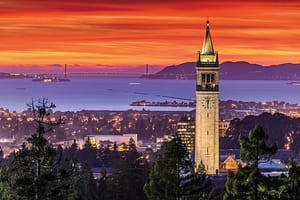
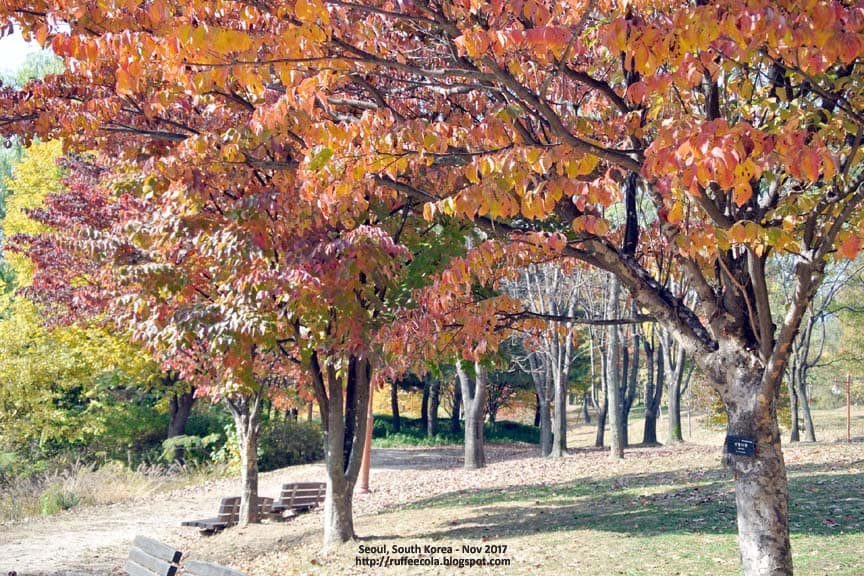



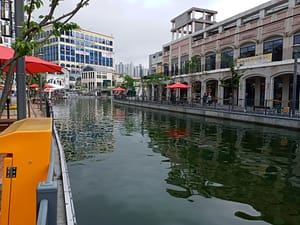
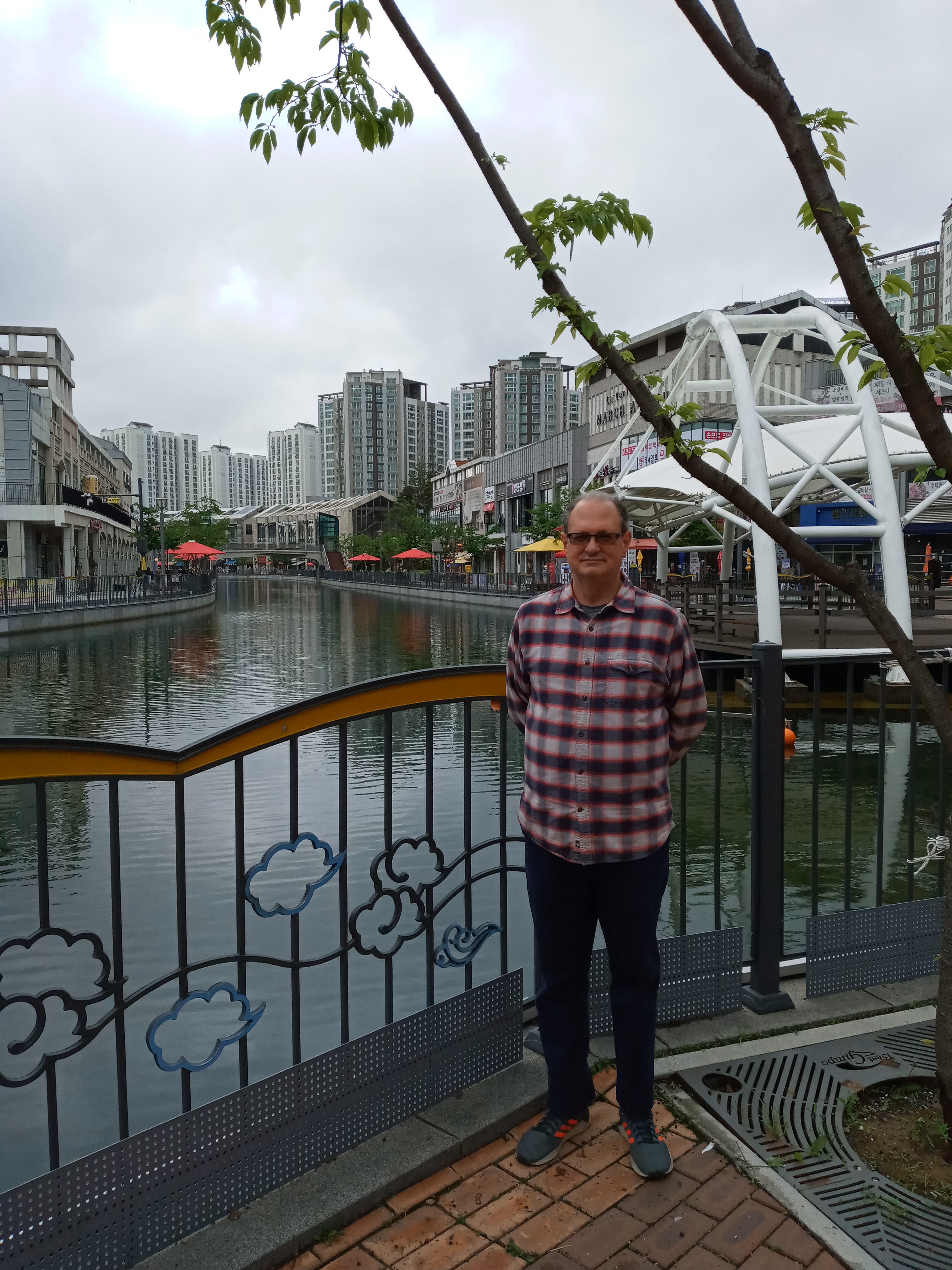
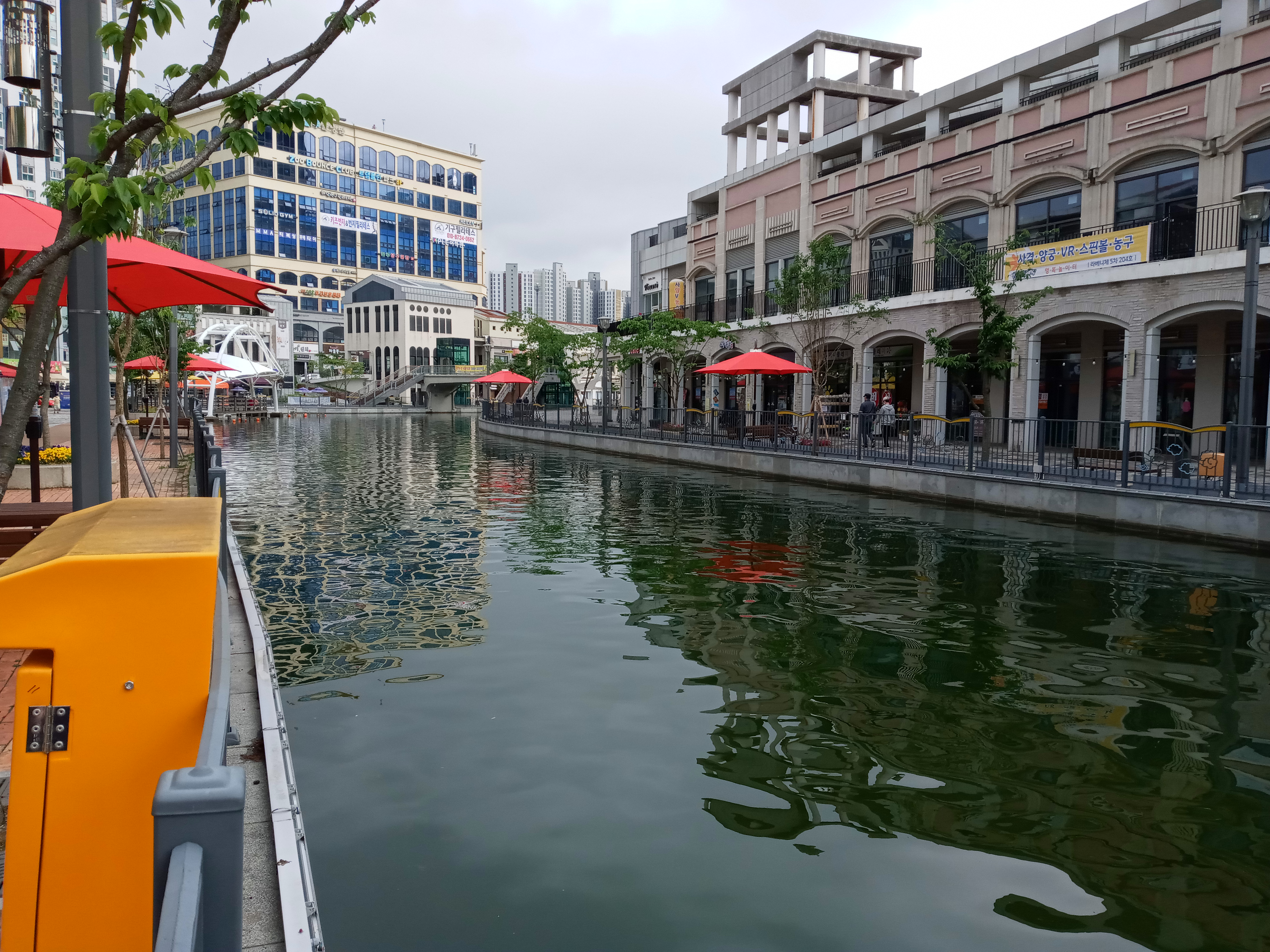




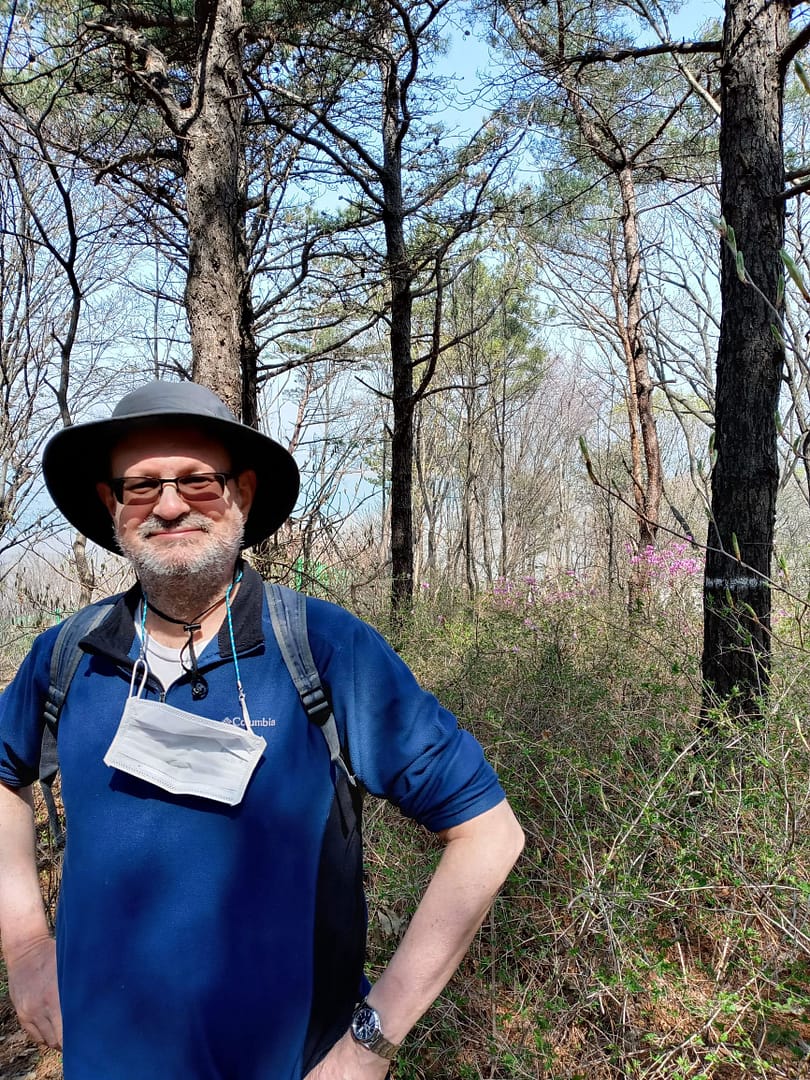






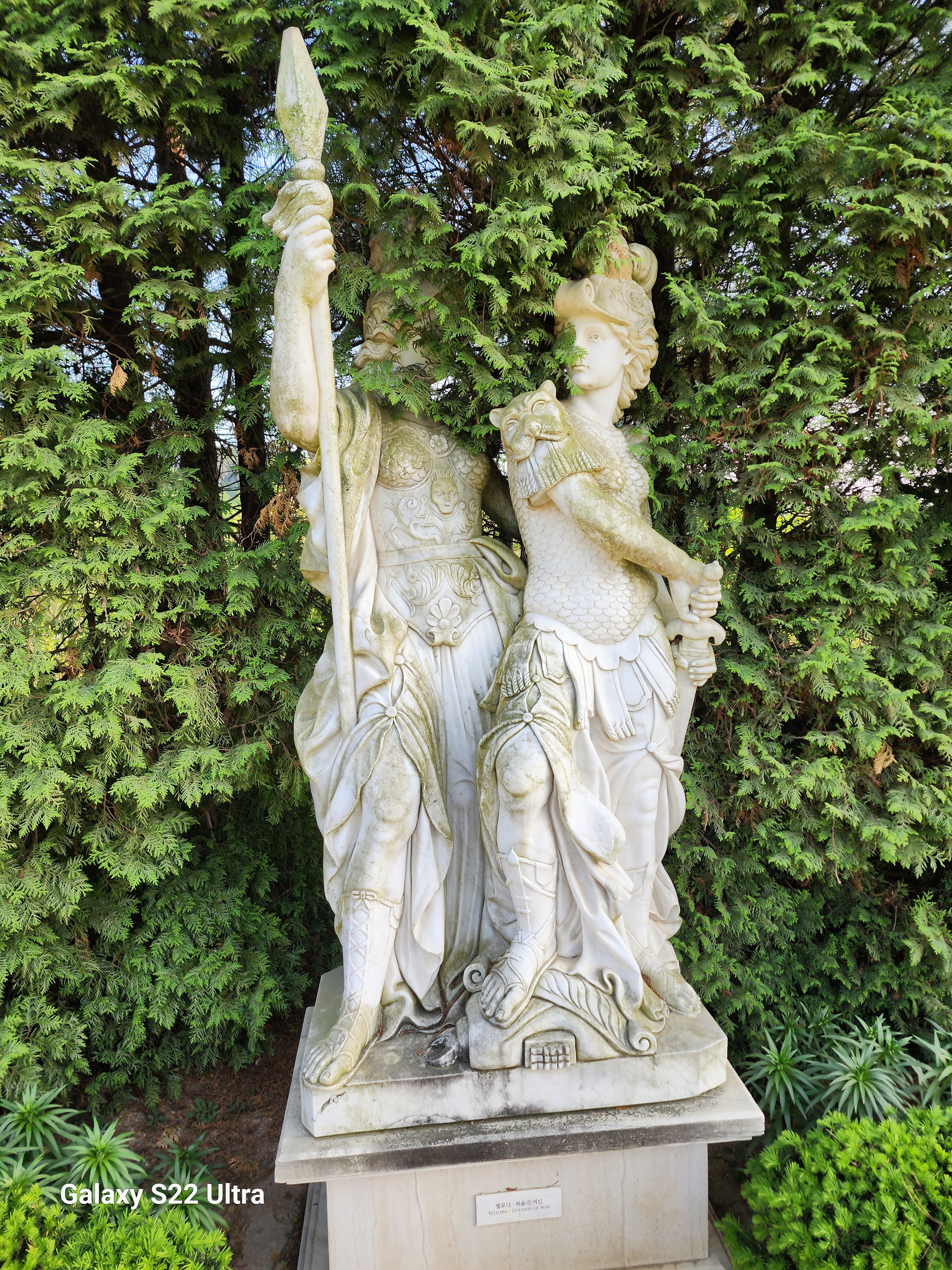


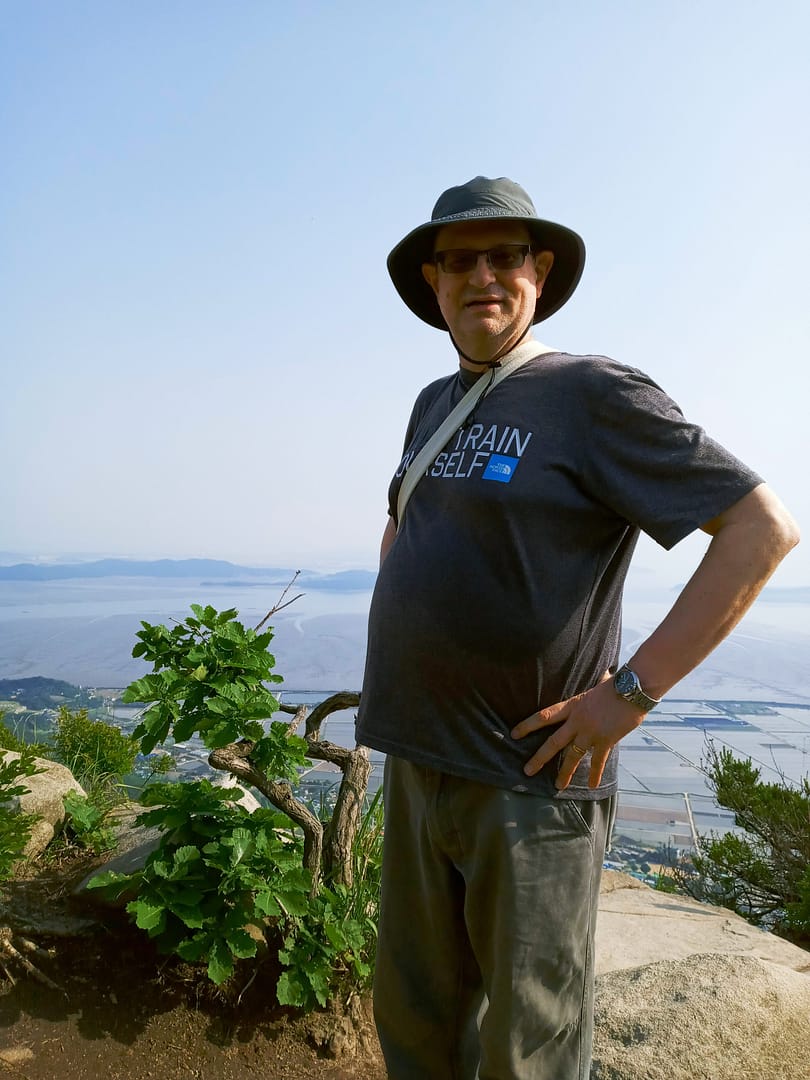














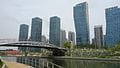
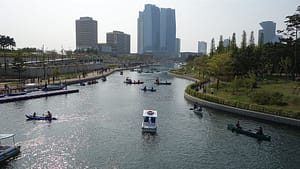




![gw5]](https://mlhqp2oqtail.i.optimole.com/cb:a-R0.45b/w:225/h:300/q:mauto/ig:avif/https://i0.wp.com/theworldaccordingtocosmos.com/wp-content/uploads/2021/05/gw5.jpg)