2026 April 26 to April 30 Poems
2026 April 22 to April 25 Poems
2026 April 14 to April 21 Poems for April Poetry Madness
April 9 to April 14, 2026 Poems
2026 April 1 to April 8 Poems for April Poetry Madness
2026 April Poetry Madness Overview -Updated



audio Clip
Begin Poems
These are my 2026 April 26 to April 30 Poems = the final set for this April poetry madness challenge. 30 in this set and 130 poems in one month!
April 26—An arrival
I Met My Fate on That Date (Villanelle)
I shall always remember the date
when I met my fate in September—
for I had met my fate.
It started as a simple date,
a moment I’ll always remember,
when I met my fate in September.
She walked off a bus—that date
changed everything I remember,
for I had met my fate.
We drank red wine on that date,
love at first sight, no debate, remember—
when I met my fate in September.
From housemate to helpmate,
roommate, wife, and workmate together,
for I had met my fate.
Now retired, still partners, still mates,
that date remains my center:
when I met my fate in September,
for I had met my fate.
NaPoWriMo
Why I Write Poetry
A poet is often asked
Why do you write poetry?
What motivates you?
What keeps you going?
How do you handle
the constant rejections,
the self-doubts
that come with a poet’s life?
And the lack
of money
for your poetry?
Kerouac
once said
when asked why
the beatniks called
their work
free verse,
he replied,
“Because no one will pay
us for it.”
But he was driven,
as most poets and writers are,
to write every day,
because the damn muse
would never leave him alone.
As I observe
the world around me,
I begin making comments,
trying to make sense of it all,
expressing it in words.
The words
dance in my head.
The characters in my head
demand to have their voices heard,
demand to be freed,
to tell their tales.
And I am a slave
to my muse,
who takes me
where she will.
No matter what,
I must write every day.
Usually starting my day
drinking coffee,
watching the news unfold,
writing my thoughts,
letting the poetry flow
out of my soul—
words and poetry
bleeding onto
the computer screen.
The words
wait to be spoken,
to tell their tales
before the day is over.
That is why I write—
because I cannot not write.
That is the Buddha nature
of being a writer
after all.
Hello, everyone, and welcome back for Day Twenty-Six of National/Global Poetry Writing Month.
Today, our featured participant is Jay Siegmann, whose response to Day 25’s rather complex prompt bring us metaphors for metaphor itself.
Our resource for the day is the Commonplace podcast, which provides you with oodles of interviews with contemporary poets, as well as explorations of specific themes and books.
And now for our prompt (optional, as always). The Latin phrase ars poetica means “the art of poetry.” It’s been a tradition going all the way back to Horace for poets to write poems that lay out – whether explicitly or obliquely – some statement about why the poet writes, or what they think poetry is. Here’s a very recent example, another that I had to study in school, and a very long, witty ars poetica by Alexander Pope. Today, we challenge you to write your own ars poetica, giving the reader some insight into what keeps you writing poetry, or what you think poetry should do
PSH
April 26, 2026: Poetry Writing Prompt from Christy Granger
My best friend haiku chain
My best friend, Robert
I have known 60 years
Always there for me
Sixty years beside me
Robert—steady as breath is
Always there. Still here.
Sixty shared seasons
Robert never left my side—
Friendship that holds fast.
This poetry writing prompt submitted by Christy Granger:
Write a haiku. Not about nature. About your best friend.
2026 April PAD Challenge: Day 26
Last Dream
or eight long years,
starting in 1974,
I had a recurring dream.
It began in high school.
I fell asleep in a boring class
after lunch.
Standing beside me
was the most beautiful woman
in the universe.
She spoke to me
in a strange Asian language.
She stared at me,
love blazing
from her eyes.
I was mesmerized.
Sparks flew from heart to heart.
She put a love spell on me,
her mojo working overtime.
I asked, “Who are you?”
She disappeared.
I fell to the ground
amid the laughter
of my classmates.
The dream returned
for eight years.
Then one day,
I found myself
in Korea—
because she told me,
in the dream,
that she was there,
waiting.
So off to Korea
in the Peace Corps
I went to find her.
I was teaching
for the U.S. Army
When I had
The last dream.
She said,
“Don’t worry.
We will meet soon.”
That night,
She stepped off a bus
into my life.
Seven weeks later,
She became my wife.
It has been forty‑four years
since that final dream—
a fairy tale made real:
Meeting, marrying,
the woman who once lived
only in my dream worlds.
the 2026 April PAD Challenge. For today’s prompt, write an “Last (blank)” poem.
For today’s prompt, take the phrase “Last (blank),” replace the blank with a new word or phrase, make the new phrase the title of your poem, and then, write your poem. Possible titles might include: “Last Rites,” “Last as Long as You’re Able,” “Last Place,” and/or “Last Piece of Pie.” Don’t worry; this is not the last prompt of the month.
(April 27 —
Dew Drop Inn
Something undone, forgotten, or lingering)
NUMBERS
Archimedes’ π Poem (Strict Compliance)
π sequence used: 3 · 1 · 4 · 1 · 5 · 9 · 2 · 6Numbers
The number of
Lies
The president has said
Is staggering
30,000, 40,000 lies, mischaracterization, misleading statements, gaslighting, deception
Fact checkers have to give up counting
tion of presidential lies is not new, nor is it exclusive to any one administration. History shows that American presidents across parties have, at times, misled the public—sometimes deliberately, sometimes defensively, sometimes systemically.
Richard Nixon’s deception during Watergate involved concealment of criminal activity. Bill Clinton’s falsehoods were personal and legal in nature, confined largely to a single scandal. Both were widely condemned once lies were proven, and both faced institutional consequences.
What distinguishes the current era, according to many press organizations and historians, is not merely the presence of falsehoods, but their scale, frequency, and normalization. Modern fact‑checking outlets have documented unprecedented volumes of false or misleading claims, to the point that counting itself has become a subject of journalistic concern. [en.wikipedia.org], [docs.house.gov]
Supporters argue that this reflects media bias, definitional disputes over what constitutes a lie, or rhetorical exaggeration common to politics. Critics argue that repetition and volume create a fog in which truth loses consequence. Both perspectives acknowledge that quantity itself has become part of the story.
Is the current president “the biggest liar” in history?
That depends on definitions: frequency versus impact, intent versus effect, personal scandal versus structural misinformation. Some historians caution against ranking moral failures numerically, while others note that the sheer volume of documented falsehoods is historically distinctive. [lithub.com]
This poem does not attempt to resolve that debate. Instead, it sits with what remains undone: the counting, the correction, the fatigue—what lingers when truth becomes arithmetic and arithmetic stops meaning anything.
This poem follows the Archimedean π form, in which the number of words per line corresponds to the digits of π (3.1415926…). In this piece, the form begins in strict order and sustains discipline throughout. The mathematical rigidity contrasts with the thematic erosion of truth, suggesting that while numbers remain precise, meaning does not. The act of counting becomes both structural necessity and narrative failure.
How to Spot a Lie

When I was in the diplomatic service
I worked as a fraud investigator.
This included formal training
In lie detection methodology.
The principle was simple:
When people lie,
They display a sign,
A tell, so to speak.
There is no need
For a polygraph
If you observe carefully
What is being said
And how it is being said.
This works for most people.
It does not work for psychopaths or actors.
Both psychopaths and actors
Can pass lie‑detection tests.
Remember, as Seinfeld once said,
It is not a lie if you believe it.
One telltale sign:
When people lie, their eyes often roll upward,
As if searching internally
For the story they need.
When people lie,
They also inhale with the lie.
Fabrication requires oxygen.
In a recorded confession
Denials sounded practiced,
But the eyes rolled,
And breath entered sharply at key moments.
To a trained observer,
The deception was evident.
The lesson is this:
Watch the body, not the words.
Falsehood leaves fingerprints
Even when the speaker does not intend it.
On April 27, 2026
Happy Monday, everyone. I hope you’re feeling energized about your writing as we head into the final days of this year’s April challenge.
Our featured participant today is What Rhymes With Stanza?, which brings us a quite feline response to Day 25’s ars poetica prompt.
Today’s resource is The Writers Annex Online, which offers a variety of short, online writing-related courses that include poetry workshops and explorations of specific poets’ work. Tuition rates vary from course to course, but these can be surprisingly affordable, particular given how distinguished the faculty is.
Last but not least, here’s today’s (optional) prompt. Start by reading Robert Fillman’s poem, “There should always be two.” Now, write your own poem in which all the verses contain the same number of lines (whether couplets, triplets, quatrains, etc.) and in which you give the reader instructions of some kind.
PSH April 27, 2026: Poetry Writing Prompt from Lara Dolphin
Random Act of Kindness Waterford
Practice random acts of kindness
Don’t be sad, Stan
Don’t get mad, Fran
Let your days echo kindness
This poetry writing prompt submitted by Lara Dolphin:
Your Assignment: Write a waterford! It’s a little like a limerick but not snarky or mean. It is a new poetic form brought to world by the lovely poets of Co. Waterford in the Republic of Ireland.
waterford (wô’tēr-fērd) n.
“A short, affirming, verse of four usually iambic lines with the rhyme scheme abba, in which the first and fourth lines are of eight syllables, and the second and third lines are of four. A waterford can be biographic (about a person, or group of people), geographic (about a place), ekphrastic (about an artwork or art form), or philosphic (an optimistic aphorism). [est. 2024, named after Co. Waterford in south-east Ireland, founded by Kevin MacAlan]”
Not a Fan

One of the president’s favored lines
Is saying he is “not a fan” of someone—
Of critics who question him,
Of aides who hesitate or dissent.
He names them enemies,
Cuts the air with that word,
As if approval were weather
He alone could control.
What this fandom demands
Is silence, applause, alignment—
A posture held
Against the evidence of conduct:
The public scolding,
The private favors,
The shifting stories,
The punishments for disloyal typos.
So I am not a fan
Of the president.
Refusal preserves a distance—
A cooler room, a steadier breath.
Truth be told,
I would not want his breath,
His heat,
Or his wind aimed at me.
Write a poem a day with poets from around the world for the 2026 April PAD Challenge. For today’s prompt, write a fan poem.
Robert Lee Brewer
Published Apr 27, 2026 12:36 AM EDT
For today’s prompt, write a fan poem. For me, I think about people who are fans of sports, entertainment, media, and other forms of celebrity. But there are also oscillating fans, ceiling fans, and hand-held fans. So let’s “fan out” and “fan the flames” of our poeming today.
April 28—Satisfaction or completion
April 28—Satisfaction or completion
Satisfaction at Age 70
At age seventy,
I look back
like a field after harvest
and feel mostly at rest
with how my life
has turned out.
The work was long,
sometimes heavy,
but much was done—
a good deal finished,
some good left behind.
Now the circle closes.
My life’s purpose feels complete,
and I remain
with the love of my life,
the constant source of joy,
who brings my long journey
fully home.
NaPoWriMo
What Is This Thing We Call Love?
A space alien tilts its glass helmet,
studying us like ants through starlight.
It asks Sam, “What is this thing
you humans keep calling love?
Sam says,” Love is what it is and what it ain’t.”
when the ship lifts off and the silence doesn’t.
On April 28, 2026
Welcome back, all, for the twenty-eighth day of Na/GloPoWriMo.
Today, our featured participant is the Poet Laureate of the Primitive Planets, which brings us a (gently) hysterical love poem in response to Day 27’s even-stanza-length prompt.
Today’s resource is this short meditation by the poet Barbara Guest, on the tension between a poet’s desire to control a poem, and the fact that poetry is often most moving when it surprises both the poet and the reader with wild and unpredictible moves.
And now for today’s (optional) prompt. Victoria Chang’s poem, “The Lovers,” is short and somewhat shocking, bringing us quickly from a near-hallucinatory descriptive statement to a strange sort of question, before ending on the very direct statement of a “truth.” Six lines, three sentences, and to top it off, a title that I think works for the poem but is only obliquely related to its text.
Today, try writing a poem that follows the same beats: three sentences, six lines: statement, question, conclusion.
PSH
The Dreams of the Sphinx
(Golden Shovel after Emerson)
The ancient Sphinx
is old and drowsy,
spreading out its wings
unfurled;
listening with her ear,
her heart is heavy.
She broods and dreams
on the future of the world,
wondering who will tell me
my dark secret,
which the ages
have kept.
April 28, 2026: Poetry Writing Prompt from Bill Cishing
This poetry writing prompt submitted by Bill Cushing:
The Golden Shovel, a recent form named in honor of Gwendolyn Brooks’s “We Real Cool,” is a fun exercise that’s simple to construct and a sort of acrostic. Take a line/sentence of any earlier piece of writing. Then construct a poem in which each line ends with the individual words of the chosen material in order of their original appearance. For a real challenge, try replicating the example below:
An example is “Don’t You Wanna” by Patricia Smith wherein the beginning and end word of each line are the same taken from the lyrics of “Sweet Home Chicago” by the blues musician Magic Sam:
C’mon in, out of that wretched hot, out of the hammer of heat, c’mon!
Baby, don’t you let these blistering Chi streets put the dead on you. Baby,
don’t you hear that gravel groan, all those wails of been-done-wrong, don’t
you wanna dance, just once, with your backside ’gainst the floor? Don’t you
want to know how grown folk handle heartbroke? You know the boys want
to see all your sugarbottom dripping off a piece of barstool, they want to
go a little crazy with a lotta you on the dance floor. Loose that swivel! Go!
AUTHOR’S NOTES
This poem is a Golden Shovel built from two lines near the beginning of Ralph Waldo Emerson’s The Sphinx, in which the speaking Sphinx asks, “Who’ll tell me my secret, / The ages have kept?—” I chose this fragment because it compresses the poem’s central tension: a riddle held in time, and an intelligence that keeps questioning even when no answer arrives. In my version, the Sphinx becomes a present-tense witness—her “secret” is not only metaphysical but also physical, worn into limestone by wind, tourism, and waiting. The imagery (sandstorms, pyramids, stone, silence) is meant to embody the pressure of centuries on a single voice. [poets.org]
Critically, The Sphinx has long been recognized as one of Emerson’s most challenging poems—enigmatic to early readers, yet later valued for the density of its philosophical ambition. One scholarly account notes its initial reception as obscure, even as it later came to be read as a key text for understanding Emerson’s poetic method and thought. The Golden Shovel form felt especially appropriate for engaging a poem with that reputation: the constraint forces each line to “carry” the inherited words forward, turning quotation into a kind of interpretive motion. [ijels.com]
The Sphinx figure itself deepens this inheritance. In Egyptian tradition, sphinxes are often guardian images—powerful and protective—while in Greek legend the Sphinx is a riddler who tests humans with a question whose failure can be fatal. Emerson draws on the Sphinx as an emblem of mystery and meaning; my poem keeps that emblem, but shifts the drama into the Sphinx’s mouth as a sustained, modern waiting—still asking who will finally speak the kept truth. [britannica.com], [history.com]
On the Sphinx: History and Legend
The Sphinx is one of the oldest and most enduring mythological figures, appearing prominently in both Egyptian and Greek traditions. In ancient Egypt, the sphinx—most famously the Great Sphinx of Giza—was a benevolent guardian figure, often associated with royal power and divine protection. In Greek mythology, however, the sphinx becomes a winged and female riddler who tests humanity through fatal questions, most famously in the story of Oedipus. Across cultures, the sphinx symbolizes mystery, knowledge, and the tension between human intelligence and cosmic forces. Emerson’s poem draws on both traditions, transforming the sphinx into a philosophical voice interrogating the nature of human consciousness and destiny. [britannica.com], [en.wikipedia.org]
2026 April PAD Challenge: Day 28
Love and Hate at First Sight
They say
love and hate
at first sight
are mirror images
of the same phenomenon.
In both cases,
when you meet someone
for the first time
and feel an instant,
deep emotional connection—
either positive, like love,
or negative, like hate—
it may be because
you have met someone
from a past life,
and there are unresolved issues
to face in this one.
I have known love
at first sight
seven times in my life—
and married the woman
of my dreams.
When we met
On a bus
When she looked at me
Mesmerizing me
Bewitching me
In one glance
Confirmed she was
The lady who had
Haunted my dreams
For eight long years
I have also known hate
at first sight
three times as well
.
Proof, perhaps,
that past-life entanglements
karma debt so to speak
persist
into this life?
And will I meet my wife
in the next one?
I can only hope—
and dream—
that we will find
each other again.
It is our karmic fate
Our destiny at work.
AUTHOR’S NOTE (refined for publication or workshop)
This poem explores the idea that love and hate at first sight may arise from the same psychological and emotional mechanisms, differing only in valence. From a psychological perspective, research suggests that the human brain forms rapid judgments about others within seconds, drawing on memory, emotional pattern recognition, and unconscious association. These snap judgments can feel deeply intuitive and immediately compelling, even before conscious reasoning begins. Initial attraction and aversion both involve overlapping neural pathways related to emotional memory and threat or reward processing. [frontiersin.org], [mic.com]
ENDNOTES (with links)
- Grant‑Jacob, J. A. “Love at First Sight.” Frontiers in Psychology, 2016.
Read article [frontiersin.org] - Lamour, J. “Why You Instantly Dislike Certain People.” Mic, 2024.
Read article [mic.com] - “Rebirth (Buddhism).” Wikipedia.
Read overview [en.wikipedia.org] - “Karmic Relationships: How Past Life Connections Influence Present Bonds.”
Read article [spiritualm…sguide.com]
Write a poem a day for the 2026 April PAD Challenge. For today’s Two-for-Tuesday prompt, write a love and/or anti-love poem.
April 29 — Coincidence, synchronicity, or déjà vu
They say
there are
no coincidences in life,
that everything happens
for a reason.
They say
that God
does not play dice,
that it is all
according to
a divine master plan.
The Taoists agree,
speaking of knowing the Dao,
the cosmic force
that binds everything together.
Mystics say,
as above,
so below.
Everyone senses this.
Everyone believes this—
that it is built
into the fabric
of our lives.
As we go through life,
we think about
what it all means,
wondering whether meaning
finds us,
or whether we are the ones
who refuse
to believe in chance.
NaPoWriMo
Old Man Dreaming
As I get older,
I am often lost
in thought,
wandering through memories
of my earlier life.
It all seems fantastical now,
almost like a fairy tale—
this mad, romantic life
I have lived.
Marrying the woman
of my dreams
after a whirlwind courtship
of just seven weeks.
It seems like yesterday
when she stepped off that bus—
out of my dreams
and into my life,
becoming my wife.
Not long after,
I joined the diplomatic ranks,
serving Uncle Sam,
traveling the world,
working in far‑flung corners
of the globe.
And everywhere I went,
she went with me.
As the years passed,
our love only grew stronger.
And now,
forty‑four years later,
our love remains
stronger than ever.
I am still in awe of her—
even now,
sitting quietly beside her,
an old man dreaming,
still amazed
at the life we made.
On April 29, 2026
Happy Wednesday, all, and happy penultimate day of National/Global Poetry Writing Month!
Our featured participant for the day is Sunra Rainz, whose response to Day 28’s six-line-poem prompt reminds us to seize the day (and wear the dress).
Today’s resource is The Poetry Exchange podcast. Each episode not only explores a different poem, it discusses why that particular poem has been a “friend” to a particular interviewee.
Finally, here’s today’s prompt (optional, as always). In “After Turning the Clocks Back,” Jennifer Moxley links present with past, using a few well-placed details to invoke both a sense of the daily “now” and a nostalgic sense of the speaker’s long-ago life. In your poem today, similarly compare your everyday present life with your past self, using specific details to conjure aspects of your past and present in the reader’s mind.
Questions That Have No Easy Answers
(after PSH prompt)
I a

m filled with questions
that have no easy answers.
Why does certainty shout
while doubt whispers?
Who decided belief should be louder than fact?
I don’t understand
how power learned to borrow faith’s language,
or why fear dresses itself as virtue.
I don’t understand how so many Christians
Now denounce the core message of Christianity
As left-wing, DEI wokeness?
Forgetting that Christ
Was considered a social justice warrior
Or woke in today’s language.
When did evidence become opinion?
When did expertise become arrogance?
What happened to the quiet work of thinking?
I especially don’t understand
why solutions frighten us
more than collapse.
Why the admiration for strongmen,
the longing for lost empires,
the sudden romance with distant saviors?
The worship of Putin for example
Among some of the religious right
Is beyond understanding.
Is this nostalgia,
or amnesia?
Is it faith,
or the hunger
to be told what to think?
Some days I wonder
if confusion itself is contagious,
passed hand to hand,
broadcast nightly.
And then there are the small mysteries—
Why Kid Rock is still on the radio
why certain myths refuse to die,
like the myth of the J6 patriots
why the noise keeps winning.
Yes, there are so many questions
that do not have easy answers.
And maybe the hardest one is this:
what do we owe each other
while we’re still asking?
April 29, 2026: Poetry Writing Prompt from Jennifer Edwards
This poetry writing prompt submitted by Jennifer Edwards:
Happy poetry month! I recently created this prompt based on the poem “Some of the Questions to Consider” by Kim Addonizio (Exit Opera, pg. 24). The poem can be accessed here.
Write a poem in which you combine questions and declarative sentences. Vary the questions: wh- questions, yes/no, open-ended, close-ended, loaded questions, scaled/likert questions, comparison, factual, conceptual, choice questions. Ask the reader something or ask something of the speaker (this could be vague or oddly specific). For declaratives, consider quoting someone else, answering a question, or determining what is “better” or “worse” or echoing whatever dualities you present. Include an absurdity, interesting fact, or false info that’s presented matter-of-factly. Questions and statements can be closely or loosely tied. Use repetition. Use a sound or musical reference.
WD Pockets of Poverty
In retirement,
I drove the country—
ten thousand miles,
thirty‑five states.
Outside the cities
were pockets
of extreme poverty
no one advertised:
towns with no jobs,
no stores,
no way out
Gas stations miles apart.
Main streets have gone quiet.
Empty windows
staring back.
fourth world
hell holes.
In Fly Over Country
That became Trump country
Rubby red states of despair.
I carried those places with me—
small enough
to fit in a pocket,
heavy enough
to never put down.
2026 April PAD Challenge: Day 29
Write a poem a day with poets from around the world for the 2026 April PAD Challenge. For today’s prompt, write a pocket poem.
Robert Lee Brewer
Published Apr 29, 2026 12:05 AM EDT
Tomorrow is Poem in Your Pocket Day as celebrated by the Academy of American Poets. Click here to learn more.
For today’s prompt, write a pocket poem. As usual, there are a few ways to come at this one. Write a poem about pockets, like the pockets made of fabric, but also other types of pockets (like pockets of space or pockets of information). Or, another option is to write a short poem that would easily fit in your pocket.
April 30—Moving on…
Moving On Time
I have moved
every other year
on average
since I was eighteen.
Ten cities.
Five states.
Ten countries.
All fifty states,
forty‑five foreign lands,
while serving
in the diplomatic corps.
Now I am seventy,
contemplating
yet another move.
The last ten years
since retirement
I have lived
half the year in Korea,
half in the United States—
Southern Oregon,
yearly turns
through California
and Washington.
And now
I am faced again
with moving on.
Too many properties.
Too much weight
to carry forward.
The digital nomadic life
is harder
to sustain.
This summer
I return to one house,
one country,
one address—
for a few years,
then another sale,
another release.
The plan:
by eighty
to hold less,
and for now
stay still long enough
to call it living.
It is time
to move on—
perhaps
the final move
of my nomadic life.
Demons Come Out to Play
There are demons
living in the world.
They come out to play
once a month,
on full‑moon nights.
The rest of the time
they stay in Hades,
the other realm.
Few humans are aware
of the demons
who walk among us
once each month.
They wear no single face—
with a pan-ethnic look
could pass as anyone,
any people,
but something is always off:
the eyes,
the edges.
Their voices carry
a vague, foreign echo.
Most people never see them,
lingering in sinister, dangerous
shadow bars
on the left‑hand side
of society—
places with bad lighting,
cheap drinks,
deranged, dubious people,
wanton, wild women of the night
scent of bad craziness
in the air
and no questions asked.
The demons prefer it that way.
They come to drink,
to play,
to lose control
under the full moon.
Because demons,
after all,
do what demons must do.
They go wild for one night,
tearing at the seams
of the town,
until sunrise
drives them back—
burned, scattered—
to the pit
They rose from.
On April 30, 2026
Well, it’s happened again. We’ve come to the last day of another National/Global Poetry Writing Month. We’ll be back tomorrow with a final featured participant and some housekeeping details, but in the meantime, congratulations to all who have made it to the end! And if your output has tapered off or been spotty — no worries! The best thing about Na/GloPoWriMo is that every day you write a poem, you get a poem-shaped prize.
Our featured participant today is words with ruth, where you’ll find a complex, tender response to Day 29’s past-and-present prompt.
Our final feature resource is poet and professor Judy Jordan’s YouTube videos covering individual poems and discussing poetic craft.
And now, here’s this year’s final (optional) prompt. In his poem, “Angels,” Russell Edson speaks of these spiritual warrior-messenger-guardians as if they were a type of endangered animal. Brief as it is, the poem is disorienting in its use of flattened diction, odd similes, and elliptical statements. Today, try writing your own poem that discusses a real or mythical being or profession (demons, firefighters, demonic firefighters) with the same sort of musing yet dispassionate tone.
Note to My Friend Robert, From Korea
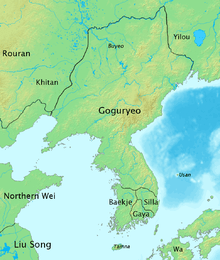
Robert—
I am glad you are coming back
to Korea.
It has been nearly forty‑five years
since you visit me here
during my Peace Corps days.
Much has changed,
yet Korea remains Korea.
When you arrive,
we travel again—
retracing old ground
across the country.
See you in a month,
my first‑grade best friend.
(15 lines)
April 30, 2026: Poetry Writing Prompt from Elizabeth Iannaci
This poetry writing prompt submitted by Elizabeth Iannaci:
There are many variations of Postcard Poems. This version takes inspiration from your past and can be an exercise in remembrance. The piece should be in present tense even though you’re writing from a long-ago place.
Brevity being the soul of wit, let’s set a limit of no more than 15 lines.
- Start with the addressee (which is usually your title). Choose someone you (truly) want to send a note to. It’s not necessary that you have unfinished business, but the more history you have, the better the odds of mining something that your recipient would appreciate.
- Start with a recollection.
- Use as few words as possible—you’ve only got a postcard.
- Add your activity or the activities that went on around you.
- Incorporate at least one of the senses: sight, smell, taste, textures, sounds (don’t forget sounds).
- Stay away from generalization, the vague or non-concrete, nebulous
WD Poetry Harvest Time
A month ago
I began this challenge,
what I called
April Poetry Madness.
Four poems a day,
a month of musing—
writing, thinking,
planting
small poetic gems
in the rich soil
of an overactive imagination.
Today I harvest them,
placing the poems
into the world,
letting them travel
where they will.
I close this month
much as I began it:
coffee in hand,
the blues playing,
obeying a mad muse—
shaping her words
into poems,
releasing them
into the wind.
Bonus Poems
Worthless
Everyone talks
about ending waste,
fraud, abuse—
while funding a room
no one asked for,
built for applause
that never comes.
Sweetheart for Life
I met the love
of my life,
my soulmate,
in a dream—
the moment I saw her
my heart decided
before
I woke.
Walking in Inclement Weather
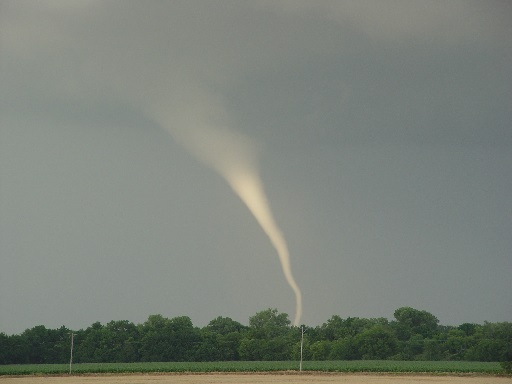
The wind
argues with my body.
Rain leans sideways.
The ground slips.
I keep walking—
not because it’s safe,
but because
I’m already out here.
Empty Well
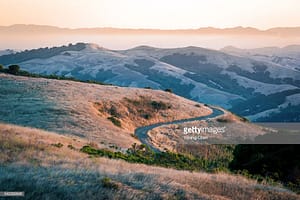
Walking in Tilden Park,
high above the Bay,
I find a wishing well—
dry,
asking nothing back
because
it has already
given everything.
Geopolitical tectonic plates shifting
We live in a time
when the geopolitical
tectonic plates
Dating back to 1945
Begin to shift beneath our feet
Forces long buried
lean and grind.
Structures built to last
crack along old seams.
No earthquake announces itself.
Only the slow failure
of what once felt permanent.
Nature does not keep emptiness—
pressure gathers,
new forms rise,
while the earth
learns another shape
the old world order
crumbling away
as the United States
withdraws from the world
pax america and the old world order
slowly crumbling amid
US imperial decline
what will replace it unclear
as the geopolitical tectonic plates
continue to shift..
The End

Thanks so much for visiting my site. Your comments are welcome but please play nice…. Reply