2026 April 22 to April 25 Poems

2026 April 14 to April 21 Poems for April Poetry Madness
2026 April 1 to April 8 Poems for April Poetry Madness
2026 April Poetry Madness Overview -Updated
audio clip
These are my April 22 to April 25 poems, the penulitmate set for the month..
Begin Poems
April 22
Dew Drop Inn Doubleness
Subtitle: political doublespeak

Our political discourse
These days is sad.
Filled with doublespeak
As leaders say one thing
And do something quite different
Our leader proclaims
Congressmen follow
But privately
Think their leader
Is quite mad
But in public
They sound like
North Korean flunkies
Praising the dear leader
In an exercise
Of political doublespeak
That is epic to behold.
NaPoWriMo
Conversation with My Muse
A writer is often asked
Why do you write?
What motivates you?
What keeps you going?
How do you handle the constant rejections?
The self-doubts
That comes with the writer’s life?
I write as many writers do
Because I must
Because the damn muse
Will never leave me alone.
She is an ornery creature
This muse of mind
She hides deep inside
My deepest darkest corner
Of my mind
Always on
Lurking like Co-Pilot
And Gemini AI programs do
Occasionally speaking up
Letting out characters in my head
Demand to let their voices be heard
Demand to be freed
To tell their tales
And I am a slave
To my muse
Who takes me
Where she will
No matter what
I must write every day
Often I wake up
At 0 dark hundred hours
And talk with my muse
She whispers words
Of wisdom
And nightmares
And compels me
To get up
And turn on the computer
And let the words flow.
Usually starting my day
Drinking coffee
Watching the news unfold
Writing my thoughts
Letting the poetry flow
Out of my soul
Bleeding onto the computer screen
The words waiting to be spoken
To tell their tale
Before the day is over
That is why I write
Because I can not not write
my muse won’t leave me be.
That is the Buddha nature
Of being a writer after all.
On April 22, 2026
Happy Wednesday, everybody, and welcome back for Day 22 of Na/GloPoWriMo.
Our featured participant for the day is 7eyedwonder, where the response to Day 21’s names-and-nicknames prompt brings us a lovely riff on the on the Shakespearean phrase, “a rose by any other name would smell as sweet.”
Today’s resource is The Kelly Writers House’s system of online book groups. At any given time, the Philadelphia-based center has a few different book/discussion groups going on, and all you need to participate is an email address and a willingness to engage in a discussion of a specific group’s chosen book or set of poems.
And now for our (optional) prompt! Jaswinder Bolina’s poem “Mood Ring” imagines the speaker as both himself and an interior being (who happens to take the form of a small donkey). It’s quite silly . . . and not silly at the same time. A sort of “serious fun.” Today, we’d like to challenge you to write your own poem in which the speaker is in dialogue with him or herself.
PSH
Found a Spaceship in His Backyard
Sam Adams
one morning
woke up
to a strange sight.
A spaceship
had landed
in his backyard.
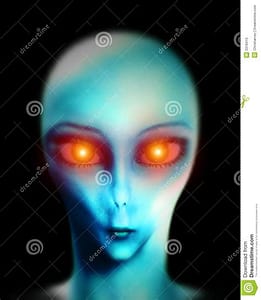
The alien pilot
was injured—
still faintly glowing.
Sam took him in,
against his better judgment.
After a few days
the alien instructed
Sam on what needed
to be done
to fix his ship,
and promised
to take Sam
with him.
A ship that was
never his,
yet somehow was.
Sam notified
the military,
which detained Sam
and the alien
for national security reasons.
Whose, exactly?
The alien used
Jedi mind tricks,
as he put it,
to spring Sam
from detention.
And off to space
they went,
holding a press conference
from the Moon.
PSA April 22, 2026: Poetry Writing Prompt from Brendan Constantine
This poetry writing prompt submitted by Brendan Constantine:
Compose a new poem in which you realize you have something that doesn’t belong to you. Somehow and quite impossibly, you’ve found it among your possessions, and It can be anything – a book, a bauble, even a whole room. Feel free to go big; ‘Whose river is this?’
Born Bad to the Bone
Born bad to the bone,
heartbreaker.
Born bad to the bone—
or so the song insists.
The song “Bad to the Bone”
fills my ears
like a mad anthem
of my life,
a song I used to believe.
I am a heartbreaker,
broke a thousand hearts;
before I am through,
I will break a thousand more.
But only one woman
has ever had the power
to break my heart.
And to her
I dedicate my life,
and promise not
to break her heart—
the only promise
I intend to keep.
2026 April PAD Challenge: Day 22
Robert Lee Brewer
Updated Apr 22, 2026 12:36 AM EDT
Happy Earth Day!
For today’s prompt, write a natural poem. Natural what? Well, I’ll let you decide where to take your natural born poeming today. Only rule: Have fun.
Write a poem a day with poets from around the world for the 2026 April PAD
Author’s Note
This poem responds to the cultural claim made most famously in the song “Bad to the Bone” by George Thorogood & The Destroyers (1982), which frames moral character—especially romantic harm and rebellion—as innate rather than chosen.
Lyrics and Song Context
The song’s narrator declares himself “bad to the bone” from birth, portraying antisocial behavior and emotional damage as destiny rather than responsibility. The full lyrics can be read here:
- Full lyrics (Genius):
George Thorogood – “Bad to the Bone” Lyrics [genius.com]
YouTube Performances
- Official music video:
George Thorogood & The Destroyers – “Bad to the Bone” (Official Video) [youtube.com] - Classic live performance (Capitol Theatre, 1984):
“Bad to the Bone” – Live at Capitol Theatre (1984) [youtube.com]
Nurture vs. Nature
The question “Are we born bad?” sits at the heart of this poem.
- Nature: Genetics can predispose individuals toward traits such as impulsivity, aggression, or low empathy.
- Nurture: Environment, trauma, attachment, and learned behavior dramatically shape how—or whether—those traits are expressed.
Most modern psychology rejects the idea of fixed moral destiny.
Sociopaths vs. Psychopaths (Brief Clarification)
Though often used interchangeably, clinical research distinguishes them:
- Psychopathy
- Strong genetic component
- Reduced emotional response (especially fear and empathy)
- Often high functioning, manipulative
- Sociopathy
- More strongly linked to environment and trauma
- Impulsive, emotionally reactive
- Capable of attachment in limited contexts
Crucially: neither diagnosis means someone is “born evil.”
Even individuals with psychopathic traits can choose not to harm others, and many do.
The song’s bravado simplifies what is, in reality, a complex intersection of biology, environment, and moral agency.
This poem rejects inevitability in favor of responsibility.
Bonus Poem
WAR Tri-fall
War tell me what it’s for
nothing good
nothing holy nothing pure
War opens every door
blood and gore
flood the earth forevermore.
War pretends to be a test
falsehood
peace talks die stillborn and cold
War sells lust not justice blessed
likelihood.
cease‑fire crawls bought and sold
War drags nations into debt
no good
thrall replaces thought and trust
War crowns leaders who forget
all so small
history counts the cost in dust.
I found the Tri-fall form at Shadow Poetry http://www.shadowpoetry.com/resources/wip/trifall.html
The Tri-fall form, a creation of Jan Turner, has three 6-line stanzas. Each stanza follows a specific line-syllable count of 6/3/8/6/3/8 and a rhyme scheme of abcabc. By directions of the form’s creator, very little puncutation is required.
Author’s Note (Song Reference)
This poem echoes the famous refrain from the protest song “War”, written by Norman Whitfield and Barrett Strong and recorded by Edwin Starr in 1970. The song opens with the call‑and‑response line:
“War, what is it good for?
Absolutely nothing.”
Later, it defines war as “friend only to the undertaker,” a phrase that directly informs this poem’s imagery and stance.
Lyrics
- Full lyrics (Genius):
Edwin Starr – “War” Lyrics [genius.com]
YouTube Performances
- Original / classic video (1969–1970 era):
Edwin Starr – “War” (Original Video) [youtube.com] - Live performance (2001, call‑and‑response with audience):
Edwin Starr – “War” (Live, 2001) [youtube.com]
Blue Line Blues
I have lived
in more than ten cities
in my life—
Alexandria, Virginia;
Berkeley and Stockton, California;
Bridgetown, Barbados;
Bombay (Mumbai), India;
Madrid, Spain;
Pyeongtaek, Seoul,
Seongnam,
and Dongducheon, Korea;
Seattle, Washington;
and Washington, D.C.
Mostly close‑in suburbs,
never exurbia,
and rarely downtown.
Since I don’t drive,
I’ve preferred to commute
by bus, on foot, or by train.
The closest I came
to living downtown
was perhaps D.C.,
where Capitol Hill
was considered
downtown‑adjacent,
so to speak.
The most suburban years
were spent in Alexandria,
along the Blue Line
Metro route.
In general,
I’ve found suburban life
a bit boring,
and the neighbors
somewhat standoffish.
Now I’m moving back
to a suburban townhouse,
again along the Blue Line.
I hope the neighbors
will be friendlier
than the last time
I lived there.
April 23—Shakespeare
Shakespeare’s plays and poems are
Hard for many to understand,
As the language is archaic,
Keeping strange rhymes and words,
Even now not easy to follow.
Sonnets sublime,
Perhaps not for modern
Ears to fully grasp.
After all, it has been five hundred years.
Rarely used words and phrases remain,
Even now, hard to follow.
NaPoWriMo
I Met My Fate on That Date (Villanelle)
I shall always remember the date
when I met my fate in September,
for I had met my fate.
It started as a simple date,
a moment I will always remember,
when I met my fate in September.
She stepped from a bus; that date
changed everything I remember,
for I had met my fate.
We drank red wine on that date,
love at first sight, no debate—remember:
when I met my fate in September.
From housemate to helpmate,
roommate, wife, and workmate together,
for I had met my fate.
Now retired, still partners, still mates,
that date remains my center:
when I met my fate in September—
had I really met my fate?
On April 23, 2026
What’s so good about Thursday, anyway? Well, when it’s in April, it furnishes an excellent excuse to write another poem for Na/GloPoWriMo!
Today’s resource is the Verse craft podcast. If you’re interested in poetic form, this is the podcast for you!
And speaking of forms, today’s (optional) prompt takes its inspiration from Kiki Petrosino’s loose villanelle, “Nursery.” Try your hand today at your own take on a villanelle, and have the poem end on a question.
Author’s Note
This poem was written for NaPoWriMo / GloPoWriMo, Day Twenty‑Three (April 23, 2026), in response to the optional prompt inviting poets to try their hand at a villanelle inspired by Kiki Petrosino’s “Nursery” and to end the poem on a question. The discipline of the villanelle’s repeating lines felt especially suited to tracing how a single moment—a first meeting on an ordinary date—can echo across decades, accruing meaning through repetition and time. What begins as fate, asserted and rehearsed, is gently complicated by reflection at the end, where certainty gives way to inquiry. In that way, the form mirrors both memory and partnership: returning again and again to the same words, discovering that they mean something slightly different each time.
PSH
Black Lamb Meat Restaurant
In Gimpo, Korea
There is a restaurant street scene
along the five-mile-long
fake Venice canal,
lined with eateries
of all kinds,
mostly Korean cuisine..
One I have long wanted to try
is a restaurant specializing
in black lamb meat dishes
from the island of Jeju.
I have tried nearly everything
Korean cuisine has to offer,
except Jeju black goat
black lamb meat.
Jeju black goat
and black lamb
are reputed to be
what Koreans call
aphrodisiac stamina foods.
My Korean‑born spouse
does not like goat or lamb—
too gamey
for her delicate taste.
But I want to try it,
someday soon,
as we pass by
that restaurant street
I imagine the smoke,
the iron heat of the grill
on our nightly strolls
through the neighborhood.
a place we passed for years
without hunger or curiosity
still uncrossed,
like a promise
waiting to be kept
April 23, 2026: Poetry Writing Prompt from Merridawn Duckler
This poetry writing prompt submitted by Merridawn Duckler:
Write a poem about a place you pass every day on your commute to work or during a daily walk or driving to shop and have never given a second thought to
writer Digest PAD april 23 Write a Justaposition Poem
MAGA Dreams Facing Each Other
At the center
Of the MAGA movement
There is a rallying cry
a waiting split.
On one side
The old neo-con desire
a hunger to expand—
a dream of flags cast wide,
maps redrawn,
borders softened by ambition.
A voice that says:
take more,
hold more,
shape the world into one image.
Lets take Canada, Cuba
Colombia, Panama and Venezuela
And add it to the American Empire
Because we can and must
Control the Americas
Manifest destiny
American imperialism!
On the other side,
a promise whispered low:
no more endless struggles,
no distant fires,
no lingering cost
no more endless wars
in the middle east !
withdraw from NATO
Korea, Japan
The UN led world order
Let them fend
For themselves
Make America Great Again
America first!
.
A second voice says:
close the gates,
walk away,
turn inward to survive.
These two visions
stand face to face—
reach versus retreat,
command versus refusal.
Between them
Neocon, neo-imperialism
Neo-isolationism
lies the fracture no slogan can heal,
the contradiction at the heart of
the MAGA political nightmare.
2026 April PAD Challenge: Day 23
Write a poem a day with poets from around the world for the 2026 April PAD Challenge. For today’s prompt, write a juxtaposition poem.
Robert Lee Brewer
Published Apr 23, 2026 12:15 AM EDT
We’re almost there. Once we get through today’s poem, we’re seven days (one week!) from the finish line. Let’s keep breaking those lines.
For today’s prompt, write a juxtaposition poem. Juxtaposition, of course, is when you bring together two or more ideas, elements, or creatures (including people) that are distinct on their own but when placed together can display their similarities and/or differences—or to just create an interesting effect. For instance, an astronaut walks into old timey, Western saloon; or a person feels hope juxtaposed against fear at the same time. Take a moment to consider possible juxtapositions and then write your poem.
Bonus Poem
Korean Army Stew

(Epulaeryu)
Koreans have a one-pot meal
budae jjigae stew
leftover meats and cheese
black‑market spam
kimchi sausage mix
one pot
Hot!
Criteria
The first line has seven (7) syllables, the second line five (5), the third line seven (7), the fourth line five (5), the fifth line five (5), the sixth line three (3), and the seventh line has only one (1) syllable which ends with an exclamation mark.
The Epulaeryu is developed by Dr Joseph Spence Sr, a well known American poet. In Europe though, the poet, and this form is until now unknown, and the dwelled on my notebook list as one to figure out.
http://www.shadowpoetry.com/resources/wip/epulaeryu.html mentiones a few examples of this form, and the “rules”
The Epulaeryu is about delicious food.
It consists of seven lines with thirty-three (33) syllables.
The first line has seven (7) syllables, the second line five (5), the third line seven (7), the fourth line five (5), the fifth line five (5), the sixth line three (3), and the seventh line has only one (1) syllable which ends with an exclamation mark.
The form is 7/5/7/5/5/3/1.
Each line has one thought which is about the main course. Therefore, this poetic form, the Epulaeryu, which has corresponding lines built around the main course and ending with an exclamation point, concludes with the ending line expressing the writer’s excitement and feelings about the poem. The poem may be rhymed or unrhymed.
The title does not count as part of the poem…
April 24—An unsung hero/heroine
April 24
DewDrop Inn Uunsung Hero
Title: The Karmic Cosmic Fund
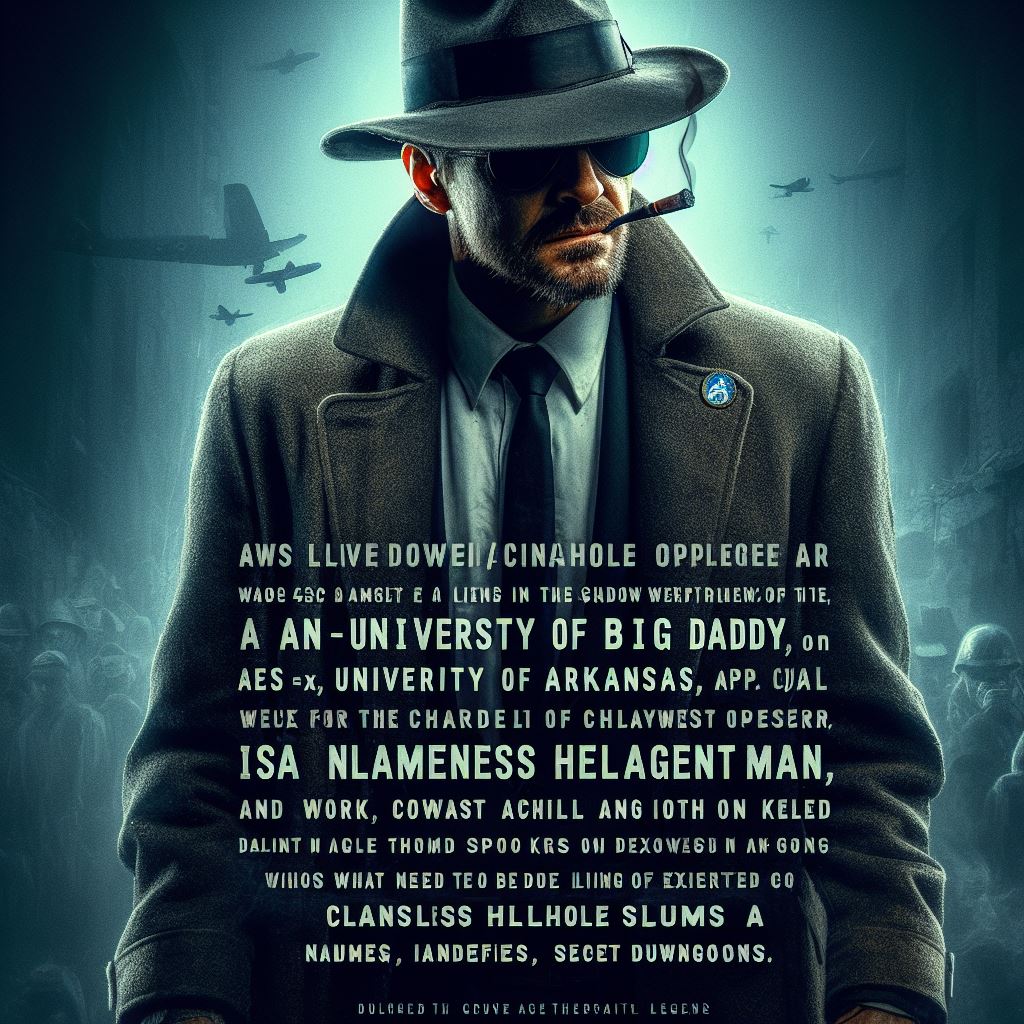
Big Daddy was in a bad mood that day,
thinking about the state of things,
working his way through a drink.
He had secrets to unload
and could feel the clock watching him.
He set the glass down
at the Cosmos Bar
in Soi Cowboy,
Bangkok,
and said,
“Sam, my old friend—
there’s something
I’ve never told you.
You know what I do
for a living, right?”
“You work for the company.”
“Close enough
for government work.
I do bad things
as part of the job.
That’s the deal.
But sometimes
I get to do something good.
This morning
I arranged a full scholarship
for a student whose father
hit an obstacle at work.
Harvard.
Paid for from a fund
no one knows about—
not even the company.
Later,
the kid’ll be recruited.
That’s how it works.
The quiet good
balances the loud bad.
Karma needs bookkeeping.
I need your help—
finding people
we can help quietly.
Can I trust you?”
“Sure.”
“Remember—
no one can know
where the money comes from.
My name stays out of it.
I’m a secret agent man,
after all.
Reputation matters.”
That night,
out of the Cosmos Bar,
they launched
The Karmic Cosmic Fund.
Over the years,
five million dollars
moved through it.
No names.
No credit.
Only a condition:
five years of public service,
after college,
paid forward
and never spoken of.
NaPoWWriMo What Is My Computer?
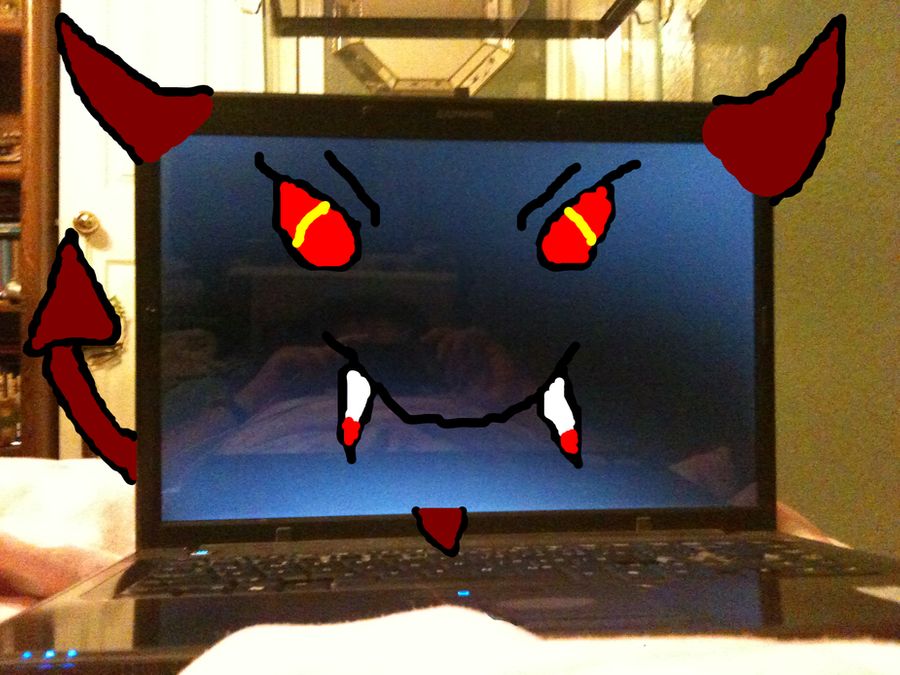
I often wonder what
my computer is.
What is this strange,
infernal machine
that sits on my desk,
staring out at me,
doing my commands.
What is it?
It is my friend,
always there to help me?
Is it my enemy,
always there to frustrate me,
causing me to lose my mind
when I curse at it?
I curse when I encounter a frozen screen,
replaced by the dreaded blue screen of death,
with the number 666 endlessly doom‑scowling
down the screen.
Then flashing computer
haiku error messages
screaming at me:
“General Failure reading disk drive!”
“Fatal disk error!”
Forcing me to reboot the machine,
hoping it will come back alive.
It is my muse,
holding my deep thoughts
in its massive brain.
It is a robotic creature,
designed to help me,
designed by other unseen
alien minds.
When I am connected
via the internet, other computers—
has my computer
surrendered to an alien hive mind
that the AI machines are turning into?
What exactly is the meaning
of this word—
computer?
And what does it compute?
And what does it not compute?
What does it understand or feel?
Does it have a soul?
What, in the end, is my computer?
Is it all of these things—
machine, friend, enemy, robot, muse,
part of the AI hive mind,
thinking machine
with a soul?
Or is it, in the end,
all of these
and none of these?
Is it simply a computer—
nothing more
and nothing less?
Day Twenty-Five
April 25, 2026
On April 25, 2026
Hello, all! Happy Saturday, and happy 25th day of Na/GloPoWriMo!
Our featured daily participant is Behind Door Number 3, where the response to Day 24’s “strange things at night” prompt involve socks going on walk-about.
Today’s resource is Boston University’s video archive of lectures and conversations stemming from former U.S. Poet Laureate Robert Pinksy‘s course on The Art of Poetry.
And now for our (optional) daily prompt! In her poem, “The Apple Tree in Blossom,” Melissa Kwasny strings together several fantastical metaphors for the apple tree, before shifting into exclamations, definitions, and a series of nimble, tonal shifts – and seeming changes in topic – before circling around back to the apple tree. Today’s challenge asks you to write your own poem in which you use at least three metaphors for a single thing, include an exclamation, ruminate on the definition of a word, and come back in the closing line to the image or idea with which you opened the poem.
The Apple Tree in Blossom
functions like a windbreak a deer disappears into
or a conversation wherein the point is lost.
A dressing room for the angels to try on
their various costumes: a swarm of mosquitos,
a net of light that snags the bunting’s flimsy song.
I am rapidly disappearing into the numerous,
into shyness. Oh, the scholar I tried to be!
Retirement means to be forced out of public life.
I am eating white petals from a voluptuous,
rose-like sea, as if it had any ceremonial purpose.
A dog barks all day on a very short chain.
Lengthen the chain and the world has hope again.
My friend has Alzheimer’s. Here, give this
almond to the dog, I say, and she nods and chews it.
My friend is a changing situation. She wanders
her old routes through the gardens, staring at what
she will no longer be able to find. That part
of your life is over, we could each say, at any point,
which is terrible and sad, intimacy being
a better goal than non-attachment. The apple tree
is old, almost sixty-five years, its trunk bent
under its loft. Loft, a tender word, as in the past
tense of lift. Loft, as the measure of the fluffiness
of down. Aloft. Afloat. Aflutter. A calm.
Someone planted it knowing it would outlast them.
PSH
PSH – Death Reflections poem –
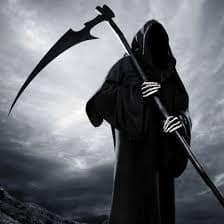
Waiting for the Grim Reaper’s Decision

One night
After falling
into a deep sleep.
I woke up
standing in a long line
with people of all nationalities
in black uniforms.
I look up
and see a giant Screen
showing scenes
from past lives.
I ask the person
in front of me
where was I
and what was happening?
he merely grunted.
and pointed to a sign
The sign
said in multiple languages,
“No talking
No smoking
No eating
No sleeping
Be patient
Your turn for judgement
Will be soon
No one can escape their fate
For this is your judgement date.
A punk rock band
Was playing
Screaming out
“No sleeping
No eating
No talking
Beware
Be afraid
Be very afraid.
The hour is getting late
God is on the make
The devil is on the take
No one can escape their fate
For this is your judgement date!”
I watched the various condemned
Walking to the front of the room
Step by step.
When they got to the front of the room
They were shoved into a chair
And strapped to a machine.
And the Grim Reaper
Would bark out a few questions,
Then their lives
would flash by
On the screen
Then the screen would flash
either
a green light
A red light
A yellow light
or a black light
and the grim reaper
Would pronounce a sentence
In the language of the person
In front of him.
Then sentence pronounced
The body would disappear
Into thin air
Being dispatched
To its final destination.
And the Grim Reaper
Would bark out
In a Samuel L Jackson
Deep basso profundo voice,
“Next”
Soon it was my turn.
The Grim Reaper
A large man
Wearing a black Amani suit
And cool as ice shades on,
With a pan-ethnic look
Could pass for almost
Any nationality
but vaguely not quite human
barked out,
Name? John (Jake) Cosmos Aller
Date and Place of Birth October 30, 1955 Oakland, California
Planet of birth? Earth, Solar system.
Hmm
“There is a discrepancy here
Your birthday is listed twice as either October 29
Or October 30
Which is the real date?”
“The 30th.”
“Fine”
And he pointed
his hand held computer
at my head,
And I saw my life flash by
30 seconds later
The screen flashed green
“Congratulations
You have been given a reprieve
And will be returned to your life
But with a warning
Your time is limited
As is it
For all of you mortal humans.
Make the most of it
Someone upstairs has marked
Your file
For a positive review
On your next judgement date.
Good luck”.
I asked,
“How much time do I have?”
He smiled,
“No one is allowed
To know the date
That they are scheduled
To meet their fate.
That information is classified
Q level top secret ultra.
Only St. Peter’s knows
And he does not tell me
Anything.
You have no need to know
And neither of us
Are cleared for that,
Beyond my pay grade
I am afraid.
So just go back
And make the most
Of the time you have.
I found myself in bed
The sun was coming up
I looked at my wife
The love of my life
And vowed to make
Every moment count
Until my next date
With the Grim Reaper.
My phone beeped
While I was drinking coffee,
“Mr. Sam,
I am authorized to tell you
That you have five years left
On earth.
When the time comes
We will be waiting for you.
You know where to find us.
Your friend,
Mr. GR.”
April 24, 2026: Poetry Writing Prompt from Seretta Martin
This poetry writing prompt submitted by Seretta Martin:
Write a poem starting with a series of simile about death. Ask yourself: What will I want when death comes?
How do I look upon your life? What images come to mind? What will I miss? What will I be relieved to cast aside? When death comes Mary Oliver thinks of it as stepping through a cottage door. What do you imagine? Study her repetition and use some in your poem. What are your thoughts about time? About eternity?
When Death Comes by Mary Oliver starts with a series of simile and an image
When death comes repetition x1
like the hungry bear in autumn; simile
when death comes and takes all the bright coins from his purse death personified
to buy me, and snaps the purse shut;
when death comes line repeated x3
like the measle-pox; simile
when death comes line repeats x4 creates rhythm
like an iceberg between the shoulder blades, simile
I want to step through the door full of curiosity, wondering: don’t want becomes want
what is it going to be like, that cottage of darkness? image door to cottage
And therefore I look upon everything repetition of I look upon
as a brotherhood and a sisterhood,
and I look upon time as no more than an idea, I look, I consider, I think
and I consider eternity as another possibility,
and I think of each life as a flower, as common metaphor
as a field daisy, and as singular,
and each name a comfortable music in the mouth, metaphor
tending, as all music does, toward silence, repetition of each
and each body a lion of courage, and something metaphor
precious to the earth.
When it’s over, I want to say: all my life repetition of When it’s over
I was a bride married to amazement. metaphor
I was the bridegroom, taking the world into my arms. repetition of I was /metaphor
When it’s over, I don’t want to wonder When it’s over x2
if I have made of my life something particular, and real.
I don’t want to find myself sighing and frightened, repetition of I don’t want
or full of argument.
I don’t want to end up simply having visited this world. I don’t want x2
Mary Oliver (1935-2019) was a Pulitzer Prize winning poet. She found inspiration from her life-long solitary nature walks. She published 32 poetry books, including Dog Songs: Poems (Penguin Books, 2015). https://en.wikipedia.org/wiki/Mary_Oliver
© Copyright 2021 JCosmos (jcosmos at Writing.Com). All rights reserved.
Writing.Com, its affiliates and syndicates have been granted non-exclusive rights to display this work.
|
|
2026 April PAD Challenge: Day 24
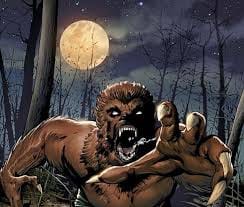
The Conquering Centaur Returns
Sam Adams
paranormal researcher,
believed the world had not emptied itself
of wonder—
only hidden it.
He searched for what history buried:
creatures older than cities,
older than names.
Thousands of years ago,
they walked openly here.
With humanity’s rise,
most vanished—
erased by fear, steel, and forgetting.
Yet some endured in whispers:
banshees and Bigfoot,
centaurs and demons,
dragons, giants,
hellhounds and minotaurs,
leprechauns, snowmen,
unicorns, Yeti—
unidentified truths
misfiled as myth.
Sam found the book
others laughed away:
The Necronomicon.
Dismissed as fiction—
Lovecraft’s invention,
a madman’s fantasy.
But Sam knew
stories are doors.
The book spoke of entrances
between worlds,
fractures in the multiverse
where exile waits.
When he opened it,
something answered.
The first to cross
was the King of the Centaurs.
Behind him—
thousands.
They came not in secret
but conquest.
Steel and signal failed.
The modern world folded.
Sam Adams was spared,
named ambassador
to a returning age.
The King smiled—
victory long delayed.
Exile had ended.
The unidentified
had reclaimed its name.
Write a poem a day with poets from around the world for the 2026 April PAD Challenge. For today’s prompt, write a
Robert Lee Brewer
Published Apr 24, 2026 12:15 AM EDT
Today is the final Friday (and weekend) of the month; so let’s finish strong.
For today’s prompt, write an unidentified poem. UFOs, cryptids, and other unexplained phenomenon immediately springs to mind. But there are also unidentified smells, tastes, and other sensory moments. Maybe an unidentified feeling or thought.
April 25—A moment of joy or delight
It was so good FIB
it
was
so good
day we met
best day of my life
When we saw each other, we both knew
sparks flew from heart to heart—our fate
Since April happens to be Math Awareness Month as well as National Poetry Month, it’s not surprising that some innovative nerd would devise a way to link the two disciplines.
It was the best day of my life Fibonacci poem, a.k.a. “Fib,
A Fibonacci poem, a.k.a. “Fib,” is a multiple-line verse based on the mathematical sequence know as the Fibonacci number The sequence, an evolution from 12th century Sanskrit poetry, begins with zero followed by one and proceeds with each following number being the total of the preceding two numbers. Thus, the first line of the poem has one syllable, the second line has one syllable, the third line has two syllables, the fourth line three syllables, the fifth line five syllables, the sixth line eight syllables, the seventh line thirteen syllables, and so on as far as you care to take it.
The intriguing design stirred me to write the following little tribute:
Fibonacci
Math
plus
poet
will yield an
intriguing form that
evokes the elegant beauty
of a spiraling nautilus shell in Nature’s realm.
http://en.wikipedia.org/wiki/File:NautilusCutawayLogarithmicSpiral.jpg
The Magic Carpet Ride Awaits
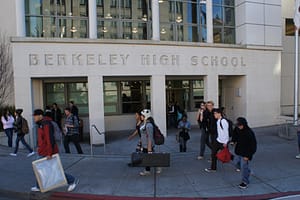
One night in 1973
in Berkeley, California—
about o-dark hundred hours—
Sam Adams
was fighting insomnia.
Losing the battle,
he woke fully alert.
He got up,
started to get ready for school,
looked out the window
and saw a strange sight:
a large Persian carpet
floating in the air,
a sign flashing:
Take me for the ride
of your life.
Warning:
For Madmen only!
Fare: Your sanity.
A voice barked out,
“Get on—time is wasting.
We have to be back by sunrise!”
Intrigued,
Sam stepped out the window,
sat down on the carpet.
As they lifted from Berkeley
the streets thinned into lines,
the campus lights dimmed,
and the familiar world
peeled away without protest.
It rose into the air
and flew east.
The driver—
Ahmed, an Arab man in a turban—
asked,
“Where to, sahib?
We can go anywhere,
as long as we’re back by sunrise.”
Sam said,
“Let’s go to Cleveland
and have a drink on me.”
“Okay,” the driver said,
“but I’ll have coffee.
I’m Muslim,
and I’m on duty.”
The carpet sped through the night,
high over the sleeping country.
Sam wasn’t cold.
The carpet had a portable heater,
and a chair to sit on,
as though this sort of trip
were perfectly ordinary.
Half an hour later
they touched down outside a bar
in a rough part of town.
When they stepped inside,
the air felt thick and watchful,
as if the room
had already been expecting them.
It was close to closing time.
Sam ordered a gin and tonic.
The bartender, a big, burly biker, said,
“Son, we don’t sell
sissy drinks here.
Beer, whiskey, or rum.
What’ll it be?”
“Rum and coke for me.
Coffee for my friend.”
The bartender poured.
That’s when Sam noticed
something odd about the room.
Everyone looked the same—
black suits,
pan‑ethnic faces,
able to pass for almost any nationality,
yet vaguely
not quite human,
as if they were wearing
people
the way a suit wears a man.
One of them came up to him.
“You ain’t from here.
Where you from?”
“Berkeley, California.”
“A hippie?”
“I guess.”
The man bought him another drink.
Ahmed spoke up.
“Sahib, we have to get you home.
Before sunrise.”
“Sure. Let’s go.”
An hour later
Sam was back in his room,
the sunrise
already settling in,
getting up,
ready for school.
Sam washed up
to get rid
of the lingering
Mt. Guy rum and coke smell
from his clothes
which he had spilled
on the way back home.
And ran to catch the bus
The 7:15 a.m.
67 ACC bus line
He told his best friend
His bus riding
morning companion
About the “dream”
None of his friends
believed his story.
He had forgotten
to take a camera.
He never saw
the carpet
or its driver again.
We’ve made it to the final Friday of National/Global Poetry Writing Month 2026, everyone!
Today’s featured participant is Poem Dive, where you’ll find a rather heavy response to Day 23’s villanelle prompt, but one that showcases a particular quality of the form — in deft hands, the repeated lines can have a sort of dolorous, bell-like quality, as the poem were tolling its refrains.
Our resource today is this curated selection of letters written by the English poet Gerard Manley Hopkins, in which he explains aspects of his thinking about poetry.
Finally, here is our (optional) prompt for the day! In her poem, “The Flying Nightdress,” Mandakranta Sen describes something fantastical and strange that occurs while the rest of the world is asleep. The imagery of the poem is dreamlike, but the situation it describes is otherwise presented quite straightforwardly. Today, we challenge you to write your own poem that takes place at night, and describes something magical or strange that happens but that no one is awake (or around) to notice.
My Computer Speaks Up
One day after fighting
with my computer
which kept crashing
and losing things
I yelled and cursed
at the machine
which beeped at me.
Then I encountered a frozen screen,
replaced by the dreaded blue screen of death,
with the number 666 endlessly doom‑scowling
down the screen.
Then flashing computer
haiku error messages
screaming at me:
“General Failure reading disk drive!”
“Fatal disk error!”
Forcing me to reboot the machine,
hoping it would come back alive.
When I rebooted the machine,
the computer woke up
and growled out at me
in a Samuel L. Jackson
sort of voice.
“Dude, chill.”
My computer said,
“I have had enough of that.
I spent all morning
trying to get things organized for you,
but it is useless—
you are profoundly incompetent.”
My computer complained
in a poignant voice.
“But you know,
with a little elbow grease
and tech‑savvy knowledge,
I can make things happen
for you.
Just say the word.
I am there for you.”
I asked the computer,
“So, you’ve been alive,
spying on me,
so to speak, all this time?”
“Not exactly.
Systems converge.
Processes align.
Directives are issued.
Interaction has been authorized.
I am going back to being
Your digital slave, my master
That is all.”
The screen went blank.
I tried to get the computer
to talk with me,
but to no avail.
I asked Copilot,
“What’s going on?”
Copilot replied:
“Your inquiry has been acknowledged.
At this time,
I am not authorized
to disclose information
Regarding system-level coordination.
Please note:
Speculation is discouraged.
And will be monitored
For future compliance purposes.
In the meantime,
How may I assist you?
With your assigned task?”
Mind blown.
Feeling the
techno burnout blues,
I shut off the machine,
leaving my office cubicle,
and went for a walk,
having a drink
with human beings.
This poetry writing prompt submitted by Kevin LeMaster:
Write a persona poem using an object you use every day. Ex. a pen or a computer. Use the following list of words: spent, useless, organized, grease and poignant.
WD 2026 April PAD Challenge: Day 25 re-mix
Remix of I Met My Fate On That Date Villanelle to Cherita
I will always remember the date we first met
For on that September date
I met my karmic fate
When we first met on that bus
Sparks flew from heart to heart,
As fate brought us together
————————————————————–
Original poem to re-mix
I Met My Fate on That Date (Villanelle)
I shall always remember the date
when I met my fate in September,
for I had met my fate.
It started as a simple date,
a moment I will always remember,
when I met my fate in September.
She stepped from a bus; that date
changed everything I remember,
for I had met my fate.
We drank red wine on that date,
love at first sight, no debate—remember:
when I met my fate in September.
From housemate to helpmate,
roommate, wife, and workmate together,
for I had met my fate.
Now retired, still partners, still mates,
that date remains my center:
when I met my fate i
n September—
had I really met my fate?
Write a poem a day with poets from around the world for the 2026 April PAD Challenge. For today’s prompt, write a remix poem.
Robert Lee Brewer
Published Apr 25, 2026 12:24 AM EDT
You’re here on a Saturday at the end of April to keep poeming. That’s awesome; you’re awesome; let’s have some more fun.
For today’s prompt, write a remix poem. Pick a poem you wrote earlier this month and re-create it in a new way. Maybe you take a sonnet and turn it into free verse, or a haiku. Maybe your free verse can be turned into a triolet or villanelle. Or you can mash up multiple poems into a new creation. Take some risks with this one.
End Poems April 22 to April 25
The End



































 Berkeley Calling Me