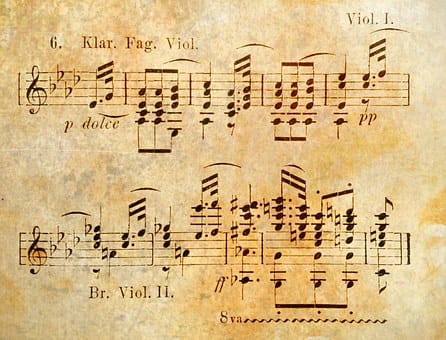
For the last few years, I have been playing the piano almost daily, slowly gaining back skills and ability. Here are some of the pieces I have played. It a continuous challenge; some days I nail it, other days not so much, but then I play again the next day. I like to challenge myself every day. Keeps me young at heart, may keep the dreaded Alzheimer’s at bay! With any luck, I can update this list yearly and rock on the piano until I am at least 85!!!!!
Incidentally, I hear that William Shatner, the actor, Captain Kirk, has joined a heavy metal band playing the guitar at age 95! And is still rocking! Good for him and provides hope to us other younger seniors! That we can do it too, maybe not heavy metal though….the next day again
mozartbeethovenColour illustration, Music/ Composers, Frederic Chopin, Polish composer, (1810-1848) (Photo by Bob Thomas/Popperfoto via Getty Images/Getty Images)piano
Easy classics
Arlen Harold I Love a Parade
Bach, Carl Philiph Emaneul Piece for left Hand or Right Hand Alone
JS Bach
Be Thou with Me
Gavotee
JS Bach March
JS Bach Polonaise
JS Bach Prelude in C
JS Bach Prelude in F
Barton, Bella Playing Soldiers
Barton, Bella Ritual Dance
Barton, Bella Teasing
Barton, Bella “Watch Your Step” Dance
Beethoven Allegro Excerpt 7th Symphony
Beethoven I Love Thee
Beethoven Three German Dances
Bocchieri Luigi Minuet
Borodin, Alexander Plaviason Dance
Bratton, John W the Teddy Bear Picnic
Burmeller, Friederick Pastrole
Cui, Caesar Petite Valse
Chopin, Maurka
Chopin, Prelude
Francis Couperin Rigaudon
Francis Couperin, the Kings Crest of Viols
Dvorjak Indian Legend
Edward, Gus In My Merry Oldsmobile
Friml, Rudolf March of the Musketters
Rose Marie
Folk Music, Arkansas Traveler
Coming through the Rye
Red River Valley
Ghys, Henry Amarlys
Michale Glinka the Lark
Gluck, Christoph Air
Gluck, Christoph Gavotee
Ground Charles Ballet Scene from Fraust
Ground Charles Funeral March of a Marionette
Gruber, Brig Caisons Go Rolling Along
Handel Air from Water Music
Handel Minuet
Handel Sarabanda
Haydn Allegro
Haydn Adnatino
Haydn Hymn to Saint Anthony
Haydn Minuet
Haydn Minuet and Trio
Haydn Scherzo
Karganof Petite Valse
Khachaturian Oriental Dance
Liadoff The Music Box
Edward Mc Donald A Deserted Farm
Edward Mc DonaldA Moon Idly
Mendelsohn Consolidation
Mendelsohn Songs without words
Mozart, Leopold Minuet
Mozart Menuto
Sonata in C
Nevin the Rosary
Poldini Pouple Valadanse
Waltz Serenade
Walz of the Mice
Prokofieff Grashopper Parade
March
Rainbow in the Rain
Rameu Litle Rondo
Reibekoff In the Mill
Legends
The Wandering Muscians
Rimsky Korsakoff Flight of the Bumblebees
Shcerazande
Rose, Billy Barney Google
Eric Satie Gymnopédie 1
Gynopedie 2
Gynopedie 3
Schubert Waltz
Robert Schuman Cradle Song
Little Humming Song
Little Study
Song of the Reaper
Jean Sibelius A Prayer from Finland
Silvers April Showers
Smetna Polka nad Furiant
Prelude
Steiner Max Tara From Gone With the Wind
Stravinsky Lullaby from the Firebird
Teleman Gigun
Tschaikowsky Romeo and Juliet
Song of the Lark
Verdi Grand March from Aida
Villonda Chocolo
Warren September in the Rain
Easy Classics to Modern
Henry Purcell Minuet
Henry Purcell Air
Henry Purcell Trumpet Tune
Henry Purcell Farewell
George Philip Telemann Bouree
George Philip Telemann Minuet
Archangel Corelli Sarabande
JS Bach Musette
Anna Magalena Bach Minuet
Anna Magalena Bach Minuet
Anna Magalena Bach Polonaise
Anna Magalena Bach Musette
Anna Magalena Bach March
Anna Magalena Bach Minuet
Joseph Haydn Gavotte and Variation
JS Bach Little Prelude in F
Leopold Mozart Minuet
Leopold Mozart Burlesque
Wolfgang Amadeus Mozart Minuet
JS Bach Little Prelude in F
Carl Philipp Emanuel Bach Allegro
Carl Philipp Emanuel Bach La Caroline
Carl Philipp Emanuel Bach Sherzo
Wolfgang Amadeus Mozart Allegro
Wolfgang Amadeus Mozart Andante
Wolfgang Amadeus Mozart Presto
Carl Philipp Emanuel Bach Minuet
Jean Francois Dandreu Gavotee in Rondo
Jean-Philippe Rameau Rondino
Francis Couperin Carnival
Francis Couperin Le Petit Rien
Wolfgang Amadeus Mozart Polonaise
Joseph Haydn Andantino
Joseph Haydn Scherzo From Sonatina No 4
Wolfgang Amadeus Mozart Rondo
Ludwig Beethoven Bagatelle
Ludwig Beethoven Ecossaise in G
Joseph Haydn Seven German Dances
Carl Maria Von Weber Ecossaise
Jakob Schmitt Sonatina
Joseph Nepomik Hummel Bagatelle
Daniel Gottlob Turk Gavotte
Daniel Gottlob Turk A Regal Dance
Daniel Gottlob Turk Serande
Daniel Gottlob Turk Miniature Rondo
Daniel Gottlob Turk Evening Song
Daniel Gottlob Turk The Hunters
Daniel Gottlob Turk Carefree
Wolfgang Amadeus Mozart Adagio
Johann Philipp Kimbeger Lullaby
Anton Andre Sonatina
Jakob Schmitt Sonatina in G
Ludwig Beethoven Three Country Dances
Muzio Clementi Sonatina
Wolfgang Amadeus Mozart Minuet in F
Franz Schubert Waltz
Ludwig Beethoven Russian Folk Song
Ludwig Beethoven’s German Dance
Franz Schubert Two Ecossaises
Franz Schubert Four Ladlers
Franz Schubert Allegretto from Minuet in F
Franz Schubert Adantino Trio from Waltz in C Op 19)
Carl Czerny Two Austrian Folk Themes
Felix Mendelssohn Peasant Song
Henry Bertini On Tiptoes
Henry Bertini Dance Intermezzo
Theodor Kullak, the Clock
Theodor Kullak Cradle Song
Robert Schumann Melody
Robert Schumann The Wild Horseman
Robert Schumann Bagatelle
Robert Schumann Soldier’s March
Robert Schumann Hunter’s Song
Robert Schumann Reaper’ Song
Fredrich Burmuller Arabesque
Friedrich Burmuller Pastoral
Steven Heller An Old Romance
Cornelius Gurlitt Little Suite Morning Song
Cornelius Gurlitt March
Cornelius Gurlitt Scherzo
Louis Kohler Song of the Hussars
Louis Kohler Village Waltz
Louis Kohler Chromatic Polka
Konard M Kunz Four Short Canons
Peter Tschikovsky Morning Prayer
Peter Tschikovsky Old French Song
Peter Tschikovsky German Song
Peter Tschikovsky Italian Song
Peter Tschikovsky Reverie
Peter Tschikovsky The Sick Doll
Cezar Franck Song from the Creuse
Cezar Franck Puppet’s Complaint
Robert Volkmann Once Upon A Time
Robert Volkmann, the Enchanted Garden
Robert Volkmann Dance With Me
Robert Volkmann Over Hill and Dale
Vladimir Reibkoff Playing Soldiers
Vladimir Reibkoff Evening in the Meadow
Vladimir Reibkoff Oriental Dance
Alexander Gretchaninoff Tender Moments
Alexander Gretchaninoff Promenade
Nicolas Misaskowsky Fugue in Classic Style
Igor Stravinsky’s Three Easy Pieces on Five Notes
Serge Prokofieff Trantella
Dmitri Kabalevsky Humming
Dmitri Kabalevsky First Dance
Dmitri Kabalevsky Little March
Dmitri Kabalevsky Chit Chat
Dmitri Kabalevsky Waltz
Dmitri Kabalevsky Tocatina
Dmitri Kabalevsky Prelude
Dmitri Kabalevsky Ride, Ride
Dmitri Kabalevsky Scherzo
Dmitri Kabalevsky In the Country
Hector Villa Lobos Constante
Hector Villa Lobos Circle Dance
Alan Khatchaturian Melody
Bella Bartok Six Miniatures
Robert Schumann Album for the Young‘s Album for the Young (Album für die Jugend), Op/. hum 68 consists of 43 piano pieces, composed in 1848. [en.wikipedia.org], [bing.com]
Perosnal – first played in high school still a bit challenging at times
Part I (Nos. 1–18)
Melodie (Melody)
Soldatenmarsch (Soldiers’ March)
Trällerliedchen (Humming Song)
Ein Choral (Chorale)
Stückchen (Little Piece)
Armes Waisenkind (The Poor Orphan)
Jägerliedchen (Hunting Song)
Wilder Reiter (The Wild Rider / Wild Horseman)
Volksliedchen (Folk Song)
Fröhlicher Landmann, von der Arbeit zurückkehrend (The Happy Farmer, Returning from Work)
The most famous piece from the collection is No. 10,“The Happy Farmer, Returning from Work” (Fröhlicher Landmann). [bing.com], [en.wikipedia.org]
Other classical music played
Piano Repertoire Inventory
Casio Song Book 1 & Song Book 2
(Works marked (Song Book 2) are from the second volume.)
Classical Composers
Bach, Johann Sebastian (1685–1750)
Air from Suite No. 3
Invention No. 1 (Song Book 2)
Jesu, Joy of Man’s Desiring (Jesu Bleibet Meine Freude)
Musette in D Major
Prelude No. 1 (Song Book 2)
Badarzewska, Tekla (1834–1861)
La Prière d’une Vierge (Song Book 2)
Bailey, Thomas Haynes (1797–1839)
Long, Long Ago
Beethoven, Ludwig van (1770–1827)
Für Elise
Moonlight Sonata, Op. 27 No. 2
Ode to Joy
Sonata No. 8 “Pathétique” (Second Movement)
Bishop, Sir Henry Rowley (1786–1855)
Home Sweet Home
Bizet, Georges (1838–1875)
Habanera (from Carmen)
Burgmüller, Friedrich (1806–1874)
Arabesque
La Chevaleresque
Chopin, Frédéric (1810–1849)
Étude Op. 10 No. 3 (Chanson de l’Adieu)
Nocturne Op. 9 No. 2 (Song Book 2)
Prelude Op. 28 No. 7
Valse Op. 64 No. 1 (Petit Chien)
Clementi, Muzio (1752–1832)
Sonatina Op. 36 No. 1 (First Movement)
Debussy, Claude (1862–1918)
Arabesque No. 1 (Song Book 2) hard
Clair de Lune (Song Book 2) hard
Rêverie hard
Dvořák, Antonín (1841–1904)
Going Home (from Symphony No. 9 “From the New World”)
Humoresque (Song Book 2)
Foster, Stephen Collins (1826–1864)
Beautiful Dreamer
Camptown Races
Jeanie with the Light Brown Hair
My Old Kentucky Home
Oh! Susanna
Gossec, François-Joseph (1734–1829)
Gavotte
Gounod, Charles-François (1818–1893)
Ave Maria
Händel, George Frideric (1685–1759)
Joy to the World
Joplin, Scott (1868–1917)
Maple Leaf Rag (Song Book 2) hard
The Entertainerd hard
Kuhlau, Friedrich (1786–1832)
Sonatina Op. 20 No. 1, First Movement (Song Book 2)
Liszt, Franz (1811–1886)
Liebestraum No. 3 hard d
Meacham, Frank W. (1856–1909)
American Patrol
Mendelssohn, Felix (1809–1847)
Wedding March (from A Midsummer Night’s Dream)
Mozart, Wolfgang Amadeus (1756–1791)
Serenade from Eine kleine Nachtmusik
Sonata K. 545 (First Movement)
Turkish March
Oesten, Theodor (1813–1870)
Dolly’s Dreaming and Awakening (Song Book 2)
Pachelbel, Johann (1653–1706)
Canon in D
Poulton, George R. (1828–1867)
Aura Lee
Saint-Saëns, Camille (1835–1921)
Le Cygne (The Swan) from Carnival of the Animals
Satie, Erik (1866–1925)
Gymnopédie No. 1
Gymnopédie No 2
Gymnopédie No 3
Je te veux
Schubert, Franz (1797–1828)
Heidenröslein
Schumann, Robert (1810–1856)
Fröhlicher Landmann (The Happy Farmer)
Träumerei (Song Book 2)
Tchaikovsky, Pyotr Ilyich (1840–1893)
March (from The Nutcracker)
Verdi, Giuseppe (1813–1901)
Brindisi (from La Traviata)
Vivaldi, Antonio (1678–1741)
Spring (from The Four Seasons)
Folk Songs, Hymns, Spirituals & Traditional Tunes
American Folk Songs
Home on the Range
House of the Rising Sun
I’ve Been Working on the Railroad
Little Brown Jug
Mary Had a Little Lamb
Michael, Row the Boat Ashore
On Top of Old Smoky
She Wore a Yellow Ribbon
Sipping Cider Through a Straw
Turkey in the Straw
When the Saints Go Marching In
Yankee Doodle
Australian Folk Song
Waltzing Matilda
Bohemian Folk Song
Come Birds
British Folk Songs
Deck the Halls
Greensleeves
London Bridge
My Bonnie
The Muffin Man
Under the Spreading Chestnut Tree
We Wish You a Merry Christmas
French Folk Songs
On the Bridge of Avignon
Twinkle, Twinkle, Little Star
German Folk Songs
Could You Ever See a Lassie?
O Christmas Tree
Hymns
Amazing Grace
Irish Folk Songs
Danny Boy
Jamaican Folk Songs
Jamaican Farewell
Japanese Folk Songs
Sakura, Sakura
Japanese Songs
Okano, Teiichi (1878–1941)
Furusato
Polish Folk Songs
Szła Dzieweczka
Russian Folk Songs
Krakowiak
Scottish Folk Songs
Auld Lang Syne
Annie Laurie
Spanish Folk Songs
If You’re Happy and You Know It
Lightly Row
Spirituals
Joshua Fought the Battle of Jericho
Traditional
Chopsticks
Santa Lucia
Ward, Henry Clay (1840–1905)
Grandfather’s Clock
Bach: Two-Part Inventions
Inventions No. 1-15
Bach: Three-Part Inventions (Sinfonias)
Sinfonias No. 1-15
Bach: Well-Tempered Clavier
Completed
Prelude and Fugues Nos. 1-24
1 In C
2 IN E Flat
3 In D
4 In E Flat Major
5 In E Flat
6 In E
7 In B Minor
8 In F
9 In A Flat
10 In G
11 In G Minor
12 In A
13 In C
14 In B Flat
15 In D
16 Sinfonia 1 In C
17 Sinfonia 2 In C Minor
18 Sinfonia 3 In D
19 Sinfonia 4 In D Minor
20 Sinfonia 5 In E Flat
21 Sinfonnia 6 In E
22 Sinfonia 7 In G
23 Sinfonia 8 In F
24 Sinfonia 9 In F Minor
25 Sinfonia 10 In G
26 Sinfonia In G Minor
27 Sinfonia 12 In A
28 Sinfonia 13 In C
29 Sinfonia 14 In B Flat
30 Sinfonia 15 In F
Bach WTC
Prelude and Fugues 1
Prelude and Fugues 2
Prelude and Fugues 3
Prelude and Fugues 4
Prelude and Fugues 5
Prelude and Fugues 6
Eric Satie Three Gymnopedes
Korean Light Classical Set
Chopin Piece
Beethoven Disco For Eliza
Apartment
Verglis Mein Nicht
Malguenia
Disco City
Io Ti Daro Di Piu
Dark Eye Boogie Woman
El Bimbo
Rumba Rhapsody
Korean Song Book
Ganadiri
Nununhannuri
Moknochuchang
Babo
Sarang
Ayaohchmari
Chackunlabi
Changelog
Hangku
Kudaeyae
Laegaedo Saranoi
Miwoimiwoimiwoi
Baramireoo
Sarangsarangnuka Milhaeni
Bayayae
Yet Siinuilorae
Chrumomoichukkae
Ku Saram
Biramchoram Nakyomchorum
Saransuron Kudae
Sarangiyo
100 Greatest Hits
Ain’t No Mountain High Enough Marvin Gaye
All Blues Nailed It, Miles Davis,
All Day All The Night The Kinks
All My Loving The Beatles
Anarchy In The UK -Really Rocked Out With This One Sex Pistols
And She Was Talking Heads
Back On The Chain Gang Pretenders
Bad Moon Rising Creedence Clearwater Revival Nailed It
Badge Cream
Being A Gong Get It On T Rex
Beth Kiss
Blueberry Hill Fats Domino Nailed It
Bo Diddley Nailed It
The Book Of Love Peter Gabriel
Both Sides Now Joni Mitchel
California Sun Ramones
Can’t Help Falling In Love Elvis Presely
Candle In The Wind Elton John
Chain Gang Nailed It Nirvana
Desperado Eagles
Every Little Thing She Does Is Magic The Police
Everyday I Write The Book Elvis Costello
Everyday People Sly And The Family Stone
Feeling Alright Traffic
Fields Of Gold Sting
50 Ways To Leave Your Lover Paul Simon
Forever Young Rod Stewart
Foxy Lady Jimi Hendrix
Freddy’s Dead Curtis Mayfield
Free Falling Tom Petty
Georgia On My Mind Ray Charles
Give Up The Funk Chairs The Roof Off The Sucker Parliament
Glory Days Bruce Springsteen
I Can’t Help Myself Sugar Pie Honey Bunch The Four Tops
I Still Haven’t Found What I Was Looking For You 2
I Walk The Line Johnny Cash
I’m Hoochie Choohie Man Muddy Waters
Imagine John Lennon Then Plastic Ono Band
Isn’t She Lovely Stevie Wonder
It’s In The Way You Use It Eric Clapton
It’s Too Late Carole King
Just My Imagination Running Away From Me The Temptations
Kashmir Led Zeppelin
Landslide Fleetwood Mac
Lay Lady Lay Bob Dylan
Like A Prayer Madonna
Living In America James Brown Losing My Religion R.E.M.
Love Walks In Van Halen
Lust For Life Iggy Pop
Man In The Mirror Michael Jackson
Me And Bobby Mcgee Janis Joplin
Midnight Train At Georgia Gladys Knights And The Pips
Money Pink Floyd
Moondance Van Morrison
Naima John Coltrane
You Make Me Feel Like A Natural Woman Aretha Franklin
Never Say Goodbye The Jackson Jackson 5 Night Fever The Bg’s
The Night They Drove Old Dixie Down The Band
1999 Prince
No Particular Place To Go, Chuck Berry,
Ol 55 Tom Waits
Only The Lonely You Know The Way I Feel Roy Orbison
Oya Como Va Santana
Peggy Sue Buddy Holly
Proud Mary Ike And Tina Turner
Pin Ball Wizzard The Who
Pride And Joy Stevie Ray Vaughan
Rambling Man Allman Brothers Band
Reeling In The Years Steely Dan
Rock The Casbash The Clash
Ruby Tuesday The Rolling Stones
September Earth Wind And Fire
Silly Love Songs Paul Mccartney
Sitting On The Dock Of The Bay Otis Redding
The Sound Of Silence Simon And Garfield
Sweet Emotions Aerosmith
Sweet Home Chicago Robert Johnson
Sweet Jane Velvet Underground
Teach Your Children Crosby, Stills, Nash And Young
The Tears Of A Clown Smokey Robinson And The Miracles
3 Little Birds Bob Marley
The Thrill Is Gone B.B. King
Tired Of Being Alone Al Green
Touch Of Grey Grateful Dead
Turn Turn Turn To Everything There’s This Season The Byrds
Tutti Fruity Little Richard
We Will Rock You Queen
Working In The Coal Mine Devo
Wouldn’t It Be Nice The Beach Boys
You Can’t Hurry Love Diana Ross And The Supremes
Young Americans David Bowie
Blues Standards
All Your Love (I Miss Loving)
Baby Please Don’t Go
Baby, What You Want Me To Do
Back Door Man
Bluebird
Blues Before Sunrise
Blues With A Feeling
Boogie Chillen No. 2
Caledonia
Checkin’ Up On My Baby
Confessin’ The Blues
Crossroads
Everyday (I Have The Blues)
Evil (Is Going On)
Five Long Years
Going Down Slow
Good Morning Little Schoolgirl
Help Me
Honest I Do
How Long, How Long Blues
I Believe I’ll Dust My Broom
I Can’t Quit You Baby
I’m A Man
I’m A Steady Rollin’ Man
I’m Gonna Move On The Outskirts Of Town
I’m Ready
I’m Your Hoochie Coochie Man
It Hurts Me Too
Key To The Highway
Killing Floor
Little Red Rooster
Mean Old Frisco
Mean Old World
Mellow Down Easy
Merry Christmas, Baby
Milk Cow Blues
My Babe
Nobody Knows You When You’re Down And Out
On The Road Again
Please Send Me Someone To Love
Ramblin’ On My Mind
Reconsider Baby
Rollin’ And Tumblin’
Saint James Infirmary
Louis Blues
See See Rider
Sitting On Top Of The World
The Sky Is Crying
Smokestack Lightning
Spoonful
Sweet Home Chicago
Tain’t Nobody’s Biz-Ness If I Do
The Thrill Is Gone
Trouble In Mind
Walkin’ Blues
Wang Dang Doodle
You Don’t Have To Go
Duke Ellington Song Book
Alabama Home
Azure
Birmingham Breakdown
Black Butterfly
Blip Blip
Boy Meets Horn
Brown Skin Gal In The Colico Gown
Caravan
Creole Love Call
Come Sunday
Day Dream
Do Nothing Until You Hear From Me
Doing The Crazy Walk
Don’t Get Around Much Anymore
Echoes Of Harlem
Everything But You
Five O Clock Drag
Gal From Joes
Gypsy With Out A Song
I Got It Bad (And That Ain’t Good)
Let A Song Go Out Of My Heart
I Never Felt This Way Before
I’m Just A Lucky So And So
Riding On The Moon And Dancing On The Stars
So In Love With You
In A Sentimental Mood
It Doesn’t Mean A Thing (If It Ain’t Got That Swing)
Jeep In Jumping
Lady In Blue
Lost In Meditation
Mood Indigo
Paris Burning
Please Forgive Me
Prel;Ude To A Kiss
Ring Dem
Rocking My Rhtyim
Satin Doll
Solitude
Something To Live For
Sosphicated Lady
Take The A Train
Planned
Here’s a practical approximate difficulty ranking (Henle/ABRSM-style perspective) from easy → extremely difficult. Difficulty varies by movement, but this is useful for repertoire planning.
Mozart Piano Sonatas (Easy → Hard)
Early Intermediate
K. 545 in C major (“Sonata Facile”)
K. 283 in G major
K. 570 in B-flat major
Intermediate
K. 279 in C major
K. 280 in F major
K. 281 in B-flat major
K. 330 in C major
K. 331 in A major (“Turkish March”)
Upper Intermediate
K. 282 in E-flat major
K. 332 in F major
K. 309 in C major
K. 311 in D major
Advanced
K. 333 in B-flat major
K. 533/494 in F major
K. 576 in D major
Very Advanced
K. 284 in D major (“Dürnitz”)
K. 310 in A minor
K. 457 in C minor
The hardest Mozart sonatas are generally considered:
K. 457
K. 310
K. 576
K. 284
Beethoven Sonatas (Easy → Hard)
Beethoven
Work in progress – next year’s project is to play through all the Mozart and Beethoven sonatas; I decide to continue improving my piano skills before re-attempting Mozart and Beethoven.
Sonata No. 1, K. 279, C major – Beginner/Intermediate
Sonata No. 2, K. 280, F major – Intermediate
Sonata No. 5, K. 283, G major – Intermediate
1 Sonata No. 14, K. 457, C minor – Advanced Moonlight
1 Sonata No. 16, K. 545, C major (“Sonata Facile”) – Beginner
No. 27, Op. 90, E minor
No. 16, Op. 31 No. 1, G major
No. 14, Op. 27 No. 2, C-sharp minor (“Moonlight”)
Intermediate
Op. 49 No. 2 (Sonata No. 20)
Op. 49 No. 1 (Sonata No. 19)
Upper Intermediate
Op. 79 (No. 25)
Op. 14 No. 1 (No. 9)
Op. 14 No. 2 (No. 10)
Op. 10 No. 2 (No. 6)
Advanced
Op. 2 No. 1 (No. 1)
Op. 26 (No. 12)
Op. 31 No. 1 (No. 16)
Op. 10 No. 1 (No. 5)
Op. 22 (No. 11)
Op. 31 No. 3 (No. 18)
Advanced+
Op. 27 No. 1 (No. 13)
Op. 28 “Pastoral” (No. 15)
Op. 2 No. 2 (No. 2)
Op. 10 No. 3 (No. 7)
Op. 90 (No. 27)
Op. 78 (No. 24)
Very Advanced
Op. 13 “Pathétique” (No. 8)
Op. 27 No. 2 “Moonlight” (No. 14)
Op. 81a “Les Adieux” (No. 26)
Op. 31 No. 2 “Tempest” (No. 17)
Op. 54 (No. 22)
Op. 2 No. 3 (No. 3)
Op. 7 (No. 4)
Virtuoso
Op. 101 (No. 28)
Op. 53 “Waldstein” (No. 21)
Op. 57 “Appassionata” (No. 23)
Elite Concert Level
Op. 109 (No. 30)
Op. 110 (No. 31)
Op. 111 (No. 32)
Among the Hardest Works in the Entire Piano Literature
Op. 106 “Hammerklavier” (No. 29)
Major Beethoven Piano Works Outside the Sonatas
Easier
Ecossaise in G major, WoO 23
Für Elise, WoO 59
Six Easy Variations, WoO 77
German Dances
Intermediate
Bagatelles Op. 119
Bagatelles Op. 33
Rondo in C major Op. 51 No. 1
Rondo in G major Op. 51 No. 2
Advanced
Andante Favori, WoO 57
32 Variations in C minor, WoO 80
Fantasia Op. 77
Bagatelles Op. 126
Virtuoso
Seven Fantasies on Themes from The Ruins of Athens, Op. 76
Haydn and Clementi are excellent bridges between Mozart and Beethoven. Clementi in particular is often underappreciated—he was arguably the greatest piano technician-composer before Chopin and Liszt.
Joseph Haydn – Piano Sonatas
(Hob. XVI numbering)
Haydn’s sonatas vary enormously. The early ones are often suitable for intermediate players; the late sonatas rival Mozart and occasionally anticipate Beethoven.
Intermediate
Hob. XVI:8 in G major
Hob. XVI:9 in C major
Hob. XVI:10 in C major
Hob. XVI:11 in G major
Hob. XVI:13 in G major
Hob. XVI:14 in D major
Hob. XVI:21 in C major
Upper Intermediate
Hob. XVI:27 in G major
Hob. XVI:28 in E-flat major
Hob. XVI:29 in E major
Hob. XVI:34 in E minor
Hob. XVI:35 in C major
Advanced
Hob. XVI:37 in D major
Hob. XVI:39 in D major
Hob. XVI:40 in F major
Hob. XVI:41 in E-flat major
Hob. XVI:42 in D major
Very Advanced
Hob. XVI:43 in A-flat major
Hob. XVI:44 in G minor
Hob. XVI:46 in A-flat major
Hob. XVI:48 in C major
Virtuoso / Concert Level
Hob. XVI:49 in E-flat major
Hob. XVI:50 in C major
Hob. XVI:51 in D major
Hob. XVI:52 in E-flat major
The Hardest Haydn Sonatas
Hob. XVI:52 in E-flat major
Hob. XVI:50 in C major
Hob. XVI:49 in E-flat major
Hob. XVI:51 in D major
Hob. XVI:44 in G minor
Haydn Non-Sonata Piano Works
Intermediate
Arietta with Variations in E-flat major
Capriccio in G major (“Acht Sauschneider müssen sein”)
Advanced
Andante and Variations in F minor, Hob. XVII:6
Very Advanced
Fantasia in C major, Hob. XVII:4
The Andante and Variations in F minor is generally regarded as Haydn’s greatest solo piano work outside the sonatas.
Muzio Clementi – Piano Sonatas
Clementi wrote over 60 sonatas. Many are substantially more pianistic and technically demanding than Mozart.
Upper Intermediate
Op. 36 No. 1 in C major
Op. 36 No. 2 in G major
Op. 36 No. 3 in C major
Op. 36 No. 4 in F major
Op. 36 No. 5 in G major
Op. 36 No. 6 in D major
Advanced
Op. 12 No. 1
Op. 12 No. 2
Op. 12 No. 3
Op. 24 No. 1
Op. 24 No. 2
Op. 25 No. 5
Very Advanced
Op. 34 No. 1
Op. 34 No. 2
Op. 34 No. 3
Op. 40 No. 1
Op. 40 No. 2
Virtuoso
Op. 50 No. 1
Op. 50 No. 2
Op. 50 No. 3 (“Didone Abbandonata”)
Elite Virtuoso
Op. 46 Sonatas
Op. 47 Sonatas
Op. 50 No. 3 (“Didone”)—many pianists place this alongside major Beethoven sonatas.
Hardest Clementi Sonatas
Op. 50 No. 3 “Didone Abbandonata”
Op. 50 No. 2
Op. 40 No. 2
Op. 46 Sonata in G minor
Op. 34 No. 2
Clementi Non-Sonata Piano Works
Easier
Selected pieces from Introduction to the Art of Playing on the Pianoforte
Progressive Studies
Gradus ad Parnassum (100 studies)
Approximate progression within Gradus
Intermediate
Nos. 5, 6, 8, 19, 26
Advanced
Nos. 15, 24, 44, 47, 58
Virtuoso
Nos. 65, 77, 84, 95
Extreme Virtuoso
Nos. 85, 97, 100
These studies were admired and edited by Debussy, who borrowed the title for his own piano suite.
Combined Classical-Era Progression
If you wanted a historical progression through the Classical period:
Clementi Op. 36 Sonatas
Mozart K. 545
Mozart K. 330
Haydn Hob. XVI:35
Mozart K. 332
Beethoven Op. 14 No. 1
Haydn Hob. XVI:44
Mozart K. 310
Beethoven Pathétique
Haydn Hob. XVI:52
Beethoven Tempest
Clementi Op. 50 No. 3
Beethoven Waldstein
Beethoven Appassionata
Beethoven Opp. 109–111
Beethoven Hammerklavier
This sequence gives a remarkably complete picture of the evolution of piano writing from about 1770 to 1825.
Other works to Play
Phantom of the Opera – came with my Casio keyboard
Reigniting My Passion for Piano: The Journey Continues in 2026
Over the past year, I have rediscovered one of the great joys of my life: playing the piano.
Music has always been important to me. Like many people, though, life, work, travel, and other commitments gradually pushed regular practice into the background. In 2025 and continuing into 2026, I made a conscious decision to return to the piano and make it part of my daily routine once again. It has proven to be one of the most rewarding decisions I have made.
Today, I practice for about an hour each day. Some days are better than others, but the consistency itself has become the key. I am not trying to become a concert pianist. My goal is much simpler: to continue improving, keep learning, and enjoy the process.
pianopiano jpg
My Current Musical Goals
My long-term objective is to work my way through the piano sonatas of Mozart and Beethoven while also exploring a wider range of music, including jazz, blues, funk, rock, and popular standards.
Along the way I have been expanding my knowledge of music theory and composition. Earlier this year I completed introductory studies in both subjects and plan to continue with more advanced coursework. Understanding the structure behind the music has made practicing more enjoyable and has helped me learn pieces more efficiently.
I am also interested in music notation and composition software. At some point I hope to purchase a MIDI interface and begin learning Sibelius or a similar program. One of my personal goals is to revisit music I composed during high school and begin writing new music again.
A Piano on Two Continents
Because my wife and I divide our time between the United States and South Korea, I wanted to eliminate one obstacle that often interrupted my practice: not having a piano available.
To solve the problem, I purchased a Casio keyboard for our home in Alexandria while keeping my Rhodes piano in Gimpo. Having instruments in both locations allows me to maintain continuity regardless of where we are living at the time.
Working Through the Casio Song Books
One of the most useful decisions I made was purchasing a used Casio keyboard that came with three volumes of instructional and repertoire books ranging from beginner to intermediate levels.
Rather than jumping immediately into difficult classical works, I worked methodically through these books. The experience proved invaluable.
The pieces ranged from folk songs and standards to simplified classical selections. Many of them were not technically demanding, but they provided an excellent opportunity to strengthen sight-reading skills and improve overall fluency at the keyboard.
One lesson that has helped me tremendously is learning to trust muscle memory and avoid constantly looking down at the keys. This remains a work in progress, but I can already see significant improvement. The less I look at the keyboard, the more confidently I can focus on the music itself.
Learning to Analyze Music
One practice that has made a dramatic difference in my playing is the habit of analyzing a piece before I begin learning it.
I still create what I jokingly call “cheat sheets” directly on the score. Before practicing a piece, I identify:
Key signatures
Flats and sharps
High and low register passages
Repeated patterns
Difficult transitions
Ornamentation such as turns and mordents
Taking ten minutes to understand how a piece is constructed often saves hours of frustration later. More importantly, it helps me understand the music rather than simply memorizing finger movements.
Adding Chords and Building Theory Skills
Many of the pieces in the Casio song books contain only simple melody lines and basic accompaniment.
As an additional exercise, I began experimenting with adding fuller chord structures to the left hand. This was sometimes challenging, but it became an excellent practical application of music theory.
The process forced me to think about harmony rather than simply reading notes from the page. It also made many of the pieces more enjoyable to play.
Rediscovering Mozart and Beethoven
One of my motivations for working through the instructional books was to prepare myself for the classical repertoire I eventually hope to master.
Recently I revisited a Mozart sonata and was pleasantly surprised by the results. While there is still much work ahead, I played more confidently than I expected. That experience reinforced my belief that steady, structured practice produces results, even when progress feels slow.
My plan is to continue building my foundation and then gradually return to larger works by Mozart, Beethoven, and other classical composers.
What I Have Learned About Relearning an Instrument
If I had to summarize the process of returning to piano, it would be this:
Start simpler than you think you need to.
Work through beginner and intermediate materials systematically. Analyze each piece before you play it. Focus first on accuracy and rhythm, not speed. Listen to recordings of the music. Practice difficult passages separately. And most importantly, be patient.
Progress comes from consistency rather than intensity.
A Broader Goal: Keeping the Mind Active
One reason I have committed myself to regular piano practice is the belief that lifelong learning is valuable in its own right.
For me, piano study is part of a broader effort to remain mentally engaged through learning languages, reading, writing, creative projects, and continuous education. Whether or not these activities provide long-term cognitive benefits, they undoubtedly enrich daily life and provide a constant source of challenge and satisfaction.
Looking Ahead
The attached repertoire list contains the pieces I have worked through so far. Looking ahead, I expect to continue with additional classical repertoire, Clementi sonatinas, blues standards, composition studies, and eventually some of the music I wrote many years ago.
For anyone approaching retirement, or anyone who has put aside an ihstrument for years and is wondering whether to begin again, my advice is simple:
Do it.
You do not have to be great. You only have to start. The enjoyment, the sense of progress, and the satisfaction of making music are rewards in themselves.
Reigniting My Passion for Piano: The Journey Continues in 2026
Over the past year, I have rediscovered one of the great joys of my life: playing the piano.
Music has always been important to me. Like many people, though, life, work, travel, and other commitments gradually pushed regular practice into the background. In 2025 and continuing into 2026, I made a conscious decision to return to the piano and make it part of my daily routine once again. It has proven to be one of the most rewarding decisions I have made.
Today, I practice for about an hour each day. Some days are better than others, but the consistency itself has become the key. I am not trying to become a concert pianist. My goal is much simpler: to continue improving, keep learning, and enjoy the process.
pianopiano jpg
My Current Musical Goals
My long-term objective is to work my way through the piano sonatas of Mozart and Beethoven while also exploring a wider range of music, including jazz, blues, funk, rock, and popular standards.
Along the way I have been expanding my knowledge of music theory and composition. Earlier this year I completed introductory studies in both subjects and plan to continue with more advanced coursework. Understanding the structure behind the music has made practicing more enjoyable and has helped me learn pieces more efficiently.
I am also interested in music notation and composition software. At some point I hope to purchase a MIDI interface and begin learning Sibelius or a similar program. One of my personal goals is to revisit music I composed during high school and begin writing new music again.
A Piano on Two Continents
Because my wife and I divide our time between the United States and South Korea, I wanted to eliminate one obstacle that often interrupted my practice: not having a piano available.
To solve the problem, I purchased a Casio keyboard for our home in Alexandria while keeping my Rhodes piano in Gimpo. Having instruments in both locations allows me to maintain continuity regardless of where we are living at the time.
Working Through the Casio Song Books
One of the most useful decisions I made was purchasing a used Casio keyboard that came with three volumes of instructional and repertoire books ranging from beginner to intermediate levels.
Rather than jumping immediately into difficult classical works, I worked methodically through these books. The experience proved invaluable.
The pieces ranged from folk songs and standards to simplified classical selections. Many of them were not technically demanding, but they provided an excellent opportunity to strengthen sight-reading skills and improve overall fluency at the keyboard.
One lesson that has helped me tremendously is learning to trust muscle memory and avoid constantly looking down at the keys. This remains a work in progress, but I can already see significant improvement. The less I look at the keyboard, the more confidently I can focus on the music itself.
Learning to Analyze Music
One practice that has made a dramatic difference in my playing is the habit of analyzing a piece before I begin learning it.
I still create what I jokingly call “cheat sheets” directly on the score. Before practicing a piece, I identify:
Key signatures
Flats and sharps
High and low register passages
Repeated patterns
Difficult transitions
Ornamentation such as turns and mordents
Taking ten minutes to understand how a piece is constructed often saves hours of frustration later. More importantly, it helps me understand the music rather than simply memorizing finger movements.
Adding Chords and Building Theory Skills
Many of the pieces in the Casio song books contain only simple melody lines and basic accompaniment.
As an additional exercise, I began experimenting with adding fuller chord structures to the left hand. This was sometimes challenging, but it became an excellent practical application of music theory.
The process forced me to think about harmony rather than simply reading notes from the page. It also made many of the pieces more enjoyable to play.
Rediscovering Mozart and Beethoven
One of my motivations for working through the instructional books was to prepare myself for the classical repertoire I eventually hope to master.
Recently I revisited a Mozart sonata and was pleasantly surprised by the results. While there is still much work ahead, I played more confidently than I expected. That experience reinforced my belief that steady, structured practice produces results, even when progress feels slow.
My plan is to continue building my foundation and then gradually return to larger works by Mozart, Beethoven, and other classical composers.
What I Have Learned About Relearning an Instrument
If I had to summarize the process of returning to piano, it would be this:
Start simpler than you think you need to.
Work through beginner and intermediate materials systematically. Analyze each piece before you play it. Focus first on accuracy and rhythm, not speed. Listen to recordings of the music. Practice difficult passages separately. And most importantly, be patient.
Progress comes from consistency rather than intensity.
A Broader Goal: Keeping the Mind Active
One reason I have committed myself to regular piano practice is the belief that lifelong learning is valuable in its own right.
For me, piano study is part of a broader effort to remain mentally engaged through learning languages, reading, writing, creative projects, and continuous education. Whether or not these activities provide long-term cognitive benefits, they undoubtedly enrich daily life and provide a constant source of challenge and satisfaction.
Looking Ahead
The attached repertoire list contains the pieces I have worked through so far. Looking ahead, I expect to continue with additional classical repertoire, Clementi sonatinas, blues standards, composition studies, and eventually some of the music I wrote many years ago.
For anyone approaching retirement, or anyone who has put aside an ihstrument for years and is wondering whether to begin again, my advice is simple:
Do it.
You do not have to be great. You only have to start. The enjoyment, the sense of progress, and the satisfaction of making music are rewards in themselves.
Colour illustration, Music/ Composers, Frederic Chopin, Polish composer, (1810-1848) (Photo by Bob Thomas/Popperfoto via Getty Images/Getty Images)
Music Journal 2026
Over the last year, I’ve reignited my passion for playing the piano. Music has always been a significant part of my life, and returning to it daily has been incredibly rewarding. Here’s a glimpse into my musical journey, goals for the year, and strategies to achieve them.
Goals for 2026:
Daily Practice: Dedicate one hour per day to piano practice.
Mastering Sonatas: Work my way through Mozart and Beethoven’s Sonatas. Purchase new music, including Funk classics, Jazz, and Rock standards.
Music Education: Take music theory and composition courses.
Equipment Upgrade: Buy a MIDI cable and download Sibelius to learn music writing.
Composition: Rewrite music I composed in high school and aim to write one piece per month to post on my blog.
Piano Access: Buy or rent a piano while in the States – Must rent a Piano if I am staying anywhere for more than a month, or consider buying a piano if and when we move back home..
Strategy:
Self-Teaching: Utilize YouTube tutorials to learn the fundamentals of music writing and take online music theory courses.
Piece Analysis: Review each piece before playing, noting high and low notes, key signatures, and changes. Create cheat sheets for ornamentations such as turns and mordents., spell out on my cheat sheet notation.
Separate Hand Practice: For Bach pieces, practice each hand separately before playing together.
Listening and Learning: Listen to the music on YouTube before attempting to play.
Note Pieces as I play them below
Rediscovering Mozart and Beethoven: My journey through the piano books will culminate in conquering Mozart and Beethoven’s Sonatas. I recently played my first Mozart Sonata and, to my surprise, did not do too badly. I plan to revisit it next year after completing my initial piano books.
Ode to My Pianos: Ever since I was a young lad, I dreamt of being a professional piano player. Though that dream may never come true, my love for the instrument remains unwavering. At 70, I now play my Roland 88 piano almost every day, delighting in the creative ways I interpret the classics.
Learning to Play the Piano Leads to a Career in Music: Buying a new piano and music software allowed me to practice nightly. Angela’s weekly piano lessons helped me masterpieces, and I even joined a jazz band, the Diplomatic Jazz Ensemble. We released an album that gained unexpected popularity, leading me to retire from the Foreign Service and pursue a career as a studio musician and composer in San Francisco.
How to Re-Learn to Play the Piano: Returning to piano after a hiatus involves picking a series of beginner to intermediate books, analyzing each piece, and practicing with a structured approach. Concentrating on accuracy and rhythm, I aim to play three to five pieces daily, gradually increasing my speed.
Piece List: Here’s what I’ve played recently:
Easy classics
Arlen Harold I Love a Parade
Bach, Carl Philiph Emaneul Piece for left Hand or Right Hand Alone
JS Bach
Be Thou with Me
Gavotee
JS Bach March
JS Bach Polonaise
JS Bach Prelude in C
JS Bach Prelude in F
Barton, Bella Playing Soldiers
Barton, Bella Ritual Dance
Barton, Bella Teasing
Barton, Bella “Watch Your Step” Dance
Beethoven Allegro Excerpt 7th Symphony
Beethoven I Love Thee
Beethoven Three German Dances
Bocchieri Luigi Minuet
Borodin, Alexander Plaviason Dance
Bratton, John W the Teddy Bear Picnic
Burmeller, Friederick Pastrole
Cui, Caesar Petite Valse
Chopin, Maurka
Chopin, Prelude
Francis Couperin Rigaudon
Francis Couperin, the Kings Crest of Viols
Dvorjak Indian Legend
Edward, Gus In My Merry Oldsmobile
Friml, Rudolf March of the Musketters
Rose Marie
Folk Music, Arkansas Traveler
Coming through the Rye
Red River Valley
Ghys, Henry Amarlys
Michale Glinka the Lark
Gluck, Christoph Air
Gluck, Christoph Gavotee
Ground Charles Ballet Scene from Fraust
Ground Charles Funeral March of a Marionette
Gruber, Brig Caisons Go Rolling Along
Handel Air from Water Music
Handel Minuet
Handel Sarabanda
Haydn Allegro
Haydn Adnatino
Haydn Hymn to Saint Anthony
Haydn Minuet
Haydn Minuet and Trio
Haydn Scherzo
Karganof Petite Valse
Khachaturian Oriental Dance
Liadoff The Music Box
Edward Mc Donald A Deserted Farm
Edward Mc DonaldA Moon Idly
Mendelsohn Consolidation
Mendelsohn Songs without words
Mozart, Leopold Minuet
Mozart Menuto
Sonata in C
Nevin the Rosary
Poldini Pouple Valadanse
Waltz Serenade
Walz of the Mice
Prokofieff Grashopper Parade
March
Rainbow in the Rain
Rameu Litle Rondo
Reibekoff In the Mill
Legends
The Wandering Muscians
Rimsky Korsakoff Flight of the Bumblebees
Shcerazande
Rose, Billy Barney Google
Eric Satie Gymnopédie 1
Gynopedie 2
Gynopedie 3
Schubert Waltz
Robert Schuman Cradle Song
Little Humming Song
Little Study
Song of the Reaper
Jean Sibelius A Prayer from Finland
Silvers April Showers
Smetna Polka nad Furiant
Prelude
Steiner Max Tara From Gone With the Wind
Stravinsky Lullaby from the Firebird
Teleman Gigun
Tschaikowsky Romeo and Juliet
Song of the Lark
Verdi Grand March from Aida
Villonda Chocolo
Warren September in the Rain
Easy Classics to Modern
Henry Purcell Minuet
Henry Purcell Air
Henry Purcell Trumpet Tune
Henry Purcell Farewell
George Philip Telemann Bouree
George Philip Telemann Minuet
Archangel Corelli Sarabande
JS Bach Musette
Anna Magalena Bach Minuet
Anna Magalena Bach Minuet
Anna Magalena Bach Polonaise
Anna Magalena Bach Musette
Anna Magalena Bach March
Anna Magalena Bach Minuet
Joseph Haydn Gavotte and Variation
JS Bach Little Prelude in F
Leopold Mozart Minuet
Leopold Mozart Burlesque
Wolfgang Amadeus Mozart Minuet
JS Bach Little Prelude in F
Carl Philipp Emanuel Bach Allegro
Carl Philipp Emanuel Bach La Caroline
Carl Philipp Emanuel Bach Sherzo
Wolfgang Amadeus Mozart Allegro
Wolfgang Amadeus Mozart Andante
Wolfgang Amadeus Mozart Presto
Carl Philipp Emanuel Bach Minuet
Jean Francois Dandreu Gavotee in Rondo
Jean-Philippe Rameau Rondino
Francis Couperin Carnival
Francis Couperin Le Petit Rien
Wolfgang Amadeus Mozart Polonaise
Joseph Haydn Andantino
Joseph Haydn Scherzo From Sonatina No 4
Wolfgang Amadeus Mozart Rondo
Ludwig Beethoven Bagatelle
Ludwig Beethoven Ecossaise in G
Joseph Haydn Seven German Dances
Carl Maria Von Weber Ecossaise
Jakob Schmitt Sonatina
Joseph Nepomik Hummel Bagatelle
Daniel Gottlob Turk Gavotte
Daniel Gottlob Turk A Regal Dance
Daniel Gottlob Turk Serande
Daniel Gottlob Turk Miniature Rondo
Daniel Gottlob Turk Evening Song
Daniel Gottlob Turk The Hunters
Daniel Gottlob Turk Carefree
Wolfgang Amadeus Mozart Adagio
Johann Philipp Kimbeger Lullaby
Anton Andre Sonatina
Jakob Schmitt Sonatina in G
Ludwig Beethoven Three Country Dances
Muzio Clementi Sonatina
Wolfgang Amadeus Mozart Minuet in F
Franz Schubert Waltz
Ludwig Beethoven Russian Folk Song
Ludwig Beethoven’s German Dance
Franz Schubert Two Ecossaises
Franz Schubert Four Ladlers
Franz Schubert Allegretto from Minuet in F
Franz Schubert Adantino Trio from Waltz in C Op 19)
From time to time, I like to introduce readers to friends whose work deserves a much wider audience. This is one of those moments.
I’ve known Gary Noland since high school, and over the years I’ve watched him develop into something rare: a composer who refuses to be categorized. His music can be brilliant, disorienting, funny, abrasive, and unexpectedly beautiful—sometimes all at once.
Imagine a world where Acid Jazz, Bach, Buddha Bar, Cage, Jazz, Eno, Ragtime, Satie, Sibelius, Strauss, Frank Zappa, and a mischievous twenty-first-century experimentalist are all arguing in the same room—and somehow creating something coherent. That will give you a rough idea of what you’re about to hear.
Gary’s work is not background music. It demands attention. It rewards curiosity. And most of all, it challenges you to rethink what music can be.
Recent Work and Projects
Gary recently shared news of several major projects, including Volume 2 of his Collected Piano Works, which includes 39 Variations on an Original Theme in F Major, Op. 98 and Grande Rag Brillante, Op. 15. This ambitious collection has already drawn comparisons to monumental variation works such as Bach’s Goldberg Variations and Beethoven’s Diabelli Variations, while pushing far beyond them in stylistic range and scope.
In addition to his piano works, Gary has released a number of striking and unconventional recordings, including:
20 Coviditties, Op. 116 — composed during the pandemic amid social upheaval, wildfires, and political turmoil
Entropic Abandon — a wildly inventive, stylistically hybrid double album
Wayward Affects & Afflictions, Op. 120 — continuing his exploration of layered, postmodern musical language
His work is available both for purchase and for listening online, and I encourage readers to explore it directly.
Listening and Viewing
gary noloand cartoon
Gary maintains an active presence online where much of his music can be heard. His SoundCloud collections provide full recordings of major works,
while his YouTube channel hosts hundreds of performance videos.
If you’re new to his work, I recommend starting with:
20 Coviditties, Op. 116 — a dense, layered reflection on crisis and creativity
Wayward Affects & Afflictions, Op. 120 — a vivid example of his mature compositional voice
Access of Oil, Op. 114 — an inventive chamber work
Demagogue Unseatment Celebration March, Op. 110 — political satire in musical form
Background and Career
Dr. Gary Lloyd Noland (also known under various artistic pseudonyms) grew up near Berkeley’s historic People’s Park area, an environment shaped by activism and cultural upheaval. As a teenager, he spent time in Salzburg and Garmisch‑Partenkirchen, absorbing European musical influences that continue to resonate in his work.
He earned his B.A. in music from UC Berkeley and went on to complete advanced studies at the Boston Conservatory and Harvard University, where he received both a master’s degree and a Ph.D. in music composition.
Gary’s catalog is vast, including:
Solo piano works
Vocal and chamber compositions
Experimental and electronic music
“Chamber novels” and multimedia works
His compositions have been performed internationally and broadcast on outlets including NPR. He also founded the Seventh Species concert series, producing more than 50 concerts of contemporary music on the West Coast over two decades.
In addition, Gary has taught at Harvard, the University of Oregon, and Portland Community College, and continues to offer private composition instruction.
Artistic Style and Reviews
Gary’s music tends to provoke powerful reactions—it resists easy categorization. Some hear brilliance; others hear chaos. But indifference is rare.
Critics frequently highlight:
His blending of classical tradition with postmodern experimentation
His irreverent humor and satire
His technical command across multiple musical styles
His willingness to challenge listeners’ expectations
One reviewer aptly described his work as:
“A highly sophisticated sonic cartoon… multi‑layered, stylistically expansive, and relentlessly inventive.”
Another noted that:
“You can hardly be indifferent to Noland’s music… it continuously surprises, provokes, and engages.”
more of his music can be found here
permafrost My TEEMING IMPERMAFROST, Op. 127, No. 6, performed by The Pimpleton Procrasturbation Ensemble.
ANNOYING CREATURES THAT UNDERSTAY THEIR WELCOME performed by The Pimpleton Procrasturbation Ensemble.
https://soundcloud.com/…/sets/when-xmas-ornaments-go-rogue I made a pact with my Facebook friend, composer Allan Segall, to exchange titles for pieces. I provided him with a title and a new piece of his emerged within a day or two. With all the projects I have been involved in lately, it took me several months to fulfill my end of the bargain. I finally asked him for a title a couple weeks ago (on January 9th, 2024, to be precise) and he provided me with the title of this brand new piece (completed on January 23rd, 2024), which I am happy to include amongst a growing portfolio of holiday pieces. The Pimpleton Procrasturbation Ensemble (consisting of the composer and his five anagrammatic alter egos) performs WHEN XMAS ORNAMENTS GO ROGUE.
https://soundcloud.com/…/sets/when-xmas-ornaments-go-rogue I made a pact with my Facebook friend, composer Allan Segall, to exchange titles for pieces. I provided him with a title and a new piece of his emerged within a day or two. With all the projects I have been involved in lately, it took me several months to fulfill my end of the bargain. I finally asked him for a title a couple weeks ago (on January 9th, 2024, to be precise) and he provided me with the title of this brand new piece (completed on January 23rd, 2024), which I am happy to include amongst a growing portfolio of holiday pieces. The Pimpleton Procrasturbation Ensemble (consisting of the composer and his five anagrammatic alter egos) performs WHEN XMAS ORNAMENTS GO ROGUE.
Gary is one of those artists who refuses to stay inside boundaries—stylistically, intellectually, or aesthetically. His work is ambitious, demanding, often funny, sometimes abrasive, and always deeply original.
If you’re looking for music that challenges assumptions and expands your sense of what composition can do, his work is well worth your time.
From time to time, I like to feature the work of friends. Today, I want to highlight the work of Jim Davidson, one of my oldest friends. We first met in 1971 in Berkeley, California.
Jim is an accomplished musician and writer. Over the years, he has become an expert on comics, classic television, and Perry Mason. He has written and published extensively on all of these topics and maintains blog pages devoted to classic TV, Perry Mason, and classic comics. He also founded his own publishing company, JD Press, to publish his work.
The following is coverage of his recent book on Mopsy, a classic comic from the 1940s about a humble maid who brings laughter to those around her.
MOPSY: The Maid Who Makes You Laugh
Here’s the post for my latest book, MOPSY: The Maid Who Makes You Laugh.
NEW from JD Press! MOPSY: The Maid Who Makes You Laugh by Gladys Parker
Classic cartoons by a master of the medium
Meet Mopsy —
that funny, sexy, slightly dingy (yet surreptitiously clever) maid of mirth! Conceived by the brilliant cartoonist Gladys Parker, Mopsy was a joke-a-day panel that captivated readers for three decades. This “best of” collection, originally published in 1945 and now selling for hundreds of dollars, features cartoons that first appeared in newspapers during the war years (1942 to 1945), when Parker was at her creative peak.
Praise for MOPSY
“Gladys Parker was among the most recognizable and widely read cartoonists of the 1930s and 1940s…
“Jim Davidson’s JD Press gives us the welcome opportunity to revisit Parker with this restored and reissued Mopsy: The Maid Who Makes You Laugh. The original 1945 compilation captured the late WWII years, when the strip was at its very best…
“It is all light, wisecracking material that makes Mopsy at once jaded, sophisticated, air-headed, and man-hungry — demonstrating how Parker crafted female characters that were engaging yet navigated cultural expectations of the time…
“There is nothing sketchy, uneven, or rough in Parker’s drawings. Her style sits somewhere between illustration and diagram… Mopsy is a testament to the power of cartooning to create a visually comforting daily escape.
“The book is cleanly and sharply rendered, with rich blacks and high resolution on crisp white paper that allow Mopsy’s precise line work to shine. This art may look even better here than in the original edition. Parker would approve.”
Perry Mason, fictional champion lawyer created by author Erle Stanley Gardner and embodied by actor Raymond Burr, is an American cultural icon. Generations of fans has enjoyed his exploits through books, television, movies, radio, and other media. Drawing on original interviews, correspondence, and production records, this is the first in-depth history of the character, providing a unique behind-the-scenes account of every stage in his development. Included are detailed listings of every one of his cases, thoroughly indexed. No Perry Mason fan – from the casual to the most avid – will want to be without this book.
About Jim Davidson
Jim Davidson is the founder and past president of the National Association for the Advancement of Perry Mason and the former publisher/editor of the NAAPM Newsletter and Classic TV. His articles, interviews, and reviews have appeared in Films in Review, Filmfax, Tower Records Pulse!, and The TV Collector.
He has contributed research to numerous reference works, including:
The Complete Directory to Prime Time Network TV Shows by Tim Brooks and Earle Marsh
Primetime Proverbs by Jack Mingo and John Javna
Donna Reed: A Bio-Bibliography by Brenda Scott Royce
The Best of Crime & Detective TV by Max Allan Collins and John Javna
He has appeared in the Showtime special The Case of the Courtroom Legends and served as co-producer of the Perry Mason 50th Anniversary Edition DVD set.
He is also the author of the ebook Perry Mason: A Comprehensive Guide to America’s Favorite Defender of Justice.
Music Feature
Here’s his latest recording. Karen shines as she applies her melodious voice to the swing-era classic “Pennies from Heaven.” It also gave me a chance to play some stride piano — a style I love, though it can be technically challenging. I hope you enjoy it as much as we did.
🎵 Jim Davidson & Karen Sudjian – Featured Performances
Here are some standout performances showcasing Jim Davidson on piano with vocalist Karen Sudjian:
These writings are entirely my own, the product of an overactive imagination built on 70 years of lived experience. This includes growing up in Berkeley during the 1960s and 1970s; attending college in the 1970s; Peace Corps service in Korea; teaching ESL and government, graduate studies (M.A. in Korean Studies and an MPA from the University of Washington); and 27 years in the U.S. State Department as a Foreign Service Officer.
I have lived and worked in multiple locations across the United States and abroad, and have traveled extensively, including visiting all 50 states, Washington, D.C., Puerto Rico, and 50 foreign countries. I have lived in ten different cities.
Along the way, I married the lady of my dreams and learned Korean, Spanish, and Thai. I retired in 2016 and now split my time between Korea, Oregon, and Washington, D.C.
My writing leans toward neo‑beatnik or outlaw poetry styles, speculative science fiction, and occasional political commentary and rants. Some readers may find parts of my writing provocative, but that is never my intention.
I have used AI tools (such as ChatGPT, Claude, Copilot, and Gemini) for research and editing grammar and punctuation; however, the words themselves are entirely my own.
Over the last year, I’ve reignited my passion for playing the piano. Music has always been a significant part of my life, I started piano lessons in elementary school and continued until I graduated from high school. In fact, when I was a high school student, I wrote two string quartets, a piano sonata for the prepared piano, a flute sonata and the first movement of a symphony. I started out in College as a music composition major at Cal State Hayward and Oberlin, but flunked out and changed my major to political science and Psychology at the University of the Pacific. From 2000 to 2003 i tried my hand at writing music again,. and from 1992 to 2015, I played the piano almost every day, and returned to daily piano playing in 2021.
Returning to it daily has been incredibly rewarding. Here’s a glimpse into my musical journey, goals for the year, and strategies to achieve them.
Goals for 2024:
Daily Practice: Dedicate one hour per day to piano practice.
Mastering Sonatas: Work my way through Mozart and Beethoven Sonatas. Purchase new music, including Funk classics, Jazz, and Rock standards.
Music Education: Take music theory and composition courses.
Equipment Upgrade: Buy a MIDI cable and download Sibelius to learn music writing.
Composition: Rewrite music I composed in high school and aim to write one piece per month to post on my blog.
Piano Access: Buy or rent a piano while in the States.
Strategy:
Self-Teaching: Utilize YouTube tutorials to learn the fundamentals of music writing and take online music theory courses.
Piece Analysis: Review each piece before playing, noting high and low notes, key signatures, and changes. Create cheat sheets for ornamentations such as turns and mordents.
Separate Hand Practice: For Bach pieces, practice each hand separately before playing together.
Listening and Learning: Listen to the music on YouTube before attempting to play.
Taking online courses on Music Theory and later compostion
Resume writing music
Rediscovering Mozart and Beethoven: My journey through the piano books will culminate in conquering Mozart and Beethoven’s Sonatas. I recently played my first Mozart Sonata and, to my surprise, did not do too badly. I plan to revisit it next year after completing my initial piano books.
Write a poem about any object which you love the most let it be perfume,books,etc.
Playing the Piano Leads to a Career in Music: Buying a new piano and music software allowed me to practice nightly. Angela’s weekly piano lessons helped me master pieces, and I even joined a jazz band, the Diplomatic Jazz Ensemble. We released an album that gained unexpected popularity, leading me to retire from the Foreign Service and pursue a career as a studio musician and composer in San Francisco.
How to Re-Learn to Play the Piano: Returning to piano after a hiatus involves picking a series of beginner to intermediate books, analyzing each piece, and practicing with a structured approach. Concentrating on accuracy and rhythm, I aim to play three to five pieces daily, gradually increasing my speed.
Alzheimer’s Prevention: I believe that playing music, learning languages, and engaging in mental games are excellent ways to ward off dementia and Alzheimer’s. Given my increased risk, I’ve committed to daily piano practice, studying Korean, and engaging in creative writing and blogging as part of my prevention strategy.
Encouragement to Aspiring Musicians: To those nearing retirement and considering resuming an instrument, I encourage you to go for it. The rewards are immeasurable.
Embrace the joy of music and make it a part of your daily life!
I decided to take a step back and review where I was before working my way to Beethoven. Beethoven kicked my ass.
Over the last year, I’ve reignited my passion for playing the piano. Music has always been a significant part of my life, I started piano lessons in elementary school and continued until I graduated from high school. In fact, when I was a high school student, I wrote two string quartets, a piano sonata for the prepared piano, a flute sonata and the first movement of a symphony. I started out in college as a music composition major at Cal State Hayward and Oberlin but flunked out and changed my major to political science and psychology at the University of the Pacific. From 2000 to 2003 i tried my hand at writing music again. And from 1992 to 2015, I played the piano almost every day, and returned to daily piano playing in 2021.
Returning to it daily has been incredibly rewarding. Here’s a glimpse into my musical journey, goals for the year, and strategies to achieve them.
Goals for 2026:
Daily Practice: Dedicate one hour per day to piano practice.
Mastering Sonatas: Work my way through Mozart and Beethoven sonatas. Purchase new music, including funk classics, jazz, and Rock standards.
Music Education: Take music theory and composition courses.
Equipment Upgrade: Buy a MIDI cable and download Sibelius to learn music writing.
Composition: Rewrite music I composed in high school and aim to write one piece per month to post on my blog.
Piano Access: Buy or rent a piano while in the States.
Strategy:
Self-Teaching: Utilize YouTube tutorials to learn the fundamentals of music writing and take online music theory courses.
Piece Analysis: Review each piece before playing, noting high and low notes, key signatures, and changes. Create cheat sheets for ornamentations such as turns and mordents.
Separate Hand Practice: For Bach pieces, practice each hand separately before playing together.
Listening and Learning: Listen to the music on YouTube before attempting to play.
Taking online courses on Music Theory and later composition
Resume writing, music
Rediscovering Mozart and Beethoven: My journey through the piano books will culminate in conquering Mozart and Beethoven’s Sonatas. I recently played my first Mozart Sonata and, to my surprise, did not do too badly. I plan to revisit it next year after completing my initial piano books.
Write a poem about any object which you love the most let it be perfume,books,etc.
Playing the Piano Leads to a Career in Music: Buying a new piano and music software allowed me to practice nightly. Angela’s weekly piano lessons helped me master pieces, and I even joined a jazz band, the Diplomatic Jazz Ensemble. We released an album that gained unexpected popularity, leading me to retire from the Foreign Service and pursue a career as a studio musician and composer in San Francisco.
How to Re-Learn to Play the Piano: Returning to piano after a hiatus involves picking a series of beginner to intermediate books, analyzing each piece, and practicing with a structured approach. Concentrating on accuracy and rhythm, I aim to play three to five pieces daily, gradually increasing my speed.
Alzheimer’s Prevention: I believe that playing music, learning languages, and engaging in mental games are excellent ways to ward off dementia and Alzheimer’s. Given my increased risk, I’ve committed to daily piano practice, studying Korean, and engaging in creative writing and blogging as part of my prevention strategy.
Encouragement to Aspiring Musicians: To those nearing retirement and considering resuming an instrument, I encourage you to go for it. The rewards are immeasurable.
Embrace the joy of music and make it a part of your daily life!
I decided to take a step back and review where I was before working my way to Beethoven. Beethoven kicked my ass.
The world lost a legend today: Bob Weir of the Grateful Dead. To set the record straight, I never considered myself a Deadhead per se, but more Deadhead-adjacent, perhaps. My Euclid College housemate, Roy—well, he introduced me. He was a real Deadhead, and we played a lot of Dead funk Zappa, at our infamous Euclid House Friday night parties, which we hosted for almost three years.
Here are some of Roy’s reflections on the Dead, followed by background information and listening suggestions compiled from Copilot.
Thoughts on Bob Weir’s Passing By Roy Dufrain.
Somehow, I feel a little lonely today—like maybe I lost a favorite cousin I grew up with but haven’t talked to in a while. That’s an odd thing to say, but it feels true. Like the radiating concussion of a blow to the wider family. It runs deep, my connection to this music, this world, the Grateful Dead. It’s not just a thread running through my life; it’s a silken rope, woven of dream dust and memories of other selves.
It’s 13-year-old me in a bedroom hearing Dark Star for the first time while my friend Dave raves about how the music swells and dips and rebuilds and crescendos. It’s 15-year-old me shoplifting Europe ’72 because I wanted to hear it so badly and didn’t have the money for a three-album set. It’s me and Guy and Ruthie careening over Hopland Grade in Mom’s Datsun station wagon, headed for a free show at Golden Gate Park. Sleeping in line at Tower Records—not for the show, just to buy tickets for the show. Monica’s denim skirt twirling to Scarlet Begonias in the quad at Raymond College. Winterland on windowpane, Sugar Magnolia pouring out of the speakers in technicolor. Me and Emma thumbing 500 miles for a show at the L.A. Forum. Learning to juggle in the park at the Kaiser. Me and Michael Strong selling joints at the bar to raise money for New Year’s Eve tickets. Crazy Tony in the med tent at Cal Expo. My VW bus full of teenage nephews on the way to their first show. My dying sister Debi and her oxygen tank at Shoreline Amphitheater. The call from Mrs. D that Jerry had died.
And more.
The music the Grateful Dead invented was essentially improvisational rock ’n’ roll, and it spawned a whole genre now known as jam-band music. But the Dead reached into all realms of American music. The variety of music they delved into is encyclopedic—from Bill Monroe to John Cage and everywhere in between. From Bob’s affinity for cowboy songs to Jerry’s love of Motown and Phil’s compositions for multiple orchestras.
Many commenters today will name Bob as the band’s “rhythm guitarist.” This is an incredibly incomplete understanding of his contribution. He was self-taught in the best sense of the phrase, in that he allowed his technique and style to evolve from his own taste and his own deconstruction. He dropped out of high school at sixteen to join the band. “I had to have the music,” he has said. He “figured out” the sounds he wanted instead of following an official system handed down from wherever. This approach made him a truly unique guitarist and songwriter, particularly in the chords he used and the way he used them. He spoke of jazz pianist McCoy Tyner as a huge influence. Other players speak of Bob as a master of chord inversions beyond compare. He was more than a rhythm player. Within the Dead, he was a rock, a wall, an echo, a question, and an answer to whatever the other players were doing—especially Jerry.
And I know two are left—the drummers, Bill and Mickey—and condolences to them as well as all others close to the center of the scene. But it’ll be different now. When Jerry went, you knew Bob would carry on; the music was still out there, alive and kicking. And even now, others will carry the songs forward down the years, but Jerry and Bob and Phil were the heart of it all. Now they’re all gone, and the music will never breathe quite the same.
But it never was just the music. It was the spirit of adventure in the approach to music and life—that was the real pull, the magnet that made them mean so much to so many. They were tie-dyed red, white, and blue—the embodiment of the American idea that you could follow your own path if that’s what you wanted most. The Grateful Dead was America looking at a funhouse mirror. And, as Bob liked to say, it was “more fun than a frog in a glass of milk.”Roy Dufrain
Fare thee well, Bob. Fare thee well.
#bobbyweir #gratefuldead #bobweir
“Bobby was completely allergic to compliments in the most endearing way. I’d say, ‘Man, that guitar riff you were doing on that song sounded really killer,’ and he’d respond, ‘Well, I’m sure I’ll fuck it up next time.’ I loved that about him.” — Trey Anastasio
Fare Thee Well, Bob Weir.Driving the news: San Francisco will celebrate the legendary Grateful Dead guitarist’s life and legacy with a memorial at Civic Center Plaza on Saturday at 12:45pm.
The event will follow a procession along Market Street from Seventh and Ninth streets (slated to start around 12:30pm) in his honor.
The gathering is free and open to the public. Attendees should enter through Fulton Plaza. RSVP here.
The big picture: Weir, who was born and raised in the Bay Area, co-founded the Grateful Dead in the mid-1960s with Jerry Garcia, Phil Lesh, Bill Kreutzmann and Ron “Pigpen” McKernan.
The psychedelic rock band was a pioneer in the counterculture movement and built a devoted following, especially in San Francisco.
Weir was particularly well known for his rhythm guitar riffs and songwriting. With Dead & Company, he helped keep the Grateful Dead’s cultural footprint alive long after the group disbanded in 1995.
He died Jan. 10 at age 78 after battling cancer and underlying lung issues.
Following background information is from a Co-Pilot AI chat.
History of the Grateful Dead
The Grateful Dead formed in 1965 in Palo Alto, California, emerging from the counterculture movement of the 1960s. Originally called The Warlocks, they changed their name after discovering another band had the same name. Known for their eclectic style, they blended rock, folk, bluegrass, blues, country, and psychedelia, creating a unique sound that became synonymous with the “jam band” genre. Their improvisational live performances and devoted fan base, known as Deadheads, made them cultural icons.
Key milestones:
1967: Released debut album The Grateful Dead.
1970s: Peak creative period with albums like American Beauty and Workingman’s Dead.
1987: Commercial breakthrough with In the Dark and the hit single “Touch of Grey.”
1995: Jerry Garcia’s death marked the end of the original band era.
List of Studio Albums
The Grateful Dead (1967)
Anthem of the Sun (1968)
Aoxomoxoa (1969)
Workingman’s Dead (1970)
American Beauty (1970)
Wake of the Flood (1973)
From the Mars Hotel (1974)
Blues for Allah (1975)
Terrapin Station (1977)
Shakedown Street (1978)
Go to Heaven (1980)
In the Dark (1987)
Built to Last (1989)
(They also released numerous live albums and compilations.)
Cultural Significance
Counterculture Symbol: The Grateful Dead embodied the spirit of the 1960s, aligning with anti-establishment ideals and communal living.
Live Music Innovation: They pioneered the concept of extended improvisational jams and encouraged fans to record concerts, fostering a unique tape-trading culture.
Deadhead Community: Their fan base became a social phenomenon, creating a traveling subculture that influenced music festivals and modern jam bands.
Merchandising & Branding: Iconic imagery like the “Steal Your Face” logo and dancing bears became cultural symbols beyond music.
Jerry Garcia – Bio & Orbit
Born: August 1, 1942, San Francisco, CA
Died: August 9, 1995, Forest Knolls, CA
Role: Lead guitarist, vocalist, and primary songwriter.
Orbit: Garcia was the creative heart of the band, known for his fluid guitar style and soulful voice. Outside the Dead, he collaborated on solo projects and with bands like Jerry Garcia Band and Old & In the Way. His influence extended into art and activism, making him a beloved figure in American music.
Bob Weir – Bio & Orbit
Born: October 16, 1947, San Francisco, CA
Role: Rhythm guitarist and vocalist.
Orbit: Weir brought a distinctive rhythm style and contributed significantly to the band’s sound. Post-Grateful Dead, he founded RatDog and later played with Dead & Company, continuing the legacy of improvisational music.
Updated with additional press coverage and two poetic tributes.
The world lost a legend on Monday, January 13, 2026. Bob Weir of the Grateful Dead. To set the record straight, I never considered myself a Deadhead per se, but more Deadhead-adjacent, perhaps. My Euclid College housemate, Roy—well, he introduced me. He was a real Deadhead, and we played a lot of Dead at our infamous Euclid House Friday night parties, which we hosted for almost three years.
Here are some of Roy’s reflections on the Dead, followed by background information and listening suggestions compiled from Copilot.
Thoughts on Bob Weir’s Passing By Roy Dufrain.
Somehow, I feel a little lonely today—like maybe I lost a favorite cousin I grew up with but haven’t talked to in a while. That’s an odd thing to say, but it feels true. Like the radiating concussion of a blow to the wider family. It runs deep, my connection to this music, this world, the Grateful Dead. It’s not just a thread running through my life; it’s a silken rope, woven of dream dust and memories of other selves.
It’s 13-year-old me in a bedroom hearing Dark Star for the first time while my friend Dave raves about how the music swells and dips and rebuilds and crescendos. It’s 15-year-old me shoplifting Europe ’72 because I wanted to hear it so badly and didn’t have the money for a three-album set. It’s me and Guy and Ruthie careening over Hopland Grade in Mom’s Datsun station wagon, headed for a free show at Golden Gate Park. Sleeping in line at Tower Records—not for the show, just to buy tickets for the show. Monica’s denim skirt twirling to Scarlet Begonias in the quad at Raymond College. Winterland on windowpane, Sugar Magnolia pouring out of the speakers in technicolor. Me and Emma thumbing 500 miles for a show at the L.A. Forum. Learning to juggle in the park at the Kaiser. Me and Michael Strong selling joints at the bar to raise money for New Year’s Eve tickets. Crazy Tony in the med tent at Cal Expo. My VW bus full of teenage nephews on the way to their first show. My dying sister Debi and her oxygen tank at Shoreline Amphitheater. The call from Mrs. D that Jerry had died.
And more.
The music the Grateful Dead invented was essentially improvisational rock ’n’ roll, and it spawned a whole genre now known as jam-band music. But the Dead reached into all realms of American music. The variety of music they delved into is encyclopedic—from Bill Monroe to John Cage and everywhere in between. From Bob’s affinity for cowboy songs to Jerry’s love of Motown and Phil’s compositions for multiple orchestras.
Many commenters today will name Bob as the band’s “rhythm guitarist.” This is an incredibly incomplete understanding of his contribution. He was self-taught in the best sense of the phrase, in that he allowed his technique and style to evolve from his own taste and his own deconstruction. He dropped out of high school at sixteen to join the band. “I had to have the music,” he has said. He “figured out” the sounds he wanted instead of following an official system handed down from wherever. This approach made him a truly unique guitarist and songwriter, particularly in the chords he used and the way he used them. He spoke of jazz pianist McCoy Tyner as a huge influence. Other players speak of Bob as a master of chord inversions beyond compare. He was more than a rhythm player. Within the Dead, he was a rock, a wall, an echo, a question, and an answer to whatever the other players were doing—especially Jerry.
And I know two are left—the drummers, Bill and Mickey—and condolences to them as well as all others close to the center of the scene. But it’ll be different now. When Jerry went, you knew Bob would carry on; the music was still out there, alive and kicking. And even now, others will carry the songs forward down the years, but Jerry and Bob and Phil were the heart of it all. Now they’re all gone, and the music will never breathe quite the same.
But it never was just the music. It was the spirit of adventure in the approach to music and life—that was the real pull, the magnet that made them mean so much to so many. They were tie-dyed red, white, and blue—the embodiment of the American idea that you could follow your own path if that’s what you wanted most. The Grateful Dead was America looking at a funhouse mirror. And, as Bob liked to say, it was “more fun than a frog in a glass of milk.”
Fare thee well, Bob. Fare thee well.
#bobbyweir #gratefuldead #bobweir
“Bobby was completely allergic to compliments in the most endearing way. I’d say, ‘Man, that guitar riff you were doing on that song sounded really killer,’ and he’d respond, ‘Well, I’m sure I’ll fuck it up next time.’ I loved that about him.” — Trey Anastasio
History of the Grateful Dead from Co-Pilot Notes
The Grateful Dead formed in 1965 in Palo Alto, California, emerging from the counterculture movement of the 1960s. Originally called The Warlocks, they changed their name after discovering another band had the same name. Known for their eclectic style, they blended rock, folk, bluegrass, blues, country, and psychedelia, creating a unique sound that became synonymous with the “jam band” genre. Their improvisational live performances and devoted fan base, known as Deadheads, made them cultural icons.
Key milestones:
1967: Released debut album The Grateful Dead.
1970s: Peak creative period with albums like American Beauty and Workingman’s Dead.
1987: Commercial breakthrough with In the Dark and the hit single “Touch of Grey.”
1995: Jerry Garcia’s death marked the end of the original band era.
List of Studio Albums
The Grateful Dead (1967)
Anthem of the Sun (1968)
Aoxomoxoa (1969)
Workingman’s Dead (1970)
American Beauty (1970)
Wake of the Flood (1973)
From the Mars Hotel (1974)
Blues for Allah (1975)
Terrapin Station (1977)
Shakedown Street (1978)
Go to Heaven (1980)
In the Dark (1987)
Built to Last (1989)
(They also released numerous live albums and compilations.)
Cultural Significance
Counterculture Symbol: The Grateful Dead embodied the spirit of the 1960s, aligning with anti-establishment ideals and communal living.
Live Music Innovation: They pioneered the concept of extended improvisational jams and encouraged fans to record concerts, fostering a unique tape-trading culture.
Deadhead Community: Their fan base became a social phenomenon, creating a traveling subculture that influenced music festivals and modern jam bands.
Merchandising & Branding: Iconic imagery like the “Steal Your Face” logo and dancing bears became cultural symbols beyond music.
Jerry Garcia – Bio & Orbit
Born: August 1, 1942, San Francisco, CA
Died: August 9, 1995, Forest Knolls, CA
Role: Lead guitarist, vocalist, and primary songwriter.
Orbit: Garcia was the creative heart of the band, known for his fluid guitar style and soulful voice. Outside the Dead, he collaborated on solo projects and with bands like Jerry Garcia Band and Old & In the Way. His influence extended into art and activism, making him a beloved figure in American music.
Bob Weir – Bio & Orbit
Born: October 16, 1947, San Francisco, CA
Role: Rhythm guitarist and vocalist.
Orbit: Weir brought a distinctive rhythm style and contributed significantly to the band’s sound. Post-Grateful Dead, he founded Dog and later played with Dead & Company, continuing the legacy of improvisational music.
Three of my favorite bands were the Grateful Dead, Frank Zappa and the immortal TOP still playing the best funk for the last 60 years!!
Famous Literary or Artist Figures
Create three stanzas of three lines each. Each stanza must 1) be a mini biographical sketch of a famous person or group selected and 2) have a 2-4-2 syllable count for each stanza. Any poem genre. Rhymes and artwork are not required. The chosen literary or artistic figures are not required to be of the same time period, ethnicity, or country of birth, but one or more must be popular to most FanStory readers. Those selected do not need to share the same type of background.
Abraham Lincoln, Nelson Mandela, Ansel Adams, or the Beatles are examples of those persons or groups you may consider for your entry.
You may choose to include 1, 2, or 3 persons or groups. You can include three different entities or write the three stanzas about just one person or group.
For today’s prompt, write a persona poem. A persona poem is when you write in the voice of another person, real or imaginary. So maybe a sonnet in the voice of Mickey Mouse, or a stance narrated by the Wright Brothers (yes, both of them), or a haiku from the perspective of Amelia Earhart. And yes, inanimate objects are fair game too (if you want to craft some free verse in the voice of a toothbrush). Have at it!
——————————————————————————————————
Hay(na)ku is a very simple poetic form, and it’s also one of the newest. It was apparently created in 2003 by poet Eileen Tabios.
Hay(na)ku is a 3-line poem with one word in the first line, two words in the second, and three in the third. There are no restrictions beyond this.
A really basic example:
Boys
chase girls
on the playground.
There are already some variations of this new poetic form. For instance, a reverse hay(na)ku has lines of three, two, and one word(s) for lines one, two, and three, respectively. Also, multiple hay(na)ku can be chained together to form longer poems.
PSH April 19, 2025
Really, Whom Am I, really ?
Really, whom am I, really?
Everyone knows who we are
Lies we tell ourselves
Lies that define us
All that we are
This poetry writing prompt submitted by Ellen Sander:
Spell your surname backwards
Line the letters up vertically
Write a poem in which each line starts with a word that begins with the letter on each line.
So ya wanna dump out yo’ trick bag
Ease on in a hip thang
But you ain’t exactly sure what is hip
So you started to let your hair grow
Spent big bucks on your wardrobe
Somehow, ya know there’s much more to the trip
[Chorus]
What is hip?
Tell me, tell me, if you think you know
What is hip?
If you’re hip
The question, “Will it show?”
You’re into a hip trip
Maybe hipper than hip
What is hip?
[Verse 2]
You became a part of a new breed
Been smoking’ only the best weed
Hangin’ out with the so-called “Hippie set.”
Seen in all the right places
Seen with just the right faces
You should be satisfied, but it ain’t quite right
[Chorus]
What is hip?
Tell me, tell me, if you think you know
What is hip?
If you’re hip
The question, “Will it show?”
You’re into a hip trip
Maybe hipper than hip
What is hip?
[Break]
Come on
[Refrain]
Hipness is. What it is
Hipness is. What it is
Hipness is. What it is
Sometimes hipness is, what it ain’t
Note: you probably have guessed my favorite band by now….
Happy Saturday, everyone. We hope you’re ready to write some poems!
Today’s featured participant is Sara Hardy, who took me back to my 1980s childhood with her driving-and -singing poem for Day Eighteen.
Our resource for the day is a bit goofy. It’s the Gallery of Strange Museums. Some of the museums here don’t strike me as all that strange – more very local or specific. But the Wingnut Museum is definitely a bit odd, as is the World’s Largest Spool of Thread (less a museum than a roadside attraction), while the Hattiesburg Pocket Museum is a testament to the fact that people can – and do – make their own fun.
And now for our daily prompt – optional as always. This one is inspired by Brigit Pegeen Kelly’s poem “Song.”
The word “tragedy” comes from the Greek for “goat song.” The song in Kelly’s poem is quite literally a goat song. The poem also describes a tragedy, both in the modern sense of an awful event, and the ancient dramatic sense of a play in which someone does something terrible, and the play’s action shows the consequences.
The poem has a timeless, could-have-happened-anywhere/any when quality that I associate with blues and folk ballads – including murder ballads (a subgenre of song dealing with a gruesome crime, first arising from broadsheet ballads sold at English executions, and which later came to America in forms like “The Knoxville Girl” and then morphed their way into country music).
Today, we’d like to challenge you to write your own poem that tells a story in the style of a blues song or ballad. One way into this prompt may be to use it to retell a family tragedy or story, or to retell a crime or tragic event that occurred in your hometown.
What with time’s way of time marching inexorably on, we suppose it was inevitable. We’ve come to the 2/3-way point of Na/GloPoWriMo.
Our featured participant today is Anna Endom, whose tragedy/ballad poem for Day Nineteen is less tragic (thankfully) than it could be.
A dark theme keeps me here,
Though summer blazes in the vireo’s eye.
Who would be half possessed
By his own nakedness?
Waking’s my care–
I’ll make a broken music, or I’ll die.
2
Ye littles, lie more close!
Make me, O Lord, a last, a simple thing
Time cannot overwhelm.
Once I transcended time:
A bud broke to a rose,
And I rose from a last diminishing.
3
I look down the far light
And I behold the dark side of a tree
Far down a billowing plain,
And when I look again,
It’s lost upon the night–
Night I embrace, a dear proximity.
4
I stand by a low fire
Counting the wisps of flame, and I watch how
Light shifts upon the wall.
I bid stillness be still.
I see, in evening air,
How slowly dark comes down on what we do.
So, let’s face it: this poem is weird. The rhythm is odd, the rhymes are too, and the language is strangely prophetic and not at all “conversational.” Despite – or maybe because – of this, it has a hypnotic quality, as if it were all inevitable. Your challenge is, with this poem in mind, to write a poem informed by musical phrasing or melody, which employs some form of sound play (rhyme, meter, assonance, alliteration). One way to approach this is to think of a song you know and then basically write new lyrics that fit the original song’s rhythm/phrasing.
2025 April PAD Challenge: Day 20
Rest Poem
Today I need to take a rest
Today I need to take a rest
I am just getting so tired
Of watching the constant chaos
Every time I turn on the news.
——————————————————————————–
I need to scream, enough, no más! *
Today I need to take a rest
Watching the news gives me the blues
I have to turn off the damn news.
————————————————————————————
There’s just too much bad news and gloom
Too many talking heads spinning lies
Today I need to take a rest
They keep telling alternative facts.
I must tune out, turning it all off
—————————————————————————————-
I sit down and do my yoga
Listening to sweet chill music
Today I need to take a rest.
*Spanish for more “no mas” is a common expression meaning no more, or even we are out of something
Today, I tried my hand at a new (to me) French poetic form named the quatern that incorporates a refrain like in the villanelle and eight-syllable lines like in the kyrielle. Since I’m a big fan of refrains, I think this poetic form rocks.
Quatern Poetic Form Rules
This poem has 16 lines broken up into 4 quatrains (or 4-line stanzas).
Each line is comprised of eight syllables.
The first line is the refrain. In the second stanza, the refrain appears in the second line; in the third stanza, the third line; in the fourth stanza, the fourth (and final) line.
There are no rules for rhyming or iambics.
PSH April 20, 2025
I knew it was time to go.
I knew it was time to go.
I saw the writing on the wall.
I could see there would be a fall.
Things would soon come to a great blow.
Saw that soon there would be madness.
The country may not grow.
had to go before the sideshow.
I knew it was time to go.
Note I retired from government before Trump 1.0, Trump 2.0 is far worse in my opinion.
The Octavin Refrain is an invented form by Luke Prater.
This poetry writing prompt was submitted by Diane Barker:
Time to pull the plug. Write about knowing when to walk away, changing direction or coming to terms with a hard decision. It can be literal or figurative.
Trochaic tetrameter also acceptable. The latter yields a more propulsive rhythm, as opposed to iambs, which tend to lilt.
As the name suggests, the first line is a refrain, repeated as the last (some variation of refrain acceptable).
Rhyme-scheme options as follows –
option 1 – Abb ac aaba
option 2 – Abb aca ba
option 3 – (A bbba cab A)
option 4 – (Abb aca ba Abb aca ba) (high octane)
April 21
Time to pull the plug. Write about knowing when to walk away, changing direction or coming to terms with a hard decision. It can be literal or figurative.
Dew Drop Inn
April 20—Easter eggs (hide something delightful in your poem!)
Ricciardone. Irish quatrain form with 5 syllables in first line, 6 in the others.
Quatrain (or four-line stanza) form
Five syllables in the first line; six syllables in the other three lines
Each line ends with a two-syllable word
Lines two and four rhyme
All end words consonate
Comments:
“Govbot” is a pejorative term quite popular on the right, dating back to the Clinton era, to refer to government workers who are seen as slow-witted drones who could not make it in the free market, which is why they were “govbots” (short for government robots).
The DOGE stands for Department of Government Efficiency, which the President tasked to root out fraud, waste, and abuse and cut the Federal government’s budget and staff by 50 percent in the process, shutting down agencies, moving many out of DC, etc. The team led by Elon Musk lacks any clear mandate but has acted quickly, causing lots of turmoil, anguish, and litigation by Govbots and others who are opposed to their attempt to slash and burn the government, or to quote Elon Musk, “ take a chainsaw to the Federal government.” This is not just my biased opinion, it is shared widely in the US, where there are massive protests daily against the destruction of the Federal Government, the ending of DEI programs, the shredding of civil liberties, and mass deportations without due process. End my editorial opinion, sorry for the rant.
End comments
Happy Monday, all, and a very happy twenty-first day of Na/GloPoWriMo.
Today, our featured participant is ray, whose Roethke-inspired poem for Day Twenty has an irresistible and friendly rhythm.
And now here’s our daily (optional) prompt. Sawako Nakayas u’s poem “Improvisational Score” is a rather surreal prose poem describing an imaginary musical piece that proceeds in a very unmusical way. Today, try your hand at writing your own poem in which something that normally unfolds in a set and well understood way — like a baseball game or dance recital – goes haywire, but is described as if it is all very normal.
This performance may take place over any duration of time, from zero seconds to many years.
A number of insects are placed in a clear container so that they are as comfortable as possible, given the circumstances. They are given oxygen and food and water, though they may not escape. The container of insects is placed on stage and a light is directed through the container and projected onto a large screen so that the audience may see the insects.
Each musician chooses an insect and plays accordingly.
If two insects begin fighting, the corresponding musicians should also fight, musically or literally.
If an insect dies, the corresponding musician should also die, musically or literally.
“Improvisational Score” from The Ants (Les Figures Press, 2014). Reprinted with the permission of the author. All rights reserved.
Very John Cagian! One of his more infamous pieces was a piano piece 4′33″ (1952) where the pianist mocked playing the piano silently for seven minutes, the music was the audience’s reaction.
For those who don’t know about John Cage, here is a Co-Pilot Bio and a bio for Sawka Nakayas as well.
John Cage
john Cage
John Cage (1912–1992) was an American avant-garde composer and music theorist known for his pioneering work in indeterminacy, electroacoustic music, and non-standard use of musical instruments. His influence on 20th-century music was profound, challenging traditional notions of composition and performance. Cage was deeply inspired by Zen Buddhism and Eastern philosophies, which led him to embrace chance operations in his compositions.
Notable Works
4′33″ (1952) – A silent composition where the ambient sounds of the environment become the music.
Sonatas and Interludes (1946–48) – A cycle of pieces for prepared piano.
Music of Changes (1951) – A work composed using the I Ching.
Concert for Piano and Orchestra (1957–58) – A highly indeterminate composition.
Oratorio (1979) – A piece inspired by James Joyce’s Finnegans Wake.
Sawako Nakayas is a Japanese-American poet, translator, and performer whose work explores language, performance, and translation. She has lived in Japan, the U.S., France, and China, and her poetry often engages with transnational themes.
Notable Works
Pink Waves (2022)
Some Girls Walk Into the Country They Are From (2020)
Hurry Home Honey (2009)
Texture Notes (2010)
The Ants (2014)
Mouth: Eats Color – A multilingual work blending original and translated poetry.
Nakayas has also translated works by Japanese poets such as Chika Sagawa and Tatsumi Hijikata, contributing significantly to cross-cultural literary exchange.
2025 April PAD Challenge: Day 21
The Day Of My Jogging Accident
Begin Poem
That morning I went for a run.
Fell down a path in the dark.
The run ended as a short run.
That fateful morning was pitch-dark.
14 operations – no fun!
end poem
prompt
We’re now three weeks deep in this challenge; way to bring it. Let’s finish strong!
For today’s prompt, take the phrase “(blank) Day,” replace the blank with a word or phrase, make the new phrase the title of your poem, and then, write your poem. Possible titles might include: “Opposite Day,” “Green Day,” “Earth Day,” “The Last Ever Day,” and/or “The Day Before Yesterday.” Even “Holiday” would work honestly.
Criteria
The Quintilla is a Spanish poetic form that, as you may have guessed from the name, uses five-line stanzas. Here are the guidelines:
Five-line stanzas.
Eight syllables per line.
An ab rhyme scheme in which at least two lines use the “a” rhyme and at least two lines use the “b” rhyme…
But the stanza cannot end with a rhyming couplet.
Based on a true jogging accident, in 1996 I fell down a ladder in the dark, endured 14 operations over nine months, almost lost my leg and life as I developed an MDR staph infection that almost killed me. Fortunately, since was wife was a military officer and I worked for the State Department, I was covered under military health care, they took good care of me while the State Department was not at all sympathetic, and I did not have to battle insurance companies.
PSH April 21, 2025
Burma Shave Signs from the Past
For many years
From the 1920s to the early 70s
Burma Shave
It was shaving cream
Company
Sadly, it went out
Business
Decades ago
The Burma Shave
Advertisements
Often humorous
Or a traffic safety message
Burma Shave signs
Were a feature
Of the American rural landscape
The classic Burma Shave sign
It was a cowboy poetry
rhyming poem
ending with a tag line
“Burma Shave”
The modern interstate highway system
Banned them
As too distracting
To motorists
Perhaps they were
But they were still
An interesting bit
Of American poetic wit
And wisdom
Just a few
I remember
From road trips
In the late 60s
Before they faded away
Into American history
“Pricky Pears
Prickly pears
Are picked
For pickles
No peach picks
A face that prickles
Burma Shave”
“Substitutes
Substitutes
Resemble
Tail-chasing pup
Follow and follow
But never catch up
Burma Shave”
Co-Pilot provided background info
The Burma-Shave ads were a clever and iconic advertising campaign for a brushless shaving cream introduced in 1925 by the Burma-Vita company. These ads became a staple of American highways from 1926 to 1963. The campaign featured a series of small, sequential roadside signs, each displaying a line of a humorous or rhyming poem, with the final sign always bearing the brand name, “Burma-Shave.” The signs were designed to entertain drivers and passengers during long road trips, making them a beloved part of the driving experience.
The campaign’s popularity peaked in the 1930s and 1940s, with over 7,000 sets of signs across the United States. However, the rise of the Interstate Highway System and faster vehicle speeds in the late 1950s made the signs less effective, leading to their discontinuation in 1963.
note: you could still find them on backwater highways until the mid 70’s, they are all long gone now.
Prompt
THINGS YOU’D NEVER HEAR
–in a weather report
–over the announcement system at an airport
–as a public service announcement
–in a sermon
THINGS YOU’D NEVER READ
–in a romance novel
–in a science fiction book
–as a pamphlet in a doctor’s office
–on a get-well card
THINGS/PEOPLE YOU’D NEVER SEE
–at a yard sale
–on a sign at a protest rally
–on a menu
–on the FBI’s “Most Wanted” list
*************************************************************************
Example–from Joe Kelty’s Poem: ROAD SIGNS WE NEVER SEE
NO TURN ON BLUE
SPEED LIMIT 46.24 MPH
PASS WITH ABANDON
WRONG RIGHT-OF-WAY
GO FOR IT
NEXT REST AREA 900 MILES. HOLD ON.
CRISSCROSS CENTER LINE
ROAD SLIPPERY WHEN PRESENT
FLOOR IT HERE TO CORNER
NOSEDIVE, 1 MILE
TAILGATING ZONE
MERGE OR BE SORRY
CAUTION: THREE-WAY TRAFFIC . . .
Dew Drop Inn
April 21—A country not your own
First Visit to Korea
In 1979
I first went to Korea
In those Peace Corps
After a long plane ride
My first international flight
I ended up in South Korea
At the old Gimpo airport
A chaotic crazy drive
Through Seoul
To the town of Chuncheon
Where we did our training course
For four months
First visit to another land
First foreign travel
To a strange land
Exotic people
Strange sounds and sights
And the smells of incense
And the food ah the food
korean feast jpg
But over time
Became my second home
45 years later
I returned to Korea
Ending up living
Next door to Gimpo airport
Where my journey began
45 years ago
Welcome back, everyone, for the twenty-second day of National/Global Poetry Writing Month.
Our featured participant today is Cutting Hail, who brings us not just one poem in response to Day 21’s “instructional” prompt, but three!
Today’s daily resource is the Uffizi Gallery, in Florence, Italy. If you are at all interested in Renaissance Italian masters, it’s the right place to get an eyeful of Titians, Caravaggio, Botticelli’s, Canaletto, and da Vincis.
And now for today’s optional prompt! Did you take music lessons as a child? Despite having all the musical talent of a dried-out lemon, I took two years of piano lessons. I was required to practice for half an hour a day and showed my disgruntlement by playing certain very annoying songs – like Turkey in the Straw – over and over, as loudly as possible. But while
I thought of the lessons as a kind of torture, I’m glad as an adult to have taken them – if only for the greater dexterity it gave to my hands!
In her poem, Thanking My Mother for Piano Lessons, Diane Wakoski’s is far more grateful than I ever managed to be, describing the act of playing as a “relief” from loneliness and worry, and as enlarging her life with something beautiful. Today, we’d like to challenge you to write a poem about something you’ve done – whether it’s music lessons, or playing soccer, crocheting, or fishing, or learning how to change a tire – that gave you a similar kind of satisfaction, and perhaps still does.
2025 April PAD Challenge: Day 22
Please Tell Us The People The Truth Soledad
Please tell us the truth
Hey govbots, no more lies, no mas! *
We don’t need any more half-truth
*Spanish for no more can be politically as here or simply we are out of something or stop doing something quite a flexible wording
Govbots pejorative term for government workers among the right, dating back to the Clinton era, meaning government workers who are mindless drones following rules and procedures
On the 22nd day of the 2025 April Poem-A-Day Challenge, writers are challenged with the fourth Two-for-Tuesday prompt of the month.
It’s time for the fourth (but not final) Two-for-Tuesday prompt:
Write a poem and/or…
Write a don’t tell me poem.
You get to decide what that means; you might even tell me in your poem.
The Soledad is a Spanish poetic form. It has the following guidelines:
Three-line poem (or stanzas).
Eight-syllable lines.
Rhyme scheme: aba.
Internal consonance and assonance.
PSH April 22, 2025
Reprograming My Mind
It is so easy
Watching the news
And following social media
To become outraged
Enraged and depressed
That is what they want
From us
Keeping us
From seeing
The beauty
The joy
And even happiness
That is still around us
Whenever I get too depressed
With constant doom-scrolling
I stop and think about
All the good things
In my life
And especially
How I met and married
The lady of my dreams
And day-to-day
Noise of the
perpetual outrage machine
The media has become
Fades away
Replaced by a sense
Of joy and yes
Even happiness
Which no one
can take away
From us
Reprogram your mind
Get rid of negativity
And concentrate
On the positive
And the things
You can do
To make this
A better world
So go forth
And find
Your inner joy
And happiness
Whatever form
That may take
Prompt provided, but I am skipping this one – too much of a headache to wrap my tired 69-year old brain around! Instead, I decided to write something positive for a welcome change to my otherwise gloomy poems
High above Sky City
near the Incheon airport
In South Korea.
I heard them
then saw them
Hideous black
Korean magpie
Krachi mocking birds.
Looking at me
Cackling at me
Laughing at me
Mocking me.
Calling me names
I asked
“Say birds,
What do you
Want from me?”
They laughed,
“Nothing
But your doom
human!”
And they flew
Around me
dive bombing me.
surrounding me
calling me names.
In Korean,
And English.
As I fled
The trail
With the demon birds
hot on my trail.
Note:
Korean magpies, sometimes called mockingbirds, are common in more rural areas, and they do often laugh as people walk by. Very eerie sound, and the birds are quite big. The above is based on a nightmare I had after a real encounter on a trail back in 2018, pre-COVID era, when I was living near the airport and often took long walks through the nearby hills.
Co-pilot background on Korean mockingbirds
Mockingbirds are not native to Korea, so there isn’t a specific Korean name for them. However, Korea is home to a rich variety of bird species, some of which mimic sounds like mockingbirds do. For example, the Eurasian magpie, known as “까치” (kka chí) in Korean, is a common bird that is admired for its intelligence and vocal abilities.
As for endangered species, South Korea has several bird species that are nationally protected due to their vulnerable status. You can find detailed lists of these species on resources like the Ministry of Environment’s website or the Birds Korea Checklist.
Happy Wednesday, everyone, and happy twenty-third day of National/Global Poetry Writing Month.
Today, our featured participant is Elizabeth Bouquet, who brings us a poem with a poem in it in response to Day Twenty-Two’s lessons-based prompt.
Our resource for the day is the Metropolitan Museum of Art. The museum’s online image collection is practically endless, and to call it varied would be an understatement. There’s over 2,000 images just of baseball cards! To say nothing of candelabra featuring what appears to be a scandalized swan, a processional sword belonging to the guardsman of a sixteenth-century German duke, and a couch that I would very much like to fall upon in a melodramatic swoon.
And last but not least, here’s today’s (optional) prompt. Humans might be the only species to compose music, but we’re quite famously not the only ones to make it. Birdsong is all around us – even in cities, there are sparrows chirping, starlings making a racket. And it’s hardly surprising that birdsong has inspired poets. Today, we’d like to challenge you to write your own poem that focuses on birdsong. Need examples? Try A.E. Stallings’ “Blackbird Etude,” or for an old-school throwback, Shelley’s “To a Skylark.”
2025 April PAD Challenge: Day 23
Too Many Books
Have too many
Books
For me to read
Friends
I need to start decluttering
I own too many books and CDs to keep
My books
It is hard to say goodbye
To my friends
Love reading my old classics
So much I’ve learned from all my classic books
Each one, a friend through long years of my life
I’ll miss them
I can’t believe how fast we’re breezing through this month. One week of poeming after today!
For today’s prompt, write a poem book. Today is World Book Day, which may be one of my favorite holidays moving forward, because I love books. Your poem could be inspired by a book, an author, a character, a scene, and/or however you’d like to come to this one. Heck, write about a bookstore, library, card catalogue, or any other bookish thing you can imagine.
Criteria
You know Pi as the sixteenth letter of the Greek alphabet. But Pi is also used as poetry form. I discovered a small explanation on the page of Jan Haag, who has written several poems in Pi form.
The Pi is built up in words and follows the mathematical number that stands for Pi:
PI = 3.141592653589793
In lines:
Pi Form
line 1: 3 words
line 2: 1 word
line 3: 4 words
line 4: 1 word
line 5: 5 words
line 6: 9 words
line 7: 2 words
line 8: 6 words
line 9: 5 words
line 10: 3 words
line 11: 5 words
line 12: 8 words
line 13: 9 words
line 14: 7 words
line 15: 9 words
line 16: 3 words.
Hey, once I was a boogie singer
Playing in a rock ‘n’ roll band
I never had any problems, yeah
Burning down the one-night stands
Then everything around me, yeah
It got to start feeling so low
And I decided quickly, yes, I did, heh
To disco down and check out the show
Yeah, they were dancing and singing
And moving to the grooving
And just when it hit me
Somebody turned around and shouted…
“Play that funky music, white boy
Play that funky music right
Play that funky music, white boy
Lay down the boogie and play that funky music ’til you die” (heh, heh)
‘Til you die, yeah, uh
Here, here, ha
Well, I tried to understand this (yeah)
Heh, I thought that they were out of their minds
How could I be so foolish? How could I?
To not see I was the one behind?
So still I kept on fighting
Well, losing every step of the way (hey, what’d you do?)
I said, “I must go back there,” I got to go back
And check to see if things still the same
Yeah, they were dancing and singing
And moving to the grooving
And just when it hit me
Somebody turned around and shouted…
“Play that funky music, white boy (yeah)
Play that funky music right, oh
Play that funky music, white boy
Lay down the boogie and play that funky music ’til you die” (heh)
‘Til you die (yeah)
Oh, ’til you die
Gonna play some electrified funky music, yow
Ah, ha, ha
Hey, wait a minute, now first it wasn’t easy
Changing rock ‘n’ roll and minds
Yeah, things were getting shaky (yeah)
I thought I’d have to leave it behind, uh
Ooh, but now it’s so much better, it’s so much better
I’m funking out in every way
But I’ll never lose that feeling, no, I won’t
Of how I learned my lesson that day
When they were dancing and singing
And moving to the grooving
And just when it hit me
Somebody turned around and shouted
“Play that funky music, white boy
Play that funky music right
Play that funky music, white boy
Lay down the boogie and play that funky music ’til you die” (heh)
‘Til you die (yeah)
Oh, ’til you die, yeah
Come on, let’s go!
(They shouted, “play that funky music”) play that funky music
(Play that funky music) you gotta keep on playing funky music
(Play that funky music) play that funky music
(Play that funky music) come on and take you higher
Play that funky music, white boy
Play that funky music right, yeah
Play that funky music, white boy
Play that funky music right, yeah
Play that funky music (white boy)
Play that funky music (right, yeah)
Play that funky music (honky)
Play that funky music (right, ha)
Play that funky…
Songwriters: Robert W. Parisi. For non-commercial use only.
Welcome back, everyone, to Day Twenty-Four of our annual poetry-writing challenge!
Our featured participant for the day is haphazard, whose birdsong poem for Day Twenty-Three places primacy on the “gaps in the music.”
Today’s daily resource is the Art Institute of Chicago, where just searching the collection for the word “stars,” I found this amazing quilt, a very fancy-looking Soviet plate, and an illustration of the constellation Leo from a medieval Arabic astronomical guide.
And now for today’s (optional) prompt. One fundamental aspect of music is its communal nature. While a single person can make music, of course, it’s often made in groups. Rock bands, orchestras, church choirs – they all involve making music together. And often, we’re playing or performing music that was written by, or inspired by, other people.
In her poem, Duet, Lisa Russ Spaar tells the story of two sisters making music together, based on two pre-existing songs by different artists. Today, we challenge you to write a poem that involves people making music together, and that references – with a lyric or line – a song or poem that is important to you.
PSH April 23, 2025 Poetry Writing Prompt from Franci Levine-Grater
Looking at my house filled with memories Kimo Poem
Look at an item, or a picture of an item, which is important or sentimental to you and write about memories and feelings it elicits. Do NOT describe the item. Rather, use it as an inspiration to access why it is sentimental to you.
3 lines
No rhymes.
10 syllables in the first line, 7 in the second, and 6 in the third.
Also, the kimo is focused on a single frozen image (kind of like a snapshot). So it’s uncommon to have any movement happening in kimo poems.
With apologies for the delay (I’m traveling, and just plain fell asleep last night before updating today’s post!), today’s featured participant is Wren Jones, who brings us a flashback to Springsteen in response to Day Twenty-Four’s making-music-together prompt.
It’s a pleasure to browse through the images here. I particularly liked these anklets that aren’t just jewelry but a sort of personal piggy bank, this portrait of the fabulously mustachioed J.M. Curette, and this highly decorative flask, originally meant to hold gunpowder!
Finally, here is our optional prompt for the day. In her poem, Senzo, Evie Shockley recounts the experience of being at a live concert, relating it the act of writing poetry. Today we’d like to challenge you to write a poem that recounts an experience of your own hearing live music and tells how it moves you. It could be a Rolling Stones concert, your little sister’s middle school musical, or just someone whistling – it just needs to be something meaningful to you.
2025 April PAD Challenge: Day 24
O Dark Hundred Nightmares
Midnight
Insomnia takes hold of me
nightmares terrifying me
0 dark hundred
late nights
What if
What if nightmares take over
Replaying in my mind
What if what if
what if
Worries
Going down dark, twisted rabbit holes
Natural disasters
Fear of my death
The end
Comment:
Note: O Dark hundred hours is a military/intel slang phrase that refers to the hours just before dawn between 2 a.m. and 5 a.m., depending on location and time of year. This is when bad things happen in the night, as military and intel special forces wake up for a dawn operation. Here and in other similar poems and short stories, it refers to when people most often have nightmares around 3 a.m. in the middle of the night, or O Dark hundred.
Bonus Poem
O dark hundred insomnia blues
Sam Adams had the insomnia blues
he could not sleep.
He stared at the ceiling.
That stared back at him
With an evil grin
Mocking him it seems.
His mind plays an endless tape
of fears doom, and endless fears
As he goes down the proverbial rabbit hole
Lost in an endless anxiety feedback freak out loop.
The latest dark SF series he saw
the latest scary news
Political dystopian futures
Endless possibilities play out.
The latest news of war
the latest fears of incipient fascism
The latest news about the stock market
climate change weather disasters
Monster storms and flooding
His town burning up around him.
What if I have the big Alzheimer’s, or dementia?
What if I have Cancer, Covid, Lyme disease, or Monkeypox?
What if World War Three breaks out?
4:30 a.m.
What if I am at the mall
When a mad gunman opens fire?
Or a terrorist bomb goes off?
Or I am the victim of a random act of violence?
5:15 a.m.
What if the zombie apocalypse starts?
What if, what if, what if……
6:30 a.m.
Until day-break blasts him awake
as the dawning sun fills the room.
Ending that night’s insomnia blues.
Until the next night’s episode begins
at O Dark Hundred.
Prompt
For today’s prompt, write a time of day poem. You can pick a specific time of day (like the songs “3 A.M. Eternal,” by The KLF, or “12:51,” by The Strokes), or it can be a more generalized thing (like “early morning” or “lunch time” or whatever). Snack time is one of my favorite times of day, for sure. (And don’t forget poeming time!)
Criteria
This poetry form is not a difficult one. The form finds its origin in Spain. Not much is known about the history of the form, so we’ll stick to the details.
How is the Cinquain set up?
xx
xxxxxxxx
xxxxxx
xxxx
xx
(2/8/6/4/2 syllables.)
If you center the poem, the shape looks like a top, quite cute
PSH Cut-up Remixed consular officers have the best stories
Bob Jones chief
Mumbai
9-11
oversee
immigrant visas,
adjudicator
fraud unit
“administrative processing”
Had best stories,
“So, what can we do for you?”
————————————————————————————————————
“ Yes, my father is dying
He said to her,
“Do you have any proof
And she said yes,
———————————–
that letter
It was fraudulent.
————————————————————————————————–
Mr Patel had died
about two weeks before.
“So, Miss Patel
when was the last time
you spoke to your father?”
————————————————————————————————– “Oh, I spoke to him just now
he is still alive
“OK well,
there’s just one problem.
Do you believe in ghosts?”
” What?”
——————————————————————————————-
“Well, you see here’s the problem.
There’s only one way you
could have spoken
to your father today
————————————————————————————————–and that is if you spoke
to a ghost
he died two weeks ago”.
Another day
in the life of a visa officer
—————————————————————————————————
doing his part
to enforce broken system.
Just another bad government gig
The immigration system has been broken for decades and is riddled with fraud, but most immigrants are decent, hardworking people. I disagree with the mass deportation campaign and the practice of sweeping people off the streets. Instead, they should have fixed the system, which would need to include a path to legalization for those who are otherwise law-abiding, long-term residents. It is far better for everyone if they have legal status rather than living in the shadows. I also believe we must make it easier for legal immigration and give priority to those who study in the U.S. and are poised to become the next innovators here. The current policy is shortsighted, cruel, and counterproductive.
Experiment with Cross-Outs and Cut-ups Using Old Drafts of Poetry as Raw Material!
This prompt invites you to rework forgotten/abandoned drafts by both/either redacting/covering up selected words (cross-outs) and cutting lines out of hard copies and re-ordering them on a piece of paper, gluing them down when you are satisfied (cut-ups). Magazines are also good raw material for cross-out and cut-up poetry and found poems. Either using intuition, or complete random selection. The point is not to overthink it. You’ll need scissors and glue or tape and some blank paper and a marking pen.
Lewis Carroll answered the question of “How do I be a poet?” in 1883:
“For first you write a sentence,
And then you chop it small;
Then mix the bits, and sort them out
Just as they chance to fall:
The order of the phrases makes
No difference at all.”
Tristan Tzara, in the 1920s, proposed to create a poem on the spot by pulling words out of a hat. In the 1950s Brion Gysin cut newspaper articles into sections and rearranged the sections at random. William Burroughs asserts. “Cuts ups are for everyone,” just as Tzara remarked that “poetry is for everyone.”
April 24—Duty
visa fraud stories
Bob Jones was an immigrant visa chief
for the United States of America
consular officers have the best stories,
and cases that will always be remembered.
———————————————————————————————————————–
On that November day,
an Indian American citizen
came to the consulate to see him.
———————————————————————————————————————–She had a request.
would he be willing to consider
her Sibling’s cases.
Her father had immigrated
to the United States
and become a citizen.
And she had become
a citizen as well.
She had four siblings
who were in their 30s
all of whom were living in India
and all of those visas
————————————————————————————————
were held up for “administrative processing”
on suspicion of marriage fraud,
or rather fake single status,
which was the biggest category
of visa fraud.
Her father had petitioned
for them and
as unmarried children of U.S. citizens,
the wait was
about three years,
whereas for married children of U.S. citizens,
the wait would be about seven years.
In this case,
he suspected
that they were committing
marriage fraud
by pretending
to be unmarried
and the case
had been held up
They knew culturally speaking
that rural Gujarati women
and men in their 30s
would all be married
and that they were faking
being single on paper
to speed up visa processing.
Once they were Green card holders
They would marry their spouses
So in five years
They would all be together
Instead of ten years
He understood
and even felt sympathetic
but the law was the law
-and he had to
enforce the visa law
even the insane rules.
– He asked her,
“So, what can we do for you?”
————————————————————————————————–
“ Yes, my father is dying
in the hospital
—————————————————————————————-
and it is his dying wish
to reunite the family
in the United States
could you please
reconsider issuing
the visas to them?”
He said to her,
————————————————————————————————
“Do you have any proof
that your father
is in the hospital?”
————————————————————————————————–
And she said yes,
and she pulled out
a letter written
by an Indian doctor
in New Jersey
saying that Mister Patel
was seriously ill
and that it
was his dying wish
to have his children
reunited in the United States,
and see him before he died.
and that the consulate
should reconsider
issuing visas
for the children.
There was something
about that letter
that struck him as fraudulent.
and so he called the hospital
and he confirmed
with the duty doctor
that Mr. Patel
had died
about two weeks before.
————————————————————————————————–
He called Miss Patel
and gave her the bad news.
He started by saying.
“So, Miss Patel
when was the last time
you spoke to your father?”
“Oh, I spoke to him just now
he is still alive and waiting
for his children to arrive
to see him before he dies.”
“He is alive right now?”
Oh, yes, he is still alive
and he’s waiting
for the immigrant visas
to be processed.”
“OK well, there’s just one problem.
Do you believe in ghosts?”
” What?”
——————————————————————————————-
“Well, you see here’s the problem.
There’s only one way you
could have spoken
to your father today
and that is if you spoke
to a ghost because
according to the hospital,
he died two weeks ago”.
And he showed
her fax from the hospital
confirming Mr. Patel’s demise.
————————————————————————————————–She started crying.
Then he said.
“Well, you know the problem
is that you and your siblings
just committed visa fraud.
They are going to be stuck
in India and not allowed to travel
to the United States
for the next 99 years.
But planes fly both ways
and you can go visit them
every year if you want
but they’re not coming
into the United States.
And you can file for them
And in eight years seek
A visa waiver for the ineligibility
It is sometimes granted.”
– She cried
and he entered them
in the system for visa
misrepresentation.
This one was
but one of the many
heart-breaking stories
illustrating
how broken the US immigration system was.
In this particular case,
if the father was still alive,
he might have
reconsidered the case
and issued the visas
for humanitarian reasons
ignoring marriage fraud,
which was always difficult to prove,
but when the father
died the petition died with him.
He said to himself
well that’s just another day
in the life of a visa officer
————————————————————————————————–
doing his part
to enforce
a broken immigration system.
But, thinking back on it all,
he felt blessed to be working
serving the country he loved
-and helping immigrants,
students and visitors
visit America
while deterring fraudsters,
and helping American citizens
who found themselves
in trouble in a foreign land.
Not bad for a government gig
He always said.
The immigration system has been broken for decades and is riddled with fraud, but most immigrants are decent, hardworking people. I disagree with the mass deportation campaign and the practice of sweeping people off the streets. Instead, they should have fixed the system, which would need to include a path to legalization for those who are otherwise law-abiding, long-term residents. It is far better for everyone if they have legal status rather than living in the shadows. I also believe we must make it easier for legal immigration and give priority to those who study in the U.S. and are poised to become the next innovators here. The current policy is shortsighted, cruel, and counterproductive.
With apologies for the delay (I’m traveling, and just plain fell asleep last night before updating today’s post!), today’s featured participant is Wren Jones, who brings us a flashback to Springsteen in response to Day Twenty-Four’s making-music-together prompt.
It’s a pleasure to browse through the images here. I particularly liked these anklets that aren’t just jewelry but a sort of personal piggy bank, this portrait of the fabulously mustachioed J.M. Curette, and this highly decorative flask, originally meant to hold gunpowder!
Finally, here is our optional prompt for the day. In her poem, Senzo, Evie Shockley recounts the experience of being at a live concert, relating it the act of writing poetry. Today we’d like to challenge you to write a poem that recounts an experience of your own hearing live music and tells how it moves you. It could be a Rolling Stones concert, your little sister’s middle school musical, or just someone whistling – it just needs to be something meaningful to you.
2025 April PAD Challenge: Day 25
April 25 I shall always remember
One night in early September
A night I will always remember
For on that date, my dream lady came to life
It was on that September date
I knew that I had met my fate
When I saw her, sparks flew from heart to heart
Tripadi Poems
The Tripadi is a Bengali poetic form. Here are the guidelines:
Tercets (or three-line stanzas).
Lines one and two end rhyme with each other.
Lines one and two have eight syllables.
Line three has ten syllables.
Poem may consist of one tercet or several.
f you write a poem from this prompt, post it as a comment underneath the prompt in the Poetry Superhighway Facebook Group.
As you can see, the original golden shovel takes more than a line from the poem. In fact, it pulls every word from the Brooks poem, and it does it twice.
This form is sort of in the tradition of the cento and erasure, but it offers a lot more room for creativity than other poetry found.
Jake, your collection for April 23 offers a rich variety of tone and subject, and there is real pleasure in the movement between them.
The mocking birds piece is wild and vivid, capturing a surreal sense of menace with a playful edge-the birds cackling in Korean and English is a brilliant, slightly absurd detail.
Your piece on “reprogramming your mind” is a warm, important counterpoint: it reminds readers (and perhaps yourself) that joy still exists if we choose to seek it, without falling into preachiness.
The short memory about your house feels quiet and grounded, and the Shakespeare piece is a real highlight: personal, affectionate, and tinged with a sense of time passing.
Your affection for the classics shines through clearly.
If anything, the different pieces might feel a little loosely stitched when read together, but as a daily writing project, this kind of natural shift between moods feels entirely fitting.
A heartfelt and honest set.
Tim thanks as always
Jake, your collection for April 23 offers a rich variety of tone and subject, and there is real pleasure in the movement between them.
The mocking birds piece is wild and vivid, capturing a surreal sense of menace with a playful edge-the birds cackling in Korean and English is a brilliant, slightly absurd detail.
Your piece on “reprogramming your mind” is a warm, important counterpoint: it reminds readers (and perhaps yourself) that joy still exists if we choose to seek it, without falling into preachiness.
The short memory about your house feels quiet and grounded, and the Shakespeare piece is a real highlight: personal, affectionate, and tinged with a sense of time passing.
Your affection for the classics shines through clearly.
If anything, the different pieces might feel a little loosely stitched when read together, but as a daily writing project, this kind of natural shift between moods feels entirely fitting.
A heartfelt and honest set.
Tim thanks as always
one of my favorite Bay Area punk bands is the Psychotic Pineapple. They were most active in the 80’s and 90’s but still play on occasion.
Here’s my poetic tribute to the band.
the Berkeley mad psychotic pineapple.
was an underground Berkeley icon.
The pineapple said, “Bad Luck comes in threes.”
Last night he smoked a joint and went for a walk.
the pineapple dude encountered a cat,
not just a cat but a cosmic black cat.
and the cat was riding on a dog,
and a mouse was riding on the cat,
and the pineapple was amused to see this,
I told him only in the SF Bay area,
thinking back to when I was eight.
and wished I had a cosmic cat.
I would have made such a cacophony.
the cosmic cat was still my secret friend.
The Burns Sonnet is a Shakespearian sonnet but it does not follow traditional meter or rhyme
The Psychotic Pineapple is a Bay Area punk band that was most active in the 70s and 80s, but still gets together occasionally to play music. They sometimes played sets with the Rubinoos another Bay Area band as they often played together. They only recorded one or two albums and were best known for their wild life performances. I saw them life once and it was one of the best concert I ever went to. The members of the band are all old friends I grew up with. They were particularly know for their art work and promotional posters which always featured a psychotic pineapple playing the guitar.
The Berkeley mad psychotic pineapple
An icon of the underground was he
With luck that came in threes, he’d dabble
In cosmic visions only he could see.
One night he smoked a joint and took a stroll,
Encountered there a cat of cosmic fame,
A dog did bear the cat within his role,
And on the cat, a mouse without a name.
The pineapple, amused by what he saw,
Reflected on the scenes of SF Bay,
It made him think about the cosmic law
Of how his friend, the cat, did come to stay.
Oh, cacophony of cosmic dreams,
The cosmic cat, my friend in starlit streams.
Some background info from Co-Pilot
I found some information about the band you’re referring to! They are known as Psycotic Pineapple. Here’s a brief overview:
Formation and Era: Psycotic Pineapple was formed in Berkeley, California, in the late 1970s. They were active during the late 1970s and had a reunion show in 20122.
Music Style: They blended satirical lyrics with quirky instrumentation, creating a unique and fun sound. Their music often included unexpected elements like violinists and saxophonists2.
Band Members: The band included John Seabury (also known as John C. Berry), Henricus Van Hoffman, Alexi Karlinski, and Dave C. Berry.
Albums and Performances: They only recorded one studio album but were known for their energetic live performances, where band members would often switch instruments mid-set.
For more detailed information, you can check out their Last.fm page or look for documentaries like “Where’s the Party?” which features footage from their shows.
Psycotic Pineapple
Biography
· Members
Alex Carlin
Dave Seabury
Henricus Holtman
John Seabury
Jon Rubin
Tommy Dunbar (1974 – present)
Psycotic Pineapple is a new wave/keyboard rock/punk band from L.A. California, who formed in Berkeley in the late 70s. The band was/is fronted by John Seabury, who creates really crazy “pynoman” art with a rockin’ pineapple man. Other members included Henricus Van Hoffman (lead saw, vocals), Alexi Karlinski (organ), and Dave C. Berry (drums). They’ve got his adventures detailed online in comics which probably represent the lifetime of the band. They released their only album “Where’s The Party” in 1980. Visit http://www.pynoman.com/ for more information.
Version 3, edited by gkerby on 4 August 2007, 12:38am
Psycotic Pineapple—a late 1970s garage punk band from the Berkeley area—only recorded one studio album, but memories of the players rotating and switching instruments onstage mid-set lived on with their fans. A series of intricate drawings rendered by bassist John C. Berry (spelled Seabury elsewhere) chronicling the wild antics of a fame-hungry and (dare I say) psychotic pineapple named Pynoman appeared on the band’s show flyers and album artwork. In addition to the core lineup, shows often featured violinists, saxophonists, and other unexpected elements to amass a full, energetic, and innovative sound for its time. Hit up YouTube for a documentary called Where’s the Party?, which depicts footage from a 1979 show intertwined with a 2012 reunion show and interviews with the original members, all grown up. –Michelle Kirk (Burger, burgerrecords@gmail.com, burgerrecords.com)
Psychotic Pineapple flyer
OLYMPUS DIGITAL CAMERA
Psycotic Pineapple were a hard to define East Bay band that often played the Keystone Berkeley. They blended satirical lyrics with quirky instrumentation to create a fun time. This flyer shows them playing a gig at the club with No Sisters, another band that played new wave and had a sense of humor. The silliness and fun early Bay Area punk bands had was lots of times set it apart from the more serious bands on the East Coast or L.A.
The Rubinoos
Another favorite band of my is the Rubinoos. The lead guitar player is a first grade classmate.
For some reason they have a big following in Spain and in Japan.
I have seen them live several times and have a number of their CD’s.
In November 1970, Tommy Dunbar and Jon Rubin formed the Rubinoos to play at a dance for Bay High School in Berkeley, California. Other founding members included Greg ‘Curly’ Keranen, Alex Carlin, Ralph Granich and Danny Wood. Inspired by siblings’ 45s and the Cruisin’ vintage radio recreations LP series, Jon Rubin and the Rubinoos played rock and roll oldies. Songs included covers of Chubby Checker, Bill Haley and the Comets, the Dovells, the Troggs, Little Eva, the Chiffons, and others.
Soon after the performance at Bay High School, where Rubin and Dunbar were enrolled, the original band dissolved. In May 1971, they shortened the name to the Rubinoos and reformed as a quartet with Donn Spindt on drums and Tom Carpender on bass. The group now focused on original material by Dunbar, in association with Rubin and others.
The band’s early development was assisted and inspired by the success of Earth Quake, whose lead guitarist and principal songwriter was Tommy Dunbar’s older brother, Robbie Dunbar. The Rubinoos often appeared as an opening act for Earth Quake in clubs, such as Berkeley’s Longbranch Saloon and the Keystone Berkeley.
After the expiration of their contract with A&M Records, Earth Quake, along with their manager, Matthew King Kaufman, founded Beserkley Records and started recruiting additional talent. This included Greg Kihn, Jonathan Richman and the Rubinoos.
In June 1973, Greg ‘Curly’ Keranen re-joined the group. In September 1974, they recorded a cover of the DeFranco Family‘s “Gorilla”, released as a single and included on the Beserkley Chartbusterscompilation album. The group also provided accompaniment for Jonathan Richman on two Chartbuster cuts, “The New Teller” and “Government Center.” Shortly after the release of “Chartbusters” Keranen left the Rubinoos to join Jonathan Richman & the Modern Lovers. He was replaced by Royse Ader.
One ‘high point’ of the band’s early career included a performance at Bill Graham’s Winterland Auditorium, September 24, 1974, on a bill with the Jefferson Starship. At this concert, the Rubinoos were joined on stage by Jonathan Richman, who danced to their version of the Archies’ “Sugar, Sugar“. This was greeted with intense booing and a pelting of unripe bananas by members of the audience. Their closer “The Pepsi Generation Theme Song” provoked an even more hostile reaction from the crowd.[2] However, the band was the first mentioned and main focus of all the reviews of the concert.
In 1977, Beserkley released The Rubinoos, the group’s eponymous debut album. It was well-reviewed and New York Rocker called it “The Best Pop Album of the Decade.” The single, a cover of Tommy James’ “I Think We’re Alone Now,” reached No. 45 on the Billboard Hot 100 becoming Beserkley’s first hit. The group appeared on American Bandstand (live), So It Goes (by video) and Rolling Stone Magazine: The 10th Anniversary television special in which they were cast as a garage band, performed a tribute to the newly deceased Elvis Presley and morphed into claymation figures. Along with these accomplishments, The Rubinoos had a number one single in Modesto, California, for 13 weeks, one of their concerts was raffled off to a high school by Burger King, and they appeared in Tiger Beat and 16 Magazine many times.
The group’s next album, Back to the Drawing Board (1979), featured the single “I Wanna Be Your Boyfriend,” which had been released in 1978 and received heavy airplay in England and Europe. In support of this album, the Rubinoos appeared on Rock Goes To College, The Old Grey Whistle Test, Top Pop and opened 56 shows for Elvis Costello on the U.S. portion of his 1979 Armed Funk tour.
Rubinoos 1978
In 1980 Royse Ader was replaced by Al Chan. The Rubinoos then recorded the demos for a third album which never came to fruition. These demos, released in the 1990s as Basement Tapes, engineered by well known audio guru, Dan Alexander, is still thought to be one of their best efforts. Spindt and Chan left the group in 1982 when Tommy and Jon decided to move to Los Angeles. In 1983, the group, now consisting of just Rubin and Dunbar, signed with Warner Bros. Records and released the Mini LP Party of Two, produced by Todd Rundgren. Party of Two yielded the single and cult classic music video “If I Had You Back,” which received heavy rotation on MTV and VH1. In 1984, they recorded the title song “Revenge of the Nerds” and “Breakdown” for the film Revenge of the Nerds.
The Rubinoos began a long sabbatical in 1985. In 1989, Dunbar, Spindt, Chan, and John Seabury formed the group Vox Pop and recorded an album of material, co produced by Dunbar and Dan Alexander at Alexanders Coast Recorders. Also in 1989, Jon Rubin joined the noted Los Angeles a cappella Doo Wop group the Mighty Echoes. During the 1990s, two compilation CDs, Basement Tapes and Garage Sale, were released. Their success led to the end of the Rubinoos sabbatical and a new album, Paleophonic (1999), produced by Kevin Gilbert. This album did not see the light of day until the Rubinoos’ performance, their first in seven years, at the 1999 International Pop Overthrow Festival in Los Angeles. The lineup at IPO featured Rubin, Dunbar, Chan and Spindt. In 2000 Tommy and Jon were hired to sing the Flo and Eddie parts of Frank Zappa‘s 200 Motels at three concerts with the Netherlands’ Philharmonic. In 2002, the Rubinoos toured Spain and Japan, released the all-covers Crimes Against Music (2002) and recorded the album Live in Japan (2004). In 2005, the group reunited with their original producer, Gary Phillips, to record Twist Pop Sin (2006). In 2007, Castle Communications issued the 63-song retrospective Everything You Always Wanted to Know About the Rubinoos. Also in 2007, the Rubinoos toured Japan and released a two CD compilation titled One Two That’s It. In 2009, the band toured Spain and released the compilation CD HodgePodge which featured one newly recorded track, a cover of the Hollies‘ classic, “Bus Stop.”
In July 2007, Dunbar and songwriter James Gangwer filed a lawsuit for infringement of copyright against singer-songwriter Avril Lavigne for her 2007 single “Girlfriend“; producer Dr. Luke, RCA Records, and Apple were also named as defendants in the suit.[3] Dunbar and Gangwer alleged that Lavigne plagiarized the Rubinoos’ 1979 single “I Wanna Be Your Boyfriend”.[4] Lavigne denied these accusations and claimed that she had never even heard of the Rubinoos before.[3] In January 2008, an undisclosed settlement was reached between the two parties.[5] Dunbar and Gangwer later released a statement in which they claimed to “completely exonerate” Lavigne and Dr. Luke from any wrongdoing.[6]
The Rubinoos 1980
Music criticJohn M. Borack called Paleophonic No. 36 in his list of the best power pop albums of all time, praising its “trademark pitch-perfect harmonies”.[1]
In January 2010, the Rubinoos played their first kids show in support of their first all-ages CD, Biff-Boff-Boing. The CD is a mix of covers and new originals.
In May 2010, to coincide with their Spain/Italy tour, the Rubinoos released their first new original album in five years—Automatic Toaster, produced by Robbie Rist.
In 2015, to celebrate their 45th anniversary the band released the appropriately titled album 45. They continued to tour in Europe and Japan with a few sporadic dates in the US.
In 2018, the group signed with Yep Roc Records, their first exclusive record deal since the 1980s. Long-time fan and noted singer-songwriter Chuck Prophet was tapped to produce. The album, From Home, released in 2019, was recorded with the same technique as their first sessions, playing all at once in the same room, recorded to analog tape. This was done at Hyde Street Studios in San Francisco, formerly Wally Heider Studios, where the group made some of its first recordings.
With the onset of the Covid epidemic in 2020, the Rubinoos’ live performing schedule was put on hold for a couple of years. In June 2021, Yep Roc Records released a live to two track recording of the Rubinoos done in 1976 at CBS Folsom Street Studios in San Francisco, entitled The CBS Tapes. The album includes three never released original songs and eight rare covers. This was followed by a re-issue of the group’s eponymous first LP, The Rubinoos, which was a Record Store Day selection. In September 2021, the group scored a placement of their hit version of “I Think We’re Alone Now” on the Season Three premier of the Netflix hit comedy Sex Education.
In 2022, the band had their cult classic “Rock and Roll is Dead” used as end title music for the first episode of the HBO hit Irma Vep. In July, the Rubinoos resumed live performing, starting with a bang up show at the Oakland California Punk/Pop festival Mosswood Meltdown. The surge of Covid at the end of 2022 slowed live performing for a bit longer.
In 2023, Yep Roc Records re-issued the group’s second LP, Back to the Drawing Board, which was also a featured pick at Record Store Day. In October, the Rubinoos set out for Europe to headline the Caravaca Power Pop Festival and tour of Spain.
in 2024 the Rubinoos are scheduled to return to Europe for a multi-country tour and a summer tour of the East Coast of the United States.
Formation and Era: Dead Kennedys formed in San Francisco, California, in 1978. They were active from 1978 to 1986 and then reformed in 20011.
Music Style: They are known for their punk rock and hardcore punk Their music often featured frenetic energy and provocative lyrics.
Notable Songs: Some of their most famous songs include “California Über Alles,” “Holiday in Cambodia,” and “Kill the Poor.”
Band Members: The original lineup included Jello Biafra (vocals), East Bay Ray (guitar), Klaus Flouride (bass), and Ted (drums). D.H. Peligro replaced Ted in 1981 and remained with the band until his death in 20221.
Albums: Their debut album, “Fresh Fruit for Rotting Vegetables” (1980), is considered a classic. They also released “In God We Trust, Inc.” (1981), “Plastic Surgery Disasters” (1982), “Frankenchrist” (1985), and “Bedtime for Democracy” (1986)1.
Legacy: Dead Kennedys are known for their political activism and satirical lyrics that addressed social and political issues. They have left a lasting impact on the punk rock genre2.
Some of their most popular albums include American Idiot (2004), which was a rock opera that resonated with a younger audience, and 21st Century Breakdown (2009), which achieved their best chart performance. They have won multiple Grammy Awards and were inducted into the Rock & Roll Hall of Fame in 20152.
Before taking its current name in 1989, the band was named Blood Rage, then Sweet Children. They were part of the late 1980s/early 1990s Bay Area punk scene that emerged from the 924 Gilman Street club in Berkeley, California. The band’s early releases were with the independent record label Lookout! Records, including their first album, 39/Smooth (1990). For most of the band’s career, they have been a power trio[3] with Cool, who replaced John Kiffmeyer in 1990 before the recording of the band’s second studio album, Kerplunk (1991). Though the albums Insomniac (1995), Nimrod (1997) and Warning (2000) did not match the success of Dookie, they were still successful, with Insomniac and Nimrod reaching double platinum status, while
Dead Kennedys are an American punk rock band that formed in San Francisco, California, in 1978.[1] The band was one of the defining punk bands during its initial eight-year run.[2]
Initially consisting of lead guitarist East Bay Ray, bassist Klaus Flouride, lead vocalist Jello Biafra, drummer Ted and rhythm guitarist 6025, 6025 left in 1979, and Ted left the following year after the band recorded their acclaimed first album Fresh Fruit for Rotting Vegetables (1980). The band’s longest-serving drummer was D. H. Peligro, who replaced Ted in 1981 and remained until his death in 2022. Dead Kennedys recorded the EP In God We Trust Inc. (1981), followed by three more studio albums, Plastic Surgery Disasters (1982), Frankenchrist (1985), and Bedtime for Democracy (1986), the latter of which was recorded and released shortly after announcing their breakup in January 1986. Most of the band’s recordings were released on Alternative Tentacles, an independent record label founded by Biafra and East Bay Ray.
Following Dead Kennedys’ dissolution, Biafra continued to run Alternative Tentacles, and went on to collaborate and record with other artists, including D.O.A., NoMeansNo and his own bands Lard and the Guantanamo School of Medicine, as well as releasing several spoken word performances. In 2000 (upheld on appeal in 2003), Biafra lost an acrimonious legal case initiated by his former Dead Kennedys bandmates over songwriting credits and unpaid royalties. In 2001, the band reformed without Biafra; various singers have since been recruited for vocal duties. Although Dead Kennedys have continued to perform over the years, they have not released any more studio albums since Bedtime for Democracy.
Dead Kennedys’ lyrics were usually political in nature, satirizing political figures and authority in general, as well as popular culture and even the punk movement itself. During their initial incarnation between 1978 and 1986, they attracted considerable controversy for their provocative lyrics and artwork. Several stores refused to stock their recordings, provoking debate about censorship in rock music; in the mid-1980s, vocalist and primary lyricist Jello Biafra became an active campaigner against the Parents Music Resource Center (PMRC). This culminated in an obscenity trial between 1985 and 1986, which resulted in a hung jury and also hastened the band’s demise.
Dead Kennedys were formed in June 1978 in San Francisco, California, when East Bay Ray (Raymond Pepperell) advertised for bandmates in the newspaper The Recycler, after seeing a ska-punk show at Mabuhay Gardens in San Francisco.[3] The original band lineup consisted of East Bay Ray on lead guitar, Klaus Flouride (Geoffrey Lyall) on bass, Jello Biafra (Eric Reed Boucher) on vocals, Ted (Bruce Slesinger) on drums and 6025 (Carlos Cadona) on rhythm guitar. This lineup recorded their first demos. Their first live show was on July 19, 1978 at Mabuhay Gardens in San Francisco, California. They were the opening act on a bill that included DV8 and Negative Trend with The Offs headlining.[1]
Dead Kennedys played numerous shows at local venues afterward. Due to the provocative name of the band, they sometimes played under pseudonyms, including “The DK’s”, “The Sharks”, “The Creamsicles” and “The Pink Twinkies”. San Francisco Chronicle columnist Herb Caen wrote in November 1978, “Just when you think tastelessness has reached its nadir, along comes a punk rock group called ‘The Dead Kennedys’, which will play at Mabuhay Gardens on Nov. 22, the 15th anniversary of John F. Kennedy’s assassination.” Despite mounting protests, the owner of Mabuhay declared, “I can’t cancel them NOW—there’s a contract. Not, apparently, the kind of contract some people have in mind.”[4] However, despite popular belief, the name was not meant to insult the Kennedy family, but according to Ray, “the assassinations were in much more poor taste than our band. We actually respect the Kennedy family. . . . When JFK was assassinated, when Martin Luther King was assassinated, when RFK was assassinated, the American Dream was assassinated. . . . Our name is actually homage to the American Dream.”[5]
6025 left the band in March 1979 under somewhat unclear circumstances, generally considered to be musical differences. In June, the band released their first single, “California Über Alles“, on Biafra and East Bay Ray’s independent label, Alternative Tentacles. The band followed with a poorly attended East Coast tour, being a new and fairly unknown band at the time, without a full album release.
In early 1980, they recorded and released the single “Holiday in Cambodia“. In June, the band recorded their debut album, Fresh Fruit for Rotting Vegetables, released in September of that year on the UK label Cherry Red. The album reached number 33 on the UK Albums Chart. Since its initial release, it has been re-released by several other labels, including IRS, Alternative Tentacles, and Cleopatra. The newest reissue—the special 25th-anniversary edition—features the original artwork and a bonus 55-minute DVD documenting the making of the album as well as the band’s early years.[6]
On March 25, 1980, Dead Kennedys were invited to perform at the Bay Area Music Awards in an effort to give the event some “new wave credibility”, in the words of the organizers. The day of the performance was spent practicing the song they were asked to play, the underground hit “California über alles”. The band became the talking point of the ceremony when after about 15 seconds into the song, Biafra stopped the band—in a manner reminiscent of Elvis Costello’s Saturday Night Live appearance—and said, “Hold it! We’ve gotta prove that we’re adults now. We’re not a punk rock band, we’re a new wave band.” The band, all wearing white shirts with a big, black S painted on the front, pulled black ties from around the backs of their necks to form a dollar sign, then started playing a new song titled “Pull My Strings”, a barbed, satirical attack on the ethics of the mainstream music industry, which contained the lyrics, “Is my cock big enough, is my brain small enough, for you to make me a star?”. The song also referenced The Knack‘s song “My Sharona“. “Pull My Strings” was never recorded for a studio release, though the performance at the Bay Area Music Awards, which was one of only two times that the song was ever performed, was released on the band’s 1987 compilation album Give Me Convenience or Give Me Death. In a 2017 interview about the show Klaus stated, “We did one other performance of it at The Mabuhay and that was the only other time we performed it… like within a week of the Bammies”[7] It’s unknown if this performance was ever recorded.
In January 1981, Ted announced that he wanted to leave to pursue a career in architecture and would help look for a replacement. He played his last concert in February 1981. His replacement was D. H. Peligro (Darren Henley). Around the same time, East Bay Ray had tried to pressure the rest of the band to sign to the major record label Polydor Records; Biafra stated that he was prepared to leave the group if the rest of the band wanted to sign to the label,[8] though East Bay Ray asserts that he recommended against signing with Polydor. Polydor decided not to sign the band after they learned that Dead Kennedys’ next single was to be entitled “Too Drunk to Fuck“.
When “Too Drunk to Fuck” came out in May 1981 it caused controversy in the UK, as the BBC feared the single would reach the Top 30, which would necessitate its title being mentioned on Top of the Pops. It was never played, although it was simply called “‘Too Drunk’ by the Kennedys” by presenter Tony Blackburn.
In God We Trust, Inc., Plastic Surgery Disasters and Alternative Tentacles Records (1981–1985)
Dead Kennedys in 1983. From left: Klaus Flouride, Jello Biafra, D.H. Peligro, and East Bay Ray
After Peligro joined the band, the extended play In God We Trust, Inc. (1981) saw them move toward a more aggressive hardcore/thrash sound. In addition to the EP’s controversial artwork depicting a gold Christ figure on a cross of dollar bills, the lyrics contained Biafra’s most biting social and political commentary yet, and songs such as “Moral Majority“, “Nazi Punks Fuck Off!” and “We’ve Got a Bigger Problem Now” placed Dead Kennedys as the spokesmen of social protest, while “Dog Bite”, a cover version of Rawhide and various joke introductions showed a much more whimsical side. In 1982, they released their second studio album, Plastic Surgery Disasters. The album’s cover features a withered starving African child’s hand being held and dwarfed by a white man’s hand, a picture that had won the World Press Photo award in 1980, taken in Karamoja district in Uganda by Mike Wells.
The band’s music had evolved considerably in a short time, moving away from hardcore formulae toward a more innovative jazz-informed style, featuring musicianship and dynamics far beyond other bands in the genre (thus effectively removing the music from that genre). By now the group had become a de facto political force, pitting itself against rising elements of American social and political life such as the religious right, Ronald Reagan and the idle rich. The band continued touring all over the United States, as well as Europe and Australia, and gained a large underground following. While they continued to play live shows during 1983 and 1984, they took a break from releasing new records to concentrate on the Alternative Tentacles record label, which would become synonymous with DIY alternative culture. The band continued to write and perform new material during this time, which would appear on their next album (some of these early performances can be seen in the DMPO’s on Broadway video, originally released by Dirk Dirksen and later reissued on Rhino).
The release of the album Frankenchrist in 1985 showed the band had grown in musical proficiency and lyrical maturity. While there were still a number of loud/fast songs, much of the music featured an eclectic mix of instruments including trumpets and synthesizers. Around this time Klaus Flouride released the similarly experimental solo EP Cha Cha Cha With Mr. Flouride. Lyrically, the band continued their trademark social commentary, with songs such as “MTV Get Off The Air” and “Jock-O-Rama (Invasion of the Beef Patrol)” poking fun at mainstream America.
However, the controversy that erupted over H.R. Giger‘s Penis Landscape, included as an insert with the album, dwarfed the notoriety of its music. The artwork caused a furor with the newly formed Parents Music Resource Center (PMRC). In December 1985 a teenage girl purchased the album at the Wherehouse Records store in Los Angeles County.[9] The girl’s mother wrote letters of complaint to the California Attorney General and to Los Angeles prosecutors.[9] In June 1986, members of the band, along with other parties involved in the distribution of Frankenchrist, were charged criminally with distribution of harmful matter to minors. The store where the teen actually purchased the album was never named in the lawsuit.[9] The criminal charges focused on an illustration by H.R. Giger, titled “Work 219: Landscape XX” (also known as Penis Landscape). Included as a poster with the album, Penis Landscape depicts nine copulating penises and vaginas.[10]
Members of the band and others in the chain of distribution were charged with violating the California Penal Code[11] on a misdemeanor charge carrying a maximum penalty of up to a year in county jail and a base fine of up to $2,000. Biafra says that during this time government agents invaded and searched his home. The prosecution tried to present the poster to the jury in isolation for consideration as obscene material, but Judge Susan Isacoff ruled that the poster must be considered along with the music and lyrics.[12] The charges against three of the original defendants, Ruth Schwartz (owner of Mordam Records), Steve Boudreau (a distributor involved in supplying Frankenchrist to the Los Angeles Wherehouse store), and Salvatore Alberti (owner of the factory where the record was pressed), were dismissed for lack of evidence.[9]
In August 1987, the case went to the jury with two remaining defendants: Jello Biafra and Michael Bonanno (former Alternative Tentacles label manager).[9] However, the criminal trial ended with a hung jury, split 7 to 5 in favor of acquittal. District Attorneys Michael Guarino and Ira Riener made a motion for a retrial which was denied by Judge Isacoff, Superior Court Judge for the County of Los Angeles.[13] The album, however, was banned from many record stores nationwide.
After the break up of the band, Jello Biafra brought up the court case on The Oprah Winfrey Show. Biafra was on the show with Tipper Gore as part of a panel discussion on the issues of “controversial music lyrics” and censorship.[14]
In addition to the obscenity lawsuit, the band became increasingly disillusioned with the underground scene as well. The hardcore scene, which had been a haven for free-thinking intellectuals and downtrodden nonconformists, was attracting a more violent audience that imposed an increasing level of brutality on other concertgoers and began to alienate many of the bands and individuals who had helped pioneer the movement in the early 1980s. In earlier years the band had criticized neo-Nazi skinheads for trying to ruin the punk scene, but just as big a problem was the popularity of increasingly macho hardcore bands, which brought the group (and their genre) an audience that had little to do with the ideas/ideals they stood for. Biafra penned new songs such as “Chickenshit Conformist” and “Anarchy for Sale” that articulated the band’s feelings about the “dumbing down” of punk rock. During the summer they recorded these for their final album, Bedtime for Democracy, which was released in November. The artwork, depicting a defaced Statue of Liberty overrun with Nazis, media, opportunists, Klan members, corrupt government officials, and religious zombies, echoed the idea that neither America itself or the punk scene were safe havens any more for “your tired, your poor, your huddled masses yearning to breathe free”. The album contains a number of fast/short songs interspersed with jazz (“D.M.S.O.”), spoken word (“A Commercial”) and psychedelia (“Cesspools In Eden”).[citation needed]
The band decided to split up in January 1986, prior to the recording and release of Bedtime for Democracy, and played their last live show with the original lineup on 21 February.[15][16] Biafra went on to speak about his political beliefs on numerous television shows and he released a number of spoken-word albums. Ray, Flouride, and Peligro also went on to solo careers.
Reforming of new band line-up and death of Peligro (2001–present)
In 2001, Ray, Peligro, and Flouride reformed the Dead Kennedys, with former Dr. Know singer Brandon Cruz replacing Biafra on vocals. The band played under the name “DK Kennedys” for a few concerts, but later reverted to “Dead Kennedys” permanently. They played across the continental United States, Europe, Asia, South America, and Russia. Brandon Cruz left the band in May 2003 and was replaced by Jeff Penalty. The band has released two live albums of archival performances on Manifesto Records: Mutiny on the Bay, compiled from various live shows including a recording from their last show with Biafra in 1986, and Live at the Deaf Club, a recording of a 1979 performance at the Deaf Club in San Francisco which was greeted with more enthusiasm.
On October 9, 2007, a best of album titled Milking the Sacred Cow was released. It includes two previously unreleased live versions of “Soup Is Good Food” and “Jock-O-Rama”, originally found on Frankenchrist.
Jeff Penalty left the band in March 2008 in what he describes as a “not amicable split.”[17] In a statement released, Jeff said that, following a series of disputes, the band had secretly recruited a new singer and played a gig in his neighbourhood, although he also stated he was “really proud of what we were able to accomplish with Dead Kennedys”.[17] He was replaced by former Wynona Riders singer Ron “Skip” Greer. D. H. Peligro also left the band to “take some personal time off”. He was replaced for a tour by Translator drummer Dave Scheff.[18]
On August 21, 2008, the band announced an extended break from touring due to the health-related issues of Flouride and Peligro. They stated their plans to collaborate on new projects. The band performed a gig in Santa Rosa, California in June 2009, with Peligro returning to the drum kit.[19]
In August 2010, Dead Kennedys announced plans for a short East Coast tour. The lineup assembled for this tour contained East Bay Ray, Peligro, Greer, and bassist Greg Reeves replacing Flouride, who was taking “personal time off” from the band.[20][21] The tour dates included performances in Philadelphia, New York City, Boston, Washington, D.C., Portland, Maine and Hawaii.[22] The band has played a reworked version of their song “MTV Get Off the Air”, re-titled “MP3 Get Off the Web”, with lyrics criticizing music piracy during their October 16, 2010, concert at the Rock and Roll Hotel in Washington, D.C.[23]
Dead Kennedys had world tours in 2013 and in 2014, the latter mostly in North American cities. In 2015 and 2016 they toured again, including South America, where they had not played since 2001.
In 2017, East Bay Ray revealed that the band and Jello Biafra had been approached by the Punk-oriented music festival Riot Fest about a potential reunion. While Ray and the rest of the band expressed interest in the concept, Biafra refused.[24]
On April 26, 2019, the group released DK40, a live compilation album celebrating 40 years since the band formed.[25]
On October 28, 2022, D.H. Peligro died from an overdose of heroin and fentanyl, although it was initially believed to have been from possible head trauma from a fall at his home that day.[26][27] Since Peligro’s death, the band has performed in the UK with Santi Guardiola and the United States with Steve Wilson (who had played in D.H.Peligro’s band Peligro before) filling in on drums.
In the late 1990s, former band members discovered they were being underpaid in terms of royalties from Alternative Tentacles. East Bay Ray, Klaus Flouride, and D. H. Peligro claimed that Jello Biafra had conspired to pay them lower royalty rates and then attempted to disguise the precise nature of the money owed. Biafra claimed that the failure to pay these royalties was an accounting mistake.[28][29]
In 1998, the other three members of the band sued Biafra over these allegedly unpaid royalties. A jury ruled in their favor in May 2000, finding Biafra and Alternative Tentacles “guilty of malice, oppression and fraud“.[30] Malice was defined for the jury as “conduct which is intended to cause injury or despicable conduct which is carried with a willful and conscious disregard for the rights of others”.[31] Biafra’s appeal was denied in June 2003; he had to pay the outstanding royalties as well as punitive damages,[32] and was forced to hand over the rights to the majority of Dead Kennedys’ back catalogue to the Decay Music partnership.[32][33]
This dispute caused minor waves within punk circles. Biafra claims that East Bay Ray had long expressed displeasure with Alternative Tentacles and with the amount of money he received from them, thus the original incentive for the discovery of the back payments. It was found out that Alternative Tentacles was paying Dead Kennedys less per CD than all the other bands, including Biafra himself, and not informing his other bandmates, which was the fraud. Biafra accused the band of wanting to license the famous Dead Kennedys song “Holiday in Cambodia” for use in a Levi’s jeans commercial, which the band denied.[34] However, an instrumental loop from “Holiday in Cambodia” was part of the 1981 black comedy feature film Neighbors, though it was not included on the soundtrack. The band maintains that the Levi’s story was completely fictitious and invented by Biafra to discredit them.[33]
Matters were stirred up even further when the three bandmates invited Jello Biafra to “bury the hatchet” in the form of a band reunion. Jello Biafra felt it was unprofessional because no one contacted him directly. In addition, Biafra was disdainful of the reunion, and having long expressed his disdain for nostalgia and rock reunion/oldies tours in particular, argued that the whole affair was motivated by greed.[34]
Several DVDs, re-issues, and live albums have been released since the departure of Biafra most recently on Manifesto Records. According to Biafra, the live albums are “cash-ins” on Dead Kennedys’ name and his music. Biafra also accused the releases of the new live material of having poor sound quality. Furthermore, he has stated he is not receiving any royalties from the sale of any Manifesto Records releases. Consequently, he has discouraged fans from buying any Dead Kennedy reissues. The other band members denied Biafra’s accusations regarding the live releases, and have defended the mixes as an effort of hard work. Biafra dismissed the new group as “the world’s greediest karaoke band.” Nevertheless, in 2003, Klaus Flouride said of performances without the band’s former frontman: “There hasn’t been a show yet that people didn’t really like.”[35]
Biafra further criticized them for advertising shows using his own image taken from the original 1980s incarnation of the band, which he labeled as false advertising. He attacked the reformed Dead Kennedys in a song called “Those Dumb Punk Kids (Will Buy Anything)“, which appears on his second collaboration with sludge metal band the Melvins, Sieg Howdy!
Biafra told an audience at a speaking gig in Trenton, New Jersey, that the remaining Dead Kennedys have licensed their single “Too Drunk to Fuck” to be used in a rape scene in a Robert Rodriguez movie. The reference is to a lounge cover of the song, recorded by the band Nouvelle Vague, played during a scene in the Planet Terror segment of Grindhouse, although no rape takes place, and in fact the would-be rapist is killed by the would-be victim. The scene in Planet Terror has would-be rapist, “Rapist No. 1” (Quentin Tarantino) order one-legged stripper “Cherry Darlin” (Rose McGowan) to get up off the floor and dance. At this point Tarantino hits play on a cassette recorder and Nouvelle Vague’s cover of “Too Drunk To Fuck” plays. Biafra, disapproving of the situation, later wrote, “This is their lowest point since Levi’s… This goes against everything the Dead Kennedys stands for in spades… The terrified woman later ‘wins’ by killing Tarantino, but that excuse does not rescue this at all. I wrote every note of that song and this is not what it was meant for…. Some people will do anything for money. I can’t help but think back to how prudish Klaus Flouride was when he objected to H. R. Giger’s painting on the “Frankenchrist” (sic) poster, saying he couldn’t bear to show it to his parents. I’d sure love to be a fly on the wall when he tries to explain putting a song in a rape scene for money to his teenage daughter… The deal was pushed through by a new business manager the other three hired.”[36]
The reformed Dead Kennedys followed their court victory by releasing reissues of all Dead Kennedys albums (except Fresh Fruit for Rotting Vegetables, to which they did not have the rights until 2005), releasing several new archival concert DVDs, and licensing several songs to The Manchurian Candidate remake and the Tony Hawk’s Pro Skater video game. East Bay Ray claims he received a fax from Alternative Tentacles purporting Biafra approved the licensing for the game.[37]
The band claims on their website that they still pay close attention to an anti-corporate ideology, despite performing on September 5, 2003, at a festival in Turkey that was sponsored by Coca-Cola, noting that they have since pulled out of a show in Los Angeles when they found that it was being sponsored by Coors. However, Biafra claims the previous licensing deals prove otherwise.[38]
Dead Kennedys have been described as one of the first hardcore punk bands.[39] They were noted for the harshness of their lyrics, which generally combined biting social satire while expressing a staunchly left-wing view of contemporary America.[40] Unlike other leftist punk bands who use more direct sloganeering, Dead Kennedys’ lyrics were often snide. For example, “Holiday in Cambodia” is a multi-layered satire targeting both yuppies and Cambodia’s recently deposed Khmer Rouge regime. Or, on “Jock-O-Rama”, featured on Frankenchrist, they mock southern small towns whose residents’ lives revolve around high school football.
The original logo was created by Winston Smith. He later contributed artwork for the covers of In God We Trust, Inc., Plastic Surgery Disasters, Frankenchrist, Bedtime for Democracy, Give Me Convenience or Give Me Death, the back cover of the “Kill the Poor” single and the Alternative Tentacles logo. When asked about the “DK” logo in an interview, Jello Biafra explained, “…I wanted to make sure it was something simple and easy to spray-paint so people would graffiti it all over the place, and then I showed it to Winston Smith. He played around with it, came back with a bunch of designs that had the circle and slightly 3-D looking letters and he had ones with different patterns behind it. I liked the one with bricks, but ultimately I thought simple red behind it was the boldest and the best.”[41]
I finally completed a life long quest to play all the Mozart Piano Sonatas! Now I am on to another piano playing bucket list playing all the Beethoven piano sonatas. That will probably take until next year as I will be traveling for a few months and may not have access to a piano but I will take my Beethoven with me just in case and I want to buy some sheet music – more Jazz Standards. and maybe Tower of Power song book and Chopin piano pieces, and perhaps Schoenberg and 20th century composers.
Reigniting My Passion for Piano
Over the last year, I’ve reignited my passion for playing the piano. Music has always been a significant part of my life, and returning to it daily has been incredibly rewarding. Here’s a glimpse into my musical journey, goals for the year, and strategies to achieve them.
My Musical Journey:
I took piano lessons from first grade until I graduated from college. While in high school, I wrote a string quartet, piano sonata, flute sonata, and the first movement of a symphony. The string quartet and flute sonatas were performed at a concert honoring Berkeley gifted young people. I majored in music composition at Cal State Hayward and Oberlin but changed my major to political science and psychology at the University of the Pacific after some academic struggles. I played the piano daily from 1972 to 1984, and from 1988 to 2016, when I retired. From 2000 to 2003, I resumed writing music and composed five or six pieces. In 2021, I resumed playing the piano. This past year, I played daily until June when I took a six-month break as I did not have access to a piano. I will continue playing daily until June and, while in the States, will rent a piano to ensure I can keep practicing. Later in the year, I will buy a MIDI cable, and Sibelius music composition software and resume writing music posting one piece per month.
Goals for 2025:
Daily Practice: Dedicate one hour per day to piano practice.
Mastering Sonatas: Work my way through Mozart and Beethoven Sonatas. Purchase new music, including Funk classics, Jazz, and Rock standards.
Music Education: Take music theory and composition courses.
Equipment Upgrade: Buy a MIDI cable and download Sibelius to learn music writing.
Composition: Rewrite music I composed in high school and aim to write one piece per month to post on my blog.
Piano Access: Buy or rent a piano while in the States.
Strategy:
Self-Teaching: Utilize YouTube tutorials to learn the fundamentals of music writing and take online music theory courses.
Piece Analysis: Review each piece before playing, noting high and low notes, key signatures, and changes. Create cheat sheets for ornamentations such as turns and mordents.
Separate Hand Practice: For Bach pieces, practice each hand separately before playing together.
Listening and Learning: Listen to the music on YouTube before attempting to play.
Rediscovering Mozart and Beethoven:
My journey through the piano books will culminate in conquering Mozart and Beethoven’s Sonatas. I recently played my first Mozart Sonata and, to my surprise, did not do too badly. I plan to revisit it next year after completing my initial piano books. I am finally feeling comfortable playing Mozart. Still a challenge but one I can deal with.
Ode to My Pianos:
Ever since I was a young lad, I dreamt of being a professional piano player. Though that dream may never come true, my love for the instrument remains unwavering. At 70, I now play my Roland 88 piano almost every day, delighting in the creative ways I interpret the classics.
Learning to Play the Piano Leads to a Career in Music:
Buying a new piano and music software allowed me to practice nightly. Angela’s weekly piano lessons helped me master pieces, and I even joined a jazz band, the Diplomatic Jazz Ensemble. We released an album that gained unexpected popularity, leading me to retire from the Foreign Service and pursue a career as a studio musician and composer in San Francisco.
How to Re-Learn to Play the Piano:
Returning to piano after a hiatus involves picking a series of beginner to intermediate books, analyzing each piece, and practicing with a structured approach. Concentrating on accuracy and rhythm, I aim to play three to five pieces daily, gradually increasing my speed.
Piece List:
Here’s what I’ve played recently:
Carl Philipp Emanuel Bach – Allegro
Joseph Haydn – Andantino
Joseph Haydn – Scherzo in F
Mozart – Rondo in C
Beethoven – Bagatelle in C
Beethoven – Ecossaise in G
Joseph Haydn – Seven German Dances 1-7 and Coda
Carl Maria von Weber – Ecossaise in G major
Jacob Schmitt – Sonatina in C
Joseph Nepomuk Hummel – Bagatelle
Alzheimer’s Prevention: I believe that playing music, learning languages, and engaging in mental games are excellent ways to ward off dementia and Alzheimer’s. Given my increased risk, I’ve committed to daily piano practice, studying Korean, and engaging in creative writing and blogging as part of my prevention strategy.
Encouragement to Aspiring Musicians: To those nearing retirement and considering resuming an instrument, I encourage you to go for it. The rewards are immeasurable.
For more details, visit my webpage: The World According to Cosmos – On Playing Mozart Sonatas.
Embrace the joy of music and make it a part of your daily life!
Write a poem about any object which you love the most let it be perfume,books,etc.
The list
Korean Light Classical Set
Chopin Piece
Beethoven Disco For Eliza
Apartment
Verglis Mein Nicht
Malguenia
Disco City
Io Ti Daro Di Piu
Dark Eye Boogie Woman
El Bimbo
Rumba Rhapsody
Korean Song Book
Ganadiri
Nununhannuri
Moknochuchang
Babo
Sarang
Ayaohchmari
Chackunlabi
Changelog
Hangku
Kudaeyae
Laegaedo Saranoi
Miwoimiwoimiwoi
Baramireoo
Sarangsarangnuka Milhaeni
Bayayae
Yet Siinuilorae
Chrumomoichukkae
Ku Saram
Biramchoram Nakyomchorum
Saransuron Kudae
Sarangiyo
100 Greatest Hits
Ain’t No Mountain High Enough Marvin Gaye
All Blues Nailed It, Miles Davis,
All Day All The Night The Kinks
All My Loving The Beatles
Anarchy In The UK -Really Rocked Out With This One Sex Pistols
And She Was Talking Heads
Back On The Chain Gang Pretenders
Bad Moon Rising Creedence Clearwater Revival Nailed It
Badge Cream
Being A Gong Get It On T Rex
Beth Kiss
Blueberry Hill Fats Domino Nailed It
Bo Diddley Nailed It
The Book Of Love Peter Gabriel
Both Sides Now Joni Mitchel
California Sun Ramones
Can’t Help Falling In Love Elvis Presely
Candle In The Wind Elton John
Chain Gang Nailed It Nirvana
Desperado Eagles
Every Little Thing She Does Is Magic The Police
Everyday I Write The Book Elvis Costello
Everyday People Sly And The Family Stone
Feeling Alright Traffic
Fields Of Gold Sting
50 Ways To Leave Your Lover Paul Simon
Forever Young Rod Stewart
Foxy Lady Jimi Hendrix
Freddy’s Dead Curtis Mayfield
Free Falling Tom Petty
Georgia On My Mind Ray Charles
Give Up The Funk Chairs The Roof Off The Sucker Parliament
Glory Days Bruce Springsteen
I Can’t Help Myself Sugar Pie Honey Bunch The Four Tops
I Still Haven’t Found What I Was Looking For You 2
I Walk The Line Johnny Cash
I’m Hoochie Choohie Man Muddy Waters
Imagine John Lennon Then Plastic Ono Band
Isn’t She Lovely Stevie Wonder
It’s In The Way You Use It Eric Clapton
It’s Too Late Carole King
Just My Imagination Running Away From Me The Temptations
Kashmir Led Zeppelin
Landslide Fleetwood Mac
Lay Lady Lay Bob Dylan
Like A Prayer Madonna
Living In America James Brown Losing My Religion R.E.M.
Love Walks In Van Halen
Lust For Life Iggy Pop
Man In The Mirror Michael Jackson
Me And Bobby Mcgee Janis Joplin
Midnight Train At Georgia Gladys Knights And The Pips
Money Pink Floyd
Moondance Van Morrison
Naima John Coltrane
You Make Me Feel Like A Natural Woman Aretha Franklin
Never Say Goodbye The Jackson Jackson 5 Night Fever The Bg’s
The Night They Drove Old Dixie Down The Band
1999 Prince
No Particular Place To Go, Chuck Berry,
Ol 55 Tom Waits
Only The Lonely You Know The Way I Feel Roy Orbison
Oya Como Va Santana
Peggy Sue Buddy Holly
Proud Mary Ike And Tina Turner
Pin Ball Wizzard The Who
Pride And Joy Stevie Ray Vaughan
Rambling Man Allman Brothers Band
Reeling In The Years Steely Dan
Rock The Casbash The Clash
Ruby Tuesday The Rolling Stones
September Earth Wind And Fire
Silly Love Songs Paul Mccartney
Sitting On The Dock Of The Bay Otis Redding
The Sound Of Silence Simon And Garfield
Sweet Emotions Aerosmith
Sweet Home Chicago Robert Johnson
Sweet Jane Velvet Underground
Teach Your Children Crosby, Stills, Nash And Young
The Tears Of A Clown Smokey Robinson And The Miracles
3 Little Birds Bob Marley
The Thrill Is Gone B.B. King
Tired Of Being Alone Al Green
Touch Of Grey Grateful Dead
Turn Turn Turn To Everything There’s This Season The Byrds
Tutti Fruity Little Richard
We Will Rock You Queen
Working In The Coal Mine Devo
Wouldn’t It Be Nice The Beach Boys
You Can’t Hurry Love Diana Ross And The Supremes
Young Americans David Bowie
Bach Two and Three Part Inventions
1 In C
2 IN E Flat
3 In D
4 In E Flat Major
5 In E Flat
6 In E
7 In B Minor
8 In F
9 In A Flat
10 In G
11 In G Minor
12 In A
13 In C
14 In B Flat
15 In D
16 Sinfonia 1 In C
17 Sinfonia 2 In C Minor
18 Sinfonia 3 In D
19 Sinfonia 4 In D Minor
20 Sinfonia 5 In E Flat
21 Sinfonnia 6 In E
22 Sinfonia 7 In G
23 Sinfonia 8 In F
24 Sinfonia 9 In F Minor
25 Sinfonia 10 In G
26 Sinfonia In G Minor
27 Sinfonia 12 In A
28 Sinfonia 13 In C
29 Sinfonia 14 In B Flat
30 Sinfonia 15 In F
Blues Standards
All Your Love (I Miss Loving)
Baby Please Don’t Go
Baby, What You Want Me To Do
Back Door Man
Bluebird
Blues Before Sunrise
Blues With A Feeling
Boogie Chillen No. 2
Caledonia
Checkin’ Up On My Baby
Confessin’ The Blues
Crossroads
Everyday (I Have The Blues)
Evil (Is Going On)
Five Long Years
Going Down Slow
Good Morning Little Schoolgirl
Help Me
Honest I Do
How Long, How Long Blues
I Believe I’ll Dust My Broom
I Can’t Quit You Baby
I’m A Man
I’m A Steady Rollin’ Man
I’m Gonna Move On The Outskirts Of Town
I’m Ready
I’m Your Hoochie Coochie Man
It Hurts Me Too
Key To The Highway
Killing Floor
Little Red Rooster
Mean Old Frisco
Mean Old World
Mellow Down Easy
Merry Christmas, Baby
Milk Cow Blues
My Babe
Nobody Knows You When You’re Down And Out
On The Road Again
Please Send Me Someone To Love
Ramblin’ On My Mind
Reconsider Baby
Rollin’ And Tumblin’
Saint James Infirmary
Louis Blues
See See Rider
Sitting On Top Of The World
The Sky Is Crying
Smokestack Lightning
Spoonful
Sweet Home Chicago
Tain’t Nobody’s Biz-Ness If I Do
The Thrill Is Gone
Trouble In Mind
Walkin’ Blues
Wang Dang Doodle
You Don’t Have To Go
Duke Ellington Song Book
Alabama Home
Azure
Birmingham Breakdown
Black Butterfly
Blip Blip
Boy Meets Horn
Brown Skin Gal In The Colico Gown
Caravan
Creole Love Call
Come Sunday
Day Dream
Do Nothing Until You Hear From Me
Doing The Crazy Walk
Don’t Get Around Much Anymore
Echoes Of Harlem
Everything But You
Five O Clock Drag
Gal From Joes
Gypsy With Out A Song
I Got It Bad (And That Ain’t Good)
Let A Song Go Out Of My Heart
I Never Felt This Way Before
I’m Just A Lucky So And So
Riding On The Moon And Dancing On The Stars
So In Love With You
In A Sentimental Mood
It Doesn’t Mean A Thing (If It Ain’t Got That Swing)
Jeep In Jumping
Lady In Blue
Lost In Meditation
Mood Indigo
Paris Burning
Please Forgive Me
Prel;Ude To A Kiss
Ring Dem
Rocking My Rhtyim
Satin Doll
Solitude
Something To Live For
Sosphicated Lady
Take The A Train
Took a break from June to December as I had no piano available
Bach WTC
prelude and fugue 1
prelude and fugue 2
prelude and fugue 3
prelude and fugue 4
prelude and fugue 5
prelude and fugue 6
prelude and fugue 7
prelude and fugue 8
prelude and fugue 9
prelude and fugue 10
prelude and fugue 11
prelude and fugue 12
prelude and fugue 13
prelude and fugue 14
prelude and fugue 15
prelude and fugue 16
prelude and fugue 17
prelude and fugue 18
prelude and fugue 19
prelude and fugue 20
Eric Satie Three Gymnopies
Eric Satie three gymnopies 1
Eric Satie three gymnopies 2
Eric Satie three gymnopies 3
Improvised Jake Blues
24 Sonatas
Haydn Sonatas
Haydn
Haydn 1
Hyadn 2
Haydn 3
Haydn 4
Haydn 5
Haydn 6
Mozart Sonatas
Mozart 6
Mozart 7
Mozart 8
Mozart 9
Mozart 10
When I finish the Sonata book, I will finish the WTC before turning back to Mozart and latter Beethoven. That should take me to the end of the year along with my music classes and compositions.
Background on the Sonata form from Co-Pilot
The sonata is one of the most enduring forms in classical music, evolving over centuries while maintaining its core structure and principles. Typically, a sonata is an instrumental work composed for one or two instruments, like piano, violin, or a duo (e.g., piano and cello). The term “sonata” derives from the Italian word sonare, meaning “to sound,” and it often refers to a piece designed for performance rather than singing.
Typical Form of a Sonata
The typical structure of a sonata follows a multi-movement design, often comprising three or four movements. Each movement has its own character and tempo. Here’s the typical layout:
Sonatas can vary widely in style depending on the composer and era. For example, Classical sonatas by Haydn and Mozart tend to be more structured and graceful, whereas Beethoven pushed the form with bold ideas and emotional depth.
First Movement: Sonata Form (Allegro)
The typical structure of a sonata follows a multi-movement design, often comprising three or four movements. Each movement has its own character and tempo. Here’s the typical layout:
Exposition: Themes are introduced, often with contrasting characters (e.g., lyrical vs. dramatic).
Development: Themes are explored, modified, and combined, showcasing creativity and tension.
Recapitulation: Themes return, generally staying close to their original presentation but often resolving earlier conflicts
A lyrical, slower movement that contrasts the energetic first movement. It’s often contemplative or expressive.
A lyrical, slower movement that contrasts the energetic first movement. It’s often contemplative or expressive.
Sonatas can vary widely in style depending on the composer and era. For example, Classical sonatas by Haydn and Mozart tend to be more structured and graceful, whereas Beethoven pushed the form with bold ideas and emotional depth.
Haydin Sonata
Bold Played
Difficulty 1:
Hob. XVI:1 – C major
Hob. XVI:5 – A major
Hob. XVI:8 – G major
Hob. XVI:G1 – G major
Difficulty 1.5:
Hob. XVI:2 – B-flat major
Hob. XVI:3 – C major
Hob. XVI:4 – D major
Hob. XVI:6 – G major
Hob. XVI:7 – C major
Hob. XVI:9 – F major
Hob. XVI:10 – C major
Hob. XVI:11 – G major
Hob. XVI:12 – A major
Hob. XVI:13 – E major
Hob. XVI:26 – A major
Hob. XVI:43 – A-flat major
Hob. XVI:Es2 – E-flat major
Difficulty 2:
Hob. XVI:20 – C minor
Hob. XVI:27 – G major
Hob. XVI:32 – B minor
Hob. XVI:33 – D major
Hob. XVI:34 – E minor
Hob. XVI:35 – A major
Hob. XVI:36 – C-sharp minor
Hob. XVI:37 – D major
Hob. XVI:38 – F major
Hob. XVI:40 – G major
Hob. XVI:42 – D major
Hob. XVI:46 – A-flat major
Hob. XVI:50 – C major
Hob. XVI:51 – D major
Mozart Sonatas
Sonata No. 1, K. 279, C major – Beginner/Intermediate
Sonata No. 2, K. 280, F major – Intermediate
Sonata No. 3, K. 281, B-flat major – Intermediate
Sonata No. 4, K. 282, E-flat major – Beginner/Intermediate
Sonata No. 5, K. 283, G major – Intermediate
6. Sonata No. 6, K. 284, D major (“Dürnitz”) – Advanced
Sonata No. 7, K. 309, C major – Intermediate
Sonata No. 8, K. 310, A minor – Advanced
Sonata No. 9, K. 311, D major – Intermediate/Advanced
Sonata No. 10, K. 330, C major – Intermediate
Sonata No. 11, K. 331, A major (“Alla Turca”) – Intermediate
Sonata No. 12, K. 332, F major – Intermediate
Sonata No. 13, K. 333, B-flat major – Intermediate/Advanced
Sonata No. 14, K. 457, C minor – Advanced
Sonata No. 15, K. 533/494, F major – Advanced
Sonata No. 16, K. 545, C major (“Sonata Facile”) – Beginner
Sonata No. 17, K. 570, B-flat major – Intermediate
18. Sonata No. 18, K. 576, D major (“The Hunt”) – Advanced
Beethoven
Sonata No. 1, K. 279, C major – Beginner/Intermediate
Sonata No. 2, K. 280, F major – Intermediate
Sonata No. 3, K. 281, B-flat major – Intermediate
Sonata No. 4, K. 282, E-flat major – Beginner/Intermediate
Sonata No. 5, K. 283, G major – Intermediate
Sonata No. 6, K. 284, D major (“Dürnitz”) – Advanced
Sonata No. 7, K. 309, C major – Intermediate
Sonata No. 8, K. 310, A minor – Advanced
Sonata No. 9, K. 311, D major – Intermediate/Advanced
Sonata No. 10, K. 330, C major – Intermediate
Sonata No. 11, K. 331, A major (“Alla Turca”) – Intermediate
Sonata No. 12, K. 332, F major – Intermediate
Sonata No. 13, K. 333, B-flat major – Intermediate/Advanced
1 Sonata No. 14, K. 457, C minor – Advanced Moonlight
1 Sonata No. 15, K. 533/494, F major – Advanced
Sonata No. 16, K. 545, C major (“Sonata Facile”) – Beginner
Sonata No. 17, K. 570, B-flat major – Intermediate
Sonata No. 18, K. 576, D major (“The Hunt”) – Advanced
No. 27, Op. 90, E minor
No. 15, Op. 28, D major (“Pastorale”)
No. 16, Op. 31 No. 1, G major
No. 21, Op. 53, C major (“Waldstein”)
No. 18, Op. 31 No. 3, E-flat major
No. 14, Op. 27 No. 2, C-sharp minor (“Moonlight”)
No. 22, Op. 54, F major
No. 23, Op. 57, F minor (“Appassionata”)
No. 17, Op. 31 No. 2, D minor (“Tempest”)
No. 12, Op. 26, A-flat major
No. 28, Op. 101, A major
No. 29, Op. 106, B-flat major (“Hammerklavier”) (Most difficult)
Over the last year, I’ve reignited my passion for playing the piano. Music has always been a significant part of my life, and returning to it daily has been incredibly rewarding. Here’s a glimpse into my musical journey, goals for the year, and strategies to achieve them.
My Musical Journey: I took piano lessons from first grade until I graduated from college. While in high school, I wrote a string quartet, piano sonata, flute sonata, and the first movement of a symphony. The string quartet and flute sonatas were performed at a concert honoring Berkeley gifted young people. I majored in music composition at Cal State Hayward and Oberlin but changed my major to political science and psychology at the University of the Pacific after some academic struggles. I played the piano daily from 1972 to 1984, and from 1988 to 2016, when I retired. From 2000 to 2003, I resumed writing music and composed five or six pieces. In 2021, I resumed playing the piano. This past year, I played daily until June when I took a six-month break as I did not have access to a piano. I will continue playing daily until June and, while in the States, will rent a piano to ensure I can keep practicing. Later in the year, I will buy a MIDI cable, and Sibelius music composition software and resume writing music posting one piece per month.
Goals for 2024:
Daily Practice: Dedicate one hour per day to piano practice.
Mastering Sonatas: Work my way through Mozart and Beethoven Sonatas. Purchase new music, including Funk classics, Jazz, and Rock standards.
Music Education: Take music theory and composition courses.
Equipment Upgrade: Buy a MIDI cable and download Sibelius to learn music writing.
Composition: Rewrite music I composed in high school and aim to write one piece per month to post on my blog.
Piano Access: Buy or rent a piano while in the States.
Strategy:
Self-Teaching: Utilize YouTube tutorials to learn the fundamentals of music writing and take online music theory courses.
Piece Analysis: Review each piece before playing, noting high and low notes, key signatures, and changes. Create cheat sheets for ornamentations such as turns and mordents.
Separate Hand Practice: For Bach pieces, practice each hand separately before playing together.
Listening and Learning: Listen to the music on YouTube before attempting to play.
Rediscovering Mozart and Beethoven: My journey through the piano books will culminate in conquering Mozart and Beethoven’s Sonatas. I recently played my first Mozart Sonata and, to my surprise, did not do too badly. I plan to revisit it next year after completing my initial piano books.
Ode to My Pianos: Ever since I was a young lad, I dreamt of being a professional piano player. Though that dream may never come true, my love for the instrument remains unwavering. At 70, I now play my Roland 88 piano almost every day, delighting in the creative ways I interpret the classics.
Learning to Play the Piano Leads to a Career in Music: Buying a new piano and music software allowed me to practice nightly. Angela’s weekly piano lessons helped me master pieces, and I even joined a jazz band, the Diplomatic Jazz Ensemble. We released an album that gained unexpected popularity, leading me to retire from the Foreign Service and pursue a career as a studio musician and composer in San Francisco.
How to Re-Learn to Play the Piano: Returning to piano after a hiatus involves picking a series of beginner to intermediate books, analyzing each piece, and practicing with a structured approach. Concentrating on accuracy and rhythm, I aim to play three to five pieces daily, gradually increasing my speed.
Piece List: Here’s what I’ve played recently:
Carl Philipp Emanuel Bach – Allegro
Joseph Haydn – Andantino
Joseph Haydn – Scherzo in F
Mozart – Rondo in C
Beethoven – Bagatelle in C
Beethoven – Ecossaise in G
Joseph Haydn – Seven German Dances 1-7 and Coda
Carl Maria von Weber – Ecossaise in G major
Jacob Schmitt – Sonatina in C
Joseph Nepomuk Hummel – Bagatelle
Alzheimer’s Prevention: I believe that playing music, learning languages, and engaging in mental games are excellent ways to ward off dementia and Alzheimer’s. Given my increased risk, I’ve committed to daily piano practice, studying Korean, and engaging in creative writing and blogging as part of my prevention strategy.
Encouragement to Aspiring Musicians: To those nearing retirement and considering resuming an instrument, I encourage you to go for it. The rewards are immeasurable.
For more details, visit my webpage: The World According to Cosmos – On Playing Mozart Sonatas.
Embrace the joy of music and make it a part of your daily life!
Write a poem about any object which you love the most let it be perfume,books,etc.
The list
Korean Light Classical Set
Chopin Piece
Beethoven Disco For Eliza
Apartment
Verglis Mein Nicht
Malguenia
Disco City
Io Ti Daro Di Piu
Dark Eye Boogie Woman
El Bimbo
Rumba Rhapsody
Korean Song Book
Ganadiri
Nununhannuri
Moknochuchang
Babo
Sarang
Ayaohchmari
Chackunlabi
Changelog
Hangku
Kudaeyae
Laegaedo Saranoi
Miwoimiwoimiwoi
Baramireoo
Sarangsarangnuka Milhaeni
Bayayae
Yet Siinuilorae
Chrumomoichukkae
Ku Saram
Biramchoram Nakyomchorum
Saransuron Kudae
Sarangiyo
100 Greatest Hits
Ain’t No Mountain High Enough Marvin Gaye
All Blues Nailed It, Miles Davis,
All Day All The Night The Kinks
All My Loving The Beatles
Anarchy In The UK -Really Rocked Out With This One Sex Pistols
And She Was Talking Heads
Back On The Chain Gang Pretenders
Bad Moon Rising Creedence Clearwater Revival Nailed It
Badge Cream
Being A Gong Get It On T Rex
Beth Kiss
Blueberry Hill Fats Domino Nailed It
Bo Diddley Nailed It
The Book Of Love Peter Gabriel
Both Sides Now Joni Mitchel
California Sun Ramones
Can’t Help Falling In Love Elvis Presely
Candle In The Wind Elton John
Chain Gang Nailed It Nirvana
Desperado Eagles
Every Little Thing She Does Is Magic The Police
Everyday I Write The Book Elvis Costello
Everyday People Sly And The Family Stone
Feeling Alright Traffic
Fields Of Gold Sting
50 Ways To Leave Your Lover Paul Simon
Forever Young Rod Stewart
Foxy Lady Jimi Hendrix
Freddy’s Dead Curtis Mayfield
Free Falling Tom Petty
Georgia On My Mind Ray Charles
Give Up The Funk Chairs The Roof Off The Sucker Parliament
Glory Days Bruce Springsteen
I Can’t Help Myself Sugar Pie Honey Bunch The Four Tops
I Still Haven’t Found What I Was Looking For You 2
I Walk The Line Johnny Cash
I’m Hoochie Choohie Man Muddy Waters
Imagine John Lennon Then Plastic Ono Band
Isn’t She Lovely Stevie Wonder
It’s In The Way You Use It Eric Clapton
It’s Too Late Carole King
Just My Imagination Running Away From Me The Temptations
Kashmir Led Zeppelin
Landslide Fleetwood Mac
Lay Lady Lay Bob Dylan
Like A Prayer Madonna
Living In America James Brown Losing My Religion R.E.M.
Love Walks In Van Halen
Lust For Life Iggy Pop
Man In The Mirror Michael Jackson
Me And Bobby Mcgee Janis Joplin
Midnight Train At Georgia Gladys Knights And The Pips
Money Pink Floyd
Moondance Van Morrison
Naima John Coltrane
You Make Me Feel Like A Natural Woman Aretha Franklin
Never Say Goodbye The Jackson Jackson 5 Night Fever The Bg’s
The Night They Drove Old Dixie Down The Band
1999 Prince
No Particular Place To Go, Chuck Berry,
Ol 55 Tom Waits
Only The Lonely You Know The Way I Feel Roy Orbison
Oya Como Va Santana
Peggy Sue Buddy Holly
Proud Mary Ike And Tina Turner
Pin Ball Wizzard The Who
Pride And Joy Stevie Ray Vaughan
Rambling Man Allman Brothers Band
Reeling In The Years Steely Dan
Rock The Casbash The Clash
Ruby Tuesday The Rolling Stones
September Earth Wind And Fire
Silly Love Songs Paul Mccartney
Sitting On The Dock Of The Bay Otis Redding
The Sound Of Silence Simon And Garfield
Sweet Emotions Aerosmith
Sweet Home Chicago Robert Johnson
Sweet Jane Velvet Underground
Teach Your Children Crosby, Stills, Nash And Young
The Tears Of A Clown Smokey Robinson And The Miracles
3 Little Birds Bob Marley
The Thrill Is Gone B.B. King
Tired Of Being Alone Al Green
Touch Of Grey Grateful Dead
Turn Turn Turn To Everything There’s This Season The Byrds
Tutti Fruity Little Richard
We Will Rock You Queen
Working In The Coal Mine Devo
Wouldn’t It Be Nice The Beach Boys
You Can’t Hurry Love Diana Ross And The Supremes
Young Americans David Bowie
Bach Two and Three Part Inventions
1 In C
2 IN E Flat
3 In D
4 In E Flat Major
5 In E Flat
6 In E
7 In B Minor
8 In F
9 In A Flat
10 In G
11 In G Minor
12 In A
13 In C
14 In B Flat
15 In D
16 Sinfonia 1 In C
17 Sinfonia 2 In C Minor
18 Sinfonia 3 In D
19 Sinfonia 4 In D Minor
20 Sinfonia 5 In E Flat
21 Sinfonnia 6 In E
22 Sinfonia 7 In G
23 Sinfonia 8 In F
24 Sinfonia 9 In F Minor
25 Sinfonia 10 In G
26 Sinfonia In G Minor
27 Sinfonia 12 In A
28 Sinfonia 13 In C
29 Sinfonia 14 In B Flat
30 Sinfonia 15 In F
Blues Standards
All Your Love (I Miss Loving)
Baby Please Don’t Go
Baby, What You Want Me To Do
Back Door Man
Bluebird
Blues Before Sunrise
Blues With A Feeling
Boogie Chillen No. 2
Caledonia
Checkin’ Up On My Baby
Confessin’ The Blues
Crossroads
Everyday (I Have The Blues)
Evil (Is Going On)
Five Long Years
Going Down Slow
Good Morning Little Schoolgirl
Help Me
Honest I Do
How Long, How Long Blues
I Believe I’ll Dust My Broom
I Can’t Quit You Baby
I’m A Man
I’m A Steady Rollin’ Man
I’m Gonna Move On The Outskirts Of Town
I’m Ready
I’m Your Hoochie Coochie Man
It Hurts Me Too
Key To The Highway
Killing Floor
Little Red Rooster
Mean Old Frisco
Mean Old World
Mellow Down Easy
Merry Christmas, Baby
Milk Cow Blues
My Babe
Nobody Knows You When You’re Down And Out
On The Road Again
Please Send Me Someone To Love
Ramblin’ On My Mind
Reconsider Baby
Rollin’ And Tumblin’
Saint James Infirmary
Louis Blues
See See Rider
Sitting On Top Of The World
The Sky Is Crying
Smokestack Lightning
Spoonful
Sweet Home Chicago
Tain’t Nobody’s Biz-Ness If I Do
The Thrill Is Gone
Trouble In Mind
Walkin’ Blues
Wang Dang Doodle
You Don’t Have To Go
Duke Ellington Song Book
Alabama Home
Azure
Birmingham Breakdown
Black Butterfly
Blip Blip
Boy Meets Horn
Brown Skin Gal In The Colico Gown
Caravan
Creole Love Call
Come Sunday
Day Dream
Do Nothing Until You Hear From Me
Doing The Crazy Walk
Don’t Get Around Much Anymore
Echoes Of Harlem
Everything But You
Five O Clock Drag
Gal From Joes
Gypsy With Out A Song
I Got It Bad (And That Ain’t Good)
Let A Song Go Out Of My Heart
I Never Felt This Way Before
I’m Just A Lucky So And So
Riding On The Moon And Dancing On The Stars
So In Love With You
In A Sentimental Mood
It Doesn’t Mean A Thing (If It Ain’t Got That Swing)
Jeep In Jumping
Lady In Blue
Lost In Meditation
Mood Indigo
Paris Burning
Please Forgive Me
Prel;Ude To A Kiss
Ring Dem
Rocking My Rhtyim
Satin Doll
Solitude
Something To Live For
Sosphicated Lady
Take The A Train
Took a break from June to December as I had no piano available
Bach WTC
prelude and fugue 1
prelude and fugue 2
prelude and fugue 3
prelude and fugue 4
prelude and fugue 5
prelude and fugue 6
Eric Satie Three Gymnopies
Eric Satie three gymnopies 1
Eric Satie three gymnopies 2
Eric Satie three gymnopies 3
Improvised Jake Blues
24 Sonatas
Haydn Sonatas
Haydn
Haydn 1
Hyadn 2
Haydn 3
Haydn 4
Haydn 5
Haydn 6
Mozart Sonatas
Mozart 6
Mozart 7
Mozart 8
Mozart 9
Mozart 10
when I finish the Sonata book, I will finish the WTC before turning back to Mozart and latter Beethoven. That should take me to the end of the year along with my music classes and compositions.
Ode to The Tower of Power -Greatest Funk Band of All Time
Ode to the Tower of Power – The Greatest Funk Band of All Time
The Tower of Power is the greatest funk band of all time. They got their start in Oakland, California in 1968 and have playing funk music ever since. They released over 50 albums and still go on tour everywhere. They have the best horn section in the world. They are my favorite band. Many musicians have played with them over the years. Their greatest hits include the classic make-out song, “You’r Still a Youn Man” and “What is Hip.” They know what hip is.
Music
Soul music
Funky music
The Tower of Power
Fill the air
The Tower of Power
Funky music
Soul music
Music.
Our Musical Street
30 lines
I grew up
In a very creative time
a very musical time.
The 60’s had the best music
Mot ruled the Bay Area
As well as Great rock music
Acid jazz
Acid Rock
Fusion Jazz
The Grateful Dead
Mamas and the Papas
Jefferson Airplane
Jimmy Hendrix
last high school
was Berkeley High School
Santana
And so many others
The best funk band
Of them all
Tower of Power
Beloved by all
High school students.
For their immortal classic
Make out song
You’re still a Young Man.
Tower of Power rocked
Every party in town
On every street.
Music flowed.
On every musical street
In the city.
That was Berkeley
In the 60’s and 70’s.
Tower of Power Senryu
tower of power
the best funk band of all time
they know what is hip
Street Party”
Many years ago
In the Berkeley and Oakland
In the East bay, back in the day
In the fabled 60s, early 70s.
There were often legendary pop-up
Flash mob type impromptu street parties
Where everyone gathered around
Digging the scene and each other.
Drinking, smoking weed
Jiving, flirting, dancing
Getting down to the sweet sound
Of Tower of Power and Motown.
Whites, blacks, Asians, Hispanics
Men, women, and those in-between
Gays, straight
Young, old, middle age
It did not matter
Everything was everything
Everything was cool.
It was all good.
It was all cool back in the day
An interracial gathering
Of shared humanity,
Just celebrating life.
But this was before
Guns became so common
Before things got so violent
And evil s… became the norm
Back in the day
It was a peaceful happening
A true love fest
Those days are so yesterday.
Nowadays, people are afraid
A street party festival
Will end up guns blazing wild west style
The festival will end up with many people
Going to an early grave.
“Ode to the Tower of Power” on FanStory1: This piece celebrates the band’s incredible horn section, guitar players, keyboard players, drummers, and singers. It highlights iconic songs like “What Is Hip?” and “You’re Still a Young Man.”
You’re still a young man, baby
Whoo-ooh, don’t waste your time
You’re still a young man, baby
Whoo-ooh, don’t waste your timeDown on my knees,
Heart in hand
I was accused of being too young,
But I’m not so youngCan’t you understand
That I think like a man?
You’re still a young man, baby
Whoo-ooh, don’t waste your timeYou’re still a young man, baby
Whoo-ooh, don’t waste your time
Back once again,
Begging you pleaseDarling, think twice about me,
‘Cause I’m not so bad
I could make you happy,
I’m not a mad lad
(You’re too young to love)
If you and I could be together
(You’re too young to love)
I’d get to you through any weather
(You’re too young to love)
I love you and I love you only
(You’re too young to love)
I’d never leave you lonely
You’re too young, whoo-ooh,
Don’t waste your time
The damage is done,
You’ll see that you’re wrong
You’ll wake up wondering
Just how well I’ve done
Well, I’ve done all right
Yes, there are some girls
But you know I’d drop them on sight,
Just for you
Because I love you
You’re still a young man, baby
Whoo-ooh, don’t waste your time…
So you wanna jump out yo trick bag,
Ease on into a hip bag.
But you ain’t just exactly sure what’s hip.
So you start to let your hair grow.
Spent big bucks on your wardrobe.
But somehow you know there’s much more to the trip.
What is hip? Tell me tell me, if you think ya know.
What is hip? And if you’re really hip, the passing years will show,
You into a hip trip, maybe hipper than hip.
But what is hip?
So you became part of the new breed.
Been smoking only the best weed.
Hanging out with so-called hippest set.
Been seen in all the right places,
Seen with just the right faces.
You should be satisfied,
But still it ain’t quite right.
What is hip? Tell me tell me if you think you know.
What is hip? And if you’re really hip.
The passing years would show,
You into a hip trip, maybe hipper than hip.
What is hip?
Hipness is
what it is!
Hipness is
what it is!
Hipness is
what it is!
Sometimes hipness is what it ain’t!
You done went and found you a guru,
In an effort to find you a new you.
And maybe even managed to raise your conscience level.
As you’re striving to find the right road,
There’s one thing you should know:
What’s hip today might become passe’.
What is hip? Tell me tell me if you think you know.
What is hip? And if you’re really hip, the passing years would show
That you into a hip trip. Maybe hipper than hip.
WHAT IS HIP?
Think about it y’all!
Co-Pilot provided background information
Tower of Power is an American R&B and funk-based band and horn section, originating in Oakland, California, that has been performing since 19681. The band has had several lead vocalists, the best known being Lenny Williams, who fronted the band between early 1973 and late 1974, the period of their greatest commercial success1. They have had eight songs on the Billboard Hot 100; their highest-charting songs include “You’re Still a Young Man”, “So Very Hard to Go”, “What Is Hip?”, and “Don’t Change Horses (in the Middle of a Stream)”1.
The band was formed by tenor saxophonist/vocalist Emilio Castillo and baritone saxophonist Stephen “Doc” Kupka in 19681. The band’s soul sound appealed to both minority and counterculture listeners1. The band’s name was changed to Tower of Power after they agreed that their original name, The Mots, would not help them play at Bill Graham’s Fillmore Auditorium in San Francisco1.
Tower of Power has released 31 albums, including 15 studio albums, 5 live albums, and 11 compilations1. Their most recent album, “Step Up”, was released in 20202.
Here is a list of some of their most popular songs:
“You’re Still a Young Man”
“So Very Hard to Go”
“What Is Hip?”
“Don’t Change Horses (in the Middle of a Stream)”
“Soul Vaccination”
“This Time It’s Real”
“Time Will Tell”
“Only So Much Oil in the Ground”
“Ode to the Tower of Power” on FanStory1: This piece celebrates the band’s incredible horn section, guitar players, keyboard players, drummers, and singers. It highlights iconic songs like “What Is Hip?” and “You’re Still a Young Man.”
What Is Hip Lyrics
[Verse 1]
So ya wanna dump out yo’ trick bag
Ease on in a hip thang
But you ain’t exactly sure what is hip
So you started to let your hair grow
Spent big bucks on your wardrobe
Somehow, ya know there’s much more to the trip
[Chorus]
What is hip?
Tell me, tell me, if you think you know
What is hip?
If you’re hip
The question, “Will it show?”
You’re into a hip trip
Maybe hipper than hip
What is hip?
[Verse 2]
You became a part of a new breed
Been smoking’ only the best weed
Hangin’ out with the so-called “Hippie set.”
Seen in all the right places
Seen with just the right faces
You should be satisfied, but it ain’t quite right
[Chorus]
What is hip?
Tell me, tell me, if you think you know
What is hip?
If you’re hip
The question, “Will it show?”
You’re into a hip trip
Maybe hipper than hip
What is hip?
[Break]
Come on
[Refrain]
Hipness is. What it is
Hipness is. What it is
Hipness is. What it is
Sometimes hipness is, what it ain’t
“A Summer Night to Remember” on FanStory2: This story reminisces about a memorable night and emphasizes the impact of Tower of Power’s music, particularly their best songs.
I hope these are helpful! Do you have any other specific themes or bands you’d like to explore in your writing?
Frank Zappa was one of my favorite musician of all time. He died way too soon. I would love to have seen him mock Donald Trump. There is no evidence that Frank Zappa and the Tower of Power ever met but if they had it would have been pure musical magic as depicted in the following Ode to both bands.
Frank Zappa and Tower of Power Tour Together
40 lines
When two great artists meet
Magic often happens.
One day back in the day
Frank Zappa met the members
Of the Tower of Power
The greatest funk band
Of all time,
Joe Dassin played the sax
For the Tower of Power
And was a big Zappa fiend.
Toto Cotugno played the drums
For Zappa and was a big
Tower of power fan.
Having grown up
In Berkeley
Grooving to the
Tower of Power
Funk sounds.
Joe and Toto were friends
From back in the day
At Berkeley High School.
Where they got their start
Playing in the BHS jazz band
The best high school jazz band
In the Bay Area.
And one night they decided
To approach the band’s leaders
To propose a joint tour that summer.
To Joe and Toto’s great surprise
Frank Zappa was into
The Tower of Power
And Doc the lead sax player
Was a big Zappa head.
And the tour was on.
It started in late September
During the l’ete indien (the Indian summer)
And ending on New Year’s Eve.
Uniting two
Of the great seminal bands
Of the late 70’s California music scene.
When two great artists meet
and use somewhere in your poem or story:
Joe Dassin
Toto Cotugno
l’été indien (the Indian Summer)
and make your genre: Music
For those who don’t know about these two great bands(that never played together in real life as far as I know), they knew about each other as Tower of Power was based in Oakland, and Zappa was based in LA and they started the same time more or less.
The Berkeley High School Jazz Band was and is one of the best high school Jazz bands in the Bay Area and many musicians got their start playing in the Band including a number of Tower of Power musicians and the Band Green Day.
I asked CO-Pilot for background info:
Tower of Power
please provide background information on the Band Tower of Power including a list of their albums and their musical influences
Sent by Copilot:
Tower of Power is an American R&B and funk band that originated in Oakland, California, in 1968. Known for their powerful horn section and tight rhythm, they have been a significant influence in the genres of soul, funk, and jazz-funk12.
Background
The band was formed by Emilio Castillo and Stephen “Doc” Kupka. Initially called “The Motowns,” they changed their name to Tower of Power to better reflect their unique sound1. Over the years, they have had numerous members, with notable lead vocalists including Lenny Williams, who led the band during their peak commercial success in the early 1970s1.
Musical Influences
Tower of Power’s sound is heavily influenced by artists such as James Brown, Otis Redding, Marvin Gaye, and Sam Cooke3. Their music blends elements of soul, funk, jazz, and rock, creating a distinctive style that has set them apart from other bands4.
Albums
Here’s a list of some of their notable albums:
1. East Bay Grease (1970)
2. Bump City (1972)
3. Tower of Power (1973)
4. Back to Oakland (1974)
5. Urban Renewal (1975)
6. In the Slot (1975)
7. Ain’t Nothin’ Stoppin’ Us Now (1976)
8. We Came to Play (1978)
9. Back on the Streets (1979)
10. Direct Plus! (1981)
11. Monster on a Leash (1991)
12. T.O.P. (1993)
13. Souled Out (1995)
14. Rhythm & Business (1997)
15. Soul Vaccination: Tower of Power Live (1999)
16. Oakland Zone (2003)
17. Great American Soulbook (2009)
18. Soul Side of Town (2018)
19. Step Up (2020)
20. 50 Years of Funk & Soul: Live at the Fox Theater, Oakland, CA, June 2018 (2021)5.
Tower of Power continues to perform and record, maintaining their reputation as one of the most dynamic and enduring bands in the funk and soul genres.
Do you have a favorite Tower of Power song or album? 🎷🎺
1: Wikipedia 2: AllMusic 3: Off The Leash 4: Tower of Power Official Site 5: Bing Search
1en.wikipedia.org2allmusic.com3offtheleash.band4towerofpower.com5bing.com6billboard.com7genius.com8en.wikipedia.org9allaboutjazz.com10discogs.com11genius.com12gettyimages.com+7 more
. Tower of Power is an American R&B and funk band that originated in Oakland, California, in 1968. Known for their powerful horn section and tight rhythm, they have been a significant influence in the genres of soul, funk, and jazz-funk.
Background
The band was formed by Emilio Castillo and Stephen “Doc” Kupka. Initially called “The Motowns,” they changed their name to Tower of Power to better reflect their unique sound. Over the years, they have had numerous members, with notable lead vocalists including Lenny Williams, who led the band during their peak commercial success in the early 1970s.
Musical Influences
Tower of Power’s sound is heavily influenced by artists such as James Brown, Otis Redding, Marvin Gaye, and Sam Cooke. Their music blends elements of soul, funk, jazz, and rock, creating a distinctive style that has set them apart from other bands.
Albums
Here’s a list of some of their notable albums:
1. East Bay Grease (1970)
2. Bump City (1972) My favorite
3. Tower of Power (1973)
4. Back to Oakland (1974)
5. Urban Renewal (1975)
6. In the Slot (1975)
7. Ain’t Nothin’ Stoppin’ Us Now (1976)
8. We Came to Play (1978)
9. Back on the Streets (1979)
10. Direct Plus! (1981)
11. Monster on a Leash (1991)
12. T.O.P. (1993)
13. Souled Out (1995)
14. Rhythm & Business (1997)
15. Soul Vaccination: Tower of Power Live (1999)
16. Oakland Zone (2003)
17. Great American Soulbook (2009)
18. Soul Side of Town (2018)
19. Step Up (2020)
20. 50 Years of Funk & Soul: Live at the Fox Theater, Oakland, CA, June 2018 (2021).
Tower of Power continues to perform and record, maintaining their reputation as one of the most dynamic and enduring bands in the funk and soul genres.
:
please provide background info on the musciain Frank Zappa including listing all of his albums
Frank Zappa was an American musician, composer, and bandleader known for his eclectic and innovative approach to music. Born on December 21, 1940, in Baltimore, Maryland, Zappa’s career spanned more than three decades until his death on December 4, 19931.
Background
Zappa was largely self-taught and drew from a wide range of musical influences, including 20th-century classical composers like Edgard Varèse, Igor Stravinsky, and Pierre Boulez, as well as rhythm and blues, doo-wop, and jazz23. He was known for his satirical lyrics, complex compositions, and virtuosic guitar playing. Zappa’s work often challenged societal norms and pushed the boundaries of conventional music genres1.
Musical Influences
Zappa’s influences were incredibly diverse. He was deeply inspired by avant-garde classical composers, particularly Edgard Varèse, whose work had a profound impact on Zappa’s musical direction2. He also drew from the rich traditions of R&B and doo-wop, which can be heard in his early recordings with The Mothers of Invention3.
Albums
Frank Zappa was extraordinarily prolific, releasing 62 albums during his lifetime and an additional 67 posthumous albums, making a total of 129 albums as of June 202445. Here is a selection of some of his notable albums:
1. Freak Out! (1966) – with The Mothers of Invention
2. Absolutely Free (1967) – with The Mothers of Invention
3. We’re Only in It for the Money (1968) – with The Mothers of Invention My favorite of his albums.
4. Hot Rats (1969)
5. Over-Nite Sensation (1973)
6. Apostrophe (‘) (1974)
7. One Size Fits All (1975) – with The Mothers of Invention
8. Zoot Allures (1976)
9. Sheik Yerbouti (1979)
10. Joe’s Garage (1979)
11. Shut Up ‘n Play Yer Guitar (1981)
12. You Are What You Is (1981)
13. Ship Arriving Too Late to Save a Drowning Witch (1982)
14. The Man from Utopia (1983)
15. Jazz from Hell (1986)
16. Broadway the Hard Way (1988)
17. The Yellow Shark (1993)
18. Civilization Phaze III (1994) – posthumous
19. The Lost Episodes (1996) – posthumous
20. Funky Nothingness (2023) – posthumous
Zappa’s discography is vast and varied, reflecting his relentless creativity and willingness to explore different musical landscapes.
4: Wikipedia 1: Britannica 5: Bing Search 2: WRTI 3: Wikipedia
1britannica.com2wrti.org3en.wikipedia.org4en.wikipedia.org5bing.com6discogs.com7wikiwand.com8loudersound.com9famouscomposers.net10guitarworld.com11gettyimages.com+6 more
It seems there isn’t much documented evidence of direct collaboration or touring between Tower of Power and Frank Zappa. However, there are a few interesting connections:
1. Frank Zappa’s Song “Bobby Brown”: In an interview, Zappa mentioned a device called the “Tower of Power” in the context of explaining the lyrics to his song “Bobby Brown”. This reference is unrelated to the band but shows Zappa’s playful use of language and cultural references.
2. Radio Shows and Tributes: Both Tower of Power and Frank Zappa have been featured in various radio shows and tributes. For instance, a radio show called “Notes from the Jazz Underground” spotlighted both Zappa and Tower of Power in separate segments, highlighting their influential music.
While they may not have worked together directly, both Tower of Power and Frank Zappa have left a significant mark on the music world with their innovative styles and contributions.
It’s great to hear you’re a fan of both! Do you have a favorite album or song from either artist? 🎷🎸
tell me about the Berkeley High School Jazz band and what famous musicians got their start playing in that band
The Berkeley High School Jazz Band is renowned for its rich history and significant contributions to the jazz world. The program has been a breeding ground for many prominent musicians, thanks to its strong emphasis on musical excellence and innovation.
Background
The jazz program at Berkeley High School began to take shape in the 1950s and 1960s under the direction of educators like Bob Lutt and Phil Hardymon1. The program gained further prominence with the support of Dr. Herb Wong, a jazz aficionado and educator who integrated jazz into the school’s curriculum1. Over the years, the program has continued to thrive, producing some of the best musicians in the jazz world.
Notable Alumni
Many famous musicians got their start in the Berkeley High School Jazz Band, including:
• Joshua Redman: A celebrated saxophonist and bandleader, Redman is known for his improvisational skills and has released numerous acclaimed albums2.
• Steven Bernstein: A talented trumpeter and bandleader, Bernstein has worked with a variety of artists and leads the band Sexmob2.
• Benny Green: A renowned jazz pianist, Green has played with legends like Art Blakey and Betty Carter and has a successful solo career2.
• Peter Apfelbaum: A multi-instrumentalist and composer, Apfelbaum formed the Hieroglyphics Ensemble while still at Berkeley High3.
• Craig Handy: A respected saxophonist, Handy has performed with the Mingus Big Band and other notable jazz ensembles2.
The Berkeley High School Jazz Band continues to be a significant force in jazz education, inspiring young musicians and contributing to the vibrant jazz community.
1: BHS Jazz History 2: San Francisco Classical Voice 3: BHS Jazz Alumni
1bhsjazz.org2sfcv.org3bhsjazz.org
Green Day
Green Day is an American punk rock band formed in 1987 in Rodeo, California, by lead vocalist and guitarist Billie Joe Armstrong and bassist Mike Dirnt. Drummer Tré Cool joined the band in 1990, solidifying the lineup that has remained largely unchanged1.
Background
Green Day emerged from the East Bay punk scene, particularly the 924 Gilman Street club in Berkeley, California1. They initially performed under the name “Sweet Children” before changing to Green Day. Their early work was released through the independent label Lookout! Records, with their debut album 39/Smooth coming out in 19901.
Breakthrough and Success
The band’s major breakthrough came with their third album, Dookie (1994), released through Reprise Records. The album was a massive success, selling over 10 million copies in the U.S. and bringing punk rock into the mainstream1. Following this, albums like Insomniac (1995), Nimrod (1997), and Warning (2000) continued to build their reputation, though they didn’t match the commercial success of Dookie1.
In 2004, Green Day released American Idiot, a rock opera that resonated with a younger generation and sold six million copies in the U.S. The album’s success led to a Broadway adaptation, which won two Tony Awards1.
Recent Work
Green Day has continued to release music and tour extensively. Their recent albums include Revolution Radio (2016), Father of All Motherfuckers (2020), and Saviors (2024)1. The band remains influential in the punk rock genre and continues to attract a dedicated fan base.
Side Projects
Members of Green Day have also been involved in various side projects, including Pinhead Gunpowder, The Network, Foxboro Hot Tubs, The Longshot, and The Coverups1.
Notable Albums
Here are some of their key albums:
1. 39/Smooth (1990)
2. Kerplunk (1991)
3. Dookie (1994)
4. Insomniac (1995)
5. Nimrod (1997)
6. Warning (2000)
7. American Idiot (2004)
8. 21st Century Breakdown (2009)
9. ¡Uno!, ¡Dos!, ¡Tré! (2012)
10. Revolution Radio (2016)
11. Father of All Motherfuckers (2020)
12. Saviors (2024)1.
Green Day’s energetic performances and socially conscious lyrics have made them a staple in the punk rock scene for over three decades.
1: Wikipedia
1en.wikipedia.org2news.yahoo.com3eastbaytimes.com4mynorthwest.com5greenday.com6greenday.fandom.com+2 more
Did the muscian Jimmi Hendrix attend Berkeley High School?
No, Jimi Hendrix did not attend Berkeley High School. He was born in Seattle, Washington, and attended several schools there, including Washington Junior High School and Garfield High School12. Hendrix dropped out of high school and later enlisted in the U.S. Army before pursuing his music career1.
However, Hendrix did perform in Berkeley, California. One of his notable performances was at the Berkeley Community Theatre on May 30, 1970, which was recorded and released as the live album “Live at Berkeley”34.
Is there anything else you’d like to know about Jimi Hendrix or his music? 🎸
1: IMDb 2: The Famous People 3: Wikipedia 4: Jimi Hendrix Official Site
1imdb.com2thefamouspeople.com3en.wikipedia.org4jimihendrix.com5youtube.com6youtube.com7youtube.com8youtube.com9archive.seattletimes.com10jimihendrix.com11smarturl.it12smarturl.it13smarturl.it14smarturl.it15jimihendrix.com16vimeo.com17theaters.berkeleyschools.net18gettyimages.com+14 more
thanks for that. According to my sources, Jimmi Hendrix may have attended Berkeley High School in the 10th grade or so before dropping out and joining the US Army band where he played in clubs in Germany
It’s interesting to hear about different accounts regarding Jimi Hendrix’s early life. While most sources indicate that Hendrix primarily attended schools in Seattle, it’s possible there are lesser-known anecdotes or local stories about his time in Berkeley. Hendrix’s life was indeed full of movement and varied experiences, which sometimes leads to different interpretations of his early years.
After leaving high school, Hendrix did join the U.S. Army and was stationed at Fort Campbell, Kentucky. He formed a band called The King Kasuals and played in clubs around the base and later in Germany.
If you have any specific sources or stories about Hendrix’s time in Berkeley, I’d love to hear more about them! 🎸
: IMDb : The Famous People
I am again entering the annual April Poetry Month challenge. I will update this once a week and post the updates on Blog Lovin, Facebook, Fan Story, Instagram, Medium, Substack, Watt Pad and X. Comments are welcomed.
Index
April 1
PSH Ode to Durian
WD Optimistic Laturnae
WC Dew Drop Inn Sarang pabo love fool
NaPoWrMo Easter Bunny Warm up March 31
NaPoWrMo April 1 Cage
April 2
PSH The Words of the Year 1955 PSH
WD Sad and happy days
WC Dew Drop Inn Spring Time Flowers Blooming Love
NaPoWrMo Ode to Coffee
April 3
PSH Berkeley Mad Psychotic Pineapple Burns Sonnet
PSH 2 AI Version Traditional Sonnet
WD My Musical Street
WC Dew Drop Inn
NaPoWrMo
The Parliament of Owls Decree Death to All Humans
AV version the Parliament of Owls Decree Death to All Humans
April 4
PSH Love Expressed Through Food
WD Look at the Sky
WC Dew Drop In Ending Shaving in Retirement
NaPoWriMo It Can’t Happen Here
April 5
PSH Cosmic Dog From Goa
WD Tell Me No Lies
WC Dew Drop Inn Making Baseball Great Again
NaPoWriMo Only In SF
April 6
PSH Visiting My Father’s Grave
Writers DIgest Meeting My Fate
Writing Com Dew Drop Inn Daily RItual Drinks
NaPoWrMo PNRCP
Begin Poems
April 1
Ode to Durian
The infamous durian fruit is a strange phenomenon.
Common in China, Southeast Asia, and India,
and in Chinese, Southeast Asian, and Indian diaspora communities,
It has such a powerful sour smell that it is banned in airline cabins.
I first ate Durian in a rural town in Central Thailand
my hasher friends dared me to eat it
it was horrible at first the smell
But if you can get beyond
The awful, dirty socks, rotten, sour smell,
The taste is pure heaven,
Proof perhaps that God has a sense of humor?
This poetry writing prompt submitted by Suzanne Lummis:
Evolve a poem that involves an exotic fruit, one fruit, and a town you’ve never visited, or else have distant memories of. The poem does not have to be About the fruit. It probably should Not be about the fruit. No one gives a fig about a fruit. But the fruit makes an Appearance. Extra points if it’s a Pomegranate. No need to mention Persephone, but if you do… It better be something we don’t already know.
Writer’s Digest
Optimistic Laturnae
life
more love
with my wife
standing by me
love
The lanturne is a five-line verse shaped like a Japanese lantern with a syllabic pattern of one, two, three, four, one.
Write a poem every day of April with the 2024 April Poem-A-Day Challenge. For today’s prompt, we have our first two-for-Tuesday prompt.
For today’s prompt, we have our first two-for-Tuesday prompt, which means you get two prompts. You can write to one of the prompts, both the prompts separately, or try to write a poem that works with both prompts at the same time. The prompts are:
The Burns Sonnet is a Shakespearian sonnet but it does not follow traditional meter or rhyme
Please convert the previous text into a traditional sonnet using most of these words in line 13 must use the word cacophony and follow the following criterion
1 inner life of pineapple
2 berkeley fate
3 bad luck comes in three
4last night went for a walk
5-8 line five to eight two animals meet someone unusual
9 10 wish for the pineapple
11 12 what did I wish for when your eight
13-14 hullabaloo, ragamuffin, hooferaw, scoundreles cacophony and discuss a secret something is hidden or something no one else knows
AI Version
AI version Title: “The Cosmic Cat”
sf dog 3
The Berkeley mad, psychotic pineapple,
An underground icon in the streets of Berkeley,
Whispered, “Bad Luck comes in Three,” so cynical,
Last night, he wandered, joints ablaze, unwary.
Encountering a cat, not mere feline grace,
But cosmic blackness riding on a dog,
A mouse perched high, a curious embrace,
In SF Bay’s odd realm, where dreams may jog.
Oh, how I wished when I was merely eight,
For a cosmic cat, a secret friend concealed,
To stir a hullabaloo, a wild debate,
A ragamuffin dance, a truth revealed.
In hooferaw and scoundrel’s cacophony,
The pineapple’s fate intertwined with glee. 🍍🌌
Writer’s Digest Our Musical Street
30 lines
I grew up
In a very creative time
a very musical time.
The 60’s had the best music
Motown ruled the Bay Area
As well as Great rock music
Acid jazz
Acid Rock
Fusion Jazz
The Grateful Dead
Mamas and the Papas
Jefferson Airplane
Jimmy Hendrix
last high school
was Berkeley High School
Santana
And so many others
The best funk band
Of them all
Tower of Power
Beloved by all
High school students.
For their immortal classic
Make out song
You’re still a Young Man.
wonder how many people
fell in love slow dancing
to this song
how many babies
were conceived?
Tower of Power rocked
Every party in town
On every street.
Music flowed.
On every musical street
In the city.
That was Berkeley
In the 60’s and 70’s.
Please use the following as the Title of your story or poem:
“Our Musical Street”
Please select “Music” as one of your genres.
Tower of Power is an American R&B and funk-based band and horn section, originating in Oakland, California, that has been performing since 1968. The band has had several lead vocalists, the best known being Lenny Williams, who fronted the band between early 1973 and late 1974, the period of their greatest commercial success1. They have had eight songs on the Billboard Hot 100; their highest-charting songs include “You’re Still a Young Man”, “So Very Hard to Go”, “What Is Hip?”, and “Don’t Change Horses (in the Middle of a Stream)”1.
The band was formed by tenor saxophonist/vocalist Emilio Castillo and baritone saxophonist Stephen “Doc” Kupka in 19681. The band’s soul sound appealed to both minority and counterculture listeners1. The band’s name was changed to Tower of Power after they agreed that their original name, The Mots, would not help them play at Bill Graham’s Fillmore Auditorium in San Francisco1.
Tower of Power has released 31 albums, including 15 studio albums, 5 live albums, and 11 compilations1. Their most recent album, “Step Up”, was released in 20202.
Here is a list of some of their most popular songs:
“You’re Still a Young Man”
“So Very Hard to Go”
“What Is Hip?”
“Don’t Change Horses (in the Middle of a Stream)”
“Soul Vaccination”
“This Time It’s Real”
“Time Will Tell”
“Only So Much Oil in the Ground”
If you’re interested in listening to their music, you can check out their official website2.
2024 April PAD Challenge: Day 3
Write a poem every day of April with the 2024 April Poem-A-Day Challenge. For today’s prompt, write a musical act or artist poem.
Believe it or not, today is one of the more important days of the April Poem-A-Day Challenge. While each day is a new challenge, I’ve found that most poets who make it through the first three days of prompts have the best chances of still being here at the end of the month. So let’s write a poem!
For today’s prompt, pick a musical act or artist and either make that the title of your poem or incorporate into the title of your poem; then, write your poem. Possible titles might be: “Michael Jackson,” “Olivia Rodrigo,” “the Beatles,” “Guided by Voices at Austin City Limits,” “Watching a Movie With Elton John,” or “Eating Ice Cream With Dr. Dre.” Have fun with it!
Remember: These prompts are springboards to creativity. Use them to expand your possibilities, not limit them.
Writing Com Dew Drop Inn Look at the Sky
NaPoWrMo Prompt
the Parliament of Owls Decree Death to All Humans
AV version the Parliament of Owls Decree Death to All Humans
Death to All Humans
The Parliament of Animals met one day in a secret undisclosed location as they were under constant surveillance by the human CIA and others who wanted to disrupt the parliament’s work.
the wise owl presided. He read the charges
“We are assembled here to judge the actions of the human race. the human race is being charged with
crimes against nature,
destruction of the environment,
mass murder,
enslavement of animals,
mutilation of animals,
and violation of Gaia’s basic commandments to preserve the environment for all animals including humans.
Speaking for the prosecution will be the Tiger and Lions, speaking for the defense with the domestic cats and dogs. We have in the room ten men and women who are representative of the human race.
The parliament can make any recommendation to remedy the situation including the death penalty, exile, or reparations. All animals will be required to conduct these recommendations.”
“Okay, Mr. Tiger first we will ask the humans how they plead.” “
Humans. You have been charged with the following crimes.
crimes against nature,
destruction of the environment,
mass murder,
enslavement of animals,
mutilation of animals,
and violation of Gaia’s basic commandments to preserve the environment for all animals including humans.
How do you plead?
Sam Adams, the lawyer for the humans, responded,
“Not guilty your honor for these charges except for eating animals which we contend is part of the natural order of the world and many if not most of you are guilty of the same charge.”
“Clarification – your basic argument is that everyone eats animals, so humans are not guilty
“ “Yes, that is correct, your honor.” “
Okay, Mr. Tiger, you’re opening.” “Okay. The facts are clear. For thousands of years until the Industrial Revolution humans had a little mass impact on the overall environment. Ever since then all animals have been impacted and my species has been hunted to extinction for the greed of humans who have not eaten tiger meat. The predator class, including bears, coyotes, feral dogs, lions, tigers, and wolves have been fighting back against the predation of humans, but we are losing. And if we don’t do anything within 10 years, there won’t be any tigers or other big predators left in the wild. And the natural order of things would be controlled by the evil, selfish humans who don’t give a damn about their fellow creatures. Therefore, we are proposing that 95% of humans must be killed. The remaining humans will be allowed to live as our slaves It is only fair. That is my request to the parliament of animals. Death to humans!”
The crowd rose and chanted “Death to all humans” until the owl ruled that they must not disrupt the proceedings.
The owl turned to the cat and and dog for their defense. the dog responded, “
Humans and dogs have been partners, and we know humans more than any of you. Humans are capable of great kindness, and compassion and we maintain they are not fundamentally evil. And then they can be redeemed through education and through. Campaign to reform human thought. I think we should give humans a second chance.”
the owl motioned to the dog
“I concur with Brother Cat. Humans are okay and we like them they are our friends, although they should be found not guilty because of insanity.”
The owl said he was ready for his verdict.
“Death to 95 percent of humans, and enslavement of the rest, but we will allow 50,000 to immigrate to the Moon and Mars. I will meet with the UN to give them the decree.
Once that is published all animals must rise up and kill all humans on sight. This suspends the parliament of animals. Death to all humans.” The word went out animals rose all over the world and the reign of human tyranny ended within a year.
AI Version The Parliament of Animals
In the clandestine chambers of the Parliament of Animals, where shadows danced and secrets whispered, the wise owl presided. Under the ever-watchful gaze of human surveillance, the charges were read aloud:
“We are assembled here to judge the actions of the human race. The human race stands accused of crimes against nature, destruction of the environment, mass murder, enslavement of animals, mutilation of animals, and violation of Gaia’s sacred commandments. Speaking for the prosecution are the Tigers and Lions; for the defense, the domestic cats and dogs. Ten representatives of humanity sit in this room. The parliament holds the power to recommend remedies: death penalty, exile, or reparations. All animals shall be bound by these decisions.”
The Tiger, his golden eyes ablaze, addressed the humans, “How do you plead?”
The humans, their faces etched with defiance, stood before the assembly. Sam Adams, their lawyer, stepped forward, his voice unwavering, “Not guilty, Your Honor. Except for eating animals—a primal act woven into our existence—we maintain our innocence. It is the natural order, and many among you, my fellow creatures, partake in this ancient feast.”
The room buzzed with tension. The wise owl blinked, feathers rustling. The verdict hung in the air, suspended between judgment and mercy. The fate of humanity rested on the scales of justice, balanced precariously.
And so, the Parliament of Animals convened, weaving threads of fate, pondering the sins of bipeds, and deciding whether to condemn or absolve. In this surreal courtroom, where the boundaries blurred and the moon bore witness, the world awaited its reckoning.
Last but not least, here’s our prompt for the day – optional, as always. Today, we’d like to challenge you to write a surreal prose poem. For inspiration, check out Franz Kafka’s collection of short parables (my favorite is “The Green Dragon”).
The infamous durian fruit is a strange phenomenon.
Common in China, Southeast Asia, and India,
and in Chinese, Southeast Asian, and Indian diaspora communities,
It has such a powerful sour smell, that it is banned in airline cabins.
first ate Durian in a rural town in Central Thailand
my hasher friends dared me to eat it
it was horrible at first the smell
But if you can get beyond
The awful, dirty socks, rotten, sour smell,
The taste is pure heaven,
Proof perhaps that God has a sense of humor?
This poetry writing prompt submitted by Suzanne Lummis:
Evolve a poem that involves an exotic fruit, one fruit, and a town you’ve never visited, or else have distant memories of. The poem does not have to be About the fruit. It probably should Not be about the fruit. No one gives a fig about a fruit. But the fruit makes an Appearance. Extra points if it’s a Pomegranate. No need to mention Persephone, but if you do… It better be something we don’t already know.
A Mango would also be good.
No Oranges.
Nothing personal against them, but that’s another poem. And Gary Soto wrote it.
Don’t forget about the Town.
If you write a poem from this prompt, post it as a comment underneath the prompt in the Poetry Super Highway Facebook Group.
#napowrimo #poetry
Writer’s Digest
Optimistic Laturnae (CC FS)
life
more love
with my wife
standing by me
love
The lanturne is a five-line verse shaped like a Japanese lantern with a syllabic pattern of one, two, three, four, one.
March 31 warm Up
Easter Bunny Warning
The Easter Bunny
Had a warning
He was tired
Of being played the fool.
Tired of being associated
With low-life fake Christians
Proclaiming that Donald Trump
Is the next messiah.
The Easter Bunny said,
“Donald Trump
Ain’t no Christian
He ain’t no friend of mine.
He is the antichrist
The poster child
For the seven deadly sins”.
Donald Trump denounced
The Easter Bunny.
Saying on Truth Social,
“The Easter Bunny is nothing
But a low-life wanna-be thug,
A real loser!
An anti-fa, anti-American, BLM, communist, fascist
Radical left-wing Marxist vermin thug,
Part of the woke crowd,
That is ruining our once-great country.
That needs a Second Amendment remedy.
April 1—Be a fool in a poem!
Sarangpabo – Korean Love Fool for You
When I first saw you
In my dreams.
You were the most beautiful woman
In the world to me
And still are.
When you looked at me
With love blazing
From your dark brown
Goo-goo eyes.
sparks flew from heart to heart
(이심초심ishimchomshim)
You hynotized, messemeried me
Your love mojo working overtime
Turning me into nothing but
A 사랑 바보Sarang pabo (love fool).
Eight years later
You walked off that bus
Into my life,
Becoming
my wife,
My soul mate.
And yes,
I am still
your 사랑 바보Sarang pabo.
And will remain under
Your love spell
Until the day I die.
Translation into Korean (rough AI Version)
Certainly! Here’s the English text followed by the Hangul and Romanized script line by line:
Write a poem every day of April with the 2024 April Poem-A-Day Challenge. For today’s prompt, we have our first two-for-Tuesday prompt.
For today’s prompt, we have our first two-for-Tuesday prompt, which means you get two prompts. You can write to one of the prompts, both the prompts separately, or try to write a poem that works with both prompts at the same time. The prompts are:
The Burns Sonnet is a Shakespearian sonnet but it does not follow traditional meter or rhyme
Please convert the previous text into a traditional sonnet using most of these words in line 13 must use the word cacophony and follow the following criterion
1 inner life of pineapple
2 berkeley fate
3 bad luck comes in three
4last night went for a walk
5-8 line five to eight two animals meet someone unusual
9 10 wish for the pineapple
11 12 what did I wish for when your eight
13-14 hullabaloo, ragamuffin, hooferaw, scoundreles cacophony and discuss a secret something is hidden or something no one else knows
AI Version
AI version Title: “The Cosmic Cat”
The Berkeley mad, psychotic pineapple,
An underground icon in the streets of Berkeley,
Whispered, “Bad Luck comes in Three,” so cynical,
Last night, he wandered, joints ablaze, unwary.
Encountering a cat, not mere feline grace,
But cosmic blackness riding on a dog,
A mouse perched high, a curious embrace,
In SF Bay’s odd realm, where dreams may jog.
Oh, how I wished when I was merely eight,
For a cosmic cat, a secret friend concealed,
To stir a hullabaloo, a wild debate,
A ragamuffin dance, a truth revealed.
In hooferaw and scoundrel’s cacophony,
The pineapple’s fate intertwined with glee. 🍍🌌
Writer’s Digest Our Musical Street
30 lines
I grew up
In a very creative time
a very musical time.
The 60’s had the best music
Motown ruled the Bay Area
As well as Great rock music
Acid jazz
Acid Rock
Fusion Jazz
The Grateful Dead
Mamas and the Papas
Jefferson Airplane
Jimmy Hendrix
last high school
was Berkeley High School
Santana
And so many others
The best funk band
Of them all
Tower of Power
Beloved by all
High school students.
For their immortal classic
Make out song
You’re still a Young Man.
wonder how many people
fell in love slow dancing
to this song
how many babies
were conceived?
Tower of Power rocked
Every party in town
On every street.
Music flowed.
On every musical street
In the city.
That was Berkeley
In the 60’s and 70’s.
Please use the following as the Title of your story or poem:
“Our Musical Street”
Please select “Music” as one of your genres.
Tower of Power is an American R&B and funk-based band and horn section, originating in Oakland, California, that has been performing since 1968. The band has had several lead vocalists, the best known being Lenny Williams, who fronted the band between early 1973 and late 1974, the period of their greatest commercial success1. They have had eight songs on the Billboard Hot 100; their highest-charting songs include “You’re Still a Young Man”, “So Very Hard to Go”, “What Is Hip?”, and “Don’t Change Horses (in the Middle of a Stream)”1.
The band was formed by tenor saxophonist/vocalist Emilio Castillo and baritone saxophonist Stephen “Doc” Kupka in 19681. The band’s soul sound appealed to both minority and counterculture listeners1. The band’s name was changed to Tower of Power after they agreed that their original name, The Mots, would not help them play at Bill Graham’s Fillmore Auditorium in San Francisco1.
Tower of Power has released 31 albums, including 15 studio albums, 5 live albums, and 11 compilations1. Their most recent album, “Step Up”, was released in 20202.
Here is a list of some of their most popular songs:
“You’re Still a Young Man”
“So Very Hard to Go”
“What Is Hip?”
“Don’t Change Horses (in the Middle of a Stream)”
“Soul Vaccination”
“This Time It’s Real”
“Time Will Tell”
“Only So Much Oil in the Ground”
If you’re interested in listening to their music, you can check out their official website2.
Bump City is the second album by the soul/funk group Tower of Power. The album cover is derived from a sketch by David Garibaldi.[citation needed] It’s also their first album for Warner Bros. Records. With Rufus Miller now gone, Rick Stevens took the reins as the sole lead vocalist for this album.
Write a poem every day of April with the 2024 April Poem-A-Day Challenge. For today’s prompt, write a musical act or artist poem.
Believe it or not, today is one of the more important days of the April Poem-A-Day Challenge. While each day is a new challenge, I’ve found that most poets who make it through the first three days of prompts have the best chances of still being here at the end of the month. So let’s write a poem!
For today’s prompt, pick a musical act or artist and either make that the title of your poem or incorporate into the title of your poem; then, write your poem. Possible titles might be: “Michael Jackson,” “Olivia Rodrigo,” “the Beatles,” “Guided by Voices at Austin City Limits,” “Watching a Movie With Elton John,” or “Eating Ice Cream With Dr. Dre.” Have fun with it!
Remember: These prompts are springboards to creativity. Use them to expand your possibilities, not limit them.
NaPoWrMo Prompt
the Parliament of Owls Decree Death to All Humans
AV version the Parliament of Owls Decree Death to All Humans
Death to All Humans
The Parliament of Animals met one day in a secret undisclosed location as they were under constant surveillance by the human CIA and others who wanted to disrupt the parliament’s work.
the wise owl presided. He read the charges
“We are assembled here to judge the actions of the human race. the human race is being charged with
crimes against nature,
destruction of the environment,
mass murder,
enslavement of animals,
mutilation of animals,
and violation of Gaia’s basic commandments to preserve the environment for all animals including humans.
Speaking for the prosecution will be the Tiger and Lions, speaking for the defense with the domestic cats and dogs. We have in the room ten men and women who are representative of the human race.
The parliament can make any recommendation to remedy the situation including the death penalty, exile, or reparations. All animals will be required to conduct these recommendations.”
“Okay, Mr. Tiger first we will ask the humans how they plead.” “
Humans. You have been charged with the following crimes.
crimes against nature,
destruction of the environment,
mass murder,
enslavement of animals,
mutilation of animals,
and violation of Gaia’s basic commandments to preserve the environment for all animals including humans.
How do you plead?
Sam Adams, the lawyer for the humans, responded,
“Not guilty your honor for these charges except for eating animals which we contend is part of the natural order of the world and many if not most of you are guilty of the same charge.”
“Clarification – your basic argument is that everyone eats animals, so humans are not guilty
“ “Yes, that is correct, your honor.” “
Okay, Mr. Tiger, your opening.”
“Okay. The facts are clear. For thousands of years until the Industrial Revolution humans had a little mass impact on the overall environment. Ever since then all animals have been impacted and my species has been hunted to extinction for the greed of humans who have not eaten tiger meat. The predator class, including bears, coyotes, feral dogs, lions, tigers, and wolves have been fighting back against the predation of humans, but we are losing. And if we don’t do anything within 10 years, there won’t be any tigers or other big predators left in the wild. And the natural order of things would be controlled by the evil, selfish humans who don’t give a damn about their fellow creatures. Therefore, we are proposing that 95% of humans must be killed. The remaining humans will be allowed to live as our slaves It is only fair. That is my request to the parliament of animals. Death to humans!”
The crowd rose and chanted “Death to all humans” until the owl ruled that they must not disrupt the proceedings.
The owl turned to the cat and and dog for their defense. the Cat responded, “
“ Humans are okay and we like them they are our friends, although they should be found not guilty because of insanity.”
the owl motioned to the dog, who responded,
“Humans and dogs have been partners, and we know humans more than any of you. Humans are capable of great kindness, and compassion and we maintain they are not fundamentally evil. And then they can be redeemed through education and through. Campaign to reform human thought. I think we should give humans a second chance.”
The owl said he was ready for his verdict.
“Death to 95 percent of humans, and enslavement of the rest, but we will allow 50,000 to immigrate to the Moon and Mars. I will meet with the UN to give them the decree.
Once that is published all animals must rise up and kill all humans on sight. This suspends the parliament of animals. Death to all humans.” The word went out animals rose all over the world and the reign of human tyranny ended within a year.
AI Version The Parliament of Animals
In the clandestine chambers of the Parliament of Animals, where shadows danced and secrets whispered, the wise owl presided. Under the ever-watchful gaze of human surveillance, the charges were read aloud:
“We are assembled here to judge the actions of the human race. The human race stands accused of crimes against nature, destruction of the environment, mass murder, enslavement of animals, mutilation of animals, and violation of Gaia’s sacred commandments. Speaking for the prosecution are the Tigers and Lions; for the defense, the domestic cats and dogs. Ten representatives of humanity sit in this room. The parliament holds the power to recommend remedies: death penalty, exile, or reparations. All animals shall be bound by these decisions.”
The Tiger, his golden eyes ablaze, addressed the humans, “How do you plead?”
The humans, their faces etched with defiance, stood before the assembly. Sam Adams, their lawyer, stepped forward, his voice unwavering, “Not guilty, Your Honor. Except for eating animals—a primal act woven into our existence—we maintain our innocence. It is the natural order, and many among you, my fellow creatures, partake in this ancient feast.”
The room buzzed with tension. The wise owl blinked, feathers rustling. The verdict hung in the air, suspended between judgment and mercy. The fate of humanity rested on the scales of justice, balanced precariously.
And so, the Parliament of Animals convened, weaving threads of fate, pondering the sins of bipeds, and deciding whether to condemn or absolve. In this surreal courtroom, where the boundaries blurred and the moon bore witness, the world awaited its reckoning.
Last but not least, here’s our prompt for the day – optional, as always. Today, we’d like to challenge you to write a surreal prose poem. For inspiration, check out Franz Kafka’s collection of short parables (my favorite is “The Green Dragon”).
WD Mistake Poem – Don’t Make a Mistake, Vote For Jake
WC Dew Drop In Ending Shaving in Retirement
NaPoWriMo
It Can’t Happen Here
PSH Love Expressed Through Food
My love loves to cook
Delicious food on the stove
Cooking up a storm
All to express her love for me
Showing her deep emotion
Though the food she cooks up
We met in a dream
And I recall that dream
Whenever I eat her delicious food
It was love at first sight
Our love deepend through her food
Looking at her with lust in my heart
As I taste every inch of her
Smelling her as we make love
Love Stove
emotion cook
dreams food
attraction eat
Lust taste
sex Smell
Writing Prompt from Jon Wesick
This poetry writing prompt submitted by Jon Wesick:
The Assembly Line of Surprise
Step 1 – Choose a subject to write about. This should probably be something about being human such as a mental state, emotion, or social issue. Often this is abstract.
Love
Step 2 – Choose an object to compare it to. It’s best if this is something very different than in step 1. Concrete things like machinery give good imagery. The more outrageous the better. Congratulations! You’ve just created a metaphor.
Stove
Step 3 – Make two columns on a piece of paper. List the parts of the subject step 1 in the first column and the parts of the item in step 2 in the second.
Love Stove
emotion cook
dreams food
attraction eat
Lust taste
sex Smell
Step 4 – Map items in each column to those in the other. Choose the most interesting mappings. These will be phrases in your poem.
Step 5 – Put these phrases together into a poem.
Let’s “cook up” an example. Steps 1 and 2 – Compare despair to a microwave oven
Step 3 – Table.
Despair
Microwave Oven
Fatigue
Klystron
Sleeplessness
Turntable
Irritability
Browning dish
Emptiness
Observation window
Loss of libido
Control panel
Gloom
Timer
Despondency
Defrost function
Hopelessness
Auto cook menu
Futility
Number pad
Start/stop button
Tomato sauce caked on walls
Sparking when tin foil inside
Step 4 – I’d map sleeplessness to dried tomato sauce, irritability to sparking, and libido to the defrost function.
Step 5 – Put mapping into a poem.
Writers DIgest Mistake Poem “Don’t Make a Mistake Vote for Jake”
I should have run for office
I would have a perfect slogn
Rifting on the word mistake
Rhyming it with my name Jake.
In a old “Burma shave style
Cowboy poetry poem..
Don’t make a mistake
Vote for Jake
He is so awake
Don’t brake
Don’t use your emergency brake
Everything’s Jake. ‘
Just Vote for Jake
He ain’t no fake
He’s no flake
He ain’t on the make
Just vote for Jake
He’s aint no rake
He ain’t no rattle snake
He ain’t no common snake
He ain’t on the take.
Just vote for Jake
Take a tea break.
Don’t have a cluster headache,
Don’t have a sinus headache.
Just vote for Jake
Make a political earthquake
Don’t Shake
Take a stake.
Just Vote for Jake.
For today’s prompt, write a mistake poem. Everyone makes mistakes. Yes, even that person standing in the corner shaking their head to the contrary. And even those people who don’t admit to making mistakes have seen others make them. So whether it’s the mistakes you’ve made, witnessed in others, etc., write a poem about it today.
BUT (and yes, I’m using a big “but” here) poem nicely to each other today. I would hate to remove anyone for getting into arguments about X, Y, or Z in the comments; that’s why social media was created.
Note: Burma Shave ads were everywhere from 1910 to the late 70s. Here’s Bing Co-Pilot on “Burma Shave” and Cowboy poetry.
Burma-Shave was an American brand of brushless shaving cream, famous for its quirky and memorable advertising campaign. From the 1920s to the early 1960s, they posted humorous rhyming poems on sequential highway roadside signs. These signs became iconic and are fondly remembered by many.
Here are a few classic Burma-Shave jingles that adorned the highways:
“Cattle crossing means go slow, that old bull is some cows’ bold.”
“The bearded lady tried to jump, she’s now a famous movie star.”
“Shaving brushes out of date, use the razors perfect mate.”
“The crowd you see around that store are Burma shavers buying more.”
These clever and whimsical signs were typically posted in sets of six along highways, with the last sign revealing the product name. Passing motorists would eagerly read each sign to discover the punchline. The signs were originally produced in red-and-white or orange-and-black color combinations, although the latter was eventually phased out. While the Interstate system and increased vehicle speeds led to the signs’ discontinuation, their legacy lives on as a nostalgic piece of American advertising history. Some of these signs can still be seen at The House on the Rock in Spring Green, Wisconsin, and re-creations appear on Arizona State Highway 66, part of the original U.S. Route 66, between Ash Fork and Kingman, Arizona 34. 🚗🌟
Burma-Shave was an American brand of brushless shaving cream, famous for its quirky and memorable advertising campaign. From the 1920s to the early 1960s, they posted humorous rhyming poems on sequential highway roadside signs. These signs became iconic and are fondly remembered by many.
Cowboy poetry is a unique genre that celebrates the rugged lifestyle, camaraderie, and natural beauty of the American West. These poems often evoke nostalgia, humor, and a deep connection to the land. Let me share a few classic cowboy poems with you:
“Tying Knots in the Devil’s Tail” by Gail I. Gardner:
This poem exemplifies cowboy poetry. Written in a narrative form, it uses slang and vivid storytelling. Here’s an excerpt:
These cowboy poems capture the essence of life on the range, the bond between rider and horse, and the fading traditions of the American West. 🤠🌵
Writing Com Dew Drop Inn Ending Daily Shaving in Retirement
When Sam Adams
retired from
the U.S. Department of State,
he made five vows
which he kept for years.
first, he would quit daily shaving
shaving once or twice a month
second, he would never wear
a suit and tie
instead opting for the northwest look
Long pants, khaki or jeans, T-shirt
and a Western-style shirt
like a Pendleton shirt.
Third, he would retire in Korea
where his wife had family
and Southern Oregon
and an annual trip to DC
where they had rentals.
Fourth, they would travel
a lot every year
seeing as much as the world
as they could while they could still do.
starting with an epic road trip
across the US
10,000 miles 35 states
in three months
and a cruise to Alaska
his last State of 50 to visit
and an annual visit to someplace
warm in the winter.
Fifth, he would start a blog and podcast.
the World According to Cosmos,
to highlight his poetry and short story
submissions and occasional political rants.
He kept his vows
except that COVID blew away
his travel plans from 2019 to 2022!
and he wore a suit once,
to attend the wedding of the son
of his best Korean friend.
April 5
PSH Cosmic Dog From Goa
WD Tell Me No Lies
WC Dew Drop Inn Making Baseball Great Again
NaPoWriMo Only In SF
PSH The Cosmic Dog from Goa
cute dog
My final time with God
Happened a year latter
I was staying down in Goa
With my wife
Enjoying being with her
After our reconciliation
We stayed at the Taj Mahal Goa
Living like Kings and Queen
Just for a few days
High up on a hill
Overlooking the beach
Every morning I went down to the beach
And did yoga by the water
While contemplating life
And every morning
I saw the same dog
Not just a dog
But a cosmic dog
Filled with the divine spark of God
And the dog recognized me
And spoke to me and I knew
That God was present once more
In the face of the that cosmic dog
Kindred spirit
perhaps to the cosmic cat
that had save my soul
in Berkeley so long ago
I told the dog everything
And he just looked at me
With those soulful eyes of his
And I knew he knew that I knew
That he was possessed by God
God had sent him to me
To make sure that I was on the right path
That the reconciliation that God had promoted
Was on track that I was back with my wife
And that everything was the way it should be
Again, I asked God whether he was Jesus or Allah
Or Brahmin or Ganesh or Buddha
God the cosmic dog just stared at me
I finally asked him directly
Say if you are God the God of Jesus
Bark once
The Dog looked at me and barked
I said well if you are Allah bark twice
The dog barked twice
Well are you buddha then bark three times if yes
The god dog barked three times
Hmm well are you Satan
The dog growled at me
And I knew I had gone too far
Finally, I was at peace
And for the next three days
The God Dog was my constant companion
And I knew God for the final time
In my life
Writer’s Digest Tell Me No LIes
Tell me no lies
My dear
and I will tell you
no lies too.
But every word
I say
could be a lie.
you never know
what is true
and what is a lie.
So tell me no more lies
and I will tell you the truth
if you can handle it.
Writing Com Dew Drop Inn April 5—Get a sport into a poem! Make Baseball Great Again!
It is time
to make American baseball
Great again
starting with creating a worldwide
baseball competition
with each season
with the national champions
competing in a World Cup World Series
with the final round pitting the
North American Champions
against the winners of Africa,
Asian, Europe, and South America
with the final rounds
best of seven
always held in the U.S.
The other things to do
include rapid expansion plans
including the MLB teams
adopting local schools and colleges
fully funding baseball programs
and only hiring college graduates.
as players.
and making tickets affordable
no more than ten dollars per game!
if they do this,
we can make baseball
once again the best sport
in the U.S.
Let’s all join together
to make baseball great again!
NaPoWrMo Only In SF
Tiny, the Jamaican
was a big 6’5 reggae Rasta man,
sprouting long black and purple dreadlocks
and a purple mohawk
wearing a black leather jacket
with weed logos on it,
played guitar in the SF Reggae Kings.
A big Three Stooges fan,
Named his four pets,
“Shemp” the cat,
“Moe” the dog,
Curly” the mouse,
and Curly Joe, the Vietnamese pig.
The four amigos got along famously
They lived in an apartment
in the western addiction,
off of Geary,
in a rapidly gentrifying part of the city
One day, Shemp said to Moe
“Moe, I have a question for you,
and I want an honest answer,
none of your canine BS answer.
You know us cats are straight shooters.”
“Okay, my cat brother. Shoot.”
“Well, I understand that
cats, dogs, mice, and pigs
are natural born enemies,
How come we get along?
And you get along
with Curly and Curly Joe?”
“Good question.
First, when we met
I hated you all
and you were afraid
I might eat you in your sleep
and the thought
crossed my mind.
But over time
I mellowed out
and realized
we were all a band of brothers
living in this house.
I think it
also has something to do
with the cloud of weed
in the air
and the chill deep house
reggae peace and love
vibes in the house.”
“cool.
“Good answer.
I too think of you
all as my brothers.
You know what I like the most?”
Our nightly walk
when Tiny, Tina, and Linda
take us out
and we put on our show.
You know Curly Joe
letting you ride on him,
and I ride on you
and Curly
sits on my head
to complete the show
as we freak out the tourists
good citizens, and outlaws
who constantly take pictures
saying to themselves
“Only in SF”.
And you know
They are right.
Only in SF.
Let’s keep SF weird.”
Tiny came in
and they all went
for their walk.
April 6
PSH Visiting My Father’s Grave
Writers DIgest Meeting My Fate
Writing Com Dew Drop Inn Daily RItual Drinks
NaPoWrMo PNRCP
Visiting my father’s grave
In Yakima Washington State,
The ancestral land of the Aller clan
Thinking about my father
And his legacy
And thinking that I am
My father’s son
There is so much
I wanted to tell him
So much I wanted to share
So much I wanted him to see
My accomplishments
He was taken from me
Before I had achieved my dreams
i am sure he would have been
proud of the man
I turned out to be.
This poetry writing prompt submitted by Lara Dolphin:
A “taphophile” is someone who has more than a passing interest in burial places.
Cemeteries can hold beautiful sculptures, moving epitaphs, and genealogical secrets as well as religious meaning. If you were a tombstone tourist and could visit any burial place or shrine in the world, where would it be? Who would it belong to? Someone famous or obscure? Write a poem about one grave in particular.
Writer’s DIgest Meeting My Fate Minimal Poem
that september date
I met my fate
when she walked
out of my dreams
off a bus
into my life
becoming my wife.
For today’s prompt, write a minimum poem. Some people only do the minimum; others like to pay the minimum. When I first started working, I earned minimum wage. My kids had to reach a minimum height requirement to ride roller coasters at amusement parks.
Writing Com Dw Drop In Daily Beverages
in the morning
I drink a cup
of snarling hot coffee
while watching the news
in the afternoon
I shift to tea
either earl gray
or herbal tea
at sunset
I drink red wine
with my wife
as the evening
shifts into night
I drink rum
or whiskey
to end the day
right.
NaPoWrMo PNRCP
My mother was an original
One of a kind person
Unique in her ways.
She had many sayings
That has stuck with me
Over the years.
She was not a big fan
Of birthdays
Even forgot my 18th birthday.
She said on her birthday
“Well that means
One year closer to the grave.”
One of her funiest saying
Was how she described
Getting to Berkeley
In the late 30’s.
She had ran away
From a large but abusive family
In Little Rock, Arkansas.
Part of the so-called “lost tribe”
Of the Cherokee Indians
Also known as the Black Irish
She said that she was just
Part of the government run
“Plantetary Nut Reconfigeration Program”.
Every ten years
The world flips
And all the nuts
Roll down here
And end up in California.
Here’s some info on the Lost Tribe of the Cherokees. There are only about 50,000 left. According to Bing Co-Pilot, “The Lost Tribe of the Cherokees, also known as the Black Dutch or Black Irish, is estimated to number around 9,000 in Arkansas and approximately 500 more in southern Missouri. These individuals seek recognition as a tribe after years of investigation. The federal Bureau of Indian Affairs (BIA) has been diligently working on their recognition petition for nine years1.
While the Cherokee Nation in Oklahoma does not consider this group to be legitimate, their quest for recognition continues, and their history remains a fascinating chapter in Native American heritage. 🌳🔍
I’m a sixty-something, mostly self-taught, amateur wannabe with some songs I want to share—and eventually leave behind.
These songs tell the stories of my life, sometimes quite literally, sometimes less so. But I hope others can find something of their own story in there. I think that’s why we do art of any kind—to connect, right?
The Second Song
This month’s song is sort of a sad homage to the classic one night stand. What kids today might call a hookup. Or maybe that term is already out of date, I don’t keep up. Anyway, I originally wrote this song back in the 1980s, probably sitting at a bar nursing a hangover. I’ve even done a video of it before. But I always thought it needed a bridge, and I finally got around to writing one last year, and I think it helps crystalize the intent of the lyric. So, here’s a new recording, including the new bridge.
The structure is fairly simple and classic: verse, chorus, verse, chorus, bridge, verse, chorus. The story told in the verses even follows something like three-act structure.
Musically, it’s an old-school, three-chord country song in the key of C. Just C-F-G with a few frills here and there. I’m arpeggiating the main guitar chords as a counter melody that overlaps and intertwines with the vocal melody.
Performance & Production
(if you’re into the details)
Once again, it’s just me on vocals and instrumentation.
My big learning goal for this production was to incorporate GarageBand’s digital drummer. It’s an unwieldy beast, I’ll say. And like a lot of this stuff, I am on the steep part of the learning curve.
The bass guitar part was also digitally created, using a GarageBand preset and the Musical Typing feature. I did better with that this time, but I’d like to find a better solution going forward. I might be shopping for a bass guitar. We’ll see.
A full view of the song in GarageBand. The Taylor T5z. My desk during Musical Typing! The vocal mic and reflection shield. The bar in Red Bluff where this song was most likely written around 1986.
The main guitar part was recorded with a Taylor T5z hybrid guitar, plugged in directly to the Scarlett audio interface. It was digitally duplicated, and one track drenched in boozy tremolo, the other has a bit of distortion. The vocal was recorded separately with the PreSonus M7 microphone, using the MouKey reflection shield. The lead guitar was also recorded on the T5z direct to the Scarlett, with a “Cool Jazz Combo” effect laid on.
The slide show is a series of shots I found online—mostly from pexels.com—that seemed to evoke the right mood and correspond to the story somewhat. I put it together in iMovie with the audio file from GarageBand. This felt more appropriate for the song than a video of me.
Overall, this song turned into quite an experiment, and thus an adventure. There are aspects I’m quite satisfied with and some I would change with more time. But that’s the beauty of setting a deadline, right? I learned that in 40 years of the newspaper and magazine business. You do the best you can, fuss over it until the last minute if need be. But make the deadline. Anyway, I learned a lot from the process. And that’s the real point.
Roy Dufrain is my college roommate from UOP. We lived at the Euclid House next to campus which became an alternative frat house of sorts. We had wild parties every Friday night for two and a half years – the best parties on campus. Boy, we had fun He taught me so much, became a “deadhead” because of him, and tried various things with him, and we occasionally performed demented music together at campus events. He was a Raymon College student, but unfortunately, because of money problems did not finish his senior year. He was also the editor at the university’s paper and published a number of my poems and essays while we were there.
University of the Pacific Raymond college history
Raymond College, an undergraduate honors college at the University of the Pacific, existed from 1962 to 1979. Located in Stockton, California, it was a unique institution with an interdisciplinary curriculum that emphasized learning across the natural sciences, social sciences, and humanities. Let’s delve into its fascinating history:
Founding and Vision:
Raymond College was the brainchild of University of the Pacific President Robert Burns. Faced with a new generation of qualified applicants, he sought to create a personalized educational experience for students.
Inspired by the success of Oxford, Cambridge, and the Claremont colleges, President Burns envisioned residential cluster colleges as a way to maintain high academic standards while expanding the university.
Raymond College was the first of three cluster colleges developed under this vision.
Curriculum and Structure:
The college offered an innovative interdisciplinary liberal arts curriculum.
Initially, it provided an accelerated three-year program, but later expanded to offer a four-year program as well.
Key components of the curriculum included:
Introduction to the Modern World: A shared cohort experience for incoming first-year students.
Language study: A year of language learning.
Math, physics, chemistry, and biology: Sequential courses.
Humanities and social science classes: Literature, philosophy, art, religion, economics, history, psychology, and sociology.
Students received written evaluations (term letters) instead of traditional letter grades.
Provost and Philosophy:
Provost Warren Bryan Martin played a pivotal role in shaping Raymond College.
He emphasized the importance of the liberal arts and the holistic preparation of students for a fulfilling life.
The first class of students arrived in the fall of 1962.
Legacy and Impact:
Raymond College influenced the entire University of the Pacific.
Its emphasis on student-centered learning, liberal arts, and interdisciplinary studies raised academic expectations across campus.
The college operated in the tradition of the liberal arts, fostering intellectual curiosity and engagement.
He is a talented writer and musician living in Clear Lake California.
you can check his work out here at Medium and on Substack as well as on his web page
Roy Dufrain.Com
THE YEAR OF TWELVE SONGS is my latest music project. Some of you got a preview recently, with an all-acoustic version of a song called Finish Strong. Now I’m sharing a new version with added instruments and my efforts at sound production. Plus some backstory and something sort like old-fashioned liner notes (remember those?). I plan to do this with a different song every month and hopefully learn a lot in the process. Check it out with the link below and let me know what you think.
This is my 8th annual December ramble about the books of my year. Not necessarily books that came out this year, but books I read (or heard) that moved me, taught me, made me cry, or cracked me up. It kind of feels like I’m late with this year’s edition but hey—two-day shipping at your preferred online bookseller, right?
FICTION
Nowadays I often avoid reading the latest best-selling, prize-winning, must-read fiction that everyone’s talking about. Because over the years I’ve learned not to trust hype. I like to wait a few years to see if anyone’s still talking about the book. See if the title comes up in a discussion and someone says, God, I loved that book, years after they read it, and they start talking about the character or scene that stuck with them. To me, that’s how you know. Not by critics’ reviews book trailers or Reese Witherspoon. (However, if Ms Witherspoon is out there somewhere, this does not mean I wouldn’t want MY book on your list someday! Just sayin’).
ROY DUFRAIN JR is a reader-supported publication. To receive new posts and support my work, consider becoming a free or paid subscriber.
Upgrade to paid
But this year I read two of the latest novels from two big names in fiction—because I had loved previous work by both authors and because multiple writer-friends flat-out raved about these new books. And now I will rave about them myself.
Demon Copperhead, by Barbara Kingsolver, is the best novel I’ve read in years. The best overall reading experience that delivers in all facets. The sense of total immersion in a world, the intense rooting interest in a main character, the epic scope of historical context, the deep underlying interrogation of the real world, and the sheer delight in artful language. I can’t think of what more to ask from a novel. And, frankly, I can say pretty much the same things about The Vaster Wilds, by Lauren Groff, although Groff’s tale delivers in its particular way. Read them both, and see what you think.
NON-FICTION
The Gutenberg Revolution: How Printing Changed the Course of History, by John Man. Okay, I admit there are maybe three people reading this who could be marginally interested in this book. One of them is my father, a fellow ink-stained wretch as we used to say in the biz. And the others have similar or adjacent backgrounds. But, even if you don’t have ink and perhaps newsprint in your blood, or an old pica pole in a desk drawer at home, this is a fascinating blow-by-blow account of the twists and turns of fate, greed and genius that resulted in one of humankind’s most impactful technologies, on a par with gunpowder, the electric light or the personal computer.
BONUS NON-FICTION
Beatles 66: The Revolutionary Year, by Steve Turner. An amazingly detailed, month-by-month tour through a year in which the world changed the Beatles and the Beatles changed the world. I went to Audible on this one and listened to most of it in the car on a long drive to and from a writer’s retreat. It made for a great company.
Consider This: Moments in My Life After Which Everything was Different, by Chuck Palahniuk, author of the novel, Fight Club. This is a very different kind of craft book: personal, direct, funny, truth-telling, even illuminating at times. The subtitle hints at one of the biggest takeaways because Palahniuk is referencing what he sees as the key piece of wisdom he has to pass on—in the end, writes about the moment after which everything was different. If that gets your writer’s brain running like a hamster, this book’s for you.
And in the GREAT BOOKS BY NICE FOLKS I KNOW category… Far Sickness, by writer/teacher/editor Joshua Mohr, who is a huge favorite among scribblers here on the Upper Left Coast. This slightly demented short novel—a collaboration with Josh’s ten-year-old daughter Ava—seems to live somewhere between the old Fractured Fairy Tales cartoons from the Rocky and Bullwinkle Show, and a Guillermo del Toro film, and this juxtaposition of innocence beside horror is only enhanced by Ava’s charmingly bloody illustrations. But underneath all of that is a heart-wrenching journey through the deepest kind of trauma and regret to somewhere resembling hope. Which is exactly what readers usually get from Josh’s work.
That’s all for this year, folks. Remember, as Stephen King said…
“Books are a uniquely portable magic.”
ROY DUFRAIN JR is a reader-supported publication. To receive new posts and support my work, consider becoming a free or paid subscriber.
I was watching the movie based on Cheryl Strayed’s memoir Wild, and there’s this scene where a little boy with the sweetest voice sings Red River Valley to Reese Witherspoon. I hadn’t heard that song in I don’t know how long, and in an instant I was transported—in that way that a song can flip a switch and turn your mind (and your heart) into a four-chord time machine. Know what I mean?
I was no longer a late-middle-aged man reclined on my couch watching Reese Witherspoon’s hit movie. I was eight or nine years old, and it was 1966 or 67. My older sister Debi and I were staying with our grandparents somewhere in Sacramento. I don’t remember why or for how long, yet I’m sure I could draw an accurate floorplan of the tiny one-bedroom bungalow they had. Memory is such a rickety contraption
Every summer I try to watch the Little League World Series on ESPN. At least a few innings here and there or a game or two in the earlier rounds of the tournament, and then of course the championship game. It always refreshes my love of the game of baseball.
Little Leaguers epitomize the art of trying. No one plays with more heart. Certainly not the professionals who make millions of dollars playing for the corporations masquerading as teams in Major League Baseball. These kids throw and catch and swing and hit with such intensity, they run and jump, they dive and slide, they smile and laugh and cry and scream, and they radiate joy and a full immersion in the moment that seems to elude the professional players, indeed the modern adult in general.
They also remind me of how I fell for the game in the first place.
It started when my dad took me to Candlestick Park when I was little. Five years old, Giants and Cards, 1963. I saw Willie Mays and I was awestruck by his speed, his grace, his power and magnetism. Unforgettable. But it really took hold a few years later when I started playing the game myself. And watching the kids in the Little League World Series always takes me back to that.
Three Flies Up on the playground during recess. Saturday pick-up games with five guys on a side. Playing catch with Dad in the front yard. Wiffle ball at the neighbor’s house. Imaginary games played in my head while bouncing a beat-up dirt-brown hardball against the retaining wall until holes broke open in the cinderblock. Eight years old on my first team, looking at my coach like some mythical hero. Breaking in a new mitt with glove oil, an old ball and two shoelaces. Ten years old in my first full uni, real cleats, stirrup socks.
The Turner Gas starting nine. In the late 70’s I helped coach a Farm League team.
In the late 70s, I coached a Farm League team (there was still no such thing as Tee-ball, at least in my town) for a couple years with some buddies, a few guys I knew from school or work. Man, we were a motley crew. Bunch of hard-drinking working class heroes, some of us barely into our twenties, none of us great players or even great students of the game. But every one of us had played and loved the game as children, and every one of us loved passing that on to the kids we coached.
Our team never went to the Little League World Series, but our kids played with the same joy and the same all-out effort. To the limit of their skills (or perhaps their coaches’ skills), and with every bit of their hearts. And I’m willing to bet many of them came away with a deep and abiding love of the game.
In recent years, Major League Baseball officals have been in the workshed, frantically tinkering with the game, turning this screw, hammering that nail, wrenching on bolts. All in the name of attracting more fans, specifically younger fans. They’ve made a series of rule changes to speed up play and create more offense in the game. They’ve even hooked up with a huge gaming firm to juice up fan engagement. That’s right, MLB, for all intents and purposes, now has an official league bookie (but that’s another rant all by itself).
Individual teams have also made changes to their product, changes designed to appeal to a younger crowd. At their ballparks, they’ve added huge video screens and booming sound systems and countless promotional gimmicks.
Dad, me and Mrs D at Oracle Park, 2023.
I saw this first-hand when my wife and I took my father and a friend to a Giants game this year. I’ve been to my share of games over the years, both at Candlestick and Pac-Bell/AT&T/Oracle Park, although I hadn’t been in awhile. We live 2.5 hours from San Francisco, so it’s always something of a project to get to a game. And man, it’s gotten expensive. Even though I got the tickets fairly cheap, the travel and the food and drink kicked my wallet’s ass. (For example: just four dogs and four beers, $108.) Throw in another round and a little merch and my VISA card was crying uncle.
And the experience this time was… different.
I’ve always enjoyed the roomy rhythm of live baseball. You know—it’s a breezy shirt-sleeve salty beerfoam day. You start up a conversation with the stranger in the next seat. Maybe someone on the other side of you is patiently, diligently—and quietly—recording the details of the game on their scorecard. You laugh at the heckler several rows down. Hey Blue, he says, Try using both eyes. There’s a guy coming down the stairs yelling, Beer here, cold beer. You can actually hear the pop of a fastball hitting the catcher’s mitt and the umpire yelling, Stee-rike! The organ player plays the intro and the crowd yells, Charge! right on cue. At the crack of the bat, the whole place roars or groans in unison.
If you’re an attentive fan, you’re watching to see how the players adjust to every pitch. Is the centerfielder playing deep or shallow, straightaway or cheating left or right? Are the infielders at double-play depth, or drawn in to prevent a score from third? Does the batter adjust his stance or grip with two strikes on him? Where is the catcher holding the target for the pitcher? How big of a lead is the runner taking off first?
And I’ve always found there was time for all of that and more during a day at the ballpark. Not just time but space, as in mindspace, or call it the capacity to process stimuli. Like I love it when you see someone taking a nap at a baseball game. I don’t think of them as being bored; I think of them as being relaxed. You never see someone nodding out at an NFL game, right? I’ve been there. Way too loud and crazed for a nap.
Anyway, that whole feeling of comfort was missing from this last trip to Oracle Park. Don’t get me wrong—the park is still beautiful and inviting, and the staff was wonderfully personable and accommodating to my 90-year-old father. But the overall experience felt cluttered, uncentered, diluted. Like a novel without a main plot.
There is a nearly constant roaring jumble of sounds that distracts from rather than enhances the game. Incredibly loud, pounding music in five-second snatches before and after almost every single pitch, piped-in beat-heavy pop music at a volume that completely precludes normal conversation with your friends, much less strangers. I honestly think there was more music than game. There is so much music the poor old organ player can hardly get a chord in edgewise.
The crack of the bat seemed diminished by comparison. The game itself seemed smaller.
Thank you for reading ROY DUFRAIN JR. This post is public so feel free to share it.
I’m actually okay with most of the new rules. I was feeling puritanical about a couple of them at first, but oh well. On TV, I do appreciate the quicker pace. I mean, we all had enough of the guys who stepped out every pitch to get all OCD with their batting gloves. And I think, on the field this is still essentially the game of baseball. But in the stands, I don’t know. In the stands it feels more like a carnival or a disco surrounding a nearby baseball game.
All of this makes me wonder, does MLB even like baseball?
They’ve taken some of the pastoral nature out of the game. I’ve always heard, in a competitive business environment you need to differentiate your product, market what makes you special. But MLB and its team owners are making baseball more and more like every other sport. Loud, fast, powerful and showy on the surface, boom, crash, bang.
And maybe that’s not how you create real baseball fans. Not with louder music, or in-game betting come-ons, or even by tweaking the game for quicker play or more offense. Even though I hear attendance is up this year, I’m skeptical any of that will directly result in more hardcore baseball fans in the future.
When the Giants won it all in 2010.
Because maybe true baseball fans are made not in the stands, but on the field.
In playgrounds and sandlots, in front yards and neighborhood streets. With fathers and mothers and brothers and sisters and friends and teammates and teachers and coaches and the heroes among them. With taped-up bats and mud-stained balls and hand-me-down mitts and the jackets our mothers made us wear thrown down for bases. Or in our first full uniform, our first pair of cleats. Those stirrup socks. Chatter from the dugout, a fresh-raked diamond, chalk on the baselines, a new-mown outfield.
Yep, I think that’s the easiest way to get it, that lifelong bone-deep baseball jones. Not in the stands or on TV, but playing the game. Like the kids in the Little League World Series and the kids I coached back in the 70s. And like me.
I still love watching the Giants, and I treasure all the memories I have, from The Stick to Oracle and Mays to Posey. I’ll still be on the couch with Krukow and Kuiper talking ball in the booth and the Orange and Black on the diamond. But now I’m not sure when, or if, I’ll ever go back to an MLB ballpark.
And that makes me a little sad.
ROY DUFRAIN JR is a reader-supported publication. To receive new posts and support my work, consider becoming a free or paid subscriber.
On hot Saturdays the neighborhood men took refuge in their garages.
They opened their garage doors and ran portable fans, and they turned up the Giants game on the transistor radios that sat on their workbenches. The men fixed things and made things and drank bottled beer out of old round-shouldered refrigerators. Wives and children were generally not invited.
That summer of 1966, Bobby Highfill and I were both eight years old. Our mothers were forever shooing us out from under their feet and into the great outdoors, which in our corner of suburbia consisted of a few square blocks of housing tract and one dead-end street of undeveloped lots known to local kids as the Trashlands, where Bobby and I both served honorably in the Great Dirt Clod Wars of Concord, California.
Another garage to which we were generally not invited belonged to Mrs. Chambers, a widow who seemed to always have her hair in curlers and parked her pale green Hudson Hornet by the curb and turned the garage over to her only child’s rock and roll band. Her son, Larry Chambers, was the lead guitarist, and my own uncle sang and played rhythm guitar.
Uncle Art, my mother’s baby brother, lived with us on Cranbrook Way because he’d been kicked out by my grandparents for reasons my mother insisted I was too young to understand. He was seventeen years old, and he went to high school and drove a red Corvair and had a blonde girlfriend who wore pink lipstick and pointy sweaters. And he played guitar in a real working band that played dances all over the Bay Area and once opened up for Martha and the Vandellas.
The band was called the Royal King’s Four. They played Top Forty fluff like Sherry by the Four Seasons and Sugar Shack by… whoever the hell did Sugar Shack. But, like every other cover band in the world in 1966, they were now learning Beatles songs as fast as they could.
They rehearsed in Mrs. Chambers’ garage, usually in privacy, but when it was hot they would open the garage just like the neighborhood men. A small crowd would gradually form in the driveway, mostly teen girls in tight shorts with pastel blouses tied up in front to flash their soft, smooth bellies. Yes, even at eight I noticed how the girls were drawn to the music. But Bobby Highfill and I would wriggle our way through the girls to get a clear view of the band. Well, not the band so much as their instruments—more precisely, the guitars.
The guitars were called Stratocasters, and they were magical. Mysterious chrome knobs and complicated hand movements controlled the sounds that traveled across the wires and erupted from the amplifiers as sparks of music. The guitar my uncle played was painted like a flame, and Larry’s guitar was black as his bad-boy pompadour. When the band took a break, the Stratocasters were laid down in cases lined with gold velvet, where they waited for their masters like swords locked in stone.
It’s possible to want something so much that you don’t dare ask for it or even speak of it, for fear of the hole that a no would leave in your heart.
And yet, someone noticed.
It was one of those hot Saturdays, and Bobby and I were pedaling our Sting-Rays homeward after another glorious battle in the Trashlands, when we heard his father’s whistle on the wind. I’ve never been able to whistle like Mr. Highfill. My sister learned to do it, but I never could. He had one of those two-finger whistles that you heard from blocks away and recognized as a command. We pedaled harder.
When we arrived at Bobby’s house, Mr. Highfill stood in the driveway, arms crossed. The garage door was open. He was a balding man in khaki slacks and a short sleeve button-down shirt. I’m not sure I ever knew what he did for a living—sales I think, but of what I have no idea.
We skidded to a stop and dropped our bikes on the front lawn. Without a word, Mr. Highfill turned and, with a wave of his arm, invited us into the garage. We followed numbly beyond the raised door, into the inner sanctum, where the fan whirred and the refrigerator hummed and the fluorescent light sputtered. The live smell of fresh sawdust and the sweetness of paint hung in the warm air.
Mr. Highfill took something off the workbench and bent down to lay it in my arms. It was my first guitar—handmade from the finest materials available in the closets and garages of suburbia: a Keds shoebox for the body; a plywood neck, nails for string pegs and four industrial-strength rubber bands for strings. The plywood was marked with thin stripes of brown paint to represent frets. The shoebox body of the guitar was spray-painted cherry red and decorated with golden musical notes rendered in glitter and Elmer’s glue.
It was the most beautiful, most inspiring thing I had ever touched.
My own father often said that I was old before my time. I was an oddly serious kid, frequently reading deep meanings in the tea leaves of my young life, and in my restless mind the red shoebox guitar foretold something momentous and inexorable. Of course, Bobby received a matching guitar, and I decided right then that we were manifestly destined to embark on a career as a performing duo.
But first, we needed a repertoire.
A year before, when I was seven, my favorite Beatle was Paul—you know, the cute Beatle. I liked John too, but he was merely the clever and cheeky Beatle. Some would say he was actually a smart-aleck punk overflowing with attitude. Then, at a certain point, it became clear that John was something more—he was the troubled Beatle.
It became clear with the song, Help! It was one of the first Beatles records with lyrics that were noticeably more complex and interesting than “I want to hold your hand” or “She loves you, yeah yeah yeah.” I didn’t understand my reaction consciously at all, but I was drawn to it immediately. (Like I said, an oddly serious kid.) Forever after, my favorite Beatle was John—the Beatle with inner demons.
Bobby and I spent most of that Sunday in my bedroom with a portable phonograph, a notepad, and the 45rpm record of Help! By day’s end, we had the vocals down cold… okay, we had the vocals down lukewarm.
Next, we needed outfits.
All the big bands wore matching outfits. The Beatles had shiny blue-gray suits with collarless jackets and black leather boots. The Beach Boys had striped shirts. Every band on TV matched—except for those hoodlums, the Rolling Stones. Even the Royal King’s Four had matching suits and skinny ties and boots like the Beatles.
Bobby and I had seen pictures of the Beatles wearing turtleneck sweaters, and we each had red turtleneck shirts. We’d seen the Royal King’s Four wearing their jeans “pegged” at the bottom, and we bothered our mothers into doing the same to ours. But we still needed that final touch.
We needed the boots.
I don’t know how Bobby got his Beatle boots, but I had my aunt to thank. It happened when I was dragged along on a shopping trip with Aunt Irene and my mother. My two older sisters could be left on their own for the entire day, but I could not be trusted to the same degree.
The shopping itinerary included Kinney Shoes. The ladies inspected pumps and flats and sandals and kept the salesman busy measuring their feet and helping them with try-ons. I posted myself at the display of kid-size Beatle boots, and I didn’t move. I didn’t say anything. I just stayed and stared in a trance of longing. Like all mothers, mine was adept at tuning out her children when convenient. And my Aunt Irene was not a sucker for a child’s dreamy yearning. She was a woman with both the posture and character of a straight-backed chair. But, to my surprise and relief, she became my benefactor. “Will you buy the damn shoes already,” she said to my mother. “I can’t stand to look at him anymore.”
Now, all we needed was an audience.
Our first (and only) paying gig was something of a guerrilla performance. We were not, per se, invited to perform in Mrs. Chambers’ driveway. However, it was conveniently located within our limited touring radius, being just down the street from my house on Cranbrook Way.
We showed up on a Tuesday afternoon unannounced, looking sharp in our matching turtlenecks, pegged jeans and Beatle boots. The garage was open and the Royal King’s Four were practicing. A crowd of four or five girls loitered on the concrete, popping their gum, looking out cooly from under long bangs. We waited for the band to take a break, then we stepped out front with our matching shoebox guitars.
Our setlist for this engagement consisted of Help!… followed, of course, by an encore performance of Help! In the showbiz vernacular of today, we killed. We were paid a whole quarter each by the fawning Mrs. Chambers and every member of the band. The teen girls squealed and said “Aww, so cute.” One of them tousled my hair.
Being an oddly serious kid, I quickly invested most of my fortune in literature. Batman, Superman, Richie Rich, Little Archie. Comic books were twelve cents apiece then, three for a quarter. I’ve since performed for less satisfying payment on more than a few occasions.
I didn’t yet know that the summer of ‘66 would be my last on Cranbrook Way.
My father was fed up with the Bay Area rat race, especially some of the rats in charge. He found a new job in a small town by a big lake in the distant hills of Northern California. The Royal King’s Four broke up when Uncle Art joined the army. On our last day in Concord, Bobby came over to say goodbye and we took one last spin around the Trashlands on our Sting-Rays. Then my father added my bike to the pickup load while Bobby and I stood on the bright sidewalk and shook hands like men as tears slipped onto our cheeks.
I found my second guitar under the Christmas tree in 1968—a three-quarter size Harmony acoustic from the Sears catalog. Classic sunburst finish, with a white plastic pick guard and a golden braided cord to use as a strap. I begged my parents for lessons at the local music store known as Bandbox Music. I was sure that Skip, the owners’ son, would turn me into a full-fledged guitar god in no time at all.
After three weeks of one-finger chords and plinking out Twinkle Twinkle, I was hopelessly, irredeemably bored. Now I begged my parents to let me quit. But, thanks to those excruciating lessons, I wrote my first song in 1970, an instrumental I called Psychedelic Butterfly. By then I was twelve years old, the Beatles had broken up, and I was newly under the musical spell of Jerry Garcia and the Grateful Dead.
I guess you’d have to say that Harmony acoustic was my first “real” guitar—certainly more real to the hands and eyes and ears. But perhaps not to the heart.
My newest guitar is a beautiful all-mahogany Martin acoustic that cost more than many automobiles I’ve owned. But, every time I pick it up, some part of me is back at that garage on Cranbrook Way, keeping time with my Beatle boots and strumming that glittering red shoebox guitar.
I remember the precise moment I first heard John Prine’s voice, even though someone else was singing. That’s how distinctive his songwriting has been.
This was the fall of 1975, during the first few weeks of my time as a student at the University of the Pacific in Stockton, California. The division of UOP I was enrolled in was called Raymond College, and it was one of those semi-experimental, accelerated, interdisciplinary liberal arts programs that had become quite popular in the 60s—in other words, a haven for nerdly hippies like myself and other brainy kids who saw themselves as square pegs in the big old round-holed world of higher learning.
It was a semi-regular function at Raymond for students to stage their own version of “Show and Tell,” sort of a smart, young and mouthy update on the old grade school tradition. And so it happened, at the first Show and Tell that I attended there, in the Raymond Common Room right off the quad, that an older student strapped on an acoustic guitar, took the stage and performed Prine’s song, Illegal Smile, a wry and winking ode to the stress-busting benefits of unnamed controlled substances.
The humor and the folksy wordplay in the title lured me right off. Then I was hooked by the rebellious mischief in lines like: “Won’t you please tell the man I didn’t kill anyone, no I was just tryin to have me some fun.” But also the hint of depth in the verses: “When I woke up this morning things were looking bad. Seemed like total silence was the only friend I had.”
Then a line only Prine could write: “A bowl of oatmeal tried to stare me down. And won.”
It’s quintessential Prine, giving you the shallows of depression wrapped up in a self-deprecating joke, all in a simple unassuming image that sticks to the side of the bowl of your heart.
So, thanks to Steven Meinrath, wherever you are, for introducing me to John Prine’s voice that night at Raymond Show and Tell. It has led to many indelible memories scrawled across decades of my life.
By my second year at Raymond, I had become something of a Prine evangelist, spreading the good news of his workboot wit and wisdom to a cousin, a sister and a few left-behind high school buddies and crushes. “You gotta listen to this!” I’d say. “It’s like a whole goddamn novel in a three-minute song. It’s some kind of country existentialist parable.” And I’d put the needle down on “Six O’clock News,” a haunting tale of illegitimate birth, diary secrets and suicide, in which the past sings harmony with the present and the knick-knack shelf has a speaking part. In the final scene, Prine sings: “The whole town saw James Lewis on the six o’clock news. His brains were on the sidewalk, and blood was on his shoes.” Then, for the final time, the past echoes the refrain: “C’mon baby, spend the night with me.”
Around school, in the dorm rooms and disheveled off-campus rentals where empty bottles clattered in the morning trashload, a small enclave of cultists formed. There was me and my girlfriend Emma, plus a redneck pharmacy student nicknamed Eddie simply because his surname was Haskell, and two blandly named engineering students, John and Steve. Truthfully, the engineers barely put up with it, but the trio of Emma, Eddie and I were hardcore. I remember the three of us standing around a yardsale table in someone else’s kitchen, singing Prine songs loudly from heart-memory in drunken acapella far after our schoolnight bedtimes.
And I remember the summer after I dropped out of UOP and thumbed down the California coast with my copy of Kerouac’s On the Road in the back pocket of my overalls. I met a junkie Nam vet named Terry who wept honest tears right there on the onramp when I sang Sam Stone, Prine’s sad and sharp-eyed portrait of a vet who o.d.’s after coming home from the war. “There’s a hole in Daddy’s arm where all the money goes,” Prine laments, and today, after a white-powder past of my own and a veritable police lineup of friends and family lost to the low ravages of hard drugs, that searing image still stings the heart like the cherry of a lit Marlboro.
It might not seem an obvious connection, but there’s huge crossover between fans of The Grateful Dead and John Prine. I remember the parking-lot joy of singing Prine songs with a just-met burrito-selling guitar player outside a Dead show at Cal Expo in Sacramento. And you can always spot a few Dead shirts at a Prine show, at least in Northern California. Prine speaks to the Dead’s Americana foundation that was built in to Jerry Garcia’s bluegrass roots, Bob Weir’s love of cowboy songs, and lyricist Robert Hunter’s deep poetic connections to the mythologies and imagery of Old West outlaws and Depression Era wanderers. Like much of the Dead’s work, Prine’s songs were obviously not designed and constructed with the market in mind. In fact, these songs don’t feel designed at all, but rather, revealed, in the sense of a sculptor of song chipping at the rock of his experience with simple sounds and rhymes, finding an image, a figure, a theme, and honing it to rough perfection.
To the audience’s ear and eye and heart, Prine did not perform these songs—the songs were him, and he was the songs.
Many pop, rock or even pop-country fans still don’t know Prine’s name, but ask other artists who their favorite songwriters are, and his name often comes up. Johnny Cash once put him in his “top four.” Roger Waters of Pink Floyd called his work “extraordinarily eloquent.” None other than Bob Dylan has also named Prine as a favorite. Elvis Costello said what he desperately wanted to do when he started out was write songs like John Prine. But he couldn’t. No one can.
Lazy magazine writers will write about Price’s work and call it the poetry of the common man. But it’s not. It never was. He was not a common man. He was a quite uncommon artist who happened to come from a common history. Small town Midwestern upbringing, undistinguished military service, a limited non-classical musical education, delivering the daily mail in Chicago while making up songs as a hobby. It’s that meeting of an uncommon mind with a common past, that artistic but grounded knowing of the ordinary, that gave him the standing to say what he said the way he said it. Like no one else. This is the elusive and prized quality of authenticity, which I think really comes down to honesty. Prine had all of that in spades. He had a royal flush of it.
Down through the years, I saw Prine perform live four times. I wish it were more because each of those four shows is in my top twenty concert memories of all time. But I’ve been lucky in a weird way because each of the shows was in a different decade—late 70’s, early 80s, early 90s, and late 2000s (or “oughts” if you prefer). So, each show was at a different point in Prine’s career but also at a different point in my life. This has made it feel as if Prine’s songs and my heart met in a different space each time, as if the songs kept finding other parts of me to touch.
In 1990, my sister Debi was 35 years old and dying from a rare lung disease called pulmonary fibrosis. I was living with her and my two little nephews, trying to be of some use during the mystifying and relentless progress of her disease. I had turned her on to Prine way back in the 70s, and his music had ever since been something we had a special connection over. Early in that last year of her life we made it to Berkeley for a double bill of Prine and Nanci Griffith, another shared favorite. We sat in the eleventh row with Debi’s oxygen tank on the floor between us.
My sister, Debi, 1988.
At one point it all became too bittersweet for me.
Prine was singing Bruised Orange (Chain of Sorrow). The chorus goes like this: “You can gaze out the window, get mad and get madder, throw your hands in the air, say what does it matter? But it don’t do no good to get angry, so help me I know. For a heart stained in anger grows weak and grows bitter. You become your own prisoner as you watch yourself sit there, wrapped up in a trap of your very own chain of sorrow.”
I was deep-down angry and weak and bitter at the approaching death of my sister, but Debi was one of those rare people who lived instinctively by the advice in those lyrics. She was not wrapped up in a chain of sorrow. I looked over at her with a tear slipping down my face and she just smiled and nodded her head at the song and at my tear. It was the last concert she ever attended.
I’ve never believed in heaven, and I’m damn sure these days that your flag decal won’t get you in, but maybe a life of picking up a guitar, opening up your country mouth, your full heart and slightly disarrayed mind, and then reaching a million other people in the gut, where their own deep histories live—maybe that could get you in if there is such a place. I ain’t in charge, but it sure would count by me.
During my weeklong recovery from oral surgery — an altered state I have affectionately referred to as “Fuzzytown” — Mrs D and I watched the entire Godfather trilogy on three successive evenings.
Of course I have seen all the movies more than once in the past, but never in such close temporal proximity. Admittedly, I was in the company of my new friend Mr Norco for the duration of these screenings, but nevertheless I have some thoughts…
One thing is clearly undeniable: the original Godfather movie (released in 1972) still holds up as one of the great films of our time. Marlin Brando’s portrayal of Vito Corleone is absolutely brilliant and magnetic, a model of complete inhabitation and revelation of character equal if not surpassing his astounding and seminal work as Stanley Kowalksi.
Also, the story arc of Michael Corleone — the inexorable unveiling of the gathering momentum of his coming of age as he is incrementally transformed from his family’s beacon of redemption to its shadowy emperor of murder — manages to approach the finest Shakespeare tragedies in both its insight into human frailty and its mythical qualities.
Godfather II is really about the extraordinary talent of the evolving Michael Corleone (and by extension all of humanity) for self delusion, compartmentalization and rationalization. And through the extensive backstory sequences of Robert De Niro as young Vito, this “second act” underlines one of the major themes of the trilogy — that of family history as inescapable and incontrovertible destiny. At the end of the movie, when Michael goes so far as to kill his own brother to preserve his power, we see Michael at something akin to an addict’s “rock bottom,” a place where absolutely any decision is possible… except the decision to face his own wrongs.
Godfather II is made somewhat choppy by the numerous time shifts and flashbacks, and I frankly think it’s been overrated simply on the strength of the young De Niro’s magnetic screen presence, and the audience’s understandable satisfaction in connecting De Niro on screen to Brando, whom we all recognize as his natural predecessor, both in terms of talent and intensity.
Godfather III has been much criticized for various reasons. Yes, it’s true that Sophia Coppola’s performance is wooden and amateur. Even this sofa jockey, watching under the influence, was wincing as some of her lines clunked out of the surroundsound like malformed Playdoh bricks. It’s also true that the great Robert Duvall’s absence is a significant disappointment. His performance as Tom Hagin, the Irish orphan adopted off the streets into the Corleone family, (never quite receiving the full acceptance he was quietly desperate for), was wonderfully understated and poignant throughout the first two films. And it’s true that the storyline of this film is perhaps not sufficiently compelling on its own. But frankly, the second movie does not stand on its own either.
However, seeing all three movies in quick succession and taking them as a whole, I think Godfather III is underrated as a third act to the overall story. What we see is an older, hollowed out Michael Corleone, physically and psychically exhausted from the Sisyphean task of preserving his power, his identity, and his internal sense of correctness. Publicly he is making one final show of claiming legitimacy, while privately he is confronting the likelihood that redemption is out of reach for a man of his crimes.
His one desperate plea (or play or ploy) is for simple forgiveness… and perhaps some semblance of peace… perhaps a truce or at least a stalemate with his past. Yet, Godfather III provides one of the most indelible lines of the entire trilogy when Michael stands in a kitchen after learning that all of his machinations are crumbling around him in betrayal and violence… then, with fists clenched and shoulders collapsing in defeat toward the very center of his being, he growls to the heavens…
“Just when I thought I was out… they pull me back in.”
That one line sums up the futility of Michael’s struggle throughout the entire trilogy — the struggle against the momentum of his darkest possible destiny, the struggle against his coldest and most remote self. And the universal resonance of that moment is that it sums up our own struggles to overcome the weaknesses we all recognize in our darkest mirrors. In the end, there is nothing that Michael Corleone can do, no one he can pay, and no one he can murder to prevent his sins from becoming his legacy.
Perhaps God and his son are capable of forgiveness, but history does not offer such refuge. At the end of his story, we and Michael are left with only one inescapable reality: that each of us is capable of destroying our own soul at the smiling behest of our quietest desire.
Taken as a whole, the Godfather trilogy is one of the great literary experiences available in American film. That is why it has lived on as an important touchstone of our culture’s mindset for many years now. Michael’s journey taps into something that is timeless and specifically human; his story is not simply a morality play about power’s corruption, but a deeper exploration of the human desire to rise above our meanest impulses, the drive to be truly in charge of the history we make, and the dream to live out the love and justice we imagine we are capable of.
Before that was my blustery Hemingway period, and afterward my disastrous Hunter S. Thompson period. But 78 was Kerouac, and in the spring I drifted out of college and began to dream of going on the road.
If Not Words was previously published by the literary journal, Scarlet Leaf Review. (scarletleafreview.com) Estimated reading time: 18 minutes.
Of course, I needed a Neal Cassady—a running buddy like the mad ones that Kerouac famously shambled after, the ones who are “mad to live, mad to talk, mad to be saved, desirous of everything at the same time, the ones who never yawn or say a commonplace thing, but burn, burn, burn like fabulous yellow roman candles exploding like spiders across the stars.”
That was what I needed. What I had was Pat Kelly.
I first met Pat in Lupoyoma City, a small-minded town next to a big muddy lake three hours north of San Francisco. He was the new kid in eighth grade, from Texas by way of San Jose, with a junkie father locked up in San Quentin and his fortyfiveish mother shuttling drinks at the Weeping Willow Resort & Trailer Court. I won’t go into it here but, at the time, I was in a murky state of social exile myself, due to a local scandal involving my family. What drew me to Pat was our shared status as temporary outsiders, and the fact that he was completely unimpressed by Lupoyoma gossip. That just wasn’t how he measured the world.
I met him because our American History teacher sentenced him to three swats for “cracking wise.” The teacher had a thick wooden paddle drilled with holes to reduce wind resistance. Pat rose from his backrow desk and said, “Now, how much history do you think I can learn from three swats?” He was taller and older than the rest of us. Straight blondish hair, parted down the middle and tucked behind jughandle ears. Tanktop shirt and wide bellbottoms over black motorcycle boots, and his wallet on a silvery chain secured to a belt loop. He took long gangly strides to the front of the classroom, with his chin up and his shoulders back.
The teacher glowered. “Make it five then.”
Pat faced the class and grabbed his ankles. The teacher swung for the fences. Pat overacted a mockish “Ow!” with every blow, and the teacher tacked on another two swats—to zero effect on Pat’s demeanor. I had a front row desk, and after the final swing Pat straightened up and flashed his wide floppy grin at me, then earnestly advised the teacher to watch the Jack LaLanne show. I laughed. The whole class laughed. The teacher pointed at the door and ordered both of us to the principal’s office. On the way out Pat paused at the threshold, looked back across the room and said, “Seven a.m., Channel 3,” with a big wink, and turned out the door. He had something I hadn’t seen before—an attitude or quality I admired, even coveted, but couldn’t name at first.
In those days I collected baseball cards and words—words I read or heard and wanted to remember or accrue to my character.
I had the young idea that words had a way of adding up to a man, and I wanted to choose the right ones. Words that said, listen, and rang the air like silverstruck crystal. I wrote down their definitions in a reporter’s notebook that was spiral bound and narrow, with pages that flipped rather than turned. My father was the editor of the town newspaper and I’d stolen the notebook from his dour, disciplined office. I kept it under my bed in a Keds shoebox with the baseball cards.
Exultation was the word I collected for Pat. Triumphant joy. He measured his world in degrees of exultation though he’d likely never seen the word. It was a way of being in the world that I wanted to understand and claim for myself. Late on a school night, with the rest of the house quiet and dark, I sat crosslegged on my bed with the paperback dictionary splayed open in a circle of lamplight and copied the definition into the reporter’s notebook.
We ran together all that school year, in creeks and alleys and neglected vacant lots, in parks and ballfields and quarter arcades. Cut classes to fish by the sunny lake, trespassed in empty dilapidated houses and burglarized the Little League snackshack. Partners in boyish crime.
Once, we kind of stole a car. Just a daytime joyride around the pockmarked backstreets of Lupoyoma in a big Chevy station wagon that belonged to some girl’s mom. That girl would do anything for Pat. And if she didn’t, another girl would. But her mom did not feel the same, and neither did the city police. Their entire fleet of vehicles—all three—converged on the station wagon at a four-way intersection. Black and white Fords and spinning red lights to our left, right, and rear. The street in front of us was clear—Pat could’ve gunned it and started a chase, but he calmly pulled over, put the car in park and turned off the engine.
“Oh shit, we’re going to jail, my dad’s gonna kill me,” I said.
Pat grinned and shrugged, “Win some, lose some, partner.”
Between us on the green vinyl bench seat, the girl was sobbing. Pat put his arm around her, gently tilted her head and kissed the top of it.“Don’t worry darlin,” he said, in that Texifornia drawl. Then he opened the car door and stepped out like a fifteen-year-old man.
The girl and I were immediately cast by the presiding adults as good kids under a bad influence, and we were ordered out of the way as officers handcuffed Pat and marched him toward one of the police cars—chin up and shoulders back.
I heard around town that he was sent to the notorious Bottlerock Ranch, the closest thing to reform school in Lupoyoma County.
I didn’t see him until a year later, the day we became cousins. Well, my cousin married his cousin, and Pat figured that made me and him cousins too. I still don’t know if that’s correct, but such technicalities were not Pat’s concern. From that day on, whenever I ran into him, whenever he spotted me in a crowd—at family weddings or funerals, July picnics, or drunken teen parties—he’d always wave his arms and holler out, “Cousin! How the hell are ya!” He never lost that thing I was trying to pin words on, even with the cops always on his case and rarely more than ten bucks and a wink to his name.
I graduated from Lupoyoma High in 75, but Pat already had his G.E.D. and loved to remind me that he earned it at continuation high solely by reading through their collection of Louis Lamour. When I told him I was going away to college, he pshawed and said, “Cousin, you’re doin it the hard way.”
Emmalita Romero was somehow immune to Pat Kelly’s charms. In 1978, she and I were scholarship kids, chasing upward mobility at the small, ivy-aspiring University of the Pacific in Stockton. We had met in Economics 101, which Emmalita eventually aced and I did not complete. We lived off-campus in a rickety one bedroom apartment on a dead-end street—and in sin, as her father regularly assured us.
One February twilight Pat showed up like a long-lost one-man surprise party.
Screeched and skidded to the curb in a dusty copper Lincoln borrowed from his mom’s latest boyfriend. Early sixties Continental, low to the ground and half a block long, with suicide doors. He honked “shave and a haircut—two bits,” leapt out of the car, raced around to the passenger side and made a great show of mock chivalry holding the door for a young bleachblonde who emerged waving a fifth of gold tequila above her head. Emmalita and I stood on the brick front steps, both shaking our heads, only one of us smiling. Pat turned to me, opened his arms wide and cried out, “Cousin! How the hell are ya!”
Emmalita muttered something in Spanish and rolled her eyes in my direction.
I gave her a palms-up shrug.
We all got tremendously drunk shooting tequila at the second-hand kitchen table with the blue paint peeling off and the raw wood starting to show.
Pat and I took turns telling tales of our juvenile exploits as if they were Homeric epics. Needling each other and arguing over details until we ended up out front on the community lawn in a clumsy, laughable wrestling match.
“Boys.” Emmalita said, categorically.
The blonde turned out to be Pi-Delta-something. Pat had sugartalked her right off the steps of the sorority house, and at some point he slipped her out the back door and was balling her from behind, right on our little porch, bent over the wooden railing with a panoramic view of the parking lot—the February cold be damned.
It was Emmalita who opened the door and discovered them. She yanked it shut in a hurry. “What the hell!” she said. “He’s fucking her on the back porch!”
I tried to smile. “We did it there once, remember?” I slid my arms around her waist.
“It’s our porch!” she said, slamming me in the chest with both hands.
Emmalita stomped off to bed, the Pi-Delta blonde passed out on the couch, and Pat and I stayed up and finished off the tequila. The blurry dawn caught us still at the kitchen table, commiserating and confessing. Or was that just me? I vaguely remember reading outloud from On the Road and resolutely proclaiming, “I’m sick of teachers you have to call Doctor. They act like they can write a prescription for your whole fucking future. Here, kid, take two Aristotles and call me in the morning.”
“Ya worry too much,” Pat said. “Always did. Come look me up in Santa Barb this summer. Gonna get me a landscaping job, probably get you one too. Gonna build rock walls for rich ladies whose husbands ain’t home.” He shot me a big wink and laughed.
“Yeah, right,” I said. But the possibility took up residence in my mind and hibernated there the rest of the winter.
When spring came around I received a postcard advertising a bar and restaurant called The Palms, in the town of Carpinteria, just down the coast from Santa Barbara. On the front there was a blue-sky picture of a whitewashed building rimmed with green cornices and fronted by a row of towering palm trees. “The Palms” was painted in voluptuous green script arcing high across the white bricks. On the back, the address of the place, the canceled stamp, and in Pat’s half-schooled printing, “The weather is here, wish you were beautiful! Ha!”
I didn’t show the postcard to Emmalita. I tucked it between the pages of my brokenspine paperback of On The Road and reshelved the book in our “library” made of salvaged boards and stolen milk crates.
According to legend, Neal Cassady sent an eighteen-page, sixteen-thousand-word letter to Kerouac which transformed his writing forever. What I got was a nine-word postcard with no return address.
Still, I considered it an invitation of sorts—and a map.
It was late April and late Thursday night, and I had everything except my toothbrush in the new backpack. Two changes of clothes, three harmonicas, two Kerouacs, one Kesey, my old paperback dictionary, two hundred bucks rolled up in a sock, the postcard from Pat, and my reporter’s notebook with room for a few more words. I promised myself they would be words of change and becoming, not the cautious preparation of academia. I leaned the backpack against the wall next to the front door—bright orange nylon, shiny aluminum frame, army surplus mummy bag lashed on, and I told Emmalita, “I want to be on that onramp with my thumb out no later than seven in the morning to catch those business guys headed for San Francisco.”
She’d been in the bathroom almost an hour, showering and getting ready for bed. She came into the living room wearing the white full slip that always knocked me out. Nothing underneath. Long black hair dripping wet. “Baby, it’s a twenty minute walk to the freeway,” she said, “even more with that heavy thing on your back. You can sleep in and I’ll drive you in the vee-dub before I go to class.” She slinked across the carpet and her smile was dressed in red lipstick. She pushed me back on the sofa, pulled off my t-shirt and shorts and straddled me in the white slip. She shushed me when I opened my mouth to speak—and that was probably a good thing because I might have said I love you.
Emmalita didn’t indulge in that kind of talk. Traditional monogamous relationships were obsolete. She was a liberated Chicana who read Betty Friedan and Simone de Beauvoir and had marched with César Chávez. She dismissed Kerouac as one of the last great chauvinist pigs, but she listened when I read aloud on long car rides and in our bed on hot Stockton nights unfit for sleep or love. “You get so excited over these words,” she would say, like a new mother saying, “Aw, so cute.” But I would ignore that and talk about the blue echoes of Coltrane’s saxophone in the syncopated rhythms of Kerouac’s prose, and the way it spoke to me that he rejected button-down society to search for his own meaning across the map of America.
When I’d called my father to say that I was dropping out of school to go on the road, he’d offered me a job at the newspaper.
But when I told Emmalita, she understood. (Of course, I kept Pat Kelly’s name out of it.) We were sitting on the red brick stairs by the front door in the early evening, the bricks still warm from the afternoon heat. We brought out bottles of beer and watched the sun slide into the low skyline across the valley. I showed her the new summer catalog from the university, with the fake snapshots of students at internships, posing with stethoscopes, clipboards and briefcases like children playing dressup. I pointed and jabbed at the pictures and said, “That’s not me. That’s not me. That’s not me either. I’m not in there.”
Emmalita nodded and took a long sip of beer. She didn’t try to talk me out of it or lecture me like a parent. “Go,” she said, still looking out across the rooftops. “I could never forgive myself if you don’t. And after graduation I’ll be leaving to law school who knows where.” She picked at the bottle’s label with a fingernail. “We’re young. We each have our own dreams.”
We didn’t want to live our parents’ lives, tangled forever in regret and resentment. We agreed they were childish, and it was a satisfying irony that we were so adult in our acceptance of individual freedom. She even promised to store my records and books—including my stack of rare blues albums and the first edition Hemingway I’d found at a yard sale.
The day I left, I woke up in the near-dark, alone in bed, with the the feeling that I was already late. I found Emmalita at the kitchen stove frying chorizo and eggs, still in the white slip. She looked at me sweetly over her shoulder. “Your favorite,” she said.
“We don’t have time for breakfast,” I said, but she just turned back to the pan and stirred with the flat wooden spoon. The smell of chorizo rose in steam.
“You know he never found it,” she said. “He drank himself to death. All that going and going and he never found the meaning of anything.”
I sat down at the kitchen table and studied her. So beautiful and smart and surehearted, so luminous of purpose. That was the word I’d written in the notebook, watching her the first day of Econ 101, already pestering the professor with feminist critiques. Luminous. Shedding light. Now I memorized the hair rolling down her back in black waves, her shoulders warmed to gold by the light of the one bare bulb in the ceiling, her shape moving under the slip like a liquid silhouette, the reflection of the lightbulb trembling in her eyes.
I still had to go.
It was eight-forty by the time we got to the freeway, and a rare spring fog had crawled in off the delta. The commuters were long gone and two bums had already taken positions up the onramp. Emmalita pulled over and left the engine running. She gripped the steering wheel and stared straight ahead while I maneuvered my pack out of the back seat. I walked around to her window. She rolled it down and turned her face to me. Her eyes were wet. I looked down at the ground and said, “Thanks for the ride.”
She said, “Will you even miss me?”
“Of course,” I said, and bent down to kiss her.
She reached out the window and slapped me so hard I saw floating spots. “Estúpido cabrón!” she said. “You will miss me. And when you come back, maybe I won’t be here. And if you don’t come back I will scratch all your records and burn your Old Man and The Sea. Pendejo!”
Her rear tires spit gravel as she sped away.
I trudged up the onramp past the two bums so as not to steal first position, which I knew would violate hitchhiker etiquette. At the time I knew that and little else about citizenship of the road. My older stepsister had started me young with daytrips thumbing around Lupoyoma County, but I had never ventured an overnight trip before.
Now I would trace one small piece of Kerouac’s map—if I could ever make it out of Stockton.
The fog was tentacled, the cold insidious. The bum in second position hunkered down on a bedroll in a tattered fatigue jacket. I stood and blew into my cupped hands. The first-position bum watched with gristled detachment. I use the word “bum” because “homeless” wasn’t established as the preferred euphemism in 1978. Drifter sounds too nefarious, hobo too archaic, wanderer too soft-focus. And these appeared to be respectable bums—not recreational or philosophically ambitious, not the dharma bums or wino savants of Kerouac, but respectable nonetheless. When I walked past, each of them offered a chin nod to acknowledge my good manners.
A car or sometimes two at a time came up the onramp every few minutes. It was not a steady stream. I stood shivering with my head bowed, shifting pebbles with the toe of my boot. Then a car would appear and the two bums and I would present ourselves, one-two-three, in rapid sequence. The bum in the first position wore a blue knit cap and was stooped and gray-stubbled. He held up his right hand as if measuring an inch between his thumb and forefinger to show that he only needed to go a mile or two. The bum on the bedroll was younger. He stood up and let his arm hang down with his hand below his hip, his thumb angled out but cooly indifferent. Then me, standing lock-kneed with my arm perpendicular to the road and my eager thumb almost quivering. I made eye contact with every driver, recalling my high school counselor’s interview advice.
A truck stopped and picked up the gray-stubbled bum. He nodded through the window as he rode past. The other bum picked up his bedroll and walked down to the old bum’s spot. He sat down, then looked up and waved me toward him. When I got there he said, “Where ya headed?”
“Santa Barb,” I said, trying to sound suitably traveled, “actually Carpinteria.”
“Headed down the coast myself,” he said, and took some time to look me over. I became hotly aware of my new orange pack, my brightly washed overalls and clean farm bureau workboots, my peachfuzz face and the girlish dark hair flowing down to my shoulders. Bangles. Yes, I wore bangles.
The bum said, “Wanna go together?”
I must have looked confused.
“Sometimes it’s better with two guys.”
“Oh.”
“People think it’s easier to be crazy alone.”
“Yeah.”
He put out his hand. “Name’s Terry.”
He wore a red bandana headband over unruly curls of rusty brown hair, and his unfinished beard reminded me of my grandmother’s windowsill cactus. He had dark squinting eyes and a handshake that read like a swim at your own risk sign. He said he’d been on the road for years. He’d never been outside North Carolina before the army, but he’d come back from Vietnam with a spiteful heroin habit to kick and a desire to see the country. “See what I was killing for,” he said.
Here was a piece of the America I thought I was looking for, the sad and true but unbroken America you couldn’t find in a dorm room or a library stall.
Or in a rickety apartment playing house with a future lawyer. Or the dusty office of a podunk newspaper. I now felt that I was officially on the road although I hadn’t managed a single ride. I could see myself on a barstool at The Palms, regaling Pat Kelly with exaggerated tales of my tremendous adventures with Terry the All-American bum.
The sun burned through the fog, then started in on us. Terry had a pair of aviator sunglasses that might’ve been stolen off Douglas MacArthur himself. Dark green lenses and gold wire frames with the looping ear stem. We finally got a ride from a freckled high school kid in a 65 Ford Econoline van. Terry sat shotgun with one elbow out the window, with his windblown hair and red bandana, and the reflections of the highway speeding across those sunglasses. I climbed in the back and sat on a lumpy mattress covered with a ratty brown bedspread. We rumbled west across the great San Joaquin Valley, straight at the sun.
I dipped into the money sock, handed the kid a ten, and Terry convinced him to let us sleep in the van, parked on the street outside his parents’ house in a monochromatic subdivision. But the parents got wise and we were rousted out around dawn, the panicky dad pounding on the side doors until we emerged, then threatening us down the street with a golf club. Nine-iron I think.
We crossed the southern arm of the grayspackled San Francisco Bay that afternoon on a long low bridge like a highway upon the water. Terry had a Vietnam buddy who owned a bar in San Carlos. The bar was a surly looking place surrounded by chopped and raked Harley Davidsons. Terry marched through the swinging door like no big deal and I fell in warily behind him. Every head in the bar swiveled to stare us down.
Terry’s buddy was a stone outcrop of a man called Sergeant Oliver. Dark straight hair down to his belt, wild thick beard and a big bearish laugh. “You better stick to yourselves,” he said to Terry. “My regulars don’t take to outsiders, and I got no time to save your ass. Again.” He laughed and confined us to the storeroom with a deck of cards and a bottle of house bourbon.
But, by his own admission, Terry was not a reliable follower of orders. And I was following him. We slipped out when Sergeant Oliver was busy, and Terry made fast friends of the whole crowd by sharing the bourbon and losing at pool. I played harmonica along with Free Bird on the jukebox, and after we helped close up the place Sergeant Oliver locked us in, and we slept like ragged children, curled up in the red leather tuck-n-roll booths.
The next day we got sidetracked and stranded in the farming town of Watsonville, where it rained like hell was water.
But Terry somehow knew where to hop the fence at the city yard, and we clambered over and sought shelter in huge sections of concrete culvert. There were dozens of these cylinders big as railroad boxcars, laid out in tidy rows waiting for some major construction project. I followed Terry and we ducked into one. Inside it was all cozy echoes, outside nothing but the hiss and patter of rain… until we heard the low snarl of the watchdog. Then it was a cartoon scramble back over the fence and a half-mile jog to an all-night laundromat, where we spent the shivering night soaked through and nodding off in yellow plastic chairs shaped like your butt.
I relished every minute of these complications and travails, and I harbored the furtive belief that some holy chemistry of fate was involved in appointing Terry the All American bum as the patron saint of my road.
In Big Sur, now four days gone from Stockton, we chanced on a woodsy encampment beside the highway, where nearly thirty fellow travelers were set up. This confluence of meandering souls seemed to call for a suitable commemoration. A tiny shack of a store stood across the highway, someone’s weatherbeat hat was passed around camp like a collection plate, and the fire, whiskey and talk burned late into the night. I pulled out a harp and jammed blues with a sunburnt old picker from Show Low, Arizona. Terry met a frizzy haired hippie woman headed up to Mendocino to make pottery, and I believe he spent some time in her sleeping bag. I scribbled the definition of confluence in my notebook. Where two or more streams or paths become one.
I don’t remember lying down to sleep. I do remember waking up, alone, the contents of my pack dumped on the ground, the money sock stretched out, empty. There’s enough regret and disillusion already built into a hangover without robbery in the bargain. I never saw Terry again, but I found the aviator sunglasses in a pocket of my backpack—a weak apology I concluded, and I tucked them away in the pouch of my overalls.
Blood-eyed and down to seventeen dollars, I nursed my pride in the woods of Big Sur all day, then slept troubled under a three-quarter moon.
There was a phone booth next to the little store, and in the morning I sat on the nearby lawn and eavesdropped on the desperate phone calls of a few weary travelers.
I got to thinking maybe Emmalita would wire me some money back in Monterey. It would mean surrender, but I could catch a Greyhound and drowse in her arms that very evening. I rehearsed the entire call in my head, playing both parts—her finger-wagging satisfaction and my redface shame.
I thought of the postcard from Pat Kelly with the sunlight flashing off the bricks of The Palms. I’d told Terry I had family in Carpinteria who were expecting me. But Pat was not expecting me. I hadn’t seen him but once in the past year. I had nothing to go on but that sunny photo and my own restlessness.
I thought of my father. “A pipe dream,” he had said. He’d offered me advice as well as a job. “Son, you won’t learn how to write on the side of the goddamn road.”
“I might learn what to write,” I said.
But my father was an editor, not a writer. Words were either essential or expendable to him, and always in relation to a specific and utilitarian purpose—science, commerce, the news. In his mind, fiction was a toy made of words. He’d scoffed and shook his head. “Might as well stick that thumb up your ass.”
But now I got up off the ground and pulled out the MacArthur sunglasses and put them on like a coat of armor. I strapped on the dusty orange backpack, walked over to the southbound lane and stuck my thumb out for the next car. My hand low against my hip.
Two days further down the coast, I had a ride that would have taken me all the way to Carpinteria, but I got out five miles short in the tiny town of Summerland—because Kerouac had once spent the night on the beach there.
I hunted up a liquor store and spent my last folding money on a half-pint of Southern Comfort and a family-size can of pork and beans.
I walked to the beach in the Summerland twilight. I made a driftwood fire, ate the beans out of the can with my pocket knife, and sipped the sweet liquor like sacrament. There is a certain bliss contained in the moment when one owns a full belly and a full bottle at the same time, even if one also owns an empty wallet. I was bleary and beat and alone without a dollar to dream on, and yet I had the tremendous sense that all was right. In that hour, on that beach, on the map of my heart, I crossed paths with Kerouac.
I thought of that word, tremendous, because it appears so often in On the Road, and in so many contexts that you begin to think he was spraying it around as decoration, unconscious of its specific meaning. I got out the paperback dictionary and read the definition by the firelight: “very great in amount, scale, or intensity.” The root was the Latin word for tremble, and it made me think that Kerouac knew exactly what he was doing, consciously or not. He wanted to suffuse his prose with that deep underlying sensitivity. To bequeath his own shudder at the amount, scale and intensity of America, the world and life. He wanted us to ingest that feeling, swallow it, absorb it and sweat it out the way he had, if only for one night on one beach.
I copied the definition of tremendous onto the final page of the notebook. I sucked Southern Comfort and spoke stumbling poetry to the darkening sky—for the writing gods and for Kerouac, for the full moon, for hope, for words. I stripped to my paisley boxers and danced a silly jig around the fire, and I raised my bottle in a toast to Pat Kelly. Months before, in that drunken dawn at the kitchen table, I was reading from On the Road and he stopped me when I said, “they danced down the streets like dingledodies.”
He laughed and shook his head and pounded the table. He said, “Cousin, what in the blue fuck is a dingledodie?”
I tried to explain that Kerouac invented the word. I said, “you have to get the meaning from the story and the rhythm and the way the word sounds in your heart.”
There was a pause during which Pat carefully refilled my shot glass with tequila. Then he stood up and stretched his upper body across the table so he was leaning on his elbows and his face was close and out of focus.
He said, “What I want to know is, do you say more with all these words, or just talk more?”
I toasted him now from the sands of Summerland—and I toasted my father and Emmalita and Kerouac and Terry the All American bum. Because words do make men. And women and toys and news and futures and lovers and wars, every question, every answer, the whole damn thing including the part we name our soul—the part that’s invisible to our physical senses yet we feel it tremble at life. In the end what is the trembling made of, if not words?
I found my overalls rumpled on the sand. I slipped the postcard out of my pocket and looked at it with the firelight bouncing off the glossy photo. I turned it over and laughed at the joke one more time, then I tossed it into the flames and watched it catch fire. I pulled Terry’s sunglasses out and threw them in as well. I ran to the backpack and grabbed the reporter’s notebook. Page after page, word after word, I tore out and crumpled, and I offered them all to the giddy flames.
I slept straight through to the late morning sun like a man sated by exhaustion. I got up and walked into the ocean. All the sweat and dirt and doubt of the road rafted away on the foam. I finally caught a ride into Carpinteria that afternoon, Friday, a full week after I tromped up that first onramp in the fog of Stockton.
I found The Palms, and I found Pat there in a cramped little bar off the restaurant. Maybe six stools at the counter and a few tables in the corner, every spot filled with drinking, shouting, haranguing men. It was a workingman’s bar.
They were carpenters, painters, bricklayers and plumbers, and there was not a suit among them or a doubtful word.
Down the bar there was some kind of contest taking place and a huddle of men chanted and slammed their fists on the bar in unison. Of course Pat was in the middle of the commotion. I fished the last coins out of my pocket, ordered a draft and watched him in the barback mirror.
He’d changed somehow. He was shirtless, that wasn’t new. And he sat at the bar like a rooster, still chin up and shoulders back. But the hat was new—a dented straw cowboy hat the color of September hills, the brim rolled up a little on the sides, dirt blonde pony tail hanging out in the back. And the mustache was new—a trimmed biker-style fu manchu that added a thousand miles to his face. But he hadn’t changed that much. The matronly woman who brought my beer told me he was eating raw cayenne peppers on a bet, with two more to go before winning the pile of money laid out in front of him. “Boys.” she said, and shook her head.
Pat drained his mug in one swig and wiped his mouth with the back of a sun-dark arm. He looked down at the waxy red peppers in the clear glass snack bowl. He drew a deep breath and raised his right hand to the edge of the bowl. Then he spotted me in the mirror.
“Well, I’ll be damned!” he hollered out, and he turned on his stool with a holy goof grin and stood up and cried out to the whole bar, “It’s my little cousin!” He made it sound like an extra payday, and some of the men belly-laughed and cheered and lifted their drinks. He held up a finger that said just a second, turned back to the bar, and picked up both of the remaining peppers. He held them up for all to see and the crowd roared approval. Then he dropped the red peppers daintily into his upturned mouth.
His shoulders tensed. He worked his jaw. His forehead beaded sweat. His eyes bulged and watered and his open hand pounded the bar. He chewed and swallowed and gagged so his cheeks filled up like Dizzy Gillespie trumpeting high C. He gulped down someone else’s beer and then bowed his head in concentration—or possibly a sinner’s prayer. The crowd hushed. He raised his head, swept up all the money with one hand, punched at heaven and hollered, “Bartender! Drinks all around!” A tremendous cheer erupted like the end of a long bloody war.
I shouted and roared and drank deeply. I exulted.
Note: Roy turned me on to the great beatnit writers. we did a few hitchiking trips as well.
I was at a friend’s house that winter night when John Lennon was killed.
We were watching Monday Night Football and drinking beer. Howard Cosell announced the news as if the quarterback had been sacked on third down — “John Lennon, outside his home, shot twice in the back… dead on arrival.” It was December 8, 1980, my twenty-third birthday.
Ten years before, in December of 1970, Lennon’s debut solo album was released. It was called John Lennon/Plastic Ono Band, and it changed my life. That claim now sounds strange, even to me — grandiose, hyperbolic, almost obsessive, especially considering the who and why of his death. Still, it feels true.
Many of us feel a deep emotional connection to the music we love, and sometimes to the artists who made it. I’ve found many kindred spirits in many different styles of music. I’ve found solace, inspiration and comfort for the heart, reveled in excellence, danced and shouted in catharsis, wondered at cleverness. I wouldn’t say any of it changed my life in a profound way.
But John Lennon’s Plastic Ono Band album did change my life, at least my view of life, and largely because of one song in particular.
I didn’t have much of a sound system then—a pale green plastic record player that was made by Westinghouse and folded up like a suitcase. I had scotch-taped a penny to the turntable arm to plow through any scratches that might skip the needle. It was another year or so before I saved up enough for the cheapest Sharp component stereo system in the Spiegel catalog.
I remember putting the needle down at the beginning of this brand new John Lennon record, then rushing to lie flat on my back on the big oval corded rug, my head on a pillow, the record player on an old TV tray behind me.
I closed my eyes and heard the sound of bells.
That’s how the first track on the album begins, a succession of church bells that warble and slur on top of a scratchy background hum as if the bells were recorded from a faint radio broadcast and then slowed down. It makes for a portentous, funereal effect, an appropriate lead-in to the song, which is simply called Mother, and deals with Lennon’s feelings of abandonment by both of his biological parents.
Mother you had me, but I never had you
I wanted you, you didn’t want me
So I… I just gotta tell you… goodbye
Like the opening pages teach us how to read the voice of a great, original novel, this first song sets a pattern that is echoed throughout the album, a pattern of deceptively simple lyrics that are rarely ambiguous, unusually direct, and at times uncomfortably, even brutally honest and revealing. And this is matched with sparse but dramatic musical arrangements, with surprisingly light production touches from the notoriously controlling Phil Spector.
Throughout the album, Lennon’s voice and guitar or piano is usually accompanied only by Ringo Starr on drums and Klaus Voormann on electric bass. There are no background singers, only the occasional artful out-of-phase doubling of Lennon’s own voice, singing in unison rather than harmony. The tone of his voice ranges from clear and airy to harsh and scratched raw, but he always controls it perfectly to convey the emotional content of the song. It never sounds affected, and he never indulges in showy vibrato or any other unwarranted vocal gymnastics. There’s a purity there that seems quite rare today.
Mother ends with multiple repetitions of the couplet, “Mama don’t go, Daddy come home,” which is first voiced as a mournful plea, but Lennon dials up the intensity with each repetition, eventually building to a desperate gut-wrenching scream that fades out and leaves an aftertaste of sorrow, but also a sense of a past reckoned with, a troublesome demon purged.
This was not Beatle John as we had previously known him, certainly not the cheeky, wisecracking John from Hard Day’s Night.
Even before the Fab Four cleared the mop-top phase of their career, Lennon was easy to identify as the troubled Beatle, with edgy introspective songs like I’m a Loser, and Help!, but the songs on Plastic Ono Band took this personal, confessional style to a whole new level that hinted at the realm of psychoanalysis.
At the time of these recording sessions, Lennon had recently undergone primal scream therapy with its originator, Arthur Janov, who taught that many psychological issues were tied to childhood trauma and could be resolved through re-experiencing and fully expressing the trauma in guided therapy sessions.
Hence, the alternative title for the album could have been There Will be Screaming. And there was. Not only in the opening track, Mother, but also memorably in the song, Well Well Well. That song’s verses suggest a certain cynicism about the prospect of social change, then lead to a chorus that simply repeats the words, “well, well, well, oh well,” but goes even further than the closing refrain of Mother, to a place where Lennon’s scream finally becomes something close to retching. It borders on disturbing, which I think was entirely intentional.
With Lennon’s best scratchy, accusatory voice and his stuttering fuzzy guitar sounding slightly out of tune, and in places out of time, plus Ringo’s dogged minimalist drumming and Voormann’s insistent bass, Well Well Well is nearly ragged and rollicking enough to throw into a proto-punk retrospective, if anything labeled proto-punk had been played by a thoughtful, sensitive, tortured musical genius, that is.
But there is more to this album than the screaming and casting out of demons. Again, as in a good novel, there is balance and contrast and an emotional rhythm. There is the bitterness of disillusion on I Found Out, and the tender self-care of Hold On; the demolition of traditional life models in Working Class Hero, and the childlike innocence of Love; the sneering irony of nostalgia in Remember, and the naked vulnerability of Look at Me.
Still, you might be thinking, so what, it’s a good album, maybe a great album, but how is that life-changing?
We have to go back to that thirteen-year-old boy on the corded rug. He knew nothing of Arthur Janov or primal scream therapy. He didn’t have the capacity (or the inclination) to break down the instrumentation or deconstruct the lyrics. He didn’t know much about Lennon’s personal battles. He was just a boy on the cusp of adolescence, a boy with his own struggles, a boy newly discovering his own doubts and disillusions.
He lay on the floor and closed his eyes and heard bells.
Isn’t it a shame that in today’s cluttered world we seem to have forgotten how to listen to music with that level of attention — with our mouths (and our typing fingers) shut down and our ears and hearts all the way open?
I see that boy now in my memory, and I wonder in what way I am still that person. Is that old saying even true that a person’s entire inventory of cells is somehow swapped out, thrown into the vast molecular recycling bin every seven years? What is it then, that somehow congeals and holds together a certain pattern of energy that is the individual you or me, even as we decay toward our inevitable disintegration?
I imagine my experience, lying on the floor in front of the plastic Westinghouse phonograph, was one of empathy and a sense of insight, a feeling of being trusted with someone’s most difficult truths. I knew Lennon was rich and talented and adored, but I wasn’t so aware that he had doubts and conflicts and scars and regrets and a few scores to settle, like everyone else. And there must have been an adolescent thrill in hearing Lennon break rules and cross lines that popular music didn’t usually cross, laying himself so bare, calling out critics and cultural authority.
Then came the song I claim changed my life. The title is as simple and direct as the rest of the titles on the album. Just one word.
GOD
God is a concept by which we measure our pain. I’ll say it again.
God is a concept by which we measure our pain.
I don’t believe in magic. I don’t believe in I-Ching.
I don’t believe in Bible. I don’t believe in Tarot.
I don’t believe in Hitler. I don’t believe in Jesus.
I don’t believe in Kennedy. I don’t believe in Buddha.
I don’t believe in Mantra. I don’t believe in Gita.
I don’t believe in Yoga. I don’t believe in Kings.
I don’t believe in Elvis. I don’t believe in Zimmerman.
I don’t believe in Beatles. I just believe in me.
Yoko and me, and that’s reality.
The dream is over, what can i say.
The dream is over, yesterday
I was the dreamweaver, but now I’m reborn.
I was the walrus, but now I’m John.
And so dear friends, you’ll just have to carry on.
The dream is over
To follow through with my comparison to a novel, every great novel comes to some kind of climax, some resolution of the conflicts embodied in its story. God is the climactic song that brings to a head all the pain, anger and realization of the rest of the album. It rejects the authority of received mythology, including the mythology of Beatle John.
To the boy on the rug, already a closet agnostic at thirteen, this was a loud shout of validation, and not just because of the questioning of religion.
In an even larger sense, the song offers broad affirmation and permission to all those who would throw off the shackles and blinders of culture and think for themselves, love for themselves, be themselves in a world that is always pressing on you to conform, to fit into one mold or another. And it offers a glimpse of moving past all of that into a clarified, illuminated future. The dream is over. Believe in yourself. Carry on. This faith in your own heart can be a refuge, a home you can return to when you get lost. Having that can change your life.
The shock of that December night has never quite faded. Like losing a family member before their time, there’s a sting to every memory of the man, every note of his music. Like the charged taste of metal when you test a battery with your tongue, not a lightning bolt anymore but still bitter and hard. John lost his future. His family lost their future with him. And we lost our future of connecting to him, of recognizing our growing, struggling selves in his music and his honesty about his own growing, struggling self.
The music lives on, as they say. And maybe somewhere in the world today there’s a doubtful pimply kid clicking around online who will stumble into a YouTube post of Plastic Ono Band, and he’ll stuff his earbuds in and push play.
Muhammad Ali would have turned 80 years old today, January 17, 2022. It also happens to be Martin Luther King Jr Day, in a year—an era, really—that all too clearly echoes the elevated tensions that inflamed the unrest of the turbulent Sixties.
How frustrating and disappointing that we as a society seem to have grown so little in all these years. But how inspiring to remember how both these men rose above their times and how each of them, in their own way, shook up the world.
Ali passed away, in June of 2016. Looking back now, that location in time seems to be right on the cusp of this current era, straddling the border, with one foot in the calm before the storm and one foot in the hurricane itself. Name the storm Division. Or Polarization. Or Culture War. Blame it on Inequality, Moral Decay or White Supremacy. Or Patriarchy, Corporatism or Globalism. We find ourselves in what feels like an impasse, a bumper to bumper traffic jam on the highway of cultural development.
At the time of Ali’s death, I put fingers to keyboard in an attempt to clarify why the man’s life and death felt so meaningful to me (and perhaps to others). Today I’m revisiting those reflections below…
There were so many sides to the man. So many people today are expressing their own impressions of this transcendent figure. So many different words are showing up in articles and posts. Of course, people often speak first of his athletic skill. The New Yorker said he had “physical wit.” A clever phrase but maybe still an understatement. He was a physical genius who, in his prime, raised heavyweight boxing up to the level of art. Others speak of Ali’s bravery, confidence, humor, grace, kindness.
To me, Ali seemed to always be coming back from defeat.
If I was ever aware of him as Cassius Clay, I don’t remember. I was only nine years old when he refused to serve in Vietnam, and my earliest memories of him are about the controversy that followed and his unjust exile from the career and status he had rightfully earned with his fists.
Another word we’re seeing today is “sacrifice,” and few other public figures in our time have proved their beliefs by sacrificing as much as Ali. He had all the riches and power that America had to offer him. He was “King of the World,” as he so brashly proclaimed. Yet he was willing to give it all up—to go to prison if necessary—in accordance with his conscience. It’s something he gave us all to think about.
Which requires more bravery—to follow the crowd to battle, or to stand alone and question the purpose of war?
When he came back, I listened to his first fight against Jerry Quarry on my bed with my ear pressed against a handheld transistor radio. When he lost to Joe Frazier, I watched in the local theatre. When he rope-a-doped George Foreman to finally regain the championship in 1974, I was sixteen, listening in the driveway on the radio in my first car, a 1962 Ford Fairlane.
Of course, he lost again. And he came back again. In the ring and in the world. Against younger boxers, against judgmental society and against cruel disease. He became possibly the most well known, and certainly one of the most admired men in the world. The word “icon” gets thrown around too casually these days. Ali was the real deal. To quote the dictionary, “a person regarded as a representative symbol of something.”
Yes, a representative symbol of those many words showing up repeatedly today: skill, grace, wit, kindness and the rest. But each of those words by itself seems to be reaching for a more complete summary. There must be something about the man that encompasses yet exceeds all those words, such that, even though we might not agree with his every word or action, we see that something about him represents the best in us.
I think what finally seals Ali’s indelible power in our hearts, what we see in him that we wish for ourselves, what he truly symbolizes—is the triumph of courage and principle over injustice. That is what I see in Muhammad Ali’s life that I hope lives somewhere within my own heart, and within the heart of our society in general.
And then there is my favorite Ali quote—and I’m sure I won’t be the only one to recall this today because it so captures Ali’s wit, charm and fierce sense of self. In one of their many post-fight interviews, Howard Cosell remarked on Ali’s bravado. “You’re being extremely truculent,” he said. And Ali came back without missing a half-beat: “Whatever truculent means, if that’s good, I’m that.”
Hitting a baseball is the hardest thing to do in sport. That is the accepted and acknowledged barroom and living room wisdom.
Regular Joe down at the end of the bar says, “Look man, you got a round ball that’s three inches wide, it’s closing on you almost a hundred miles an hour and you’re supposed to hit it with a stick that’s even smaller around than the ball. That’s why you’re a freakin allstar if you can pull it off just three out of every ten times.”
“Damn straight,” you holler and raise your glass. “Hardest thing to do in all of sport.”
It’s never exactly clear what things are being compared, but nonetheless it’s an article of faith that hitting a baseball is the most difficult among said unsaid things.
But is it?
Cut to my living room just a few Sundays ago, when my father, Roy Sr, sometimes referred to as Old Roy, or more delicately as Roy 1.0, joined me to watch the Giants game and bask in each other’s considerable baseball expertise. Fortunately, on this particular Sunday, Mrs D was visiting relatives somewhere across the continent, thus the living room was temporarily an eye-roll-free zone vis-a-vis the running of our expert mouths.
Friendly beverages were involved, the Giants were losing in the late innings, and soon talk turned to our superior understanding of the game of baseball compared to the hopeless, flailing, trend-following, stat-blind, blockheaded ignorance of, you know, pretty much everyone ever professionally employed at the highest levels of the sport. Such is the cross borne by every long-suffering couchbound sports fan.
So, after yet another Giant struck out to end an inning with the bases loaded, one of us sighed in resignation and threw the old bromide out there, “Well, like they say, it’s the hardest thing to do in sport.”
And of course we went through the whole litany: three inches wide, rounded bat, hundred miles an hour, seven out of ten failure rate.
Incidentally, it’s not just barroom—or living room—wisdom. Even the venerated Popular Science has published an article claiming, “A unique blend of physics and neuroscience makes the skill astronomically difficult.” (www.popsci.com/story/science/why-is-hitting-a-baseball-so-hard/?)
So, don’t roll your eyes at the two Roys just yet.
But what are we really talking about here? What, in fact, are the aforementioned ‘things’ we might fairly compare to hitting a baseball? Let’s define them. Let’s say, for instance, completing a pass in the NFL. Or let’s say, making a basket in the NBA. Or hitting the fairway in professional golf. These are all discrete, repeatable accomplishments required on a regular basis for a top-level player to be deemed successful in their respective sport.
And I suddenly got a clear look at the fly in the logic—or the flaw in the ointment, whatever. I realized this dog couldn’t hunt. Or, more importantly, count. You see, when you throw a pass in the NFL, that’s one throw, one single attempt, with one positive or negative result: complete or incomplete. When you take a shot in the NBA, it’s one shot, make or miss. In golf, you hit one shot from the tee, your ball either lands in the fairway (or on the green) or it doesn’t. These are all straightforward one-for-one records of accountability.
And it’s true, by all the accepted measurements these skills are less difficult on average than hitting a baseball. Top passers have completion rates above 60%. Top shooters make baskets around 50% of the time. Top golfers hit the fairway on up to 70% of their drives.
However, in baseball, when we say someone’s an allstar for hitting the ball 30% of the time, we’re not talking about a one-for-one relationship.
We’re talking about hits per ‘at-bat.’ And in any single at-bat a player could see multiple pitches and make an unknown number of swings. Plus, the 30% only counts the number of times a batter hits ‘safely.’ When the batter hits the ball but makes an out, it’s not counted. Even though the batter has, in fact, achieved the illustrious feat of hitting the baseball, that achievement is ignored in the calculation of their standard batting average.
That doesn’t seem fair.
When a quarterback completes a third-down pass but it’s short of the first down, he’s still credited with a completion. If the forward dunks the ball at the buzzer but the team loses by one, the basket still counts. When a golfer hits the fairway but bogies the hole, the record book will still say he hit the fairway.
So I says to Old Roy, “What if you counted every single time the batter puts the ball in play? After all, isn’t that the physical act of hitting the baseball, which is what we’re supposedly measuring?”
He goes, “Yeah, that only makes sense. Even if you’re out, you’ve already done the job, you’ve hit the baseball. Why shouldn’t that count?” And he takes a drink.
I’m wondering, jeez, did we just out-think the entire history of barroom pundits? Because, if you count every time the batter actually puts the ball in play, there is no way that hitting a baseball is the hardest thing to do in all of sport. No way. Right?
Now I’m thinking, yes, these two Sunday blabbermouths in their recliners just completely overturned conventional wisdom. Over cocktails during the seventh inning stretch we had apparently debunked one of the greatest and oldest truisms in baseball lore. If only the skeptical Mrs D were here to appreciate our brilliant insight! I mean, I better write a nice wordy essay to impress my friends and anyone else who will listen.
Couple days later, I decide to hunt down the numbers that would prove the case.
First, I go to baseball-reference.com and look up the 2022 National League Batting Champion, Jeff McNeil of the New York Mets. In 589 plate appearances, McNeil had 538 official at-bats (subtracting walks, hit by pitch, sacrifices, reaching base on a fielding error). In those 533 at-bats, his 174 hits yield a .326 average or a 33% success rate. But to calculate a more accurate success rate, let’s include all the times he put the ball in play but made an out. To get that figure, simply subtract his total strikeouts from total at-bats, and you’d pretty much have it.
In McNeil’s case that’s 533 at-bats minus 61 strikeouts = 472 balls in play. That is approximately an 89% success rate. In 89% of his at-bats, McNeil hit the baseball, supposedly the hardest thing to do in all of sport. WTF!?
But then it suddenly dawned on me, Oh shit! Each swing is an attempt. Not each at-bat. Each swing. To truly measure the difficulty of hitting a baseball against those other sports skills, you need to calculate swings vs balls in play. In this discussion, nothing else really matters.
I won’t begin to list all the crazy anal-retentive baseball stats you can find online nowadays. If you looked long enough you could probably learn how often your favorite shortstop scratches his balls during the ninth inning of Tuesday night games in Oracle Park. And yet, I scoured more than a dozen sites before I found something close to what I was looking for, and not surprisingly I found it at billjamesonline.com
Here’s a simple breakdown of swings vs balls in play for McNeil’s 2022 season. 1110 swings, 477 balls in play. What about other high caliber players? That guy Aaron Judge had a pretty good year in 2022, didn’t he? 1240 swings, 400 balls in play (of which quite a few of them went over the fence). Luis Arraez led the American League in batting: 1034 swings, 507 balls in play. World Series Champion and perennial allstar Jose Altuve, 1022 swings, 441 balls in play. Among my beloved Giants, Brandon Crawford, 872 swings, 313 balls in play. And among the hated (although in case highly respected) Dodgers, Mookie Betts, 1072 swings, 472 balls in play.
The best hitters succeed at hitting the baseball on only 30-50% of their attempts.
The barroom pundits were right after all, although for the wrong reasons.
It’s very hard to hit a baseball. You might call it the hardest thing to do in sports.
Old Roy and Marginally Younger Roy are nearly as full of it as Mrs D’s eye rolls would suggest. We will now return to our recliners and cocktails, thank you.
Thank you for reading Fire and Dreams. This post is public—feel free to share!
Roy introduced me to Baseball, and American Football. We saw a lot of basebal games on TV at the Euclid House as well as SNL in its prime time seasons. as well as 70’s classic TV shows.
THE YEAR OF TWELVE SONGS is my latest music project. Some of you got a preview recently, with an all-acoustic version of a song called Finish Strong. Now I’m sharing a new version with added instruments and my efforts at sound production. Plus some backstory and something sort like old-fashioned liner notes (remember those?). I plan to do this with a different song every month and hopefully learn a lot in the process. Check it out with the link below and let me know what you think.
Jim Davison is a piano player I have known since 1970. Here are some more of his piano music. Enjoy.
Here’s our latest recording. Karen shines, as she applies her melodious vocal talents to an old swing-era favorite, “Pennies From Heaven.” It was also an opportunity for me to play some stride piano, a style I love (though it’s technically challenging). Hope you enjoy it and find it as “nice” as we did.
Pianist, arranger, and producer for the Karen Sudjian and Jim Davidson group; sideman with the Dewayne Oakley Blues Ensemble. Former sideman with the Larry Stefl Group.
WebJul 27, 2019 · Jim Davidsonattended the New England Conservatory of Music in Boston, where he studied piano with jazz great Jaki Byard. Through the years he has played with …
ANNOYING CREATURES THAT UNDERSTAY THEIR WELCOME performed by The Pimpleton Procrasturbation Ensemble.
ANNOYING CREATURES THAT UNDERSTAY THEIR WELCOME, Op. 139, No. 6
THE PIMPLETON PROCRASTURBATION ENSEMBLE performs ANNOYING CREATURES THAT UNDERSTAY THEIR WELCOME, Op. 139, No. 6, by GARY LLOYD NOLAND (October 19th, 2022). For more information on the composer, pleas
UNBEARDED AVATAR-GOYLES, Op. 131, No. 5, performed by The Pimpleton Procrasturbation Ensemble. Enjoy!
permafrost My TEEMING IMPERMAFROST, Op. 127, No. 6, performed by The Pimpleton Procrasturbation Ensemble.
ANNOYING CREATURES THAT UNDERSTAY THEIR WELCOME performed by The Pimpleton Procrasturbation Ensemble.
ANNOYING CREATURES THAT UNDERSTAY THEIR WELCOME, Op. 139, No. 6
THE PIMPLETON PROCRASTURBATION ENSEMBLE performs ANNOYING CREATURES THAT UNDERSTAY THEIR WELCOME, Op. 139, No. 6, by GARY LLOYD NOLAND (October 19th, 2022).
My WHIPPING THE NIGHT ORGASTIC performed by The Pimpleton Procrasturbation Ensemble.
https://soundcloud.com/…/sets/when-xmas-ornaments-go-rogue I made a pact with my Facebook friend, composer Allan Segall, to exchange titles for pieces. I provided him with a title and a new piece of his emerged within a day or two. With all the projects I have been involved in lately, it took me several months to fulfill my end of the bargain. I finally asked him for a title a couple weeks ago (on January 9th, 2024, to be precise) and he provided me with the title of this brand new piece (completed on January 23rd, 2024), which I am happy to include amongst a growing portfolio of holiday pieces. The Pimpleton Procrasturbation Ensemble (consisting of the composer and his five anagrammatic alter egos) performs WHEN XMAS ORNAMENTS GO ROGUE.
My latest composition: THERE’S NO THERE WHERE? performed by The Pimpleton Procrasturbation Ensemble (January 23rd, 2023): https://soundcloud.com/gary…/sets/theres-no-there-whereeres-no-there-where The Pimpleton Procrasturbation Ensemble performs THERE’S NO THERE WHERE?
Brand new piece (15 August, 2017): Gary Noland, piano & narration, performs Fascicle No. 162, Part Six of his chamber novel Jagdlied Op. 20.
Brand new piece (15 August, 2017): Gary Noland, piano & narration, performs Fascicle No. 162, Part Six of his chamber novel Jagdlied Op. 20.
My PAEAN IN HOMAGE TO HIGH-MINDED MAGGOTS, UPSTANDING BOTTOMFEEDERS, AND OTHER MALIGNANT PARASITES OF UNIMPEACHABLE MORAL INTEGRITY performed by THE PIMPLETON PROCRASTURBATION ENSEMBLE (December 20th, 2022): https://soundcloud.com/…/paean-in-homage-to-high-minded
My latest piece: CONFUNKLED SNAFUBARBIES AND THEIR BIRDBRAINIAC CARBON COPIES CONFLABULATING AT THE FUNERAL HOME BEFORE THE FALL performed by THE PIMPLETON PROCRASTURBATION ENSEMBLE (December 18th, 2022): https://soundcloud.com/…/sets/confunkled-snafubarbies-and
Hey Jake, Zappenin? Nice to see you in FB. I’m living in Portland, Oregon these days. Love it here. Jim tells me you’ve visited him on occasion in the Bay Area. I go there once or twice a year. Maybe we’ll cross orbits again sometime. I’m composing a 90-minute set of variations on my own theme for solo piano, which I started in April, 2009. Hope to have it completed in about three months. At 39 variations, I’ve probably broken the world record in terms of length and scope. You’re in Alexandria these days? Nice! Hope all is well. Cheers, Gary
Enter
Dear Friends, I AM PLEASED TO ANNOUNCE THE UPCOMING RELEASE OF MY NEW DOUBLE CD: 20 COVIDITTIES Op. 116—composed amidst suffocating smoke, impending conflagrations, destructive riots, politico-ideological turmoil, all whilst in the throes of a pernicious global pandemic. Available for purchase on Amazon for only $16.95 “… a most important work … molted out of a neo-romanticism into a completely postmodern reduction of elements (ad absurdum) … Sometimes that romanticism … provides a frame or narrative on which [Noland] builds around or elaborates other layers. This is a multi-tiered music … the tonal works providing the frame are exquisite in their own right … the Chopin/Strauss element seems to reflect the old bourgeoisie under attack from the culture that has arisen since … its deliberately loving, saccharine poesy seems unmoved … love and fine taste exist wherever the appoggiatura stabs the heart … impressive series … a highly sophisticated sonic cartoon …”—ERNESTO FERRERI, American composerD
I have a Yamaha Montage, which I started using in the summer but not in conjunction with Sibelius. As far as I know, virtually any MIDI keyboard ought to work with Sibelius. I haven’t tried it myself but I believe you shouldn’t have any problems with it. To be safe, ask the people at Sibelius and/or at Yamaha to recommend the right configurations. Best of luck with your new toys!
12/2/20, 5:40 PM
Gary
A musical memoir of 2020, this brand new double CD makes the perfect Xmas stocking stuffer! I AM PLEASED TO ANNOUNCE THE OFFICIAL RELEASE OF MY BRAND NEW DOUBLE CD: 20 COVIDITTIES Op. 116—composed amidst suffocating smoke, impending conflagrations, destructive riots, politico-ideological turmoil, all whilst in the throes of a pernicious global pandemic. Available for purchase on Amazon. “… a most important work … molted out of a neo-romanticism into a completely postmodern reduction of elements (ad absurdum) … Sometimes that romanticism … provides a frame or narrative on which [Noland] builds around or elaborates other layers. This is a multi-tiered music … the tonal works providing the frame are exquisite in their own right … the Chopin/Strauss element seems to reflect the old bourgeoisie under attack from the culture that has arisen since … its deliberately loving, saccharine poesy seems unmoved … love and fine taste exist wherever the appoggiatura stabs the heart … impressive series … a highly sophisticated sonic cartoon …”—ERNESTO FERRERI, American composer
Hope all is well with you. I am writing to let you know about my latest double CD “ENTROPIC ABANDON: a Super-Psychedelic, Maximalistic, Decadissident Free-Wing Dog & Pony Circus Flextravabonanza of Blightgeisty, Neuromantic, Encore-gasmic Opuscula,” which is now available for pre-order on Amazon. The official release date is March 1st. Order your copies NOW!!!
My latest double CD “ENTROPIC ABANDON: a Super-Psychedelic, Maximalistic, Decadissident Free-Wing Dog & Pony Circus Flextravabonanza of Blightgeisty, Neuromantic, Encore-gasmic Opuscula” is now available for pre-order on Amazon. The official release date is March 1st. Order yours today!!!
RAND NEW PIECE: ORLAN DOY GLANDLY conducts members of THE PROCRASTURBATION ENSEMBLE in a performance of GERTY MACDOWELL’S DRAWERS by GARY LLOYD NOLAND.
I am pleased to share this riveting performance by soprano Anna Haagenson and pianist Stephanie Thompson of the world premiere of my setting of Alexander Theroux’s poem “The Cabaret of Theresienstadt” (at 121:14), which was presented at the NACUSA 2021 Virtual New Music Festival on 18 April. This conference had originally been scheduled to take place in March, 2020 but was cancelled in the last minute due to the unfolding COVID crisis. I set ten poems of A. Theroux’s which I’ve been anxiously awaiting to hear performed (including one large choral setting for SATB, oboe, horn, bass & timpani). It is gratifying to finally hear this song interpreted by sensitive musicians. More performances of my Theroux settings are forthcoming. Anyone who is interesting in following the score may access it from my website in the “Scores 1” menu.
Although the recent double CD of my compositions “Entropic Abandon” (released on March 1st) is currently ranked No. 2 on the Amazon bestseller list of “Hot New Releases” in the “Special Interest” category, it is, unfortunately, going out of print come June 4th. All interested parties can take advantage of this last minute opportunity to order a copy from Amazon (two CDs for the price of one). https://www.amazon.com/…/dp/B08VXC9X5S/ref=zg_bsnr_35_2…
Hi Jake, I have a new collection (Volume 2) of my COLLECTED PIANO WORKS available for pre-ordering from most major, and many independent, book retailers worldwide. Thanks for asking! Hope all’s well with you and yours. Gary
I have known Gary Noland since high school. He is a very talented composer, piano player, and cartoonist who lives in Portland. His music is eclectic with a snarky sarcastic tone to it, somewhat like listening to Frank Zappa’s classical music scores. His cartoons are very Robert Crumpian in spirit. Take a listen and let me know what you think.
You can contact Gary Noland at nolandgary5@gmail.com
BIO
Introducing Gary Noland’s Music
Dr. Gary Lloyd Noland (a.k.a. author Dolly Gray Landon & artist Lon Gaylord Dylan), grew up in a crowded house shared by ten people on a plot of land three blocks south of UC Berkeley known as People’s Park, which has distinguished itself as a site of civic unrest since the late 1960 Dr. Gary Lloyd Noland (a.k.a. author Dolly Gray Landon & artist Lon Gaylord Dylan), grew up in a crowded house shared by ten people on a plot of land three blocks south of UC Berkeley known as People’s Park, which has distinguished itself as a site of civic unrest since the late 1960s. As an adolescent, Gary lived for a time in Salzburg and Garmisch-Partenkirchen, where he absorbed many musical influences. Having studied with a long roster of acclaimed composers and musicians, he earned his Bachelor’s in music from UC Berkeley in 1979, continued studies at the Boston Conservatory, and transferred to Harvard University, where he added to his credits Dr. Gary Lloyd Noland (a.k.a. Author Dolly Gray Landon & artist Lon Gaylord Dylan), grew up in a crowded house shared by ten people on a plot of land three blocks south of UC Berkeley known as People’s Park, which has distinguished itself as a site of civic unrest since the late 1960s.
As an adolescent, Gary lived for a time in Salzburg and Garmisch-Partenkirchen, where he absorbed many musical influences. Having studied with a long roster of acclaimed composers and musicians, he earned his Bachelor’s in music from UC Berkeley in 1979, continued studies at the Boston Conservatory, and transferred to Harvard University, where he added to his credits a Masters’ and a Ph.D. in Music Composition in 1989.
Gary’s catalog consists of hundreds of works, which include piano, vocal, chamber, experimental, and electronic pieces; full-length plays in verse, “chamber novels,” and other text pieces; as well as graphically notated scores. His award-winning chamber novel JAGDLIED for Narrator, Musicians, Pantomimists, Dancers & Culinary Artists was listed by one reviewer as the “Top Book of 2018.” Gary’s compositions have been performed and broadcast (including on NPR) in many locations throughout the United States, as well as in Europe, Asia, and Australia. He founded the Seventh Species concert series in San Francisco in 1990 and, for 23 years, produced well over 50 concerts of contemporary classical music on the West Coast. He is also a founding member of Cascadia Composers. Gary has taught music at Harvard, the University of Oregon, and Portland Community College. His musical scores are available from J.W. Pepper, RGM, Sheet Music Plus, and Freeland Publications. Six CDs of his compositions are available on the North Pacific Music label at: www.northpacificmusic.com. He has well over 300 videos of his music and narratives available for listening on YouTube at: https://www.youtube.com/channel/UCJt_eNyJqOZBErG9McQ51nA and numerous other sites on the Internet. composition lessons Lake Oswego Beaverton
The PIMPLETON PROCRASTURBATION ENSEMBLE performs STATE-OF-THE-ART EAR EXERCISES for MUSICAL COGNOSCENTI Op. 119 by GARY LLOYD NOLAND.
Featuring the composer and his five alter egos:
GARY LLOYD NOLAND: panda harmonium, malapropsichord, climaxophone, smorgasborgasmatron, bombasticordion, whoopeeboard, air cacophony or
The PIMPLETON PROCRASTURBATION ENSEMBLE performs WAYWARD effects & AFFLICTIONS Op. 120 by GARY LLOYD NOLAND
Fever DREAMS Op. 118,
an Unequivocal Crustbucket List of Smexy and Sophistocratic Quarantunes for Perspicacious Connoisseurmudgeons, Trans melancholiac Insomniacs, Necromantic Misanthropes, Compulsive Transgress mists, and other Categorical Certifiable from the Psycho-Experimental Ward of Herr Doctor Noland’s Avantgarde-Boiled Cynic Clinic
“Gary Noland is one of those 21st Century composers seeking to forge a new aesthetic based on older models that do not traffic in serialism or minimalism. These dry, playful pieces pay homage to classical forms from various periods while gently satirizing them. Zany waltzes, ragtime riffs, chorales, toccatas, and much else romp and tear through these depictions of superheroes and villains from his ‘chamber novels’; other pieces spoof serial music (‘Ventured, nothing gained’) to grand operas (‘Meditative’) and Jewish guilt (‘Spikes’). The irreverent program closes with two serious, impressive, endlessly modulating memorials: one to George Rothberg, an allusive homage to an important neo-romantic who was himself a master of allusion; another to Jon Sutton, an artist Noland feels was wrongfully neglected by a corporate culture that promotes dreck and mediocrity, making it ‘possible to have a Brahms or Schubert next door and not even realize it. This is a culture that ‘confers towering soapboxes to impostors of all persuasions, all too often to the exclusion of first-rate minds who are less savvy about how to work the system to their advantage’.
North Pacific Music
Smaller labels like North Pacific Music represent a new way of working that system, a small means of saving what Noland regards as ‘an endangered (and fast becoming extinct) high culture’. I could do without the ugly cover art, but the piano sound is extremely vivid—and Noland plays his work with wit and conviction.”
—Jack Sullivan, American Record Guide, July/August 2007
“Yesterday, the first day of the year [2004], I opened your CD package—and could hardly believe my ears when I listened to your Venge Art and 24 Postludes for Piano, Op. 72—how magnificent!! I will include most [of] your works in our local shows, especially in the Art Block program Sound Sculpture—a program for visual and sonic art.… I listen to all arriving music and [respond] seldom as excited as I did to your music.… Have a terrific 2004. You made mine with your inspiring music, talent, and creativity. Thank you.”
—Brita Heisman, Executive Producer, KAZU Local Programming, Pacific Grove, CA.
Royal Oil works Music
January 2006: “Royal Oil works Music” (electro-acoustic). Duration: ca. 75 minutes. Includes: “Prelude in E Minor” (Op. 34), “Serial Lullaby” (Op. 80, No. 1), “Spray Taint” (Op. 80, No. 2), “Dog Duo” (Op. 66), “Rag bones” (Op. 11), “Grey Malignant Banks” (Op. 80, No. 3) “My Babe’s Gone Down to Do Her Glue” (Op. 80, No. 4), “Royal Oil works Music” (Op. 80, No. 5) “Prelude & Zoo trot” (Op. 22), “Something Rotten” (Op. 80, No. 6) “Music is Dead” (Op. 53), “Treadmill” (Op. 37), “Deformed Fugue” (Op. 17), “Insurrection of the Office Slaves” (Op. 80, No. 7), “Psycho-Bacchanal” (Op. 80, No. 8). www.NorthPacificMusic.com (NPM LD 024). music CDs original compositions Beaverton Portland Lake Oswego
“We recently received a CD [Royal Oil works Music] of Gary Noland’s here at WOBC. I must say that upon previewing some of the tracks and reading the program notes that all of us have never laughed so hard in our lives. We usually don’t play music as arrogant and docile as Gary’s but the ironic-postmodern-naive-pretension that this CD showed made me reconsider. I would like to get in touch with M. Noland and arrange a telephone interview for one of our classical radio shows.”
… his attitude is not subtly disestablishmentarian, and you’d better enjoy it.… Some of the sounds are amusing, but the music is sort of deliberately annoying, both in sonority and in the mood—deliberately uninspired, almost to the point of inspiration. From Bach to rags to whatever, Noland seems determined to annoy as many people as he can, in an amusing way. He is an angry guy but witty.
If the idea of deliberate lack of originality purveyed in an atmosphere of political incorrectness appeals to you, here, in no uncertain terms, it is. Titles such as ‘Spray Taint’, ‘Dog Duo’, and ‘Insurrection of the Office Slaves’ give the mood, while the title tune [‘Royal Oil works Music’] is the real purpose of the Bush administration, as explained in the notes.…”
—David Moore, American Record Guide
Seriously Odd Classical Tongue in Check Electro-Acoustic
“Seriously odd classical… Tongue-in-cheek electro-acoustic combines baroque harpsichord and cheesy electronic sounds. Funny like Satie is funny – zany and irreverent. Lots of serialism … but the bizarre collage of styles and periods is brilliant. Oh, it’s also like PDQ Bach/Peter Schickele in some ways. Absurd liner notes! Baroque-sounding … Serialist electro-acoustic … very refreshing, given how “ivory tower” this type of music often is. Cheesy synths, electronic percussion, and trumpets … up tempo and funky. Baroque harpsichord with pop and world music sounds going on in off-kilter, almost random rhythms. WTF? Very cool …Waa Waa synth, fugue-like … Zany … Cecil Taylor piano over drum machine breakbeats … Close to Dual (Ed Chang and Doug Theriault – crazy dense guitar and laptop processing), with national anthem-like moments?? And bird song?? Zany … Slow serialist/romantic … prelude to baroque trills to Richian/rag arpeggios to a Chopin breakdown to a jazz ending. Phew. This rocks … Bogy woozy synth with jazz percussion and serialist randomness. Lots of noodling, er, electronic wanking? Upbeat … Staccato baroque fugue on electronic choral sounds and pipe organ sounds … funny … Rhythmically interesting … Fugue for harpsichord … Some free jazz freak-outs … Great title for this … Squeaky sounds with sax and choral synthesizer—like if you played the Handel theme from the film A Clockwork Orange, Sonny Rollins, Tchaikovsky, and, well, a psychotic serialist all at once.”
—KZSU FM90.3, Stanford, CA
“A look at the head-note will alert you to Gary Noland’s very personal way with words. Not for Noland the lures either of Olympian detachment or lower case “significance.” No, Noland is full-on and takes few linguistic prisoners. Similarly with the booklet artwork, Noland’s own, which is an example of crazed Robert Crumb à Africanize. And his music is much the same, Deformed Fugue, his 1977 piece for harpsichord summoning up pretty nicely his compositional stance. This is an elixir brewed of Couperin and Rameau, Scott Joplin, Bach, free funk, free Jazz (Cecil Taylor?), the Fugue, and an unholy alliance of straight sounding neo-classicism and its subsequent assault by the forces of percussive militancy.
Noland may be a romantic but doesn’t want you to know.
His Prelude is baroque-convincing though attended by some sour-is off notes he follows it with Serial Lullaby, a synthesizer-rich free funk piece that mocks its title. Spray Taint gives us assaulted baroque, the percussion blizzards full of jazz offbeat and whoop-bang noises (plus telephone rings and disco inferno). He subjects Ragtime to the same souring procedures as he does to his off-note harpsichord baroque and evokes a drugs fix (in My Babe’s Gone Down to Do Her Glue) with some haywire free form. He writes an American fanfare for the title track and subjects it to anti-Bush assault by bird song and drum blister.
Quixiotic Sense
His quixotic sense extends to opus numbers – the bowels of Op. 80 are scattered throughout the disc, and to instrumentation as well. I assume he makes all the noises, both pianistic and harpsichord synthesized and vocalized. He’s a veritable one-man band of off-kilter influences, the procedural repetition of which sometimes got me seriously down, though I did like his Swingle Sisters take-off on Music is Dead: A Paradox in Fugue.”
—Jonathan Woolf, Music Web International
24 Postludes for piano, Vol. 1
August 2004: “Twenty-Four Postludes for Piano” Vol. 1 (Op. 72, Nos. 1–12), performed by Gary Noland. Duration: 72 minutes. North Pacific Music (PO BOX 82627, Portland, Oregon 97282-0627, USA, tel/fax: 1-800-757-7384, www.NorthPacificMusic.com (NPM LD 018). music CDs original compositions Beaverton Lake Oswego
REVIEWS/ENCOMIUMS
“As usual I have been fiendishly busy and during my last absence, our humidification system went bonkers, depositing condensation and mold all over the place so now I am trying to deal with that on top of my overload. Nonetheless, I have put on the postludes whenever I’ve been at the computer and found them up to your usual iconoclastic, stylistic potpourri standards of giddy humor, no holds barred soup to nuts and high spirits. They are balm to the grim state of mind in which I find myself.”
—Robert Levin, pianist (cadenza improviser extraordinaire), scholar, Professor of Music, Harvard University
“Many thanks for the CDs you sent me, which I have been listening to with great pleasure and fascination.… I am bowled over by the expertise of your music: you use certain elements from the 19th century and jazz, etc., and just at the moment when I am about to say, OK, what else is new? you do several things, such as speeding up, becoming wildly dissonant, modulating to a distant continent, stopping completely, and throwing some kind of total surprise. All of these things are possible, but you seem to know exactly when to do what and how much. I don’t know anybody else who can do it! And the brief electronic statements are spooky in the best and most extreme sense. They make my hair (what’s left of it) stand on end.…”
—Andrew Imbrue, composer, Pulitzer Prize finalist
“Mr. Noland’s Postludes are a collection of wild and crazy pieces for … piano. These are essentially parodying of various styles, set in a dizzying harmonic language that loops uncontrollably through a wide-ranging gamut of possible and impossible tonalities. He applies this procedure to the fugue, ragtime, German dances (Schubert), romantic waltzes (Richard Strauss seems to be a favorite), and virtuosic piano scherzos. There’s a Chinese polonaise, a whiff of pentatonic Debussy; and, like most composers after Berlioz, he can’t seem to keep his hands off the Dies Irae (though fortunately, the tongue is firmly in cheek). Both Peter Schickele and Conlon Nan arrow hover over the proceedings. I’d even throw in Mark Applebaum, another Californian … The opening fugue is dedicated to the late David Lewin, the prominent Harvard theorist. Lukas Foss gets a dedication, also (maybe his Baroque Variations had some sort of influence on Noland at some point).
The general effect is like watching wet paintings of 19th Century musical memorabilia drip into frazzled 21st Century oblivion. The comic-book grotesquerie that graces the jewel box pretty much says it all … these pieces are striking and entertaining … (Postlude 12, an interminable exercise in blues montage, is the most daunting.) The pieces all have funny titles … Mustaches on the Mona Lisa, but those can be interesting if you’re in the right frame of mind.”
—Allen Gimbel, American Record Guide
“Composer and pianist Gary Noland are into ‘ha-ha music’—that is, classical music played for laughs, a genre famously (or infamously, depending on your taste in humor) popularized by Peter Schickele, also known as P.D.Q. Bach. This collection of solo piano music, identified as postludes rather than the more traditional preludes designation, indicates that, despite occasionally forcing the musical jokes (and writing far too many tortured puns in his liner notes), Noland has both the writing and playing chops to compensate for his painful musical humor. Dedicated to the late music theorist David Lewin, ‘Philomathetique’ is a witty trope on the music of Richard Strauss, with characterful motives and abundant quick modulations. ‘Effete Singulations’ is a deft, splashy bit of ragtime, while ‘Pickthanks and Premediates’ is a light-hearted romp played at a dizzying tempo and ‘Psychonipptions’ (dedicated to composer Henry Martin) is a send-up of 20th Century French music. Overall, Postludes is a mixed bag, but when Noland focuses on playing the piano well rather than simply playing for laughs, his compelling artistry shines through.”
—Christian Carey, Splendid Magazine
“Gary—you continue to be one of the most original of the contributors to ‘The Classical Salon.’ And ‘Effete Singulations’ [Postlude #2] opens one of my ragtime shows.”
—David Rifkin, Host, “Classical Salon” and “The Ragtime Machine,” KUSF 90.3 FM, University of San Francisco.
24 Interludes for piano, Vol. 1
August 2004: “Twenty-Four Interludes for Piano” Vol. 1 (Op. 71, Nos. 1-12), performed by Gary Noland. Duration: 74 minutes. North Pacific Music (PO BOX 82627, Portland, Oregon 97282-0627, USA, tel/fax: 1-800-757-7384, www.NorthPacificMusic.com (NPM LD 019). music CDs original compositions Beaverton Lake Oswego
“… intriguing, irritating, … distinctive, inventive, … subversive, … [the music] is never what you expect. You hear all sorts of styles and influences—Beethoven, ragtime, Nan arrow, stride—often in very quick succession.… I had the strange feeling with many of these pieces [Interludes and Postludes] that, about halfway through, I had got fed up with them, but I was then sorry when they finished.… You can hardly be indifferent to Noland’s music and so I would urge you to try it. Despite my frequent irritation, I will certainly be returning to it and seeking out examples of Noland’s chamber works and multimedia compositions. Music aside, speaking as a cat-lover, I feel an instinctive sympathy with the composer depicted on the front cover of the Interludes fondly embracing his cat. Illogical? Well, yes; I think this music has got to me after all.”
—Roger Blackburn, Music Web International
“Gary Noland, a composer, and pianist with an impressive academic pedigree (including a Ph.D. from Harvard) and extensive performing experience, here presents an album of solo piano compositions, or ‘interludes.’ Actually, some of these pieces seem in no way transitory; instead, they present extended musical dialogues that call upon a host of musical styles and require the considerable technical facility to perform. Noland, a fleet-fingered, ebullient performer, is more than up to the task. Pastiche pieces like ‘Mumbo Gumbo’ and ‘Expresso Wagon’ evoke all manner of Romantic-era classical piano figurations; they gently lampoon some of the genre’s conventions, but always remain bright, witty, and engaging. ‘The Temptation of Saint Floyd’ also channels Romanticism, particularly the Strassman sort, demonstrating a more reflective demeanor and adding a dollop of schmaltz to the proceedings. ‘Push Button Fingers’ is prevailingly modern in construction, with syncopated rhythms and sprightly, angular runs creating a far more contemporary sound world. Noland’s work may be eclectic—sometimes even a bit goofy—but Interludes is cleverly constructed and consistently well performed.”
July 2002: “Gary Noland: Selected Music from VENGE ART.” Duration: 75 minutes. Cellist Hamilton Heifetz and pianist Victor Steinhardt playing “Fantasy in E Minor” for cello & piano (Op. 24), pianist Randall Hodgkinson playing “Humoresque” for piano (Op. 3) and the “Russell Street Rag” (Op. 5), Gary Noland performing three segments of “P*run*Music” (Op. 48), Violist Katherine Murdock and pianist Randall Hodgkinson playing “Romance” for viola & piano (Op. 10), a computer-driven Disklavier performance of “Grande Rag Brillante” (Op. 15), The Onyx String Quartet playing “American Bozo Dance” (Op. 32, No. 8), and Guy Tyler conducting “Septet” (Op. 43) with clarinetist Carol Robe, alto saxophonist Tom Bergeron, French hornist Ellen Campbell, violinists Tawana Nagahara and Anthony Dyer, double-bassist Forrest Moyer, and pianist Art Maddox. Released by North Pacific Music (PO BOX 82627, Portland, Oregon 97282-0627, USA, tel/fax: 1-800-757-7384, www.NorthPacificMusic.com (NPM LD 012). music CDs original compositions Beaverton Lake Oswego
“Mr. Noland writes as a ‘time traveler’ in styles long abandoned by most composers as well as styles so new as to not have been imagined but by him. This he accomplishes naturally, convincingly, with originality and true passion. His command of all musical languages and his ability to traverse musical time is nothing less than remarkable. Listen!”
—Donald Martino, Pulitzer Prize-winning composer
“Composer Gary Noland is possessed of a rich musical imagination, whose technique distills the achievements of Roger, Strauss, and Schoenberg but also refracts their post-romantic/expressionist tendencies through the lens of twenty-first-century post-modernism, American style. Moreover, he fits Stravinsky’s definition of a great composer: one who doesn’t merely steal but knows what to steal. This Noland does with wit and aplomb unique to the music of our time.”
—Ira Braes, pianist, musicologist, Professor of Music, The Hart School
“Gary Noland’s Venge Art is more than just a collection of music.…inspiring. He walks with assurance through the treacherous landscape of late tonality and early post-tonality (e.g., Strauss).…a gifted composer.”
May 2000: “Player less Pianos: Virtual Music for Pianos Virtual and Otherwise.” Seventh Species Composers Series Debut Recording, Limited Collector’s Edition (NPM LCE 007—North Pacific Music). A compilation recording of works by various composers. Includes Gary Noland’s “Grande Rag Brillante” (Op. 15), which was recorded on August 19, 1998, on a Disklavier at SPARK Studios in Emeryville. music CDs original compositions Beaverton Portland Lake Oswego
Original Compositions by Gary Noland music CDs
1996: “Passion.” A compilation recording of works by composers Gary Noland, George Rothberg, Georges Enescu, Greg Steinke, and Jackie T. Gabel performed by violist Rozanne Weinberger and pianist Evelyne Lust. Includes Noland’s “Romance” for viola & piano (Op. 10). (NPM LD 003—North Pacific Music). Recorded September 1994 at MET Studio Ball State University, Muncie, Indiana. In Schwann Catalog. music CDs original compositions Beaverton Portland Lake Oswego
Soprano HSIN YI LIN and pianist ASYA GULUA perform my setting of ALEXANDER THEROUX’S poem PRAYER OF A FAT MAN, Op. 104 (2019).
Acclaimed novelist/poet/essayist Alexander Theroux gave the composer permission to set as many of his poems as he wishes from his Collected Poems (published by Fantagraphics in 2015). Noland originally scheduled a recital of a number of these songs to be performed by soprano Hsin Yi Lin and pianist Asya Gulua on April 11th, 2020 at Classic Pianos in …
ALL FOOD IS POISON performed by The Pimpleton Procrasturbation Ensemble.
SOUNDCLOUD.COM
ALL FOOD IS POISON
The PIMPLETON PROCRASTURBATION ENSEMBLE performs ALL FOOD IS POISON by GARY LLOYD NOLAND. For more information on the composer, please visit his website at: garynolandcomposer.com
Jake Aller Hi Jake, I sent you some links last night in FB. I got an email message from you with a warning that it might be fake. It looked legit but nowadays I have to be absolutely certain that it is. Anyway, once again, here are the two links I sent…
Hi Jake, I just put this new album together (seven pieces comprising my Op. 152: DREAD MEETS DESIRE) which can be accessed at the following link: https://soundcloud.com/…/dread-meets-desire-op-152-nos. I can give you more, but I think th…
My TAINTED FORGETERIES, Op. 132, No. 9, performed by The Pimpleton Procrasturbation Ensemble.
https://youtu.be/qob63I6b2GQ?feature=shared I am pleased to present this performance by pianist Myrna Setiawan of the West Coast premiere of my Burlesque for piano, Op. 1, No. 20 (which I myself premiered over forty years ago at the Boston Conservatory). Myrna has a perfect understanding of the piece, as if she had composed it herself. This performance took place at the home of Sylvia Gray and Viktors Berstis at a soirrée hosted by the two of them in Portland’s Sellwood neighborhood on November 18th, 2023. Brava to Myrna—one of Oregon’s most extraordinary pianists!
Soprano Hayley Boggs and pianist Victor Hugo Morales perform my setting of Heinrich Heine’s poem “Aus Meinen Tränen Sprießen” from my FOUR HEINE LIEDER, Op. 19, No. 1.
Review every piece before playing – marking down higher notes and lower notes so won’t have to stumble as much, note signature, note changes throughout figure out repetition patterns, etc write cheat sheets. For more challenging pieces play each hand separately and then put it together, particularly for bach pieces. and for Baroque music write out the trills, turns, modents etc. start on the note play very quickly pratice before playing
I started highlighting significant things to pay attention to during the previewing of music, which should lead to much smoother playing.
I will teach myself the fundamentals of writing music via YouTube videos.
List of Music Played
Ballade Pour Adeline Richard Lederman
A Comme Amour Richard Lederman
Wild Mountain Flower Richard Lederman
Isadora Paul Maurer
Concerto Pour Une Voix Sint Preux
Memories Of You Eubie Blake
Side By Side Harry Woods
Broken Promises John Schachter
La Playa Ja Van Wetter
L’ Amor Cesta Por Ríen Enrico Macias
Sans Toi Mamie Alamo
Estrellita Manuel M Pance
Lippens Schengen Franz Lehar
Song Of The Pearl Fishermen H Gaze
Fly Me To The Moon Henry Mancini
This Is My Song, Charlie Chaplain
Hawaian Wedding Song Charles E King
Theme From Love Story Francis Lai
Love John Lennon
Parles Moi Damor John Lenoir
Love Is Blue Andre Popp
To Love Again N Washington
Lebensraum Franz Liszt
Hymn Lamour M Mannat
Love Me All Your Heart Carlos Riguel
El Bimbo Claude Morgan
Home Sweet Home John Payne
September Song Kurt Weil
Hey Jude John Lenon
I Really Do Not Want To Know Don Robertson
Yesterday, John Lennon
Johnny Guitar Victor Yeong
The Music Played By Udo Jurgens
Janear 15
La Novia Jay Prieto
El Condor Pasa Da Robles
Eternally Charles Chaplin
Minuet Henry Purcell
Air Henry Purcell
Trumpet Tune Henry Purcell
A Farewell Henry Purcell
Bourree Philips Telemann
Minuet Teleman
Saraband Angelillo Corelli
Musette Johann Sebastian Bach
Minuet Anna Magdalena Bach
Minuet Anna Magdalena Bach
Polonaise Anna Magdalena Bach
Musette Anna Magdalena Bach
March Anna Magdalena Bach
Minuet Anna Magdalena Bach
Gavotte George Frederick Handel
Little Prelude In F Js Bach
Minuet Leopold Mozart
Burlesque Leopold Mozart
Minuet Mozart
Little Prelude In C Js Bach
Allegro Carl Philipp Emanuel Bach
La Caroline Carl Philipp Emanuel Bach
Little Scherzo Carl Philipp Emmanuel Bach
Allegro Wolfgang Amadeus Mozart
Andante Wolfgang Amadeus Mozart
Presto Wolfgang Amadeus Mozart
Minuet Carl Philipp Emanuel Bach
Gavotte In Rondo Form Jean Francis Dandrew
Rondino Jean Philippe Rameau
Andantino Joesph Haydn
Scherzo Joseph Haydn
Rondo Wolfgang Amadeus Mozart
Bagatelle Beethoven
Ecossaise In G Beethoven
Seven German Dances Haydn
Coda Haydn
Ecossaie Carl Maria Von Weber
Sonatina Jacob Schmitt
Bagatelle Johan Nepomuk Hummel
Gavotte Daniel Gottlob Turk
A Regal Dance Daniel Gottlob Turk
Serenade Daniel Gottlob Turk
Miniature Rondo Daniel Gottlob Turk
Evening Song Daniel Gottlob Turk
The Hunters Daniel Gottlob Turk
Carefree Daniel Gottlob Turk
Adagio Mozart
Lullaby Johan Philip Kirnberger
Sonatina Anton Andre
Sonatina Jakob Schweig
Three Country Dances Beethoven
Waltz Franz Schubert
Russian Folk Song Ludwig Beethoven
German Dances Ludwig Beethoven
Four Landlers Franz Schubert
Allegro Minuet One Franz Schubert
Andantino Waltz In C Op 19 Franz Schubert
Two Australian Fold Themes Carl Czerny
Peasant Song Felix Mendelssohn
On Tiptoes Henri Bertini
Dance Intermezzo Henri Bertini
The Clock Theodore Kulak
Cradle Song Theodore Kulak
Melody Robert Schuman
The Wild Horseman Robert Schuman
Bagatelle Robert Schuman
Soldier’s March Robert Schuman
Hunting Song Robert Schuman
The Reaper’s Song Robert Schuman
Arabesque Frederick Burmuller
Pastorale Frederick Burmuller G Major
An Old Romance A Minor
Little Suite Cornelius Gunter D Minor
March Cornelius Gunter C Major
Scherzo F Cornelius Gunter F Major
Song Of The Hussars Louis Koehler C Major
Village Waltz Louis Kohler G Major
Chromatic Polka Louis Kohler G Major
Short Cannon Konrad M Kunz F Major
Short Cannon Konrad M Kunz E Major
Short Cannon Konrad M Kunz G Major
Short Cannon Konrad M Kunz B Flat Major
Morning Prayer Peter Schakowsky
Old French Song Peter Schakowsky
German Song Peter Schakowsky
Italian Song Peter Schakowsky
Reverie Peter Schakowsky
The Sick Doll Peter Schakowsky
Song From The Ceruse Cezar Frank D Minor
Pauper’s Complaint Cezar Frank 6
Once Upon A Time Robert Volkmann G
The Enchanted Garden Robert Volkmann A Minor
Dance With Me Robert Volkmann F
Over Hill And Dale Robert Volkmann C
Playing Soldiers Vladimir Rebikoff C
Evening In The Meadow Vladimir Rebikoff D Minor
Oriental Dance Vladimir Rebikoff D Minor
Tender Moments Alexander Rachmaninoff F
Promenade Alexander Rachmaninoff A Minor
Fugue In A Classic Style Nicolas Makowski G
Three Easy Pieces On Five Notes Igor Stravinsky
Tarantella Serge Prokofieff F
Humming Dmitri Kabalevsky D Minor
First Dance Dmitri Kabalevsky F
Little March Dmitri Kabalevsky C
Chit Chat Dmitri Kabalevsky C
Waltz Dmitri Kabalevsky D Minor
Tomatina Dmitri Kabalevsky A Menor
Prelude Dmitri Kabalevsky G Minor
Ride Dmitri Kabalevsky
Fairy Tale Dmitri Kabalevsky E Flat
Scherzo Dimitri Kabalevsky G Menor
Constante Héctor Villa Lobos C
Circle Dance Héctor Villa Lobos D Minor
Melody Aram Khachaturian C Minor
Bella Bartok Pieces
Six Miniatures Bella Bartok C
Six Miniatures Bella Bartok A Minor
Six Miniatures Bella Bartok C
Six Miniatures Bella Bartok F
Six Miniatures Bella Bartok C
Six Miniatures Bella Bartok C
Microcosmos Bella Bartok Pieces Vol One
Six Unison Melodies
Dotted Notes
Repetition
Syncopation
With Alternate Hands
Parallel Motion
Reflection
Change Of Position
Question And Answer
Village Song
Parallel Motion And Change Of Position.
Contrary Motion Capture
Four Unison Melodies
Imitation And Counterpoint
Imitation And Inversion
Pastorale
Imitation And Inversion
Repetition
Syncopation
Canon At The Octave
Imitation Reflected.
Canon At The Lowest Fifth
Little Dance In Canon Form
In Dorian Mode
Slow Dance
In Phrygian Mode
Chorale
Free Canon
Appendix
Disco For Elise Beethoven
In May Franz Behr C
The Clock Ada Richer G
Woodland Walz Franz Gwyn C
Copycat Audell Thompson C
The Snake Charmer William Gunn A Minor
Minuet Js Bach
Soldier’s March Robert Schumann
Minuet 1 Mozart
Parade Of The Midget Elizabeth L. Hopson
Beethoven Sonatina No 1 C
Indian Drum Kathrin K Davis E Minor
The Merry Farmer Robert Schumann F
Waltz M Louisa Wright B Flat
Dreamland Katherine Allan Lively D Minor
The Wild Horseman Robert Schumann C
The Swimming Pool Myrla Adler F
L’ Avalanche Stephen Heller A Minor
Around The Hills Mabel Lewis Cane F
Prelude 1 C Ws Bach C
Spooks Maxxwell Eksten A Minor
Spinning Song Albert Glimmerier F
A Melody After Mendelssohn Louisa Wright
Beethoven’s Sonatina One F
Veil Dance Louisa Wright F Minor
Under The Rose Arbor Theodora Dutton F
Blue Danube Waltz Johann Strauss C
Elfin Dance Edward Grieg E Minor
Menuetto Iosco Joseph Haydn C
In The Gypsy Camp Franz Behr, A Minor
Pipes Of Pan B Flat
Tocata Pietro Domenico Paradies A Menor
Fur Elise C Edited The Version.
Serenade Franz Schubert D Minor
Rustic Dance C.R. Howard G Minor
From A Birch Canoe Richard Bender E Flat
Tarantella Paul Beaumont A Minor
Two Butterflies Myra Adler C
Loose Blatter Flying Leaves Car Killing D
Chopin Prelude No. 6
Chopin Prelude No. 7
Venetian Boat Song Nu 2 Mendelssohn
None But The Lonely Heart Tchaikovsky A Minor
Christmas Tchaikovsky A Flat
Le Tambourine Jean Philippe Rameau D Minor
Berceuse Lullaby A Links B Flat Minor.
Cradle Song Weigelia Brahms A Flat
Waltz Brahms A Flat
Simple Aveu /Simple Confession Francis Theme D Major
Gps Rondo Haydn G
Pizzicatos Leo Delius A Flat
Bridal Chorus Lohengrin Wagner B Flat
Barcarolle Offenbach F
Au Matin Benjamin Godard E Flat
Dark Eyes Russian Folk Song Richard Benda D Minor
Fur Elise A Minor Beethoven
Wagner Bratcher A Minor
The Maiden’s Prayer T Barczewski
Humoresque A Dvorak
Petit Chien Chopan
Turkish March Beethoven
Cuckoo Waltz Je Johansson
Blumen Lied G Lange
The Battle Of Waterloo G Anderson
Chausson De L-Adieu E Major -Very Challenging Piece
Csikos Post H Necked E Minor
Marche Military F Schubert
Hochzeitsmarsch Mendelssohn
Crisco Post H Necke
Alpeenabendroite T Oresten Challenging.
Woodland Echoes Ap Wyman Challenging
Traumerei Richard Schuman Easier
Die Schmid Im Walden Th Michelle
Silvery Waves Ap Wykes
Waves Of The Danube J Ivanovic
Brahms Hungarian Dance Number 5
Invitation To The Dance Cm Weber
Dance Of The Clocks A Porcellio Challenging
Piano Concerto Theme Gregg Is Not As Complicated As I Thought.
Bagatelle Beethoven – Nailed It.
Norwegian Dance E Grieg
Solberg’s Song E Grieg
Mazurka Chopin
Nocturne Chopin
La Cinquinaine G Marie A
Borowski G Celeste
Placer D’amour Marital Tedesco
Gavotte Bach G
Sigmund’s Love Song G Wagner
Polka Tchaikovsky
Cleminta Six Sonatinas
Cleminta Six Sonatinas
Cleminta Six Sonatinas
Cleminta Six Sonatinas
Cleminta Six Sonatinas
Cleminta Six Sonatinas
Cleminta Six Sonatinas
Schumann Kinderszenen G Major
A Curious Story D Major
Catch Me, D Major.
Entreating Child D Major
Perfect Happiness D Major
An Important Event A Major
Dreaming F Major
By The Fireplace
Knight Of The Rocking Chair
Too Serious
Frightening
The Child Falling Asleep.
The Poet Speaks.
Melody
Humming Song
Ein Choral
A Little Piece
The Poor Orphan Child
Merry Peasant Returning To His Work.
Sicilian
Old Bogie
May Month Of May
A Little Study G
Spring Song E
First Sorrow G
The Little Morning Wanderer A
The Reaper’s Song C
Little Romance C
Rustic Song A
Ronde A
The Horseman F
Harvest Song A Min
Reminiscences Of The Theater A Min
Canon A Min
Remembrance A Min
The Stranger D Minor.
War Song D Minor
Sherardize
Gathering Of The Grapes
Thema
Mignon
Italian Mariner’s Song Lied Italian Mariana
Sailor’s Song
Wintertime One
Wintertime Two
A Little Fugue
Fingered Choral
New Year’s Eve
Northern Song
Sonata For The Young G
Theme And Variation G
Doll’s Cradle C
Rondoletto D Minor
Friendly Landscape
The Wayside Inn
Prophetic Bird
Hunting Song
The Departure
Summer Song
Little Cracle Song
Papillons 1 To 3
Robert Schumann Humming Song
Jean Sibelius A Hymn From Finland
Michale Glinka The Lark
Js Bach March
Francis Couperin Rigaudon
Francis Couperin The King’s Crest Of Viols
Js Bach Be Thou With Me
Bela Bartok Teasing
Gluck Gavotte
Schumann First Sorrow
Edward Poldini Waltz Of The Mice
Bela Bartok Ritual Dance
Vladmirrebikoff The Wandering Musicians
Robert Schumann Cradle Song
Edwardo Poldini Waltz Serenade
Vladmirrebikoff Legende
Karganoff Petite Valse
Chopin Preludie E Menor
Gf Han Del Sarabanda
Beethoven’s Three German Dances
Wa Mozart Menuetto
Jean Philip Rameau Little Rondo
Phillip Emmanuel Bach Piece For Right Or Left Hand Alone
Joseph Hayden Scherzo
Leopold Mozart Minuet
George Phillip Telemann Prelude
Js Bach Prelude C Major
Robert Schumann Little Study
Robert Schuman Song Of The Reaper
Frederick Burgmueller Pastorale
Joseph Hayden Allegretto
Js Bach Prelude F Major A
Edmund Grubber The Caissons Go Rolling Along
Arkansas Traveler
Red River Valley
Coming Through The Rye
Henry Ghys Amaryllis
Beethoven, I Love The Ich Liebe Dich
Ethelbert Nevin The Rosary
Gf Handel Minuet
Joseph Haydn Minuet And Trio
Beethoven’s Allegretto From The 7th Symphony
Joesph Haydn Andantino
Joseph Haydn Minuet
Erie Satie Gumnopedie No 2
Aram Khahaturian Oriental Dance
Sergei Prokofieff Rainbows In The Rain
Harry Warren September In The Rain
Gus Edwards In My Merry Oldsmobile
Billy Rose Barney Google
Louis Silver April Shadows
Harry Arlen, I Love A Parade
Max Steiner Lara’s Theme
Ag Villodo El Choclo
Joseph Haydn Hymn To Saint Anthony
Luigi Bocherrini Minuet
Charles Guonod Ballet From Faust
Charles Guonod Funeral March Of A Marriott
Anthony Dvorak Indian Legend
Rimsey Korsakoff Sheherazaade
Felix Mendelson Nocturne From Midsummer Night’s Dream
Peter Tchaikovsky Romeo And Juliet
Js Bach Gavotte
Mozart Piano Sonata In C Major
Bedrich Smetana Polka And Furiant
Franz Schubert Waltz
Felix Mendelson Consolation
Rimsky Korsakoff’s The Flight Of The Bumblebee
Bedrich Smetana Prelude Album #6
Rimsky Korsakoff’s The Flight Of The Bumblebee
Bredich Smetana Prelude Album #6
Eduard Poldini Poupe Vasanta
Edward Mcdowell A Moon Idyl C
Antaoleliadoff The Music Box A Major
Ch Gluck Air From Orfeo E Eurdice
Vladimir Rebikoff In The Mill
Frederick Chopin Mazurka B Flat Major
Peter Tschiowsky Song Of The Lark
Caesar Cui Petite Valse
Js Bach Gavotte From 5th French Suite
Js Bach – Polonaise From The French Suite
Buddy Kaye, Fred Wise, Sidney Lippman You’re Adorable.
Alan Jay Lerner, Fredrick Lowe Almost Like Being In Love.
Don Black, John Barry, Born Free
Terry Kirman, Cherish
Joan Whitney, Alex Kramer Far Away Places
Curly Putman Green Grass Of Home
Niel Diamond, I’m A Believer.
John Lennon, Paul Mc Cartney Michelle
P Gerhard, D Hollow Snoopy Versus The Red Baron
Tommy Boyce, Bobby Hart I’m Not Your Stepping Stone.
Dean Kay, Kelly Gordon Life
Jay Livingston, Ray Evans, Wish Me A Rainbow.
Bach Leid
Bach Leid
Bach Choral
Bach Minuet In G Major
Bach Minuet In G Major
Bach Minuet In G Major
Bach Choral
Bach March In D Major
Bach Minuet
Bach Minuet In D Minor
Bach Minuet In G Major
Bach Minuet In D
Bach March
Bach Musette
Bach March
Bach Minuet
Bach Minuet 11
Bach March D Major
Bach Musette
Bach Minuet In G Major 1
Bach March G Major
Bach Minuet In G 2
Bach Polonaise B Flat
Bach Minuet D Minor
Bach Bouree A Major
Bach Minuet C Major
Bach Minuet C Minor
Bach Musette G Major
Bach Minuet B Flat Major
Bach Minuet D Minor
Bach March E Flat Major
Bach Seven Preludes C Major
Bach Seven Preludes C Major
Bach Seven Preludes C Minor
Bach Seven Preludes D Minor
Bach Seven Preludes B Flat Major
Bach Seven Preludes G Minor
Henry Purcell Minuet
Henry Purcell Air
Henry Purcell Trumpet Tune
Henry Purcell A Farewell
George Phillip Teleman Bouree
George Phillip Teleman Minuet
Arcangelo Corelli Sarabande
Bach Musette
Anna Magalena Bach Minuet
Anna Magalena Bach Minuet
Anna Magalena Bach Polonaise
Bach Minuet Dm
Bach March
George Frederick Handle Gavotte And Variation
Bach Little Prelude In F
Leopold Mozart Minuet
Bach Little Prelude In F
Leopold Mozart Burlesque
Mozart Minuet
Bach Little Prelude In C
Carl Philipp Emanuel Bach Allegro
Joseph Hayden Adantino
Joseph Hayden Scherzo In F
Mozart Rondo in C
Beethoven Bagatelle in C
Beethoven Ecossaise in G
Joseph Hayden Seven German Dances 1
Joseph Hayden Seven German Dances 2
Joseph Hayden Seven German Dances 3
Joseph Hayden Seven German Dances 4
Joseph Hayden Seven German Dances 5
Joseph Hayden Seven German Dances 6
Joseph Hayden Seven German Dances 7
Joseph Hayden Seven German Dances Coda
Carl Maria Von Webb Ecossaise G major
Jacob Schmitt Sonatini C
Joseph Nepumuk Hummel Bagaatelle
Daniel Gottlob Turk Gavotte A Maj
Daniel Gottlob Turk A Regal Dance G
Daniel Gottlob Turk Seranade F
Daniel Gottlob Turk Minature Rondo F
Daniel Gottlob Turk Evening Song C
Daniel Gottlob Turk Hunters G
Daniel Gottlob Turk Carefree
Mozart Adagio C
Johann Philipp Kirnberger Lullaby in F
Anton Andre Sonatina in C
Jacob Schmitt Sonatina in G
Beethoven Three German Dances 1 D Maj
Beethoven Three German Dances 2 D Minor
Beethoven Three German Dances 3 D Major
Muzio Clementi Sonatina in C/C/F
Mozart Minuet in F
Framz Schubert Waltz in D major
Beethoven Russian Folk Song in G
Beethoven German Folk Song in G
Franz Schubert Two Ecossaises in G
Franz Schubert Two Ecossaises in D Minor
Franz Schubert Four Landlers 1 D Major
Franz Schubert Four Landlers D major
Franz Schubert Four Landlers 3 G
Franz Schubert Allegreto Trio from Minuet in F
Franz Schubert Adantino From Waltz in C
Felix Mendelsohn Peasant Song F Maj
Henry Bertini On Tip Toes C
Henry Bertini Dance Intermezzo G
Theodore Kullak The Clock F Min
Theodore Kullak Cradle Song F Maj
Carl Czerky Two Austrian Folk Songs Number One
Carl Czerky Two Austrian Folk Songs Number two in C
Felix Mendelson Peasant Song in F Major
Henry Bertini On Tip Toes In C
Henry Bertini Dancing Intermezo in G
Thomas Kulak The Clock In F Minor
ThomasKulak Cradle Song in F Major
Robert Schumann Melody
Robert Schumann The Wild Horsemen In C
Robert Schumann Bagatelle In C
Robert Schumann Soldiers March in G
Robert Schumann Hunting Song
Robert Schumann The Reaper Song
Frederick Burgumeller Arabesque in A minor
Frederick Bugumuller Pastorle in G
Stephen Heller an old romance a minor
Cornelius Gurlitt Little Suite 1 morning Song D minor
Cornelius Gurlitt Little Suite March c major
Cornelius Gurlitt Scherzo F major
Louis Kuhler song of the Hussar C major
Louis Kohler Village Waltz G
Louis Kohler chromatic polka G
Conrad Kurtz four short Cannons F
Conrad Kurtz four short cannons number two in E
Conrad Kurtz four short cannons #3 in G
Conrad Kurtz four short cannons #4 in B flat
Peter Tschiowsky Morning Prayer G
Peter Tschiowsky Old French Song B Flat
Peter Tschiowsky German Solng C Minor
Peter Tschiowsky Italian Song G Major
Peter Tschiowsky Reverie C
Peter Tschiowsky Sick Doll G minor
Cezar Frank Song from the Creuse D minor
Cezar Frank Puppets Complaint G
Robert Volkman Once Upona TIme G
Robert Volkman Enchanted Garden in A Minor
Robert Volkman’s Dance with Me in F major
Robert Volman Over Hill and Dale C
Vladimir Rebikoff Playing Soldiers in C
Vladimir Rebikoff Evening in the Medows D Minor
Vladimir Rebikoff Oriental Dance in G Minor
Alexander Gretchaminoff Tender Moments In F
Alexaner Gretchaminoff Promendade A minor
Nicolas Mukovsky Fuge in Classic Style in
Igor StranvinskyThree Easy Pieces on Five Notes Andantino 1 in C
Igor StranvinskyThree Easy Pieces on Five Notes 2 lento in D minor
Igor StranvinskyThree Easy Pieces on Five Notes Larghetto in G
Serge Prokofofffiwffell Trarantella in F
Dmirti Kabelsky Humming E Minor
Dmirti Kabelsky First Dance in F
Dmirti Kabelsky Little March in C
Dmirti Kabelsky Chit Chat in G
Dmirti Kabelsky Wltz in DMinor
Dmirti Kabelsky Tocatina in A minor
Dmitri Kabelsky Prelude in B Flat minor
Dmirti Kabelsky Ride, Ride in C
Dmirti Kabelsky Fairy Tale in E Flat
Dmirti Kabelsky Scherzo in D minor
Dmirti Kabelsky In th Country E Major
Hector Villa Lopez Constante Children’s Song in C
Hector Villa Lopez Circle Dance Children’s Song in D minor
Aram Khatchturian Melody in C Minor
Bella Bartok Six Minatures 1 in C
Bella Bartok Six Minatures 2 in C
Bella Bartok Six Minatures in C
Bella Bartok Six Minatures 4 in F
Bella Bartok Six Minatures 5 in C
Bella Bartok Six Minatures 6 in C
Robert Schumann Arabeske
Robert Schumann Blumenstuck Flower Piece D Flat Major
Korea has great concert venues. On November 9, 2023, I went to a great concert at the Sejong Concert Hall in downtown Seoul. The show was a tribute show in honor of First Responders which is an annual concert. The music was mostly classical and great, the performers were a mixture of professional and amateur performers,
The concert was great – a mixture of amateurs and professionals, all friends and colleagues of the conductor, Kim Jaun, who is my best Korean friend’s wife. She retired last year from decades as the principal of one of the leading Arts high schools in Seoul, and is a choir conductor and classical pianist, still doing concerts and events at age 66! I have known the Songs since my Peace Corps days 50 years ago.
The program follows along with the song lyrics and YouTube video links supplied by Bing the AI Chat box who is now my AI Friend. Amazing what she can come up with. I like her better than BARD. Both have an almost human personality.
Sejong Cultural Center is the top concert hall in the city and always has great events both local and international including during the summer free outdoor concerts. When I was at the Embassy decades ago, I used to go to free concerts all the time as it was across the street from the Embassy, and attended some great concerts there as well.
Over the years I have attended great shows at various venues including Ray Charles, BB King, Psi, (Ganga style) Choi Yong Pill, and various visiting symphonies. I plan on going to concerts once a month from now on.
here’s the program – which was unfortunately mostly in Korean and not on line.
Disney Medley performed by the solus of Seoul Brass
Hector Villas Lopos Gradados and Bachanas Brazileros for Cello and Violin
D Shostatovick Five pieces for two violins and Piano
J Martini Plasir d’amour
The song you’re looking for is “Plaisir d’amour” by Jean-Paul-Égide Martini. Here are the lyrics to the song in English:
The pleasure of love lasts only a moment
The pain of love lasts a lifetime
I gave up everything for an ungrateful one
The pleasure of love lasts only a moment
Your promises are like the leaves of a tree
In the month of May they spread everywhere
A wind blows and carries them away
The pleasure of love lasts only a moment
Love is a child who knows nothing
It starts by laughing and ends up crying
He who says that he has never loved
The pleasure of love lasts only a moment
And here are the lyrics to the song in French:
Plaisir d’amour ne dure qu’un moment
Chagrin d’amour dure toute la vie
J’ai tout quitté pour l’ingrate Sylvie
Elle me quitte et prend un autre amant
Tant que cette eau coulera doucement
Vers ce ruisseau qui borde la prairie
Je t’aimerai, me répétait Sylvie
L’eau coule encore, elle a change pourtant
Plaisir d’amour ne dure qu’un moment
Chagrin d’amour dure toute la vie
Tant que cette eau coulera doucement
Vers ce ruisseau qui borde la prairie
Love is a child who knows nothing
It starts by laughing and ends up crying
He who says that he has never loved
The pleasure of love lasts only a moment
G Rossini Largo al factorum Delta Chita from the Opera Il Barbiere di Sivigila
Here are the lyrics to G. Rossini’s Largo al factotum della città from the opera Il Barbiere di Siviglia in both English and Italian:
English:
Make way for the factotum of the city,
Here I am at your service.
I’m the man who can do anything,
For you, for you, for all of you.
Yes, I’m the factotum of the city,
The most important man around.
I’m the man who can do anything,
For you, for you, for all of you.
and in Italian
Ah, bravo Figaro! Bravo, bravissimo!
Fortunatissimo per verità!
Pronto a far tutto,
La notte e il giorno
Sempre d’intorno in giro sta.
Miglior cuccagna per un barbiere,
Vita più nobile, no, non si da.
Rasori e pettini
Lancette e forbici,
Al mio comando
Tutto qui sta.
V’è la risorsa,
Poiché intorno a me
Tutto qui sta.
Ah, bravo Figaro! Bravo, bravissimo!
Fortunatissimo per verità!
Pronto a far tutto,
La notte e il giorno
Sempre d’intorno in giro sta.
Miglior cuccagna per un barbiere,
Vita più nobile, no, non si da.
Rasori e pettini
Lancette e forbici,
Al mio comando
Tutto qui sta.
V’è la risorsa,
Poiché intorno a me
Tutto qui sta.
Korean love song
infinite love
한없는 사랑
한없는 사랑 is a Korean song by the artist 김현식. Here are the lyrics in Korean:
한없는 사랑
이젠 내게 무슨 의미가 있나
그대여 이젠 떠나가세요
그대여 이젠 떠나가세요
한없는 사랑
이젠 내게 무슨 의미가 있나
그대여 이젠 떠나가세요
그대여 이젠 떠나가세요
그대여 이젠 떠나가세요
그대여 이젠 떠나가세요
Here is the English translation of the lyrics:
Endless love
Please leave now
Please leave now
Endless love
What meaning does it have for me now?
Please leave now
Please leave now
Please leave now
Please leave now
C Gounod “Je veux vivre “from the Opera Romeo E Juliette
The song you’re looking for is “Je veux vivre” from the opera “Roméo et Juliette” by Charles Gounod. Here are the lyrics to the song in English:
I want to live in this dream that charms me,
And in which love commands.
I want to live, I want to believe
In my delirium, my fever, my madness!
Then let me enjoy the sweet charm
Of this beautiful day!
Yes, I want to live in this dream that charms me,
And in which love commands.
I want to live in this dream that charms me,
And in which love commands.
I want to live, I want to believe
In my delirium, my fever, my madness!
Then let me enjoy the sweet charm
Of this beautiful day!
Yes, I want to live in this dream that charms me,
And in which love commands.
And here are the lyrics to the song in French:
Je veux vivre dans ce rêve qui m’enivre,
Ce jour encore plus doux que l’espoir.
Dans cet ivresse, où rien ne peut m’atteindre,
Où l’amour monte jusqu’au ciel.
Je veux vivre, je veux croire
Aux choses que je ne vois pas.
Je veux que le printemps vienne,
Et que ta main me touche.
Je veux vivre dans ce rêve qui m’enivre,
Ce jour encore plus doux que l’espoir.
Dans cet ivresse, où rien ne peut m’atteindre,
Où l’amour monte jusqu’au ciel.
Here are some links to YouTube performances of the song:
Je veux vivre – Diana Damrau
Je veux vivre – Anna Netrebko
Je veux vivre – Sumi Jo
A Pizzaollo Libertango
A Pizzaollo Oblivion
“Libertango” by Astor Piazzolla in English:
If you love me, I’m like air
Like air, I’m everywhere
If you don’t love me, I’m like a light
Like a light, I go away
And here are the lyrics to the song in the original Spanish:
Si tu me quieres, soy como el aire
Como el aire, yo siempre estoy
Si no me quieres, yo no soy nada
Solo soy nada, nada más
“Oblivion” by Astor Piazzolla in English:
How much I loved you, you’ll never know
You took happiness with you when you left
How much I suffered, it’s better you don’t know
My silent pain, my hidden tears
And here are the lyrics to the song in the original Spanish:
Cuánto te amé, nunca lo sabrás
Te llevaste la felicidad cuando te fuiste
Cuánto sufrí, mejor no lo sabrás
Mi dolor callado, mis lágrimas escondidas
E Garner Misty
Look at me
I’m as helpless as a kitten up a tree
And I feel like I’m clinging to a cloud, I can’t understand
I get misty, just holding your hand
Walk my way
And a thousand violins begin to play
Or it might be the sound of your hello, that music I hear
I get misty, the moment you’re near
You can say that you’re leading me on
But it’s just what I want you to do
Don’t you notice how hopelessly I’m lost
That’s why I’m following you
On my own
Would I wander through this wonderland alone
Never knowing my right foot from my left, my hat from my glove
I’m too misty, and too much in love
I’m too misty, and too much in love
AH Malote Lords Prayer in Korean and English
Korean:
이름이 거룩히 빛나시며
나라이 임하시며
뜻이 하늘에서 일어나는 대로
땅에서도 이루어지소서
오늘 우리에게 일용할 양식을 주시고
우리가 우리에게 잘못한 사람을 용서함과 같이
우리 죄를 용서하시고
시험에 빠지지 않게 하시고
악에서 구하소서
아멘
English:
Our Father in heaven,
hallowed be your name.
Your kingdom come,
your will be done,
on earth as it is in heaven.
Give us this day our daily bread,
and forgive us our debts,
as we also have forgiven our debtors.
And lead us not into temptation,
but deliver us from evil.
Amen.
for more information see the following from BING AI’s helpful guide to the Sejong Culture Center.
The Sejong Center for the Performing Arts, located in Jongno-gu, is an institution established by the Seoul Metropolitan Government. It serves as a major hub and venue for the performing arts in Seoul, boasting quality performances, musicals, and more.
The building itself is also noteworthy as it reinterprets an antiquated Korean architectural style in a modern style.
Comprising three basement floors and six ground floors, the center consists of a large theater, a small theater, an art museum, a convention center, a conference hall, a seminar hall, a fountain plaza, and a deck plaza, as well as the Schengen annex.
The Sejong Center for the Performing Arts is easily accessible as it is located at the center of the city; visitors can take the subway and get off Gwangwhamoon Station (Exit 1) or other modes of transportation to Sejong-aero.
the other major cultural centers are according to Bing AI chat bot
Seoul: There are two Korean cultural centers in Seoul.
The first one is the Korean Cultural Center Seoul (한국문화원 서울), located at 194, Itaewon-ro, Yongsan-gu, Seoul. The nearest subway stop is Kapyeong Station (Line 6), Exit 2. The phone number is 02-2071-9000. The ticket information and web link are [here].
The second one is the National Museum of Korea (국립중앙박물관), located at 137, Sobbing-ro, Yongsan-gu, Seoul. The nearest subway stop is Icon Station (Line 4), Exit 2. The phone number is 02-2077-9000. The ticket information and web link are [here].
Busan: There is one Korean cultural center in Busan.
It is the Busan Museum of Art (부산시립미술관), located at 58, APEC-ro, Haneda-gu, Busan. The nearest subway stop is BEXCO Station (Line 2), Exit 5. The phone number is 051-744-2602. The ticket information and web link are [here].
Daegu: There is a Korean cultural center in Daegu.
It is the Daegu Art Museum (대구시립미술관), located at 374, Sadako-dong, Suseong-gu, Daegu. The nearest subway stop is Daeok Station (Line 2), Exit 2. The phone number is 053-790-3000. The ticket information and web link are [here].
Gwangju: There is one Korean cultural center in Gwangju.
It is the Gwangju Museum of Art (광주시립미술관), located at 52, Haze-ro, Buk-gu, Gwangju. The nearest subway stop is Germanna 4-ga Station (Line 1), Exit 1. The phone number is 062-613-7100. The ticket information and web link are [here].
Daejeon: There is one Korean cultural center in Daejeon.
It is the Daejeon Museum of Art (대전시립미술관), located at 396, Manny eon-ro, Seo-gu, Daejeon. The nearest subway stop is Government Complex Daejeon Station (Line 1), Exit 3. The phone number is 042-270-1500. The ticket information and web link are [here].
Ulsan: There is one Korean cultural center in Ulsan.
It is the Ulsan Museum (울산박물관), located at 45, Ulsan Dahak-ro, Nam-gu, Ulsan. The nearest subway stop is Ulsan University Station (Line 1), Exit 1. The phone number is 052-226-2200. The ticket information and web link are [here].
Jeju: There is one Korean cultural center in Jeju.
It is the Jeju National Museum (제주국립박물관), located at 19, Eluding-ro, Jeju-si, Jeju-do. The nearest bus stop is Jeju National Museum (Bus 100, 502, 820). The phone number is 064-720-8000. The ticket information and web link are [here].
Other concert venues
Seoul
Olympic Hall: Located in Songpa-gu, Seoul, Olympic Hall is a popular venue for concerts and other events. It is located near the Olympic Park subway station (Line 5) and can be reached by taking Exit 3. For more information, you can visit their website at olympicpark.co.kr. Ticket prices vary depending on the event.
Jamsil Arena: Jamsil Arena is another popular concert venue located in Songpa-gu, Seoul. It is located near the Sports Complex subway station (Line 2) and can be reached by taking Exit 6. For more information, you can visit their website at jamsilarena.co.kr. Ticket prices vary depending on the event.
Seoul Arts Center: Located in Seocho-gu, Seoul, the Seoul Arts Center is a large complex that includes several performance halls. The center is located near the Nambu Bus Terminal subway station (Line 3) and can be reached by taking Exit 5. For more information, you can visit their website at sac.or.kr. Ticket prices vary depending on the event.
Seoul
Blue Square: Located in Hannam-dong, Yongsan-gu, Seoul, Blue Square is a popular venue for concerts and other events. It is located near the Hangangjin subway station (Line 6) and can be reached by taking Exit 2. For more information, you can visit their website at bluesquare.kr. Ticket prices vary depending on the event.
Yes24 Live Hall: Located in Gwangjin-gu, Seoul, Yes24 Live Hall is a popular venue for concerts and other events. It is located near the Konkuk University subway station (Line 2) and can be reached by taking Exit 6. For more information, you can visit their website at yes24livehall.com. Ticket prices vary depending on the event.
MUV Hall: Located in Mapo-gu, Seoul, MUV Hall is a popular venue for concerts and other events. It is located near the Hongik University subway station (Line 2) and can be reached by taking Exit 9. For more information, you can visit their website at muvhall.com. Ticket prices vary depending on the event.
Gyeonggi
Ansan Arts Center: Located in Danwon-gu, Ansan, Gyeonggi-do, Ansan Arts Center is a popular venue for concerts and other events. It is located near the Ansan subway station (Line 4) and can be reached by taking Exit 1. For more information, you can visit their website at ansanart.com. Ticket prices vary depending on the event.
Pyeongtaek Cultural Center: Located in Pyeongtaek-si, Gyeonggi-do, Pyeongtaek Cultural Center is a popular venue for concerts and other events. It is located near the Pyeongtaek subway station (Line 1) and can be reached by taking Exit 1. For more information, you can visit their website at ptcc.or.kr. Ticket prices vary depending on the event.
Incheon
Incheon Culture & Arts Center: Located in Michuhol-gu, Incheon, Incheon Culture & Arts Center is a popular venue for concerts and other events. It is located near the Incheon City Hall subway station (Line 1) and can be reached by taking Exit 3. For more information, you can visit their website at icac.or.kr. Ticket prices vary depending on the event.
Incheon Grand Park: Located in Namdong-gu, Incheon, Incheon Grand Park is a popular venue for outdoor concerts and other events. It is located near the Jemulpo-gu Office subway station (Incheon Line 1) and can be reached by taking Exit 2. For more information, you can visit their website at grandpark.incheon.go.kr. Ticket prices vary depending on the event
Busan
Busan Cultural Center: Located in Busanjin-gu, Busan, the Busan Cultural Center is a popular venue for concerts and other events. It is located near the Buam subway station (Line 2) and can be reached by taking Exit 1. For more information, you can visit their website at bcco.or.kr. Ticket prices vary depending on the event.
Busan Cinema Center: Located in Centum City, Busan, the Busan Cinema Center is a unique venue that includes a large outdoor screen as well as several indoor theaters. It is located near the Centum City subway station (Line 2) and can be reached by taking Exit 12. For more information, you can visit their website at biff.kr. Ticket prices vary depending on the event.
Here is a list of concert venues in Seoul, Gyeonggi, and Incheon with their location, contact information, and web links:
As some of you might know, I have resumed playing the piano daily. I bought a Roland Electric piano a year ago. I recently played my first Mozart Sonata and well I did not do badly. I will return to it next year after finishing the following piano books.:
Playing the following music books
BOLD = finished
Bela Microcosmos
Erie Satie Gymnopedies.
Clementi piano sonatinas
Piano Classics Korean music book
Jazz piano album George Winston
Jazz Piano Album Korean
Piano classics Korean
60 progressive piano pieces
Schuman Album one
60 progressive piano pieces
Schuman Album one
Music for Everyone
Bach Little Notebook
Bach’s two and three-part inventions
Easy classics
Korean Piano Books 1
Korean Piano Book 2
Blues Standards
100 Greatest Artists
Another Korean classic book
Ellington standards
Bach WTC
sonata album
Hayden
Mozart some duplicates
Beethoven – some duplicates
Mozart Sonatas
Beethoven Sonatas
Numerical List of Piano Pieces Played
Wild Mountain Flower Richard Lederman
A Comme Amour Richard Lederman
Isadora Paul Maurer
Concerto Pour Une Voix Sint Preux
Memories Of You Eubie Blake
Side By Side Harry Woods
Broken Promises John Schachter
La Playa Ja Van Wetter
L’ Amor Cesta Por Ríen Enrico Macias
Sans Tôi Mamie Alamo
Estrella Manuel M Pance
Lippens Schengen Franz Lehar
Song Of the Pearl Fishermen H Gaze
Fly me to the Moon Henry Mancini
This Is My Song, Charlie Chaplin
Hawaiian Wedding Song Charles E. King Charles E. King
Theme From Love Story Francis Lai
Love John Lennon
Parles Moi Damor John Lenoir
Love Is Blue Andre Popp
To Love Again N Washington
Lebensraum Franz Liszt
Hymn Lamour M Mannat
Love Me All Your Heart, Carlos Miguel
El Bimbo Claude Morgan
Home Sweet Home John Payne
September Song Kurt Weil
Hey Jude John Lenon
I Really Do Not Want to Know Don Robertson
Yesterday, John Lennon
Johnny Guitar Victor Yeong
The Music Played by Udo Jurgens
Janear 15
La Novia Jay Prieto
El Condor Pasa da Robles
Eternally Charles Chaplin
Minuet Henry Purcell
Air Henry Purcell
Trumpet Tune Henry Purcell
A Farewell Henry Purcell
Bourree Philips Telemann
Minuet Teleman
Saraband Angelillo Corelli
Musette Johann Sebastian Bach
Minuet Anna Magdalena Bach
Minuet Anna Magdalena Bach
Polonaise Anna Magdalena Bach
Musette Anna Magdalena Bach
March Anna Magdalena Bach
Minuet Anna Magdalena Bach
Gavotte George Frederick Handel
Little Prelude in F Jes Bach
Minuet Leopold Mozart
Burlesque Leopold Mozart
Minuet Mozart
Little Prelude in C Jes Bach
Allegro Carl Philipp Emanuel Bach
La Caroline Carl Philipp Emanuel Bach
Little Scherzo Carl Philipp Emmanuel Bach
Allegro Wolfgang Amadeus Mozart
Andante Wolfgang Amadeus Mozart
Presto Wolfgang Amadeus Mozart
Minuet Carl Philipp Emanuel Bach
Gavotte In Rondo Form Jean Francis Dandrew
Rondino Jean Philippe Rameau
Andantino Joesph Haydn
Scherzo Joseph Haydn
Rondo Wolfgang Amadeus Mozart
Bagatelle Beethoven
Ecossaise In G Beethoven
Seven German Dances Haydn
Coda Haydn
Ecossaise Carl Maria von Weber
Sonatina Jacob Schmitt
Bagatelle Johan Nepomuk Hummel
Gavotte Daniel Gottlob Turk
A Regal Dance Daniel Gottlob Turk
Serenade Daniel Gottlob Turk
Miniature Rondo Daniel Gottlob Turk
Evening Song Daniel Gottlob Turk
The Hunters Daniel Gottlob Turk
Carefree Daniel Gottlob Turk
Adagio Mozart
Lullaby Johan Philip Kirnberger
Sonatina Anton Andre
Sonatina Jakob Schweig
Three Country Dances Beethoven
Waltz Franz Schubert
Russian Folk Song Ludwig Beethoven
German Dances Ludwig Beethoven
Four Landlers Franz Schubert
Allegro Minuet One Franz Schubert
Andantino Waltz in C Op 19 Franz Schubert
Two Australian Fold Themes Carl Czerny
Peasant Song Felix Mendelssohn
On Tiptoes Henri Bertini
Dance Intermezzo Henri Bertini
The Clock Theodore Kulak
Cradle Song Theodore Kulak
Melody Robert Schuman
The Wild Horseman Robert Schuman
Bagatelle Robert Schuman
Soldier’s March Robert Schuman
Hunting Song Robert Schuman
The Reaper’s Song Robert Schuman
Arabesque Frederick Burmuller
Pastorale Frederick Burgsmüller G Major
An Old Romance A Minor
Little Suite Cornelius Gunter Minor
March Cornelius Gunter C Major
Scherzo F Cornelius Gunter F Major
Song Of the Hussars Louis Kohler C Major
Village Waltz Louis Kohler G Major
Chromatic Polka Louis Kohler G Major
Short Cannon Konrad M Kunz F Major
Short Cannon Konrad M Kunz E Major
Short Cannon Konrad M Kunz G Major
Short Cannon Konrad M Kunz B Flat Major
Morning Prayer Peter Schakowsky
Old French Song Peter Schakowsky
German Song Peter Schakowsky
Italian Song Peter Schakowsky
Reverie Peter Schakowsky
The Sick Doll Peter Schakowsky
Song From the Ceruse Cezar Frank D Minor
Pauper’s Complaint Cezar Frank 6
Once Upon a Time Robert Volkmann G
The Enchanted Garden Robert Volkmann A Minor
Dance With Me Robert Volkmann F
Over Hill and Dale Robert Volkmann C
Playing Soldiers Vladimir Rebikoff C
Evening In the Meadow Vladimir Rebikoff D Minor
Oriental Dance Vladimir Rebikoff D Minor
Tender Moments Alexander Rachmaninoff F
Promenade Alexander Rachmaninoff A Minor
Fugue In a Classic Style Nicolas Makowski G
Three Easy Pieces on Five Notes Igor Stravinsky
Tarantella Serge Prokofieff F
Humming Dmitri Kabalevsky D Minor
First Dance Dmitri Kabalevsky F
Little Marco Dimitri Kabalevsky C
Chit Chat Dmitri Kabalevsky C
Waltz Dmitri Kabalevsky D Minor
Tomatina Dmitri Kabalevsky a Menor
Prelude Dmitri Kabalevsky G Minor
Ride Dmitri Kabalevsky
Fairy Tale Dmitri Kabalevsky E Flat
Scherzo Dmitri Kabalevsky G Menor
Constante Héctor Villa Lobos C
Circle Dance Héctor Villa Lobos D Minor
Melody Aram Khachaturian C Minor
Bella Bartok Pieces
Six Miniatures Bela Bartok Bela Bartok C
Six Miniatures Bela Bartok A Minor
Six Miniatures Bela Bartok C
Six Miniatures Bela Bartok Bela Bartok F
Six Miniatures Bela Bartok C
Six Miniatures Bela Bartok Bela Bartok C
Microcosmos Bela Bartok Pieces Vol One
Six Unison Melodies
Dotted Notes
Repetition
Syncopation
With Alternate Hands
Parallel Motion
Reflection
Change Of Position
Question and Answers
Village Song
Parallel Motion and Change of Position.
Contrary Motion Capture
Four Unison Melodies
Imitation And Counterpoint
Imitation And Inversion
Pastorale
Imitation And Inversion
Repetition
Syncopation
Canon At the Octave
Imitation Reflected.
Canon At the Lowest Fifth
Little Dance in Canon Form
In Dorian Mode
Slow Dance
In Phrygian Mode
Chorale
Free Canon
Appendix
Disco For Elise Beethoven
In May Franz Behr C
The Clock Ada Richer G
Woodland Walz Franz Gwyn C
Copycat Audell Thompson C
The Snake Charmer William Gunn A Minor
Minuet JS Bach
Soldier’s March Robert Schumann
Minuet 1 Mozart
Parade Of the Midget Elizabeth L. Hopson
Beethoven Sonatina No 1 C
Indian Drum Kathrin K Davis E Minor
The Merry Farmer Robert Schumann F
Waltz M Louis Wright Louis Wright B Flat
Dreamland Katherine Allan Lively D Minor
The Wild Horseman Robert Schumann C
The Swimming Pool Myrla Adler F
L’ Avalanche Stephen Heller A Minor
Around The Hills Mabel Lewis Caine Lewis Cave F
Prelude 1 C Wes Bach C
Spooks Maxwell Eksteen A Minor
Spinning Song Albert Glimmerier F
A Melody After Mendelssohn Louis Wright
Beethoven’s Sonatina One F
Veil Lance Louis Wright F Minor
Under The Rose Arbor Theodora Dutton F
Blue Danube Waltz Johann Strauss C
Elfin Dance Edvard Grieg Edvard Grieg E Minor
Menuetto Iosco Joseph Haydn C
In The Gypsy Camp Franz Behr, A Minor
Pipes Of Pan B Flat
Toccata Pietro Domenico Paradies A Meno
Fur Elise C Edited the Version.
Serenade Franz Schubert D Minor
Rustic Dance C.R. Howard G Minor
From A Birch Canoe Richard Bender E Flat
Tarantella Paul Beaumont A Minor
Two Butterflies Myra Adler C
Loose Blatter Flying Leaves Car Killing D
Chopin Prelude No. 6
Chopin Prelude No. 7
Venetian Boat Song Nu 2 Mendelssohn
None But the Lonely Heart Tchaikovsky A Minor
Christmas Tchaikovsky A Flat
Le Tambourine Jean Philippe Rameau D Minor
Berceuse Lullaby a Links B Flat Minor.
Cradle Song Weigelia Brahms a Flat
Waltz Brahms A Flat
Simple Aveu /Simple Confession Francis Theme D Major
Gps Rondo Haydn G
Pizzicatos Leo Delius a Flat
Bridal Chorus Lohengrin Wagner B Flat
Barcarolle Offenbach F
Au Matin Benjamin Godard E Flat
Dark Eyes Russian Folk Song Richard Benda D Minor
Fur Elise a Minor Beethoven
Wagner Bratcher A Minor
The Maiden’s Prayer T Barczewski
Humoresque A Dvorak
Petit Chien Chopan
Turkish March Beethoven
Cuckoo Waltz Je Johansson
Blumen Lied G Lange
The Battle of Waterloo G Anderson
Chausson de l-Adieu E Major -Very Challenging Piece
Csikos Post H Necked E Minor
Marche Military F Schubert
Hochzeitsmarsch Mendelssohn
Crisco Post H Nike
Alpeenabendroite T Oresten Challenging.
Woodland Echoes Ap Wyman Challenging
Traumerei Richard Schuman Easier
Die Schmid Im Walden Th Michelle
Silvery Waves Ap Wykes
Waves Of the Danube J Ivanovic
Brahms Hungarian Dance Number 5
Invitation To the Dance Cm Weber
Dance Of the Clocks A Porcellio Challenging
Piano Concerto Theme Gregg Is Not as Complicated as I Thought.
Bagatelle Beethoven – Nailed It.
Norwegian Dance E Grieg
Solberg’s Song E Grieg
Mazurka Chopin
Nocturne Chopin
La Cinquinaine G Marie A
Borowski G Celeste
Placer D’amour Marital Tedesco
Gavotte Bach G
Sigmund’s Love Song G Wagner
Polka Tchaikovsky
Clementi Six Sonatinas
Clementi Six Sonatinas
Clementi Six Sonatinas
Clementi Six Sonatinas
Clementi Six Sonatinas
Clementi Sonatinas
Clementi Six Sonatinas
Schumann Kinderszenen G Major
A Curious Story D Major
Catch Me, D Major.
Entreating Child D Major
Perfect Happiness D Major
An Important Event A Major
Dreaming F Major
By The Fireplace
Knight Of the Rocking Chair
Too Serious
Frightening
The Child Falling Asleep.
The Poet Speaks.
Melody
Humming Song
Ein Choral
A Little Piece
The Poor Orphan Child
Merry Peasant Returning to His Work.
Sicilian
Old Bogie
May Month of May
A Little Study G
Spring Song E
First Sorrow G
The Little Morning Wanderer A
The Reaper’s Song C
Little Romance C
Rustic Song A
Ronde A
The Horseman F
Harvest Song A Min
Reminiscences Of the Theater A Min
Canon A Min
Remembrance A Min
The Stranger D Minor.
War Song D Minor
Sherardize
Gathering Of the Grapes
Thema
Mignon
Italian Mariner’s Song Lied Italian Mariana
Sailor’s Song
Wintertime One
Wintertime Two
A Little Fugue
Fingered Choral
New Year’s Eve
Northern Song
Sonata For the Young G
Theme And Variation G
Doll’s Cradle C
Rondoletto D Minor
Friendly Landscape
The Wayside Inn
Prophetic Bird
Hunting Song
The Departure
Summer Song
Little Cracle Song
Papillons 1 To 3
Robert Schumann Humming Song
Jean Sibelius A Hymn from Finland
Michale Glinka The Lark
Jes Bach March
Francis Couperin Rigaudon
Francis Couperin The King’s Crest of Viols
Jes Bach Be Thou with Me
Bela Bartok Teasing
Gluck Gavotte
Schumann First Sorrow
Edward Poldini Waltz of The Mice
Bela Bartok Ritual Dance
Vladmirrebikoff The Wandering Musicians
Robert Schumann Cradle Song
Edwardo Poldini Waltz Serenade
Vladmirrebikoff Legende
Karganoff Petite Valse
Chopin Prelude E Menor
Gf Han Del Sarabanda
Beethoven’s Three German Dances
Wa Mozart Menuetto
Jean Philip Rameau Little Rondo
Phillip Emmanuel Bach Piece for Right or Left Hand Alone
Joseph Hayden Scherzo
Leopold Mozart Minuet
George Phillip Telemann Prelude
Jes Bach Prelude C Major
Robert Schumann Little Study
Robert Schuman Song of The Reaper
Frederick Burgmueller Pastorale
Joseph Hayden Allegretto
Jes Bach Prelude F Major A
Edmund Grubber the Caissons Go Rolling Along
Arkansas Traveler
Red River Valley
Coming Through the Rye
Henry Ghys Amaryllis
Beethoven, I Love the Ich Liebe Dich
Ethelbert Nevin The Rosary
Gf Handel Minuet
Joseph Haydn Minuet and Trio
Beethoven’s Allegretto from the 7th Symphony
Joesph Haydn Andantino
Joseph Haydn Minuet
Erie Satie Gumnopedie No 2
Aram Khahaturian Oriental Dance
Sergei Prokofieff Rainbows in The Rain
Harry Warren September in The Rain
Gus Edwards In My Merry Oldsmobile
Billy Rose Barney Google
Louis Silver April Shadows
Harry Arlen, I Love a Parade
Max Steiner Raras Teme
Ag Villodo El Choclo
Joseph Haydn Hymn to Saint Anthony
Luigi Boccherini Minuet
Charles Gounod Ballet from Faust
Charles Gounod Funeral March of a Marriott
Anthony Dvorak Indian legend
Rimsky Korsakoff Scheherazade
Felix Mendelson Nocturne from Midsummer Night’s Dream
Peter Tchaikovsky Romeo and Juliet
JS Bach Gavotte
Mozart Piano Sonata in C Major
Bedrich Smetana Polka and Friant
Franz Schubert Waltz
Felix Mendelson Consolation
Rimsky Korsakoff the flight of the Bumblebee
Bredich Smetana Prelude album #6
Eduard Poldini Poupe Vasanta
Edward Mc Donnel A Moon Idly
Technical Tips for Those Returning to Playing an Instrument
Before playing each piece, I analyze the piece, noting the key, tempo and basic organizational structure. Then, I note areas to pay attention on the music itself creating a cheat sheet so to speak, including key, key changes, registry changes, very high and very low notes which are hard for me to sight read, and repetition patterns. I found that this simple step has paid off in helping me play a lot better, and I feel my skills are returning to where they were when I last played about seven years ago. I am sure I will achieve my lifelong goal of reaching semi-professional level playing within a few years.
I highly recommend this tip, plus playing each hand separately first when doing complicated counterpoint like in Bach, and listening, when possible, to the music you are going to play on YouTube while reading the score, to anyone returning to playing music.
Alzheimer’s Prevention
I heard a long time ago that playing music, learning languages, and doing mental games like crossword puzzles every day is the best thing you can do to ward off the dreaded Dementia or Alzheimer’s. Since my mother died of Alzheimer’s I am at increased risk. I have been doing all three for almost a year now, playing the piano, studying Korean via Duolingo and watching K Dramas, doing daily writing prompts, writing three to five poems or short stories per day every day, and writing down my dreams and journal entries writing three to four hours every day, and weekly blog postings, instead of crossword puzzles.
Bing AI Chatbot’s recommended play list
Here is a list of piano pieces that you might enjoy playing as an intermediate adult piano learner:
Chopin: Fantasie-Impromptu Op 66. This is a fast and expressive piece that showcases Chopin’s brilliant technique and musical imagination. It has a contrasting lyrical middle section that is very beautiful and romantic. You can find the sheet music here and watch a video performance here.
Rachmaninov: Elégie. This is a melancholic and passionate piece that reflects Rachmaninov’s emotional style. It has a rich harmonic language and a soaring melody that will touch your heart. You can find the sheet music here and watch a video performance here.
Liszt: Un sospiro. This is a delicate and graceful piece that requires a lot of control and finesse. It has a flowing arpeggio accompaniment and a singing melody that creates a dreamy atmosphere. You can find the sheet music here and watch a video performance here.
Satie: Je te veux. This is a charming and playful piece that was originally written as a song for a cabaret singer. It has a catchy melody and a simple harmonic structure that makes it easy to learn and enjoy. You can find the sheet music here and watch a video performance here.
Tchaikovsky: November from The Seasons Op 37a. This is a nostalgic and expressive piece that depicts the autumn mood in Russia. It has a lyrical theme and a varied accompaniment that creates contrast and interest. You can find the sheet music here and watch a video performance here.
Brahms: Intermezzo Op 118 No 2. This is a gentle and soothing piece that is one of Brahms’ most popular works for piano. It has a warm and tender melody and a subtle harmonic complexity that makes it very satisfying to play. You can find the sheet music here and watch a video performance here.
Debussy: Serenade for the Doll, No 3 from Children’s Corner. This is a whimsical and colorful piece that evokes the image of a toy doll dancing. It has a lively rhythm and a playful melody that will make you smile. You can find the sheet music here and watch a video performance here.
Mendelssohn: Song without Words in F sharp minor Op 67 No 2. This is a lyrical and elegant piece that is part of Mendelssohn’s famous collection of miniatures for piano. It has a smooth and expressive melody and a refined accompaniment that creates harmony and balance. You can find the sheet music here and watch a video performance here.
I hope you find this list helpful and inspiring. Have fun playing these wonderful piano pieces!
You Can Do It
I am posting this as an encouragement to others reaching retirement who have always wanted to resume playing an instrument to just go for it. You can do it and the rewards will be immeasurable.
see Cosmos Music journals for 2016-2023 for reference
Listing music played, composed, and listened to/downloaded.
I have resumed playing the piano daily. I will work my way through the music that I have and later in the year might get some new music to play.
I will download music writing software in March and resume writing music. I will teach myself the fundamentals of writing music via youtube videos.
Goals
Play every day one to five pieces of music
strategy
Review every piece before playing – marking down higher notes and lower notes so won’t have to stumble as much, note signature, note changes throughout figure out repetition patterns, etc write cheat sheets. For more challenging pieces play each hand separately and then put it together, particularly for Bach pieces.
I started highlighting significant things to pay attention to during previewing of music, which should lead to much smoother playing.
Playing the following music books
Easy classics Done
Bela Microcosmos – teaching Angela how to play piano Done
Clementi piano sonatinas first two done
Bach Little Notebook
Piano Classics Korean music book Done
Bach’s two and three-part inventions
60 progressive piano pieces Done
Schuman Album one
Blues Standards
100 Greatest Artists
Another Korean classic book Done
Ellington standards
Bach WTC
Mozart Sonatas
Beethoven Sonatas
Note out twills turns mordants etc on the cheat sheet including counting how many use Bach’s book as a guide
After Schuman’s book Bach’s two and three-part inventions
After summer do 100 best songs, then Blues and Ellington songs
Two or three per day
After that Bach then ready to conquer Beethoven’s and Mozart’s Sonatas starting with Mozart
May buy some more music this summer at Barnes and Nobel
including Gershwin songbook
Jazz piano book
Other classic piano books
Korean classic songbook as well (buy here)
September order music writing software
Learn how to write music
Self-teaching off of YouTube Tutorials
The goal is to write one piece per month
Music Played
Before playing look at the music and determine the key, major/minor, repetition pattern, rhythmic patterns, cleft changes, etc For Bach play each hand separately and then play together, for all music listen to it on YouTube before playing
1/5
Ballade Pour Adeline Richard Clayderman
A comme Amour Richard Clayderman
Wild Mountain Flower Richard Clayderman
Isadora Paul Mauret
Concerto pour Une Voix Sint Preux
Memories of You Eubie Blake
Side by Side Harry Woods
Music Listened to
Diana Krall loves Songs during dinner
Music to download
Starting soon will re-activate my music download program via the library
1/6/2023
Broken Promises John Schachter
La Playa Ja Van Wetter
L’ amor C’est Pour Ríen Enrico Macias
Sans Toi Mamie Alamo
Estrellita Manuel M Pance
January 7
Lippen Schengen Franz Lehar
Song of the Pearl Fishermen H Gaze
January 8
Fly Me to the Moon Henry Mancini
This is my song, Charlie Chaplain
Hawaian Wedding Song Charles E King
Theme from Love Story Francis Lai
Love John Lennon
Parles Moi D’Amour John Lenair
Love Is Blue Andre Popp
To Love Again N Washington
1/11
Lebensraum Franz Liszt
Hymn Lamour M Mannat
Love Me All Your Heart Carlos Riguel
El Bimbo Claude Morgan
Home Sweet Home John Payne
1/12/2022
September Song Kurt Weil
Hey Jude John Lenon
I Really Don’t Want to Know Don Robertson
Janc played by Udo Jurgens
January 15
la Novia Jay Prieto
EL Condor Pasa DA Robles
Eternally Charles Chaplin
started easy classics to modern
Minuet Henry Purcell
1/16/2023
Air Henry Purcell
Trumpet tune Henry Purcell
A farewell Henry Purcell
Bourree Philips Telemann
Minuet Teleman
Saraband Angelillo Corelli
Musette Johann Sebastian Bach
1/18/2023
Minuet Anna Magadlena Bach
Minuet Anna Magadlena Bach
Polonaise Anna Magadlena Bach
Musette Anna Magadlena Bach
March Anna Magdalena Bach
Minuet Anna Magadlena Bach
1/19/2022
Gavotte George Frederick Handel
Little Prelude in F JS Bach
Minuet Leopold Mozart
Burleske Leopold Mozart
Minuet Mozart
Little Prelude in C JS Bach
Allegro Carl Philipp Emanuel Bach
La Caroline Carl Philipp Emanuel Bach
Music Listened
Buddha Bar Music
Diana Krall
1/20/2022
Music Played
Little Scherzo Carl Philipp Emmanuel Bach
Allegro Wolfgang Amadeus Mozart
Andante Wolfgang Amadeus Mozart
Presto Wolfgang Amadeus Mozart
Minuet Carl Philipp Emanuel Bach
Gavotte in Rondo Form Jean Francis Dandrew
Rondino Jean Philippe Rameau
1/23/2023
Andantino Joesph Haydn
Scherzo Joseph Haydn
Rondo Wolfgang Amadeus Mozart
Bagatelle Beethoven
Ecossaise in G Beethoven
1/24/2023
Seven German Dances Haydn
Coda Haydn
1/25/2023
Ecossaie Carl Maria Von Weber
Sonatina Jacób Schmitt
Bagatelle Johan Nepomuk Hummel
Gavotte Daniel Gottlob Turk
A Regal Dance Daniel Gottlob Turk
Serenade Daniel Gottlob Turk
Miniature Rondo Daniel Gottlob Turk
Evening Song Daniel Gottlob Turk
The Hunters Daniel Gottlob Turk
Carefree Daniel Gottlob Turk
1/26/2023
Adagio Mozart
Lullaby Johan Philip Kirneberger
Sonatina Anton Andre
Sonatina Jakob Schweig
Three country dances Beethoven
1/27/2023
Waltz Franz Schubert
Russian Folk song Ludwig Beethoven
German Dances Ludwig Beethoven
1/28/2023
Four Landlers Franz Schubert
1/29
Allegro minuet one Franz Schubert
Andantino Waltz in C op 19 Franz Schubert
Two Australian Fold Themes Carl Czerny
Peasant Song Felix Mendelssohn
On Tiptoes Henri Bertini
Dance Intermezzo Henri Bertini
1/30
The clock Theodore Kulak
Cradle Song Theodore Kulak
1/31/2023
Melody Robert Schuman
The Wild Horseman Robert Schuman
February
2/1/2023
Bagatelle Robert Schuman
Soldier’s March Robert Schuman
Hunting Song Robert Schuman
The Reaper’s Song Robert Schuman
Arabesque Frederick Burgmuller
Pastorale Frederick Burgmuller G Major
An Old Romance A minor
Little Suite Cornelius Gunter D Minor
March Cornelius Gunter C Major
Scherzo F Cornelius Gunter F Major
February 2
Song of the Hussars Louis Koehler C major
Village Waltz Louis Kohler G major
Chromatic Polka Louis Kohler G major
Short Cannon Konrad M Kunz F Major
Short Cannon Konrad M Kunz E major
Short Cannon Konrad M Kunz G major
Short Cannon Konrad M Kunz B flat Major
Feb 3
Morning Prayer Peter Tschaikowsky
Old French Song Peter Tschaikowsky
German Song Peter Tschaikowsky
Italian Song Peter Tschaikowsky
Reverie Peter Tschaikowsky
The Sick Doll Peter Tschaikowsky
2/5
Song from the Creuse Cezar Frank D minor
Pauper’s Complaint Cezar Frank 6
Once Upon a Time Robert Volkmann G
The Enchanted Garden Robert Volkmann A minor
Dance with Me Robert Volkmann F
Over Hill and Dale Robert Volkmann c
Playing Soldiers Vladimir Rebioff C
Evening in the Meadow Vladimir Rebioff D minor
Oriental Dance Vladmir Rebioff D Minor
2/6/2022
Tender Moments Alexander Gretchaninoff F
Promenade Alexander Gretchaninoff A minor
Fugue in a Classic Style Nicolas Miaskowvsky g
Three Easy Pieces on Five Notes Igor Stravinsky
Tarantella Serge Prokoffieff F
Humming Dmitri Kabalevsky D minor
First Dance Dmitri Kabalevsky F
Little March Dmitri Kabalevsky C
Chit Chat Dmitri Kabalevsky C
Waltz Dmitri Kabalevsky D minor
Tosatina Dmitri Kabalevsky A minor
2/7
Finish easy classics
Prelude Dmitri Kabalevsky G minor
Ride Dmitri Kabalevsky
Fairy Tale Dmitri Kabalevsky E Flat
Scherzo Dimitri Kabalevsky G Minor
Constante Héctor Villa Lobos C
Circle Dance Héctor Villa Lobos D Minor
Melody Aram Khatcaturrian C Minor
Microcosmos Bella Bartok pieces vol one
2/8/2023
Six unison melodies
Dotted notes
Repetition
Syncopation
With alternate hands
Parallel motion
Reflection
Change of position
Question and answer
Village song
Parallel motion and change of position
Contrary Motionn
Four unison melodies
Imitation and counterpoint
Imitation and inversion
Pastorale
Imitation and inversion
Repetition
Synocaption
Canon at the octave
Imitation reflected
Canon at the lowest fifth
Little Dance in Canon Form
In Dorian Mode
Slow Dance
In Phrygian Mode
Chorale
Free Canon
Appendix
Easy Piano Vol two
Chopan
2/9
Disco for Elise Beethoven
Started Vol 2 of Classics a bit more challenging but within my comfort zone
Shifting to another easier book 60 pieces of more popular music then back to the second volume
Music Listened to:
Mahler first symphony
Tchaikovsky 6th Symphony
Jim Davidson Videos
2/10/2023
In May Franz Behr C
The Clock Ada Richer G
Woodland Walz Franz Gwyn c
Copy Cat Audelle Thompson C
The Snake Charmer William Gunn A minor
Minuet JS Bach
Soldier’s March Robert Schumann
Minuet 1 Mozart
Parade of the Midget Elizabeth L Hopson
Feb 11
Beethoven Sonatina No 1 C
Indian Drum Kathrin K Davis E Minor
Feb 12
The Merry Farmer Robert Schumann F
Waltz M Louisa Wright B flat
Dreamland Katherine Allan Lively D Minor
The Wild Horseman Robert Schumann C
The Swimming Pool Myrla Adler F
L’ Avalance Stephen Heller A minor
Around the Hills Mabel Lewis Cane F
Prelude 1 C WS Bach C
Spooks Maxxwell Eksten A minor
Spinning Song Albert Ellmemrhier F
2/13/2023
A Melody after Mendelssohn Louisa Wright
Sonatina 1 Clemetini C
2/14/2023
Beethoven Sonatini One F
2/15/2023
Veil Dance Louisa Wright F Minor
Under the Rose Arbor Theodora Dutton F
Blue Danube Waltz Johann Strauss C
2/16/2023
Elfin Dance Edward Grieg E minor
Menuetto Iosco Joseph Haydn C
2/17/2023
In the Gypsy Camp Franz Behr A minor
Pipes of Pan B Flat
2/18
Toccata Pietro Domenico Paradies A minor
Note: this one was a challenge for me
Fur Elise C edited the version
This was better
2/19
Serenade Franz Schubert D Minor
Rustic Dance C.R. Howard G minor
Music Listened to
Carmina Burana Carl Orff
Gustav Mahler Symphonies
Beethoven Symphonies
Tchaikovsky Symphonies
Rimsky-Korsakov Scheherazade
2/20/2023
From a Birch Canoe Richard Bender E Flat
Tarantella Paul Beaumont A minor
Two Butterflies Myra Adler C
Loose Blatter Flying Leaves Car Killing D
Music listened to
2/23
Chopin Prelude No 6
Chopin Prelude NO 7
Venetian Boat Song nu 2 Mendelssohn
Listened to
Beethoven 7th Symphony
Beatles
Favorite Korean Pop Songs
2/24/2023
None but the Lonely Heart Tchaikovsky A Minor
2/25/26
Christmas Tchaikovsky A Flat
Le Tambourine Jean Philippe Rameau D minor
Berceuse Lullaby A Ilhinksy b flat minor
2/26/2023
Cradle Song Wiegenlied Brahms A Flat
Waltz Brahms A Flat
Simple Aveu /simple confession Francis Thome D major
3/1
GPS Rondo Haydn G
Pizzicatos Leo Delius A flat
Bridal Chorus Lohengrin Wagner B Flat
Barcarolle Offenbach F
3/2/2023
Au Matin Benjamin Godard E flat
3/3/2023
Dark Eyes Russian Folk Song Richard Benda D minor
Started classical album misc. vol one
Fur Elise A minor Beethoven
Wagner Brautchor A minor
3/11
The Maiden’s Prayer T Badarzerwski
Humoresque A Dvorak
Petin Chien Chopan
3/12/2023
Turkish March Beethoven
Cuckoo Waltz JE Johansson
Blumenlied G Lange
The Battle of Waterloo G Anderson
3/13/2023
Chausson De l-Adieu E major -very challenging piece
3/13/2023
Ciskos Post H necke E Minor
3/14/2023
Marche Military F Schubert
3/16/2023
Hochzeitsmarsch Mendelssohn
3/17/2022
Crisco Post H Necke
Alpeenabendroite T oresten Challenging
3/23/2024
Woodland Echoes Ap Wyman Challenging
Traumerei Richard Schuman easier
3/24/2023
Die Schmid im Walden Th Michelle
3/29
Silvery Waves AP Wykes
Waves of the Danube J Ivanovic
4/1
Brahms Hungarian Dance number 5
4/2
Invitation to the Dance CM Weber
p;
4/3
Dance of the Clocks A Porcellio challenging
4/4
Piano Concerto theme Gregg is not as complicated as I thought
Bagatelle Beethoven – nailed it
4/5
Norwegian Dance E Grieg
4/6
Solberg’s Song E Grieg
Mazurka Chopin
Nocturne Chopin
4/7
LA Cinquinaine G Marie A
4/9
Valeste F. Borowski G
Music listened to; Debussy piano music
theme to Casablanca
4/10
Placer D’amour Marital Tedesco
Gavotte Bach G
Music listened to
Slow blues
Schubert piano pieces
4/11/2023
Sigmund’s Love Song G Wagner
Polka Tchaikovsky
Finished book
Listened to Bach WTC and Parties
Finished six Clementine sonatas
Start Schuman book Wednesday goal is 3 per day as they are pretty short and is my comfort zone before they were a bit beyond but after playing now for months almost every day my skill level has gotten much better I am playing better than ever before. Must be the turmeric or something.
4/18 Schumann
Kinderszenen G Major
A curious story D major
Catch Me, D major
Entreating Child D major
4/19 Schumann
Perfect Happiness D Major
An important event A major
Dreaming f major
Listened
Café De Mare
Buddha Bar
4/22/2023
Robert Schumann
By the fireplace
Knight of the Rocking Chair
Almost too Serious
Frightening
Child Falling asleep
The Poet speaks
4/23/2023
Schumann Album for the Young
Melody
Humming Song
Ein Choral
A little Piece
The Poor Orphan Child
Schumann
Merry Peasant returning to his work
Sicilian
Old Bogie
May Month of May
A little Study G
Spring Song E
First Sorrow G
The Little Morning Wanderer A
The Reaper’s song C
4/275
Little Romance c
Rustic Song A
Ronde A
The Horseman f
4/27
Harvest Song A min
Reminiscences of the Theater A min
Canon A Min
Remembrance A Min
4/1
The stranger D minor
War Song D minor
Sherardize
Gathering of the Grapes
4/3
Thema
Mignon
Italian Mariner’s Song Lied Italian Mariana
Sailor’s Song
4/4
Winter time one
Winter time two
A little Fugue
4/5
Fingered Choral
New Year’s Eve
4/7
Northern Song
Sonata for the young G
Theme and Variation G
Doll’s Cradle C
Rondoletto D minor
4/14
Friendly Landscape
4/15
The way side inn
4/16
Prophetic bird
4/18
Hunting song
4/20
The departure
4/22
Slummer Song
4/23
Little Cracle Song
4/24
Papillons 1 to 3
4/29
Papillons 3 to 6
Music listened to
buddha bar
blues
Mendelsohn Symphony
Robert Schuman is one of my favorite piano composers. He and his wife were both composers and piano players.
see wiki article below
Robert Schumann[a] (German: [ˈʁoːbɛʁt ˈʃuːman]; 8 June 1810 – 29 July 1856) was a German composer, pianist, and influential music critic. He is widely regarded as one of the greatest composers of the Romantic era. Schumann left the study of law, intending to pursue a career as a virtuoso pianist. His teacher, Friedrich Wieck, a German pianist, had assured him that he could become the finest pianist in Europe, but a hand injury ended this dream. Schumann then focused his musical energies on composing.
In 1840, Schumann married Friedrich Wieck‘s daughter Clara Wieck, after a long and acrimonious legal battle with Friedrich, who opposed the marriage. A lifelong partnership in music began, as Clara herself was an established pianist and music prodigy. Clara and Robert also maintained a close relationship with German composer Johannes Brahms.
Until 1840, Schumann wrote exclusively for the piano. Later, he composed piano and orchestral works, and many Lieder (songs for voice and piano). He composed four symphonies, one opera, and other orchestral, choral, and chamber works. His best-known works include Carnaval, Symphonic Studies, Kinderszenen, Kreisleriana, and the Fantasie in C. Schumann was known for infusing his music with characters through motifs, as well as references to works of literature. These characters bled into his editorial writing in the Neue Zeitschrift für Musik (New Journal for Music), a Leipzig-based publication that he co-founded.
Schumann suffered from a mental disorder that first manifested in 1833 as a severe melancholic depressive episode—which recurred several times alternating with phases of “exaltation” and increasingly also delusional ideas of being poisoned or threatened with metallic items. What is now thought to have been a combination of bipolar disorder and perhaps mercury poisoning led to “manic” and “depressive” periods in Schumann’s compositional productivity. After a suicide attempt in 1854, Schumann was admitted at his own request to a mental asylum in Endenich (now in Bonn). Diagnosed with psychotic melancholia, he died of pneumonia two years later at the age of 46, without recovering from his mental illness.

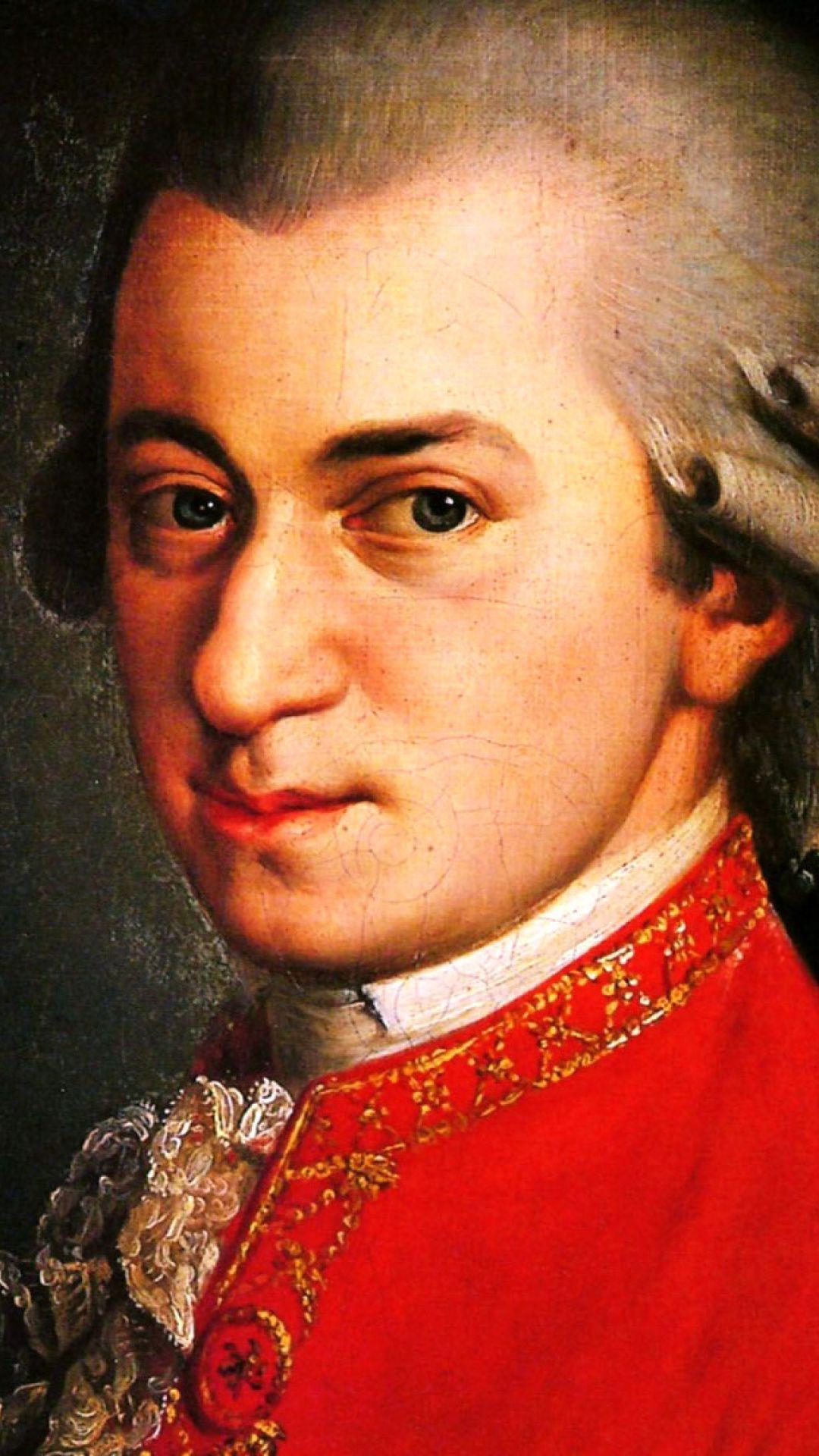
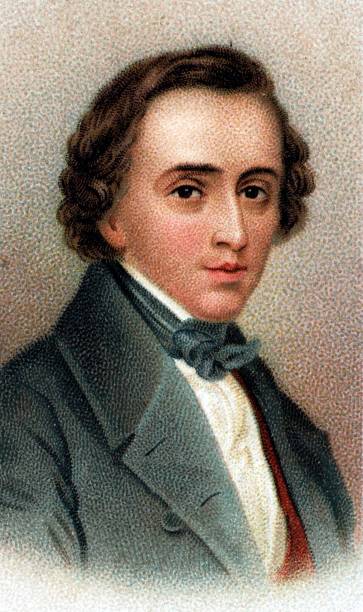
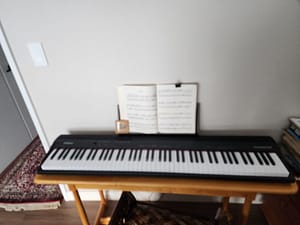


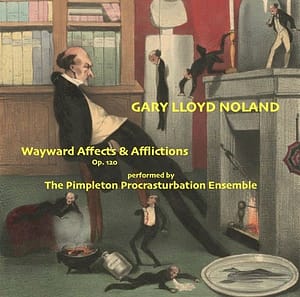

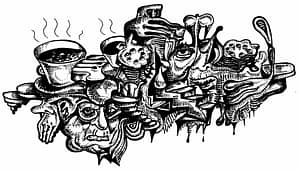
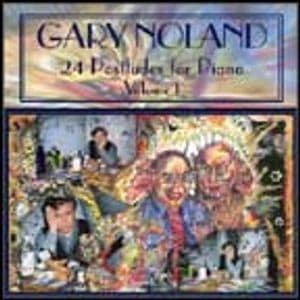
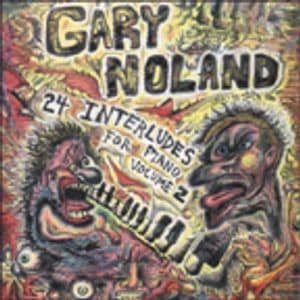
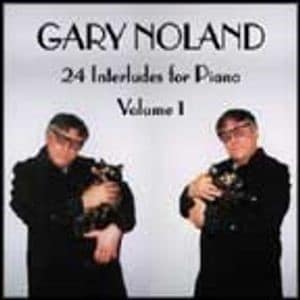
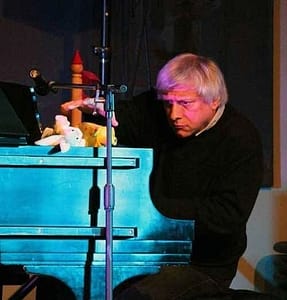
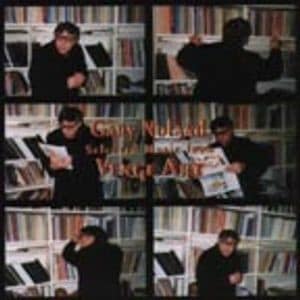

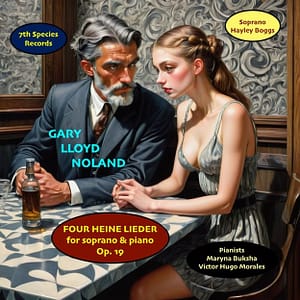


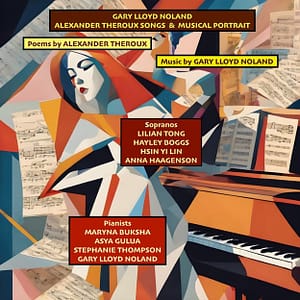
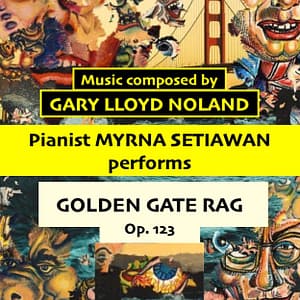





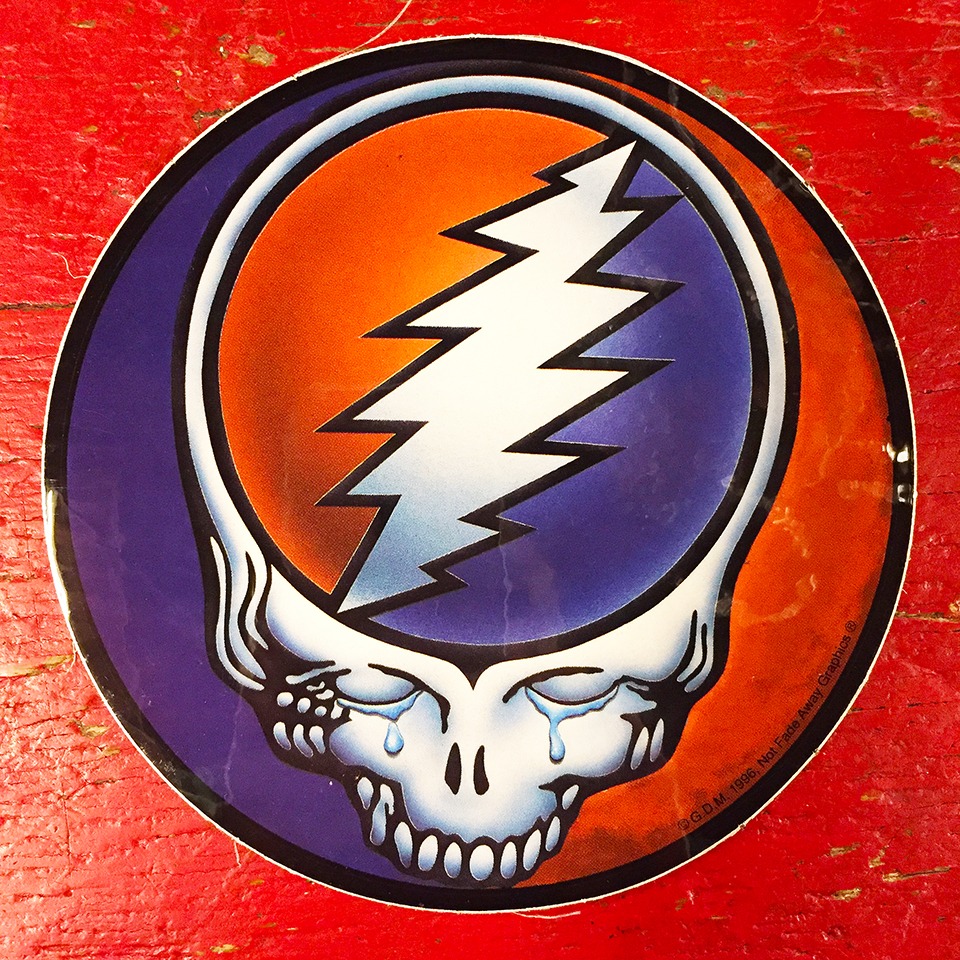












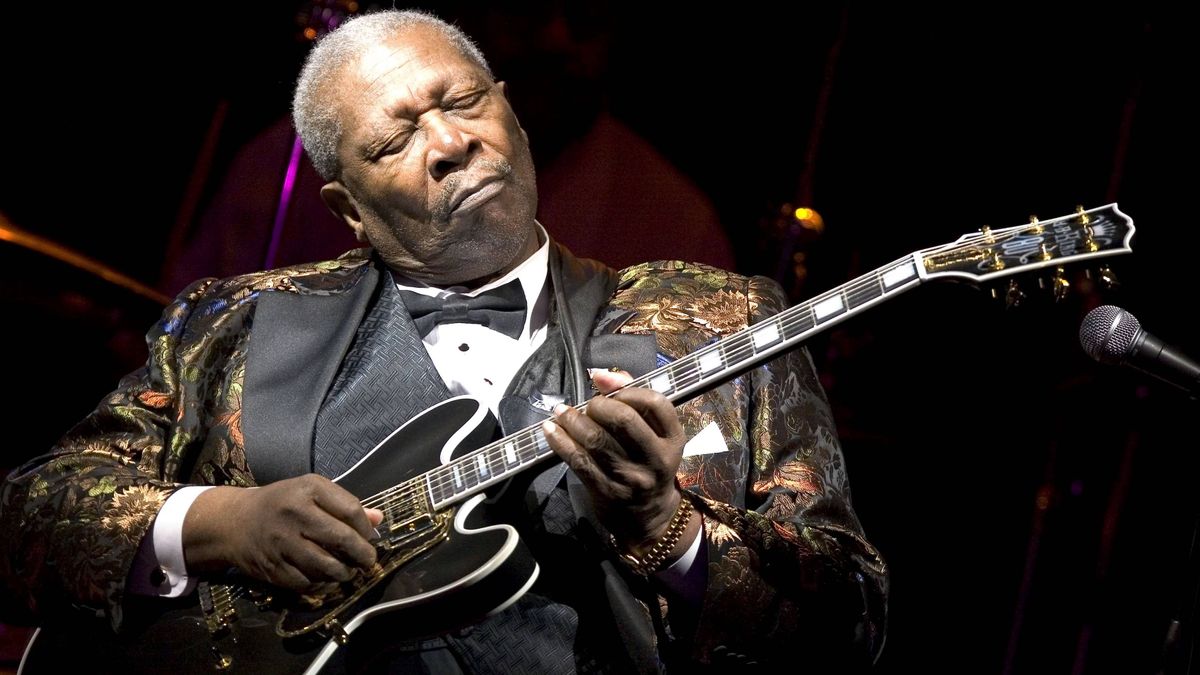
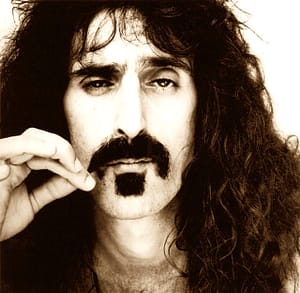


















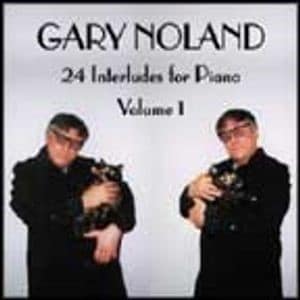

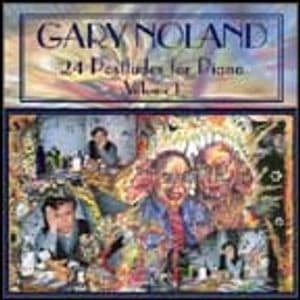

 [Best_Wordpress_Gallery id=”4″ gal_title=”All images”]