Category: travelogue

  • Korean Public Art

    Korean Public Art

    Korean Public Art updated with a few more examples

    Intro

    wiki article

    art is not for arts sake

    more on korean public art

    LA Times on Korean Public Art

    rel=”noopener”>Gyeansan Mountain is a Great Hike

    I love Korea public art. Due to a Korean law, building owners receive a sizeable tax deduction for displaying public art. As a result there has been a proliferation of public art all over the country. Some of it is quite good, some questionable, but most have a whimsical sense if not quirky sense of humor. I love walking about discovering public art in my daily walks across town. Here then are my favorite Korean public art pieces, followed by some articles on Korean Public Art. If any one has other examples they wish to share send them to me and I will update this article.

    The Art

    beer murals

    Berkeley in Seoul Coffee Shop


    Butterflies

    Miscellaneous sculpture


    Fish Mural Gyeopodae Beach

    Hongdae Street Mural

    Hongjae subway mural


    Horse statue Gyeopodae Beach

    Coffee motto


    Mullae Street Art

    Make A Wish


    Halloween

    Manakin

    Baseball fans

    Unseo Street Mural

    Korean Bull

    Blue River Demon

    Roman Statues

    KGB Vodka

    more public art

    these are taken from a mural at the Youngsan Army base of all places.

    Ys flag mural – jakecaller@gmail.com – Gmail

    Dog Image Near Sejong Cultural Center NEW

    Seated Man statute near Sejong Culture Center

    may 2019 updates

    Achasan mural


    Snoopy Pizza Hill Walker Hill Resort


    For more information look at the following articles

    The Seoul Metropolitan Government said Wednesday that it is looking for Seoul residents, including foreigners, to uncover public art in the city’s streets.

    Compared to cities famous for iconic and popular landmarks such as the Statue of Liberty in Manhattan and the 3-ton bronze sculpture Charging Bull in Wall Street, Seoul is relatively less known for public art and its landmarks.

    To build a city with more variety in culture, architecture and public art, Seoul City kicked off a project last year that allocated about 700 million won ($590,000) to construct public art and landmarks on par with those around the world.

    “We hope Seoul will serve as an artistic city for tourists,” said Yoo Hyun-ju, an official from Seoul City’s design policy department.

    (The Seoul Metropolitan Government)
    The project “Arts on Seoul’s street found by citizens” invites anyone living in Seoul to participate in uncovering art in the city. It will run from Aug. 19 to Oct. 18.

    Under 10 themes, participants are to find public art and landmarks in a group of 10, joined by field experts and art connoisseurs. Their promotions of Seoul’s public arts and introductions of iconic landmarks in the city can be viewed via Seoul City’s social media. After the list of public art is collected, there will be public vote in early November and the results of the most beautiful public art in Seoul will be displayed at Dongdaemun Design Plaza.

    Those interested can sign up at http://sculture.seoul.go.kr/archives/73034. Applications will be accepted until Aug. 5. Foreign residents should send their name, age, gender, address, occupation and motivation for participating to jenifer@seoul.go.kr.

    By Kim Da-sol (ddd@heraldcorp.com)

    South Korea’s Public Art is Not for Art’s Sake
    February 08, 2011 7:00 PM
    ________________________________________

    Public art in Seoul, South Korea
    In recent years, cities have seen sculptures, paintings and all manner of artistic installations sprout like mushrooms, both inside and outside of office buildings. Many critics think the attempt at urban improvement is not a pretty picture.

    This is definitely not art for art’s sake. It is, rather, art for the law’s sake.
    A South Korean law requires owners of large buildings to set aside one percent of construction costs for art.

    But what qualifies as art? That is left up to design committees run by local governments.

    Hong Kyoung-han, the chief editor of “Public Art” magazine, says the result of the 15-year-old law is disappointing.

    “More than 90 percent of it is problematic. It has no relationship to the architecture and no form,” he said. “There is no artistic sense whatsoever. There are thousands of works of arts on display publicly in Seoul, yet most of them are viewed negatively.”

    Many critics say they hesitate to regard as art the similar chunks of metal, human-shaped sculptures and reflective orbs plopped in front of most big buildings. So ubiquitous, they generate little notice from passersby.

    A few are harder to ignore. A steel company paid nearly $1.5 million to famous sculptor Frank Stella to build “Amabel.” Some people have called for its removal, complaining that it quickly rusted.
    Oh Se-hoon is the mayor of Seoul. He is a big booster of urban design and the city beautification campaign begun under his predecessor.

    Mayor Oh says the one percent law initially deserved praise because it helped beautify cities. But, he says, the law is not achieving its aim.

    “Because it is enforced by law, people install art out of obligation without any passion or an eye for true art,” he said. “Thus we end up with art that hardly can gain public acceptance.”

    Magazine editor Hong, however, does not want to see government involvement disappear entirely.

    “If we just leave it to the developers of buildings, we cannot expect to see much in the way of cutting-edge, high-level art,” he said. “And only a small number of building owners would put art on public display. So, for now, government participation is necessary.”

    Oh presides over a city that, thanks to the law, has put on display 6,000 sculptures, 1,200 paintings, dozens of murals and hundreds of other items ranging from calligraphy to handicrafts.

    “Great art in the right place gives citizens a sense of relief and relaxation,” he said. “These days I’m into fun designs which will give people a smile or make them laugh among the hustle and bustle of city life. I want to see art installed here that gives people peace of mind.”

    To appease those who do not find peace of mind from the more questionable pieces of art, South Korea’s Culture Ministry wants a change of scene. It is proposing an art reform bill. Instead of placing art on their properties, owners could contribute a smaller amount of money to a public art fund.

    Hongdae Graffiti Alley (홍대벽화거리)

    The street art splashed across the sidewalks and walls of Hongdae adds to the energy of the vibrant ambiance of this favorite university neighborhood. Thought-provoking art leaves no space untouched. The messages in the works are deep. The pictures are gripping. The emotions of the artists are almost tangible. For some of the best murals, head to the alleyways surrounding Hongik University.
    94 Wausan-ro, Seogang-dong, Mapo-gu, Seoul, South Korea, +82-2-1330

    Ihwa-dong Mural Village (이화벽화마을)

    A steep walk up the slopes of Naskan Mountain in northern Seoul will take you to Ihwa Mural Village, one of the country’s most famous moon villages. In the span of just a few years, the area has transformed from shanty town to tourist attraction thanks to government-run beautification initiatives. Along the streets that wind through the still-dilapidated homes is a collection of art installations, sculptures, murals and signboards created by over seventy artists. Perhaps the most famous of the works include paintings of flowers and fish cascading down steep stairways and giant portraits splashed across concrete underpasses.

    6-18 Ihwa-dong, Jongno-gu, Seoul, South Korea, +82-2-1330

    Ihwa-dong Mural Village | © travel oriented / Flickr
    Mullae Art Village (문래예술촌)
    This industrial area of Mullae-dong just south of the Han River is filled with a cacophony of drills and machinery, and is crowded with countless ironworks – not exactly the type of place once might associate with art. But this quickly gentrifying neighborhood is also home to a number of independent cafes, creative venues and hipster hangouts that are undeniably artsy. Each gritty street has its own charm, not to mention colorful murals, and the best way to experience them is by getting lost in the labyrinth of the neighborhood.

    Mullae-dong, Seoul, South Korea, +82-2-1330

    there are a lot more street art to be found all over Korea.  I will update this as I come across art that is noteworthy.

    comments appreciated.  And if you send me your photos I will add them to the list.


  • Gyeansan Mountain is a Great Hike

    Gyeansan Mountain is a Great Hike

    Gyeansan Mountain Incheon
    Gyeansan Mountain is a Great Hike

    modern seoul on gyeyangsan

    korea tourism info on gyeyangsan

    info on mountain bike trails in gyeyangsan

    ARA Canal Incheon

    Visit to Poet Hill in Seoul

    Gyeansan san is a great mountain in Incheon not too far from the Incheon Airport, and about an hour from downtown Seoul.  There are multiple trails into the mountain.  The best trailhead starts a few  blocks from the Gyeansan way stop on Incheon Line 1 subway system.  You can also find trails starting at Gyean station on the Airport Express line (and soon on line 9 once that extension is finished).

    Hiking to the top takes no more than two hours depending upon where you start.  There is a nice pavilion on the top.  Multiple trail options so doing a loop trail, which I prefer, is quite doable.

    At the bottom of the trail, there are multiple restaurants though mostly Korean food.  There are CVS stores so it is easy to get snacks before hiking.  There is a fair amount of info in English online.  But no real good trail maps but then you don’t really need one as it is easy to follow – just go up!


    Elevation 395 m (1,296 ft) [1]
    Coordinates 37°33′11″N 126°42′54″ECoordinates: 37°33′11″N 126°42′54″E


    Hangul
    Hanja
    Revised Romanization Gyeyangsan
    McCune–Reischauer Kyeyangsan


    SONY DSC

    temple mother goose guarding Buddha

    Rose Garden

    For more information see the following travel blogs and wiki.

    Hiking Gyeyang Mountain in Incheon (계양산)

    Date: January 28, 2013Author: Modern Seoul 2 Comments

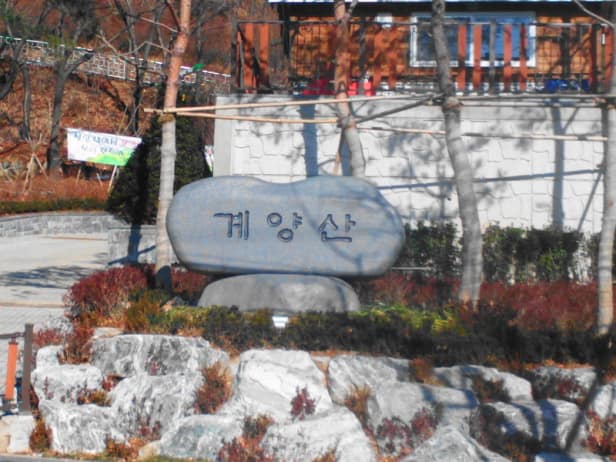
    Gyeyang Mountain (also called MT. Gyeyang, Mount Gyeyang, Gyeyang San or 계양산) is located in northern Incheon in the Gyesan-dong area of Gyeyang-gu. It stands 395m above sea level and is officially Incheon’s highest mountain. It is a very popular hiking trial and not just with people people from the Incheon & Seoul areas but people from all over South Korea enjoy climbing it.

    The Mountain is a pretty easy climb and depending on which trail you take only takes about an hour to reach the summit (2 hours round trip), while other trails can take close to 2 hours (4 hours round trip). There are nice views over Incheon and as well as the more countryside area of northern Incheon.

    After climbing the Gyesan-dong and neighboring Imhak-dong have plenty of restaurants to enjoy (although most are Korean style) as well as hiking and regular stores.

    Location and Links

    The best and easiest way to get to Gyeyang Mountain (계양산) is via subway. If you go to Gyesan Station (Incheon Line One) and then take either exit a or b and walk up the hill and to the foot of the mountain.

    Also here are a couple of useful links about Gyeyang Mountain (계양산):

    * Office of Gyeyang-Gu Page – Includes information on hiking trails as well as travel advice in English

    * Taylor’s Travels Blog – A nice story about climbing Gyeyang Mountain.

    Finally

    Hiking in South Korea is possible during the winter months but difficult, the best times to hiking Gyeyang Mountain (계양산) or any other in Korea is from March to November.

    If you have any questions please feel free to comment below.google linkstrip advisormodern seoul

    May 2019  Updates

    I have found several new trails to conquer Gyeansan.

    from Gyean station on the Airport railroad, go to the right and then to the left and follow the stream path until you come to the Gyeansan mountain trailhead (with map)

    from there you can take multiple trails to the top of the mountain, or around the mountain.  The trail to the top ends up with a lot of stairs.

    the trail around the mountain eventually leads to the Gyeansan Rose garden which is very pretty this time of year. there is also a nice Buddhist temple there.

    Dining Options for Western Expat Bars in Incheon

    For dinner, you can either take a bus or a taxi to Bupyeong market station.  There is a great burger joint there.  There is also an expat bar called Woodstock that has friendly English speaking waitresses.  Great place to end a hike.

    Grab a Burger

    212-13, Bupyeong-dong, Bupyeong-gu, Incheon
    Phone Number 070-7778-2481
    Cuisine Brunch, Burger, Sandwich
    Price Range 10,000 ~ 20,000 Won
    Parking No Parking Space
    Business Hours Mon-Sat: 12:00 – 24:00
    Sun: 12:00 – 22:00
    Website Go to the restaurant’s homepage
    Menu

    Little Woodstock

    Friendly staff, decent beer near Bucheon Market station


  • ARA Canal Incheon

    ARA Canal Incheon

    updated with information about two other stream bed walks I have discovered. One is near Kimpo airport, the other is near Kyunghee University, my old stomping ground. That one is one of the longest biking trail in Seoul stretching from Euijongbu to the Han River parks.

    ARA Canal Incheon provides 18 km of great walking/biking trail – great place for a walk/bike near Incheon Airport

    google link

    official ARA page

    ARA skywalk

    ARA Canal Incheon Great biking/walking trail near the Airport

    Gyeansan Mountain is a Great Hike
    Visit to Poet Hill in Seoul

    One of the things that amazes me about Korea is that no one in Korea seems to realize how great their bike and hiking paths are and they are not promoted at all. Very hard to find out anything about them.

    They have sprouted all over the country and are great. One of the nicer ones is the ARA walking path that winds along both sides of the ARA ship canal from the Han River to the Incheon harbor, about ten miles in length.

    I had driven by their many times admiring the waterfall and vowing that someday I would take a walk along the ARA.

    For this trip, I started off at Gyeyan station on the Railroad express (also line two Incheon Subway). From there we walked down country roads through the edges of mountain. One could easily go up into the mountain from there if one wanted to although that is not the major route to the mountain top, for that you need to go to Gyeansan station on the number two Incheon subway.

    After a three mile walk through the country roads, we came to the ARA waterway. It took a while to find an access road down to the trail along the waterway. But once we did it was a very nice walk. A bit windy but nice. When we got to Geoman station – nearest station to the ARA – we had walked 7 miles. We had lunch at a Café Le Mer which overlooks the waterway. It was too windy though to picnic.

    There are river cruise ships that go up and down the river way as well. But again, not promoted very much.

    I have three complaints about the ARA. First of course is the lack of promotion alluded above. This includes lack of signage from Geoman station which is the only train station that is walking distance to the ARA.

    Second, there is very limited access points to the walkway. There should be steps down to the walk way every half mile in my opinion. Most of the steps have been disabled as they are too dangerous to use. They should be maintained! And used.

    There are access points here and there – and they are wheel chair accessible which is a big plus. But not enough and too far apart.

    Third, there are only a few places to rent bikes – one by the Geoman station and the other two are at the ends of the trail.

    Fourth there are no maps available anywhere. The trail connects to the Han River walk so one could ride a bike all the way into Seoul and beyond. Why that is not promoted to a wider audience is beyond me.

    Fifth and this is beyond their control, it is windy as hell. Why they don’t line it with wind turbines is beyond me. They should. They have a couple of old wind turbines that are just for display.
    All in all, I’d give this an B – the lack of promotion and access is a serious flaw in my opinion.

    for more info see the following blog excerpts

    Gyeongin Ara Waterway (경인 아라뱃길)

    Wiki Article on ARA Canal
    • •
    The Ara Canal or Gyeongin Ara Waterway (Hangul: 경인 아라뱃길) is a canal in South Korea, linking the Han River to the Yellow Sea. It extends from Incheon district Seo-gu to Seoul Gangseo-gu. It was built in 2012. The purpose of the canal is to provide flood control and to facilitate leisure pursuits.

    Contents
    • 1History
    • 2Outline of the Ara Canal project
    • 3Controversy
    • 4Contents
    o 4.1Scenic views of Suhyang
    o 4.2Sport
     4.2.1Bicycle
     4.2.2Ara Marina
    o 4.3Cultural life
     4.3.1Gyeongin Ara Culture Festival
     4.3.2Hyundai premium outlet
    • 5Notes
    History[edit]
    Choe I, son of Choe Chung-heon, attempted to construct a canal in the Goryeo period. It failed as it was technologically unfeasible. One of the Joseon kings also tried and failed.
    The Gulpocheon river “waterproof road” project was started in 1992. Gulpocheon’s limitation was lack of water flow. In particular, there was a flood in the summer of 1987, resulting in six thousand flood victims in the Incheon area. To solve this problem, Gulpocheon waterproofing[clarification needed] was undertaken, starting with a five-year survey. In 1995, the Gyeongin canal project was planned, and controversies followed over the next 20 years.
    The project was started in 2009 and completed in 2012.[1]
    Outline of the Ara Canal project[edit]
    Division Contents
    Project Section Incheon Seo-gu Sicheon-dong – Seoul Gangseo-gu Gaehwa-dong
    Facilities Plan main Canal: total length 18 km (width: 80 m, depth of water: 6.3m)
    Incheon terminal: 244 million(㎡), door of lock: 2
    Gimpo terminal: 187 million(㎡), door of lock: 2
    Back complex: Incheon terminal back complex, Gimpo terminal back complex[2]

    Total cost ₩1.6 trillion (about US$1.4 billion at May 2012 exchange rates)
    Project period 2009–2012
    Controversy[edit]
    Controversy over the construction of the Ara canal can be traced back to 1995. The Gulpocheon waterproof project was examined according to several scenarios. One scenario was to dig the waterway in such a way as to discharge water into the Yellow Sea. Another was that the utility Gimpo develop the region for a reservoir. Though the latter is more economical, the government selected the former way in order to boost Korea’s economy.
    The waterway extended in the direction of the Yellow Sea (width: 40~80m, length: 14.2 km). They also constructed a 3.8 km length of waterway to the Hangang river. After long discussion, the government carried forward to private sector investment and Hyudai Engineering & Construction was selected as the main business operator in 1995.
    With no economic benefit[citation needed] and a negative effect on the ecosystem, public opinion turned against the project. Business operator and Ministry of Construction and Transportation submitted an ‘economic analysis’ and demand prediction report to demonstrate the project’s validity. As a result, eight reports were made for Gyeongin Ara canal. The cost-benefit report about Gyeongin Ara canal submitted by Korea water resources corporation gained 2.08 and 2.2 scores in 1996. However, when the IMFcrisis occurred, the project was cut.
    After the IMF crisis passed, the ministry of construction and transportation requested a KDI report of demand prediction and cost analysis in 2002. This time the score was 0.8166 and on reanalysis the score remained below 1. They rejected the report and delayed service cost to adjust report. The KDI resubmitted report by eight scenario including method of main traffic road and whether road charging or not. The result is 0.9223 to 1.2807. However, in 2003, the board of audit and inspection of Korea confirmed inflated result. So they stopped this project and requested disciplinary action.

    In August 2004, the ministry of construction and transportation assigned project’s report service to Netherlands company and got a 1.76 score in March 2007. In 2008, KDI investigated this report again and submitted score result 1.065. Also predicted the quantity of goods transported in 2011 was 290 thousand 4000 TEU related to container, 6.3 million ton related to sea sand, 5 million ton related to steel, 6 million related to passenger. At this point, 80 percent of container and 53 percent of sea sand are included the quantity of goods transported in yellow sea. Also the tailrace[clarification needed] which discharged water to hanyang river was completed in width 80 m. It was decision to consider Ara canal. The member of the national assembly of opposition party said that if government don’t consider the Ara canal, the width is enough to 40 m.[3]

    This controversy reappeared during the project period. In the summer of 2010, there was damage in the nearby Ara canal region, due to heavy rain. Environment groups insisted that this project has no effect to prevent disaster, like flood or heavy rain. Also they said that the Ara canal has no plan to build ‘rain water pump station’, ‘rain water pipe’ and so on. So they demanded that this project be reexamined. But Korea Water Resource Corporation insisted that if the Ara canal has not existed, this had great damage. This damage was due to lack of capacity in pipe conduit. The Ara canal help to prevent a great damage to flow rainwater. Also the Ara canal’s role is to flow rainwater to Yellow sea by preventing flood. So installing ‘rain water pump station’ and ‘rain water pipe’ and others are not related to this project.[4]
    Contents[edit]

    One of the parks on Ara Canal
    Scenic views of Suhyang[edit]

    There are eight scenic views of suhyang. First is “The Yellow Sea” , “Ara Incheon passenger terminal”, “Sicheon Riverside”, “Ara Waterfall”, “Suhyangwon”, “Duri Eco Park”, “Ara Gimpo Passenger Terminal” and “Ara Hangang Waterside”.[5][6]

    Suhyang 2 Ara light island
    Suhyang 3 Sicheon park resting place
    Suhyang 4 Ara maru / Ara waterfall
    Suhyang 5 Traditional palace
    Suhyang 6 Auto camping place
    Suhyang 7 The water’s edge square

    In “Ara Waterway”, there is a 41.3 km bicycle path[7]
    There are five bicycle rental shops in Ara Waterway.

    (Ara Incheon passenger terminal, southern Sicheon bridge, northern Gyeyang bridge, southern Gyeyang bridge, Ara Gimpo passenger terminal)[8]

    Marina port
    Ara Marina[edit]

    There are three facilities in the Ara Marina region.

    The yacht mooring facility accommodates 199 ships (water: 136, land: 58). The marina support facility has a “ship gas station”, “ship repair shop”, “crane”, “inclined plane”, “washing room”, “sewage disposal”. Also in the Ara marine center, there is a convention center, wedding hall and restaurant.[9] In late May, the Gimpo mayor yacht contest is held.
    Cultural life[edit]
    Gyeongin Ara Culture Festival[edit]

    ‘Gyeongin Ara Culture Festival’ was first held in October 2013. It is a nine-day festival.[10] The program has changed every year. The programs are divided by region, Incheon jeongseojin.
    Hyundai premium outlet[edit]

    The shopping mall opened in February 2015.[11] It is the largest shopping mall in the Ara canal region.

    Address
    41 Jeongseojin 1-ro, Seo-gu, Incheon
    경기도 김포시 고촌읍 아라육로270번길 74
    Type
    Amusement Parks/ Tourist Resorts
    Inquiries
    • 1330 Travel Hotline: +82-2-1330
    (Korean, English, Japanese, Chinese)
    • For more info: +82-1899-3650,
    +82-31-999-7833~4
    Homepage
    http://www.giwaterway.kr
    (Korean only)
    http://www.waterway.or.kr
    (Korean only)
    Go to map
    • Information
    Introduction

    Ara Waterway flows downstream of the Hangang River to the West Sea.
    In the 13th century, King Gojong, the twenty-sixth king of the Korean Joseon dynasty started the waterway construction for the first time, but it was discontinued due to technical obstacles and the difficult state of the country.

    In 2011, Ara Wateway was finally completed. Along the main waterway are ports and water bridges. and people can enjoy the parkways and Ara-rium.

    Telephone
    +82-1899-3650, +82-31-999-7832

    Activity Information
    [Aramarina Yacht School]
    ㆍDinghy yacht class: 40,000 won – 300,000 won (varies by level)
    ㆍCruiser yacht class: 250,000 won for certificate training course / 170,000 won for long distance sailing
    * Inquiries regarding Yacht school: +82-70-4247-6730 (Gyeonggi-do Yachting Association)

    [Water Leisure Experience]
    ㆍCanoe, kayak, water bike – 7,000 won (30 minutes) per person
    ㆍBumper boat – 7,000 won (20 minutes) / per person
    ㆍYacht – 15,000 won (50 minutes) / per person
    ㆍPontoon boat – 15,000 won (30 minutes) / per person
    * Waterway + (plus): Inquiry +82-31-999-7895

    [Gyeongin Ara Waterway Cruise]
    ㆍIncheon pier ↔ Ara Waterway: 16,000 won for adults
    * Departure and arrival points are subject to change according to dinner
    ㆍYeouido Island ↔ Ara Waterway ↔ Deokjeokdo Island: 57,700 won for adults
    * Departure and arrival points are subject to change according to dinner
    * Inquiry to Hyundai Cruise: +82-32-882-5555

    [Amphibious Bus]
    ㆍAdults 30,000 won / Teenagers 25,000 won / Children 20,000 won
    * People with disabilities & Seniors: 20% discount
    * Early-morning discount: 20% discount
    * Inquiries to Aqua Tour Korea: +82-1670-3355, +82-32-747-3355

    [Bike rental]
    ㆍ4,000 won for 1 hour * Inquiry to Waterway + (plus): +82-31-999-7834

    Operating Hours
    [Ara Waterway Incheon Terminal]
    Ararium Culture Hall 09:00-18:00
    Ara Tower Observatory 09:00-22:00

    [Ara Maru]
    Round-observatory 09:00-22:00

    [Aramarina Yacht School & Yacht Activity]
    March-November 10:00-18:00
    * Reservation must be made in advance via website or phone.

    [Water Leisure Activity (Ara Gimpo Terminal)]
    April-October 10:00-18:00
    * Permanent operation / Closed on every Monday
    Pontoon boat (11:00-20:00)

    [Cruise Experience]
    * Schedule and course must be checked in advance as it is possible to operate irregularly depending on weather conditions and boarding numbers.
    * Hyundai Cruise: http://www.scruise.com, +82-32-882-5555

    [Amphibious Bus]
    10:00-18:00 / Intervals: every 1 hour
    * Check in advance for bus operations as it may subject to changes depending on weather conditions.
    * Aqua Tour Korea: +82-1670-3355, +82-32-747-3355

    Parking Facilities
    Available

    Available Facilities
    Main facilities
    Main Waterway
    Terminal (Gyeongin Incheon Port Terminal, Gyeongin Gimpo Port Terminal)
    Barrage (West Ara Barrage, Ara Hangang River Barrage)
    Bridges (Cheongungyo Bridge, Baekseok Bridge, Geyang Bridge, Baekungyo Bridge)

    Sightseeing facilities
    Ara-rium
    Barrage Control Center
    Lookout
    Fountain
    Ara Waterway Bridge

    Facilities
    Information center, coffee shop, observation deck, restaurants, rest areas, toilets, etc.

    Facility Utilization Fees
    [Duri Ecological Camping Site]
    Site A (for car): 25,000 won per night
    Site B & C (for general visitors): 20,000 won per night
    * Inquiries to Waterway+: +82-10-3824-0426

    Restrooms
    Available

    Korean Info. Service
    Available
    * Operating hours: 09:00-18:00
    * Inquiry for reservation of the service: +82-1899-3650

    Interpretation Services Offered
    Available in Chinese (09:00-18:00)
    * Inquiries: +82-32-561-1339

    Ara Waterway Canal – 경인아라뱃길 from Korean travel blog

    July 15, 2018

    After I moved to Line 9, I create a new objective to explore more places around this line area. This time I want to share a healing place near Incheon. The place called Ara Waterway, here is the official website.
    When I searched about this place, lots of beautiful pictures posted online. Most people posted about the transparent observation deck, where you can enjoy the waterway view from top of the deck. The deck floor is made of glass. Feel it yourself

    The deck named Aramaru Observation Deck (아라마루전망대)

    How to Go

    This is important. If you search in the naver map, the map will tell you to get off at Geomam Station, the airport railroad. Well its not wrong, but you are in trouble if your purpose is too visit the deck.
    If you get off at Geomam Station, go to exit 2 or 3, and walk around 200m to arrive at the Ara Waterway cruise ticket booth. This point is the start point if you want to enjoy the cruise. As I remember, the price is 16000 KRW for 1 adult. This place called Sicheon Bridge.

    You can take bus from here to the Aramaru deck, however last time I couldn’t find the bus stop and ended up walking for 1h to reach the deck ._. You can walk along the Bike Road. Once you arrived at Sicheon Bridge, you will find elevator beside a big statue. Take the elevator and cross the bridge to the opposite site. After that walk to the Gyeyang Station direction. If you walk from Geomam Station, you need to turn right and walk to that direction.

    However, if possible, I suggest you to get off at Gyeyang Station and take 597 bus from there. The bus will stop exactly in front of the observation deck HAHAHA The bus stop name is 둑실동아라마루전망대
    Aramaru Deck

    May Update

    I have discovered two other great steam bed walks in the Seoul area.

    Golden Walkway

    the first is out by Kimpo airport in Janggi station (Gold Line opening July, 2019)

    the Golden Walkway is a five k biking/walking path along a restored stream bed.  the path leads to a central park that is pretty nice.  Above the bike path are streets lined with restaurants and cafes.  this is a newly emerging hipster neighborhood not too far from Kimpo airport.

    Chungdechong Stream Bike Path (Eijongbu to Seoul Forrest)

    the other trail runs to the east of Kyunghee  University, and the University of Foreign Languages..   about a five minute walk from Hoeki station.  This stream runs from Euijonbu to the Han River trails and goes by the Seoul Forrest.  It is lined with bike rental stations.  5,000 won per hour.

    we went there during early Spring and it is a great place to see cherry trees.  The trail also links to Paekdusan mountain and Changonsan mountains to the west of the bikeway.  There are plenty of places to stop off to find a place to eat along the pathway which is one of the longest pathways in the city.


  • Cosmos’s Excellent Vietnam Journeys

    Cosmos’s Excellent Vietnam Journeys

    Cosmos’s Excellent Vietnam Journeys
    I first went to Saigon with my spouse, Angela, back in 1995 when I was in Bangkok working for the Embassy and she was in the military in Texas. We spent two wonderful weeks and always wanted to go back. This winter we decided we would go to either Thailand, Vietnam or Cambodia and left in early March, escaping the cold weather a bit.

    Food in Saigon

    Personal comments

    Vietnam has a well deserved reputation as a foodie’s paradise. The food is good to great, mostly inexpensive although there are some expensive places.

    Other Asian cuisines are widely available, Chinese, Korean, Japanese, Indian, Thai, Cambodian, Laotian.
    Western style food is available and on the expensive side. American Fast food is available at least in the bigger towns but while bother going?

    There is such a wide variety of styles of food to choose from among the traditional Vietnamese styles of food. Saigon city has so many restaurants one could spend decades eating every night at a different place and never run out of options.

    There were a few foods that stood out though

    Vietnamese style omelets – they do eggs right

    Ban Chua is a Hanoi style of small plates sort of like the Vietnamese version of Tapas. Quite good and tasty.
    Bahn Mi Sandwiches – they are everywhere. I liked them but my wife not being able to tolerate gluten did not and she thought that the sanitations standards on the street banh mi stands were not up to her standards. Still widespread and good.

    Pho – of course

    Lots of varieties to try. We liked the chicken Pho which is a bit hard to find in the US where they tend to mostly serve the beef Pho

    Craft Beer Vietnam has recently gone through a craft beer boom. The craft beer is great. A bit expensive double the cost of the standards but still great. But just as in Korea where craft beer has taken off some places advertise craft beer but all they have is the regular crap on tap. And there are two craft beer companies that dominate the market, it is hard to find other craft beer places but they do exist.

    Traditional Vietnamese rice wine – did not get a chance to try but will try it on my next trip.

    Local Vietnamese wine – who knew they even made it here? Not that good but much better than years before. Probably worth a try just to say you tried it

    Snake and scorpion wine – would like to have tried it by my spouse vetoed the idea

    Artichoke tea – sounds weird but it tastes like hot chocolate! And is one of those great foods for lowering cholesterol etc.

    Guava tea – tastes great like green tea

    Coffee – a coffee lovers paradise would be nice to find a decafe option though

    Tea – a tea lovers paradise as well

    Tropical fruits galore – loved eating tropical fruit for breakfast especially soursop

    Vegetarian food options- widespread available almost everywhere

    Vegan options – not as common but widespread

    Gluten free – unheard of concept but if you avoid eating fried noodles and stick with rice noodles (usually clearly labelled as such) you can eat gluten free

    Trends I like to see emerge

    Gluten Free options

    MSG free – too much MSG used everywhere

    Artisanal Rum – Vietnam like most Asian countries just don’t get rum. Bacardi is available in tourist friendly areas but other than that no one does decent rum. Yet you could make rum easily enough as they grow a lot of sugar cane. The Thais do a decent job with their Mekong whiskey which is a rum. I wished they would quit calling it Whiskey! Otherwise rum is just not common in the region.

    Promotion of traditional Rice wine
    Good stuff should be more widely available and promoted

    Artisanal local whiskey – if you can make decent craft beer you should be able to make decent local artisanal whiskey

    Here’s wiki’s take on Vietnamese food.
    https://en.wikipedia.org/wiki/Vietnamese_cuisine

    what’s your favorite? please comment love to hear from my readers!

    Best restaurants according to Lonely Planet
    https://www.lonelyplanet.com/vietnam/ho-chi-minh-city/restaurants/a/poi-eat/357884

    In this trip I hit the following

    Asiana Food Town
    Five Oysters
    Bing Thang Street Food Market
    Le Jardine
    Nha Hang Ngon

    On my prior trip I hit Appocalypse Now!

    And on my next trip, I must go to Jake’s BBQ because as a Jake why the hell not? Needs me a Jake’s bbq t-shirt, don’t ya think? Now if there is a Cosmos club or Resturant I will have to go there as w

    Vietnam Poems

    Cosmos’s Excellent Vietnam Journeys – Day to Day Journal

    Summary: arrived at airport about 1 pm. Went to AIRBNB. We stayed at two different AIRBNB, both in the Pham Ngu Lou area near the backpacker street but not on the strip. Both were nice, comfortable enough. Lots of restaurants, coffee shops nearby. Not too far from tourist sites. We went everywhere by Grab, Saigon’s version of Uber. Uber pulled out of Southeast Asia and sold their operations to Grab. It took a bit to figure out the app but once we did it was great.

    We went out for lunch, and walked about, walked to the Bing Thang market, largest street market in District One. Bought fruit for breakfast, had dinner at Vietnamese Japanese Resturant

    Saigon is divided into 24 districts but most things that would appeal to tourists and visitors are located in Districts one, two and three. District one is the downtown district and has most of the tourist sites. District Two is across the river and is popular with diplomats and long term expats. Filled with upscale Western and Vietnamese restaurants. The government has announced a long term project to build a new city there that is modelled after Gangnam. Lots of construction already underway. District three is near downtown and has lots of nice restaurants as well. District four is across the river and is the center of the expat Asian community, lots of Koreans and Japanese living there. District Five is the old China town. Still lots of Chinese around. It is also where most of the traditional pagodas are located. And has a large traditional market. We went. It was very confusing but interesting to see.

    Transportation is chaotic still. The subway is under construction, first line linking district one and two opens next year, eventually there will be seven lines and a high speed train to Hanoi. The buses are cheap and run everywhere but we did not try them. Taxis are plentiful but Grab is more convenient and cheaper. And there are motorcycle taxis everywhere – fastest and cheapest way to get around. The old pedicabs are a thing of the past – we only saw a few.

    for more info see the following:
    saigon district overview

    Breakfast at home kefir
    Lunch pho at Pho 54 near Cinemax
    Dinner Korean Japanese Resturant on Pasteur street

    Wednesday March 6 exploring backpacker’s street dinner at street buffet

    Met old friend who lives in Vietnam. Walked about the backpacker’s district. Had decent lunch and dinner.

    Breakfast fruit
    Lunch had Vietnamese steak
    Dinner in Ngu Lao Backpackers Street grilled morning glory, seafood noodles
    Drinks coffee beer

    Seeing Ghosts

    Inspired by a true story – I was looking at an old American who could have been a Vietnam vet back for a trip. He was sitting in a bar drinking a beer. He looked at me and smiled a wistful WTF where the Fuck am I bemused look. I looked up and a few seconds later the old man had disappeared and I felt that I had been seeing a ghost and that there were ghosts all over the city. Very eerie feeling that stayed with me all day and inspired the two following poems

    Ghosts in Saigon

    I walk around the streets
    Of old Saigon
    Seeing sensing the undead

    The ghosts of the war
    That haunted life
    So many years ago

    So many people died
    For a war
    That never should have been fought
    For reasons that are still not clear

    A great tragedy unfolded
    In a land half away
    Around the world

    The ghosts smile at me
    And then they disappear

    Leaving me in the present
    Life goes on

    Old Ghosts

    Old ghosts wandering the streets of old Saigon
    Lost spirits of the dead
    Died during the endless wars
    Ghostly apparitions around every corner
    Here was Kilroy and his gang of soldiers

    Over there were the Viet Cong waiting to kill them
    Saigon is filled with memories like that
    Terrible times were had here in Old Saigon
    Silently the ghosts parade the city streets

    Thursday March 7 Mekong Delta

    Long but good day. Went on a Mekong River tour. The tour guide was knowledgeable and spoke decent English. Most of the passengers were Aussies, there were a few Japanese, and Koreans and Europeans, we were the only Americans. In general, you don’t find that many Americans, most of the white tourists are Aussies, Canadians or European.
    We stopped off at a bamboo and coconut products store. That was marginally interesting. Then we took several boat rides before we ended up having lunch. Lunch was decent. We had some time to walk about a traditional working orchid. Saw alligators, porcupines, fish. Also saw snake wine for sale. Did not partake though.

    Mekong Dreams

    Traveling along the Mekong
    Back in time

    Seeing the river
    The people
    Imagining life on the river
    Imagining the war
    The past in the Mekong delta

    And the present tourist boom
    Yet life goes on
    With its own laid back rhythm

    As we traversed the river
    We were transported back
    To an earlier time

    Following the ancient rhythms
    Of the Mekong Delta


    On the way back we stopped at a famous Buddhist temple. Vietnamese Buddhist temples are different from Korean temples. Different style of Buddhism. The temples are everywhere, not just in the mountains like in Korea. Most Vietnamese are probably nominally Buddhist, but there are many Catholics especially in the South, and many adherents to Cao Dai, the local religion, see below. The officially promoted atheism of the communist era is fading away.

    Buddha In Vietnam

    In Saigon I saw the buddha
    Buddha images are everywhere
    Temples are scattered about
    Here and there and everywhere

    Buddha lives on
    In the hearts and minds
    Of the Vietnamese soul

    The communists tried
    To get rid of Buddhism
    And other religious traditions

    But they failed
    And Buddhism has come back
    Still speaks to the Vietnamese people

    A different style
    A different vibe
    Than Korean Buddhism

    But still Buddhist thought
    Prevails in the tropical lands
    Of the South

    Breakfast Banhmi and coffee on the street
    Lunch rice, seafood lunch on Mekong
    Dinner stir fry morning glory, seafood noodles in Pham Ngu Lao Backpackers Street
    Beer

    Friday March 8

    Breakfast fruit
    Lunch Resturant at Le Jardin salmon, salad
    Dinner with VCQ Cholan Chinese Resturant
    Whiskey wine too much

    Met with old friends from my foreign service days. Had lunch at a French Resturant in the French Cultural center. Food was decent. Wine was plentiful but a bit too much. Walked about went to the market headed home took a nap. Went out to Cho Long district five near Saigon University.

    Met Vietnamese friends of our friends. Had a great time, winning and dinning at a Chinese Resturant. A bit too much though.

    Saturday March 9 Lunch in District 2 with VC2

    Met our Vietnamese friends at his house in District Two. He runs an home interior business and is a very lively man. Delightful company. Had a great lunch.

    For dinner had a simple dinner near our house and went to bed early.

    Sunday March 10 lunch at Sheraton, Dinner at hotel Equatorial

    On Sunday met our Vietnamese friends and some Belgium doctors for lunch at the Sheraton hotel. Their bunch is a great value. And in the evening went to dinner at Hotel Equatorial and ate a lot more. Gained too much weight with all the wine, whiskey and food.

    Vietnamese like to eat and drink and entertain. Like Koreans in that regard. But everything is much cheaper.

    Monday March 11 walking tour of downtown with friend

    Met my friend, Jeff, for lunch. We ate at the Five Oysters which was decent. Had Vietnamese Omelet. Then we walked all over district one seeing the sites.

    We saw the Post Office, the main Cathedral, City hall, FinTech tower, Dong Khoi street and Pasteur street and finally had dinner at the Bing Than market street food stall before going home.
    http://www.fiveoysters.com/

    http://www.vietnam-guide.com/ho-chi-minh-city/ben-thanh-market.htm

    https://www.willflyforfood.net/2017/05/09/ben-thanh-street-food-market-a-trendy-food-hall-in-ho-chi-minh-city-saigon-vietnam/</a

    Breakfast fruit
    Lunch at Five Oysters
    Dinner at Bing than Market street food stalls pad Thai, papaya salad
    Drink beer

    Coffee Lady

    Every morning
    I have gone out for Vietnamese coffee
    At a sidewalk café
    Down the ally from our AIRBNB

    The owner is a pleasant middle age woman
    Who for some reason likes us
    She smiles at us
    Greets us in Vietnamese
    She does not understand English
    Or Korean

    And I wonder why
    Why was there this connection
    Between us

    It dawned on me
    Perhaps in a prior life
    She knew an American or two
    And I remind her of someone

    Or perhaps she is found
    Of Korean K drama
    And Angela reminds her
    Of her favorite K Drama star

    Or perhaps it is both
    Or another reason entirely

    But I moved today
    And will miss her

    Might go back for a final cup
    Of coffee

    To say good bye
    To my Vietnamese coffee lady

    Tuesday March 12 moved, laundry

    We spent the day moving to another AIRBNB, doing laundry and taking it easy. Lunch and dinner in the backpacker’s street. Tried Bun Cha which is a Hanoi version of Tapas. Pretty good. Discovered the Asiana Food Court. Great place to eat. We came back there several times. Lots of choices of food. Great prices, and delicious. Bought fruit for our remaining breakfasts.

    Mastering the Saigon Shuffle

    Motorbike riders waiting at intersection. Ho Chi Minh City, Vietnam

    When I first visited Saigon
    Learning the Saigon Shuffle
    Was difficult

    And now 24 years later
    It all seems to be coming back

    There is an art to crossing the street
    Dodging the motor cyclists, the taxis, the private cars
    The bikes and other pedestrians and the buses

    The art consists of letting the big guys go first
    Then walk between the motorcycles and cyclists
    Trusting that they will get out of your way
    And they being masters of the Saigon shuffle
    Always find a way

    In my two visits I was struck
    By how it all flows together

    Without a central authority
    And with almost no planning
    Lights or cops

    Somehow it just is
    And somehow it works
    And it is still a mystery to me

    24 years after first
    Encountering the Saigon shuffle

    Breakfast: fruit, coffee
    Lunch: omelet, morning glory stir fry Pham Ngu Lao Backpackers Street
    Dinner: ban Chua Hanoi style Vietnamese Tapas small plate dishes
    Drinks: Alcohol beer
    Drinks: tea coffee

    Walked about Asiana Market food court

    asiana food court saigon

    Wednesday March 13

    Vietnam has great art. Last time we were here we bought four pieces from an iconic Vietnamese artist who has moved on. He painted on oyster shells and his work is quite unique. We wanted to find out more about the artist but were unable to find out much about him. We went to the HCH Fine Arts museum. That is worth a trip. Great art.

    From Wikipedia

    Ho Chi Minh City Museum of Fine Arts is the major art museum of HCM City, Vietnam, and second in the country only to the Vietnam National Museum of Fine Arts in Hanoi.

    The museum covers three three-floor buildings which house a collection featuring Vietnamese art works in sculpture, oil, silk painting and lacquer painting, as well as traditional styles including woodcut paintings in the Hang Trang, Đông Hồ, and Kim Hoàng styles, as well as Vietnamese ceramics and a collection of ancient Buddhist art.[1] The first floor also includes a commercial gallery of art works. Archaeological exhibits such as some of the country’s best Champa and Óc Eo relics are displayed on the third floor.[2]
    The main building was constructed by a French architect Rivera between 1929 and 1934 as a villa for the Hua family. The museum moved there in 1987.[3]

    Saigon center

    Walked to the Saigon Center, one of the premier shopping plazas in District 1. Not bad but overrated I think.

    From Wikipedia:

    Phase 1 of the complex was completed in 1996.[1] The phase consisted of a 25-storey building, which set a new record for the highest building in Vietnam then at 106 metres (348 ft).[2]
    In December 2011, construction on phase two started, which comprises a 5-story retail podium and a new 43-story building. The new addition prompted a temporary closure of the existing tower from 2015 to 2016.[3]
    On July 30, 2016, Takashimaya opened their first department store in Vietnam at the retail podium of Saigon Centre.[1] Tower 2 completed in 2017 reaching the height of 193.7 m (635 ft). It becomes the fourth tallest building in Ho Chi Minh City and the tenth tallest building in Vietnam overall.
    Features[edit]

    Saigon Centre provides over 46,000 m2 (500,000 sq ft) of office space across 10 floors in Tower 1 and 18 floors in Tower 2.[4][5] Sedona Hotels operates all 284 residential units at the complex.[6]

    Dinner at the market place

    We had dinner at the Asiana food market. Great location, great food selections. Well worth a visit.

    Old Lady in the Alley

    There is an old Vietnamese lady
    In the neighborhood
    Obviously senile

    But everyone knows her
    And watches over her

    To make sure
    She stays out of traffic
    And out of trouble

    She talks to everyone
    But no one seems to understand
    What she is babbling on about

    They smile at her
    And she smiles back

    Reminds me of the phrase
    From the hitchiker’s guide to the galaxy
    Mostly harmless

    And she for some reason
    She likes us
    And like my Vietnamese Coffee lady

    I wonder why
    Why was there this connection
    Between us

    It dawned on me
    Perhaps in a prior life
    She knew an American or two
    And I remind her of someone

    Or perhaps she is found
    Of Korean K drama
    And Angela reminds her
    Of her favorite K Drama star

    Or perhaps it is both
    Or another reason entirely

    But in any event
    I look forward
    To seeing her smiling face
    Every time I walk
    Down my ally way

    Cosmos’s Excellent Vietnam Journeys part two week two journeys

    Finally figured out how to use Grab the SE Asian version of Uber. Grab bought Uber’s business back in 2016 and is the region’s largest ride share service. They do a lot of other things and are very aggressive. Based in Singapore. Started out as a MBA project idea in Harvard by a Malaysian student. He returned to the region, started in Malaysia moved to Singapore when the business took off. They were rumors at the time that Grab stole Uber’s technology, in any event it is very similar concept except that they targeted taxi drivers rather than individual drivers and most of their drivers work for them full time. They also do the motorcycle taxis, food delivery, mobile payment services.

    So had a better day. We went to Binh Tay market in Cho Long District 5. A bit off the tourism path but we saw some foreign visitors. It is a sprawling complex reminding both of us of Korea back in the day. We bought our coffee and tea. When we go back we are making more Kombucha and we will add moringa to our fake coffee and my plan is to have a real cup of coffee per day and fake coffee the rest of the day. I think I can handle that.


    cho long district

    Good walk. We hit four of the five temples recommended and saw the edge of the electronics market and we saw some other interesting places in the neighborhood.

    The temples were

    A Day in Cholon: Touring the Smoky Pagodas of Saigon’s Chinatown

    Phuoc An Hoi Quan Pagoda

    best temples in saigon

    Thien Hua Pagoda

    Thien Hau Temple (Ho Chi Minh City)
    ________________________________________
    Nghia An Hoi Quan Pagoda is situated at Cholon, Ho Chi Minh City. It was built in the 19th century by the Chaozhou Chinese Congregation making it one of the oldest temples in Saigon. It is dedicated to Guan Yu, a holy general who was greatly respected for his morality and loyalty and lived in the late Eastern Han Dynasty and greatly respected for his morality and loyalty.

    This pagoda is also known as Quan Cong and also named The Whale Temple and Quan De temple. The exterior of Nghia An Hoi Quan Pagoda is closely that of a Chinese temple. The frontage door of the temple is painted with door gods. Hoi Quan Pagoda is just like that of a Chinese temple. The pagoda is mainly well known for its enormous collection of figurines, carvings and hanging lanterns but it is especially notable for its gilded woodwork, a carved wooden boat hangs over the doorway and there is a larger-than-life illustration of Quan Cong’s horse and groom to the left. The horse statue is considered holy to the devotees. People ring the bell around its neck and then crawl under it to go to the other side. They suppose that by doing this they are blessed from the horse. And you can see a big wooden statue of Quan Cong himself at the altar. Nghia An Hoi Quan is also outstanding with ceramic statues on roof tiles or carved with flowers, unicorn statues, parallel sentences, and many invaluable paintings. Such these displays are delicately carved, showing myth stories of China in Saigon to teach next generations. Moreover, Nghia An Hoi Quan is pastoral with images of daily life and colors of life for many generations of rural farmers. This pagoda celebrates with offerings to the spirits and dances staged out front on the 14th day of the first lunar month. This temple is worth the visit.

    Had a great massage in a Vietnamese massage parlor recommended by Korean tourists on Naver. Near Saigon center.

    Future VCQ

    Saigon is filled with interesting characters
    Filled with fascinating back stories
    One could write hundreds of stories
    About the people one encounters

    In a nail shop
    That caters to mostly Korean visitors
    We met a boy of 8 years old
    Who was a natural born hustler

    He had wonderful English
    Wonderful French
    And even some Korean
    And he wanted to show us around

    He spoke English
    Without an accent
    In an upper class British style
    As if he were born to the manor

    How and why he learned
    English so well
    Would be an interesting story

    His Mother was also
    An interesting character
    Been running the store
    For five years

    Amused it had become the Korean
    To Go place
    In Saigon
    Just one of those mysterious things

    They had another shop nearby
    A smoothie place
    And he offered to guide us there
    But were in a hurry

    As we left
    I thought to myself
    Here is a future VCQ
    The fascinating character

    That had wined and dined us
    Late into the night
    Beguiling us with his tales
    From his time in the VC

    Wonder what this future VCQ
    Will tell his future friends
    About his past life
    Living in a beauty saloon?

    Had spring rolls and papaya salad from a vegan Resturant. The spring rolls were great, the papaya salad not so great

    Breakfast fruit
    Lunch chicken, rice, bread, eggs – one of the better meals
    In coffee shop chain called energy coffee or something like that only 7 US Dollars
    Dinner – spring rolls, and papaya salad at a vegan Resturant
    Wine in room

    Friday March 15 District 2 Tour

    We went to district 2 across the river in search of a place for Angela to get her hair done and for me to get a massage. We went there after a haircut in a place advertised as an old fashioned barber shop. Had a good haircut but a lousy shave. Still need to find a good barber = next trip.

    We found the perm place. We also discovered that District 2 is filled with rich Saigonese, expats and diplomats. It is a quiet suburban district but is soon going to be transformed as the city of Saigon has ambitions to turn District 2 and District 9 into something equivalent of Gangnam. The rest of Saigon especially districts 1, 3, 4, 5, 10 and 11 are too build up. They are building a new international airport and they building a new subway system. When the whole thing materializes by 2025 or so, Saigon will be a very different city.

    I hope that they don’t destroy Saigon in order to save it as they have in Seoul. Gangnam in a way has lost its sense of being Korean as it could be any large city in Asia. Seoul now has two different faces – the northern part which still retains a lot of the old charm of Korea and the Southern part which is newer but perhaps lacking in having a real Korean flavor.

    And I hope that they can and will incorporate lots of solar power, water harvesting and other echo friendly solutions which are sadly lacking in Gangnam and in Korean cities in general .
    We met with a real estate agent who talked to us at length about investment options in Saigon highly recommending buying something in District 2 but not waiting too long. He said that within a few years it will be a very different place.

    We had a decent lunch in District 2, went back to Binh Thang market and the food market/court where had dim sum for dinner.

    District 2, Ho Chi Minh City
    From Wikipedia, the free encyclopedia
    Jump to navigationJump to search
    For other uses, see District 2.
    District 2

    Quận 2

    Thủ Thiêm or Quận Thủ Thiêm
    Urban district

    Position in HCMC’s core

    District 2
    Location in Vietnam
    Coordinates: 10°46′51″N 106°45′25″ECoordinates: 10°46′51″N 106°45′25″E

    Country Vietnam

    Centrally governed city
    Ho Chi Minh City

    Seat 249 Luong Dinh Cua
    Wards 11 wards
    Area
    • Total 50 km2 (20 sq mi)
    Population
    (2018)
    • Total 168,680
    • Density 3,400/km2 (8,700/sq mi)
    Demographics
    • Main ethnic groups predominantly Kinh

    Time zone
    UTC+07 (ICT)

    Map showing the location of District 2 within metropolitan Ho Chi Minh City
    District 2, in which the new urban area of Thu Thiem is located, is an urban district of Ho Chi Minh City, Vietnam. As of 2010, the district had a population of 140,621, a total area of 50 km².[1]

    Thu Thiem Tunnel

    In the past, District 2 was one of the poorest parts of Ho Chi Minh City due to the separation by the Saigon River from the city center. However, it is now the one of the prioritized area for investment by the government of Ho Chi Minh City. The completion of Thu Thiem Bridge in 2008 and Thu Thiem Tunnel in 2011 were expected to support the development of the Thủ Thiêm New Urban Area. Thu Thiem Tunnel joins District 2 with District 1 (Central Sài Gòn), the central area of Ho Chi Minh City. The other connection of District 2 to the central city area is the Thu Thiem Bridge, which connects District 2 and Bình Thạnh District. The transportation to District 2 will be much easier when the metro, whose route passes through District 2, comes into use. This will be the first metro in Vietnam, and it will help Ho Chi Minh City to catch up with other developed cities in the world.

    The Vietnamese government is seeking to build a completely new district for wealthy citizens as well as a new economic center. Thanh Nien and Tuổi Trẻ, two newspapers in Vietnam, describe that the new District 2 will be as modern as Singapore and Hong Kong.[citation needed]
    Less prosperous agricultural workers of District 2 have been forced to move in slum clearance measures. Thatched houses will be replaced by multi-story house and villas. A few single-family homes will be constructed for those with large[clarification needed] incomes. A large number of citizens would go on living in high-grade apartment blocks. Each block contains swimming pools, tennis courts, shopping malls, and other necessary services. There will be kindergartens, elementary schools, and high schools, but there will be no university, as all the universities are being moved to Thu Duc district to form the University Village, which is another plan of the city government. Beside the residential area will be the economic and trade zone with modern skyscrapers.

    District 2, particularly Thảo Điền ward, has a large portion of Ho Chi Minh City’s expatriate community, and as such has a large number of restaurants, bars and shops selling European foods, particularly the high street Xuan Thuy. Traffic has become a major problem in District 2 due to its proximity to several international schools and many residents who travel by private vehicle.[citation needed]

    District 2 is home to many international schools, partly because of the high number of foreign residents, and also because of its proximity to District 1. Below is a list of schools that are in this area:
    • International School Ho Chi Minh City,[2] 28 Vo Truong Toan Street, District 2, Ho Chi Minh City, Vietnam
    • British International School Vietnam has the An Phu Primary and An Phu Secondary campuses[3]
    • Australian International School, Vietnam,[4] 264 Mai Chi Tho Road, District 2, Ho Chi Minh City, Vietnam
    • EUROPEAN International School Ho Chi Minh City
    • Deutsche Schule HCMC – The International German School (IGS)[5]
    • EtonHouse International Pre-School Franchise – An Phu,[6] Somerset Vista, 628c Hanoi Highway, An Phu ward, District 2, Ho Chi Minh City, Vietnam

    We will go back to district 2 for the perm on Monday and lunch and perhaps finish our touring before heading back.

    Breakfast fruit
    Lunch spring rolls, oyster soup
    Dinner – Dim sum, pho, fried morning glory

    Drinks: coffee, guava leaf tea, lemon passionfruit juice, wine in room

    Saigon

    Seductive, sexy, strange
    Alluring city
    In the south of Vietnam

    Goddess of the southern lands
    Over all she rules
    Nothing but the Queen of the land

    Dreaming dreams of past greatness
    Recalling the glory days of the past

    Equally dreaming of the coming of the future
    As she resumes her place

    Maybe becoming the greatest city of them all
    Saigon long may she reign

    Saturday March 16 National history museum, Zoo, Botanical Gardens, Lunch with friends

    Combined with the botanical garden, spreads out quite some distance. A bit confusing and the signs are all in Vietnamese except for the name of the animals. But none the least a pleasant enough walk. The zoo is in need of a major face lift and major renovation, it looks and feels like a zoo from the 1950’s. The animals are well cared for but look bored and sad as they do in most zoo’s.

    Some of the birds are running around outside the enclosures which I found a bit unusual.

    Not much options in terms of food which also surprised me.

    The van took you on a set course but did not stop and let you get on and off which I found annoying.

    All in all not quite ready for prime time. But worth a visit.

    Botanical Garden

    Combined with the zoo, might be better as a separate park – serious lack of signage or explanations throughout.

    The best botanical display was the orchid house but I wished it had some English signage. The dessert plants display would be better off if it were in a sealed off building to prevent rain and humidity.

    Same comment – not quite ready for prime time

    Following is the Wikipedia entry

    Saigon Zoo and Botanical Gardens

    Main gate to Saigon Zoo and Botanical Gardens

    The Saigon Zoo and Botanical Gardens, established in 1865, is Vietnam’s largest zoo and botanical garden. Located on Nguyen Binh Khiem Street in District 1, T.P. in Ho Chi Minh City, it is home to over a hundred species of mammals, reptiles and birds, as well as many rare orchids and ornamental plants.[1] Also within the grounds is the Museum of Vietnamese History, housing some 25,000 artifacts of history, culture and ethnography of South Vietnam. The grounds also include a temple to the Hung Kings (formerly a monument to Indochinese soldiers who died for France during World War I). Other parts of the zoo are divided into animal and plant conservation areas, an orchid garden, and an amusement park.

    On March 23, 1864, Admiral Pierre-Paul de La Grandière, commander of French forces in Cochinchina, commissioned the building of a zoo in Saigon. Malacologist Louis Germain was named the director of the project on March 28, 1865.[2] Construction started on 12 hectares (30 acres) northeast of Thi Nghe Channel, and the zoo occupied 20 hectares (49 acres) by the end of 1865. On February 17th, 1869 the zoo opened to the public, and today the Saigon Zoo is one of the oldest continuously operating zoos in the world.

    The Saigon Zoo has undergone many changes over the years. In 1927, a bridge across Thi Nghe Channel was built to connect sections of the zoo. In 1985, a stone jetty was built, and electrical wiring was added to improve the zoo.

    In 1989 the facilities received many improvements to make the environment more suitable for its resident population. In 1990, the Saigon Zoo and Botanical Garden was recognized as a member of the South East Asian Zoos Association. In 1993, the zoo director proposed a long-term plan to improve the quality of management, housing, and care of the animals. That plan came to a close in 2003. The Saigon Zoo and Botanical Gardens is now the largest zoo and botanical garden in Vietnam.

    The Saigon Zoo and Botanical Garden contains 590 animals of 125 species and 1,830 trees and plants of 260 species, some of which are over 100 years old. This includes 20 species of orchid, 32 species of cactus and 34 species of bonsai. The Saigon Zoo and Botanical Garden is divided into an animal conservation area, a plant conservation area, an orchid garden and an amusement park.

    The botanical garden contains many species of rare and valuable plants, some of which are not native to Vietnam. There are species of cacti, ferns and plants that have been imported from Africa and America. The zoo has many kinds of mammals, reptiles, and birds such as: monkeys, giraffes, white Bengal tigers, Clouded Leopards, African lions, gibbons, turtles and snakes. Besides native animal species, there are also many exotic species, some of which are seen in Vietnam for the first time, such as: Hippopotamus amphibius, Choeropsis liberiensis, Panthera onca, Struthio camelus, Phoenicopterus ruber. There are lakes with contain different types of lotuses and a myriad of fish species.

    The Saigon Zoo and Botanical Garden contains two noteworthy buildings: a temple to the Hung Kings, originally built as a monument to Indochinese soldiers who died for France during World War I; and the Museum of Vietnamese History. The museum is split into two sections: a 15 room-area displaying items from the beginning of Vietnam to 1930, and a 6 room-area displaying artifacts from the culture and history of South Vietnam. Outside of the museum there is a large yard that displays the weapons of France, used during Vietnam’s French colonial era. The museum also contains approximately 25,000 documents of history, culture and ethnography. The zoo employs approximately 1,000 workers, and estimates that it attracts over two million visitors each year.
    Conservation and education[edit]

    The main purpose of the Saigon Zoo and Botanical Garden is to educate the public and protect endangered animals and plants. One of many programs the zoo participates in to protect endangered species is one to breed animals in captivity, the goal being to replenish their populations. The Saigon Zoo is currently the only zoo in the world that has successfully bred crested argus pheasants in captivity.

    In addition to conservation, in 1999 the zoo’s conservation education department created a plan to educate the public about how to protect animals and plants. Each year, 3,200 students visit the zoo and listen to an hour-long lecture and watch a 30-minute film about animal and plant conservation. It is also a place for people from all over the world to study the fauna and flora of Southeast Asia.
    Location[edit]

    The zoo is at 2B Nguyen Binh Khiem Street, District 1, T.P. in Ho Chi Minh City. It has two gates: a main gate on Nguyen Binh Khiem Street at the corner of Le Duan Street and another on Nguyen Thi Minh Khai Street.

    My Additional info:
    Hours 9 to 5 daily
    Cost 50,000 dong – 2.5 US.
    They give you a fare card that you insert into the entry machine.

    National History Museum

    Worth a visit. Well done. Some obligatory pro-communist propaganda here and there but not overwhelming in your face as in the War Museum and Independence palace.

    Museum of Vietnamese History

    From Wikipedia, the free encyclopedia
    Bảo tàng Lịch sử Việt Nam

    Location 2 Nguyen Binh Khiem Street, Ben Nghe Ward, District 1, Ho Chi Minh City, Vietnam

    Type History museum

    Website baotanglichsuvn.com/trang-chu.html

    The Museum of Vietnamese History is located at 2 Nguyen Binh Khiem Street, Ben Nghe Ward, District 1, in Ho Chi Minh City, Vietnam. Formerly known as the Musée Blanchard de la Brosse, built by Auguste Delaval in 1926, and The National Museum of Viet Nam in Sai Gon, it received its current name in 1979. It is a museum showcasing Vietnam’s history with exhibits from all periods.[1] It should not be confused with the National Museum of Vietnamese History in Hanoi. The topics covered by the exhibits include the following:

    • Prehistoric period (500,000 years ago to 2879 BC).
    • Metal Age (2879–179 BC), including artifacts related to the Dong Son culture of northern Vietnam and the Sa Huỳnh cultureof central Vietnam.
    • Chinese Domination and Struggle for National Independence in the Red River Valley (179 BC – 938 AD)
    • Óc Eo culture of the Mekong Delta region
    • Stone and bronze sculptures and other artifacts of Champa
    • Stone sculptures of Cambodia (9th–12th centuries)
    • Ngô, Dinh, Anterior Lê, Ly dynasties (939–1225)
    • Tran and Ho dynasties (1226–1407)
    • Dynasties from the Lê to the Nguyên (1428–1788)
    • Tây Sơn dynasty (1771–1802)
    • Nguyễn dynasty (1802–1945)[2]
    The museum served as the pit stop for the second leg of The Amazing Race Asia 3.

    Further reading[edit]
    • Lenzi, Iola (2004). Museums of Southeast Asia. Singapore: Archipelago Press. ISBN 978-981-4068-96-3.
    External links[edit]

    Water Puppet Show:

    The national museum has a decent water puppet show. It is only 20 minutes long and gives you a taste of the real thing. There are other places in town to see real performances. I think I want to see the real thing next time. But well done nonetheless. Reminded me vaguely of Korean mask dances or kabuki theater. Very highly stylized with deep historical meaning that is hard for a casual observer to pick up on.

    An additional fee of 30,000 dong about 1.25 US well worth seeing.

    The wiki leaks article below provides a lot more detail:

    water puppet show

    Pham Ngu Lao – the backpackers party street

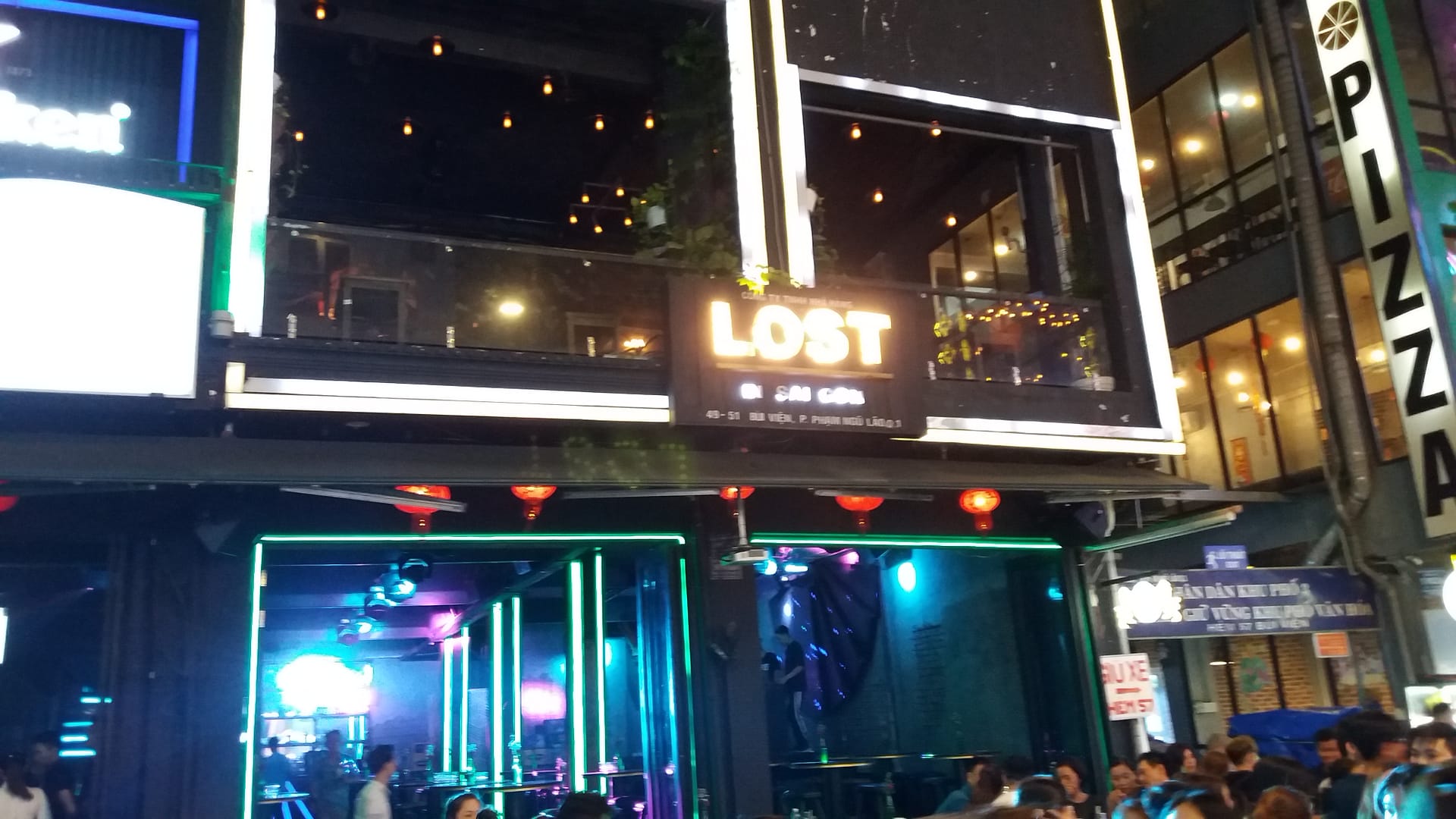
    We were staying in an AIRBNB a few blocks away from Pham Ngu Lao, the famous backpacker street. So, we went there a lot, booked our two out of town tours there, changed money etc. It is a real happening scene Saturday night when they block off the street and it becomes an open air non-stop party. In some ways like the French Quarter in New Orleans, in some ways like Khaosang Road in Bangkok, in some ways like Itaewon in Seoul but done in Saigon style. We noticed a few “girly bars” here and there but nothing like in Bangkok, and we herd there are other areas for that sort of thing but that is not our scene. And some people were smoking the evil weed – we smelled it here and there. And we noticed that the scene continues on the surrounding streets as well, just not as intense.

    So, if you want a loud boisterous party with lots of people from all over the world including Vietnamese this is your place, if you want a more civilized quiet night life zone there are lots of other choices to be had.

    Here’s the google listing on Saigon’s Night Life

    vietnam night light guide

    Breakfast: fruit in room boiled eggs
    Lunch at Nha Hang Ngon 160 Pasteur Street, Saigon

    There are two restaurants with the same name near each other. This is the original and better of the two. There was a dispute between partners and they split up and operate two restaurants with the same name. Apparently not an uncommon phenomenon, one of the massage places we went to on the Korean recommended listing changed its name because another place has the same name and people were confused between the two according to the owner.
    Had decent grilled pork chop Saigon style, nice spring rolls, and sausages and wine. Late lunch so that was sort of dinner too!!!

    Dinner corn
    Drinks red Wine

    Down and Out in Saigon

    Southeast Asia, and Mexico
    has always attracted
    A certain type of westerner
    The down and out
    On a down word spiral

    Why?
    Relatively cheap to live
    Lots of part time gigs
    Teaching English
    Or other things

    Booze, drugs, sex
    Readily available
    And cheap

    Places to stay
    Dirt cheap
    And no one needs
    To sleep out doors

    Easy to disappear
    Into the foreigners backpackers ghettos
    And escape
    From whatever you are running from

    The locals are somewhat tolerant
    The police usually look the other way
    And there are lots of people
    In your shoes

    I was surprised to find
    That Saigon has become
    The latest place
    For the down and outer crowd
    To gather together

    In Bangkok one sees them a lot
    In Cambodia as well
    In the Philippines
    In Nepal

    And south of the border
    In Mexico as well

    In India not so much
    In Japan and Korea
    Just too damn expensive
    And too cold to be outdoors

    Back in the day
    I used to work
    The citizen services gig
    And saw lots of the down and outer set

    The old song comes to mind
    No one remembers you
    When you are down and out

    And in the States
    Being down and out
    Means living on the mean streets

    As it is very difficult
    To live with almost no money

    And the various side hustles
    Don’t give you much money
    Unless you are dealing drugs

    And teaching ESL
    Is not an option

    Food is expensive
    Transportation is expensive
    Booze and drugs expensive
    Rent is prohibitive
    Commercial sex is expensive

    And no one loves you
    If you are down and out
    No one knows your name
    You are just another homeless bum

    Invisible to all
    As you try to make do

    Much better to be down and out
    In Southeast Asia
    Than on the mean streets
    Of the USA

    Sunday March 17 Chu Chi Tunnels

    Lacquer Ware Factory

    As part of the tour we stopped off at a lacquer ware factory that employs artists injured by agent orange exposure. Funded by the Gates foundation. Had an interesting lecture on lacquer ware. Some nice pieces but did not exactly fit our needs. So we passed on buying them.

    Lacquer painting

    From Wikipedia, the free encyclopedia

    Lacquer painting is a form of painting with lacquer which was practised in China and Japan for decoration on lacquerware, and found its way to Europe both via Persia and by direct contact with Asia. The genre was revived and developed as a distinct genre of fine art painting by Vietnamese artists in the 1930s; the genre is known in Vietnamese as “sơn mài.”[1]

    Making a lacquer painting may take several months depending on the technique used and the number of layers of lacquer. In Vietnam’s sơn mài lacquer painting first a black board is prepared. Then outlines in chalk are picked out in white with eggshell and clear varnish, then polished. Then the first layer of coloured lacquer is applied, usually followed by silver leaf and another layer of clear lacquer. Then several more layers of different coloured lacquers are painted by brush, with clear lacquer layers between them. In Vietnam an artist may apply up to ten layers or more of coloured and clear lacquer. In Ming China processes included up to a hundred layers. Each layer requires drying and polishing. When all layers are applied the artist polishes different parts of the painting until the preferred colours show. Fine sandpaper and a mix of charcoal powder and human hair is used to carefully reach the correct layer of each specific colour.[2] Consequently, “lacquer painting” is in part a misnomer, since the bringing out of the colours is not done in the preparatory painting but in the burnishing of the lacquer layers to reveal the desired image beneath.[3]

    Lacquer had been used since the Shang dynasty (1384-1111 BCE) for decoration and preservation of wooden objects. By the Han dynasty decoration had become more intricate.[4] Lacquer painting is sometimes used for decoration of wooden objects such as the traditional “Chinese candy box”.

    Vietnam[edit]

    Công Quốc Hà “Hanoi girl” 1997
    Lacquer painting, known as sơn mài, from resin of the sơn tree, Rhus succedanea, was developed in Vietnam as a freestanding form, separate from decoration of wooden objects. A revival and a combination with French techniques occurred in the 1930s which was closely associated with the French teachers and Vietnamese students of the École Supérieure des Beaux Arts de l’Indochine in Hanoi from 1925 to 1945 such as Joseph Inguimberty and Nguyễn Gia Trí.[5][6] Among the prominent newer generation of Vietnamese lacquer painters is Cong Quoc Ha, who received numerous awards and his works are regularly exhibited worldwide.

    Cao Dai Temple

    The Cao Dai temple is a must see in my opinion. The Cao Dai religion is a new religion founded in the 1920’s that combines elements of Buddhism, Daoism, Confucianism, Hinduism and Catholicism. They even have a pope and bishops. It is common in the South, but not that common elsewhere in Vietnam. The temple is extraordinary.

    for more details see the following WIki article:

    cao daism

    Cao Dai

    The Cao Dai faith
    Tried to combine

    All the religions of earth
    Into a new religion
    For a new era

    Founded in Vietnam
    It has spread across the Vietnamese diaspora
    Across the globe
    But it is a very Vietnamese thing

    It seems you can’t escape the past
    Religion is like that
    It roots you in to a time and place

    And you will obey its teachings
    Until the day you die
    That is the power
    And tragedy of religion

    Chu Chi Tunnel

    The highlight of the trip was of course the famous Chu Chi tunnels about 50 miles from Saigon. They played a key role in the defeat of the US military and the Vietnamese are justly proud of their engineering prowess in building these tunnels.

    for more info see the following Wi-Ki

    ch chi tunnels

    Ghosts of Chu Chi

    Crawling down the tunnels
    Of Chu Chi
    I could almost imagine
    The Viet Kong guerillas

    Hiding deep under the tunnels
    As the land above is turned
    Into a temporary dessert
    With the vegetation burned off
    By napalm and agent orange

    The Viet Kong creep out at night
    Stealing onto the bases
    Stealing weapons, food, supplies
    And occasionally killing soldiers

    In their sleep
    The US soldiers
    Stay on base at night

    Terrified of the mosquitos
    And of the Viet Kong

    the ghosts
    Surround me
    Telling me their stories
    And at last I fled

    Through the emergency escape tunnel
    Declaring victory
    Profoundly shaken up
    By the ghosts of the Chu Chi tunnels

    Monday March 18 return to Korea
    Went to District two for a hair cut for Angela, and lunch. Afterwards had a massage and then drank a craft beer before heading home. Had a great two weeks in Saigon. We will be back!


    Over all reflections Saigon 2019 vrs Saigon 1995

    Thinking back about how things have changed since our last trip, it struck me that Saigon reminds us both of Seoul in the late 80’s as it emerged to become the world class city it is now. Same energy, same determination, same visionary desire to become a world class city.

    Things that have changed

    Fewer Scams, Safer, lots more foreign tourists

    Back in 1995 Saigon was a dangerous place to visit. Lots of scams, lots of pick pockets, lots of beggars and it was chaotic and confusing. Now the beggars are gone, fewer pickpockets, fewer overt scams, much friendly, lots more foreign visitors, lots more English spoken. Much more pleasant a place to visit.
    Motorcyclists wearing Helmets

    Back in 1995 few motorcyclists wore helmets and traffic fatalities were widespread. Now almost every where is wearing a helmet and we did not see any traffic accidents. Bus are more widespread, as our taxis and grab (Vietnam’s uber) is everywhere. Lots easier to get around.

    Lots more to Do

    There is definitely a lot more to do. Lots of places to eat, and drink. More museums, more temples, more everything. And everything is still super cheap.

    Backpackers ghetto

    Was just beginning when we last visited. Now it is a large and colorful part of the city. Much more diverse tourist crowd – lots of Aussies, Europeans, Asians, but still few Americans.

    Fewer Vietnam war vets – they dying off

    The Vietnam war veterans are beginning to die off. Because well the war ended a long time ago. But you still saw a lot of American veterans wandering the streets coming back to visit the country they first saw as military conscripts so many years ago.

    More English

    Definitely a lot more English than before. And google translate makes it so much easier to communicate!
    Asian Tourists outnumber Western Tourists, Chinese, Japanese, Koreans Everywhere

    Back in 1995 there were few Asian tourists in Vietnam. Now they are everywhere. Koreans, Japanese and Chinese tourists are all over the place. The Vietnamese have embraced Korean culture, K Drama is very popular, as is K Pop and K food.

    Much more developed tourism infrastructure

    The tourist industry has grown up. So many options to chose from and the tours we went on were professionally run, informative and inexpensive. We have so many places we want to travel next time we come.
    AIRBNB did not exist 25 years ago. Now AIRBNB places are everywhere as our guest houses. Travel costs are low accommodations are good. Restaurants are great. Food is fantastic.

    Things that remained the same –

    Fascinating city, Great food, Still pretty cheap, friendly people, Traffic still chaotic

    What we did last time

    Saigon with a driver and guide

    We hired a driver and a guide for a private tour last time. We saw a lot of the city but never really got the hang of the place and we were rushed here and there and ate in five star restaurants when we wanted to see the city as locals would. All in all we were a bit disappointed and spent too much money. This trip was much more enjoyable.

    Buying Art –

    we bought some nice art work last time – lacquer ware paintings. We met the artist through his nephew who was staying at the same guest house that we were staying at.

    Touring Traditional Market

    We did a tour of traditional markets, probably Ben Thang market.

    Buying gold

    We bought some gold which we still have

    Re-unification Palace

    We saw the re-unification palace which was impressive

    War Memorial

    And we saw the War Memorial which was a bit too in your face for our liking.

    Hanoi

    We spent a week in Hanoi. We stayed at the at the government guest house. We were among the first independent American tourists in Vietnam as we arrived a week after the Embassy opened. We had lunch and dinner with the Consul who was a friend from the Embassy in Bangkok. We enjoyed touring old quarter the old quarter had lunch and dinner there. West Lake district was nice as well.

    Conclusion – Don’t know why it took 25 years to return but we will definitely be back many times. And you should go if you have not been

  • red crab season in Incheon

    red crab season in Incheon

    Red Crab season in Incheon

    It is red crab season in Incheon. The red crabs are smaller than King Crabs and are bright red in color and are harvested off the Incheon harbor. There are crab and seafood restaurants all over town which is one of the nicer things about living in a Port City, great seafood!

    There are lots of seafood restaurants in Incheon proper and in Yongchongdo where I live. There are two big seafood markets one near Soraebu port where the crab ships come in and another seafood market near the Incheon market and a smaller seafood market in Yongchongdo as well.

    Fish market 2 – jakecaller@gmail.com – Gmail

    At the markets you can buy your sea food and then take it to a nearby restaurant where they will cook it for you.

    The total cost will be about $100 for three people. The markets are mostly lively early in the morning as the fishermen go out about midnight and return at sunrise. The markets are crowded with brokers for wholesalers, and restaurant owners who buy their fish daily every morning.

    Most of the sea food consumed in the Seoul region are harvested off the West Coast and shipped to Seoul from Incheon harbor so you can’t find fresher seafood anywhere other than in Pusan where they also have a lot of great fish restaurants and markets.

    There is also a street filled with fish restaurants near Wolmido.

    And for some reason there are a lot of crab restaurants near Gyeansan mountain park.

    That’s where we went for a great crab feast. We ate 10 crabs, and had soju and the usual side dishes. The bill came to 65 US $ for two people.

    red crab
    crab for lunch

    One of the best crab feasts I have had in years.

    best seafood resturants in incheon google search

  • Visit to Poet Hill in Seoul

    Visit to Poet Hill in Seoul

    Visit to Poet Hill and Sajik Park in Seoul

    When I launched the World According to Cosmos, my original intention was to have 60 percent of the site devoted to poetry, and fiction, 30 percent devoted to political rants and observations, and 10 percent devoted to travelogues. This is my second travelogue entry. I have a lot more plans over the next few weeks. Been saving them up. this one is about my recent trip to Poet’s Hill in Seoul and Sajik Park also in Seoul.

    Visit to Poet Hill, and Sajik Park, Seoul Korea

    “Wishing not to have
    so much as a speck of shame
    toward heaven until the day I die,
    I suffered, even when the wind stirred the leaves.”


    This photo of Chungun Park is courtesy of TripAdvisor

    visit to poet hill seoul

    For most Koreans, whether young or old, the first verses of the late poet Yun Dong-ju’s famous poem “Foreword” are as familiar as the innumerable accounts of the dark period of Korean history during which they were birthed.

    I took a trip the other day to the Poet’s Hill which celebrates the life of the late poet, Yun Dongju who died in a Japanese prison in 1945 at the age of 26. His crime? Writing poetry in Korean calling for Korean independence. For that he was arrested, and tortured to death in the waning days of the Japanese occupation.

    The poet’s hill is located near the Blue house on the way to Ikwangsan mountain. There is a nice museum there and behind the museum a walk through the hills that look the same as when he lived in the neighborhood and wrote his most famous poems.

    From there one can walk into Ikwangsan mountain park. There is a nice walk nearby that takes you into a shaman village filled with shamanistic shrines and the home of fortune tellers to this day.

    That day we walked from the Poet’s hill along Ikwangsan to Sajik park. A total of 2 miles or so. It was a cold day in January but a brisk walk did us good. we saw frozen waterfalls along the way.

    Duane Voorhees, the publisher of Poetree, published translations of his poems a while back. Here’s the link that Duane provided me.

    HEAVEN – Duane Vorhees – FINAL

    Sajik Park
    sajik park

    from the Poet’s Park we walked about two miles to Sajik park. Sajik Park was where the King led annual rituals in the Spring for the success of the harvest. The park was abandoned during the Japanese era but was rebuild in the 1980’s and they revived the ancient rituals starting on foundation day in 1988 and then on the first day of the spring according to the ancient lunar calendar. I hope to see that next Spring time. RAS does an annual trip to watch the rituals which are broadcast on life TV

  • favorite places in Youngchando Island Korea

    My Favorite Places in Yongchongdo Island, South Korea

    Youngchong island Korea where the Airport is located has lots of things to do besides of course the airport. I have retired here from service in the US State Department.  I live in the Airport town next to the Unseo station.  Here are a few of my favorite places to go.

    Baegunsan Mountain

    One of my favorite places is Baegunsan Mountain. (762 ft / 232 m height).  This mountain dominates the island and there are trails to the top from many parts of the island.  It is about 10 kilometers from the airport.  Coming from Seoul or Incheon you can take the Airport railroad and get off at Unseo Station, three stops from the airport.  From the station exit the station via exit A and walk right, then turn right again and you will find the trailhead down the street on the left side right after the first intersection. The trailhead is marked only in Korean though. There are multiple paths to the top.  It should take about an hour to reach the top. The views are spectacular.

    Youngunsa and Yaksuam Temples

    From the top of Bekuensan, you can walk down to Youngunsa Temple and Yaksuam Temples.  These temples are over 1,000 years old and are very tranquil places to visit.


    Youngunsa Temple

    199-1, Anambra, Jung-gu, Incheon 22359, South Korea

    One can arrange a free tour at the airport transit tour desk.  Worth doing if you are the airport and have a couple of hours to kill.  It is a 20-minute bus ride from the airport.  You pay just for the transportation, entrance to the temple is free.

    There is a very old tree over 1,000 years old at the center of the temple which is also about a thousand year old.


    Bakrangsan Mountain

    Another nice hike in Yongchongdo is Bakrangsan mountain.  From Unseo station on the airport railroad line, go out exit A and turn right and at the end of the street, right across the street, you will see a road leading up the hill. Follow the road and you will run into the trailhead.  The signs are all in Korea. It is a short walk to the top where there are fine views and a nice gazebo.  From there you can walk down to the entrance of the World Peace Forrest.  Should take no more than an hour to reach the summit and the Peace Forrest.


    World Peace Forrest

    The world peace forest is a five-mile walk through lovely forests surrounding the new airport town.  You can walk to it from the airport railroad Unseo station, third stop from the airport.  Exit the station via exit A and turn left. Go past the Lotte market and across the street you will see the entrance.  Follow the trail to the other end where you run into the entrance to Bakrangsan.   If you are lucky you may run into some of the deer that live in the peace forest and mountains.  There are also foxes in the park and mountains and wild boar.  I have seen the deer and foxes but yet to encounter the wild boars. Both the forest and Bakrangsan mountain have spectacular wildflowers in the summer and the fall and spring colors are magnificent. The trail is mostly marked in Korean.  Halfway up the trail, there is a path that goes back to town and the station. That sign is marked in Korean and English.


    The beaches

    There are three beaches on Yongchongdo.  Eurwangi, Maisan and Wangsan beaches. You can get to the beaches from the airport via the Maglev train getting off at Youngju station – the ARA train runs there on the weekends and holidays. These are the closest beaches to both Seoul and Incheon and are quite crowded during the summer season and weekends all year long.  There are lots of good seafood restaurants near the beaches and plenty of places to stay.

    Eurwangni Beach (을왕리해수욕장)   

    15, Eurwang-ro 13beon-gil, Jung-gu, Incheon
    인천광역시 중구 을왕로13번길 15 (을왕동)

    From the airport, take bus 302 or 306 Gate 2A (1F) and get off at Eurwangi Beach, the bus goes to the rest of the beaches as well. There are also buses from Unseo station as well.

    Seonnyeo (Fairy) Rock Beach (선녀바위)

    • Region : Jung-gu Incheon
    • Theme : Rare Animals/ Plants/Spectacular Cliffs & Rock Formations
    • The name “Fairy Rock Beach” comes from the fact that fresh water is gathered at the seashore beneath…
    Wangsan Beach (왕산해수욕장)

    • Region : Jung-gu Incheon
    • Theme : Seasides/ Beaches/ Islands
    • Though Wangsang Beach is just 5 minutes away from Eurwang-ri, the beach has quite a different ambian…


    Masian Beach

    118, Masiran-ro, Jung-gu, Incheon 22385 South Korea

    2.9 miles from Eurwangni Beach


    Muuido Island

    Muui-dong, Jung-gu, Incheon South Korea

    4.3 miles from Eurwangni Beach


    Silmido Island

    Muui-dong, Jung-gu, Incheon South Korea

    3.3 miles from Eurwangni Beach


    Muido, So Muido and Silmido are islands near to Yongchongdo.  The ferry ride is only five minutes, but it is a bit expensive, 11,000 won per person but the good news is that the bridge will open in April 2019 making a trip to these islands much more affordable.  You can get to the islands by taking a bus from the airport, or from the Yongju maglev stop.  The Airport railroad goes to Youngju on weekends and holidays.  The last ferry leaves at 6:30 pm, and departs every 15 minutes.  The bus from the airport departs every 30 minutes. The island bus runs every 30 minutes as well I believe, the last bus to the ferry terminal is about 6 pm.


    There are hotels and Korean style resorts near the ferry terminal on the island, and at the beach, there are huts for rent. There are restaurants near the ferry terminal and at the beach but the selection is limited to Korean seafood.


    The ferry terminal (before you take the ferry to the island) has a Korean tourism information stand. The people there are very helpful, speak good English and have lots of maps and guides in English and can also tell you about the ferries to the other islands.  Well worth a stop.  You should stock up on tourism information here if you are going to the outer islands as once you get there is very little English language signage or English speakers on the islands. They are open until 6 pm most days.


    Address

    310-11, Daemuui-ro, Jung-gu, Incheon
    인천광역시 중구 대무의로 310-11 (무의동)

    Type

    Seasides/ Beaches/ Islands

    Inquiries

    • 1330 Travel Hotline: +82-2-1330
      (Korean, English, Japanese, Chinese)
      • For more info: +82-32-760-7114
    • Information

    Introduction 
    Muuido Island is located in Jung-gu, Incheon which is not far from the mainland but is only accessible by ferry. Nearby are two smaller islands, Silmido Island and Somuuido Island. In olden times, small boats were used to go from Muuido Island to Somuuido Island but the two islands are currently connected by a bridge so visitors can reach Somuuido after a 10-15 minute walk. Muuido Village Bus (maeul bus; 마을버스) takes people from Keunmuri Dock (큰무리선착장) to Gwangmyeonghang Port (광명항). To enjoy the beauty of Somuuido Island fully, Muuibadanuri-gil 8 Course is a must-visit path, taking around 1 hour and giving stunning views of the East Sea vista. Two beaches, Hanagae Beach and Silmi Beach, are famous beaches in Muuido Island. One interesting thing in Silmi Beach is that people can walk to Silmido Island at low tide. Hiking up Horyonggoksan Mountain (호룡곡산) and Guksabong Peak is also available on Hanagae Island.


    The trail head to Horyonggoksan Mountain (호룡곡산) and Guksabong Peak can be found at the ferry terminal and also near So Muido and at Hangagae beach as well.  The round trip takes about three hours and the trail is well marked but only in Korean.  Go up the stairs and at the top turn right to access the main trail head.


    So Muido is a nice spot for a walk as well. Take the bus to the end of the island, and walk across.  There are places to stop and eat in So Muido. The walk to the top of the mountain is a nice walk takes about an half an hour to reach the top. There is a private beach on the way back to town.


    Silmido


    Silmido island is the site of a secret military base where they trained commandos going undercover into North Korea.  They closed the base in the 80’s and a Korean K drama was filmed at the island.  The island has a resort where one can stay but there is not much there not even restaurants.  Still the beach is nice but a bit deserted.  You can walk across to Silmido at low tide, at high tide it becomes a separate island.


    Sindo, Modo and Jangbo islands


    Shindo, Modo and Jangbo Islands located near Incheon International Airport are great places to get away from Seoul or Incheon for that matter. These three islands are near Yongchongdo.  You need to take a ferry to reach them. The ferry ride to Jangbo the biggest of the islands takes about an hour. The ferry runs every hour on the hour the last ferry back leaves about 6 pm.  You can catch the ferry at Sammok quay.  There are buses from the airport and from Unseo station to the ferry terminal.


    Sindo Island

    Ongjin-gun, Incheon South Korea

    7 miles from Eurwangni Beach


    Modo Island


    Modo island is connected to Shindo island.  You can easily walk around both Modo and Shindo in an hour or two.  There are places to eat and spend the night, but Jangbo island is the biggest of the three and has the best facilities, beaches, restaurants and walking biking trails.


    Jangbo Island


    The island is located one hour and 40 minutes from Seoul. To get there take airport express train from Seoul Station and get off at Unseo station and then transfer to a bus going to Sammok wharf in Yeongjong Island, Incheon. The ferry from there takes 40 minutes.  The last ferry back leaves at 6 pm.  There are plenty of places to stay near the beaches which are a short walk from the ferry terminal.  This is also a popular place to camp as there are camping grounds near the ferry terminal. There is a mountain hiking trail that follows the ridge line all over the island and is a great hike.   If you go to Jangbong island, it is worth stopping off at Shindo and Modo islands first and take a walk.  A number of K dramas have been filmed on these islands.

    More info from Visit Incheon web page follows:

    Coastal Trail connecting Sindo Island, Sido Island and Modo Islands

    Come to the triplet islands and have a bike tour around them for a fantastic ride along the shoreline. The triplet islands are very well known as one of the best spots in Korea for a bike tour. Come down to the Sinsimodo Islands for a safe and pleasant bicycle touring. Take a boat at Sammok Quay in Yeongjongdo Island. You will get to Sindo Island Quay in about 10 minutes. The three islands of Sindo Island, Sido Island and Modo Island are all connected by bridges, so you can tour all of them in a day. You can rent a bike on the island. There are only a few cars on the road, thus the island is recognized as one of the best places for bike riders.

    Sindo Island Pureun Beonmal, a designated traditional agricultural village

    The name Sindo Island(literally “the island of trust”) has come from the fact that its residents are conscientious and innocent. It is in this context that the salt produced in the island is called jinyeom (literally “genuine salt”). As the island have mud flats, salt evaporation ponds, and rice paddies, visitors can enjoy everything they can expect from the country’s rural area in Sindo Island Pureun Beotmal designated by the government as a traditional agricultural village.

    Sinsido Island Yeondogyo Bridge

    Sindo Island is connected to Sido Island by a bridge. The name of Sido Island has come from the legend that troops of the Joseon Dynasty practiced archery in Manisan Mountain with targets set in Sido Island(“an arrow island”). The island is also called “Salseom (‘sal’ also means an arrow in Korean).” Given the actual distance between the two locations, the story is hardly credible, but the idea is intriguing enough. Sido Island has been filming locations for popular TV dramas such as “Full House” and “Sad Love Story” because of the harmony between its slow slope hills and the sea.

    Sugi Beach, the filming location of ‘Full House’

    Sugi Beach in Sido Island was the filming location for the popular TV series called ‘Full House.’ You can see a few islands in the distance. The beach is covered with quality and beautiful white sands. Main characters in the TV drama series often spent time together here. Who would not have fallen in love with each other in such a beautiful environment?

    Simodo Island Yeondogyo Bridge

    Sido Island and Modo Island are connected by a bridge. Believe it or not, you can get to a totally different island in just a few minutes. The name Modo Island comes from the word ttiyeom (‘tti’ refers to King cogongrass). The legend says that fishermen in the region once complained that his fish net only had grass instead of fish. ‘Mo’ in Modo Island means ‘grass’ in Chinese.

    Baemikkumi Sculpture Park

    Baemikkumi Sculpture Park is located on Baemikkumi Beach in Modo Island. The ‘Baemikkumi’ (the local dialect meaning a hole in the bottom of a ship) has come from the fact the beach is as flat as the bottom of a ship. The beach is also famous for a sculpture park featuring a number of surreal erotic sculptures. Blue water, white sand, and dreamlike sculptures blend well with one another. The sculpture park has become a reason to many for a visit to Modo Island.

    The Sinsimodo Islands, a paradise for bike enthusiasts

    Together, the Sinsimodo Islands are small but pretty places to visit. Most notably, as they are connected, the Sinsimodo Islands will sustain the fame of a paradise for bikers in the West Sea for a long time to come.


    Incheon  Wolmido

    Address

    36, Wolmimunhwa-ro, Jung-gu, Incheon
    인천광역시 중구 월미문화로 36 (북성동1가)

    Type

    Seasides/ Beaches/ Islands

    Inquiries

    • 1330 Travel Hotline: +82-2-1330
      (Korean, English, Japanese, Chinese)
      • For more info: +82-32-765-4169

    Homepage

    Incheon Jung-gu Culture & Tourism
    icjg.go.kr/tour
    (Korean, English, Japanese, Chinese)
    www.my-land.kr (Korean only)

    • Information

    Introduction 
    Wolmido Island (월미도), located roughly 1km off the coast of Incheon, has since become part of the mainland with the creation of a new highway. The name Wolmido Island comes from the shape of the island as it resembles the tail of a half moon. Thanks to its location near Seoul and the convenient transportation, many people visit here during weekends.

    The Culture Street starts with Doodle Pillar, and continues onward to Meeting Square, Arts Square, Performance Square, Good Harvest Square and several other notable highlights. Throughout these areas, spontaneous performances are performed, and street artists can draw for you on the spot. Moreover, many cafes and seafood restaurants are lined along the coast so you can enjoy coffee or fresh seafood while viewing the sea.

    A must-see attraction on Wolmido Island is “Play Hill.” It’s not as large as other theme parks in Korea, but the Apollo Disco and the Viking rides are truly thrilling. If you’re not into rides, the Apollo Disco ride is still fun just watching. You can also get on a cruise to look around the island.


    Comment:  this is of course the location of the most famous battle during the Korean war.


    The island has a large park that had been a Korean military base and was only opened to the public since the turn of the century.  The park is worth a long walk.  The views are spectacular from the top.


    The amusement park is a bit hooky in my opinion, but still worth a stop and a photo. The waterfront is nice to stroll along but the restaurants there are way over priced.


    Jayu freedom park is near Wolmido and features a giant statue of General Mc Arthur and is also worth a visit.


    There is a club that has Halloween decoration all year long and that is worth a picture. There are also statues and public art everywhere.  And of course coffee shops, beer pubs etc.


    About 100 US dollars per person for a sashimi dinner with drinks.  The best sea food restaurants are a few blocks away from the water front area, and dinner for two will set you back about 40 dollars including soju.


    The Korean government opened a maglev train around Wolmido for the Asian games. But after the games ended the maglev train was disconnected.  In my opinion they missed an opportunity and should have extended it to Songdo and the airport as getting to Songdo from the airport is a big of a long subway ride.


    Finally, Wolmido has a Korean tourism information stand. The people there are very helpful, speak good English and have lots of maps and guides in English and can also tell you about the ferries to the other islands.  Well worth a stop.  They are open until 6 pm most days.


    To reach Wolmido, get off at the Incheon station on the Seoul-Incheon subway line.  Take a bus to Wolmido or a taxi. It is not far from the station.  Another fun way to get there is to take the ferry from Yongchongdo (airport island).  The ferry runs every 30 minutes and is a five minute ferry ride.  The last ferry is at 6:00 pm.


    Gerang Mountain in Incheon (계양상)


    This mountain is the biggest mountain in Incheon but hiking up to the top is not too difficult. Takes about one to two hours to reach the top and back down.  There are lots of side trails as well.  The spring and fall colors are magnificent.  Lots of nice wildflowers as well.  The mountain links to several other mountains in central Incheon.  There is a nice old fortress at the top of the mountain.  There are plenty of Korean restaurants at the bottom of the mountain.


    The closest subway to  Gyeansan (giei_iaŋ_saŋ) is Gyeyang subway on the Incheon subway line 1.  You can transfer from the Airport express railroad coming from the airport or from downtown Seoul.

    *

    Introduction of Mt. Gyeyang

    With its altitude of 395m, Mt. Gyeyang is the guardian and holy mountain that represents Incheon. From the beginning of B.C. to the end of the 19th century, the city of Gyeyang was moved from the south of Gohyeon-eup in the Three Kingdoms Period having Mt. Gyeyang at the center and then to the northern and eastern direction. Until its transfer to the southern direction in Bupyeong-dohobueup during the Joseon Period, the city was developed through the capital transfer that was conducted for 6 times. At the peak of the eastern ridge in Mt. Gyeyang, there is Gyeyang Mountain Fortress that was built during the Three Kingdoms Period. Also in the south, Jungsimseong Castle, which was constructed in the 20th year of King Gojong (1883) with the participation of the residents in Bupyeong Village in preparation for defending the coast, is stretched along the ridge of Jingmaei Hill. According to the change of the place name, Mt. Gyeyang was called as Sujuak in Suju of the Goryeo Period and Mt. Annam during Annam-Dohobu. Since the period when this mountain was called as Mt. Gyeyang in the period of Gyeyang-dohobu, it has been called by its present name. This mountain was once called as Mt. Anam and Mt. Gyeongmyeong.

    The name of Mt. Gyeyang was originated from the naturally grown Japanese Judas-tree and Korean box trees. Mt. Gyeyang was selected as the first urban natural park of Incheon city on Jan. 8, 1944 (Gyeyang Park) and since then, it became the No. 1 Municipal Park.


    88, Gyesansae-ro, Gyeyang-gu, Incheon, 21067, Rep. of KOREA  82-32-551-5701

    Copyright ⓒ 2015 Gyeyang Incheon. All Right Reserved.


    Office of Gyeyang-Gu Page – Includes information on hiking trails as well as travel advice in English


    Sorae Pogu


    111-200, Nonhyeon-dong, Namdong-gu, Incheon, South Korea


    This is the second largest seafood market in Incheon and specializes in crab, lobster, octopus, and shellfish freshly harvested from the nearby harbor.  The boats come back laden with fresh seafood early in the morning.   The place is happening all day long.  You can buy your food at the market and then take it to nearby restaurants where they will prepare it for you and sell you soju and beer to wash it down.  A very Korean experience!

    More info on the port from Visit Incheon web site

    Incheon Port was opened to the international community in 1883 through which western civilization came. Sorae Port has served as an important fish market for the Incheon region for more than 60 years after a small-scale fish market was formed in the wake of the Korean War (1950-1953) as war refugees caught shrimps and sold salted shrimps in an open market. Now the fish market at the port is across a railway bridge which has been remodeled as a pedestrian-exclusive bridge.

    The market is particularly famous for shrimps, salted fish and blue crabs. In addition to such fresh seafood, you can enjoy fish stand owners’ generosity and seagulls flying over fishing boats and the fish market against a blue sky. The port plays host to festivals of fleshy prawn and blue crabs, whose freshness and taste are recognized nationally, attracting crowds of people from various areas of the country. Come to Sorae Port to smell the sea and feel the sky while touring a dynamic fish market and enjoying fresh seafood of your choice.


    Yeonan Pier Yeonan Pier is home to various important facilities such passenger terminals, Marine Square, the Fish Market Complex, the Raw Fish Restaurant Street, the Seawater Bath Street, Cruise Port, and Namhang Wharf. It is a popular weekend getaway place not only for residents of Incheon but also for tourists from other areas of Korea. For instance, the Fish Market Complex which more than 500 stores call home attracts a crowd of people wanting to buy a variety of fresh and salted fishery goods. The Raw Fish Restaurant Street is home to large-scale raw fish restaurant towns like the Raw Fish Department Store run by Incheon Fisheries Cooperative Association and the Yeonan Raw Fish Plaza. Visitors can enjoy diverse seafood dishes at affordable prices.

    Yeonan Pier is also known for blue crabs. Female crabs are popular in spring while male crabs are delicious in autumn. Most notably, blue crabs caught around Yeonpyeongdo Island are highly regarded for the eggs and meat filling the shells completely.