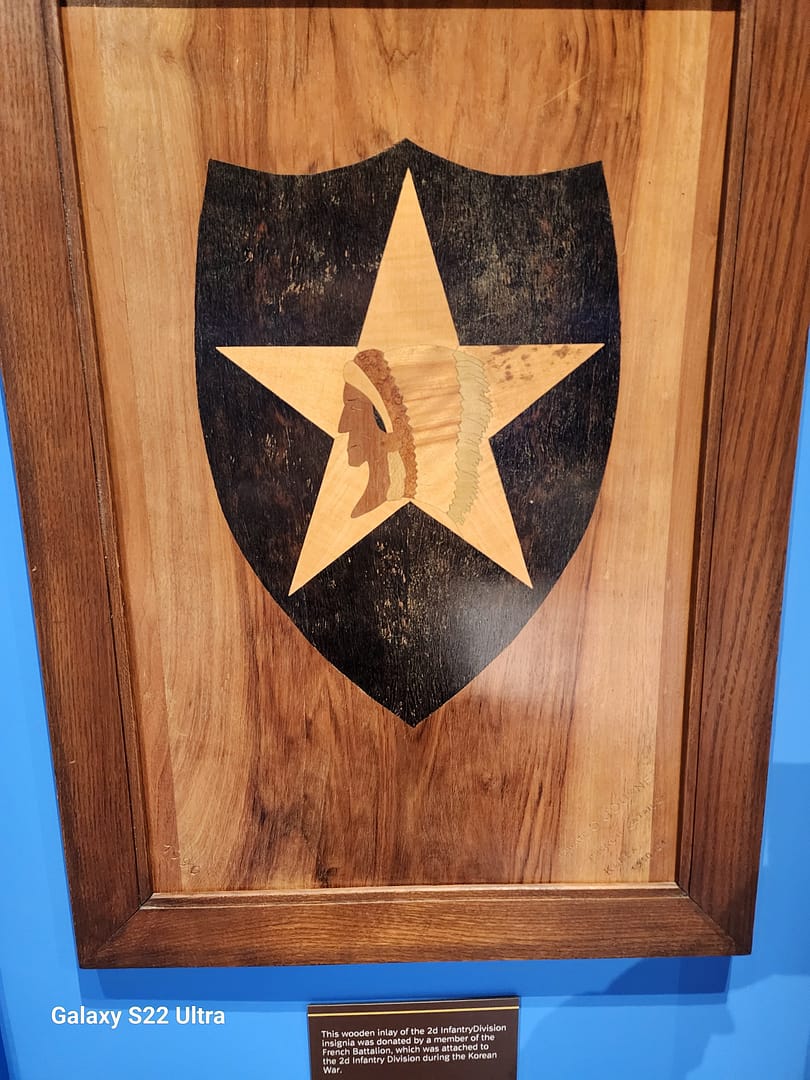
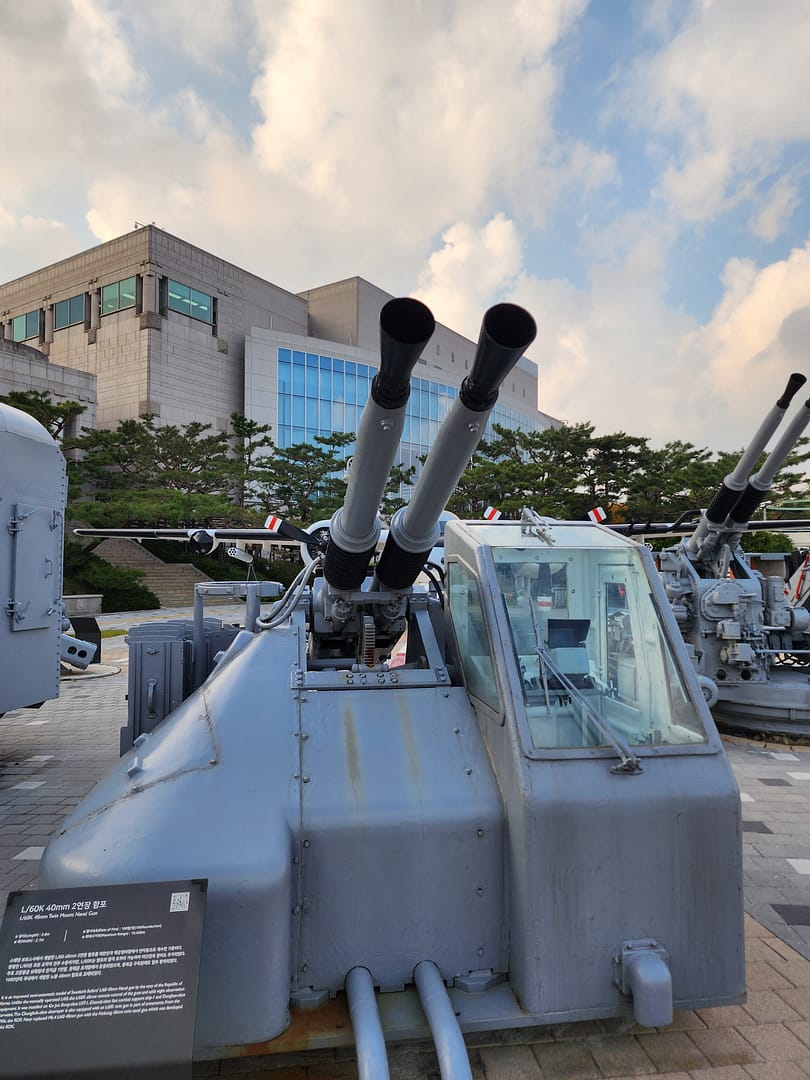
The 2nd ID museum at Camp Humphreys is also worth a visit. The Director of the Museum is an affable retired US Army Colonel whose last job in active duty was as the chief of the US military historian office.
Co PIlot provided the following background information.
Base access is required to tour the museum which is located across from the USO.
Tell me Abut the 2nd ID museum at Camp Humphreys
Copilot:
The 2nd Infantry Division (2ID) Museum at Camp Humphreys, South Korea, is dedicated to preserving and showcasing the history of the 2nd Infantry Division and its role in various military operations. Here are some key highlights:
Educational Programs: The museum offers guided tours, staff rides to historical battle sites, and educational programs aimed at teaching soldiers, civilians, and students about the division’s history and the broader U.S. Army experience on the Korean peninsula2.
Since the 1960s, the 2nd Infantry Division’s primary mission has been the pre-emptive defense of South Korea in the event of an invasion from North Korea.
Approximately 17,000 soldiers serve in the division, with 10,000 stationed in South Korea—accounting for about 35% of the United States Forces Korea personnel.
Notably, the 2nd Infantry Division is unique: it includes South Korean soldiers (called KATUSA, or Korean Augmentation to the U.S. Army) who serve alongside their American counterparts.
In summary, the 2nd Infantry Division has a rich legacy spanning both world wars and continues to play a vital role in maintaining peace and stability on the Korean Peninsula. 🌟 If you ever visit South Korea, consider paying homage to this remarkable division and the brave men and women who have served under its banner.
I have been to several war museums over the years. Korea has two war museums. The first is the official Korean War museum in Seoul near the old US Army Headquarters. I first visited in 2000 shortly after it opened and recently visited it again. The exhibits are first class.
Co-pilot provided the following background information
The War Memorial of Korea, located in Yongsan-gu, Seoul, is a comprehensive museum dedicated to the history of Korea’s military conflicts, with a significant focus on the Korean War (1950-1953). Here are some key highlights:
I have also been to the Korean War Memorial in Washington DC several times.
Sent by Copilot:
Certainly! The Korean War Veterans Memorial in Washington, D.C., stands as a solemn tribute to those who served during the Korean War (1950–1953). Here are some key details:
The memorial’s central theme is “Freedom Is Not Free.” It honors the men and women who answered the call to defend a country they never knew and a people they never met.
The design includes a Wall of Remembrance with etched images of soldiers, nurses, and other personnel who served during the war. The wall reflects the somber reality of sacrifice.
Stainless steel statues of 19 soldiers—representing a squad on patrol—stand in formation. These statues evoke a sense of duty, camaraderie, and the harsh conditions faced by those who fought.
The Pool of Remembrance reflects the soldiers and their surroundings, creating a contemplative space for visitors.
Visiting the Memorial:
The Korean War Veterans Memorial is open 24 hours a day, every day of the year. Whether you visit during the day or at night, the experience is moving.
Take your time to walk among the statues, read the inscriptions, and reflect on the sacrifices made during this often-called “Forgotten War.”
During the course of my life, I have visited the majority of the 63 national parks in the United States, as well as most of the national monuments, and many of the battlegrounds as well.. One of my favorites has been the Redwood
s National Park located in Northwest California near my summer home in Medford, Oregon. I just got back from my 10th visit
over the years. I first visited this park in 1963 as a child and I awestruck by the beauty of the majestic redwoods.
All in on all great day.
here’s the list of List of national parks of the United States – I have bolded the ones I have visited, and put a star next to the ones still on my bucket list Now that I have visited all 50 states my remaining travel bucket list includes visiting all the national parks.
Interactive map (incomplete) of the National Parks of the United States.
The United States has 63 national parks, which are congressionally designated protected areas operated by the National Park Service, an agency of the Department of the Interior.[1] National parks are designated for their natural beauty, unique geological features, diverse ecosystems, and recreational opportunities, typically “because of some outstanding scenic feature or natural phenomena.”[2] While legislatively all units of the National Park System are considered equal with the same mission, national parks are generally larger and more of a destination, and hunting and extractive activities are prohibited.[3]National monuments, on the other hand, are also frequently protected for their historical or archaeological significance. Eight national parks (including six in Alaska) are paired with a national preserve, areas with different levels of protection that are administered together but considered separate units and whose areas are not included in the figures below. The 430 units of the National Park System can be broadly referred to as national parks, but most have other formal designations.[4]
There are 63 officially designated national parks in the United States and its dependent areas, as of 2021.[2] The national parks are considered the “crown jewels” of the system and are typically larger than other areas, including a variety of significant ecological and geological resources.
There are 129 national monuments, 84 of which are administered by the NPS and are listed below. Of these, 83 (all except Grand Canyon-Parashant) are NPS official units. The remaining 46 monuments are administered by five other federal agencies. Two, Grand Canyon–Parashant and Craters of the Moon National Monuments, are jointly administered by the NPS and the Bureau of Land Management, and Tule Lake National Monument is joint with the Fish and Wildlife Service. National monuments are typically smaller and protect just one or few major resources. They include both natural and historical sites and can be established by the president under the Antiquities Act. 34 former national monuments have been redesignated or incorporated into national parks.
The National Park Service areas of this monument were incorporated into Harriet Tubman Underground Railroad National Historical Park, and the National Park Service no longer recognizes their portions of the national monument as distinct from the national historical park. The remaining portions of Harriet Tubman Underground Railroad National Monument continue to be operated by the U.S. Fish and Wildlife Service.
Mukuntuweap National Monument (renamed Zion National Monument in 1918)
There are 18 national recreation areas administered by the National Park Service.[2] Another 22 national recreation areas are administered by the Forest Service and Bureau of Land Management.
There are four national rivers (marked with an asterisk) and ten national wild and scenic rivers administered as distinct units of the National Park System.[2] There are many more national wild and scenic rivers that run through other units.
National reserves are partnerships between federal, state, and local authorities. Within the boundaries of the three national reserves are combinations of federal land (Park Service or National Wildlife Refuges), state parks and forests, local public lands, and private properties. Two national reserves are currently managed as official units.
These National Park Service trails are part of the larger National Trails System. Only six of the trails are considered official units of the park system.[2]
Most national cemeteries are administered by the Department of Veterans Affairs, although a few are managed by the National Park Service and the U.S. Army. None of the cemeteries are considered official units of the system; they are all affiliated with other parks.
There are 11 NPS units of other designations, as well as other affiliated areas. The National Mall and National Capital Parks have many sites, some of which are also units of other designations.
In addition, there are sites where the NPS is authorized to provide financial and technical assistance to local authorities for interpretive or educational purposes, but do not have the right to acquire land or have a say in land use or zoning. These include the 55 National Heritage Areas, as well as National Commemorative Sites such as Quindaro Townsite or the Kennedy-King National Commemorative Site. There are also various administrative groups of listed parks, such as Manhattan Sites, National Parks of New York Harbor, and Western Arctic National Parklands. The NPS also owns conservation easements (but not the land itself) for part of the area called the Green Springs National Historic Landmark District.
In the 1930s and 1940s, the NPS developed dozens of recreational demonstration areas, most of which eventually became national or state parks.
A bill creating the first national park, Yellowstone, was signed into law by President Ulysses S. Grant in 1872, followed by Mackinac National Park in 1875 (decommissioned in 1895), and then Rock Creek Park (later merged into National Capital Parks), Sequoia and Yosemite in 1890. The Organic Act of 1916 created the National Park Service “to conserve the scenery and the natural and historic objects and wildlife therein, and to provide for the enjoyment of the same in such manner and by such means as will leave them unimpaired for the enjoyment of future generations.”[5] Many current national parks had been previously protected as national monuments by the president under the Antiquities Act or as other designations created by Congress before being redesignated by Congress; the newest national park is New River Gorge, previously a National River, and the most recent entirely new park is National Park of American Samoa. A few former national parks are no longer designated as such, or have been disbanded. Fourteen national parks are designated UNESCOWorld Heritage Sites (WHS),[6] and 21 national parks are named UNESCO Biosphere Reserves (BR),[7] with eight national parks in both programs.
Thirty states have national parks, as do the territories of American Samoa and the U.S. Virgin Islands. The state with the most national parks is California with nine, followed by Alaska with eight, Utah with five, and Colorado with four. The largest national park is Wrangell–St. Elias in Alaska: at over 8 million acres (32,375 km2), it is larger than each of the nine smallest states. The next three largest parks are also in Alaska. The smallest park is Gateway Arch National Park, Missouri, at 192.83 acres (0.7804 km2). The total area protected by national parks is approximately 52.4 million acres (212,000 km2), for an average of 833 thousand acres (3,370 km2) but a median of only 220 thousand acres (890 km2).[8]
During the course of my life, I have visited the majority of the 63 national parks in the United States, as well as most of the national monuments, and many of the battlegrounds as well.. One of my favorites has been the Redwood
s National Park located in Northwest California near my summer home in Medford, Oregon. I just got back from my 10th visit
over the years. I first visited this park in 1963 as a child and I awestruck by the beauty of the majestic redwoods.
All in on all great day.
here’s the list of List of national parks of the United States – I have bolded the ones I have visited, and put a star next to the ones still on my bucket list Now that I have visited all 50 states my remaining travel bucket list includes visiting all the national parks.
Interactive map (incomplete) of the National Parks of the United States.
The United States has 63 national parks, which are congressionally designated protected areas operated by the National Park Service, an agency of the Department of the Interior.[1] National parks are designated for their natural beauty, unique geological features, diverse ecosystems, and recreational opportunities, typically “because of some outstanding scenic feature or natural phenomena.”[2] While legislatively all units of the National Park System are considered equal with the same mission, national parks are generally larger and more of a destination, and hunting and extractive activities are prohibited.[3]National monuments, on the other hand, are also frequently protected for their historical or archaeological significance. Eight national parks (including six in Alaska) are paired with a national preserve, areas with different levels of protection that are administered together but considered separate units and whose areas are not included in the figures below. The 430 units of the National Park System can be broadly referred to as national parks, but most have other formal designations.[4]
There are 63 officially designated national parks in the United States and its dependent areas, as of 2021.[2] The national parks are considered the “crown jewels” of the system and are typically larger than other areas, including a variety of significant ecological and geological resources.
There are 129 national monuments, 84 of which are administered by the NPS and are listed below. Of these, 83 (all except Grand Canyon-Parashant) are NPS official units. The remaining 46 monuments are administered by five other federal agencies. Two, Grand Canyon–Parashant and Craters of the Moon National Monuments, are jointly administered by the NPS and the Bureau of Land Management, and Tule Lake National Monument is joint with the Fish and Wildlife Service. National monuments are typically smaller and protect just one or few major resources. They include both natural and historical sites and can be established by the president under the Antiquities Act. 34 former national monuments have been redesignated or incorporated into national parks.
The National Park Service areas of this monument were incorporated into Harriet Tubman Underground Railroad National Historical Park, and the National Park Service no longer recognizes their portions of the national monument as distinct from the national historical park. The remaining portions of Harriet Tubman Underground Railroad National Monument continue to be operated by the U.S. Fish and Wildlife Service.
Mukuntuweap National Monument
(renamed Zion National Monument in 1918)
There are 18 national recreation areas administered by the National Park Service.[2] Another 22 national recreation areas are administered by the Forest Service and Bureau of Land Management.
There are four national rivers (marked with an asterisk) and ten national wild and scenic rivers administered as distinct units of the National Park System.[2] There are many more national wild and scenic rivers that run through other units.
National reserves are partnerships between federal, state, and local authorities. Within the boundaries of the three national reserves are combinations of federal land (Park Service or National Wildlife Refuges), state parks and forests, local public lands, and private properties. Two national reserves are currently managed as official units.
These National Park Service trails are part of the larger National Trails System. Only six of the trails are considered official units of the park system.[2]
Most national cemeteries are administered by the Department of Veterans Affairs, although a few are managed by the National Park Service and the U.S. Army. None of the cemeteries are considered official units of the system; they are all affiliated with other parks.
There are 11 NPS units of other designations, as well as other affiliated areas. The National Mall and National Capital Parks have many sites, some of which are also units of other designations.
In addition, there are sites where the NPS is authorized to provide financial and technical assistance to local authorities for interpretive or educational purposes, but do not have the right to acquire land or have a say in land use or zoning. These include the 55 National Heritage Areas, as well as National Commemorative Sites such as Quindaro Townsite or the Kennedy-King National Commemorative Site. There are also various administrative groups of listed parks, such as Manhattan Sites, National Parks of New York Harbor, and Western Arctic National Parklands. The NPS also owns conservation easements (but not the land itself) for part of the area called the Green Springs National Historic Landmark District.
In the 1930s and 1940s, the NPS developed dozens of recreational demonstration areas, most of which eventually became national or state parks.
A bill creating the first national park, Yellowstone, was signed into law by President Ulysses S. Grant in 1872, followed by Mackinac National Park in 1875 (decommissioned in 1895), and then Rock Creek Park (later merged into National Capital Parks), Sequoia and Yosemite in 1890. The Organic Act of 1916 created the National Park Service “to conserve the scenery and the natural and historic objects and wildlife therein, and to provide for the enjoyment of the same in such manner and by such means as will leave them unimpaired for the enjoyment of future generations.”[5] Many current national parks had been previously protected as national monuments by the president under the Antiquities Act or as other designations created by Congress before being redesignated by Congress; the newest national park is New River Gorge, previously a National River, and the most recent entirely new park is National Park of American Samoa. A few former national parks are no longer designated as such, or have been disbanded. Fourteen national parks are designated UNESCOWorld Heritage Sites (WHS),[6] and 21 national parks are named UNESCO Biosphere Reserves (BR),[7] with eight national parks in both programs.
Thirty states have national parks, as do the territories of American Samoa and the U.S. Virgin Islands. The state with the most national parks is California with nine, followed by Alaska with eight, Utah with five, and Colorado with four. The largest national park is Wrangell–St. Elias in Alaska: at over 8 million acres (32,375 km2), it is larger than each of the nine smallest states. The next three largest parks are also in Alaska. The smallest park is Gateway Arch National Park, Missouri, at 192.83 acres (0.7804 km2). The total area protected by national parks is approximately 52.4 million acres (212,000 km2), for an average of 833 thousand acres (3,370 km2) but a median of only 220 thousand acres (890 km2).[8]
“How Did I End Up Here?
You asked me
How I ended up
In this place?
I mean, I look
Like a reasonable
Responsible white dude
Not a violent thug
Am I right?
Well, my life
Went downhill fast
When I met Maria Lee
In that infamous bar.
You know, the Cosmos bar?
On Telegraph Ave
Down the street
from Mc Arthur Station?
Do you know the UFO place?
Been there?
Yeah then you know
It is filled with hot assed babes
Looking for a little side action
If you know what I mean?
She was a regular there
Stood out from the crowd
Just a drop-dead gorgeous
Korean babe, a real looker.
And I was smitten.
Until she laughed.
I would have happily
Married Maria Lee
If it weren’t for her laughter.
Maria had a horrid laugher
That was just so annoying
A high pitched crackling sound
That filled the air.
Like the proverbial chalkboard
Screeching sound
That got into your ears
And got stuck
Like a malignant earworm.
Her laughter was annoying as hell
And she was a beautiful gal
With a bonkers sexy devil may
Care personality.
Otherwise
We got along famously.
But I just could not get beyond
Her annoying laughter.
That sound made me
Want to beat her up.
Just to shut her up
You know what I mean?
I had to call it off
Before I was driven to murder
Due to her insane laughter.
It was the laugher
Did me in
In the end.
Got five to ten years
In this prison paradise
For the wanton killing
Of Maria Lee.
Last but not least, here’s our prompt for the day (optional, as always). Hard-boiled detective novels are known for their use of vivid similes, often with an ironic or sarcastic tone. Novelist Raymond Chandler is particularly adept at these. Here are a few from his novels:
A few locks of dry, white hair clung to his scalp, like wildflowers fighting for life on a bare rock.
Dead men are heavier than broken hearts.
From 30 feet away she looked like a lot of class. From 10 feet away she looked like something made up to be seen from 30 feet away.
She smelled the way the Taj Mahal looks in the moonlight.
He looked about as inconspicuous as a tarantula on a slice of angel food.
Today, I’d like to challenge you to channel your inner gumshoe and write a poem in which you describe something with a hard-boiled simile. Feel free to use just one, or try to go for broke and stuff your poem with similes till it’s . . . As dense as bread baked by a plumber, as round as the eyes of a girl who wants you to think she’s never heard such language, and as easy to miss as a brass band in a cathedral.
Who is My Muse? Dew Drop-in
“There is no architect
Can build as the Muse can,
She is skillful to select
Materials for her plan”
Emerson the House
My muse
Is a strange one
A strange creature.
That hides deep in my mind
Coming out mostly at night
Whispering words of wisdom
In my nightly fantastical dreams.
Fragments of which
Haunt my mornings
As I try to recapture
The elusive fading memories
Of my nightly movie scripts
That plays on in my mind’s eye
In my private cinema.
I don’t dream mere dreams
I dream movies
And the director of my movies
Is the ever-elusive fairy queen
My eternal muse of beauty.
As I write my poems
And stories
She takes control
Leading me down
Dark rabbit holes
Where I fear to tread,
Encountering the dark demons
And the wild things
Of my imagination.
Who are waiting for me
Demanding I pay
For my entertainment.
I smile as my muse
Negotiates a way home.
And I wake up
And see that my muse
Sleeps on in the form
Of my wife
The love of my life.
That is the power
Of the queen of my heart
My eternal muse.
April 24—Text—Use A Short Quotation In Your Poem, Embedded Or As an Epigraph
The super nonsense man
Appeared one day
In our land.
He appeared on TV, tweeter
Facebook and everywhere
Spreading forth
Across the virtual universe
infecting everything with
One nonsensical conspiracy
After another.
Everything he said
Appear plausible, reasonable
Even desirable.
But it was complete nonsense
Lies based on lies
Wrapped up in lies
Hatred and mind-numbing fear
THEY were after you
To destroy America
He claimed.
All his false words
Designed to deceive,
To weaken the mind
And the spirit
of the gullible.
Who soon begin
Believing everything
The super nonsense man
Sprouted forth on TV.
No one wanted to fact check
No one believed the truth anymore
That was so old school it seemed.
Super nonsense man
Soon took over the world
And became what
Many had feared
Just another con man
Off to grift as much
As he can
From the land
Of the free
And the home of the brave.
Before leading
The alien invasion
Enslaving humanity forever.
In the end,
It did not matter
We all believed
The lies of
super-nonsense man.
And humanity became
Just another failed civilization
In a uncaring universe
For today’s prompt, write a superhero or supervillain poem. It’s OK to write a poem about an established hero or villain, like Thor, Green Lantern, or The Tick. But it would be more fun to have poems about lesser-known (as in, you just invented them) heroes and villains. People like The Recycler, Dr. Dirty Dishes, or the diabolical Pie Bandit. Save the day; wreck the day; but please, write a poem
Life is an endless dream, my friends
Life is an endless dream, my friends.
A dream that has no beginning and no ending
That flows down the rabbit holes
Of one’s mind to dark dangerous corners
Where the wild things do roam
A Metaphor Write a poem that is entirely made up of one metaphor.
3 room press prompt (for April 24th)
The poet dreams lost in memory
While the secret architect
His fairy godmother, his muse
Dances about his head making designs
The Sun and stars shining overhead
The poet finds himself alone
Watching God singing the blues
3 room press prompt (for April 24th)
For the first prompt, grab any book at all. Flip to a random page and scan, making a list of ten or more words that catch your eye. Write a single stanza poem that incorporates seven as end words, for a bonus write a sestina (six lines) poem that incorporates all words as end words.
Prompt words from Emerson ‘The House”
Poet
Memory
Architect
Muse
Designs
Sun
Stars
God
Sings
I Remember Writer’s Cramp
I remember it was in September
A date I shall always remember
For on that date I met my fate
Met the love of my life,
Who soon became my wife,
With such an impact
Looked at her every morning.
Déjà vu moments abound
her love a mirror image
Of my love for her.
When I was in high school
I had my first dream
The dream changed my life.
In my fevered imagination
I saw the most beautiful woman
In the universe speaking to me
She was a tall Asian woman
I knew that someday
Somehow I would meet her
It was my fate
Became my obsession
To find the girl
in the dream
It took eight years
Before I finally met her
On a bus in Korea
I met her
On the day
I was determined
To give up
To abandon this mad quest
To find the lady in the dream
That haunted my nights
That morning she came to me
Said
“don’t worry
We will be together soon”
She walked off the bus
That night
When I saw her there
I knew that it was her
And she knew it too
Two months later
She became my wife.
That was almost 40 years ago
Every day I recall the dream
Of how we first met.
Today’s (optional) prompt is based on the Aisling, a poetic form that developed in Ireland. An Aisling recounts a dream or vision featuring a woman who represents the land or country /in which the poet lives, and who speaks to the poet about it. Today, I’d like to challenge you to write a poem that recounts a dream or vision, and in which, a woman appears who represents or reflects the area in which you live. Perhaps she will be the Madonna of the Traffic Lights or the Mysterious Spirit of Bus Stops. Or maybe the Lost Lady of the Stony Coves will address you. Whatever form your dream visitor takes,
Flies all green and buzzin’
In this dungeon of despair
Prisoners grumblin
Piss they clothes
Scratch their matted hair
A tiny light from a window-hole A hundred yards away
That all they ever get to know
‘Bout the regular life in the day
Slime and rot and rats and snuck
Vomit on the floor
Fifty ugly soldier men
Holdin’ spears by the iron door
Stinks so bad, stones are chokin’
Weepin’ greenish drops
In the den where
The giant fire puffer works
And the torture never stops
The torture never stops, torture
The torture never stops
Flies all green and buzzin’
In this dungeon of despair
An evil prince eats a steamin’ pig
In a tumbers right near there
In the chambers right near there
He eats de snouts and trotters first!
The loins and the groins are then dispersed
His carvin’ style is well rehearsed
He stands and shouts
All men be cursed (4x)
And disagree it, well no one durst
He the best of cause of all the woist
Best of cause of all the woist
He stinks so bad his stones been chokin’
Weepin’ greenish drops
In the room with the iron maiden
And the torture never stops, torture
Torture never stops
Torture never stops, torture
Torture never stops
Flies all green and buzzin’
In dungeon of despair
Who are’ll those people
That is shut away down there
Are they crazy
Are they sainted
Are they heroes someone painted
Someone painted
Are they -isms
Later ornated
Once they come they have been tainted
Never been explained
Since at first it was created
But a dungeon and his kin’
Require naught but lockin’ in
Of any anything that’s been
Could be a her but it’s probly a him
Its what’s the deal were dealin’ in
An he stinks so bad it’s hurt
To the pearl and the piles of blast
Any dungeon has a trailer
Were the torture never stops, torture
Torture never stops
Torture never stops, torture
Torture never stops
Torture never stops, talkin’ to you
Torture never stops
April 25—Music—write a(nother) poem in response to a particular song or larger musical work (or to a jukebox situation connected to “drunken barroom layabouts” to quote Harlow Flick)
Broken Down Souls on the Street PSH
You see them everywhere
On the street
On the bus
On the metro
But mostly wandering the streets
Lost souls
Broken down defeated souls
The souls of the living dead
Dead inside
Waiting for death
To deliver them from the agony
Of the living,
They make do
They beg
They steal
They con their way,
Living the life
Living death
Broken Souls
You have two minds
One part of you
the fearful part of you
Conditioned to ignore,
Conditioned to walk by
Ingoing the tragic wounded lives
The broken souls all around you.
But part of you knows
That you cannot do that
But you can’t save everyone.
So you do what you can
You help those whom you can
All it takes is a little act of compassion
A little human kindness
A few bucks or a cup of coffee.
And you walk by
Knowing just knowing
That by a simple act of acknowledging
Our shared humanity.
You have made a small victory
And brought happiness
To yet another broken down soul.
And the fear
that you will be a broken soul
Recedes away
Not me never
Never will happen to me
But one forgets
It is a simple matter
A wrong turn in life
The wrong place wrong time wrong thing
And you could be the broken soul
On the street
Begging to be heard
Begging to be taken away
And so I walk on by no more
I will listen
I will talk to them
I will make a small difference
And in so doing
Avoid becoming a broken-down soul
Entering a Picture (Poetry from Visual Art) by Seretta Martin
Is it possible for a lesson to appeal to all ages from third grade through adult, beginner through advanced? Yes, this one does! I’ve taught it from elementary through high school, at museums, and senior centers. It stimulates the imagination in magical ways. The picture is a focal point for the poem to develop. The student has selected the image for some personal reason yet to be discovered in the writing of the poem. This lesson teaches attention to images, detailed descriptions, the senses, vocabulary research, and more. Sometimes it triggers memories or uncovers unexpected desires. The student’s imagination is stretched when prompted to crawl into the picture and become someone or something in that world. Start this lesson by using a projector to show and read a few successful model poems and show the pictures that were used. Read some of the poems yourself, then call on students to take turns reading. The model poems create excitement and show students how others have approached the lesson with stellar results. After each poem is read, comment on how the poet addresses aspects of this lesson. After writing paper and handouts are distributed, place a batch of pictures on each table. Give students 5 minutes or so to select a picture for their poem. Collect extra pictures so students can focus on the one picture that they have in front of them. You may want to also leave the lesson projected on the screen. Walk them through these steps:
Enter into the painting. Let your mind wander. Think about how you would describe it to a blind person. In your poem, you are going to paint a picture with words. As you write, pay close attention to details. Remember, a blind person needs lots of information to visualize the picture. What do you see in the painting? colors? patterns? figures? What do you feel? Write what first comes to mind. Does the art remind you of a memory? Does it remind you of a family member or a friend? Does it remind you of something you lost?
Describe the place (the setting) that you see in your picture. Is it a meadow? An attic? A candy jar. Your front porch? The edge of a volcano? Think about your five senses and use some of them for rich details in your poem. Describe smells, sounds, tastes, colors, and what things feel like to touch.
What is happening? Use action words. For example, perhaps the creature in your poem does some of these things: sings, growls, chomps, dives, leaps, flees, soars, glides, races, dances, or slouches. Make your poem come to life with colorful and unusual words. Avoid tired (worn-out words) that are overused and consult a Thesaurus.
What is not in the picture? Imagine what happened before, during, or after what you see. Crawl into the picture and become a person, animal, or object. Maybe you want to take a point of view as if you are speaking with someone in the picture and use dialog.
Now, ask yourself questions: Is my first line or stanza so interesting and grabbing that it will make the reader want to read the rest of my poem? Do I want to make my most exciting idea my first line?
Have I used words that paint a clear picture? Do I want to repeat any sounds or words to make my poem more musical? (lyrical) or to emphasize something?
How will you end your poem? Will you surprise us? Reveal a secret? Use an unexpected twist? End with a question? Do you want to leave the reader saying ah, or feeling sad, or what? Think of a unique title that makes the reader want to read your poem, but don’t give away too much of your poem in the title.
Time: 1 to 1.5 hours. More time allows for students to read and share their poem drafts and show their pictures on the projector as they read.
Materials: Pictures: postcards, greeting cards, pictures cut from magazines or calendars, cards from art galleries and museums, fine arts prints, etc., Thesaurus, projector, paper clips (To clip the picture to the poem at the end of the class session.) Posters of: The Senses, The Emotions, Worn-Out Words, Vocabulary, and Action Words. You may want to look up and print out model adult poems by famous poets such as White Wedding Slippers by Anna Swir, tr. by Czeslaw Milosz, The Starry Night by Anne Sexton, Cezanne’s Ports by Allen Ginsberg, Van Gogh’s Bed by Jane Flanders and Mourning Picture by Adrienne Rich.
Published in Poetry Crossing – 50+ Lessons for 50 Years of California Poets in the Schools, 2014.
Response to Watching the War Unfold Writers Digest
Every morning
dogs of war howling
For the last two months
I and millions of people
Have tuned into the unending drama
The trauma of watching the war coverage
In Ukraine as Russia continues their assault
Against their neighboring country
Their cousins as it were
Who dared to declare themselves
Independent from their former Russian overlords.
The world is amazed by the bravery
Of the Ukrainian people
And the plucky courage
Of their leaders
In defying Putin and his war machine.
Where this is headed
No one knows
But one thing is clear
In the end Putin and his evil
Will be defeated
Ukraine will recover
And the world
It will never be the same again
War has a way
Of changing things,
In unanticipated ways
And unknowable consequences
follow.
Once the dogs of war
Are released to wreak havoc
Against the people
Of the world.
The old song put it best
War has but one friend
The undertaker.
And in Ukraine
So many people have died
Becoming war ghosts.
Joining the corona ghosts
The gun violence ghosts
And all the ghosts
That are everywhere
these sad end-of times days.
their voices
crying in the wind.
For today’s prompt, write a response poem. Your poem could be in response to a popular poem by another poet, sure, but it could also be a response to a poem you wrote earlier this month. That’s how I’m coming at this prompt today.
God’s Confession Local gems
I was sitting alone in a dismal dark bar
In a godforsaken evil din of inequity
Somewhere on the lunatic fringes of society
Twenty drinks too sober
On the dismal wrong end
Of a Friday Night booze run.
Ended up in the infamous Cosmos Bar
On the bad assed wild side part of town
Over by the abandoned decrepit railroad tracks
I was surely heading down the highway to hell
As fast as I could drink it down.
Enjoying my lonely drink
Drinking by my lonesome self
With my partners
Jimmy Dean and the Walker brother
And his old Granddad.
Just drinking and hanging
With the Jack Daniel’s gang
Talking with Wild Turkey
and Evan Williams.
Yelling at the sweet young bartender
“Give me one bourbon
One scotch
And a beer”
She smiled as she always did
Had heard this request a thousand times
An old washed up smelly derelict
A crazed bum looking at me
With a thousand-year-old stare
Walks up to me
He begins muttering to himself
Nutty nonsense, crazy words
In a lunatic’s voice
He had the look
Of one possessed
By his own demons
That only he can see
Or hear
Possessed by a secret knowledge
Only he knew,
Despite myself
I was fascinated
By this lunatic’s tale
So I stopped him and said
“So crazy dude,
What’s your game, anyway?”
The short little dude
Stopped his insane prattle
Staring at me
With that thousand-year-old stare
Just another washed up
Crazed lunatic
Too many drugs
Some washed up LSD causality
Leftover from the ’60s
Too many bad nights
On the wrong side of life.
He looked at me
And proclaimed his story
He reared up
And filled up the room
And lifted the bar
On his finger.
And stared down at me
From the sky,
And said
Since you asked
I am God,
Jehovah, Allah
And a billion other names
The alpha and Omega
The real deal
The original dude of dudes
The Sultan of Swing
God of hosts
And the father
of that Jesus dude.
But no one knows me
Any more
No one cares
They think I am irrelevant
They think I am dead
They think I am a fairy tale
From some olden, ancient time
Some say I am dead
Others think I should be dead
That my work is done
I looked at him
Carefully now
And what did I see
An old man
With that lunatic look
thousand-year stare
But there was something else
He was crazy
Sure yes
But perhaps he was the real deal
I mean why not
Why would not God be
A lunatic wandering
around loose
Talking to low lives like me
In a bar on the highway to hell
So I looked at him
And invited him to share
His tale of woe
God tells me
“Well, it’s like this
Many a year ago
People believed in me
But one day
They quit believing in me
And they went on without me
As they left me
My powers got weaker and weaker
And so eventually I became
What you see today
A broken-down drunk
Hanging out
Looking for a handout
Looking for some company
Or at least a free dinner”
And he laughed and laughed
And I looked at him
And saw the beginnings of the end
And the ends of the beginnings
I saw a million planets
Flash by
A billion people
A trillion sentient beings
Thinking all at once
Cosmic thoughts filled my head
Lights flashed
And I knew
He was telling the truth
But it did not matter
In this day and age
Of materialism
God has no role
God is truly dead
And so I bought him a drink
And walked out of the bar
Profoundly saddened
by what I had seen
God was dead
And we had all conspired
To kill him.