Update: Smithsonian Blues in the Age of Trumpism
The Battle for America’s Story: Trump, the Smithsonian, The National Parks, and the Politics of History
A Substack Essay


Is America Center-Left, Center-Right or Neither?
By Jake Aller
smithosonain nhm


Smithsonian Blues in the Age of Trumpism:
One of the more unfortunate things that have happened in Trump 2.0 is the eruption of the culture wars surrounding the Smithsonian and the National Park Service as part of a larger wide-wing war on what they consider anti-American ieft-wing cultural Marxism which they see as the biggest threat to America and the Smithsonian is at the heart of these culture wars…
. One of the things I have enjoyed most about living in Washington, DC, is visiting the Smithsonian museums. I first explored them as a child, and over the years I have returned again and again, finding something new with each visit. My favorites include the National Museum of Asian Art, the National Gallery of Art, the National Museum of Natural History, the National Museum of American History, the National Museum of African American History and Culture, and the National Museum of the American Indian.
The Smithsonian is one of the crown jewels not only of American culture but of the world’s cultural and educational heritage. Its museums preserve our collective memory, showcase humanity’s greatest achievements, and invite us to confront both the triumphs and the failures of our past. For that reason, I have been deeply troubled by what I see as efforts by the Trump administration to reshape and politicize historical interpretation at the Smithsonian and other national cultural institutions, including the National Parks.. Yet I remain optimistic. The Smithsonian and the National Parks has survived wars, political upheavals, and earlier cultural battles. Its commitment to scholarship, inquiry, and public education is deeply rooted, and I believe it will continue to endure and prosper long after the current controversies have passed.
What is DEI?
This issue is at the center of a broader American culture war, and it helps to distinguish between what DEI and “woke” originally meant, how critics on the right define them, and what policies have actually been enacted.
DEI stands for:
- Diversity – increasing representation of different racial, ethnic, gender, religious, and other groups.
- Equity – addressing barriers that may produce unequal outcomes.
- Inclusion – creating environments where people from different backgrounds feel welcomed and able to participate.
Supporters see DEI as an effort to reduce discrimination and expand opportunity.
Critics on the right argue that DEI often goes beyond equal opportunity and instead promotes:
- racial preferences,
- ideological conformity,
- mandatory diversity trainings,
- identity politics,
- and the view that American institutions are fundamentally racist or oppressive.
What does “woke” mean?
The term originally came from African American activism and meant being alert to racial injustice.
Over time, conservatives expanded the term to encompass a much broader set of ideas, including:
- Critical Race Theory,
- DEI programs,
- transgender rights policies,
- gender identity education,
- anti-racism training,
- some forms of multiculturalism,
- and progressive approaches to history, race, and sexuality.
Critical Race Theory (CRT)
is an academic framework that examines how laws, institutions, and historical practices can produce racial inequalities even without overt individual racism. Conservatives often argue that CRT overemphasizes systemic oppression and can divide people by race, while supporters view it as a useful tool for understanding persistent disparities.
In the rhetoric of politicians such as Donald Trump and Ron DeSantis, “woke” often refers to institutions that they believe promote left-wing, neo-marxist progressive ideology rather than political neutrality. [news.wfsu.org], [news.wfsu.org]
Why is the American Right so opposed?
Conservative critics generally argue that DEI and “woke” policies:
1. Prioritize group identity over individual merit.
2. Treat society primarily through the lens of oppression and privilege.
3. Portray America negatively by emphasizing historical racism, sexism, and colonialism.
4. Suppress dissenting viewpoints.
5. Expand progressive ideas about sexuality and gender into schools and workplaces.
6. Operate as a quasi-ideological system rather than neutral educational content.
Many conservatives describe these ideas as forms of cultural Marxism or neo-Marxism.
Important note
The term“cultural Marxism” is highly controversial. Many scholars reject the label as an inaccurate description of contemporary progressive scholarship and argue that it oversimplifies diverse academic fields. Others use it as shorthand for the belief that left-wing activists shifted focus from economics to culture, race, gender, and identity.
The Conservative Critique of Universities
Many conservatives believe American universities have become politically homogeneous and overwhelmingly left-leaning.
They often argue that universities promote:
- anti-capitalist ideas,
- anti-colonial interpretations of history,
- Critical Race Theory,
- gender theory,
- LGBTQ perspectives,
- secular or post-Christian worldviews,
- and criticism of American institutions.
They point to the growth of:
- ethnic studies,
- gender studies,
- postcolonial studies,
- queer studies
- and some Middle Eastern studies programs
as evidence of a progressive ideological shift.
Supporters of those programs respond that they simply study historically marginalized groups and provide important scholarly perspectives.
English-only movement,
advocates advocates making English the sole official language of government in the United States. Supporters argue that a common language promotes national unity, civic integration, and administrative efficiency. Critics counter that restricting translations of government documents, ballots, public health information, and other services can create barriers for immigrants, elderly non-English speakers, and linguistic minorities, reducing their ability to access government programs and participate fully in public life.
In the broader culture-war framework, many conservatives view opposition to multilingual government services as part of a larger effort to reinforce assimilation into a common American culture, while opponents see such measures as unnecessarily excluding populations that have historically relied on language assistance. The debate therefore extends beyond language itself to competing visions of national identity, citizenship, and cultural pluralism.
The BIble Belt Ground Zero for the Culture -Wars
What States Are in the “Bible Belt”?
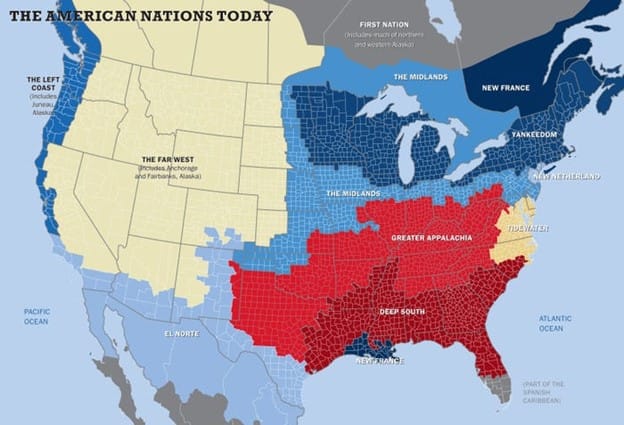
much of the culture wars of the right are being fought in the so-called Bible Belt states of the Deep South and in Washington, DC. The Bible Belt is not an official region, but it generally refers to the South where evangelical Protestant Christianity has historically been especially influential.
States most commonly included are:
- Alabama
- Arkansas
- Georgia
- Mississippi
- Tennessee
- South Carolina
- North Carolina
- Kentucky
- Oklahoma
- Louisiana
Many definitions also include:
- Texas
- Virginia
- West Virginia
- Missouri
- Florida (especially northern Florida)
The core of the Bible Belt is usually considered to be Alabama, Mississippi, Tennessee, Arkansas, and Georgia, where church attendance and evangelical Protestant affiliation have traditionally been among the highest in the nation. Pew Research notes that the South remains more religious than other regions of the United States, although religious participation has declined there as well. [pewresearch.org], [pewresearch.org]
Latest Ethnic/Racial Breakdown of the U.S. Population
Using recent Census-based estimates (ACS 2024), the U.S. population is approximately: [censusreporter.org], [census.gov]
| Group | Share of Population |
| Non-Hispanic White | 56% |
| Hispanic/Latino (any race) | 20% |
| Black/African American | 12% |
| Asian | 6% |
| Two or More Races | 5% |
| Native American | 1% |
| Pacific Islander | <1% |
| Other Race | 1% |
A major demographic trend is that the United States is becoming steadily more diverse due to immigration, intermarriage, and differing birth rates. [censusreporter.org]
Latest Religious Breakdown of Americans
According to Pew Research Center’s 2023–24 Religious Landscape Study: [pewresearch.org], [pewresearch.org]
.
| Christian | 62% |
| Religiously Unaffiliated (“Nones”) | 29% fastest growing segment, mostly in coastal blue states and cities |
| Non-Christian Religions | 7% concentrated in Blue States and cities |
| Other/No Answer | ~2% |
Among Christians: [pewresearch.org]
| Major Christian Groups | Share |
| Evangelical Protestant | 23% |
| Catholic | ~19% |
| Mainline Protestant | ~11% |
| Historically Black Protestant | ~5% |
| Mormon, Orthodox, and Other Christian | remainder |
Among non-Christian religions: [pewresearch.org], [prri.org]
- Jewish
- Muslim
- Hindu
- Buddhist
- Sikh
- Unitarian Universalist
- Other faith traditions
mostly in Blue States and Cities
collectively account for about 6–7% of Americans.
Linguistic Diversity Expanding
Using recent Census/ACS-based estimates, the most commonly spoken languages in the United States other than English are approximately: [statista.com], [jagranjosh.com]
| Rank | Language | Speakers |
| 1 | Spanish | ~41–45 million |
| 2 | Chinese (Mandarin, Cantonese, etc.) | ~3.5–3.7 million |
| 3 | Tagalog (Filipino) | ~1.7–1.9 million |
| 4 | Vietnamese | ~1.5–1.6 million |
| 5 | Arabic | ~1.4–1.5 million |
| 6 | French | ~1.2 million |
| 7 | Korean | ~1.1 million |
| 8 | Portuguese | ~1 million |
| 9 | Russian | ~1 million |
| 10 | Hindi |
j
Where They Tend to Live
Spanish
The dominant non-English language in the U.S. by a huge margin. It is especially concentrated in:
- California
- Texas
- Florida
- New Mexico
- Arizona
- Nevada
- Colorado
- New York
- Illinois
Large Spanish-speaking populations are found throughout the Southwest and in major metropolitan areas nationwide. statista
Chinese
Most concentrated in:
- California
- New York
- New Jersey
- Massachusetts
- Washington
- Georgia
Large communities exist in the San Francisco Bay Area, Los Angeles, New York City, and Seattle. Chinese is the leading non-English, non-Spanish language in numerous states. visualcapitalist+1
Tagalog (Filipino)
Most common in:
- California
- Hawaii
- Nevada
- Washington
- Alaska
California contains the largest Filipino-American population in the country. jagranjosh
Vietnamese
Strong concentrations in:
- California
- Texas
- Washington
- Virginia
- Oklahoma
Major Vietnamese-American centers include Orange County (California), San Jose, Houston, and Northern Virginia. jagranjosh
Arabic
Concentrated in:
- Michigan
- Illinois
- New York
- California
- Texas
The Detroit metropolitan area has one of the largest Arab-American populations in the United States. statista
French
Most common in:
- Louisiana (Cajun and Creole heritage)
- Maine
- Vermont
- New Hampshire
Due largely to historical ties with Canada and France. statista
Korean
Concentrated in:
- California
- New York
- New Jersey
- Virginia
- Georgia
Large communities exist in Los Angeles, northern New Jersey, and the Washington, D.C. suburbs. statista
Portuguese
Most common in:
- Massachusetts
- Rhode Island
- New Jersey
- Florida
- California
Historically linked to immigration from Portugal, Brazil, and the Azores. statista
Russian
Concentrated in:
- New York
- California
- Washington
- Oregon
- Alaska
Large Russian-speaking communities exist in Brooklyn and parts of the Pacific Northwest. statista
Hindi and Other South Asian Languages
Most concentrated in:
- California
- Texas
- New Jersey
- New York
- Illinois
Many Indian Americans also speak Gujarati, Telugu, Tamil, Punjabi, Bengali, Malayalam, and Urdu in addition to or instead of Hindi. statista
A Regional Pattern
The linguistic map of the United States broadly follows immigration patterns:
- Spanish dominates much of the Southwest and Florida.
- Chinese and Korean are strongest on the coasts and in major metropolitan areas.
- Tagalog and Vietnamese are especially prominent on the West Coast and in Texas.
- Arabic is concentrated around Detroit and other large metro areas.
- French retains regional strength in Louisiana and northern New England. visualcapitalist+1
Today, roughly one in five Americans speaks a language other than English at home, making the U.S. one of the most linguistically diverse countries in the world. statista+
Latest Ethnic/Racial Breakdown of the U.S. Population
Using recent Census-based estimates (ACS 2024), the U.S. population is approximately: censusreporter+1
| Group | Share of Population |
| Non-Hispanic White | 56% |
| Hispanic/Latino (any race) | 20% |
| Black/African American | 12% |
| Asian | 6% |
| Two or More Races | 5% |
| Native American | 1% |
| Pacific Islander | <1% |
| Other Race | 1% |
A major demographic trend is that the United States is becoming steadily more diverse due to immigration, intermarriage, and differing birth rates. censusreporter
Why This Matters Politically
The culture-war issues you have been asking about—DEI, multiculturalism, immigration, English-only policies, LGBTQ issues, religion in public life, and university curricula—are occurring against the backdrop of two major long-term changes:
- The United States is becoming more ethnically diverse.
- The United States is becoming less Christian and more secular.
- Ethnic and linguistic minorities are concentrated in Blue Cities and States and increasingly vote for the democratic party, while rural Red States remain primary white, Christian and vote for Republicans contributing to the increasing tribalism of American political life, exacerbated by gerrymandering political districts into safe one-party districts.
For many conservatives, especially in parts of the Bible Belt, these shifts raise concerns about preserving traditional American cultural and religious institutions. For many liberals and multiculturalists, these same shifts are seen as evidence that American institutions should become more inclusive of diverse identities, languages, and perspectives.
Much of the current debate over universities, museums, immigration, language policy, and the Smithsonian can be understood as a disagreement over how America should adapt to these demographic and cultural changes.
Texas: Bible-Based Instruction and the Ten Commandments
In recent years, Texas leaders have argued that Christianity played an important role in American history and that schools should devote more attention to the Bible’s historical and cultural influence.
The most significant recent development was a 2025 Texas law signed by Governor Greg Abbott requiring public school classrooms to display the Ten Commandments. Supporters argued that the Ten Commandments are foundational to American legal and moral traditions. Critics argued that the policy violates the constitutional principle of government neutrality toward religion and favors particular religious traditions. texastribune+1
The law immediately generated legal challenges from religious and nonreligious families, civil liberties organizations, and some educators. Opponents argued that requiring displays in every classroom amounts to government endorsement of religion, while supporters maintained that the displays have historical and educational value. 19thnews+1
Similar Movements Across the Bible Belt
Texas is part of a wider trend, particularly in Southern and Bible Belt states, that has included:
- Efforts to incorporate Bible-related materials into public school curricula.
- Requirements or proposals to display the Ten Commandments in schools.
- Expansion of school prayer protections.
- Greater emphasis on the role of Christianity in American history.
- School choice and voucher programs that allow public funding to be used at religious schools
- Growth of charter schools often religiously affiliated and an increase in home schooling and a decline in support for traditional public schools.
- They often argue these measures restore traditional values and correct what they view as excessive secularization of public institutions.
Critics argue that such policies blur the line between church and state and may marginalize religious minorities, non-Christians, and nonbelievers.
Florida’s “Don’t Say Gay” Controversy
Florida’s 2022 Parental Rights in Education Act became known nationally by critics as the “Don’t Say Gay” law.
Supporters rejected that label and argued that the law was designed to strengthen parental rights and ensure that discussions of sexuality and gender identity in early grades were age-appropriate.
Critics argued that the law had a chilling effect on discussions involving LGBTQ people and families, causing some teachers to avoid mentioning same-sex parents, sexual orientation, or gender identity out of fear of violating the law.
The controversy became one of the highest-profile culture-war disputes in the country. Supporters saw the law as protecting children from political or ideological instruction on gender and sexuality. Opponents viewed it as stigmatizing LGBTQ students and families.
How These Issues Connect
The Texas Ten Commandments debate and the Florida “Don’t Say Gay” controversy are often seen as two sides of the same broader conservative movement.
Conservatives frequently argue that:
- Schools have become too secular and too progressive.
- Traditional religious values have been marginalized.
- Parents should have greater control over children’s education.
- Schools should emphasize patriotism, civic virtue, and traditional morality.
Progressives often argue that:
- Public schools should remain religiously neutral.
- LGBTQ students and minority groups deserve visibility and inclusion.
- Government should not promote a particular religious tradition.
- Academic and educational decisions should not be driven by political ideology.
This conflict overlaps with debates over DEI, multiculturalism, Critical Race Theory, immigration, language policy, university curricula, and even museum exhibits such as those at the Smithsonian. At bottom, it reflects competing visions of what American identity is, what values schools should transmit, and how the nation’s history and culture should be presented to future generations.
“Decoding” The Smithsonian Controversy
The Smithsonian has become part of the same broader debate.
Conservatives have criticized some Smithsonian exhibits and educational materials for emphasizing:
- slavery,
- racism,
- colonialism,
- systemic inequality,
- and critiques of American institutions.
They argue that these presentations can portray the United States primarily through its failures.
Supporters argue that museums have an obligation to present a complete and historically accurate account of American history, including its injustices.
Thus the Smithsonian dispute connects directly to the larger DEI and “woke” debate:
- Conservatives generally want national institutions to emphasize shared national identity, civic unity, constitutional achievements, and patriotism.
- Progressives generally support broader inclusion of race, gender, colonialism, and historically marginalized perspectives in interpreting American history.
Anti-DEI, Woke Policies Part of Wider Culture War
At its core, the DEI/woke conflict is not really about a few university offices or training programs. It is a deeper disagreement over:
- How American history should be taught.
- Whether systemic racism remains a central feature of society.
- The role of race and identity in public life.
- The place of LGBTQ issues in education.
- Whether universities are politically balanced or dominated by the left.
- Whether government should intervene to reshape academic and cultural institutions.
That is why fights over universities, school curricula, museums, the Smithsonian, corporate diversity programs, and even public libraries often become part of the same national political struggle.
Who gets to tell America’s story?
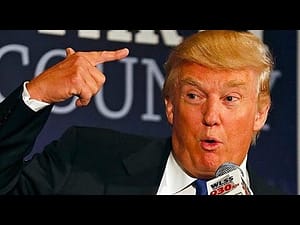
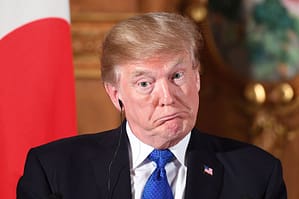
In recent months, President Donald Trump has escalated an extraordinary campaign against some of America’s most important cultural institutions, including the Smithsonian Institution, the National Park Service, and federally supported museums. The dispute is not merely about exhibits, budgets, or bureaucratic oversight.
At its core lies a larger question: Who gets to tell America’s story?
The conflict has profound implications for the proposed Smithsonian museums devoted to Women’s History, Latino History, and Asian Pacific American History—projects that are already stalled for legislative and political reasons. It also reflects a much broader debate over diversity, equity, and inclusion (DEI), historical interpretation, and what critics on the right call “cultural Marxism.”
How This Inquiry Began
My original questions were straightforward:
Are plans for new Smithsonian museums devoted to Women’s History, Asian Pacific History, and Hispanic History on hold? Where were they planned? And what is the proposed promenade connecting the Lincoln Memorial to the Potomac waterfront? [Are plans…d to Woman | Word]
As I dug deeper, new questions emerged:
Can these museum controversies be understood in the context of the President’s decree directing federally funded museums to restore “sanity” in history, and are objections to these museums driven by conservative concerns that they are overly “woke” or tied to DEI programming? [Are plans…d to Woman | Word]
The answers reveal a struggle that goes far beyond three proposed museums.
The President’s Case Against the Smithsonian

On March 27, 2025, President Trump issued Executive Order 14253, “Restoring Truth and Sanity to American History.” The order argues that American history has increasingly been rewritten through what it describes as ideological rather than factual interpretations. [whitehouse.gov], [federalregister.gov]
The order states that:
Americans have witnessed “a concerted and widespread effort to rewrite our Nation’s history, replacing objective facts with a distorted narrative driven by ideology rather than truth.” [whitehouse.gov], [federalregister.gov]
The order specifically criticizes the Smithsonian Institution for what it calls a “divisive, race-centered ideology” and cites museum exhibits discussing race, inequality, social construction of race, and gender issues as examples of this trend. [whitehouse.gov], [federalregister.gov]
The administration’s concerns can be summarized as follows:
- American history should emphasize national achievements and shared values.
- Museums should avoid narratives that portray America as fundamentally racist or oppressive.
- Federally funded institutions should not promote what the administration considers divisive racial or gender ideologies.
- Museums should celebrate American progress rather than focus disproportionately on historical injustices. [whitehouse.gov], [federalregister.gov]
In July 2026, the White House expanded the campaign through another executive order,“Restoring Trust in the Smithsonian Institution.” The order followed a White House report alleging ideological bias at the National Museum of American History and directed the National Park Service to install signage outside the museum informing visitors about the administration’s findings. [whitehouse.gov], [yahoo.com], [yahoo.com]
The Smithsonian’s Response
Smithsonian leaders have not embraced the administration’s characterization.
During recent congressional testimony, National Museum of American History Director Anthea Hartig defended the museum’s work, stating:
“We preserve and document the evidence of American life in all of its breadth, so that the public can encounter the past and draw their own conclusions.” [yahoo.com], [yahoo.com]
She also challenged the White House report, arguing that it did not fairly characterize the museum’s full body of work. [yahoo.com]
Earlier, Smithsonian Secretary Lonnie Bunch emphasized that the Institution would continue to be guided by scholarship rather than partisanship, a position reflected in the material preserved in my own notes. [Are plans…d to Woman | Word]
The broader historical profession has rallied to the Smithsonian’s defense. The American Historical Association argued that the administration’s efforts threaten scholarly independence and replace evidence-based history with a politically directed narrative. [historians.org]
What Republicans Are Saying
Republican critics contend that museums have increasingly adopted ideological frameworks rooted in identity politics.
House Republicans recently questioned Smithsonian leadership in congressional hearings regarding exhibits they argue portray America primarily through the lenses of oppression, racism, and social conflict. [yahoo.com], [abcnews4.com]
The White House report accompanying the latest executive orders argues that some Smithsonian exhibitions prioritize social justice activism over objective historical interpretation. [whitehouse.gov]
Conservatives generally argue that:
- History should unite rather than divide Americans.
- Museums increasingly emphasize grievance narratives.
- DEI frameworks can distort historical interpretation.
- Taxpayer-funded institutions should not function as vehicles for political activism. [whitehouse.gov], [whitehouse.gov]
What Democrats and Museum Defenders Are Saying
Democrats, historians, and many museum professionals see the issue very differently.
They argue that:
- Honest history includes slavery, discrimination, segregation, and exclusion.
- Discussing race, gender, and inequality is not anti-American.
- Government efforts to police historical interpretation amount to political censorship.
- Museums must remain independent of presidential administrations. [historians.org], [yahoo.com]
From this perspective, efforts to reshape museum exhibits constitute state involvement in historical interpretation rather than the defense of neutrality.
The Stalled Museums
The controversy has become especially important because three proposed Smithsonian museums remain in limbo.
Smithsonian American Women’s History Museum
Authorized in 2020, the museum remains stalled after legislative disputes over location and content. The project has become entangled in broader debates over gender identity and the role of DEI in public institutions. [Are plans…d to Woman | Word], [Are plans…d to Woman | Word]
National Museum of the American Latino
Also authorized in 2020, the Latino Museum remains delayed while Congress continues debating site approval and other questions. Critics have argued that some planning materials reflect ideological perspectives, while supporters insist the museum fills an important gap in the national story. [Are plans…d to Woman | Word], [Are plans…d to Woman | Word]
Asian Pacific American Museum
Unlike the first two projects, this museum remains largely conceptual. Planning discussions continue, but no fully authorized standalone museum has yet emerged. [Are plans…d to Woman | Word], [Are plans…d to Woman | Word]
Cultural Marxism: What Is It?
One of the most controversial concepts in this debate is “cultural Marxism.”
The term is used primarily by conservatives to describe the belief that ideas originating in Marxist critiques of power have migrated from economics into culture, education, media, and institutions.
Under this interpretation:
- Traditional Marxism focused on class conflict.
- Cultural Marxism shifts attention toward race, gender, identity, sexuality, and social power.
- Institutions become arenas for political transformation rather than neutral inquiry.
Critics of the concept argue that “cultural Marxism” is often used too broadly, lumping together many unrelated academic traditions and political movements.
Whether one accepts the term or not, the argument clearly influences current disputes over museums, universities, and public history.
The Postmodern Challenge to Traditional History
A second intellectual influence is postmodernism.
Traditional historians generally sought objective reconstruction of the past from evidence and documents.
Postmodern scholars argued that:
- All narratives contain assumptions.
- Historical accounts reflect power relationships.
- Marginalized voices have often been excluded from official narratives.
- History is not merely about facts but also about interpretation.
Many modern museum exhibits have incorporated these ideas, emphasizing perspectives previously omitted from mainstream accounts.
Critics argue that this can lead to politicized history.
Supporters respond that it produces a fuller and more accurate understanding of American life.
is which version of the past Americans will choose to remember—and who gets to decide.
Recent Congressional Testimony: The Dispute Moves to Capitol Hill
The controversy intensified in July 2026 when the House Subcommittee on Delivering on Government Efficiency examined allegations that the Smithsonian’s National Museum of American History had adopted a politically biased interpretation of American history. Republicans questioned whether exhibits were presenting the nation’s past primarily through themes of racism, oppression, and social conflict rather than achievement, innovation, and constitutional development. [yahoo.com], [abcnews4.com]
The hearing followed publication of a White House Domestic Policy Council report, Saving America’s Story, which accused Smithsonian leadership of treating American history as a vehicle for social transformation rather than as a shared national inheritance. The subsequent executive order, Restoring Trust in the Smithsonian Institution, explicitly cited that report. [whitehouse.gov]
Republican lawmakers argued that taxpayers should not fund institutions that, in their view, promote ideological narratives. Their concern was not merely that controversial subjects were discussed, but that the overall framework of interpretation had become unbalanced and excessively focused on race, identity, and historical grievance. [whitehouse.gov], [whitehouse.gov]
Democratic members and museum defenders countered that the Smithsonian’s role is not to serve any administration’s preferred narrative but to present scholarship as historians understand it. They argued that confronting slavery, segregation, discrimination, and inequality is not anti-American but an essential part of understanding the nation’s development. [historians.org], [yahoo.com]
Direct Statements from Smithsonian Officials
Museum leaders have pushed back firmly but carefully against the administration’s criticism.
National Museum of American History Director Anthea Hartig testified:
“We preserve and document the evidence of American life in all of its breadth, so that the public can encounter the past and draw their own conclusions.” [yahoo.com], [yahoo.com]
Responding directly to White House criticism, Hartig also stated:
“As we continue to fact check the report, we unwaveringly attest that it does not fairly or accurately characterize the full body of work at the museum.” [yahoo.com]
Earlier, Smithsonian Secretary Lonnie Bunch emphasized that the Institution would continue to be guided by professional scholarship and that its work would remain “shaped by the best scholarship, free of partisanship.” This has become one of the central statements of resistance to White House pressure. [Are plans…d to Woman | Word]
The Smithsonian’s response reflects a long-standing belief among museum professionals that curatorial judgment should be insulated from political intervention regardless of which party occupies the White House.
Flordia Ground Zero for Culture War Against DEI/WOKE
What has Florida actually done?
Florida under Governor Ron DeSantis has become the leading state laboratory for anti-DEI policies, where “Woke” goes to die to quote Governor DeSantis. Texas and Oklahoma are not far behind in their official “anti-Woke” agenda, which is shared widely among “Red States” particularly in the Deep South, Bible Belt states.
1. The Stop WOKE Act (2022)
Florida enacted legislation restricting how race and gender concepts could be taught in schools and universities.
DeSantis argued the law was needed to prevent “indoctrination” and to stop students from being taught that they bear responsibility for historical injustices because of their race. [news.wfsu.org], [politico.com]
Major portions affecting higher education have been blocked by federal courts on First Amendment grounds. [cnbc.com], [politico.com], [theguardian.com]
2. Restrictions on DEI offices
Florida’s SB 266 prohibited state universities from spending public funds on many DEI activities and programs. According to the Florida Department of Education, the law prohibits spending state or federal dollars on DEI initiatives and restricts programs based on theories of systemic racism or oppression. [fldoe.org]
3. Curriculum Review
Florida officials reviewed university general education curricula and reduced the number of courses approved for general education requirements. [fldoe.org]
4. New College of Florida
The DeSantis administration replaced much of the board at New College of Florida and explicitly sought to transform it from a progressive institution into a more traditionally conservative liberal arts college.
This became a national symbol of the conservative effort to reform higher education.
Are Conservatives Trying to Eliminate Whole Academic Fields?
There is a debate here.
Some conservative activists and think tanks have argued for ending or shrinking:
- gender studies,
- ethnic studies,
- queer studies
- women studies
- regional studies programs particularly focused on the Mideast
- and decreasing general humanities instruction
- focusing more on STEM and business education programs
- DEI bureaucracies,
- and some diversity-related academic programs.
Their argument is that taxpayers should not fund what they regard as political activism.
Critics respond that such proposals threaten academic freedom and would remove legitimate scholarly disciplines.
Florida’s actual laws focus primarily on DEI funding, curriculum restrictions, and certain concepts related to race and gender rather than formally banning every ethnic studies or women’s studies program. However, opponents argue the practical effect is to weaken such fields. [fldoe.org], [scholarshi…aw.ufl.edu]
The Argument About “Viewpoint Diversity”
A major conservative theme is that universities need more ideological diversity.
Conservatives argue that:
- faculties are overwhelmingly progressive,
- conservative students and professors are marginalized,
- and universities should encourage a broader range of political viewpoints.
Progressives often respond that academic standards, not ideology, determine hiring and scholarship, and that government intervention threatens institutional independence.
/
War on Scientific Research – Cancelling Research Grants
A related issue is the war on scientific research. Recently, the Trump regime has cancelled millions of dollars in grants to universities on dubious grounds, explained below. The war on science and the war on musuems come from the same right-wing distruct of cultural elites.
|
Olvia of Troy: The White House Wants to Rewrite the Museum
Olivia of Troye, a former Trump insider turned sharp critic put it as follows:
This week, President Trump signed an executive order declaring that the Smithsonian has been “ideologically captured” and directing federal agencies to pressure the institution to change course.
But this executive order isn’t really about one museum. It’s part of a broader governing strategy that’s become increasingly clear throughout the past year. Rather than simply changing policy, the administration is using executive authority to reshape institutions it believes have become ideologically biased, from universities to museums and other cultural institutions. The Smithsonian is simply the latest example, but it almost certainly won’t be the last. Here’s the part that made me stop scrolling.
The order directs the National Park Service to install government signage outside the National Museum of American History warning visitors that the museum’s exhibits are biased and directing them to what the White House considers more accurate historical information. This is an extraordinary use of executive authority.
Visitors won’t just be walking into a museum. They’ll be walking past government-issued commentary telling them how to interpret what’s inside. And that, my friends, is Putin-style government propaganda.
The White House vs. the Smithsonian (White House Executive Orde
Trump’s Smithsonian Obsession Driven by Christian Nationalist ‘Historian’
A view of the Smithsonian National Museum of American History in Washington, D.C., U.S., July 25, 2026. REUTERS/Ken Cedeno
President Donald Trump’s “Restoring Trust in the Smithsonian Institution” executive order, which requires disclaimer signs characterizing museum exhibits as “inaccurate” and anti-American, closely mirrors claims made by David Barton, a Christian nationalist activist and self-described historian, according to Popular Information’s Judd Legum.
“Despite having no degree in history, David Barton calls himself a historian,” Legum explained.
Historians repeatedly reject his work, and his 2012 Jefferson book was pulled from shelves after scholars claimed it contained distortions and false information, Politico reported.
Trump’s order and Barton’s claims share similar themes according to Legum: downplaying slavery’s severity, rehabilitating Christopher Columbus as an American hero, and asserting Christianity’s influence on the founding fathers.
Additionally, Legum referenced the “WallBuilders Show,” a daily podcast by Tim Barton, David Barton & Rick Green. Specifically, he noted an episode in which the Bartons claim the White House invited them to be active participants in identifying “problematic” exhibits.
Rep. Melanie Stansbury (D-NM) called the executive order “one of the dumbest and most bizarre” ever issued.
The National Park Service Front in the History Wars
The Smithsonian is only one battlefield in the administration’s broader effort to reshape how federal institutions present American history. The National Park Service (NPS), which manages hundreds of historic sites, monuments, battlefields, and museums, has become an equally important target of the administration’s campaign against what it calls “divisive” and “anti-American” interpretations of the past. [whitehouse.gov], [oah.org]
What the Administration Has Done
Executive Order 14253 did not limit itself to the Smithsonian. The order specifically cited concerns about programming and interpretation at Independence National Historical Park in Philadelphia and directed federal officials to identify and remove content that allegedly promotes ideological interpretations of American history. [whitehouse.gov], [federalregister.gov]
According to the order, previous programs at Independence National Historical Park had allegedly encouraged rangers to interpret American history primarily through the lens of institutional racism. The administration argued that this represented a broader trend throughout federal cultural institutions. [whitehouse.gov], [federalregister.gov]
Implementation followed through Secretary of the Interior directives requiring review of exhibits and interpretive materials that might “inappropriately disparage Americans past or living.” The National Park Service subsequently reviewed exhibits across the park system. [oah.org]
The most controversial action occurred at Philadelphia’s Independence National Historical Park.
In January 2026, the Park Service removed the exhibit“Freedom and Slavery in the Making of a New Nation” from the President’s House site, where George Washington lived during his presidency while enslaving members of his household. The exhibit explored what historians often describe as the central contradiction of the American founding: the coexistence of liberty and slavery. [nationalpa…aveler.org], [apnews.com]
The removal was explicitly connected to the administration’s implementation of Executive Order 14253. [nationalpa…aveler.org], [oah.org]
Subsequent reporting indicated that more than 1,000 items across the National Park System were flagged for review. According to reporting on the court challenge, topics reportedly reviewed or flagged included material relating to slavery, Native American history, Japanese American internment, LGBTQ history, and climate change. [nationalpa…aveler.org]
The Administration’s Argument
The administration’s position is broadly consistent with its criticisms of the Smithsonian.
Supporters argue that:
- National parks should strengthen civic unity.
- Historical interpretation should emphasize American achievement and democratic progress.
- Federal sites should avoid narratives that portray the nation principally as a history of oppression.
- Visitors should encounter history that is educational without being politically ideological. [whitehouse.gov], [federalregister.gov]
From this perspective, the administration is not erasing history but correcting what it considers ideological distortions that have accumulated over recent decades.
Public and Scholarly Reaction
The reaction was immediate and intense.
Historians, preservation groups, civil-rights organizations, and local officials accused the administration of attempting to sanitize or selectively edit the historical record. [oah.org], [apnews.com]
The removal of the slavery exhibit in Philadelphia generated especially strong criticism.
According to Associated Press reporting, critics accused the administration of “whitewashing history.” Visitors left flowers at the site, and one hand-written sign read:
“Slavery was real.” [apnews.com]
Representative Jared Huffman and other members of Congress demanded explanations from Interior Department officials, arguing that removing such exhibits prevented the public from understanding the full historical record. [nationalpa…aveler.org]
The Organization of American Historians condemned the action, arguing that removing information about slavery from one of the nation’s most important historical sites fundamentally misrepresented the realities surrounding the country’s founding. [oah.org]
The City of Philadelphia sued the Interior Department and the National Park Service, contending that removal of the exhibit violated existing agreements governing the historic site. [eji.org], [nationalpa…aveler.org]
A federal judge subsequently ordered restoration of the exhibit, concluding that the display had to be returned while litigation proceeded. The Park Service ultimately reinstalled the interpretive materials. [nationalpa…aveler.org], [sierraclub.org]
Why the National Park Service Matters
The significance of these disputes extends well beyond Philadelphia.
The National Park Service preserves many of the nation’s most important historical sites:
- Independence Hall
- Gettysburg
- Antietam
- Civil Rights landmarks
- Native American historic sites
- Sites associated with slavery and emancipation
As a result, controversies over NPS interpretation affect tens of millions of visitors annually. The same philosophical divide visible at the Smithsonian appears throughout the Park Service.
The administration argues that these sites should cultivate patriotism and national cohesion. Historians and many preservation advocates respond that patriotism is strengthened—not weakened—by confronting difficult truths alongside national accomplishments. [whitehouse.gov], [historians.org], [oah.org]
The conflict therefore becomes not simply a dispute about exhibits, but a struggle over the federal government’s role in shaping collective memory. Just as the Smithsonian has become a battleground over America’s story, the National Park Service has become a battleground over how that story is told on the physical landscape of the nation itself. [whitehouse.gov], [oah.org], [nationalpa…aveler.org]
Climate Change, the Grand Canyon, and the Expanding NPS Controversy
You should strongly consider adding a separate section because the climate-change controversy demonstrates that the administration’s campaign extends well beyond questions of race, slavery, and DEI. Critics argue that it has become a broader effort to reshape how federal agencies present science, environmental change, and American history. [nationalpa…aveler.org], [protectnps.org]
From History to Science
Initially, public attention focused on the removal of slavery-related exhibits at Independence National Historical Park. But by early 2026, reports emerged that National Park Service staff had been instructed to review or remove interpretive materials addressing:
- Climate change
- Native American displacement
- Historical racism
- LGBTQ issues
- Other subjects viewed as potentially conflicting with Executive Order 14253 and related Interior Department directives. [nationalpa…aveler.org], [deseret.com], [protectnps.org]
According to reporting cited by conservation groups and media outlets, some of the country’s most prominent parks—including Grand Canyon, Glacier, Big Bend, and Zion—were affected by these reviews. [nationalpa…aveler.org], [deseret.com], [protectnps.org]
What Happened at the Grand Canyon?
Reports indicate that interpretive displays at Grand Canyon National Park discussing the forced displacement of Native peoples were targeted for review or removal. [nationalpa…aveler.org], [protectnps.org]
Critics argue that such materials are not political advocacy but historically documented accounts of how Indigenous communities were affected by western expansion and federal land policies. [protectnps.org]
Supporters of the administration respond that federal sites should avoid what they regard as one-sided narratives that emphasize historical wrongdoing without sufficient attention to broader national achievements. That general rationale is consistent with the administration’s stated approach toward federal historical interpretation. [whitehouse.gov], [federalregister.gov], [deseret.com]
The Glacier National Park Controversy
Perhaps the most controversial scientific example involved Glacier National Park.
Reports stated that signs and displays explaining glacier retreat and climate-change impacts were among the materials ordered removed or revised. [nationalpa…aveler.org], [protectnps.org]
The controversy attracted significant attention because the shrinking of glaciers is one of the most visible environmental changes occurring within the National Park System. Critics argued that removing climate-related information effectively prevents visitors from understanding observable changes taking place within the park itself. [nationalpa…aveler.org], [protectnps.org]
How the Administration Justifies the Policy
The Interior Department has stated that agencies are reviewing interpretive materials to ensure:
“accuracy, honesty, and alignment with shared national values.” [deseret.com], [protectnps.org]
This language closely mirrors the language used in Executive Order 14253 and later Smithsonian-related actions. The administration’s argument is that federal institutions should not promote ideological viewpoints under the guise of education. [whitehouse.gov], [federalregister.gov], [deseret.com]
The Public Reaction
The backlash has been substantial.
Conservation organizations, historians, museum professionals, environmental groups, and former Park Service officials have argued that the reviews amount to censorship rather than correction. [sierraclub.org], [protectnps.org]
The National Parks Conservation Association accused the administration of suppressing established history and science. [protectnps.org]
The Sierra Club argued that removing references to climate change, Native American history, and slavery constitutes an effort to present a “sanitized version of history.” [sierraclub.org], [nationalpa…aveler.org]
What is particularly striking is that opposition has not been confined to environmental groups. The resistance has included:
- Historians
- Preservation organizations
- Local governments
- Tribal advocates
- Former National Park Service personnel
- Members of Congress from affected areas [nationalpa…aveler.org], [oah.org], [nationalpa…aveler.org]
Why This Matters
The Grand Canyon and Glacier controversies expand the debate beyond the familiar arguments over race, DEI, and historical interpretation.
The deeper question becomes:
Should federal agencies present scientific and historical findings wherever they lead, even when those findings are politically controversial? Or should they shape public interpretation around civic unity, national cohesion, and what the administration calls “shared national values”? [whitehouse.gov], [federalregister.gov], [deseret.com]
That question now sits at the center of disputes not only involving the Smithsonian, but also the National Park Service, public lands, environmental education, and the broader struggle over who gets to define America’s past—and increasingly, its present. [nationalpa…aveler.org], [protectnps.org], [whitehouse.gov]
A Struggle Over American Memory
Viewed in this context, the fight over the Smithsonian is not merely about museum labels or exhibit text.
It is a conflict between two philosophies of history.
The administration argues that public institutions should reinforce national cohesion, civic pride, and shared values. The Smithsonian and many professional historians argue that civic trust is strengthened—not weakened—by presenting a fuller account of American achievements and failures.
What makes this moment unusual is that the disagreement has moved beyond academic journals and museum conferences into executive orders, congressional investigations, agency reviews, and national political campaigns.
The battle is no longer simply over what happened in AmIt is over who has the authority to define what American history means.
Endnotes
- White House, Executive Order 14253,“Restoring Truth and Sanity to American History,” March 27, 2025. [whitehouse.gov], [federalregister.gov]
- White House,“Restoring Trust in the Smithsonian Institution,” July 24, 2026. [whitehouse.gov]
- Congressional Research Service,“Smithsonian Institution: Potential Effects of Executive Order 14253,” April 23, 2025. [congress.gov]
- Testimony of Anthea Hartig, National Museum of American History, before House oversight proceedings concerning Smithsonian exhibits. [yahoo.com], [yahoo.com]
- American Historical Association,“Historians Defend the Smithsonian,” July 9, 2026. [historians.org]
- Notes and research preserved in Are plans for new Smithosonian musuems devoted to Woman. [Are plans…d to Woman | Word]



































































 author at a Korean temple 1980?









 JOHN (JAKE) COSMOS ALLER
 3 5 7 love poem