I have been fascinated by the color of politics around the world, especially intrigued by how the color schemes flipped in the U.S. from red symbolizing the left to red symbolizing the right in recent decades. I noticed that this shift has occurred in both Japan and Korea in recent decades as well.
I explore the color of politics starting in the US, where I have lived in blue states, purple states, and red states, then looking at Korea where I currently reside since I retired in 2016, and have been coming to for decades since I first went there in 1979 in the Peace Corps, and finally look at the color of politics in other countries.
And I explore what does it mean that the color of politics scheme has flipped – In the U.S., and a few other places ? I recall growing up Red was for communism, blue for conservative, and green well has always been green. When did this occur?
The underlying data is taken from various sources, cited in the endnotes. My commentary is labeled “comment”. My data sources mostly talked about political movements by color, I re-arranged that to discuss political movements by country. Thought that was a more useful analysis.
In the U.S.
A key exception to the convention of red to mean socialism is the United States. Since about the year 2000, the mass media have associated red with the Republican Party, even though the Republican Party is a conservative party (see red states and blue states).[24] This use is possibly entrenched, as many political organizations (for example, the website RedState) now use the term. Conservative parties such as the Liberal Democratic Party of Japan and the People Power Party of South Korea also adopted red as their political color in recent years.
“Since around the 2000 United States presidential election, red states and blue states have referred to states of the United States whose voters predominantly choose either the Republican Party (red) or Democratic Party (blue) presidential and senatorial candidates.[1] Since then, the use of the term has been expanded to differentiate between states being perceived as liberal and those perceived as conservative.[not verified in body] Examining patterns within states reveals that the reversal of the two parties’ geographic bases has happened at the state level, but it is more complicated locally, with urban-rural divides associated with many of the largest changes.[2]
Origins of the Color Scheme
The colors red and blue are also featured on the United States flag. Traditional political mapmakers, at least throughout the 20th century, had used blue to represent the modern-day Republicans, as well as the earlier Federalist Party. This may have been a holdover from the Civil War, during which the predominantly Republican north was considered “blue”.[5] However, at that time, a maker of widely-sold maps accompanied them with blue pencils to mark Confederate force movements, while red was for the union.[6]
Later, in the 1888 presidential election, Grover Cleveland and Benjamin Harrison used maps that coded blue for the Republicans, the color perceived to represent the Union and “Lincoln‘s Party”, and red for the Democrats.[7] The parties themselves had no official colors, with candidates variously using either or both of the national color palette of red and blue (white being unsuitable for printed materials).
There was one historical use, associated with the boss rule, of blue for Democrats and red for Republicans: in the late 19th century and early 20th century, Texas county election boards used color-coding to help Spanish-speaking and illiterate voters identify the parties;[8] however, this system was not applied consistently in Texas and was not replicated in any other state. In 1908, The New York Times printed a special color map, using blue for Democrats and yellow for Republicans, to detail Theodore Roosevelt‘s 1904 electoral victory.[9] That same year, a color supplement included in a July issue of the Washington Post used red for Republican-leaning states, blue for Democratic-leaning states, yellow for “doubtful” states, and green for territories that had no presidential vote.[10]”
Contemporary Use
“The advent of color television in America in the late 1950s and early 1960s prompted television news reporters to rely on color-coded electoral maps, though sources conflict as to the conventions they followed. One source claims that in the elections before 2000 every state that voted for Democratic candidates but one had been coded red. It further claims that from 1976 to 2004 in an attempt to avoid favoritism in color-coding the broadcast networks standardized the convention of alternating every four years between blue and red the color used for the incumbent president‘s party.[10][13]
According to another source, in 1976, John Chancellor, the anchorman for NBC Nightly News, asked his network’s engineers to construct a large illuminated map of the United States. The map was placed in the network’s election-night news studio. If Jimmy Carter, the Democratic candidate that year, won a state, it lit up in red whereas if Gerald Ford, the incumbent Republican president, carried a state, it was in blue.[1] The feature proved to be so popular that, four years later, all three major television networks used colors to designate the states won by the presidential candidates, though not all using the same color scheme. NBC continued its color scheme (blue for Republicans) until 1996.[1] NBC newsman David Brinkley famously referred to the 1980 election map outcome showing Republican Ronald Reagan‘s 44-state landslide in blue as resembling a “suburban swimming pool”.[14]
Since the 1984 election, CBS has used the opposite scheme: blue for Democrats, red for Republicans. ABC used yellow for Republicans and blue for Democrats in 1976, then red for Republicans and blue for Democrats in 1980, 1984, and 1988. In 1980, when John Anderson ran a relatively high-profile campaign as an independent candidate, at least one network provisionally indicated that they would use yellow if he were to win a state. Similarly, at least one network would have used yellow to indicate a state won by Ross Perot in 1992 and 1996, though neither of them did claim any states in any of these years.”
By 1996, color schemes were relatively mixed, as CNN, CBS, ABC, and The New York Times referred to Democratic states with the color blue and Republican ones as red, while Time and The Washington Post used the opposite scheme.[15][16][17] NBC used the color blue for the incumbent party, which is why blue represented the Democrats in 2000.
In the days following the 2000 election, whose outcome was unclear for some time after election day, major media outlets began conforming to the same color scheme because the electoral map was continually in view, and conformity made for easy and instant viewer comprehension. On election night that year, there was no coordinated effort to code Democratic states blue and Republican states red; the association gradually emerged. Partly as a result of this eventual and near-universal color-coding, the terms “red states” and “blue states” entered popular use in the weeks following the 2000 presidential election. After the results were final with the Republican George W. Bush winning, journalists stuck with the color scheme, as The Atlantic‘s December 2001 cover story by David Brooks entitled, “One Nation, Slightly Divisible”, illustrated.[18]”
Thus, red and blue became fixed in the media and many people’s minds, although the Democratic and Republican parties had not officially chosen colors.[19] Some Republicans argue the GOP should retain its historic link with blue since most center-right parties worldwide are associated with blue. On March 14, 2014, the California Republican Party officially rejected Red and adopted blue as its color. Archie Tso, The New York Times graphics editor who made the choice when the Times published its first color presidential election map in 2000, provided a nonpolitical rationale for retaining the red–Republican link, explaining that “Both ‘Republican’ and ‘red’ start with the letter ‘R.’”[20]”
In the United States, the two major political parties use national colors, i.e. red, white and blue. Historically, the only common situation in which it has been necessary to assign a single color to a party has been in the production of political maps in graphical displays of election results. In such cases, there had been no consistent association of particular parties with particular colors. Between the early 1970s and 1992, most television networks used blue to denote states carried by the Democratic Party and red to denote states carried by the Republican Party in presidential elections. A unified color scheme (blue for Democrats, red for Republicans) began to be implemented with the 1996 presidential election; in the weeks following the 2000 election, there arose the terminology of red states and blue states.
Political observers latched on to this association, which resulted from the use of red for Republican victories and blue for Democratic victories on the display map of a television network. As of November 2012, maps for presidential elections produced by the U.S. government also use blue for Democrats and red for Republicans.[78] In September 2010, the Democratic Party officially adopted an all-blue logo.[26] Around the same time, the official Republican website began using a red logo.
The conservative Blue Dog Coalition within the Democratic Party adopted the color blue at its founding before the 2000 election solidified the red-blue convention.
There is some historical use of blue for Democrats and red for Republicans: in the late 19th century and early 20th century, Texas county election boards used color-coding to help Spanish speakers and illiterates identify the parties,[79] but this system was not applied consistently in Texas and was not picked up on a national level. For instance, in 1888, Grover Cleveland and Benjamin Harrison used maps that coded blue for the Republicans, the color Harrison perceived to represent the Union, and “Lincoln‘s Party” and red for the Democrats.[80]
As the other TV operations went to full color, they too added vivid maps to their election night extravaganzas. But they didn’t agree on a color scheme, so viewers switching between channels might see Ronald Reagan’s landslide turning the landscape blue on NBC and CBS but red on ABC.”
In the United States, the color blue has been associated with the liberalDemocratic Party since around the 2000 presidential election, when most of the major television networks used the same color scheme for the parties.[24][25] This makes the United States an exception to the general rule that blue represents conservative parties; the major conservative party in the United States, the Republican Party, uses red. In 2010, the party unveiled a blue official logo[26] (see red states and blue states).
Now, in America, red has become the color of conservatism. An accident of media history, the current colors are evidence of the randomness and instability of political color codes – though it’s unlikely Donald Trump will be selling blue “Make America Great Again” baseball caps any time soon.”
Purple Swing States
Purple is also unofficially used in the United States to denote a “swing state“, swing district, or county. (i.e. one contested frequently between the Republican Party, whose unofficial color is red; and the Democratic Party, whose unofficial color is blue). Purple is also used by centrists to represent a combination of beliefs belonging to the Republicans (red) and the Democrats (blue). It has also been used to reference Purple America, a term used in contrast to “blue” or “red”, noting the electoral differences nationwide are observed more on discrepancies instead of unity (see red states and blue states).
All states contain considerable amounts of both liberal and conservative voters (i.e., they are “purple”) and only appear blue or red on the electoral map because of the winner-take-all system used by most states in the Electoral College.[3][4] However, the perception of some states as “blue” and some as “red” was reinforced by a degree of partisan stability from election to election—from the 2000 election to the 2004 election, only three states changed “color” and as of 2020, fully 35 out of 50 states have voted for the same party in every presidential election since the red-blue terminology was popularized in 2000, with 10 swing states as of the 2020 election. Although many red states and blue states stay in the same categorical placement for some time, they may also switch from blue to red or from red to blue—over time, spanning many years.”
Yellow
In the United States, the color yellow was the official color of the suffrage movement of the late 19th and early 20th centuries.[74] In the 21st century, the Libertarian Party‘s official branding colors are gold-yellow, grey, and black.[75] The gold-yellow color is prominent because of the historical association with classical liberalism and a gold-backed currency and free markets.
Green
Comment: the color green has become identified with the green party, and to some extent with the democratic party as well. Although formal green party candidates have not done that well electorally speaking, the green movement has been quite successful politically. Green has also been the color of pro-marijuana legalization movements in the U.S. and elsewhere. and the green color was also used by agrarian and populist movements in the late 19th century. End Comment
Interestingly, Japan and Korea have also adopted the US color scheme, with liberal parties adopting blue and conservative parties adopting red colors. This is quite a contrast to when I first visited Korea in the late 70’s when red “빨간 Balgan) ” was still used an an insult to describe some one who was pro-communist.
In Japan, the Liberal Democratic Party (LDP) uses green as its official color, though in recent years it has changed to use red.
Korea
“As in most other places of the world, colors are a very powerful tool used in Korean politics for delivering the right messages to the people.
Red – reminds people of communism. It is also the color of labor strikes and management disputes.
Blue and green represent stability, honesty, harmony, and growth. President Myung Bak Lee often wore light blue for this very meaning along with an emphasis on economic growth.
Vivid yellow – this happens to be the most successful political color in Korea. Two former presidents (Moo-Hyun Rho and Dae-Jung Kim) chose this color to emphasize a message of hope and peace.
FIFA World Cup and its influence on the popularity of red colors in Korea
Red had many negative perceptions in the past for Koreans, especially in politics and industry. Mainly, it symbolized the communist ideology, riots, labor unions, and unrest. However, the FIFA world cup of 2002 (Korea-Japan) gave the color a whole different symbolic meaning, and it started being viewed as the color of vitality, energy, joy, and festivity. Koreans now believe that red evokes passion and excitement in people and connects them in oneness.”
Comment: Starting in 2000 or so Koreans also adopted the blue/red colors to describe domestic politics, departing from the traditional use of red for left and blue for right-wing political parties. The most recent election featured a dramatic split in Korean politics, the eastern side of the county was red and the western side was blue. The southwest was solid blue – 80 percent for the liberal party. Seoul and Incheon were purple but leading blue, and the SE the traditional homeland of conservative parties was solid red.
In South Korea, traditionally blue was used by conservative parties. In 2013, blue has adopted by the Liberal Democratic Party of Korea (previously used as green and yellow), while the conservative party change its color from blue to red.
“This unintended color-coding of American politics reversed the political associations of red and blue that exist almost everywhere else in the world.
This association has the potential to confuse foreign observers in that, as described above, red is traditionally a left-wing color (as used with the Democratic Socialists of America), while blue is typically associated with right-wing politics.[1] This is further complicated by the diversity of factions in the Democratic Party ranging from conservatives to right-libertarians to democratic socialists alongside the dominant centrist and social liberal elements of the party that outside the United States often each uses different political colors.”
“The recent (21st century) association of colors in American politics lies contrary to the long-standing conventions of political color in most other countries whereby red symbols (such as the red flag or red star) are associated with left-wing politics.[11] Indeed, as late as the 1990s, Democrats were often represented by red and Republicans by blue.[1] According to The Washington Post, journalist Tim Russert coined these terms during his televised coverage of the 2000 presidential election.[12] The 2000 election was not the first during which the news media used colored maps to depict voter preferences in the various states, but it was the first time a standard color scheme took hold. In previous elections, the color assignments or even the actual colors used were often different.”
The Choice Of Colors In This Divide May Appear Counter-Intuitive To Non-American Observers, As In Most Countries, Red Is Associated With Socialist, Communist, Or Social Democratic Parties, While Blue Is Associated With Conservative Parties. For Example, The Major Center-Right Conservative Parties In Germany, The United Kingdom, Canada, Australia, New Zealand, Brazil, Italy, Spain And France All Use Blue Or Its Shades (Whether Officially Or Unofficially) Whereas The Major Socialist, Communist, Or Social Democratic Parties In Each Country Are Associated With Red.
If The U.S. Followed Such A Pattern, Blue Would Be Used For The Republicans And Red For The Democrats. However, The Current U.S. Scheme Has Become So Ingrained In The American Election System That Foreign Sources Who Cover U.S. Elections, Such As The BBC, Der Spiegel, And El Mundo Follow With The Red-Republican, Blue-Democratic Scheme For U.S. Elections.[49][5
Parties in different countries with similar ideologies sometimes use similar colors. As an example the color red symbolizes left-wing ideologies in many countries (leading to such terms as “Red Army” and “Red Scare“), while the color blue is often used for conservatism, the color yellow is most commonly associated with liberalism and right-libertarianism, and Green politics is named after the ideology’s political color.[2][3]
The political associations of a given color vary from country to country, and there are exceptions to the general trends.[2][3] For example, red has historically been associated with the monarchy or the Church, but over time gained an association with leftist politics, while the United States differs from other countries in that conservativism is associated with red and liberalism with blue.[2][3]
Politicians making public appearances will often identify themselves by wearing rosettes, flowers, or ties in the color of their political party.”
By Country/Group
Agrarian Movements (Green)
Green has sometimes also been linked to agrarian movements, such as the Populist Party, in the U.S. in the 1890s and the current-day Nordic Agrarian parties, as well as the National Party of Australia, a conservative party traditionally representing regional and agricultural interests.[37] The International Agrarian Bureau, though often known as the “Green International”, did not formally endorse the color, although its successor, called International Peasant Union, was represented by a clover.[38]
It has been used to represent the Purple governments of Belgium and the Netherlands, formed by an alliance of red social-democratic and blue liberal parties.
“In Brazil, the right-wing populist and formerly social-democratic Brazilian Labor Party uses black. Black is also the color of the far-left Popular Unity
In Australia, yellow is used to represent the right-wing, nationalist United Australia Party when it was revived in 2013. Before its dissolution in 1945 as the major conservative party, it was represented as blue.
In Canada, Orange is the official color of the social-democratic New Democratic Party. During Jack Layton‘s leadership, green was used as their accent color; The logo was a green maple leaf with orange “NDP” lettering. Currently, light blue is used as their accent color although it seldom appears and is not included in the logo (the current logo is an orange maple leaf with orange “NDP” lettering).[52]
Yellow is the customary color of Canadians, with blue and white, the other colors in the flag of the Canary Islands, also being used.
China
The assertive red flag would become still more visible in the 20th century as the
triumphal emblem of post-revolutionary Russia and Communist China, which, along with the large Red armies and the Little Red Book, fueled the Red Scare in the United States.
Comments: Pro-democracy groups have tended to adopt the blue color to represent their movement, and green represents environmental movements. End comments
In the Dominican Republic, the Dominican Liberation Party logo is a yellow five-pointed star on a purple background. It was originally a leftist party but today the party is seen gravitating towards a more centrist platform.
Environmental movements (Green)
Comment: Green has become associated with environmental movements across the world, in the US, Europe, and Asia there are active third-party environmental movements and parties, although they have had little electoral success, they have had considerable influence. End Comments
France
Le Bonnet Rouge’ (‘The Red Hat’) was the name of an anti-government French magazine in the early 20th century. Wikimedia Commons
The bonnet rouge – the soft red cap worn by the French revolutionaries – symbolized their fervor and their solidarity. It was also a defiant appropriation of the red color worn by the government’s supporters. But it would come to be solely the color of the French left, and after the revolution at the end of the 18th century, red remained their color. When the radicals briefly controlled Paris in 1848 and again in 1871, they raised their red flag over the Hôtel de Ville.
. Later it was used by the Whites who fought against the communist “Reds” in the Russian Civil War, because some of the Russian “Whites” had similar goals to the French “Whites” of a century earlier (although, it is worth noting that the Whites included many different people with many ideologies, such as monarchists, liberals, anti-communist social democrats, and others).
The yellowvests protests or yellow jackets protests ( French: Mouvement des gilets jaunes, pronounced [muvmɑ̃ de ʒilɛ ʒon]) are a series of populist grassroots weekly protests in France, at first for economic justice and later for institutional political reforms, that began in France on 17 November 2018.
“In Austria blue is heavily associated with the right-wing populistFreedom Party and with pan-Germanism. It is the Freedom Party’s official color, and its members are generally referred to as “blues” in the media and in colloquial speech.[16] The blue cornflower was a national symbol of Germany in the 19th century, often associated with Prussia. It later became a symbol for Pan-German nationalists in Austria, such as Georg Ritter von Schenirer’s Alldeutsche Vereinigung. In 1930s Austria the cornflower was also worn by members of the then illegal NSDAP, as a secret symbol and identifier.[17] After 1945, MPs of the Freedom Party wore cornflowers on their lapels at the openings of the Austrian parliament, until they switched to the more “Austrian” Edelheit in 2017.[18]”
In Germany, although the official color of the left-wing party Die Linke is red, mass media uses magenta as the party color to prevent confusion with the center-left Social Democratic Party whose party color is red.
In Israel, the color orange has become the dominant color of the right-wing, with an emphasis on the religious right. This is when, from 2004, the color became the leader of a protest against the disengagement plan, and became identified with the right-wing camp.
Saffron is traditionally associated with Hinduism, Hindutva, and the Hindu nationalist movement.[67] S*affron was chosen because, in Hinduism, the deep saffron color is associated with sacrifice, religious abstinence, the quest for light, and salvation. Saffron or “Bhagwat” is the most sacred color for the Hindus and is often worn by Sanyasis who have left their home in search of the ultimate truth.
Italy
In Italy, black is the color of fascism because it was the official color of the National Fascist Party. As a result, modern Italian parties would not use black as their political color; however, it has been customary to use black to identify the neo-fascistItalian Social Movement.[10]”
Comment: A staple of the right-wing anti-UN movement in the US has been the claim that black UN helicopters are being used in various anti-government illegal surveillance operations. End comment
Iran
In Iran, green has been used by the Iranian Green Movement, a political movement that arose after the 2009 Iranian presidential election, in which protesters demanded the removal of Mahmoud Ahmadinejad from office.
Latin America
Red is also the traditional color of liberal parties in Latin America and was the color used, for example, in Chile, Colombia, Costa Rica, Honduras, Mexico, Nicaragua, and Uruguay for liberal parties.
In Europe and Latin America, red is also associated with parties of social democracy and often their allies within the labor movement, a symbol of common solidarity among leftists.
In Latin America, it is not unusual for left-wing social democratic parties to use yellow, as red was the traditional color of liberals, especially in countries with prominent red-using liberal parties like Uruguay, Honduras, Mexico, Colombia, and Costa Rica.
Ireland
In the Republic of Ireland, blue is associated with the center-right Fine Gael party, going back to the Blueshirts, a quasi-fascist uniformed group that merged into the party in 1932. “Blueshirts” is a common derogatory term for Fine Gael, and they often use blue in party materials.[20][21][22]
In Malaysia, yellow was used by Berish (The Coalition for Clean and Fair Elections).
Mexico
In Mexico, orange is not linked to Christian democratic movements (the Christian democratic party Partido Action Nacional uses blue). Instead, it is linked to the center-left secular party Movimiento Ciudadano.
Netherlands
It has been used to represent the Purple governments of Belgium and the Netherlands, formed by an alliance of red social-democratic and blue liberal parties.
New Zealand
In New Zealand, the Electoral Commission rejected a proposed orange logo[53] for being likely to confuse or mislead voters by being too similar to the color used by the country’s electoral agencies.[54]
“That arrangement was consistent with the habit of many texts and reference books, which tended to use blue for Republicans in part because blue was the color of the Union in the Civil War. Blue is also typically associated with the more conservative parties in Europe and elsewhere.
“In most of Latin America, blue is used as a color of anti-feminism and, more specifically, anti-abortion. This color was used as a response to the feminist/pro-abortion green. This originated in Argentina.[27]”
Green is often associated with pro-choice movements, the color started being used in Argentina as a symbol of third-wave feminism and abortion rights, with a green scarf as a symbol.
“In Russia, black was used for monarchism and nationalist movements, such as the Black Hundreds before their defeat.[12]”
Later Whites fought against the communist “Reds” in the Russian Civil War, because some of the Russian “Whites” had similar goals to the French “Whites” of a century earlier (although, it is worth noting that the Whites included many different people with many ideologies, such as monarchists, liberals, anti-communist social democrats, and others).
Because of its use by anti-communist forces in Russia, the color white came to be associated in the 20th century with many different anti-communist and counter-revolutionary groups,[68] even those that did not support absolute monarchy (for example, the Finnish “Whites” who fought against the socialist “Reds” in the civil war following the independence of Finland). In some revolutions, red is used to represent the revolutionaries, and white is used to represent the supporters of the old order, regardless of the ideologies or goals of the two sides.
In Spain, orange is used by Citizens, a liberal party that opposes Catalan separatism. This is in contrast to the yellow used by Catalan separatism (see below).
“South Africa has adopted blue for liberal parties and red for conservative parties.
In South Africa, blue is usually associated with liberal political parties, the most popular being the Democratic Alliance, the largest opposition party. The color blue was also used by the United Party, from which the Progressive Party (the most senior ancestor of the Democratic Alliance) split in 1959.[23]”
In the United Kingdom, for example, the Conservative party color is blue, while the unofficial anthem of the Labor Party begins “The people’s flag is deepest red.”
Some of the established political parties use or have used different color variations in certain localities. This was common in British politics up to the 1970s. The traditional color of the Penrith and the Border Conservatives was yellow, rather than dark blue, even in the 2010 election Conservative candidates in Penrith and the neighboring constituency of Westmorland and Lonsdale wore blue and yellow rosettes. In Northeast England, the Conservatives traditionally used red, Labor green, and the Liberals blue and orange. In parts of East Anglia, the Conservatives used pink and blue, whilst in Norwich, their colors were orange and purple. The Liberals and Conservatives used blue and red respectively in West Wales, while in parts of Cheshire the Liberals were red and Labor yellow. During the 18th and 19th centuries, the Tories used orange in Birmingham, pink in Whitby and red in East Worcestershire, whilst the Whigs were blue in Kendal, purple in Marlborough, and orange in Wakefield.[77] The traditional color of the Warwickshire Liberals was green, rather than orange.
In the United Kingdom, Australia, New Zealand, and Ireland, red is also the color of the labor movement and the Labor (spelled Labor in Australia) parties in those countries. The use of red as a symbol is referenced in the British Labor Party’s anthem, The Red Flag.[65]
In the heyday of the British Empire before 1960, maps, globes, and atlases typically used red or pink to designate the British Empire or its Commonwealth.[66] As soon as a colony became independent, it needed its distinctive color and the practice died out.
In the politics of the United Kingdom, white represents independent politicians such as Martin Bell.
Venezuela
In Venezuela blue represents the Democratic Unity Roundtable, the large multi-ideological coalition of opposition parties, probably as a counterpart to PSUV‘s red.
Other Uses Of Political Color
Black
During the golden age of piracy, the black flags of pirates such as Blackbeard and Calico Jack became popular symbols of piracy. The flags represent death and no quarter to those who did not surrender. The black flag of the jolly roger, used by Calico Jack turned into a popular and recognizable symbol of pirates, particularly of pirates of the Americas.[7][8] The skull and bones also became a hazardous symbol to display poisons such as cyanide, Zyklon B, and other toxic substances. The black flag of piracy would later influence the symbols of anarchism, such as the symbols of the Free territory and the Ronstadt rebellion. The rise of internet piracy led to the symbols of the golden age of piracy becoming widely adopted, becoming the symbols of pirate sites such as The Pirate Bay.
Brown is sometimes used to describe the opposite of green parties, that is to describe parties that care little about pollution.[29]
Buff was the color of the Whig faction in British politics from the early 18th century until the middle of the 19th century. As such, it is sometimes used to represent the current political left (in opposition to blue, which represented the Tories and then the Conservatives and political right).[30]
Grey
Grey is sometimes used by parties that represent the interests of pensioners and senior citizens, such as “The Greys” in Germany.[31]
Grey is often used to represent independent politicians. However, in the UK, white is used to represent independent politicians.[33]
The Esperanto movement makes wide use of green in its symbolism, including the language’s flag which is known as the Verdi Flago (literally Green Flag)
Fern green is occasionally used by political organizations and groups who advocate the legalization of the medicinal use of marijuana.[35]
Sea green was used as a symbol by members of the Levelers in 17th-century Britain and for this reason, it is occasionally used to represent radical liberalism.[36]
Green has sometimes also been linked to agrarian movements, such as the Populist Party, in the U.S. in the 1890s and the current-day Nordic Agrarian parties, as well as the National Party of Australia, a conservative party traditionally representing regional and agricultural interests.[37] The International Agrarian Bureau, though often known as the “Green International”, did not formally endorse the color, although its successor, called International Peasant Union, was represented by a clover.[38]
Magenta
Magenta is a color that tends to replace yellow for liberal and centrist parties and organizations in Europe.[45] It is not to be confused with the socialist or social-democratic use of the color pink.
Orange is often used to represent the mutualist current in anarchist politics, as a middle ground between pro-market currents such as anarcho-capitalism (associated with the color yellow of liberalism) and anti-capitalist currents such as anarcho-syndicalism and anarcho-communism (associated with the color red of communism and socialism).[50]
Humanism frequently uses orange for representation. It is the color of the Humanist International, as well as the humanist parties in Argentina, Costa Rica, Chile, and other humanist organizations.[51]
Pink
Pink is sometimes used by social democratic parties, such as in France and Portugal. The more traditional color of social democracy is red (because social democracy is descended from the democratic socialist movement), but some countries have large social democratic parties alongside large socialist or communist parties, so it would be confusing for them all to use red.[55] In such cases, social democrats are usually the ones who give up red in favor of a different color. Pink is often chosen because it is seen as a softer, less aggressive version of red, in the same way, that social democracy is more centrist and capitalistic than socialism. This is also the origin of the colloquial term “pinko“.[dubious – discuss][citation needed]
In some European nations and the United States, pink is associated with homosexuality and the pink flag is used as a symbol in support of civil rights for LGBT people,[56] it is commonly used to represent queer anarchism. This use originates in Nazi German policy of appending pink triangles to the clothing of homosexual prisoners.
Comment: Pink or PInko was commonly used as insult in the U.S. and elsewhere to desribe communists End Comment
Purple
Although purple has some older associations with monarchism, it is the most prominent color that is not traditionally connected to any major contemporary ideology. As such, it is sometimes used to represent a mix of different ideologies or new protest movements that are critical of all previously-existing parties.
Purple is often associated with feminism and when combined with black, is often used to represent anarcha-feminism.
In Europe, purple tends to be used for movements, parties, and governments that are neither clearly right nor left.[57] The color is also used by the European federalist party Volt.
As disccused above, Purple is used to discuss political swing states and districts in the U.S.
Red
Red is often associated with the left, especially socialism and communism.[2] The oldest symbol of socialism (and by extension communism) is the Red Flag, which dates back to the French Revolution in the 18th century and the revolutions of 1848. Before this nascence, the color red was generally associated with the monarchy or the Church due to the symbolism and association of Christ‘s blood. The color red was chosen to represent the blood of the workers who died in the struggle against capitalism. All major socialist and communist alliances and organizations—including the First, Second, Third, and Fourth Internationals—used red as their official color. The association between the color red and communism is particularly strong. Communists use red much more often and more extensively than other ideologies use their respective traditional colors.
Comment: As noted above, “red’ used to represent left-wing parties in the U.S until the 1980’s when the current association of Red with conservative republican party came to be the dominant narrative in the U.S. End Comment
Historically, it was associated with support for absolute monarchy, starting with the supporters of the Bourbon dynasty of France because it was the dynasty’s color. Partly due to this association, white also came to be associated with Jacobitism, itself allied with the Bourbons. White cockades, white ladies’ gloves, and Rosa pimpinellifolia (the ‘burnet’ or ‘Stuart’ rose) symbolized support for the exiled House of Stuart. Later it was used by the Whites who fought against the communist “Reds” in the Russian Civil War, because some of the Russian “Whites” had similar goals to the French “Whites” of a century earlier (although, it is worth noting that the Whites included many different people with many ideologies, such as monarchists, liberals, anti-communist social democrats, and others).
Orange since 2004 has represented Post-Communist Democratic Revolutions in Eastern Europe such as the “Orange Revolution” in Ukraine.[49] This gave the color orange a certain association with radical anti-authoritarian politics in some countries
Russia, China, and Vietnam[4] share the view that color revolutions are the “product of machinations by the United States and other Western powers” and pose a vital threat to their public and national security.[5]”
To uncover the roots of American colors, it’s important to look back in history at the British political parties and their color schemes. In the United Kingdom, blue is the color of the Conservative Party, and in fact, is the color used by many right-leaning political outfits around the world.
The History Of The Colors Of The Us Political Parties Why Democrats Are Blue and Republicans Are Redland Why Itâs the Opposite Everywhere else the history of the colors of the U.S. political parties is rich. According to the article The Color of Politics, It got started on TV, the original electronic visual, when NBC, the first all-color…
Up to 16,777,216 different colors! To map out political orientations, we use the Red-Green-Blue (RGB) color wheel. The RGB color wheel is a tool commonly used by graphic designers and web developers to create unique color schemes on projects. The RGB color wheel functions by using different combinations of varying shades of red, green, and blue …
Color is more than just the reflection of light; it is a political tool used to persuade, encourage, and lead the masses to commit to decisions they may not otherwise make. In an earlier article, we examined how the Democrats and Republicans got their colors and how the politicization of blue and red comes with connotations that spur us to action.
This unintended color-coding of American politics reversed the political associations of red and blue that exist almost everywhere else in the world. In the United Kingdom, for example, the …
The color associated with the Republican Party is red, though not because the party chose it. The association between red and Republican began with the advent of color television and network news on Election Day several decades ago and has stuck with the GOP ever since. You’ve heard the terms red state, for example.
Summary
The US convention of referring to political parties by color, blue for democratic, red for conservative, green for environmental is not universal, it first came about in the late ’90s and has become standard in the U, S, it is becoming more common in other countries such as Korea and Japan, but most countries continue to use the color scheme of red for socialist/left, and blue for conservative parties.
I predict the House and Senate will remain in the hands of the Democrats in 2022 and 2024, but a lot depends on who the Republicans run, if they run right-wing darlings like Trump, or DeSantis they lose, if they run sane moderate Republican governors like Hogan, they will win. if the Democrats nominate someone other than Biden or Harris they will probably win, if Biden runs again, a narrow victory, if Harris runs, they lose (again depending upon the Republican candidate), if Trump runs the third party, the Democrats would win. The Democratic donor class should be encouraging Trump to run the Third-party! calling his party, the Christian Patriot Party.
What Do I Know? Why Listen to Me?
I am a life-long Democrat, having grown up in Berkeley in the late 60s and 70s. I served in the Peace Corps and became a foreign service officer retiring in 2016. I live in South Korea, as I have my wife’s family living here. I hope to return to the Bay Area in another year. I grew up in a politically active family. I served as President of my high school and a student senator at college.
My father, Curtis Cosmos Aller, was the President of the Berkeley Co-Op and the Peralta community college district, served as undersecretary of Labor for Johnson, and a professor and Dean at SF State. and ran for Congress against Ron Dellums winning 40 percent in the primary election in 1974.
I have voted for president since 1974 when I voted against Nixon. I voted for Carter twice, for the Democrats for president in every election. But I also correctly forecast the election returns in every election since 1974.
Here are my predictions for 2022 and 2024, which I will share with the Democratic leadership and post any responses I may receive.
Comments welcomed.
2202 Predictions
2022 is shaping up to be the most consequential mid-term in recent history. The future of America and our democracy is at stake. So far, if I had to bet I would bet on the Senate being held by the Democrats, maybe even a pickup as the math favors the democrats this time around including several open seats due to retirements in Ohio and elsewhere.
The house is more of a tossup. If the democrats are smart, they would announce that Nancy P and the aging leadership are all retiring to open up the field to a new generation of leaders.
But so far there is no indication that they are going to do that.
This opens up the democratic leadership to a challenge along generational lines = as the Republicans continue to paint them as coastal elites out of touch with real Americans which will resonate because there is an element of truth to that.
A lot depends on the following:
Factors Favoring the Dems
If the Democrats can paint Marjorie Taylor Green and her ilk as the face of the Republican party, they can pull off a win.
Marjorie Taylor Green et al play along acting crazy.
Make them the face of the Republican Party –
Rep Boebert
Tucker Carlson
The impact of the January 6h commission – clearly shows how despicable and dangerous Republicans are, and how complicit they were in plotting a coup.
Trump continues hinting he is running in 2024.
Trump endorses candidates who win the primaries and lose the general.
Trump is indicted and or is sent to prison = could cut either way = making him a martyr or turning off the average American to the MAGA crowd.
Republican in-fighting continues positive for Dems.
Much better unified messaging showing how democratic policies are helping average Americans.
The state of COVID by August – if it is over the democrats get a bump.
State of the economy by August – if inflation slows up, the jobless numbers remain good, the democrats get a bump.
Impact of the big infrastructure bill – will people see it is working?
Democrats get unified positive for Dems.
Democratic turnout is higher than normal despite voter suppression efforts.
Gerrymandering is not as bad as expected mixed signals so far,
Biden’s approval rating is above 50 percent by September,
The war in Ukraine ends with a victory by Ukraine gives a bump to Biden
Spreading of rank choice voting systems, as these systems tend to produce more politically centrist candidates, and slightly favor the Democratic party candidates.
Spreading of jungle primary systems, as these systems tend to produce more politically centrist candidates, and slightly favor the Democratic party candidates. California is the biggest state to embrace both of these more democratic voting systems, but the idea is spreading. Most recently, NYC adopted a rank voting system, which led to the election of Eric Adams, who was everyone’s second choice, and not the first choice for most voters. He is a moderate Democrat in a blue progressive-dominated city.
Factors Favoring the Republicans
The Republicans will make Nancy the symbol of a “coastal elite old political hack leadership out of touch with American voters and values ” which will resonate as there is a kernel of truth to that charge. In short, they will her, and so-called “socialist left woke SF Values” the face of the Democratic party, not Biden so much or Harris.
Nancy Pelosi
Nancy Pelosi
Trump announces he is retiring, is imprisoned, or dies – removing the biggest obstacle to the resurgence of the Republican party.
The economy stumbles, favors Republicans.
Republicans nominate centrists moderates resisting the MAGA crusade.
Gerrymandering and voter suppression works as advertised – News out of Texas is not good, 25% of absentee ballots were rejected!
Democrats continue their fratricidal infighting – can’t get a unified message.
Republicans are successful in painting the democratic leadership as “old coastal elitist political hacks out of touch with Americans and not dealing with the nation’s problems due to being too weak internationally and domestically, and beholden to a socialist left-wing woke social warrior culture run amuck.”
The culture wars ignite the Republican base, leading to a higher turnout among the base.
Neutral factors:
Retirements = could cut either way.
The deaths of aging leaders could go either way,
What is the Average Age of Congress?
The average age of the 117th Congress is 59 years old and the median is 60 years old. This is much higher than the median age of 38 years in the United States in 2019, according to the U.S. Census Bureau.
Of its 435 members, the House has 38 members born in the 1980s and one born in the 1990s, while the Senate welcomed its first millennial. But the age groups with the biggest gains, compared to the 116th Congress, were those born in the 1930s and 1960s. Members in the 80+ and 50-59 age group saw gains, while the 30-39 age group saw the biggest losses. Members of Congress are, overall, getting older.
AGE OF THE SENATE
The average age of the Senate is 63 years. The most popular years of birth are 1952 and 1954, with seven members each.
Who are the Oldest Members of Congress?
From Alaska, all the way to Alabama, the oldest members of the 117th Congress were all born in the early 1930s. Most of them are members of the Senate.
Specifically, the five oldest members of Congress are:
(four Republicans and one Democrat)
Don Young, age 87, is the Republican U.S. Representative for Alaska’s at-large congressional district. He has served for 25 terms since 1973 and is the current longest-serving member in Congress. (JUST PASSED AWAY AS OF March 19, 2022).
Dianne Feinstein, age 87, is a Democratic Senator from California running for re-election?
Chuck Grassley, age 87, is a Republican Senator from Iowa -running for re-election?
Richard Shelby, age 86, is a Republican Senator from Alabama running for re-election?
Jim Inhofe, age 86, is a Republican Senator from Oklahoma running for re-election?
Who are the Youngest Members?
As for the youngest members of the 117th Congress, they are all part of the House of Representatives. Most were born in the 1980s except the youngest member of them all.
Here are the five youngest members of Congress:
· (three Democrats, two republicans)
Madison Cawthorn, age 25, is the Republican U.S. Representative for North Carolina’s 11th congressional district. He is the first member of Congress born in the 1990s.
Alexandria Ocasio-Cortez, age 31, is the Democratic U.S. Representative for New York’s 14th congressional district
Sara Jacobs, age 31, is the Democratic U.S. Representative for California’s 53rd congressional district
Ritchie Torres, age 32, is the Democratic U.S. Representative for New York’s 15th congressional district
Jake LaTurner, age 32, is the Democratic U.S. Representative for Kansas’s 2nd congressional district
How Does Age Relate to Party?
Overall, the average age for Republicans in Congress is 58 and 60 for Democrats. Looking specifically at each party in each chamber, the averages are also very similar: – The republicans will seize upon this number, saying that they are the younger generation as opposed to the aging older generation represented by the Democrats.
AVERAGE AGE OF THE 117TH CONGRESS LEADERSHIP
As mentioned before, Congress is getting older. When looking specifically at the leadership in each party, the averages are even higher with Democrats brushing close to 70.
bottom line: Senate to the Democrats due to the math more than anything else.
Fourteen seats held by Democrats and 21 seats held by Republicans are up for election in 2022. Republicans are defending two Senate seats in states Joe Biden (D) won in the 2020 presidential election: Pennsylvania and Wisconsin. Democrats are not defending any Senate seats in states Donald Trump (R) won in 2020.
the math goes against the democrats in 2024 though.
“There are 33 U.S. Senate seats up for regular election in 2024—21 seats held by Democrats and 10 held by Republicans as of July 2020. this figure will no doubt change given the age of the Senate so there will be more open seats due to retirements and deaths. This math favors the Republicans as they have fewer seats to defend. Based on this factor alone, I’d give the 2024 Senate to the Republicans, the Presidency and perhaps the House to the Democrats.
The map below shows what seats are up for election and the current incumbent in each race.
While I hope the Dems maintain the House, it is too close to call could be a one to the two-vote margin by Democrats, or a two to three margin by the Republicans, but I don’t see a red wave coming nor do I see a blue wave coming. the gerrymandering in place slightly favors the Republicans perhaps giving them five additional seats, and demographic changes mean additional seats in red states and a loss in NY, California, and New Jersey of one seat each.
2024 is shaping up to be the most consequential election in recent history. The future of America and our democracy is at stake. So far if I had to bet, I would bet on the Democrats winning the presidency (but not Biden running again due to age and health concerns or Kamala Harris making it, and Trump not running due to age, or legal impediments or death)
the demographics of the voters favors the Democrats winning the popular vote, and probably the electoral college, the math favors the Republicans taking the Senate, and the House could go either way, lots depends on who wins the mid-terms, and whether right-wing nut cases wing the primaries and lose the general elections, and the success of the voter suppression movement.
My advice/predictions to the Democratic leadership (I will share this with them) are the following:
Biden should retire at the end of his term but announce that he wants an open primary and not endorse any candidate until the dust settles and a clear leader emerges. The rest of the aging leadership should all retire as well, opening up political space to the next generation of leaders to organically emerge.
Kamala Harris stumbles and another candidate emerges. If the Democrats are smart, they would nominate a moderate problem-solving centrist who can win in red or purple states = the governor of Michigan fits the bill. Preferably a woman, as it is time for a woman president. The VP should be a Hispanic or perhaps Asian-American male. Again, a governor would be preferable but a Senator or big city major would be a good pick as well. I would avoid two woman candidates as that might be a step too far for now.
The theme should be time for a renewed commitment to an America that works for everyone, that we are in it together and are united as Americans.
Other themes would be
Continuing rebuilding our failing physical infrastructure, including our public health systems,
Fighting climate change,
Investing in the next generation of technologies,
including robotics and AI systems,
Recommitting to the space program,
Enacting some version of the build back better initiative,
Continuing to work on rebuilding our alliances,
Reforming our failed immigration system,
Fighting against voter suppression efforts,
Encouraging more democratic voting systems such as rank vote and jungle primaries,
And an old throwback, enacting term limits – this is a winning issue with the public and will disarm potential republican attacks
“on old, tired, political elitist coastal hacks running the Democratic party leadership.”
The Democrats should seize this issue as a sort of political jujutsu move. that would be brilliant!
Starting with the retirement of the oldest members of both parties to bring in a younger generation of leaders. if term limits are a good thing for the presidency they are a good thing for Congress to embrace and would be very popular. I’d suggest 12 years (six terms) in the house and three terms in the Senate for a total of 30 years of service with mandatory retirement at age 70.
Avoid getting sucked into the culture wars nonsense it is a waste of time, resources and puts you on the defensive, just no upside to it at all. the less you say on this the better, let them come off as unhinged and out-of-touch.
The focus should be on building on the solid accomplishments of the Biden era and looking forward with a positive, optimistic message.
I would also not get trapped into running an anti-Republican campaign. That was a losing message for Hilary, and also a bit for Biden. People need to hear a positive, powerful optimistic message but pointing out that the Republican candidate is a neo-fascist authoritarian wannabe is fine, but that can not be the only message or the main message.
Keeping it positive, upbeat, and focused on solid accomplishments for the American people is the key. Remember, they have to want to vote for you, not just vote against them!
A winning slogan could be
“Democrats, the party that gets stuff done for the American people.”
I would also avoid getting too sucked into the progressive wish lists, remember the adage to never let the perfect being the enemy of the good. Remember that people have to want to vote for you and just against the other guy. You could run through an anti-republican slogan such as
Republicans, tools of the 1 percent, the party of fascists, insurrectionists, deficit spending and ignoring the needs of the American people,
If the Republicans are smart, Trump will retire for the good of the party and the country, under the excuse of age, health, or legal impediments. Then they should have an open primary.
Predictions for the Republican Ticket
My prediction would be De Santis wins the nomination and picks perhaps Senator Cotton as his VP. This would unite the MAGA crows and the cultural wars crowds. But also provide a solid line of attack for the Democratic nominee.
I don’t see a pathway for Ted Cruz as he has too many enemies, everyone who knows him or has worked with hate his guts.
I also don’t see a pathway for Josh Hawley either for similar reasons. I can see Marjorie Taylor Green running but flaming out during the primary.
Finally, I don’t see a Trump-Biden rematch but if that happens, I will bet that Biden would defeat Trump.
The other unlikely prospect is that the Republicans get smart and nominate either the governor of Ohio or Maryland and run a positive upbeat campaign as
“the party that gets stuff done for the American people”
Note; Great slogan, the Democrats should use it before the Republicans use it.
while painting the Democrats as old, political hacks who are out of touch, cultural justice warrior elitists from coastal blue states. That would be a powerful campaign theme because unfortunately, there is an element of truth to it!
and they would probably win the House, Senate, and Presidency, but fortunately, for the Democrats, they are far more likely to nominate a cultural warrior nut case like DeSantis, with either Cotton as VP or the Virginian Governor as VP.
if Biden runs, a toss-up. If Kamala runs a toss-up. If the governor of Michigan or another female governor runs, Democrats probably win.
If DeSantis runs, probably Republicans will fail, but if someone like Maryland Hogan runs, the Republicans will win. If Trump wins the nomination as a Republican, Republicans will probably fail as well.
If Trump runs third party, too close to call but he would not win as a third-party candidate. If he runs, he should name his party, the Christian Patriot Party, the CPP in short.
The Senate and House would both probably go to the Democrats despite voter suppression efforts as the math and demographics favor the Democratic party.
A personal note. I am married to a Korean-American woman whom I met in Korea and thus would love to see Hogan elected and have the first Asian-American (Korean) First lady.
My bottom line prediction
Both Biden and Trump retire due to age and health concerns.
Kamala Harris does not win the primary contests, as the Democrats selected a more centrist problem-solving figure who defeats the likely republican nominee – De Santis.
Whoever loses, concedes as we restore the tradition of a peaceful transition of power.
Senate and House go to the Democrats, but with narrow majorities.
The rest of the country continues to be split into about 25 red states and 20 blue states, a blue DC, blue PR, blue VI, purple Guam and Samoa, purple military, and 5 purple states.
For several years, there has been a debate over the nations of North America. In the late 70s, journalists and political scientists first floated the idea that there are ten to 12 nations of North America, not three nation-states.
The three nations of North America were three multi-state nations subdivided into distinct regional states. According to political science, there is a difference between a nation in the cultural sense and a nation in a political sense, ideally, the two should be the same as in France, or Germany perhaps. But in the United States, Canada, and Mexico there were ten to 15 distant nations in a cultural sense, three in a political sense, and 75 or so sub-national states. In other words, California is a distinct nation (perhaps five nations) as in Texas as in the mid-west, etc.
I explore this in my unpublished novel, ‘The Great Divorce.”
I have divided North America into 15 nations as follows in my unpublished novel the Great Divorce. The Christian States and their allies were Christian theocratic authoritarian governments, the west coast and east coast were secular democracies as were the rest of the nations. In the Christian States, sex outside of marriage was illegal, homosexuality, transgenderism was illegal as was abortion, pornography, drugs, alcohol, and gambling. The public schools were all run by the Church and there was a strict social morality test required for all government employees and schoolteachers. The official language was English, immigration was limited to Christians and favored European immigration. the Christian States were openly white supremacy in policy, Non-Christians, and non-whites were officially discriminated against and Muslims and other religious minorities had been deported. Atheism was also illegal. The media was strictly censored. Prison slave labor was common.
The coastal states were secular and proudly multi-cultural, group marriages were common. Drugs, sex, pornography were legal as was gambling. The California ethos predominated which maintained that women should be in charge of sexual relations and that everyone was naturally bisexual and polygamous. Group marriages were the norm.
The divisions were
New England including Canadian maritime provinces capital Boston
New York mid-Atlantic capitol New York
Quebec including Maine, Lousiana, and French Speaking Caribbean islands
Great Lakes region including Ontario capital Chicago, and Toronto
Upper mid-west including Canadian prairie states capitol Omaha allied with Christian States
Utah including Idaho/Montana and Nevada capitol Salt Lake City allied with Christian States
The South -aka the Christian States of America capitol Little Rock, combining with the upper midwestern states
The Mountain States including Colorado, New Mexico, Wyoming, Montana, Alberta capital Denver allied with Pacific states
The pacific northwest including Alaska, BC, Western Washington, Western Oregon, Northern California Capitol either SF or Seattle allied with Pacific states
The Southwest including northern Mexico, the capital of Los Angeles allied with Pacific states
Mexico including central America allied with Pacific states
Texas including Oklahoma Capitol Dallas allied with Christian States
Caribbean states capital Miami neutral
The Pacific islands states including Guam, Samoa, and the PI islands capital Honolulu allied with Pacific states
The native states of America capital eastern Oklahoma but consist of the major tribal areas across North America. Neutral
Each nation would consist of mini-state governments. California would be divided into eight states five Pacific Northwest and three in the Southwest. These states would be northern California, The Bay Area, the central valley, the Sierras, the Northeastern area merging with eastern Oregon. eastern Washington and Idaho forming the state of Jefferson, the desert east, Los Angeles, San Diego including TJ and Baja California.
In addition, the major cities would form their states thus NYC would be a state, Philadelphia would be a state, Washington DC would be a state called Colombia, Boston would be a State, Chicago would be a state, Miami would be a State, Texas would be five states Dallas-Ft. Worth. Houston, Austin, San Antonio, El Paso, and Oklahoma with the rest of Texas being part of the respective sub-states.
After the war, North America enters into a period of intense regional competition among the various new nations. The Christian State, Desert State and Texas were allied, the west coast, Pacific and east coast were allied, the Caribbean, Quebec, and first nations were allied, The United Nations remained in NYC, but the US pulled out of NATO. the Christian States instituted a draft and stationed troops along its borders and the West Coast, Chicago and New York did the same.
I envision this arising after a civil war between the Christian States of America and the rest of the country. Afterward, there would be the new nations emerging after a second constitutional convention.
One of the things I noticed during the Trump era was that the West Coast region and the Northeastern region had pulled together and become quite independent-minded coordinating climate change and COVID strategies after the failure of the dysfunctional federal government to launch a unified national response. In that sense, I see North America moving towards a new political framework.
For more information see the following:
The 11 nations of North America Colin Woodward and Tufts/Brian Stauffer Author and journalist Colin Woodard identified 11 distinct cultures that have historically divided the US. His nation-state map would look like this:
This map shows how the US has 11 separate ‘nations’ with entirely different cultures
Yankeedom values education and members are comfortable with government regulation.
Encompassing the entire Northeast north of New York City and spreading through Michigan, Wisconsin, and Minnesota, Yankeedom values education, intellectual achievement, communal empowerment, and citizen participation in government as a shield against tyranny. Yankees are comfortable with government regulation. Woodard notes that Yankees have a “Utopian streak.” The area was settled by radical Calvinists.
New Netherland in the New York area has a “materialistic” culture.
A highly commercial culture, New Netherland is “materialistic, with a profound tolerance for ethnic and religious diversity and an unflinching commitment to the freedom of inquiry and conscience,” according to Woodard. It is a natural ally with Yankeedom and encompasses New York City and northern New Jersey. The area was settled by the Dutch.
The Midlands, largely located in the Midwest, oppose government regulation.
Settled by English Quakers, The Midlands are a welcoming middle-class society that spawned the culture of the “American Heartland.” Political opinion is moderate, and government regulation is frowned upon. Woodard calls the ethnically diverse Midlands “America’s great swing region.” Within the Midlands are parts of New Jersey, Pennsylvania, Ohio, Indiana, Illinois, Missouri, Iowa, Kansas, and Nebraska.
Tidewater started as a feudal society that embraced slavery.
Tidewater was built by the young English gentry in the area around the Chesapeake Bay and North Carolina. Starting as a feudal society that embraced slavery, the region places a high value on respect for authority and tradition. Woodard notes that Tidewater is in decline, partly because “it has been eaten away by the expanding federal halos around DC and Norfolk.”
Greater Appalachia encompasses parts of Kentucky, Tennessee, West Virginia, and Texas.
Michael Hickey/Getty Images
Colonized by settlers from the war-ravaged borderlands of Northern Ireland, northern England, and the Scottish lowlands, Greater Appalachia is stereotyped as the land of hillbillies and rednecks. Woodard says Appalachia values personal sovereignty and individual liberty and is “intensely suspicious of lowland aristocrats and Yankee social engineers alike.” It sides with the Deep South to counter the influence of the federal government. Within Greater, Appalachia is parts of Kentucky, Tennessee, West Virginia, Arkansas, Missouri, Oklahoma, Indiana, Illinois, and Texas.
Deep South adopts a rigid social structure and opposition to government regulation.
The Deep South was established by English slave lords from Barbados and was styled as a West Indies-style slave society, Woodard notes. It has a very rigid social structure and fights against government regulation that threatens individual liberty. Alabama, Florida, Mississippi, Texas, Georgia, and South Carolina are all part of the Deep South.
El Norte has a dominant Hispanic culture.
Composed of the borderlands of the Spanish-American empire, El Norte is “a place apart” from the rest of America, according to Woodard. Hispanic culture dominates in the area, and the region values independence, self-sufficiency, and hard work above all else. Parts of Texas, Arizona, New Mexico, and California are in El Norte.
The Left Coast, located in coastal California, is a lot like Yankeedom and Greater Appalachia.
California has permanently moved up its presidential primary from June to March.
Colonized by New Englanders and Appalachian Midwesterners, the Left Coast is a hybrid of “Yankee utopianism and Appalachian self-expression and exploration,” Woodard says, adding that it is the staunchest ally of Yankeedom. Coastal California, Oregon, and Washington are on the Left Coast.
The Far West spans states in the central US including Montana, Wyoming, and Utah.
The conservative west. Developed through large investment in industry, yet where inhabitants continue to “resent” the Eastern interests that initially controlled that investment. The Far West spans several states, including Idaho, Montana, Wyoming, Utah, Nevada, Nebraska, Kansas, Arizona, New Mexico, Colorado, North Dakota, South Dakota, Washington, Oregon, and California.
New France inhabitants are comfortable with government involvement in the economy.
A percussion band performs for tourist dollars on Bourbon Street in the French Quarter of New Orleans, Saturday, Aug. 15, 2015. New Orleans is nearly three centuries old, mixing African-American, French, Spanish, and Caribbean traditions to create unique forms of music, food, and culture found nowhere else in America. Max Becherer/AP
A pocket of liberalism nestled in the Deep South, its people are consensus-driven, tolerant, and comfortable with government involvement in the economy. Woodard says New France is among the most liberal places in North America. New France has focused on New Orleans in Louisiana as well as the Canadian province of Quebec.
First Nation, most of whose people live in the northern part of the country, is made up of Native Americans.
Back in the ’70s, almost a hundred reporters around the country – Washington Post bureau chiefs, rovers, freelancers, and me, their desk-bound editor – were trying to get our arms around how North America worked. Not how it should work. But how it did work. State by province by region, we started drawing the fault lines on maps, and sometimes on cocktail napkins. Forget those nice, neat rectangles in the middle of the U.S. Let’s be real: The mountains of western Colorado are alien from the wheat fields of eastern Colorado. And Miami is part not of Florida, but its watery Caribbean realm. And what a terrible idea is “California.” It behaves as if it covers three warring civilizations.
Others have divided the North American continent into nine different sub-nations.
Letter sent to Nancy Pelosi calling for her to retire to save the party and the nation. I’ll let you know if she bothers to respond.
Dear Nancy, Time to Go Dear
Dear Nancy,
I am writing to you to plead with you to reconsider your decision to run for re-election. It is more important than anything else right now for the Democratic party to retain control of the House and the Senate given the insane backward policies that the Republicans in the House and the Senate would try to implement if they were to win in November. Not to mention that they would shut down the Biden administrations’ entire agenda.
I am a life-long democrat having grown up in Berkeley in the late 60s and 70s. I served in the Peace Corps and became a foreign service officer retiring in 2016. I live in South Korea as I have my wife’s family living here. I hope to return to the Bay area in another year. Incidentally, you may know about my family. My father, Curtis Cosmos Aller, was the President of the Berkeley Co-Op and the Peralta community college district and a professor and Dean at SF State.
There is a time in one’s life when one needs to retire from active work and slow down and enjoy the golden years of one’s life. There is no shame in deciding it is time to retire and let the next generation of leaders emerge. At age 83 you have done so much for the country. It is always a good idea to leave on a high note. If you retire now, you will be leaving at a high note. If you run for re-election, you might run the risk of losing the primary. The voters in SF just recalled the school board because they felt that they were simply out of touch with the average resident of San Francisco. Perhaps that should be a wake-up call for you to consider.
But if you run for re-election, the Republicans will no doubt run a campaign demonizing you and the entire democratic leadership as being, old political hacks elites out of with the American people. They will portray themselves as the next generation of leaders fighting for the American people.
As you know, the Republicans are the masters of dirty politics. They will lie, cheat and do what it takes to take back the house and Senate. Given what’s going on right now with the aftermath of the pullout from Afghanistan, the war in Ukraine, and rampant inflation, the American public is feeling that things are not going in the right direction and unfortunately they will blame the democrats.
Having most of the leadership of the party, including of course the President all in their 70s or older leads itself to this attack. I can see the attack ads already. The Republicans will no doubt push that narrative to the maximum because sadly there is some truth to it.
I hope that you don’t see this plead as a “agist’ attack on you and the democratic leadership because it is not. I am 66 myself. And to be fair, I believe all the leaders in both parties, the Supreme Court, and the President who are over 70 years of age, should all announce that they are retiring at the end of their terms to let the next generation of leaders emerge to deal with the problems of today, as our old aged leaders are lost battling yesterday’s political battles. You should set the example, and the rest will follow.
The bottom line is this: the stakes are so high that the democratic leadership must do all they can to keep the house. If you announce that you and the senior leadership are all retiring to let a new generation of leaders emerge will change the game and perhaps save the House and the Senate.
And if you do retire, please do not let your daughter run for your seat because you know nepotism?
I hope that you can consider my request and retire for the good of the party, and the nation.
= Response to Gray Live Matters Found Poem with snarky commentary
Comment:
Ann Coulter is one of the pundits on the right that I hate the most. Every time I read one of her vile, despicable postings my blood boils over. In her latest postings, she lauds Robert E Lee and other Confederate heroes who were merely defending their states against tyrannical overreach by the northern states totally buying into the lost cause mythology of the South. She maintains of course that slavery had nothing to do with it when objectively speaking slavery had everything to do with it. She also has a typically racist bigoted anti-immigrant, in this case, Haitian immigrant posting.
She did correctly note that Lee did the responsible thing in ending the war when it was clear that they could not continue and refused to condone a guerilla war campaign. She failed to note the Forester and others quickly formed the paramilitary KKK who did wage guerilla war against free Black people and their white supporters. To his credit, Robert E Lee wanted nothing to do with the KKK but did not really speak out forcibly against the KKK either.
She also fails to note that most of the statues that dot the South and the place names and school names lauding the Confederate leaders went up in the post-world war civil rights era. She cynically says that Black people were perfectly fine with these statues until recently when mostly white “woke” activists started making a big deal out of it. I wrote the following found poem with snarky commentary and sent it to her. I doubt she will respond if she does I will update this blog posting accordingly.
Robert E Was a Traitor
My ancestors were Presbyterian abolitionists
Who fought on the Union side, but I get ticked off
When imbeciles take a sledgehammer t
To my country’s history.
Comment
By “my country” you mean
White America, right?
End comment
Last week, with self-satisfied glee,
Savages tore down the 14-foot statue of Robert E. Lee
Designed by the French sculptor Antonin Marcie
And installed in 1890
On land deeded to the state.
Comment:
“Savages?,” “Imbeciles”, “Illiterate”
Really? Want to go there? Ann?
As usual
You love to use insulting languages
To describe your enemies,
Most of the statutes and names lauding the confederate generals
went up post-World War 11
during the civil war era to remind self-assertive Negroes,
that their noble ancestors fought a war to keep them, slaves.
End comment.
Comment:
It’s not just “Southerners”
Who revere Lee, as his Wikipedia page implies.
Franklin Delano Roosevelt called Lee
“One of our greatest American Christians
And one of our greatest American gentlemen.”
Dwight Eisenhower said Lee was
“Noble as a leader and as a man,
And unsullied as I read
the pages of our history.”
The son
— not grandson –
– of a hero of the American Revolution,
Lee graduated
Second in his class at West Point,
Then distinguished himself
In the Mexican-American War.
Lee’s reputation
Was so great
That President Lincoln
Asked him to take
command of the Union forces
Against the South.
But Lee was a Virginian
And felt compelled
To take Virginia’s side,
So, he resigned from the U.S. Army.
(For my illiterate readers
And anyone who gets his news from MSNB
That makes Lee
The opposite of a “traitor.
” A traitor is someone who pretends to be on your side,
While secretly working
With the enemy,
Not someone who loudly announces,
I quit. My friends and I are leaving.)
Comment:
Sorry to disappoint you, Anne
But General Lee and the confederates
Were rebels
Against the legitimate government
Launched a civil war
To dissolve the union.
All to ensure that they could
Continue to enslave African Americans
They were the dictionary definition
Of traitors.
Just in case you can’t read
Here is how Webster defines “Treason”
“One who betrays another’s trust Or is false to an obligation of duty, One who commits treason”
General Lee violated his sacred oath “to defend the constitution against all enemies, foreign or domestic”
treason is defined as
“the offense of attempting by overt acts to overthrow the government of the state to which the offender owes allegiance,”
insurrection is defined as
“the act of instance of revolting against civil authority or an established government.”
They are guilty of all charges They were not patriots They were traitors Against the United States.
That is all they were They were in the words
Or Eric Trump,
“Not heroes Just zeroes “
who lost
The war.
Traitors to the nation.
End comment
Among his accomplishments,
There’s also the minor fact
That Lee saved the country.
Immediately after a bitter, bloody civil war,
Pitting brother against brother –
– four of Mary Lincoln’s five brothers fought for the Confederacy –
The landscape was littered with the dead,
Lee ensured that the South would accept defeat.
When Lee surrendered at Appomattox,
He was at the height of his powers,
Idolized throughout the South.
The president of the Confederacy,
Jefferson Davis wanted to fight on,
Telling his officers,
“I think we can whip the enemy yet,
If our people will turn out.”
But Lee, not Davis,
Held the hearts of his compatriots.
When one of Lee’s officers
Urged him to lead
a guerilla war against the North,
Lee remonstrated,
“As a Christian people,
There is now
But one course to pursue.
We must accept the situation.
These men must go home
And plant a crop,
And we must proceed
To build up our country on a new basis.”
Comment:
I grant you this General lee
Did the right thing
To end the war.
But he was not a hero
..Still a traitor in the end
He was just realistic
Knew that it was over
And the South had lost.
End Comment
He could easily have pulled a Trump
And told his supporters,
We got screwed!
Take to the hills!
They would have followed.
Hundreds of thousands
More lives would have been lost.
The country might never have recovered.
Comment:
I love the snarky comment
Dissing Trump
Whom you now hate
Good for you, Ann,
End Comment
But Lee said no, it ends now.
Thanks to Lee,
We became a functioning country again
Within about 15 years,
Instead of becoming Serbia, Afghanistan, Korea,
Vietnam, Rwanda
And on and on and on.
Comment:
I give you that
The war ended,
General Lee
Did the right thing
To take down his arms
Accept the inevitable.
And try to begin
The on-going process
Of national reconciliation
And healing,
A job that still needs to be done
All these years later.
The cold war against
Black people began immediately,
Jim Crow terrorism launched,
Against the newly free slaves.
Started in earnest
And continues in some way
To this very day.
The KKK
led by former generals.
Such as Forrester,
Started right after the war
Reached its peak
At the end of the 19th
early 20th century.
Although remnants
Continue to be active
With a resurgence
Under Obama
And especially Trump.
General Lee
To his credit
Wanted nothing to do with the KKK,
But did not try
to shut it down either.
General Lee and his traitors
Have blood on their hands
End comment.
“The vandalizing of American history
Has absolutely nothing
To do with black people or slavery.”
Comment:
Ann
You still don’t get it
the civil war had everything to with slavery!
The whole civil war
Was fought to preserve slavery
End comment.
Lots of historical figures had slaves.
Not only American heroes
Like Washington and Jefferson,
But Kamala Harris’ ancestors — according to her father.
Comment:
nice dissing Kamala Harris
And Obama
With absolutely no evidence.
Other than your slanderous accusations.
End comment
Barack Obama
Is the only president
Who might be descended
From slave traders,
A particularly repellent group,
Since Kenya
Was a major player in the slave trade.
Comment:
Of course, you have evidence
Kenya was a minor source of slaves
Most came from the west coast
Not from Kenya. Which sent
Slaves mostly to the Middle East,
And there is no evidence at all
That Obama’s family was involved.
Other than in your fevered
racist imagination.
End comment
No, the moving force
Behind this frenzied destruction of American history
Aren’t black people
Suddenly offended by monuments
That has been around for a century.
Comment:
We did not put up statues
Of Hitler or Goebbels or Tojo
Or Ho Chi Minh.
Nor for that matter
Did Germany
Recognizing that they
were traitors
And evil monsters.
Although Berkeley, my hometown
Bless its liberal heart
Briefly name a park
Ho Chi Minh Park
During the height
of the Vietnam war.
The bottom line is simply this,
Black people have put up
With white people
And their fixation
On the noble lost cause
Of the white southerners,
For far too long.
They finally had enough
General Lee was a traitor
And should be remembered
As such.
And the statues should be moved
Into museums
Military bases, schools, and roads
Should be renamed.
We all have had enough
Time to end the racist
lost cause mythology
End comment
Ann C Voodoo This
Ann Coulter says
“Brush Up on Your Voodoo! “
Bemoaning all the Haitians coming to the U.S.
Part no doubt of the great replacement theory
That is consuming the right-wing universe
“For the millions of U.S. immigrants
who wanted to immigrate to Haiti,
but couldn’t get in.
.. Guess what?
The country you’re living in is
about to become Haiti.
This will also come as good news
to the GOP’s top-dollar donors,
whose sole political thought is:
HOW DO WE WIN THE BLACK VOTE?
(Next goal: Reverse the rotation of the Earth.)
Apparently,
it’s humiliating for people who live
in 100% white neighborhoods
to belong to a party that appeals
to white people”.
the GOP has slobbered
over Colin Powell, Alan Keyes,
Condoleezza Rice, Allen West,
Michael Steele, Herman Cain,
Ben Carson, John James, Tim Scott,
Candace Owens, Herschel Walker
Comment:
nice choice of words
“slobbering”
End Comment
With hordes of Haitians pouring
across our border –
because a certain lying
conman didn’t build a wall –
Comment:
Nice dissing of the former president
end comment
Haitian President Francois “Papa Doc”
began his regime
by killing off or exiling t
he educated elite
for being too light-skinned,
then expropriated the peasants’
small parcels of farmland
, leading, like night into day,
to mass starvation.
Result: Haitian peasants adored him!
Even after a regime of mass murder
and widespread starvation, followed by
Duvalier maneuvering
his teenage son into the presidency,
the Associated Press reported in 1980
that “the Duvalier family’s support
comes from the dark-skinned peasants
Downside: insane execution squads,
malnutrition, illiteracy, and chaos.
Upside: Duvalier persecuted
light-skinned Haitians
and embraced voodoo.
Let’s just hope
they bring their Satan-worshiping voodoo!
As Haitians worldwide
descend on our country,
it’s worth mentioning
that their homeland
is often described as “90%
Catholic and 100% voodoo.”
While The New York Times
(Which hates our country and wants it destroyed)
Burbles giddily about Haitian voodoo –
“a healing-based religion,”
“An affirmation of national pride,”
“a vibrant but gentler faith,”
“Equal parts happening
and psychoanalysis”
You can read more
about these “vibrant” rituals
in the book “Hostage to the Devil:
The Possession and Exorcism of Five
Contemporary Americans.”
Or just wait for them
to show up in your neighborhood.
Comment:
nice scare mongering
.
for the record,
Voodoo is not satanism
rather is more shamanistic
communing with spirit forces.
i like your dissing the NYT
which for the record
is not out to destroy America
they do hate people like you though.
End Comment.
If you thought moving
100,000 Somalians into Minnesota
posed challenges to assimilation,
that will be a pleasant dream
compared to the multitudes of Haitians
Biden is letting into
the country right now.
Comment:
You forgot to mention
the Muslim hordes
coming from Afghaistan
and the millions of Mexicans
still pouring across the border
you are slipping my dear
I am so disappointed…
Anne
Your racist tirade
Is getting tiresome.
Just replacement theory
right-wing nonsense
So, I say this to you.
Voodoo this
Anne,
Let the Haitians
Come and contribute
Their skills
To the country.
Like all immigrants before
And all immigrants coming
In this land
Still welcoming immigrants.
and with any luck
they will put a voodo curse
on you
so we can finally
hear your shrill racist rant
no more.
I am a pragmatic man. Always has been. A bit left of center, but I am not ideologically driven. There are two types of people in this world, ideologues, and pragmatic people.
Ideologues are certain that they are right, and you are wrong. They are also convinced that only their ideological certainty will ensure the right policies, and there can be no decisions without underlying ideological underpinnings. To them, you are on their side or on the other side, either on the side of the angels or the side of the evil corporation’s modern-day Satan to the religiously inclined left. Either you are on the side of freedom or you are on the side of the socialist communists. No compromise is possible, compromise is a dirty word. One must remain pure to one’s principles. They would rather have no loaf than accept half a loaf. They would rather torpedo the deal than accept less than a perfect deal.
To us, pragmatics we see the world as a world of gray, with no fixed moral principles and no eternal external driven law was given by God or a political party. We do not care about being ideologically pure, we just want to get shit done to benefit the greatest number of people at the least cost. We do not are as Ding once said, “whether a cat is black or white, we just care if the cat catches mice.” So, if a liberal idea works, we will take it, if a conservative idea works better, we will take it too. We will put together policies with a little of this and a little of that and compromise to get a package done. Then go back and do it again constantly testing whether we need to change direction, and not carrying if we are a bit consistent in our statements and our beliefs. The art of politics lies for us in getting the deal done. And we believe that we should never let the perfect become the enemy of the good.Joe Go Bold or Go Home, revised
This article is about the philosophical movement. For other uses, see Pragmatism (disambiguation).
Part of a series on
Philosophy
Left to right: Plato, Kant, Nietzsche, Buddha, Confucius, Averroes
About this image
PlatoKantNietzsche
BuddhaConfuciusAverroes
Branches
AestheticsEpistemologyEthicsLegal philosophyLogicMetaphysicsPhilosophy of languagePhilosophy of mindPhilosophy of sciencePolitical philosophySocial philosophy
Periods
Ancient Pre-SocraticHellenisticMedievalModern Early modernLate modernContemporary
Traditions
Analytic NeopositivismOrdinary languageContinental ExistentialismPhenomenologyPragmatismSkepticism
Traditions by region
AfricanEastern ChineseIndianMiddle-Eastern EgyptianIranianWestern
Traditions by school
AristotelianAugustinianAverroistAvicennistHegelianKantianOccamistPlatonist NeoplatonistScotistThomist
Traditions by religion
BuddhistChristian HumanistHinduJainJewish Judeo-IslamicIslamic Early IslamicIlluminationistSufi
Literature
AestheticsEpistemologyEthicsLogicMetaphysicsPolitical philosophy
Philosophers
AestheticiansEpistemologistsEthicistsLogiciansMetaphysiciansSocial and political philosophers
Lists
IndexOutlineYearsProblemsPublicationsTheoriesGlossaryPhilosophers
Miscellaneous
PhilosopherWisdomWomen in philosophy
Socrates.png Philosophy portal
vte
Part of a series on
Research
Three men listen to a woman, all wearing white coats
List of academic fields[show]
Research design[show]
Philosophy[show]
Research strategy[show]
Methodology[show]
Methods[show]
Philosophy portal
vte
Pragmatism is a philosophical tradition that considers words and thought as tools and instruments for prediction, problem solving, and action, and rejects the idea that the function of thought is to describe, represent, or mirror reality. Pragmatists contend that most philosophical topics—such as the nature of knowledge, language, concepts, meaning, belief, and science—are all best viewed in terms of their practical uses and successes.
Pragmatism began in the United States in the 1870s. Its origins are often attributed to the philosophers Charles Sanders Peirce, William James, and John Dewey. In 1878, Peirce described it in his pragmatic maxim: “Consider the practical effects of the objects of your conception. Then, your conception of those effects is the whole of your conception of the object.”[1]
Contents
1 Origins
2 Core tenets
2.1 Anti-reification of concepts and theories
2.2 Naturalism and anti-Cartesianism
2.3 Reconciliation of anti-skepticism and fallibilism
2.4 Pragmatist theory of truth and epistemology
3 In other fields of philosophy
3.1 Philosophy of science
3.2 Logic
3.3 Metaphysics
3.4 Philosophy of mind
3.5 Ethics
3.6 Aesthetics
3.7 Philosophy of religion
4 Neopragmatism
5 Legacy and contemporary relevance
5.1 Effects on social sciences
5.2 Effects on public administration
5.3 Effects on feminism
6 Criticisms
7 List of pragmatists
7.1 Classical pragmatists (1850–1950)
7.2 Analytic, neo- and other pragmatists (1950–present)
7.2.1 Pragmatists in the extended sense
8 See also
9 References
10 Sources
11 Further reading
11.1 Additional bibliography
12 External links
Origins
Charles Peirce: the American polymath who first identified pragmatism
Pragmatism as a philosophical movement began in the United States around 1870.[2] Charles Sanders Peirce (and his pragmatic maxim) is given credit for its development,[3] along with later 20th century contributors, William James and John Dewey.[4] Its direction was determined by The Metaphysical Club members Charles Sanders Peirce, William James, and Chauncey Wright as well as John Dewey and George Herbert Mead.
The first use in print of the name pragmatism was in 1898 by James, who credited Peirce with coining the term during the early 1870s.[5] James regarded Peirce’s “Illustrations of the Logic of Science” series (including “The Fixation of Belief” (1877), and especially “How to Make Our Ideas Clear” (1878)) as the foundation of pragmatism.[6][7] Peirce in turn wrote in 1906[8] that Nicholas St. John Green had been instrumental by emphasizing the importance of applying Alexander Bain’s definition of belief, which was “that upon which a man is prepared to act”. Peirce wrote that “from this definition, pragmatism is scarce more than a corollary; so that I am disposed to think of him as the grandfather of pragmatism”. John Shook has said, “Chauncey Wright also deserves considerable credit, for as both Peirce and James recall, it was Wright who demanded a phenomenalist and fallibilist empiricism as an alternative to rationalistic speculation.”[9]
Peirce developed the idea that inquiry depends on real doubt, not mere verbal or hyperbolic doubt,[10] and said that, in order to understand a conception in a fruitful way, “Consider the practical effects of the objects of your conception. Then, your conception of those effects is the whole of your conception of the object”,[1] which he later called the pragmatic maxim. It equates any conception of an object to the general extent of the conceivable implications for informed practice of that object’s effects. This is the heart of his pragmatism as a method of experimentational mental reflection arriving at conceptions in terms of conceivable confirmatory and disconfirmatory circumstances—a method hospitable to the generation of explanatory hypotheses, and conducive to the employment and improvement of verification. Typical of Peirce is his concern with inference to explanatory hypotheses as outside the usual foundational alternative between deductivist rationalism and inductivist empiricism, although he was a mathematical logician and a founder of statistics.
Peirce lectured and further wrote on pragmatism to make clear his own interpretation. While framing a conception’s meaning in terms of conceivable tests, Peirce emphasized that, since a conception is general, its meaning, its intellectual purport, equates to its acceptance’s implications for general practice, rather than to any definite set of real effects (or test results); a conception’s clarified meaning points toward its conceivable verifications, but the outcomes are not meanings, but individual upshots. Peirce in 1905 coined the new name pragmaticism “for the precise purpose of expressing the original definition”,[11] saying that “all went happily” with James’s and F. C. S. Schiller’s variant uses of the old name “pragmatism” and that he nonetheless coined the new name because of the old name’s growing use in “literary journals, where it gets abused”. Yet in a 1906 manuscript, he cited as causes his differences with James and Schiller.[12] and, in a 1908 publication,[13] his differences with James as well as literary author Giovanni Papini. Peirce in any case regarded his views that truth is immutable and infinity is real, as being opposed by the other pragmatists, but he remained allied with them on other issues.[13]
Pragmatism enjoyed renewed attention after Willard Van Orman Quine and Wilfrid Sellars used a revised pragmatism to criticize logical positivism in the 1960s. Inspired by the work of Quine and Sellars, a brand of pragmatism known sometimes as neopragmatism gained influence through Richard Rorty, the most influential of the late 20th century pragmatists along with Hilary Putnam and Robert Brandom. Contemporary pragmatism may be broadly divided into a strict analytic tradition and a “neo-classical” pragmatism (such as Susan Haack) that adheres to the work of Peirce, James, and Dewey.
Core tenets
A few of the various but often interrelated positions characteristic of philosophers working from a pragmatist approach include:
Epistemology (justification): a coherentist theory of justification that rejects the claim that all knowledge and justified belief rest ultimately on a foundation of noninferential knowledge or justified belief. Coherentists hold that justification is solely a function of some relationship between beliefs, none of which are privileged beliefs in the way maintained by foundationalist theories of justification.
Epistemology (truth): a deflationary or pragmatic theory of truth; the former is the epistemological claim that assertions that predicate truth of a statement do not attribute a property called truth to such a statement while the latter is the epistemological claim that assertions that predicate truth of a statement attribute the property of useful-to-believe to such a statement.
Metaphysics: a pluralist view that there is more than one sound way to conceptualize the world and its content.
Philosophy of science: an instrumentalist and scientific anti-realist view that a scientific concept or theory should be evaluated by how effectively it explains and predicts phenomena, as opposed to how accurately it describes objective reality.
Philosophy of language: an anti-representationalist view that rejects analyzing the semantic meaning of propositions, mental states, and statements in terms of a correspondence or representational relationship and instead analyzes semantic meaning in terms of notions like dispositions to action, inferential relationships, and/or functional roles (e.g. behaviorism and inferentialism). Not to be confused with pragmatics, a sub-field of linguistics with no relation to philosophical pragmatism.
Additionally, forms of empiricism, fallibilism, verificationism, and a Quinean naturalist metaphilosophy are all commonly elements of pragmatist philosophies. Many pragmatists are epistemological relativists and see this to be an important facet of their pragmatism (e.g. Joseph Margolis), but this is controversial and other pragmatists argue such relativism to be seriously misguided (e.g. Hilary Putnam, Susan Haack).
Anti-reification of concepts and theories
Dewey in The Quest for Certainty criticized what he called “the philosophical fallacy”: Philosophers often take categories (such as the mental and the physical) for granted because they don’t realize that these are nominal concepts that were invented to help solve specific problems.[14] This causes metaphysical and conceptual confusion. Various examples are the “ultimate Being” of Hegelian philosophers, the belief in a “realm of value”, the idea that logic, because it is an abstraction from concrete thought, has nothing to do with the action of concrete thinking.
David L. Hildebrand summarized the problem: “Perceptual inattention to the specific functions comprising inquiry led realists and idealists alike to formulate accounts of knowledge that project the products of extensive abstraction back onto experience.”[14]:40
Naturalism and anti-Cartesianism
From the outset, pragmatists wanted to reform philosophy and bring it more in line with the scientific method as they understood it. They argued that idealist and realist philosophy had a tendency to present human knowledge as something beyond what science could grasp. They held that these philosophies then resorted either to a phenomenology inspired by Kant or to correspondence theories of knowledge and truth.[citation needed] Pragmatists criticized the former for its a priorism, and the latter because it takes correspondence as an unanalyzable fact. Pragmatism instead tries to explain the relation between knower and known.
In 1868,[15] C.S. Peirce argued that there is no power of intuition in the sense of a cognition unconditioned by inference, and no power of introspection, intuitive or otherwise, and that awareness of an internal world is by hypothetical inference from external facts. Introspection and intuition were staple philosophical tools at least since Descartes. He argued that there is no absolutely first cognition in a cognitive process; such a process has its beginning but can always be analyzed into finer cognitive stages. That which we call introspection does not give privileged access to knowledge about the mind—the self is a concept that is derived from our interaction with the external world and not the other way around (De Waal 2005, pp. 7–10). At the same time he held persistently that pragmatism and epistemology in general could not be derived from principles of psychology understood as a special science:[16] what we do think is too different from what we should think; in his “Illustrations of the Logic of Science” series, Peirce formulated both pragmatism and principles of statistics as aspects of scientific method in general.[17] This is an important point of disagreement with most other pragmatists, who advocate a more thorough naturalism and psychologism.
Richard Rorty expanded on these and other arguments in Philosophy and the Mirror of Nature in which he criticized attempts by many philosophers of science to carve out a space for epistemology that is entirely unrelated to—and sometimes thought of as superior to—the empirical sciences. W.V. Quine, instrumental in bringing naturalized epistemology back into favor with his essay “Epistemology Naturalized” (Quine 1969), also criticized “traditional” epistemology and its “Cartesian dream” of absolute certainty. The dream, he argued, was impossible in practice as well as misguided in theory, because it separates epistemology from scientific inquiry.
Hilary Putnam asserts that the combination of antiskepticism and fallibilism is a central feature of pragmatism.
Reconciliation of anti-skepticism and fallibilism
Hilary Putnam has suggested that the reconciliation of anti-skepticism[18] and fallibilism is the central goal of American pragmatism.[citation needed] Although all human knowledge is partial, with no ability to take a “God’s-eye-view”, this does not necessitate a globalized skeptical attitude, a radical philosophical skepticism (as distinguished from that which is called scientific skepticism). Peirce insisted that (1) in reasoning, there is the presupposition, and at least the hope,[19] that truth and the real are discoverable and would be discovered, sooner or later but still inevitably, by investigation taken far enough,[1] and (2) contrary to Descartes’ famous and influential methodology in the Meditations on First Philosophy, doubt cannot be feigned or created by verbal fiat to motivate fruitful inquiry, and much less can philosophy begin in universal doubt.[20] Doubt, like belief, requires justification. Genuine doubt irritates and inhibits, in the sense that belief is that upon which one is prepared to act.[1] It arises from confrontation with some specific recalcitrant matter of fact (which Dewey called a “situation”), which unsettles our belief in some specific proposition. Inquiry is then the rationally self-controlled process of attempting to return to a settled state of belief about the matter. Note that anti-skepticism is a reaction to modern academic skepticism in the wake of Descartes. The pragmatist insistence that all knowledge is tentative is quite congenial to the older skeptical tradition.
Pragmatist theory of truth and epistemology
Main article: Pragmatic theory of truth
Pragmatism was not the first to apply evolution to theories of knowledge: Schopenhauer advocated a biological idealism as what’s useful to an organism to believe might differ wildly from what is true. Here knowledge and action are portrayed as two separate spheres with an absolute or transcendental truth above and beyond any sort of inquiry organisms used to cope with life. Pragmatism challenges this idealism by providing an “ecological” account of knowledge: inquiry is how organisms can get a grip on their environment. Real and true are functional labels in inquiry and cannot be understood outside of this context. It is not realist in a traditionally robust sense of realism (what Hilary Putnam later called metaphysical realism), but it is realist in how it acknowledges an external world which must be dealt with.[citation needed]
Many of James’ best-turned phrases—”truth’s cash value” (James 1907, p. 200) and “the true is only the expedient in our way of thinking” (James 1907, p. 222)—were taken out of context and caricatured in contemporary literature as representing the view where any idea with practical utility is true. William James wrote:
It is high time to urge the use of a little imagination in philosophy. The unwillingness of some of our critics to read any but the silliest of possible meanings into our statements is as discreditable to their imaginations as anything I know in recent philosophic history. Schiller says the truth is that which “works.” Thereupon he is treated as one who limits verification to the lowest material utilities. Dewey says truth is what gives “satisfaction”! He is treated as one who believes in calling everything true which, if it were true, would be pleasant. (James 1907, p. 90)
In reality, James asserts, the theory is a great deal more subtle. (See Dewey 1910 for a “FAQ.”)
The role of belief in representing reality is widely debated in pragmatism. Is a belief valid when it represents reality? “Copying is one (and only one) genuine mode of knowing” (James 1907, p. 91). Are beliefs dispositions which qualify as true or false depending on how helpful they prove in inquiry and in action? Is it only in the struggle of intelligent organisms with the surrounding environment that beliefs acquire meaning? Does a belief only become true when it succeeds in this struggle? In James’s pragmatism nothing practical or useful is held to be necessarily true nor is anything which helps to survive merely in the short term. For example, to believe my cheating spouse is faithful may help me feel better now, but it is certainly not useful from a more long-term perspective because it doesn’t accord with the facts (and is therefore not true).
In other fields of philosophy
While pragmatism started simply as a criterion of meaning, it quickly expanded to become a full-fledged epistemology with wide-ranging implications for the entire philosophical field. Pragmatists who work in these fields share a common inspiration, but their work is diverse and there are no received views.
Philosophy of science
In the philosophy of science, instrumentalism is the view that concepts and theories are merely useful instruments and progress in science cannot be couched in terms of concepts and theories somehow mirroring reality. Instrumentalist philosophers often define scientific progress as nothing more than an improvement in explaining and predicting phenomena. Instrumentalism does not state that truth does not matter, but rather provides a specific answer to the question of what truth and falsity mean and how they function in science.
One of C. I. Lewis’ main arguments in Mind and the World Order: Outline of a Theory of Knowledge (1929) was that science does not merely provide a copy of reality but must work with conceptual systems and that those are chosen for pragmatic reasons, that is, because they aid inquiry. Lewis’ own development of multiple modal logics is a case in point. Lewis is sometimes called a proponent of conceptual pragmatism because of this.[21]
Another development is the cooperation of logical positivism and pragmatism in the works of Charles W. Morris and Rudolf Carnap. The influence of pragmatism on these writers is mostly limited to the incorporation of the pragmatic maxim into their epistemology. Pragmatists with a broader conception of the movement do not often refer to them.
W. V. Quine’s paper “Two Dogmas of Empiricism”, published in 1951, is one of the more celebrated papers of 20th-century philosophy in the analytic tradition. The paper is an attack on two central tenets of the logical positivists’ philosophy. One is the distinction between analytic statements (tautologies and contradictions) whose truth (or falsehood) is a function of the meanings of the words in the statement (‘all bachelors are unmarried’), and synthetic statements, whose truth (or falsehood) is a function of (contingent) states of affairs. The other is reductionism, the theory that each meaningful statement gets its meaning from some logical construction of terms which refers exclusively to immediate experience. Quine’s argument brings to mind Peirce’s insistence that axioms are not a priori truths but synthetic statements.
Logic
Later in his life Schiller became famous for his attacks on logic in his textbook, Formal Logic. By then, Schiller’s pragmatism had become the nearest of any of the classical pragmatists to an ordinary language philosophy. Schiller sought to undermine the very possibility of formal logic, by showing that words only had meaning when used in context. The least famous of Schiller’s main works was the constructive sequel to his destructive book Formal Logic. In this sequel, Logic for Use, Schiller attempted to construct a new logic to replace the formal logic that he had criticized in Formal Logic. What he offers is something philosophers would recognize today as a logic covering the context of discovery and the hypothetico-deductive method.
Whereas Schiller dismissed the possibility of formal logic, most pragmatists are critical rather of its pretension to ultimate validity and see logic as one logical tool among others—or perhaps, considering the multitude of formal logics, one set of tools among others. This is the view of C. I. Lewis. C. S. Peirce developed multiple methods for doing formal logic.
Stephen Toulmin’s The Uses of Argument inspired scholars in informal logic and rhetoric studies (although it is an epistemological work).
Metaphysics
James and Dewey were empirical thinkers in the most straightforward fashion: experience is the ultimate test and experience is what needs to be explained. They were dissatisfied with ordinary empiricism because, in the tradition dating from Hume, empiricists had a tendency to think of experience as nothing more than individual sensations. To the pragmatists, this went against the spirit of empiricism: we should try to explain all that is given in experience including connections and meaning, instead of explaining them away and positing sense data as the ultimate reality. Radical empiricism, or Immediate Empiricism in Dewey’s words, wants to give a place to meaning and value instead of explaining them away as subjective additions to a world of whizzing atoms.
The “Chicago Club” including Mead, Dewey, Angell, and Moore. Pragmatism is sometimes called American pragmatism because so many of its proponents were and are Americans.
William James gives an interesting example of this philosophical shortcoming:
[A young graduate] began by saying that he had always taken for granted that when you entered a philosophic classroom you had to open relations with a universe entirely distinct from the one you left behind you in the street. The two were supposed, he said, to have so little to do with each other, that you could not possibly occupy your mind with them at the same time. The world of concrete personal experiences to which the street belongs is multitudinous beyond imagination, tangled, muddy, painful and perplexed. The world to which your philosophy-professor introduces you is simple, clean and noble. The contradictions of real life are absent from it. … In point of fact it is far less an account of this actual world than a clear addition built upon it … It is no explanation of our concrete universe (James 1907, pp. 8–9)
F. C. S. Schiller’s first book Riddles of the Sphinx was published before he became aware of the growing pragmatist movement taking place in America. In it, Schiller argues for a middle ground between materialism and absolute metaphysics. These opposites are comparable to what William James called tough-minded empiricism and tender-minded rationalism. Schiller contends on the one hand that mechanistic naturalism cannot make sense of the “higher” aspects of our world. These include free will, consciousness, purpose, universals and some would add God. On the other hand, abstract metaphysics cannot make sense of the “lower” aspects of our world (e.g. the imperfect, change, physicality). While Schiller is vague about the exact sort of middle ground he is trying to establish, he suggests that metaphysics is a tool that can aid inquiry, but that it is valuable only insofar as it does help in explanation.
In the second half of the 20th century, Stephen Toulmin argued that the need to distinguish between reality and appearance only arises within an explanatory scheme and therefore that there is no point in asking what “ultimate reality” consists of. More recently, a similar idea has been suggested by the postanalytic philosopher Daniel Dennett, who argues that anyone who wants to understand the world has to acknowledge both the “syntactical” aspects of reality (i.e., whizzing atoms) and its emergent or “semantic” properties (i.e., meaning and value).[citation needed]
Radical empiricism gives answers to questions about the limits of science, the nature of meaning and value and the workability of reductionism. These questions feature prominently in current debates about the relationship between religion and science, where it is often assumed—most pragmatists would disagree—that science degrades everything that is meaningful into “merely” physical phenomena.
Philosophy of mind
Both John Dewey in Experience and Nature (1929) and half a century later Richard Rorty in his Philosophy and the Mirror of Nature (1979) argued that much of the debate about the relation of the mind to the body results from conceptual confusions. They argue instead that there is no need to posit the mind or mindstuff as an ontological category.
Pragmatists disagree over whether philosophers ought to adopt a quietist or a naturalist stance toward the mind-body problem. The former (Rorty among them) want to do away with the problem because they believe it’s a pseudo-problem, whereas the latter believe that it is a meaningful empirical question.[citation needed]
Ethics
Main article: Pragmatic ethics
Pragmatism sees no fundamental difference between practical and theoretical reason, nor any ontological difference between facts and values. Pragmatist ethics is broadly humanist because it sees no ultimate test of morality beyond what matters for us as humans. Good values are those for which we have good reasons, viz. the good reasons approach. The pragmatist formulation pre-dates those of other philosophers who have stressed important similarities between values and facts such as Jerome Schneewind and John Searle.
William James tried to show the meaningfulness of (some kinds of) spirituality but, like other pragmatists, did not see religion as the basis of meaning or morality.
William James’ contribution to ethics, as laid out in his essay The Will to Believe has often been misunderstood as a plea for relativism or irrationality. On its own terms it argues that ethics always involves a certain degree of trust or faith and that we cannot always wait for adequate proof when making moral decisions.
Moral questions immediately present themselves as questions whose solution cannot wait for sensible proof. A moral question is a question not of what sensibly exists, but of what is good, or would be good if it did exist. … A social organism of any sort whatever, large or small, is what it is because each member proceeds to his own duty with a trust that the other members will simultaneously do theirs. Wherever a desired result is achieved by the co-operation of many independent persons, its existence as a fact is a pure consequence of the precursive faith in one another of those immediately concerned. A government, an army, a commercial system, a ship, a college, an athletic team, all exist on this condition, without which not only is nothing achieved, but nothing is even attempted. (The Will to Believe James 1896)
Of the classical pragmatists, John Dewey wrote most extensively about morality and democracy. (Edel 1993) In his classic article “Three Independent Factors in Morals” (Dewey 1930), he tried to integrate three basic philosophical perspectives on morality: the right, the virtuous and the good. He held that while all three provide meaningful ways to think about moral questions, the possibility of conflict among the three elements cannot always be easily solved. (Anderson, SEP)
Dewey also criticized the dichotomy between means and ends which he saw as responsible for the degradation of our everyday working lives and education, both conceived as merely a means to an end. He stressed the need for meaningful labor and a conception of education that viewed it not as a preparation for life but as life itself. (Dewey 2004 [1910] ch. 7; Dewey 1997 [1938], p. 47)
Dewey was opposed to other ethical philosophies of his time, notably the emotivism of Alfred Ayer. Dewey envisioned the possibility of ethics as an experimental discipline, and thought values could best be characterized not as feelings or imperatives, but as hypotheses about what actions will lead to satisfactory results or what he termed consummatory experience. An additional implication of this view is that ethics is a fallible undertaking because human beings are frequently unable to know what would satisfy them.
During the late 1900s and first decade of 2000, pragmatism was embraced by many in the field of bioethics led by the philosophers John Lachs and his student Glenn McGee, whose 1997 book The Perfect Baby: A Pragmatic Approach to Genetic Engineering (see designer baby) garnered praise from within classical American philosophy and criticism from bioethics for its development of a theory of pragmatic bioethics and its rejection of the principalism theory then in vogue in medical ethics. An anthology published by the MIT Press titled Pragmatic Bioethics included the responses of philosophers to that debate, including Micah Hester, Griffin Trotter and others many of whom developed their own theories based on the work of Dewey, Peirce, Royce and others. Lachs developed several applications of pragmatism to bioethics independent of but extending from the work of Dewey and James.
A recent pragmatist contribution to meta-ethics is Todd Lekan’s Making Morality (Lekan 2003). Lekan argues that morality is a fallible but rational practice and that it has traditionally been misconceived as based on theory or principles. Instead, he argues, theory and rules arise as tools to make practice more intelligent.
Aesthetics
John Dewey’s Art as Experience, based on the William James lectures he delivered at Harvard University, was an attempt to show the integrity of art, culture and everyday experience (IEP). Art, for Dewey, is or should be a part of everyone’s creative lives and not just the privilege of a select group of artists. He also emphasizes that the audience is more than a passive recipient. Dewey’s treatment of art was a move away from the transcendental approach to aesthetics in the wake of Immanuel Kant who emphasized the unique character of art and the disinterested nature of aesthetic appreciation. A notable contemporary pragmatist aesthetician is Joseph Margolis. He defines a work of art as “a physically embodied, culturally emergent entity”, a human “utterance” that isn’t an ontological quirk but in line with other human activity and culture in general. He emphasizes that works of art are complex and difficult to fathom, and that no determinate interpretation can be given.
Philosophy of religion
Both Dewey and James investigated the role that religion can still play in contemporary society, the former in A Common Faith and the latter in The Varieties of Religious Experience.
From a general point of view, for William James, something is true only insofar as it works. Thus, the statement, for example, that prayer is heard may work on a psychological level but (a) may not help to bring about the things you pray for (b) may be better explained by referring to its soothing effect than by claiming prayers are heard. As such, pragmatism is not antithetical to religion but it is not an apologetic for faith either. James’ metaphysical position however, leaves open the possibility that the ontological claims of religions may be true. As he observed in the end of the Varieties, his position does not amount to a denial of the existence of transcendent realities. Quite the contrary, he argued for the legitimate epistemic right to believe in such realities, since such beliefs do make a difference in an individual’s life and refer to claims that cannot be verified or falsified either on intellectual or common sensorial grounds.
Joseph Margolis in Historied Thought, Constructed World (California, 1995) makes a distinction between “existence” and “reality”. He suggests using the term “exists” only for those things which adequately exhibit Peirce’s Secondness: things which offer brute physical resistance to our movements. In this way, such things which affect us, like numbers, may be said to be “real”, although they do not “exist”. Margolis suggests that God, in such a linguistic usage, might very well be “real”, causing believers to act in such and such a way, but might not “exist”.
Neopragmatism
Main article: Neopragmatism
Neopragmatism is a broad contemporary category used for various thinkers that incorporate important insights of, and yet significantly diverge from, the classical pragmatists. This divergence may occur either in their philosophical methodology (many of them are loyal to the analytic tradition) or in conceptual formation: for example, conceptual pragmatist C. I. Lewis was very critical of Dewey; neopragmatist Richard Rorty disliked Peirce.
Important analytic pragmatists include early Richard Rorty (who was the first to develop neopragmatist philosophy in his Philosophy and the Mirror of Nature (1979),[22] Hilary Putnam, W. V. O. Quine, and Donald Davidson. Brazilian social thinker Roberto Unger advocates for a radical pragmatism, one that “de-naturalizes” society and culture, and thus insists that we can “transform the character of our relation to social and cultural worlds we inhabit rather than just to change, little by little, the content of the arrangements and beliefs that comprise them”.[23] Late Rorty and Jürgen Habermas are closer to Continental thought.
Neopragmatist thinkers who are more loyal to classical pragmatism include Sidney Hook and Susan Haack (known for the theory of foundherentism). Many pragmatist ideas (especially those of Peirce) find a natural expression in the decision-theoretic reconstruction of epistemology pursued in the work of Isaac Levi. Nicholas Rescher advocates his version of methodological pragmatism, based on construing pragmatic efficacy not as a replacement for truths but as a means to its evidentiation.[24] Rescher is also a proponent of pragmatic idealism.
Not all pragmatists are easily characterized. With the advent of postanalytic philosophy and the diversification of Anglo-American philosophy, many philosophers were influenced by pragmatist thought without necessarily publicly committing themselves to that philosophical school. Daniel Dennett, a student of Quine’s, falls into this category, as does Stephen Toulmin, who arrived at his philosophical position via Wittgenstein, whom he calls “a pragmatist of a sophisticated kind” (foreword for Dewey 1929 in the 1988 edition, p. xiii). Another example is Mark Johnson whose embodied philosophy (Lakoff and Johnson 1999) shares its psychologism, direct realism and anti-cartesianism with pragmatism. Conceptual pragmatism is a theory of knowledge originating with the work of the philosopher and logician Clarence Irving Lewis. The epistemology of conceptual pragmatism was first formulated in the 1929 book Mind and the World Order: Outline of a Theory of Knowledge.
French pragmatism is attended with theorists such as Bruno Latour, Michel Crozier, Luc Boltanski, and Laurent Thévenot. It often is seen as opposed to structural problems connected to the French critical theory of Pierre Bourdieu. French pragmatism has more recently made inroads into American sociology as well.[25][26][27]
Philosophers John R. Shook and Tibor Solymosi said that “each new generation rediscovers and reinvents its own versions of pragmatism by applying the best available practical and scientific methods to philosophical problems of contemporary concern”.[28]
Legacy and contemporary relevance
In the 20th century, the movements of logical positivism and ordinary language philosophy have similarities with pragmatism. Like pragmatism, logical positivism provides a verification criterion of meaning that is supposed to rid us of nonsense metaphysics; however, logical positivism doesn’t stress action as pragmatism does. The pragmatists rarely used their maxim of meaning to rule out all metaphysics as nonsense. Usually, pragmatism was put forth to correct metaphysical doctrines or to construct empirically verifiable ones rather than to provide a wholesale rejection.
Ordinary language philosophy is closer to pragmatism than other philosophy of language because of its nominalist character (although Peirce’s pragmatism is not nominalist[13]) and because it takes the broader functioning of language in an environment as its focus instead of investigating abstract relations between language and world.
Pragmatism has ties to process philosophy. Much of the classical pragmatists’ work developed in dialogue with process philosophers such as Henri Bergson and Alfred North Whitehead, who aren’t usually considered pragmatists because they differ so much on other points (Douglas Browning et al. 1998; Rescher, SEP).
Behaviorism and functionalism in psychology and sociology also have ties to pragmatism, which is not surprising considering that James and Dewey were both scholars of psychology and that Mead became a sociologist.
Pragmatism emphasizes the connection between thought and action. Applied fields like public administration,[29] political science,[30] leadership studies,[31] international relations,[32] conflict resolution,[33] and research methodology[34] have incorporated the tenets of pragmatism in their field. Often this connection is made using Dewey and Addams’s expansive notion of democracy.
Effects on social sciences
In the early 20th century, Symbolic interactionism, a major perspective within sociological social psychology, was derived from pragmatism, especially the work of George Herbert Mead and Charles Cooley, as well as that of Peirce and William James.[35]
Increasing attention is being given to pragmatist epistemology in other branches of the social sciences, which have struggled with divisive debates over the status of social scientific knowledge.[4][36]
Enthusiasts suggest that pragmatism offers an approach that is both pluralist and practical.[37]
Effects on public administration
The classical pragmatism of John Dewey, William James, and Charles Sanders Peirce has influenced research in the field of public administration. Scholars claim classical pragmatism had a profound influence on the origin of the field of public administration.[38][39] At the most basic level, public administrators are responsible for making programs “work” in a pluralistic, problems-oriented environment. Public administrators are also responsible for the day-to-day work with citizens. Dewey’s participatory democracy can be applied in this environment. Dewey and James’ notion of theory as a tool, helps administrators craft theories to resolve policy and administrative problems. Further, the birth of American public administration coincides closely with the period of greatest influence of the classical pragmatists.
Which pragmatism (classical pragmatism or neo-pragmatism) makes the most sense in public administration has been the source of debate. The debate began when Patricia M. Shields introduced Dewey’s notion of the Community of Inquiry.[40] Hugh Miller objected to one element of the community of inquiry (problematic situation, scientific attitude, participatory democracy): scientific attitude.[41] A debate that included responses from a practitioner,[42] an economist,[43] a planner,[44] other public administration scholars,[45][46] and noted philosophers[47][48] followed. Miller[49] and Shields[50][51] also responded.
In addition, applied scholarship of public administration that assesses charter schools,[52] contracting out or outsourcing,[53] financial management,[54] performance measurement,[55] urban quality of life initiatives,[56] and urban planning[57] in part draws on the ideas of classical pragmatism in the development of the conceptual framework and focus of analysis.[58][59][60]
The health sector’s administrators’ use of pragmatism has been criticized as incomplete in its pragmatism, however,[61] according to the classical pragmatists, knowledge is always shaped by human interests. The administrator’s focus on “outcomes” simply advances their own interest, and this focus on outcomes often undermines their citizen’s interests, which often are more concerned with process. On the other hand, David Brendel argues that pragmatism’s ability to bridge dualisms, focus on practical problems, include multiple perspectives, incorporate participation from interested parties (patient, family, health team), and provisional nature makes it well suited to address problems in this area.[62]
Effects on feminism
Since the mid 1990s, feminist philosophers have re-discovered classical pragmatism as a source of feminist theories. Works by Seigfried,[63] Duran,[64] Keith,[65] and Whipps[66] explore the historic and philosophic links between feminism and pragmatism. The connection between pragmatism and feminism took so long to be rediscovered because pragmatism itself was eclipsed by logical positivism during the middle decades of the twentieth century. As a result, it was lost from femininist discourse. Feminists now consider pragmatism’s greatest strength to be the very features that led to its decline. These are “persistent and early criticisms of positivist interpretations of scientific methodology; disclosure of value dimension of factual claims”; viewing aesthetics as informing everyday experience; subordinating logical analysis to political, cultural, and social issues; linking the dominant discourses with domination; “realigning theory with praxis; and resisting the turn to epistemology and instead emphasizing concrete experience”.[67]
Feminist philosophers point to Jane Addams as a founder of classical pragmatism. Mary Parker Follett was also an important feminist pragmatist concerned with organizational operation during the early decades of the 20th century.[68][69] In addition, the ideas of Dewey, Mead, and James are consistent with many feminist tenets. Jane Addams, John Dewey, and George Herbert Mead developed their philosophies as all three became friends, influenced each other, and were engaged in the Hull House experience and women’s rights causes.
Criticisms
In the 1908 essay “The Thirteen Pragmatisms”, Arthur Oncken Lovejoy argued that there’s significant ambiguity in the notion of the effects of the truth of a proposition and those of belief in a proposition in order to highlight that many pragmatists had failed to recognize that distinction.[70] He identified 13 different philosophical positions that were each labeled pragmatism.
Franciscan monk Celestine Bittle presented multiple criticisms of pragmatism in his 1936 book Reality and the Mind: Epistemology.[71] He argued that, in William James’s pragmatism, truth is entirely subjective and is not the widely accepted definition of truth, which is correspondence to reality. For Bittle, defining truth as what is useful is a “perversion of language”.[71] With truth reduced essentially to what is good, it is no longer an object of the intellect. Therefore, the problem of knowledge posed by the intellect is not solved, but rather renamed. Renaming truth as a product of the will cannot help it solve the problems of the intellect, according to Bittle. Bittle cited what he saw as contradictions in pragmatism, such as using objective facts to prove that truth does not emerge from objective fact; this reveals that pragmatists do recognize truth as objective fact, and not, as they claim, what is useful. Bittle argued there are also some statements that cannot be judged on human welfare at all. Such statements (for example the assertion that “a car is passing”) are matters of “truth and error” and do not affect human welfare.[71]
British philosopher Bertrand Russell devoted a chapter each to James and Dewey in his 1945 book A History of Western Philosophy; Russell pointed out areas in which he agreed with them but also ridiculed James’s views on truth and Dewey’s views on inquiry.[72]:17[73]:120–124 Hilary Putnam later argued that Russell “presented a mere caricature” of James’s views[72]:17 and a “misreading of James”,[72]:20 while Tom Burke argued at length that Russell presented “a skewed characterization of Dewey’s point of view”.[73]:121 Elsewhere, in Russell’s book The Analysis of Mind, Russell praised James’s radical empiricism, to which Russell’s own account of neutral monism was indebted.[72]:17[74] Dewey, in The Bertrand Russell Case, defended Russell against an attempt to remove Russell from his chair at the College of the City of New York in 1940.[75]
Neopragmatism as represented by Richard Rorty has been criticized as relativistic both by other neopragmatists such as Susan Haack (Haack 1997) and by many analytic philosophers (Dennett 1998). Rorty’s early analytic work, however, differs notably from his later work which some, including Rorty, consider to be closer to literary criticism than to philosophy, and which attracts the brunt of criticism from his detractors.
Ideology
From Wikipedia, the free encyclopedia
Jump to navigationJump to search
Wiki letter w.svg
This article’s lead section does not adequately summarize key points of its contents. Please consider expanding the lead to provide an accessible overview of all important aspects of the article. (May 2020)
An ideology (/ˌʌɪdɪˈɒlədʒi/) is a set of beliefs or philosophies attributed to a person or group of persons, especially as held for reasons that are not purely epistemic,[1][2] in which “practical elements are as prominent as theoretical ones.”[3] Formerly applied primarily to economic, political, or religious theories and policies, in a tradition going back to Karl Marx and Friedrich Engels, more recent use treats the term as mainly condemnatory.[4]
The term was coined by Antoine Destutt de Tracy, a French Enlightenment aristocrat and philosopher, who conceived it in 1796 as the “science of ideas” to develop a rational system of ideas to oppose the irrational impulses of the mob. In political science, the term is used in a descriptive sense to refer to political belief systems.[4]
Contents
1 Etymology and history
2 Definitions and analysis
2.1 Marxist interpretation
2.2 Ideological state apparatuses (Althusser)
2.3 Ideology and the Commodity (Debord)
2.4 Ideology and rationality (Vietta)
2.5 Unifying agents (Hoffer)
2.6 Ronald Inglehart
3 Political ideologies
3.1 Ideocracy
4 Epistemological ideologies
5 Ideology and the social sciences
5.1 Psychological research
5.2 Semiotic theory
5.3 Sociology
6 Quotations
7 See also
8 References
8.1 Bibliography
9 External links
Etymology and history
Antoine Destutt de Tracy (1754-1836)
The term ideology originates from French idéologie, itself deriving from combining Greek: idéā (ἰδέα, ‘notion, pattern’; close to the Lockean sense of idea) and -logíā (-λογῐ́ᾱ, ‘the study of’).
The term ideology, and the system of ideas associated with it, was coined in 1796 by Antoine Destutt de Tracy while in prison pending trial during the Reign of Terror, where he read the works of Locke and Condillac.[5] Hoping to form a secure foundation for the moral and political sciences, Tracy devised the term for a “science of ideas,” basing such upon two things:
the sensations that people experience as they interact with the material world; and
the ideas that form in their minds due to those sensations.
He conceived ideology as a liberal philosophy that would defend individual liberty, property, free markets, and constitutional limits on state power. He argues that, among these aspects, ideology is the most generic term because the ‘science of ideas’ also contains the study of their expression and deduction.[6] The coup that overthrew Maximilien Robespierre allowed Tracy to pursue his work.[6] Tracy reacted to the terroristic phase of the revolution (during the Napoleonic regime) by trying to work out a rational system of ideas to oppose the irrational mob impulses that had nearly destroyed him.
Perhaps the most accessible[peacock term] source for the near-original meaning of ideology is Hippolyte Taine’s work on the Ancien Régime, Origins of Contemporary France I. He describes ideology as rather like teaching philosophy via the Socratic method, though without extending the vocabulary beyond what the general reader already possessed, and without the examples from observation that practical science would require. Taine identifies it not just with Destutt De Tracy, but also with his milieu, and includes Condillac as one of its precursors.
Napoleon Bonaparte came to view ideology as a term of abuse, which he often hurled against his liberal foes in Tracy’s Institutional. According to Karl Mannheim’s historical reconstruction of the shifts in the meaning of ideology, the modern meaning of the word was born when Napoleon used it to describe his opponents as “the ideologues.” Tracy’s major book, The Elements of Ideology, was soon translated into the major languages of Europe.
In the century following Tracy, the term ideology moved back and forth between positive and negative connotations. During this next generation, when post-Napoleonic governments adopted a reactionary stance, influenced the Italian, Spanish and Russian thinkers who had begun to describe themselves as “liberals” and who attempted to reignite revolutionary activity in the early 1820s, including the Carlist rebels in Spain; the Carbonari societies in France and Italy; and the Decembrists in Russia. Karl Marx adopted Napoleon’s negative sense of the term, using it in his writings, in which he once described Tracy as a fischblütige Bourgeoisdoktrinär (a ‘fish-blooded bourgeois doctrine’).[7]
The term has since dropped some of its pejorative sting, and has become a neutral term in the analysis of differing political opinions and views of social groups.[8] While Marx situated the term within class struggle and domination,[9][10] others believed it was a necessary part of institutional functioning and social integration.[11]
Definitions and analysis
There are many different kinds of ideologies, including political, social, epistemological, and ethical.
Recent analysis tends to posit that ideology is a ‘coherent system of ideas’ that rely on a few basic assumptions about reality that may or may not have any factual basis. Through this system, ideas become coherent, repeated patterns through the subjective ongoing choices that people make. These ideas serve as the seed around which further thought grows. Believers in ideology range from passive acceptance through fervent advocacy to true belief. According to most recent analysis, ideologies are neither necessarily right nor wrong.
Definitions, such as by Manfred Steger and Paul James emphasize both the issue of patterning and contingent claims to truth:[12]
Ideologies are patterned clusters of normatively imbued ideas and concepts, including particular representations of power relations. These conceptual maps help people navigate the complexity of their political universe and carry claims to social truth.
Studies of the concept of ideology itself (rather than specific ideologies) have been carried out under the name of systematic ideology in the works of George Walford and Harold Walsby, who attempt to explore the relationships between ideology and social systems.[example needed]
David W. Minar describes six different ways the word ideology has been used:[13]
As a collection of certain ideas with certain kinds of content, usually normative;
As the form or internal logical structure that ideas have within a set;
By the role ideas play in human-social interaction;
By the role ideas play in the structure of an organization;
As meaning, whose purpose is persuasion; and
As the locus of social interaction.
For Willard A. Mullins, an ideology should be contrasted with the related (but different) issues of utopia and historical myth. An ideology is composed of four basic characteristics:[14]
it must have power over cognition;
it must be capable of guiding one’s evaluations;
it must provide guidance towards action; and
it must be logically coherent.
Terry Eagleton outlines (more or less in no particular order) some definitions of ideology:[15]
The process of production of meanings, signs and values in social life
A body of ideas characteristic of a particular social group or class
Ideas that help legitimate a dominant political power
False ideas that help legitimate a dominant political power
Systematically distorted communication
Ideas that offer a position for a subject
Forms of thought motivated by social interests
Identity thinking
Socially necessary illusion
The conjuncture of discourse and power
The medium in which conscious social actors make sense of their world
Action-oriented sets of beliefs
The confusion of linguistic and phenomenal reality
Semiotic closure[15]:197
The indispensable medium in which individuals live out their relations to a social structure
The process that converts social life to a natural reality
German philosopher Christian Duncker called for a “critical reflection of the ideology concept.”[16] In his work, he strove to bring the concept of ideology into the foreground, as well as the closely connected concerns of epistemology and history, defining ideology in terms of a system of presentations that explicitly or implicitly claim to absolute truth.
Marxist interpretation
Karl Marx posits that a society’s dominant ideology is integral to its superstructure.
In the Marxist base and superstructure model of society, base denotes the relations of production and modes of production, and superstructure denotes the dominant ideology (i.e. religious, legal, political systems). The economic base of production determines the political superstructure of a society. Ruling class-interests determine the superstructure and the nature of the justifying ideology—actions feasible because the ruling class control the means of production. For example, in a feudal mode of production, religious ideology is the most prominent aspect of the superstructure, while in capitalist formations, ideologies such as liberalism and social democracy dominate. Hence the great importance of the ideology justifying a society; it politically confuses the alienated groups of society via false consciousness.
Some explanations have been presented. György Lukács proposes ideology as a projection of the class consciousness of the ruling class. Antonio Gramsci uses cultural hegemony to explain why the working-class have a false ideological conception of what their best interests are. Marx argued that “The class which has the means of material production at its disposal has control at the same time over the means of mental production.”[17]
The Marxist formulation of “ideology as an instrument of social reproduction” is conceptually important to the sociology of knowledge,[18] viz. Karl Mannheim, Daniel Bell, and Jürgen Habermas et al. Moreover, Mannheim has developed, and progressed, from the “total” but “special” Marxist conception of ideology to a “general” and “total” ideological conception acknowledging that all ideology (including Marxism) resulted from social life, an idea developed by the sociologist Pierre Bourdieu. Slavoj Žižek and the earlier Frankfurt School added to the “general theory” of ideology a psychoanalytic insight that ideologies do not include only conscious, but also unconscious ideas.
Ideological state apparatuses (Althusser)
This section possibly contains original research. Please improve it by verifying the claims made and adding inline citations. Statements consisting only of original research should be removed. (February 2020) (Learn how and when to remove this template message)
French Marxist philosopher Louis Althusser proposed that ideology is “the imagined existence (or idea) of things as it relates to the real conditions of existence” and makes use of a lacunar discourse. A number of propositions, which are never untrue, suggest a number of other propositions, which are. In this way, the essence of the lacunar discourse is what is not told (but is suggested).
For example, the statement “All are equal before the law,” which is a theoretical groundwork of current legal systems, suggests that all people may be of equal worth or have equal opportunities. This is not true, for the concept of private property and power over the means of production results in some people being able to own more (much more) than others. This power disparity contradicts the claim that all share both practical worth and future opportunity equally; for example, the rich can afford better legal representation, which practically privileges them before the law.
Althusser also proffered the concept of the ideological state apparatus to explain his theory of ideology. His first thesis was “ideology has no history”: while individual ideologies have histories, interleaved with the general class struggle of society, the general form of ideology is external to history.
For Althusser, beliefs and ideas are the products of social practices, not the reverse. His thesis that “ideas are material” is illustrated by the “scandalous advice” of Pascal toward unbelievers: “Kneel and pray, and then you will believe.” What is ultimately ideological for Althusser are not the subjective beliefs held in the conscious “minds” of human individuals, but rather discourses that produce these beliefs, the material institutions and rituals that individuals take part in without submitting it to conscious examination and so much more critical thinking.
Ideology and the Commodity (Debord)
The French Marxist theorist Guy Debord, founding member of the Situationist International, argued that when the commodity becomes the “essential category” of society, i.e. when the process of commodification has been consummated to its fullest extent, the image of society propagated by the commodity (as it describes all of life as constituted by notions and objects deriving their value only as commodities tradeable in terms of exchange value), colonizes all of life and reduces society to a mere representation, The Society of the Spectacle.[19]
Ideology and rationality (Vietta)
System-search.svg
This section’s factual accuracy is disputed. Relevant discussion may be found on Talk:Ideology. Please help to ensure that disputed statements are reliably sourced. (July 2015) (Learn how and when to remove this template message)
German cultural historian Silvio Vietta described the development and expansion of Western rationality from ancient times onward as often accompanied by and shaped by ideologies like that of the “just war,” the “true religion,” racism, nationalism, or the vision of future history as a kind of ‘heaven on earth’ in communism. He said that ideas like these became ideologies by giving hegemonic political actions an idealistic veneer and equipping their leaders with a higher and, in the “political religions” (Eric Voegelin), nearly God-like power, so that they became masters over the lives (and the deaths) of millions of people. He considered that ideologies therefore contributed to power politics irrational shields of ideas beneath which they could operate as manifestations of idealism.[20][21]
Unifying agents (Hoffer)
The American philosopher Eric Hoffer identified several elements that unify followers of a particular ideology:[22]
Hatred: “Mass movements can rise and spread without a God, but never without belief in a devil.”[22] The “ideal devil” is a foreigner.[22]:93
Imitation: “The less satisfaction we derive from being ourselves, the greater is our desire to be like others…the more we mistrust our judgment and luck, the more are we ready to follow the example of others.”[22]:101–2
Persuasion: The proselytizing zeal of propagandists derives from “a passionate search for something not yet found more than a desire to bestow something we already have.”[22]:110
Coercion: Hoffer asserts that violence and fanaticism are interdependent. People forcibly converted to Islamic or communist beliefs become as fanatical as those who did the forcing. “It takes fanatical faith to rationalize our cowardice.”[22]:107–8
Leadership: Without the leader, there is no movement. Often the leader must wait long in the wings until the time is ripe. He calls for sacrifices in the present, to justify his vision of a breathtaking future. The skills required include: audacity, brazenness, iron will, fanatical conviction; passionate hatred, cunning, a delight in symbols; ability to inspire blind faith in the masses; and a group of able lieutenants.[22]:112–4 Charlatanism is indispensable, and the leader often imitates both friend and foe, “a single-minded fashioning after a model.” He will not lead followers towards the “promised land,” but only “away from their unwanted selves.”[22]:116–9
Action: Original thoughts are suppressed, and unity encouraged, if the masses are kept occupied through great projects, marches, exploration and industry.[22]:120–1
Suspicion: “There is prying and spying, tense watching and a tense awareness of being watched.” This pathological mistrust goes unchallenged and encourages conformity, not dissent.[22]:124
Ronald Inglehart
Ronald Inglehart of the University of Michigan is author of the World Values Survey, which, since 1980, has mapped social attitudes in 100 countries representing 90% of global population. Results indicate that where people live is likely to closely correlate with their ideological beliefs. In much of Africa, South Asia and the Middle East, people prefer traditional beliefs and are less tolerant of liberal values. Protestant Europe, at the other extreme, adheres more to secular beliefs and liberal values. Alone among high-income countries, the United States is exceptional in its adherence to traditional beliefs, in this case Christianity.
Political ideologies
See also: List of political ideologies
In social studies, a political ideology is a certain ethical set of ideals, principles, doctrines, myths, or symbols of a social movement, institution, class, or large group that explains how society should work, offering some political and cultural blueprint for a certain social order. Political ideologies are concerned with many different aspects of a society, including (for example): the economy, education, health care, labor law, criminal law, the justice system, the provision of social security and social welfare, trade, the environment, minors, immigration, race, use of the military, patriotism, and established religion.
Political ideologies have two dimensions:
Goals: how society should work; and
Methods : the most appropriate ways to achieve the ideal arrangement.
There are many proposed methods for the classification of political ideologies, each of these different methods generate a specific political spectrum.[citation needed] Ideologies also identify themselves by their position on the spectrum (e.g. the left, the center or the right), though precision in this respect can often become controversial. Finally, ideologies can be distinguished from political strategies (e.g., populism) and from single issues that a party may be built around (e.g. legalization of marijuana). Philosopher Michael Oakeshott defines such ideology as “the formalized abridgment of the supposed sub-stratum of the rational truth contained in the tradition.” Moreover, Charles Blattberg offers an account that distinguishes political ideologies from political philosophies.[23]
A political ideology largely concerns itself with how to allocate power and to what ends power should be used. Some parties follow a certain ideology very closely, while others may take broad inspiration from a group of related ideologies without specifically embracing any one of them. Each political ideology contains certain ideas on what it considers the best form of government (e.g., democracy, demagogy, theocracy, caliphate etc.), and the best economic system (e.g. capitalism, socialism, etc.). Sometimes the same word is used to identify both an ideology and one of its main ideas. For instance, socialism may refer to an economic system, or it may refer to an ideology that supports that economic system.
Post 1991, many commentators claim that we are living in a post-ideological age,[24] in which redemptive, all-encompassing ideologies have failed. This view is often associated[by whom?] with Francis Fukuyama’s writings on the end of history.[25] Contrastly, Nienhueser (2011) sees research (in the field of human resource management) as ongoingly “generating ideology.”[26]
Slavoj Zizek has pointed out how the very notion of post-ideology can enable the deepest, blindest form of ideology. A sort of false consciousness or false cynicism, engaged in for the purpose of lending one’s point of view the respect of being objective, pretending neutral cynicism, without truly being so. Rather than help avoiding ideology, this lapse only deepens the commitment to an existing one. Zizek calls this “a post-modernist trap.”[27] Peter Sloterdijk advanced the same idea already in 1988.[28]
Studies have shown that political ideology is somewhat genetically heritable.[29][30][31][32][33][34][35][36]
Ideocracy
When a political ideology becomes a dominantly pervasive component within a government, one can speak of an ideocracy.[37] Different forms of government utilize ideology in various ways, not always restricted to politics and society. Certain ideas and schools of thought become favored, or rejected, over others, depending on their compatibility with or use for the reigning social order.
As John Maynard Keynes expresses, “Madmen in authority, who hear voices in the air, are distilling their frenzy from some academic scribbler of a few years back.”[38]
How do ideologies become part of government policy? In The Anatomy of Revolution, Crane Brinton said that new ideology spreads when there is discontent with an old regime.[39] Extremists such as Lenin and Robespierre will overcome more moderate revolutionaries.[40] This stage is soon followed by Thermidor, a reining back of revolutionary enthusiasm under pragmatists like Stalin and Napoleon Bonaparte, who bring “normalcy and equilibrium.”[41] Briton’s sequence (“men of ideas>fanatics>practical men of action”) is reiterated by J. William Fulbright,[42] while a similar form occurs in Eric Hoffer’s The True Believer.[43] The revolution thus becomes established as an ideocracy, though its rise is likely to be checked by a ‘political midlife crisis.’
Epistemological ideologies
This section does not cite any sources. Please help improve this section by adding citations to reliable sources. Unsourced material may be challenged and removed. (June 2020) (Learn how and when to remove this template message)
Even when the challenging of existing beliefs is encouraged, as in scientific theories, the dominant paradigm or mindset can prevent certain challenges, theories, or experiments from being advanced.
A special case of science that has inspired ideology is ecology, which studies the relationships among living things on Earth. Perceptual psychologist James J. Gibson believed that human perception of ecological relationships was the basis of self-awareness and cognition itself. Linguist George Lakoff has proposed a cognitive science of mathematics wherein even the most fundamental ideas of arithmetic would be seen as consequences or products of human perception—which is itself necessarily evolved within an ecology.
Deep ecology and the modern ecology movement (and, to a lesser degree, Green parties) appear to have adopted ecological sciences as a positive ideology.
Some accuse ecological economics of likewise turning scientific theory into political economy, although theses in that science can often be tested. The modern practice of green economics fuses both approaches and seems to be part science, part ideology.
This is far from the only theory of economics raised to ideology status. Some notable economically based ideologies include neoliberalism, monetarism, mercantilism, mixed economy, social Darwinism, communism, laissez-faire economics, and free trade. There are also current theories of safe trade and fair trade that can be seen as ideologies.
Ideology and the social sciences
Psychological research
A large amount of research in psychology is concerned with the causes, consequences and content of ideology.[44][45][46] According to system justification theory,[47] ideologies reflect (unconscious) motivational processes, as opposed to the view that political convictions always reflect independent and unbiased thinking. Jost, Ledgerwood and Hardin (2008) propose that ideologies may function as prepackaged units of interpretation that spread because of basic human motives to understand the world, avoid existential threat, and maintain valued interpersonal relationships.[47] The authors conclude that such motives may lead disproportionately to the adoption of system-justifying worldviews. Psychologists generally agree that personality traits, individual difference variables, needs, and ideological beliefs seem to have something in common.[48]
Semiotic theory
According to semiotician Bob Hodge:[49]
[Ideology] identifies a unitary object that incorporates complex sets of meanings with the social agents and processes that produced them. No other term captures this object as well as ‘ideology’. Foucault’s ‘episteme’ is too narrow and abstract, not social enough. His ‘discourse’, popular because it covers some of ideology’s terrain with less baggage, is too confined to verbal systems. ‘Worldview’ is too metaphysical, ‘propaganda’ too loaded. Despite or because of its contradictions, ‘ideology’ still plays a key role in semiotics oriented to social, political life.
Authors such as Michael Freeden have also recently incorporated a semantic analysis to the study of ideologies.
Sociology
Sociologists define ideology as “cultural beliefs that justify particular social arrangements, including patterns of inequality.”[50] Dominant groups use these sets of cultural beliefs and practices to justify the systems of inequality that maintain their group’s social power over non-dominant groups. Ideologies use a society’s symbol system to organize social relations in a hierarchy, with some social identities being superior to other social identities, which are considered inferior. The dominant ideology in a society is passed along through the society’s major social institutions, such as the media, the family, education, and religion.[51] As societies changed throughout history, so did the ideologies that justified systems of inequality.[50]
Sociological examples of ideologies include: racism; sexism; heterosexism; ableism; and ethnocentrism.[52]
Quotations
“We do not need…to believe in an ideology. All that is necessary is for each of us to develop our good human qualities. The need for a sense of universal responsibility affects every aspect of modern life.” — Dalai Lama.[53]
“The function of ideology is to stabilize and perpetuate dominance through masking or illusion.” — Sally Haslanger[54]
“[A]n ideology differs from a simple opinion in that it claims to possess either the key to history, or the solution for all the ‘riddles of the universe,’ or the intimate knowledge of the hidden universal laws, which are supposed to rule nature and man.” — Hannah Arendt[55]
The Ex-presidents decide to get vaccinated together as a public service and offer their advice to President Biden and Trump.
President Biden decides to hold a separate event later in the day with Vice President Harris, as he did not want to steal their thunder so to speak. The event started with the oldest getting it first, Carter and the youngest Obama getting it last. Trump and Pence refuse the invitation.
They then hold a press conference and talk about their vaccines, but they wanted to discuss a few other things. Obama started it off, taking the lead per a prior agreement, and said he wanted to ask each of the ex-presidents to comment on the one biggest mistake or regret of their time in office and their advice to president Biden and President Trump. He would start it off,
“Well, my biggest regrets were Libya, North Korea, Iraq, Afghanistan in terms of foreign policy, in terms of domestic policy, not doing enough with infrastructure including rebuilding our social infrastructure, and not addressing climate change My biggest advice to Biden is that he has to rebuild trust and goodwill and end the decades of the politics of destruction or else perhaps we will indeed fall apart and no longer be the United States of America. We are facing an existential crisis. I would let Trump retire peacefully and not prosecute him or his family. He also must rebuild our crumbling physical and social infrastructure figure out how to provide health care for everyone and figure out how to provide a college education to everyone. Finally, my advice to Trump retire gracefully write your memoirs play some golf sport hang out with your family, and let it go let Joe Biden be president Provide your advice in private and your concerns to him in private but let him govern the country that is what I did during the eight years he was president with a few exceptions when he pissed me off.
Generally, that has been the rule of all ex-presidents and we hope that you will join our club and we have all agreed that we are going to have a once a month zoom session and we hope that you will join us the zoom sessions. This is something we should have done a long time ago and we will do it from now on it will be bringing together these living ex-presidents, ex-vice presidents, ex secretaries of state, and ex secretaries of defense for a free flow of ideas and suggestions for the current president and vice president and secretaries of state. We also hoped that Biden and Harris will join us in these monthly zoom conversations which will be off the record and done in a secure zoom special conference room. OK now let us go to George Bush.
George, your biggest regret and your advice to Biden and Trump?
“OK, my biggest regrets are not preparing for 911 and of course the Afghanistan war, and Iraq war, and the great economic collapse in 2007. all of those perhaps could have been preventable if we had paid attention to the intelligence and warnings which were flashing red lights. My advice tom pays attention to all these things that are out there that may not be apparent but will bite you in the butt if you do not take care of them and particularly climate change, I think is an existential crisis that we must deal with. I also agree that we only rebuild our crumbling social and physical infrastructure I agree that we have to override health care for everyone and I think we need to provide a college education for everyone but I would offer to pay for it if people did government service in the military or otherwise first so government service then you get a free college education and this is something I feel strongly about and I would like to work with the rest of you to come up with a plan we can present to Joe Biden. For Trump, I echo your call for him to retire gracefully go home write your memoirs and take it easy and let Joe Biden be president it is time to let it go OK over to Bill,
” well, I think my biggest crises were Yugoslavia, the Mideast, Libya, North Korea, Rwanda and not taking care of bin Laden when we knew where he was. I also did not anticipate the.com bust nor did I anticipate the impact of the Internet on everything we were doing in the world and I think I would have wanted to do more to prepare for the future and rebuild our crumbling social and physical infrastructure. Finally, my advice to Trump is the same please dude let it go home write your memoirs, but please let Joe Biden be president, but reach out to him talk to him openly and give him the benefit of your advice if he does not take it well it is his decision after all, and we would welcome you joining our monthly ex-president zoom conversations. I just want to know note that although I disagreed with your administration on a lot of things, I never really felt that you were another Hitler and I thought that those on the left were engaging in hyperbole and that was wrong I also although I felt that you had betrayed our friendship. I had considered you to be a friend year earlier and I hope perhaps we can rekindle that friendship now over to you Jimmy Carter to conclude.
Well, I think the biggest mistakes I made was dealing with the Soviet Union Afghanistan, and dealing with Iran of course now and of course the economy as a problem throughout my administration, and we blew it by not pushing for renewable energy in a big way when it could have made a huge difference and we could have led the world in building green energy, it is long overdue, and we should have started it back then. I was much too much a micro-manager I never really learned how to manage the big picture stuff I got bogged down in the weeds. my advice for Joe Biden is to keep the focus on the big picture issues, focus on rebuilding our crumbling infrastructure rebuilding healthcare, building education and I agree with George Bush that we should also have a national service requirement and I pledge here to work with other ex-residents to come up with a plan we can give to Biden and the Congress along those lines
Finally, I also wish to express to Donald Trump welcome to the club you had your shot you did your time and then you failed, and we are both one-term presidents. I went through that. I know how difficult it is but afterward, I decided to spend the rest of my life working on behalf of the American public as an ex-resident and I know that each of us has done the same and I hope that you will do the same and I hope that you will join our monthly zoom conversations and that you will offer Joe Biden your private council but in the end, it is his time and you just have to let it go thank you very much that concludes this press conference and remember to get vaccinated.
In looking at the upcoming election, I believe that there are thirty challenges facing whoever wins the election. that of these are tremendous challenges, fundamental challenges that must be addressed. I have divided them into 15 domestic and 15 international challenges. For each challenge, I offer a few suggestions on how to deal with the challenge. Many of these challenges overlap and all will require thought, and strategic thinking to solve, and most will involve reaching out to both Republicans and international allies, we cannot solve them by one party. They require both a whole of government approach and an appeal to the entire country. But I am sure that you are up to these challenges. Shall we get to them?
15 Domestic Challenges
COVID Challenge
This is both a short-term and long-term challenge. Short-term we must ensure that the vaccine is developed and deployed and reaches most Americans as soon as possible and that most Americans get the vaccine. The vaccine must be made available and must be free with the cost fully covered by the government. You must combat anti-vaxers. Enlist celebrities in PSA announcements encouraging everyone to get a vaccine. Also, until the vaccine is fully deployed, Americans must continue to “mask up” and practice social distancing.
Once the pandemic is under control, the new President will have to work at building up our public health infrastructure to make sure we are ready for the next pandemic, knowing that there will be another one coming. We need to be better prepared as a society for handling these public health crises. This will also include beefing up public health spending, research and development and rebuilding CDC and the NIH. I would at a minimum restore the NSC position dealing with pandemics and make the COVID task force a permanent standing body.
Health Care Crisis
We must move to universal health care coverage for all. The crisis was made so much worst because so many people are afraid of going to the doctor because they could be facing financial ruin because of high medical bills. The solution is to come together with all stakeholders and embrace a plan for universal coverage which will have to include an individual mandate. Treat health insurance as we do car insurance, it only works if everyone takes part. I would embrace a few of the Republican favorite positions because they make sense–tort reform limiting malpractice claims and damages, allowing insurance companies to work across state lines, for example. I would open the federal health care insurance programs to all Americans with subsidies to make insurance premiums affordable. I would let associations offer health care to their member firms. For example, the restaurant association could offer insurance to all their restaurant members. I would merge the Obama exchanges with existing insurance companies, as many of them are not financially viable on their own.
I would expand Medicare to cover anyone over the age of 55. I would offer the open season every six months and make insurance as portable as possible. For example, as people move to a new job or location, they should be easily able to update their insurance status, which would become part of in boarding for all new hires. For illegal aliens, I would let them buy into insurance. This may be controversial but must be part of the ultimate package. Immigrants and non-immigrants must provide proof of traveler’s insurance before entry. I would ban DHS from accessing health care information on illegals. Again, the goal must be 100 percent coverage. The homeless will have to be covered somehow.
Coupled with this would implement mandatory paid sick leave. Employees should be able to stay home when they are sick or being time off to go to the hospital. For many hourly employees going to work sick is an economic necessity putting everyone else at risk. And no one should be fired because they had to miss work due to an appointment.
Finally, I would challenge the Republicans by saying that what you are proposing is something that every other country does and not having sufficient health coverage puts everyone at risk. Even the billionaire class can get sick and die if their employees do not have health coverage and come to work sick. Challenge the nation to come together and finally guarantee health care coverage for all.
Regarding the costs, be upfront, there would be some increase in costs, but everyone will benefit if everyone can afford health care. It is a price most people would be willing to pay. And point out that hundreds of thousands of people have lost their lives because of inadequate health care. Saying that seriously ill people can go to the ER and face financial ruin if they get sick, is no longer an acceptable policy for the richest country in the world. And this violates our deep-seated American values derived from our faith traditions.
address gun violence as a public health emergency. enact universal background checks. ban assault weapons.
Fiscal Cliff
The U.S. is going to be facing a fiscal cliff. We can not sustain these high levels of debt forever. There are three things that the U.S. government needs to do to avoid going off this fiscal cliff:
First, the federal government must become much more efficient and wiser in how they spend money,
second, there must be new revenue coming in,
And third, the federal government should reduce non-essential spending starting at DOD but throughout the government. This problem cannot be solved by cutting government spending only nor can it be solved by simply raising taxes only. You must do both and increase the debt limit.
There are a few proposals that the Republicans have championed over the years that are worth considering.
One is restructuring federal agencies in a more logical and efficient manner. Another is to move a lot of federal agencies outside of Washington, leaving the headquarters functions in DC.
I would revise the re-inventing government programs and have each agency in charge of constantly reviewing and updating how they do they do things with the buy in of the agency workers and the public. The public should be able to log in and review how the government is re-inventing itself and offer concrete suggestions. We should appoint a panel of outside experts to all agencies with Agency heads required to respond to both the public and expert’s recommendations. The re-inventing government exercise cannot be just a gimmick but must be made into a fundamental reform that will transform how the government works. The President must embrace these efforts, and the Government must show results to the American public.
The end goal should be the government should spend less money because they are spending their money efficiently eliminating non-essential services. For example, how are golf courses on military bases around the world fundamental to the military’s core mission?
Finally, there are trillions of dollars in unspent money sitting in various accounts. These dollars need to be liquidated and spent. Re tax reform see below for my thoughts on that.
Budgetary Reforms
There is an urgent need to reform how the federal government is budgeted. I would shift to a two-year budgetary cycle, including shifting the fiscal year back to the calendar year. I would devote the first year of the congress to passing the budget for the next two years, I would devote the second year to oversight and supplemental budgets. Second congress will be mandated to pass the budget by the end of the year. In the rare event we cannot pass a budget on time, there would be an automatic CR. There should never be a government shut down again. That is just pure craziness. Reforming the budgetary process would go a long way to making the government much more efficient and effective. And will reduce the partisan bickering that is so destructive.
Tax Reform
Related to this is the need to reform our tax system with the goal that most government spending should be spend using tax dollars, we should limit borrowing to large-scale projects such as infrastructure, military weapon systems. Day-to-day spending should be done through tax revenues. The tax code should be radically simplified with most deductions eliminated. I would eep mortgage deductions, business travel deductions, perhaps state and local taxes, and add in medical and education expenses. We should eliminate everything else. The top rate should be 25 percent, but an AMT should be instituted, so that everyone pays their fair share. For most people there may be a slight increase in taxes and the super wealthy will pay their fair share. Gone are the days when millionaires get by paying almost no taxes. Same thing applies to corporate taxes. I would penalize companies for off shoring employment. The bottom line is we must increase tax revenues with the minimal economic distortions possible. And we must call upon the 1 percent to embrace the Warren Buffet principle that they should pay at least if not more in taxes as their lowest paid employees do.
When the Republicans claim that we cannot ask billionaires to pay more in taxes than challenge them–how is it just that a CEO who makes millions a year pays almost nothing in taxes? How is that just? How is that fair to the millions of other taxpayers? Tax reform that simplifies taxes, raises most of the revenue that the government needs and is much fairer will be a winning issue for the new President.
Automation–Jobs are Not Coming Back
This is a huge issue that needs to be addressed. Within a few years, self-driving cars will eliminate many jobs. AI systems will eliminate many jobs. Factories will continue to become more automated. We need a national strategy to deal with the onset of automation and AI. I would put Andrew Yang in charge of coming up with a plan and put him in charge of the Department of Labor, which must be overhauled to make it once again the Department of Labor working for the entire labor force. The bottom line, the jobs are not coming back!
Education Reforms
High school education needs to be reformed as does college. We should shift HS to something like the way the British do it. At age 16 people will graduate from high school, like the British O levels. Those who do well academically will go onto two years of college prep, like the British A level. We should do this through the community college system. Those not academically inclined would go into apprentice training programs ending with a certificate and job placement. You need to get the labor unions and corporations involved in re-inventing both high school and college, ensuring that every child graduates ready to go to work.
The future colleges will be a mix of in-person and on-line education. Many marginal colleges are going to go under. That is the reality facing us, and again we need a national plan. Appoint someone at the Department of Education to oversee the transition to both a new high school system and a new college system.
For anti-nepotism reasons, I would not offer the Department of Education to your wife, but if she wants to help by working with them on long range planning activities that would be acceptable and appropriate given her background.
Time to Embrace National Service to Pay for College
To pay for college for all who qualify, I would set up mandatory national service. All American citizens and LPR’s would serve two to three years (including training time) in service to the country. There would be no exemptions. All will have to serve two to three years. While in service they will receive minimum wage, housing, and medical care and a round-trip ticket home every year. At the end of the service obligation, they would receive educational benefits including housing subsidies to allow them to finish college. Most of their in-service training would be transferable into college credits. For most people, they would only need to spend three years going to college as opposed to four or five. Most people would do their service in the military but some will serve in an updated civilian conservation corps working in the parks and national forests, or serve as adjunct fire fighters, assistant police officers, or assist the border patrol agency or work in federal state and local offices. Those who serve a second enlistment would receive additional educational benefits to pay for graduate school.
At the end of enlistment, people would compete to become NCO’s or officers or civilian employees. Officers would go to ROTC programs or the service academy, NCO’s would go through a community college degree program and the NCO service training. Most though will complete their service then to go to college or technical training programs.
Finally, I would set up two new service academies. One would train federal law enforcement officers, the other would train diplomatic and intelligence officers. The service academies will all only take those who have completed their service obligation.
If we shift to this model everyone wins except predatory lenders. People will graduate from college debt free with significant work experience behind them. An important fringe benefit is that everyone would develop an appreciation that we are in this together as everyone will serve regardless of one’s social and financial status.
Challenge the Republicans who will say we cannot afford this. Challenge them to explain how the current system which makes college unfordable for most people and cripples’ young people with colossal debt is not sustainable. It is not and they know it and the public knows it. This is another winning ticket, I believe.
Climate change—Transition to Green Energy
This needs to be an urgent national priority. The recent fires out west and hurricanes and tornados elsewhere show how urgent a crisis this is. I would start by beefing up the Department of Energy, tasking them with coming up with the plan to transition the U.S. and the world to 100 percent renewable energy. I would set a goal of transitioning to 100 percent renewal energy by 2030. It can be done and must be done.
A small but hugely symbolic step would be to put solar and wind turbines on top of all USG facilities world-wide, starting with the WH and the Pentagon, and encourage large retailers like Walmart to follow suit. I would also embrace energy-saving technologies across the US government and throughout society. The US should at a minimum rejoin the Paris climate change initiative, and the US should become the world’s leader in combating climate change.
Re-building Crumbling Infrastructure
This is another urgent issue that would draw bipartisan support. Everyone knows that the U. S needs to spend trillions of dollars to rebuild our crumbling third world infrastructure. We should once again be the world’s leader in transportation–with high-speed trains including hyper loop and maglev trains providing state-of-the-art fast intra-city transportation, with 90 percent of intra-city travel being done on high-speed trains like in Europe and Asia. We need to build the next generation aircraft. This should become a huge profitable business opportunity for American companies. This is the one area I would say that we should pay for through borrowing.
Task the department of transportation with coming up with the plan. Focus on shovel ready projects at first. Work with the States to fund their essential improvements.
Get METRO in DC to become the nation’s best mass transit system doubling the number of lines within ten years including two new bridges over the Potomac river and extending Metro to Richmond through Ft Belvoir at least.
To those who claim we cannot afford it, challenge them by saying that we cannot afford to continue to let our infrastructure fall apart. And we can create a new export industry as we gear up to rebuild America and the world. Why should we let China lead the world in transportation infrastructure spending and development?
Solving Housing Affordability crisis. As part of our review of infrastructure, we need to address the issue of the housing affordability crisis. This will require overhauling local zoning as well as encouraging building a lot more affordable housing.
Social justice issues
This is an urgent national priority. Much of the work will have to be done at the state and local level, but the Federal government can take the lead in transitioning to a society where everyone is treated fairly by the criminal justice system. Police departments need more funding but must reform themselves. I would reverse Trump’s rescinding of racial sensitivity training.
I would also work hard at reforming the prison system. I would call upon States and the Federal government to release non-violent offenders into alternative service programs. We should reserve prisons for hard core violent offenders. I would legalize marijuana nationwide and release prisoners who are serving time for marijuana possession. I would also outlaw private prisons.
Immigration
The immigration system is broken and has been for decades. I worked for years as a visa officer and am aware of how broken the system is. I would simplify the process as follows.
There should only two categories of immigrant visas. Employment based and family based. The number of legal visas should be dramatically increased. We should eliminate the worldwide quota. The family-based visas should be limited to spouses and children under 18 of the principle applicant or spouses and children of U.S citizens and permanent residents. We should eliminate the parent and sibling category. But those in line should be allowed to immigrate and given two years to process the paperwork. No one should have to wait for more than a year to immigrate. I would add an English language requirement. Anyone wishing to immigrate to the U.S must learn English prior to their interview. If it is a requirement for the visa people will study ESL before taking their interview and once, they get to the U.S be much better equipped to find productive employment and become productive members of society.
Non-immigrant visas should also be simplified to short-term visitors–tourists and business travel, student visas including exchange visitors, diplomatic visas, and short-term employment visas. We should discontinue the diversity visa lottery program. Student visas holders should be able to transfer to employment-based visas if they wish to stay on in the U.S. after graduation.
We should rescind most of the extreme vetting measures that Trump imposed. We should increase the number of refugees and once again welcome asylum applicants. Finally, I would expand the number of visa waiver countries. And rescind the Muslim ban.
To gain some bipartisan support, I would embrace E-Verify programs and also announce that illegal aliens working illegally will still be subject to deportation but deportation would be waivable on a case-by-case basis – we don’t want to deport parents of U.S citizens for example. Deportation should be focus on violent offenders.
A final point, I would reverse the various zero tolerance policies, and let immigration officers at the border allow those with minor immigration or visa infractions to enter.
Ending the War on Drugs and Drug Abuse
I would convene a national task force to look at how we can combat the scourge of drug abuse nation-wide. I would increase spending on drug abuse prevention programs nation-wide. I would revamp the war on drugs to become focused on the dangerous drugs out there and legalize marijuana as mentioned above.
Healing the nation’s wounds
This is an urgent national priority. I would offer a presidential pardon to Donald Trump, and his immediate family members and allow them to retire to Florida. I know that this would not play well with the Democratic base out for vengeance but would be an important step towards healing the national wounds caused by the most divisive President we ever had.
I would also meet early on and often with the Republicans in congress and in that State House. Your message should be we need to come together and solve our nation’s problems. I will listen, and if your ideas are useful, I would consider implementing them. As I mentioned earlier, some Republican proposals particularly in health care have some merit.
You should not act like Trump did–denouncing everything your predecessor did. There were some things that Trump and the Republicans did that are worthy of continuing. And to accomplish your goals, reach across the aisle and put the country’s needs ahead of the party’s needs and your personal needs. I know that you can do this and I hope you will continue to show your willingness to work across the partisan divide for the good of the country, the American people and the world.
Space Exploration Race to the Moon and Mars Bonus issue
A final challenge. We need to return to space in a big way and think big. At a minimum, we need to set up a lunar base and send humans to Mars with the goal of having both lunar and Martian colonies functioning within ten years. And more long term we need to have colonies around the moons of Jupiter.
International issues
Rise of China
The biggest challenge will the rise of China as a rival superpower and how to combat Chinese influence and maintain US lead in the world. I would meet Xi in China and invite him to the U.S. Tell him we stand ready to work together where we can, but we will not let China take advantage of us.
Russia
The other big international issue is how to deal with Russia and its malign influence in the world. I would meet Putin in Russia and invite him to the U.S. Tell him we stand ready to work together where we can, but we will not let Russia take advantage of us.
Iran
Iran will continue to be a challenge. I would offer talks with the Iranians with the goal of recognition, and reestablishment of relations with Iran. This is something that the Iranian people desire and deserve. I would go back to the agreement and renegotiation with the Iranians. How to get to that is the problem.
North Korea
North Korea will continue to be a tremendous challenge. I would continue to meet with the North Korean. I would offer sanctions relief in return for North Korean opening and disclosing its nuclear weapons programs. Ending nuclear weapons in North Korea may not be possible. The best we can hope for is a freeze. Long term we should offer to normalize relations and establish trading relations with the North. I would also offer USAID and Peace Corps help as part of the package. I would invite Kim to visit the U.S. provided sufficient progress has been made and I would go to Pyongyang for a trilateral summit. Revising the six-party talks is also a good idea, I think.
Middle East including Saudi Arabia, Israel
The Saudis are not our friend or our ally. But they do not have to be our enemy either. We need to work with them on regional security issues but need to be wary of their long-term intentions. Re Israel, we should recognize that the UAE-Israel peace treaty is a step forward and should encourage the other countries to recognize Israel. And we need to continue to insist that a two-state solution is the only lasting solution to peace in the region. I would suggest that Israel consider a land swap giving the Palestinian state a land bridge linking Gaza to the West Bank to create a viable Palestinian state. Israel will have to give up some of its territorial land grab in the West Bank.
Venezuela
Venezuela will remain the biggest challenge in the western Hemisphere. We must encourage a transition to a democratic successor state.
Brazil and Latin America
Brazil remains a challenge. We must work to reverse the slide towards authoritarianism, and we must work with them to preserve the Amazon for the benefit of the entire planet.
Another area of concern- China’s entry into Latin America. We ensure that Latin America remains friendly to the U.S. and not fall under Chinese influence through neglect.
We need to continue to work with moderate governments in the region to check on the development of authoritarian governments of both left and right in the region.
Afghanistan
Afghanistan remains an immense problem. There is no simple solution. Keeping troops there forever is not however an option. We should welcome and encourage the ongoing peace talks and help in rebuilding Afghanistan, including sending back the Peace Corps once the situation stabilizes.
India-Pakistan
How to remain friendly with both India and Pakistan is a huge issue. The two countries must downplay tensions. The U.S has a lot of potential influence in India. I would offer to return the Peace Corps to India and to Pakistan and Bangladesh once the Peace Corps can resume operations post COVID.
Rebuilding Alliances
One of the biggest and most important challenges facing the new president is the urgent need to rebuild alliances across the world that have suffered from Trump “Go It Alone, America First” foreign policy and his insulting treatment of our allies. I would revise the annual summit of the Americas by hosting the first one in the U.S then committing to an annual summit every year. And why not an annual African Summit, an Asia Pacific summit, and a European summit? The President should represent the U.S in these annual summits.
Rebuild the State Department
I would rebuild the State Department, make sure that our embassies are fully staffed and that the State Department resumes its role as the chief foreign policy department in the U.S. government. As a retired FS officer, I have been most dismayed by the hollowing out of an institution that I served proudly in for almost 27 years.
Rebuild the Peace Corps and USAID, Promote Democratic Values Again
I would rebuild the Peace Corps once the COVID crisis allows for them to return to service. As an ex-Peace Corps volunteer, I know that the Peace Corps can make an enormous difference in human lives around the world. I would expand service to India, Pakistan, China and elsewhere as conditions warrant.
I would also rebuild USAID.
I would also restore democracy promotion as one of our core international values. One radical idea I would advocate is having our annual human rights reporting include a chapter on the U.S.–written by independent organizations or the UN. When I did human rights reporting, foreign governments would usually dismiss our reporting as self-serving and hypocritical. Having our human rights record included in the annual report would go a long way to restore human rights as a core value for the U.S. State Department and government, and show to the world that we are committed to upholding democratic values everywhere including at home.
Climate Change
This is both an internal domestic issue and an international issue. Internationally the president should announce that the US will take the lead in transitioning the world to a new green energy future. Rejoin the Paris accords and lead the world again.
Terrorism
This will continue to be an issue. There is also a domestic component–the rise of right-wing antigovernmental militias in the U.S. with international ties to extremist groups around the world. Be prepared for bioterrorism, and chemical weapons as well as rogue nukes.
Arctic Ocean Issues
The Arctic ocean will emerge as a challenge as the global ice melts, opening the Artic to both transportation and resource exploitation. The key is to ensure that it remains open to all nations especially the U.S. and that we do not through neglect let Russia dominate the Arctic ocean space.
Africa
Africa is a continent with tremendous opportunity. We should work with Africa on a whole range of issues. I would visit Africa early on, revise the annual Africa leaders’ summit, and increase USAID to Africa. Africa is the future in many respects, and we should embrace moderate African states as allies in building a more prosperous and democratic world.
Thank you for taking the time to read my thoughts on these challenges.
I am a retired US foreign service officer living in South Korea. I grew up in Berkeley, California, where I went to Thousand Oaks Elementary school a few years before Kamala went there.
Jake Cosmos Aller
Retired U.S. Foreign Service Officer
Seoul (Incheon) South Korea
Bonus: How to Deal with Trump’s Tweets
I have a few words of advice for the campaign. First how to deal with Donald Trump’s tweets. First, ignore them. Second mock them. Third challenge them when needed. Here’s how it would work in practice. Donald Tweets something that is obnoxious, a lie or insulting. Tweet back,
“there he goes again. Tweeting nonsense when he should be doing his job as President” or “there he goes again, revealing yet again that he does not know what he is doing” or “Mark Twain once said, if you want people to think you are an idiot, open your mouth (or in this case) tweet and remove all doubt.” That is all you have to do.
Re the debate, don’t take the bait don’t spend your time constantly fact checking. Stick to your points but fact check a few points here and there and again mock him, belittle him and reveal to the world how much of an idiot he truly is.
Bonus 2: How to Address the Hunter Biden Story
Go out front and address this before Donald Trump unleashes the mud onslaught which is coming…
Hold a press conference. Have Hunter there. Have Hunter apologize for the controversy he caused by being naïve and not knowing how others would try to take advantage of him and his family’s status. Apologize for being an idiot.
Then address the country. Man up and apologize for the appearance of a conflict of interest. State that Hunter will not be working in my administration because I do not believe in nepotism, which is illegal, inappropriate and wrong. I challenge my opponent to join me in making this pledge, our relatives will not be working in the government when I am president. Then fire Javed, and Ivanka and Donald and Eric and Laura. And finally, Hunter Biden is not running for President. I am. Donald Trump will you fire Javed, and Ivanka?
That should stop the Hunter Biden onslaught. Hilary could have stopped the email nonsense if she had simply said, I am sorry. What I did with the emails was stupid and I have learned my lesson. A little humility and an apology of misdeeds goes a long way in this world. That’s my final word of advice for you.
I am writing to you to offer you my advice for winning the nomination and the Presidency. In a nutshell, you have to offer a bold progressive vision that will excite not only your base, but the entire country and change the direction of the U.S. This campaign has to be about competing visions and yes about how to restore American greatness. An optimistic vision is the key. People are tired of anger, and despair and pessimism. If you just campaign on how bad Donald Trump is, you will lose. And we can’t allow that to happen. The future of the world and the U.S. lies with you. I sincerely hope you won’t blow it. I hope you take my advice to heart. You may be our best choice to take down Trump and Trumpism for good. You go Girl.! here’s how to do it.
I retired from the U.S. State Department in 2016 after 27 years of service. I grew up in Berkeley went to college at the University of the Pacific and graduated from the University of Washington (MA Korean Studies, MPA). I also served in the Peace Corps in Korea. I have been to 50 states and 45 countries. and I too am part Cherokee and have distant relatives in Oklahoma.
Don’t Repeat Hillary’s Mistakes
Hillary’s biggest mistake was in my view making it all about how bad Donald Trump is, and not giving the voters a real sense of where she wanted to take the country. And in an age where the voters were ready for a big change to the status quo, being the establishment candidate was the kiss of death. Not to mention she refused to compete everywhere. And allowed Donald Trump to paint her as “crooked Hillary” and as too much part of the establishment which the public rightly distrusted so much. Donald Trump hit a nerve. the system was indeed rigged against the average Joe and the vested interests controlled the politicians. The public said, Screw the system lets go for the bomb thrower. and that is how we got Trump.
She could have picked Bernie Sanders as her running mate, and perhaps defeated Donald Trump. In the end she won where it did not matter and did not compete where she should have competed. and she never overcame the impression that she was the status quo candidate and the establishment’s favorite. You have to be a real outsider, and a real shall I say it revolutionary.
Restoring the old status quo will not work.
That is why I am supporting you vis Joe Biden. Joe Biden is the establishment’s guy. You have to be the establishment’s greatest threat as well as the greatest threat to Trump and his evil cohorts. And Bernie, comes across too much as an angry old man. We already have that in Donald Trump. The voters will ultimately be turned off by Bernie’s anger. The other candidates all have something to offer but for some reason are not taking off. You have momentum building and perhaps it is your time to step up to the stage and become a giant killer and kill Trump off politically. The stakes are that high as you know.
So, in this upcoming election you have to tell the voters why you are so much better for them and the country than Donald Trump. It will not be enough to run against the Donald. People have to want to vote for you. Your experience counts for a lot but it is not enough. Your age is the same as Donald’s so that is a wash.
Let Donald Trump Be Impeached and Self Destruct
I would not waste too much time on impeachment. let the process play itself out. Donald Trump may self-destruct anyway. You don’t need to do too much other than let him self-destruct. If he somehow survives, mock him constantly and challenge the Republicans for the craven support of the Conman Don.
GO BOLD OR BE RETIRED
The times cries out for bold progressive challenges and for fresh thinking. You have three strikes against you. First, your age, second your gender and third your past experience as a college professor. Can’t do anything about the first two, but you can run as a can do moderate progressive who knows how to get things done. The key is to make bold achievable goals. Then resist the temptation to campaign against Donald. The best thing we can all do is to mock him, and tell him time to retire, Grandpa Trump. Go home and play golf, we are tired of your rants, your incoherent tweets, your chaos. We need someone to clean up your messes. I’d start calling him Conman Don, or Loser Don, that will get under his skin and make him make mistakes which you can and should exploit…Make people want to vote for you as they share your vision of the possible future and make people feel that conman Donald Trump is indeed a conman looser who is not fit to be re-elected. .
Here are my suggested policy proposals.
I would put forth a series of comprehensive bold future-oriented policies and reiterate them every chance you get. You could call them Elizabeth’s Plan for the Future of America, or something along those lines. Maybe
“Let’s Boldly Go into the Future,”
“Make America Work Again”
“Rebuild America”
“Let’s Restore the American Dream’
But be big, bold, brassy, optimistic and challenge your opponents to produce a better plan or shut up and work with you to solve the nation’s problems.
Don’t Play Donald’s Game – Don’t Take the Bait
Don’t take whatever bait Trump throws out at you. Ignore his daily tweets. Let him destroy himself. He may be impeached or even removed from office or die of an heart attack. Just ignore him and play your own game. That’s the key to handling Trump. Ignore him, mock him, challenge him on how his plans will make America great. But play your game not his game.
Call for Free College Education Coupled with National Service Requirements.
Call for all Americans to serve three years in public service either in the military or in the government or NGO sector and in return, they will get four years of college paid for. For recent , they can serve and get their college debt forgiven. To those who say we can’t afford this, say we can’t afford to continue to put our college students in crippling debt they cannot afford. And everyone, especially the rich, should shoulder the burden of national service. and point out that shifting to a mandatory national service requirement would save the Pentagon money on salaries. the cost would be modest – minimum wage, housing, medical care and college tuition after their service. People would serve between age 18 and 25 one year of training and two years of service, with an optional second enlistment. Those who complete six years will get six years’ worth of tuition.
Also talk about how this would allow college to be truly affordable for all, and would eliminate crippling college debts. Students will gain solid work experience in service, travel, and training. the training could be transferred into college credit making college shorter perhaps three years instead of four for most people. And most importantly, shared national service will help restore America’s sense that this is our land, this land belongs to everyone. The rich and the poor alike. We are all in this together. We have lost sight of that. The military has become an army of paid mercenaries recruited from the lower classes. If everyone serves, there will be less temptation to send troops into harms way. This will be a win- win for everyone except for the student loan vultures.
I would bring most of the troops home and station them along the southern border where they could be used to help bolster border security, and assist as first responders to natural disaster. Sell this as a real border security not the fake wall fantasy that Trump is selling.
I would also call for two new national service academies to be set up. One would be for diplomatic and intelligence service, the other would be for law enforcement. These academies like the military academies including a coast guard academy, and beefing up the maritime service academy, would take only those who finished their military basis service. this would be a great way to restore our diplomatic corps and intelligence services as well as our law enforcement personnel.
Benefits of National Service
The service requirement would be managed by the corporation for public service which would also manage the Peace Corps, VISTA programs and teach for America which would all qualify as qualified national service.
Regarding the Peace corps, and the other volunteer service opportunities, set it up that people would do their college service, then do the peace corps afterwards. they would receive college tuition etc while attending college.
Most people will start college, or tech training institute, then do military or other service, and then return to college to finish their college. That is fine. Ensure that colleges will not only accommodate that but will also offer college credits for military and other on the job training acquired during national service. This would also cut the cost of college attendance for most people to a manageable three years instead of four to five years. And of course, ensure that people can go to technical training institutes instead of a traditional college as we really need to grow the next generation of technical workers as well.
After finishing basis service, those who wish to make a career of it could compete to become an NCO or an officer, and resume service after finishing college. And/or compete to enter government service for the Federal government or state and local government as well.
Call for The Green New Deal
Point out time and time again China, Germany, and other countries are building the green energy resources of the future while the U.S. which invented green energy is moving back to the 19th century. We invented green energy technology! And we should be the world’s leaders in making the transition to a green energy economy. Talk about jobs this will create, and talk about saving the world from the ravages of climate change. be bold call for a moonshot approach to building a completely green energy economy within ten years.
When critics say we can’t afford this, tell them we can’t afford to ruin the world for our children’s future. We can’t afford to continue burning fossil fuels. Climate change is real and the U.S. must lead the way forward. We should be the world leaders! That is what great nations do, lead the world in embracing change, in embracing the promise of the future. We can do no less. And when Trump and other climate change deniers talk nonsense, call them on their BS. Ask Trump doing the debates how does he know that climate change is not real? Has he ever studied climate change? Does he have a PHD in science? Is he smarter than 99% of the world’s scientists? Throw it at him, make him out to be the ignorant tool of the fossil fuel industry that he is. When he talks about bring back coal jobs, challenge him. Why would anyone want to work in a coal mine? It is dangerous work, and the mines are played out. We can transition the miners to new energy jobs that pay better, and are so much safer for the workers and the environment. If he goes on about wind power, point out how absurd his arguments are and how he does not know what he is talking about.
Call to Fix Obama Care
Point out time and time again that we still have a broken down too expensive too burdensome a health care system. Point out time and time again that we have the most expensive system in the world yet we are about 25th in terms of health care outcomes. No one in this land should fear going bankrupt if they need to get medical care. We can do this right and we must do it right.
I would acknowledge that Obama Care is not perfect and that if you had a chance to re-do it you would make it much less bureaucratic and less burdensome. But be proud of what the democrats accomplished. Promise to fix it and make it work.
One potential fix would be to open the Federal Health Care system to anyone who needs insurance and continue to provide subsidies to keep the premiums down.
Another option would be an expansion of Medicare so it covers about half the country
I would not make Medicare for all the goal for now. it is a step too far and too disruptive a change, and opens you up to all sorts of nonsense about socialism etc. .
I am a social democrat not a socialist
When the republicans attack you saying you are socialist, respond that you are a social democrat you want to make the system work for everyone and that you are in favor of capitalism as long as capitalism works for the people
When they say you want to turn the US into something like Norway, admit it. Say the European counties have got it right. No one in Europe goes bankrupt because of an illness, and everyone can afford college. What the hell is wrong with that? Why would you want to continue the health care system that is not working and the college debt trap?
When they say you want to turn the US into a Venezuela laugh at them. That is absurd on so many levels. Norway is not Venezuela. America is a capitalist society and there is nothing wrong with that but capitalism has to work for the people.
When Republicans proclaim that they will repeal Obamacare and replace it with something, call them on their bullshit. Demand to know the plan now or tell them to shut up and work with you to fix Obamacare.
if you do this right this could be a winning issue. But again, I’d avoid getting into the Medicare for all trap that the Republicans will try to push you into. And to avoid getting painted as out of touch socialist who will destroy the American way of life.
Call to repair our alliances
Declare that our allies are our allies and our friends and we will work with them to solve the world’s problems and restore American leadership. We will rejoin the Paris Climate Change and work to make sure it works. We will rejoin the Transpacific Partnership. We will treat China and Russia as rival powers, cooperate where we can, but stand up to them and make sure that their aggression does not stand.
Offer a New Deal to North Korea
We will continue to negotiate with the North Koreans, offering them a way towards reunification with South Korea and rejoining the world economic community. You can damn the President here with faint praise. Say that it was good that he took the initiative to break the log jam and talk to the North but due to his inexperience and his naivety he was unable to make a deal. You can finish the job.
Offer to Talk with The Iranians
Tell the Iranians we are ready to talk with them and want a new deal that would benefit them and the U.S. along the lines of what we are offering the North Koreans.
Bring the Troops Home
I would call for most U.S. troops to return to the U.S., where they will be posted along our borders and serve as adjunct border patrol agents and first responders as part of their mandatory new national service. Again, paint this as better way to ensure border security that the President’s absurd wall.
this would also involve cutting military spending, including privatizing the commissaries and PX systems. there is no real why the military should continue to run the 8th largest grocery chain in the world when the private sector can and should take on that responsibility. There are many other areas where the military budget can be reformed saving money.
Rebuild America
I would gradually reduce military spending and devote resources to rebuilding America’s crumbling infrastructure. This must include high-speed trains, and must include perhaps hyperloop technology or Maglev trains? And the next generation of airplanes as well. We must rebuild our mass transit systems. We must embrace the development of driverless vehicles.
Challenge the Republicans on their “you are weakening national security” BS. When the Republican scream you are weakening national security call them out on their BS.
Ask them how repositioning troops to help deal with national security issues at home weakens national security? How does going to universal military service weaken national security? How does getting out of endless wars weaken national security? How does closing a few bases in Europe weaken national security? Or closing a golf course? Or a commissary? Point out that we already spend more on national security than any other nation on earth. How does rebuilding America’s failed infrastructure weaken national security? Challenge them to produce a better plan.
Call for Comprehensive Immigration Reform
Start by acknowledging we need to improve security at the border but the wall is a waste of time and money that will not solve the problem. We need a comprehensive 21st century immigration policy that balances the need for continued immigration with the need to ensure that immigrants contribute to our country and enrich our country as they always have and always will. One area that I agree with the President on is that we should eliminate the F4 sibling visa category. Unlike the President though I would grandfather anyone in line and let them immigrate within two years then shut down this category entirely. I would also change the system so that prospective immigrants have basic English language skills. If you require it, they will learn English before applying and that would be better for them and the country. Finally, I would increase the number of skilled immigrant visa slots. I would cut the number of visa categories making the system much simpler. For non-immigrant visas there should be the following categories
Tourist/business visitors
Student and exchange visitors
Diplomatic visas
Temporarily work visas
All the various non-immigrant categories should be subsumed under one of these four rubrics.
For immigrant visas, I would shift to two categories – family based and employment base. I would eliminate the country by country preference system and allow as many immigrants to immigrate per year as warranted. The process should be streamlined so anyone who qualifies can immigrate within one year of applying providing that they speak English, have the required employment background or family relationship. Making a fraudulent application should result in a ten year ban on travel to the U.S. I would eliminate the Diversity visa lottery entirely as well. I would eliminate the public charge ineligibility but require family members to be financially responsible for immigrants once they arrive in the U.S.
I would also merge the consular service of the State department and the immigrant service of DHS into a new cabinet level department of immigration and consular services. The current system of three different agencies handling immigration is part of the broken system.
Challenge the Republicans to come up a better plan and work with you to implement it.
Call for A Return to Space Including Lunar Colonies and Martian Colonies
It is time for the U.S. to lead the world again in space exploration. Offer to lead the way in building lunar and Martian colonies with the participation of the world’s other space powers.
Call for The Legalization of Marijuana, Emptying the Prisons of Marijuana Offenders
End the endless war on drugs. Repeal marijuana prohibition. Empty the prisons of marijuana offenders. End the private prison for profit system. End the prison pipeline that sweeps up brown and black youths and sucks them into prison for life. Reserve prisons for the most dangerous offenders, all other prisoners should be sentenced to community service, drug treatment or other non-prison sentences. Use the money saved by closing prisons for rebuilding infrastructure.
Gun Control
I like your gun control proposals. It is a step forward. Continue to push for universal background checks.
Fully Support LGBT rights
Fully Support the religious freedom of all Americans including non-believers
Call for a Return to traditional American civil norms that Trump has so badly damaged
For VP Pick a Hispanic man
It is important that you pick a minority as your VP and pick a male as well to balance the ticket. Juan Castro would be a good pick, Major Pete perhaps, Beito perhaps, Cory perhaps. I would not pick Joe Biden = – he is really past his prime so to speak. Pick someone who can appeal to the minority voters, and pick a male VP. I think a two woman ticket might be a step too far.
You get my point by now. Be bold, inventive, optimistic, full of hope and energy and you will prevail. Make people share your bold vision. Be cautious, small-minded, narrowly focused, and all about how bad the Donald is, you will lose.
My advice, to sum up, is to make this a campaign about the future and your vision of the future. Paint your opponent Donald Trump as yesterday’s candidate, and mock him, calling on Grandpa Trump to retire to Florida and play golf. Depict him as senile, out of touch, and focused on returning America to the 19th Century. And call for progressive bold new ideas for the future of America. Be optimistic, be full of hope and good will.
I am writing to you to offer you my advice for winning the nomination and the Presidency. While I had hoped that you would have decided to retire from politics and let a new generation challenge Donald Trump, I understand why you chose not to do so. But I am afraid that you are about to commit the same fundamental mistake that Hillary Clinton did and in the end will end up retiring after losing to Donald Trump.
I retired from the U.S. State Department in 2016 after 27 years of service. I grew up in Berkeley went to college at the University of the Pacific and graduated from the University of Washington (MA Korean Studies, MPA). I also served in the Peace Corps in Korea. I have been to 49 out of 50 states (minus Alaska) and 45 countries, including two visits to Jamaica.
My advice, in a nutshell, is to make this a campaign about the future and your vision of the future. Paint your opponent Donald Trump as yesterday’s candidate, and mock him, calling on Grandpa Trump to retire to Florida and play golf. Depict him as senile, out of touch, and focused on returning America to the 19th Century. And call for progressive bold new ideas for the future of America. Be optimistic, be full of hope and good will.
Hillary’s biggest mistake was in my view making it all about how bad Donald Trump is, and not giving the voters a real sense of where she wanted to take the country. And in an age where the voters were ready for a big change to the status quo, being the establishment candidate was the kiss of death. Not to mention she refused to compete everywhere. And allowed Donald Trump to paint her as “crooked Hillary” and as too much part of the establishment which the public rightly destructed so much. She could have picked Bernie Sanders as her running mate, and perhaps defeated Donald Trump. In the end she won where it did not matter and did not compete where she should have competed.
So, in this upcoming election you have to tell the voters why you are so much better for them and the country than Donald Trump. It will not be enough to run against the Donald. People have to want to vote for you. Your experience counts for a lot but it is not enough. Your age is the same as Donald’s so that is a wash.
GO BOLD OR BE RETIRED
The times cries out for bold progressive challenges and for fresh thinking. You have two strikes against you. First, your age and your experience. Can’t do anything about either but you can run as a can do moderate progressive who knows how to get things done. Then resist the temptation to campaign against Donald. Make people want to vote for you as they share your vision of the possible future.
Here are my suggested policy proposals.
GO BOLD OR GO HOME!!!!
I would put forth a series of comprehensive bold future-oriented policies and reiterate them every chance you get. You could call them Joe’s Plan for the Future of America, or something along those lines. Maybe
“Let’s Boldly Go into the Future,”
But be big, bold, brassy, optimistic and challenge your opponents to produce a better plan or shut up and work with you to solve the nation’s problems.
Call for Free College Education Coupled with National Service Requirements.
Call for all Americans to serve three years in public service either in the military or in the government or NGO sector and in return, they will get four years of college paid for. For recent grads, they can serve and get their college debt forgiven. To those who say we can’t afford this, say we can’t afford to continue to put our college students in crippling debt they cannot afford. And everyone, especially the rich, should shoulder the burden of national service.
Call for The Green New Deal
Point out time and time again China, Germany, and other countries are building the green energy resources of the future while the U.S. which invented green energy is moving back to the 19th century.
When critics say we can’t afford this, tell them we can’t afford to ruin the world for our children’s future. We can’t afford to continue burning fossil fuels. Climate change is real and the U.S. must lead the way forward. That is what great nations do, lead the world in embracing change, in embracing the promise of the future. We can do no less.
Call to Fix Obama Care
Point out time and time again that we still have a broken down too expensive too burdensome a health care system. Point out time and time again that we have the most expensive system in the world yet we are about 25th in terms of health care outcomes. No one in this land should fear going bankrupt if they need to get medical care. We can do this right and we must do it right.
I would acknowledge that Obama Care is not prefect and that if you had a chance to re-do it you would make it much less bureaucratic and less burdensome. But be proud of what you and Obama accomplished. Promise to fix it and make it work.
One potential fix would be to open the Federal Health Care system to anyone who needs insurance and continue to provide subsidies to keep the premiums down.
Another option would be an expansion of Medicare so it covers about half the country.
When Republicans proclaim that they will repeal Obamacare and replace it with something, call them on their bullshit. Demand to know the plan now or tell them to shut up and work with you to fix Obamacare.
Call to repair our alliances
Declare that our allies are our allies and our friends and we will work with them to solve the world’s problems and restore American leadership. We will rejoin the Paris Climate Change and work to make sure it works. We will rejoin the Trans Pacific Partnership.
Offer a New Deal to North Korea
We will continue to negotiate with the North Koreans, offering them a way towards reunification with South Korea and rejoining the world economic community. You can damn the President here with faint praise. Say that it was good that he took the initiative to break the log jam and talk to the North but due to his inexperience and his naivety he was unable to make a deal. You can finish the job.
Offer to Talk with The Iranians
Tell the Iranians we are ready to talk with them and want a new deal that would benefit them and the U.S. along the lines of what we are offering the North Koreans.
Bring the Troops Home
I would call for most U.S. troops to return to the U.S., where they will be reposted along our borders and serve as adjunct border patrol agents and first responders as part of their mandatory new national service.
Rebuild America
I would gradually reduce military spending and devote resources to rebuilding America’s crumbling infrastructure. This must include high-speed trains, and must include perhaps hyperloop technology or Maglev trains? And the next generation of airplanes as well. We must rebuild our mass transit systems. We must embrace the development of driverless vehicles.
Challenge the Republicans on their “you are weakening national security” BS. When the Republican scream you are weakening national security call them out on their BS.
Ask them how repositioning troops to help deal with national security issues at home weakens national security? How does going to universal military service weaken national security? How does getting out of endless wars weaken national security? How does closing a few bases in Europe weaken national security? Or closing a golf course? Or a commissary? Point out that we already spend more on national security than any other nation on earth. How does rebuilding America’s failed infrastructure weaken national security? Challenge them to produce a better plan.
Call for Comprehensive Immigration Reform
Start by acknowledging we need to improve security at the border but the wall is a waste of time and money that will not solve the problem. We need a comprehensive 21st century immigration policy that balances the need for continued immigration with the need to ensure that immigrants contribute to our country and enrich our country as they always have and always will.
Challenge the Republicans to come up a better plan and work with you to implement it.
Call for A Return to Space Including Lunar Colonies and Martian Colonies
It is time for the U.S. to lead the world again in space exploration. Offer to lead the way in building lunar and Martian colonies with the participation of the world’s other space powers.
Call for The Legalization of Marijuana, Emptying the Prisons of Marijuana Offenders
End the endless war on drugs. Repeal marijuana prohibition. Empty the prisons of marijuana offenders. End the private prison for profit system. End the prison pipeline that sweeps up brown and black youths and sucks them into prison for life. Reserve prisons for the most dangerous offenders, all other prisoners should be sentenced to community service, drug treatment or other non-prison sentences. Use the money saved by closing prisons for rebuilding infrastructure.
Gun Control
I like your gun control proposals. It is a step forward. Continue to push for universal background checks.
Fully Support LGBT rights
Fully Support the religious freedom of all Americans including non-believers
Call for a Return to traditional American civil norms that Trump has so badly damaged
For VP Pick a Hispanic woman
I think that you get my point by now. Be bold, inventive, optimistic, full of hope and energy and you will prevail. Make people share your bold vision. Be cautious, small-minded, narrowly focused, and all about how bad the Donald is, you will lose.
I am writing to you to offer you my advice for winning the nomination and the Presidency. I believe you have the potential to be our next President and I hope you take this advice to heart. I would love to discuss it with you or your staff at an appropriate time.
I retired from the U.S. State Department in 2016 after 27 years of service. I grew up in Berkeley went to college at the University of the Pacific and graduated from the University of Washington (MA Korean Studies, MPA). I also served in the Peace Corps in Korea. I have been to 49 out of 50 states (minus Alaska) and 45 countries, including two visits to Jamaica.
My advice, in a nutshell, is to make this a generational change election like in 1960, and in 2008. Paint your opponent Donald Trump as yesterday’s candidate, and mock him, calling on Grandpa Trump to retire to Florida and play golf. Depict him as senile, out of touch, and focused on returning America to the 19th Century. And I would also call upon Joe Biden, Bernie Sanders, and Elizabeth Warren to retire from the field and let the next generation battle it out to become the nominee.
You are the product of the 21st Century and proud of it. Embrace your multicultural roots and embrace the wonderful diversity of your home town Oakland. Embrace Californian values as American values for the 21st century.
Then regarding policy proposals
GO BOLD OR GO HOME!!!!
I would put forth a series of comprehensive bold future-oriented policies and reiterate them every chance you get. You could call them
Kamala’s Plan for the Future of America, or something along those lines.
Maybe
“Let’s Boldly Go into the Future,”
But be big, bold, brassy, optimistic and challenge your opponents to produce a better plan or shut up and work with you to solve the nation’s problems.
Call for Free College Education Coupled With National Service Requirements.
Call for all Americans to serve three years in public service either in the military or in the government or NGO sector and in return, they will get four years of college paid for. For recent grads, they can serve and get their college debt forgiven.
To those who say we can’t afford this, say we can’t afford to continue to put our college students in crippling debt they cannot afford. And everyone, especially the rich, should shoulder the burden of national service.
Call for The Green New Deal
Point out time and time again China, Germany, and other countries are building the green energy resources of the future while the U.S. which invented green energy is moving back to the 19th century.
When critics say we can’t afford this, tell them we can’t afford to ruin the world for our children’s future. We can’t afford to continue burning fossil fuels. Climate change is real and the U.S. must lead the way forward. That is what great nations do, lead the world in embracing change, in embracing the promise of the future. We can do no less.
Call to Fix Obama Care
Point out time and time again that we still have a broken down too expensive too burdensome a health care system. Point out time and time again that we have the most expensive system in the world yet we are about 25th in terms of health care outcomes. No one in this land should fear going bankrupt if they need to get medical care. We can do this right and we must do it right.
One potential fix would be to open the Federal Health Care system to anyone who needs insurance and continue to provide subsidies to keep the premiums down.
Another option would be an expansion of Medicare so it covers about half the country.
When Republicans proclaim that they will repeal Obamacare and replace it with something, call them on their bullshit. Demand to know the plan now or tell them to shut up and work with you to fix Obamacare.
Call to repair our alliances
Declare that our allies are our allies and our friends and we will work with them to solve the world’s problems and restore American leadership. We will rejoin the Paris Climate Change and work to make sure it works. We will rejoin the Trans Pacific Partnership.
Offer a New Deal to North Korea, Iran, Cuba, Venezuela
We will continue to negotiate with the North Koreans, offering them a way towards reunification with South Korea and rejoining the world economic community.
Offer to Talk with The Iranians
Tell the Iranians we are ready to talk with them and want a new deal that would benefit them and the U.S. along the lines of what we are offering the North Koreans.
Bring the Troops Home
I would call for most U.S. troops to return to the U.S., where they will be reposted along our borders and serve as adjunct border patrol agents and first responders as part of their mandatory new national service.
Rebuild America
I would gradually reduce military spending and devote resources to rebuilding America’s crumbling infrastructure.
This must include high-speed trains, and must include perhaps hyperloop technology or Maglev trains? And the next generation of airplanes as well. We must rebuild our mass transit systems. We must embrace the development of driverless vehicles.
When the Republican scream you are weakening national security call them out on their BS. Ask them how repositioning troops to help deal with national security issues at home weakens national security? How does going to universal military service weaken national security? How does getting out of endless wars weaken national security? How does closing a few bases in Europe weaken national security? Or closing a golf course? Or a commissary? Point out that we already spend more on national security than any other nation on earth. How does rebuilding America’s failed infrastructure weaken national security? Challenge them to produce a better plan.
Call for Comprehensive Immigration Reform
Start by acknowledging we need to improve security at the border but the wall is a waste of time and money that will not solve the problem. We need a comprehensive 21st century immigration policy that balances the need for continued immigration with the need to ensure that immigrants contribute to our country and enrich our country as they always have and always will.
Challenge the Republicans to come up a better plan and work with you to implement it.
Call For A Return To Space Including Lunar Colonies And Martian Colonies
It is time for the U.S. to lead the world again in space exploration. Offer to lead the way in building lunar and Martian colonies with the participation of the world’s other space powers.
Call for The Legalization Of Marijuana, Emptying The Prisons Of Marijuana Offenders
End the endless war on drugs. Repeal marijuana prohibition. Empty the prisons of marijuana offenders. End the private prison for profit system. End the prison pipeline that sweeps up brown and black youths and sucks them into prison for life. Reserve prisons for the most dangerous offenders, all other prisoners should be sentenced to community service, drug treatment or other non-prison sentences.
Use the money saved by closing prisons for rebuilding infrastructure.
Gun Control
I like your gun control proposals. It is a step forward. Continue to push for universal background checks.
Fully Support LGBT rights
Fully Support the religious freedom of all Americans including non-believers
Call for a Return to traditional American civil norms that Trump has so badly damaged
call on Trump to retire to Florida to play golf
regarding how to deal with Trump, gentle mockery is in order. it drives him crazy. just respond,
“there he goes again”. or, “time to retire, Old man.” “I hear that golfing is fun once you are retired.”
For VP Pick a Man
To get elected you need to appeal to men as well as women and to appeal to white people as well as minorities. So, for your VP pick, I’d be a bit cautious and go with a white man, perhaps a Hispanic man. I’d pick a governor from the Midwest. Perhaps the governor of Colorado? Picking Mayor Pete would be a bold move.
I think that you get my point by now. Be bold, inventive, optimistic, full of hope and energy and you will prevail.
Stay away from the professionals. Don’t play it safe. Be real, in your face, and authentic East Bay. Groove to Tower of Power on the campaign trail! Keep it real, my dear. 100 percent real you.
More Soul Power for You!
Be cautious, small-minded, narrowly focused and you will lose. In short,
Kamala, GO BOLD OR GO HOME.
Sincerely
Jake Cosmos Aller
703-436-1402
Jakecaller@gmail.com
I have been thinking about the future of the world recently. I read a lot of articles on Open Culture summing up the predictions of the future written by various SF writers. Hence this blog posting. I’ve included those comments below with my own comments afterwards.
In 1945 when the Far East Asia Review was launched in Hong Kong they commissioned a study to predict how Asia would look like in 50 years in 1985. In 1985 they reprinted that article. I wished I had saved it. But I recall the basic conclusionTon 1985 the most important countries in Asia would be
top five countries in Asia in 1985 according to FEER in 1945
Burma,
the Philippines,
India,
Indonesia
Malaysia.
If any one reading this has access to the original article, I’d greatly appreciate receiving a copy. Send me a FB message or leave a comment on the blog….
UN list of top economies in Asia in 1950
Japan
Philippines
Taiwan
South Korea
Indonesia
China
Pakistan
India
Bangladesh
Burma
Comment: this is an anachronist entry Bangladesh did not exist when the original report was written.
the source is an historical look back at the rankings of economies in 1950 according to UN Statistics from 1950, but edited with today’s spelling etc added in.
Curiously Singapore is not listed although one could just as easily make a case it should have been included if Bangladesh was included. Hong Kong is also not listed separately.
South Korea was highly ranked but according to conventional wisdom at the time South Korea was considered a hopeless basket case heavily subsidized by the U.S.
United States. Despite facing challenges at the domestic level along with a rapidly transforming global landscape, the U.S. economy is still thelargest in the world with a nominal GDP forecast to exceed USD 21 trillion in 2019. …
China would not be economic power house it is now and would not be communist country. Korea would be unified as would Vietnam. Japan would not be the second largest economy in the region. There would be no US troops in Korea, or Japan. The Korea war and the Vietnam war would not have occurred.
They missed the growth of the internet; the rise of consumer electronics and automobiles as major export products and they missed the rise of the East Asia tigers.
They felt that Asia would be a marginal factor in the world economy except for India, the Philippines and Burma.
They did for see the independence of India, but thought that Pakistan would be part of an unified India. They missed completely the Chinese revolution and the rise of Taiwan.
They also foresaw the decolonization of Asia.
Most missed the rapid immigration of Asians to the US, and Canada.
The editors concluded that they got about 20 percent of it accurate. they asked the original writers left to comment on what they were thinking, and how they got it so wrong.
With that sobering statistic in mind let’s turn to my predictions first, then look at the CIA predictions and finish with looking at what famous SF writers had to say.
But before I get to their comments, I’d like to offer my own predictions for the year 2025.
Here there are my predictions for 2025.
And I hope to revisit this in 2025 to see how accurate I was.
I would like to see other predictions. Send them to me and I will revise this list accordingly. let’s have an interactive conversation. what do you think? agree, disagree? have other predictions? Send them to me, please and share them with my readers…
Korea is reunified, US troops return home except for marine security guards.
Climate Change is Out of Control but US finally gets serious
40 percent of energy produced worldwide is produced with renewables. And that figure is rapidly increasing as both markets and governments finally begin to convert to a green energy economy. The West Coast is almost 100 percent there, and Kansas of all places is also close due to wind power. Appalachia is lagging behind but King Coal is no longer King in Appalachia or Wyoming. Cost of coal mining has just become too much.
Japan becomes the fifth economic power in the world down from number 2
China becomes the world’s largest economy, with India number 2 and the U.S. number 3. Germany is number 4 and the UK is number 5.
the rest of the top ten are Brazil, South Africa, Russia, Mexico, and Italy.
As an independent country California is number 4. the West Coast Federation is number 3. Texas is number 8.
The EU after Brexit is disbanded. A new European community called the European community emerges as a common market but with no central authority and no common currency. The UK reluctantly re-joins the European community as does Canada.
Democrats sweep the 2020 elections – with a woman President and an Hispanic VP. The house and Senate are under Democratic control, and half the States as well, the democrats are reelected in 2024 but loose the Senate. .
Trump leaves office but only after considerable pressure as he and his supporters refuse to concede the election until December.
The corrosive impact of Trumpism continues unabated. Trump and the Republicans vow to resist the incoming Democrats who they accuse of being dangerous socialists. 40 percent of the public believe that to the true, 60 percent are ready for the Democrats to restore democratic norms and reverse the worst Trumpian policies. Trump becomes head of Fox News and remains influential in Republican circles.
A new epidemic of super bugs breaks out killing millions of people around the world
There is a nuclear terrorist incident in the U.S and in Europe
ISIS continues to cause global problems
right wing nationalist terror attacks are also common
bombings become common in the US. Why that has not occurred is beyond me. Coordinated attacks on shopping malls and churches become increasingly common with gun men mowing down survivors and first responders.
gun violence continues but at much reduced rate as finally some gun laws are enacted including banning people on the no fly list from buying guns and universal background checks coupled with a week off cooling off period, and a yearly limit of ten guns per person. California and other West Coast states now require a license to buy a gun. The license is run by the hunting and fishing license division not the DMV. the requirement to buy a gun include a clean record, no domestic violence history, passing a gun law test, demonstrating that one can fire the gun, and a simple statement as to why one wants to buy a gun. and one has to buy personal liability insurance that covers you in case your gun is used in commission of a crime. one can only be turned down if one fails the background check. the essay is more to understand why people are buying guns but will only play a role in a denial if some one threatens to kill someone in the essay.
The national security state continues to grow in power and strength
There are 20 new states. DC, PR, VI, Guam, and to appease Republicans, Illinois is split into Chicago, (with its suburbs) and Southern Illinois, New York split into NYC (with all the suburban areas) and New York State, and California is split into six new States, Jefferson (NE California, eastern Oregon and Eastern Washington), Northwestern California, Sacramento Valley, San Francisco, Monterrey and the Central Coast, Los Angeles, San Diego which includes TJ, and the Inland Empire, the Indian nations receive state hood as well.
There are Four new regional governments that emerge.
One is the West Coast Alliance, and the Other is the East Coast Alliance. Both came about in resistance to Trump and to solidify democratic votes. They are federations and the leaders are demanding a constitutional convention. These two federations also contain Canadian provinces and Mexican provinces.
Texas declares itself to be a new federation and like the other three will stay in the US pending a constitutional convention.
The Southeast Alliance revives the old confederacy.
Civil war was narrowly avoided in the U.S. after the 2020 election, and the emergence of the four regional governments.
Resolving this conflict is the biggest issue in the 2022 midterms and the 2024 elections.
The constitutional convention is set for July 2025.
Mandatory public service has been established and all young people serve three years. In return they receive 4 years of free tuition.
Most US Troops have been returned and are stationed along the Southern Border where the troops serve as adjunct border patrol agents and first responders for natural disasters.
Marijuana is legal in all states. Cocaine is legal in 25 states. Other drugs remain illegal.
Prostitution is legal in 25 states; trafficking is illegal everywhere .
Abortion is illegal is 30 states after the Supreme Court abolished Roe V Wade
Homosexuality is illegal in 30 states after the Supreme Court reverse earlier court cases.
Same sex marriage is illegal again in 30 states after the Supreme Court reverses earlier court cases.
Finally, there is a new sexual revolution that for the first time reveals that close to half of sexually active adults are now bisexual and oral sex is the number one sexual position. Demands to recognize plural marriages grow, as the west coast and east coast alliances recognize plural group marriages.
A New norm has appeared called the California consensus. It requires affirmative of sexual activity before commencing, woman take the lead in initiating sexual activity and either party can terminate consent by saying Stop at any point. As a result of this change sexual harassment and sexual complaints become very rare.
The Pope ends celibacy for priests, and nuns and gets married. He also allows nuns to be ordained as priests, cardinals and bishops.
Buddhist orders also end celibacy rules.
a new implant connecting people to the internet becomes the latest rage
driverless vehicles become common – DUI becomes very rare, alcohol and drug uses increase
contraceptive implants become widespread
First lunar colony launched
first contact with another civilization rocks the world
CIA Predictions mostly On the Money
Now let’s look at the CIA predictions, shall we? As part of their global trends the CIA has been putting out assessments every couple of years.
And they constantly go back and revisit them to see what they have gotten right and what they have gotten wrong. I sat in on a panel discussion once with people from the agency where they discussed these global trend analyses. Fascinating stuff. The CIA has also hired thriller writers to participate in these threat analyses and many of the most famous thriller writers have been CIA consultants but they are forbidden from discussing their role with the CIA. If the CIA is listening in, contact me I’d love to participate!
Overall I think they get most of it right. I think though that they are downplaying the risks of climate change which threatens the entire world political economy and should have been addressed in much more detail. Otherwise it seems that they spot on.
Executive Summary
Introduction: A Transformed World More Change than Continuity
Alternative Futures 1 3 3
Chapter 1: The Globalizing Economy Back to the Future
Growing Middle Class
State Capitalism: A Post-Democratic Marketplace Rising in the East?
Bumpy Ride in Correcting Current Global Imbalances
Multiple Financial Nodes
Diverging Development Models, but for How Long?
Chapter 2: The Demographics of Discord Populations Growing, Declining, and Diversifying—at the Same Time
The Pensioner Boom: Challenges of Aging Populations Persistent Youth Bulges
Changing Places: Migration, Urbanization, and Ethnic Shifts Demographic Portraits:
Russia, China, India, and Iran
Chapter 3: The New Players Rising Heavyweights: China and India
Other Key Players Up-and-Coming Powers
Global Scenario I: A World Without the West
Chapter 4: Scarcity in the Midst of Plenty?
The Dawning of a Post-Petroleum Age?
The Geopolitics of Energy Water, Food, and Climate Change
Global Scenario II: October Surprise
Chapter 5: Growing Potential for Conflict A Shrinking Arc of Instability by 2025?
Growing Risk of a Nuclear Arms Race in the Middle East
New Conflicts Over Resources?
Terrorism: Good and Bad News
Afghanistan, Pakistan, and Iraq: Local Trajectories and Outside Interests
Global Scenario III: BRICs’ Bust-Up
Chapter 6: Will the International System Be Up to the Challenges?
Multipolarity without Multilateralism How Many International Systems?
A World of Networks
Global Scenario IV: Politics is Not Always Local
Chapter 7: Power-sharing in a Multipolar World
Demand for US Leadership Likely to Remain Strong,
Capacities Will Shrink
New Relationships and Recalibrated Old Partnerships
Less Financial Margin of Error
More Limited Military Superiority
Surprises and Unintended Consequences
Leadership Will Be Key
Executive Summary The international system—as constructed following the Second World War—will be almost unrecognizable by 2025 owing to the rise of emerging powers, a globalizing economy, an historic transfer of relative wealth and economic power from West to East, and the growing influence of nonstate actors.
By 2025, the international system will be a global multipolar one with gaps in national power2 continuing to narrow between developed and developing countries. Concurrent with the shift in power among nation-states, the relative power of various nonstate actors—including businesses, tribes, religious organizations, and criminal networks—is increasing. The players are changing, but so too are the scope and breadth of transnational issues important for continued global prosperity.
Aging populations in the developed world; growing energy, food, and water constraints; and worries about climate change will limit and diminish what will still be an historically unprecedented age of prosperity.
Comment: my biggest critique is the downplaying of Climate Change. I believe that Climate change will by 2025 be one of the key driving factors in world politics due to the extreme weather patterns that emerge throughout the world. Two to three Katrina like storms per year becomes the new norm and the Siberian express in the shorter but much more intense and colder winters become the norm as well.
Historically, emerging multipolar systems have been more unstable than bipolar or unipolar ones. Despite the recent financial volatility—which could end up accelerating many ongoing trends—we do not believe that we are headed toward a complete breakdown of the international system, as occurred in 1914-1918 when an earlier phase of globalization came to a halt.
However, the next 20 years of transition to a new system are fraught with risks. Strategic rivalries are most likely to revolve around trade, investments, and technological innovation and acquisition, but we cannot rule out a 19th century-like scenario of arms races, territorial expansion, and military rivalries. This is a story with no clear outcome, as illustrated by a series of vignettes we use to map out divergent futures.
Although the United States is likely to remain the single most powerful actor, the United States’ relative strength—even in the military realm—will decline and US leverage will become more constrained. At the same time, the extent to which other actors—both state and nonstate—will be willing or able to shoulder increased burdens is unclear. Policymakers and publics will have to cope with a growing demand for multilateral cooperation when the international system will be stressed by the incomplete transition from the old to a still-forming new order.
Comment: The U.S. will clearly be number 2 or 3 economically by then. and number 5 in population. Still the most advance military in the world but with a much reduced global foot print. Instead of stationing troops overseas for extended deployments, most troops will rotate as a unit for a six month deployment overseas during a three year military service. Many troops will opt for a second tour including an a second overseas deployment so that they can go through graduate school on the government dime. end comment
Economic Growth Fueling Rise of Emerging Players In terms of size, speed, and directional flow, the transfer of global wealth and economic power now under way—roughly from West to East—is without precedent in modern history. This shift derives from two sources. First, increases in oil and commodity prices have generated windfall profits for the Gulf states and Russia. Second, lower costs combined with government policies have shifted the locus of manufacturing and some service industries to Asia.
Growth projections for Brazil, Russia, India, and China (the BRICs) indicate they will collectively match the original G-7’s share of global GDP by 2040-2050. China is poised to have more impact on the world over the next 20 years than any other country. If current trends persist, by 2025 China will have the world’s second largest economy and will be a leading 2 National power scores, computed by the International Futures computer model, are the product of an index combining the weighted factors of GDP, defense spending, population, and technology. vii military power. It also could be the largest importer of natural resources and the biggest polluter. India probably will continue to enjoy relatively rapid economic growth and will strive for a multipolar world in which New Delhi is one of the poles.
China and India must decide the extent to which they are willing and capable of playing increasing global roles and how each will relate to the other. Russia has the potential to be richer, more powerful, and more self-assured in 2025 if it invests in human capital, expands and diversifies its economy, and integrates with global markets.
On the other hand, Russia could experience a significant decline if it fails to take these steps and oil and gas prices remain in the $50-70 per barrel range. No other countries are projected to rise to the level of China, India, or Russia, and none is likely to match their individual global clout.
We expect, however, to see the political and economic power of other countries—such as Indonesia, Iran, and Turkey—increase. For the most part, China, India, and Russia are not following the Western liberal model for self-development but instead are using a different model, “state capitalism.”
my prediction top 20 countries economically in 2025
China
India
US
Germany
Japan
UK
France
Italy
Unified Korea
Brazil
Russia
Mexico
South Africa
Saudi Arabia
Vietnam
Thailand
Indonesia
Nigeria
Canada
Australia
State capitalism is a loose term used to describe a system of economic management that gives a prominent role to the state.
Comment: Glad that the writers recognized the obvious, many countries are following a different economic model as the old Washington consensus neo-economic models fall out of favor. They got this right I think… I never accepted that there are universal economic laws that govern all countries regardless of history and culture. I also believed that East Asian Capitalism is different from Anglo American capitalism, and European capitalism, and some what similar to Russian Capitalism.
the basis of East Asian capitalism is a sort of fascist system where corporations and governments work hand in hand to achieve economic and political goals designed to further the economic and political wealth of the country with the government being the senior partner.
So many American writers looking at East Asia write utter nonsense about the so called economic freedom of the societies. The reality is anything but …. the big companies dominate the economy, work with the government, and smaller companies and foreign invested companies are screwed over all the time.
End comment
Other rising powers—South Korea, Taiwan, and Singapore—also used state capitalism to develop their economies. However, the impact of Russia, and particularly China, following this path is potentially much greater owing to their size and approach to “democratization.” We remain optimistic about the long-term prospects for greater democratization, even though advances are likely to be slow and globalization is subjecting many recently democratized countries to increasing social and economic pressures with the potential to undermine liberal institutions.
Many other countries will fall further behind economically. Sub-Saharan Africa will remain the region most vulnerable to economic disruption, population stresses, civil conflict, and political instability. Despite increased global demand for commodities for which Sub-Saharan Africa will be a major supplier, local populations are unlikely to experience significant economic gain. Windfall profits arising from sustained increases in commodity prices might further entrench corrupt or otherwise ill-equipped governments in several regions, diminishing the prospects for democratic and market-based reforms.
Although many of Latin America’s major countries will have become middle income powers by 2025, others, particularly those such as Venezuela and Bolivia that have embraced populist policies for a protracted period, will lag behind—and some, such as Haiti, will have become even poorer and less governable.
Overall, Latin America will continue to lag behind Asia and other fast-growing areas in terms of economic competitiveness. Asia, Africa, and Latin America will account for virtually all population growth over the next 20 years; less than 3 percent of the growth will occur in the West. Europe and Japan will continue to far outdistance the emerging powers of China and India in per capita wealth, but they will struggle to maintain robust growth rates because the size of their working-age populations will decrease. The US will be a partial exception to the aging of populations in the developed world because it will experience higher birth rates and more immigration.
The number of migrants seeking to move from disadvantaged to relatively privileged countries is likely to increase. viii the number of countries with youthful age structures in the current “arc of instability” is projected to decline by as much as 40 percent. Three of every four youth-bulge countries that remain will be located in Sub-Saharan Africa; nearly all of the remainder will be located in the core of the Middle East, scattered through southern and central Asia, and in the Pacific Islands.
New Transnational Agenda Resource issues will gain prominence on the international agenda. Unprecedented global economic growth—positive in so many other regards—will continue to put pressure on a number of highly strategic resources, including energy, food, and water, and demand is projected to outstrip easily available supplies over the next decade or so. For example, non-OPEC liquid hydrocarbon production—crude oil, natural gas liquids, and unconventional such as tar sands— will not grow commensurate with demand. Oil and gas production of many traditional energy producers already is declining.
Comment: They are missing the rapid growth of renewable energy everywhere and leapfrogging of technology in many countries as for example countries by pass land lines and go to 5 G (7 G by 2025). End Comment
Elsewhere—in China, India, and Mexico—production has flattened. Countries capable of significantly expanding production will dwindle; oil and gas production will be concentrated in unstable areas. As a result of this and other factors, the world will be in the midst of a fundamental energy transition away from oil toward natural gas, coal and other alternatives.
comment: at least they acknowledge the transition is happening. End comment
The World Bank estimates that demand for food will rise by 50 percent by 2030, as a result of growing world population, rising affluence, and the shift to Western dietary preferences by a larger middle class. Lack of access to stable supplies of water is reaching critical proportions, particularly for agricultural purposes, and the problem will worsen because of rapid urbanization worldwide and the roughly 1.2 billion persons to be added over the next 20 years.
Comment: world population is slowing and our predictions are way out of date. End comment
Today, experts consider 21 countries, with a combined population of about 600 million, to be either cropland or freshwater scarce. Owing to continuing population growth, 36 countries, with about 1.4 billion people, are projected to fall into this category by 2025. Climate change is expected to exacerbate resource scarcities. Although the impact of climate change will vary by region, a number of regions will begin to suffer harmful effects, particularly water scarcity and loss of agricultural production. Regional differences in agricultural production are likely to become more pronounced over time with declines disproportionately concentrated in developing countries, particularly those in Sub-Saharan Africa. Agricultural losses are expected to mount with substantial impacts forecast by most economists by late this century.
For many developing countries, decreased agricultural output will be devastating because agriculture accounts for a large share of their economies and many of their citizens live close to subsistence levels. New technologies could again provide solutions, such as viable alternatives to fossil fuels or means to overcome food and water constraints. However, all current technologies are inadequate for replacing the traditional energy architecture on the scale needed, and new energy technologies probably will not be commercially viable and widespread by 2025. The pace of technological innovation will be key. Even with a favorable policy and funding environment for biofuels, clean coal, or hydrogen, the transition to new fuels will be slow. Major technologies historically have had an “adoption lag.”
Comment: insect based food especially protein powders will become part of daily food consumption. End comment
In the energy sector, a recent study found that it takes an average of 25 years for a new production technology to become widely adopted. ix Despite what are seen as long odds now, we cannot rule out the possibility of an energy transition by 2025 that would avoid the costs of an energy infrastructure overhaul.
Comment: oh it is really and happening baby. End comment
The greatest possibility for a relatively quick and inexpensive transition during the period comes from better renewable generation sources (photovoltaic and wind) and improvements in battery technology. With many of these technologies, the infrastructure cost hurdle for individual projects would be lower, enabling many small economic actors to develop their own energy transformation projects that directly serve their interests—e.g., stationary fuel cells powering homes and offices, recharging plug-in hybrid autos, and selling energy back to the grid. Also, energy conversion schemes—such as plans to generate hydrogen for automotive fuel cells from electricity in the homeowner’s garage—could avoid the need to develop complex hydrogen transportation infrastructure.
Comment: and the holly grail hydrogen fusion plants. they also downplay geothermal and tidal power which I think will emerge as key elements in world energy production. End comment
Prospects for Terrorism, Conflict, and Proliferation Terrorism, proliferation, and conflict will remain key concerns even as resource issues move up on the international agenda.
Terrorism is unlikely to disappear by 2025, but its appeal could diminish if economic growth continues and youth unemployment is mitigated in the Middle East. Economic opportunities for youth and greater political pluralism probably would dissuade some from joining terrorists’ ranks, but others—motivated by a variety of factors, such as a desire for revenge or to become “martyrs”—will continue to turn to violence to pursue their objectives. In the absence of employment opportunities and legal means for political expression, conditions will be ripe for disaffection, growing radicalism, and possible recruitment of youths into terrorist groups.
Terrorist groups in 2025 will likely be a combination of descendants of long established groups—that inherit organizational structures, command and control processes, and training procedures necessary to conduct sophisticated attacks—and newly emergent collections of the angry and disenfranchised that become self-radicalized. For those terrorist groups that are active in 2025, the diffusion of technologies and scientific knowledge will place some of the world’s most dangerous capabilities within their reach.
One of our greatest concerns continues to be that terrorist or other malevolent groups might acquire and employ biological agents, or less likely, a nuclear device, to create mass casualties. Although Iran’s acquisition of nuclear weapons is not inevitable, other countries’ worries about a nuclear-armed Iran could lead states in the region to develop new security arrangements with external powers, acquire additional weapons, and consider pursuing their own nuclear ambitions. It is not clear that the type of stable deterrent relationship that existed between the great powers for most of the Cold War would emerge naturally in the Middle East with a nuclear-weapons capable Iran. Episodes of low-intensity conflict taking place under a nuclear umbrella could lead to an unintended escalation and broader conflict if clear red lines between those states involved are not well established.
We believe ideological conflicts akin to the Cold War are unlikely to take root in a world in which most states will be preoccupied with the pragmatic challenges of globalization and shifting global power alignments. The force of ideology is likely to be strongest in the Muslim world—particularly the Arab core. In those countries that are likely to struggle with youth bulges and weak economic underpinnings—such as Pakistan, Afghanistan, Nigeria, and Yemen—the radical Salafi trend of Islam is likely to gain traction. x
Comment: Why no mention of right wing white nationalism terrorism? I think that the 2025 world will feature terrorism threats from both Islamic groups as well as white nationalist groups. About equal in terms of impact. I also foresee the development of white nationalist enclaves and cities in the mountain states and in the deep south. End comment
Types of conflict we have not seen for a while—such as over resources—could reemerge. Perceptions of energy scarcity will drive countries to take actions to assure their future access to energy supplies. In the worst case, this could result in interstate conflicts if government leaders deem assured access to energy resources, for example, to be essential for maintaining domestic stability and the survival of their regimes. However, even actions short of war will have important geopolitical consequences.
Maritime security concerns are providing a rationale for naval buildups and modernization efforts, such as China’s and India’s development of blue-water naval capabilities. The buildup of regional naval capabilities could lead to increased tensions, rivalries, and counterbalancing moves but it also will create opportunities for multinational cooperation in protecting critical sea lanes. With water becoming scarcer in Asia and the Middle East, cooperation to manage changing water resources is likely to become more difficult within and between states.
The risk of nuclear weapon use over the next 20 years, although remaining very low, is likely to be greater than it is today as a result of several converging trends. The spread of nuclear technologies and expertise is generating concerns about the potential emergence of new nuclear weapon states and the acquisition of nuclear materials by terrorist groups. Ongoing low-intensity clashes between India and Pakistan continue to raise the specter that such events could escalate to a broader conflict between those nuclear powers.
The possibility of a future disruptive regime change or collapse occurring in a nuclear weapon state such as North Korea also continues to raise questions regarding the ability of weak states to control and secure their nuclear arsenals. If nuclear weapons are used in the next 15-20 years, the international system will be shocked as it experiences immediate humanitarian, economic, and political-military repercussions. A future use of nuclear weapons probably would bring about significant geopolitical changes as some states would seek to establish or reinforce security alliances with existing nuclear powers and others would push for global nuclear disarmament.
comment: North Korea and South Korea will unify as a nuclear power much to the annoyance of the U.S., Japan, Russia and China.
the Saudis and the Iranians will both become nuclear powers as perhaps Brazil and South Africa
and there is a 90 percent certainty that there will be a nuclear terrorist incident somewhere in the U.S. and in Europe before 2025. end comment
A More Complex International System
(Comment: a bit Mr. Obvious to me. End comment)
The trend toward greater diffusion of authority and power that has been occurring for a couple decades is likely to accelerate because of the emergence of new global players, the worsening institutional deficit, potential expansion of regional blocs, and enhanced strength of nonstate actors and networks. The multiplicity of actors on the international scene could add strength— in terms of filling gaps left by aging post-World War II institutions—or further fragment the international system and incapacitate international cooperation. The diversity in type of actor raises the likelihood of fragmentation occurring over the next two decades, particularly given the wide array of transnational challenges facing the international community.
The rising BRIC powers are unlikely to challenge the international system as did Germany and Japan in the 19th and 20th centuries, but because of their growing geopolitical and economic clout, they will have a high degree of freedom to customize their political and economic policies rather than fully adopting Western norms. They also are likely to want to preserve their policy freedom to maneuver, allowing others to carry the primary burden for dealing with such issues as terrorism, climate change, proliferation, and energy security. xi Existing multilateral institutions—which are large and cumbersome and were designed for a different geopolitical order—will have difficulty adapting quickly to undertake new missions, accommodate changing memberships, and augment their resources.
Nongovernmental organizations (NGOs)—concentrating on specific issues—increasingly will be a part of the landscape, but NGO networks are likely to be limited in their ability to effect change in the absence of concerted efforts by multilateral institutions or governments. Efforts at greater inclusiveness—to reflect the emergence of the newer powers—may make it harder for international organizations to tackle transnational challenges. Respect for the dissenting views of member nations will continue to shape the agenda of organizations and limit the kinds of solutions that can be attempted.
Greater Asian regionalism—possible by 2025—would have global implications, sparking or reinforcing a trend toward three trade and financial clusters that could become quasi-blocs: North America, Europe, and East Asia. Establishment of such quasi-blocs would have implications for the ability to achieve future global World Trade Organization (WTO) agreements. Regional clusters could compete in setting trans-regional product standards for information technology, biotechnology, nanotechnology, intellectual property rights, and other aspects of the “new economy.”
On the other hand, an absence of regional cooperation in Asia could help spur competition among China, India, and Japan over resources such as energy. Intrinsic to the growing complexity of the overlapping roles of states, institutions, and nonstate actors is the proliferation of political identities, which is leading to establishment of new networks and rediscovered communities. No one political identity is likely to be dominant in most societies by 2025.
Comment: they are missing the unification of Korea. End comment
Religion-based networks may be quintessential issue networks and overall may play a more powerful role on many transnational issues such as the environment and inequalities than secular groupings.
The United States: Less Dominant Power By 2025 the US will find itself as one of a number of important actors on the world stage, albeit still the most powerful one
duh
Even in the military realm, where the US will continue to possess considerable advantages in 2025, advances by others in science and technology, expanded adoption of irregular warfare tactics by both state and nonstate actors, proliferation of long-range precision weapons, and growing use of cyber warfare attacks increasingly will constrict US freedom of action.
A more constrained US role has implications for others and the likelihood of new agenda issues being tackled effectively. Despite the recent rise in anti-Americanism, the US probably will continue to be seen as a much-needed regional balancer in the Middle East and Asia. The US will continue to be expected to play a significant role in using its military power to counter global terrorism.
On newer security issues like climate change, US leadership will be widely perceived as critical to leveraging competing and divisive views to find solutions. At the same time, the multiplicity of influential actors and distrust of vast power means less room for the US to call the shots without the support of strong partnerships. Developments in the rest of the world, including internal developments in a number of key states—particularly China and Russia—are also likely to be crucial determinants of US policy. xii 2025—
What Kind of Future? The above trends suggest major discontinuities, shocks, and surprises, which we highlight throughout the text. Examples include nuclear weapons use or a pandemic. In some cases, the surprise element is only a matter of timing: an energy transition, for example is inevitable; the only questions are when and how abruptly or smoothly such a transition occurs.
An energy transition from one type of fuel (fossil fuels) to another (alternative) is an event that historically has only happened once a century at most with momentous consequences. The transition from wood to coal helped trigger industrialization. In this case, a transition—particularly an abrupt one—out of fossil fuels would have major repercussions for energy producers in the Middle East and Eurasia, potentially causing permanent decline of some states as global and regional powers. Other discontinuities are less predictable. They are likely to result from an interaction of several trends and depend on the quality of leadership.
We put uncertainties such as whether China or Russia becomes a democracy in this category. China’s growing middle class increases the chances but does not make such a development inevitable. Political pluralism seems less likely in Russia in the absence of economic diversification.
Pressure from below may force the issue, or a leader might begin or enhance the democratization process to sustain the economy or spur economic growth. A sustained plunge in the price of oil and gas would alter the outlook and increase prospects for greater political and economic liberalization in Russia. If either country were to democratize, it would represent another wave of democratization with wide significance for many other developing states. Also uncertain are the outcomes of demographic challenges facing Europe, Japan, and even Russia. In none of these cases does demography have to spell destiny with less regional and global power an inevitable outcome.
Technology, the role of immigration, public health improvements, and laws encouraging greater female participation in the economy are some of the measures that could change the trajectory of current trends pointing toward less economic growth, increased social tensions, and possible decline.
Whether global institutions adapt and revive—another key uncertainty—also is a function of leadership. Current trends suggest a dispersion of power and authority will create a global governance deficit. Reversing those trend lines would require strong leadership in the international community by a number of powers, including the emerging ones. Some uncertainties would have greater consequences—should they occur—than would others.
In this work, we emphasize the overall potential for greater conflict—some forms of which could threaten globalization. We put WMD terrorism and a Middle East nuclear arms race in this category. The key uncertainties and possible impacts are discussed in the text and summarized in the textbox on page vii. In the four fictionalized scenarios, we have highlighted new challenges that could emerge as a result of the ongoing global transformation. They present new situations, dilemmas, or predicaments that represent departures from recent developments. As a set, they do not cover all possible futures.
None of these is inevitable or even necessarily likely; but, as with many other uncertainties, the scenarios are potential game-changers. •
Nostradamus’ prophecies foresee that 2019 is going to be a year of justice, and earthquakes and hurricanes will be possible in many states of America (Florida, Georgia and South Carolina, but also Texas), especially in the Earth months of the year (January, April, July, and October).
The year lacks financial prosperity, but this only encourages us to design strategies that could improve things. Like stated in the 2019 horoscopes , it is indicated to work harder, it is necessary to adopt new strategies, to avoid taking risks and to be well informed, but also to attract prosperity using the right remedies.
Socially, we will more open, we will socialize more and we will extend our circle of friends very carefully though because the flower of outside love can bring a third person in, who can destabilize the couple.
The stock market is going to be more profitable in the summer and especially in the fall months and 2019 is going to be a year of new discoveries health-wise, a year that encourages us to be more careful about any possible issues related to heart and circulatory system, stomach, pancreas and this is why it is recommended to take into consideration a balanced diet and relaxing activities, but also to avoid sleeping in the west sector (especially the pregnant women and the elders) and stress.
Over the last decade, the global economic crisis had a strong impact in Europe, but also in certain regions of the US. European Union helped many countries to deal with the economic difficulties and to set the foundation of the so-called “bank union” in order to make the banking sector more secure and reliable.
Over the course of three years, Nostradamus has written over 900 of quatrains and centuries in which he foretold the future. In these works, Nostradamus presages the future of the world, 70% of them being fulfilled to date.
He predicted Napoleon’s reign, the World War II, the rise of Hitler, John F. Kennedy’s assassination, the moon landing. In one of the quatrains, Nostradamus talks about the “sky on fire”, “the new city”, “huge lightning” and “two brothers torn apart by chaos”.
Many scientists who have analyzed this quatrain concluded that it talks about the 9/11/01 attacks.
Nostradamus Predicted the Notre Dame Fire
The dreadful Notre Dame Fire in Paris on Monday 15th April at 5.50pm local time, was predicted by Nostradamus. A quatrain written 500 years ago by the French astrologer anticipated it.
“The head of Aries, Jupiter and Saturn,
God eternal, what changes can be expected?
Following a long century, evil will return
France and Italy, what emotions will you undergo?”
Given that Nostradamus was writing in the mid 1500’s, his use of the word ’emotions’ is bizarre, not only because as we saw earlier, Macron used it – but also because UNESCO used it too. This are the words from Twitter:
“Notre-Dame is engulfed with flames. Emotion of the whole nation. Thoughts are with Catholics and all the French. Like all citizens, I am sad to see this part of us burn.”
“Deep emotion in the face of this dramatic fire at the cathedral.”
Also, Macron declared:
“We will rebuild Notre-Dame because that’s what the French people want,” said Macron, who was visibly moved. “That’s what our history deserves, because that is our destiny.”
April 15 is a black day, a day that marks many sad and unfortunate events. Things that have happened on April 15:
The Titanic sank – 1912
Lincoln died – 1865
Boston marathon bombings 2013
Notre Dame burned – 2019
Comment: Kim Il Sung and Hitler were both born on April 15. The US Foreign Service evaluation system has a April 15th deadline as well. Coincidence? I think not….End Comment
Here are Nostradamus predictions for 2019:
1. According to Nostradamus’s quatrains, in 2019, some European countries will deal with floods of extraordinary magnitude. Among others, the countries that will suffer the most damage are Hungary, Italy, the Czech Republic, but also Great Britain.
Globally, both the European countries and the US will deal with issues regarding not only the dilemma of managing the immigration but also with the increased number of terrorist attacks.
According to Nostradamus’s prophecies, the increased religious extremism in the Middle East and in different countries and regions of the world will lead to disorder and wars, which will force many people to leave their country and to try and find refuge in Europe.
“From a place though to bring famine
From here will come relief.
The eye of the sea like a greedy dog,
For the one shall give oil and the other wheat.”
Here, the text doesn’t refer to organic famine, but to a spiritual famine, considering the migration of so many Christians to other religions and sects, out of the desire to know the religious truth.
It is about the spiritual hunger. The sea of people will decide to embrace Christianity.
Nostradamus predicts that the climate changes will continue to affect the planet, and the political leaders will come to an agreement regarding the reduction of air pollutant emissions.
“We shall see the water rising, and the earth falling under it” portended the prophet for 2019.
5. The climate changes are common, and the hurricanes that will occur in different regions of America will shape the dreary landscape described by Nostradamus. There will be many category 1 hurricanes, which will hit the US during 2019, bringing winds of 40 mph.
The Americans living in Florida, Texas and New Orleans must be prepared to face the bad weather. As Andrew Como, the Governor of New York, also declared:
“Extreme weather is a reality. We face storms of an unseen severity”. The global warming will cause many armed conflicts. Through a strategic move, China will become the new world leader.
World War III will involve two superpowers and will last 27 years. It is believed that World War III will start after the death of the last Pope (the one that will follow after the death of Pope Benedict XVI), who will be assassinated by the antichrist.
“Mount Aventine will be seen to burn at night:
The sky very suddenly dark in Flanders:
When the monarch will chase his nephew,
Then Church people will commit scandals.”
Here it could be a reference to Saint Aventine, who is considered the protector of those who suffer from mental illnesses, but also Aventine, one of the Seven Hills of Rome.
Also, a (total) Sun eclipse will occur on July 23 of 2019, which is possible to mark the beginning of the disaster that will envelop the Catholic Church, but also all others Christian churches.
Comment: mark you calendars!!!! End comment
The assassination of the leader of the Catholic Church will bring chaos all over the world, and this event will take place in the following period.
The people from the USA must get ready for the “Big Earthquake”. With a length of more than 500 miles, the subduction area covers the entire distance between California, US and Vancouver Island, Canada.
Here, two tectonic plates meet, and one slides beneath the other (subduction) slowly but surely. If only an area from Cascadia slips, the magnitude of the earthquake will be between 8.0 and 8.6 degrees on the Richter scale.
If the entire cleft splits open, we will witness an earthquake of 8.7 to 9.2 degrees, “The Big Earthquake”. In that region, 225,000 square miles will be unrecognizable. From Seattle, Tacoma, Portland, Eugene, Salem (the capital of Oregon), to Olympia (the capital of Washington). Over 7.000.000 people live in that area.
They will be affected by the greatest natural disaster in the history of UnitedStates.
The prophet also predicted that people will be able to speak to animals. He claimed that the animals will be closer and more loyal to people than their fellow men.
“The pigs will become brothers to man”, wrote the prophet for 2019. Some think this means that the humans will stop scarifying animals. Others believe this means that the technology will allow us to talk to animals.
Medicine will advance a lot. New discoveries will help extend people’s lives. Those who read Nostradamus prophecies claim he predicted that people will get to live up to 200 years.
Also, “After a new engine will appear, the world will be as in the days before Babel.” Many believe that the engine he refers to is the Internet and that the technology will eventually create a new global language. Others say it is about the social networks that continue to develop every day.
Nostradamus – Bio, Facts
As e medic fascinated by occultism, Nostradamus risked provoking the wrath of the Catholic Church when he predicted the future for the next twenty centuries. Was he a true visionary or maybe his legendary accuracy is just a myth amplified by time?
The short and lively individual, with a long and thick beard, was a freak of nature at the Renaissance Court of king Henry the Second of France. Being known as the son of converted Jews, passionate by astrology and other occult sciences, Nostradamus was invited to Paris in 1556 mostly as a source of entertainment.
But his prophecies about the king will bring him international fame. One of these seemed to be true, but absurd nonetheless, suggesting that a “blind man” will soon become king. Another one, cryptic and interpretable in its nature: “The young lion will defeat the older one on the battlefield, in a single fight.
It will pierce his eyes in the golden cage, two wounds in one, and then he will suddenly pass away.”
On June 1st, 1559 when the king was taking part in a tournament, by accident, the lance of his friend, who was his adversary, pierced the royal golden helmet and continued into his eye. The horrified culprit, Count of Montgomery, was younger than the sovereign.
A splinter from the broken weapon caused a secondary injury, and the king suffered greatly for ten days straight, after which he passed away.
The words of Nostradamus were duly remembered. Because of their strong opposition against magicians and wizards, the leaders of the Romano-Catholic Church would have preferred to burn this dangerously exact prophet alive.
The peasants, on the belief that the prediction was actually a curse, burned him in effigy. Only due to the now widowed queen, Caterina de Medici, did he manage to avoid execution.
Secluded in shadow
Being on the brink of civil war, France represented an ideal environment for the dark and cryptic prophecies of Nostradamus, published in 1555 – the first 100 out of the almost 2000 which he will release until 1557.
These Belts were immediately successful and so represented the grounds for the author’s acceptance in Court.
Recognizing that he intentionally went for a “cryptic way of expression”, Nostradamus wrote in an obscure language, originating from his contemporary French, but full of Italian, Greek, Hebrew and Latin phrases and words.
Each prediction was made of four verses, a quatrain, but none resembled a poem. The visionary claimed this style defended him from the punishment of the powerful, who weren’t exactly delighted by his words.
Some of the more skeptical observants agree on the fact that the vague style is consciously adopted so as to develop open for interpretation pieces of writing. As a result, there probably are almost 400 different interpretations of the Belts, each of them trying to reveal the secrets of the prophecies dating to 3797.
Nostradamus becomes a royal councilor
On the grounds of the internal disturbances, many people in France, like queen Ekaterina, didn’t feel the need to have history confirm the words of the medic. His prediction regarding the death of her husband was sufficient.
Without any shadow of doubt, she stands behind his promotion as leading medic of her son, Carol IX.
According to a well-known tale, Nostradamus once called for an angel, named Anael, and asked him to use a magic mirror and reveal to him the fate of the queen’s children. The mirror had showed the three sons as rulers, but only temporary, while her disgraced son in law, Henric de Navarra, was bound to rule for 23 years. Scared, the queen demanded the finalization of that unpleasant show.
Actually, Nostradamus probably visited her in Court only to create the horoscope for her and the children. It’s highly likely that Nostradamus was capable enough to envelop his unpleasant visions in ambiguous phrases, given the fact that monarchs – no matter how kind initially presented themselves to clairvoyants – were renowned for punishing the messengers because of their message.
Predicting a bloody century
For many interprets of Nostradamus’ Belts, the text is full of prophecies regarding extremely violent contemporary events – from the rising of Hitler to power, to the assassination of both John F. Kennedy and his little brother, Robert.
In Germany people strongly believed in the sayings regarding the Third Reich. Actually, both in England and in Germany, they falsified a series of quatrains, thus making them more favorable to their cause, and threw them from an airplane as means propaganda.
On the other hand, one of his authentic quatrains was considered by many to be the foreteller of the war: “A live fire and death hidden in globes will be horribly unleashed. By nightfall, the enemy forces will obliterate the entire city.”
The interest manifested towards the renaissance prophet was reborn following the dramatic events in Iran, when the Shah was banished by the followers of the ayatollah Khomeini, who had been previously exiled in France.
According to a translation, Nostradamus wrote: “Rain, famish, and war will not cease in Persia. A belief too strong will betray the monarch. What began in France will finish there, a secret sign will be put away.
“An accurate prediction or an altered interpretation? Could it provide credibility to another prophecy meant to come true in the future, one of the few with a precise date?”
He announced his own death
One of the biggest poets of France, Pierre de Ronsard, wrote about his contemporary: “Like an antique oracle, for many years he predicted a large part of our destiny.” Obviously, the prophet dwelled in the respect of the royal family and an increasing fame, up until his death, in 1566.
Inevitable, many remained extremely skeptical regarding his work, or worse, they thought he was a simple intelligent con man who took advantage of the credulous.
Per some researchers, Nostradamus even predicted his own death: “Beside the bench and bed I will be found dead.” After which, one evening he announced he will not survive the following night, he died because of his gout and was found cold the next morning in the bedroom, beside his working table.
SF Writers Predict the Future – with Mixed Accuracy
And let’s look at the predictions made by SF writers over the years. Open Culture recently collected a number of such predictions.
Science fiction, they say, doesn’t really deal with the future; it uses the setting of the future as a way to deal with the present. That would explain all the standard preposterous tropes you regularly see in the genre’s less gracefully aging novels and films: jetpacks, flying cars, holo-phones, that sort of thing. So when you look into sci-fi’s back pages and do come across the occasional accurate or even semi-accurate prediction of the future — that is, an accurate prediction of our present — it really jumps out at you. Many such predictions have jumped out at readers from the pages of Jules Verne’s lost second novel, Paris in the Twentieth Century.
Originally written in 1863 but not published until found at the bottom of a vault in 1994, the book’s scorecard of seemingly bang-on elements of the then-future include the explosion of suburban living and shopping and large-scale higher education; career women; synthesizer-driven electronic music and a recording industry to sell it; ever more advanced forms of ever cruder entertainment; cities of elevator-equipped, automatically surveilled skyscrapers electrically illuminated all night long; gas-powered cars, the roads they drive on, and the stations where they fill up; subways, magnetically-propelled trains, and other forms of rapid transit; fax machines as well as a very basic internet-like communication system; the electric chair; and weapons of war too dangerous to use.
You may sense that the young Verne did not see the future, which takes its form in the novel of Paris in 1960, as a utopia. In fact, he went a little too far in using the setting and its story of an artistic soul adrift in a culturally dead, progress-worshiping technocracy to express his own anxieties about the 19th century and its rise of conglomeration, automation, and mechanization — or so thought his publisher, who believed the book’s bleak predictions, even if accurate, would fail to win over the common reader. “My dear Verne,” he wrote in his rejection letter to the author, “even if you were a prophet, no one today would believe this prophecy… they simply would not be interested in it.”
But over 150 years later, the predictions of Paris in the Twentieth Century do interest us, or at least those of us who wonder whether we’ve handed too much of our humanity over to the realms of technology, finance, and entertainment. Even if Richard Bernstein, reviewing the novel in The New York Times when it finally saw publication, found its satire “weak, innocent and adolescent in light of what actually happened in the 20th century,” it has given us more than ever to talk about today. To get in on the conversation, have a listen to the episode of the Futility Closet podcast on the book just above. Do you think Verne accurately foresaw our current condition — or does his dystopia still lie in wait?
Most people know that Mark Twain wrote about Jim and Huckleberry Finn navigating down the Mississippi. Less well known is that he occasionally dabbled in the burgeoning genre of science fiction. His 1898 short story “The Great Dark” is about a ship that sails across a drop of water on a microscope slide. His novel Connecticut Yankee in King Arthur’s Court is one of the first to explore time travel. And, in a short story called “From The ‘London Times’ in 1904,” Twain predicted the internet. In 1898. Read it here.
Set five years into the future, the story starts off as a crime mystery. Clayton, a quick-tempered army officer, is accused of murdering Szczepanik, the inventor of a new and promising device called the Telelectroscope. The tale’s unnamed narrator describes it like this:
As soon as the Paris contract released the telelectroscope, it was delivered to public use, and was soon connected with the telephonic systems of the whole world. The improved ‘limitless-distance’ telephone was presently introduced and the daily doings of the globe made visible to everybody, and audibly discussable too, by witnesses separated by any number of leagues.
That sounds a lot like social media. Mark Twain dreamed up Twitter and Youtube during the Grover Cleveland administration.
Facing the hangman’s noose, Clayton asks for, and receives, a telelectroscope for his cell. As the narrator describes Clayton’s telelectroscopic revelry, it sounds uncannily like a bored cubicle dweller surfing the web at work.
…day by day, and night by night, he called up one corner of the globe after another, and looked upon its life, and studied its strange sights, and spoke with its people, and realized that by grace of this marvelous instrument he was almost as free as the birds of the air, although a prisoner under locks and bars. He seldom spoke, and I never interrupted him when he was absorbed in this amusement. I sat in his parlor and read, and smoked, and the nights were very quiet and reposefully sociable, and I found them pleasant. Now and then I would hear him say ‘Give me Yedo;’ next, ‘Give me Hong-Kong;’ next, ‘Give me Melbourne.’ And I smoked on, and read in comfort, while he wandered about the remote underworld, where the sun was shining in the sky, and the people were at their daily work.
The story itself is an admittedly minor work by the master of American fiction. In its last third, the story abruptly turns into a surprisingly sour satire about the sad state of our legal system. As Clayton is getting marched to the gallows, the narrator spots the guy Clayton supposedly murdered on the telelectroscope screen, standing in a crowd for the coronation of the new “Czar” of China. Even though no crime took place, Clayton is still sentenced to hang.
“From The ‘London Times’ in 1904” contains two long-running themes in Twain’s work and life. One is the absurdity of the courts – see, for example “The Facts in the Great Landslide Case.”
And the other is a fascination with technology. In spite of his folksy image, he was, as they say now, an early adopter. He was the first in his neighborhood to get a telephone. He may or may not have been the first major author to use a typewriter to write a novel. He lost his shirt investing in a Victorian-era start up hawking an exceedingly complex printing press called the Paige Compositor. And he allowed himself to be filmed by Thomas Edison in 1909, a year before his death.
One wonders what he would have thought of his telelectroscope in action.
Note: The character Szczepanik mentioned above was clearly named after a Polish inventor, Jan Szczepanik, who talked about creating a “telectroscope,” in the late 19th century. However, if you read a report in The New York Times in 1898, it becomes apparent that Szczepanik’s “telectroscope” wasn’t as visionary as what Twain had in mind.
I’ve been thinking lately about how and why utopian fiction shades into dystopian. Though we sometimes imagine the two modes as inversions of each other, perhaps they lie instead on a continuum, one along which all societies slide, from functional to dysfunctional. The central problem seems to be this: Utopian thought relies on putting the complications of human behavior on the shelf to make a maximally efficient social order—or of finding some convenient way to dispense with those complications. But it is precisely with this latter move that the trouble begins. How to make the mass of people compliant and pacific? Mass media and consumerism? Forced collectivization? Drugs?
Readers of dystopian fiction will recognize these as some of the design flaws in Aldous Huxley’s utopian/dystopian society of Brave New World, a novel that asks us to wrestle with the philosophical problem of whether we can create a fully functional society without robbing people of their agency and independence. Doesn’t every utopia, after all, imagine a world of strict hierarchies and controls? The original—Thomas More’s Utopia—gave us a patriarchal slave society (as did Plato’s Republic). Huxley’s Brave New Worldsimilarly situates humanity in a caste system, subordinated to technology and subdued with medication.
While Huxley’s utopia has eradicated the nuclear family and natural human reproduction—thus solving a population crisis—it is still a society ruled by the ideas of founding fathers: Henry Ford, H.G. Wells, Freud, Pavlov, Shakespeare, Thomas Robert Malthus. If you wanted to know, in the early 20th century, what the future would be like, you’d typically ask a famous man of ideas. Redbook magazine did just that in 1950, writes Matt Novak at Paleofuture; they “asked four experts—curiously all men, given that Redbook was and is a magazine aimed at women—about what the world may look like fifty years hence.”
One of those men was Huxley, and in his answers, he draws on at least two of Brave New World’s intellectual founders, Ford and Malthus, in predictions about population growth and the nature of work. In addition to the ever-present threats of war, Huxley first turns to the Malthusian problems of overpopulation and scarce resources.
During the next fifty years mankind will face three great problems: the problem of avoiding war; the problem of feeding and clothing a population of two and a quarter billions which, by 2000 A.D., will have grown to upward of three billions, and the problem of supplying these billions without ruining the planet’s irreplaceable resources.
As Novak points out, Huxley’s estimation is “less than half of the 6.1 billion that would prove to be a reality by 2000.” In order to address the problem of feeding, housing, and clothing all of those people, Huxley must make an “unhappily… large assumption—that the nations can agree to live in peace. In this event mankind will be free to devote all its energy and skill to the solution of its other major problems.”
“Huxley’s predictions for food production in the year 2000,” writes Novak, “are largely a call for the conservation of resources. He correctly points out that meat production can be far less efficient than using agricultural lands for crops.” Huxley recommends sustainable farming methods and the development of “new types of synthetic building materials and new sources for paper” in order to curb the destruction of the world’s forests. What he doesn’t account for is the degree to which the overwhelming greed of a powerful few would drive the exploitation of finite resources and hold back efforts at sustainable design, agriculture, and energy—a situation that some might consider an act of war.
But Huxley’s utopian predictions depend upon putting aside these complications. Like many mid-century futurists, he imagined a world of increased leisure and greater human fulfillment, but he “sees that potential for better working conditions and increased standards of living as obtainable only through a sustained peace.” When it comes to work, Huxley’s forecasts are partly Fordist: Advances in technology are one thing, but “work is work,” he writes, “and what matters to the worker is neither the product nor the technical process, but the pay, the hours, the attitude of the boss, the physical environment.”
To most office and factory workers in 2000 the application of nuclear fission to industry will mean very little. What they will care about is what their fathers and mothers care about today—improvement in the conditions of labor. Given peace, it should be possible, within the next fifty years, to improve working conditions very considerably. Better equipped, workers will produce more and therefore earn more.
Unfortunately, Novak points out, “perhaps Huxley’s most inaccurate prediction is his assumption that an increase in productivity will mean an increase in wages for the average worker.” Despite rising profits and efficiency, this has proven untrue. In a Freudian turn, Huxley also predicts the decentralization of industry into “small country communities, where life is cheaper, pleasanter and more genuinely human than in those breeding-grounds of mass neurosis…. Decentralization may help to check that march toward the asylum, which is a threat to our civilization hardly less grave than that of erosion and A-bomb.”
While technological improvements in materials may not fundamentally change the concerns of workers, improvements in robotics and computerization may abolish many of their jobs, leaving increasing numbers of people without any means of subsistence. So we’re told again and again. But this was not yet the pressing concern in 2000 that it is for futurists just a few years later. Perhaps one of Huxley’s most prescient statements takes head-on the issue facing our current society—an aging population in which “there will be more elderly people in the world than at any previous time. In many countries the citizens of sixty-five and over will outnumber the boys and girls of fifteen and under.”
Pensions and a pointless leisure offer no solution to the problems of an aging population. In 2000 the younger readers of this article, who will then be in their seventies, will probably be inhabiting a world in which the old are provided with opportunities for using their experience and remaining strength in ways satisfactory to themselves, and valuable to the community.
Given the decrease in wages, rising inequality, and loss of home values and retirement plans, more and more of the people Huxley imagined are instead working well into their seventies. But while Huxley failed to foresee the profoundly destructive force of unchecked greed—and had to assume a perhaps unobtainable world peace—he did accurately identify many of the most pressing problems of the 21st century. Eight years after the Redbook essay, Huxley was called on again to predict the future in a television interview with Mike Wallace. You can watch it in full at the top of the post.
Wallace begins in a McCarthyite vein, asking Huxley to name “the enemies of freedom in the United States.” Huxley instead discusses “impersonal forces,” returning to the problem of overpopulation and other concerns he addressed in Brave New World, such as the threat of an overly bureaucratic, technocratic society too heavily dependent on technology. Four years after this interview, Huxley published his final book, the philosophical novel Island, in which, writes Velma Lush, the evils he had warned us about, “over-population, coercive politics, militarism, mechanization, the destruction of the environment and the worship of science will find their opposites in the gentle and doomed Utopia of Pala.”
The utopia of Island—Huxley’s wife Laura told Alan Watts—is “possible and actual… Island is really visionary common sense.” But it is also a society, Huxley tragically recognized, made fragile by its unwillingness to control human behavior and prepare for war.
“If by some miracle some prophet could describe the future exactly as it was going to take place, his predictions would sound so absurd, so far-fetched that everyone would laugh him to scorn.”
That was Sir Arthur C. Clarke, science fiction author best known for 2001: A Space Odyssey, describing the inherent folly of predicting the future in a 1964 BBC documentary. Of course, he then goes on to do exactly that – with remarkable, unnerving accuracy. Part one of the documentary is above. Part two is below.
The piece opens with a generic narration that describes a diorama of future society at the GM pavilion at the 1964 World Fair. Perhaps because it was a more innocent time or maybe because it was sponsored by an automaker, this vision of the future is touchingly oblivious to anything related to climate change. Machines with laser guns will clear jungles in hours flat and people will live in domed communities on the ice caps. (Ice caps in the future. Hilarious.)
Then the reedy, bespectacled author appears and starts to describe how he thinks the world in fifty years (i.e. 2014) will look. And this is where the movie starts to feel uncanny. He talks about how the advancement of transistors and satellites will radically alter our understanding of physical space.
These things will make possible a world in which we can be in instant contact wherever we may be. Where we can contact our friends anywhere on earth, even if we don’t know their actual physical location. It will be possible in that age, possibly 50 years from now, for a man to conduct his business from Tahiti or Bali just as well as he could from London.
For the record, I’m writing this post in a coffee shop in Los Angeles, hundreds of miles from the massive Open Culture headquarters in Palo Alto, but I could just as easily be writing this on a beach in Sri Lanka or a hotel room in Dubrovnik. Clarke sounds here less like some pie-in-the-sky futurist than an aspirational lifestyle guru like Tim Ferris.
Clarke then describes how medicine might change. “One day, we might have brain surgeons in Edinburgh operating on patients in New Zealand.” The long-distance virtual surgery first was pioneered back in 2001 and it continues to improve as internet speeds increase.
And he predicts that at some point science will invent a “replicating device” that would create an exact copy of anything. That sounds an awful lot like a 3D printer. Clarke warns that this invention might cause massive societal disruption. “Confronted by such a device, our present society would probably sink into a kind of gluttonous barbarism. Since everyone would want unlimited quantities of everything.” In other words, 3D printers might turn the world into Black Friday at Walmart.
Some of his other ideas are just weird. Clarke proposes to tame and train armies of chimpanzees to cook, clean and do society’s grunt work. “We can certainly solve our servant problem with the help of the monkey kingdom. “ Planet of the Apes wouldn’t come out for another four years so Clarke could be forgiven for not realizing that that is one terrible idea. On the other hand, it’s hard to see how hiring monkeys could possibly make the customer service at Time Warner Cable any worse than it already is.
Two giants of 20th century science fiction: Robert Heinlein and Isaac Asimov (see them together above, with L. Sprague de Camp in-between). Like every young sci-fi geek, I read them both assiduously, got lost in their dizzying universes that stretched across novels and significant teenage milestones. Even as an awkward kid, I could clearly identify an essential difference in tone between their forecasts of the future. Heinlein, the Navy man forcibly retired from service by tuberculosis, had the darker vision, in which the brute force of mass militarism continued to thrive and heroic men of action carried the day. Asimov, the practicing scientist—whose “Norby” series of kids books might be the cutest introduction to sci-fi ever written by an American—favored a future that, if still quite dangerous, was managed by robots and their creators, the technocrats.
As we can plainly see, we are no less a bellicose species than when these two authors wrote of the future, but Asimov seems to have had it right. The technocrats came out on top; too many battles are fought not by massed battalions but by deadly flying robots making (so we’re told) “surgical” strikes. A few weeks ago, we brought you a series of technocratic predictions of the year 2014 from Asimov, many of them surprisingly accurate. Today, we have a list of predictions from Heinlein, this time of the year 2000, and written in 1949 and published in 1952 in Galaxymagazine. How does his predictive ability stack up against his contemporary? Well, I’d say that 2 (stripped of some exaggeration), 8, and 11 either hit the mark or come pretty damn close. 19 is self-evidently true, and 15 is arguably not terribly far away, though it may not have seemed so in 2000. 4 is painfully ironic. The rest? Eh, not so much. Take a look and try to imagine yourself in Heinlein’s shoes in 1949. Not an easy task? Try to imagine what the world will look like in 2063. Which version of IOS will you be running then?
Interplanetary travel is waiting at your front door — C.O.D. It’s yours when you pay for it.
Contraception and control of disease is revising relations between the sexes to an extent that will change our entire social and economic structure.
The most important military fact of this century is that there is no way to repel an attack from outer space.
It is utterly impossible that the United States will start a “preventive war.” We will fight when attacked, either directly or in a territory we have guaranteed to defend.
In fifteen years the housing shortage will be solved by a “breakthrough” into new technologies which will make every house now standing as obsolete as privies.
We’ll all be getting a little hungry by and by.
The cult of the phony in art will disappear. So-called “modern art” will be discussed only by psychiatrists.
Freud will be classed as a pre-scientific, intuitive pioneer and psychoanalysis will be replaced by a growing, changing “operational psychology” based on measurement and prediction.
Cancer, the common cold, and tooth decay will all be conquered; the revolutionary new problem in medical research will be to accomplish “regeneration,” i.e., to enable a man to grow a new leg, rather than fit him with an artificial limb.
By the end of this century mankind will have explored this solar system, and the first ship intended to reach the nearest star will be a-building.
Your personal telephone will be small enough to carry in your handbag. Your house telephone will record messages, answer simple inquiries, and transmit vision.
Intelligent life will be found on Mars.
A thousand miles an hour at a cent a mile will be commonplace; short hauls will be made in evacuated subways at extreme speed.
A major objective of applied physics will be to control gravity.
We will not achieve a “World State” in the predictable future. Nevertheless, Communism will vanish from this planet.
Increasing mobility will disenfranchise a majority of the population. About 1990 a constitutional amendment will do away with state lines while retaining the semblance.
All aircraft will be controlled by a giant radar net run on a continent-wide basis by a multiple electronic “brain.”
Fish and yeast will become our principal sources of proteins. Beef will be a luxury; lamb and mutton will disappear.
Mankind will not destroy itself, nor will “Civilization” be destroyed.
Here are things we won’t get soon, if ever:
— Travel through time
— Travel faster than the speed of light
— “Radio” transmission of matter.
— Manlike robots with manlike reactions
— Laboratory creation of life
— Real understanding of what “thought” is and how it is related to matter.
— Scientific proof of personal survival after death.
— Nor a permanent end to war.
Curiously, neither Heinlein nor Asimov foresaw that most terribly banal and ubiquitous phenomenon of reality TV, but really, what kind of monster could have imagined such a thing?
In 1967, executives at CBS television made a bold move and changed the network’s long-running documentary series, The 20th Century, from a program looking back at the past to one looking ahead to the future. The 21st Century, as it was renamed, was hosted by Walter Cronkite and ran for three seasons. In one of the early episodes, “At Home, 2001,” which aired on March 12, 1967, Cronkite cites a government report predicting that by the year 2000, technology will have lowered the average American work week to 30 hours, with a one-month vacation. What will people do with all that free time? In the scene above, Cronkite makes a fairly accurate prediction of today’s state-of-the-art home entertainment systems. Although the knobs and dials look a bit archaic, the basic principle is there. But whatever happened to that 30-hour work week?
Home office, 2001:
“Now this is where a man might spend most of his time in the 21st century,” says Cronkite as he walks into the home office of the future, above. “This equipment will allow him to carry on normal business activities without ever going to an office away from home.” In envisioning the office of the future as a masculine domain, Cronkite makes the same mistake as Stanley Kubrick and Arthur C. Clarke of imagining technological change without social change. (Remember the moon shuttle stewardess in 2001: A Space Odyssey?) But he otherwise offers a fairly prescient vision of some of the home computing, Internet and telecommunications advances that have indeed come to pass.
Kitchen, 2001:
Cronkite’s powers of prediction fail him when he reaches the Rube Goldbergian “kitchen of 2001,” which mistakes gratuitous automation for convenience. As one YouTube commentator said of the clip above, the only thing that resembles the kitchen of today is the microwave oven–and microwaves already existed in 1967.
But “At Home, 2001,” is much more thought-provoking than a few “gee whiz” predictions about the gadgets of the future. Cronkite interviews the architect Philip Johnson and other leading designers of his day for a deeper discussion about the tension that exists between our deep-seated, basically agrarian expectations for a home and the realities of urban congestion and suburban sprawl. You can watch the complete 25-minute program at A/V Geeks. And to read more about it, see Matt Novak’s piece at PaleoFuture. “Can we find a compromise between our increasingly urban way of living and the pride and privacy of the individual home?” asks Cronkite at the end of the program. “It will take decisions that go beyond technology, decisions about the quality of the life we want to lead, to answer the question ‘How will we live in the 21st century?’”
The gender stereotypes might be backward-looking (we’ll make up for it later in the day), but the technological vision is on the mark, right down to email, e-commerce and online banking. Of course, these weren’t the only people imagining an electronic, connected world during the 1960s.
In 1964, the futurist Arthur C. Clarke peered into the future and saw our connectedness coming. By 2000, he predicted, “We could be in instant contact with each other, wherever we may be,” and “it will be possible in that age … for a man to conduct his business from Tahiti or Bali just as well as he could from London.”
And then Marshall McLuhan understood the trend too. He saw electronic media turning our world into a social one, a world where services like Facebook and Twitter would make complete sense. You can watch the prescient Marshall McLuhan right here. H/T Sasa
Say you were a fan of Steven Spielberg’s moving coming-of-age drama Empire of the Sun, set in a Japanese internment camp during World War II and starring a young Christian Bale. Say you read the autobiographical novel on which that film is based, written by one J.G. Ballard. Say you enjoyed it so much, you decided to read more of the author’s work, like, say, 1973’s Crash, a novel about people who develop a sexual fetish around wounds sustained in staged automobile accidents. Or you pick up its predecessor, The Atrocity Exhibition, a book William S. Burroughs described as stirring “sexual depths untouched by the hardest-core illustrated porn.” Or perhaps you stumble upon Concrete Island, a warped take on Defoe that strands a wealthy architect and his Jaguar on a highway intersection.
You may experience some dissonance. Who was this Ballard? A realist chronicler of 20th century horrors; perverse explorer of—in Burroughs’ words—“the nonsexual roots of sexuality”; sci-fi satirist of the bleak post-industrial wastelands of modernity? He was all of these, and more. Ballard was a brilliant futurist and his dystopian novels and short stories anticipated the 80s cyberpunk of William Gibson, exploring with a twisted sense of humor what Jean Lyotard famously dubbed in 1979 The Postmodern Condition: a state of ideological, scientific, personal, and social disintegration under the reign of a technocratic, hypercapitalist, “computerized society.” Ballard had his own term for it: “media landscape,” and his dark visions of the future often correspond to the virtual world we inhabit today.
In addition to his fictional creations, Ballard made several disturbingly accurate predictions in interviews he gave over the decades (collected in a book titled Extreme Metaphors). In 1987—with the film adaptation of Empire of the Sun just on the horizon and “his most extreme work Crash re-released in the USA to warmer reaction,” he gave an interview to I-D magazine in which he predicted the internet as “invisible streams of data pulsing down lines to produce an invisible loom of world commerce and information.” This may not seem especially prescient (see, for example, E.M. Forster’s 1909 “The Machine Stops” for a chilling futuristic scenario much further ahead of its time). But Ballard went on to describe in detail the rise of the Youtube celebrity:
Every home will be transformed into its own TV studio. We’ll all be simultaneously actor, director and screenwriter in our own soap opera. People will start screening themselves. They will become their own TV programmes.
The themes of celebrity obsession and technologically constructed realities resonate in almost all of Ballard’s work and thought, and ten years earlier, in an essay for Vogue, he described in detail the spread of social media and its totalizing effects on our lives. In the technological future, he wrote, “each of us will be both star and supporting player.”
Every one of our actions during the day, across the entire spectrum of domestic life, will be instantly recorded on video-tape. In the evening we will sit back to scan the rushes, selected by a computer trained to pick out only our best profiles, our wittiest dialogue, our most affecting expressions filmed through the kindest filters, and then stitch these together into a heightened re-enactment of the day. Regardless of our place in the family pecking order, each of us within the privacy of our own rooms will be the star in a continually unfolding domestic saga, with parents, husbands, wives and children demoted to an appropriate supporting role.
Though Ballard thought in terms of film and television—and though we ourselves play the role of the selecting computer in his scenario—this description almost perfectly captures the behavior of the average user of Facebook, Instagram, etc. (See Ballard in the interview clip above discuss further “the possibilities of genuinely interactive virtual reality” and his theory of the 50s as the “blueprint” of modern technological culture and the “suburbanization” of reality.) In addition to the Vogueessay, Ballard wrote a 1977 short story called “The Intensive Care Unit,” in which—writes the site Ballardian—“ordinances are in place to prevent people from meeting in person. All interaction is mediated through personal cameras and TV screens.”
So what did Ballard, who died in 2009, think of the post-internet world he lived to see and experience? He discussed the subject in 2003 in an interview with radical publisher V. Vale (who re-issued The Atrocity Exhibition). “Now everybody can document themselves in a way that was inconceivable 30, 40, 50 years ago,” Ballard notes, “I think this reflects a tremendous hunger among people for ‘reality’—for ordinary reality. It’s very difficult to find the ‘real,’ because the environment is totally manufactured.” Like Jean Baudrillard, another prescient theorist of postmodernity, Ballard saw this loss of the “real” coming many decades ago. As he told I-D in 1987, “in the media landscape it’s almost impossible to separate fact from fiction.”
Revolution was in the air and the future seemed bright. That year, Stanley Kubrickreleased his masterpiece 2001: A Space Odyssey– a big-budget, experimental rumination on the evolution of mankind. The film was a huge box office hit when it came out; its mind-bending metaphysics resonated with the culture’s newfound interest in chemically altered states and in spirituality.
In the September issue from that year, Playboy magazine published a lengthy interview with Kubrick. Even at a time when public figures were supposed to sound like intellectuals (boy, times have changed), Kubrick comes across as insanely well read. During the course of the interview, he quotes from the likes of media critic Marshall McLuhan, Winston Churchill, and 19th Century poet Matthew Arnold along with a handful of prominent academics.
Kubrick is characteristically cagey about offering any explanations of his enigmatic movie but he does readily expound on philosophical questions about God, the meaning of life (or lack thereof) and the possibility of extraterrestrial life. But perhaps the most interesting part of the 17-page interview is his vision of what 2001 might look like. It’s fascinating to see what he got right, what might be right a bit further into the future, and what’s completely wrong. Check them out below:
“Within ten years, in fact, I believe that freezing of the dead will be a major industry in the United States and throughout the world; I would recommend it as a field of investment for imaginative speculators.”
“Perhaps the greatest breakthrough we may have made by 2001 is the possibility that man may be able to eliminate old age.”
“I’m sure we’ll have sophisticated 3-D holographic television and films, and it’s possible that completely new forms of entertainment and education will be devised.”
“You might have a machine that taps the brain and ushers you into a vivid dream experience in which you are the protagonist in a romance or an adventure. On a more serious level, a similar machine could directly program you with knowledge: in this way, you might, for example, easily be able to learn fluent German in 20 minutes.”
“I believe by 2001 we will have devised chemicals with no adverse physical, mental or genetic results that can give wings to the mind and enlarge perception beyond its present evolutionary capacities…there should be fascinating drugs available by 2001; what use we make of them will be the crucial question.”
“The so-called sexual revolution, mid-wifed by the pill, will be extended. Through drugs, or perhaps via the sharpening or even mechanical amplification of latent ESP functions, it may be possible for each partner to simultaneously experience the sensations of the other; or we may eventually emerge into polymorphous sexual beings, with male and female components blurring, merging and interchanging. The potentialities for exploring new areas of sexual experience are virtually boundless.”
“Looking into the distant future, I suppose it’s not inconceivable that a semisentient robot-computer subculture could evolve that might one day decide it no longer needed man.”
For such a famously pessimistic filmmaker, Kubrick’s vision of the future is remarkably groovy – lots of sex, drugs and holographic television. He wasn’t, of course, the only one out there who thought about the future.
“What’s the one thing that all great works of science fiction have in common?” asks a 1997 episode of The Net, the BBC’s television series about the possibilities of this much-talked-about new thing called the internet. “They all tried to see into the future, and they all got it wrong. Orwell’s 1984, Huxley’s Brave New World, Arthur C. Clarke’s 2001: all, to some extent or other, wrong. And there’s another name to add to this list: William Gibson.” But then on strolls Gibson himself, fresh off the writing of Idoru, a novel involving a human who wants to marry a digitally generated Japanese pop star, to grant the interview above.
In it Gibson admits that computers hadn’t gone quite the way he’d imagined thirteen years earlier in his debut novel Neuromancer — but in which he also offers prescient advice about how we should regard new technology even today. “The thing that Neuromancer predicts as being actually like the internet isn’t actually like the internet at all!” Gibson says in a more recent interview with Wired. “I didn’t get it right but I said there was going to be something.” Back in the mid-1980s, as he tells the BBC, “there was effectively no internet to extrapolate from. The cyberspace I made up isn’t being used in Neuromancer the way we’re using the internet today.”
Gibson had envisioned a corporate-dominated network infested with “cybernetic car thieves skulking through it attempting to steal tidbits of information.” By the mid-1990s, though, the internet had become a place where “a really talented and determined fifteen-year-old” could create something more compelling than “a multinational entertainment conglomerate might come up with.” He tells the BBC that “what the internet has become is as much a surprise to me as the collapse of the Soviet Union was,” but at that point he had begun to perceive the shape of things to come. “I can’t see why it won’t become completely ubiquitous,” he says, envisioning its evolution “into something like television to the extent that it penetrates every level of society.”
At the same time, “it doesn’t matter how fast your modem is if you’re being shelled by ethnic separatists” — still very much a concern in certain parts of the world — and even the most promising technologies don’t merit our uncritical embrace. “I think we should respect the power of technology and try to fear it in a rational way,” he says. “The only appropriate response” is to give in to neither technophobia nor technophilia, but “to teach ourselves to be absolutely ambivalent about them and imagine their most inadvertent side effects,” the side effects “that tend to get us” — not to mention the ones that make the best plot elements. Seeing as how we now live in a world where marriage to synthetic Japanese idols has become a possibility, among other developments seemingly pulled from the pages of Gibson’s novels, we would do well to heed even these decades-old words of advice about his main subject.
Philip K. Dick died in 1982, but readers — more readers than ever, in all probability — still thrill to his daring, unconventional imagination, and how tightly he could weave the inventions of that imagination into mundane reality. (Sometimes they wonder, as in his meeting with God, to what extent he himself could tell the two apart.) And like many strong-visioned writers of what roughly fell into the category of science fiction, Dick got consulted now and again as something of a futurist.
In 1980, David Wallechinsky, Amy Wallace, and Irving Wallace (the Book of Lists people) rounded up visions of the future from all manner of sages past and present, prescient and incompetent, in order to create The Book of Predictions. Dick’s contributions, republished in the September 2003 issue of fanzine PKD Otaku, go like this.
1983: The Soviet Union will develop an operational particle-beam accelerator, making missile attack against that country impossible. At the same time the U.S.S.R. will deploy this weapon as a satellite killer. The U.S. will turn, then, to nerve gas.
1984:The U.S. will perfect a system by which hydrogen, stored in metal hydrides, will serve as a fuel source, eliminating a need for oil.
1985:By or before this date there will be a titanic nuclear accident either in the U.S.S.R. or in the U.S., resulting in shutting down all nuclear power plants.
1986:Such satellites as HEAO-2 will uncover vast, unsuspected high energy phenomenon in the universe, indicating that there is sufficient mass to collapse the universe back when it has reached its expansion limit.
1989:The U.S. and the Soviet Union will agree to set up one vast metacomputer as a central source for information available to the entire world; this will be essential due to the huge amount of information coming into existence.
1993:An artificial life form will be created in a lab, probably in the U.S.S.R., thus reducing our interest in locating life forms on other planets.
1995:Computer use by ordinary citizens (already available in 1980) will transform the public from passive viewers of TV into mentally alert, highly trained, information-processing experts.
1997:The first closed-dome colonies will be successfully established on Luna and Mars. Through DNA modification, quasi-mutant humans will be created who can survive under non-Terran conditions, i.e., alien environments.
1998:The Soviet Union will test a propulsion drive that moves a starship at the velocity of light; a pilot ship will set out for Proxima Centaurus, soon to be followed by an American ship.
2000:An alien virus, brought back by an interplanetary ship, will decimate the population of Earth, but leave the colonies on Luna and Mars intact.
2012:Using tachyons (particles that move backward in time) as a carrier, the Soviet Union will attempt to alter the past with scientific information.
Cherry-pickers among us will fixate on Dick’s near-hits: the development of DNA modification, a 1985 nuclear accident in the U.S.S.R. (Chernobyl happened in 1986), and computer use by ordinary citizens (though our status as “mentally alert, highly trained, information-processing experts” admittedly remains questionable). Others might prefer to highlight the most improbable, such as the eliminated need for oil, the creation of artificial life, and not just the 21st-century existence but eventual time-traveling capabilities of the Soviet Union.
Still, even in his fiction, Dick does have his moments of prophecy, especially for those who share his paranoia that we’ve unwittingly let ourselves slip into surveillance-state conditions. But I’ve always found him best, especially in the what-if-Japan-won-the-war story The Man in the High Castle, as a teller of alternate histories, whether of the past, present, or future. These predictions, stretching from just after the writer’s death to just before our time, strike me as nothing so much as the premises for the best novel Philip K. Dick never wrote.
Isaac Asimov’s readers have long found something prophetic in his work, but where did Asimov himself look when he wanted to catch a glimpse of the future? In 1964 he found one at the New York World’s Fair, the vast exhibition dedicated to “Man’s Achievement on a Shrinking Globe in an Expanding Universe” that history now remembers as the most elaborate expression of the industrial and technological optimism of Space Age America. Despite the fanciful nature of some of the products on display, visitors first saw things there — computers, for instance — that would become essential in a matter of decades.
“What is to come, through the fair’s eyes at least, is wonderful,” Asimov writes in a piece on his experience at the fair for the New York Times. But it all makes him wonder: “What will life be like, say, in 2014 A.D., 50 years from now? What will the World’s Fair of 2014 be like?” His speculations begin with the notion that “men will continue to withdraw from nature in order to create an environment that will suit them better,” which they certainly have, though not so much through the use of “electroluminescent panels” that will make “ceilings and walls will glow softly, and in a variety of colors that will change at the touch of a push button.” Still, all the other screens near-constantly in use seem to provide all the glow we need for the moment.
“Gadgetry will continue to relieve mankind of tedious jobs,” Asimov predicts, and so it has, though our kitchens have yet to evolve to the point of preparing “‘automeals,’ heating water and converting it to coffee; toasting bread; frying, poaching or scrambling eggs, grilling bacon, and so on.” He hits closer to the mark when declaring that “robots will neither be common nor very good in 2014, but they will be in existence.” He notes that IBM’s exhibit at the World’s Fair had nothing about robots to show, but plenty about computers, “which are shown in all their amazing complexity, notably in the task of translating Russian into English. If machines are that smart today, what may not be in the works 50 years hence? It will be such computers, much miniaturized, that will serve as the ‘brains’ of robots.”
“The appliances of 2014 will have no electric cords,” Asimov writes, and in the case of our all-important mobile phones, that has turned out to be at least half-true. But we still lack the “long-lived batteries running on radioisotopes” produced by “fission-power plants which, by 2014, will be supplying well over half the power needs of humanity.” The real decade of the 2010s turned out to be more attached to the old ways, not least by cords and cables, than Asimov imagined. Even the United States of America hasn’t quite mastered the art of designing highways so that “long buses move on special central lanes” along them, let alone forms of ground travel that “take to the air a foot or two off the ground.”
But one advance in transportation Asimov describes will sound familiar to those of us living in the 2010s: “Much effort will be put into the designing of vehicles with ‘Robot-brains,’ vehicles that can be set for particular destinations and that will then proceed there without interference by the slow reflexes of a human driver.” Indeed, we hear about few reportedly imminent technologies these days as much as we hear about self-driving cars and their potential to get us where we’re going while we do other things, such as engage in communications that “will become sight-sound and you will see as well as hear the person you telephone,” on a screen used “not only to see the people you call but also for studying documents and photographs and reading passages from books.”
Conversations with the moon colonies, Asimov needlessly warns us, “will be a trifle uncomfortable” because of the 2.5-second delay. But immediately thereafter comes the much more realistic prediction that “as for television, wall screens will have replaced the ordinary set.” Still, “all is not rosy” in the world of 2014, whose population will have swelled to 6,500,000,000 — or 7,298,453,033, as it happened. This has many implications for development, housing, and even agriculture, though the “mock-turkey” and “pseudosteak” eaten today has more to do with lifestyle than necessity. (“It won’t be bad at all,” Asimov adds, “if you can dig up those premium prices.”)
Finally, and perhaps most importantly, “the world of A.D. 2014 will have few routine jobs that cannot be done better by some machine than by any human being. Mankind will therefore have become largely a race of machine tenders.” Asimov foresees the need for a change in education to accommodate that, one hinted at even in General Electric’s exhibit in 1964, which “consists of a school of the future in which such present realities as closed-circuit TV and programmed tapes aid the teaching process.” His envisioned high-school curriculum would have students master “the fundamentals of computer technology” and get them “trained to perfection in the use of the computer language.”
But even with all these developments, “mankind will suffer badly from the disease of boredom, a disease spreading more widely each year and growing in intensity.” The “serious mental, emotional and sociological consequences” of that will make psychiatry an important medical specialty, and “the lucky few who can be involved in creative work of any sort will be the true elite of mankind, for they alone will do more than serve a machine.” Though Asimov may have been surprised by what we’ve come up with in the quarter-century since his death, as well as what we haven’t come up with, he would surely have understood the sorts of anxieties that now beset us in the future-turned-present in which we live. But even given all the ways in which his predictions in 1964 have proven more or less correct, he did miss one big thing: there was no World’s Fair in 2014.
In 1980, scientist and writer Isaac Asimov argued in an essay that “there is a cult of ignorance in the United States, and there always has been.” That year, the Republican Party stood at the dawn of the Reagan Revolution, which initiated a decades-long conservative groundswell that many pundits say may finally come to an end in November. GOP strategist Steve Schmidt (who has been regretful about choosing Sarah Palin as John McCain’s running mate in 2008) recently pointed to what he called “intellectual rot” as a primary culprit, and a cult-like devotion to irrationality among a certain segment of the electorate.
It’s a familiar contention. There have been critiques of American anti-intellectualism since the country’s founding, though whether or not that phenomenon has intensified, as Susan Jacoby alleged inThe Age of American Unreason, may be a subject of debate. Not all of the unreason is partisan, as the anti-vaccination movement has shown. But “the strain of anti-intellectualism” writes Asimov, “has been a constant thread winding its way through our political and cultural life, nurtured by the false notion that democracy means that ‘my ignorance is just as good as your knowledge.’”
Asimov’s primary examples happen to come from the political world. However, he doesn’t name contemporary names but reaches back to take a swipe at Eisenhower (“who invented a version of the English language that was all his own”) and George Wallace. Particularly interesting is Asimov’s take on the “slogan on the part of the obscurantists: ‘Don’t trust the experts!’” This language, along with charges of “elitism,” Asimov wryly notes, is so often used by people who are themselves experts and elites, “feeling guilty about having gone to school.” So many of the American political class’s wounds are self-inflicted, he suggests, but that’s because they are beholden to a largely ignorant electorate:
To be sure, the average American can sign his name more or less legibly, and can make out the sports headlines—but how many nonelitist Americans can, without undue difficulty, read as many as a thousand consecutive words of small print, some of which may be trisyllabic?
Asimov’s examples are less than convincing: road signs “steadily being replaced by little pictures to make them internationally legible” has more to do with linguistic diversity than illiteracy, and accusing television commercials of speaking their messages out loud instead of using printed text on the screen seems to fundamentally misunderstand the nature of the medium. Jacoby in her book-length study of the problem looks at educational policy in the United States, and the resistance to national standards that virtually ensures widespread pockets of ignorance all over the country. Asimov’s very short, pithy essay has neither the space nor the inclination to conduct such analysis.
Instead he is concerned with attitudes. Not only are many Americans badly educated, he writes, but the broad ignorance of the population in matters of “science… mathematics… economics… foreign languages…” has as much to do with Americans’ unwillingness to read as their inability.
There are 200 million Americans who have inhabited schoolrooms at some time in their lives and who will admit that they know how to read… but most decent periodicals believe they are doing amazingly well if they have circulation of half a million. It may be that only 1 per cent—or less—of Americans make a stab at exercising their right to know. And if they try to do anything on that basis they are quite likely to be accused of being elitists.
One might in some respects charge Asimov himself of elitism when he concludes, “We can all be members of the intellectual elite.” Such a blithely optimistic statement ignores the ways in which economic elites actively manipulate education policy to suit their interests, cripple education funding, and oppose efforts at free or low cost higher education. Many efforts at spreading knowledge—like the Chatauquas of the early 20th century, the educational radio programs of the 40s and 50s, and the public television revolution of the 70s and 80s—have been ad hoc and nearly always imperiled by funding crises and the designs of profiteers.
Nonetheless, the widespread (though hardly universal) availability of free resources on the internet has made self-education a reality for many people, and certainly for most Americans. But perhaps not even Isaac Asimov could have foreseen the bitter polarization and disinformation campaigns that technology has also enabled. Needless to say, “A Cult of Ignorance” was not one of Asimov’s most popular pieces of writing. First published on January 21, 1980 in Newsweek, the short essay has never been reprinted in any of Asimov’s collections. You can read the essay as a PDF here.https://mail.google.com/mail/u/1/#inbox/WhctKJVRFzVKqkngRtWbJzqZxKpxVsbtcWmzMSWwmcFPFFbvtX
“If by some miracle some prophet could describe the future exactly as it was going to take place, his predictions would sound so absurd, so far-fetched that everyone would laugh him to scorn.”
That was Sir Arthur C. Clarke, science fiction author best known for 2001: A Space Odyssey, describing the inherent folly of predicting the future in a 1964 BBC documentary. Of course, he then goes on to do exactly that – with remarkable, unnerving accuracy. Part one of the documentary is above. Part two is below.
The piece opens with a generic narration that describes a diorama of future society at the GM pavilion at the 1964 World Fair. Perhaps because it was a more innocent time or maybe because it was sponsored by an automaker, this vision of the future is touchingly oblivious to anything related to climate change. Machines with laser guns will clear jungles in hours flat and people will live in domed communities on the ice caps. (Ice caps in the future. Hilarious.)
Then the reedy, bespectacled author appears and starts to describe how he thinks the world in fifty years (i.e. 2014) will look. And this is where the movie starts to feel uncanny. He talks about how the advancement of transistors and satellites will radically alter our understanding of physical space.
These things will make possible a world in which we can be in instant contact wherever we may be. Where we can contact our friends anywhere on earth, even if we don’t know their actual physical location. It will be possible in that age, possibly 50 years from now, for a man to conduct his business from Tahiti or Bali just as well as he could from London.
For the record, I’m writing this post in a coffee shop in Los Angeles, hundreds of miles from the massive Open Culture headquarters in Palo Alto, but I could just as easily be writing this on a beach in Sri Lanka or a hotel room in Dubrovnik. Clarke sounds here less like some pie-in-the-sky futurist than an aspirational lifestyle guru like Tim Ferris.
Clarke then describes how medicine might change. “One day, we might have brain surgeons in Edinburgh operating on patients in New Zealand.” The long-distance virtual surgery first was pioneered back in 2001 and it continues to improve as internet speeds increase.
And he predicts that at some point science will invent a “replicating device” that would create an exact copy of anything. That sounds an awful lot like a 3D printer. Clarke warns that this invention might cause massive societal disruption. “Confronted by such a device, our present society would probably sink into a kind of gluttonous barbarism. Since everyone would want unlimited quantities of everything.” In other words, 3D printers might turn the world into Black Friday at Walmart.
Some of his other ideas are just weird. Clarke proposes to tame and train armies of chimpanzees to cook, clean and do society’s grunt work. “We can certainly solve our servant problem with the help of the monkey kingdom. “ Planet of the Apes wouldn’t come out for another four years so Clarke could be forgiven for not realizing that that is one terrible idea. On the other hand, it’s hard to see how hiring monkeys could possibly make the customer service at Time Warner Cable any worse than it already is.
Jonathan Crow is a Los Angeles-based writer and filmmaker whose work has appeared in Yahoo!, The Hollywood Reporter, and other publications. You can follow him at @jonccrow.
this is the end of my forecasting. Would love to hear other’s predictions. and again if someone can find the FFER review article that would be awesome.


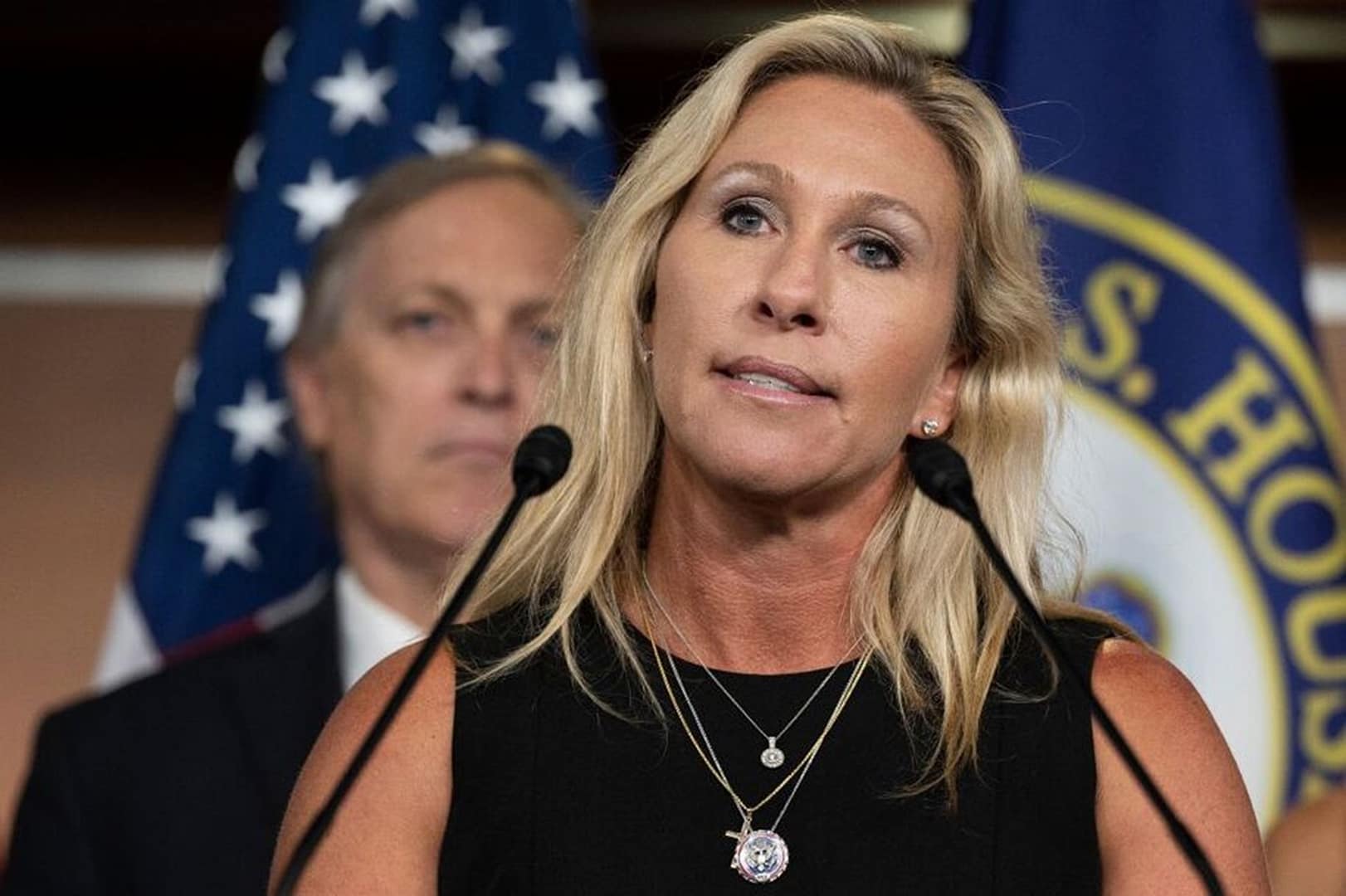
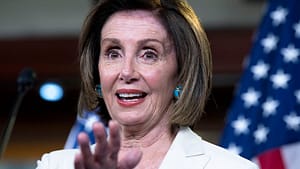



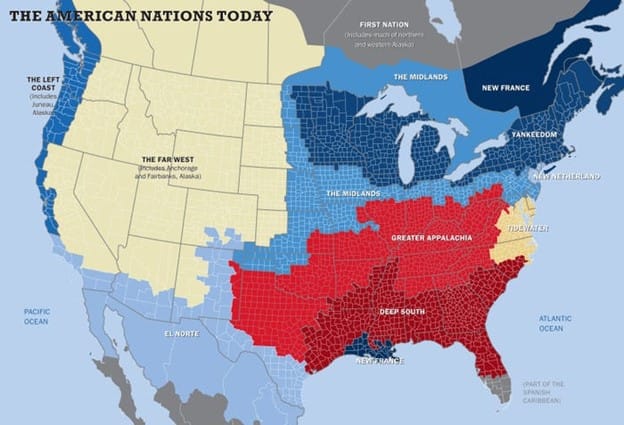
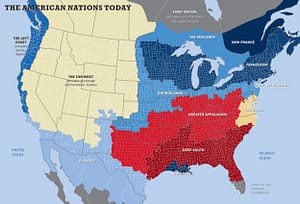

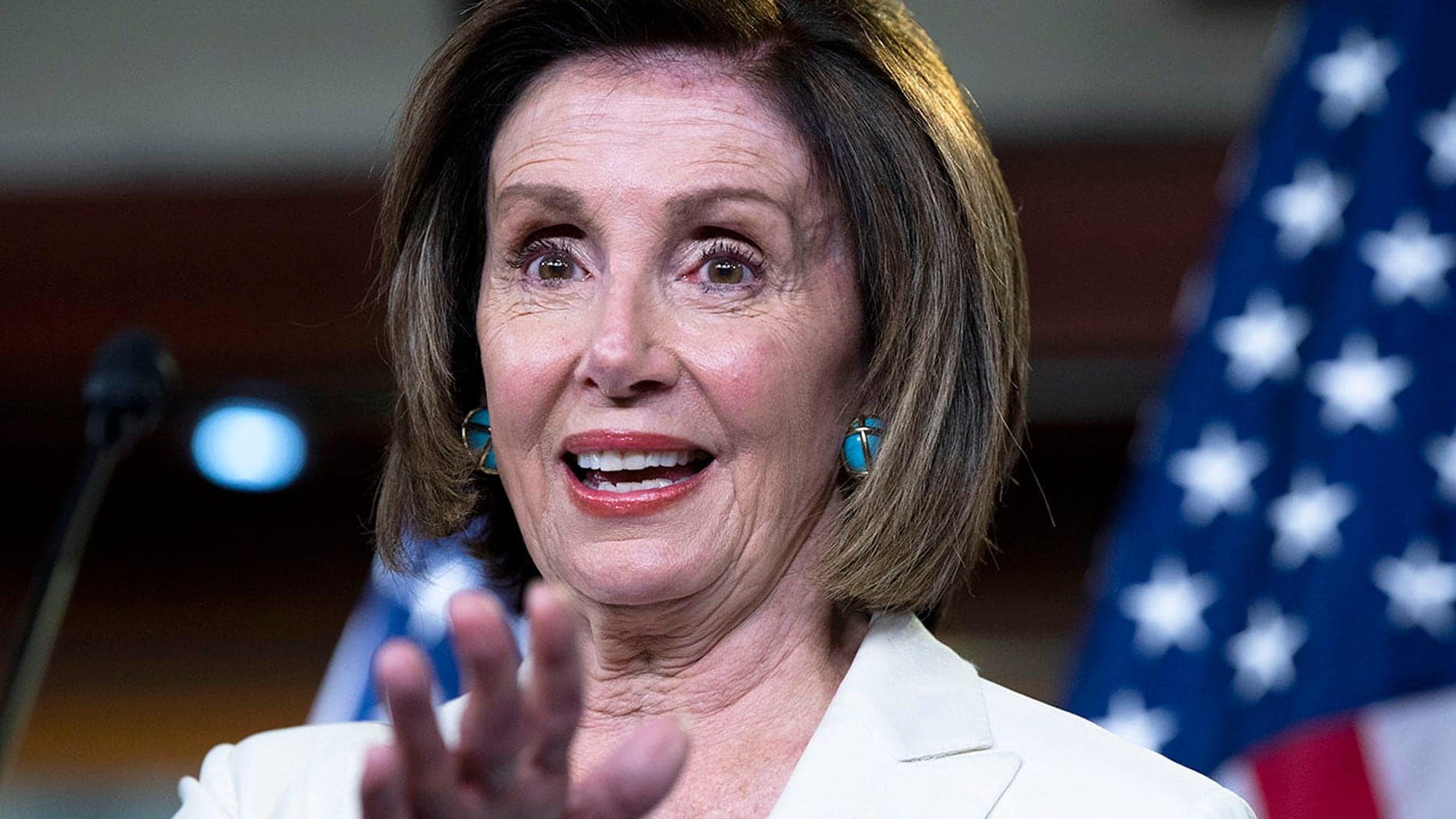


 “Well, my biggest regrets were Libya, North Korea, Iraq, Afghanistan in terms of foreign policy, in terms of domestic policy, not doing enough with infrastructure including rebuilding our social infrastructure, and not addressing climate change My biggest advice to Biden is that he has to rebuild trust and goodwill and end the decades of the politics of destruction or else perhaps we will indeed fall apart and no longer be the United States of America. We are facing an existential crisis. I would let Trump retire peacefully and not prosecute him or his family. He also must rebuild our crumbling physical and social infrastructure figure out how to provide health care for everyone and figure out how to provide a college education to everyone. Finally, my advice to Trump retire gracefully write your memoirs play some golf sport hang out with your family, and let it go let Joe Biden be president Provide your advice in private and your concerns to him in private but let him govern the country that is what I did during the eight years he was president with a few exceptions when he
  “OK, my biggest regrets are not preparing for 911 and of course the Afghanistan war, and Iraq war, and the great economic collapse in 2007. all of those perhaps could have been preventable if we had paid attention to the intelligence and warnings which were flashing red lights. My advice tom pays attention to all these things that are out there that may not be apparent but will bite you in the butt if you do not take care of them and particularly climate change, I think is an existential crisis that we must deal with. I also agree that we only rebuild our crumbling social and physical infrastructure I agree that we have to override health care for everyone and I think we need to provide a college education for everyone but I would offer to pay for it if people did government service in the military or otherwise first so government service then you get a free college education and this is something I feel strongly about and I would like to work with the rest of you to come up with a plan we can present to Joe Biden. For Trump, I echo your call for him to retire gracefully go home write your memoirs and take it easy and let Joe Biden be president it is time to let it go OK over to Bill,